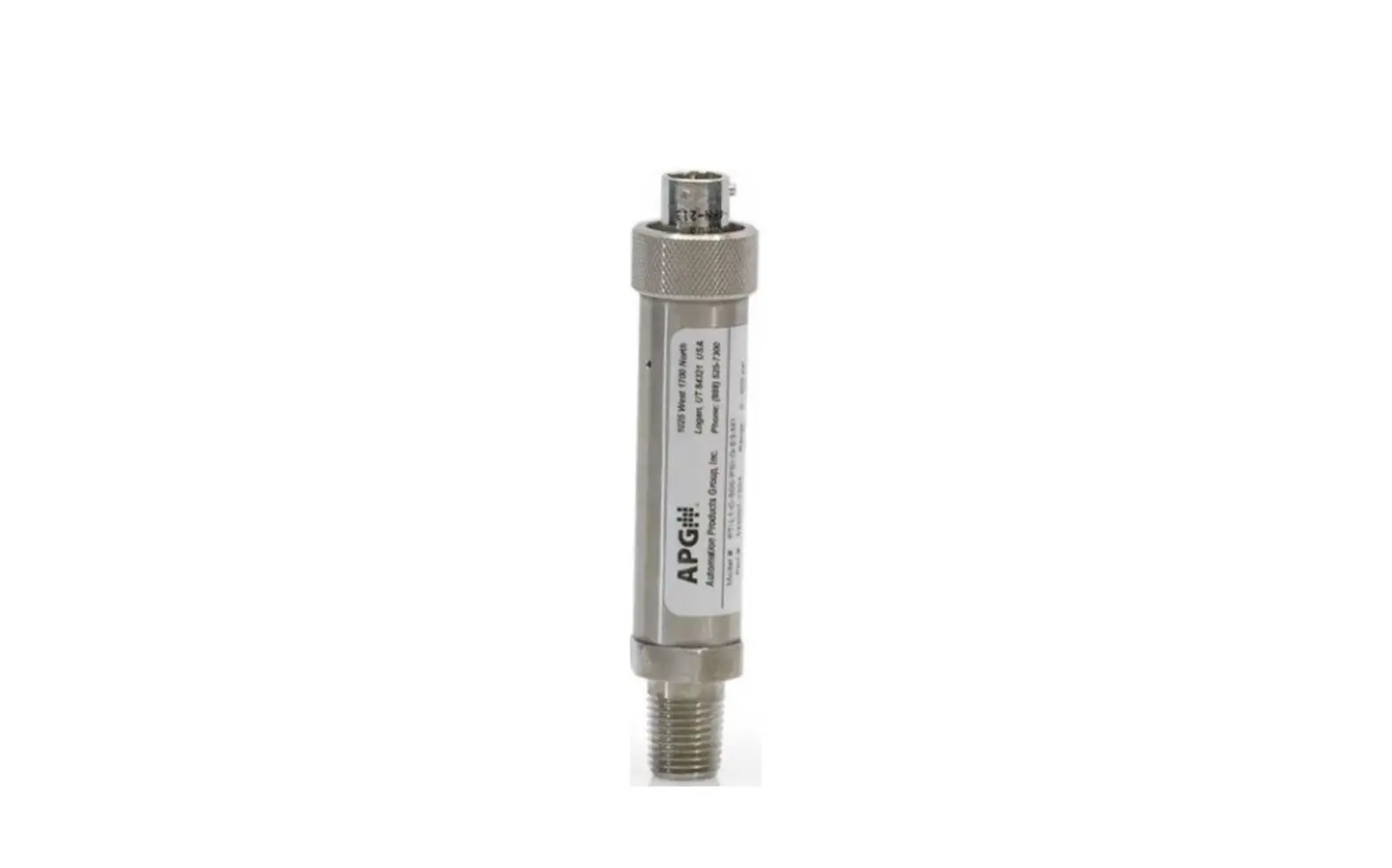
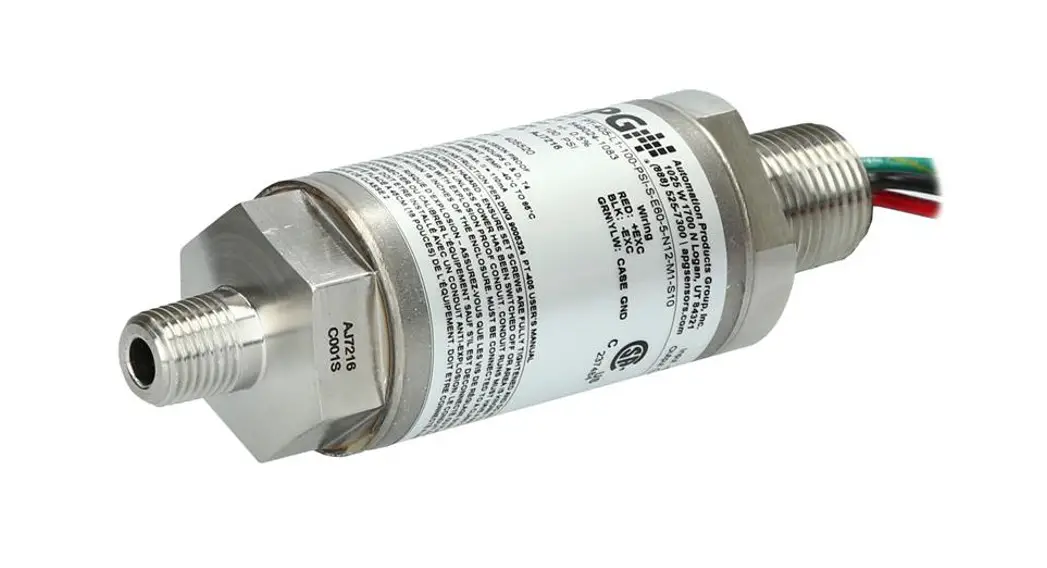
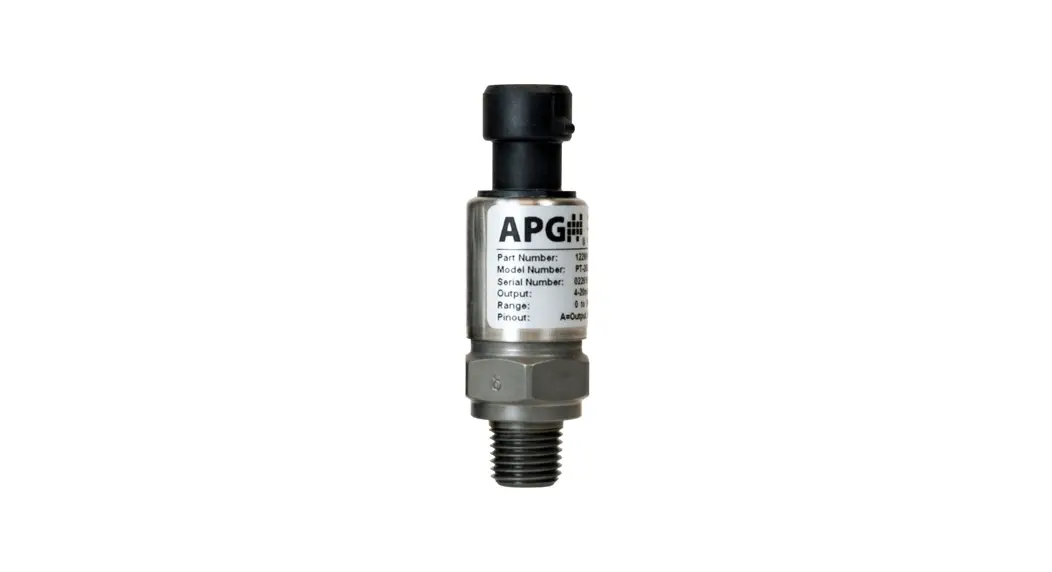
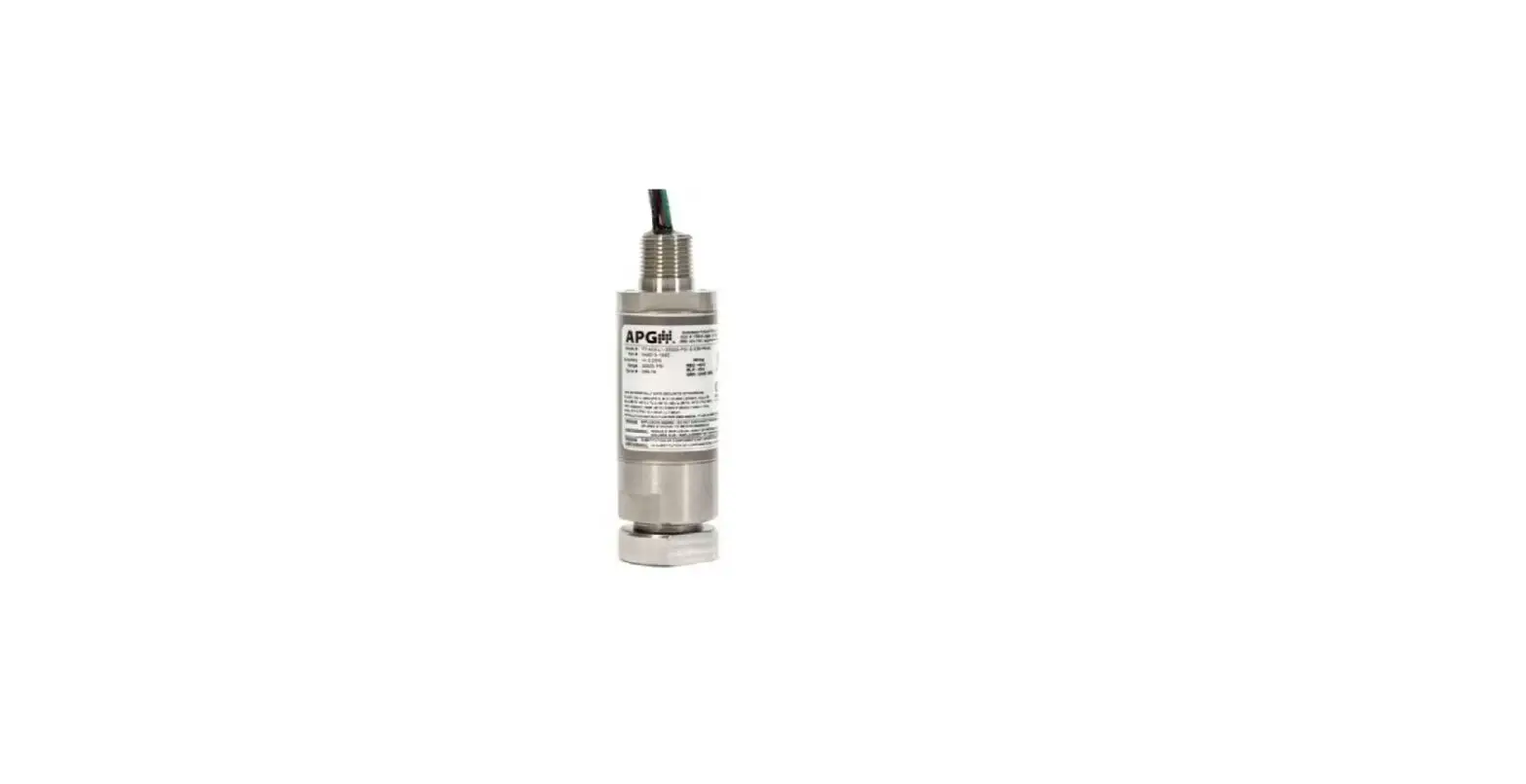
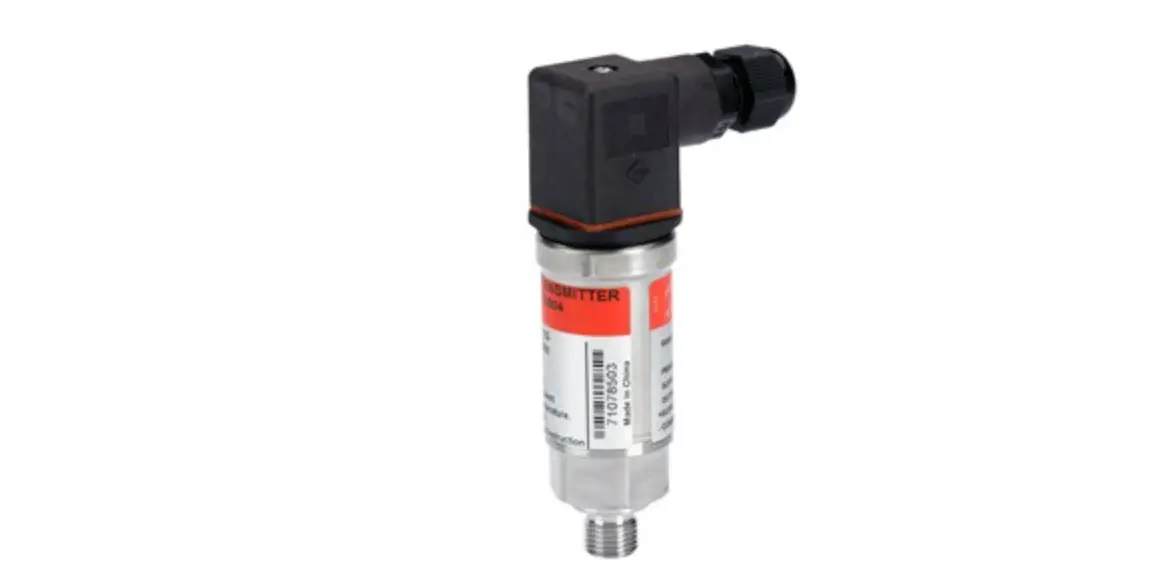
PT-400 Series Pressure Transmitter
Product Information: PT-400 Series Pressure Transmitter
The PT-400 series pressure transmitter offers reliability over a
wide range of pressures and in harsh industrial conditions and
hazardous locations. It is certified intrinsically safe for
hazardous areas in the US, Canada, Europe, and internationally by
CSA, ATEX, and IECEx for Class 1, Zone 0 environments.
Product Usage Instructions
1. Description
The PT-400 series pressure transmitter is designed for use in
industrial applications and hazardous locations. Before
installation, please familiarize yourself with the product and this
manual.
2. How To Read Your Label
Each label on the PT-400 series pressure transmitter contains a
full model number, part number, and serial number. The model number
provides information about the configurable options of your
specific transmitter. Compare the model number to the options on
the datasheet to identify your exact configuration. You can also
contact us with the model, part, or serial number for
assistance.
3. Warranty
The PT-400 series pressure transmitter is covered by APG’s
warranty for 24 months against defects in material and workmanship
under normal use and service. For a full explanation of our
warranty, please visit our Terms &
Conditions page. Contact Technical Support to receive a Return
Material Authorization before shipping your product back.
4. Mounting Instructions
The PT-400 series pressure transmitter should be installed in an
area, indoors or outdoors, that meets the specified conditions.
Please refer to the complete installation guide for detailed
mounting instructions.
5. Wiring Information
The PT-400 series pressure transmitter supports various pinout
configurations for different output types. Please refer to the
provided Pin Out Table for wiring information based on your desired
output type.
6. General Care
To ensure proper functioning and longevity of the PT-400 series
pressure transmitter, follow these general care guidelines:
- Avoid exposing the transmitter to extreme temperatures or
humidity. - Regularly inspect the transmitter for any signs of damage or
wear. - Keep the transmitter clean and free from dust or debris.
7. Re-calibration
Periodic re-calibration of the PT-400 series pressure
transmitter may be necessary to maintain accuracy. Follow the
provided instructions for zero trimming and re-calibration when
required.
8. Repair Information
If your PT-400 series pressure transmitter requires repair,
please contact our Technical Support for assistance. Do not attempt
to disassemble or repair the transmitter yourself, as it may void
the warranty.
9. Hazardous Location Wiring
For wiring the PT-400 series pressure transmitter in hazardous
locations, follow the provided instructions in the Hazardous
Location Wiring section of the installation guide.
If you have any further questions or need assistance, please
don’t hesitate to call us at 888-525-7300.
Thank You
Thanks for purchasing a PT-400 series pressure transmitter from us! We appreciate your business and your trust. Please take a moment to familiarize yourself with the product and this manual before installation. If you have any questions, at any time, don’t hesitate to call us at 888-525-7300.
NOTE: Scan the QR code to the right to see the full user manual on your tablet or smartphone. Or visit www.apgsensors.com/support to find it on our website.
PT-400 Series Pressure Transmitters Installation Guide
For The PT-400
Table of Contents
1.Description 2. How To Read Your Label 3. Warranty 4. Dimensions
5. Mounting Instructions 6. Wiring Information 7. Zero Trimming 8. Re-calibration
9. General Care 10. Repair Information 11. Disassembly Instructions 12. Hazardous Location Wiring
1 Description
The PT-400 series pressure transmitter offers reliability over a wide range of pressures and in harsh industrial conditions and hazardous locations. It is certified intrinsically safe for hazardous areas in the US, Canada, Europe and internationally by CSA, ATEX, and IECEx for Class 1, Zone 0 environments.
2 How To Read Your Label
Each label comes with a full model number, a part number, and a serial number. The model number for the PT-400 will look something like this:
SAMPLE: PT-400-L1-100-PSI-G-E5-5-P5-N0-M1-S0
The model number correlates with all the configurable options and tells you exactly what you have. Compare the model number to the options on the datasheet to identify your exact configuration. You can also call us with the model, part, or the serial number, and we can help you.
The label also includes the pinout, as does this installation guide.
You’ll also find all hazardous certification information on the label.
APG
R
Automation Products Group, Inc. 1025 W 1700 N Logan, UT 84321 www.apgsensors.com | phone: 888-525-7300 | email: [email protected]
Part # 122950-0001 Doc #9004026 Rev D
5 Mounting Instructions
The PT-400 should be installed in an area–indoors or outdoors–which meets the following conditions:
· Ambient temperature between -40°F and 185°F (-40°C to 85°C) · Relative humidity up to 100% · Altitude up to 2000 meters (6560 feet) · IEC-664-1 Conductive Pollution Degree 1 or 2 · IEC 61010-1 Measurement Category II · No chemical corrosive to stainless steel (such as NH3, SO2, Cl2, etc.) · Ample space for maintenance and inspection · Class II power supply Mounting your pressure transducer is easy if you follow a few simple steps:
· Ensure that the fitting on your sensor matches the fitting on your tank/vessel/pipe/etc. If the fittings do not match, do not attempt to install the sensor. Contact the factory immediately.
· Never over-tighten the sensor. This can compress the diaphragm, changing how it reacts to pressure. In all cases, tighten the sensor as little as possible to create an adequate seal. On straight threads, tighten only until you feel the o-ring compress – making sure you don’t damage or extrude the o-ring.
· Always use thread tape or sealant compound on tapered threads. Straight threads use an o-ring. If using thread tape, wrap the tape in the opposite direction of the threads so it does not unravel as you screw it into place. Unraveling can cause uneven distribution and seal failure.
· Always start screwing in your sensor by hand to avoid cross-threading. Thread failure can be a problem if you damage threads by over-tightening them or by crossing threads.
3 Warranty
This product is covered by APG’s waranty to be free from defects in material and workmanship under normal use and service of the product for 24 months. For a full explanation of our Warranty, please visit https://www.apgsensors.com/about-us/terms-conditions. Contact Technical Support to recieve a Return Material Authorization before shipping your product back.
Scan the QR code below to read the full explanation of our Warranty on your tablet or smartphone.
6 Wiring Information
PT-400 Series Pin Out Table
4-20 mA 0-5 / 0.5-4.5 / 1-5 VDC 0-10 VDC
RS-485
A + Excitation
+ Excitation
+ Excitation + Excitation
A
F
B
E
C
D
6 Pin Bayonet
B – Excitation
C
N/C
D
N/C
+ Output – Output – Excitation
+ Output – Output – Excitation
– Excitation N/C
B (Tx-)
E
N/C
N/C
N/C
A (Tx+)
F
N/C
N/C
N/C
Case GND
A
D
B
C
4 Pin Bayonet
A + Excitation
B – Excitation
C
N/C
D
N/C
+ Excitation + Output – Output – Excitation
+ Excitation
N/A
+ Output
N/A
– Output
N/A
– Excitation
N/A
4
1
2
3
4 Pin DIN
1 + Excitation
2 – Excitation
3
N/C
4 Case GND
+ Excitation + Output – Output – Excitation
+ Excitation + Output – Output – Excitation
+ Excitation A (Tx+) B (Tx-)
– Excitation
4 Dimensions
Pigtail
DIN Connector with L Bracket*
4 or 6 pin Bayonet Connector on Long Can
4 or 6 pin Bayonet Connector on Shot Can
5.80 147.32
Automation Products Group, Inc.
1025 West 1700 N Logan, Utah USA 888.525.7300
Model #: Part #: Serial #:
Made in USA
Output:
Range:
Wiring:
Pin A: Pin B: Pin C:
+ Exc – Exc N/C
Date: Due:
Pin D: N/C
Pin E: N/C Pin F: N/C Mfg:
4.45 113.03
Automation Products G=roup, Inc.
102=5 W 1700 N Logan, Utah USA
888.525.7300
Model #: Part #:
Serial #:
Made in USA
Output:
Range: Wiring
Pin A: +Ex Date: Pin B: -Ex
Due: Pin C: N/C Pin D: N/C Pin E: N/C Pin F: N/C Mfg:
4.50 114.30
Automation Products Group, Inc.
1025 W 1700 N Logan, Utah USA 888.525.7300
Model #: Part #:
Serial #:
Made in USA
Output:
Range: Wiring
Pin A: +Ex Date: Pin B: -Ex
Due: Pin C: N/C Pin D: N/C Pin E: N/C Pin F: N/C Mfg:
3.50 88.90
Automation Products Group, Inc.
1025 W 1700 N Logan, Utah USA 888.525.7300
Model #: Part #:
Serial #:
Made in USA
Output:
Range: Wiring
Pin A: +Ex Date: Pin B: -Ex
Due: Pin C: N/C Pin D: N/C Pin E: N/C Pin F: N/C Mfg:
+
4
3
1
2
4 Pin M12
1 + Excitation
2 – Excitation
3
N/C
4
N/C
+ Excitation + Output – Output – Excitation
+ Excitation + Output – Output – Excitation
+ Excitation A (Tx+)
– Excitation B (Tx-)
Cable
Red + Excitation
Grn
N/C
Wht
N/C
Blk – Excitation
Shld
Gnd
+ Excitation + Output – Output – Excitation Gnd
+ Excitation + Output – Output – Excitation Gnd
+ Excitation B (Tx-) A (Tx+)
– Excitation
N/C indicates no connection For alternate pinouts, please consult factory
PT-400 Series Supply Power Table
4-20 mA 0-5 / 0.5-4.5 / 1-5 VDC
Power Supply 9-28 VDC
9-28 VDC
0-10 VDC 12.5-28 VDC
RS-485 9-28 VDC
1.50 38.10
1.50 38.10
IMPORTANT: Refer to section 12 for Hazardous Location Wiring.
1.50 38.10
1.50 38.10
IMPORTANT: PT-400 Modbus sensors use reversed Tx+/Tx- pins. When connecting to your
* Total length of PT-400 with DIN Connector and L Bracket is equal to total length of PT-400 with Pigtail.
system, ensure continuity of Tx- to Tx- and Tx+ to Tx+, rather than A to A and B to B.
7 Zero Trimming
· Remove protective screw(s) with 5/64 allen wrench. · Ensure that the transducer is at 0 psig or 0 psia (vacuum if absolute). · Using a jeweler’s screwdriver or a suitable instrument, adjust the “Z” pot until you have a 4
mA, 0 V, 0.5 V, or 1 V output. · Replace protective screw(s) when finished.
NOTE: You may also return the transducer to the factory for repair and/ or adjustment.
Zero & Span Adjustment
9 General Care
Your pressure transmitter is very low maintenance and will need little car, as long as it was installed correctly. However, in general, you should:
· Keep the sensor and the area around it generally clean. · Avoid applications for which the sensor was not designed, such as extreme temperatures,
contact with incompatible corrosive chemicals, or other damaging environments. · Inspect the threads whenever you remove the sensor from duty or change its location. · Avoid touching the diaphragm. Contact with the diaphragm, especially with a tool, could
permanently shift the output and ruin accuracy. · Cleaning the diaphragm or the diaphragm bore should be done with extreme care. If using a
tool is required, make sure it does not touch the diaphragm.
IMPORTANT: Do not make changes to the Span adjustment (the “S” pot to the right, see Figure 7.1) as part of the zero trimming. The Span should only be changed as part of the recalibration of a gauge with a known pressure source.
Figure 7.1
10 Repair Information
If your pressure transmitter needs repair, contact us via email, phone, or online chat on our website. We will issue you an RMA number with instructions.
· Phone: 888-525-7300 · Email: [email protected] · Online chat at www.apgsensors.com
DANGER: Protective screws must be replaced using 28 oz-in of torque to create seal.
8 Re-Calibration
This procedure requires a known pressure source of at least ±0.1% accuracy in order to fully utilize the accuracy potential of the transducer. (If not available, you can return it to the factory for recalibration.)
· Ensure that the transducer is at 0 psig or 0 psia (vacuum if absolute), and adjust zero as per instructions for zero trimming.
· Apply full scale pressure to the pressure port and adjust the Span (“S”) pot (on the right of Figure 7.1) until the full scale signal is reached.
· Re-check zero and re-adjust the zero (“Z”) pot if required · Repeat previous two steps until no further adjustment is required.
11 Removal Instructions
Removing your pressure transducer from service must be done with care. It’s easy to create an unsafe situation, or damage your sensor, if you are not careful to follow these guidelines:
· Make sure the pressure is completely removed from the line or vessel where your sensor is installed. Follow any and all procedures for safely isolating any media contained inside the line or vessel.
· Remove the sensor with an appropriately sized wrench (per your process connection). · Clean the sensor’s threads of any sealant compound or tape. Inspect the threads and the
diaphragm for any damage. · Store your sensor in a dry place between -40° F and 180° F.
NOTE: You may also return the transducer to the factory for repair and/or adjustment.
12 Hazardous Location Wiring Intrinsically Safe Wiring (4-20mA Output)
DANGER: Removing the pressure transmitter while there is still pressure in the line or vessel could result in injury or death.
Non-Incendive Wiring (4-20mA Output)
Non-Incendive Wiring (0-5 VDC Output) [includes 0.5-4.5 VDC and 1-5 VDC] Non-Incendive Wiring (0-10 VDC Output)
 Industrial Sensor Manufacturer | APG, Inc.