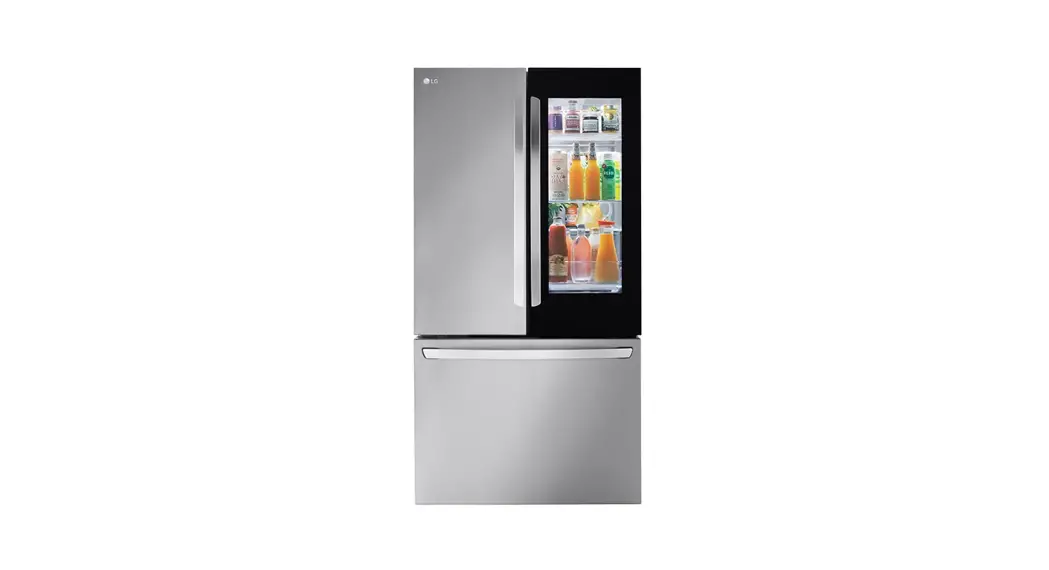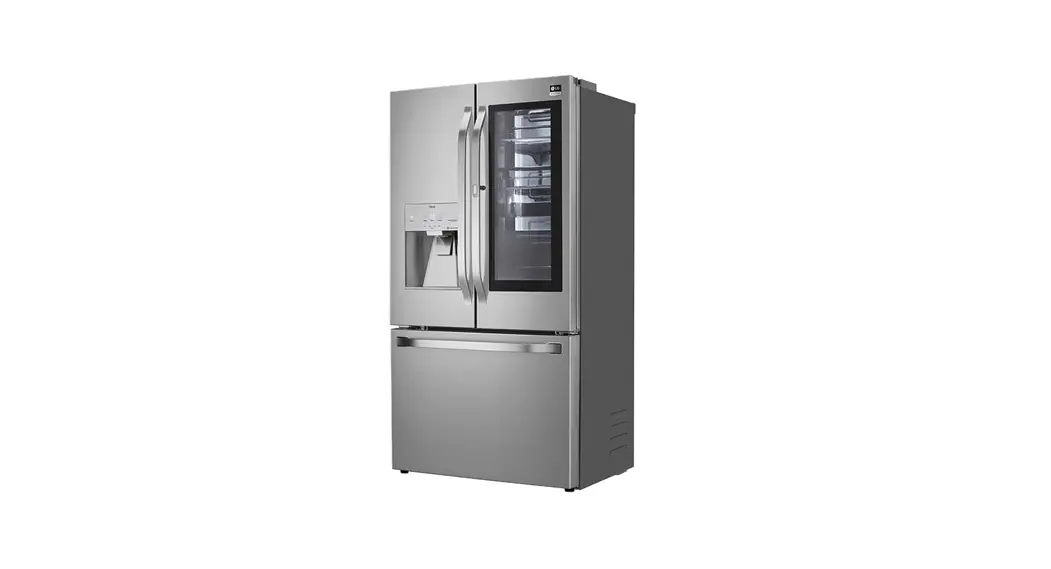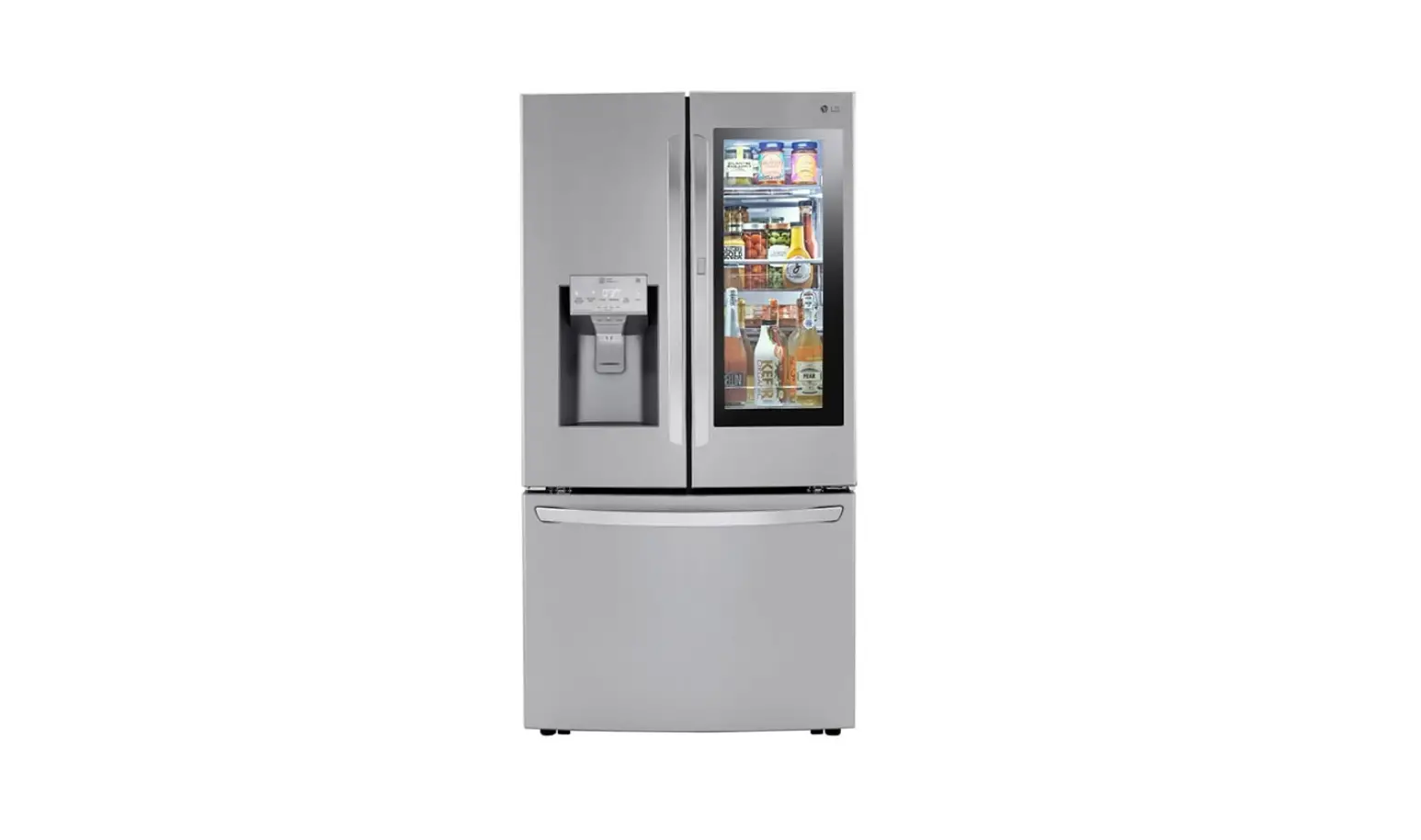
LG SRFVC2416S 24 cu. ft. Smart InstaView Door-In-Door Large Capacity Counter-Depth Refrigerator User Manual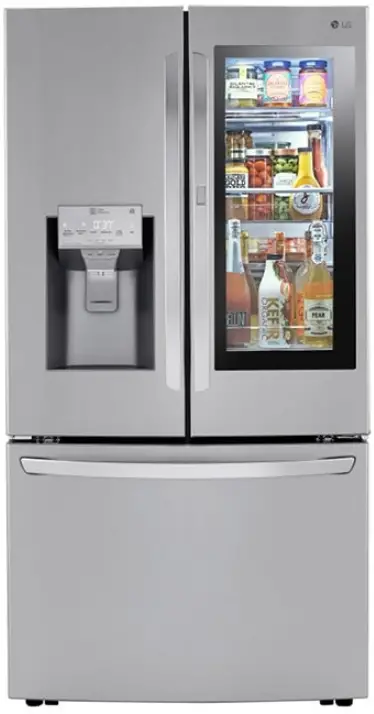
Before Calling for Service
Review this section before calling for service; doing so will save you both time and money.
Cooling
| Problem | Possible Cause & Solution |
| Refrigerator is not cooling or has no power. | A fuse in your home may be blown or the circuit breaker tripped. Or the appliance is connected to a GFCI (Ground Fault Circuit Interrupter) outlet, and the outlet’s circuit breaker has tripped.
|
| The refrigerator control is set to OFF (some models).
| |
| Refrigerator is set to Demo Mode.
| |
| Refrigerator is in the defrost cycle.
| |
| Refrigerator was recently installed.
| |
| Refrigerator was recently relocated.
|
TROUBLESHOOTING
Refrigerator or Freezer section is too cold.Incorrect temperature control settings.• If the temperature is too cold, adjust the control one increment at a time and wait for the temperature to stabilize. Refer to the Control Panel for more information.Frost or ice crystals form on frozen food (inside of sealed package).Condensation from food with a high water content has frozen inside of the food package.• This is normal for food items with a high water content.Frost or ice crystals form on frozen food (outside of package).Door is opened frequently or for long periods of time.• When the doors are opened often or for long periods of time, warm, humid air enters the compartment. This raises the temperature and moisture level within the compartment. Increased moisture will lead to frost and condensation. To lessen the effect, reduce the frequency and duration of door openings.Refrigerator or Freezer section is too warm.Refrigerator was recently installed.• It may take up to 24 hours for each compartment to reach the desired temperature.
| Problem | Possible Cause & Solution |
| Cooling system runs too much. | Refrigerator is replacing an older model.
|
| Refrigerator was recently plugged in or power restored.
| |
| The door is opened often or a large amount of food / hot food was added.
| |
| Doors are not closed completely.
| |
| Refrigerator is installed in a hot location.
°F or 21 °C) expect your compressor to run about 40 % to 80 % of the time. Under warmer conditions, expect it to run even more often. The refrigerator should not be operated above 110 °F (43 °C). | |
| Condenser / back cover is clogged.
| |
| Interior moisture buildup. | Doors are opened often or for long periods of time.
|
| Doors are not closed correctly.
| |
| Weather is humid.
| |
| Defrost cycle recently completed.
| |
| Food is not packaged correctly.
| |
| Food is freezing in the refrigerator compartment. | Food with high water content was placed near an air vent.
|
| Refrigerator temperature control is set incorrectly.
| |
| Refrigerator is installed in a cold location.
| |
| Food has been left in the freezer for a long period of time.
| |
| Door is not closing properly.
| |
| The air vents are blocked. Cold air circulates from the freezer to the fresh food section and back again through air vents in the wall dividing the two sections.
| |
| Doors are opened often or for long periods of time.
| |
| Unit is installed in a hot location.
| |
| A large amount of food or hot food was added to either compartment.
| |
| Doors are not closed correctly.
| |
| Temperature control is not set correctly.
| |
| Defrost cycle has recently completed.
|
Craft Ice
| Problem | Possible Cause & Solution |
| Ice maker is not making ice. | Refrigerator was recently installed or ice maker recently connected.
|
| Ice maker is not making enough ice. | In 3 ICE mode, the Craft Ice icemaker produces 1 batch of round ice about every 24 hours.
|
Ice
| Problem | Possible Cause & Solution |
| Icemaker is not making enough ice. | Demand exceeds ice production capacity.
|
| House water supply is not connected, valve is not turned on fully, or valve is clogged.
| |
| Water filter has been exhausted.
| |
| Low house water supply pressure.
| |
| Reverse osmosis filtration system is used.
| |
| Tubing connecting refrigerator to house supply valve is kinked.
| |
| Doors are opened often or for long periods of time.
| |
| Doors are not closed completely.
| |
| The temperature setting for the freezer is too warm.
| |
| Icemaker is not turned on.
| |
| The ice detecting sensor is obstructed.
| |
| The refrigerator is not connected to a water supply or the supply shutoff valve is not turned on.
| |
| Icemaker shutoff (arm or sensor) obstructed.
| |
| Reverse osmosis water filtration system is connected to your cold water supply.
| |
| Icemaker was recently installed.
| |
| The food has not been stored properly in either compartment.
| |
| The interior of the refrigerator needs to be cleaned.
| |
| The ice storage bin needs to be cleaned.
| |
| Doors are not closed completely.
| |
| Infrequent use of the dispenser.
| |
| The delivery chute is clogged with frost or ice fragments.
| |
| The dispenser display is locked.
| |
| Ice bin is empty.
|
| Icemaker is not making ice | Refrigerator was recently installed or icemaker recently connected.
|
| Icemaker is not turned on.
| |
| The ice detecting sensor is obstructed.
| |
| The refrigerator is not connected to a water supply or the supply shutoff valve is not turned on.
| |
| Icemaker shutoff (arm or sensor) obstructed.
| |
| Reverse osmosis water filtration system is connected to your cold water supply.
| |
| Ice has bad taste or odor. | Water supply contains minerals such as sulfur.
|
| Icemaker was recently installed.
| |
| The food has not been stored properly in either compartment.
| |
| The interior of the refrigerator needs to be cleaned.
| |
| The ice storage bin needs to be cleaned.
| |
| Icemaker is making too much ice. | Icemaker shutoff (arm/ sensor) is obstructed.
|
| Ice is not dispensing. | Unable to hear the sound of ice coming out?
|
| Doors are not closed completely.
| |
| Infrequent use of the dispenser.
| |
| The delivery chute is clogged with frost or ice fragments.
| |
| The dispenser display is locked.
| |
| Ice bin is empty.
|
Water
| Problem | Possible Cause & Solution |
| Water is dispensing slowly. | Water filter has been exhausted.
|
| Reverse osmosis filtration system is used.
| |
| Low house water supply pressure.
|
| Water is not dispensing. | New installation or water line recently connected.
|
| The dispenser panel is locked.
| |
| The dispenser is not set for water dispensing.
| |
| Refrigerator or freezer doors are not closed properly.
| |
| Water filter has been recently removed or replaced.
| |
| Tubing connecting refrigerator to house supply valve is kinked.
| |
| The house water supply is not connected, the valve is not turned on fully, or the valve is clogged.
| |
| Dispensing warm water. | Refrigerator was recently installed.
|
| The water dispenser has been used recently and the storage tank was exhausted.
| |
| Dispenser has not been used for several hours.
| |
| Refrigerator is connected to the hot water supply.
WARNING: Connecting the refrigerator to a hot water line may damage the icemaker. | |
| Water filter has been exhausted.
| |
| Refrigerator was recently installed.
|
Parts & Features
| Problem | Possible Cause & Solution |
| Doors will not close correctly or pop open. | Food packages are blocking the door open.
|
| Ice bin, crisper cover, pans, shelves, door bins, or baskets are out of position.
| |
| The doors were removed during product installation and not properly replaced.
| |
| Refrigerator is not leveled properly.
| |
| Doors are difficult to open. | The gaskets are dirty or sticky.
|
| Door was recently closed.
| |
| Refrigerator wobbles or seems unstable | Leveling legs are not adjusted properly.
|
| Floor is not level.
| |
| Lights do not work. | LED interior lighting failure.
|
| Refrigerator has an unusual odor. | The Air Filter may need to be set to the MAX setting or replaced.
|
| The interior of the refrigerator is covered with dust or soot. | The refrigerator is located near a fire source, such as a fireplace, chimney, or candle.
|
Noises
| Problem | Possible Cause & Solution |
| Clicking | The defrost control will click when the automatic defrost cycle begins and ends. The thermostat control (or refrigerator control on some models) will also click when cycling on and off.
|
| Rattling | Rattling noises may come from the flow of refrigerant, the water line on the back of the unit, or items stored on top of or around the refrigerator.
|
| Refrigerator is not resting solidly on the floor.
| |
| Refrigerator with linear compressor was jarred while running.
| |
| Whooshing | Evaporator fan motor is circulating air through the refrigerator and freezer compartments.
|
| Air is being forced over the condenser by the condenser fan.
| |
| Gurgling | Refrigerant flowing through the cooling system.
|
| Popping | Contraction and expansion of the inside walls due to changes in temperature.
|
| Sizzling | Water dripping on the defrost heater during a defrost cycle.
|
| Vibrating | If the side or back of the refrigerator is touching a cabinet or wall, some of the normal vibrations may make an audible sound.
|
| Dripping | Water running into the drain pan during the defrost cycle.
|
| Pulsating or high- pitched sound | Your refrigerator is designed to run more efficiently to keep your food items at the desired temperature. The high efficiency compressor may cause your new refrigerator to run longer than your old one, but it is still more energy efficient than previous models. While the refrigerator is running, it is normal to hear a pulsating or high- pitched sound.
|
Wi-Fi
| Problem | Possible Cause & Solution |
| Trouble connecting appliance and smartphone to Wi- Fi network | The password for the Wi-Fi network was entered incorrectly.
|
| Mobile data for your smartphone is turned on.
| |
| The wireless network name (SSID) is set incorrectly.
| |
| The router frequency is not 2.4 GHz.
| |
| The distance between the appliance and the router is too far.
|
FAQs
Frequently Asked Questions
A: The default setting for the refrigerator is 37° Fahrenheit (3° Celsius). The default setting for the freezer is 0° Fahrenheit (-18° Celsius). Adjust these settings as necessary to keep food at desired temperatures. Milk should be cold when stored on the inner shelf of the refrigerator. Ice cream should be firm and ice cubes should not melt in the freezer. To switch the display from Fahrenheit to Celsius, press and hold the Freezer and Refrigerator buttons until you hear a beep and the settings in the display change.
A: Continually press the Refrigerator or Freezer button on the control panel until the desired temperature appears. The numbers will cycle from highest to lowest and then return to the highest again with continuous pressing
A: This may happen if you do not have a water source attached to your refrigerator and the icemaker is turned on. If you do not have a water source attached to the back of the refrigerator you should turn the icemaker off
A: This is a normal part of the icemaker cycle. The icemaker tray may appear level or with a slight tilt. The change in position is to assist in the freezing process
A: The refrigerator is in Display Mode. The Display Mode disables all cooling in the refrigerator and freezer sections to conserve energy while on display in a retail store. When activated, OFF is displayed on the control panel. With either refrigerator door opened, press the Wi-Fi button 3 times consecutively while pressing the Refrigerator button. The control panel beeps and the temperature
settings display to confirm that Display Mode is deactivated. Use the same procedure to activate Display Mode.