SW-UWB-M-A2X2 Vital Signs Monitoring Radar Module
Product Information: Human Vital Signs Monitoring Radar
Module
Product Name: Human Vital Signs Monitoring
Radar Module
Model Number: SW-UWB-M-A2X2
Introduction
The Human Vital Signs Monitoring Radar Module is designed to
detect human vital signs without intentional cooperation. It offers
dynamic detection, automatically focusing on the human body for
dynamic monitoring within a certain distance (up to 3m). It also
provides long-term detection, allowing continuous real-time
monitoring of human vital signs. The module emits low radiation
power, which causes no harm to the body. It comes with high
immunity features, such as built-in MCU and multi-digital filtering
algorithm. It supports secondary development and adapts to a
variety of scenarios.
Basic Parameters
- Model Number: SW-UWB-M-A2X2
- Size: Connector
- Communication: UART
Radar Parameters
- Detection Data: Human state: absence, calm,
quiet, movements, continuous movements; Respiratory rate: average
number of breaths per minute; Heart rate: average beats per
minute - Detection Distance: 0.5m-3m
- Detection Range: Respiratory rate: 4-40
times/min; Heart rate: 40-150 times/min - Detection Precision: Respiratory rate: 98%
(Taking ECG as the standard, the + / – 3bpm error is regarded as
accurate, and 98% of the data points fall within the accurate
range); Heart rate: 90% (taking ECG as the standard, the + / –
10bpm error is regarded as accurate, and 90% of the data points
fall within the accurate range) - Other Function: Abnormal breathing alarm and
sleep analysis report
Working Parameters
- Power Voltage: DC 3V ~ 5.5V
- Power consumption: 0.7W
- Working Temperature: -20 ~ +50
RF Specifications
- Working Frequency: Radar(UWB): 6.5~8.1GHz
- Transmission Power: Radar(UWB):
Product Usage Instructions
- Connect the Human Vital Signs Monitoring Radar Module to a
power source with a power voltage of DC 3V ~ 5.5V. - Place the module within the detection distance of 0.5m-3m from
the human body. - The module will automatically detect human vital signs,
including human state, respiratory rate, and heart rate. - The detection precision of respiratory rate is 98%, and the
detection precision of heart rate is 90%. - If an abnormal breathing pattern is detected, the module will
trigger an abnormal breathing alarm and provide a sleep analysis
report.
User’s Manual
Product Name: Human Vital Signs Monitoring Radar Module Model Number: SW-UWB-M-A2X2
Note:The host providers can only use granted modular,reuse test data of granted modular for host,A letter giving permission from modular manufacture to host manufacture shall be included the change-in-FCC ID application.Please contact modular manufacture for details: Phone:0731-89714008 Email: [email protected] Host manufacture is recommended to use D04 Module Integration Guide recommending as”best practice”RF design engineer testing and evaluation in case non-linear interactions generate additional non-compliant limits due to module placement to host components or properties For standlone modereference the guidance in D04 Module Integration Guide and for simultaneous mode;see D02 Module Q&A Question 12which permits the host manufactures to confirm compliance.
1. Introduction
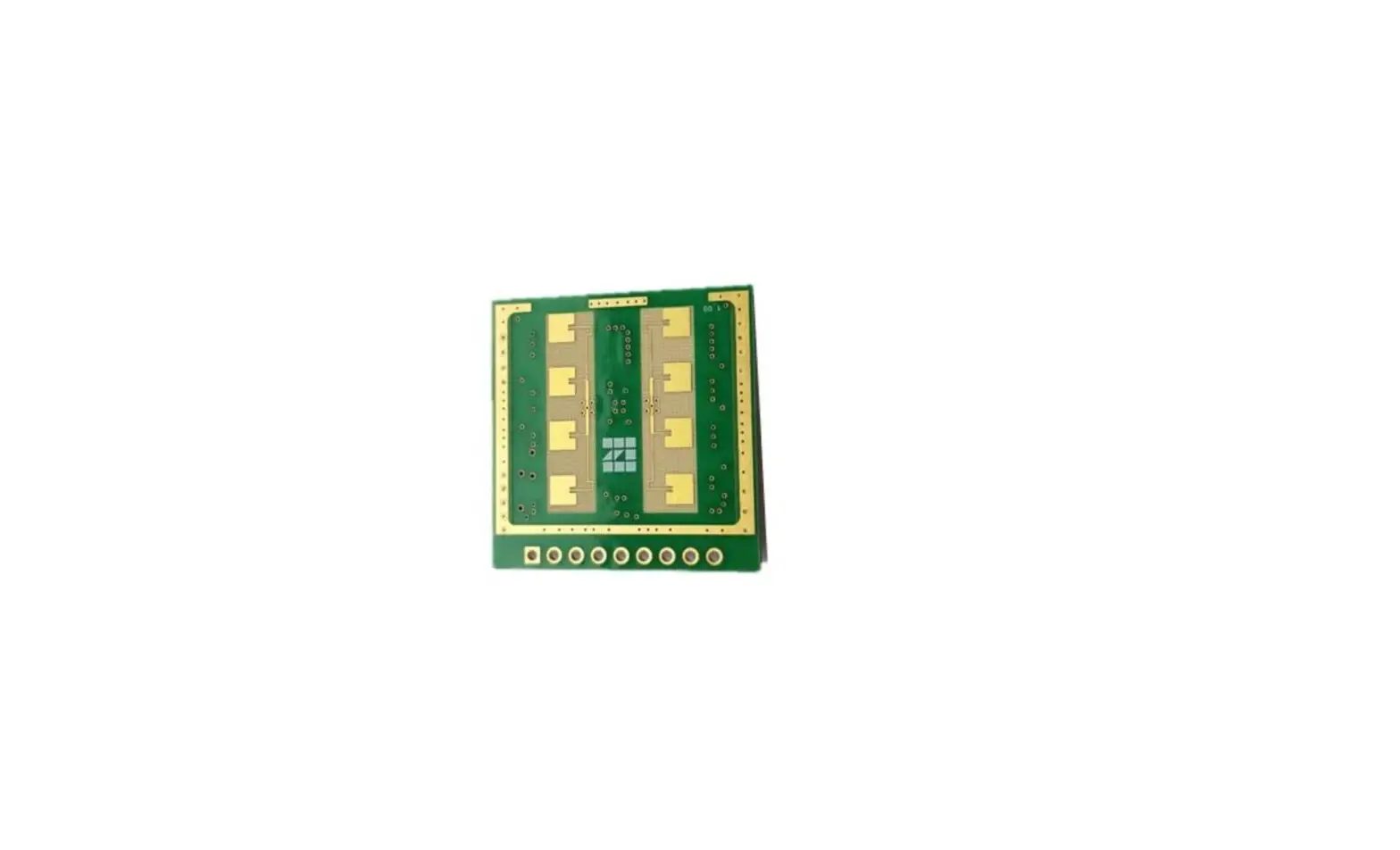
SW-UWB-M-A2X2 human vital signs monitoring radar module is a product for monitoring vital sign parameters without contacting Human body. Based on ultra wide-band(UWB) radar technology, it can scan the human body and sense the undulating movements of the chest by transmitting, receiving and processing electromagnetic waves. Using the relavant signal processing methods, the product can realize the monitoring functions of human respiration and heart rate and the application and assessment of sleep quality. The module contains radar transceiver antenna, radar SoC, ARM processor and other chips. The algorithm program runs in ARM processor and outputs the detection results directly. 1.1 Technical Features Synchronous detection: human respiration and heart rate. Contactless detection: no electrode or sensor touched the body. Strong penetration ability: can penetrate clothes, bedding and other fabrics to
detect human without intentional cooperation. Dynamic detection: automatically focus on the human body for dynamic
monitoring within a certain distance (up to 3m). long-term detection: continuous real-time monitoring of human vital signs. Low radiation power: prolonged exposure causes no harm to the body. High immunity: Built-in MCU and multi-digital filtering algorithm. Support secondary development, adapt to a variety of scenarios. 1.2 Basic Parameters
Basic Parameters
Model Number
SW-UWB-M-A2X2
Size Connector Communication
60×34×10mm Double row straight pin 2*6P, pitch 2.54mm, Including power supply and communications
UART
Radar Parameters
Detection Data
Human state: absense, calm, quiet, movements, continuous movements
Respiratory rate: average number of breaths per minute
Heart rate: average beats per minute
Detection Distance Detection Range
Detection Precision
Other Function Working parameters
0.5m-3m
Respiratory rate: 4-40 times/min
Heart rate: 40-150 times/min
Respiratory rate: 98% (Taking ECG as the standard, the + / – 3bpm error is regarded as “accurate”, and 98% of the data points fall within the “accurate” range) Heart rate: 90% (taking ECG as the standard, the + / – 10bpm error is regarded as “accurate”, and 90% of the data points fall within the “accurate” range)
Abnormal breathong alarm and sleep analysis report
Power Voltage Power consumption
DC 3V ~ 5.5V 0.7W
Working Temperature -20 ~ +50
RF Specifications
Working Frequency Radar(UWB): 6.5~8.1GHz
Transmission Power Radar(UWB): <-5 dBm
Antenna Type
Radar(UWB): PCB onboard antenna
2. Wiring Diagram
javascript:
void(0);
3. Hardware considerations
3.1 Power Requirements The requirement of power quality of this radar module is higher than that of
conventional low frequency circuit. When supplying power to the module, the power supply is required to have low ripple and good grounding, and to effectively shield the power supply noise that may be caused by other device.
The module power supply requires +3V ~ +5.5V power supply, especially the power supply voltage can not be lower than 3V. In order to ensure the normal operation of the internal circuit of the module, the external power supply must provide sufficient current output capacity and transient response capacity. 3.2 Layout Requirements
1) PCBA: note that the antenna surface of the radar module should not be obscured and should be higher than other devices.
2) Shell: avoid installing metal shell or accessories, which will block the radar electromagnetic wave and affect the detection effect.
4. Device Installation
When the product monitors human heart rate and respiration, it is mainly based on the ups and downs of the human chest cavity and the beating of the heart. Therefore, the installation needs to be facing the position of the human heart to achieve the best test performance.
This module is mainly suitable for monitoring the human body in bed rest state, so the recommended installation methods in practical applications include top-mounted and tilt-mounted. 4.1 Top-mounted
The top-mounted method is shown in . The radar is mounted horizontally and fixedly on the ceiling, the radar beam is vertically downward facing the human body, and the center of the beam is facing the human heart position. The recommended installation height is H3m.
4.2 Tilt-mounted The Tilt-mounted method is shown in . The radar is tilted and fixed on the
bedside wall or bedside, the radar beam is tilted to illuminate the human body, and the center position of the beam is opposite to the human heart position. It is recommended to install height H=1m~1.5m.
4.3 Precautions and Instructions 1) Radar should be fixed to ensure that there is no loose shaking. 2) There is no obvious shielding and covering in front of the radar to avoid the occlusion of metal objects in the detection area. 3) When multiple radar modules are used in the same site, it is recommended that the installation distance is more than 1.5m. If the installation distance is too close, it may cause interference and cause false positives. 4) This radar module is suitable for indoor environment without vibration interference. If there are energy fluctuations caused by moving objects, the monitoring effect may be affected. (the number of moving objects that should be reduced within the radar detection range can improve the accuracy of
physical sign measurement.) 4.4 Radar module effective detection range description
a) If the radar is not directly facing the heart position of the human body, affected by the radiation characteristics of the radar antenna and deviating from the radar normal direction, the radar measurement accuracy will be slightly deviated.
b) There are differences in measurement accuracy among different personnel / positions, and radar does not guarantee that all states achieve the best monitoring results.
c) Radar can not distinguish between movement caused by breathing and other body movements. if the human body is active, it will interfere with the reception of chest undulation echoes, thus affecting the accuracy of radar monitoring of heart rate and respiratory rate.
d) When there is an object with stronger reflectivity around the measured target, the radar may track the strong reflection target when it is working. At this time, the human life parameters monitored by the radar are abnormal, so it is necessary to adjust the radar position.
e) At present, this radar module can only measure a single target, but can not measure multiple targets for the time being, so when many people are in the radar monitoring area, they can only monitor the parameters of human vital signs which are closest to the radar and have the largest energy.
f) Since human biometrics belong to ultra-low frequency and weak reflection characteristic signals, radar needs to accumulate and process for a relatively long time. In the process of accumulation, many factors may affect radar parameters, so occasional detection failure is a normal phenomenon.
5. Communication Protocol DreamCare Protocol
5.1 Serial Communication Definition Interface Level: TTL Baud Rate: 115200 Data Bits: 8 Stop Bit: 1 Check Digit: None
5.2 Definition of Data Packet Type Please refer to the technical specifications for details.
FCC Warning This device complies with part 15 of the FCC rules. Operation is subject to the following two conditions: (1) this device may not cause harmful interference, and (2) this device must accept any inte rference received, including interference that may cause undesired operation.
Changes or modifications not expressly approved by the party responsible for compliance could void the user’s authority to operate the equipment.
NOTE: This equipment has been tested and found to comply with the limits for a Class B digital device, pursuant to part 15 of the FCC Rules. These limits are designed to provide reasonable protection against harmful interference in a residential installation. This equipment generates uses and can radiate radio frequency energy and, if not installed and used in accordance with the instructions, may cause harmful interference to radio communications. However, there is no guarantee that interference will not occur in a particular installation. If this equipment does cause harmful interferenceto radio or television reception, which can be determined by turning the equipment off and on, the user is encouraged to try to correct the interference by one or more of the following measures: · Reorient or relocate the receiving antenna. · Increase the separation between the equipment and receiver. · Connect the equipment into an outlet on a circuit different from that to which the receiver is connected. · Consult the dealer or an experienced radio/TV technician for help.
Radiation Exposure Statement
The device has been evaluated to meet general RF exposure requirement. The modular must be installed in the host device. The end host can installed and operated at mixed portable exposure and mobile exposure with a minimum distance of 20cm between the radiator and your body.
Important Note: In the event that these conditions cannot be met (for example certain laptop configurations or co -location with another transmitter), then the FCC authorization is no longer considered valid and the FCC ID cannot be used on the final product. In these circumstances, the OEM integrator will be responsible for re-evaluating the end product (including the transmitter) and obtaining a separate FCC authorization. End Product Labeling The final end product must be labeled in a visible area with the following” Contains FCC ID: 2BAR7-A2X2″ Integration instructions for host product manufacturers according to KDB 996369 D03 OEM Manual v01r01 2.2 List of applicable FCC rules CFR 47 FCC PART 15 SUBPART F has been investigated. It is applicable to the modular transmitter 2.3 Specific operational use conditions This module is stand-alone modular. If the end product will involve the Multiple simultaneously transmitting condition or different operational conditions for a stand-alone modular transmitter in a host, host manufacturer have to consult with module manufacturer for the installation method in end system. 2.4 Limited module procedures Not applicable 2.5 Trace antenna designs Not applicable 2.6 RF exposure considerations The device can installed and operated at mixed portable exposure and mobile exposure with a minimum distance of 20cm between the radiator and your body. 2.7 Antennas This radio transmitter FCC ID:2BAR7-A2X2 has been approved by Federal Communications Commission to operate with the antenna types listed below, with the maximum permissible gain indicated. Antenna types not included in this list that have a gain greater than the maximum gain indicated for any type listed are strictly prohibited for use with this device. Antenna ModelDifferential Four-element Top-beam Antenna Gain as follows max gain of 5dBi
2.8 Label and compliance information The final end product must be labeled in a visible area with the following” Contains FCC ID:2BAR7-A2X2″. 2.9 Information on test modes and additional testing requirements Host manufacturer which install this modular with single modular approval should perform the test of radiated emission and spurious emission according to FCC part 15F,15.209,15.207 requirement, only if the test result comply with FCC part 15F,15.209,15.207 requirement, then the host can be sold legally. 2.10 Additional testing, Part 15 Subpart B disclaimer Host manufacturer is responsible for compliance of the host system with module installed with all other applicable requirements for the system such as Part 15 B.
Note:Host devices must comply with the requirements of §15.517 (a). The host’s user manual shall bear a statement on the device or in the instruction manual stating, “This equipment may only be operated indoors. Operation outdoors violates 47 U.S.C. 301 and could subject the operator to serious legal penalties.”
UWB devices may not be employed to operate toys. Operation on board an aircraft, a ship, or a satellite is prohibited.