
Anchor Audio WH-LINK Wireless Handheld Microphone
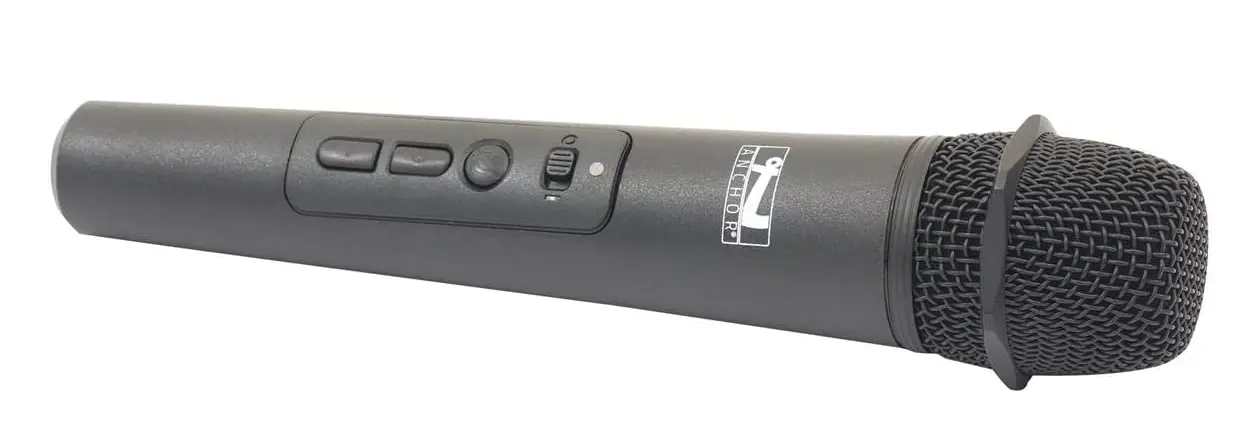
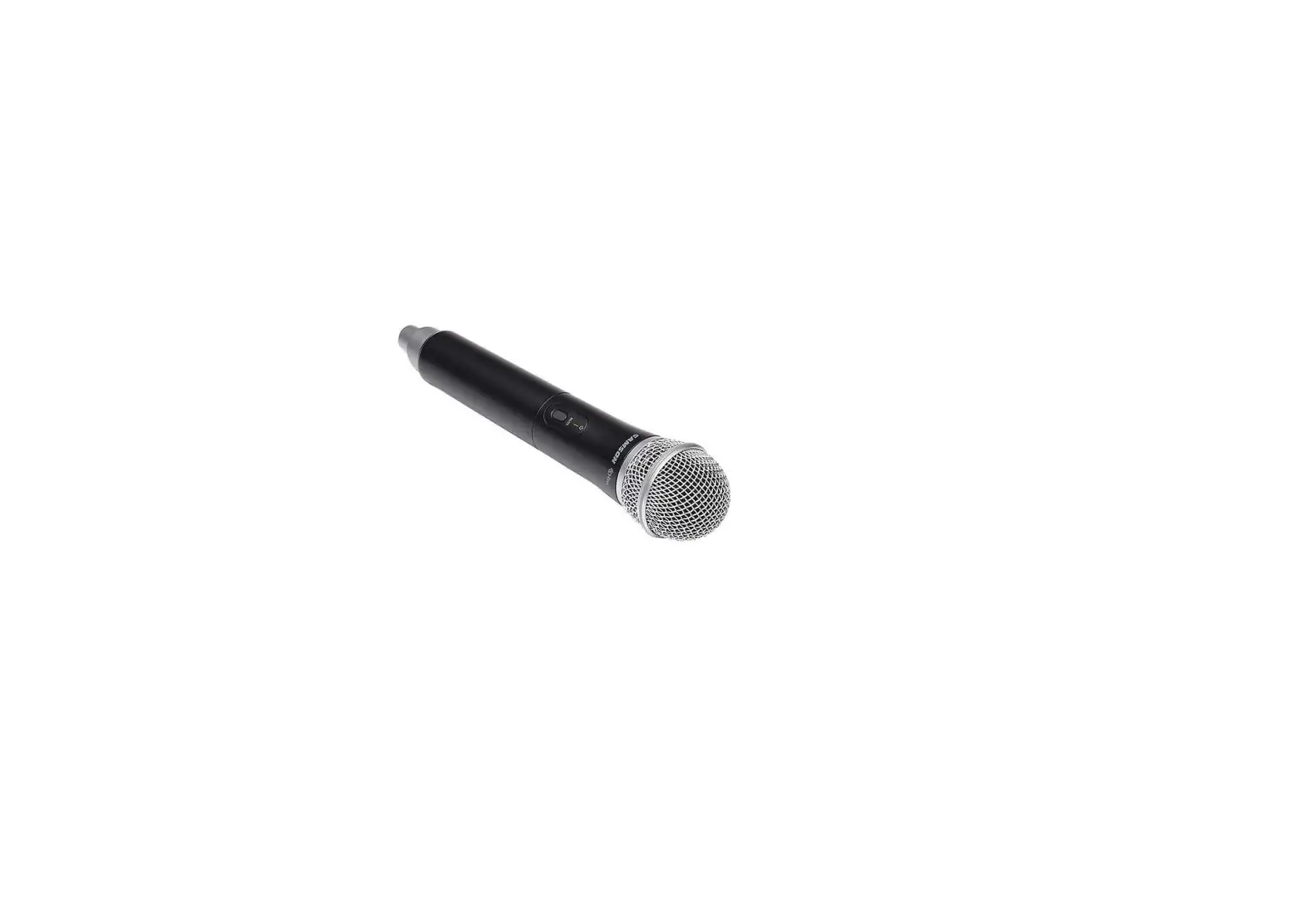
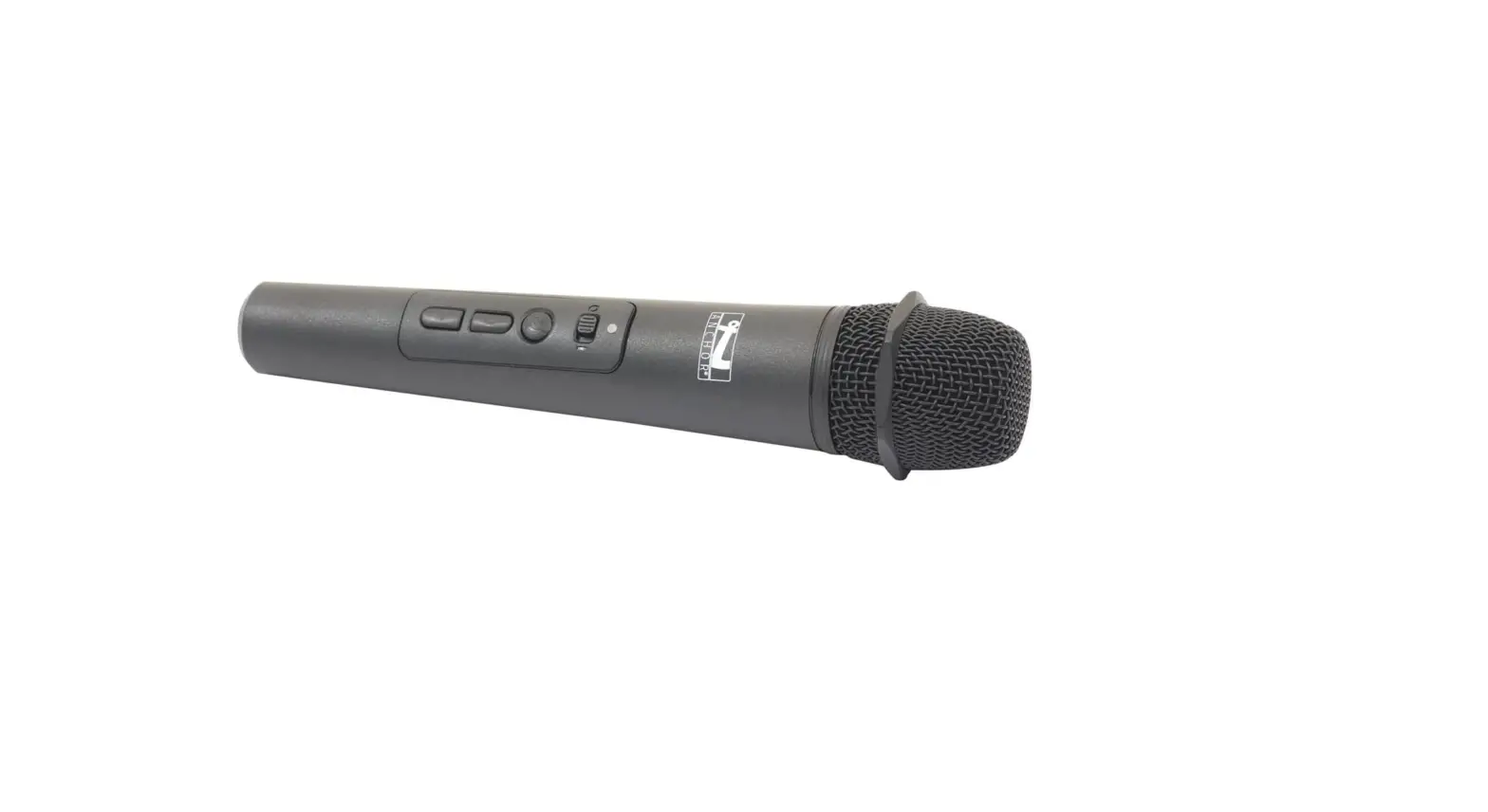
The WH-LINK is a wireless handheld microphone with a sleek and lightweight design. It operates on the 1.9 GHz frequency. The WH-LINK is powered by two AA batteries and operates approximately 6 – 8 hours with fresh batteries.
SPECIFICATIONS
- OPERATING VOLTAGE: 3V DC (2 AA non-rechargeable alkaline batteries)
- FREQUENCY RANGE: 1920~1930 MHz USA/CAN ; 1880~1900 MHz Europe
- MODULATION: DECT GFSK
- ANTENNA: Embedded
- DIMENSIONS:8” long, 2 ¼” diameter
OPERATION INSTRUCTIONS
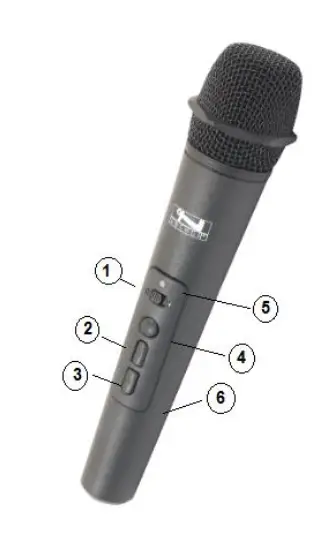
- On/Off Switch: Turns transmitter power on and off.
- Volume UP: The Volume Up button adjusts the transmitter’s audio level up.
- Volume DOWN: The Volume Down button adjusts the transmitter’s audio level down
- Pair/Mute Button: Serves as a MUTE when push down once. Serves to PAIR mic to Anchorlink receiver. To PAIR hold once until Red LED turns OFF then release button, Hold PAIR button again until Green LED flashes.
- Pairing LED: Solid GREEN LED indicates paired. Red LED will flash when battery is low. Flashing GREEN indicates mute.
- Battery Compartment: Insert two AA non-rechargeable alkaline batteries into the compartment making sure the polarity of the batteries is correct.
MIC CAPSULE
- ELEMENT TYPE: Dynamic
- POLAR PATTERN: cardioid
- FREQUENCY RESPONSE: 60-15KHz
- OUTPUT IMPEDANCE: 400 (±15%) Ω (at 1KHz)
- SENSITIVITY: 51 (±3) dB (at 1KHz) (0dB=1V/Pa) 1Pa (94 dB SPL at 1 kHz)
- DIRECTIVITY GRAPH (AT 1 KHZ):
MODEL NUMBERS
- WH-LINK: DECT 6.0 USA/Canada
- WH-LINKEU: DECT Europe
ENVIRONMENTAL SPECIFICATIONS:
- Maximum operating temperature up to 40°C
- Maximum operating altitude up to 2000 m
- Pollution degree 2
CAUTION: SAFE BATTERY HANDLING AND DISPOSAL
- Do not replace the battery with an incorrect type which can defeat a safeguard.
- Do not dispose of a battery into fire or a hot oven, or mechanically crushing or cutting of a battery, which can result in an explosion.
- Do not leave a battery in an extremely high temperature surrounding environment that can result in an explosion or the leakage of flammable liquid or gas.
- Do not mix batteries of different types and brands.
- Do not mix new and used batteries.
- During battery replacement, batteries shall be kept out of reach of children and used batteries shall be disposed of as soon as possible.
FAQs
Does this item match to liberty 7500 platinum pa?
no this will not work with that system.
Will this work with the explorer PA 2500W?
no, this will not match up with the frequency range.
will this work with the megavox pro 7500 U2?
No. This will not work. You need model number WH-6000. That mic has the 682-698 megahertz frequency compatible with the 7500 series.
How many wireless microphone transmitters can communicate with the same receiver simultaneously?
No, it won’t work like that. One active microphone transmitter at a time can only have its signal demodulated by a wireless receiver. However, as long as only one transmitter is turned on at any given time, you are free to utilize either one.
What is the operation of a wireless microphone transmitter?
A wireless system works on the fundamental premise of transforming the audio signal input at the microphone into a radio signal that can be sent over the air to the receiver and then back into an audio signal that can be delivered to the rest of the sound system.
Are transmitters required for wireless microphones?
The conventional “wired” mic has a male XLR output connector and depends on a cable to transport its signal to the mic input, which is virtually the only significant difference between the two. Unlike a wireless microphone, which uses a radio transmitter to broadcast its output signal to a receiver before being routed to a mic input, a wireless microphone uses a receiver.
Can I use an amplifier to connect a wireless microphone?
If you want to amplify vocals without using a PA system, you can connect your microphone to an instrument amp. But it’s crucial to realize that an instrument amplifier is made to amplify instruments, so you’ll need more than just an adapter connection.
Are microphones receivers or transmitters?
In a wireless microphone setup, the transmitter is either the handheld microphone or the talker’s bodypack that is connected to a lapel or headworn microphone. A battery of some kind is always present in the transmitter. The “box” that connects to the sound system is the receiver.
What does a wireless microphone do?
In the entertainment industry, television broadcasting, and public speaking, wireless microphones are frequently used to allow performers, interviewers, and entertainers to move around freely while using a microphone without needing a cord tied to the microphone.
A wireless microphone can broadcast how far?
The typical range for systems of the kind detailed here (10-50 mW, VHF or UHF) can range from 100 feet to 1000 feet.
What serves as a wireless transmitter’s purpose?
A carrier frequency is created by transmitters, which is mixed with the data stream and subsequently released. After receiving this signal, the receiver will divide the two frequencies back into their individual components.
Are wireless microphones powered by a source?
Phantom power is not required for wireless microphones. Batteries power wireless microphones, which in turn power the wireless transmitter.
Does a microphone require an amplifier to function?
The use of passive microphones is power-free. There are no internal amplifiers in them. Moving-coil dynamic microphones and the bulk of ribbon dynamic microphones are passive microphones.
Is an amplifier required to utilize a microphone?
Amplification is frequently a required step between devices when working with any type of audio signal. As the name implies, amplifiers are required to achieve this amplification of the audio signals.
What does an audio transmitter do?
In essence, a transmitter converts electrical energy into radio waves. It consists of various components that combine to produce radio waves, such as: Delivers the energy necessary for the equipment to operate.