413 Rollover Protection System
Product Information
The product is a machine with the following specifications:
- Model: Not specified
- Serial Nos.: 413,950,474 & Higher
- Manufacturer: Not specified
- Country of Origin: USA
The product comes with various loose parts, including keys and a
literature pack. The literature pack contains the operator’s
manual, engine operator’s manual (for non-Exmark engines), and
other printed materials.
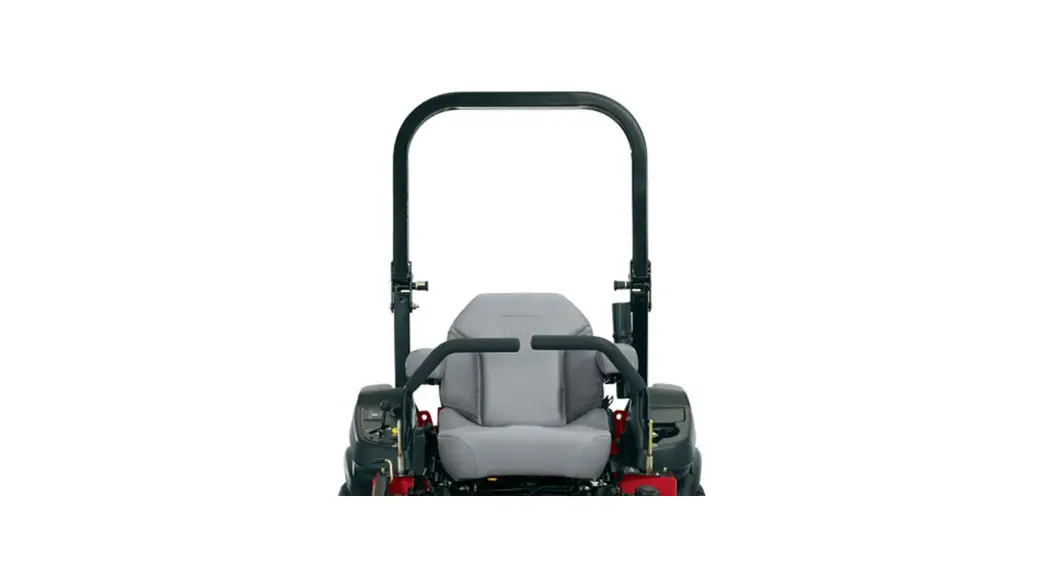
The product also includes a Rollover Protection System (ROPS)
that needs to be raised during setup.
Product Usage Instructions
- Fill out the online warranty registration form and place the
keys into the literature pack. - Raise the Rollover Protection System (ROPS) according to the
instructions provided. Refer to Figure 1 for visual guidance. - Check the tire pressure in the front caster tires. The proper
inflation for front caster tires is 13 psi (90 kPa). Adjust if
necessary. - Take necessary precautions when servicing the battery:
- Wear gloves to protect your skin and clothing when handling
electrolyte. - Check the voltage of the battery with a digital voltmeter.
Refer to the table provided to determine the charging interval
required to bring the charge up to a full charge of 12.6 volts or
greater. - Make sure the negative battery cable is disconnected before
charging the battery. - Use a battery charger with an output of 16 volts and 7 amps or
less to avoid damaging the battery. Refer to the chart for
recommended charger settings.
- Wear gloves to protect your skin and clothing when handling
- Check the tire pressure in the drive tires. The proper
inflation for drive tires is 13 psi (90 kPa). - Retighten the nyloc nut attaching the discharge deflector until
it is snug but can pivot freely. - Check the oil level in the engine and fill it to the
appropriate level if necessary. Use Exmark 4-Cycle Premium Engine
Oil and refer to the Engine Owner’s manual for the recommended API
rating and viscosity.
Please refer to the complete user manual for detailed
instructions and safety guidelines.
RADIUS®
Setup Instructions
For Serial Nos. 413,950,474 & Higher
Loose Parts
Use the chart below to verify that all parts have been shipped. Part numbers not shown are available on the dealer extranet.
Dealer Pack Part No.
Description Key, Logo
Key, Standard
Qty.
Use
1
Fill out the online warranty registration
1
form and place keys into literature pack.
Literature Pack
Manual, Operator’s Manual, Engine Operator’s (Non-Exmark Engines)
© 2022–Exmark Mfg. Co., Inc. 415 Industrial Row Beatrice, NE 68310
Part No. 4506-243 Rev. A
Printed in the USA. All Rights Reserved
*4506-243*
A
Raise the Rollover Protection
2.
System (ROPS)
1.
Pull the knob and rotate 90° to hold in the unlatched position (see Figure 1).
3.
Check the tire pressure in the front caster tires. Proper inflation for front caster tires is 13 psi (90 kPa). Adjust if necessary.
Servicing the Battery
WARNING
PropCosAiLtioIFnO6R5 NWIaArning Battery posts, terminals, and related accessories contain lead and lead compounds, chemicals known to the State of California to cause cancer and reproductive harm.
Wash hands after handling.
Note: The machine is shipped with a filled lead acid battery.
Figure 1
1. Roll bar upper hoop 2. Knob in “latched” position 3. Pull knob to unlatch 4. Rotate 90° to hold unlatched 5. Knob in “unlatched” position
DANGER
Charging or jump starting the battery may produce explosive gases. Battery gases can explode causing serious injury. · Keep sparks, flames, or cigarettes away from
battery. g390763 · Ventilate when charging or using battery in an
enclosed space. · Make sure venting path of battery is always open
once battery is filled with acid. · Always shield eyes and face from battery.
2. 3.
Raise and hold the upper hoop of the roll bar in the upright position. To lock the roll bar in the raised, operate position, rotate the knobs 90° so that the tabs interlock partially. Apply forward pressure to the roll bar upper hoop and observe that the knobs return to the completely latched position as shown in Figure 1.
DANGER
Battery electrolyte contains sulfuric acid, which is poisonous and can cause severe burns. Swallowing electrolyte can be fatal or if it touches skin can cause severe burns. · Wear safety glasses to shield eyes, and rubber
gloves to protect skin and clothing when handling electrolyte.
Checking Tire Pressure
1. Check the tire pressure in the drive tires. Proper inflation for drive tires is 13 psi (90 kPa).
· Do Not swallow electrolyte. · In the event of an accident, flush with water and
call a doctor immediately.
1. Check the voltage of the battery with a digital voltmeter. Locate the voltage reading of the battery in the table below and charge the battery for the
2
recommended time interval to bring the charge up to a full charge of 12.6 volts or greater.
Important: Make sure the negative battery cable is disconnected and the battery charger used for charging the battery has an output of 16 volts and 7 amps or less to avoid damaging the battery (see chart for recommended charger settings).
Voltage Reading
Percent Charge
12.6 or greater 12.4 12.6
100% 75100%
12.2 12.4 5075%
12.012.2 2550%
11.712.0 025%
Maximum Charger Settings 16 volts/7 amps 16 volts/7 amps 16 volts/7 amps 14.4 volts/4 amps 14.4 volts/4 amps
Charging Interval No Charging Required 30 Minutes 1 Hour 2 Hours 3 Hours
11.7 or less 0%
14.4 volts/2 6 Hours or
amps
More
Retighten the nyloc nut until the deflector is snug but can pivot freely.
Servicing the Engine
The engine is shipped with oil; check oil level and if necessary fill to the appropriate level. Exmark 4-Cycle Premium Engine Oil is recommended; refer to the Engine Owner’s manual for an appropriate API rating and viscosity.
Filling Out the Product Registration
Fill out the online warranty registration form and place keys into literature pack.
CAUTION
If the ignition is in the “ON” position there is potential for sparks and engagement of components. Sparks could cause an explosion or moving parts could accidentally engage causing personal injury. Be sure ignition switch is in the “OFF” position before charging the battery. 2. Connect the negative battery cable. Note: If the positive cable is also disconnected, connect the positive (red) cable to the positive battery terminal first, then the negative (black) cable to the negative battery terminal. Slip insulator boot over the positive terminal. Note: If time does not permit charging the battery, or if charging equipment is not available, connect the negative battery cables and run the vehicle continuously for 20 to 30 minutes to sufficiently charge the battery.
Positioning the Discharge Deflector
Loosen the 3/8 inch nyloc nut attaching the discharge deflector. Lower the discharge deflector into position.
3