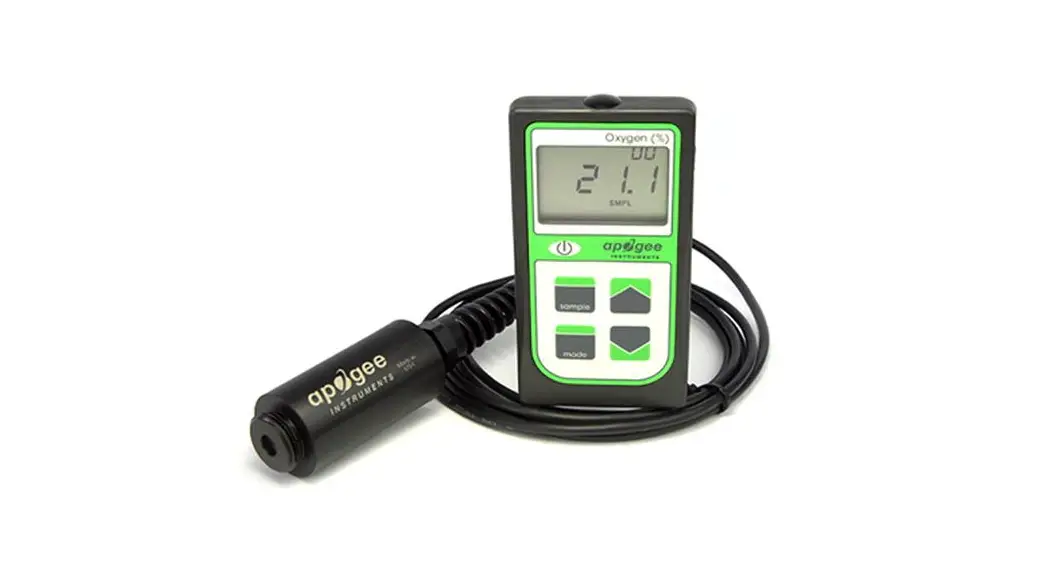
TN03 520-1002 MTL Zirconia Oxygen Analysers
Product Information
The MTL Zirconia Oxygen analysers are designed to measure the
properties of a heat treatment atmosphere, such as carburising and
annealing, by determining the amount of oxygen present in them.
These analysers are capable of providing accurate measurements and
are widely used in various industrial applications.
Product Usage Instructions
When using the MTL Zirconia Oxygen analysers in a carburising
furnace or other heat treatment processes, please follow these
instructions:
- Ensure that the analyser is properly installed and connected to
the furnace or the gas system. - Calibrate the analyser according to the provided calibration
procedure. This will ensure accurate measurements. - Adjust the analyser settings to display the desired units of
measurement. The analyser can be scaled to read out in kilocalories
(oxygen potential) or oxide-to-fuel ratio. - Obtain the initial readings in millivolts and establish upper
and lower limits based on product quality. These limits will serve
as reference points for maintaining the desired atmosphere. - Monitor the analyser readings during the heat treatment
process. The higher the analyser output, the more carbon monoxide
and hydrogen are present, while lower output indicates higher
levels of carbon dioxide and water. - Adjust the process parameters, such as fuel and oxygen supply,
based on the analyser readings to maintain the desired atmosphere
and achieve the desired heat treatment results. - For automatic operation, adjustable limit switches can be used
to control the analyser readings within the established upper and
lower limits.
For any further assistance or technical support, please contact
Eaton Electric Limited at the following:
Address: Great Marlings, Butterfield, Luton Beds, LU2 8DL,
UK
Tel: +44 (0)1582 723633
Fax: +44 (0)1582 422283
Email: [email protected]
Website: www.mtl-inst.com
Technical note
MTL gas analysers & systems
October 2016 TN03 520-1002 Rev 3
The Use of Zirconia Oxygen Analysers in Heat Treatment
The MTL Zirconia Oxygen analysers can be used to measure the properties of a heat treatment atmosphere (carburising, annealing etc.) by measuring the amount of oxygen in them.
In a carburising furnace, a hydrocarbon, typically natural gas or propane, is “cracked” to provide the atmosphere. The “cracking” is really burning with too little oxygen, so that not all the carbon and hydrogen in the fuel gas is used up. The equations below illustrate this, using methane (natural gas) as fuel.
Stoichiometric combustion (stoichiometric means exactly the right amount of one chemical to react with another) looks like this:
CH4 + 2O2 = CO2 + 2H2O
But if you “crack” the fuel with too little oxygen, you get this:
4CH4 + 4O2 = 2CO + 2CO2 + 2H2O + 6H2
However, this is only one possible reaction. Depending on temperature, you could get:
or even
= CO + 3CO2 + H2O + 7H2 = 3CO + CO2 + 3H2O + 5H2
The other effect to be considered is dissociation, or the breakdown of a molecule when heated. It is a reversible reaction and the equation must remain numerically balanced at a particular temperature. Both carbon dioxide and water will dissociate at the high temperature of our analyser, and the resulting output from the cell would be due to the oxygen from this break-down:
2H2O = 2H2 + O2 . . . . . . (i)
2CO2 = 2CO + O2 . . . . . . .(ii)
Both water and carbon dioxide dissociate equally at one particular temperature, 812°C. As the equations must remain numerically balanced at a given temperature – if you increase the amount of (say) carbon monoxide in equation (ii), some of the oxygen will be used up to convert it to carbon dioxide. So the amount of oxygen present measures the ratio between carbon dioxide and carbon monoxide, and between water and hydrogen, which are both the same at 812°C. Oxygen is proportional to H2O/H2 and CO2/CO
The general formula for the cell output at 812°C is:-
O/P (mV) = 950 – 107.7 log OXIDES FUELS
So a measure of oxygen made at 812°C will tell you the combined ratios of oxides to fuels, directly. At any other temperature, you also need to know the carbon/hydrogen ratio of fuel.
Referring back at the three equations for excess methane and oxygen. If you count up the molecules of oxide gases and divide by the molecules of fuel gases, you will find that the ratio is 1:2 in all cases. So it does not matter just how the methane is cracked – with a particular amount of oxygen – we will always finish up with the same ratio of oxides to fuels.
The significance of this ratio is that it determines how much carburising potential a gas has. But the water and hydrogen play their parts too, because too much water will provide some oxygen that will combine with the carbon monoxide to form carbon dioxide, and it is the carbon monoxide that does the carburising.
So now our single measurement can replace three “traditional” measurements; those of carbon monoxide, carbon dioxide and dewpoint. Our single oxides-to-fuels measurement tells the user all that is required – but the user may feel that it cannot be interpreted in the accustomed fashion.
So for practical purposes, we can ignore the hydrogen/ water break-down, and concentrate on the carbon monoxide/ carbon dioxide. The graph shows cell output against carbon monoxide/carbon dioxide ratio. This is plotted at 634°C and 812°C – being the two principal temperatures that our analysers are operated at – although for metallurgical processes 812°C is the more usual. We find however that more often than not users “calibrate” our analyser output against what they regard as
Eaton Electric Limited, Great Marlings, Butterfield, Luton Beds, LU2 8DL, UK. Tel: + 44 (0)1582 723633 Fax: + 44 (0)1582 422283 E-mail: [email protected] www.mtl-inst.com
© 2016 Eaton All Rights Reserved Publication No. TN03 520-1002 Rev 3 October 2016
The Use of Zirconia Oxygen Analysers in Heat Treatment
October 2016
‘good quality’ products, and no longer rely on the traditional interpretation of carbon monoxide or carbon dioxide. All the user has to remember is that the higher the analyser output, the more carbon monoxide and hydrogen is present, and the lower the output, the more carbon dioxide and water.
MTL Zirconia analysers can be scaled to read out in kilocalories (oxygen potential) or oxide-to-fuel ratio. There is also an empirical approach; obtain the readout in millivolts, and establish upper and lower readings by reference to product quality; the furnace operator has then only to keep the analyser reading between those limits. For automatic operation, we can supply adjustable limit switches to do the same thing.
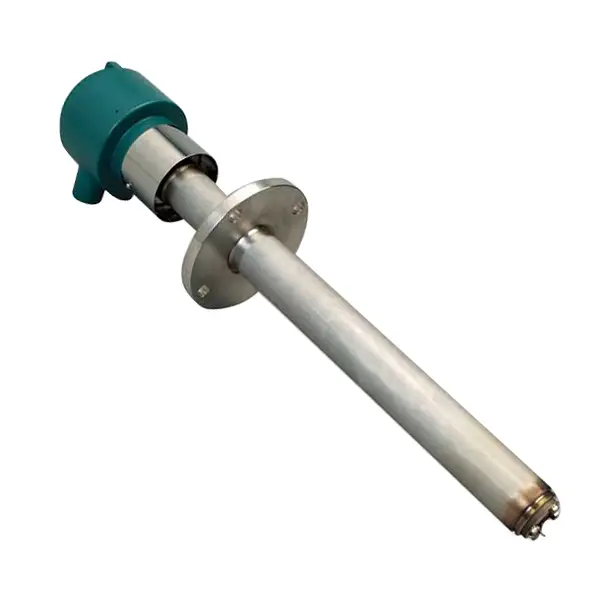
Note: The MTL Z1110 analyser is used in this type of application.
OTHER TECHNICAL NOTES
TN01 “Oxygen Sensors – Theory and Application”
TN02 “Using MTL Zirconia Oxygen Analysers to Measure
the Dewpoint of Furnace Atmospheres”
Eaton Electric Limited, Great Marlings, Butterfield, Luton Beds, LU2 8DL, UK. Tel: + 44 (0)1582 435600 Fax: + 44 (0)1582 422283 www.mtl-inst.com E-mail: [email protected]
© 2016 Eaton All Rights Reserved Publication No. TN03 520-1002 Rev 3 191016 October 2016
EUROPE (EMEA): +44 (0)1582 723633 [email protected]
THE AMERICAS: +1 800 835 7075 [email protected]
ASIA-PACIFIC: +65 6 645 9888 [email protected]
The given data is only intended as a product description and should not be regarded as a legal warranty of properties or guarantee. In the interest of further technical developments, we reserve the right to make design changes.