
Starkey Premium Standard Charger & Custom Charger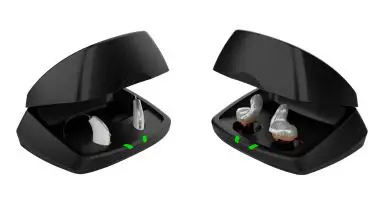
Introduction
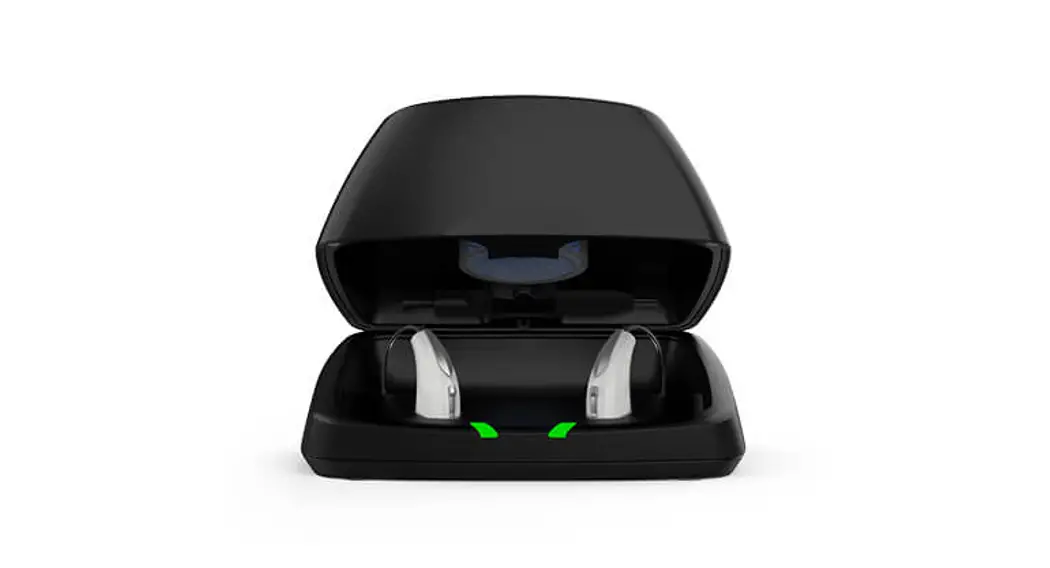
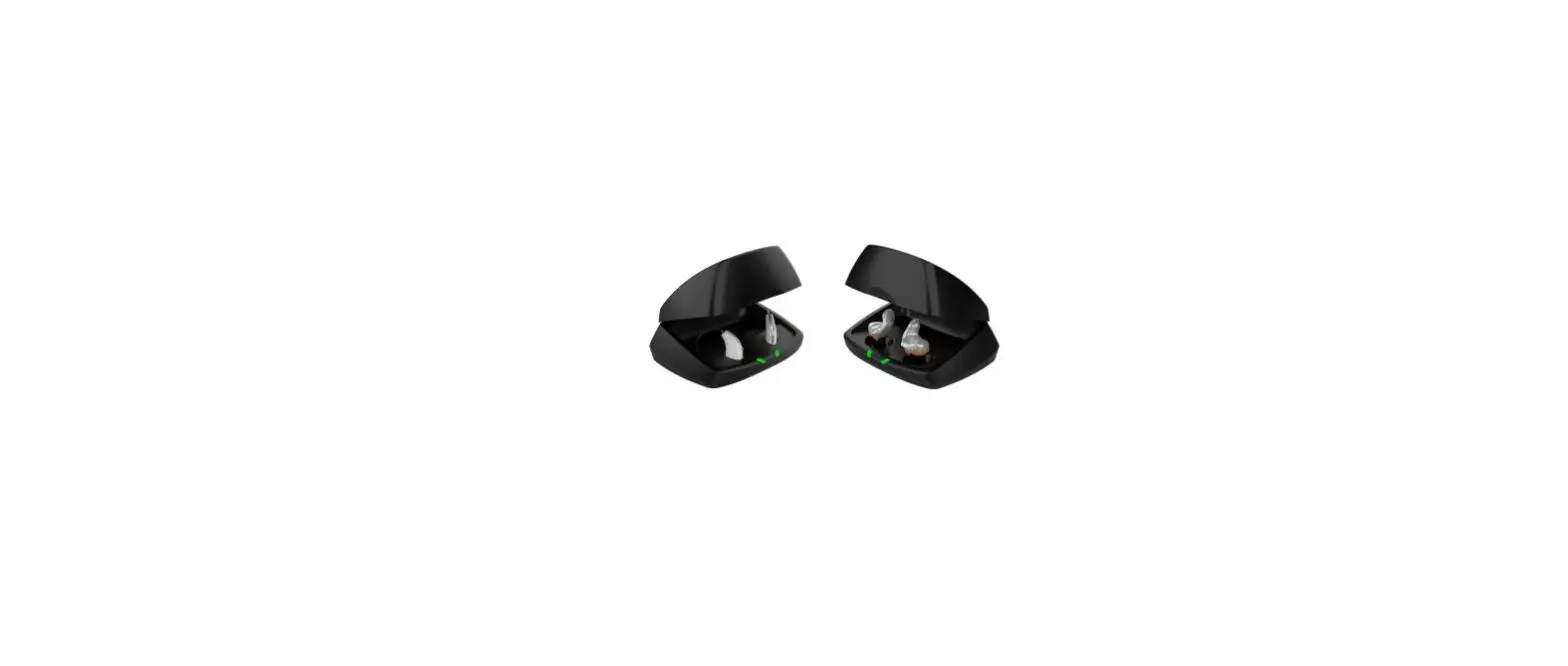
The Premium Standard Charger is designed to be a portable charger for standard-style, lithium-ion rechargeable hearing aids. The Premium Custom Charger is designed to be a portable charger for custom-style, lithium-ion rechargeable hearing aids. Both premium chargers work when plugged into a wall, or on the go with an onboard battery that will charge a pair of hearing aids up to three times.
Features, Controls and Identification
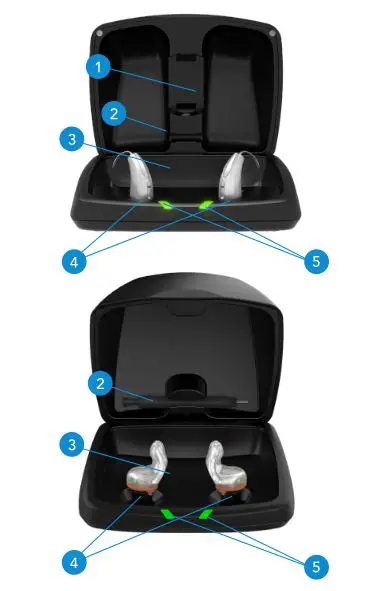
- Desiccant puck holder
- Cleaning brush
- Earbud/earmold reservoir
- Charging ports/posts
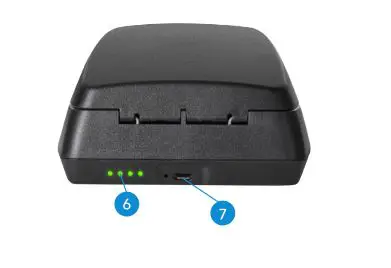
- Hearing aid charging LEDs
- On-board battery LEDs
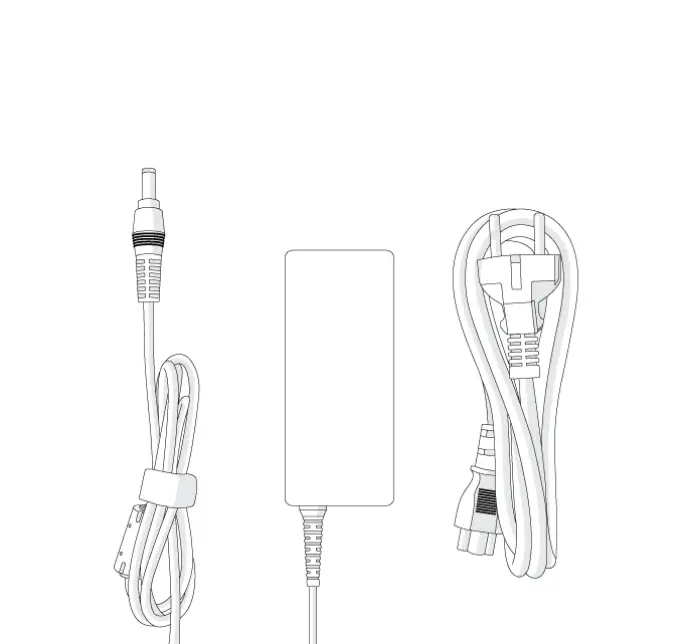
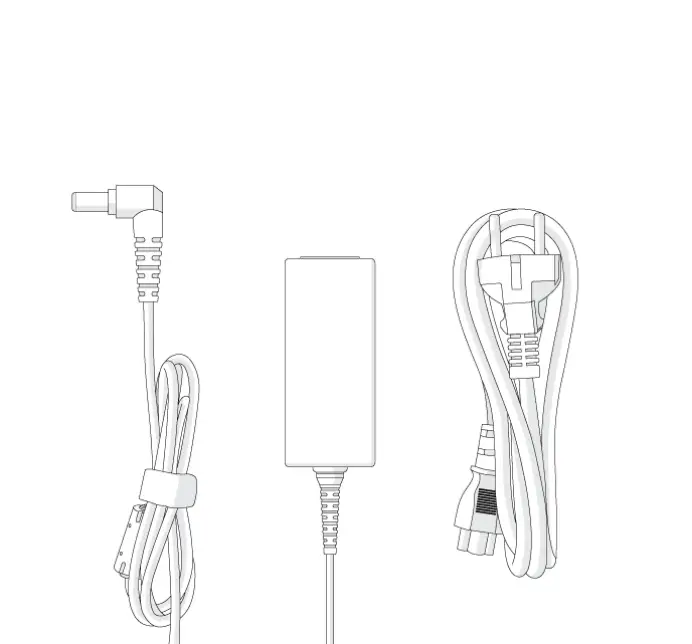
- Power supply port
Operation
Charging Your Hearing Aids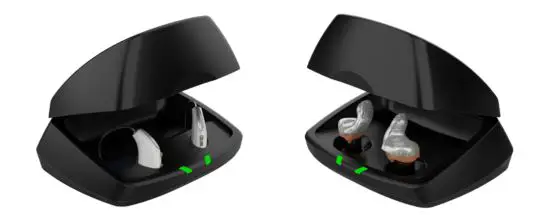
- Place your hearing aids in the charger:
- Premium Standard Charger: place hearing aids into charging ports with earbuds/earmolds resting in the reservoir.
- Premium Custom Charger: place hearing aid faceplate facing downward so battery contacts on hearing aid align with charging posts within charger.
- When hearing aids are placed in the charger, they will automatically turn off and begin to charge.When hearing aids are removed from the charger, they will automatically power on.
- The LEDs corresponding to each hearing aid:
- Glowing Green = Charging
- Solid Green = Fully Charged *
- Blinking Red = Fault State.
To reset, remove the hearing aids from charger, wait until LED turns off and re-insert aids. If Fault State continues, call your hearing professional.
- Charging occurs with the lid open or closed; hearing aids will be fully charged in under 3 ½ hours
- It is safe to store hearing aids in the charger after they are fully charged and any time that you are not wearing them.
- If you will not be wearing your hearing aids for an extended period of time (i.e.weeks), remove both the plug from the premium charger and the hearing aids from the charging ports/posts.You will need to manually power off the hearing aids by pressing the user control on each hearing aid for three seconds.
- To illuminate LEDs when the premium charger is not plugged in, remove a hearing aid from its charging port/post for three seconds and then re-insert it. LEDs illuminate for 10 seconds before turning off.
- The desiccant puck provided with the Premium Standard Charger will be effective for 3–6 months depending on moisture in the hearing aids and humidity. When the desiccant puck fades from blue to white, it should be replaced.
Note: If you are charging without the cord, the LEDs will turn off when the hearing aids are fully charged to preserve the on-board battery.
Charging Your Premium Charger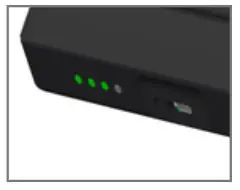
- While charging the onboard battery with the power cord, the 4 LEDs will be:
- Glowing while charging
- Solid when charged
- When charging the hearing aids without the power cord attached, the LEDs turn off after 10 seconds.
- To illuminate LEDs, remove a hearing aid from its charging port/post for three seconds and then replace it. LEDs illuminate for 10 seconds before turning off again.
- 4 Solid > 75%
- 3 Solid < 75%
- 2 Solid < 50%
- 1 Solid < 25%
- 1 Blinking = Charge Low
Power On & Off
- ON – The hearing aids will power on automatically after removing them from the charger. There is a delay that allows you time to insert your hearing aid into your ear.
- ON – If the hearing aid is manually powered off, pressing the user control for three seconds will power it on. The delay exists to give you time to insert the hearing aid into your ear.
- OFF – The hearing aids will power off automatically when placed in the charging port/post and charging begins.
- OFF – The hearing aids can be powered off manually by pressing the user control for three seconds.
- Keep your charger clean. Heat, moisture and foreign materials can result in poor performance.
- Using the provided cleaning brush keep the charging ports/posts and hearing aid microphones clear of debris.
- Do not use water, solvents or cleaning fluids to clean the charger.
- Keep lid closed as much as possible to avoid dust and debris build-up.
- Store your charger in a clean and dry location, such as a dresser or shelf rather than the bathroom or kitchen.
- To ensure the longest life of your rechargeable hearing aid batteries and the batteries in your premium charger:
- Fully charge hearing aid batteries every night.
- Do not expose to excess heat, i.e. do not store on a window sill or in a hot car.
Troubleshooting
Premium Charger Troubleshooting Guide
| SYMPTOM | POSSIBLE CAUSES | SOLUTIONS |
| No LED indicator when hearing aids are inserted into the charging port/post | Incorrect hearing aid orientation | Reposition your hearing aids in the charging port/ post. |
| Depleted on- board battery | Connect the power supply cord to your premium charger and plug it into the wall. The on-board battery LEDs will turn on for a few seconds to indicate connection to the power source. If they do not, contact your hearing professional. | |
| Red blinking LED next to charging port/post | Fault occurred | Remove your hearing aids from the charging port/ post, wait until the LED turns off, then re-insert. If the red blinking LED persists, contact your hearing professional. |
| While charging hearing aids, no LEDs are illuminated | On-board battery save mode | To illuminate LEDs, remove hearing aid from its charging port/post for three seconds, then re-insert it. LEDs will remain illuminated for 10 seconds. |
Premium Charger Troubleshooting Guide
| SYMPTOM | POSSIBLE CAUSES | SOLUTIONS |
| Hearing aids whistling in the charger | Incorrect hearing aid orientation | Reposition your hearing aids in the charging ports/ posts. Confirm that the charging LED begins to glow. |
| Depleted on- board battery | Your premium charger’s on-board battery may be fully depleted. Apply external power to your premium charger. If you do not have the cord, push and hold the hearing aid’s user control for three seconds to turn it off. |
Safety Information
INTENDED USE: This hearing aid charger is intended to charge lithium-ion rechargeable hearing aids, and is to be used with the patient’s selected hearing aid solution. For information about your hearing aid, please consult the hearing aid specific Operations Manual.Your premium charger should not be used during an MRI procedure or in a hyperbaric chamber. Your premium charger is not formally certified to operate in explosive atmospheres such as may be found in coal mines or certain chemical factories.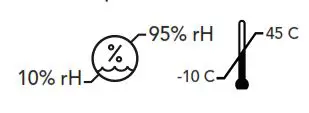 Your charger should be stored and transported within the temperature, humidity, and pressure ranges of -10°C (14°F) to +45°C (113°F),10%-95% rH, and 70 kPa – 106 kPa (equivalent to altitudes from 1,200 ft (380 m) below sea level to 10,000 ft (3,000 m).
The charging temperature range is between 10°C (50°F) and 40°C (104°F) and between 10%-95% RH and 70 kPa-106 kPa.
Caution:
- If the charger is hot, do not touch it until cool.
- If the charger is not working, do not disassemble.Due to a shock hazard, please send in for repair.
- Keep out of reach from children. Do not ingest anything in the package, including desiccant, cleaning tool, etc.
- Any cords and AC adapters must be approved or listed by a Nationally Recognized Testing Laboratory.
Any serious incident that has occurred in relation to your Starkey device should be reported to your local Starkey Hearing Technologies representative and the Competent Authority of the Member State in which you are established. A serious incident is defined as any malfunction, deterioration in the characteristics and/or performance of the device, or inadequacy in the device Operations Manual/ labeling which could lead to the death or serious deterioration in the state of health of the user, OR could do so upon recurrence.
We are required by regulations to provide the following warnings:
WARNING: Use of wireless hearing aids or charger directly next to other electronic equipment should be avoided because it could result in improper performance. If such use is necessary, note as to whether your hearing aids and the other equipment are operating normally.
WARNING: Use of accessories, components or replacement parts other than those provided by the manufacturer of your hearing aids or charger could result in increased electromagnetic emissions and decreased electromagnetic immunity and could result in degradation of performance.
WARNING: If Portable Radio Frequency communications equipment is used closer than 30 cm (12 inches) from your hearing aid or charger, degradation of the performance of your hearing aid or charger could result. If this occurs, move away from the communications equipment.
DO NOT OPEN HEARING AID OR CHARGER,NO USER-SERVICEABLE PARTS INSIDE
The Premium Standard Charger and Premium Custom Charger have a rating of IP 21 per IEC 60529. This means the unit is protected against solid objects over 12 mm, such as fingers and falling water drops, such as condensation.
The service life of both the Premium Standard Charger and Premium Custom Charger is 3 years.
The Premium Standard Charger and Premium Custom Charger have been tested to, and have passed, the following emissions and immunity tests:
- IEC 60601-1-2 radiated and conducted emissions requirements for a Group 1 Class B device as stated in CISPR 11.
- Harmonic distortion and voltage fluctuations affecting the power input source as stated in Table 2 of IEC 60601-1-2.
- RF radiated immunity at a field level of 10 V/m between 80 MHz and 2.7 GHz as well as higher field levels from communications devices as stated in Table 9 of IEC 60601-1-2.
- Immunity to power frequency magnetic fields at a field level of 30 A/m and proximity magnetic fields as stated in Table 11 of IEC 60601-1-2.
- Immunity to ESD levels of +/- 8 kV conducted discharge and +/- 15 kV air discharge.
- Immunity to Electrical fast transients on the power input at a level of +/- 2 kV at a 100 Hz repetition rate.
- Immunity to Surges on the power input of +/- 1 kV line to line.
- Immunity to conducted disturbances induced by RF fields on the power input as stated in Table 6 of IEC 60601-1-2.
- Immunity to voltage dips and interruptions on the power input as stated in Table 6 of IEC 60601-1-2.
FCC NOTICE
These devices comply with part 15 of the FCC rules and with ISED Canada license-exempt RSS standards Operation is subject to the following two conditions:
- This device may not cause harmful interference.
- This device must accept any interference received, including interference that may cause undesired operation of the device.
Note: The manufacturer is not responsible for any radio or TV interference caused by unauthorized modifications to this equipment. Such modifications could void the user’s authority to operate the equipment.
Regulatory Information
Starkey Hearing Technologies: 6700 Washington Ave. South Eden Prairie, MN 55344 USA 
 Starkey Laboratories (Germany) G.m.b.H: Weg beim Jäger 218-222-22335 Hamburg Germany.
 Class II Device
 Waste from electronic equipment must be handled according to local regulations
 Consult Operations Manual
 Keep dry
INSTRUCTIONS FOR DISPOSAL OF OLD ELECTRONICS
Starkey Hearing Technologies encourages, the EU requires, and your local community laws may require, that your hearing aids and charger be disposed of via your local electronics recycling/disposal process. The instructions below are provided for the benefit of disposal/recycling
personnel. Please include this manual when disposing of your charger.
FOR DISPOSAL/RECYCLING PERSONNEL ONLY
These premium chargers contain a Lithium-Ion Polymer battery. To remove the battery from the charger, follow one of two options:
Option 1
- Insert pry bars between the plastic and the microUSB metal housing (top and bottom)
- Pry apart to break the seam
- Clip battery wires and dispose battery
Option 2
- Using the style groove as a guide, sever the plastic case on all 4 sides with a dremel blade, ultrasonic knife, hot wire, or band saw blade.
- In each case, establish a limit guide so entrance over 3/32 inch beyond the outer shell is prevented.
- Clip battery wires and dispose battery.
| Symbol | Symbol Meaning | Applicable Standard | Symbol Number |
| Manufacturer | BS EN ISO 15223-1:2021 | 5.1.1 |
| Authorized representative in the European Community | BS EN ISO 15223-1:2021 | 5.1.2 |
| Date of Manufacture | BS EN ISO 15223-1:2021 | 5.1.3 |
 | Catalogue Number | BS EN ISO 15223-1:2021 | 5.1.6 |
 | Serial Number | BS EN ISO 15223-1:2021 | 5.1.7 |
 | Medical Device | BS EN ISO 15223-1:2021 | 5.7.7 |
| Keep Dry | BS EN ISO 15223-1:2021 | 5.3.4 |
 | Temperature Limit | BS EN ISO 15223-1:2021 | 5.3.7 |
 | Humidity Limitation | BS EN ISO 15223-1:2021 | 5.3.8 |
 | Caution | BS EN ISO 15223-1:2021 | 5.4.4 |
 | General warning sign | EC 60601-1, Reference no. Table D.2, Safety sign 2 | ISO 7010- W001 |
| Refer to instruction manual/booklet | EC 60601-1, Reference no. Table D.2, Safety sign 10 | ISO 7010-M002 |
| Collect Separately | DIRECTIVE 2012/19/EU (WEEE) | Annex IX |
| Class II equipment | IEC 60417 Reference no. Table D.1 | Symbol 9 (IEC 60417- 5172) |
 | Direct current | IEC 60601-1 Reference no. Table D.1 | IEC 60417- 5031 |
 | NOM Certification symbol | Norma Oficial Mexicana | N/A |
 | Korea KCC Mark | KS A 0062 | N/A |
 | Degree of protection | IEC 60601-1 (IEC 60529) Table D.3 | Code 2 |
 | Recycling Symbol | European Parliament and Council Directive 94/62/EC | Annex I-VII |