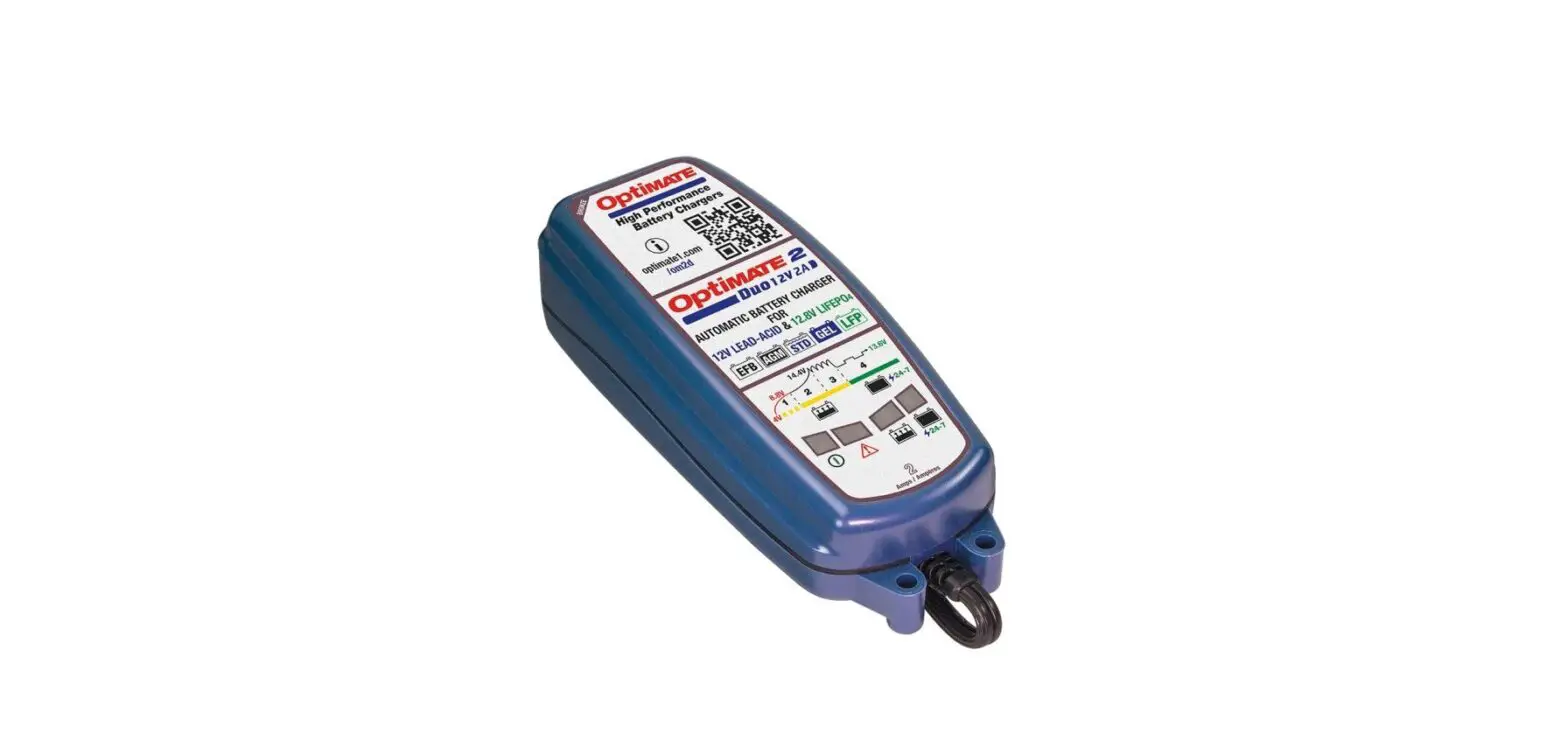
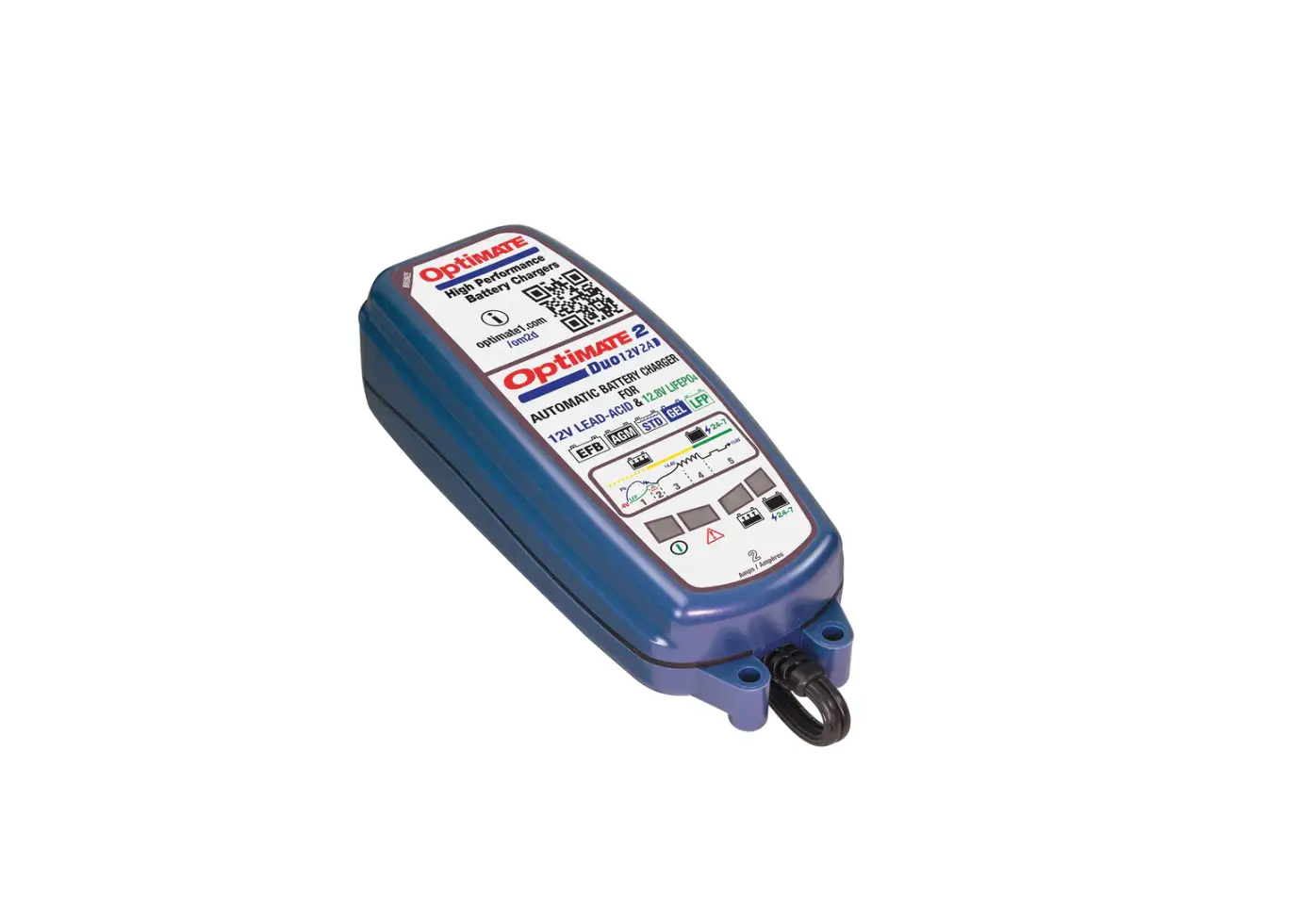
TM409 Duo Battery Charger
Product Information
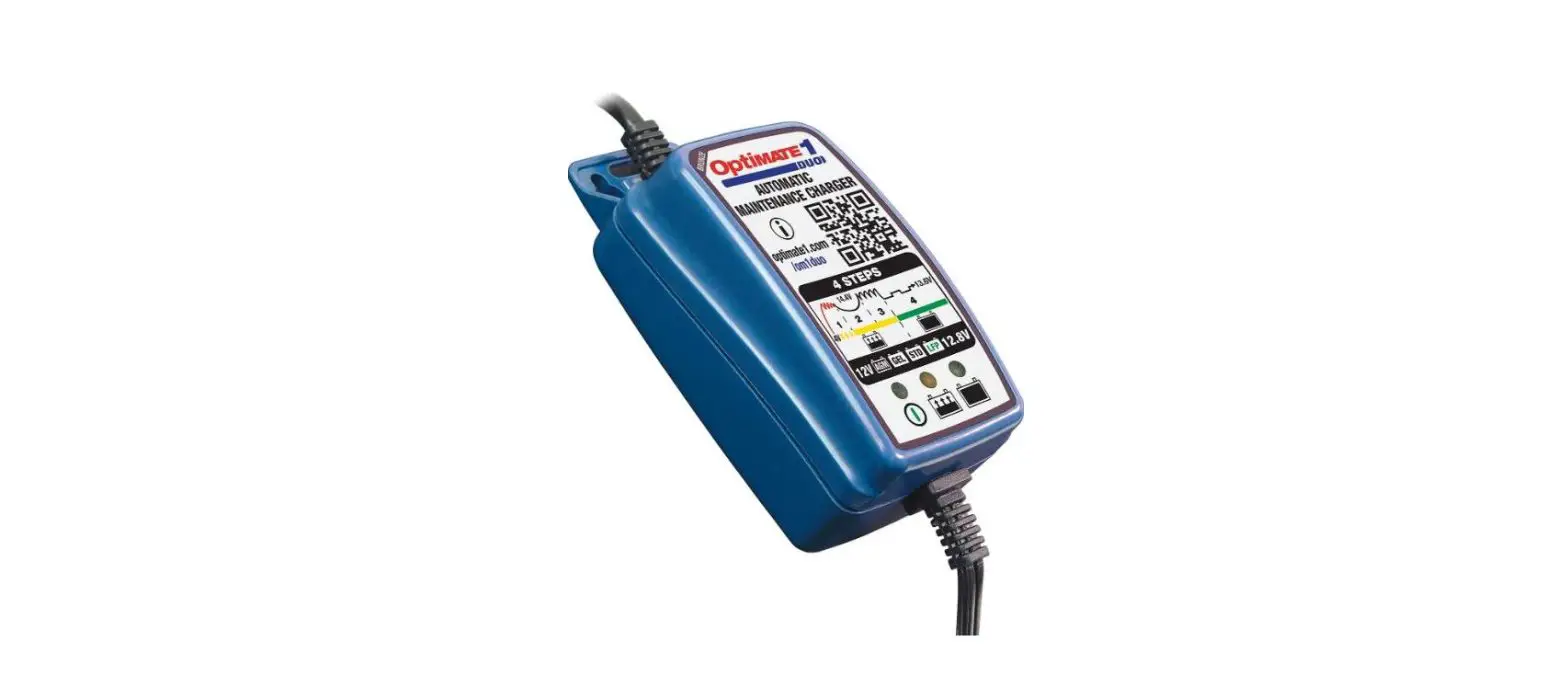
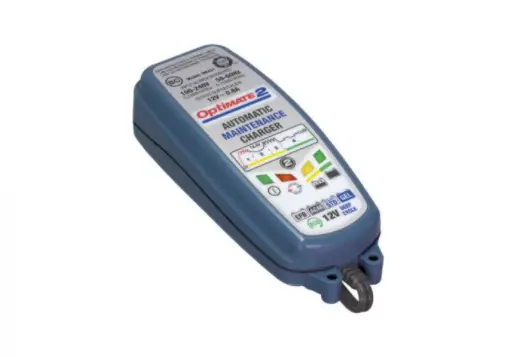
The OptiMate 1 DUO is an automatic maintenance charger
compatible with 12V lead-acid and 12.8V LiFePO4 (Lithium Ferrous
Phosphate) batteries. It is not recommended for use with NiCd,
NiMH, any other Li-ion types, or non-rechargeable batteries. The
charger has a DC input of 12V 0.6A and can charge
STD/AGM/GEL/LiFePO4 2-20Ah batteries. It has a charging voltage of
14.4V and a maintenance voltage of 13.6V. The charger has LED
indicators to show the charging progress and battery status.
Product Usage Instructions
- Read and follow the safety instructions provided in the user
manual before using the charger. - Ensure that the charger is compatible with your battery
type. - Connect the charger to a power outlet with an AC input rating
greater than or equal to 2A but less than 3A. - Connect the charger to the battery, making sure to remove the
grounded terminal first if necessary. - Turn on the charger and wait for the LED indicators to show the
charging progress and battery status. - After charging is complete, turn off the charger and disconnect
it from the battery and power outlet.
Note: Do not operate the charger with a damaged cord or plug. If
the charger has been dropped or damaged in any way, take it to a
qualified serviceman for repair. Also, do not disassemble the
charger as incorrect reassembly may result in a risk of electric
shock or fire.
DUO
MODEL: TM409
AC: 100 240VAC 50-60Hz 0.19A @ 100V / 0.12A @ 240V
DC: 12V 0.6A
+ – 1 x 12V / 12.8V
STD / AGM / GEL / LiFePO4 2 – 20Ah
14.4V
12 3
4V
13.6V
4
INSTRUCTIONS FOR USE IMPORTANT: Read completely before charging MODE D’EMPLOI IMPORTANT: à lire avant d’utiliser l’appareil MODO DE EMPLEO IMPORTANTE: a leer antes de utilizar el aparato
Automatic charger for 12V lead-acid & 12.8V LiFePO4 batteries Chargeur automatique pour batteries 12V plomb-acide & 12.8V LiFePO4 Cargador automático para baterías 12V plomo-ácido & 12.8V LiFePO4
copyright © 2021 TecMate International TM409-IN1-210712
BRONZE
DUO
AUTOMATIC MAINTENANCE CHARGER
optimate1.com /om1duo
1
4V
4 STEPS
14.4V
2 3
13.6V
4
1 23
LED #1 : 100 – 240V 50-60Hz LED #2 : CHARGE LED #3 : OptiMate ‘365’ Maintenance
2
% : VOLTS LiFePO4
13.6V 100%
13.2V 75%
13.1V 50%
AGM
100%
STD
100% 75%
13.0V 12.8V 12.6V
30% 10%
75% 50% 12.4V
50% 25%
25% 10%
12.2V 12.0V
3
DUO
IMPORTANT SAFETY INSTRUCTIONS
SAVE THESE INSTRUCTIONS. THIS PORTION OF THE MANUAL CONTAINS IMPORTANT SAFETY INSTRUCTIONS FOR THE OPTIMATE 1 DUO BATTERY CHARGER. IT IS OF THE UTMOST IMPORTANCE THAT EACH TIME, BEFORE USING THE CHARGER, YOU READ AND EXACTLY FOLLOW THESE INSTRUCTIONS.
AUTOMATIC CHARGER FOR 12V LEAD-ACID & 12.8V LiFePO4 (LITHIUM FERROUS PHOSPHATE) BATTERIES.
DO NOT USE FOR NiCd, NiMH, ANY OTHER LI-ION TYPES OR NON-RECHARGEABLE BATTERIES.
1. CAUTION : DO NOT CONNECT TO GROUND. 2. Do not expose charger to rain or snow. 3. Use of an attachment not recommended or sold by the battery charger manufacturer may result in a risk of fire, electric shock, or injury to
persons. 4. To reduce risk of damage to electric plug and cord,pull by plug rather than cord when disconnecting charger. 5. An extension cord should not be used unless absolutely necessary. Use of improper extension cord could result in a risk of fire and electric
shock. If extension cord must be used make sure that : a) pins on plug of extension cord are the same number, size and shape as those of plug on charger. b) the extension cord is property wired and in good electrical condition,and c) the conductor wire size is large enough for the AC ampere rating of the charger as specified in the table below.
SAFETY
AC INPUT RATING IN AMPERES
Equal to or greater than
But less than
2A
3A
LENGTH OF CORD, FEET (m)
25 (17.6) 50 (15.2) 100 (30.5)
AWG SIZE OF CORD
18 18 14
6. Do not operate charger with damaged cord or plug – replace the cord or plug immediately. 7. Do not operate charger if it has received a sharp blow, been dropped,or otherwise damaged in any way; take it to a qualified serviceman. 8. Do not disassemble charger; take it to a qualified serviceman when service or repair is required.
Incorrect reassembly may result in a risk of electric shock or fire. 9. To reduce risk of electric shock, unplug the charger from outlet before attempting any maintenance or cleaning.
Turning off controls will not reduce this risk.Clean only with slightly moist,not wet, cloth.Do not use solvents. 10. WARNING – RISK OF EXPLOSIVE GASES.
a) WORKING IN VICINITY OF A LEAD-ACID BATTERY IS DANGEROUS. BATTERIES GENERATE EXPLOSIVE GASES DURING NORMAL BATTERY OPERATION. FOR THIS REASON, IT IS OF UTMOST IMPORTANCE THAT YOU FOLLOW THE INSTRUCTIONS EACH TIME YOU USE THE CHARGER. b) To reduce risk of battery explosion, follow these instructions and those published by the battery manufacturer and manufacturer of any equipment you intend to use in vicinity of the battery. Review cautionary marking on these products and on engine.
4
SAFETY
11. PERSONAL PRECAUTIONS.
a) Someone should be within range of your voice OR close enough to come to your aid when you work near a lead-acid battery. b) Have plenty of fresh water and soap nearby in case battery acid contacts skin, clothing or eyes. c) Wear complete eye protection and clothing protection. Avoid touching eyes while working near battery. d) If battery acid contacts or enters eye, flood eye with cold running water for at least 10 minutes and get medical attention immediately. If battery acid contacts skin or clothing, wash immediately with soap & water. If acid enters an eye, immediately flood eye with running cold water for at least 10 minutes & get medical attention immediately. e) NEVER smoke or allow a spark or flame in vicinity of battery or engine. f) Be extra cautious to reduce risk of dropping a metal tool onto battery. It might spark or short-circuit the battery or other electrical part that may cause explosion. g) Remove personal metal items such as rings, bracelets, necklaces, and watches when working with a lead-acid battery. A lead-acid battery can produce a short-circuit current high enough to weld a ring or the like to metal, causing a severe burn. i) NEVER charge a frozen battery.
12. PREPARING TO CHARGE
a) If necessary to remove battery from vehicle to charge,always remove grounded terminal from battery first. Make sure all accessories in the vehicle are off, so as not to cause an arc.
b) Be sure area around battery is well ventilated while battery is being charged. Gas can be forcefully blown away by using a piece of cardboard or other non-metallic material as a fan.
c) Clean battery terminals. Be careful to keep corrosion from coming in contact with eyes. d) Add distilled water in each cell until battery acid reaches level specified by battery manufacturer. This helps purge excessive gas from cells. Do not overfill. For a battery without cell caps, such as valve regulated lead acid (VRLA) or absorbed glass mat (AGM) batteries, carefully follow manufacturer’s recharging instructions. e) Study all battery manufacturer’s specific precautions such as removing or not removing cell caps while charging and recommended rates of charge. f) Determine voltage of battery by referring to vehicle or other user’s manual and BEFORE MAKING THE BATTERY CONNECTIONS, MAKE SURE THAT THE VOLTAGE OF THE BATTERY YOU ARE GOING TO CHARGE MATCHES THE OUTPUT VOLTAGE OF THE CHARGER. 13. CHARGER LOCATION. a) Locate charger as far away from battery as DC cables permit. b) Never place charger directly above batterv being charged; gases from battery will corrode and damage the charger. c) Never allow battery acid to drip on charger when reading gravity or filling battery. Do not operate charger in a closed-in area or restrict ventilation in any way. d) Do not set a battery on top of charger. IMPORTANT : Place charger on a hard flat surface or mount onto a vertical surface. Do not place on plastic, leather or textile surface.
14. DC CONNECTION PRECAUTIONS
a) Connect and disconnect DC output clips only after setting any charger switches to off position and removing AC cord from electric outlet. Never allow clips to touch each other, however should this happen no damage will result to the charger circuit & the automatic charging programme will just reset to «start». b) Attach clips to battery and chassis as indicated in 15(e), 15(f), and 16(b) through 16(d).
NOTE : This battery charger has an automatic safety feature that will prevent it from operating if the battery has been inversely connected. Set charger switches to off position and/or remove AC cord from electrical outlet,
disconnect the battery clips, then reconnect correctly according to the instructions below.
15. FOLLOW THESE STEPS WHEN BATTERY IS INSTALLED IN VEHICLE. A SPARK NEAR A BATTERY MAY CAUSE BATTERY EXPLOSION. TO REDUCE RISK OF A SPARK NEAR BATTERY :
a) Position AC and DC cords so as to reduce risk of damage by hood, door or moving engine part. b) Stay clear of fan -blades, belts,pulleys,and other parts that can cause injury to persons.
5
SAFETY
c) Check polarity of battery posts.POSITIVE (POS, P, +) battery post usually has larger diameter than NEGATIVE (NEG, N,) post. d) Determine which post of battery is grounded (connected) to the chassis. If negative post is grounded to chassis (as in most vehicles), see (e). If positive post is grounded to the chassis,see (f). e) For negative-grounded vehicle, connect POSITIVE (RED) clip from battery charger to POSITIVE (POS, P, + ) ungrounded post of battery. Connect NEGATIVE (BLACK) clip to vehicle chassis or engine block away from battery. Do not connect clip to carburetor, fuel lines, or sheet-metal body parts. Connect to a heavy gage metal part of the frame or engine block. f) For positive-grounded vehicle, connect NEGATIVE (BLACK) clip from battery charger to NEGATIVE (NEG. N , -) ungrounded post of battery. Connect POSITIVE (RED) clip to vehicle chassis or engine block away from battery. Do not connect clip to carburetor, fuel lines, or sheet-metal body parts. Connect to a heavy gage metal part of the frame or engine block. g) When disconnecting charger, turn switches to off, disconnect AC cord,remove clip from vehicle chassis,and then remove clip from battery terminal. h) See operating instructions for length of charge information. 16. FOLLOW THESE STEPS WHEN BATTERY IS OUTSIDE VEHICLE. A SPARK NEAR THE BATTERY MAY CAUSE BATTERY EXPLOSION. TO REDUCE RISK OF A SPARK NEAR BATTERY : a) Check polarity of battery posts. POSITIVE (POS, P, +) battery post usually has a larger diameter than NEGATIVE (NEG,N, -) post.
b) This battery charger has an automatic safety feature that will prevent it from operating if the battery has been inversely connected. The charger does not allow charge current unless a voltage of at least 4V is sensed.
c) Connect POSITIVE (RED) charger clip to POSITIVE (POS, P, +) post of battery. d) Position yourself and free end of cable as far away from battery as possible – then connect NEGATIVE (BLACK) charger clip to free of cable. e) Do not face battery when making final connection. f) When disconnecting charger, always do so in reverse sequence of connecting procedure & break first connection while as far away from battery as practical. g) A marine (boat) battery must be removed & charged on shore. To charge it on board requires equipment specially designed for marine use.
6
DUO
AUTOMATIC MAINTENANCE CHARGER FOR 12V LEAD-ACID / 12.8V LITHIUM (LIFEPO4) BATTERIES FROM 2Ah TO 20Ah, AS FOUND IN:
DO NOT USE FOR NiCd, NiMH, other Li-Ion OR NON-RECHARGEABLE BATTERIES. IMPORTANT: READ THE FOLLOWING INSTRUCTIONS BEFORE USING THE CHARGER This appliance can be used by children aged from 8 years and above and persons with reduced physical, sensory or mental capabilities or lack of experience and knowledge if they have been given supervision or instruction concerning use of the appliance in a safe way and understand the hazards involved. Children shall not play with the appliance. Cleaning and user maintenance shall not be made by children without supervision. SAFETY WARNING AND NOTES: Batteries emit EXPLOSIVE GASES – prevent flame or sparks near batteries. Charge the battery in a well ventilated area. Disconnect AC power supply before making or breaking DC/battery
connections. Battery acid is highly corrosive. Wear protective clothing and eyewear and avoid contact. In case of accidental contact, wash immediately with soap and water. Check that the battery posts are not loose; if so, have the battery professionally assessed. If the battery posts are corroded, clean with a copper wire brush; if greasy or dirty clean with a rag damped in detergent. Use the charger only if the input and output leads and connectors are in good,
undamaged condition. If the cable is damaged, it is essential to have it replaced without delay by the manufacturer, his authorised service agent or a qualified workshop, to avoid danger. Protect your
charger from acid and acid fumes and from damp and humid conditions both during use and in storage. Damage resulting from corrosion, oxidation or internal electrical short-circuiting is not covered by warranty. Distance the charger from the battery during charging to avoid contamination by or exposure to acid or acidic vapours. If using it in the horizontal orientation, place the charger on a hard, flat surface, but NOT on plastic, textile or leather. Use the fixing holes provided in the enclosure base to attach the charger to any convenient, sound vertical surface.
EXPOSURE TO LIQUIDS: Failure of the charger due to oxidation resulting from the penetration of liquid into the electronic components,
connectors or plugs, is not covered by warranty.
BATTERY CONNECTIONS: 2 interchangeable connection sets are available, supplied with the charger is a set of battery clips for charging the
battery off-vehicle, the other connection set comes with metal eyelet lugs for permanent connection to the battery posts, and re-sealable weatherproof cap on the connector that connects to the charger output cable. This connection set allows easy and sure connection of the charger to maintain the battery on-vehicle. The resealable weatherproof cap is designed to protect the connector from dirt and damp whenever the charger is not attached. Consult a professional service agent for assistance in attaching the metal eyelets to the battery posts. Secure the connector with weatherproof cap so that it cannot foul any moving part of the vehicle or the cable can be pinched or damaged by sharp edges. The in-line fuse in the eyelets connection set protects the battery against such accidental shorting across positive and negative conductors. Replace any burnt fuse only with a similar new fuse of 15A rating.
7
CONNECTING THE CHARGER TO THE BATTERY 1. Disconnect AC power supply before making or breaking DC / battery connections.
2. If charging a battery in the vehicle with the battery clips, before making connections, first check that the battery clips can be safely and securely positioned clear from surrounding wiring, metal tubing or the chassis. Make connections in the following order:
First connect to the battery terminal not connected to the chassis (normally positive), then connect the other battery clip (normally negative) to the chassis well away from the battery and fuel line. Always disconnect in reverse sequence.
3. When charging a battery out of the vehicle with the battery clips, place it in a well ventilated area. Connect the charger to the battery: RED clamp to POSITIVE (POS, P or +) terminal and BLACK clamp to NEGATIVE (NEG, N or ) terminal. Make sure the connections are firm and secure. Good contact is important.
4. If the battery is deeply discharged, remove from the vehicle and inspect the battery before connecting the charger for a recovery attempt. Visually check the battery for mechanical defects such as a bulging or cracked casing, or signs of electrolyte leakage. If the battery has filler caps and the plates within the cells can be seen from the outside, examine the battery carefully to try to determine if any cells seem different to the others (for example, with white matter between the plates, plates touching). If mechanical defects are apparent do not attempt to charge the battery, have the battery professionally assessed.
5. If the battery is new, before connecting the charger read the battery manufacturer’s safety and operational instructions carefully. If applicable, carefully and exactly follow acid filling instructions.
OPERATING INSTRUCTIONS
USING THE OPTIMATE 1: PROCEEDING TO CHARGE
AC SUPPLY: GLOBAL 100-240Vac 50-60Hz.
For safety reasons, the OptiMate output will only activate if a battery retaining at least 4V is connected.
VERY FLAT NEGLECTED BATTERIES: Pay particularly close attention to the following which is especially important for
relatively small batteries such as those used on motorcycles, lawn tractors, jet-ski’s, snowmobiles and similar: A battery left deep-discharged for an extended period may develop permanent damage in one or more cells. Such batteries may heat up excessively during high current charging. Monitor the battery temperature during the first hour, then hourly there-after. Check for unusual signs, such as bubbling or leaking electrolyte, heightened activity in one cell compared to others, or hissing sounds. If at any time the battery is uncomfortably hot to touch or you notice any unusual signs, DISCONNECT THE CHARGER IMMEDIATELY.
ECO POWER SAVING MODE WHEN THE CHARGER IS CONNECTED TO AC SUPPLY: The power converter switches to
ECO mode when the charger is not connected to a battery resulting in a very low power draw of less than 0.5W, equivalent to power consumption of 0.012 kWh per day. When a battery is connected to the charger power consumption depends on the current demand of the battery and its connected vehicle / electronic circuitry. After the battery has been charged and the charger is in long term maintenance charge mode (to keep the battery at 100% charge) the total power consumption is estimated to be 0.060 kWh or less per day.
LED #1 LED #2 LED #3
8
The LED indicators referred to below, and the clauses dealing with them, are sequenced as they may come on through the course of the program.
LED #1 – Power on. Confirms AC power supply to the charger.
For safety reasons, the OptiMate output will only activate if a battery retaining at least 4V is connected. No charging following connection to a battery -voltage below 4V or wrong output connections. Swap around to activate output.
LED #2 – Charge and charge verification STEP1: LOW VOLT SAVE (from 4V) to 8.8V (LED #2 flashing) : Current is limited to 200mA so that the battery may gently recover to a safe voltage level of 8.8 Volts, after which current up to 0.6A is delivered in pulses to prepare the battery to accept normal charge. Charge time: Minimum 15 minutes, maximum 2 hours.
STEP2: CHARGE: The BULK CHARGE stage ( LED #2) delivers a constant current of about 0.6 Amps maximum into the battery, up to a voltage of 14.2 -14.5V.
STEP3 : VERIFICATION: For 30 minutes the program verifies the charge level. If the battery requires further charging the programme reverts to BULK CHARGE for brief periods, delivering a variable current pulse to the battery. These reversions may occur as many times as is necessary to reduce the battery’s current demand below 200mA at 13.6V (which is consistent with a battery that has accepted as much charge as its basic condition allows). See expected Charging time below.
NOTE: For safety reasons there is an overall charge time limit of 24 hours, after which the program advances to STEP4.
LED# 3 – STEP4 : Voltage retention tests alternating half-hourly with battery maintenance
Voltage retention test – NO CHARGE CURRENT is delivered for up to 30 minutes or until the voltage drops below 13.3V.
Maintenance – float charge at a safe voltage limit of 13.6V and up to 0.6A is available . The battery can draw current as required to support small loads and counter self-discharge. Maintenance and voltage retention test periods continue alternating half-hourly until the battery is disconnected.
Battery problems / not charging : 1. LED #3 will not light or LED#2 and #3 alternate every 1-2 seconds: the battery may be unable to accept or hold sufficient
charge, or, in the case of a battery still connected to the vehicle’s wiring system, it may be signaling a loss of current through deteriorated wiring or a degraded switch or contact, or in-circuit current-consuming accessories. Disconnect OptiMate from AC supply and the battery, then : a) if still connected to vehicle wiring, remove the battery from the vehicle, inspect and if the battery appears physically undamaged, then for 1 hour, allow for the voltage to recover. b) if the battery is in a very cold environment, move the battery where temperature is at least 15°C (60°F) and then for 1 hour (or up to 24 hours if the battery was stored below freezing ) allow the battery to warm up naturally. DO NOT ATTEMPT TO WARM THE BATTERY ARTIFICIALLY. Then, reconnect OptiMate to the battery and then reconnect OptiMate to AC power. If the problem persists, read point 2 below. 2. This OptiMate charger’s primary function is to charge and maintain batteries that are in good health or might have been mildly over discharged. Go to www.optimate1.com and find the OptiMate battery saving charger model able to safely and correctly recover a severely sulphated lead-acid battery or an OptiMate Lithium charger that can safely recover a lithium battery from a severely discharged state.
Maintaining a battery for extended periods: The OptiMate will maintain a battery whos basic condition is good, for months
at a time. At least once every two weeks, check that the connections between the charger and battery are secure, and, in the case of
9
batteries with filler caps on each cell, disconnect the battery from the charger, check the level of the electrolyte and if necessary, top up the cells (with distilled water, NOT acid), then reconnect. When handling batteries or in their vicinity, always take care to observe the SAFETY WARNINGS above.
Charging time: The time required for the OptiMate 1 DUO to complete a charge on a flat but otherwise undamaged battery is
roughly equal to 1.5x the battery’s Ah rating, so a 14Ah battery should take no more than about 21 hours to progress to Step 3. Deep-discharged batteries may take significantly longer.
LIMITED WARRANTY
TecMate (International) SA, Sint-Truidensesteenweg 252, B-3300 Tienen, Belgium, makes this limited warranty to the original purchaser at retail of this product. This limited warranty is not transferable. TecMate (International) warrants this battery charger for three years from date of purchase at retail against defective material or workmanship. If such should occur the unit will be repaired or replaced at the option of the manufacturer. It is the obligation of the purchaser to forward the unit together with proof of purchase (see NOTE), transportation or mailing costs prepaid, to the manufacturer or its authorized representative. This limited warranty is void if the product is misused, subjected to careless handling, or repaired by anyone other than the factory or its authorized representative. The manufacturer makes no warranty other than this limited warranty and expressly excludes any implied warranty including any warranty for consequential damages. THIS IS THE ONLY EXPRESS LIMITED WARRANTY AND THE MANUFACTURER NEITHER ASSUMES NOR AUTHORIZES ANYONE TO ASSUME OR MAKE ANY OTHER OBLIGATION TOWARDS THE PRODUCT OTHER THAN THIS EXPRESS LIMITED WARRANTY. YOUR STATUTORY RIGHTS ARE NOT AFFECTED. NOTE: Details at www.tecmate.com/warranty. WARRANTY in Canada, USA, Central America & South America: TecMate North America, Oakville, ON, Canada, as a wholy owned subsidiary of TecMate International, assumes the responsibility for product warranty in these regions. More information on TecMate products can be found at www.tecmate.com.
10
SÉCURITÉ
INSTRUCTIONS IMPORTANTES CONCERNANT LA SÉCURITÉ
CONSERVER CES INSTRUCTIONS. CE MANUEL CONTIENT DES INSTRUCTIONS IMPORTANTES CONCERNANT LA SÉCURITÉ ET LE FONCTIONNEMENT DU CHARGEUR OPTIMATE 1.
CHARGEUR AUTOMATIQUE POUR BATTERIES 12V PLOMB-ACIDE & 12.8V LiFePO4
NE CONVIENT PAS POUR LES BATTERIES NiCd, NiMH, Li-Ion OU NON RECHARGEABLES.
AVERTISSEMENT :
N’utiliser l’appareil qu’à l’intérieur. Ne pas exposer à la pluie ou à la neige. Appareil de Classe II. a) CONSERVER CES INSTRUCTIONS. CE MANUEL CONTIENT DES INSTRUCTIONS IMPORTANTES CONCERNANT LA SÉCURITÉ ET LE FONCTIONNEMENT. b) IL EST DANGEREUX DE TRAVAILLER A PROXIMITÉ D’UNE BATTERIE AU PLOMB. LES BATTERIES PRODUISENT DES GAZ EXPLOSIFS EN SERVICE NORMAL. IL EST AUSSI IMPORTANT DE TOUJOURS RELIRE LES INSTRUCTIONS AVANT D’UTILISER LE CHARGEUR ET DE LES SUIVRE À LA LETTRE. c) POUR RÉDUIRE LE RISQUE D’EXPLOSION, LIRE CES INSTRUCTIONS ET CELLES QUI FIGURENT SUR LA BATTERIE. d) NE JAMAIS FUMER PRÈS DE LA BATTERIE OU DU MOTEUR ET ÉVITER TOUTE ÉTINCELLE OU FLAMME NUE À PROXIMITÉ DE CES DERNIERS. e) UTILISER LE CHARGEUR POUR CHARGER UNE BATTERIE AU PLOMB UNIQUEMENT. CE CHARGEUR N’EST PAS CONÇU POUR ALIMENTER UN RÉSEAU ÉLECTRIQUE TRÈS BASSE TENSION NI POUR CHARGER DES PILES SÈCHES. LE FAIT D’UTILISER LE CHARGEUR POUR CHARGER DES PILES SÈCHES POURRAIT ENTRAÎNER L’ÉCLATEMENT DES PILES ET CAUSER DES BLESSURES OU DES DOMMAGES. f) NE JAMAIS CHARGER UNE BATTERIE GELÉE. g) S’IL EST NÉCESSAIRE DE RETIRER LA BATTERIE DU VÉHICULE POUR LA CHARGER, TOUJOURS DÉBRANCHER LA BORNE DE MISE À LA MASSE EN PREMIER. S’ASSURER QUE LE COURANT AUX ACCESSOIRES DU VÉHICULE EST COUPÉ AFIN D’ÉVITER LA FORMATION D’UN ARC. h) PRENDRE CONNAISSANCE DES MESURES DE PRÉCAUTION SPÉCIFIÉES PAR LE FABRICANT DE LA BATTERIE, P. EX., VÉRIFIER S`IL FAUT ENLEVER LES BOUCHONS DES CELLULES LORS DU CHARGEMENT DE LA BATTERIE, ET LES TAUX DE CHARGEMENT RECOMMANDÉS. i) SI LE CHARGEUR COMPORTE UN SÉLECTEUR DE TENSION DE SORTIE, CONSULTER LE MANUEL DE L’USAGER DE LA VOITURE POUR DÉTERMINER LA TENSION DE LA BATTERIE ET POUR S’ASSURER QUE LA TENSION DE SORTIE EST APPROPRIÉE. SI LE CHARGEUR N’EST PAS MUNI D’UN SÉLECTEUR, NE PAS UTILISER LE CHARGEUR À MOINS QUE LA TENSION DE LA BATTERIE NE SOIT IDENTIQUE À LA TENSION DE SORTIE NOMINALE DU CHARGEUR. j) NE JAMAIS PLACER LE CHARGEUR DIRECTEMENT SOUS LA BATTERIE À CHARGER OU AU-DESSUS DE CETTE DERNIÈRE. LES GAZ OU LES FLUIDES QUI S’ÉCHAPPENT DE LA BATTERIE PEUVENT ENTRAÎNER LA CORROSION DU CHARGEUR OU L’ENDOMMAGER. PLACER LE CHARGEUR AUSSI LOIN DE LA BATTERIE QUE LES CABLES C.C. LE PERMETTENT. k) NE PAS FAIRE FONCTIONNER LE CHARGEUR DANS UN ESPACE CLOS ET/OU NE PAS GÊNER LA VENTILATION. l) METTRE LES INTERRUPTEURS DU CHARGEUR HORS CIRCUIT ET RETIRER LE CORDON C.A. DE LA PRISE AVANT DE METTRE ET D’ENLEVER LES PINCES DU CORDON C.C. S’ASSURER QUE LES PINCES NE SE TOUCHENT PAS.
11
SÉCURITÉ
m) SUIVRE LES ÉTAPES SUIVANTES LORSQUE LA BATTERIE SE TROUVE DANS LE VÉHICULE. UNE ÉTINCELLE PRÈS DE LA BATTERIE POURRAIT PROVOQUER L’EXPLOSION DE CETTE DERNIÈRE. POUR RÉDUIRE LE RISQUE D’ÉTINCELLE À PROXIMITÉ DE LA BATTERIE :
(i) PLACER LES CORDONS C.A. ET C.C. DE MANIÈRE À ÉVITER QU’ILS SOIENT ENDOMMAGÉS PAR LE CAPOT, UNE PORTIÈRE OU LES PIÈCES EN MOUVEMENT DU MOTEUR ; (ii) FAIRE ATTENTION AUX PALES, AUX COURROIES ET AUX POULIES DU VENTILATEUR AINSI QU’À TOUTE AUTRE PIÈCE SUSCEPTIBLE DE CAUSER DES BLESSURES ; (iii) VÉRIFIER LA POLARITÉ DES BORNES DE LA BATTERIE. LE DIAMÈTRE DE LA BORNE POSITIVE (POS, P, +) EST GÉNÉRALEMENT SUPÉRIEUR À CELUI DE LA BORNE NÉGATIVE (NÉG, N, ) ; (iv) DÉTERMINER QUELLE BORNE EST MISE À LA MASSE (RACCORDÉE AU CHÂSSIS). SI LA BORNE NÉGATIVE EST RACCORDÉE AU CHÂSSIS (COMME DANS LA PLUPART DES CAS), VOIR LE POINT (v). SI LA BORNE POSITIVE EST RACCORDÉE AU CHÂSSIS, VOIR LE POINT (vi) ; (v) SI LA BORNE NÉGATIVE EST MISE À LA MASSE, RACCORDER LA PINCE POSITIVE (ROUGE) DU CHARGEUR À LA BORNE POSITIVE (POS, P, +) NON MISE À LA MASSE DE LA BATTERIE. RACCORDER LA PINCE NÉGATIVE (NOIRE) AU CHÂSSIS DU VÉHICULE OU AU MOTEUR, LOIN DE LA BATTERIE. NE PAS RACCORDER LA PINCE AU CARBURATEUR, AUX CANALISATIONS D’ESSENCE NI AUX PIÈCES DE LA CARROSSERIE EN TÔLE. RACCORDER À UNE PIÈCE DU CADRE OU DU MOTEUR EN TÔLE DE FORTE ÉPAISSEUR ; (vi) SI LA BORNE POSITIVE EST MISE À LA MASSE, RACCORDER LA PINCE NÉGATIVE (NOIRE) DU CHARGEUR À LA BORNE NÉGATIVE (NÉG, N, ) NON MISE À LA MASSE DE LA BATTERIE. RACCORDER LA PINCE POSITIVE (ROUGE) AU CHÂSSIS DU VÉHICULE OU AU MOTEUR, LOIN DE LA BATTERIE. NE PAS RACCORDER LA PINCE AU CARBURATEUR, AUX CANALISATIONS D’ESSENCE NI AUX PIÈCES DE LA CARROSSERIE EN TÔLE. RACCORDER À UNE PIÈCE DU CADRE OU DU MOTEUR EN TÔLE DE FORTE ÉPAISSEUR ; (vii) BRANCHER LE CORDON D’ALIMENTATION C.A. DU CHARGEUR ; (viii) POUR INTERROMPRE L’ALIMENTATION DU CHARGEUR, METTRE LES INTERRUPTEURS HORS CIRCUIT, RETIRER LE CORDON C.A. DE LA PRISE, ENLEVER LA PINCE RACCORDÉE AU CHÂSSIS ET EN DERNIER LIEU CELLE RACCORDÉE À LA BATTERIE.
n) SUIVRE LES ÉTAPES SUIVANTES LORSQUE LA BATTERIE EST À L’EXTÉRIEUR DU VÉHICULE.
UNE ÉTINCELLE PRÈS DE LA BATTERIE POURRAIT PROVOQUER L’EXPLOSION DE CETTE DERNIÈRE. POUR RÉDUIRE LE RISQUE D’ÉTINCELLE À PROXIMITÉ DE LA BATTERIE :
(i) VÉRIFIER LA POLARITÉ DES BORNES DE LA BATTERIE. LE DIAMÈTRE DE LA BORNE POSITIVE (POS, P, +) EST GÉNÉRALEMENT SUPÉRIEUR À CELUI DE LA BORNE NÉGATIVE (NÉG, N, ) ; (ii) RACCORDER UN CÂBLE DE BATTERIE ISOLÉ No 6 AWG MESURANT AU MOINS 60 CM DE LONGUEUR À LA BORNE NÉGATIVE (NÉG, N, ) ; (iii) RACCORDER LA PINCE POSITIVE (ROUGE) À LA BORNE POSITIVE (POS, P, +) DE LA BATTERIE ; (iv) SE PLACER ET TENIR L’EXTRÉMITÉ LIBRE DU CÂBLE AUSSI LOIN QUE POSSIBLE DE LA BATTERIE, PUIS RACCORDER LA PINCE NÉGATIVE (NOIRE) DU CHARGEUR À L’EXTRÉMITÉ LIBRE DU CÂBLE ; (v) NE PAS SE PLACER FACE À LA BATTERIE POUR EFFECTUER LE DERNIER RACCORDEMENT ; (vi) RACCORDER LE CORDON D’ALIMENTATION C.A. DU CHARGEUR À LA PRISE ; (vii) POUR INTERROMPRE L’ALIMENTATION DU CHARGEUR, METTRE LES INTERRUPTEURS HORS CIRCUIT, RETIRER LE CORDON C.A. DE LA PRISE, ENLEVER LA PINCE RACCORDÉE AU CHÂSSIS ET EN DERNIER LIEU CELLE RACCORDÉE À LA BATTERIE. SE PLACER AUSSI LOIN QUE POSSIBLE DE LA BATTERIE POUR DÉFAIRE LA PREMIÈRE CONNEXION.
12
DUO
CHARGEUR AUTOMATIQUE À FONCTION DIAGNOSTIC POUR BATTERIES PLOMBACIDE 12V / LITHIUM 12.8V (LIFEPO4 ) À PARTIR DE 2AH – 20AH, COMME CELLES DES :
NE CONVIENT PAS POUR LES BATTERIES NiCd, NiMH, TOUTE AUTRE BATTERIE Li-Ion OU NON RECHARGEABLES.
IMPORTANT : LIRE ENTIÈREMENT LES INSTRUCTIONS SUIVANTES AVANT D’UTILISER LE CHARGEUR
Cet appareil n’est pas destiné à être utilisé par des personnes (y compris des enfants) possédant des capacités physiques, sensorielles ou mentales réduites, ou manquant d’expérience et de connaissance, sauf si elles bénéficient d’une surveillance ou ont reçu des instructions concernant l’utilisation de l’appareil d’une personne responsable de leur sécurité. Les enfants doivent faire l’objet d’une surveillance pour s’assurer qu’ils ne jouent pas avec l’appareil. AVERTISSEMENT DE SÉCURITÉ et REMARQUES : Les batteries émettent des GAZ EXPLOSIFS – il faut interdire les flammes ou les étincelles à proximité.
Avant d’établir ou de rompre les connexions de courant continu à la batterie, déconnecter l’alimentation secteur. L’acide des batteries est un puissant corrosif. Porter des vêtements et lunettes protecteurs et éviter tout contact. En cas de contact accidentel, laver immédiatement à l’eau et au savon. S’assurer que les bornes des batteries ne sont pas branlantes ; le cas échéant la batterie doit subir une évaluation professionnelle. Si les bornes sont corrodées, nettoyer à l’aide d’une brosse de cuivre ; s’ils sont gras ou sales, nettoyer à l’aide d’un torchon trempé dans du détergent. Utiliser uniquement le chargeur si les câbles et connecteurs d’entrée et de sortie sont en bon état et non endommagés. Si le câble est endommagé, il est essentiel de le faire remplacer par le constructeur, son agent de service autorisé ou un atelier qualifié, pour éviter tout danger. Protéger le chargeur contre les acides et fumées acides, l’humidité et un environnement humide, aussi bien durant l’usage que l’entreposage. Les dégâts résultant de la corrosion, de l’oxydation ou de courts-circuits internes ne sont pas couverts par la garantie. Durant le chargement, éloigner le chargeur de la batterie pour éviter la contamination par l’acide ou les vapeurs acides ou l’exposition à ceux-ci. En cas d’utilisation horizontale, placer le chargeur sur une surface dure et plane, PAS en plastique, tissu ou cuir. Utiliser les trous de fixation de la base pour fixer le chargeur sur toute surface verticale appropriée et solide.
EXPOSITION AUX LIQUIDES : Une panne due à l’oxydation résultant d’une pénétration de liquide dans les composants électroniques, blocs
connecteurs ou fiches, ne sera pas couverte par la garantie.
CONNEXIONS DE BATTERIE : l’appareil est livré avec deux jeux de connexion interchangeables, l’un muni de pinces crocodiles pour le
chargement de batteries hors véhicule, l’autre, optionnel, disposant de cosses à oeillets pour la connexion permanente aux bornes de batterie, ainsi que d’un capuchon résistant aux intempéries réouvrable sur le connecteur relié au chargeur. Ce jeu de connexion permet la connexion sûre et facile du chargeur à la batterie sur véhicule. Le capuchon résistant aux intempéries réouvrable est conçu pour protéger le connecteur contre la saleté et l’humidité lorsque le chargeur n’est pas connecté. Consulter un agent de service professionnel pour toute assistance à la connexion des oeillets métalliques aux bornes de batterie. Assurer le connecteur avec le capuchon résistant aux intempéries de manière à ce qu’il ne puisse gêner aucune pièce mobile du
13
véhicule et pour éviter le pincement du câble ou son endommagement par des bords tranchants. Le fusible en ligne du jeu de connecteurs à oeillets protège la batterie contre le court-circuitage accidentel des pôles positif et négatif. Remplacer un fusible sauté uniquement par un autre similaire de 15A.
BRANCHEMENT DU CHARGEUR A LA BATTERIE
1. Débranchez l’alimentation secteur avant d’effectuer un branchement CC/batterie ou de le débrancher. 2. Si vous chargez une batterie installée dans le véhicule avec les pinces pour batterie, avant les branchements, vérifiez d’abord que les pinces pour
batterie peuvent être positionnées en toute sécurité loin du câblage voisin, d’un tube métallique ou du châssis. Respectez l’ordre qui suit : branchez d’abord la borne de la batterie non raccordée au châssis (normalement positive) puis, branchez l’autre pince pour batterie (normalement négative) au châssis à un endroit bien éloigné de la batterie et du conduit de carburant. Débranchez toujours dans l’ordre inverse. 3. Lorsque vous chargez une batterie hors du véhicule avec les pinces pour batterie, placez-la dans un endroit bien ventilé. Branchez le chargeur à la batterie : La pince ROUGE sur la borne POSITIVE (POS, P ou +) et la pince NOIRE sur la borne NÉGATIVE (NEG, N ou ).Vérifiez que les branchements sont bien fixés. Un bon contact est important. 4. Si la batterie est complètement déchargée, retirez-la du véhicule et inspectez la batterie avant de brancher le chargeur pour une tentative de récupération. Vérifiez visuellement la batterie à la recherche de défauts mécaniques tels qu’un gonflement ou un boîtier craquelé ou encore de signes de fuite d’électrolyte. Si la batterie présente des bouchons de remplissage et que les plaques des cellules sont visibles de l’extérieur, examinez soigneusement la batterie pour tenter de déterminer si certaines cellules semblent différentes des autres (par exemple, de la matière blanche entre les plaques, les plaques qui entrent en contact). Si vous avez détecté des défauts mécaniques, ne chargez pas la batterie et faites-la examiner par un professionnel. 5. Si la batterie est neuve, avant de brancher le chargeur, lisez attentivement les instructions d’utilisation et de sécurité fournies par le fabricant de la batterie. Si besoin est, suivez attentivement et exactement les instructions relatives au remplissage de l’acide.
UTILISATION DE L’OPTIMATE 1: COMMENCER LA CHARGE
D’alimentation AC : GLOBAL, 100-240Vac 50-60Hz.
Pour des raisons de sécurité, la sortie de l’Optimate sera uniquement activée s’il est connecté à une batterie disposant d’un minimum de 4V.
BATTERIES NÉGLIGÉES TRÈS DÉCHARGÉES : Tenir spécialement compte de ce qui suit, surtout pour les batteries relativement petites comme celles des motos, tracteurs à gazon, jet ski, motoneiges et similaires :
Les cellules d’une batterie restée en décharge profonde durant une longue période peuvent être endommagées à titre permanent. Ces batteries peuvent chauffer excessivement durant la charge à courant élevé. Vérifier la température de batterie durant la première heure, puis chaque heure suivante. Vérifier la présence de signes inhabituels comme des bulles ou fuites d’électrolyte, une activité plus importante d’une cellule par rapport aux autres, ou des sifflements. Si à un moment quelconque, la batterie devient trop chaude au toucher ou si vous constatez des signes inhabituels, DECONNECTER IMMÉDIATEMENT LE CHARGEUR.
MODE ÉCONOMIE D’ÉNERGIE LORSQUE LE CHARGEUR EST CONNECTÉ A L’ALIMENTATION SECTEUR :
Le convertisseur d’énergie se désactive et passe en mode ECO lorsque le chargeur est déconnecté de la batterie, la puissance consommée diminuant jusque 0,5W, l’équivalent d’une consommation d’énergie de 0.012 kWh par jour. Lorsqu’une batterie est branchée au chargeur, la consommation d’énergie dépend de la demande en courant de la batterie et du véhicule/des circuits électroniques raccordés. Une fois que la batterie est chargée et que le programme de charge est en mode de charge d’entretien à long terme (pour garder la batterie chargée à 100 %), la consommation d’énergie totale est estimée à 0.060 kWh ou moins par jour.
14
Les indications LED évoquées ci-dessous et les textes qui s’y rapportent apparaissent dans l’ordre de déroulement logique du programme.
LED #1 LED #2 LED #3
LED #1 – Marche. Confirme la présence d’alimentation AC vers le chargeur.
Pour des raisons de sécurité, la sortie de l’Optimate sera uniquement activée s’il est connecté a une batterie disposant d’au moins 4V.
LED #2 – Charge et vérification de charge
Étape 1 RÉCUPÉRATION FAIBLE VOLTAGE de 4 V à 8,8 V (la LED no 2 clignote) : Le courant est limité à 200 mA de sorte que la batterie puisse doucement revenir à un niveau de tension sûr de 8,8 volts, après quoi un courant jusqu’à 0,6 A est fourni par pulsations en vue de préparer la batterie à accepter une charge normale. Temps de charge : minimum 15 minutes, maximum 2 heures. Étape 2 : Etape de CHARGE principale : un courant constant de 0.6A maximum est délivré dans la batterie, jusqu’à une tension
de 14.2 à 14.5V Étape 3 : VÉRIFICATION : Le circuit vérifie le niveau de charge de la batterie. Si la batterie requiert plus de charge, le programme
repasse en mode CHARGE PRINCIPALE pour de brèves périodes, fournissant une impulsion électrique variable à la batterie. Ces réversions auront lieu autant de fois que nécessaire afin de réduire la demande de courant émanant de la batterie à moins de 200mA à 13.6V (valeurs typiques pour une batterie qui a accepté autant de charge que son état initial le permettait). (voir temps de charge prévu ci-dessous) REMARQUE : Pour des raisons de sécurité, une limite de temps de charge globale de 24 heures s’applique. Le programme passe ensuite à l’ÉTAPE 4.
LED #3 – Étape 4 : Alternance entre tests de rétention de voltage et maintien chaque demi heure
AUCUN COURANT DE CHARGE n’est fourni pendant une période allant jusqu’à 30 minutes ou jusqu’à ce que la tension chute sous 13,3 V. Entretien – une charge flottante sous voltage sûr de 13.6V et jusqu’à 0.6A est disponible. La batterie prend le courant nécessaire pour compenser les pertes et consommations. Les périodes de test et d’entretien continuent d’alterner toutes les 1/2h jusqu’à déconnexion. Si Problèmes de batterie/absence de charge : 1. La LED no 3 ne s’allume pas ou les LED no 2 et no 3 alternent toutes les 1 à 2 secondes : il est possible que la batterie ne puisse pas accepter ou retenir une charge suffisante ou, si la batterie est toujours connectée au système électrique du véhicule, ce peut être le signal d’une perte de courant due à un câblage défectueux ou à un interrupteur/contact endommagé, ou à des accessoires consommateurs de courant. Débrancher OptiMate de l’alimentation CA et de la batterie, puis : a) si elle est toujours connectée au câblage du véhicule, retirer la batterie du véhicule, l’inspecter et, si la batterie semble physiquement intacte, laisser récupérer la tension pendant 1 heure. b) si la batterie se trouve dans un environnement très froid, la déplacer dans une température ambiante d’au moins 15 °C (60
15
°F), puis la laisser se réchauffer naturellement pendant 1 heure (ou jusqu’à 24 heures si la batterie était conservée sous le point de congélation). NE PAS ESSAYER DE RÉCHAUFFER ARTIFICIELLEMENT LA BATTERIE. Rebrancher ensuite OptiMate à la batterie puis à l’alimentation CA. Si le problème persiste, voir le point 2 ci-dessous. 2. La principale fonction de ce chargeur OptiMate est de charger et de maintenir des batteries qui sont en bon état ou qui ont été légèrement déchargées. Visitez le site http://optimate1.com/fr/ pour trouver le modèle de chargeur avec récupération de batterie OptiMate capable de récupérer une batterie plomb-acide gravement sulfatée ou un chargeur OptiMate Lithium pouvant récupérer en toute sécurité une batterie au lithium sérieusement déchargée.
Maintenance d’une batterie durant des périodes prolongées : L’OptiMate maintiendra une batterie dont l’état est bon,
en toute sécurité durant plusieurs mois. Vérifier au moins une fois par quinzaine la sécurité des connexions entre chargeur et batterie. Dans le cas de batteries équipées de bouchons de remplissage sur chaque cellule, déconnecter la batterie du chargeur, vérifier le niveau d’électrolyte et faire l’appoint si nécessaire (en eau distillée, PAS en acide), puis reconnecter. Lors de la manipulation de batteries ou à proximité de celles-ci, toujours respecter les AVERTISSEMENTS DE SÉCURITÉ ci-dessus.
Temps de charge : Le temps requis par l’OptiMate 1 DUO si la batterie est déchargée mais toutefois en bon état, est environ égal à
la capacité x1,5 de la batterie en Ah. Il faudra donc à peu près 21 heures pour qu’une batterie de 14Ah soit amenée à l’étape 3. Les batteries en état de décharge profonde peuvent prendre beaucoup plus de temps.
GARANTIE LIMITÉE
TecMate International SA, B-3300 Tienen, Belgique, consent la présente garantie au premier client utilisateur de ce produit, sans possibilité de transfert. TecMate (International) garantit ce chargeur pendant trois ans à compter de la date d’achat au détail contre les défauts de composants ou d’assemblage. Le cas échéant, le chargeur sera réparé ou remplacé à la discrétion du fabricant. L’acheteur doit expédier, à ses frais, l’appareil ainsi qu’une preuve d’achat (voir “NOTE”) au fabricant ou à son représentant agréé. Cette garantie limitée devient nulle si l’appareil est utilisé ou manipulé de façon inadéquate ou s’il a été réparé par toute personne physique ou morale autre que le fabricant ou un représentant agréé. Le fabricant n’offre aucune autre garantie que la présente, et exclut expressément toute garantie contre les dommages conséquentiels. CECI EST LA SEULE GARANTIE EXPRESSÉMENT CONSENTIE PAR LE FABRICANT. CELUI-CI N’ASSUME ET N’AUTORISE QUICONQUE A ASSUMER OU ETABLIR TOUTE AUTRE OBLIGATION LIÉE À CE PRODUIT, AUTRE QUE CETTE GARANTIE LIMITÉE EXPRESSÉMENT CONSENTIE. VOS DROITES STATUTAIRES NE SONT PAS AFFECTÉES. NOTE : Voir www.tecmate.com/warranty ou contactez [email protected]
Garantie applicable en Amérique du Nord (Canada et USA), Amérique Centrale et Amérique du Sud TecMate North America, Oakville, ON, Canada, en tant que filiale de TecMate (International) S.A., assume toute obligation légale de garantie et service après-vente pour les produits distribués en Amérique du Nord (Canada et USA), Amérique Centrale et Amérique du Sud. Vous trouverez plus d’informations sur les produits TecMate sur www.tecmate.com.
16
DUO
CARGADOR DE DIAGNÓSTICO AUTOMÁTICO PARA BATERÍAS DE PLOMO ÁCIDO DE 12 V / LITHIUM (LIFEPO4 ) DE 12.8V A PARTIR DE 2AH – 20AH ENCONTRADAS EN:
NO UTILIZAR CON BATERÍAS DE NiCd, NiMH, ni ningún otro tipo de baterías de Li-Ion O BATERÍAS NO RECARGABLES.
IMPORTANTE: LEA COMPLETAMENTE LAS SIGUIENTES INSTRUCCIONES ANTES DE UTILIZAR EL CARGADOR
Este aparato no está concebido para que lo utilicen personas (incluidos niños) con capacidades físicas, sensoriales o mentales disminuidas, o bien con falta de experiencia y conocimientos, a menos que una persona responsable de su seguridad las supervise o les dé instrucciones sobre el uso del aparato. Es necesario supervisar a los niños para asegurarse de que no juegan con el aparato. AVISOS Y PRECAUCIONES DE SEGURIDAD: Las baterías emiten GASES EXPLOSIVOS, evite la posibilidad de llamas o chispas cerca de
las baterías. Desconecte la corriente CA antes de realizar o deshacer conexiones de la batería CC. El ácido de la batería es altamente corrosivo. Utilice ropa y gafas de protección y evite el contacto con el ácido. En caso de contacto accidental, enjuague inmediatamente la zona afectada con agua y jabón. Compruebe que los polos de la batería no estén sueltos, y si lo están, lleve la batería a un servicio técnico. Si los bornes presentan corrosión, límpielos con un cepillo de hilo de cobre, y si presentan grasa o suciedad, límpielos con un trapo humedecido en detergente. Utilice el cargador solamente si los cables y conectores de entrada y salida se encuentran en bunas condiciones y sin daños. Si el cable está dañado, es fundamental que el fabricante, el servicio técnico autorizado o un taller capacitado lo sustituyan sin demora para evitar riesgos. Proteja el cargador del ácido y de las emisiones de gases de ácido y de ambientes húmedos o superficies mojadas durante su utilización y almacenamiento. La garantía no cubre daños derivados de la corrosión, oxidación o cortocircuitos eléctricos internos. Coloque el cargador a una distancia adecuada de la batería durante la recarga para evitar la contaminación o la exposición al ácido o vapores de ácido. Si se utiliza en posición horizontal, coloque el cargador en una superficie dura y plana, PERO NUNCA sobre plástico, tela o piel. Utilice los orificios de fijación de la base de la carcasa para fijar el cargador en una superficie cómoda y totalmente horizontal.
EXPOSICIÓN A LÍQUIDOS: Los desgastes, resultado de la oxidación debida al ataque de líquidos en los componentes electrónicos, los
conectadores o enchufes no se cubren por la garantía
CONEXIONES DE BATERÍA: Hay disponibles 2 juegos de conectores intercambiables, se suministra con el cargador un juego de pinzas de
batería para recargarla fuera del vehículo, el juego de conexión opcional tiene unos orificios metálicos para conectarlos permanentemente a los bornes de la batería y una tapa impermeable resellable en el conector que conecta al cable de salida del cargador. Este tipo de conector permite una conexión fácil y segura al cargador sin tener que sacar la batería del vehículo. La tapa impermeable resellable está diseñada para proteger el conector de la suciedad y la humedad cuando el cargador no esté conectado. Pregunte a un mecánico profesional antes de conectar el conector de orificios a los bornes de la batería. Asegure los tapones impermeables a los conectores para evitar que se enganchen con alguna pieza móvil del vehículo o estropeen o dañen algún cable con los bordes afilados. El fusible en línea del juego de conectores con orificios protege la batería frente a cortocircuitos accidentales entre los conductores positivo y negativo. Sustituya los fusibles quemados con un fusible nuevo similar de 15 A.
17
CONEXIÓN DEL CARGADOR A LA BATERÍA
1. Desconecte el suministro de CA antes de efectuar o deshacer las conexiones de CC / batería. 2. Si se va a cargar una batería montada en el vehículo con las pinzas, compruebe primero que las pinzas se pueden colocar de forma segura y
correcta, lejos del cableado, los tubos metálicos o el bastidor, antes de efectuar las conexiones. Realice las conexiones en este orden: realice primero la conexión al terminal de la batería que no está conectado con el bastidor (normalmente positivo), luego conecte la otra pinza de batería (normalmente negativa) al bastidor a una distancia suficiente de la batería y de la tubería de combustible. Desconecte siempre realizando los pasos anteriores en orden inverso. 3. Cuando cargue una batería fuera del vehículo con las pinzas, colóquela en un lugar bien ventilado. Conecte el cargador a la batería: pinza ROJA con el terminal POSITIVO (POS, P o +) y pinza NEGRA con el terminal NEGATIVO (NEG, N o ).Asegúrese de que las conexiones son firmes y seguras. Es importante que hagan bien contacto. 4. Si la batería está excesivamente descargada, retírela del vehículo e inspecciónela antes de conectar el cargador para intentar recuperarla. Examine visualmente la batería en busca de desperfectos mecánicos, como combas o fisuras en la carcasa, o indicios de fugas de electrólito. Si la batería tiene tapones de llenado y se pueden ver desde fuera las placas del interior de las células, examine detenidamente la batería para comprobar si hay células que parezcan distintas de las demás (por ejemplo, con materia blanca entre las placas o placas en contacto). Si se han detectado desperfectos mecánicos, no intente cargar la batería, encargue su evaluación a personal cualificado. 5. Si la batería es nueva, lea atentamente las instrucciones de seguridad y uso del fabricante de la misma antes de conectar el cargador. En su caso, siga estrictamente las instrucciones de llenado de ácido.
UTILIZACIÓN DEL OPTIMATE 1: INICIAR LA CARGA
D’alimentando AC: GLOBAL, 100-240V 50-60Hz. Por motivos de seguridad, la corriente de salida del OptiMate se activará solamente si hay conectada una batería con al menos 4V.
BATERÍAS DESECHADAS TOTALMENTE DESCARGADAS: Preste especial atención a los siguientes puntos, que son
especialmente importantes en el caso de baterías relativamente pequeñas, como pueden ser de motocicletas, tractores de jardín, motos de agua, motos de nieve y similares: Una batería que haya permanecido descargada durante un periodo largo de tiempo puede desarrollar daños permanentes en una o más celdas. Esas baterías pueden calentarse en exceso durante la carga de alta tensión. Detenga inmediatamente la carga de la batería si está demasiado caliente al tacto. Controle la temperatura de la batería durante la primera hora, a partir de entonces, contrólela cada hora. Permanezca atento a señales inusuales, como pueden ser el burbujeo o la fuga de electrolito, una mayor actividad en una pila en comparación con las otras o sonidos silbantes. Si en cualquier momento la batería está demasiado caliente o nota cualquier señal que no sea normal, DESCONECTE EL CARGADOR INMEDIATAMENTE.
MODO DE AHORRO DE ENERGÍA ECO CUANDO EL CARGADOR ESTÁ CONECTADO AL SUMINISTRO DE CA: El
convertidor de energía pasa al modo ECO cuando el cargador no está conec tado a una batería, por lo que el consumo de corriente es muy bajo (inferior a 0.5 W), lo que equivale a un consumo de energía de 0.012 kWh al día. Cuando la batería está conectada al cargador, el consumo de energía varía en función de la cantidad de corriente que necesiten la batería y los circuitos del vehículo / electrónicos conectados a la misma. Una vez que se ha cargado la batería y el programa de carga está en el modo de carga de mantenimiento prolongado (para mantener la batería a plena carga), el consumo total de energía estimado es de 0.060 kWh o menos por día.
18
Las indicaciones LED evocadas a continuación y los textos relacionados aparecen según el orden de secuencia lógico del programa.
LED #1 LED #2 LED #3
LED #1 – Encendido. Confirma alimentación de corriente alterna al cargador
Por razones de seguridad, la conexión de salida de OptiMate sólo se activará si la batería conectada retiene al menos 4V. No cargue la siguiente conexión a una batería con voltaje inferior a 4V o con conexiones de salida erróneas. Intercambiar para activar la conexión de salida.
LED #2 – Carga y verificación de carga Etapa 1: Recuperación de baja tension de 4 a 8,8 V (parpadeo del LED n.º 2): la corriente está limitada a 200 mA para que la batería pueda recuperarse gradualmente a un nivel de tensión seguro de 8,8 V, tras lo que se suministra corriente de hasta 0,6 A por impulsos con el fin de preparar la batería para que reciba una carga normal. Tiempo de carga: mínimo 15 minutos, máximo 2 horas.
Etapa 2: Etapa de CARGA principal (LED #3): una corriente constante de máximo 0.6A se suministra, hasta una tensión de 14.214.5V.
Etapa 3: Verificación: el circuito verifica el nivel de carga de la batería. Si la batería necesita más carga, el programa vuelve en modo de CARGA PRINCIPAL durante períodos cortos, suministrando así un impulso de corriente variable a la batería. Estas reversiones ocurrirán tantas veces que se necesita, a fin de reducir la “petición” de corriente emanando de la batería, hacia un nivel inferior a 200mA a 13.6V (valores típicos para una batería que aceptó una carga tal que su condición de base lo permitió). (Consulte el apartado Tiempo de carga estimado más abajo.)
OBSERVACIÓN: Por razones de seguridad, hay un límite de tiempo de carga general de 24 horas, tras el cual el programa avanza al PASO 4.
LED #3 – Etapa 4: pruebas de retención de la tensión alternadas cada media hora con mantenimiento de la batería: NO SE
SUMINISTRA CORRIENTE DE CARGA durante un máximo de 30 minutos o hasta que la tensión descienda por debajo de los 13,3 V
Mantenimiento – carga flotante con un límite de tensión segura de 13.6 V a incluso 0.6A está disponible. La batería “tira” la
corriente que necesita para compensar las pérdidas y los consumos. Los períodos de test y de mantenimiento siguen alternándose toda 1/2h hasta la desconexión.
Problemas con la batería / la batería no se carga: 1. El LED n.º 3 no se enciende o los LED n.º 2 y 3 se alternan cada 1-2 segundos: es posible que la batería no sea capaz de
aceptar o retener una carga suficiente o, en caso de baterías aún conectadas al sistema de cableado del vehículo, puede indicar una pérdida de corriente debido a un cableado deteriorado, un interruptor/contacto degradado o accesorios que consumen corriente dentro del circuito. Desconecte OptiMate del suministro de CA y la batería. A continuación: a) si la batería aún está conectada al cableado del vehículo, retírela del vehículo, inspecciónela y si parece que no tiene daños físicos, deje que la tensión se recupere durante una hora.
19
b) si la batería se encuentra en un entorno muy frío, llévela a un lugar donde la temperatura sea de 15 °C (60 °F) como mínimo y deje que se caliente por sí misma durante una hora (o hasta 24 si se almacenaba a temperaturas bajo cero). NO INTENTE CALENTAR LA BATERÍA ARTIFICIALMENTE. A continuación, vuelva a conectar OptiMate a la batería y, después, al suministro de CA. Si el problema persiste, lea el punto 2, a continuación.
2. La principal función de este cargador OptiMate es cargar y mantener baterías en buen estado o que se han descargado algo más de lo debido. Visite www.optimate1.com para encontrar el modelo de cargador con modo de recuperación OptiMate capaz de recuperar de un modo seguro y adecuado baterías plomo-ácido muy sulfatadas o un cargador de litio OptiMate capaz de recuperar de un modo seguro baterías de litio muy descargadas.
Mantenimiento de la batería en períodos prolongados de tiempo: El OptiMate mantendrá una batería cuyo estado es
bueno, en total seguridad durante varios meses. Al menos una vez cada dos semanas, compruebe que las conexiones entre el cargador y la batería está correctas, y en el caso de baterías con un tapón en cada celda, desconecte la batería del cargador, compruebe el nivel de electrolito y si es necesario, rellene las celdas (con agua destilada, NO ácido), y vuelva a conectarla. Al manipular baterías o junto a las mismas, tenga en cuenta las ADVERTENCIAS DE SEGURIDAD mencionadas anteriormente.
Tiempo de carga: El tiempo necesario para recargar una batería totalmente descargada pero en buen estado al medio del
OptiMateTM1 DUO es más o menos x1.5 a la capacidad de la batería en Ah. Entonces se necesita cerca de 21 horas para que una batería de 14Ah alcance la etapa 3. Las baterías en estado de descarga profunda pueden necesitar mucho más tiempo.
GARANTÍA LIMITADA
TecMate (International) SA, Sint-Truidensesteenweg 252, B-3300 Tienen, Bélgica, establece esta garantía limitada en favor del primer propietario que utilice este aparato. Esta garantía limitada no es transferible. TecMate (International) garantiza este aparato durante los tres años siguientes a la fecha de compra por su primer usuario contra las fallos de materiales y de montaje. En este caso y a discreción del fabricante el aparato podrá ser reparado ó reemplazado. La gestión y los costes relativos al transporte del aparato acompañado por una prueba de compra (véase “NOTA”) al fabricante ó a uno de sus representantes autorizados serán por cuenta del cliente. Esta garantía limitada se anula en caso de uso ó tratamiento inadecuado, ó de reparación hecha por toda persona o organización otra diferente al fabricante ó uno de sus representantes autorizados. El fabricante no cumple con otra garantía que esta garantía limitada y expresamente excluye toda forma de garantía contra otros daños que los que sufra el aparato por sí mismo. ESTO CONSTITUYE LA UNICA GARANTÍA LIMITADA VALIDA. El FABRICANTE NO RECONOCE A QUIENQUIERA EL DERECHO DE EJERCER Ó DE TRANSMITIR NINGUN DERECHO RELATIVO AL PRODUCTO VENDIDO QUE SEA OTRO QUE EL QUE SE DERIVA DE ESTA GARANTÍA LIMITADA EXPRESA. LAS SUS DERECHAS ESTATUTARIAS NO SON AFECTADAS. NOTA: Véase www.tecmate.com/warranty ó contacte [email protected] Se puede encontrar más información sobre los productos de TecMate en www.tecmate.com. GARANTÍA en Canadá, EE. UU., América Central y América del Sur: TecMate North America (Oakville, ON, Canadá), en calidad de subsidiaria en propiedad absoluta de TecMate International, asume la responsabilidad relativa a la garantía del producto en dichas regiones. Se puede encontrar más información sobre los productos de TecMate en www.tecmate.com.
20
21
Holder: Issued by: Safety : EMC :
Energy usage:
PRODUCT INFORMATION Certification / Conformity
TecMate (International ) S.A. , B-3300 Tienen, Belgium TUV SUD Product Service GmbH, DE (Safety and EMC) ANSI/UL 1236 (R:2011); CAN/CSA C22.2 NO. 107.2-01 (R2011) FCC Part 15 Subpart B, 10-01-2014 Edition BC (California Energy Commission) Listed – TM40x model range. Not charging: P < 0.5W Long term maintenance: P < 0.5W ( < 0.012 kWh / day, < 4.4 kWh / year )
IP rating t° operating range Weight (packed) Size without cable Cable Length
Accessories
Mechanical
IP50 -20°C <-> 40°C / -4°F <-> 104°F 0.3kg (0.6kg) / 0.66lbs (1.32lbs) 120 x 43 x 57mm / 4.72″ x 1.69″ x 2.24″ 366cm / 12ft O-01 weatherproof battery lead, 15A fuse, M6-1/4″ rings; O-04 battery clips. SAE 2-pin connector.
Reverse drain Max input rating Output volt range Protection Input Protection output
Design copyright & trademark
Electrical (additional)
Id < 0.3mA 100-240Vac 50-60Hz 4-14.4V @ 0.6A AC fuse: 1.6A 250V (non accessible) AUTOMATIC: reverse polarity; no output if no battery is connected; limited output current (0.6A max).
Origin
TecMate (International) S.A., B-3300 Tienen, Belgium www.tecmate.com
22
TM409
2.361″
1.655″ 1.517″
0.681″
3.858″
144″
23
Discover the full range of accessories at optimate1.com Découvrez la gamme complète d’accessoires sur optimate1.com Descubra la gama completa de accesorios en optimate1.com
 Home - OptiMate
 Home - OptiMate
 TecMate – High Performance Battery Chargers, Tools & Accessories