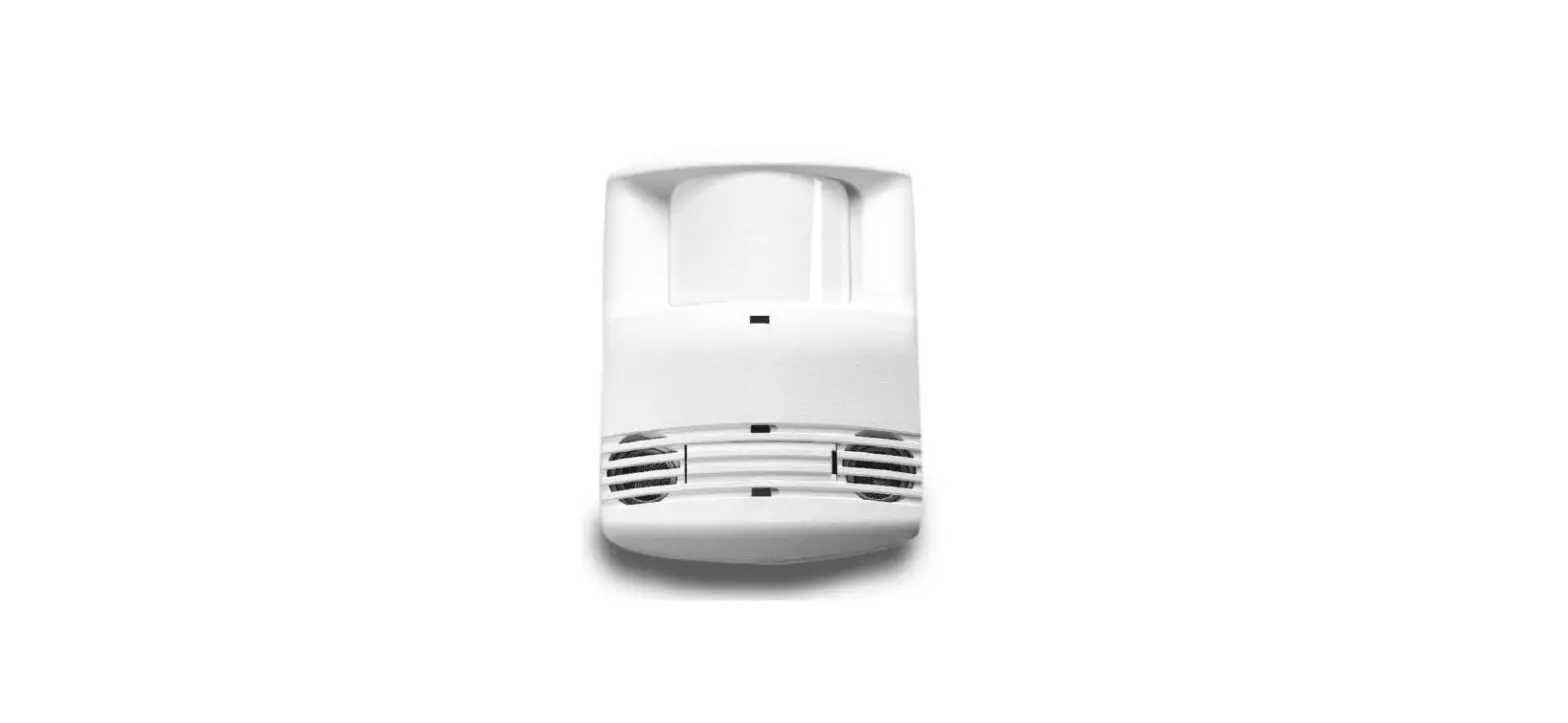
Occupancy Sensor OCS 100C
Product Information:
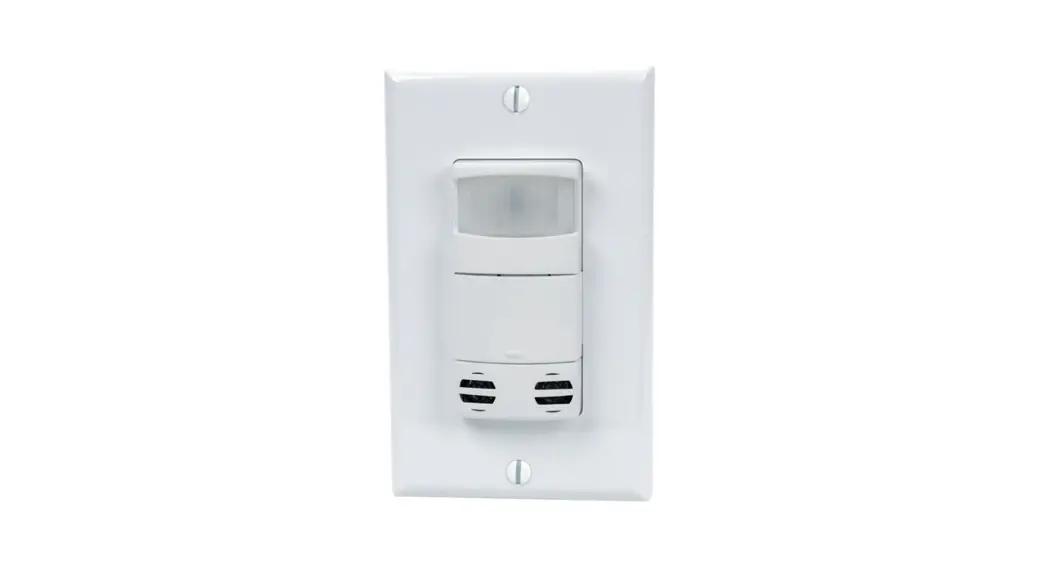
- The OCS 100C is a device designed to detect occupancy using
both PIR (Passive Infrared) and US (Ultrasonic) sensors. - The device has front panel features including Ultrasonic
Sensors, Green LED status indicators, Infrared/Photocell Lens
Retainer Ring, DIP Switches, Red Infrared Sensitivity Dial, and
Black Timer Dial. - It has two sets of DIP Switches labeled A and B, each with
multiple functions. - The OCS 100C can be set to different modes, including Dual
detection mode (requires both PIR and US sensors to trigger
simultaneously) or exclusive detection mode (either PIR or US
sensor triggering is sufficient). - The device has LED status indicators that can be enabled or
disabled. - There are dials for adjusting Ultrasonic Sensitivity, Photocell
Sensitivity, Timer, and Infrared Sensitivity. - Automatic adjust and reset functions are available to manage
learned sensor settings.
Product Usage Instructions:
- Ensure the OCS 100C is in the default or recommended settings
(A2 OFF). - To detect occupancy, both the IR sensor and the US sensor must
trigger simultaneously. If only one sensor needs to trigger to
reset the timer while the room is still occupied, set A2 to
ON. - Adjust the dials for Ultrasonic Sensitivity, Photocell
Sensitivity, Timer, and Infrared Sensitivity as per your
requirements. - If desired, enable the LED status indicators by setting A3 to
OFF. If you want to disable the flashing LEDs, set A3 to ON. - Use the Automatic adjust function (A4) to retain or erase
learned sensor settings. This is applicable when Timer (B3) or
Sensitivity adjust (B4) is set to Automatic mode (OFF). - If you want to manually adjust the timer, infrared sensitivity,
and US sensitivity dials, ensure B3 and B4 are set to ON for Manual
mode. - If the OCS takes too long to turn off when the room is
unoccupied, adjust the timer to 8 minutes and extend the timer via
the configuration of the connected control processor to reduce
false detection. - For optimal setup, follow the recommended setup diagram
provided in the user manual.
Occupancy Sensor OCS 100C · Setup Guide
The OCS 100C is a dual technology occupancy sensor that can be used to automate meeting and presentation spaces when used with Extron control products. The OCS is equipped with ultrasonic (US), infrared (PIR), and photocell sensors that can be used together to report ambient light conditions and room occupancy. Sensors can be wired directly to Extron controller products equipped with Digital I/Os ports or via eBUS, when using optional eBUS interface accessories. The OCS requires 24 VDC for operation. If local 24 V power is not available, use the included 12 V to 24 V, USB 5 V to 24 V power converter.
NOTE: The OCS 100C is designed to detect occupancy using both the PIR and US sensors with their default settings to avoid false detections.
Front Panel Features and Control
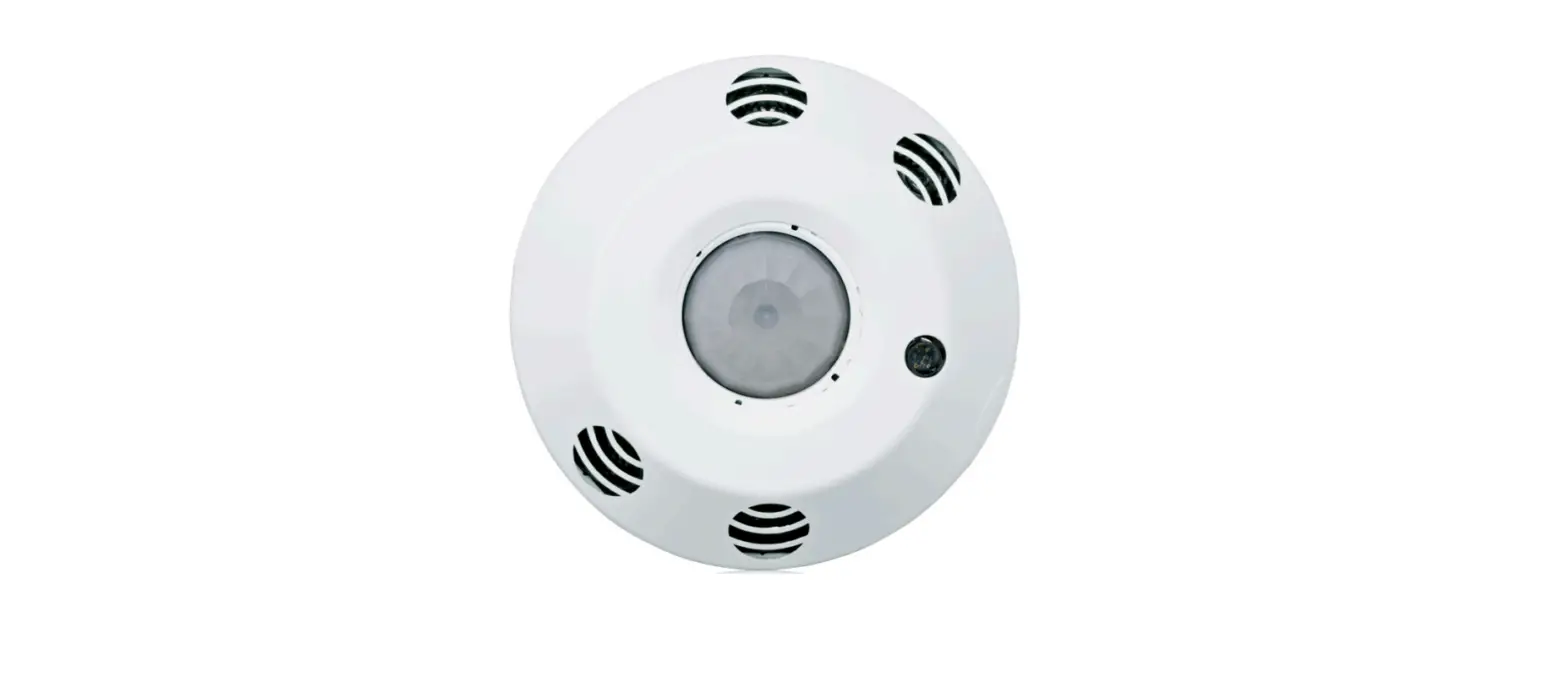
Ultrasonic Sensors
Green LED (status indicator)
Infrared/Photocell Lens Retainer Ring
DIP Switches (A)
Red Infrared Sensitivity Dial
Green LED (status indicator)
Black Timer Dial
1234 1234
A
B
1
1
2
2
3
3
4
4
ON
ON
DIP Switches (B) Green Ultrasonic Sensitivity Dial
Blue Photocell Sensitivity Dial
Figure 1. OCS 100C Front Panel Features
Figure 2. OCS 100C Controls
· Ultrasonic sensors (4) — Detect movement in the room, based on ultrasonic sound waves. The US sensor emits ultrasonic sound waves into an area and measures the speed of their return to detect the presence of people. Frequency changes are caused by the movement of people, which is detected by the US waves.
· Ultrasonic (US) Green LED status indicators (2) — Flash when the ultrasonic sensors detect occupancy.
· Infrared/Photocell (Fresnel) lens — Diffracts the incoming light and directs the light to the infrared sensor.
· Retainer Ring — Holds the optional IR mask in place. Remove to access all controls and DIP switches. Insert the flat end of a small screwdriver into the notch in the retainer ring to lever it up and off.
· Infrared (PIR) Red LED status indicator — Located behind the Fresnel lens, these LEDs flash when the infrared sensor detects occupancy.
· Infrared Sensor — The infrared (PIR) sensor detects the presence of people based on the difference between the heat generated by moving people versus the ambient room temperature.
· DIP Switches A —
A Switch Function
OFF
ON
Note
1 Not used
*Not used
Not used
Switch is not used.
2 Occupancy
*Mutually
Independent
If A2 is set to OFF, both the PIR and US sensors must
detection
exclusive
(either PIR or US be triggered (simultaneously) before the OCS reports
behavior – Dual (requires both detection)
an occupancy signal. If A2 is set to ON, the OCS reports
technology mode PIR and US
occupancy based on only one of the sensors being
detection
triggered. When only one sensor is desired, set A2 to ON
and adjust the dials accordingly. If A2 is ON, false detection
when the room is not occupied increases.
3 Sensor status indicators
*LEDs enabled LEDs disabled
Setting A3 to OFF provides a visual notification whenever the PIR or US sensors are triggered. When the visual LED indicators are a distraction or you want to disable the flashing LEDs, A3 should be set to ON.
4 Automatic adjust *Retain
Erase all learned Only applicable when Timer (B3) or Sensitivity adjust (B4) or
reset
learned sensor settings (toggle both are set to Automatic mode (OFF). Toggling A4 ON then
adjustments ON, then OFF) OFF will reset any stored learned adjustments.
*Default and recommended settings
1
Occupancy Sensor OCS 100C · Setup Guide (Continued)
· DIP Switches B — (see figure 2 on the previous page)
B Switch Function
1 High Airflow compensator
2 Doorway mount 3 Timer adjust 4 Sensitivity adjust
OFF *Disabled
*Disabled Automatic Automatic
ON Enabled
Enabled *Manual *Manual
Note
If enabled (set to ON) the sensor will not detect minor changes and movement. This could result in missed detection, with a low trigger-on threshold.
Applies to the Timer (black), Infrared sensitivity (red), and Ultrasonic sensitivity (green) adjustment dials. · Setting to Manual mode allows for more predicted behavior
and is better suited for automating AV applications. · Setting to Automatic mode allows the sensor to learn over
time the ideal timer and sensitivity adjustments for the space and usage trends. This is better suited for automating lighting applications. · All adjustment dials are disabled when set to Automatic (OFF).
*Default and recommended settings
NOTE: B3 and B4 must be set to ON for Manual mode, in order to adjust the timer, infrared sensitivity, and US sensitivity dials manually.
· Black Timer Dial — The occupancy sensor has a built-in timer feature. Use the black timer dial to set the amount of time before the sensor triggers OFF. The factory default setting is 8 minutes.
· Timer range — 8 minutes to 42 minutes. · Full counter clock wise (CCW) = 8 minutes · Full clock wise (CW) = 42 minutes
· Timer operation — · When the sensor detects motion, it instantly triggers ON. · Once occupancy is no longer detected, the timer begins. If no motion is detected and the timer expires, then the sensor triggers OFF.
NOTE: If it takes too long for the OCS to turn off when the room is unoccupied, adjust the timer to 8 minutes and extend the timer via the configuration of the connected control processor. This setup reduces false detection.
· Test mode (8 second timer): 1. Open the retainer ring. 2. Rotate the black timer dial to about midway (50% or 12 o’clock). 3. Return to minimum setting (full CCW). 4. The timer will remain in the 8 second test mode for 1 hour, then automatically reset to 8 minutes. 5. To manually force the timer out of the 8 second test mode, turn the timer adjustment approximately 1/16 inch clockwise. The setting is slightly above minimum (just above the 8 minute setting).
· Red Infrared Sensitivity Dial — Adjust this dial to increase or decrease infrared sensitivity. · Turn clockwise (CW) to increase sensitivity. Minor movements are detected as occupancy. · Turn counterclockwise (CCW) to decrease sensitivity. Major movements are needed to detect occupancy. · The factory default setting is at 75%.
· Green Ultrasonic Sensitivity Dial — Adjust this dial to increase or decrease ultrasonic sensitivity. · Turn clockwise (CW) to increase sensitivity. Minor movement are detected as occupancy. · Turn counterclockwise (CCW) to decrease sensitivity. Major movements are needed to detect occupancy. · The factory default setting is at 50%.
· Blue Photocell Sensitivity Dial — The photocell prevents the sensor from triggering on when the area is adequately lit with natural light and motion is detected. The sensor must be mounted directly over an area that is representative of the average, natural room lighting. Before setting the photocell control, wait until the natural light is brightest (optional).
Adjust this dial to increase or decrease photocell sensitivity. · Turn counterclockwise to decrease photocell sensitivity, causing it to activate with less light. · Turn clockwise to increase photocell sensitivity, requiring brighter light to activate the sensor. · Factory default is 100% (full clockwise) — Photocell sensor is disabled. · Range — 10 to 1000 LUX 2
Recommended Setup
Ultrasonic (US) Green LED (status indicator)
Ultrasonic (US) Green LED (status indicator)
DIP Switches (A)
Red Infrared Sensitivity Dial
Black Timer Dial
A
B
1
1
2
2
3
3
4
4
ON
ON
1234 1234
Infrared (PIR) Red LED (status indicator)
DIP Switches (B) Green Ultrasonic Sensitivity Dial
Blue Photocell Sensitivity Dial
Figure 3. OCS 100C Front Panel Features and Controls With the OCS in the default or recommended settings (A2 OFF), the OCS requires both the IR sensor AND the US sensor to detect occupancy to turn ON. Only one sensor (PIR or US) needs to trigger to reset the timer for the OCS to remain ON while the room is still occupied. When the OCS is in the OFF state, no occupancy is detected. Follow these steps to set up the OCS to detect occupancy with minimal false detection:
NOTE: We recommend using the OCS 100C in the default settings when beginning the setup or the test mode. If needed, make slight adjustments at a time from the default sensitivity settings.
1. Keep all the DIP switches and rotary dials in the default positions. 2. Set the OCS in Test Mode. 3. Enter the room several times to verify if the IR detector is detecting movement (red LEDs flash).
· If the red LEDs flash when entering the room, the default red infrared sensitivity dial is set correctly. · Verify the red LEDs flash with movement throughout the room. · Turn the red infrared sensitivity dial to decrease or increase IR sensitivity, until the red LEDs only flash when entering the
room or making movements throughout the room. · To avoid false detections when the room is unoccupied, do not make the sensor too sensitive. 4. Enter the room and verify if the US detector is detecting movement (green LEDs flash). · If the green LEDs flash when entering the room, the default green ultrasonic range dial is set correctly. This sensor is very
sensitive. · Verify the green LEDs flash with movement throughout the room. · Turn the green ultrasonic range dial to decrease or increase US sensitivity, until the green LEDs only flash when entering
the room or making movements throughout the room. · To avoid false detections when the room is unoccupied, do not make the sensor too sensitive. 5. Leave the room and close the door. Wait until the Digital output state, relay or red and green LEDs stay OFF. Wait several minutes to ensure there are no false detections. · If the door remains open, the US sensor may detect changes. · If possible, wait longer, to confirm no IR or US change is registered. 6. Enter the room again, to confirm the Digital input state relay, red and green LEDs turn ON.
NOTE: After going through these steps and verifying the OCS is set up to accommodate the room, do not adjust the DIP switches or dials.
Automatic Mode
Out of the box, the OCS 100C can be set up in Automatic Mode, where no manual sensitivity adjustments are needed and sensitivity learning and adjustments are made automatically. For simple setup, we recommend keeping the OCS in the default settings and flipping the B4 Dip switch to the OFF (Auto) position. The OCS is ready to mount (see Installation on page 5).
3
Occupancy Sensor OCS 100C · Setup Guide (Continued)
Mask Patterns and Sensor Coverage
An included infrared mask may be needed to achieve the desired sensory coverage. Any area masked will block the PIR sensor from detecting motion in that area.
NOTE: Mount the OCS 6 to 8 feet (1.8 to 2.4 m) away from HVAC vents and high air flow areas
Hallway Hallway
Specific Area Masked
Center Ceiling Mount (mask blocks sensor seeing out doorway into hallway)
No Mask Needed
Corner Ceiling Mount (no mask needed)
Conference Room Mask
180º Mask
Using the Infrared Mask
Full Mask
Rectangular Areas
Over the Door
Specific Areas to Mask
Typical Mask Patterns
22′ (7 m)
12′ (4 m)
32′ (10 m)
23′ (7 m)
Extron Headquarters
+1.800.633.9876 (Inside USA/Canada Only) Extron USA – West +1.714.491.1500 +1.714.491.1517 FAX
www.extron.com 68-3155-52 Rev. A
67E4 Appliance Control
Not Used Threshold
U.S. Patents: 6151529, 5946209, 5699243, 5640143, 6415205, 6078253, D404326, 6222191, 5986357, 6759954
OCS 100C
3 (max Disabled)
Center of Sensor Coverage
Sensory Coverage
US Minor Motion US Major Motion
IR Minor Motion IR Major Motion
NOTE: These coverage dimensions are achieved when the OCS 100C is installed 10 feet (3 m) above the coverage area.
Figure 4.
45′ (14 m)
64′ (20 m)
Mask Patterns and Sensor Coverage Diagrams
4
Installation
OCS 100C Parts
Nut
Washer Cutting End Threaded Mounting Post
Cover Plate
Installation Method 1
Ceiling
Mounting Post Cover Plate
2
Secure mounting post to the ceiling tile with nut and washer.
1
Twist and lock threaded mounting post into the cover plate. Drill into ceiling tile.
OCS 100C Appliance67CEoB4ntr4olB+316Sw.EB87ex1-tw2+4rn3To1.B41sn.iw89Em51iU01Oxt.05.Sit1ee.vr-Av65Aorx5i30Set-n3B042AtyWr.tHr9lArudReG8oDAeoes73+ejarAtn:nud6So1eBdAvP.eu(.gs.j7qolIwaucn2hnR1AutLtrsc4o::soAAoaeiwiEk.dtU4rttdOmom:ei1t:9DcrTal:AecTt1UflFOrrIayheh.inSasd1moCFltrf5AslNFMriwjee1oS/-caouCF=7rosnrmoanees-FiAChtnc=dAaaut8ttaodUrXoxRudtmnRomalaijmaDtsdtuanluoOnii:eenenn:sgpgtnmgfOdnotgOalteyeeosUu)tmFRa:-nF.-l:4S5ttOFKesF27a.i0AcPs65a%Ftn=m,=al0%ietcFlot7oaOtDLe,l8sx:bDron=eEN2O:wT-tefsw5DsaOofdmN:3au=i6gsi,utiFlssnt1Dclg=metFaa5D4hln1bce0mae=5es4tlfne2aiti3asvdto9uu,2ine,lvia6tOOsr5u,i,elta96aNOyFs4b2,l6eNF2l=O2e2t01,f=Ne9o9O,n1L5r=,aN6E5fb9h9Du=9l8ieg2ls6le43hd3an5,si7aus5,eb6at6n4ol7be0s5ml1ei9t49dia3v5,i4tt6iy4rcaw1pet5eilc2tanohh0ttg5eepht,a.theeMgTaersehcaalamoetttricnotrieshRoonn.iwnneaYtTisn.iewntoeldBhlBongirliesutcwlasetrtea/hcB/uWattWkoelhenru/hrWfhseetRtoiitiw:alteehwteOalidi=tasc=ebsjytcNusc-=huPGC.sloOoopNhitromnaewc.mo.nCtnSymtkotnoe:ce.aocOyncnchnetsocctoleos(lcovucCrr:cuntleeRieopCpctBrnrCneuoaotldttvnaelroe:cocorrn+ykluoa2tn&f:gp4GeeVurtDcoCutinodns Made in China
k turn)
30° Adjustment
Sensor Body
Conference Room *
Mask
Full Mask *
180º Mask *
Infrared Lens w/ Retainer Ring
Ceiling
4
Connect building wiring to wiring harness with wire nuts.
Cover Plate
3
Insert wiring through mounting post.
Sensor Body
5
Attach sensor body to cover plate by aligning arrows and twist lock into place.
Installation Method 2
Ceiling
Nut and Washer (2 ea)
1
Secure cover plate to the ceiling.
NOTE: *Only use a mask if the PIR sensor needs to be blocked. Only one mask should be installed at any given time.
ATTENTION: · All structural steps and electrical installation must be performed by qualified personnel in accordance with local and national building codes and electrical codes. · Toute étape structurelle et installation électrique, doit être effectuée par un personnel qualifié, conformément aux codes du bâtiment, aux codes incendie et sécurité, et aux codes électriques, locaux et nationaux.
· Only connect to Class III SELV systems. · Connectez l’unité uniquement à des systèmes fonctionnant en
très basse tension de sécurité (TBTS) de classe III.
Figure 5. Installation Diagram
Ceiling
2
Insert wiring through cover plate.
Mounting Bolts (2)
3
Connect building wiring to wiring harness with wire nuts.
Sensor Body
4
Screw and mount the twist-lock cover plate.
5
Occupancy Sensor OCS 100C · Setup Guide (Continued)
PC 1224 Wiring
ATTENTION: · Do not connect power to the device until you have read the ATTENTION: on page 8 notices on the next page. · Ne branchez pas l’alimentation à l’appareil avant d’avoir lu les mises en garde «ATTENTION: » a la page 8.
· Remove power from the system before making any connections. · Mettez le système hors tension avant d’effectuer tout raccordement.
· The controller and the OCS 100C must share a common ground connection to avoid ground loops and a difference in grounding potential.
· Le contrôleur et l’OCS 100C doivent partager une connexion de mise à la terre commune pour éviter les risques de boucles de terre et une différence dans le potentiel de terre.
The OCS 100C requires 24 VDC to power. If the sensor is connected to a device that does not provide 24 VDC, use the included PC 1224 power module: 1. Connect a 12 VDC power source to the 12 VDC input on the supplied PC 1224 power converter (see figure 6), or power via
the USB type-C 5 V input (see figure 7). 2. Wire the PC 1224 24 VDC, 75 mA max connector to the black and red wires on the OCS 100C.
NOTE: When the PC 1224 is powered via the USB 5 V input, the 24 V output is rated at 35 mA.
A 12 VDC, 1.25 A max pass-through is available to power additional 12 VDC devices, only if powered from the 12 V input.
OCS 100C Wiring Diagram
Extron PC 1224 Power Module
PC 1224
24V OUT 75 mA MAX
5V IN USB-C
12V OUT 1.25 A MAX
External Power Supply (12 VDC)
12V IN 1.5 A MAX
Ground Black)
33-2749-01 B www.extron.com
+12 V (Red)
Ground all Devices
+24 V (Red)
Ground (Black)
+12 V (Red) Ground (Black)
Occupancy Control Signal (Blue)
COM 1
COM 2 DIGITAL I/O
Tx Rx G RTS CTS Tx Rx G
1 2 3 4G
POWER
12V 1.0A MAX
VOL VCG
RELAYS 1 2C
eBUS +V +S -S G
IPCP PRO 250
MAC: 00-05-A6-XX-XX-XX S/N: ####### E######
IR/S
Extron
OCS 100C Occupancy Sensor
PWR OUT = 6W
SG
LAN
IPCP PRO 250 Control Processor
Figure 6. OCS 100C External Power Supply Wiring Diagram
Extron TLS 1025M 10″ Wall Mount TouchLink Scheduling Touchpanel
Main Conference Room
Available
5V IN USB-C
Extron
PC 1224 Power Module
USB
PC 1224
24V OUT 75 mA MAX
12V OUT 1.25 A MAX
PoE
Reserve January 10, 10:33am 10:33 11am 11:30 12pm 12:30 1pm 1:30
Digital Input
12V IN 1.5 A MAX
33-2749-01 B www.extron.com
Figure 7. OCS 100C USB Power Wiring Diagram
Extron OCS 100C Occupancy Sensor
+24 V OUT (Red)
Ground (Black)
Occupancy Control Signal (Blue)
6
Wire Color
Connections
Note
Power Black
Ground
Shared with all of the outputs.
Red
+24 VDC
Power input.
Occupancy Control Outputs
Blue
Occupancy control output
When wiring the blue wire of the OCS to Extron products with Digital or FLEX Input ports, configure the ports as Input without pull up. The sensor provides approximately 21 VDC in the ON state and 0 VDC in the OFF state. Use the shared black ground wire
Blue/White Black/White
Common
Relay contacts could be used to trigger third party devices, such as HVAC, based on
Normally closed when unoccupied occupancy.
Yellow/White Normally open when unoccupied
Occupancy and Lighting Output
Gray
Occupancy and photocell control output
Typically used for lighting applications. When wiring the gray wires of the OCS to Extron products with Digital or FLEX Input ports, configure the ports as Input without pull up. The output state will remain OFF 0 VDC when occupancy is detected but there is high amount of ambient or natural light in the room. Only when there is low or no ambient or natural light in the room and occupancy is detected will the output state trigger ON 21 VDC. Use the shared black ground wire.
Troubleshooting
Problem Sensor remains ON.
Sensor remains OFF
Sensor remains on too long. Hallway traffic turns sensor on.
Possible Cause Constant noise.
Sensitivity is set too low.
Timer setting is too high. Infrared sensor can see into the hallway.
Test Reduce both green and red knobs by 1/8 (15%) turn or remove noise source. Increase both green and red knobs by 1/8 (15%) turn.
Check DIP switch settings. Put sensor in timer test mode and walk the hallway.
Solution
Move sensor to a less noisy area within the room.
Move the sensor. If the A2 DIP switch is set to OFF, set green and red knobs to normal levels. Reduce timer setting. Move sensor, so it cannot see into the hallway or install the IR masks.
Safety Instructions
For information on safety guidelines, regulatory compliances, EMI/EMF compatibility, accessibility, and related topics, see the Extron Safety and Regulatory Compliance Guide on the Extron website.
FCC Class A Notice
This equipment has been tested and found to comply with the limits for a Class A digital device, pursuant to part 15 of the FCC rules. The Class A limits provide reasonable protection against harmful interference when the equipment is operated in a commercial environment. This equipment generates, uses, and can radiate radio frequency energy and, if not installed and used in accordance with the instruction manual, may cause harmful interference to radio communications. Operation of this equipment in a residential area is likely to cause interference. This interference must be corrected at the expense of the user.
NOTE: For more information on safety guidelines, regulatory compliances, EMI/EMF compatibility, accessibility, and related topics, see the Extron Safety and Regulatory Compliance Guide on the Extron website.
7
Power Attention
ATTENTION:
· These products are intended for use with a UL Listed LPS type power source. · Ces produits doivent être utilisés avec une source d’alimentation de type LPS certifiée UL.
· Use of a non-LPS or unlisted power supply will void all regulatory compliance certification. · L’utilisation d’une source d’alimentation non-listée ou non-listée LPS annulera toute certification de conformité
réglementaire.
· Unless otherwise stated, the AC/DC adapters are not suitable for use in air handling spaces or in wall cavities. The power supply is to be located within the same vicinity as the Extron AV processing equipment in an ordinary location, Pollution Degree 2, secured to the equipment rack within the dedicated closet, podium, or desk.
· Sauf mention contraire, les adaptateurs CA/CC ne conviennent pas à une utilisation dans les espaces d’aération ou dans les cavités murales. La source d’alimentation doit être placée à proximité de l’équipement Extron dans un emplacement ordinaire soumis à un degré de pollution de catégorie II, solidement fixé au rack d’équipement d’une baie technique, d’un pupitre, ou d’un bureau.
· The installation must always be in accordance with the applicable provisions of National Electrical Code ANSI/NFPA 70, article 725 and the Canadian Electrical Code part 1, section 16.
· Cette installation doit toujours être conforme aux dispositions applicables du Code américain de l’électricité (National Electrical Code) ANSI/NFPA 70, article 725, et du Code canadien de l’électricité, partie 1, section 16.
· The power supply shall not be permanently fixed to building structure or similar structure. · La source d’alimentation ne devra pas être fixée de façon permanente à la structure de bâtiment ou à d’autres
structures similaires.
For information on safety guidelines, regulatory compliances, EMI/EMF compatibility, accessibility, and related topics, see the Extron Safety and Regulatory Compliance Guide on the Extron website.
© 2017-2022 Extron — All rights reserved. www.extron.com All trademarks mentioned are the property of their respective owners. Worldwide Headquarters: Extron USA West, 1025 E. Ball Road, Anaheim, CA 92805, 800.633.9876
68-3155-51 Rev. I 01 22
 Extron - The AV Technology Leader