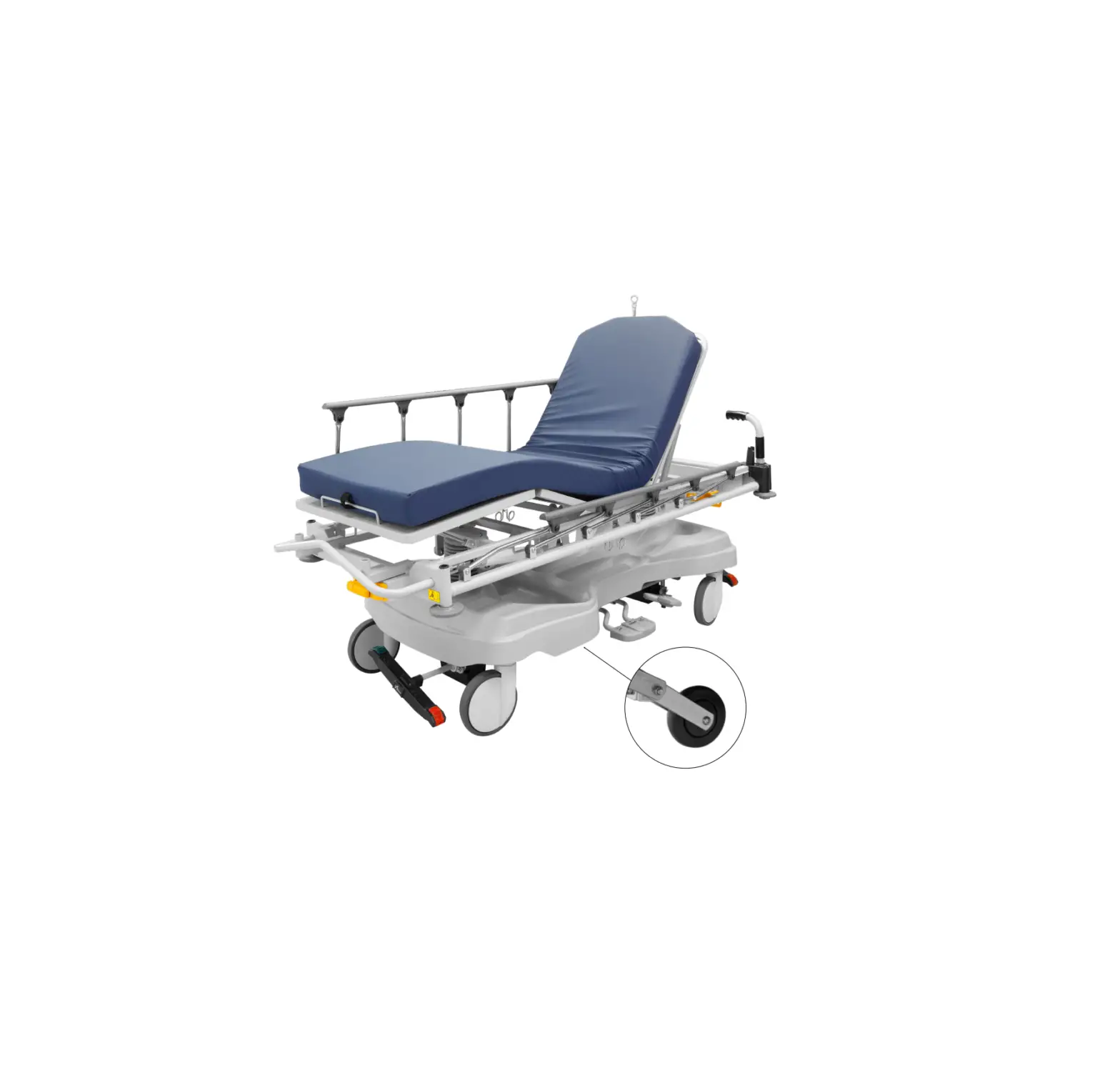
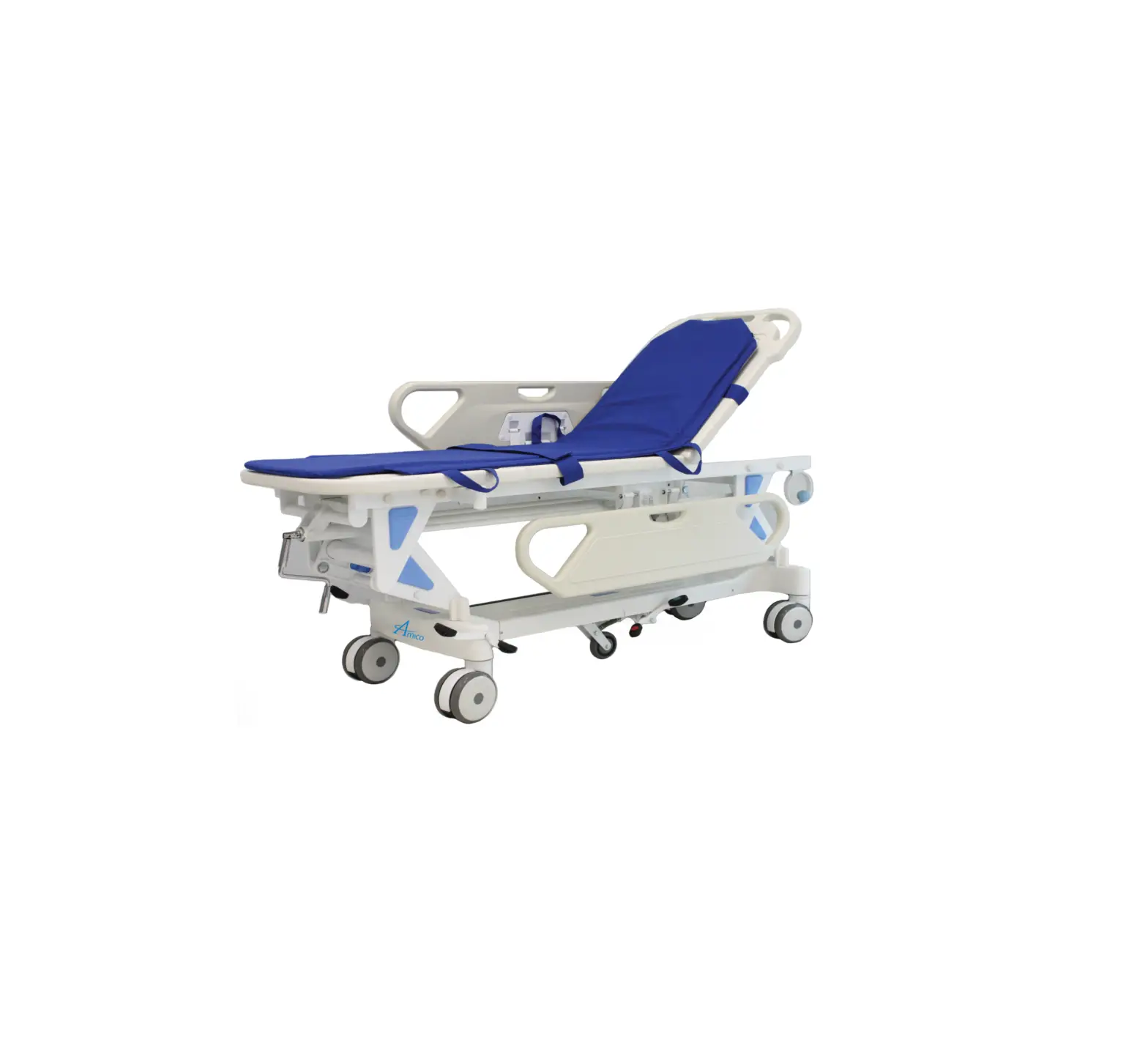
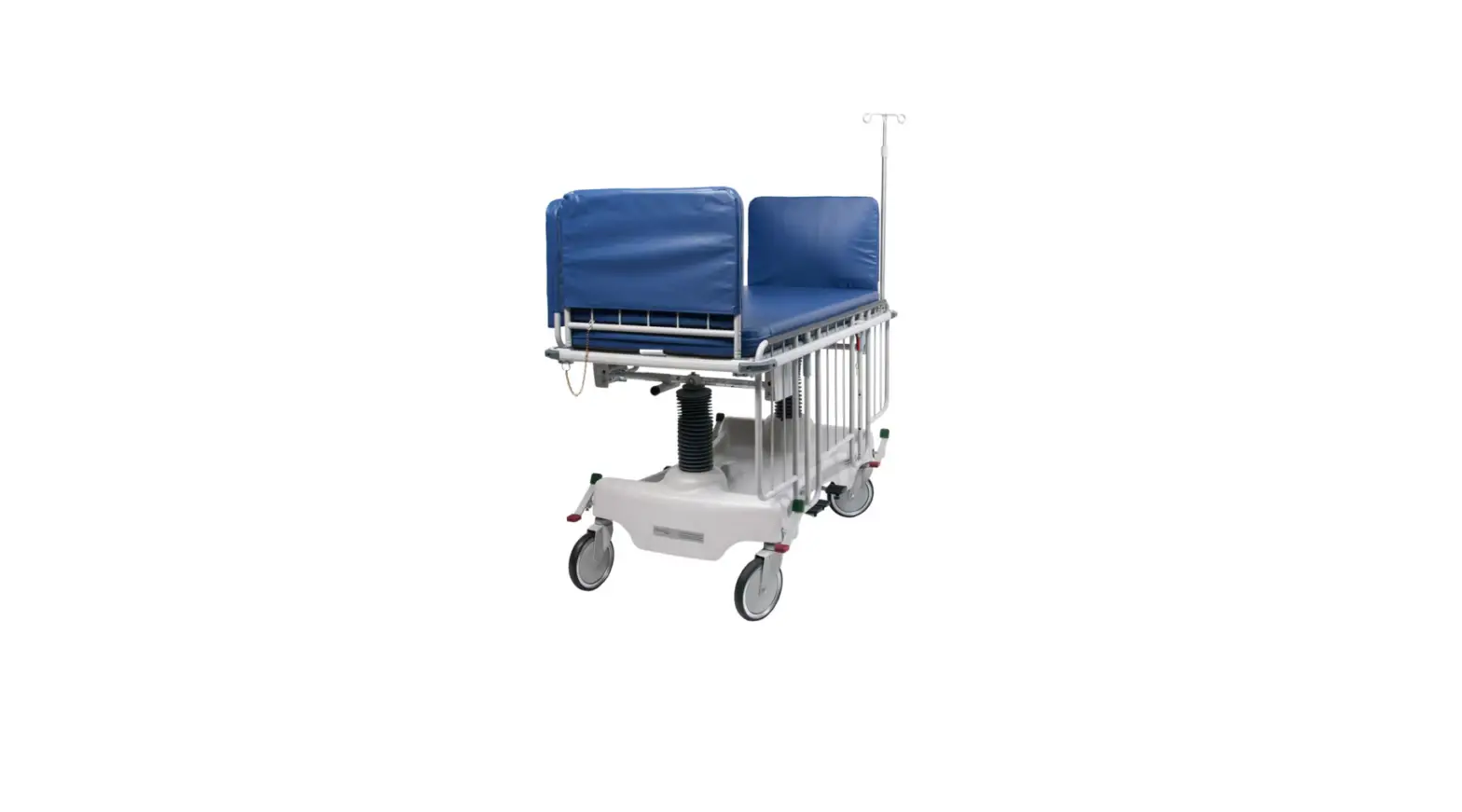
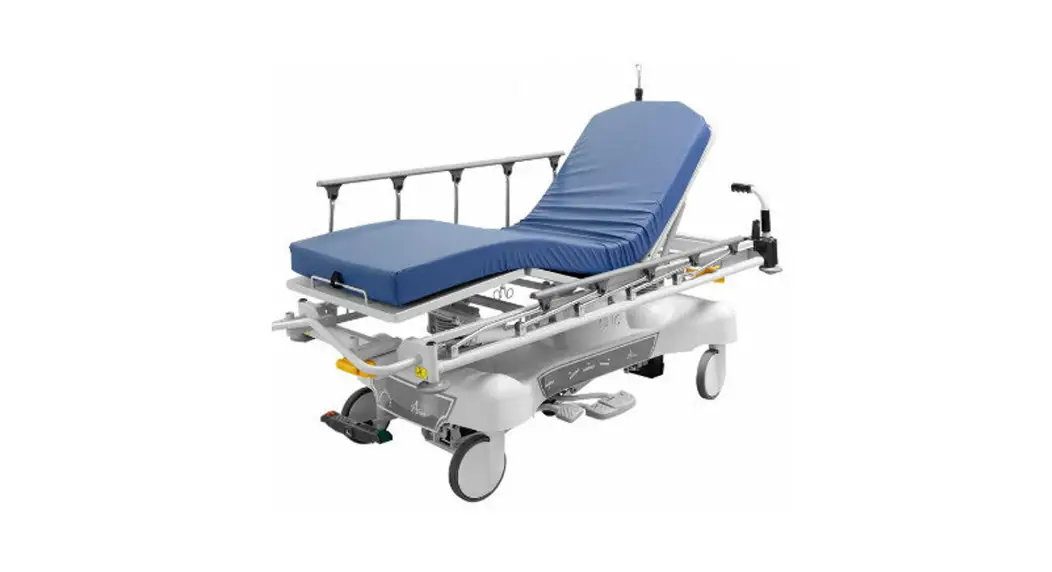
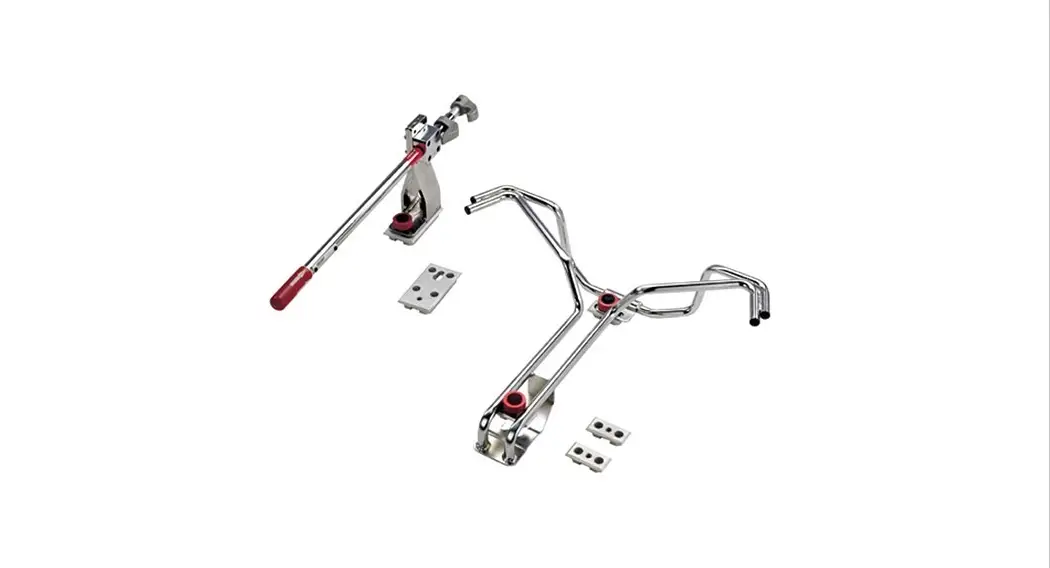
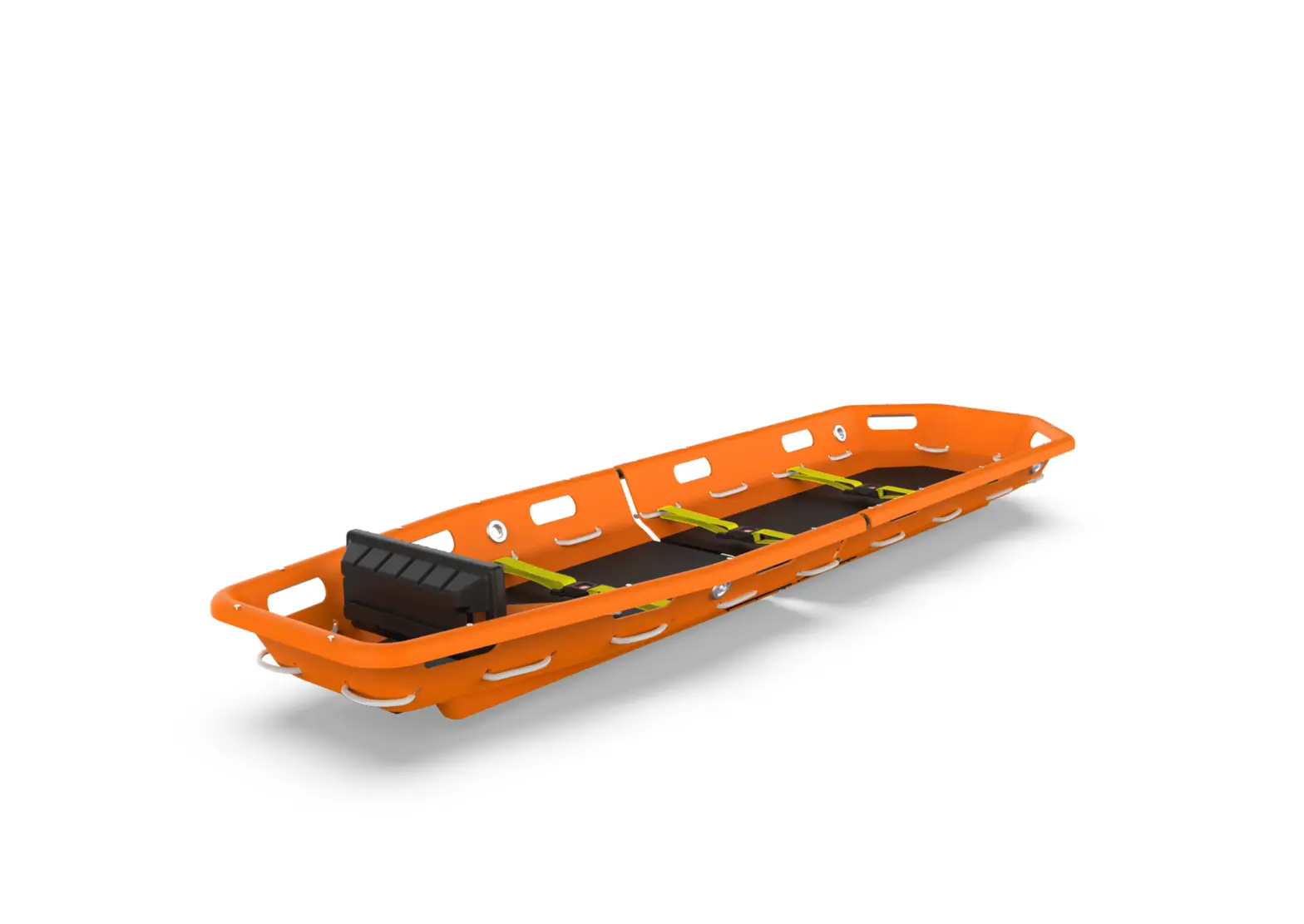
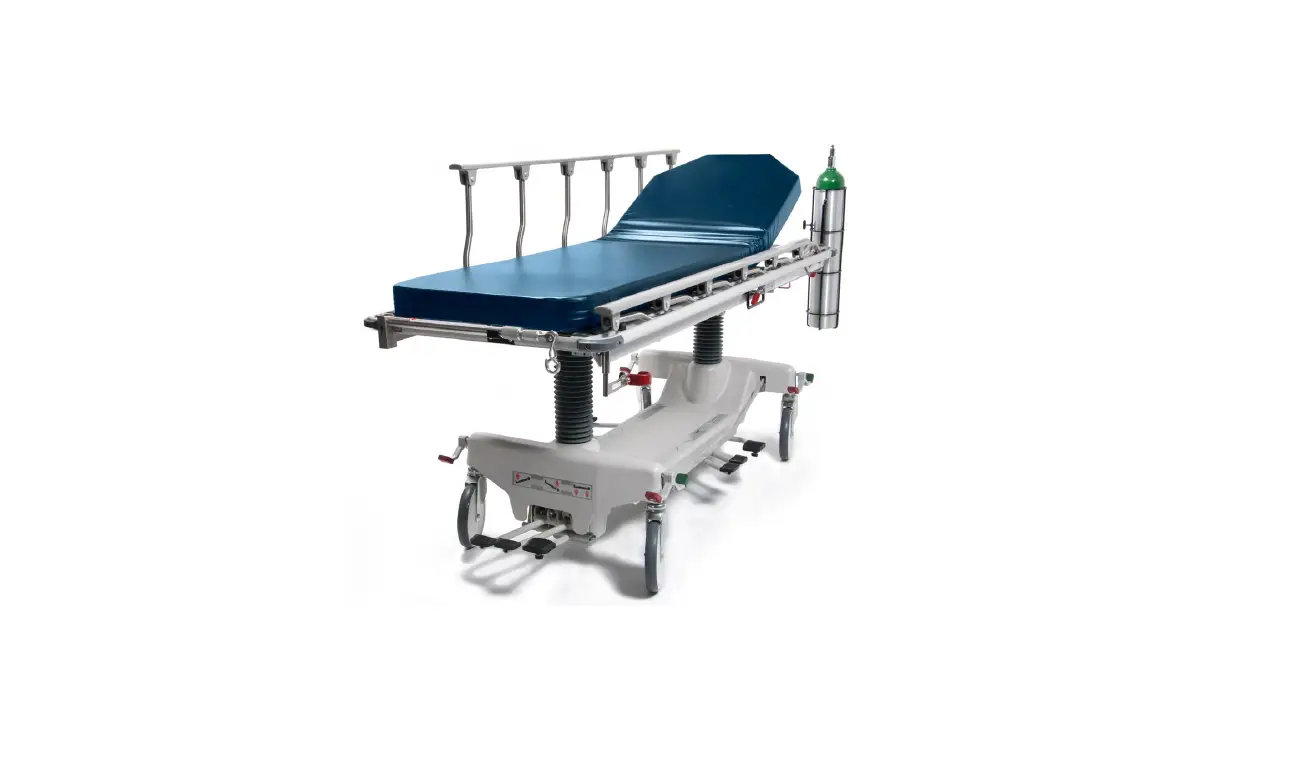
1004 ASC Stretcher
Model ASC Stretcher User Manual
Introduction
The Model ASC Stretcher is a medical equipment designed to
assist in patient transportation and transfer. This manual provides
instructions on how to operate the stretcher and perform
maintenance on it. It is important to read and understand all
information in this manual before using the equipment or beginning
any maintenance on it. The manual also provides definitions of
WARNING, CAUTION, and NOTE, which carry special meanings and should
be carefully reviewed.
Specifications
The following are the specifications of the Model ASC
Stretcher:
- Maximum Weight Capacity: N/A
- Overall Stretcher Length: N/A
- Overall Stretcher Width (Siderails Up): N/A
- Overall Stretcher Width (Siderails Down): N/A
- Minimum / Maximum Bed Height: N/A
- Fowler Angle: N/A
- Trendelenburg / Reverse Trendelenburg: N/A
WARNING / CAUTION / NOTE DEFINITION
The following definitions apply to the WARNING, CAUTION, and
NOTE sections in this manual:
- WARNING: Alerts the reader about a situation,
which if not avoided, could result in death or serious injury. It
may also describe potential serious adverse reactions and safety
hazards. - CAUTION: Alerts the reader of a potentially
hazardous situation, which if not avoided, may result in minor or
moderate injury to the user or patient or damage to the equipment
or other property. This includes special care necessary for the
safe and effective use of the device and the care necessary to
avoid damage to a device that may occur as a result of use or
misuse. - NOTE: This provides special information to
make maintenance easier or important instructions clearer.
Stretcher Operation
Operating Base Controls – Side Control
The following controls are located on the side of the
stretcher:
- Pump pedal (A) to raise the litter.
- Depress in the center of pedal (B) to lower both ends of the
stretcher together. - Depress the side of pedal (B) closest to the foot end of the
stretcher to lower the foot end. - Depress the side of pedal (B) closest to the head end of the
stretcher to lower the head end. - Pedal (C) – Brake and Steer functions (foot end)
- Pedal (D) – Brake and Steer functions (head end)
Raising and Lowering Litter Height – Side Control
To raise or lower the litter height, use the side control.
Trendelenburg/Reverse Trendelenburg – Side Control
To achieve a trend or reverse trend position, first raise the
litter height using the side control.
Applying the Brake System
The stretcher is equipped with brakes for safety. Always apply
the caster brakes when a patient is getting on or off the
stretcher. Push on the stretcher to ensure the brakes are securely
locked. Always engage the brakes unless the stretcher is being
moved. Injury could result if the stretcher moves while a patient
is getting on or off the stretcher. If brakes do not hold properly,
refer to your stretcher maintenance manual for a brake adjustment
procedure.
To engage the brakes:
- On the head end, push fully down on the left side of pedal
(A). - On the foot end, push fully down on the right side of pedal
(B).
Your stretcher may be equipped with optional side control brake
and steer functions in addition to the standard head and foot end
controls. The side control brakes operate the same as the head and
foot end versions.
Table of Contents
Introduction . . . . . . . . . . . . . . . . . . . . . . . . . . . . . . . . . . . . . . . . . . . . . . . . . . . . . . . . . . . . . . . . . . . . . . . . . . . . . . 2-3 Operating Base Controls . . . . . . . . . . . . . . . . . . . . . . . . . . . . . . . . . . . . . . . . . . . . . . . . . . . . . . . . . . . . . . . . . . . . 4 Raising And Lowering Litter Height . . . . . . . . . . . . . . . . . . . . . . . . . . . . . . . . . . . . . . . . . . . . . . . . . . . . . . . . . . . 5 Trendelenburg/Reverse Trendelenburg Positioning . . . . . . . . . . . . . . . . . . . . . . . . . . . . . . . . . . . . . . . . . . . . . . 5 Applying The Brake System . . . . . . . . . . . . . . . . . . . . . . . . . . . . . . . . . . . . . . . . . . . . . . . . . . . . . . . . . . . . . . . . . 6 Operating the Fifth Wheel . . . . . . . . . . . . . . . . . . . . . . . . . . . . . . . . . . . . . . . . . . . . . . . . . . . . . . . . . . . . . . . . . . . 6 Using the Siderails . . . . . . . . . . . . . . . . . . . . . . . . . . . . . . . . . . . . . . . . . . . . . . . . . . . . . . . . . . . . . . . . . . . . . . . . . 7 Operating the Pneumatic Fowler . . . . . . . . . . . . . . . . . . . . . . . . . . . . . . . . . . . . . . . . . . . . . . . . . . . . . . . . . . . . . 8 Operating the Optional 2-Stage Permanently Attached IV Pole . . . . . . . . . . . . . . . . . . . . . . . . . . . . . . . . . . . 9 Operating the Optional 3-Stage Permanently Attached IV Pole . . . . . . . . . . . . . . . . . . . . . . . . . . . . . . . . . . 10 Operating the Optional Foot Extension / Defibrillator Tray . . . . . . . . . . . . . . . . . . . . . . . . . . . . . . . . . . . . . . . 11 Using the Optional Serving Tray . . . . . . . . . . . . . . . . . . . . . . . . . . . . . . . . . . . . . . . . . . . . . . . . . . . . . . . . . . . . . 12 Preventative Maintenance Checklist . . . . . . . . . . . . . . . . . . . . . . . . . . . . . . . . . . . . . . . . . . . . . . . . . . . . . . . . . 13 Cleaning . . . . . . . . . . . . . . . . . . . . . . . . . . . . . . . . . . . . . . . . . . . . . . . . . . . . . . . . . . . . . . . . . . . . . . . . . . . . . . 14,15 Limited Warranty
Obtaining Parts and Service . . . . . . . . . . . . . . . . . . . . . . . . . . . . . . . . . . . . . . . . . . . . . . . . . . . . . . . . . . . . . . 16 Supplemental Warranty Coverage . . . . . . . . . . . . . . . . . . . . . . . . . . . . . . . . . . . . . . . . . . . . . . . . . . . . . . . . . 16 Return Authorization . . . . . . . . . . . . . . . . . . . . . . . . . . . . . . . . . . . . . . . . . . . . . . . . . . . . . . . . . . . . . . . . . . . . . 17 Freight Damage Claims . . . . . . . . . . . . . . . . . . . . . . . . . . . . . . . . . . . . . . . . . . . . . . . . . . . . . . . . . . . . . . . . . . 17
Introduction
INTRODUCTION
This manual is designed to assist you with the operation of the Model ASC Stretcher. Read it thoroughly before using the equipment or beginning any maintenance on it.
SPECIFICATIONS
Maximum Weight Capacity Overall Stretcher Length Overall Stretcher Width (Siderails Up) Overall Stretcher Width (Siderails Down) Minimum / Maximum Bed Height Fowler Angle Trendelenburg / Reverse Trendelenburg
500 pounds 84″ ($ .5″) 33.5″ & 37″ ($ .5″) 30.25″ & 30.75″ ($ .5″) 21.5″ / 36″ ($ .5″) 0 to 90° ($ 3°) +16 / -16 ° ($ 1°)
WARNING / CAUTION / NOTE DEFINITION The words WARNING, CAUTION and NOTE carry special meanings and should be carefully reviewed.
WARNING Alerts the reader about a situation, which if not avoided, could result in death or serious injury. It may also describe potential serious adverse reactions and safety hazards.
CAUTION Alerts the reader of a potentially hazardous situation, which if not avoided, may result in minor or moderate injury to the user or patient or damage to the equipment or other property. This includes special care necessary for the safe and effective use of the device and the care necessary to avoid damage to a device that may occur as a result of use or misuse.
NOTE This provides special information to make maintenance easier or important instructions clearer.
Back to Table of Contents
2
Introduction
Before operating this stretcher, it is important to read and understand all information in this manual. Carefully read and strictly follow the warnings and cautions listed on this page.
WARNING Always apply the caster brakes when a patient is getting on or off the stretcher. Push on the stretcher to ensure the brakes are securely locked. Always engage the brakes unless the stretcher is being moved. Injury could result if the stretcher moves while a patient is getting on or off the stretcher. If brakes do not hold properly, refer to your stretcher maintenance manual for a brake adjustment procedure. When lowering the siderail to the collapsed position, keep extremities of patients and staff away from the siderail spindles or injury could occur. Keep fingers/hands clear of area around Fowler release handle and Fowler frame when lowering. Injury could result if care is not taken when lowering the Fowler. If the stretcher is equipped with the optional foot end IV pole, the IV pole must be in the raised position when the foot extension/defibrillator tray is installed. If the IV pole is not raised, the foot extension will not function properly and injury could occur.
CAUTION
To avoid damage, remove any equipment that may be in the way before raising or lowering the litter height. To avoid injury or damage to the equipment, do not allow the siderail to lower on its own. To avoid damage, the weight of the I.V. bags should not exceed 40 pounds. To avoid damage while transporting the stretcher, verify the I.V. pole is at a low enough height to allow it to safely pass through door openings and under light fixtures. To avoid damage, do not put items weighing more than 30 pounds on the serving tray.
Back to Table of Contents
3
Stretcher Operation
OPERATING BASE CONTROLS – SIDE CONTROL
C
B
A
D
FOOT END
B
A
HEAD END
Pump pedal (A) to raise the litter.
Depress in the center of pedal (B) to lower both ends of the stretcher together. Depress the side of pedal (B) closest to the foot end of the stretcher to lower the foot end. Depress the side of pedal (B) closest to the head end of the stretcher to lower the head end.
Pedal (C) – Brake and Steer functions (foot end)
Pedal (D) – Brake and Steer functions (head end)
Back to Table of Contents
4
Stretcher Operation
RAISING AND LOWERING LITTER HEIGHT – SIDE CONTROL
CAUTION To avoid damage, remove any equipment that may be in the way before raising or lowering the litter height. To raise the litter height, pump pedal (A) repeatedly until the desired height is achieved (see illustration on page 4). To lower both ends of the litter together, depress the center of pedal (B). To lower only the head end of the litter, depress the side of pedal (B) closest to the head end. To lower only the foot end of the litter, depress the side of pedal (B) closest to the foot end (see illustration on page 4).
TRENDELENBURG/REVERSE TRENDELENBURG – SIDE CONTROL NOTE Litter height must be raised first in order to achieve a trend. or reverse trend. position.
CAUTION To avoid damage, remove any equipment that may be in the way before lowering the stretcher. For Trendelenburg positioning (head down), depress the side of pedal (B) closest to the head end of the stretcher (see illustration, page 4). For Reverse Trendelenburg positioning (foot down), depress the side of pedal (B) closest to the foot end. NOTE The higher the litter is before pedal (B) is activated, the greater the trend. or reverse trend. angle will be. (Maximum trend. angle is +16_ . Maximum reverse trend. angle is -16_ ).
Back to Table of Contents
5
Stretcher Operation
APPLYING THE BRAKE SYSTEM
Brake/Steer Pedal
(Optional)
B
A
FOOT END
Brake/Steer Pedal
(Optional)
HEAD END
NOTE For user convenience, a brake/steer control pedal is located on both ends of the stretcher.
WARNING Always apply the caster brakes when a patient is getting on or off the stretcher. Push on the stretcher to ensure the brakes are securely locked. Always engage the brakes unless the stretcher is being moved. Injury could result if the stretcher moves while a patient is getting on or off the stretcher. If brakes do not hold properly, refer to your stretcher maintenance manual for a brake adjustment procedure.
To engage the brakes on the head end, push fully down on the left side of pedal (A). To engage the brakes on the foot end, push fully down on the right side of pedal (B).
NOTE Your stretcher may be equipped with optional side control brake and steer functions in addition to the standard head and foot end controls. The side control brakes operate the same as the head and foot end versions.
OPERATING THE FIFTH WHEEL
The purpose of the Fifth Wheel is to help guide the stretcher along a straight line during transport and to help pivot the stretcher around corners.
To engage the fifth wheel, push the proper side of the brake/steer pedal to the full down position.
Back to Table of Contents
6
Stretcher Operation
OPERATING THE GLIDEAWAYt SIDERAILS
B A
B
FOOT END
NOTE Raising and lowering the siderails safely is a two-handed operation. Use one hand to hold and position the siderail and the other hand to operate the siderail latch.
WARNING When lowering the siderail to the collapsed position, keep extremities of patients and staff away from the siderail spindles or injury could occur.
To raise the siderails: Pull up on the siderail (A) and raise it to the full up position until the latch (B) engages. To lower the siderails: Pull up on the latch (B) and guide the siderail to the full down position.
NOTE The latches (B) are colored yellow for easy identification. The foot end of the siderail top rail can be used as a push/pull handle.
CAUTION
To avoid injury or damage to the equipment, do not allow siderail to lower on its own.
NOTE There is a dual siderail latch option available with latches on both ends of the stretcher.
Back to Table of Contents
7
Stretcher Operation
OPERATING THE PNEUMATIC FOWLER
Squeeze either or both of the yellow Fowler handles (A) for pneumatic assist in lifting the Fowler to the desired height. Remove hand(s) from handle when the desired height is achieved. The optional drop seat/lift assist Fowler uses the weight of the patient for additional assistance with lifting the Fowler. It also helps keep the patient from sliding toward the foot end of the stretcher when the Fowler is raised.
A A
WARNING
Keep hands/fingers clear of the area around the Fowler release handles and the Fowler frame when lowering. Injury could result if care is not taken when lowering the Fowler.
Back to Table of Contents
8
Stretcher Operation
OPERATING THE OPTIONAL 2-STAGE PERMANENTLY ATTACHED IV POLE
A B
A
C
C
DETAIL OF I.V. POLE LATCH
NOTE The 2-stage permanently attached IV pole is an option and may have been installed at either the head, foot or both ends of the stretcher. The choice was made at the time the stretcher was purchased. To use the 2-stage permanently attached IV pole: 1. Lift and pivot the pole from the storage position and push down until it is locked into the receptacle. 2. To raise the height of the pole, pull up on the telescoping portion (A) until it locks into place at its fully raised
position. 3. Rotate the IV hangers (B) to desired position and hang the IV bags. 4. To lower the IV pole, turn the latch (C) until section (A) lowers.
CAUTION To avoid damage, the weight of the IV bags should not exceed 40 pounds. To avoid damage while transporting the stretcher, verify the IV pole is at a low enough height to allow it to safely pass through door openings and under light fixtures.
Back to Table of Contents
9
Stretcher Operation
OPERATING THE OPTIONAL 3-STAGE PERMANENTLY ATTACHED IV POLE
A C
E
C
B
D
A
B
E
DETAIL OF I.V. POLE LATCH
D
DETAIL OF I.V. POLE GRIP
NOTE The 3-stage permanently attached IV pole is an option and may have been installed at either the head, foot or both ends of the stretcher. The choice was made at the time the stretcher was purchased. To use the 3-stage permanently attached IV pole: 1. Lift and pivot the pole from the storage position and push down until it is locked into the receptacle. 2. To raise the height of the pole, pull up on the telescoping portion (A) until it locks into place at its fully raised
position. 3. For a higher IV pole, pull up on section (B). Release section (B) at any desired height and it will lock into
place. 4. Rotate the IV hangers (C) to the desired position and hang the IV bags. 5. To lower the IV pole, push up on the red portion of grip (D) while holding onto section (B) until it lowers.
Turn latch (E) until section (A) lowers.
CAUTION
To avoid damage, the weight of the IV bags should not exceed 40 pounds. To avoid damage while transporting the stretcher, verify the IV pole is at a low enough height to allow it to safely pass through door openings and under light fixtures.
Back to Table of Contents
10
Stretcher Operation
USING THE OPTIONAL FOOT EXTENSION/DEFIBRILLATOR TRAY
1. To use as a defibrillator tray, pull out the top knob (A) and pivot the tray (B) over the foot extension (C) until the tray extends flat over the foot end of the stretcher.
2. To use as a foot extension, pull out knob (A) and
pivot the defibrillator tray back until it locks against
the foot extension (C). While holding onto the as-
sembly, pull out the bottom knob (D) and lower the
A
foot extension down until it is flat.
CAUTION
If the stretcher is equipped with the optional foot end IV
pole, the IV pole must be in the raised position when the
foot extension/defibrillator tray is installed. If the IV pole
is not raised, the foot extension will not function proper-
D
ly and injury could occur.
If the stretcher is equipped with the optional foot end push handles, use caution while the foot extension/defibrillator tray is installed to avoid pinching your fingers.
To avoid damage do not put items weighing more than 30 pounds on the defibrillator tray.
B C
FOOT END
Back to Table of Contents
11
Stretcher Operation
USING THE OPTIONAL SERVING TRAY
FOOT END
Pull out on either end of the serving tray to extend it to the proper width to fit on top of the stretcher siderails. To store the serving tray in the optional serving tray holder/foot board, push in both ends of the serving tray and slide it into the holder. CAUTION To avoid damage, do not put items weighing more than 30 pounds on the serving tray.
Back to Table of Contents
12
Preventative Maintenance
CHECKLIST
All fasteners secure Siderails move and latch properly Engage brake pedal and push on the stretcher to ensure all casters lock securely Steer function working properly All casters secure and swivel properly Body restraints working properly IV pole intact and operating properly Fowler operating and latching properly Trendelenburg/Reverse Trendelenburg operating properly No rips or cracks in mattress cover Ground chain intact No leaks at hydraulic connections Hydraulic jacks holding properly Hydraulic drop rate set properly Hydraulic oil level sufficient Lubricate where required Accessories and mounting hardware in good condition and working properly
Serial No. ______________ ______________
______________ ______________
______________ ______________
Completed By:_________________________________ Date:_____________
NOTE
Preventative maintenance should be performed at a minimum of annually. A preventative maintenance program should be established for all Stryker Medical equipment. Preventative maintenance may need to be performed more frequently based on the usage level of the product.
Back to Table of Contents
13
Cleaning
CLEANING
Model 1004 stretchers are designed to be power-washable. The unit may show some signs of oxidation or discoloration from continuous washing. However, no degradation of the stretcher’s performance characteristics or functionality will occur due to power washing as long as the proper procedures are followed.
S Follow the cleaning solution manufacturer’s dilution recommendations exactly. S Remove the mattress prior to washing the unit; do not wash the mattress with the stretcher. S Position the Fowler at 45_, place the unit in full reverse Trendelenburg (foot end down), raise the siderails,
and place the I.V. poles and push handles in the up position. S Stryker Medical recommends the standard hospital surgical cart washer for power washing Model 1004
stretchers. S Do not replace the mattress on the stretcher until the unit is completely dry. S Before returning the unit to service, verify all labels are intact, verify the brake/steer pedal locks properly
in both positions and check all components for proper lubrication.
DO NOT STEAM CLEAN THE UNIT. Use a maximum water temperature of 180_F/82_C. Maximum air dry temperature (cart washers) is 240_F/115_C. Water pressure – 1500 psi/103.5 bar. If a hand held wand is being used to wash the unit, the pressure nozzle must be kept a minimum of 24 inches/.61m from the unit. Stretchers must have maintenance performed after a minimum of every fifth washing. Refer to the maintenance manual for specific lubrication instructions. Failure to comply with these instructions may invalidate any/all warranties.
Back to Table of Contents
14
Cleaning
CLEANING (CONTINUED)
In general, when used in those concentrations recommended by the manufacturer, either phenolic type or quaternary type disinfectants can be used. Iodophor type disinfectants are not recommended for use because staining may result. The following products have been tested and have been found not to have a harmful effect WHEN USED IN ACCORDANCE WITH MANUFACTURERS RECOMMENDED DILUTION.*
TRADE NAME
A33 A33 (dry) Beaucoup Blue Chip Elimstaph Franklin Phenomysan F2500 Franklin Sentinel Galahad Hi-Tor LPH Matar Omega Quanto Sanikleen Sanimaster II Vesphene
DISINFECTANT TYPE
MANUFACTURER
Quaternary
Airwick (Professional Products Division)
Quaternary
Airwick (Professional Products Division)
Phenolic
Huntington Laboratories
Quaternary
S.C. Johnson
Quaternary
Walter G. Legge
Phenolic
Purex Corporation
Quaternary
Purex Corporation
Phenolic
Puritan Churchill Chemical Company
Quaternary
Huntington Laboratories
Phenolic
Vestal Laboratories
Phenolic
Huntington Laboratories
Quaternary
Airwick (Professional Products Division)
Quaternary
Huntington Laboratories
Quaternary
West Chemical Products
Quaternary
Service Master
Phenolic
Vestal Laboratories
*MANUFACTURER’S RECOMMENDED DILUTION
2 ounces/gallon 1/2 ounce/gallon 1 ounce/gallon 2 ounces/gallon 1 ounce/gallon 1 1/4 ounce/gallon 2 ounces/gallon 1 ounce/gallon 1/2 ounce/gallon 1/2 ounce/gallon 1/2 ounce/gallon 1/2 ounce/gallon 1 ounce/gallon 2 ounces/ gallon 1 ounce/gallon 1 1/4 ounce/ gallon
Quaternary Germicidal Disinfectants, used as directed, and/or Chlorine Bleach products, typically 5.25% Sodium Hypochlorite in dilutions ranging between 1 part bleach to 100 parts water, and 2 parts bleach to 100 parts water are not considered mild detergents. These products are corrosive in nature and may cause damage to your stretcher if used improperly. If these types of products are used to clean Stryker patient handling equipment, measures must be taken to insure the stretchers are rinsed with clean water and thoroughly dried following cleaning. Failure to properly rinse and dry the stretchers will leave a corrosive residue on the surface of the stretcher, possibly causing premature corrosion of critical components.
NOTE Failure to follow the above directions when using these types of cleaners may void this product’s warranty.
REMOVAL OF IODINE COMPOUNDS
This solution may be used to remove iodine stains from mattress cover and foam footrest pad surfaces.
1. Use a solution of 1-2 tablespoons Sodium Thiosulfate in a pint of warm water to clean the stained area. Clean as soon as possible after staining occurs. If stains are not immediately removed, allow solution to soak or stand on the surface.
2. Rinse surfaces which have been exposed to the solution in clear water before returning bed to service.
Back to Table of Contents
15
Warranty
Limited Warranty: Stryker Medical Division, a division of Stryker Corporation, warrants to the original purchaser that its products should be free from defects in material and workmanship for a period of one (1) year after date of delivery. Stryker’s obligation under this warranty is expressly limited to supplying replacement parts and labor for, or replacing, at its option, any product which is, in the sole discretion of Stryker, found to be defective. Stryker warrants to the original purchaser that the frame and welds on its beds will be free from structural defects for as long as the original purchaser owns the bed. If requested by Stryker, products or parts for which a warranty claim is made shall be returned prepaid to Stryker’s factory. Any improper use or any alteration or repair by others in such manner as in Stryker’s judgement affects the product materially and adversely shall void this warranty. Any repair of Stryker products using parts not provided or authorized by Stryker shall void this warranty. No employee or representative of Stryker is authorized to change this warranty in any way. Stryker Medical stretchers are designed for a 10 year expected life under normal use conditions and appropriate periodic maintenance as described in the maintenance manual for each device. This statement constitutes Stryker’s entire warranty with respect to the aforesaid equipment. STRYKER MAKES NO OTHER WARRANTY OR REPRESENTATION, EITHER EXPRESSED OR IMPLIED, EXCEPT AS SET FORTH HEREIN. THERE IS NO WARRANTY OF MERCHANTABILITY AND THERE ARE NO WARRANTIES OF FITNESS FOR ANY PARTICULAR PURPOSE. IN NO EVENT SHALL STRYKER BE LIABLE HEREUNDER FOR INCIDENTAL OR CONSEQUENTIAL DAMAGES ARISING FROM OR IN ANY MANNER RELATED TO SALES OR USE OF ANY SUCH EQUIPMENT.
To Obtain Parts and Service: Stryker products are supported by a nationwide network of dedicated Stryker Field Service Representatives. These representatives are factory trained, available locally, and carry a substantial spare parts inventory to minimize repair time. Simply call your local representative, or call Stryker Customer Service at (800) 327-0770.
Service Contract Coverage: Stryker has developed a comprehensive program of service contract options designed to keep your equipment operating at peak performance at the same time it eliminates unexpected costs. We recommend that these programs be activated before the expiration of the new product warranty to eliminate the potential of additional equipment upgrade charges.
A SERVICE CONTRACT HELPS TO:
S Ensure equipment reliability S Stabilize maintenance budgets S Diminish downtime S Establish documentation for JCAHO S Increase product life S Enhance trade-in value S Address risk management and safety
Back to Table of Contents
16
Warranty
Stryker offers the following service contract programs:
SPECIFICATIONS Annually scheduled preventative maintenance All parts,** labor, and travel Unlimited emergency service calls Priority one contact; two hour phone response Most repairs will be completed within 3 business days JCAHO documentation On-site log book w/ preventative maintenance & emergency service records Factory-trained Stryker Service Technicians Stryker authorized parts End of year summary Stryker will perform all service during regular business hours (9-5)
GOLD X X X X X X X X X X X
SILVER
X X X X X
PM* ONLY X
X X
X
X
X
X
X
X
* Replacement parts and labor for products under PM contract will be discounted. ** Does not include any disposable items, I.V. poles (except for Stryker HD permanent poles), mattresses, or damage re-
sulting from abuse.
Stryker Medical also offers personalized service contracts. Pricing is determined by age, location, model and condition of product.
For more information on our service contracts, please call your local representative or call (800) 327-0770 (option #2).
Return Authorization:
Merchandise cannot be returned without approval from the Stryker Customer Service Department. An authorization number will be provided which must be printed on the returned merchandise. Stryker reserves the right to charge shipping and restocking fees on returned items.
SPECIAL, MODIFIED, OR DISCONTINUED ITEMS NOT SUBJECT TO RETURN.
Damaged Merchandise:
ICC Regulations require that claims for damaged merchandise must be made with the carrier within fifteen (15) days of receipt of merchandise. DO NOT ACCEPT DAMAGED SHIPMENTS UNLESS SUCH DAMAGE IS NOTED ON THE DELIVERY RECEIPT AT THE TIME OF RECEIPT. Upon prompt notification, Stryker will file a freight claim with the appropriate carrier for damages incurred. Claim will be limited in amount to the actual replacement cost. In the event that this information is not received by Stryker within the fifteen (15) day period following the delivery of the merchandise, or the damage was not noted on the delivery receipt at the time of receipt, the customer will be responsible for payment of the original invoice in full.
Claims for any short shipment must be made within thirty (30) days of invoice.
International Warranty Clause:
This warranty reflects U.S. domestic policy. Warranty outside the U.S. may vary by country. Please contact your local Stryker Medical representative for additional information.
Back to Table of Contents
17
European Representative
Stryker EMEA RA/QA Director Stryker France ZAC Satolas Green Pusignan Av. De Satolas Green 69881 MEYZIEU Cedex France
3800 E. Centre Ave., Portage, MI 49002 (800) 327-0770
www.stryker.com
JH 11/05 1004-009-001 REV B