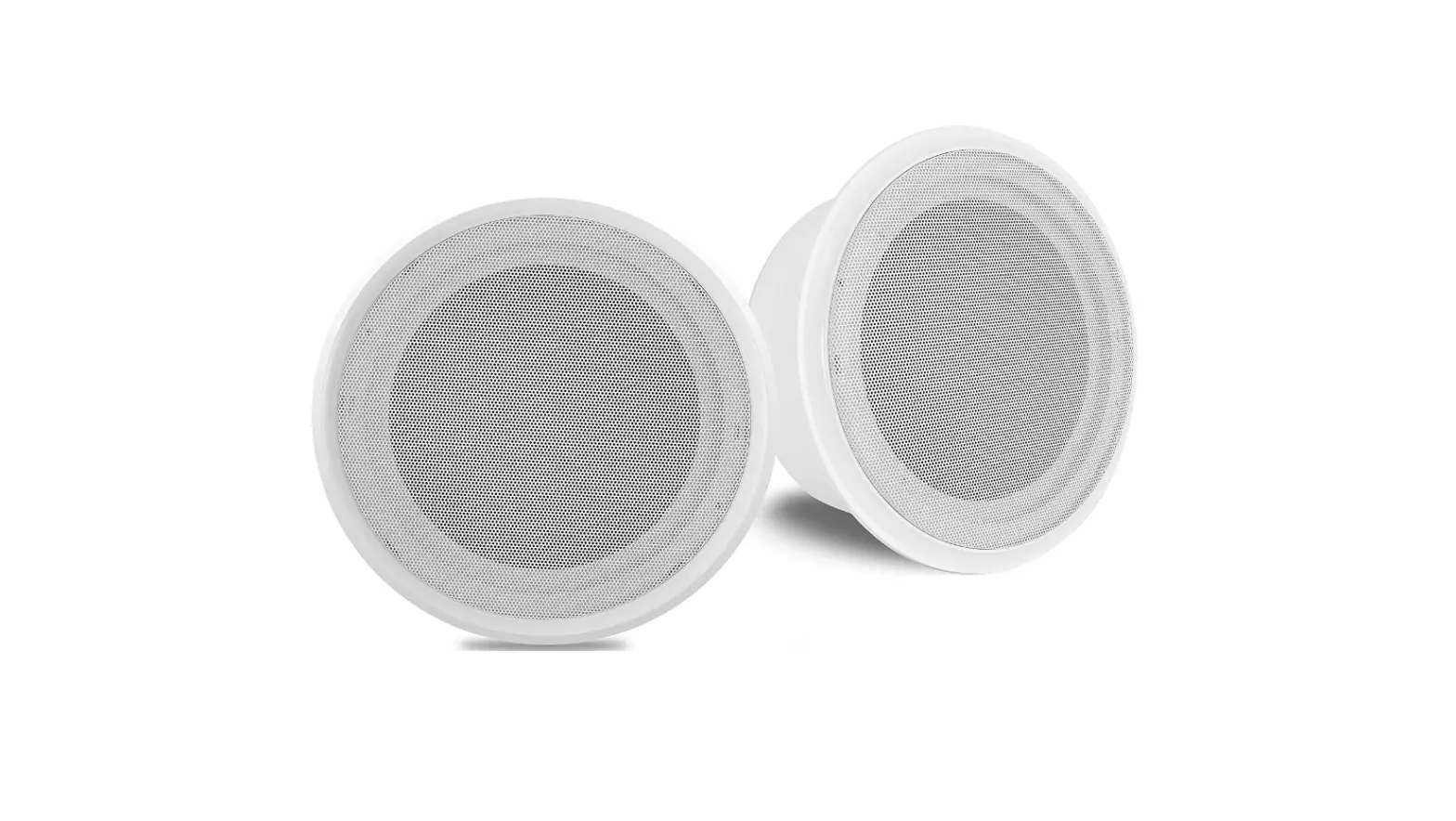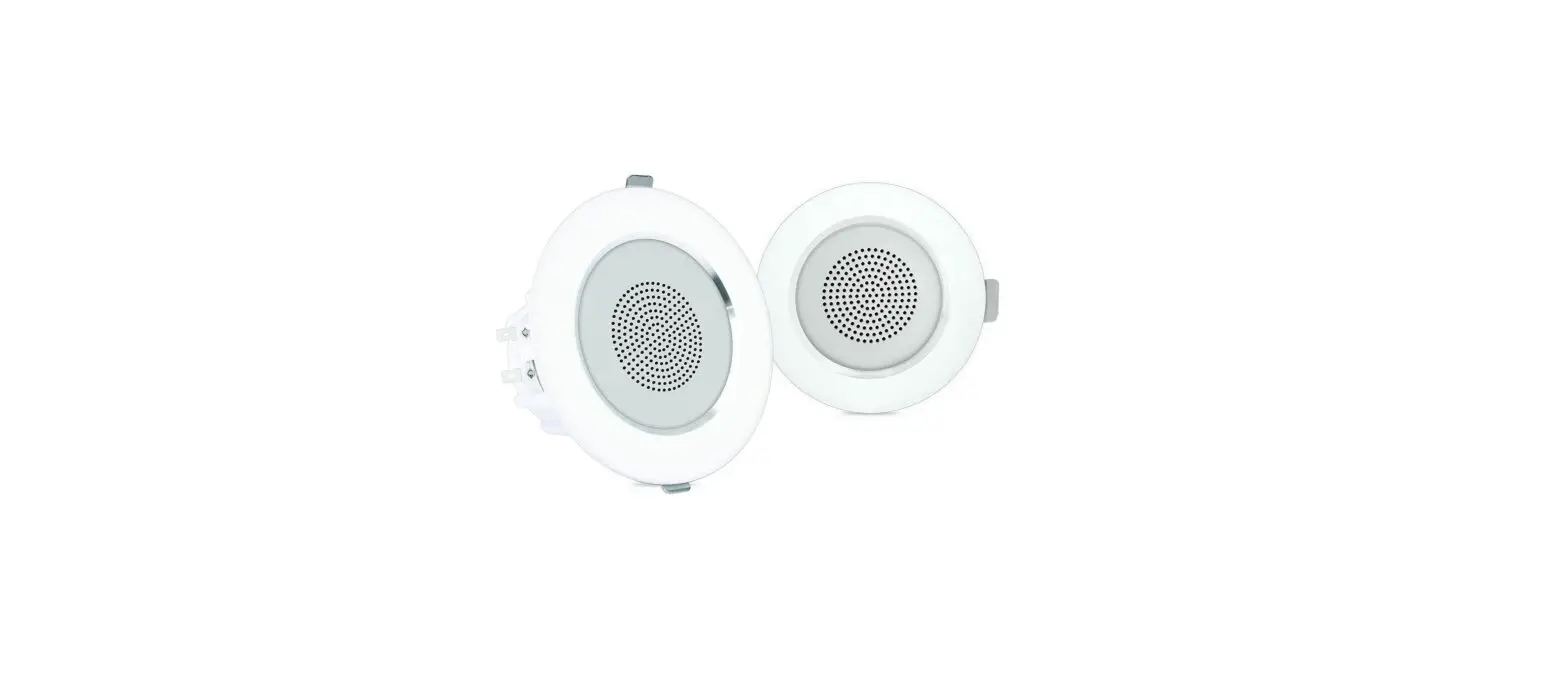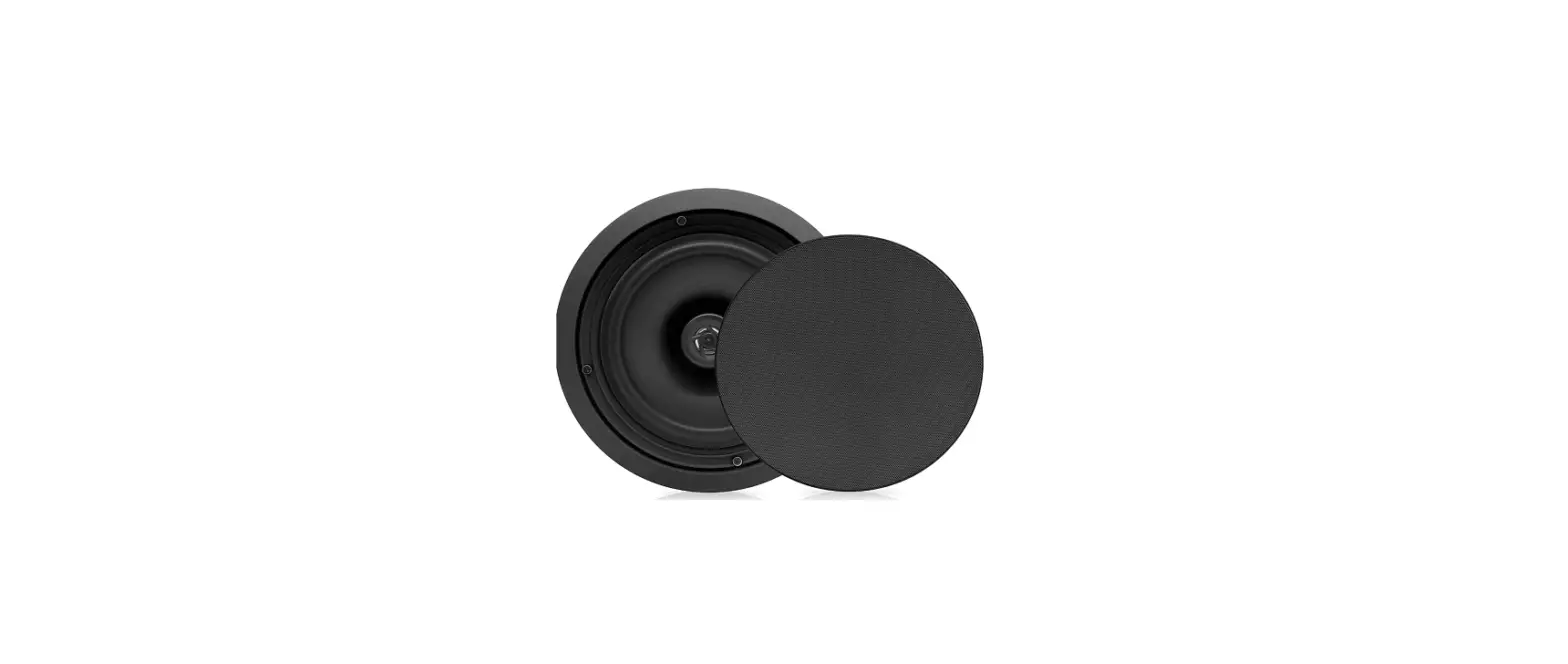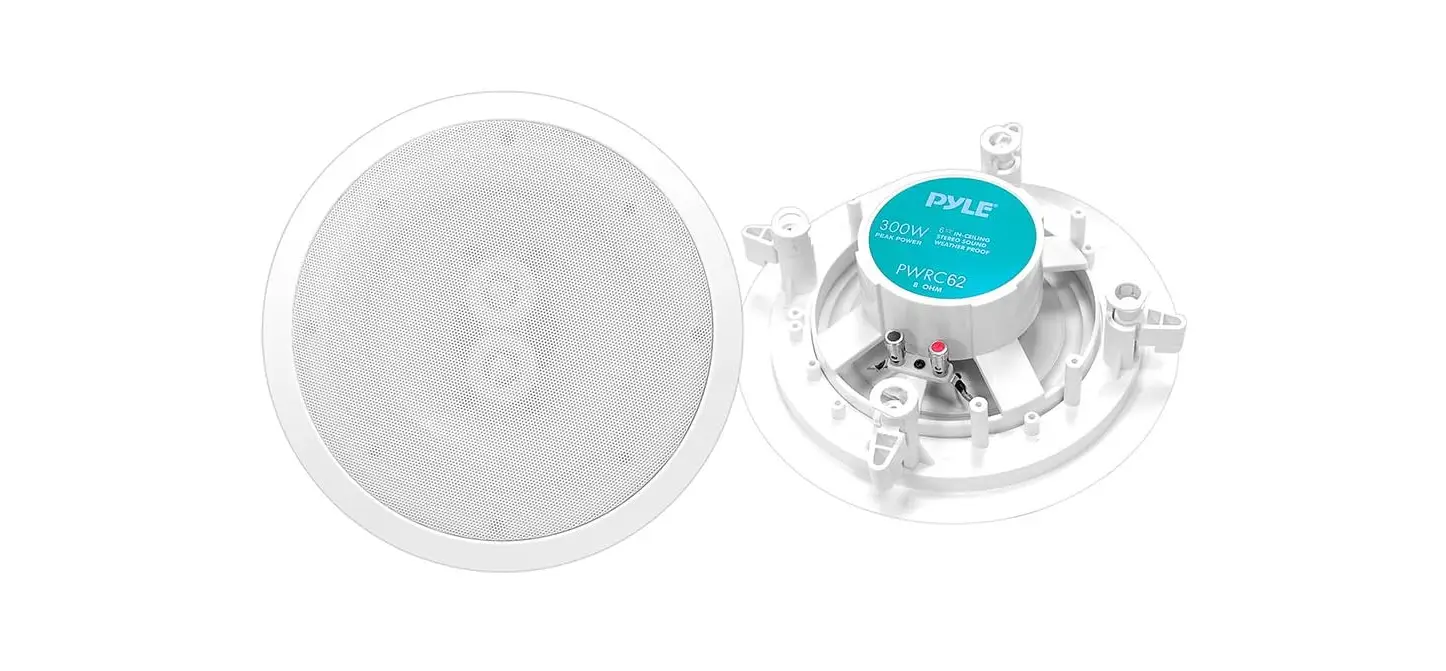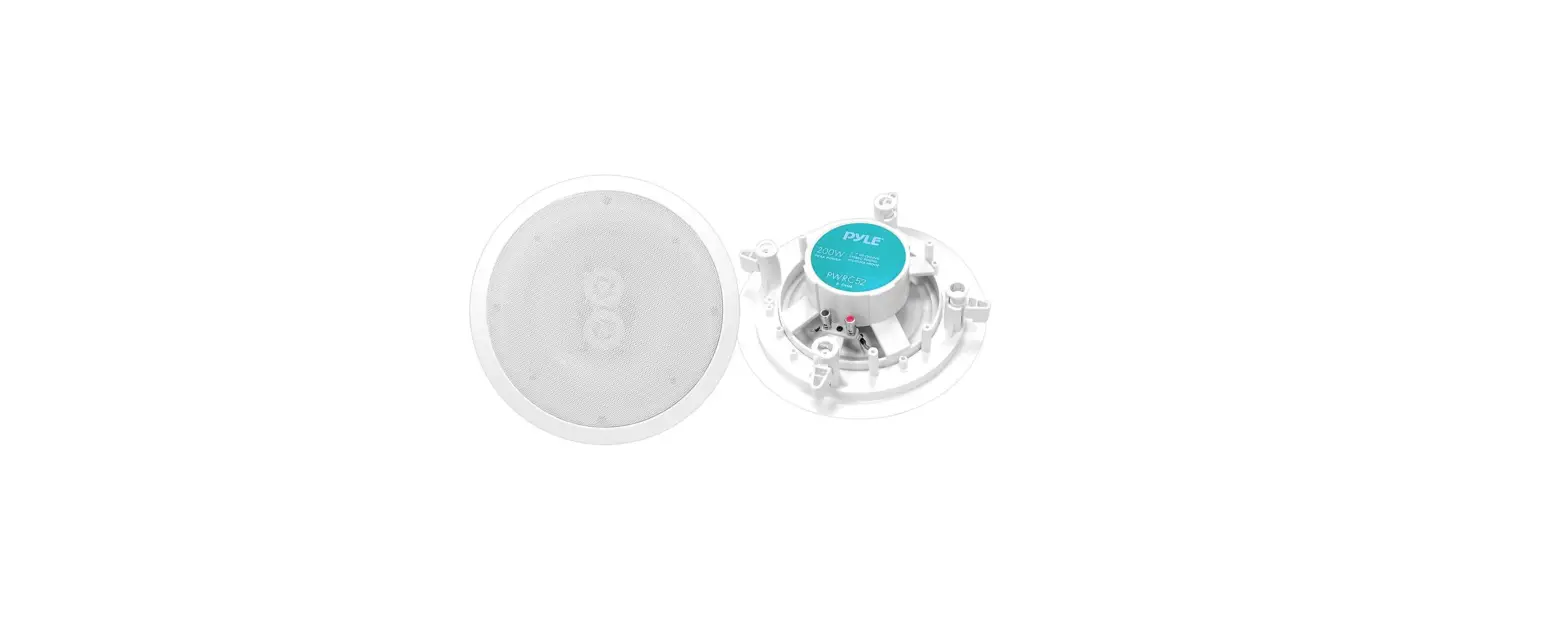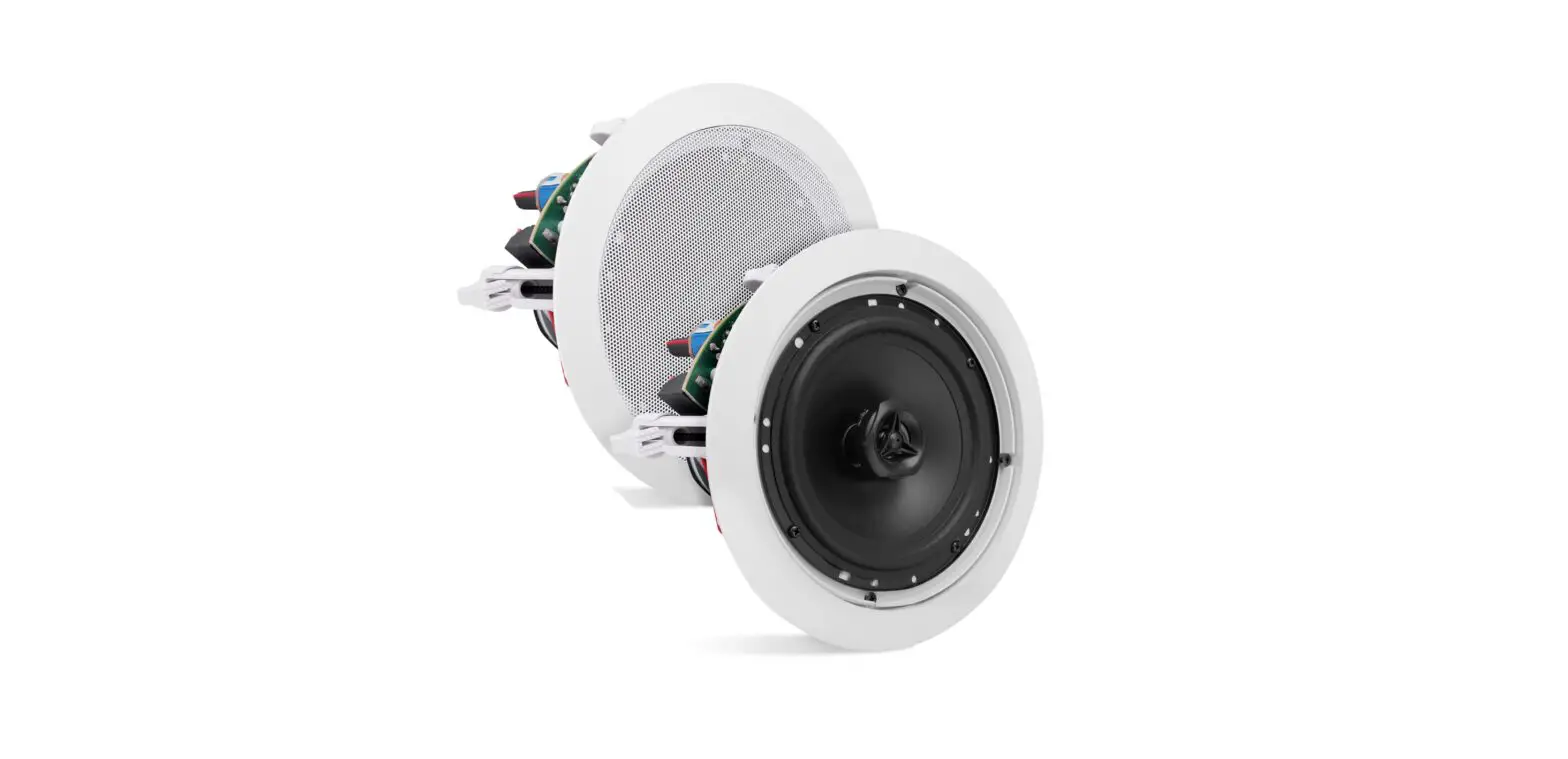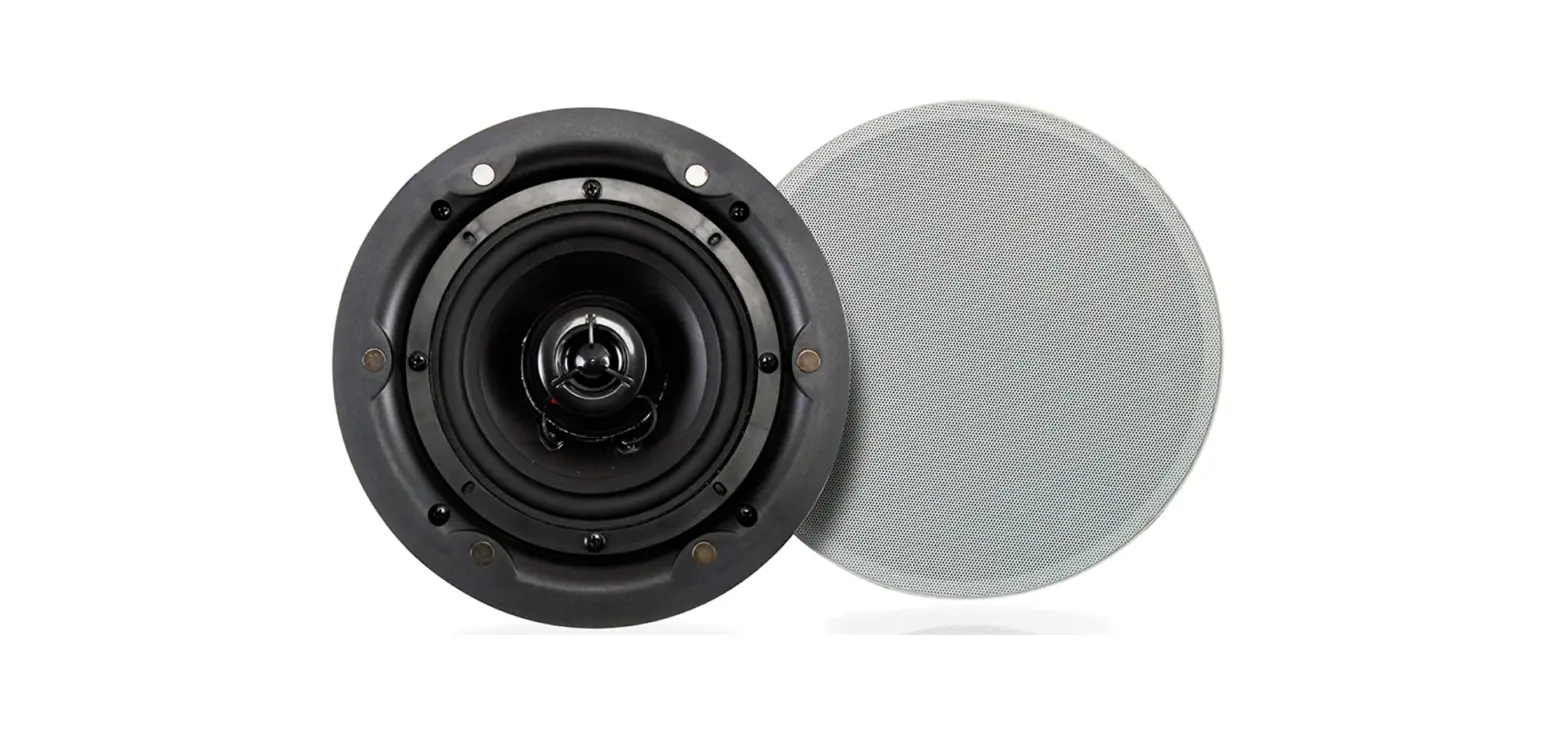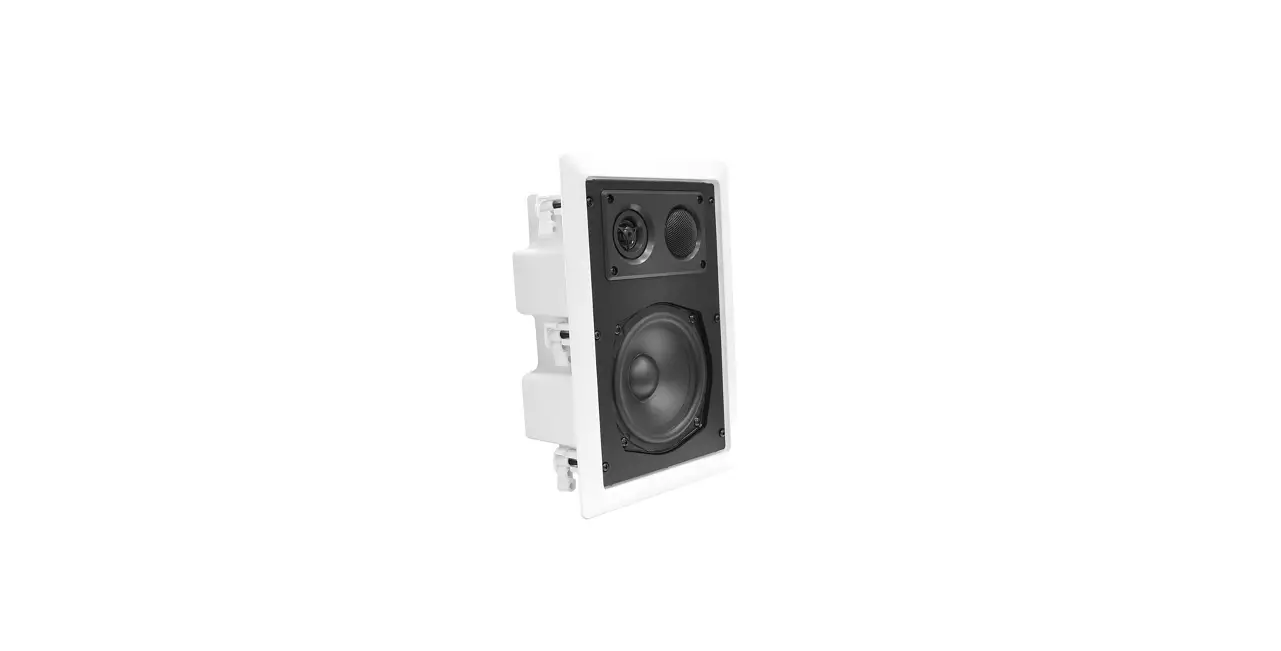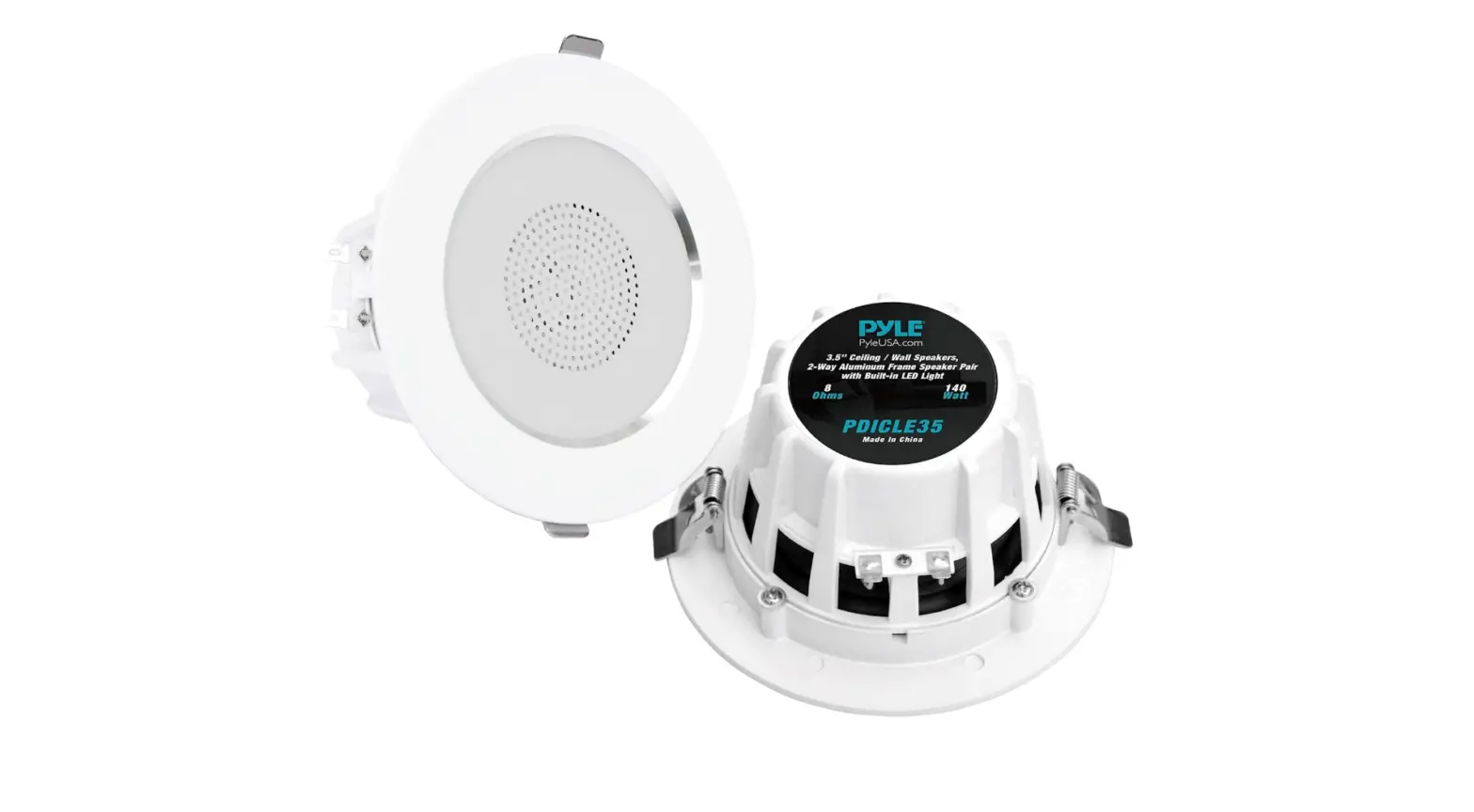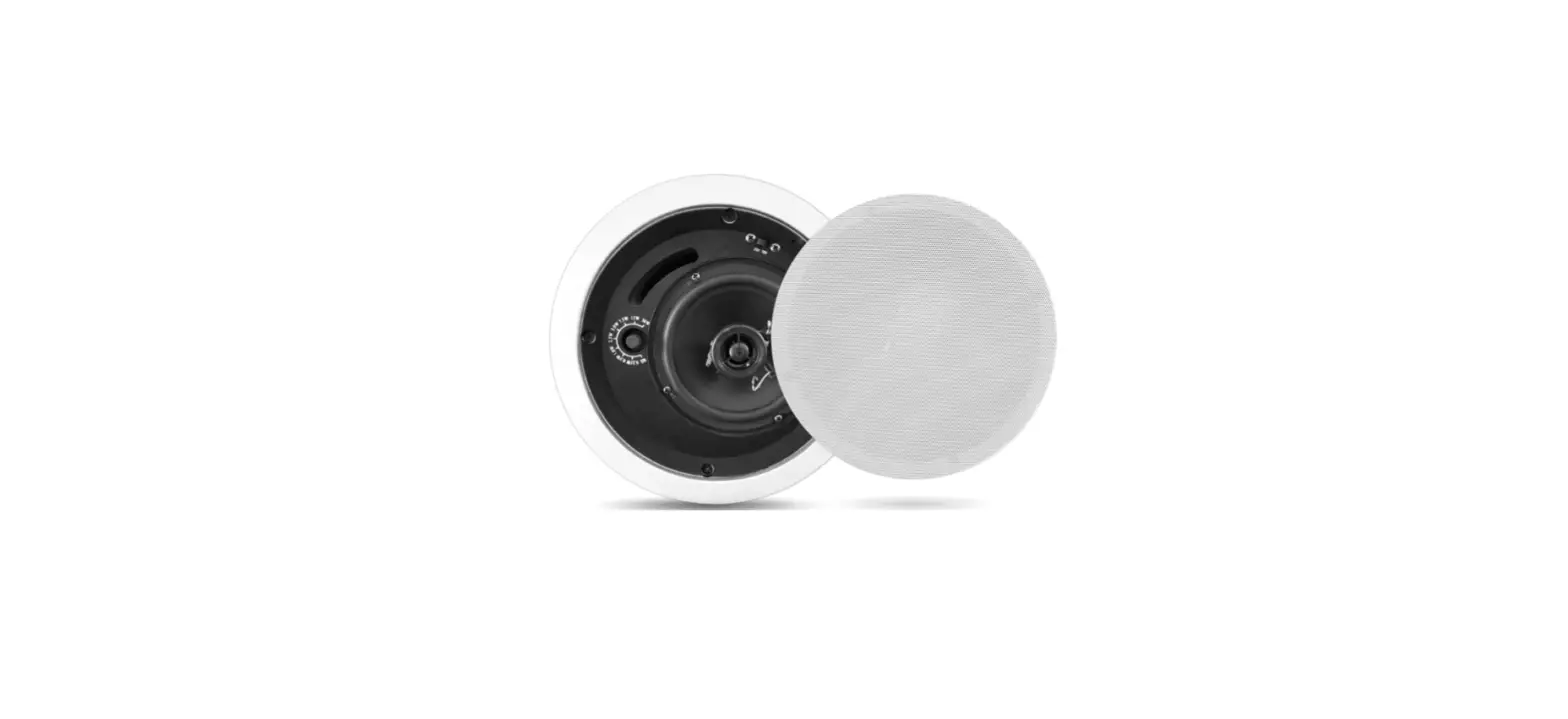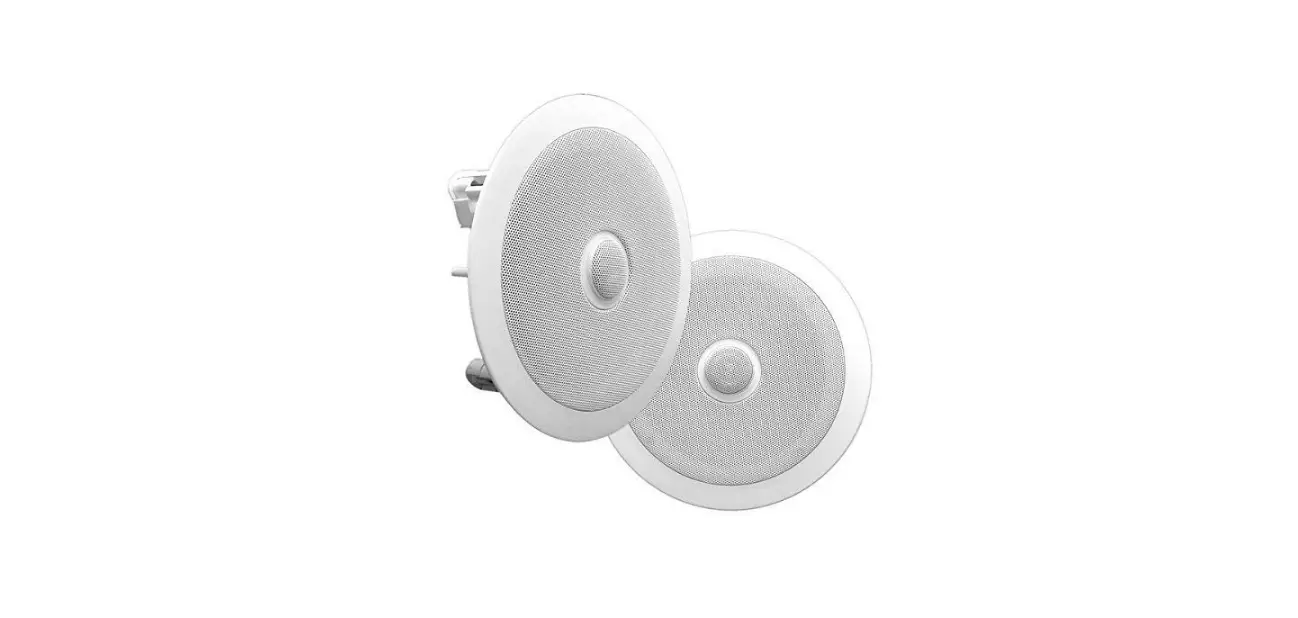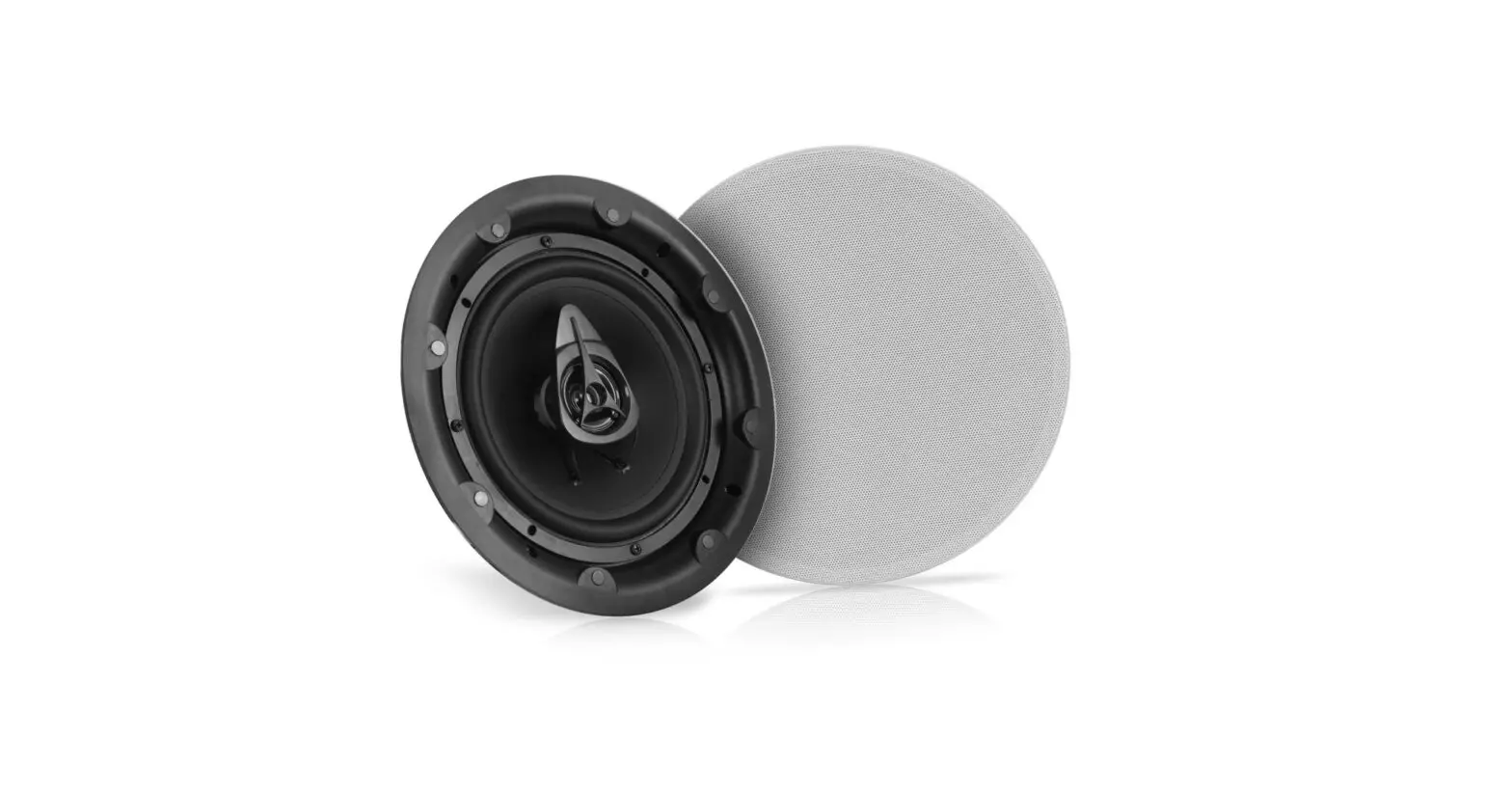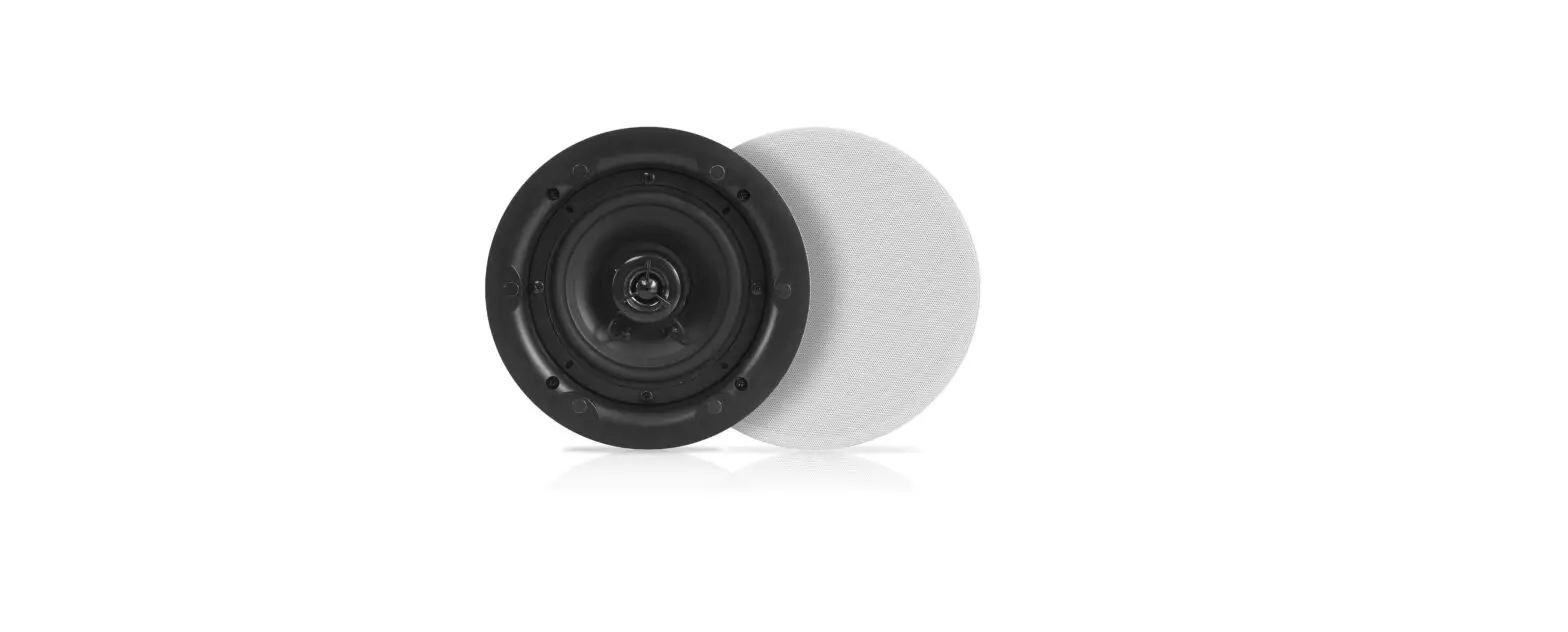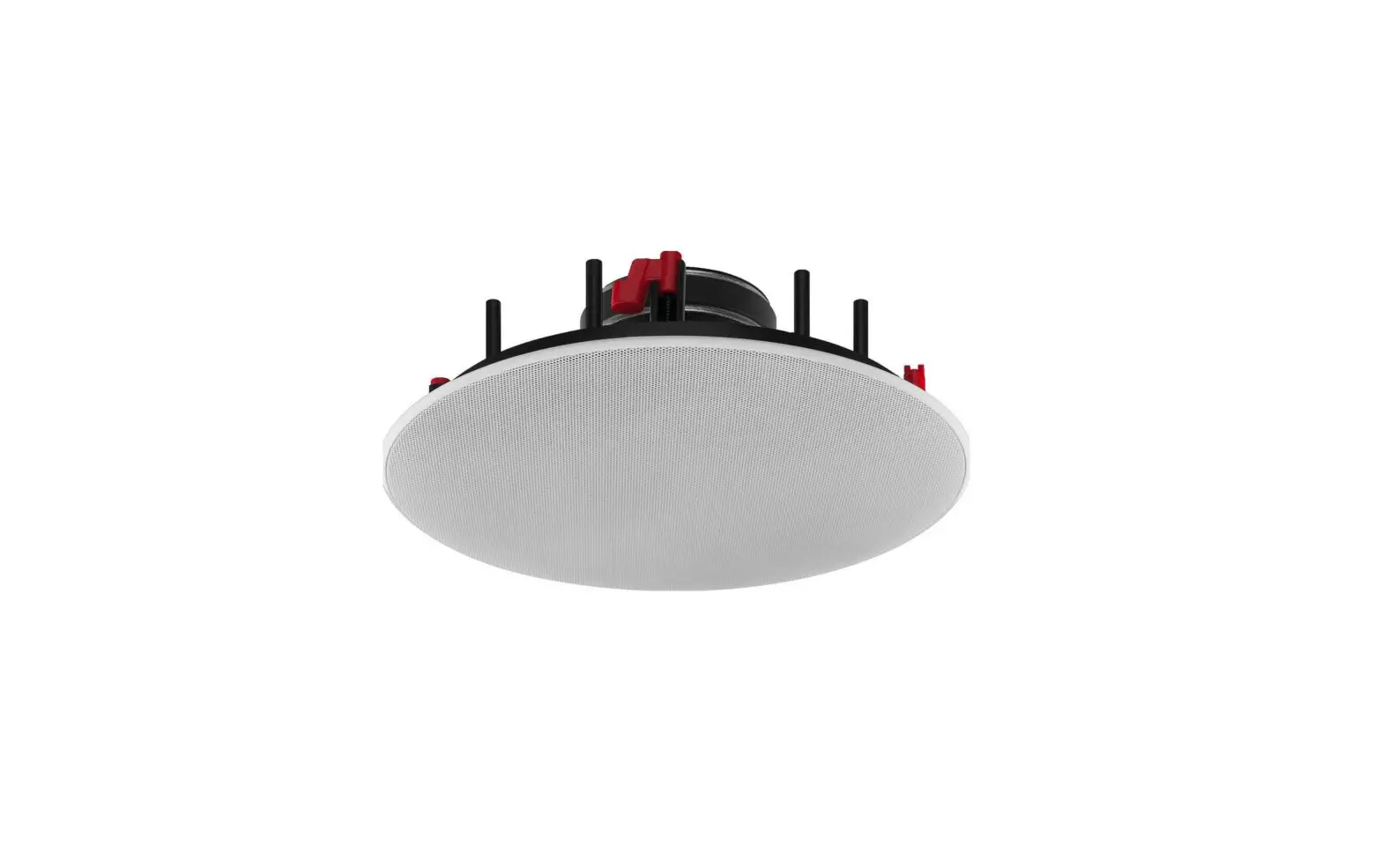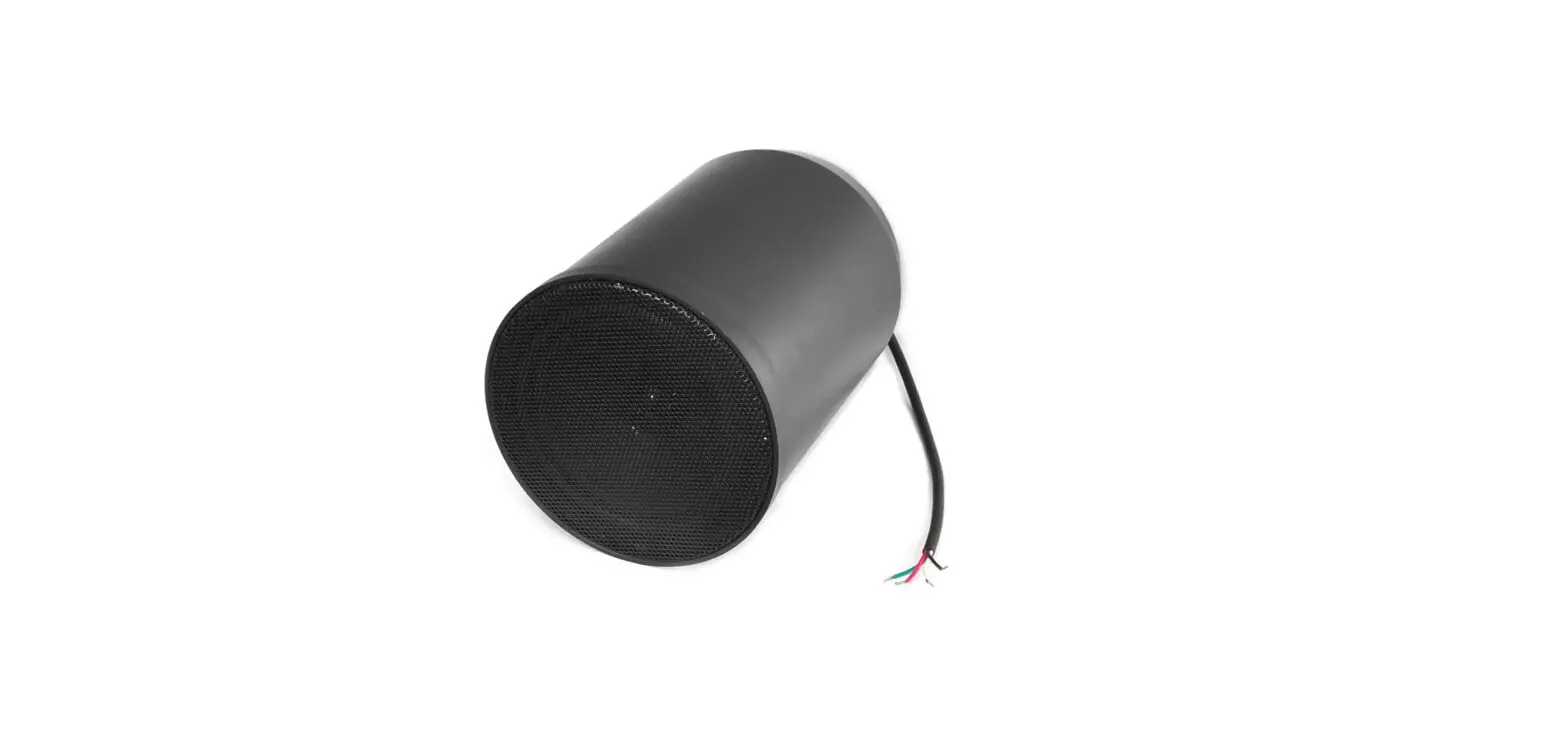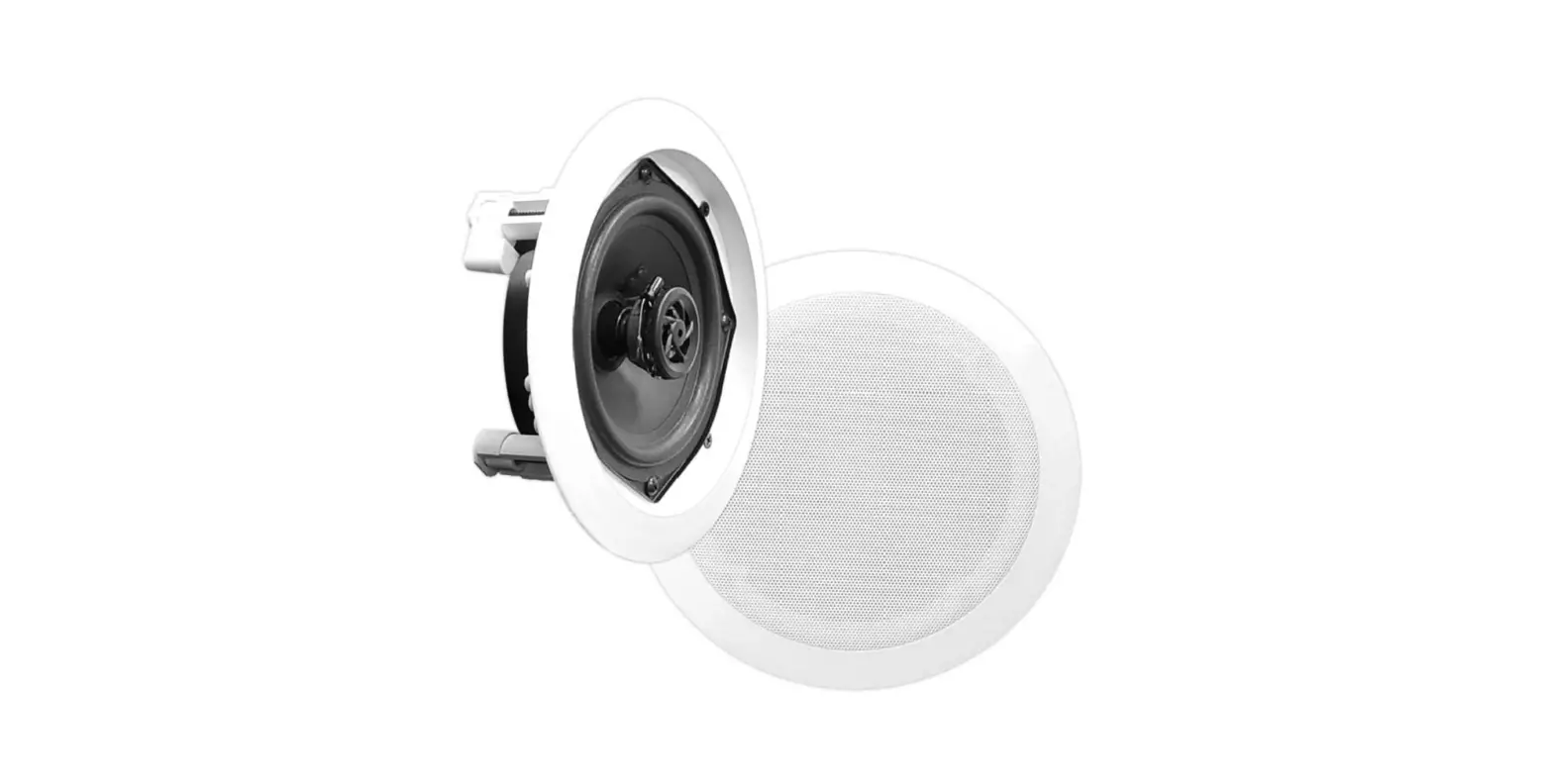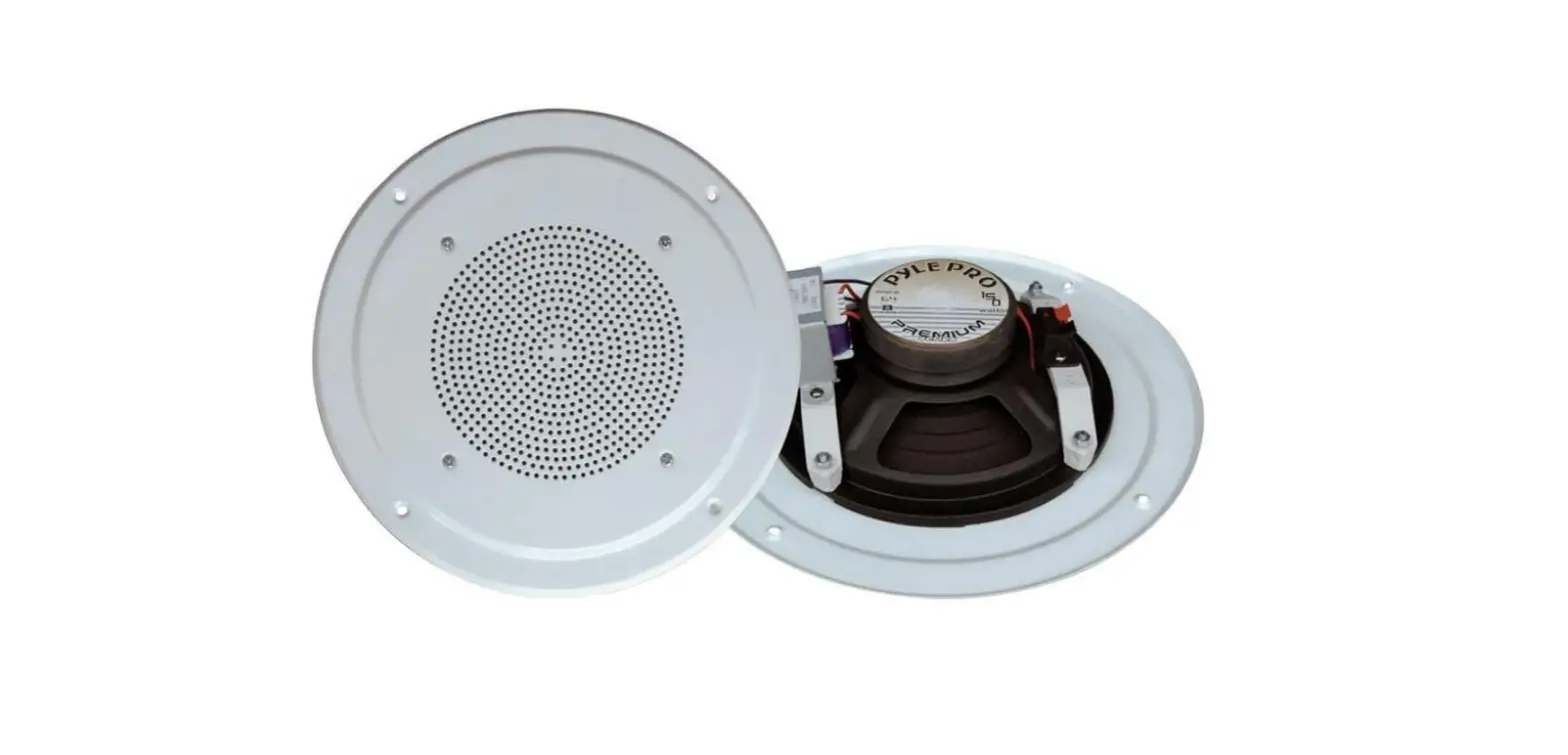
 Pyle PDICS64 Ceiling Wall Mount Speaker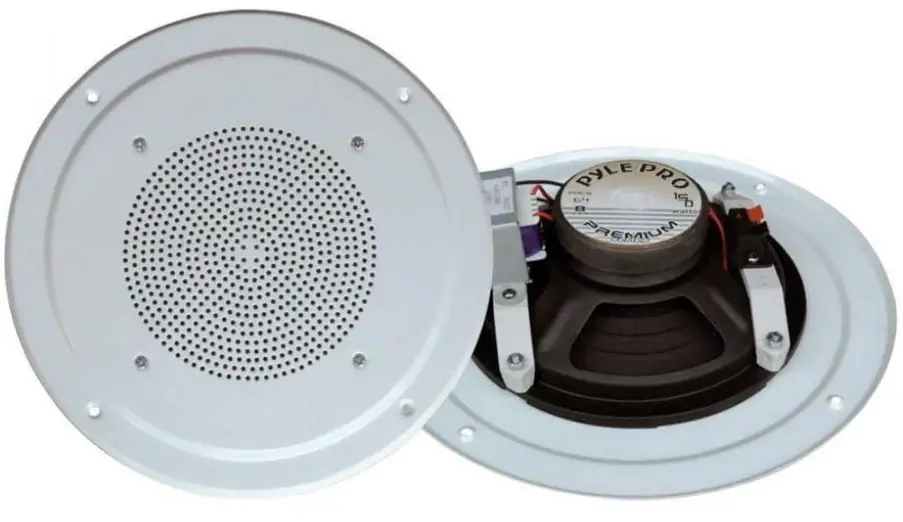
Specifications
- Product Dimensions: 04 x 10.04 x 2.56 inches
- Item Weight:45 pounds
- Item model number: PDICS64
- Speaker Type: In-Ceiling
- Connectivity Technology: Wired
- Special Feature: Speakers
Descriptions
Any room in your house or workplace will receive high-quality sound from the Pyle Pro PDICS64 two-way in-ceiling speaker system without taking up valuable floor space. A 100 V transformer is also included for use with high-power systems. The speaker is 6.5′ in diameter and has a 1.5′ tweeter cup and 0.76′ high temperature voice coil for a rich, full sound. These speakers have a maximum power output of 150 watts and a frequency response range of 70 Hz to 16 kHz.
Features
Pyle ceiling speakers have a 100-volt transformer, and an 8-ohm bypass setting enables usage with a standard home music receiver and amplifier. The item is designed to provide loud, rich sound or soothing background music. 90Hz – 16 kHz Pyle’s 6.5-inch speaker system contains a 1.2-inch tweeter cup with a frequency response. This flush mount speaker has a powerful 150 watts of power handling capacity and a remarkable 8 ohm impedance rating. A flush-mount mid-bass stereo sound speaker with an easy in-wall or in-ceiling installation is available. The item has a 0.76-inch high-temperature voice coil that can generate loud, rich sound or subdued background music. The Pyle in-wall speaker system reproduces sound cleanly and with exceptional responsiveness at a peak power of 150 WATTS. Its 89 dB can produce wide-ranged sound performance, ensuring that the speakers are safe and increasing the product’s lifespan.
SIMPLE INSTALLATION
The item comes with an overall cut-out template with dimensions of 10″(W) x 10″(H) x 2.8″ for simple installation (D). The item also comes with the installation equipment for a perfect application. 0.76″ High Temperature Voice Coil, 8 Ohm, 6-1/2″ Speaker Woofer System, SPL: 89 dB Impedance 100V Transformer with a 1.2″ Tweeter Cup Peak 150 Watts 8 Ohm/ 5 W Power/ Frequency Overall Dimensions: 10″(W) x 10″(H) x 2.8″ Response: 70-16 KHz (D)
FAQs
Because TVs don’t have separate speaker outputs, you can play TV audio using ceiling speakers, but you can’t connect the speakers directly to one another.
The distance between in-wall and ceiling speakers should be at least 18 to 24 inches.
In-ceiling speakers can be used in place of in-wall speakers, and their audio output is fairly similar. The biggest difference will be in size. In-wall speakers are typically larger than in-ceiling speakers.
Yes. If a back box is not placed, the sound quality of your in-ceiling speakers may degrade, which could cause noise pollution in other areas of your home.
After investing in a multi-zone AV receiver, connect speaker wires to each amp-powered speaker. Setting up your home music system will be easier if you choose an AV receiver with Bluetooth and WiFi built in.
One room or many rooms can employ ceiling speakers. One example of how they can be utilized to produce sound that is easily transferrable between several rooms is the background music at a large gathering. The versatile, unobtrusive surround sound experience they provide both indoors and outside will be valued by those who enjoy entertaining.
By connecting an analogue wire from your TV to the amplifier and turning on line output on your TV, you may listen to TV sound through your ceiling speaker system. 1) The 3.5 mm headphone jack is no longer found on the majority of modern TVs.
In actuality, it’s a great idea to play music over ceiling speakers. By immersing you in surround sound, they can simulate being at a symphony hall or live event.
A subwoofer will be useful in handling the bass and low-end frequencies even if ceiling speakers are capable of handling all frequencies. Additionally, it vastly enhances your sound system’s overall sound quality.
You don’t need an amplifier. You don’t have to worry about running out of power if your music-playing device can handle it on its own.
Create a path for the wires to pass through. Turn off the breaker after making sure the amplifier is unplugged. Connect the wiring. Start attaching the wires to the speaker terminals in the ceiling. The other end of the cables should be connected to the amplifier’s terminals. You may try it out by turning on your circuit breaker.
For a more even sound, rooms larger than 3 × 3 metres and 5 x 5 metres should use one pair of ceiling speakers and two pairs, respectively.
The audio source, the wiring, or the speakers themselves could all be at fault. You might change the connections at the source to see whether the source is the problem. As an illustration, you may attach a connection from a speaker that is functioning to the problematic speaker.
Using a flat-head screwdriver, release any retention clips holding the speaker assembly to the ceiling mounting system. Spend some time carefully removing the speaker from the ceiling. Before completely removing the speaker from the ceiling, unplug the audio cords from the rear of the speaker.
18-inch separation
Speakers should be positioned at least 18 inches away from the wall, or as far apart as speakers on a normal sound system would be.