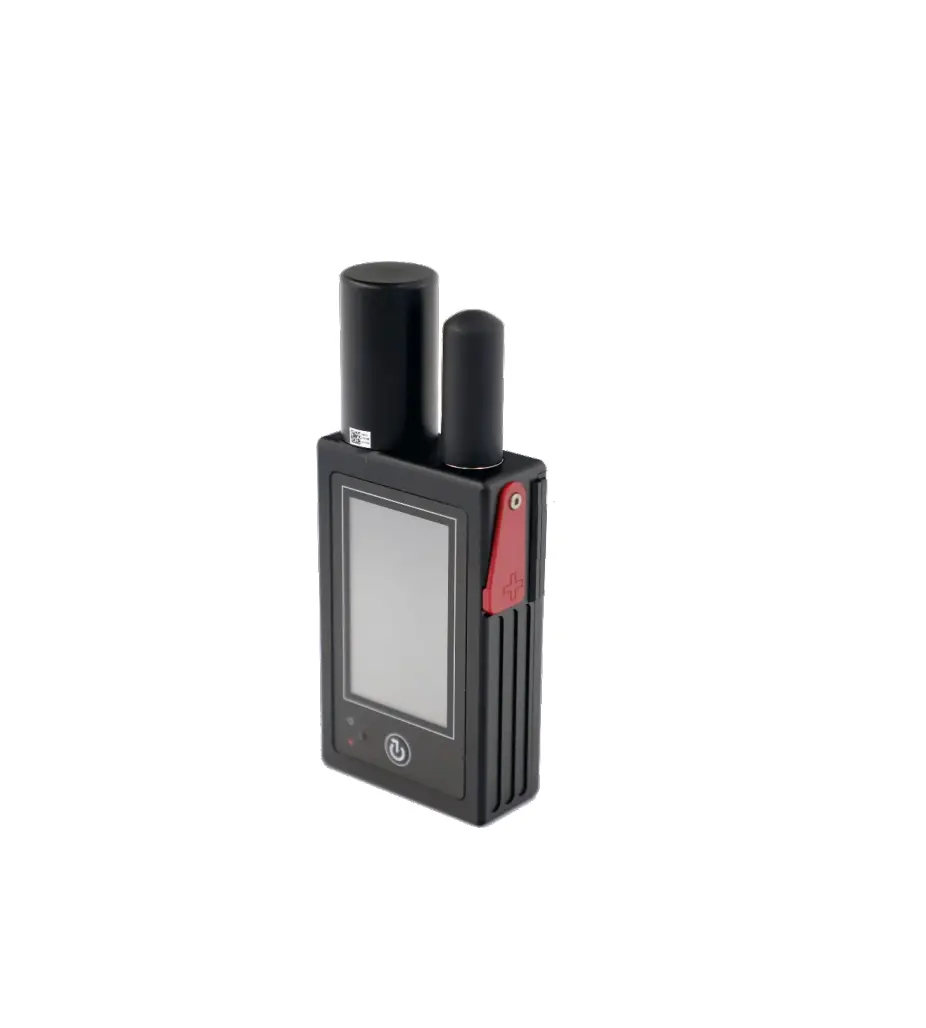
SHOUT ns/nsx
Product Information
SHOUT ns/nsx Quick Start Guide
Version A April 18, 2022
Email: [email protected]
Revision History
| Date | Description |
|---|---|
| 03/21/2018 | Initial version |
| 07/29/2021 | Updated to new template |
| 04/18/2022 | Added SHOUT nsx device; Formal release |
Reference Documents
| Reference Title | Revision/Date |
|---|---|
| AT Commands for SHOUT ns/nsx | Version A, 04/25/2022 |
| SatTerm User Guide (supports SatTerm v8.9.7) | Version A, March 29, 2022 |
Table of Contents
- Introduction
- Device Description
- Accessories
- Power Button/911
- Bluetooth Button
- Emergency/911 Mode Activation
Product Usage Instructions
Device Description
In this SHOUT ns/nsx Quick Start user guide, all references of
the operational features, interface, and electrical specifications
of the SHOUT ns device also apply to the SHOUT nsx device. Where
the SHOUT nsx device differentiates from the SHOUT ns device, the
Quick Start user guide will note it in the applicable sections. In
summary, the SHOUT nsx device is taller, heavier, and has a larger
battery for longer mission life than the SHOUT ns device.
Accessories
- AC Wall Adapter
- USB-A to USB Micro-B Cable
The SHOUT ns has a single power ON/OFF button. The SHOUT ns can
be turned off and on again by momentarily holding down the Power
button for two seconds and releasing it.
The SHOUT ns has a single Bluetooth (BT) button. Press this
button for two seconds to activate the Bluetooth link. Press the
Bluetooth button again for two seconds to deactivate the Bluetooth
link.
Emergency/911 Mode Activation
To activate the Emergency/911 mode, please refer to the detailed
instructions provided in the user manual.
SHOUT ns/nsx Quick Start Guide
Version A April 18, 2022
451-01037-001A
Copyright © 2021 by NAL Research Corporation 11100 Endeavor Ct., Suite 300 Manassas, Virginia 20109 USA Phone: 703-392-1136
Email: [email protected]
SHOUT ns/nsx Quick User Guide Version A
LEGAL DISCLAIMER AND CONDITION OF USE
This document contains information for the SHOUT ns tracker and SHOUT nsx tracker and accompanying accessories (“Product”), which are provided “as is.” Reasonable effort has been made to make the information in this document reliable and consistent with specifications, test measurements and other information. However, NAL Research Corporation and its affiliated companies, directors, officers, employees, agents, trustees or consultants (“NAL Research”) assume no responsibility for any typographical, technical, content or other inaccuracies in this document. NAL Research reserves the right in its sole discretion and without notice to you to change Product specifications and materials and/or revise this document or withdraw it at any time. User assumes the full risk of using the Product specifications and any other information provided.
NAL Research makes no representations, guarantees, conditions or warranties, either express or implied, including without limitation, any implied representations, guarantees, conditions or warranties of merchantability and fitness for a particular purpose, non-infringement, satisfactory quality, non-interference, accuracy of informational content, or arising from a course of dealing, law, usage, or trade practice, use, or related to the performance or nonperformance of any products, accessories, facilities or services or information except as expressly stated in this guide and/or the Product and/or satellite service documentation. Any other standards of performance, guarantees, conditions and warranties are hereby expressly excluded and disclaimed to the fullest extent permitted by the law. This disclaimer and exclusion shall apply even if the express limited warranty contained in this guide or such documentation fails of its essential purpose.
In no event shall NAL Research be liable, whether in contract or tort or any other legal theory, including without limitation strict liability, gross negligence or negligence, for any damages in excess of the purchase price of the Product, including any direct, indirect, incidental, special or consequential damages of any kind, or loss of revenue or profits, loss of business, loss of privacy, loss of use, loss of time or inconvenience, loss of information or data, software or applications or other financial loss caused by the Product (including hardware, software and/or firmware) and/or the Iridium satellite, or arising out of or in connection with the ability or inability to use the Product (including hardware, software and/or firmware) and/or the Iridium satellite to the fullest extent these damages may be disclaimed by law and whether advised of the possibilities of such damages. NAL Research is not liable for any claim made by a third party or made by you for a third party.
Document Number: 451-01037-001A
2 of 14
REVISION HISTORY
SHOUT ns/nsx Quick User Guide Version A
Revision 1.0.3 1.1 A
Date
Description
03/21/2018 Initial version
07/29/2021 Updated to new template
04/18/2022 Added SHOUT nsx device; Formal release
REFERENCE DOCUMENTS
The latest revisions of the NAL documents are available from the NAL Research website at https://www.nalresearch.com/support/documentation-downloads/.
Reference Title
[1]AT Commands for SHOUT ns/nsx
[2]SatTerm User Guide (supports SatTerm v8.9.7)
Revision/Date
Version A, 04/25/2022
Version A, March 29, 2022
Document Number: 451-01037-001A
3 of 14
TABLE OF CONTENTS
SHOUT ns/nsx Quick User Guide Version A
1 Introduction………………………………………………………………………………………………….. 6 1.1 Device Description …………………………………………………………………………………………………. 6 1.2 Accessories……………………………………………………………………………………………………………. 7 1.3 Power Button/911 …………………………………………………………………………………………………. 7 1.4 Bluetooth Button …………………………………………………………………………………………………… 7 1.5 Emergency/911 Mode Activation …………………………………………………………………………….. 8 1.6 LED Status Display ………………………………………………………………………………………………….. 8 1.7 Special Functions …………………………………………………………………………………………………… 9 2 Operating the SHOUT ns………………………………………………………………………………… 10 2.1 Preparing the Device…………………………………………………………………………………………….. 10 2.2 Starting the Device……………………………………………………………………………………………….. 10 2.2.1 Emergency Mode Activation ……………………………………………………………………………. 11 3 Configuring the SHOUT ns ……………………………………………………………………………… 12 4 Technical Support ………………………………………………………………………………………… 14
TABLE OF FIGURES
Figure 1: SHOUT ns/nsx Buttons and Indicators………………………………………………………………….. 7 Figure 2: SHOUT ns Accessories………………………………………………………………………………………… 7 Figure 3: Control Buttons and Status LEDs on the SHOUT ns Front Face………………………………… 8
TABLE OF TABLES
Table 1: Description of LED States …………………………………………………………………………………….. 8
Document Number: 451-01037-001A
4 of 14
ACRONYM LIST
SHOUT ns/nsx Quick User Guide Version A
AES ………………………..Advanced Encryption Standard AT ………………………….Two-letter sequence starting a string of terminal commands. The AT is
intended to get the terminal’s attention prior to executing a command. DoD ……………………….Department of Defense EMSS ……………………..Enhanced Mobile Satellite Services GPS ………………………..Global Positioning System IMEI ……………………….International Mobile Equipment Identification kbps ……………………….kilobits per second LCD ………………………..Liquid Crystal Display LED ………………………..Light Emitting Diode mAh ……………………….Milliampere Hour NOC ……………………….Network Operation Center s …………………………….Second SatTerm ………………….Satellite Terminal Emulator Software SBD ………………………..Short burst data USB ………………………..Universal Serial Bus
Document Number: 451-01037-001A
5 of 14
1 INTRODUCTION
SHOUT ns/nsx Quick User Guide Version A
In this SHOUT ns/nsx Quick Start user guide, all references of the operational features, interface, and electrical specifications of the SHOUT ns device also apply to the SHOUT nsx device. Where the SHOUT nsx device differentiates from the SHOUT ns device, the Quick Start user guide will note it in the applicable sections. In summary, the SHOUT nsx device is taller, heavier, and has a larger battery for longer mission life than the SHOUT ns device
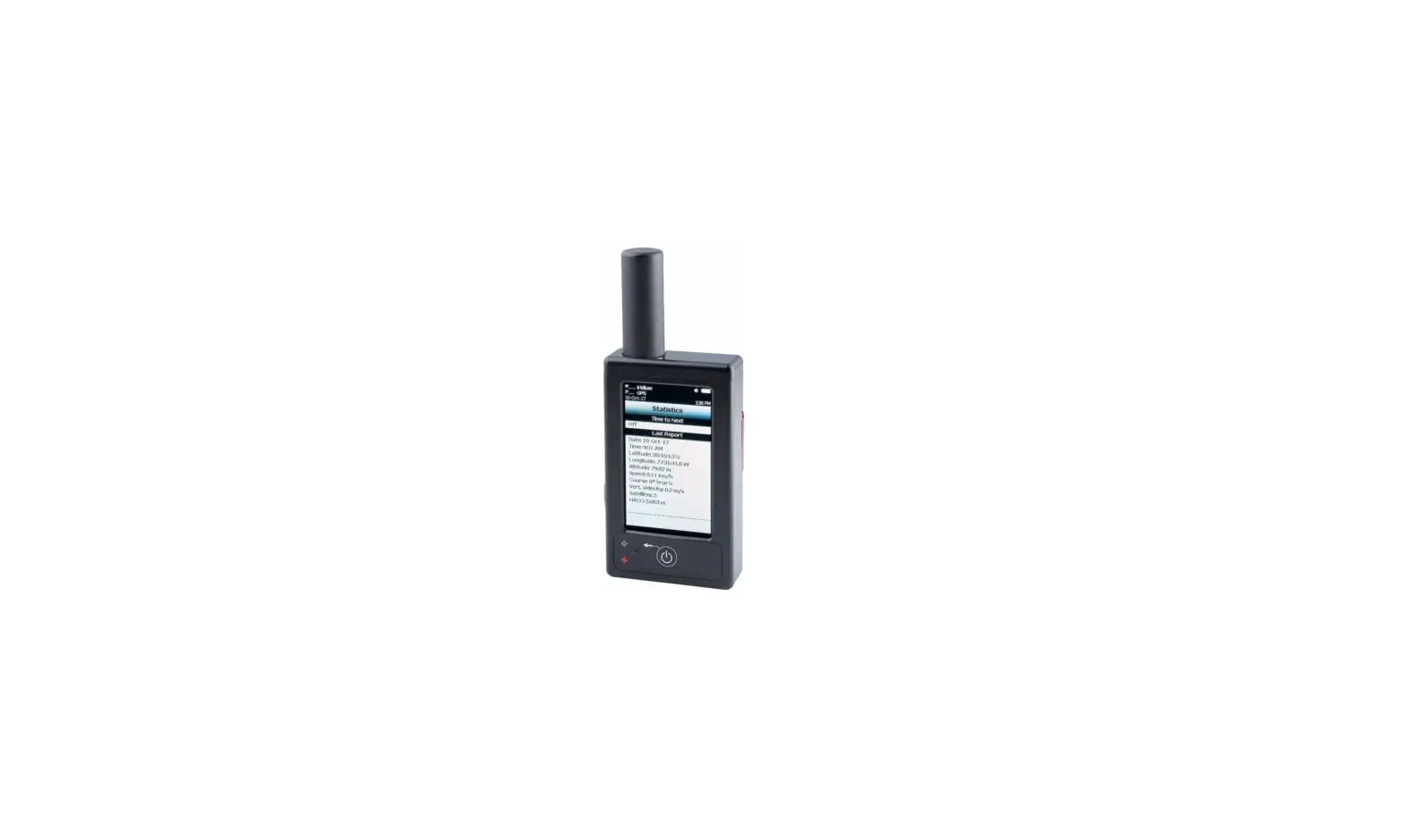
The SHOUT ns is the “no LCD display” version of the SHOUT ts. It is a body-worn tracker/messaging device weighing less than 3 ounces and is 60% smaller than the SHOUT ts in volume. Both the Iridium and GPS antennas are embedded inside the enclosure. The SHOUT ns device’s operating parameters are set with a computer via the USB port. With an internal 650 mAh rechargeable battery, the SHOUT ns can send a position report every hour for up to 20 days (about 480 reports). The device can periodically wake up from sleep to send its position report to a command center. A 911 activation sequence is used for immediate emergency/alert notifications. Data is packaged in either standard or 256-bit AES encrypted format. Data can also be sent in encrypted PECOS formats to include brevity codes.
This Quick Start Guide provides a basic overview of the SHOUT ns standard features and functions. It is designed to familiarize you with the SHOUT ns and provide basic guidance for its operation.
1.1 DEVICE DESCRIPTION
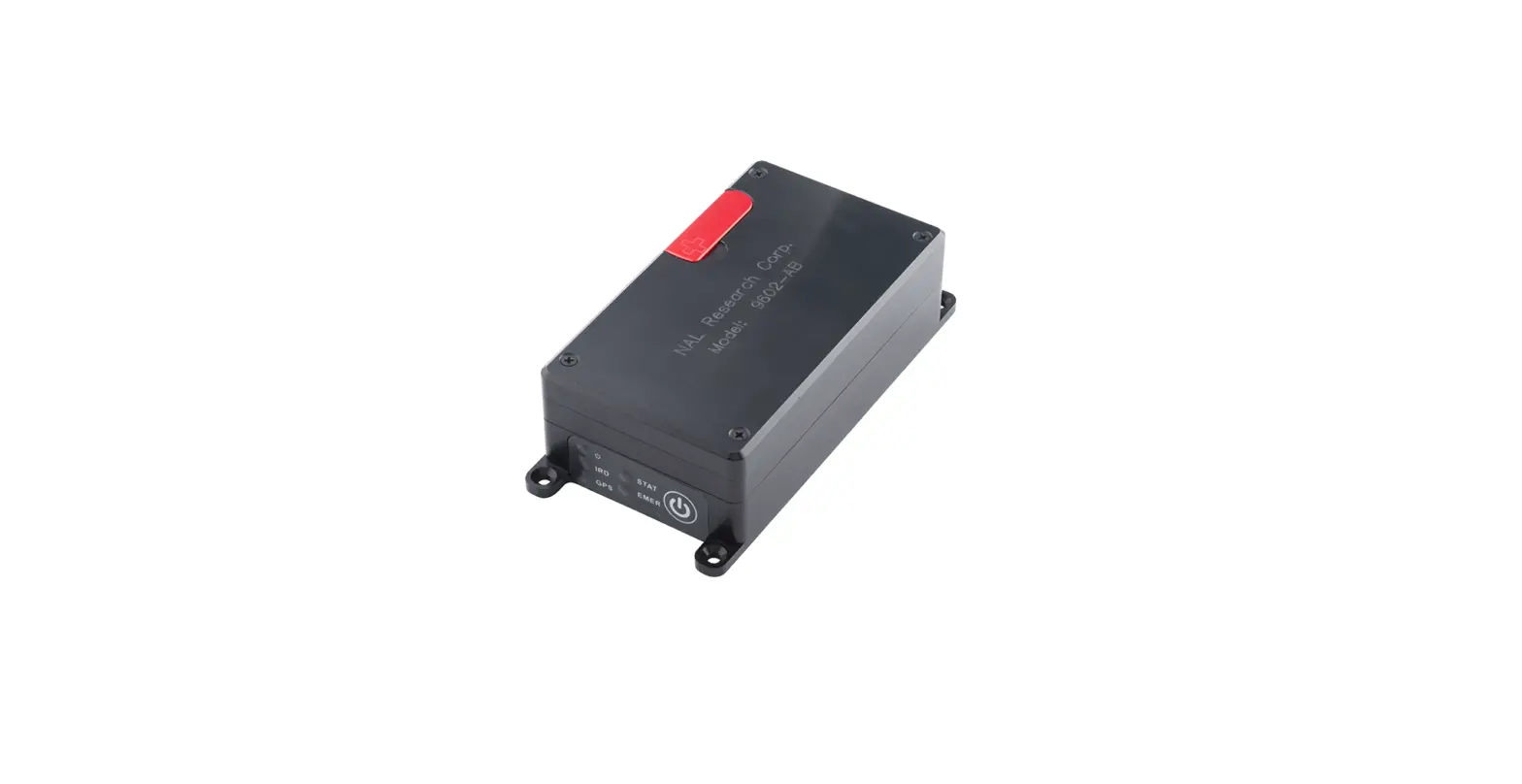
The SHOUT ns comprises a Power button/911, Bluetooth button/911, a Light Emitting Diode (LED) Status display, embedded Iridium, GPS, and Bluetooth antennas, and a Universal Serial Bus (USB) Micro-B interface as shown in Figure 1. The USB Micro-B interface port is for battery charging, firmware updates, data collection, and setting parameters using the NAL Research SatTerm application. The six Light Emitting Diodes (LEDs) provide the status of power state, battery charging status, GPS fix, Bluetooth connection status, report message transmission status, and Iridium connection status to the user. Using the Power and Bluetooth buttons, activates the emergency/911 mode to send an emergency message with an increased reporting rate. For detailed information on the emergency/911 mode, refer to Section 2.2.1.
Document Number: 451-01037-001A
6 of 14
SHOUT ns/nsx Quick User Guide Version A
Figure 1: SHOUT ns/nsx Buttons and Indicators
1.2 ACCESSORIES
AC Wall Adapter
USB-A to USB Micro-B Cable
Figure 2: SHOUT ns Accessories
1.3 POWER BUTTON/911
The SHOUT ns has a single power ON/OFF button. The SHOUT ns can be turned off and on again by momentarily holding down the Power button for two seconds and releasing it.
1.4 BLUETOOTH BUTTON
The SHOUT ns has a single Bluetooth (BT) button. Press this button for two seconds to activate the Bluetooth link. Press the Bluetooth button again for two seconds to deactivate the Bluetooth link.
Document Number: 451-01037-001A
7 of 14
1.5 EMERGENCY/911 MODE ACTIVATION
SHOUT ns/nsx Quick User Guide Version A
The SHOUT ns has an emergency/911 mode that immediately sends a location report with the Emergency bit set, and thereafter sends location reports at a rate configured in the Emergency Report Rate parameter until the emergency/911 mode is canceled. For detailed information on the emergency/911 mode, refer to Section 2.2.1.
1.6 LED STATUS DISPLAY
The SHOUT ns has six status LEDs, as shown in Figure 3, which include: power , battery level (BATT), GPS fix (GPS), Bluetooth state (BT), message transmission status (STAT), and Iridium signal (IRDM). They provide a quick visual check to ensure proper operations. Each LED can be enabled and disabled through a setting in the general configuration profile (^LEDS). Table 1 describes the function of each LED.
Figure 3: Control Buttons and Status LEDs on the SHOUT ns Front Face
Label Name Power
Table 1: Description of LED States
LED Off
LED Blinking
LED Solid
Device is off
Once every 5 secs: Device is on and sleeping in normal mode
Once every 2.5 sec: Device is on and sleeping in emergency mode
Device is on and awake
Document Number: 451-01037-001A
8 of 14
SHOUT ns/nsx Quick User Guide Version A
Table 1: Description of LED States
Label Name
LED Off
LED Blinking
BATT Battery
During operation:
Charge required
During operation:
Charge under 80%; 1.25 sec on, 0.25 sec off
Charge under 20%; 0.125 sec on, 1.00 sec off
While charging:
Charge in progress; 1.25 sec on, 0.25 off
GPS GPS
GPS off or time only
2-D fix or dead reckoning
BT Bluetooth Bluetooth off
1 sec: Bluetooth on and not connected/pairing
STAT Status
No successful report transmission
1 sec: Last report transmission failed
IRDM Iridium
Off or has no signal
Has 12 bars of signal
LED Solid
During operation: Charge over 80%
While charging: Charge complete
3-D fix
Bluetooth on and connected Last report transmission succeeded Has 35 bars of signal
1.7 SPECIAL FUNCTIONS
The SHOUT ns features two (2) special LED patterns that indicate the following:
Emergency Mode Active: All six (6) LEDs blink simultaneously in a 0.5 second on and 0.5 second off pattern for as long as the emergency mode is active and the device is awake. When the device is asleep, the 6 LED pattern stops but the power LED blink rate changes from once every 5 seconds for normal mode to once every 2.5 seconds for emergency mode.
Upon Charger Connection: When power is on*, the Battery, GPS, Iridium, and Status LEDs blink in clockwise sequence for 3 seconds when power is applied.
After a special function has ended, the LEDs revert to their standard operating state.
* Note: There are no LED indicators while the SHOUT ns is powered off and while plugged in and charging. To verify charge status, the SHOUT ns must be turned on.
Document Number: 451-01037-001A
9 of 14
2 OPERATING THE SHOUT NS
SHOUT ns/nsx Quick User Guide Version A
2.1 PREPARING THE DEVICE
Prior to use of the SHOUT ns, first purchase airtime from NAL Research or from any Iridiumcertified airtime reseller. An airtime reseller must register the SHOUT ns International Mobile Equipment Identification (IMEI) number to “point” to a Network Operations Center (NOC) server. This section explains how you can quickly set up the SHOUT ns as a tracking device.
The SHOUT ns is shipped with a partially charged battery. Before use, charge the SHOUT ns for one hour.** To charge the SHOUT ns, take the provided AC adapter and connect the provided USB-A to USB Micro-B cable to the adapter and the SHOUT ns to charge the device. Hold the power button for 2 seconds.
Upon powering on the SHOUT ns while plugged in, the Battery, GPS, Iridium, and Status LEDs will blink in a clockwise sequence for 3 seconds.
**Note: Upon battery depletion, the SHOUT ns should reach full charge within 2 hours of being continuously plugged in.
2.2 STARTING THE DEVICE
After charging the SHOUT ns, the device is ready to use. Hold the power button for 2 seconds. The Power LED and Battery LED light up and the device begins functioning. Ensure the top of the SHOUT ns has a clear view of the sky. The standard LED sequence during a successful report is as follows:
1. The GPS LED illuminates first when a signal has been acquired. It will then turn off.
2. The Iridium LED illuminates when an Iridium signal has been acquired and then turns off.
3. The Status LED illuminates when a report has been transmitted.
Once this has been accomplished, all LEDs turn off and the Power LED blinks intermittently, indicating the device is in sleep mode awaiting the next report transmission.
Document Number: 451-01037-001A
10 of 14
SHOUT ns/nsx Quick User Guide Version A
2.2.1 EMERGENCY MODE ACTIVATION
In order to activate the emergency mode feature on the SHOUT ns, a four (4)-button sequence must be initiated. This sequence involves alternating between the Power button (first) and Bluetooth button for a total of two (2) times each. This action results in all six (6) LEDs blinking at the same time until the device is turned off. This sequence can be activated with the SHOUT ns powered on or off.
The SHOUT ns is shipped with default settings below:
Report Rate ……………………………………………………….5 Minutes Emergency Report Rate ………………………………………5 Minutes Transmit Report Without GPS Fix …………………………Yes Message Format ………………………………………………..NAL Message Format
Document Number: 451-01037-001A
11 of 14
3 CONFIGURING THE SHOUT NS
SHOUT ns/nsx Quick User Guide Version A
If you want to change the default settings, the SHOUT ns supports a USB Micro-B connection to a computer with SatTerm software (or any terminal emulator software) activated to configure its operating profile using NAL Research’s defined AT commands. Find these AT commands in the NAL document “AT Commands for SHOUT ns/nsx” [1]. The SHOUT ns does not support auto-baud and the default baud is factory-set at 19.2 kbps. Baud rate can be changed with the +IPR command.
The required hardware and software for the configuration of the SHOUT ns include:
A desktop or laptop computer (not provided). A USB-A to USB Micro-B cable (provided with the SHOUT ns). A USB AC wall plug adapter (provided with the SHOUT ns). SatTerm software or any terminal emulator software (SatTerm is available on the NAL
Research web site (See Section 4 Technical Support).
To configure the operating profile using NAL Research’s defined AT commands:
1. Connect the USB-A to USB Micro-B cable to the adapter and the SHOUT ns to charge the device.* Hold the power button for 2 seconds. Upon powering on the SHOUT ns while plugged in, the Battery, GPS, Iridium, and Status LEDs blink in a clockwise sequence for 3 seconds. Charge the battery for at least one (1) hour prior to use.** *Note: The SHOUT ns can alternatively be charged with a computer USB 2.0 or later port. **Note: Upon battery depletion, the SHOUT ns should reach full charge in 2 hours once plugged in.
2. Install SatTerm software on a computer. See the NAL document “SatTerm User Guide” [2] for details. Connect the provided USB-A to USB-Micro-B cable to the computer and to the SHOUT ns and hold the power button for 2 seconds to turn the device on.
3. Run the SatTerm software while the SHOUT ns is connected to a computer. An NAL Research message appears along with firmware version to indicate proper communications and power input.
Document Number: 451-01037-001A
12 of 14
SHOUT ns/nsx Quick User Guide Version A
4. Use SatTerm (or any terminal emulator) installed on the computer to set the SHOUT ns operating parameters, referring to the SatTerm User Guide [2] for descriptions of the parameters and their use. The SHOUT ns is now ready for use. Verify the antennas have a full view of the sky to ensure optimal tracking.
IMPORTANT: An Enhanced Mobile Satellite Services (EMSS)-enabled SHOUT ns must first be provisioned (signed up for airtime) with EMSS short burst data (SBD) service before testing or field use. Accessing the Department of Defense (DoD EMSS Gateway is not authorized until the SHOUT ns is provisioned. Unauthorized attempts to access the DoD EMSS Gateway will result in immediate disabling of the offending device, which must then be returned to NAL Research for repair. See https://sbd.pac.disa.mil for more information regarding EMSS service provisioning.
Document Number: 451-01037-001A
13 of 14
4 TECHNICAL SUPPORT
For technical support, please contact us at:
Phone: 703-392-1136, x203 Fax: 703-392-6795 Email: [email protected]
SHOUT ns/nsx Quick User Guide Version A
Technical documents are also available to download on NAL Research’s website www.nalresearch.com in the Support > Documentation & Downloads section.
Document Number: 451-01037-001A
14 of 14
 Home - NAL Research
 File:IEC5009 Standby Symbol.svg - Wikipedia