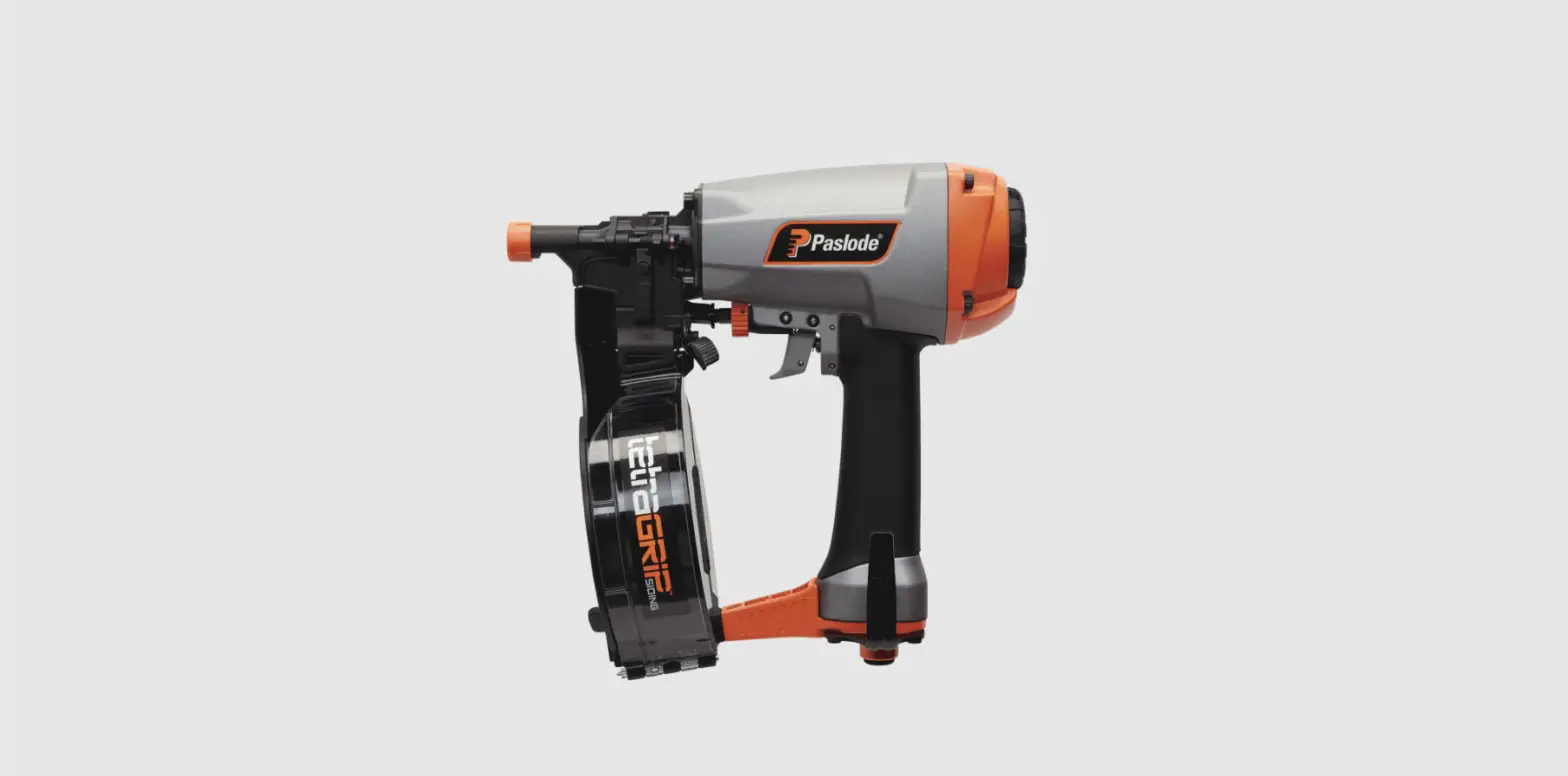
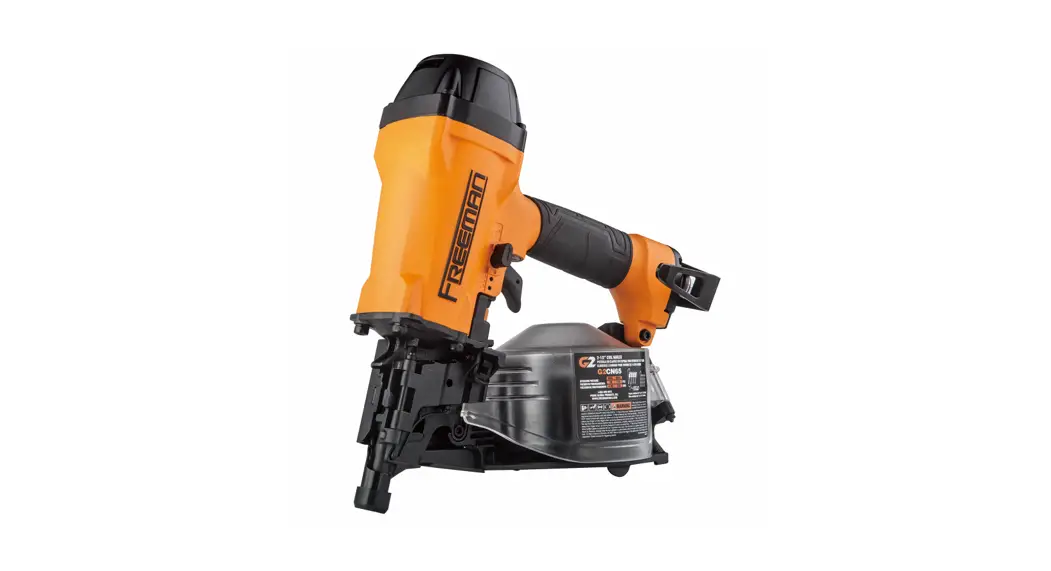
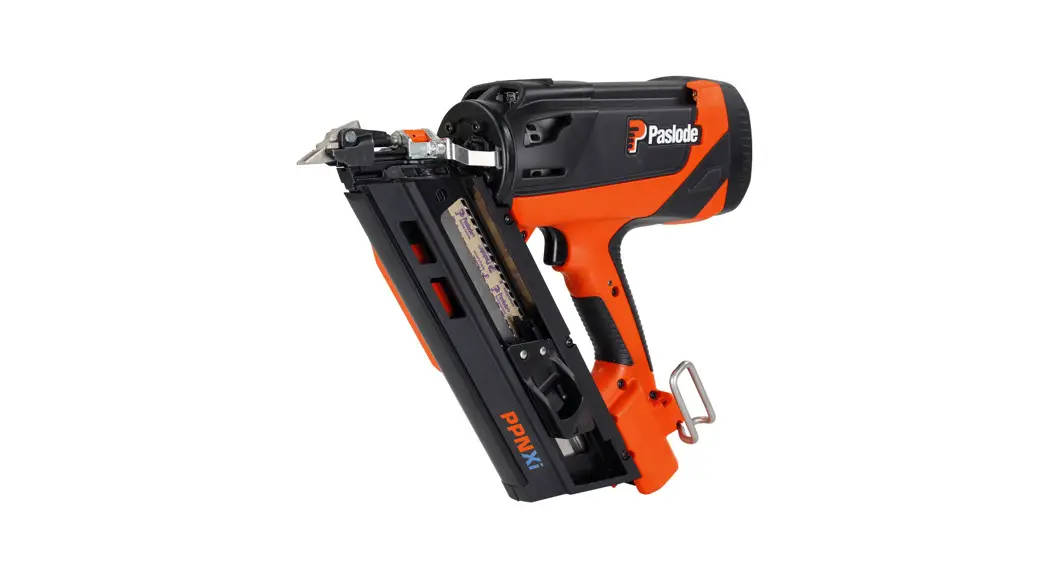
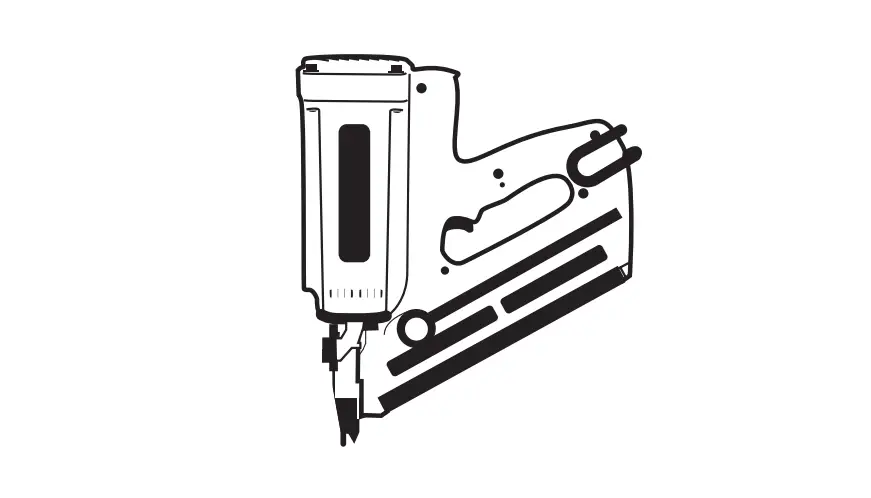
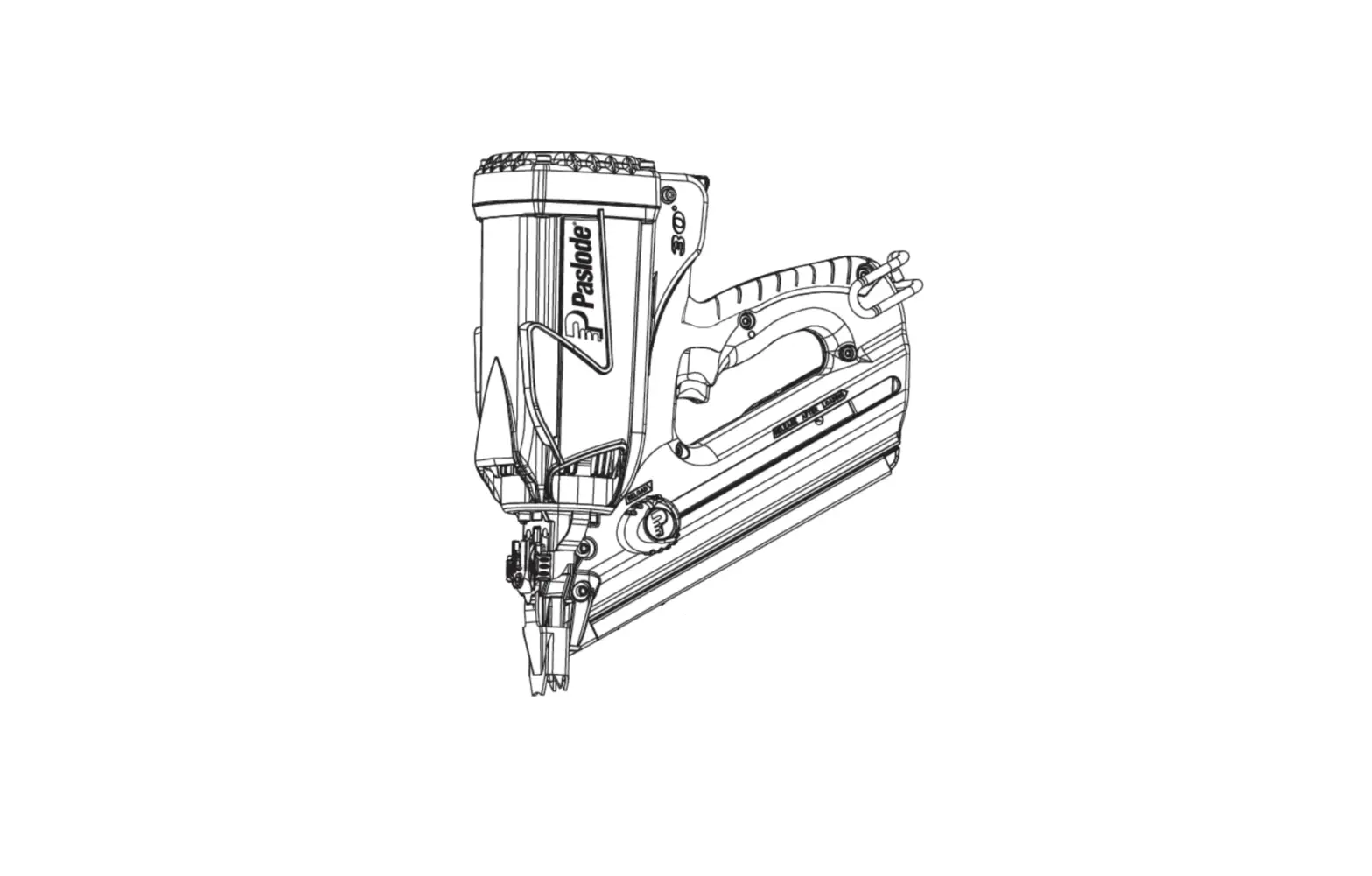
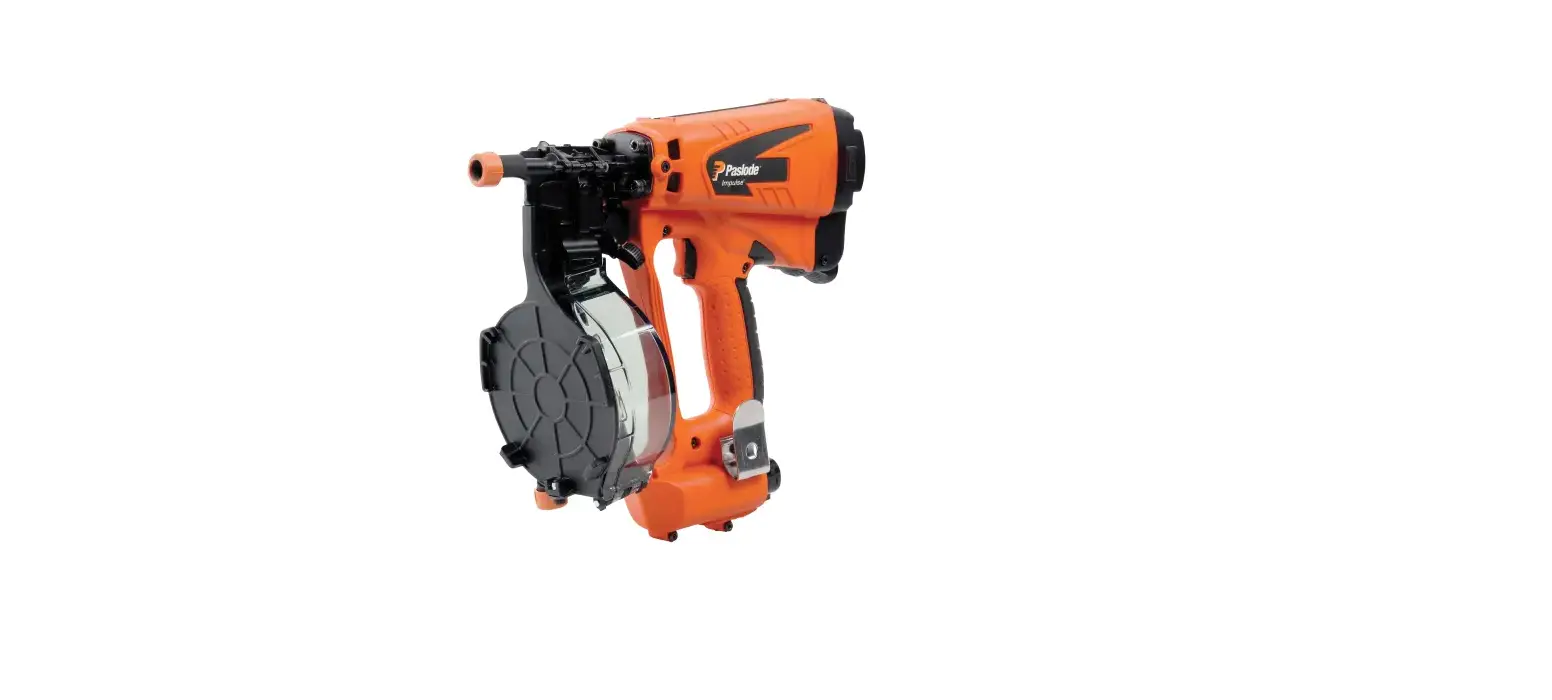
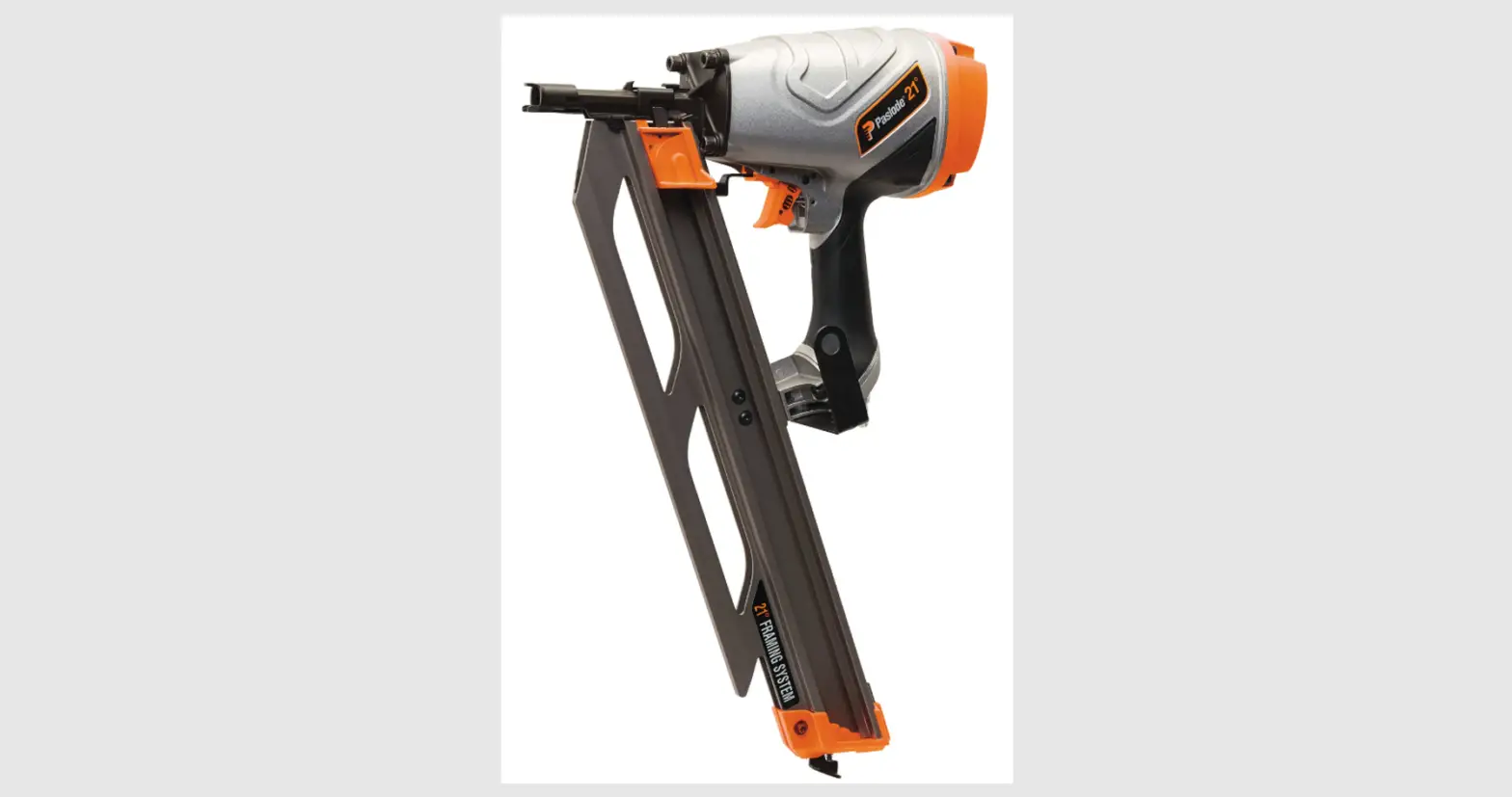
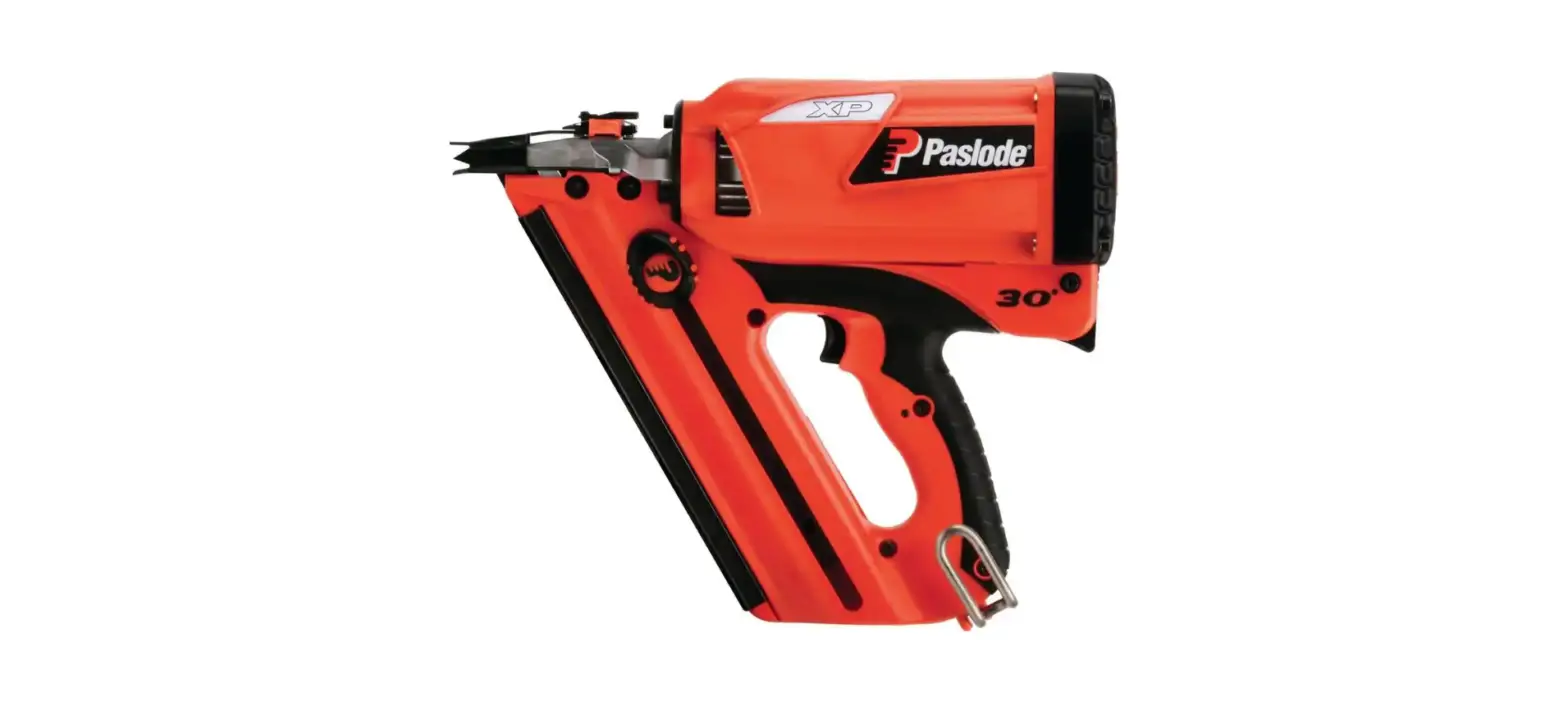
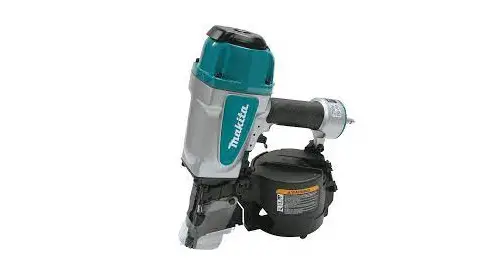
tG100CSN 0 Degree Coil Siding Nailer
Product Information
Product Name: tG100SCN (Part# 515400)
Tool Specifications:
- Height: 11.5 inches
- Width: 6 inches
- Length: 12.25 inches
- Weight: 4.9 lbs.
- Operating Pressure: 80 to 120 psi (5.5 to 8.3 bar)
- Magazine Type: 0 Degree, Plastic Coil
Fastener Specifications:
- Nail Length: 1.125 inches
- Shank Diameter: .117 inches
- Nail Coatings: Galvanized Steel, tetraGRIPTM
Tool Air Fittings:
This tool uses a 3/8 N.P.T. male plug. The fitting must be
capable of discharging tool air pressure when disconnected from the
air supply.
Product Usage Instructions
- Operating Air Pressure: The tool should be
operated within the range of 80 to 120 psi (5.5 to 8.3 bar) for
optimal performance. Do not exceed this recommended operating
pressure. - Safety Instructions:
- Always wear hearing and eye protection devices that conform to
ANSI Z87.1 requirements when operating or working in the vicinity
of the tool. Enforce the use of eye protection as an employer and
wear hard hats in environments that require their use. - Use the tool only for its intended purpose. Do not throw,
strike, or use the tool as a hammer. - Do not engage in horseplay with the tool. Never point it at
yourself or others, even if you think it is not loaded. - Check the magazine for fasteners before assuming the tool is
empty. Do not point it at anyone, even if you think it is empty or
disconnected. - Do not tamper with, disable, or clamp the trigger in a locked
or operating position. This can cause the tool to drive a fastener
unintentionally. - When loading fasteners, disconnect the air line and ensure the
trigger or work contacting element is not depressed. - Operate the tool only when it is in contact with the workpiece.
Be cautious when fastening thin material or near edges and
corners. - Do not disable or remove the work contacting element. The tool
is equipped with a safety mechanism to prevent accidental
firing. - Always disconnect the tool from the air line when not in use,
leaving the work area, or moving to a new location. Never leave the
tool unattended to prevent unauthorized handling and potential
injuries.
Part# 515400
0º Coil Siding Nailer MODEL tG100CSN
IMPORTANT!
DO NOT DESTROY
It is the customers responsibility to have all operators and service personnel read and understand this manual.
OPERATING MANUAL AND SCHEMATIC
© 2022 Illinois Tool Works Inc.
515448-1
1
11/22
INTRODUCTION
The Paslode® tetraGRIPTM 0º coil siding nailer is a quality-built tool designed for use in residential siding. This tool will deliver efficient, dependable performance when used according to the manufacturers guide lines. Please study this manual, including the safety instructions, to fully understand the operation of this tool.
TOOL AND FASTENER SPECIFICATIONS ……………………………………………………….. 3 SAFETY INSTRUCTIONS ………………………………………………………………………………… 4 TOOL INSTALLATION AND OPERATION ………………………………………………………. 5-6 AIR SYSTEMS ………………………………………………………………………………………………. 7-8 FEATURES AND BENEFITS ……………………………………………………………………………… 9 EXPLODED VIEW AND SPARE PARTS LIST ………………………………………………. 10-11 MAINTENANCE …………………………………………………………………………………………. 12-13 TROUBLESHOOTING …………………………………………………………………………………….. 14 WARRANTY …………………………………………………………………………………………………… 15 ACCESSORIES …………………………………………………………………………………………….. 16
2
TOOL AND FASTENER SPECIFICATIONS
TOOL SPECIFICATIONS
MODEL NO. HEIGHT WIDTH LENGTH WEIGHT OPERATING PRESSURE MAGAZINE TYPE
tG100SCN (Part# 515400) 11.5″ 6″ 12.25″ 4.9 lbs. 80 to 120 psi (5.5 to 8.3 bar) 0 Degree, Plastic Coil
FASTENER SPECIFICATIONS
NAIL LENGTH SHANK DIAMETER NAIL COATINGS
1.125″ .117 Shank Galvanized Steel, tetraGRIPTM
TOOL AIR FITTINGS:
This tool uses a 3/8″ N.P.T. male plug. The fitting must be capable of discharging tool air pressure when disconnected from the air supply.
OPERATING AIR PRESSURE:
80 to120 psi (5.5 to 8.3 bar). Select the operating air pressure within this range for best tool performance. DO NOT EXCEED THIS RECOMMENDED OPERATING PRESSURE.
3
SAFETY INSTRUCTIONS
SAFETY FIRST
These safety instructions provide information necessary for safe operation of Paslode ® tools.DO NOT ATTEMPT TO OPERATE THE TOOL UNTIL YOU READ AND UNDERSTAND ALL SAFETY PRECAUTIONS AND MANUAL INSTRUCTIONS.
WEAR EYE AND HEARING PROTECTION Always wear hearing and eye protection devices, that conform to ANSI Z87.1 requirements, when operating or working in the vicinity of a tool. As an employer you are responsible for enforcing the use of eye protection. Wear hard hats in environments that require their use.
THE TOOL MUST BE USED ONLY FOR THE PURPOSE FOR WHICH IT WAS DESIGNED Do not throw the tool on the floor, strike the housing in any way or use the tool as a hammer to knock material into place.
NEVER ENGAGE IN HORSEPLAY WITH THE TOOL The tool is not a toy so do not use it like one. Never engage in horseplay with the tool or point it at yourself or any other person, even if you think it is not loaded.
NEVER ASSUME THE TOOL IS EMPTY Check the magazine for fasteners that may be left in the tool. Even if you think the tool is empty or disconnected, never point it at anyone or yourself. Unseen fasteners could fire from the tool.
NEVER CLAMP THE TRIGGER IN A LOCKED OR OPERATING POSITION The trigger of the tool must never be tampered with, disabled or clamped in a locked or operating position since this will cause the tool to drive a fastener any time the work contacting element depressed.
DO NOT LOAD FASTENERS WITH THE AIR LINE CONNECTED, OR WITH THE TOOL TRIGGER OR WORK CONTACTING ELEMENT DEPRESSED When loading fasteners into the tool be sure you disconnect the air line and that you do not depress the trigger or work contacting element.
OPERATE THE TOOL ONLY ON A WORKPIECE The tool should be operated only when it is in contact with the workpiece. Even then you should be careful when fastening thin material or working near the edges and corners of the workpiece since the fasteners may drive through or away from the workpiece.
DO NOT DISABLE OR REMOVE THE WORK CONTACTING ELEMENT This tool is equipped with a safety mechanism, called a a work contacting element, to help prevent accidental firing. Never tamper with, disable or remove the work contacting element. Do not use the tool unless the work contacting element is working properly.The tool could fire unexpectedly.
DISCONNECT THE TOOL WHEN NOT IN USE Always disconnect the tool from the air line when it is not in use, when you leave the work area or when moving the tool to a new location. The tool must never be left unattended because people who are not familiar with the tool might handle it and injure themselves or others.
CARRY THE TOOL ONLY BY THE HANDLE Always carry the tool by the handle only. Never carry the tool by the air hose or with the trigger depressed since you could drive a fastener unintentionally and injure yourself or someone else.
DO NOT WEAKEN THE TOOL HOUSING The tool housing is a pressure vessel and should never be weakened by having your companys name, area of work or anything else stamped or engraved into its surface.
DISCONNECT THE TOOL WHEN PERFORMING REPAIRS AND CLEARING JAMS Never attempt to clear a jam or repair a tool unless you have disconnected the tool from the air line and removed all remaining fasteners from the tool.
ALWAYS USE THE PROPER FITTING FOR THE TOOL Only MALE pneumatic type air connectors should be fitted to the tool, so that high pressure air in the tool is vented to atmosphere as soon as the air line is disconnected. NEVER install FEMALE quick disconnect couplings on the tool. Female couplings will trap high pressure air in the tool when the air line is disconnected, leaving the tool charged and able to drive at least one fastener.
DO NOT EXCEED THE MAXIMUM RECOMMENDED AIR PRESSURE Operate the tool only at the recommended air pressure. Do not exceed the maximum air pressure marked on the tool. Be sure the air pressure gauge is operating properly and check it at least twice a day.
Never use any bottled air or gases such as oxygen to operate the tool since they could cause the tool to explode. Do not operate in explosive atmospheres such as in the presents of flammable liquids, gases, or combustible dust.
INSPECT TOOL FOR PROPER OPERATION Clean the tool at least daily and lubricate as required. Never operate a dirty or malfunctioning tool.
USE ONLY PASLODE® RECOMMENDED PARTS AND FASTENERS Use only parts and fasteners specifically designed and recommended by Paslode® for use in the tool and for work to be done. Using unauthorized parts and fasteners or modifying the tool in any way creates dangerous situations. Replace all missing warning labels—refer to tool schematic for correct placement and part Number.
WARNING
Failure to follow any of the above instructions could result in severe personal injury to tool user and bystanders or cause damage to tool and property.
4
TOOL INSTALLATION
Your Paslode ® tool comes ready for immediate use and can be installed by following these steps:
1. SAFETY – All tool operators and their immediate supervisors must become familiar with the operator safety instructions before operating the tool. The instructions are on page 4 of this manual.
2. Included with each tool is a copy of the operation manual and schematic. Keep this publication for future reference. An ownership registration card is also included. This card must be completed and returned to Paslode® immediately to register your ownership.
3. The plastic cap in the air inlet of the tool must be removed before the male fitting is installed. The fitting must be a male pneumatic type that discharges the air from the tool when the air line is disconnected.
4. Install a filter/regulator/lubricator unit, with a gauge as close as practical to the tool, preferably within ten feet. Refer to the Air Systems section of this manual for air hose requirements and lengths. In general, no other special installation is required.
5. If the operator is working at a bench or table, it is usually best to run the air line underneath the bench. A small tray under the benchtop can hold the fastener supply and the tool when not in use.
6. If this tool does not work when it is first connected, do not try to make repairs. Call your Paslode® representative immediately.
TOOL OPERATION
Loading of Nails Step No. 1- Grasp the nailer handle firmly with
one hand and with the other hand depress the door latch. Swing the magazine and door open.
Step No. 2- Remove the retaining tape from the
nail coil and place the nail coil in the magazine with the tips of the nails against the loading tray and about 4 inches of coil unwound.
Step No. 3- Slide the free strip of nails along the
top of the feeder body assembly and feed the nails over the feed pawls until the first nail is in the nose raceway.
Step No. 4- Close the magazine cover and then
the gate making sure the gate is latched securely.
TM
TG100CSN Coil Siding Nailer
Paslode, 155 Harlem Ave., Glenview, IL 60025
Use Paslode tetraGRIP
0.300″ (7.6mm)
WARNING
1. Read and understand tool labels and manual.
Studless Siding Nails only
1.125″ Failure to follow warnings could result in DEATH or SERIOUS INJURY. (29mm) 2. Operators and others in work area MUST wear safety glasses with side shields.
3. Keep fingers AWAY from the trigger when not driving fasteners to avoid accidental firing.
#650964
4. Know and understand what trigger system you are using. Check manual for triggering options. 5. Never point tool at yourself or others in work area.
PATENTED tetraGRIP thread 6. Never use oxygen or other bottled gases. Explosion may occur.
5
TOOL OPERATION continued
Note: Follow the siding manufacturers instructions when installing the nails. Always use the nail size specified by the siding manufacturer and/ or the local building codes.
WARNING Use only fasteners that meet Paslode® specifications.
Use of fasteners that do not meet Paslode® specifications can result in damage to the tool or injury to the operator or bystanders.
Successive (Bounce) Driving – (Orange Trigger)
Grasp the handle firmly.
Squeeze the trigger and move the tool along the workpiece with a bouncing motion, depressing the work contacting element at the points where you want to insert a fastener.
Keep the trigger depressed and continue to bounce the work contacing element against the workpiece, positioning the tool above as carefully as possible.
When the desired number of fasteners have been driven, release the tool trigger to avoid unintentional fastener discharge.
Driving of Nails
Sequential Operation – (Gray Trigger)
The sequential operating kit prevents successive or “bounce” driving.
Depress the work contacting element and hold it against the work surface before pulling the trigger.
After each fastener is driven, completely release the trigger and lift the tool from the work surface.
CHANGING THE TRIGGER
1. Disconnect the tool from air source.
2. Remove trigger step pin rubber retaining rings (A).
3. Remove trigger step pins (B).
4. Remove sequential trigger assembly
C (Gray) and spring.
B
5. Install Trip trigger D (Orange) with spring and align hole and reinsert trigger step pins.
6. Reinstall rubber retaining rings and check for correct operation.
Precision Placement Driving – (Orange Trigger) Grasp the tool handle firmly and hold the bottom of the work contacting element firmly against the workpiece until it is completely depressed. Squeeze the trigger to drive the fastener.
Lift the tool from the workpiece.
Repeat the procedure for the next fastener.
DUAL MODE TRIGGER ACTUATION SYSTEM
FOR SINGLE SEQUENTIAL FOR CONTACT ACTUATION ACTUATION USE GREY TRIGGER. USE ORANGE TRIGGER.
IN THIS MODE THE TOOL WILL ONLY CYCLE WHEN THE SAFETY YOKE IS DEPRESSED FOLLOWED BY TRIGGER ACTUATION.
THE TOOL WILL CONTINUE TO CYCLE BY REPEATED TRIGGER ACTUATION PROVIDED THE SAFETY YOKE
REMAINS DEPRESSED.
IN THIS MODE THE TOOL WILL CYCLE BY DEPRESSING THE SAFETY YOKE AND THE TRIGGER. NO SEQUENCE IS NECESSARY.
USE ONLY AFTER RECEIVING INSTRUCTIONS ON SAFE OPERATION.
C
A
D
6
AIR SYSTEMS
For air-powered tools to work their best, the air supply system must be properly installed and maintained regularly. A drawing in this section shows a properly installed air supply system. Handy checklists for installing and maintaining air supply systems follow.
Indoor Air System Installation -Be certain that:
· All pipes supplying air have a large enough
inside diameter to ensure adequate air supply.
· The main supply pipe slopes down, away
from the compressor (1/16 inch per foot).
· Air storage is provided along lengthy air lines.
· Pipe line branch outlets are at the top of the
main pipe line.
· Cutoff valves are provided at each branch
pipe line throughout the system.
· Water legs extend from the bottom of each
branch line.
· A refrigerant-type dryer is installed on the
system.
· Air hoses are kept as short as practical.
· A regular maintenance program is followed.
Outdoor Air System Installation -Be certain that:
· A moisture trap and a filter/regulator/lubricator
are installed at the compressor.
· Air hoses and fittings are large enough so that
air flow is not restricted. Minimum hose size is 3/8 inch ID with 1/2 inch ID hose used for any application over 25 feet.
· Air hoses are not longer than 150 feet.
· The air system is lubricated regularly.
· A regular maintenance program is followed.
Filter/Regulator/Lubricator Units
Filter/regulator/lubricator units that can supply enough air and protection for Paslode® tools must meet the following specifications:
· Minimum 3/8 inch NPT port size .
· 50 micron or fine filters.
· Regulated pressure from zero to 120 psi.
· Lubricators designed for low or changing
airflow.
7
AIR SYSTEMS – Continued
Calculating Compressor Size
Use the air consumption chart in the tool schematic for each tool when calculating the operating requirements for the tools. Paslode® tools are designed to operate efficiently between 80 and 120 psi and should never be operated at pressure greater than 120 psi. The air consumption chart will help you find the correct compressor size for your application that will quickly replenish tool air pressure. To use the chart you will need to know how many tools will be used and approximately how many fasteners will be driven each minute by each tool on the line.
Using the equation: Number of tools X average fasteners/minute/ tool X 1.2 (safety factor) X air consumption (scfm) @ pressure* (psi) = scfm required.
We can use the following example:
10 tools X 30 fasteners/minute/tool X 1.2 X
0.051scfm* (@100psi) = 18.36 scfm.
*This number is found in the Air Consumption Chart
In this example, using the air consumption chart we find that a compressor providing at least 19 scfm of air is required. Because in compressors approximately 1 hp is required produce 4 scfm, a compressor of at least 5 hp is required.
.060
.055 .050 .040 .035
RTEOFCEISNHRCATHROETOMLATIC
AIR CONSUMPTION-SCFM/FASTENER
.030
60 70 80 90 100 110 120 AIR PRESSURE-PSIG
Calculated Required Piping
For example, given a 20 hp electric compressor supplying approximately 80 cfm of air at 120 psi and a main supply pipe length of 350 feet, we see by the table the minimum main pipe inside diameter required for this application is 1-1/4 inch.
VOLUME OF AIR (CFM)
30-60 60-100
100-200
50-200
1 1 1¼
LENGTH OF RUN (FT.)
290-500 500-1000 1000-2500 2500-5000 NOMINAL PIPE DIAMETER (IN.)
1
1¼
1½
1½
1¼ 1¼
2
2
1½ 2
2¼
2½
200-500 2
2½ 3
3½
3½
500-1000 2½
3
3½
4
4½
Pneumatic System Maintenance – Be certain that:
· Pneumatic fittings are tight and do not leak.
and ensure that automatic draining systems are operating correctly.
· Air lines are cleared to prevent freezing, especially in winter.
· Lubricator operation is checked regularly and ensure it has an adequate supply of lubricant. (Part No. 403720)
· Only regulated air is being used and that each regulator is operating properly.
8
tG100SCN FEATURES AND BENEFITS
Adjustable Exhaust Cap
Deflects air away from user.
Comfort Grip Ergonomic design provides greater comfort.
Metal Belt Hook
Lightweight Design 4.9 Lbs.
No-Mar Work Contact
Sequential Trigger (Gray)
Adjustable Depth of Drive
Clear View, High Capacity Magazine
9
PARTS LEGEND tetraGRIPTM 0º Coil Siding Nailer tG100CSN 515400
1 2 3 4 5 6 7 8 * 9 *10
*11 *12 *13 14 *15 *16 *17 *18 *19 *20 *21 * 22 23 24 25 26 27 28
29 30 31
32 33
34
35
36 37
38 39
502996 502997 502969 511065 502998 515447 503236 502971 502972 503021 515402 503218 503252 502974 502975 515404 503220 502978 515406 503246 502980 503222 503224 503233 502981 515408 502983
515409 503235
502985 515411
515413 515414
515415
515416 515418 515419 515420 515421
1 BHCS M5 x 10mm-P30 Precoat 1 Flat Washer 1 Air Deflector 2 Wave washer, 41 x 52mm 8 Hex.SOC.HD.Bolt, M5 x 20mm 1 Cap Casting 1 Collar 1 Piston Stop 1 Main Valve Spring 1 O-Ring 36.2 x 2.6mm NBR 1 Piston, Head Valve 2 O-Ring 46.0 x 3.5mm NBR 1 O-Ring 39.7 x 3.5mm NBR 1 Sleeve Retainer 1 Gasket, Top Cap 1 O-Ring, Piston 37.7 x 3.5mm NBR 1 O-Ring 47.3 x 2.6mm NBR 1 Sleeve Bulkhead Seal 1 O-Ring 72 x 3.0 NBR 1 O-Ring 45.7 x 2.6mm NBR 2 Pin, Trigger 2 O-Ring 1.9 x 1.9mm NBR 1 Roll Pin 3 x 30mm 1 Roll Pin 3 x 20mm 1 Gasket, End Cap 1 End Cap 1 Belt Hook
1 S.H.C.S. M5 x 12mm 1 Lock Nut, M5
1 Spring, Trigger 1 Bumper 1 Hex.S0C.HD.Bolt, M5 x 10mm 1 HEX.SOC.HD.Bolt, M4 x 8mm
1 Flat Washer
1 Contact Arm Cover 1 Stop Lever 1 Stopper, Flat Spring 1 Spring, Actuator 1 Actuator
40 41 42 43
44
45 46 * 47 48 * 49 50 51 * 52 53 * 54 55 * 56 57 58 59 60 61 62 63 64 65 66
67 68 69 70 71 ** 72 73 74 75 76
515422 1 Indicator 515423 1 Spring 515424 1 Pin 515425 1 Set Screw 515445 1 Hex.SOC.HD.Bolt, M4 x 10 515446 1 Lock Washer 503027 1 Flat Washer, 4.0 x 10mm 515426 1 Stopper
515427 1 Torsion Spring 503240 1 O-Ring, 3.7 x 1.8mm, NBR 515428 1 Spring, Lever 515429 1 Lever 503251 1 O-Ring, 9.0 x 2.0mm,MBR 515430 1 Feed Pawl 503207 2 Rolled Pin 515431 1 Feed Piston 515432 1 O-Ring, 17.9 x 2.5mm, NBR 515433 1 Compression Spring 503210 1 Feed Piston Stop
503212 1 Spring Collar
503243 1 C Ring, 24mm 515434 1 PU Ring 515435 1 Tail Pawl 502989 1 Rubber Washer 515436 1 Spring 515437 1 Door 515438 1 Stepped Pin 515439 1 Sleeve 502999 1 Torsion Spring, Door 503203 1 Straight Pin 503241 4 Hex.SOC.HD.Bolt M6 x 20mm 515440 1 Magazine Assembly 515441 1 Warning Label 515442 1 Lower Work Contact Element 515443 2 Rubber No Mar Contact Tip 515551 1 Label, Magazine 515550 1 Label, Trigger Operation
*
Denotes Normal Wear Items
**
Make sure Warning Label (Part No.515441)
is properly affixed. Replace if necessary.
Apply Loctite® 242 (Blue) Part No. 093500
Denotes New Change
WARNING
All parts must be periodically inspected and replaced if worn or broken. Failure to do this can affect the tools operation and present a safety hazard.
AIR CONSUMPTION-CFM FASTENER
AIR CONSUMPTION CHART .090
.080
.070 .060 .050
.
.048
.040
.030
60 70 80 90 100 110 120
AIR PRESSURE-PSIG
10
CAP ASSEMBLY 515401
1 2 3
4
5 6
7 8 9 10 11
12
13 14
DEPTH OF DRIVE ASSEMBLY 502993
32
UPPER WORK
CONTACT ASSY.
515412
73
15
DRIVER ASSEMBLY 515403
tetraGRIPTM Coil Siding Nailer
MODEL tG100CSN Part# 515400
16 21
5
27
BODY W/THREAD INSERTS
26 25
515407
28
29
24 23
22
TRIGGER VALVE ASSEMBLY 515410
OPTIONAL TRIP FIRE TRIGGER ASSEMBLY (ORANGE) 502986
72
31
TUHTSERIEITGNOGOOTELNHRAWILHSCWAIEYTCLMFNTULOOAUTAFLCDAFHTLOEIOTEITORNOTOSETWHNINSAEEIRNFUPDNEUTRSTEROBGOEYYLOTEVLIEYOGTCDORRCSWIEERKIEIYEGDEELYCQGVLITMLIESUTEHOARIENREDNIBNNALEGSYSGYTCPAIIGTRRDCFAEEUEENEYLPSAPRTCS.TESYRLIAETEEOYTDSRNEO.SKDUEFEDUOC.ISRTNECISCYTOONACOHIFORLNNSEEASTSTEBNAMYQYOGCOYUEDTDOENEEKTNAPTECSRCRIHEATEAEGINSUFSTGDSAIOEENTTNOIREH.LGOCOEETNPWTSIHERLSEILARGRGAY.ETRI.ON. TRIGGERDUAACTLUAMTOIODEN SYSTEM
17
18
CYLINDER ASSEMBLY 515405
SEQUENTIAL TRIGGER ASSY. 503055
19
(GRAY)
74
76
30
71
44
75
20
3334
35 40
39
45
46 47 41
48
60 59 58
37 38 36
42
57 56
43
54
49
55
61 62 63
53
52
70 ADJ. SAFETY TIP ASSY. 515444
50 51
64
66
65
NOSE
67
ASSEMBLY
68
515417
69
74 10
MAINTENANCE
Paslode® tools are built for ease of maintenance. A few simple details will assure trouble-free operation and long tool life. Anyone who uses or maintains the tool must read the safety and maintenance instructions. Study the schematic drawing before starting any repairs on the tool.
Air-operated tools must be inspected periodically, and worn or broken parts must be replaced to keep the tool operating safely and efficiently. Also the items on the maintenance chart must be checked often.
Cold Weather Care
When temperatures are below freezing, tools should be kept warm by any convenient, safe method. If this is not possible, the following procedure should be used to warm up the tools.
Reduce the regulated air pressure to 30 psi.
Remove all fasteners from the tool.
Collect an air line and blank fire the tool. The reduced air pressure will be enough to free-fire the tool. Slow speed operation tends to warm up the moving parts. Slowing up the piston helps the bumper and the O-rings to become springy.
Open the drain on the air compressor tank to drain any moisture at least daily in extremely cold or humid weather. A few ounces of anti-freeze in the tank will keep the air free of frost.
Testing the Tool After Servicing
After replacing any part or parts, it is important to check the tool for proper operation. This ensures that the tool was put together correctly, is safe to use, and will perform the job properly.
Ensure that all hardware is tight.
Ensure that the work contacting element is installed correctly in relation to the trigger, and that both parts move freely.
Ensure that the magazine is properly attached.
Ensure that the required safety information on the tool is legible.
Use only Paslode approved fasteners in the tool, and ensure that they are correct for the application.
Ensure that a male air fitting is securely connected to the tool.
Test the tool by driving fasteners into a workpiece identical to the tool’s application.
Check the tool for air leaks during testing and for the proper sequence of operation.
Once the tool is warmed up, readjust the regulator to the proper working pressure and reload the tool.
Ensure that all fasteners are driven to the same depth and that the crown of the fastener is flush with the work-
piece.
Tool operators working outdoors or in unheated areas in extremely cold temperatures should also:
Use Paslode pneumatic oil with antifreeze in the lubricator, Part No. 219090 (8oz.)
Once a week, depending on the amount of tool use, take the tool apart and wash away any sludge with tool cleaner (Paslode Part No. 219348) to keep the tool operating efficiently.
Cleaning the air-operated tools with solvents removes the thin coating of grease applied to the cylinder wall and O-rings at the factory. To replace this coating of grease, use Chemplex grease (Paslode Part No. 403734).
Tool Lubrication
It is most important that the tool be properly lubricated by keeping the air line lubricator filled and correctly adjusted. Without proper lubrication the tool will not work properly and parts will wear prematurely. Use the proper lubricant in the air line lubricator. The lubricator should be of low air flow or changing air flow type, and should be kept filled to the correct level. Use only Paslode recommended lubricants. Substitutes may harm the rubber compounds in the tools O-rings and other rubber parts. Paslode Part No. 403720 is a pneumatic lubricating oil specially made for pneumatic applications. If a filter/regulator/lubricator is not installed on the air system, air operated tools should be lubricated at least once a day with 6 to 20 drops of oil, depending on the work environment, directly through the male fitting in the tool housing. Most minor problems can be resolved quickly and easily using the maintenance table that follows. If problems persist, contact your Paslode dealer for assistance.
12
MAINTENANCE – Continued
CAUTION
Disconnect the tool when performing repairs or clearing jams.
MAINTENANCE TABLE
ACTION
WHY
HOW
Drain air line filter(daily). Keep lubricator filled.
Prevent accumulation of moisture and dirt.
Keep tool lubricated.
Open manual petcock (most air supply systems have such a valve).
Fill with pneumatic tool lubricant. Part No. 403720.
Clean filter element-then blow air through filter in direction opposite to normal flow.
Check that all screws on tool are tight.
Prevent clogging of filter with dirt.
Prevent air leakage and promote efficient operation.
Wash with soap and water or follow manufacturers instructions.
Check screws daily.
Keep work contacting element Promote operator safety and
working properly.
efficient tool operation.
Keep magazine and feeder mechanism clean.
Prevent jamming of fasteners.
Lubricate “O” rings that are replaced.
Assure long life and proper operation of tool.
Use only Paslode® replacement parts.
Keep tool operating efficiently and maintain Paslode® tool warranty.
Check the driver blade regularly Ensure proper operation of the
and replace when worn.
tool.
Blow clean daily.
Blow clean daily.
Use Chemplex® grease, Part No. 403734. Order any repacement parts needed from Paslode® Dealer.
Remove piston and driver assembly from tool and compare with new driver blade. Replace when worn.
13
OPERATOR TROUBLESHOOTING
CAUTION
Disconnect the tool when performing repairs or clearing jams.
PROBLEM
Fasteners will not drive completely into wood.
CORRECTIVE ACTION
Increase air pressure (do not exceed 120 psi).
Fasteners penetrate properly during normal operation, but won’t drive fully at faster speeds.
Increase air flow to tool — use larger air lines (3/8 inch ID minimum).
Fasteners drive too deeply into wood.
Reduce air pressure.
Tools skips during operation – no fasteners are driven from time to time.
Make sure correct fasteners are being used. Use fasteners that meet Paslode® specifications only.
Inspect check and feed claw for wear and proper operation.
Clean as needed to remove debris.
Increase air flow to tool — use larger air lines (3/8 ID minimum).
Tool operates, but no fasteners are driven.
Check magazine for proper fasteners. Increase air pressure (do not exceed 120psi).
Air leaks at cap when tool is connected to air.
Tighten capscrews.
14 14
TOOL WARRANTY
P An Illinois Tool Works Company 155 Harlem Avenue Glenview, IL 60025
MODEL tG100SCN tetraGRIPTMCoil Siding Nailer
TOOL WARRANTY AND LIMITATIONS
Paslode warrants that newly purchased power fastening tools, parts and accessories will be free from defects in material and workmanship for the period shown below, after the date of delivery to the original user. ONE-YEAR FULL WARRANTY
A one-year warranty will apply to all parts.
FIVE-YEAR EXTENDED LIMITED WARRANTY
A five-year warranty will apply to all housing and cap assembly castings.
WARRANTY STATEMENT This warranty is limited to tools sold and service requested in the United States. To obtain information on warranty service in the United States, refer to the Service Center listing that was provided with your tool.
Paslode’s sole liability hereunder will be to replace any part or accessory which proves to be defective within the specific time period. Any replacement part or accessory provided in accordance with this warranty will carry a warranty for the balance of the period of warranty applicable to the part it replaces. This warranty does not apply to part replacement required due to normal wear.
This warranty is void as to any tool which has been subjected to misuse, abuse, accidental or intentional damage, use with fasteners,not meeting Paslode specification, size, or quality, improperly maintained, repaired with other than genuine Paslode replacement parts,damaged in transit or handling, or which, in Paslode’s opinion, has been altered or repaired in a way that affects or detracts from the performance of the tool.
PASLODE MAKES NO WARRANTY, EXPRESSED OR IMPLIED, RELATING TO MERCHANTABILITY, FITNESS, OR OTHERWISE, EXCEPT AS STATED ABOVE, and Paslode’s liability AS STATED ABOVE AND AS ASSUMED ABOVE is in lieu of all other warranties arising out of, or in connection with, the use and performance of the tool, except to the extent other wise provided by applicable law. PASLODE SHALL IN NO EVENT BE LIABLE FOR ANY DIRECT, INDIRECT, OR CONSEQUENTIAL DAMAGES, INCLUDING, BUT NOT LIMITED TO, DAMAGES WHICH MAY ARISE FROM LOSS OF ANTICIPATED PROFITS OR PRODUCTION, SPOILAGE OF MATERIALS, INCREASED COST OF OPERATION, OR OTHERWISE.
Paslode reserves the right to change specifications, equipment, or designs at any time without notice and without incurring obligation.
15
ACCESSORIES
Lubricants and Loctite®
Loctite® 242 (Blue) Lubricating Oil 16 oz. Lubricaing Oil with Antifreeze 8 oz. Chemplex® 710 Lubricant 1lb. Lubricant 5 gram tube
Tool Cleaner
Ideal cleaner for all Paslode® tools.
Part No. 093500 Part No. 403720 Part No. 219090 Part No. 403734 Part No. 219188
Part No. 219348
Safety Glasses
Clear
Part No. 401382
For additional information on Paslode® products, visit our website at www.paslode.com. For technical support call 1-800-222-6990. To purchase parts and accessories, visit www.itwconstructionparts.com.
P An Illinois Tool Works Company 155 Harlem Avenue Glenview, IL 60025
®
PASLODE is a registered trademarks of ITW. tetraGripTM is a trademark of ITW. All other trademarks are property of their respective owners.
Pieza# 515400
0 ºBobina Siding Clavadora
MODELO TG100CSN
¡IMPORTANTE!
NO DESTRUYE ESTE MANUAL
El cliente tiene la responsibilidad de que todo el personal de operaciones y servicio lea y entienda este manual.
Manual de Funcionamiento y Esquema
17
INTRODUCCIÓN
El Paslode tetraGRIP TM 0º clavadora bobina de revestimiento es una herramienta integrada de calidad diseñado para su uso en el revestimiento residencial. Esta herramienta entrega eficiente, confiable desempeño cuando se utiliza de acuerdo con las directivas del fabricante. Por favor este manual de estudio, incluyendo las instrucciones de seguridad, para comprender el funcionamiento de esta herramienta.
CONTENIDO
SPECIFICACIONES DEL LA HERRAMINETA Y SUS SUJETADORES………………………..3 INSTRUCCIONES DE SEGURIDAD……………………………………………………………………….. 4 INSTALACION Y OPERACION DE LA HERRAMINETA…………………………………………..5-6 SISTEMAS DE AIRES………………………………………………………………………………………….7-8 BENEFICIOS DE LA HERRAMIENTA…………………………………………………………………….. 9 VISTA EXPANDIDA CON LISTADO DE PIEZAS………………………………………………….10-11 MANTENIMIENTO……………………………………………………………………………………………12-13 DETECCION Y CORRECION DE FALLAS………………………………………………………………14 GARANTIA………………………………………………………………………………………………………….15 ACCESORIOS……………………………………………………………………………………………………..16
18 2
ESPECIFICACIONES DE LA HERRAMIENTA Y LOS SUJETADORES
ESPECIFICACIONES DE LA HERRAMIENTA
NO. de MODELO
tG100SCN (Part# 515400)
ALTURA
11.5″
ANCHO
6″
LONGITUD
12.25″
PESO
4.9 lbs.
PRESIÓN de OPERACIÓN TIPO de CARGADOR
80 hasta 120 psi (6.2 hasta 8.3 bar) 0 Grados, en Coil, de plástico
ESPECIFICACIONES de los SUJETADORES
LONGITUD DEL CLAVO DIAMETRO DEL TALLO ACABADOS DEL CLAVO
1.125″ .117 acero galvanizado, tetraGRIPTM
ACOPLAMIENTO DE AIRE:
Esta herramienta utiliza un tapón macho de 3/8″ N.P.T. El acoplamiento debe ser capaz dedescargar la presión de aire en la herramienta cuando sea desconectada del suministro de aire.
OPERACION de PRESIÓN de AIRE:
90 hasta120 psi (6.2 hasta 8.3 bar). Seleccione una presión de aire dentro de esta gama para obtener el mejor rendimiento. NO EXCEDA LA PRESIÓN DE AIRE RECOMENDADA.
19 3
INSTRUCCIONES DE SEGURIDAD
LA SEGURIDAD ESTA PRIMERO
Estas instrucciones proporcionan la información necesatia para el funcionamiento sin peligrode las herramientas Paslode ®. NO trate de usar su herramienta hasta que no haya léido y entendido todas las precauciones de seguridad y las instrucciones de
este manual.
DESCONECTE LA HERRAMIENTA CUANDO NO LA ESTE USANDO Siempre desconecte la herramienta de la línea de aire comprimdo cuando no la esté usando o al dejar su lugar de trabajo. Nunca la descuide, porque cualquier persona que no esté familiarizada con
ella podría lastimarse o lastimar otros.
PROTEJASE LOS OJOS Y LOS OIDOS Use siempre el equipo adecuado para protegerse los ojos y los oídos que sea conforme con ANSI Z87, meintras usa una herramienta o trabaja cerca de una herramienta en uso. Como empleador usted es responsable de imponer el usp del la porteccion de ojo. Lleve sombreros duros en los ambientes que requieren su uso.
USE SU HERRAMIENTA SOLAMENTE PARA EL PROPOSITO CON QUE FUE DISEÑADA No arroje la herramienta al suelo; no golpee el armazón ni la use como un martillo.
NUNCA USE LA HERRAMIENTA PARA JUGUETEAR Esta herramienta no es un juguete; por lo tanto no la trate como tal. Nunca juguetee con ella, ni se apunte a usted mismo ni a otra persona, aun cuando crea que no está cargada.
NUNCA ASUMAQUE LA HERRAMIENTA ESTA VACIA Verfique que ho haya sujetadores en elcargador. Aun cuando crea que está vacía o desconectada, nunca se apunte ni apunte a otra persona con la herramienta, porque podría dispararse un sujetador que no esté a la vista.
NUNCA SUJETE EL GATILLO EN LA POSICION DE CIERRE O DE FUNCIONAMIENTO Nunca se debe manipular indebidamente o dejar inoperante el gatillo, o sujetarlo en la posición de cierre o defuncionamiento, porque se podría disparar un sujetador al oprimirse el elemento de contacto.
NO CARGUE SUJETADORES CUANDO LA LINEA DE AIRE COMPRIMIDO ESTE CONECTADA, O CUANDO EL GATILLO O EL ELEMENTO DE CONTACTO ESTE OPRIMIDO. Antes de cargar sujetadores en la herramienta, verifique que la línea de aire comprimido esté desconectada y que ni el gatillo ni el elemento de contacto estén oprimidos.
USE LA HERRAMIENTA SOLAMENTE SOBRE UN MATERIAL DE TRABAJO La herramienta debe funcionar sólo cuando esté en contacto con el material de trabajo. Debe tener mucho cuidado cuando el material sea delagado o trabaje cerca de las aristas del mismo, porque los sujetadores podrían atravesar o salirse del material.
NO DEJE INOPERANTE NI QUITE EL ELEMENTO DE CONTACTO Esta herramienta está equipada con un mecanismo de seguridad, llamado elemento de contacto, para prevenir cualquier disparo accidental. Nunca manipule indebidamente, deje inoperante, ni quite el elemento de contacto. No use la herramienta a menos que dicho elemento funcione correctamente, porque podría producirse un disparo imprevisto.
TOME LA HERRAMIENTA SOLAMENTE POR EL MANGO Siempre tome la herramienta sólo por el mango. Nunca la tome por la manguera o con el gatillo oprimido, porque se podría disparar un sujetador y herirlo o herir a otra persona.
NO ALTERE EL ARMAZON DE LA HERRAMIENTA El armazón de la herramienta es un recipiente a presión y nunca se debe grabar en su superficie el nombre de su compañia, el del área de trabajo, ni ningún otro detalle.
DESCONECTE LA HERRAMIENTA PARA HACER REPARACIONES O ELIMINAR OBSTRUCCIONES Nunca trate de eliminar obstrucciones o reparar una herramienta sin haberla desconectado de la línea de aire compromido y quitado todos los sujetadores.
USE SIEMPRE LOS ADAPTADORES APROPIADOS PARA SU HERRAMIENTA Se debe conectar a la herramienta solamente conectores neumáticos MACHOS, para permitir que el aire de alta presíon salga tan pronto como se desconecte la línea de aire comprimido.
NUNCA coloque enlaces HEMBRAS de desconexíon rápida en la herramienta, porque atrapan el aire a alta presíon al desconectar la línea de aire comprimido, dejándola cargada y lista para disparar por lo menos un sujetador.
NO EXCEDA LA PRESION NEUMATICA MAXIMA RECOMENDADA La herramienta debe funcionar sólo con la presíon neumática recomendada. No exceda la presíon neumática máxima marcada en la herramienta. Verifique por lo menos dos veces al día que el calibre de la presíon neumática funcione correctamente.
Nuna use aire o gases envasado, como el oxígeno, para hacer funcionar la herramienta porque podrían hacer que explotara. No opere en atmósferas explosivas como en presencia de líquidos inflamables, gases o polvo combustible.
INSPECCIONE LA HERRAMIENTA PARA LA OPERACION APROPIADA Limpie diariamente la herramienta y lubríquela como se recomienda. Nunca trate de hacer funcionar una herramienta sucia o defectuosa.
USE SOLAMENTE PIEZAS Y SUJETADORES RECOMENDADOS POR® PASLODE® Use sólo piezas y sujetadores específicamente diseñados y recomendados por Paslode para usar con esa herramienta y para la tarea requerida. Si se usan piezas o sujetadores no autorizados o se modifica de alguna forma la herramienta, se pueden crear situaciones peligrosas. Vuelva a colocar todas las etiquetas de precaucíon que flaten. Consulte el diagrama de la herramienta sobre el número de cada parte y su ubligación correcta.
PELIGRO
La falta de observación de cualquiera de estas instrucciones puede ser causa de graves
lesiones personales, tanto al operador de la herramienta comoa quienes estén cerca de ella o de daños materiales o a la herramienta.
20 4
INSTALACION DE LA HERRAMIENTA
PELIGRO La presión de aire en la herramienta nunca debe exceder 120 psi.
Su herramienta Paslode® está lista para usarse y se puede unstalar siguiendo estos pasos:
1. SEGURIDAD: Antes de usar la herramienta, todos los operadores y sus supervisores inmediatos deben familiarizarse con las instrucciobnes de seguridad de la página 4 de este manual.
FUNCIONAMIENTO DE LA HERRAMIENTA
Clavadora de Rollo de clavos
Paso 1: Sujete firmemente la clavadora manejar con una mano y con la otra mano bajar el pestillo de la puerta. Swing, la revista y la puerta abierta.
Paso 2: Quite el retén de un rollo de clavos y coloque el rollo en el cargador, de modo que la punta de los clavos se apoye en la bandeja, teniendo unos 10 cm de clavos desen rollados.
2. Con cada herramienta se entrega una copia de este manual. Conserve este manual para cualquiera consulta futura. Además, se incluye una targeta de rehistro, que debe llenarse y devolverse inmediatamente a Paslode® para que su herramienta quede registrada.
3. Quite la cubierta plástica en la entrada del aire de la herrmienta antes de instalar el adaptador macho. Se requiere un adaptador neumático tipo macho, que descargue el aire de la herramienta cuando se desconecte la línea de aire comprimido.
4. Instale una unidad de filtro/regulador/lubricador con un calibre, tan cercano al de la herramienta como sea posible, de preferencia a menos de tres metros. Consulte le sección Sustemas Neumáticos de este manual sobre la longitud y los requisitos de las mangueras de aire comprimido. En general, no se exige ninguna otra instalación especial.
Paso 3: Deslice la banda libre de clavos en la parte superior del cuerpo del alimentador de reunión y el primer lugar entre las uñas y garra la alimentación en la nariz raceway.
5. Si el operador usa una mesa para trabajar. se aconseja colocar la línea de aire comprimido debajo de la misma. Se puede colocar una pequeña bandeja en la parte inferior de la mesa para quardar los sujetadores y la herramienta cuando no están un uso.
6. Si la herramienta no funciona cuando se conecta por primera vez, no trate de repararla; llame de inmediato al representate de Paslode.®
ADVERTENCIA
Solo use clavos que reunan las especificaciones de Paslode®. El uso de clavos que no reunan las especificaciones de Paslode® puede resultar en daños a la herramienta o causar lesiones personales al operador o a quienes estén cerca de ella. No mezcla diferentes tamaños de clavos dentro del cargador a la misma ves. Quite todos los clavos antes de cambiar a clavos de otro tamaño.
TM
TG100CSN Coil Siding Nailer
Paslode, 155 Harlem Ave., Glenview, IL 60025
Use Paslode tetraGRIP
0.300″ (7.6mm)
WARNING
1. Read and understand tool labels and manual.
Studless Siding Nails only
1.125″ Failure to follow warnings could result in DEATH or SERIOUS INJURY. (29mm) 2. Operators and others in work area MUST wear safety glasses with side shields.
3. Keep fingers AWAY from the trigger when not driving fasteners to avoid accidental firing.
#650964
4. Know and understand what trigger system you are using. Check manual for triggering options. 5. Never point tool at yourself or others in work area.
PATENTED tetraGRIP thread 6. Never use oxygen or other bottled gases. Explosion may occur.
5
FUNCIONAMIENTO DE LA HERRAMIENTA
(Continuación)
Impulsos sucesivos (de robote) (Gatillo Naranjado)
NOTA: Siga las instrucciones del fabricante de conectores metálicos cuando instale los clavos. Siempre use el tamaño de clavo especificado por el fabricante de conectores metálicos y/o los códigos de edificación locales.
ADVERTENCIA
Solo use clavos que reunan las especificaciones de Paslode ®.
El uso de clavos que no reunan las especificaciones de Paslode® puede resultar en daños a la herramienta o causar lesiones personales al operador o a quienes estén cerca de ella. No mezcla diferentes tamaños de clavos dentro del cargador a la misma ves. Quite todos los clavos antes de cambiar a clavos de otro tamaño.
Tome la herramienta firmemente por el mango.
Apriete el gatillo y mueva la herramienta a lo largo del material de trabajo con un movimiento de robote, oprimiendo el elemento de contacto en los lugares donde quiera colocar un sujetador.
Manteniendo apretado el gatillo, continúe haciendo rebotar el elemento de contacto contra el material de trabajo, colocando cuidadosamente la herramienta, como se indica más arriba.
Una vez que haya colocado todos los sujetadores necesarios, deje de oprimir el gatillo para evitar que salgan más.
PELIGRO
No sujete ni sostenga el gatillo con ninguna otra cosa que no sea la mano.
Funcionamiento en secuencia (Gatillo Gris)
Con el gatillo gris elfuncionamiento en secuencia evita los impulsos sucesivos o “de rebote”
Oprima el elemento de contacto y manténgalo apoyado contra el material de trabajo antes de apretar el gatillo.
Después de haber impulsado cada clavo, suetar completamente el gatillo y levante la herramienta del material de trabajo.
CAMBIO DEL GATILLO
1. Desconecte la herramienta de la fuente de aire.
2. Retirar el anillos de retención de goma del pasador del gatillo ( A).
3. Retire el pasador de paso gatillo (B).
4. Retire el ensamble del gatillo secuencial (gris) y el resorte ( C ).
5. Instale el disparador de disparo (D)
(naranja) con resorte y alinee el orificio
B
y vuelva a insertar el pasador del paso del
gatillo.
6. Vuelva a instalar el anillos de retenóin de caucho y compruebe su correcto funcionarniento.
Impulsó de Clavos
Colocación precisa (Naranjado)
Tome firmemente la herramienta por el mango y sosténgala de modo que la base del elemento de contacto quede bienapoyada en el material de trabajo.
Apriete el gatillo para disparar el sujetador.
Separe la herramienta del material de trabajo.
Repita el mismo procedimiento con el próximo sujetador.
DUAL MODE TRIGGER ACTUATION SYSTEM
FOR SINGLE SEQUENTIAL FOR CONTACT ACTUATION ACTUATION USE GREY TRIGGER. USE ORANGE TRIGGER.
IN THIS MODE THE TOOL WILL ONLY CYCLE WHEN THE SAFETY YOKE IS DEPRESSED FOLLOWED BY TRIGGER ACTUATION.
THE TOOL WILL CONTINUE TO CYCLE BY REPEATED TRIGGER ACTUATION PROVIDED THE SAFETY YOKE
REMAINS DEPRESSED.
IN THIS MODE THE TOOL WILL CYCLE BY DEPRESSING THE SAFETY YOKE AND THE TRIGGER. NO SEQUENCE IS NECESSARY.
USE ONLY AFTER RECEIVING INSTRUCTIONS ON SAFE OPERATION.
C
A
D
6
SISTEMAS NEUMÁTICOS
El sistema neumático debe estar correctamente instalado y recibir mantenimiento periódicamente para que todas las herramientas de potencia neumática funcionen bien. El diagrama de más abajo muestra un sistema neumático correctamente instalado. A continuación se detallan las revisiones necesarias para la instalación y el mantenimiento de los sistemas neumáticos.
Instalación de Un Sistema Neumático para Interiores – Asegure Que:
El diámetro interior de todas las líneas que suministran aire sea bastante grande como para garantizar un suministro de aire adecuado.
La línea principal tenga una inclinación de (1/16 de pulgada por pie) a partir del compressor.
Existen almacenamientos de aire a lo largo de las líneas muy largas.
Las salidas de aire en las líneas secundarias estén en la parte superior de la línea principal.
Existen válvulas de cierre en cada una de las líneas secundarias de todo el sistema.
Las columnas de agua se extiendan desde el extremo inferior de cada línea secundaria.
Se haya instalado en el sistema un secador tipo refrigerante.
Las mangueras de aire sean tan cortas como sea posible.
Se siga un programa regular de mantenimiento.
Instalación de Un Sistema Neumático para Exteriores – Asegure Que:
Se hayan instalado en el compresor un colector de humedad y un filtro/regulador/lubricador.
Las mangueras de aire y los adaptadores tengan la longitud suficiente para que el aire circule sin problemas. El diámetro mínimo de una manguera de aire es de 3/8 de pulgada y de 1/2 pulgada para cualquier aplicación de más de 7.60 m.
Las mangueras de aire no midan más de 45.70 m de longitud.
El sistema neumático sea lubricado periódicamente.
Se siga un programa regular de mantenimiento.
Unidades de Filtro/Regulador/Lubricador
Las unidades de filtro/regulador/lubricador capaces de proporcionar aire y protección suficientes a las herramientas Paslode® deben tener las siguientes características:
Tamaño mínimo del orificio a presión y tempera tura normales de 3/8 de pulgada
Filtros de 50 micrones o más finos
Presión regulada de 0 a 120 psi
Lubricadores diseñados para corriente de aire baja o variable
273
SISTEMAS NEUMATICOS (continuación)
Cómo Calcular el Tamaño del Compresor
Use la tabla de consumo de aire en el esquema de cada herramienta para calcular los requisitos de funcionamiento de las herramientas. Las herramientas Paslode han sido diseñadas para funcionar eficientemente entre 80 y 120 psi, y nunca se deben usar a presiones superiores a 120 psi. La tabla de consumo de aire le permitirá encontrar el tamaño correcto del compresor para reponer rápidamente la presión del aire en su herramienta.
Para usar la tabla necesita saber cuántas herramientas se usarán y aproximadamente cuántos sujetadores aplicará, por minuto, cada herramienta de la línea. Use esta ecuación:
Número de herramientas X promedio de sujetadores/minuto/herramienta X 1.2 (factor de seguridad) X consumo de aire (pies³/min./ estándar) @ presión* (psi) = pies³/min./ estándar requeridos
Por ejemplo:
10 herramientas X 30 sujetadores/minuto/ herramienta X 1.2 X 0.051 pies³/min./ estándar* (@ 100 psi) = 18.36 pies³/min./ estándar.
* Esta cifra aparece en la tabla de Consumo de Aire.
Usando la tabla de consumo de aire, este ejemplo demuestra que se necesita un compresor que proporcione 19 pies³/min./estándar de aire, por lo menos. Como en compresores se necesita aproximadamente 1 hp para proporcionar 4 pies³/min./estándar, se requiere, por lo menos, un compresor de 5 hp.
Cómo Calcular la Tubería Necesaria
Por ejemplo, si un compresor eléctrico de 20 hp proporciona aproximadamente 80 pies³/min. de aire a 120 psi y la longitud de la línea principal es de 106.70 m, la tabla indica que el diámetro interior de la línea principal necesario para esta aplicación debe ser de 1-1/4 pulgadas como mínimo.
Importante: Presión de Aire (80-100 psi)
Mantenimiento del Sistema Neumático – Asegure Que:
Los adaptadores neumáticos estén apretados y no haya pérdidas.
Las columnas de agua, o los filtros y las líneas de aire se drenen diariamente, y que los sistemas de drenaje automáticos funcionen correctamente.
Las líneas de aire estén limpias para evitar que se congelen, especialmente en invierno.
El funcionamineto del lubricador se examine periódicamente y que el suministro de lubricante sea adecuado (Pieza N° 403720).
Se limpie el filtro cada seis meses. Sólo se use aire regulado y que cada regulador
funcione correctamente.
24 8
CARACTERÍSTICAS Y BENEFICIOS DE LA tG100SCN
Diseño De Peso Ligero 4.9 Lbs.
Tapa De Escape
Ajustable Sin Uso De Herramientas Desvia el aire del usuario.
Agarradera Comoda
Diseño ergonómico promueve mayor comodidad.
Gancho De Cinturón De Metal
Activación Secuencial (Gatillo Gris)
Ajuste De Profundidad Sin Uso De Herramientas
Contacto De No-Marzo
Vista Transparente, Cargador De Alta Capcidad
295
LIS TA DE PIEZAS, tetraGripTM0º Bobina Siding Clavadora, tG100SCN 515400
1 2 3 4 5 6 7 8 * 9 *10
*11 *12 *13 14 *15 *16 *17 *18 *19 *20 *21 * 22 23 24 25 26 27 28
29 30 31
32 33
34
35
36 37
38 39
502996 1 BHCS M5 x 10mm-P30 Precoat
40
502997 1 Flat Washer
41
502969 1 Air Deflector
42
511065 2 Wave washer, 41 x 52mm
43
502998 8 Hex.SOC.HD.Bolt, M5 x 20mm 44
515447 1 Cap Casting
45
503236 1 Collar
46
502971 1 Piston Stop
* 47
502972 1 Main Valve Spring
48
503021 1 O-Ring 36.2 x 2.6mm NBR
* 49
515402 1 Piston, Head Valve
50
503218 2 O-Ring 46.0 x 3.5mm NBR
51
503252 1 O-Ring 39.7 x 3.5mm NBR
* 52
502974 1 Sleeve Retainer
53
502975 515404
503220 502978 515406
1 1
1 1 1
Gasket, Top Cap O-Ring, Piston 37.7 x 3.5mm NBR
O-Ring 47.3 x 2.6mm NBR Sleeve Bulkhead Seal O-Ring 72 x 3.0 NBR
* 54 55
* 56 57
503246 1 O-Ring 45.7 x 2.6mm NBR
58
502980 2 Pin, Trigger
59
503222 2 O-Ring 1.9 x 1.9mm NBR
60
503224 1 Roll Pin 3 x 30mm
61
503233 1 Roll Pin 3 x 20mm
62
502981 1 Gasket, End Cap
63
515408 1 End Cap
64
502983 1 Belt Hook
65
515409 1 S.H.C.S. M5 x 12mm
66
503235 1 Lock Nut, M5
67
502985 1 Spring, Trigger
68
515411 1 Bumper
69
515413 1 Hex.S0C.HD.Bolt, M5 x 10mm
70
515414 1 HEX.SOC.HD.Bolt, M4 x 8mm
71
515415 1 Flat Washer
** 72
515416 1 Contact Arm Cover
73
515418 1 Stop Lever
74
515419 1 Stopper, Flat Spring
75
515420 1 Spring, Actuator
76
515421 1 Actuator
*
Indica piezas de desgaste normal.
**
Asegure que la Etiqueta de Advertencia (515441)
este bien pegada. Reemplaze si es necesario.
Aplique Loctite® 242 (Azul) No. de Pieza 093500
ADVERTENCIA
Todas las piezas deben ser inspeccionadas periódicamente y ser reemplazadas si estan gastadas o rotas. Falta de hacer esto puede afectar el funcionamiento de la herramienta y presentar un riesgo de seguridad.
515422 1 Indicator 515423 1 Spring 515424 1 Pin 515425 1 Set Screw 515445 1 Hex.SOC.HD.Bolt, M4 x 10 515446 1 Lock Washer 503027 1 Flat Washer, 4.0 x 10mm 515426 1 Stopper
515427 1 Torsion Spring 503240 1 O-Ring, 3.7 x 1.8mm, NBR 515428 1 Spring, Lever 515429 1 Lever 503251 1 O-Ring, 9.0 x 2.0mm,MBR 515430 1 Feed Pawl 503207 2 Rolled Pin 515431 1 Feed Piston 515432 1 O-Ring, 17.9 x 2.5mm, NBR 515433 1 Compression Spring 503210 1 Feed Piston Stop 503212 1 Spring Collar
503243 1 C Ring, 24mm 515434 1 PU Ring 515435 1 Tail Pawl 502989 1 Rubber Washer 515436 1 Spring 515437 1 Door 515438 1 Stepped Pin 515439 1 Sleeve 502999 1 Torsion Spring, Door 503203 1 Straight Pin 503241 4 Hex.SOC.HD.Bolt M6 x 20mm
515440 1 Magazine Assembly 515441 1 Warning Label 515442 1 Lower Work Contact Element 515443 2 Rubber No Mar Contact Tip 515551 1 Label, Magazine 515550 1 Label, Trigger Operation
TABLA DE CONSUMO DE AIRE .090
.080
.070 .060 .050
.
.048
.040
.030
CONSUMO DE AIRE -SCFM SUJETADOR
60 70 80 90 100 110 120
PRESIÓN DE AIRE
10
CAP Y PRINCIPALES CONJUNTO DE LA VÁLVULA 515401
1 2 3
4
5
6
7 8 9 10 11
12
13 14
PROFUNDIDAD DE CLAVADO ASAMBLEA 502993
32
TRABAJO SUPERIOR CONTACTO 73 ASSY. 515412
74
tetraGRIPTM 0º
BOBINA CLAVADORA
15
para SIDING
MONTAJE DEL CONDUCTOR 515403
MODEL tG100CSN Part# 515400
16
5
27
VIVIENDA CON INSERCIONE HILOS 515407
26 25
28
21
29
24 23
22
GATILLO VÁLVULA ASAMBLEA 515410
OPCIONAL CONTACTO ACTIVACIÓN GATILLO ASAMBLEA (NARANJA) 502986
72
31
TUHTSERIEITGNOGOOTELNHRAWILHSCWAIEYTCLMFNTULOOAUTAFLCDAFHTLOEIOTEITORNOTOSETWHNINSAEEIRNFUPDNEUTRSTEROBGOEYYLOTEVLIEYOGTCDORRCSWIEERKIEIYEGDEELYCQGVLITMLIESUTEHOARIENREDNIBNNALEGSYSGYTCPAIIGTRRDCFAEEUEENEYLPSAPRTCS.TESYRLIAETEEOYTDSRNEO.SKDUEFEDUOC.ISRTNECISCYTOONACOHIFORLNNSEEASTSTEBNAMYQYOGCOYUEDTDOENEEKTNAPTECSRCRIHEATEAEGINSUFSTGDSAIOEENTTNOIREH.LGOCOEETNPWTSIHERLSEILARGRGAY.ETRI.ON. TRIGGERDUAACTLUAMTOIODEN SYSTEM
17
74
76
18
CILINDRO ASAMBLEA 515405
SECUENCIAL GATILLO ASSY. 503055
30
19
(GRIS)
71 75
44
20
3334
35 40
39
45
46 47 41
48
60 59 58
37 38 36
42
57 56
43
54
49
55
61 62 63
53
52
ADJ. LA
70
SEGURIDAD
TIP ASSY.
515444
50 51
64
66
65
67
ENSAMBLE DE
68
LA NARIZ
515417
69
11
MANTENIMIENTO
El mantenimiento de cualquier herramienta Paslode® es simple. Su funcionamiento sin problemas y la prolongación de la vida de la herramienta se logran siguiendo un sencillo procedimiento. Las personas encargadas de usar y mantener la herramienta deben leer las instrucciones de seguridad y mantenemiento. Estudie los diagramas antes de hacer cualquier reparación.
Las herramientas neumáticas deben revisarse periódicamente, y se deben cambiar las piezas gastadas o deterioradas para que la herramienta siga funcionando con eficiencia y sin peligro. Además, se debe revisar la tabla de mantenimiento frecuentemente.
Cuando Hace Mucho Frio
Cuando la temperatura es inferior a la de congelamiento, las herramientas deben mantenerse a la temperatura ambiente por el método más seguro y conveniente. De lo contrario, aconsejamos seguir el siguiente procedimiento para calentar las piezas de la herramienta. Disminuya la presión regulada del aire a 30 psi. Quite todos los sujetadores de la herramienta. Conecte una línea de aire y dispare la herramienta
sin clavos. La presión reducida del aire será suficiente para lograrlo. El funionamiento a poca velocidad tiene la tendencia de calentar las partes movibles. Disminuyendo la velocidad del pistón le da cierta elasticidad al amortiguador y los anillos-o.
PRECAUCIÓN
Nunca dispare la herramienta sin clavos a alta presión.
Una vez que la herramienta se haya calentado, ajuste nuevamente el regulador a la presión apropiada para trabajar y cargue de nuevo la herramienta.
Los operadores que trabajen al aire libre o en áreas sin calefacción con temperaturas extremadamente frías también tienen que usar en el lubricador el aceite neumático con anticongelante N° 219090 (8 oz.).
Una vez por semana, según el uso que le dé a su herramienta, desármela y lávela con el solvente N° 219348, para eliminar cualquier suciedad y asegurar que la herramienta siga funcionando bien.
PRECAUCIÓN
Nunca use queroseno ni ningún solvente inflamable par limpiar la herramienta.
Al usar solventes para limpiar herramientas neumáticas se destruye la delgada capa de grasa lubricante, que se aplica en la fábrica, de la pared del cilindro y de los anillos-o. Use grasa Chemplex ® N° 403734 para reemplazar la capa de grasa lubricante.
Abra, por lo menos diariamente, el drenaje del tanque del compresor del aire para eliminar cualquier humedad, cuando haga mucho frío o el grado de humedad sea muy alto. Poniendo una pequeña cantidad de descongelante en el tanque evitará que la humedad se congele.
Probar la Herramienta Después de Darle
Servicio
Después de reemplazar una o más piezas, es importante comprobar si la herramienta funciona como es debido. Esto asegura que todas las piezas estén puestas correctamente, que la herramienta esté segura y que funcione correctamente. Verifique que ninguna pieza esté floja. Compruebe que el elemento de contacto haya sido
correctamente instalado en relación con el gatillo y que ambas piezas se muevan libremente. Verifique que el cargador esté colocado correctamente. Verifique que la información sobre seguridad, que está en la herramienta, sea legible. Use solamente sujetadores aprobados por Paslode® y compruebe que sean los apropiados para su aplicación. Verifique que se haya conectado firmemente un adaptador macho a la herramienta. Pruebe la herramienta impulsando sujetadores en unmaterial de trabajo idéntico al de la aplicación. Verifique que no haya pérdidas de aire en la herramienta durante las pruebas y revise la secuencia apropiada de funcionamiento. Asegure que todos los sujetadores sean impulsados a la misma profundidad y que la cabeza del sujtador esté al ras con el material de trabajo.
Lubricación de la Herramienta
Es muy importante lubricar la herramienta correctamente, manteniendo lleno el lubricador de la línea de aire y correctamente regulado. Sin la lubricación apropiada, la herramienta no funcionará como es debido y sus piezas se gastarán prematuramente. Use el lubricante apropiado en el lubricador de la línea de aire. El lubricador debe ser para corriente de aire baja o variable, y tiene que estar lleno hasta el nivel apropiado por Paslode® porque otros lubricantes podrian dañar el caucho de los anillos-o y otras piezas de caucho. El lubri cante N° 403720 (474 ml) es un aceite lubricante espe cialmente diseñado para aplicaciones neumáticas. Si no se instala un filtro/regulador/lubricador en el sistema neumático, las herramientas neumáticas deben ser lubricadas, por lo menos, diariamente, poniendo entre 6 y 20 gotas de aceite, según sea el tipo de trabajo que se realice, directamente a través del adaptador macho. Usando la siguiente tabla de mantenimiento es posible resolver rápidamente y fácilmente la mayoría de los pe 28 queños problemas. Si un determinado problema persiste, comuniquese con el representante de Paslode®.
12
MANTENIMIENTO (continuación)
PRECAUCIÓN Desconecte la herramienta al hacer cualquier reparación o eliminar cualquier obstrucción.
TABLA DE MANTENIMIENTO
ACTIVIDAD
POR QUE
COMO
Purgar el filtro de la línea de aire a Para evitar que se acumulen la
diario.
humedad y la suciedad.
Mantenga lleno el lubricador.
Limpie el elemento del filtro; luego, sople aire a través del filtro en la dirección opuesta a la corriente normal.
Para mantener lubricada la herramienta.
Para evitar que la suciedad obstruya el filtro.
Abra la llave de escape. (La mayoría de los sistemas neumáticos la tienen.)
Llene con lubricante neumático N° 403720 (474 ml).
Lave con agua y jabón, o siga las instrucciones del fabricante.
Verifique que todos los tornillos de Para evitar pérdidas de aire y la herramienta estén apretados. asegurar el buen funcionamiento
de la herramienta.
Revise los tornillos a diario.
Revise si el elemento de contacto funciona correctamente.
Para promover la seguridad del
Límpielo con aire a diario.
operador y el buen funcionamiento
de la herramienta.
Mantenga limpios los mecanismos Par prevenir que se obstruyan los Límpielos con aire a diario.
del cargador y del alimentador.
sujetadores.
Lubrique los anillos-o que se hayan reemplazado.
Para prolongar la vida de la herramienta y su funcionamiento adecuado.
Use grasa lubricante Chemplex® N° 403734.
Use solamente piezas de repuesto Paslode.®
Para que la herramienta continúe funcionando eficientemente y mantener vigente la garantía de Paslode.
Solicite al representante de Paslode cualquier pieza de repuesto que necesite.
Revise la hoja de impulso periódicamente y reemplaze si esta desgastada.
Asegure el funcionamiento apropiado de la herramienta.
La punta de la hoja de impulso se debe inspeccionar periódicamente por desgastes. Reemplaze cuando este desgastada.
2193
DETECCION Y CORRECCION DE FALLAS
PRECAUCIÓN
Desconecte la herramienta al hacer cualquier reparación o eliminar cualquier obstrucción.
PROBLEMA
SOLUCIÓN
Los sujetadores no penetran completamente en la madera.
Aumente la presión de aire (no debe exceder 120 psi).
Los sujetadores penetran bien durante las operaciones normales, pero fallan a velocidades más altas.
Aumente el flujo de aire a la herramienta; use líneas de aire más grandes (3/8″ de diámetro como mínimo).
Los sujetadores penetran demasiado en la madera.
Reduzca la presión de aire.
Los sujetadores se acumulan en la punta de la herramienta.
La herramienta “salta” mientras está funcionando; de vez en cuando no impulsa sujetadores.
Abra el seguro delantero, quite el sujetador obstruido y cierre bien el segurro.
Compruebe si el cargador tiene los sujetadores apropiados. El transportador debe deslizarse sin dificultad. Límpielo para quitar cualquier suciedad. Verifique que se usen los sujetadores apropiados. Use solamente sujetadores que reúnan las especificaciones de Paslode®. Aumente el flujo de aire a la herramienta; use líneas de aire más grandes (3/8″ de diámetro como mínimo).
La herramienta funciona, pero no dispara sujetadores.
Compruebe si el cargador tiene los sujetadores apropiados. Los sujetadores deben deslizarse libremente sin presión del transportador.
Abra el seguro delantero o afloje el botón del cargador y revise si hay suciedad o alguna obstrucción en el área de la punta. Límpiela si es necesario.
Aumente la presión de aire (no debe exceder 120 psi).
Hay pérdidas de aire en la cubierta cuando la herramienta está conectada a la línea de aire.
Apriete los tornillos.
30 14
GARANTÍA
P An Illinois Tool Works Company 155 Harlem Avenue Glenview, IL 60025
MODEL tG100SCN
tetraGRIPTM 0º Bobina Siding Clavadora
TERMINOS DE LA GARANTÍA
®
Paslode garantiza que sus herramientas mecánicas, sus piezas y accesorios, que hayan sido comprados nuevos, están libres de defectos de material y fabri- cación por el período indicado más abajo, a partir de la fecha de compra del comprador original.
GARANTÍA COMPLETA DE UN AÑO
Se aplicará una garantía de un año a todas las piezas.
GARANTÍA LIMITADA EXTENDIDA DE CINCO AÑOS Se aplicará una garantía de cinco años a todas las piezas fundidas del ensamblaje de la carcasa y la tapa.
DECLARACIÓN DE LA GARANTÍA
Esta garantía esta limitada a las herramientas vendidas y revisadas en los Estados Unidos. Para obtener más información sobre el servicio de garantía en los Estados Unidos, véa la lista de Centros de Servicio que fue proporcionada con su herramienta.
Paslode®asume únicamente la responsabilidad de reponer cualquier pieza o accesorio que se compruebe como defectuoso dentro del período especificado. Cualquier pieza o accesorio de repuesto, entregado de conformidad con esta garantía, gozará de la garantía por el período restante de la garantía que cubría a la pieza o al accesorio originales. Esta garantía no cubre las piezas que necesitan ser repuestas como consecuencia de su desgaste normal.
Se cancelará esta garantía a cualquier herramienta que haya sido usada incorrectamente, dañada accidental o intencionalmente,usada con sujetadores que no reúnan las especificaciones, el tamaño o la calidad de Paslode®, o a la que no se le haya dado el mantenimiento o el uso adecuado, o que haya sido reparada con piezas que no sean marca Paslode®, o que en opinión de Paslode hayan sido modificadas o reparadas de manera que afecte o sea contraria al funcionamiento de la herramienta.
PASLODE® NO OTORGA NINGUNA GARANTÍA EX PLÍCITA O IMPLÍCITA CON RESPECTO A LA COMERCIALIZACIÓN O ADAPTACIÓN AL USO PREVISTO, O DE CUALQUIER OTRA NATURALEZA, CON EXCEPCIÓN DE LO DECLARADO ANTERIORMENTE, y la responsabilidad de Paslode® TAL COMO SE INDICA Y SE ASUME MÁS ARRIBA reemplaza a todas las otras garantías que resulten o estén relacionadas con el uso y funcionamiento de la herramienta, excepto según lo estipulen las leyes pertinentes. PASLODE® NO SERÁ RESPONSABLE EN NINGÚN CASO POR NINGÚN DAÑO DIRECTO, INDIRECTO O CONSECUENTE INCLUYENDO, PERO SIN LIMITARSE, CUALQUIER DAÑO RESULTADO DE LA PÉRDIDA DE PRODUCCIÓN O GANANCIAS ANTICIPADAS, EL DETERIORO DE MATERIALES, AUMENTOS EN EL COSTO DE OPERACIÓN O CUALQUIER OTRO.
Paslode® se reserva el derecho de cambiar las especificacionnes, el equipo o los diseños en cualaquier momento, sin aviso previo y sin incurrir en obligación alguna.
1351
ACCESORIOS
Lubricantes Y Loctite®
Loctite® 242 (Azul) Aceite Lubricante 16 oz. Aceite Lubricante con Anticongelante 8 oz. Lubricante Chemplex® 710 1lb. Lubricante en Tubo de 5 gramos
Desengrasador
El limpiador ideal para todas las herramientas Paslode®.
Lentes de Seguridad
Claros
Pieza No. 093500 Pieza No. 403720 Pieza No. 219090 Pieza No. 403734 Pieza No. 219188
Pieza No. 219348
Pieza No. 401382
Para la información adicional en los productos Paslode® : Visitan nuestro sitio web en www.paslode.com. Para llamada técnica de apoyo, 1-800-222-6990. Para comprar las partes y los accesorios, la visita www.itwconstructionparts.com.
PRINTED IN U.S.A. © 2022, Illinois Tool Works, Inc.
P An Illinois Tool Works Company 155 Harlem Avenue Glenview, IL 60025
16
 itwconstructionparts.com
 Fastening Solutions | Paslode