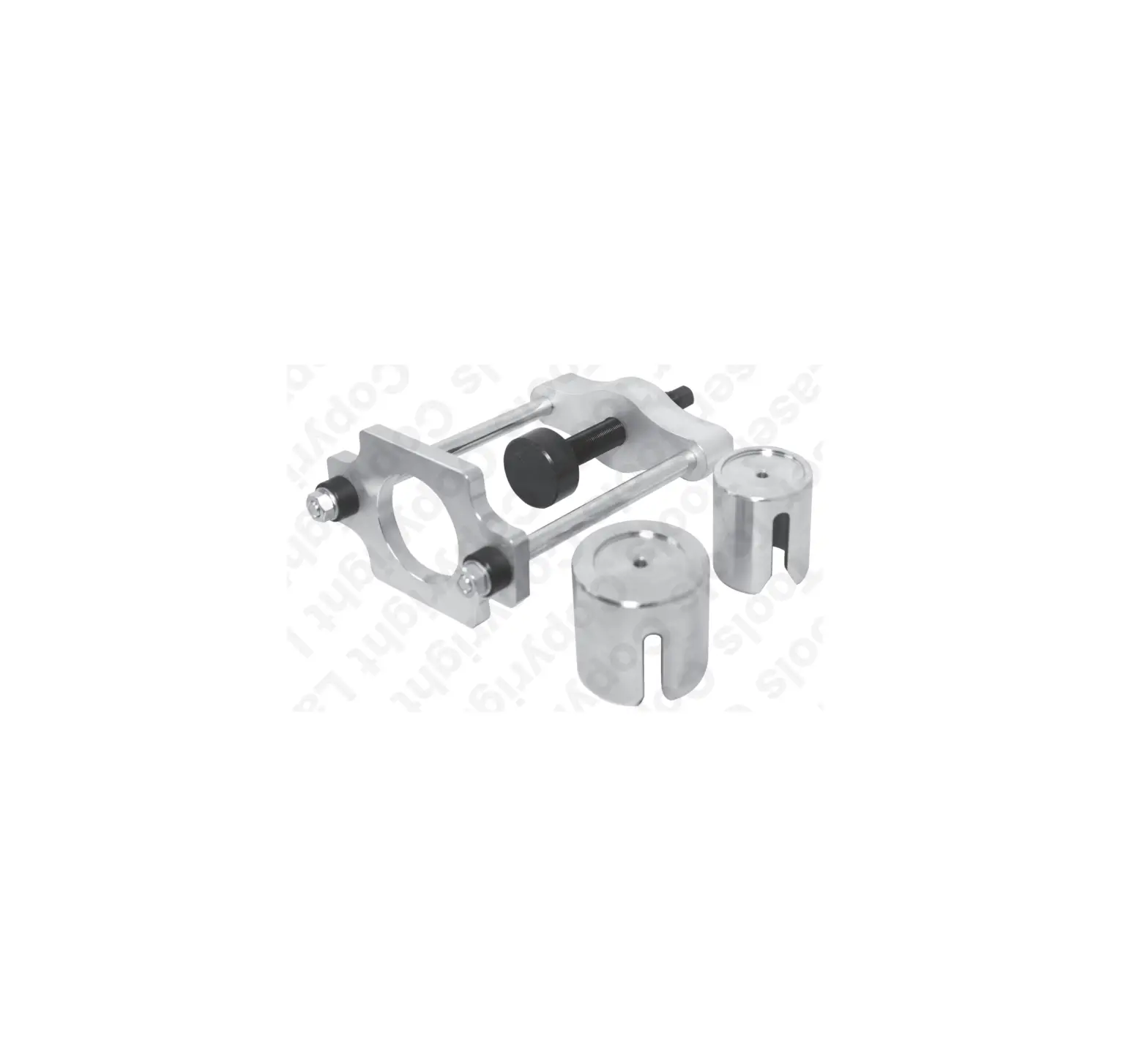
5148 Engine Timing Tool Kit
Product Information:
The Timing Tool Set is designed for MINI 1.6 engines and has a
part number of 5148. It is manufactured by Lasertools and more
information can be found on their website: www.lasertools.co.uk.
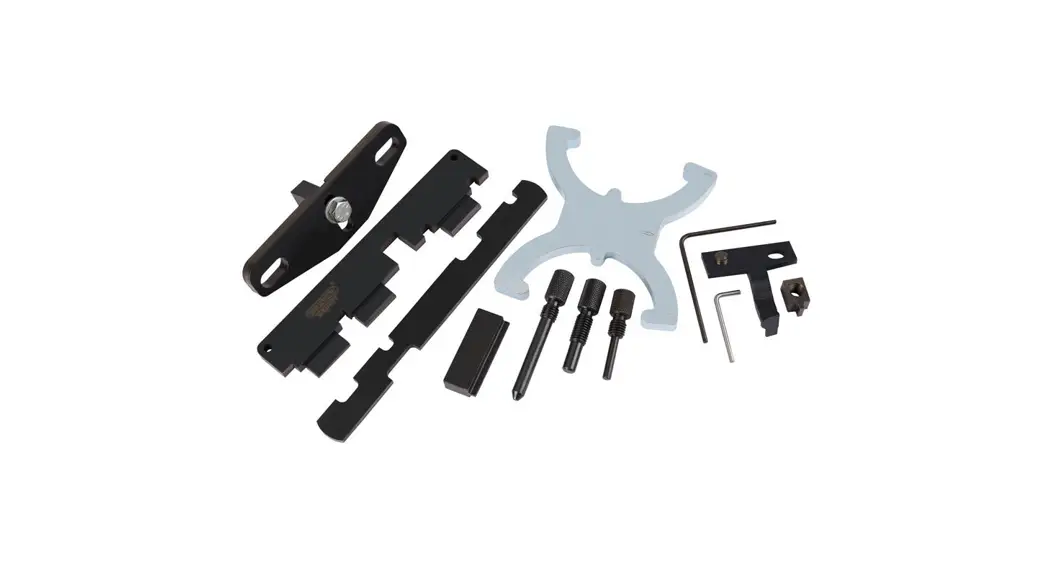
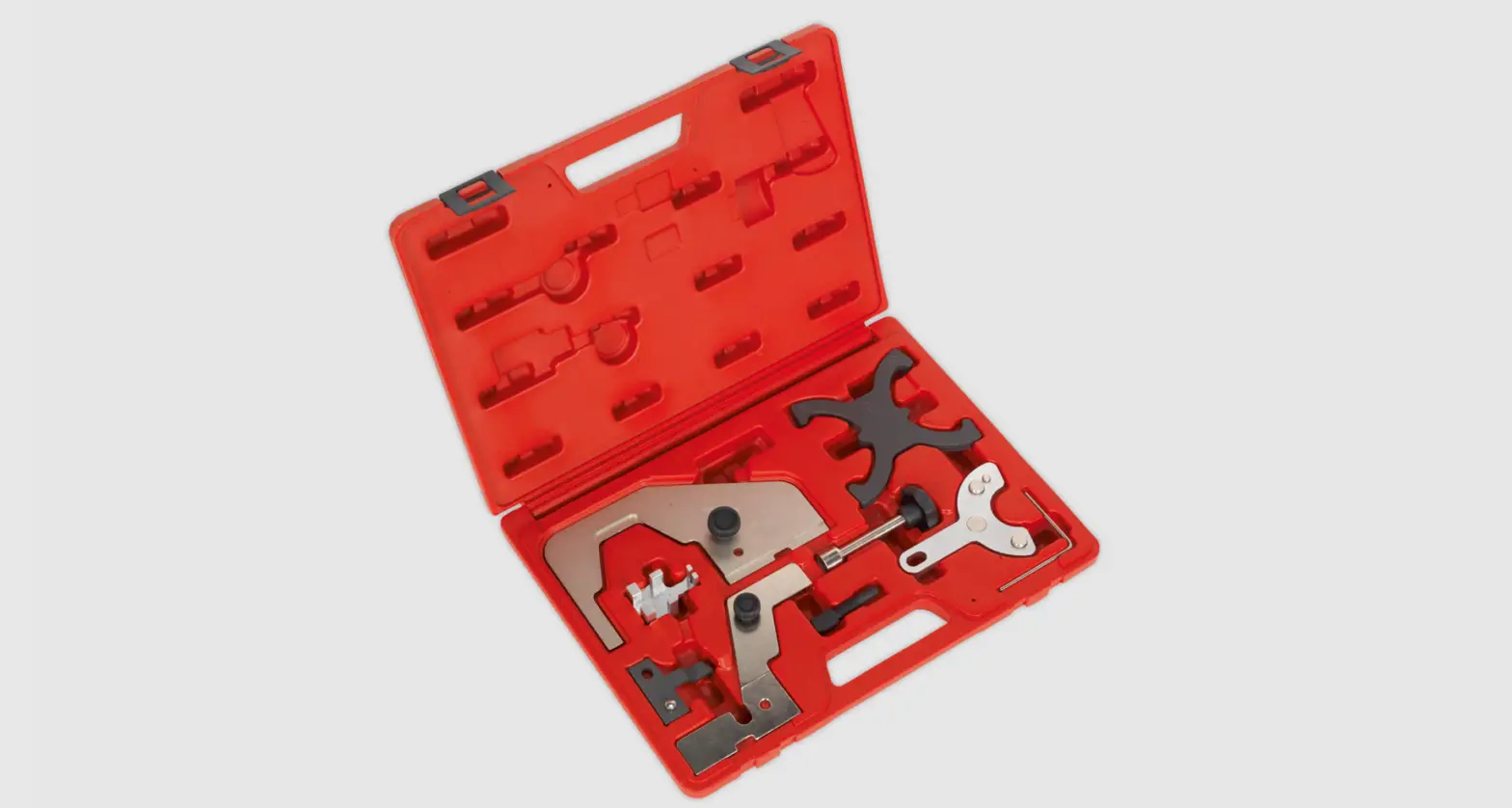
The set includes the following components:
- A: Camshaft Alignment Tool
- B: Camshaft Alignment Tool
- C: Clamp for Camshaft Alignment Tool
- D: Crankshaft Alignment Tool
- E: M6 x 30mm Setscrew
The OEM references for these components are as follows:
| Ref. Code | OEM Ref. |
|---|---|
| A | 11 9 550 0197 A2 |
| B | 11 9 551 0197 A1 |
| C | 11 9 552 0197-BZ |
| D | 49 6 709 0197-B |
| E | 0197-BZ |
The Timing Tool Set is compatible with the following MINI
models:
- MINI Cooper S, JCW (R56/57) – Year 2006-2015
- MINI Cooper S, JCW (R55) – Year 2007-2014
- MINI JCW (R58) – Year 2011-2015
- MINI JCW (R59) – Year 2012-2015
- MINI JCW (R60) – Year 2014-2017
- MINI JCW (R61) – Year 2014-2017
For the most up-to-date applications, please refer to the
Lasertools website: www.lasertools.co.uk/product/5148.
Product Usage Instructions:
Before using the Timing Tool Set, please note the following:
- These instructions are for guidance only. Please refer to OEM
derived data or reputable data providers such as the vehicle
manufacturers’ own data or Autodata. - The use of this engine timing tool kit is at the user’s
discretion, and The Tool Connection Ltd. cannot be held responsible
for any damage caused.
The N14 engines developed by BMW Mini are designed for optimal
performance, economy, and emissions. The Timing Tool Set is
specifically designed to replace the timing chain on these 1.6
Turbocharged petrol engines.
Preparation:
- The valve timing on these engines can be checked and set by
using the components in the Timing Tool Set. - Component B (Exhaust camshaft locking tool) interlocks with
Component A and is held down by Component C. - Component E (Setscrews) are used for Components A, B, and
C.
Checking the Timing:
Note: These instructions are for reference only. Please refer to
the vehicle manufacturer’s instructions or other reputable data
providers like Autodata. The Tool Connection recommends using
Autodata.
- Turn the engine in a clockwise direction using the crankshaft
pulley centre fixing until the Crankshaft Locking Pin can be
slotted in as shown in Fig. 1. - Double-check the correct positioning by checking the piston
heights as described. - Fit Component B onto the exhaust camshaft as shown in Fig.
2. - Fit Component A (inlet camshaft locking tool) as shown in Fig.
2. - Fit the locking block (Component C) to hold Components A and B
in place. - The timing is correct when the locking tools sit on the surface
of the cylinder head with ease.
Note: To adjust the camshaft timing, the cam chain tensioner
must be removed and the camshaft adjuster centre bolts must be
loosened to allow the crankshaft and two cams to be turned
independently of each other. This will enable setting the timing.
Please refer to the vehicle manufacturer’s data.
For further assistance or additional tools required (such as a
pre-load tool for the chain tensioner), please consult the vehicle
manufacturer’s data or contact Lasertools.
Timing Tool Set
for MINI 1.6
Part No. 5148
Instructions
www.lasertools.co.uk
Components
B E
A
C
D
Ref. Code A C509 B C510 C C511 D C512 E C513
OEM Ref.
11 9 550 0197 A2 11 9 551 0197 A1
11 9 552
49 6 709 0197-B 0197-BZ
Description Camshaft Alignment Tool Camshaft Alignment Tool Clamp for Camshaft Alignment Tool Crankshaft Alignment Tool M6 x 30mm Setscrew
www.lasertools.co.uk 2
Applications
Make Model
MINI
Mini
Clubman Coupe Roadster Countryman Paceman
Cooper S, JCW Cooper S, JCW JCW
JCW
JCW
JCW
(R56/57) (R55)
Year 2006 – 2015 2007 – 2014
Engine Codes
1.6 N14 B16A N14 B16CD N14 B16TO
(R58) (R59) (R60) (R61)
2011 – 2015 2012 – 2015 2014 – 2017 2014 – 2017
Always refer to the website for most up to date applications: www.lasertools.co.uk/product/5148
Instructions
The following instructions are for guidance only. Please refer to OEM derived data such as the vehicle manufacturers’ own data or Autodata. The use of this engine timing tool kit is purely down to the user’s discretion and The Tool Connection Ltd. cannot be held responsible for any damage caused whatsoever.
Warning Incorrect or out of phase engine timing can result in damage to the valves. It is always recommended to turn the engine slowly, by hand, and to re-check the camshaft and crankshaft timing positions.
www.lasertools.co.uk 3
Instructions
BMW Mini have developed a pair of engines. The N14 ranges have been developed to incorporate the latest technologies to give the best performance, economy and emissions possible.
This kit has been designed to replace the timing chain on the N14 engines. These engines are 1.6 Turbo charged petrol engines.
The tools have been specifically designed to allow the camshaft and crankshaft to be locked in position to correctly check and set the camshaft timing.
NB: It may be necessary to use a pre-load tool on the chain tensioner which is not supplied in the kit but is available separately Part No 5153
Preparation 1. The valve timing on these
engines is not set with No1 piston at TDC but with all the pistons in the 90° position. For this reason it is recommended by the manufacturers that the spark plugs be removed so the pistons are checked and are at the same height in the bores. 2. Where the crankshaft locking pin slots into the flywheel there are also balance slots in the flywheel which the pin could slot into by mistake. To ensure the tool is in the timing hole, check the piston heights are equal with the pin fitted. 3. Remove the cam cover to gain access to the camshafts 4. Remove the front splash guard (Mini only) 5. It is highly recommended that the Vanos unit be checked and if found faulty replaced (See Manufacturers Workshop Manual)
Component Descriptions Components A Inlet camshaft locking tool this tool fits on top of the inlet camshaft and locks it in place. It interlocks with the exhaust camshaft locking plate (B) and both are held in place with (C)
Components B/E Exhaust camshaft locking tool interlocks with (A) and is held down by (C).
Components C Locking Block.
Components D Crankshaft Locking Pin used to lock the crankshaft in position as shown in Fig1.
Component E Setscrews for (A/B/C) Fig2.
www.lasertools.co.uk 4
Instructions – Checking the Timing
Note: these instructions are for reference only. Please refer to the vehicle manufacturer’s instructions or other such reputable data provider. The Tool Connection recommends the use of Autodata.
1. Turn the engine in a clockwise direction using the crankshaft pulley centre fixing until the Crankshaft Locking Pin can be slotted in as shown in Fig. 1
2. Double check correct positioning by checking the piston heights as described.
3. Check that the camshafts are in the correct position by ensuring the markings `IN’ on the inlet camshaft and `EX’ on the Exhaust camshaft are facing upwards if not turn the crankshaft 360° and reset.
4. Fit (B) onto the exhaust camshaft as shown in Fig. 2
5. Fit (A) the inlet camshaft locking tool as shown in Fig. 2
6. Fit the locking block (C) to hold (A/B).
7. The timing is correct when the locking tools sit on the surface of the cylinder head with ease.
Note: In order to adjust the camshaft timing the cam chain tensioner must be removed and the camshaft adjuster centre bolts must be loosened to allow the crank shaft and 2 cams to be turned
independently of each other so the timing can be set. N.B. It may be necessary to use a pre-load tool on the chain tensioner which is not supplied in the kit but is available in (5153). Please refer to the vehicle manufacturers data. Fig. 1
Fig. 2
www.lasertools.co.uk 5
Instructions
BMW Mini ont développé deux moteurs. Le N14 a été développé pour incorporer les dernières technologies afin d’optimiser les performances, la consommation de carburant et les émissions. Ce kit a été conçu pour remplacer la chaîne de distribution sur les moteurs N14. Ces moteurs sont des moteurs à essence à turbocompresseur 1.6. Ces outils ont été conçus pour pouvoir bloquer en position l’arbre à cames et le vilebrequin afin de vérifier et régler correctement la distribution de l’arbre à cames. NB : Il peut être nécessaire d’utiliser un outil de pré chargement sur le tendeur de chaîne, et cet outil n’est pas fourni dans le kit, mais est disponible séparément. Référence No 5153
Préparation
1. Sur ces moteurs, la distribution n’est pas réglée avec le piston No1 sur le PMH, mais tous les pistons étant sur la position 90°. Pour cette raison, les fabricants recommandent de déposer les bougies afin de pouvoir vérifier que les pistons sont à la même hauteur dans les cylindres.
2. La goupille de blocage de vilebrequin s’engage dans des fentes dans le volant, mais il y a aussi des fentes d’équilibrage dans le volant, et la goupille peut s’y insérer par erreur. Pour que l’outil soit bien dans la fente de réglage, vérifiez que les pistons sont à la même hauteur lorsque la goupille est installée.
3. Déposez le couvercle de cames pour avoir accès aux arbres à cames.
4. Déposez le carter de protection avant (Mini seulement)
5. Il est vivement recommandé de vérifier le module Vanos et s’il est défectueux, de le remplacer (Voir le manuel d’atelier du constructeur)
Description des composants Composants A Outil de blocage d’arbre à cames d’admission. Cet outil s’installe en haut de l’arbre à cames d’admission et le bloque en place. Il est inter verrouillé avec la plaque de blocage (B) de l’arbre à cames d’échappement et les deux sont maintenus en place par(C)
Composants B Outil de blocage d’arbre à cames d’échappement. Est inter verrouillé avec (A) et est maintenu en place par (C)
Composant C Cale servant à maintenir en place une extrémité des deux (A/B) Fig2.
Composants D Goupille de blocage de vilebrequin. Sert à bloquer en place le vilebrequin comme indiqué sur la Fig. 1.
Composant E Vis x 3 (A/B/C) Fig 2
www.lasertools.co.uk 6
Instructions
Nota : Ces instructions sont données uniquement à titre de référence. Consultez les instructions du constructeur du véhicule ou d’un autre fournisseur d’informations réputé. The Tool Connection recommande d’utiliser Autodata. 1. Faire tourner le moteur dans le
sens horaire en utilisant la fixation centrale de poulie du vilebrequin jusqu’à ce que la goupille de blocage du vilebrequin puisse s’insérer dans la fente comme indique en Fig 1. Vérifiez deux fois que la position est correcte en s’assurant que les pistons sont à la même hauteur comme indiqué ci-dessus. 2. Vérifiez que les arbres à cames sont à la position correcte en s’assurant que les marques `IN’ sur l’arbre à cames d’admission et `EX’ sur l’arbre à cames d’échappement sont tournés vers le haut. Sinon, faites tourner le vilebrequin de 360° et réglez à nouveau. 3. Installez (B) sur l’arbre à cames d’échappement comme indiqué en Fig. 2. 4. Installez (A), l’outil de blocage de l’arbre à cames d’admission, comme indiqué en Fig. 2. 5. Installez la cale de blocage (C) pour maintenir (A/B). 6. La distribution est correcte lorsque les outils de blocage reposent sur la surface de la culasse facilement. Nota : Pour régler la distribution de l’arbre à cames, le tendeur de chaîne de cames doit être déposé, et les boulons centraux de réglage de l’arbre à cames doivent être desserrés pour que l’on puisse faire
tourner le vilebrequin et les deux arbres à cames, indépendamment l’un de l’autre, de manière à pouvoir régler la distribution. Il peut être nécessaire d’utiliser un outil de pré chargement sur le tendeur de chaîne, et cet outil n’est pas fourni dans le kit, mais est disponible séparément. Référence No 5153 Consultez les données du constructeur du véhicule. Fig. 1
Fig. 2
www.lasertools.co.uk 7
Instructions
BMW Mini han desarrollado un par de motores. Las gamas N14 han sido desarrolladas para incorporar las más recientes tecnologías y obtener así el mejor rendimiento, la mejor economía y las menores emisiones posibles. Este juego ha sido diseñado para cambiar la cadena de sincronización en los motores N14. Estos motores son motores de gasolina 1.6 turbocargados. Las herramientas se han diseñado específicamente para permitir bloquear el eje de levas y el cigüeñal en posición y así comprobar y ajustar correctamente la sincronización del eje de levas. Nota: Puede ser necesario utilizar una herramienta de precarga en el tensor de la cadena que no se suministra en el juego pero que está disponible por separado N.º de pieza 5153.
Preparación 1. La sincronización de la válvula en
estos motores no se ajusta con el pistón N.º 1 en TDC (Punto Muerto Superior) sino con todos los pistones en la posición a 90º. Por este motivo los fabricantes recomiendan retirar las bujías de forma que se comprueban los pistones y están a la misma altura en las perforaciones. 2. Donde el pasador de bloqueo del cigüeñal entra en la ranura del volante hay también ranuras de equilibrado en el volante en las cuales no debe entrar el pasador por error. Para garantizar que la herramienta está en el orificio de sincronización compruebe que las alturas de pistón son iguales con el pasador montado. 3. Retire la tapa de las levas para tener acceso a los ejes de levas 4. Retire el guardabarros delantero (solo para Mini) 5. Es muy recomendable comprobar la unidad Vanos y si resulta ser defectuosa, sustituirla (Vea el Manual de taller del fabricante)
Descripciones del componente Componentes A Herramienta de bloqueo del eje de levas de entrada esta herramienta se monta en el eje de levas de entrada y lo bloquea en posición. Se enclava con la placa de bloqueo del eje de levas de salida (B) y ambos se mantienen en su lugar con (C).
Componentes B Herramienta de bloqueo del eje de levas de salida – se enclava con (A) y se sujeta con (C).
Componente C Bloque de bloqueo utilizado para sujetar un extremo de ambos (A/B). Fig. 2.
Componentes D Pasador de bloqueo del cigüeñal se utiliza para bloquear el cigüeñal en posición como se muestra en la Fig. 1.
Componente E Tornillos de ajuste x 3 (A/B/C) Fig. 2.
www.lasertools.co.uk 8
Instructions
Nota: estas instrucciones son solo una guía. Consulte las instrucciones del fabricante del vehículo u otro proveedor de datos acreditado. The Tool Connection recomienda utilizar Autodata.
1. Gire el motor en sentido horario utilizando la fijación central de la polea del cigüeñal hasta que el pasador de bloqueo del cigüeñal pueda colocarse en la ranura como se muestra en la Fig. 1. Haga una doble comprobación de la posición correcta comprobando las alturas de pistón como se ha descrito anteriormente.
2. Compruebe que los ejes de levas están en la posición correcta asegurando que las marcas “IN” en el eje de levas de entrada y “EX” en el eje de levas de salida están mirando hacia arriba si no es así, gire el cigüeñal 360° y reinicie.
3. Monte (B) en el eje de levas de salida como se muestra en la Fig. 2.
4. Monte (A) la herramienta de bloqueo del eje de levas de entrada como se muestra en la Fig. 2.
5. Monte el bloque de bloqueo del eje de levas (A) a través de los mismos (Fig. 2).
6. La sincronización es correcta cuando las herramientas de bloqueo se asientan sobre la superficie de la culata con facilidad.
Nota: Para ajustar la sincronización del eje de levas debe retirarse el tensor de la cadena de las levas y aflojarse los pernos centrales del ajustador del eje de levas para permitir que el cigüeñal y las 2 levas puedan girar independientemente una de la otra, para ajustar la sincronización. Puede ser necesario utilizar una herramienta de precarga en el tensor de la cadena que no se suministra en el juego pero que está disponible por separado N.º de pieza 5153 Consulte los datos del fabricante del vehículo.
Fig. 1
Fig. 2
www.lasertools.co.uk 9
Instructions
BMW Mini haben einen neuen Motor in zwei Leistungsstufen entwickelt. Die N14-Reihe wurde unter Einsatz neuester Technologien entwickelt, um bestmögliche Leistung, Wirtschaftlichkeit und Schadstoffminderung zu erzielen. Dieser Werkzeugsatz wurde für den Austausch der Steuerkette bei N14-Motoren ausgelegt. Diese Motoren sind 1,6-Liter-Benzinmotoren mit Turbolader. Die Werkzeuge wurden speziell dafür ausgelegt, die Nockenwelle und Kurbelwelle zu fixieren, um die Nockenwellensteuerzeiten richtig kontrollieren und einstellen zu können. Hinweis: Ggf. muss am Kettenspanner ein Vorspannwerkzeug verwendet werden, das nicht im Werkzeugsatz enthalten, sondern nur separat erhältlich ist Teile-Nr. 5153.
Vorarbeiten
1. Die Ventilsteuerung wird bei diesen Motoren nicht mit dem Kolben des Zyl. 1 in OT, sondern mit allen Kolben in 90°-Stellung durchgeführt. Aus diesem Grund empfehlen die Hersteller, die Zündkerzen zu entfernen, damit kontrolliert werden kann, ob alle Kolben in den Bohrungen auf der gleiche Höhe stehen.
2. Dort, wo der KurbelwellenFixierdorn in das Schwungrad geschoben wird, befinden sich auch Auswuchtnuten im Schwungrad. Der Fixierdorn kann versehentlich in diese Nuten geschoben werden. Um sicherzustellen, dass sich das Werkzeug in der Synchronisierungsbohrung befindet, kontrollieren, ob bei steckendem Fixierdorn alle Kolben auf gleicher Höhe stehen.
3. Die Nockenwellenabdeckung entfernen, um Zugang zu den Nockenwellen zu erlangen.
4. Den vorderen Spritzschutz entfernen (nur Mini)
5. Es wird dringend empfohlen, das VANOS-Gerät zu kontrollieren und bei Defekt zu ersetzen (siehe Werkstatthandbuch des Herstellers).
Beschreibung der Werkzeuge Werkzeug A Einlassnockenwellen-Arretierwerkzeug dieses Werkzeug wird oben auf die Einlassnockenwelle gesetzt und arretiert sie. Es greift in die Auslassnockenwellen-Blockierscheibe (B) ein und beide werden mit Werkzeug C gehalten.
Werkzeug B Auslassnockenwellen-Arretierwerkzeug greift in (A) ein und wird von (C) gehalten.
Werkzeug C Arretierungsblock zum Niederhalten von einem Ende von (A) und (B). Abb. 2.
Werkzeug D Kurbelwellen-Fixierdorn zum Fixieren der Kurbelwelle in der gezeigten Stellung (Abb. 1).
Werkzeug E Gewindestift x 3 (A/B/C) Abb. 2.
www.lasertools.co.uk 10
Instructions
Hinweis: Diese Anweisungen dienen nur als Leitfaden. Siehe Anweisungen der Fahrzeughersteller oder anderer namhafter Datenlieferanten. Tool Connection empfiehlt hierzu Autodata.
1. Den Motor im Uhrzeigersinn drehen. Dazu die mittlere Kurbelwellenscheibenschraube verwenden, bis der KurbelwellenFixierdorn eingeschoben werden kann, siehe Abb. 1. Die richtige Stellung durch Kontrolle der Kolbenhöhe, wie oben beschrieben, kontrollieren.
2. Kontrollieren, ob sich die Nockenwellen in der richtigen Stellung befinden. Dazu sicherstellen, dass die Markierungen ,,IN” an der Einlassnockenwelle und ,,EX” an der Auslassnockenwelle nach oben zeigen wenn das nicht der Fall ist, die Kurbelwelle 360° drehen und neu einstellen.
3. Das Werkzeug (B) an Auslassnockenwelle wie in Abb. 2 montieren.
4. Das EinlassnockenwellenArretierwerkzeug (A) wie in Abb. 2 montieren.
5. Den Arretierungsblock (C) montieren, um die Werkzeuge (A/B) zu halten.
6. Die Synchronisierung ist richtig, wenn die Arretierwerkzeuge problemlos auf dem Zylinderkopf aufliegen.
Hinweis: Zum Einstellen der Nockenwellensteuerzeiten muss der Kettenspanner entfernt und der Mittelbolzen des Nockenwellenverstellers gelöst werden. Dann die Kurbelwelle und 2 Nockenwellen unabhängig voneinander drehen, um die Steuerzeiten einzustellen.
Ggf. muss am Kettenspanner ein Vorspannwerkzeug verwendet werden, das nicht im Werkzeugsatz enthalten, sondern nur separat erhältlich ist Teile-Nr. 5153. Bitte stets die Daten des Fahrzeugherstellers verwenden. Fig. 1
Fig. 2
www.lasertools.co.uk 11
Safety Warnings – please read
· If the engine has been identified as an Interference engine, damage to the engine will occur if the timing belt has been damaged. A compresion check of all the cylinders should be taken before the cylinder head (s) are removed.
· Do not turn crankshaft or camshaft when the timing belt has been removed.
· To make turning the engine easier, remove the spark plugs.
· Observe all tightening torques. · Do not turn the engine using the
camshaft or any other sprocket. · Disconnect the battery earth lead
(check radio code is available). · Do not use cleaning fluids on belts,
sprockets or rollers.
· Some toothed timing belts are not interchangeable. Check the replacement belt has the correct tooth profile.
· Always mark the belt with the direction of running before removal.
· Do not lever or force the belt onto its sprockets.
· Check the ignition timing after the belt has been replaced.
· Do not use timing pins to lock the engine when slackening or tightening the crankshaft pulley bolts.
· ALWAYS REFER TO A REPUTABLE MANUFACTURERS WORKSHOP MANUAL
Our products are designed to be used correctly and with care for the purpose for which they are intended. No liability is accepted by the Tool Connection for incorrect use of any of our products, and the Tool Connection cannot be held responsible for any damage to personnel, property or equipment when using the tools. Incorrect use will also invalidate the warranty. If applicable, the applications database and any instructional information provided has been designed to offer general guidance for a particular tool’s use and while all attention is given to the accuracy of the data no project should be attempted without referring first to the manufacturer’s technical documentation (workshop or instruction manual) or the use of a recognised authority such as Autodata. It is our policy to continually improve our products and thus we reserve the right to alter specifications and components without prior notice. It is the responsibility of the user to ensure the suitability of the tools and information prior to their use.
5148_Instructions_V6
www.lasertools.co.uk
 Laser Tools | Premier Automotive Hand Tools designed to make easy work of difficult and awkward jobs.