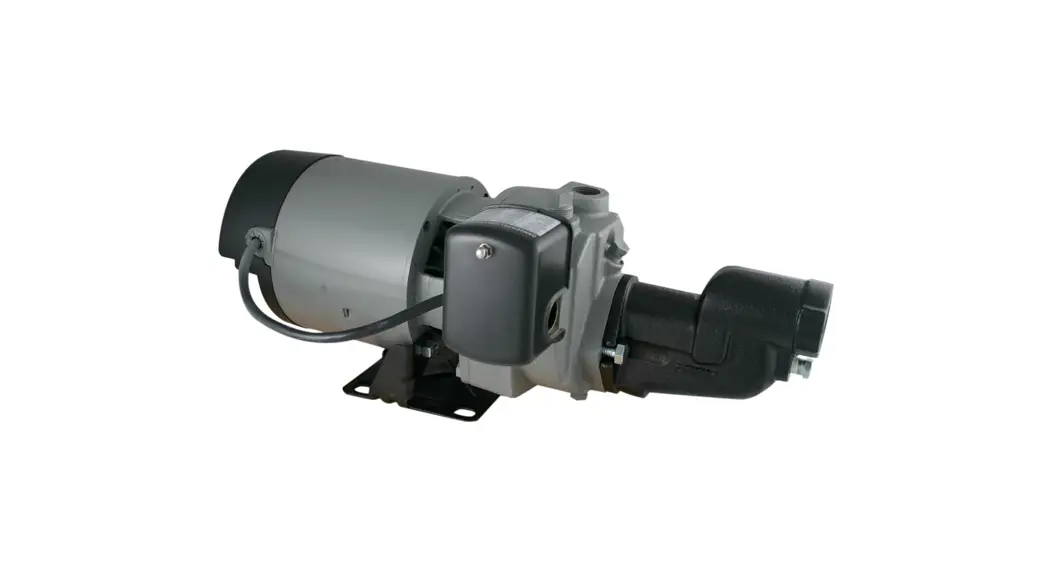
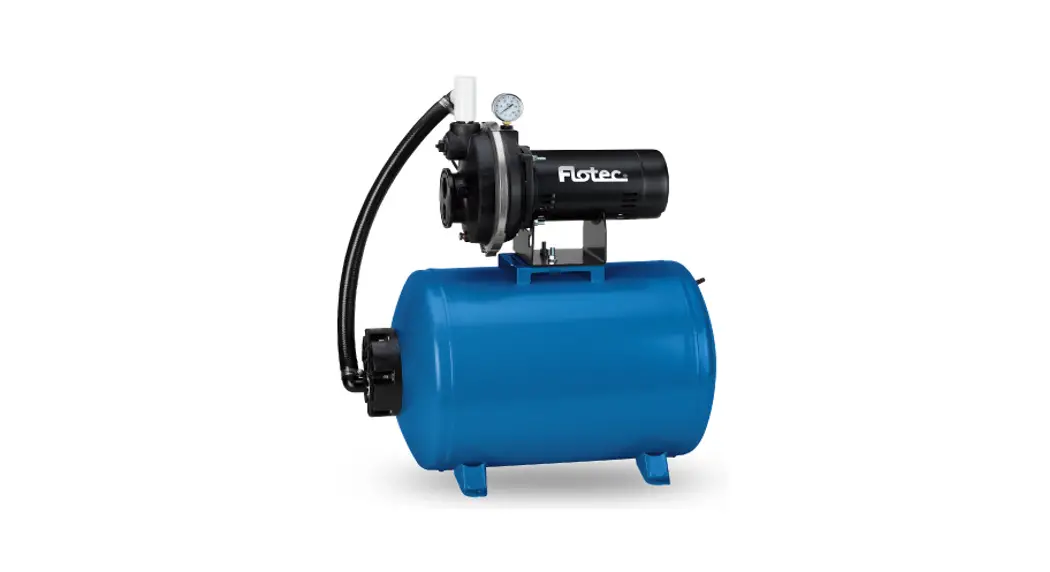
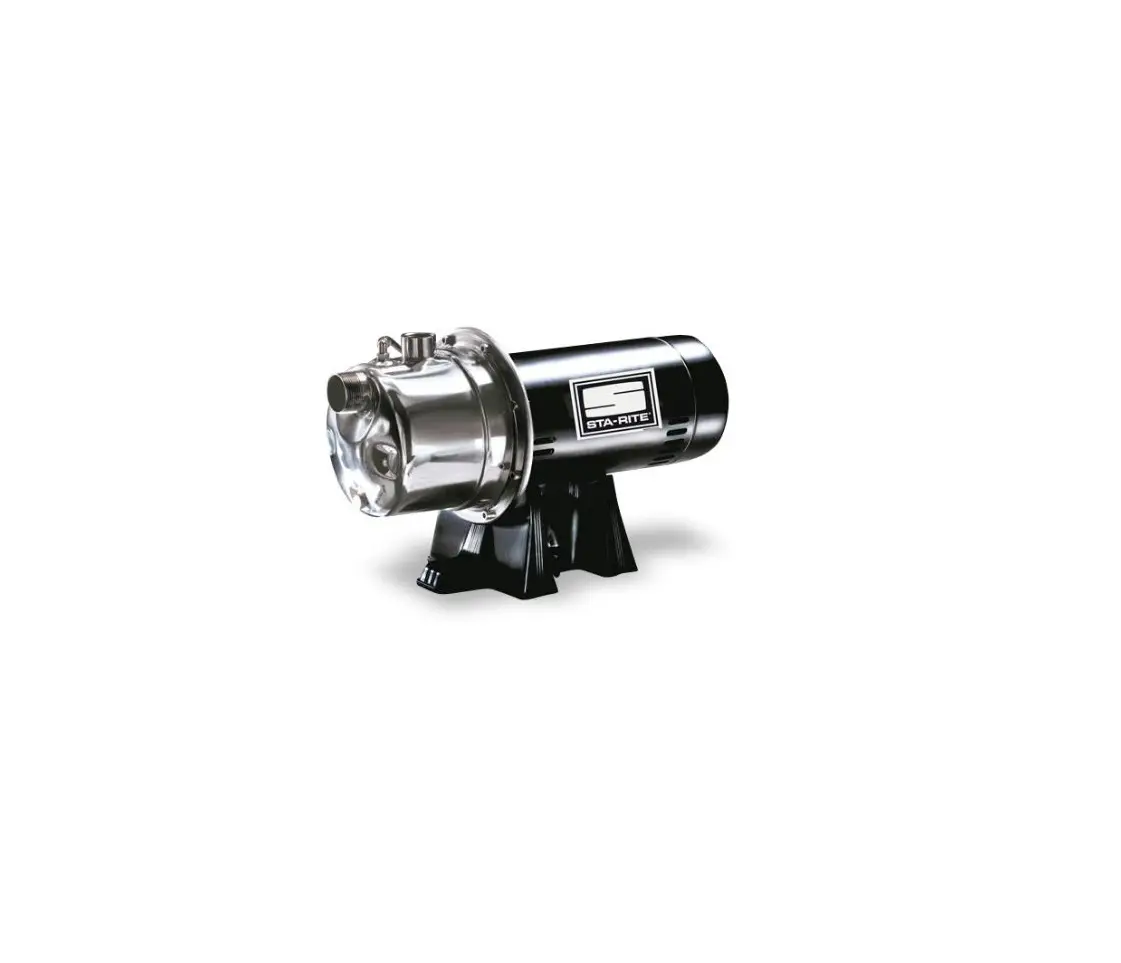
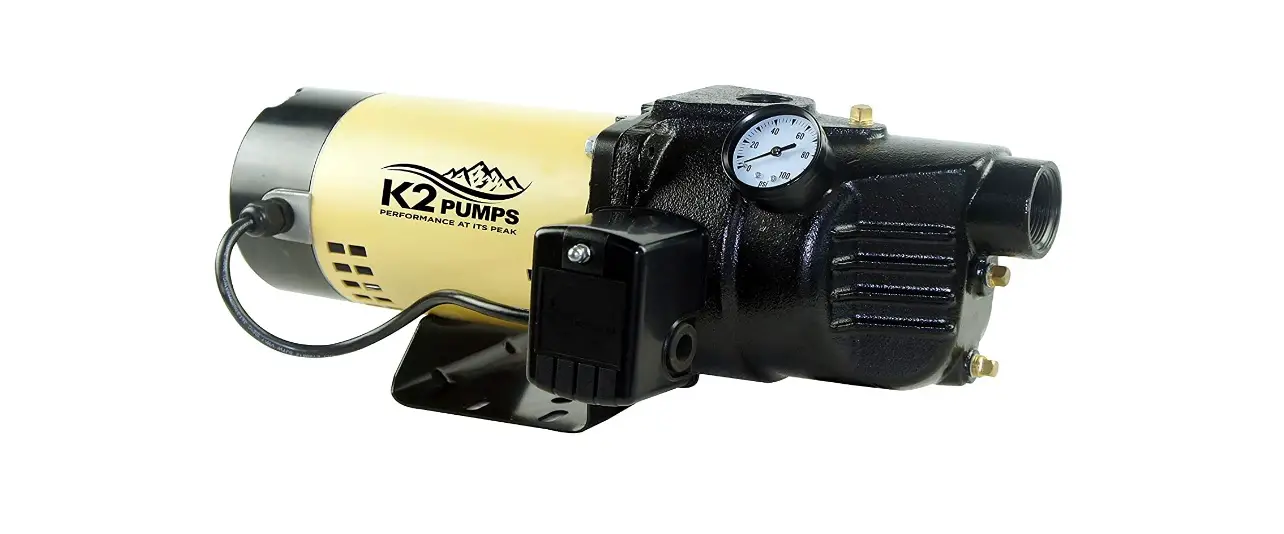
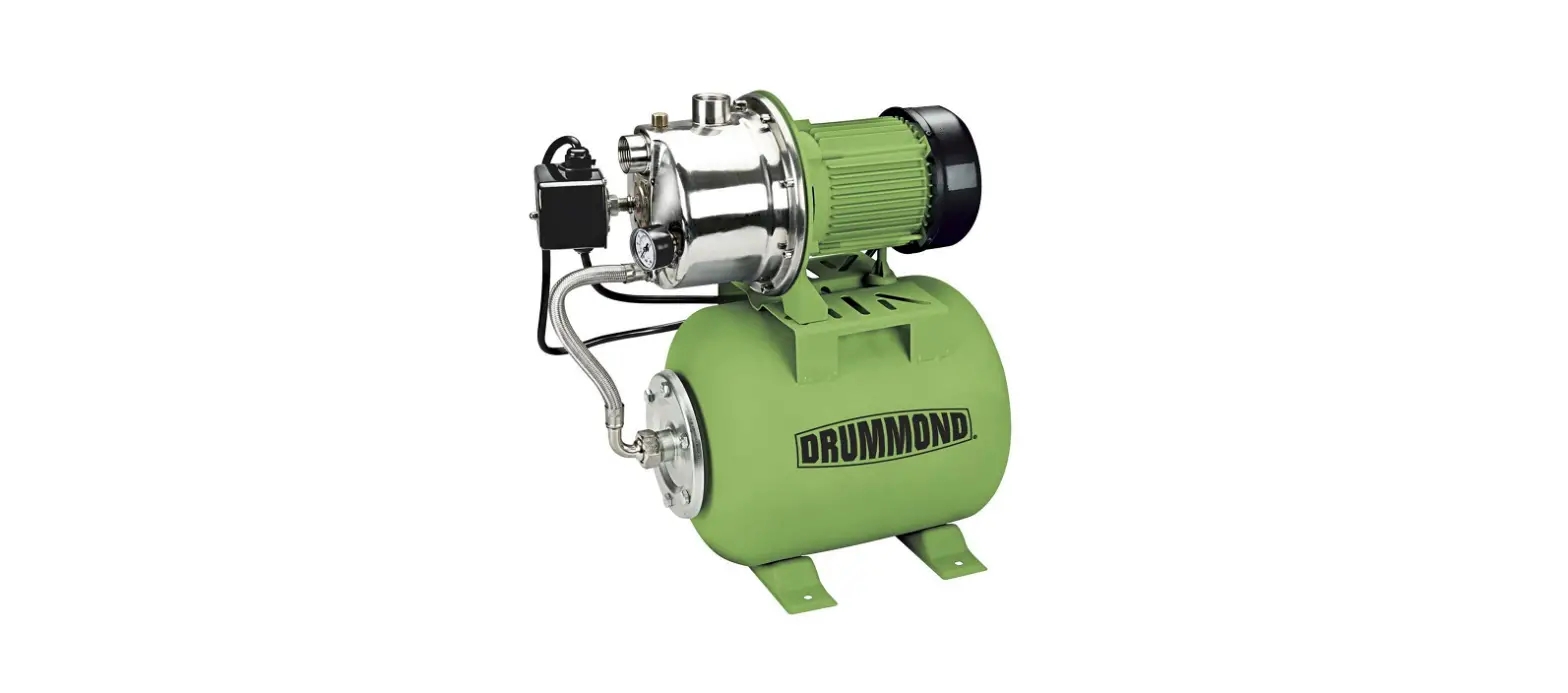
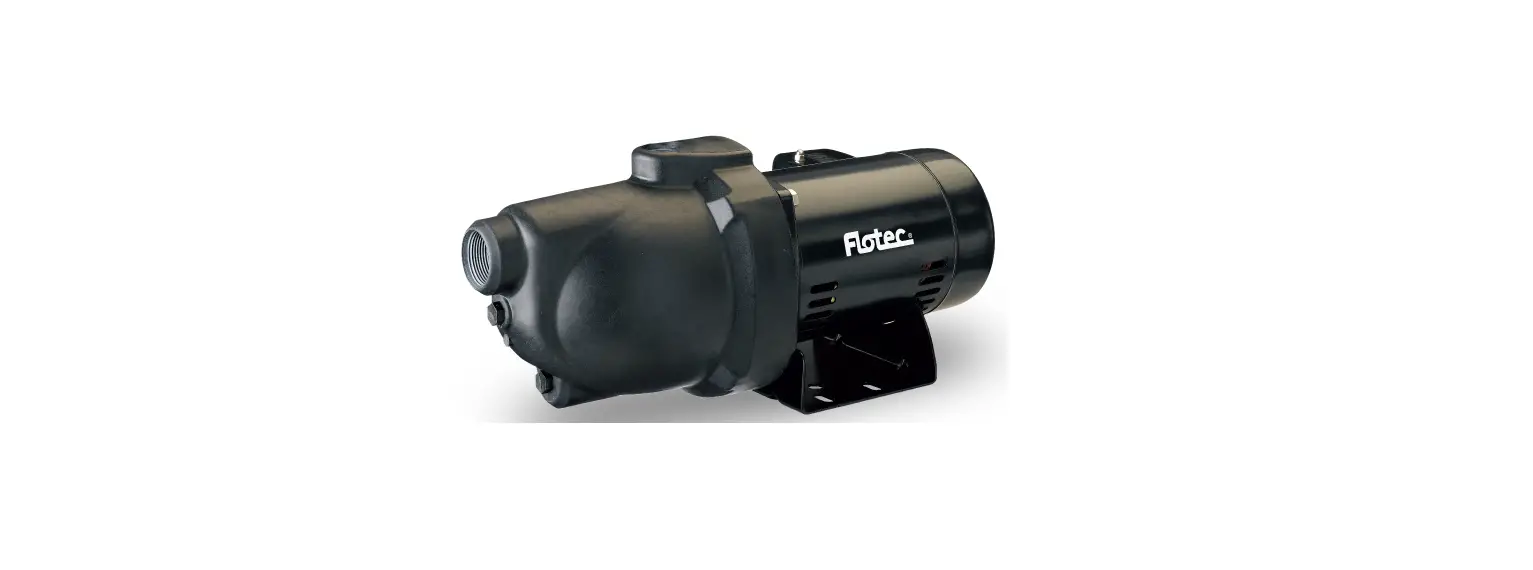
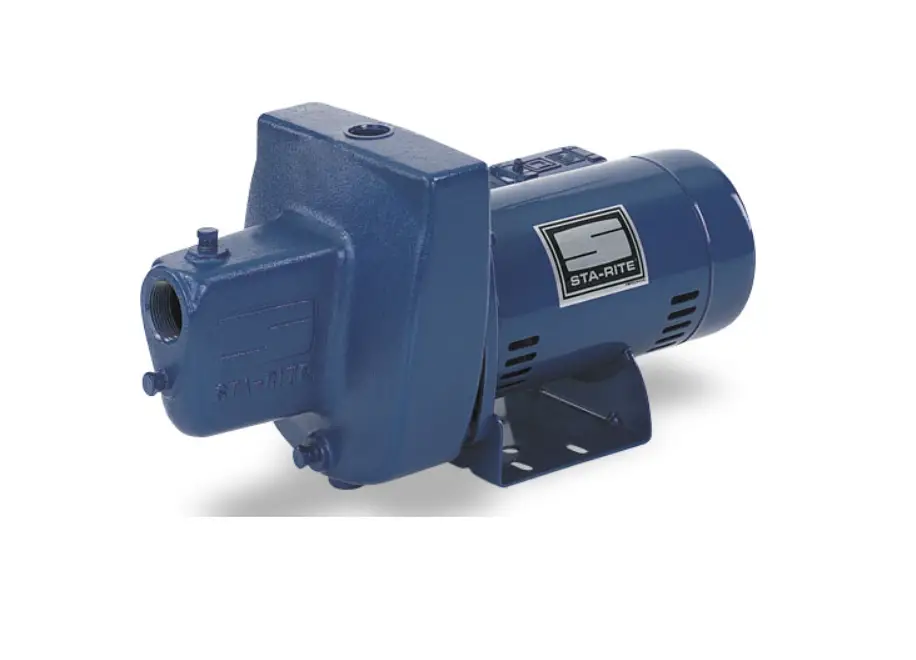
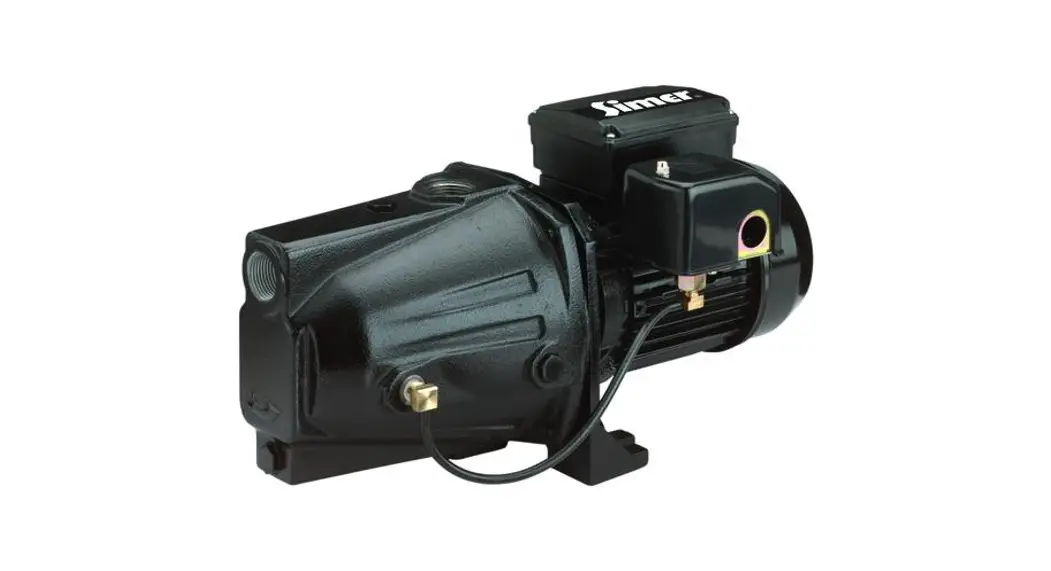
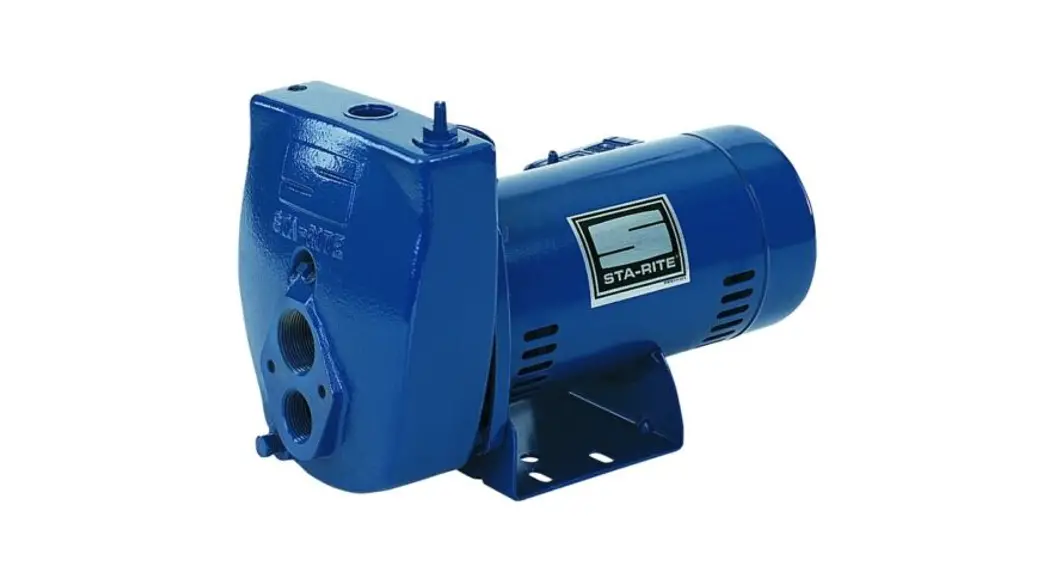
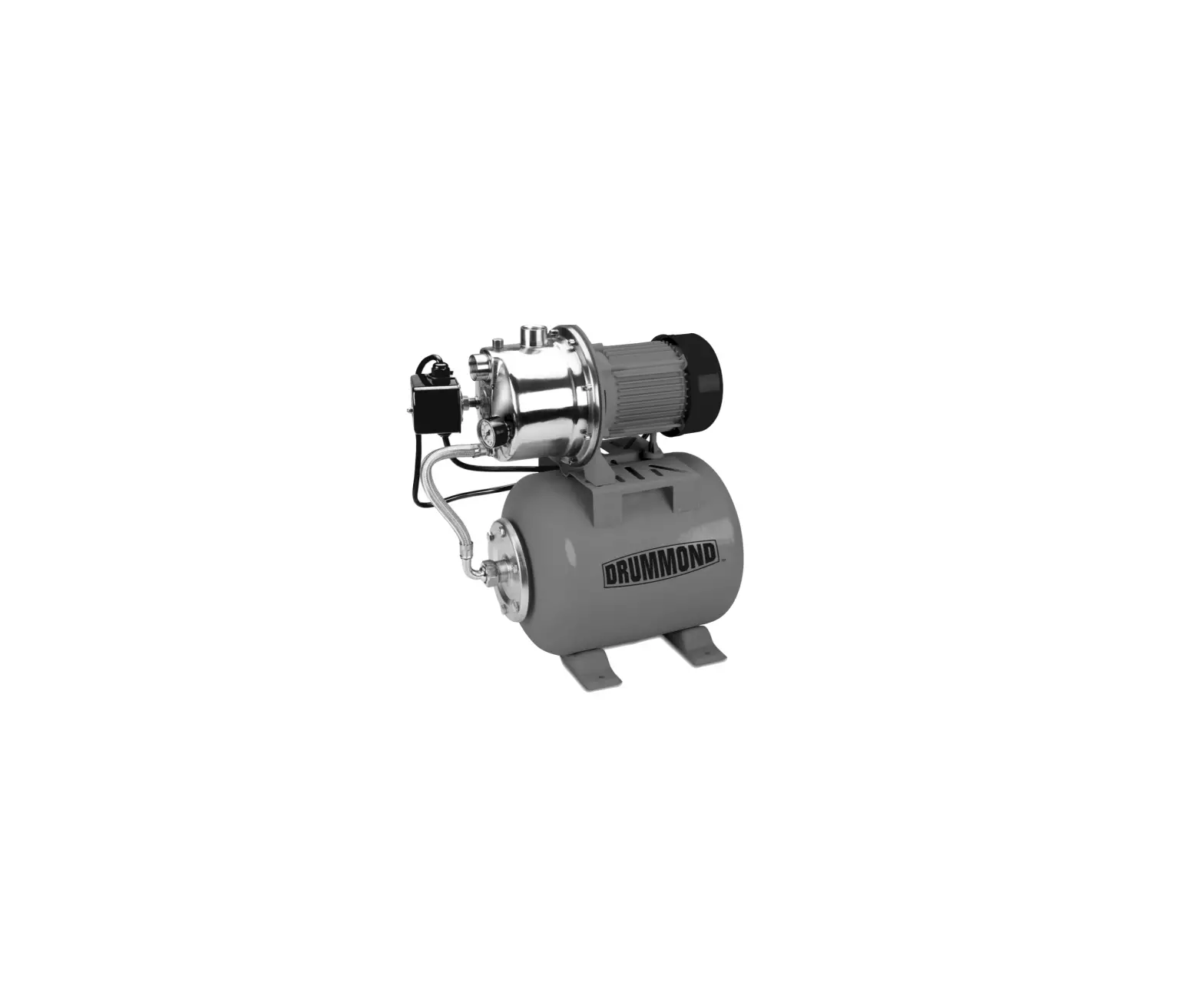
024459 Shallow Well Jet Pump Tank System
Product Information
The SJ05SAT20H model is a shallow well jet pump tank system that
is designed to be used with a pressure tank. It is important to
note that this product should not be used for irrigation
applications. The pump has a dual voltage motor and can run on
either 115 V or 230 V, and is pre-set at the factory to run on 230
V. The pump/tank has a 20/40 PSI pressure switch, and the tank
pressure must be set at 18 PSI.
Product Usage Instructions
- Make sure that the power source matches the pump requirements.
To change the pump/tank voltage, remove the square voltage switch
cover at the top of the pump/tank and move the voltage switch to
the desired setting. - Remove plastic.
- Connect pump/tank to plug from suction well.
- Connect 1-1/4 in. pipe (not included) to the pump suction
opening.
- Connect discharge tee and pressure gauge or discharge plug (all
not included) to tank tee. - Completely drain all water from the tank by turning off the
pump and opening a faucet until water stops. - Use a pressure gauge to ensure that the tank pressure is set to
18 psi. - If necessary, use a tire pump to adjust the psi to 18 psi. If
water leaks from the air release valve, replace the pressure
tank.
- Completely drain all water from the tank by turning off the
- Remove pressure gauge or discharge tee plug (not included) from
the top of the discharge tee (not included). Remove the air release
valve vent plug in front of the discharge tee. - Slowly fill the discharge tee with water until water overflows
the vent plug opening. Before turning on the pump, loosely replace
vent plug and open several outlets or faucets to allow water flow
during priming. - Check to be sure water in the cavity of pump stays constant. If
water level goes down, it could indicate a leak in the foot valve,
check valve or suction pipe. If water remains constant, wrap the
pressure gauge or discharge tee plug and vent plug threads with
thread tape and thread into the pump. Tighten with wrench (not
included).
- Remove pressure gauge or discharge tee plug (not included) from
- Connect the two wires from the power supply to the two open
terminals on the pressure switch. Connect the green ground wire
from the power supply to the open green ground screw in the
pressure switch.
For use with a pressure tank. Do not use for irrigation applications.
1 CAUTION: Make certain that the power source
matches the pump requirements. Pump has a dual voltage motor and can run on 115 V or 230 V. Pump is pre-set at the factory to run on 230 V.
2 a. Remove plastic b. Connect pump/tank to
plug from suction well as shown. Connect
opening.
1-1/4 in. pipe (not
included) to the pump
suction opening.
3 Connect discharge tee and pressure gauge or
discharge plug (all not included) to tank tee.
SHALLOW WELL JET PUMP TANK SYSTEM
MODEL #SJ05SAT20H
QUICK REFERENCE GUIDE. SEE INSTRUCTION MANUAL FOR COMPLETE DETAILS.
To change pump/tank voltage, remove the square voltage switch cover at the top of pump/ tank and move the voltage switch as shown.
Switch cover
Voltage Switch
115 V Setting
230 V Setting
1 in. Discharge Pipe To Home
c. Air pressure in the tank must be 2 PSI lower than the “cut-in” of the pressure switch. Pump/tank has a 20/40 PSI pressure switch, so tank pressure must be set at 18 PSI. Check pressure with a tire gauge (not included) and add or subtract air as needed.
Discharge Tee
Tank Tee
4 CHECK TANK PRESSURE
1. Completely drain all water from tank by turning off pump and opening a faucet until water stops.
2. Use a pressure gauge to ensure it’s set to 18 psi.
a. Use a tire pump to adjust the psi to 18 psi
b. If water leaks from the air release valve, replace the pressure tank.
5
CAUTION: All pumps must be primed by filling the cavity with water before they are first operated. This will take several gallons of water, as the suction line must be filled in addition to the cavity of pump. Depending on the length of suction pipe, many gallons may be needed to fill the entire system.
Pressure Gauge or Discharge tee plug
To House Tank Tee
Vent plug
Discharge Tee
To House
Vent plug opening
Discharge Tee
Pressure Gauge or Discharge tee plug
To House
Tank Tee Vent plug
Discharge Tee
Pressure gauge
Set to 18 psi
a. Remove pressure gauge or discharge tee plug (not included) from the top of the discharge tee (not included). Remove the
Air release valve vent plug in front of the discharge tee.
b. Slowly fill the discharge tee with water until water overflows the vent plug opening. NOTE: Before turning on
pump, loosely replace vent plug and open
several outlets or faucets to allow water flow during priming.
c. Check to be sure water in the cavity of pump stays constant. If water level goes down, it could indicate a leak in the foot valve, check valve or suction pipe. If water remains constant, wrap the pressure gauge or discharge tee plug and vent plug threads with thread tape and thread into pump. Tighten with wrench (not included).
6
Connect the two wires from the power supply to the two open terminals on the pressure switch. Connect the green ground wire from the power supply to the open green ground screw in the pressure switch.
Open Terminals
Wire From Motor
Wire from Power Supply
Ground Screws
Printed in the U.S.A.
024459 D
POZO DE POCA PROFUNDIDAD SISTEMA DE TANQUE DE BOMBA DE CHORRO
MODELO #SJ05SAT20H
Para uso con un tanque de presión. No use para aplicaciones de riego.
1 PRECAUCIÓN: Asegúrese de que la fuente de
alimentación cumpla con los requisitos de la bomba. Esta bomba tiene un motor de voltaje doble y puede funcionar con 115 voltios o 230 voltios. La bomba/ tanque está preconfigurada de fábrica para funcionar a 230 voltios.
Para cambiar el voltaje de la bomba, retire la cubierta cuadrada del interruptor de voltaje en la parte superior de la bomba/tanque y mueva el interruptor de voltaje como se muestra.
Cubierta del interruptor de voltaje
Interruptor de voltaje
2 a. Retire el tapón
b. Conecte la bomba/tanque
de plástico desde al pozo, como se muestra.
la abertura de
Conecte la tubería de
succión.
1-1/4 pulg (no se incluye)
a la abertura de succión
de la bomba.
3 Conecte la T de descarga y el indicador de presión
o el tapón de descarga (no se incluye ninguno) a la T del tanque.
Tubería de descarga de 1 pulg a la casa
T de descarga
T para tanque
Configuración Configuración
de 115 V
de 230 V
c. La presión de aire en el tanque debe ser de 2 PSI menor que la “presión de activación” del interruptor de presión. La bomba/tanque tiene un interruptor de presión de 20/40 PSI, por lo que la presión del tanque debe ser de 18 PSI. Compruebe la presión con un indicador de presión para neumáticos (no se incluye) y agregue o quite aire según sea necesario.
4 Revise la presión del
tanque 1. Drene toda el agua del
tanque apagando la bomba y abriendo un grifo hasta que el agua se detenga. 2. Use un indicador de presión para asegurarse de que esté en 18 psi.
a. Use una bomba para neumáticos para ajustar los psi en 18 psi.
b. Si el agua se filtra por la válvula de descarga de aire, reemplace el tanque de presión.
Indicador de presión
Establezca en 18 psi
Válvula de descarga de aire
5
PRECAUCIÓN: se deben cebar todas las bombas. Para esto, llene la cavidad con agua antes de hacerlas funcionar por primera vez. Se necesitarán varios litros de agua ya que debe llenarse la línea de succión y la cavidad de la bomba (A). Dependiendo de la longitud del tubo de succión, se podrían necesitar varios litros para llenar completamente el sistema.
Indicador de presión o tapón de la T de descarga
Hacia la casa
“T” del tanque Tapón de ventilación
“T” de Descarga
A
a. Retire el indicador de presión o el tapón del conector de descarga (no se incluye) ubicado en la parte superior de este (no se incluye). Retire el tapón de ventilación ubicado en la parte frontal del conector de descarga.
Tapón de ventilación
Abertura del tapón de ventilación
Indicador de presión o tapón del conector de descarga
“T” de Descarga
Hacia la casa
“T” del tanque Tapón de ventilación
A
“T” de Descarga
A
b. Llene lentamente el conector de descarga con agua hasta que esta desborde la abertura del tapón de ventilación. NOTA: antes de encender la bomba (A), vuelva a colocar el tapón de ventilación sin apretarlo y abra varias salidas o grifos para permitir el flujo de agua durante el cebado.
c. Asegúrese de que el nivel del agua en la cavidad de la bomba (A) sea constante. Si el nivel del agua baja, podría haber una fuga en la válvula de pie. Revise la válvula o el tubo de succión. Si el nivel de agua se mantiene constante, cubra el indicador de presión o el tapón del conector de descarga y las roscas del tapón de ventilación con cinta para roscas y enrósquelos en la bomba (A). Apriete con una llave de tuercas (no se incluye).
6
Conecte los dos cables del suministro de electricidad a los dos terminales abiertos del interruptor de presión. Conecte el conductor de puesta a tierra verde del suministro de electricidad al tornillo de puesta a tierra verde abierto del interruptor de presión.
Terminales abiertos
Cable del motor
Cable del suministro de electricidad
Tornillos de puesta a tierra
Impreso en EE.UU.