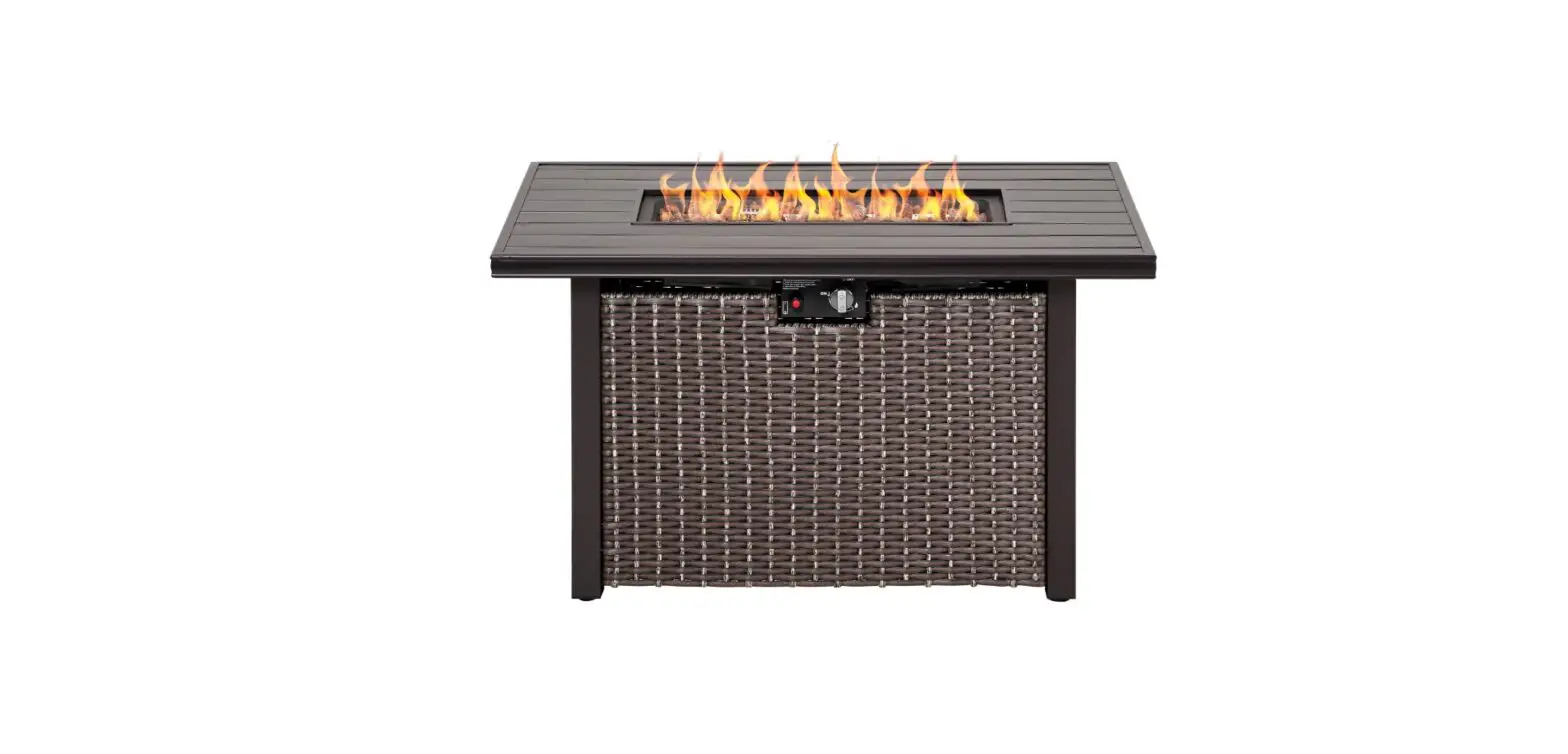
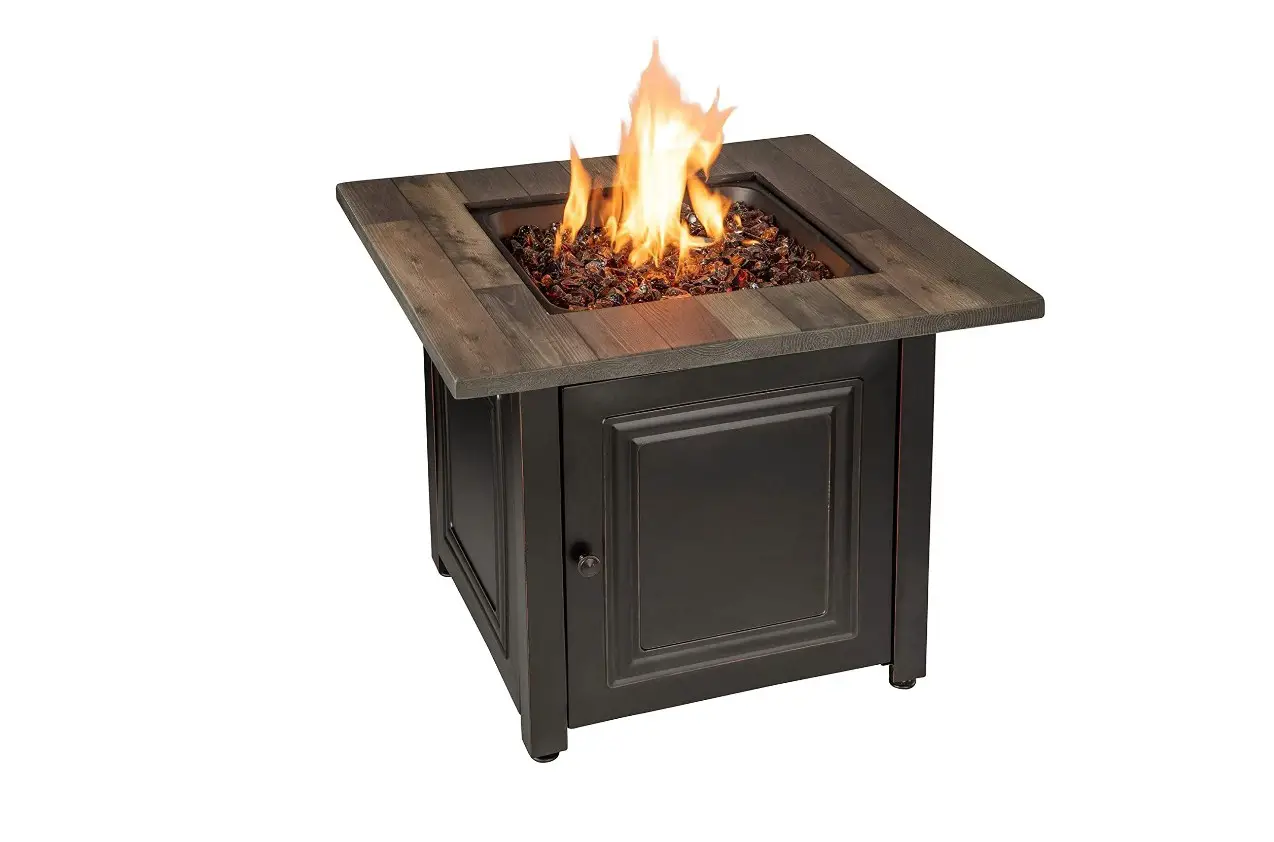
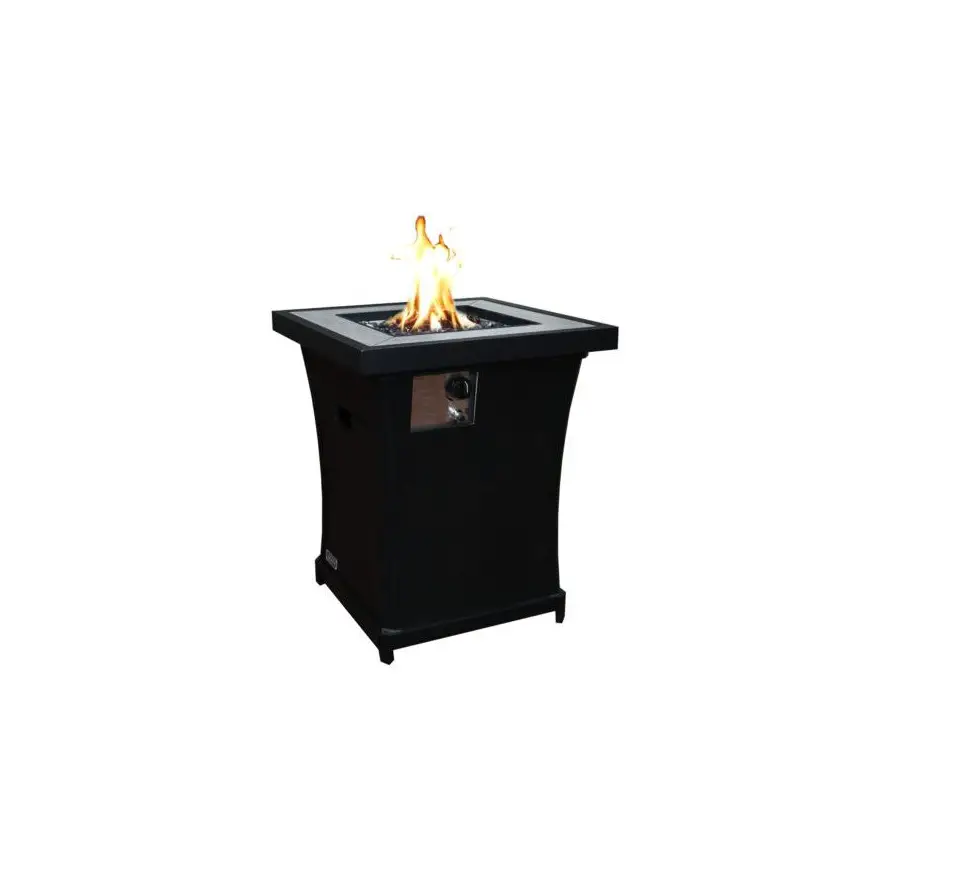
PIT2141AS Dual Fuel Gas Fire Pit
Dual Fuel Gas Fire Pit OWNER’S MANUAL
This is the owner’s manual for the Dual Fuel Gas Fire Pit with
model number PIT2141AS. It is important to follow the instructions
provided in this manual to prevent fire, explosion, personal
injury, or loss of life.
Product Information
- This fire pit is designed with Dual Fuel Valves to easily
convert from LP (propane) gas to natural gas. - An Even Embers conversion kit must be purchased and installed
for use with natural gas. - The fire pit has a rated heat output of 62,000 BTU/h (18.15
kWh). - It can be fueled by Propane-LPG or Natural Gas-NG.
- The fire pit can be connected to a 20 lb. LP-gas cylinder with
a Type 1 cylinder valve and an over-filling protection device
(OPD). - The gas supply manifold pressure for LP is 11 inches WC and for
NG is 7 inches WC. - The orifice size (diameter) is 2.55 (0~+0.02)mm.
- The maximum gas supply pressure is 250 PSI and the minimum is 5
PSI.
Product Usage Instructions
- This fire pit is for outdoor use only.
- Installation and service must be performed by a qualified
installer, service agency, or the gas supplier. - Do not store or use gasoline, or other flammable vapors and
liquids, in the vicinity of this or any other appliance. - An LP-cylinder not connected for use shall not be stored in the
vicinity of this or any other appliance. - Never use this appliance in an enclosed space such as a camper,
tent, car or home as it can produce carbon monoxide which has no
odor and using it in an enclosed space can kill you. - Ensure that there is a minimum clearance of 36 inches (91.4 cm)
around the fire pit. - Combustible material should not be within 72 inches (182.9 cm)
of the top of the unit, or within 36 inches (91.4 cm) of the side
of the unit. - Position the parts in accordance with the diagram provided in
the manual and use only parts specifically approved with this
appliance to prevent property damage and personal injury. - For natural gas usage, purchase and install an Even Embers
conversion kit. - Purchase a 20 lb. LP-gas cylinder with a Type 1 cylinder valve
and an over-filling protection device (OPD) for use with the fire
pit. - Keep the fire pit out of reach of children.
It is important to read and carefully follow all of the messages
in this manual to ensure safe usage of the Dual Fuel Gas Fire
Pit.
Dual Fuel Gas Fire Pit OWNER’S MANUAL
ASSEMBLY AND OPERATING INSTRUCTIONS
Model PIT2141AS
DANGER FIRE OR EXPLOSION HAZARD If you smell gas: · Shut off gas to appliance · Extinguish any open flame. · If odor continues, leave the area immediately. · After leaving the area, call your gas supplier or fire department. Failure to follow these instructions could result in fire or explosion, which could cause property damage, personal injury, or death.
WARNING: If the information in this manual is not followed exactly, a fire or explosion may result causing property damage, personal injury, or loss of life.
WARNING: For outdoor use only. Installation and service must be performed by a qualified installer, service agency, or the gas supplier.
WARNING 1. Do not store or use gasoline,
or other flammable vapors and liquids, in the vicinity of this or any other appliance. 2. An LP-cylinder not connected for use shall not be stored in the vicinity of this or any other appliance.
INSTALLER: Leave this manual with the appliance.
CONSUMER: Retain this manual for
future reference.
DANGER
CARBON MONOXIDE HAZARD
This appliance can produce carbon monoxide which has no odor.
Using it in an enclosed space can kill you.
Never use this appliance in an enclosed space such as a camper, tent, car or home.
TABLE OF CONTENTS:
General Warnings . . . . . . . . . . . . . . . . . . . . . . . . . . . . . . . . . . . . . . . . . . . . 2-3 Fire Pit Specifications. . . . . . . . . . . . . . . . . . . . . . . . . . . . . . . . . . . . . . . . . . . . 4 Cylinder Specifications and Installation . . . . . . . . . . . . . . . . . . . . . . . . . . . . 4-6 Hose / Regulator Specifications and Installation . . . . . . . . . . . . . . . . . . . . . 6-7 Leak Testing. . . . . . . . . . . . . . . . . . . . . . . . . . . . . . . . . . . . . . . . . . . . . . . . . 7-8 Pre-start Check List . . . . . . . . . . . . . . . . . . . . . . . . . . . . . . . . . . . . . . . . . . . . . 9 Location . . . . . . . . . . . . . . . . . . . . . . . . . . . . . . . . . . . . . . . . . . . . . . . . . . . . . . 9 Lighting Instructions . . . . . . . . . . . . . . . . . . . . . . . . . . . . . . . . . . . . . . . . . . 9-10 Burner Cleaning and Maintenance. . . . . . . . . . . . . . . . . . . . . . . . . . . . . . . . . 11 Storage and Maintenance . . . . . . . . . . . . . . . . . . . . . . . . . . . . . . . . . . . . . . . 12 Trouble Shooting . . . . . . . . . . . . . . . . . . . . . . . . . . . . . . . . . . . . . . . . . . . . . . 12 Assembly Instructions . . . . . . . . . . . . . . . . . . . . . . . . . . . . . . . . . . . . . . . 13-16 Warranty Information . . . . . . . . . . . . . . . . . . . . . . . . . . . . . . . . . . . Back Cover
DANGER: Indicates an imminently hazardous situation which, if not avoided, will result in death or serious injury. WARNING: Be alert to the possibility of serious bodily injury if the instructions are not followed. Be sure to read and
carefully follow all of the messages. CAUTION: Indicates a potentially hazardous situation which, if not avoided, may result in minor or moderate injury.
This fire pit is designed with Dual Fuel Valves to easily convert from LP (propane) gas to natural gas. An Even Embers
conversion kit must be purchased and installed for use with natural gas.
CALIFORNIA PROPOSITION 65 WARNING WARNING: This product can expose you to chemicals, including carbon monoxide, which are
known to the State of California to cause birth defects or other reproductive harm. For more information go to www.P65Warnings.ca.gov
WARNING: CONTAINS LEAD. MAY BE HARMFUL IF EATEN OR CHEWED. COMPLIES WITH FEDERAL STANDARDS. KEEP OUT OF REACH OF CHILDREN.
1
GENERAL WARNINGS:
WARNING
· The installation must conform with local codes or, in the absences of local codes, with the National Fuel Code, ANSI Z223.1/NFPA54, or CAN/CGA-B149.1, National Gas and Propane Installation Code.
· All installation and repair should be done by a qualified installer, service agency, or the gas suppler. · THIS UNIT IS INTENDED FOR OUTDOOR USE ONLY! This product shall be used outdoors, in a well
ventilated space and shall not be used in any enclosed area. · Never use natural gas in a unit designed for liquid propane gas. · Do not use solid fuel or charcoal for this unit. · When lighting this unit, stay away from the burner as the flame will light up and may cause injury. · The first time the unit is ignited, keep away form the unit for the first 20 minutes, as lava rock could
pop out and cause injury. Discard any lava rock that pops out. · Always ensure lava rocks are completely dry before use. Failure to do so will cause them to crack and
pop. · LP GAS WARNING: Do not use any more than 1/2 inch depth of lava rock above the burner holes.
Doing so may suffocate the flame. · If the propane gas cylinder is leaking gas, you may hear, see or smell a leak. Do the following:
· Disconnect the propane cylinder. · Do not attempt to fix the problem yourself. · Contact your gas supplier or fire department for help. · Do not use a flame to check for leaks. · The maximum manifold inlet supply pressure: LP 11.0″ WC; NG 7.0″ WC. · The LP cylinder supply pressure is: Max 250 PSI; Min 5 PSI. · The NG supply pressure is: Max 10.5″ WC; Min 3.5″ WC. · The pressure regulator and hose assembly provided with the fire pit must be used. If they are damaged, they must be replaced by the specified ones of manufacturer. · The appliance should be inspected prior to each use and at least annually by a qualified service person. Do not operate the unit if there is a gas leak. · Inspect the hose assembly and burner prior to each use. If there is evidence of any kind of damage, do not operate the appliance. For assistance with repair or replacement parts, call Even Embers at 1-855-735-9922. · Check for leaks after not using the appliance for long periods of time. · LP gas supply cylinder to be used must be constructed and marked in accordance with the specifications for LP gas cylinders of the U.S. Department of Transportation (DOT) or the National Standard of Canada CAN/CSA-B339, LP gas tanks, spheres and tubes for Transportation of Dangerous Goods; and Commission. · The cylinder supply system must have a listed overfilling prevention device and a QCCI or Type 1, LP tank connection. The cylinder must include a collar to protect the cylinder valve. · DO NOT fill propane cylinder over 80% full. · Discontinue use if any part of the propane cylinder is damaged. Rust and dents may be hazardous and should be inspected by a qualified gas supplier. · Do not operate unit until all parts are fully assembled. · Do not disconnect any part while unit is in use. · Do not store a spare propane cylinder on or near this unit. · Keep propane cylinder at least 72 inches away from unit while in use. · Keep hose out from any pathways to eliminate any accidental damage and avoid a trip hazard. · Keep all electrical cords and fuel supply hose away from heated surfaces. · Never leave this unit unattended while in use. · It is imperative that the control compartment, burner and circulating air passageways of the appliance are kept clean.
2
WARNING
· Do not operate on a boat or vehicle. Always place the fire pit on a firm and level noncombustible surface.
· When in use, minimum clearance to adjacent combustible materials, gasoline and other flammable liquids and vapors; sides-36 inches (91 cm); top-72 inches. Certain items or materials, when stored under the fire pit or nearby will be subjected to radiant heat and could be seriously damaged.
· Children and adults should be alerted to the hazards of high surface temperatures and should stay away to avoid burns or clothing ignition.
· Your children and pets should be carefully supervised when they are in the area of the fire pit. · Clothing or other flammable materials should not be hung from fire pit or placed on or near the fire pit. · Any guard or other protective device removed for servicing the fire pit must be replaced prior to
operation. · Do not add water into the unit. · Do not use the fire pit if any part has been under water. Immediately call a qualified technician to
inspect the appliance and to replace any part of the control ignition and gas control that has been under water. · This unit is not intended for cooking. · Fire pit is hot when in use. To avoid burns:
· DO NOT attempt to move the fire pit while in use. · Wear protective gloves or oven mitts. · DO NOT touch any hot fire pit surfaces. · DO NOT wear loose clothing or allow hair to come in contact with fire pit. · Always remove protective cover before operating. · Do not set protective cover over the unit until it is turned off and completely cooled down. · If unit is stored indoors, detach the propane cylinder and leave outdoors.
USE CAUTION AND COMMON SENSE WHEN OPERATING YOUR GAS FIRE PIT.
FAILURE TO ADHERE TO THE SAFETY WARNINGS AND GUIDELINES IN THIS MANUAL COULD RESULT IN SEVERE BODILY INJURY OR PROPERTY DAMAGE.
Minimum Clearance 36 inches (91.4 cm)
Minimum Clearance 36 inches (91.4 cm)
Minimum Clearance 36 inches (91.4 cm)
Minimum Clearance 36 inches (91.4 cm)
WARNING:
Combustible material should not be within 72 inches (182.9 cm) of the top of the unit, or within 36 inches (91.4 cm) of the side of the unit.
WARNING: Failure to position the parts in accordance with this diagram or failure to use only parts specifically approved with this appliance may result in property damage and personal injury.
3
FIRE PIT SPECIFICATIONS:
Product Name Model No. Rated Heat Output Fuel Gas Supply Manifold Pressure Orifice Size (diameter) Gas Supply Pressure
Dual Fuel Gas Fire Pit PIT2141AS 62,000 BTU/h (18.15 kWh) Propane-LPG or Natural Gas-NG 20 lb. LP-gas cylinder 11 inches WC for LP / 7 inches WC for NG 2.55 (0~+0.02)mm Maximum 250 PSI; Minimum 5 PSI
CYLINDER SPECIFICATIONS AND INSTALLATION:
WARNING
LP GAS CYLINDER (NOT SUPPLIED WITH THIS FIRE PIT) The LP cylinder is available for purchase at the same location the fire pit was purchased. The LP (Liquid Propane) gas cylinder specifically designed to be used with this fire pit must have a 20 lb. (9.1 kg) capacity incorporating a Type 1 cylinder valve and an over-filling protection device (OPD).
· DO NOT connect this fire pit to an existing #510 POL cylinder valve with Left Hand threads. The Type 1 valve can be identified with the large external threads on the valve outlet.
· DO NOT connect to a propane cylinder exceeding this capacity. · DO NOT connect to a cylinder that uses any other type of valve connection device.
LP GAS CYLINDER SPECIFICATIONS:
When purchasing or exchanging a cylinder for your gas fire pit, it must be constructed and marked in accordance with the specifications for LP gas cylinders of the U.S. Department of Transportation (DOT) or the National Standard of Canada, CAN/CSA-B339 Cylinders, Spheres and Tubes for Transportation of Dangerous Goods; and Commission, as applicable; and provided with a listed over-filling prevention device (OPD), and provided with a cylinder connection device compatible with the connection for outdoor gas fireplace. The cylinder must be provided with a shut off valve terminating in a LP gas supply cylinder valve outlet specified, as applicable, for connection No. 791 in the Standard for cylinder connection devices, ANSI 221.81. CSA 6.25.
The cylinder must also be equipped with:
· A shut-off valve terminating in a Type 1 gas cylinder valve outlet. · A Type 1 valve that prevents gas flow until a positive seal is obtained. · An arrangement for vapor withdrawal. · A collar to protect the cylinder shut-off valve. · A safety relief device having direct communication with the vapor space of the cylinder. · A listed over-filling prevention device (OPD).
4
WARNING
· Turn off the cylinder valve when your fire pit is not in use. · Handle the tank with care. · Always secure the cylinder in an upright position. · Never connect an unregulated LP gas cylinder to your fire pit. · DO NOT expose LP gas cylinders to excessive heat or ignition sources. · DO NOT store a spare LP gas cylinder under or near your fire pit. · Allow only qualified LP gas dealers to fill or repair your LP gas cylinder. · DO NOT allow the cylinder to be filled beyond 80% capacity. · Read and follow all warnings and instructions that are on the cylinder and that accompany this
product.
DANGER
· Never store a spare LP gas cylinder under or near your fire pit. This could cause excess pressure to be expelled through the vapor relief valve resulting in fire, explosion, or severe personal injury including death.
Note: PROPANE GAS IS HEAVIER THAN AIR AND WILL COLLECT IN LOW AREAS. PROPER VENTILATION IS EXTREMELY IMPORTANT.
· Keep the ventilation opening(s) of the LP gas cylinder enclosure free and clear from obstructions and debris.
· DO NOT insert any foreign objects into the valve outlet. Damage to the back-check could result. A damaged back-check can cause a leak, possibly resulting in explosion, fire, severe bodily harm, or death.
FILLING THE LP GAS CYLINDER:
WARNING
· Allow only qualified licensed LP gas dealers to properly fill or repair your LP gas cylinder. · New tanks should be purged prior to filling; inform LP gas dealer if you are using a new tank. · DO NOT allow the cylinder to be filled beyond 80% capacity. Over-filled tanks can create a
dangerous condition. Over-filled tanks can build-up pressure and cause the relief valve to expel propane gas vapors. The vapor is combustible and if it comes in contact with a spark source or flame an explosion causing severe burns, bodily harm, or death could occur. · Always use a protective cylinder cap when fire pit is not connected to cylinder. · If you exchange a cylinder with a qualified exchange program, the new cylinder must have a Type 1 valve and an over-filling prevention device (OPD). · Inspect the propane tank valve rubber seal for cracks, wear or deterioration prior to use. A damaged rubber seal can cause a gas leak, possibly resulting in an explosion, fire or severe bodily harm.
5
LP GAS CYLINDER (TANK) RUBBER SEAL INSPECTION:
· Inspect the propane tank valve rubber seal for cracks, wear or deterioration prior to use. A damaged rubber seal can cause a gas leak, possibly resulting in an explosion, fire or severe bodily harm.
· Inspection should be done each time the propane tank is connected to the fire pit, has been refilled, exchanged or has not been used for more than 60 days.
· Do not use a propane tank with a damaged rubber seal. Exchange the tank or have the rubber seal replaced at a qualified propane filling station.
Good Rubber Seal
INSTALLING THE LP GAS CYLINDER (TANK) ONTO THE FIRE PIT:
1. Check that the cylinder valve is closed by turning the knob clockwise. Inspect cylinder valve rubber seal for cracks or deterioration. Do not use propane tank with damaged seal as a gas leak may occur.
2. Place the cylinder at least 72-inches away from fire pit to prevent it from overheating. WARNING: DO NOT route the hose under the fire pit.
3. Locate hose where it will not be a trip hazard and the hose is not kinked or damaged.
4. Install tank into tank holder and fully tighten the tank retaining screw to secure the tank.
Damaged Rubber Seal
72″ Minimum
Retaining Screw
HOSE / REGULATOR SPECIFICATIONS AND INSTALLATION:
WARNING
The pressure regulator and hose assembly supplied with your fire pit must be used. · DO NOT attempt to connect fire pit, as purchased for LP (propane) gas, to any other fuel supply
source such as a natural gas line. For dual fuel fire pits that can be converted to natural gas, a Even Embers conversion kit must be purchased and installed for use with natural gas. · DO NOT use any other pressure regulator/hose assembly other than the one supplied with your fire pit. Replacement pressure regulator/hose assembly must be part No 2141-600-2141-0, which can be obtained by contacting customer service at 1-855-735-9922. · DO NOT attempt to adjust or repair a regulator. The regulator is designed to operate at a maximum output pressure of 11 inches of water column (2.74 kPa). · Ensure the tank valve is CLOSED prior to connecting the LP gas cylinder to your fire pit. Turn the valve knob clockwise to properly close the valve. Read and follow all instructions and warnings on the supply hose safety tags. Read and follow all warnings in this manual concerning the safe use of LP gas cylinders and the hose and regulator before connecting cylinder to fire pit. Read and follow all warnings on the LP cylinder.
6
HOSE / REGULATOR:
Your fire pit is equipped with a Type 1 connection device with the following features:
1. The system will not allow gas flow from the cylinder until a positive connection to the valve has been made.
Note: The cylinder valve and fire pit control knob must be turned OFF before any connection is made or removed.
2. A thermal device that will shut off the gas flow if the device is subject to temperatures above 240°F to 300°F (115°C to 150°C). If this should happen, remove the entire regulator assembly and dispose of properly. A replacement regulator assembly can be purchased by contacting customer service at 800-527-0717. The cause of the excessive heat should be determined and corrected before using your fire pit again.
3. A regulator flow limiting device, when activated, restricts the flow of gas to 10 cubic feet per hour. If the flow limiting device is activated, perform Regulator Resetting Procedure.
CONNECTING HOSE / REGULATOR:
1. Inspect the propane tank valve rubber seal for cracks, wear or deterioration prior to use. A damaged rubber seal can cause a gas leak, possibly resulting in an explosion, fire or severe bodily harm. Do not use a propane tank with a damaged rubber seal.
2. Attach or detach regulator to the LP gas cylinder only when cylinder is
at rest in tank holder.
3. Check that the cylinder valve is closed by turning the knob clockwise. 4. Check that the fire pit’s burner control knob is in the “OFF” position.
Inspect Rubber Seal (see page 6)
5. Visually inspect the hose assembly prior to each use for evidence of damage, excess wear, or deterioration. If found, replace the assembly before using your fire pit. Only the manufacturer’s supplied replacement should be used.
6. Remove the protective plastic cap from the cylinder valve.
7. Check that the hose does not contain kinks, does not contact sharp edges, and does not contact surfaces that may become hot during use.
8. Hold regulator and insert the brass nipple into the LP cylinder valve outlet. Ensure that the device is
centered properly.
9. Turn the large coupling nut clockwise by hand and tighten to a full stop. Take care not to cross thread the coupling nut onto the cylinder valve. Do not use tools to tighten connection.
Note: If you are unable to make the connection, repeat Steps 7 and 8.
10. Leak check all fittings before lighting your fire pit. See section on “Leak Testing” in this manual.
Note: To remove regulator from propane tank, turn off the tank valve and rotate the large coupling nut counter-clockwise and remove.
REGULATOR RESETTING PROCEDURE:
Mini Reset:
Turn the control knob to “OFF”, turn off the cylinder valve. Wait one minute. Slowly turn cylinder valve ON and relight fire pit. If burner flame is higher and fire pit heats up properly reset is complete.
Full Reset:
Turn the control knob to “OFF”, turn off the cylinder valve. Disconnect hose and regulator from cylinder. Wait two minutes, reattach hose and regulator and perform leak test.
LEAK TESTING:
WARNING
· Never use your fire pit without leak testing all gas connections, hoses and propane tank. Follow the section on “Leak Testing” in this manual for proper procedures.
7
DANGER
To prevent fire or explosion hazard: · DO NOT smoke or permit ignition sources in the area while conducting a leak test. · Perform test OUTDOORS in a well ventilated area that is protected from the wind. · Never perform a leak test with a match or open flame. · Never perform a leak test while the fire pit is in use or while fire pit is still hot.
WHEN TO PERFORM A LEAK TEST:
· After assembling your fire pit and before lighting for the first time, even if purchased fully assembled. · Every time the LP gas cylinder is refilled, exchanged or if any of the gas components are disconnected or
replaced. · Any time your fire pit has been moved. · At least once per year or if your fire pit has not been used for more than 60 days.
CHECKING FOR LEAKS:
CAUTION: Strong odors, colds, sinus congestion, etc. may prevent the detection of propane by smell.
Use caution and common sense when testing for leaks.
Note: The leak test must be performed in an area that has adequate lighting in order to see if bubbles are
developing and not in a windy or noisy area so larger leaks can be detected by smell or sound.
1. Create a mixture of 50% water and 50% liquid dishwashing soap.
2. Ensure the control knob is set to the “OFF” position.
3. Turn on the gas at the cylinder valve. Turn the cylinder valve knob counter-clockwise to full open. If you
hear a rushing sound or smell gas, turn the gas off. Tighten any leaking connections. If leak is detected at
connection nut and tightening does not stop leak, reinspect propane tank rubber seal.
4. Apply the soapy water mixture to the following:
A Supply tank (cylinder) weld.
E Regulator connections to gas supply hoses.
B Connection nut to tank valve.
F Hose connection to gas manifold.
C Back side of connection nut to brass nipple. G The full length of gas supply hose.
D Brass nipple connection into regulator.
H Tank valve to cylinder.
5. Check each place listed (AH) for growing bubbles, which indicates a leak. Large leaks may not be
detected by bubbles but should produce a rushing sound or gas smell.
6 Turn off gas supply at cylinder valve.
7. Turn on control knob to release gas pressure in hose.
8. Turn control knob to “OFF” position.
9. Tighten any leaking connections. If leak is detected at connection nut and tightening does not stop leak,
reinspect propane tank rubber seal. (see page 6)
10. Repeat soapy water test until no leaks are detected. 11. Turn off gas supply at cylinder valve until you are ready to use your fire pit.
Watch For Bubbles
12. Wash off soapy residue with cold water and towel dry.
13. Wait 5 minutes to allow all gas to evacuate the area before lighting fire pit.
WARNING: DO NOT use the fire pit if leaks cannot be stopped. Contact a
qualified gas appliance repair service.
H
C
B
D
E
A G
F
8
PRE-START CHECK LIST:
WARNING
Property damage, bodily harm, severe burns, and death could result from failure to follow these safety steps. These steps should be performed after the fire pit has been assembled and prior to each use. DO NOT operate this fire pit until you have read and understand ALL of the warnings and instructions in this manual.
· Ensure that the fire pit is properly assembled. · Inspect the gas supply hose for burns, chaffing, kinks, and proper routing before each use. If it is
evident there is excessive abrasion or wear, or the hose is cut, it must be replaced prior to the fire pit being used. Replace with hose and regulator Model No. 2141-600-2141-0, which can be obtained by contacting customer service at 1-855-735-9922. · Leak check all gas connections, hose and propane tank. See section on “Leak Testing”. · DO NOT obstruct the flow of ventilation air.
LOCATION:
· Your fire pit must be installed on a noncombustible flat, stable surface, away from any combustible material or construction.
· The fire pit shall be used only outdoors in a well-ventilated space and shall not be used in a building, garage or any other enclosed area.
LIGHTING INSTRUCTIONS:
WARNING
Read, understand and follow all warnings and instructions contained in this manual. DO NOT skip any of the warnings and instructions contained in the preceding sections of this manual. Follow the instructions exactly. 1. Remove the fire pit cover before attempting to light a burner so that fumes do not accumulate
inside the fire pit. 2. Check that the burner control knob and the cylinder valve are turned to the “OFF” position. 3. Turn on the fuel supply by slowly rotating the cylinder valve knob counter-clockwise to full open. 4. DO NOT stand with head, body, or arms over the fire pit when lighting.
9
LIGHTING THE FIRE PIT:
1. Make sure control knob is in OFF position. 2. Push and turn control knob to “LOW”. 3. Push in and hold control knob while pressing ignitor for 3 to 5 seconds.
If ignition does not occur in 5 seconds, turn knob to “OFF,” wait 5 minutes and repeat lighting procedure. 4. Continue to push in control knob for 15 seconds after burner is lit. Then release the control knob and adjust to desired heat output. Note: Turn off LP supply at cylinder when fire pit is not in use.
MATCH LIGHTING THE FIRE PIT:
1. Make sure control knob is in OFF position. 2. Strike a long wooden match and place approximately 1/2″
(1 to 2 cm) from the burner. 3. Push and turn control knob to “LOW” and continue to push in control
knob. 4. Continue to push in control knob for 15 seconds after burner is lit. Then
release the control knob and adjust to desired heat output. 5. If the burner does not light, turn the control knob to “OFF” and
wait 5 minutes for gas to dissipate and repeat lighting procedure. 6. If the burner does not light within the first few attempts of match
lighting, there is a problem with the gas supply. Turn off the gas at the burner and cylinder. DO NOT attempt to operate the fire pit until the problem is found and corrected. See “Trouble Shooting” section of this manual.
LOW
OFF HIGH
Control Knob
Ignitor
TURNING OFF THE FIRE PIT:
1. Turn off the cylinder valve. 2. Turn burner control knob to the “OFF” position.
Note: Turn off LP cylinder first to prevent gas from being left in the system under pressure. CAUTION!
· The cylinder valve should always be in the off, or closed, position when the fire pit is not in use.
To turn off the cylinder valve, turn knob clockwise until it stops.
10
BURNER CLEANING AND MAINTENANCE:
· Keep the appliance free and clear of combustible materials, gasoline and other flammable vapors and liquids.
· For safe and peak performance of your fire pit, perform these checks at least twice per year or after extended periods of storage.
· Be sure to tighten up all hardware (nuts, screws, etc.) at least twice per year.
CAUTION: Some parts may contain sharp edges. Wear protective gloves if necessary.
· Although your burner is constructed of stainless steel, it may corrode as a result of the extreme heat. Regularly inspect the burner for cracks, abnormal holes, and other signs of corrosion damage. If found, replace the burner.
· DO NOT block ventilation areas in sides or bottom compartment of fire pit. The burner tube can become blocked by spiders and other insects building their nests. Blocked burner tubes can prevent gas flow to the burner and could result in a burner tube fire or fire beneath the fire pit. To clean the burner assembly follow these instructions to clean and/or replace parts of burner assembly or if you have trouble igniting the fire pit.
1. Turn gas off at control knob and LP cylinder tank valve.
2. Remove lava rocks.
3. Remove three screws on burner feet.
4. Carefully lift burner up and away from valve nozzle.
5. Use a narrow bottle brush or a stiff wire bent into a small hook to run through burner opening or use compressed air to blow into burner opening and out the flame ports. Check each port to make sure air comes out each hole.
CAUTION: Wear eye protection when using compressed air.
6. Use a wire brush to clean the entire outer surface of burner to remove residue and dirt.
7. Check burner for damage, if any cracks or holes are found replace burner.
8. Replace burner in fire pit, orient burner CORRECTLY.
IMPORTANT: Burner opening must slide over valve nozzle.
9. Replace screws on burner feet.
Note: Follow the “Gas Leak Testing” section of this manual. Relight burner to verify proper operation.
11
Screws
Debris
Burner Opening Valve Nozzle
Normal flame height is 12″ to 15″
STORAGE AND MAINTENANCE:
To obtain the best performance from your fire pit, you must perform the following storage and maintenance activities on a regular basis: · Allow at least 35 minutes for the fire pit to cool down after use, then disconnect and remove the cylinder. · Cylinder must be stored outdoors in a well-ventilated area out of the reach of children. Disconnected
cylinders must have protective plastic cap installed and must not be stored in a building, garage or any other close area. · Storage indoor is permissible only if the cylinder is disconnected and removed. · Keep the fire pit area clear and free from combustible materials, gasoline and other flammable vapors and liquids. · If the fire pit is not in use, it must be covered to protect from weather or other adverse elements. · Installation and repair should be done by a qualified service person. The fire pit must be inspected at least annually by a qualified service person. · It is imperative that the control compartment, burners and circulating air passageways of the fire pit be kept clean.
TROUBLE SHOOTING:
Problem Gas Odor Burner won’t light while using a match
Incorrect burner flame
Fire Pit won’t light
Fire Pit emits a lot of black smoke Sudden drop in gas flow Flame blows out easily
Possible Cause Gas Leak Low gas pressure Regulator isn’t connected securely Clogged or dirty burner ports Gas flow is obstructed Burner ports are clogged or blocked
Clogged or dirty burner ports Ignitor pin and burner are wet Ignitor pin is broken Electrode wire is loose or disconnected Electrode wire is shorting Flame is obstructed at burner Regulator hose is kinked No gas flow Regulator flow limiting device has been activated High or gusting winds No gas flow Regulator flow limiting device has been activated
Prevention/Cure Leak check all connections Check gas supply pressure Tighten regulator connection to propane tank Clean burner ports-see manual section Check hose for kinks and bends Clean burner ports
Clean burner ports-see manual section Dry off with soft cloth Contact Even Embers for a replacement part Reconnect wire to the ignitor Contact Even Embers for a replacement part Check burner ports are free of any debris Straighten hose of all bends and kinks Check that the propane cylinder is not empty Follow “Resetting Regulator Procedure” section in this manual Increase flame to “HIGH” Check that the propane cylinder is not empty Follow “Resetting Regulator Procedure” section in this manual
12
ASSEMBLY INSTRUCTIONS:
READ ALL SAFETY WARNINGS & ASSEMBLY INSTRUCTIONS CAREFULLY BEFORE ASSEMBLING OR OPERATING YOUR FIRE PIT.
WE RECOMMEND TWO PEOPLE WORK TOGETHER WHEN ASSEMBLING THIS UNIT.
The following tools are required to assemble this Red Stone Gas Fire pit:
· Phillips Screwdriver
1
PARTS LIST:
1 1 Bag of Lava Rocks
2 4 Rail Supports
2
3 4 Rail Braces
4 4 Rails
3
5 1 Fire Pit Body
6 4 Feet
7 1 Tank Holder
8 1 Allen Wrench
4
9 1 AAA Battery (Pre-Installed)
5
6
7
8
Note: Most hardware is pre-attached to the fire pit. You may need to loosen some screws partially while others may need to be removed in order to assemble parts. The screws that you remove will be re-used so don’t misplace this hardware.
Extra screws are included in a small bag with the owners manual. 13
1
Attach rail supports to fire pit body using eight M6 x 12 mm bolts.
2
Set rails in place. Use Allen wrench to attach rails to rail supports using eight M6 x 60 mm bolts and M6 nuts. Secure rail braces to rail supports using sixteen M4 x 10 mm bolts.
14
3
Attach feet to fire pit body using eight M6 x 12 mm bolts.
4
Spread lava rocks evenly around fire pit base. Do not pile lava rock over burner tube more than 1/2 inch.
15
Red Stone PIT2141AS Assembled
16
WARRANTY
The Boltz Group warrants to the original purchaser that the Red Stone Gas Fire Pit is free from defects due to workmanship or materials for: One-year: on valves, frame, housing, and other related parts
The Boltz Group’s obligations under this warranty are limited to the following guidelines: · This warranty does not cover fire pits that have been altered/modified or damaged due to: normal wear, rust, abuse, improper maintenance
and/or improper use. · This warranty does not cover surface scratches, rust or heat damage to the finish, which is considered normal wear. · The Boltz Group may elect to repair or replace damaged units covered by the terms of this warranty. · This warranty extends to the original purchaser only and is not transferable or assignable to subsequent purchasers. The Boltz Group requires reasonable proof of purchase. Therefore, we strongly recommend that you retain your sales receipt or invoice. To obtain replacement parts for your Red Stone Gas Fire pit under the terms of this warranty, please call Customer Service Department at 1-855-735-9922. A receipt will be required. The Boltz Group will not be responsible for any fire pits forwarded to us without prior authorization. EXCEPT AS ABOVE STATED, THE BOLTZ GROUP MAKES NO OTHER EXPRESS WARRANTY. THE IMPLIED WARRANTIES OF MERCHANTABILITY AND FITNESS FOR A PARTICULAR PURPOSE ARE LIMITED IN DURATION TO THOSE LISTED ABOVE FROM THE DATE OF PURCHASE. SOME STATES DO NOT ALLOW LIMITATIONS ON HOW LONG AN IMPLIED WARRANTY LASTS, SO THE ABOVE LIMITATION MAY NOT APPLY TO YOU. ANY LIABILITY FOR INDIRECT, INCIDENTAL OR CONSEQUENTIAL DAMAGES ARISING FROM THE FAILURE OF THE RED STONE GAS FIRE PIT TO COMPLY WITH THIS WARRANTY OR ANY IMPLIED WARRANTY IS EXCLUDED. CUSTOMER ACKNOWLEDGES THAT THE PURCHASE PRICE CHARGED IS BASED UPON THE LIMITATIONS CONTAINED IN THE WARRANTY SET OUT ABOVE. SOME STATES DO NOT ALLOW THE EXCLUSION OR LIMITATION OF INCIDENTAL OR CONSEQUENTIAL DAMAGES, SO THE ABOVE LIMITATION OR EXCLUSION MAY NOT APPLY TO YOU. THIS WARRANTY GIVES YOU SPECIFIC LEGAL RIGHTS, AND YOU MAY ALSO HAVE OTHER RIGHTS WHICH VARY FROM STATE TO STATE.
OM2141AS 0422, 0522
©2022 The Boltz Group LLC. Carrollton, Texas 75006 U.S.A.
www.evenembers.com
Owner’s Manual for Model PIT2141AS
 P65Warnings.ca.gov