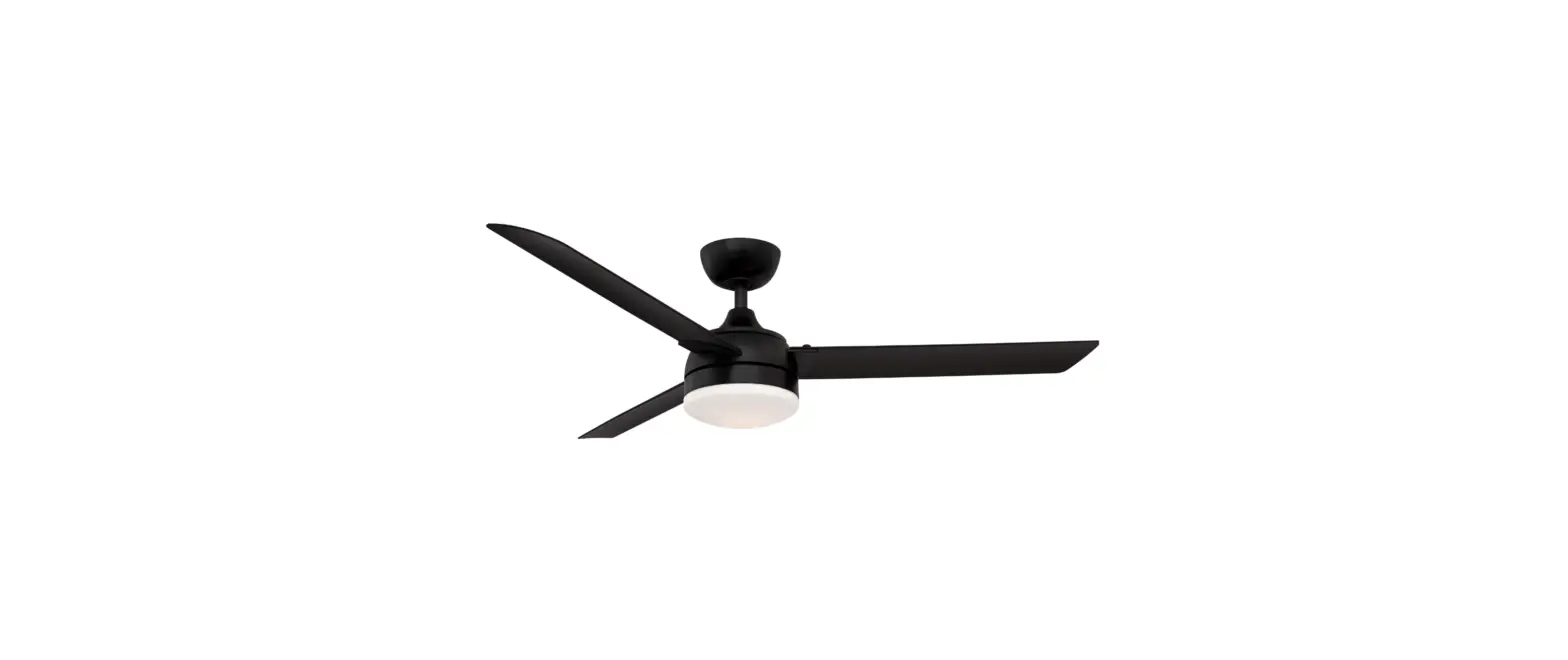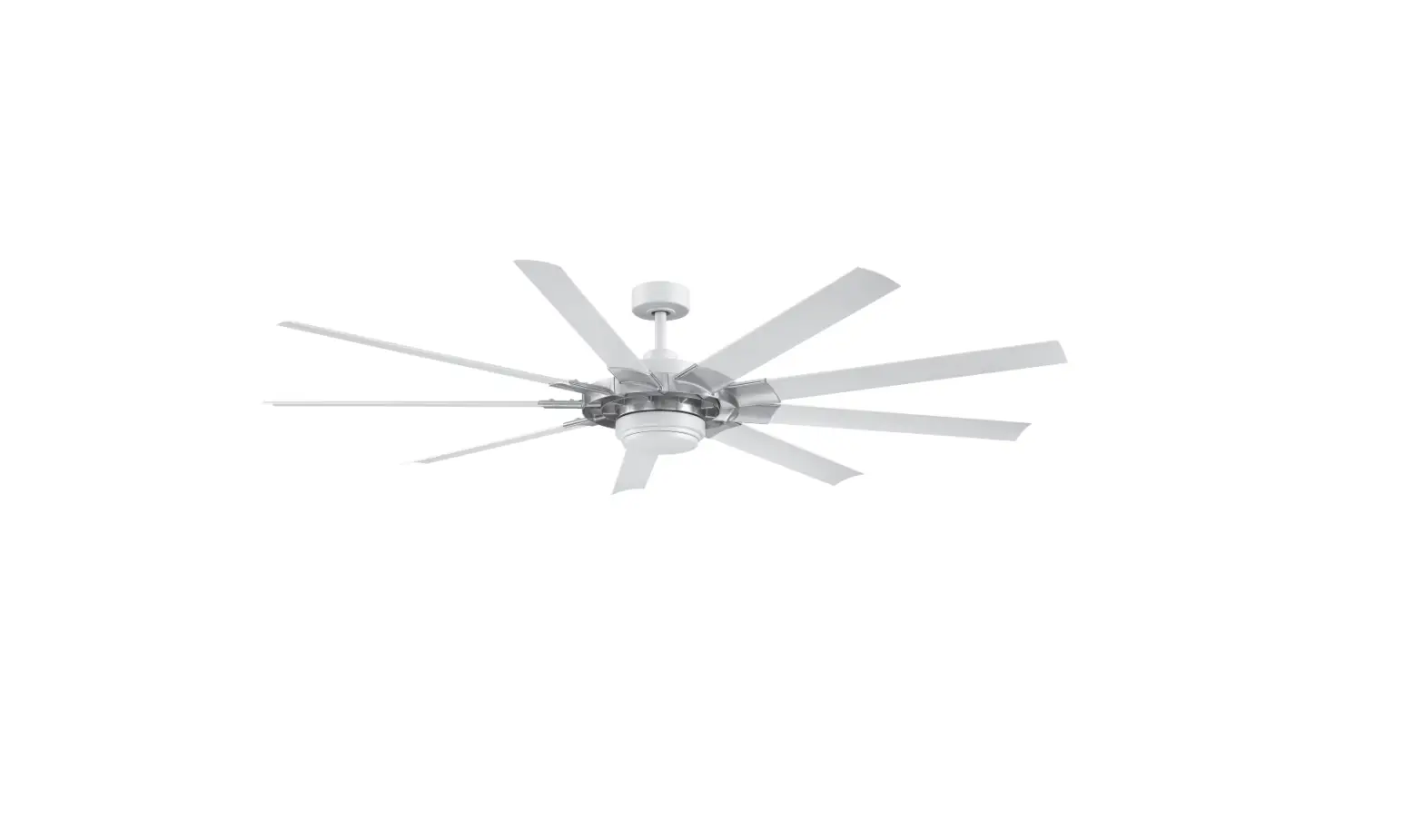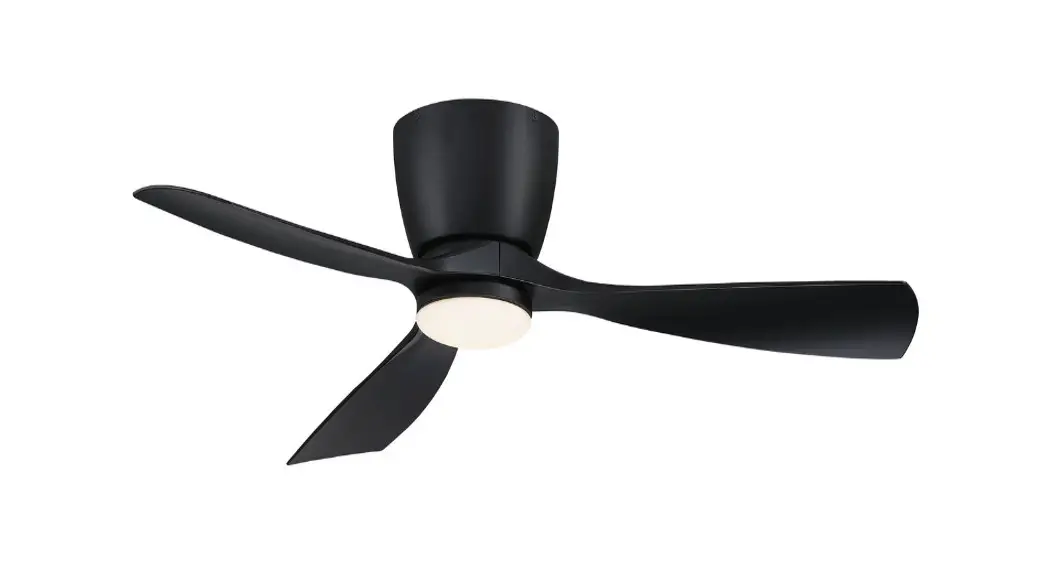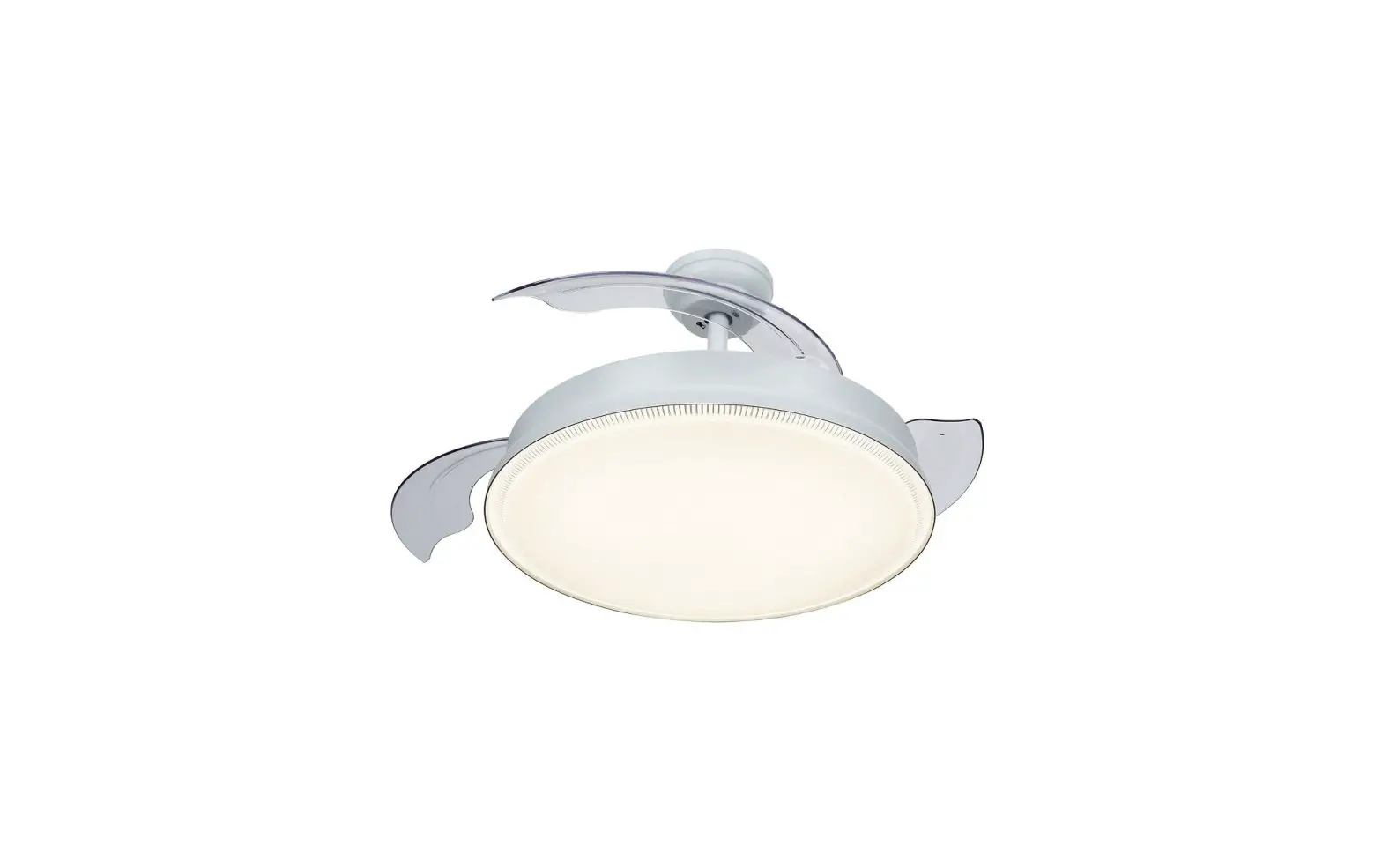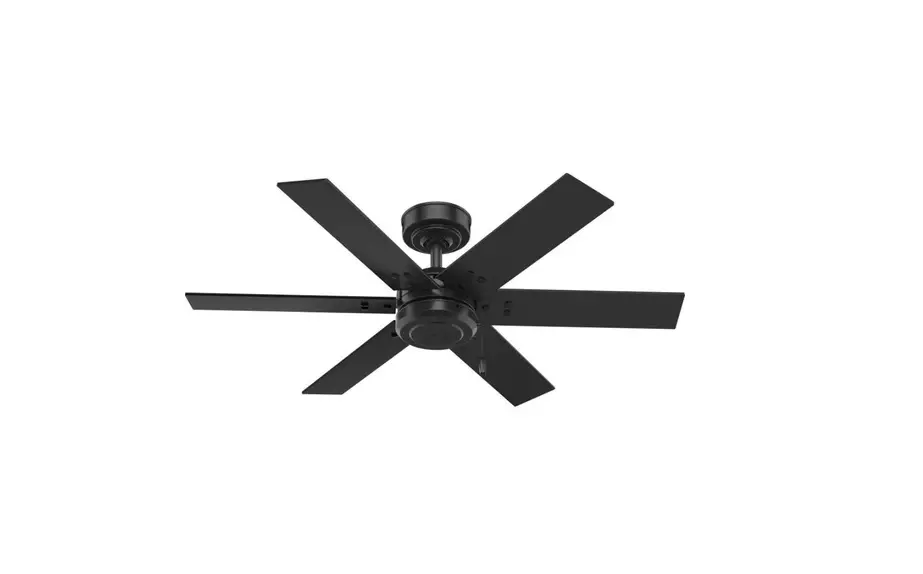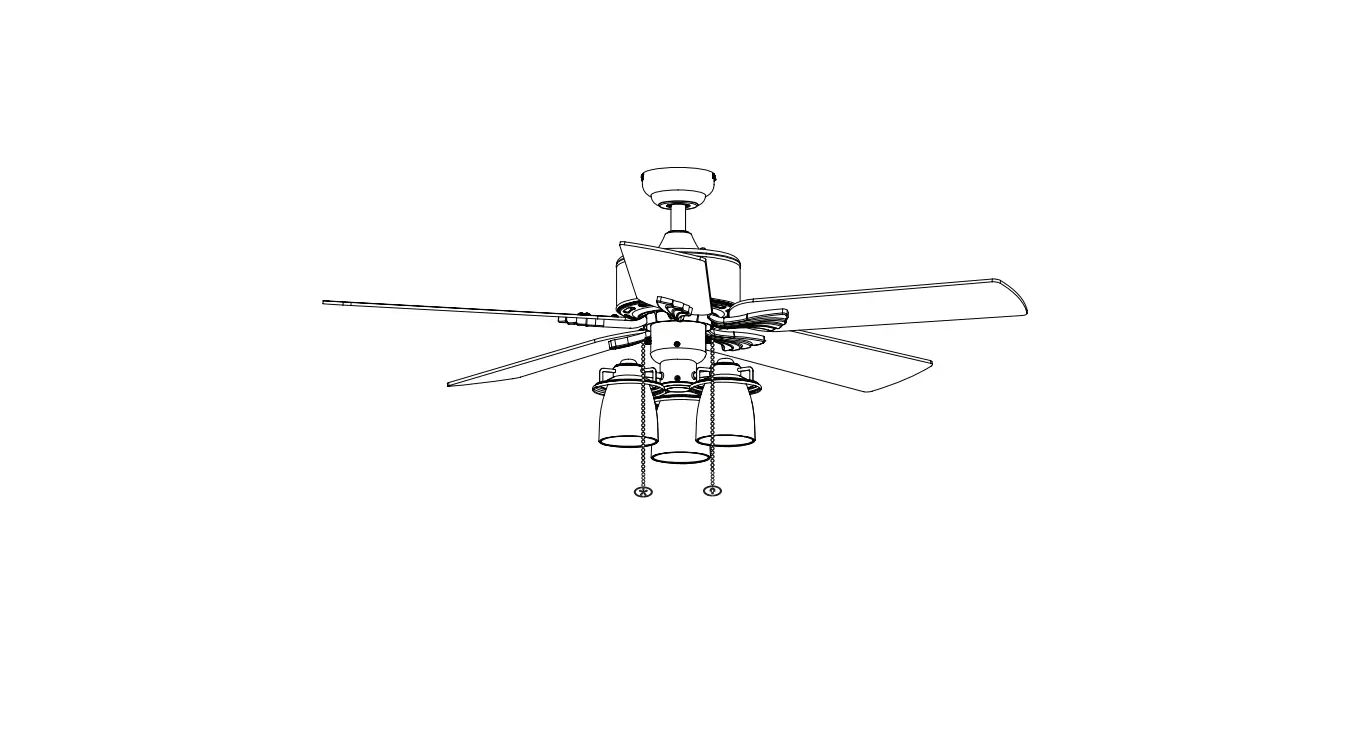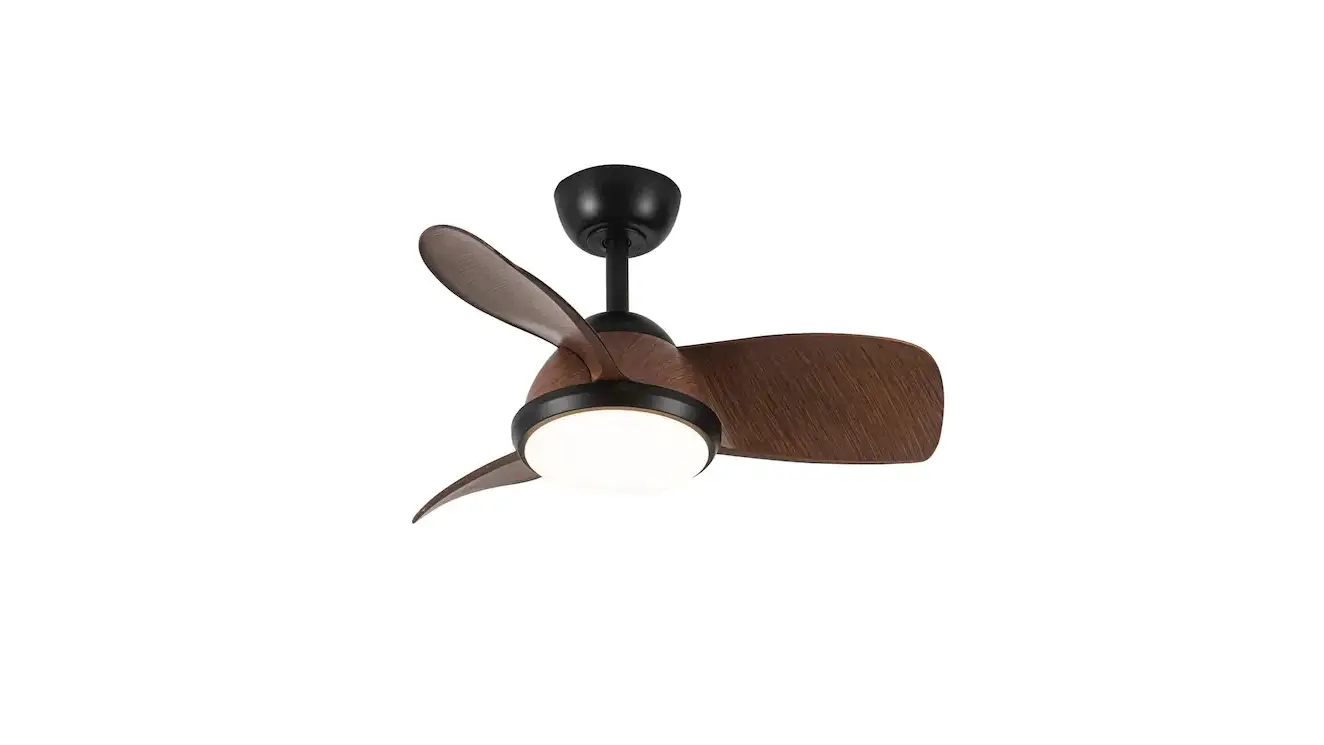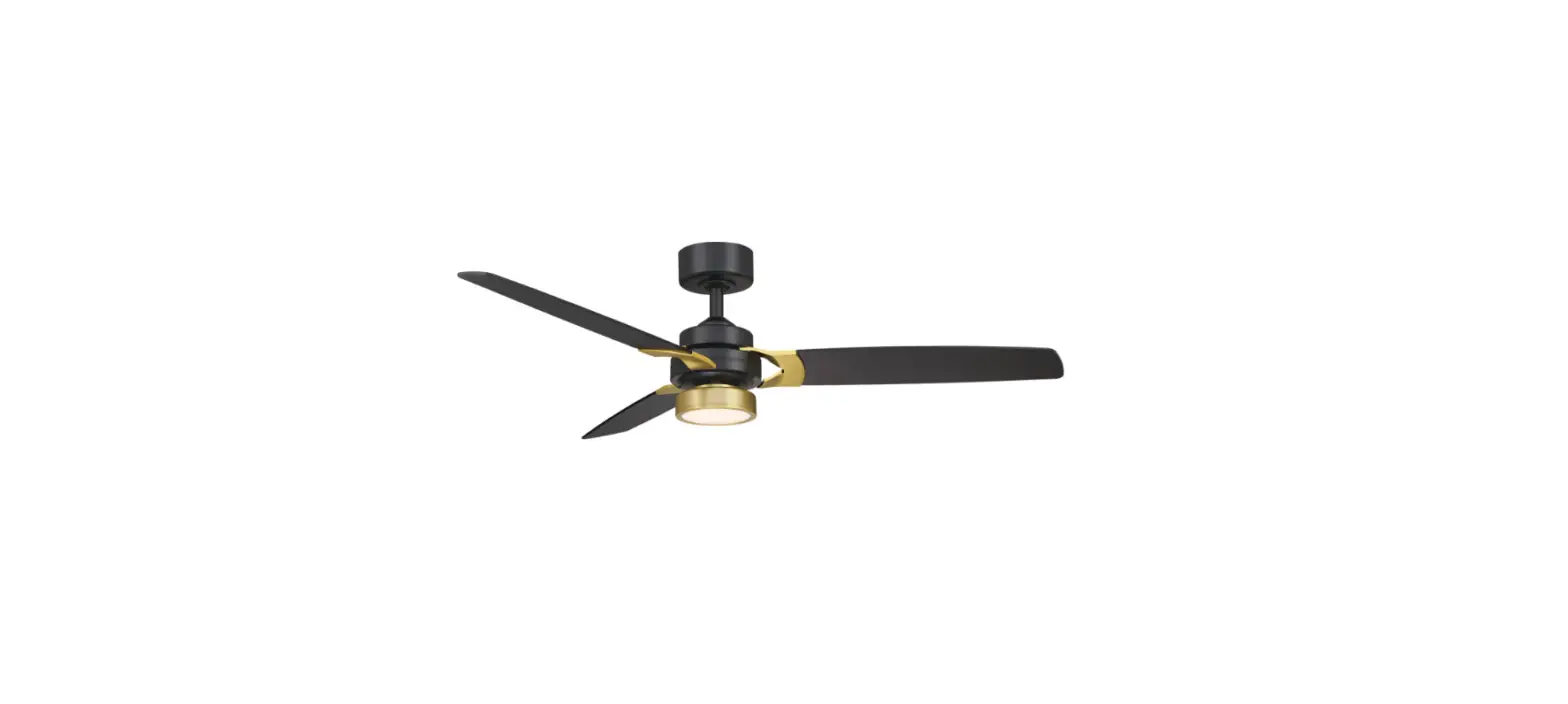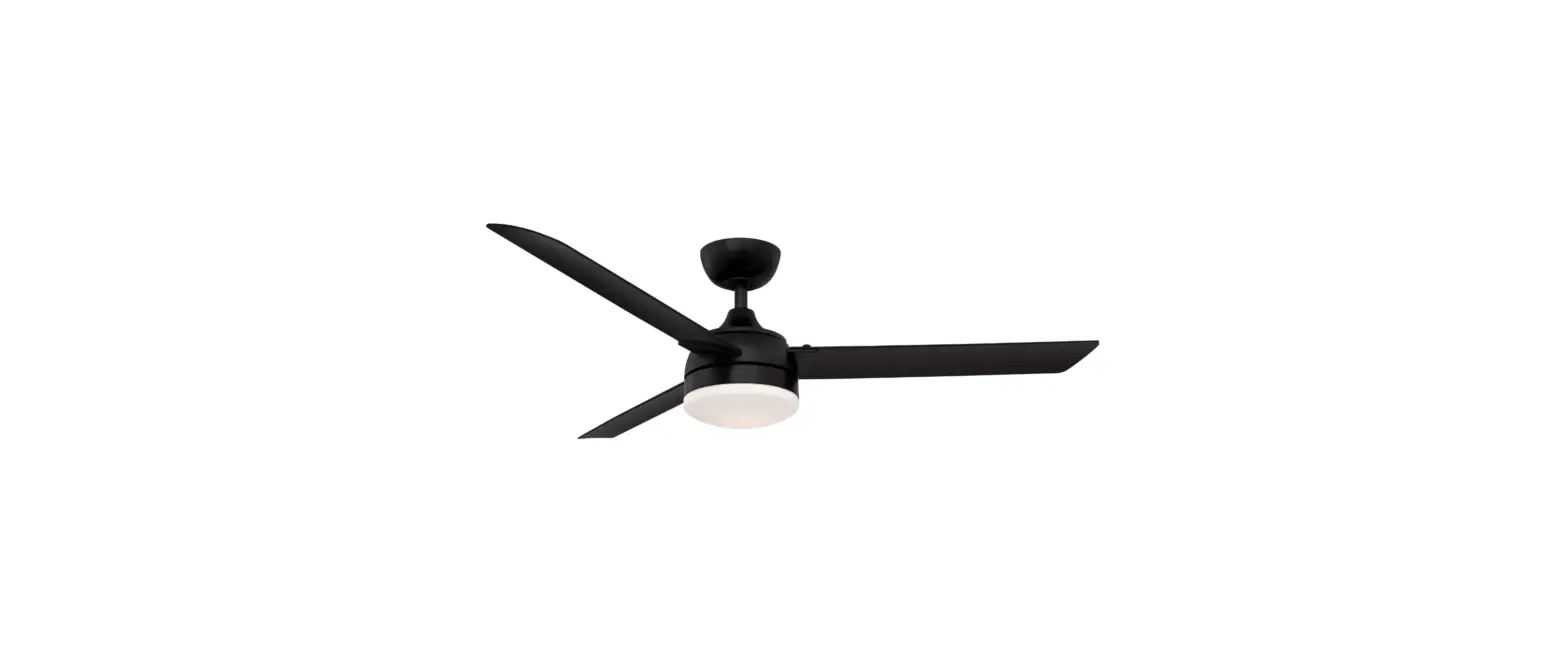

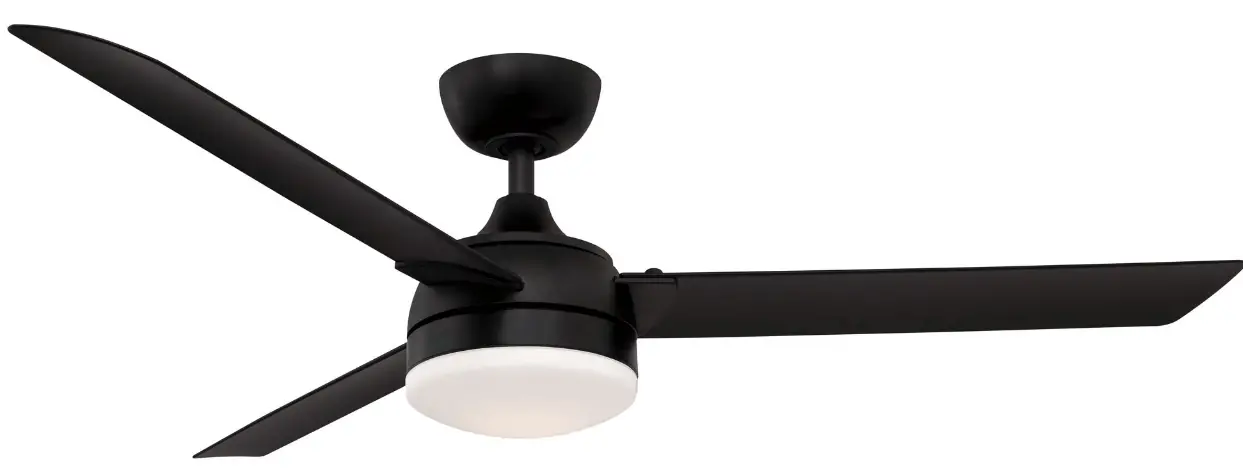
Fanimation FP6729BMWW Xeno Wet Ceiling Fan
Tools Needed for Assembly
- One Phillips head screwdriver One wire stripper
- One stepladder
- One 4-blade screwdriver
- Four wire connectors
Materials
The wiring outlet box and box connectors must be of the type required by the local code. The minimum wire would be a 3- conductor (2-wire with ground) of the following size
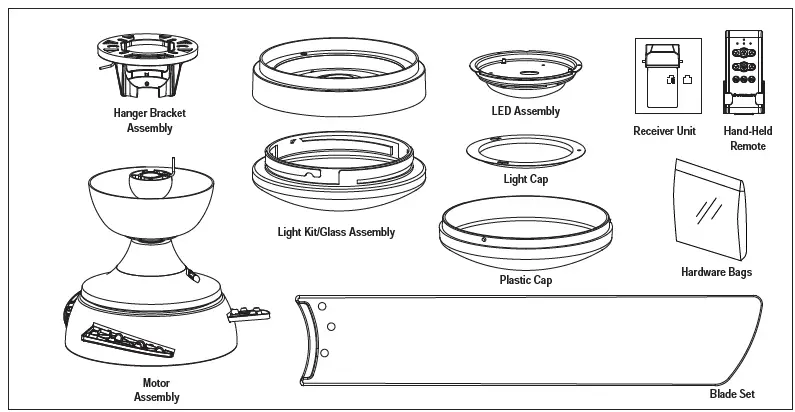
Unpacking Instructions
For your convenience, check off each step. As each step is completed, place a checkmark. This will ensure that all steps have been completed and will be helpful in finding your place should you be interrupted
Energy-Efficient Use of Ceiling Fans
Summer Season: Use the ceiling fan in the counterclockwise direction. The airflow produced by the ceiling fan creates a wind-chill effect, making you “feel” cooler. Select a fan speed that provides a comfortable breeze, lower speeds consume less energy.
Winter Season: Reverse the motor and operate the ceiling fan at low speed in the clockwise direction. This produces a gentle updraft, which forces warm air near the ceiling down into the occupied space. Remember to adjust your thermostat when using your ceiling fan – additional energy and dollar savings could be realized with this simple step!
Electrical and Structural Requirements
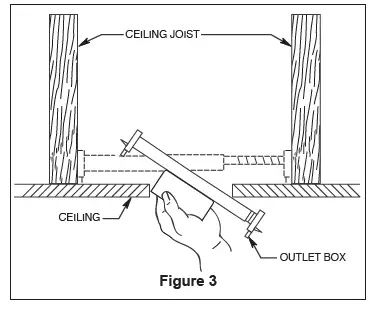
Your new ceiling fan will require a grounded electrical supply line of 120 volts AC, 60 HZ, 15 Amp Circuit. Electrical code requires use of a fan-rated outlet box to support the extra weight and motion associated with a ceiling fan. A fan-rated box will be labeled as such and typically supports up to a 70lb ceiling fan. Fan-Rated Outlet Boxes vary in ratings and design. Ensure the ratings of your ceiling fan outlet box meet the requirements for the ceiling fan being installed. Figure 1, Figure 2 and Figure 3 depicts different structural configurations that may be used for mounting the outlet box.
Low profile box A 1⁄2-in.-deep pancake box is meant to be screwed to a joist or block. It’s used if only one cable is coming into the box. It is also available in a saddle-mount configuration.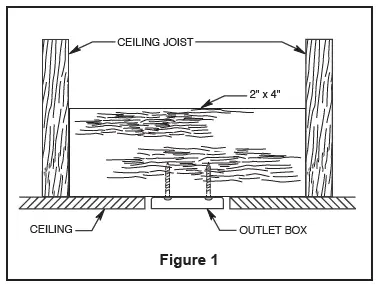
Deep box A 2-1⁄4-in.-deep box can be attached to blocking between joists and is roomy enough to handle more than one cable.
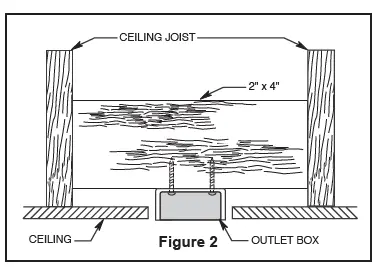
Deep box with brace Paired with a deep box, this hanger is meant to span between two joists and takes the place of wooden blocking
How to Assemble Your Ceiling Fan
Cut off excess lead wire approximately 6 to 9 inches above top of the downrod. Strip insulation off 1/2 inch from the end of each lead wire.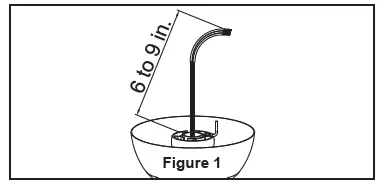
How to Hang Your Ceiling Fan
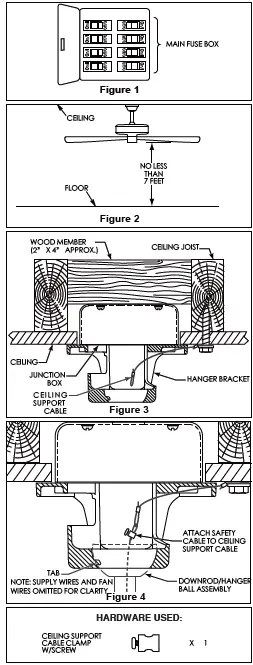
- Using the 3/8x 2lag bolt and flat washer, attach the safety cable to the ceiling joist or wood structural member.
- The lag bolt will pass through the flat washer, safety cable loop, and into the building structure
- You will first drill a ¼˝ pilot hole into the building structure to prevent splitting or cracking.
- Securely attach the hanger bracket to the ceiling junction box acceptable for ceiling fan support.
- Make sure the electrical supply wires, including the hanger bracket grounding wire and safety cable, are pulled through the download, between the hanger bracket and the junction box so that electrical connections can be made later.
- Carefully lift the fan and seat the downrod/hanger ball assembly on the hanger bracket that was just attached to the ceiling joist.
- Be sure the groove in the ball is lined up with tab on the hanger bracket.
- Attach the safety cable to ceiling support cable. Slide cable clamp onto safety cable (from fan).
- Place the end of cable through the loop of ceiling support cable. Pull as much cable through loop as possible.
- Feed end of cable into the clamp hole and firmly tighten screw
- Cut off excess safety cable.
How to Wire Your Ceiling Fan
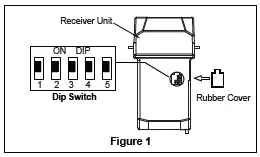
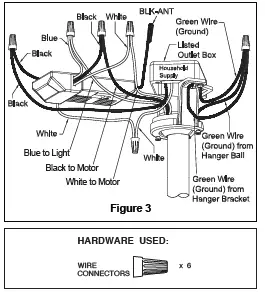
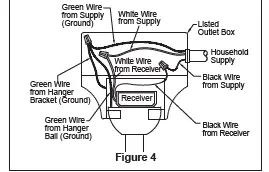
- To set the code on receiver unit, slide dip switches to the same positions as set on the remote. If complete the receiver code setting process, put the rubber cover (included) in the receiver unit Connect green wires from hanger bracket and downrod to bare (ground) wire using wire connector.
- Connect black wire from receiver unit marked “AC IN L” to black supply wire using wire connector
After connections have been made, turn leads upward and carefully push leads into the outlet box, with the white and green leads to one side of the box and the black leads - to the other side


How to Install Your Canopy Housing
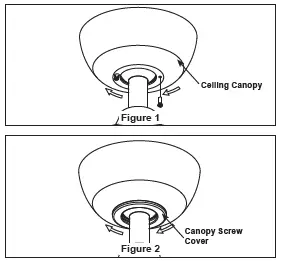
- Remove one of the two shoulder screws in the hanger bracket. Loosen the second shoulder screw without fully removing it
- Securely attach and tighten the canopy screw cover over the shoulder screws in the hanger bracket utilizing the keyslot twist-lock feature.

How to Assemble Your Ceiling Fan Blades
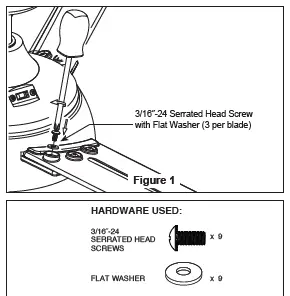
- Position blades over the threaded posts and secure with the 3/16˝-24 serrated head screws and flat washers

How to Assemble Your Light Kit
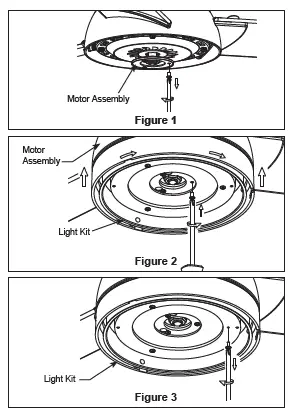
- Remove one of the three screws in the support bracket at the bottom of the motor assembly and retain the screw for later. Slightly loosen the remaining two screws.
- Assemble the light kit to the motor assembly support bracket using the two key slots in the light kit. Replace the previously removed screw and securely tighten all three screws.
- Remove one of the three screws in the light kit and retain the screw for later. Slightly loosen the remaining two screws.
 (Option A–for use with light kit) Connect the 2 single pin connectors from the LED assembly to the 2 single pin connectors from motor assembly.
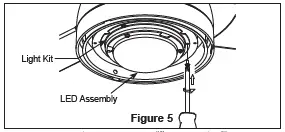
- Assemble the LED assembly to the light kit using the two key slots and replace the third screw and securely tighten all three screws.

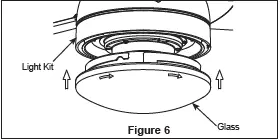
- Secure the glass to the light kit by twisting in a clockwise direction. Do not over-tighten.

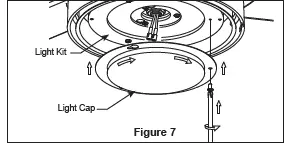
- (Option B–for use with plastic cap) Assemble the light cap to the light kit using the preousily removed screws and securely tighten all three screws.

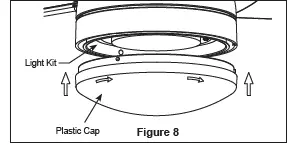
- Assemble the plastic cap to the light kit by twisting in a clockwise direction.

 (Option A–for use with light kit) Connect the 2 single pin connectors from the LED assembly to the 2 single pin connectors from motor assembly.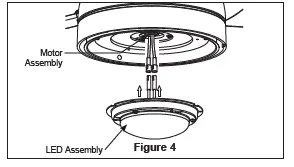
How to Operate Your Ceiling Fan
- Using a full-range dimmer switch (not included) to control fan speed will damage the fan.
- To reduce the risk of fire or electrical shock, do not use a full-range dimmer switch to control the fan speed.
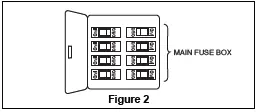
- Restore electrical power to the outlet box by turning the electricity on at the main fuse box.
- To make fan operational, install 23A/12V battery (included) in hand-held remote transmitter
- To set the remote code with a small screwdriver or ball point pen (neither included), slide dip switches firmly up or down with the fan power off.
- Then follow the remote code setting process. (If not used for long periods of time, remove the battery to prevent damage to the transmitter).
- Store the remote away from excessive heat or humidity.
- Remote functions
- If the airflow is desired in the opposite direction, turn the fan off and wait for the blades to stop turning.
- Then slide the reverse switch on top of the motor assembly to the opposite position and turn fan on again.
How to Install Your Remote Control
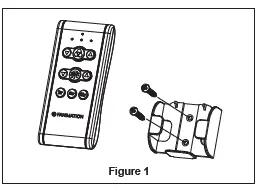
- Installing Wall Holder: (Figure 1)
- Attach wall holder using the two provided screws
Maintenance
Periodic cleaning of your new ceiling fan is the only maintenance that is needed. When cleaning, use only a soft brush or lint free cloth to avoid scratching the finish. Abrasive cleaning agents are not required and should be avoided to prevent damage to finish
Parts List
FP6729B Exploded-View Illustration
| Ref. # | Description | Part # |
| 1 | Hanger Bracket Assembly with Screws | AP255BL |
| 2 | Motor Assembly | AMA6729B** |
| 2a | Hanger Ball / Downrod Assembly | ADR1SS-45** |
| 2b | Canopy | P672901** |
| 2c | Canopy Screw Cover Assembly | AP260** |
| 2d | Motor Coupler Cover Assembly | AP672902** |
| 2e | Motor Housing Assembly | AP6729B** |
| 3 | Light Kit / Glass Assembly | AP672908** |
| 4 | LED Assembly | AP672907D3090 |
| 5 | Light Cap | P672910BL |
| 6 | Plastic Cap | P672909** |
| 7 | Blade Set | AP672803** |
| 8 | Hand-Held Remote | TR500 |
| 9 | Receiver Unit | RCCA05005002 |
|
10 | Hardware Bag Containing: |
HDWFP6729B** |
| Wire Connector (4) | ||
| #8-32 Junction box screws, stainless steel (2) | ||
| Flat Washer, stainless steel (2) | ||
| Bag Assembly Safety Cable | ||
| Blade Mounting Hardware Bag Containing: | ||
| 3/16˝–24 Serrated Head Screws (10) | ||
| Flat Washers (10) |
Troubleshooting
| Trouble | Probable Cause | Suggested Remedy |
|
1. FAN WILL NOT START | 1. Fuse or circuit breaker blown.
2. Loose power line connections to the fan, or loose switch wire connections in the switch housing.
3. Reversing switch in neutral position.
4. Dead battery in remote control. | 1. Check main and branch circuit fuses or circuit breakers. 2. Check line wire connections to fan and switch wire connections in the switch housings. CAUTION: Make sure main power is turned off ! 3. Make sure reversing switch position is all the way to one side. 4. Replace with new battery. |
|
2. FAN SOUNDS NOISY | 1. Blades not attached to fan. 2. Loose screws in motor housing.
3. Screws securing fan blade to motor assembly are loose.
4. Lower housing support set screw loose. | 1. Attach blades to fan before operating. 2. Check to make sure all screws in motor housing are snug (not over- tight). 3. Check to make sure the screws which attach the fan blade to the motor assembly are tight. CAUTION: Make sure main power is turned off ! 4. Tighten set screw securely. |
|
3. FAN WOBBLES EXCESSIVELY | 1. Setscrew in downrod support is loose.
2. Setscrew in downrod/hanger ball assembly is loose. 3. Screws securing fan blade to motor assembly are loose.
4. Hanger bracket and/or ceiling timber batten is not securely fastened.
5. Fan blades out of balance. | 1. Tighten both setscrews securely in downrod support. 2. Tighten the setscrew in the downrod/ hanger ball assembly. 3. Check to make sure the screws which attach the fan blade to the motor assembly are tight. 4. Tighten the hanger bracket screws to the timber batten, and secure outlet box. 5. Use the balancing kit. |
| 4. NOT ENOUGH AIR MOVEMENT | 1. If possible, consider using a longer downrod. (not included, you can buy the longer downrod from fanimation. com). |
Important Safety Instructions
- To avoid fire, shock and serious personal injury, follow these instructions.
- Read your owner’s manual and safety information before installing your new fan. Review the accompanying assembly diagrams.
- Before servicing or cleaning unit, switch power off at service panel and lock service panel disconnecting means to prevent power from being switched on accidentally. When the service disconnecting means cannot be locked, securely fasten a warning device, such as a tag, to the service panel.
- Be careful of the fan and blades when cleaning, painting, or working near the fan.
Always turn off the power to the ceiling fan before servicing. - Do not insert anything into the fan blades while the fan is operating.
- Do not operate reversing switch until fan blades have come to a complete stop.
Additional Safety Instructions
- To avoid possible shock, be sure electricity is turned off at the fuse box before wiring, and do not operate fan without blades.
- All wiring and installation procedures must satisfy National Electrical Codes (ANSI/ NFPA 70) and Local Codes.
The ceiling fan must be grounded as a precaution against possible electrical shock. Electrical installation should be made or approved by a licensedelectrician. - The fan base must be securely mounted and capable of reliably supporting at least 35 lbs. See page 6 of owner’s manual for support requirements. Consult a qualified electrician if in doubt.
- The fan must be mounted with the fan blades at least 7 feet from the floor to prevent accidental contact with the fan blades.
- Follow the recommended instructions for the proper method of wiring your ceiling fan.
If you do not have adequate electrical knowledge or experience, have your fan installed by licensed electrician. - Suitable for use with solid-state speed controls.
- This fan is to be used in wet locations.
- For supply connections, if the conductor of a fan is identified as a grounded conductor, then it should be connected to a grounded
LIMITED WARRANTY
If any part of your fan motor fails, due to a defect in materials or workmanship during the lifetime of the original purchaser, Fanimation will provide the replacement part free of charge, when the defective fan is returned to our national service center. Proof of purchase is required. Customer shall be responsible for all costs incurred in the removal or reinstallation and shipping of the product for repairs or replacement.If your fan motor fails at any time within one year from the original purchase, due to defects in materials or workmanship, labor to repair the motor will be provided free of charge at our national service center. Purchaser will be responsible for labor charges after this one-year period. Customer shall be responsible for all costs incurred in the removal or reinstallation and shipping of the product for repairs or replacement.If any other part of your fan fails at any time within one year after original purchase, due to a defect in materials or workmanship, we will repair, or replace, at our option, the defective part free of charge for parts and labor performed at our national service center.Because of varying climate conditions, this warranty does not cover changes in the finish, including rusting, pitting, corroding, tarnishing, or peeling. This warranty is void and does not apply to damage from improper installation, neglect, accident, misuse, exposure to extremes of heat or humidity, or as a result of any modification to the original product.All costs of removal and reinstallation of the fan are the sole responsibility of the owner of the fan and not the store that sold the fan or Fanimation.Fanimation reserves the right to modify or discontinue any product at any time and may substitute any part under this warranty.Under no circumstances may a fan be returned without prior authorization from Fanimation. The receipt of purchase must accompany authorized returns and must be sent freight prepaid to Fanimation. The fan to be returned must be properly packed to avoid damage in transit; Fanimation will not be responsible for any damage resulting from improper packaging. It is understood that any repair or replacement is the exclusive remedy available from Fanimation. There is no other expressed or implied warranty. Fanimation hereby disclaims any and all implied warranties, including, but not limited to those of merchantability and fitness for a particular purpose to the extent permitted by law. Some states do not allow limitations on implied warranties. Fanimation will not be liable for incidental, consequential, or special damages arising out of or in conjunction with product use or performance, except as may otherwise be accorded by law. This warranty gives you special legal rights and you may also have other rights that vary from state to state.A certain amount of wobble is normal and should not be considered a problem or a defect
FAQS
Can outdoor ceiling fans be exposed to rain?
Yes, outdoor rated ceiling fans can get wet.19-Aug-2021
What is a good air flow for an outdoor ceiling fan?
Are fanimation fans quiet?
The fan are quiet — great for the bedroom. Also purchased the light kit — it is dimmable and provides the right amount of light for any activity.
The motor on the Fanimation Odyn is quiet and carries a lifetime motor warranty. This ceiling fan is Energy Star certified, and much more efficient than most other fans we evaluated.
Ceiling fans that have a wooden and composite blade can begin sagging if there is too much moisture generation.
Wet rated fans are made to handle intense moisture and the top of the fan is sealed to prevent moisture from getting in the motor.
For an office, the recommended ventilation rate is 20 cfm per person. The occupancy of a general office is one person per 80 to 150 sq. ft. An office is 40′ x 60′ or 2,4000 sq.
Humid climates need closer to 350 CFM/ton or less, while dry climates work just fine with 400 CFM/ton.
In the winter, ceiling fans need to spin clockwise on low speed (any faster and you’ll start to feel a cool breeze).
Fan Speed: button: Turn off the fan. Light button: Turn ON\OFF the light. Turn on the fan and turn speed up. Turn on the fan and turn speed down.
Control your ceiling fans with your smart devices and personal voice assistants. Power to control your ceiling fan with your voice or the swipe of the finger
Some ceiling fans are noisy, although more expensive models tend to be quieter.
It is crucial to keep flood drying equipment running 24 hours a day to ensure the structural integrity of your home is not compromised after a flood.
Yes. Fans can cause fires, especially in the summer. Fans blow air around the room, which can be enough to ignite a fire if it’s hot enough
Drywall and plaster ceilings are known to fail and collapse under excessive or prolonged water exposure.