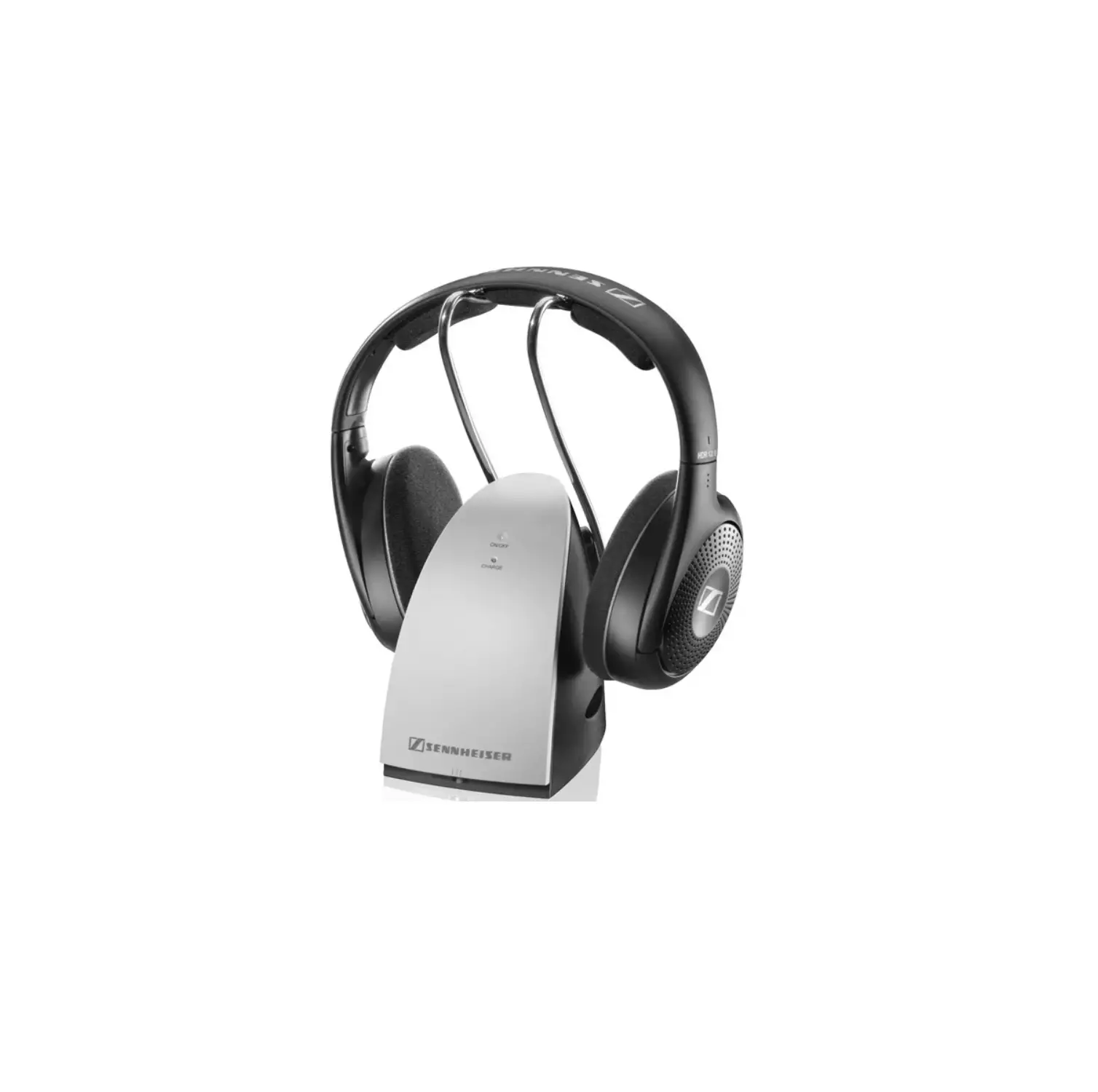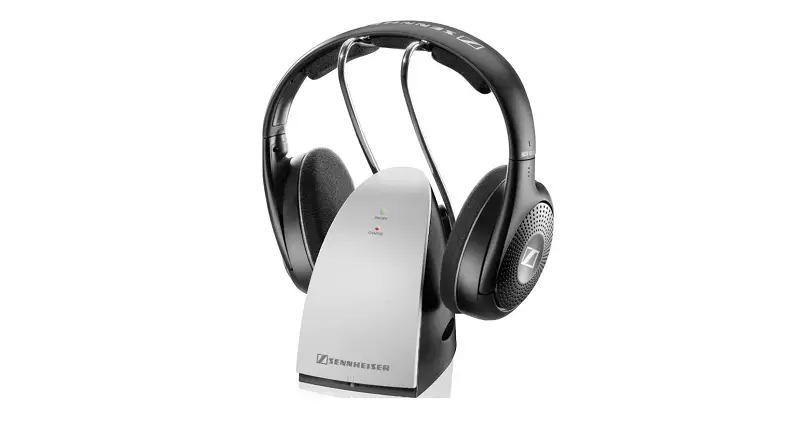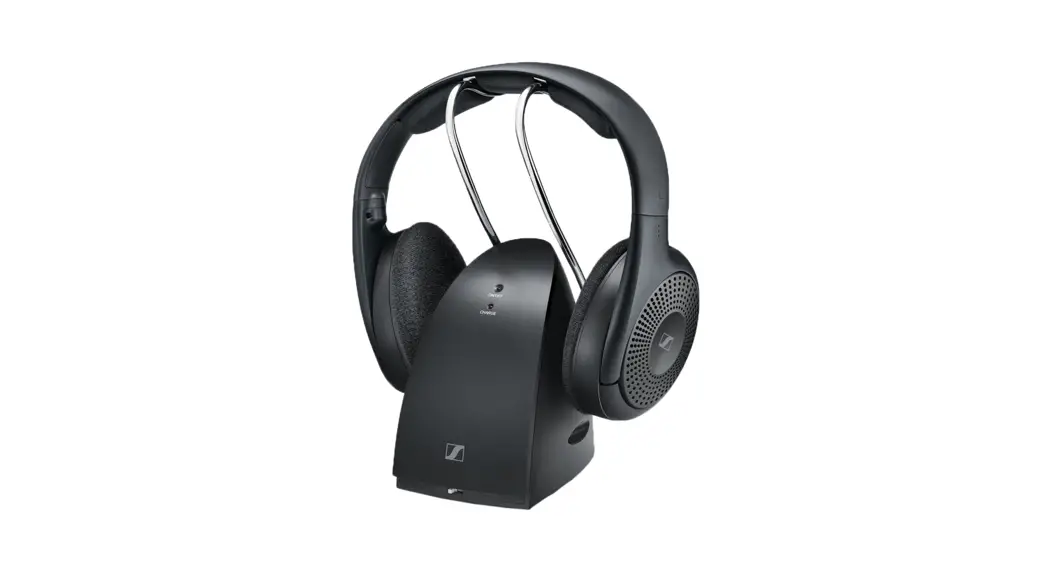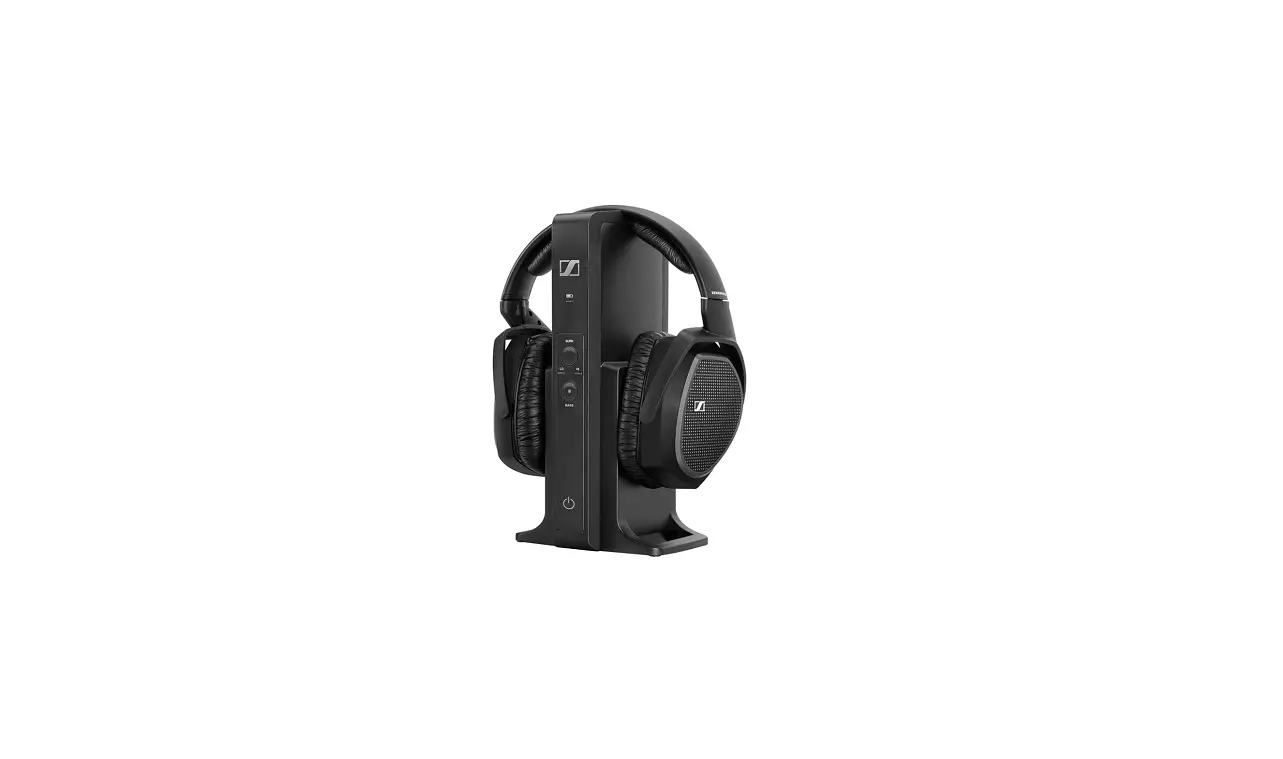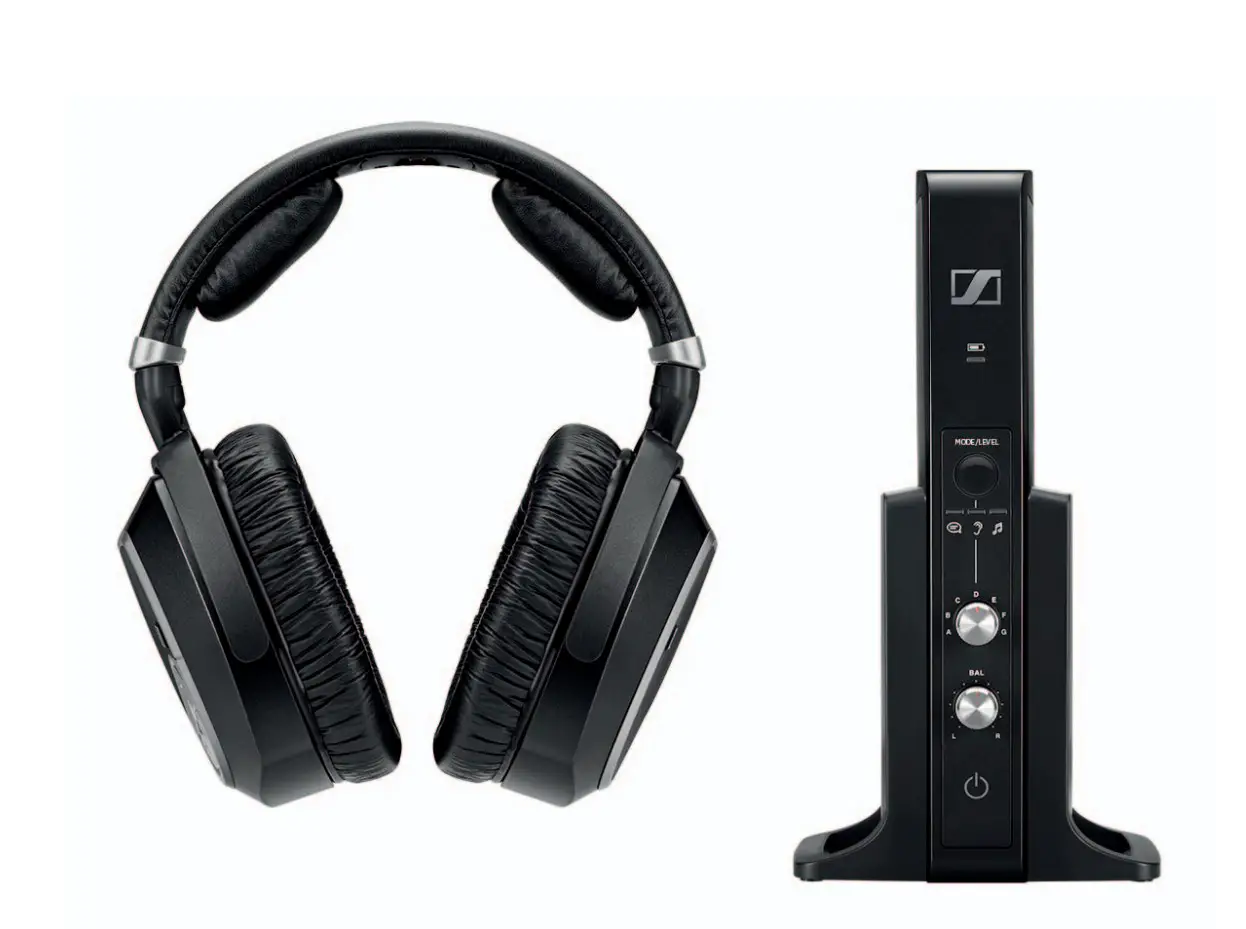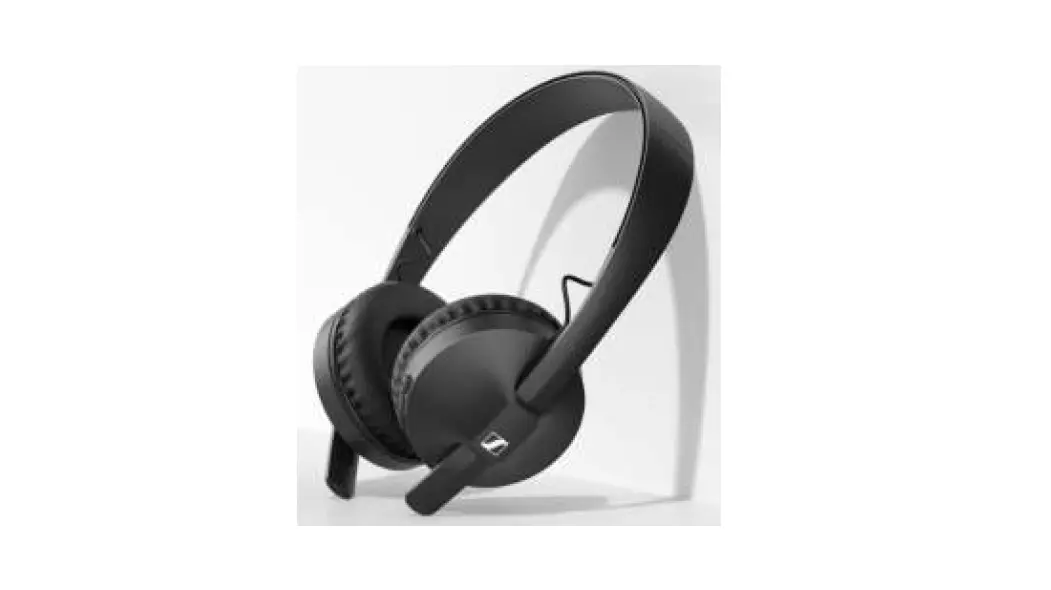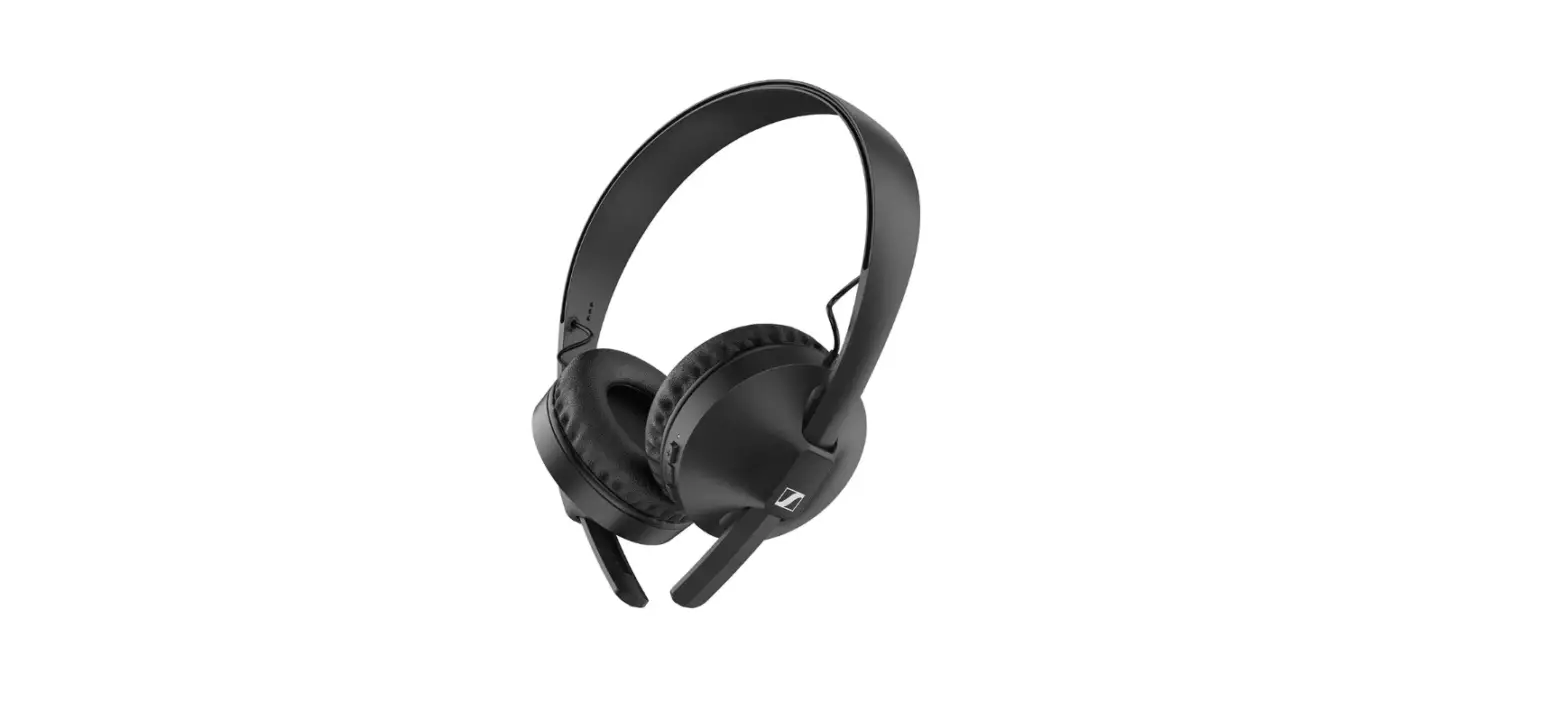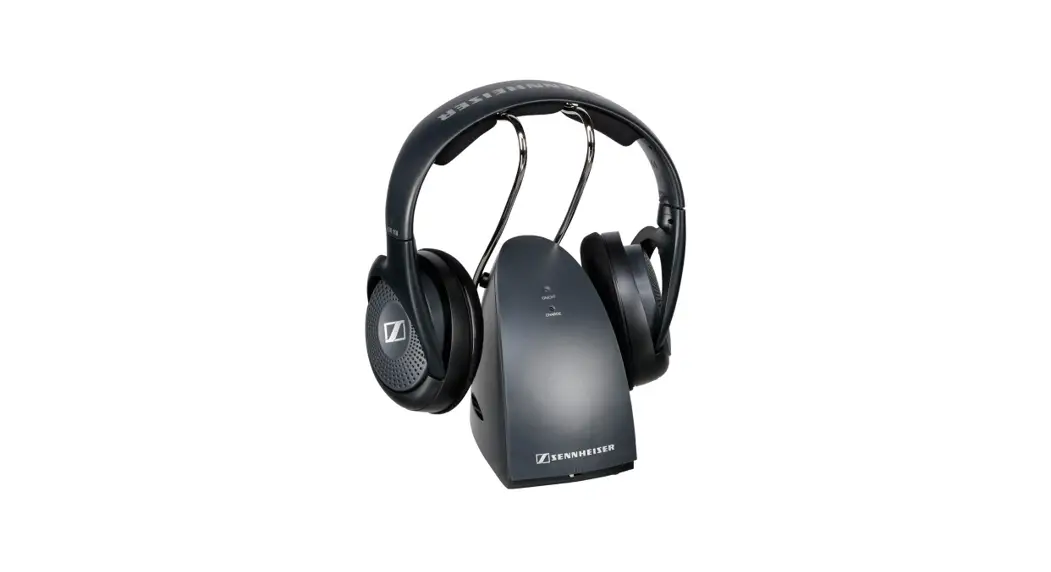
 RS 175
Digital Wireless Headphone System
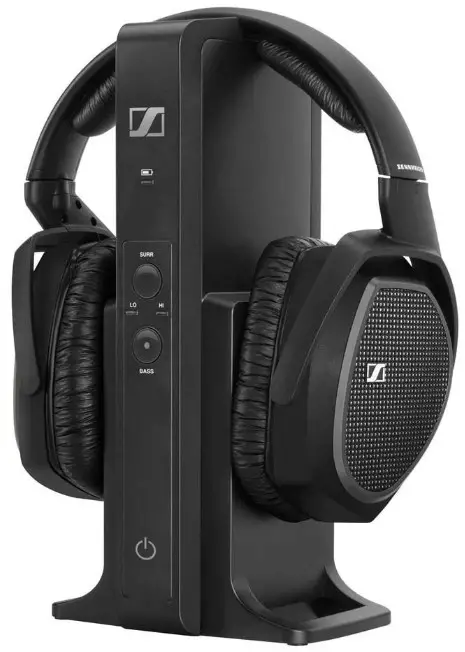
Model: RS 175, TR 175, HDR 175
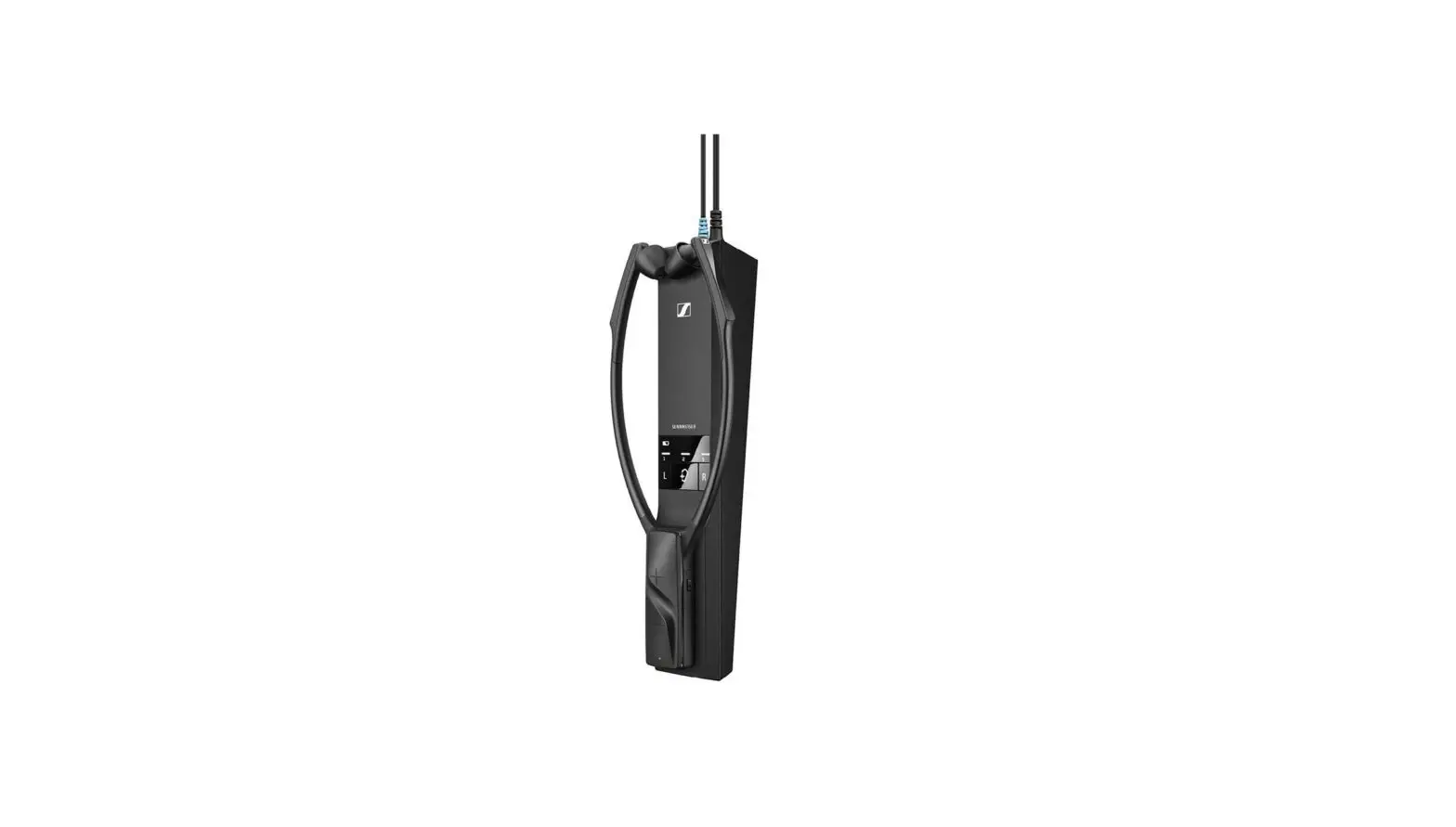
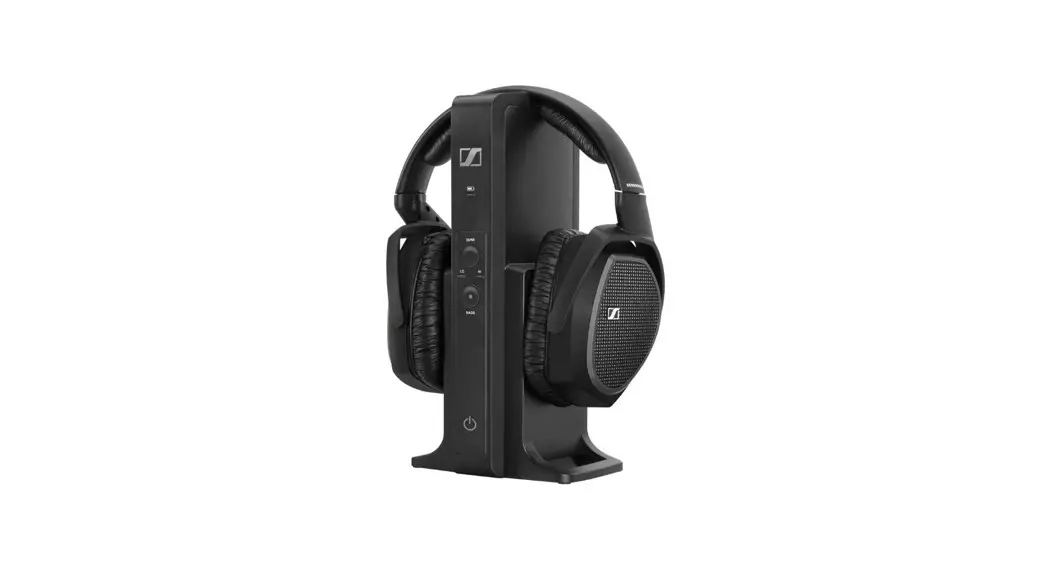
RS 195
Digital Wireless Headphone System
Model: RS 195, TR 195, HDR 195
Safety Guide
Important safety instructions
- Read the instruction manual, safety guide, quick guide (depending on the package contents) carefully and completely before using the product.
- Always include this instruction manual when passing the product on to third parties.
- Do not use an obviously defective product.
- Only use the product in environments where wireless 2.4 GHz transmission is permitted.
Preventing damage to health and accidents
 Protect your hearing from high volume levels. Permanent hearing damage may occur when headphones are used at high volume levels for long periods of time.
Headphones of the Sennheiser brand sound exceptionally good even at low and medium volume levels.- Note that the headphones of the RS 195 allow you to set a higher volume than conventional headphones. This can cause hearing damage in persons with healthy hearing and especially in children.
- Do not use the product in an environment that requires your special attention (e.g. when per- forming skilled jobs).
 The product generates stronger permanent magnetic fields that could cause inter- ference with cardiac pacemakers, implanted defibrillators (ICDs) and other implants.
Always maintain a distance of at least 3.94″/10 cm between the product component containing the magnet and the cardiac pacemaker, implanted defibrillator, or other implant.- Do not use the product near water. Do not expose the product to rain or moisture to reduce the risk of fire or electric shock.
- Keep the product, accessories and packaging parts out of reach of children and pets to pre- vent accidents. Swallowing and choking hazard.
- Only use the power supply units supplied by Sonova Consumer Hearing.
 Protect your hearing from high volume levels. Permanent hearing damage may occur when headphones are used at high volume levels for long periods of time.
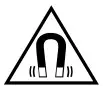 The product generates stronger permanent magnetic fields that could cause inter- ference with cardiac pacemakers, implanted defibrillators (ICDs) and other implants.
Preventing damage to the product and malfunctions
- Always keep the product dry and do not expose it to extreme temperatures to avoid corrosion or deformation. The normal operating temperature is from 0 °C to 40 °C/32 °F to 104 °F.
- Use the product with care and store it in a clean, dust-free environment.
- Do not use the product if it is obviously damaged, if it has been dropped, or if liquids or objects have entered the product. In this case, contact a qualified specialist workshop or your Sonova Consumer Hearing partner to have the product checked.
- Switch off the product after use to conserve battery power. When not using the product for extended periods of time, remove the rechargeable batteries.
- Unplug the power supply unit from the wall socket
– to completely disconnect the product from the power source,
– during lightning storms or
– when not using the product for long periods of time. - Always ensure that the power supply unit is
– in a safe operating condition and easily accessible,
– properly plugged into the wall socket,
– only operated within the permissible temperature range,
– not exposed to direct sunlight for longer periods of time in order to prevent heat accumulation. - Do not place your headphones on a glass dummy head, chair armrest or similar objects for long periods as this can widen the headband and reduce the contact pressure of the headphones.
- Varnish or furniture polish may degrade the feet of the transmitter, which could stain your furniture. You should therefore place the transmitter on a non-slip pad to avoid potential staining of furniture.
- Do not operate the product near heat sources.
- Clean the product only with a soft, dry cloth.
- Use only attachments/accessories/spare parts supplied or recommended by Sonova Consumer Hearing.
Intended use/Liability
This wireless headphone system is suitable for use with hi-fi systems, TV sets, and home cinema systems and supports both analog and digital signals simultaneously.
This product is intended for private domestic use only. It is not suitable for commercial use. This product is also not intended to be used with portable audio devices.
It is considered improper use when the product is used for any application not named in the corresponding product documentation.
Sonova Consumer Hearing GmbH does not accept liability for damage arising from misuse or improper use of the product and its attachments/accessories.
Before putting the product into operation, please observe the respective country-specific regulations.
Safety instructions for rechargeable batteries
WARNING If abused or misused, rechargeable batteries may leak. In extreme cases, they may even present a risk of:
- explosion
- heat and fire development
- smoke and/or gas development
- damage to health and/or the environment
 | Keep away from children. |
 | Do not mutilate or dismantle. |
 | Pack/store charged rechargeable batteries so that the terminals cannot contact each other – danger of shorting out/fire hazard. |
 | Only charge rechargeable batteries at ambient temperatures between 10 °C to 40 °C/50 °F to 104 °F. |
 | When not using rechargeable batteries for extended periods of time, charge them regularly (about every three months). |
 | Only use rechargeable batteries and chargers supplied and/or recommended by Sonova Consumer Hearing. |
 | Immediately remove rechargeable batteries from an obviously defective product. |
 | Do not charge standard batteries. |
 | Do not expose to moisture. |
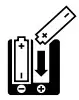 | Observe correct polarity. |
 | Switch rechargeable battery-powered products off after use. |
 | Do not heat above 70 °C/158 °F, e.g. do not expose to sunlight or throw into a fire. |
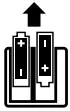 | When not using the product for extended periods of time, remove the rechargeable batteries. |
 | Do not continue using defective rechargeable batteries and dispose of them immediately. |
 | Dispose of defective products with built-in rechargeable batteries at special collection points or return them to your specialist dealer to facilitate recycling. |
 | Do not mix standard and rechargeable batteries in the battery compartments. |
Manufacturer declarations
For more information on regulatory compliance markings, refer to the end of the document.
Warranty
Sonova Consumer Hearing GmbH gives a warranty of 24 months on this product. For the current warranty conditions, please visit our website at www.sennheiser-hearing.com/warranty or contact your Sonova Consumer Hearing partner.
For AUSTRALIA and NEW ZEALAND ONLY
Sonova Hearing Australia Pty Ltd provides a warranty of 24 months on these products. For the current warranty conditions, visit the Sonova Consumer Hearing website: www.sennheiser- hearing.com/warranty.
Sonova Consumer Hearing goods come with guarantees that cannot be excluded under Australian and New Zealand Consumer law. You are entitled to a replacement or refund for a major failure and compensation for any other reasonably foreseeable loss or damage. You are also entitled to have the goods repaired or replaced if the goods fail to be of acceptable quality and the failure does not amount to a major failure. This warranty is in addition to other rights or remedies under law.
Nothing in this warranty excludes, limits or modifies any remedy available to the consumer which is granted by law.
To make a claim under this contract, raise a case via the Sonova Consumer Hearing website: www.sennheiser-hearing.com/service-support. All expenses of claiming the warranty will be borne by the person making the claim.
Sonova Consumer Hearing international warranty is provided by: Sonova Hearing Australia Pty Ltd (ABN 82651492929) The Zenith, Level 14, Tower A, 821 Pacific Highway, Chatswood New South Wales 2067, Australia.
In compliance with the following requirements
 EU declaration of conformity
- ErP Directive (2009/125/EC)
- RoHS Directive (2011/65/EU)
Hereby, Sonova Consumer Hearing GmbH declares that the radio equipment type RS 175 (TR 175, HDR 175), RS 195 (TR 195, HDR 195) is in compliance with the Radio Equipment Directive (2014/53/EU). The full text of the EU declaration of conformity is available at the following Internet address: www.sennheiser-hearing.com/download.
 UK declaration of conformity
- Radio Equipment Regulations (2017)
- The Ecodesign for Energy-Related Products and Energy Information (Amendment) (EU Exit) Regulations (2019)
- RoHS Regulations (2012)
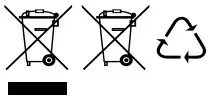 Notes on disposal
- EU: WEEE Directive (2012/19/EU); Battery Directive (2006/66/EC & 2013/56/EU)
- UK: WEEE Regulations (2013); Battery Regulations (2015)
The symbol of the crossed-out wheeled bin on the product, the battery/rechargeable battery (if applicable) and/or the packaging indicates that these products must not be disposed of with normal household waste, but must be disposed of separately at the end of their operational lifetime. For packaging disposal, observe the legal regulations on waste segregation applicable in your country. Improper disposal of packaging materials can harm your health and the environment.
The separate collection of waste electrical and electronic equipment, batteries/rechargeable batteries (if applicable) and packagings is used to promote the reuse and recycling and to prevent negative effects on your health and the environment, e.g. caused by potentially hazardous substances contained in these products. Recycle electrical and electronic equipment and batteries/rechargeable batteries at the end of their operational lifetime in order to make contained recyclable materials usable and to avoid littering the environment.
If batteries/rechargeable batteries can be removed without damaging them, you are obliged to dispose of them separately (for the safe removal of batteries/rechargeable batteries, see the instruction manual of the product). Handle lithium-containing batteries/rechargeable batteries with special care, as they pose particular risks, such as the risk of fire and/or the risk of ingestion in the case of coin batteries.
Reduce the generation of battery waste as much as possible by using longer-life batteries or rechargeable batteries.
Further information on the recycling of these products can be obtained from your municipal administration, from the municipal collection points, or from your Sonova Consumer Hearing partner. You can also return electrical or electronic equipment to distributors who have a take-back obligation. Herewith you make an important contribution to the protection of the environment and public health.
Compliance Information Model: RS 175, RS 195
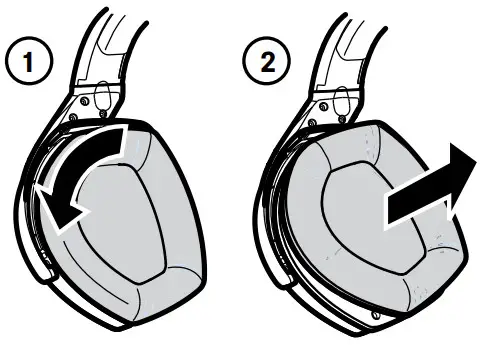
The compliance marks are shown on the baffle which is easily accessible by the user, under the ear pads. To remove or replace the ear pads, please refer to the instruction manual. The compliance marks of the transmitter are on the label on the bottom side.
| Country/Region | Model: TR 175 | Model: TR 195 | Model: HDR 175 | Model: HDR 195 |
| USA | FCC ID: 2A3ULTR195 | FCC ID: 2A3ULHDR195 | ||
 | ||||
| Canada |  CAN ICES3(B)/NMB3(B) CAN ICES3(B)/NMB3(B) | |||
| IC: 28115-TR195 | IC: 28115-HDR195 | |||
| Europe |  | |||
| United Kingdom |  | |||
| Australia/New Zealand |  | |||
| Singapore | Complies with IMDA Standards DB107630 | |||
| Japan |  201-140464 201-140464 | 201-140465 | ||
| Brazil |  04919-18-07356 04919-18-07356 | |||
Statements regarding FCC and ISED
FCC Supplier’s Declaration of Conformity (SDoC)
SENNHEISER
Model No: RS 175, TR 175, HDR 175
RS 195, TR 195, HDR 195
We,
Sonova Consumer Hearing USA LLC
One Enterprise Drive • Old Lyme •
CT 06371 • USA
Tel: +1 (860) 598-7800
declare the above device comply with the requirements of Federal Communications Commission.
This device complies with Part 15 of the FCC rules. Operation is subjected to the following two conditions:
1) This device may not cause harmful interference, and
2) This device must accept any interference received, including interference that may cause undesired operation.
Responsible Party: Lou deLaforcade
This device complies with Part 15 of the FCC rules, RSS-247 of Innovation, Science and Economic Development Canada (ISED). Operation is subject to the following two conditions: 1) This device may not cause harmful interference, and 2) This device must accept any interference received, including interference that may cause undesired operation.
This equipment has been tested and found to comply with the limits for a Class B digital device, pursuant to part 15 of the FCC Rules. These limits are designed to provide reasonable protection against harmful interference in a residential installation. This equipment generates, uses and can radiate radio frequency energy and, if not installed and used in accordance with the instructions, may cause harmful interference to radio communications.
However, there is no guarantee that interference will not occur in a particular installation. If this equipment does cause harmful interference to radio or television reception, which can be determined by turning the equipment off and on, the user is encouraged to try to correct the interference by one or more of the following measures:
- Reorient or relocate the receiving antenna.
- Increase the separation between the equipment and receiver.
- Connect the equipment into an outlet on a circuit different from that to which the receiver is connected.
- Consult the dealer or an experienced radio/TV technician for help.
Changes or modifications made to this equipment not expressly approved by the manufacturer may void FCC authorization to operate this equipment.
RF Radiation Exposure Information
The product complies with the rules of FCC and ISED (RSS-102) for the portable RF exposure limit set forth for an uncontrolled environment and is safe for intended operation as described in this manual. This product is not subjected to FCC routine RF exposure evaluation per Section 2.1093 and RSS-102 of ISED. Further RF exposure reduction can be achieved if the product can be kept as far as possible from the user body or set the device to lower output power if such function is available.
The transmitter of this device should be installed and operated at least 8″ {20 cm) away from the user’s body. This transmitter must not be co-located or operated in conjunction with any other antenna or transmitter. Use of other accessories not verified by the manufacturer may not ensure the compliance.
Sonova Consumer Hearing GmbH
Am Labor 1, 30900 Wedemark, Germany
www.sennheiser-hearing.com
Publ. 12/22, 584433/A03