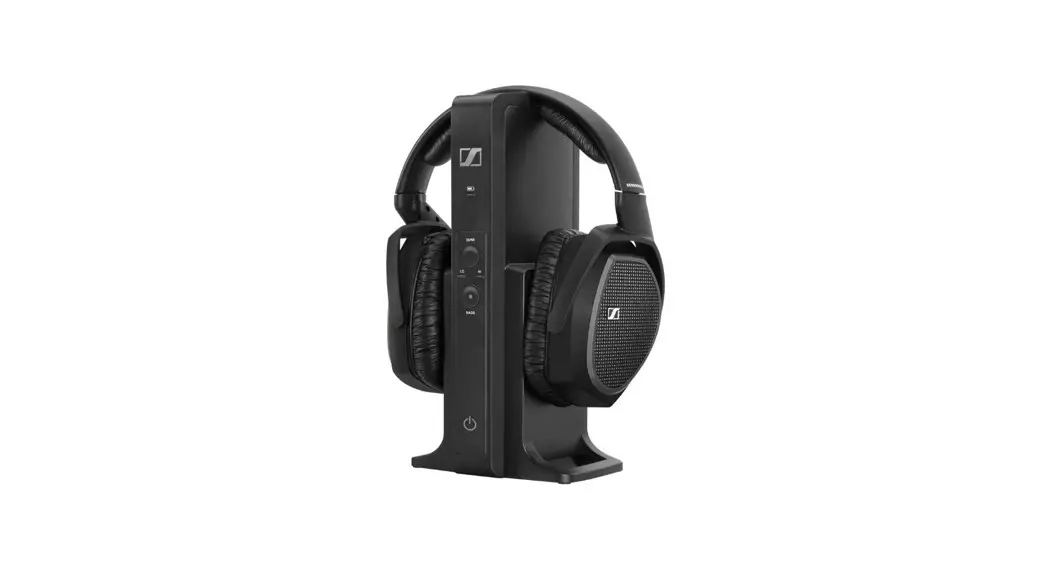
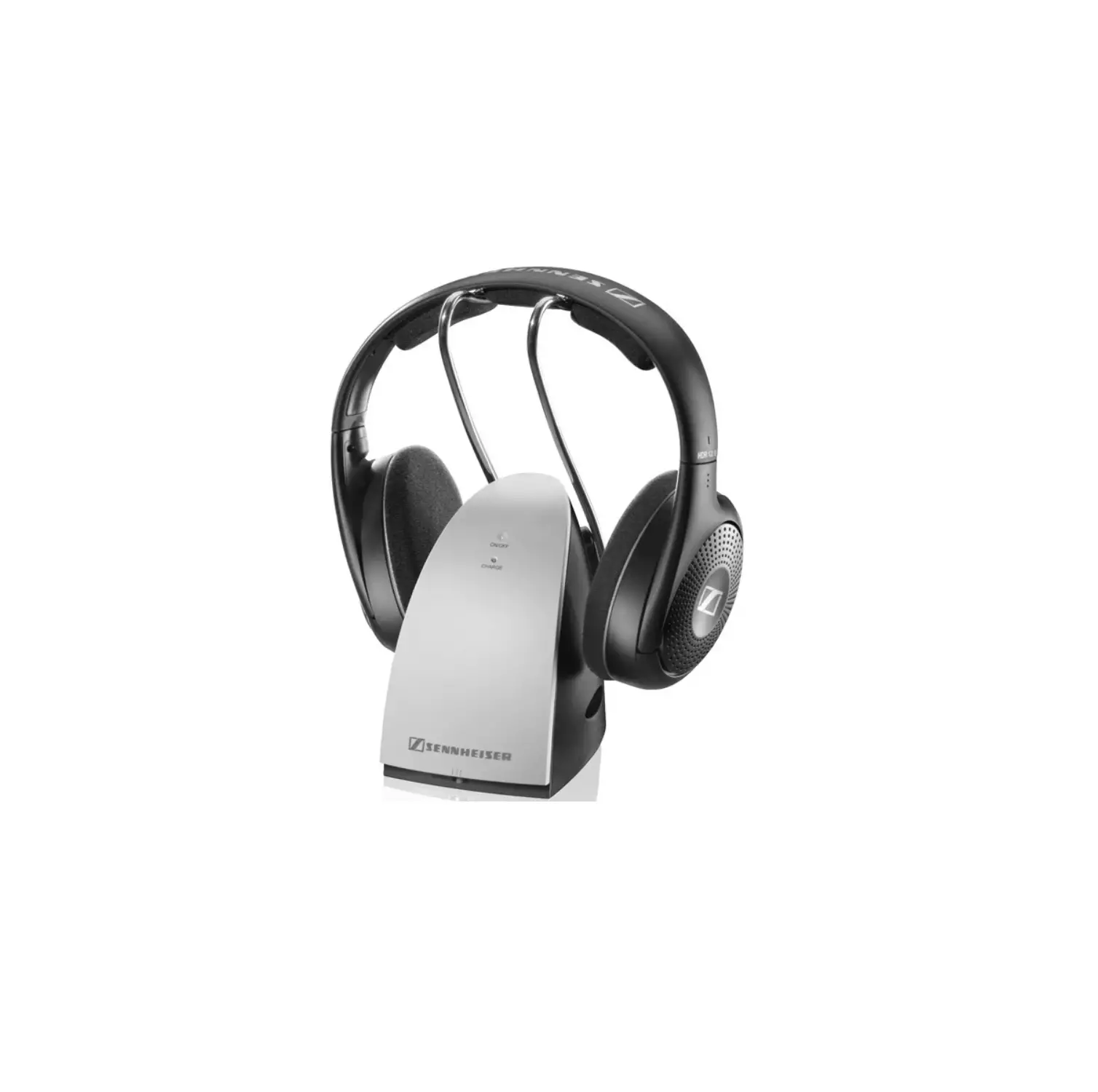
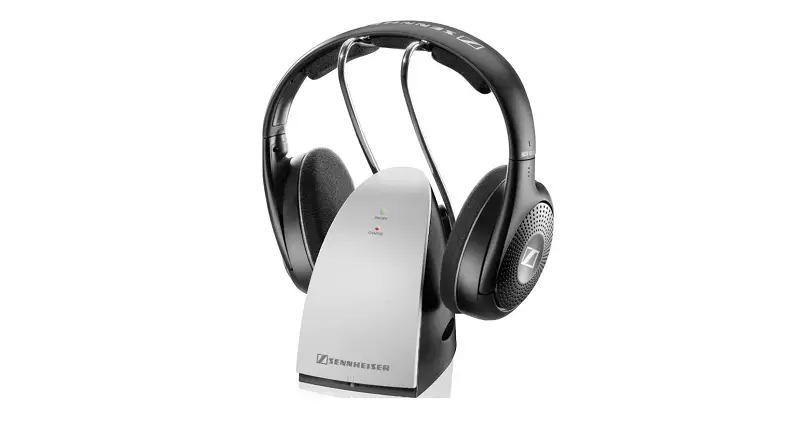
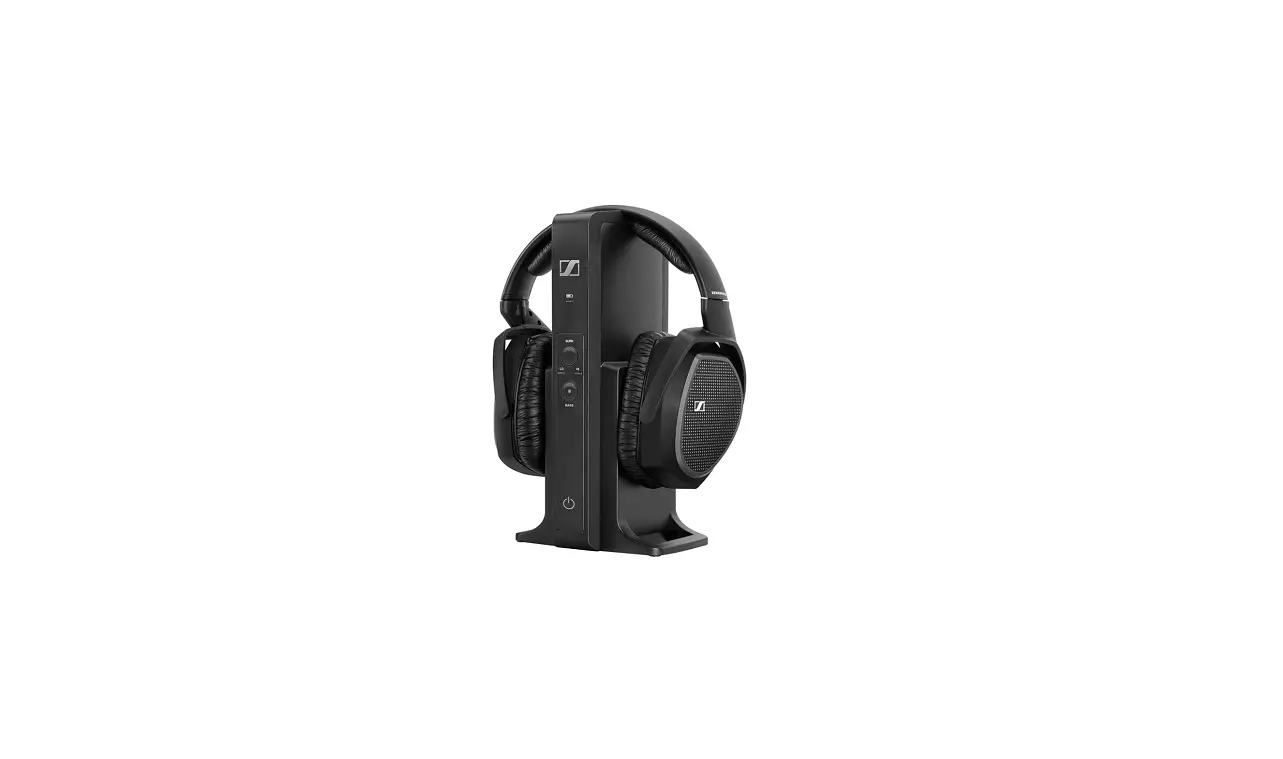
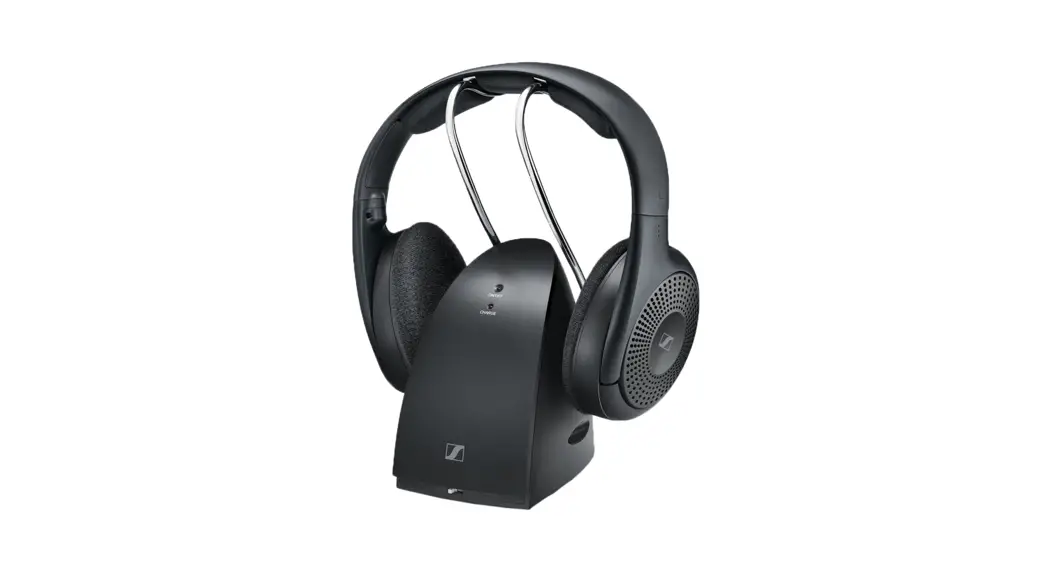
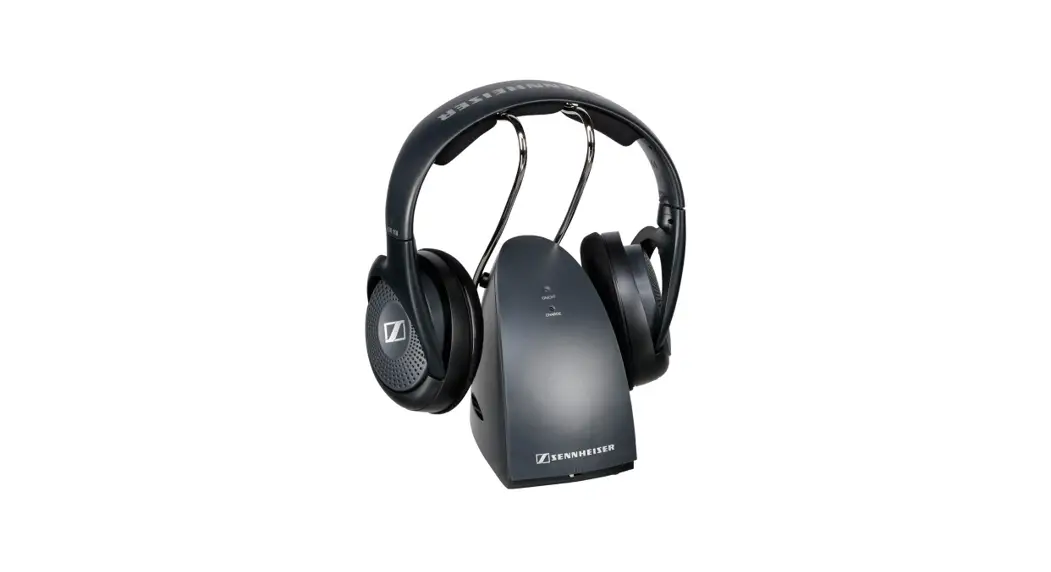
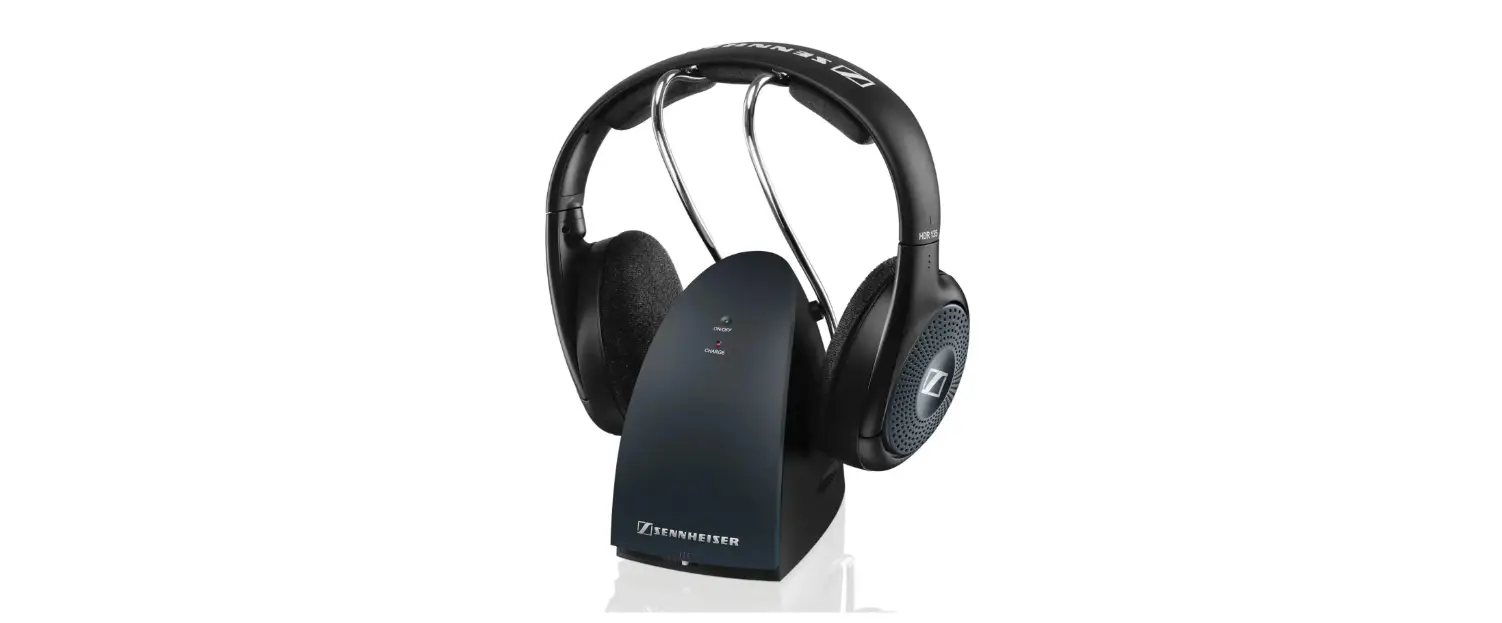
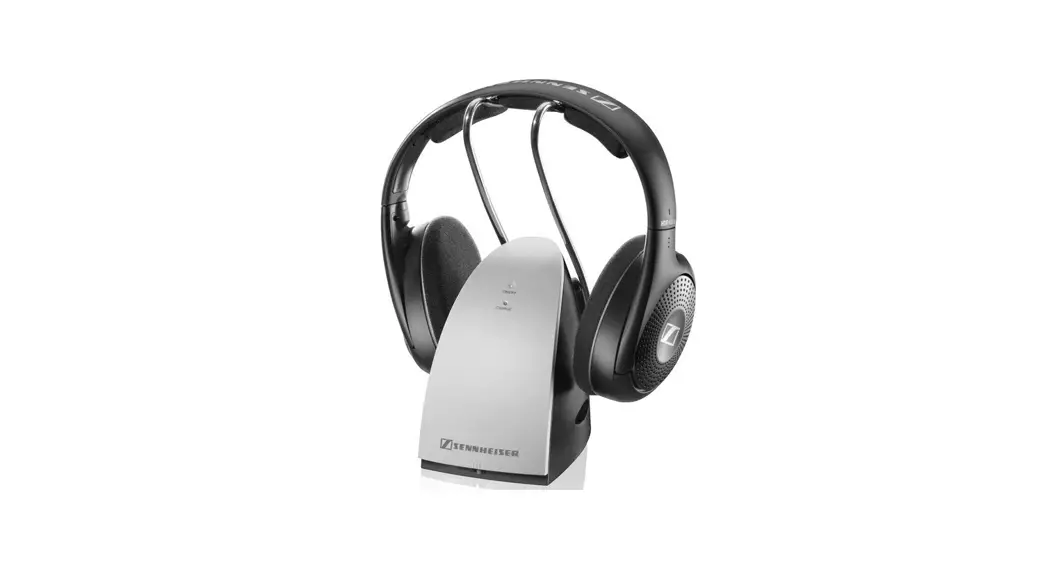
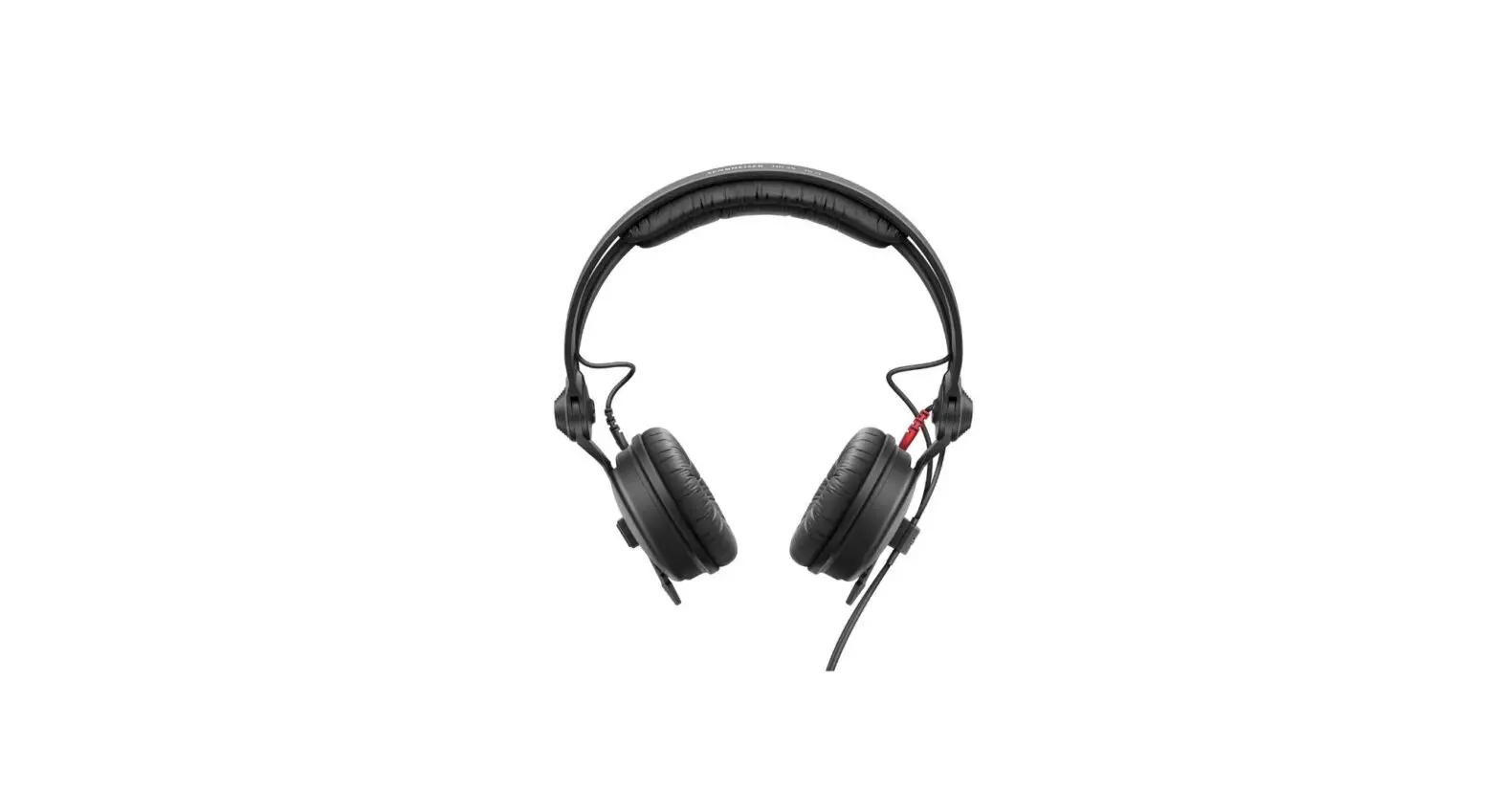
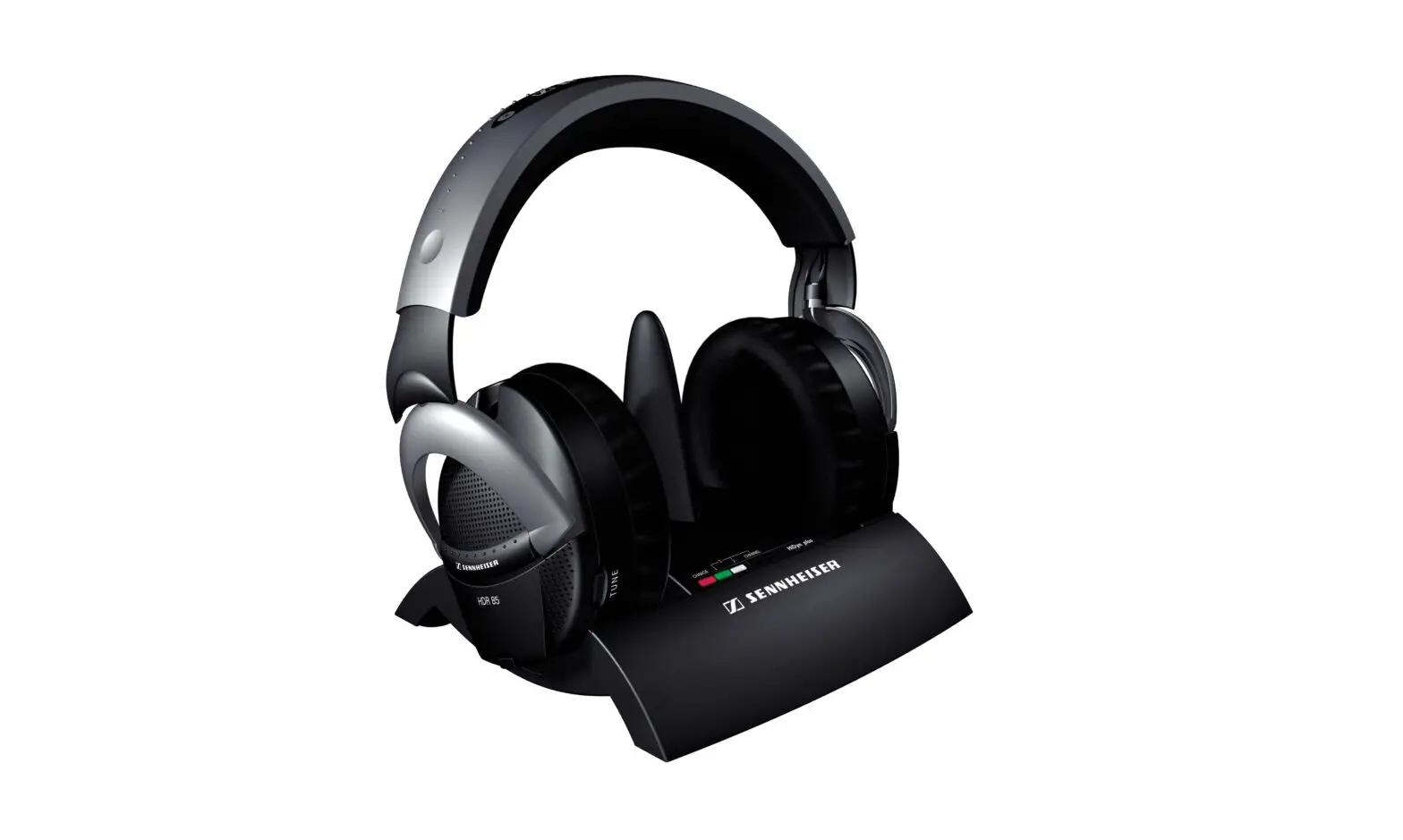
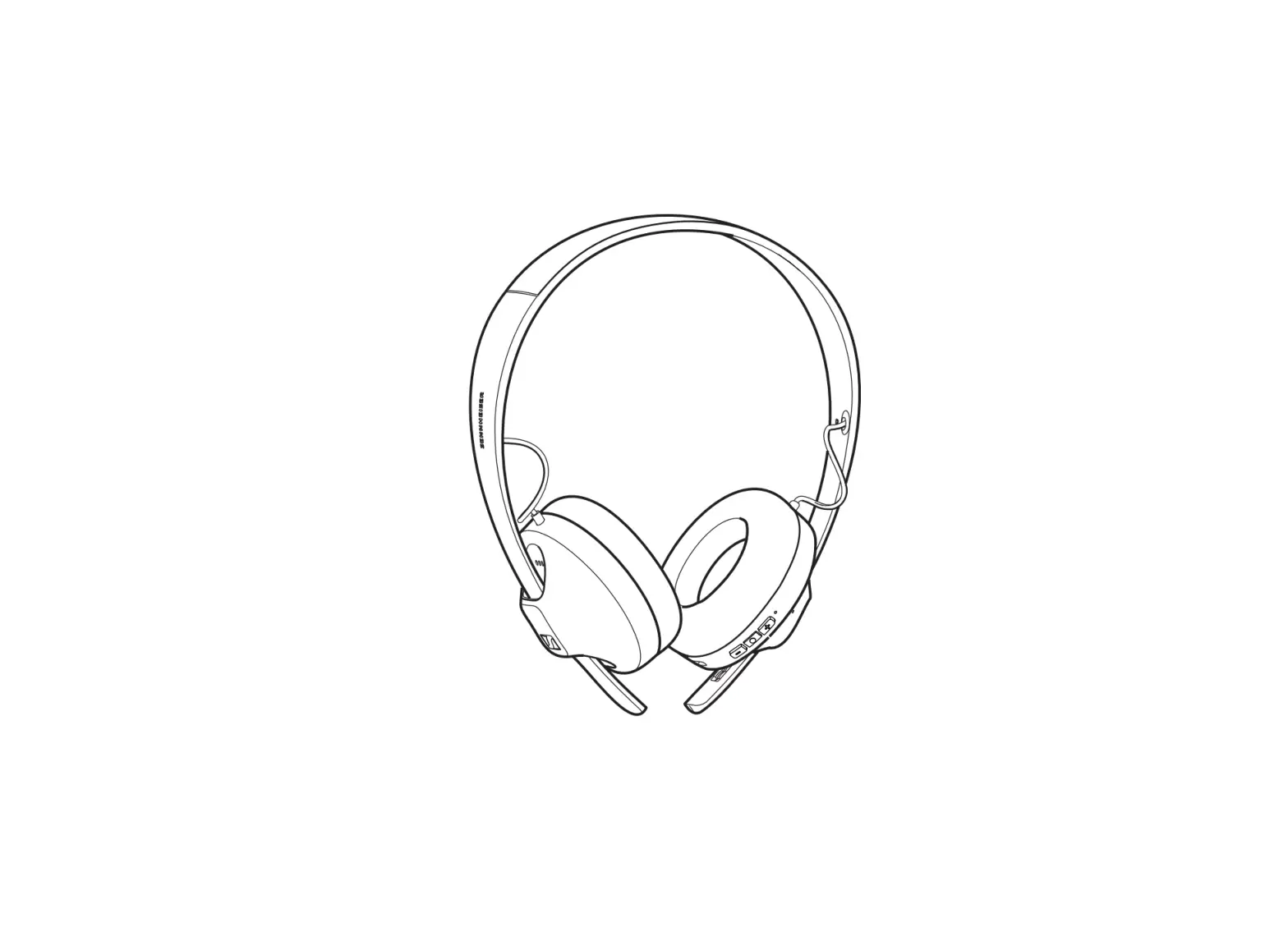
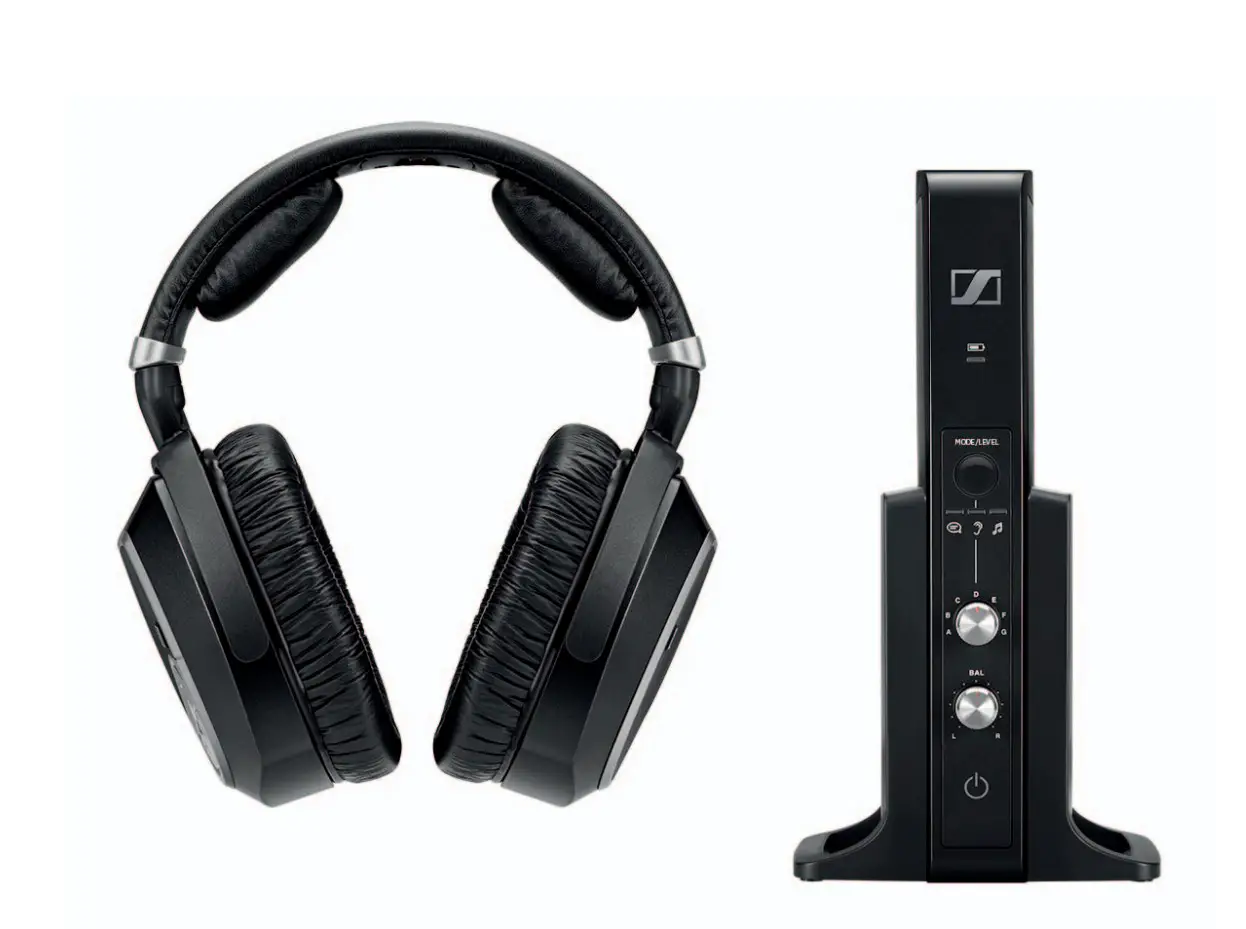
RS 126 II Wireless Headphone
User Guide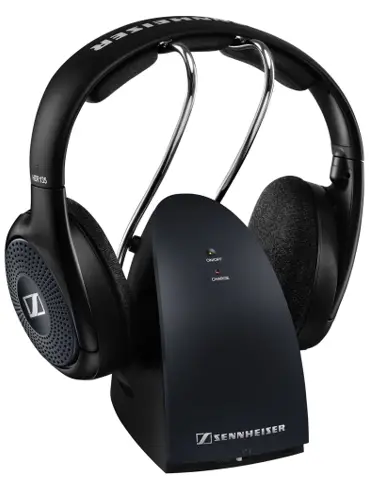
RS 126 II Wireless Headphone
Delivery includes
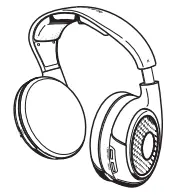 | HDR 120/HDR 120 II/HDR 126 II headphones |
| TR 120/TR 120 II/TR 126 II transmitter with audio connection cable | |
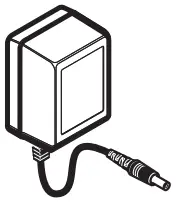 | NT9-3A (US) mains unit (for US and CDN market only) NT9-3A (AUS) mains unit (for AUS market only) |
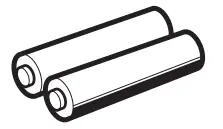 | NiMH rechargeable batteries, AAA size, 1.2 V |
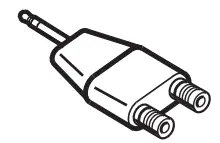 | Adapter, 2 RCA sockets to 3.5 mm jack plug |
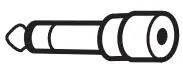 | Adapter, 1/4“ (6.3 mm) |
Quick Guide | Quick Guide |
Safety Guide | Safety Guide |
 | The diagrams corresponding to the chapter headings can be found on the fold-out page. |
Preparing the transmitter for use
The transmitter is prepared for wall mounting (recess at the rear of the transmitter). The required mounting material (screws and plugs) is not included in the delivery.
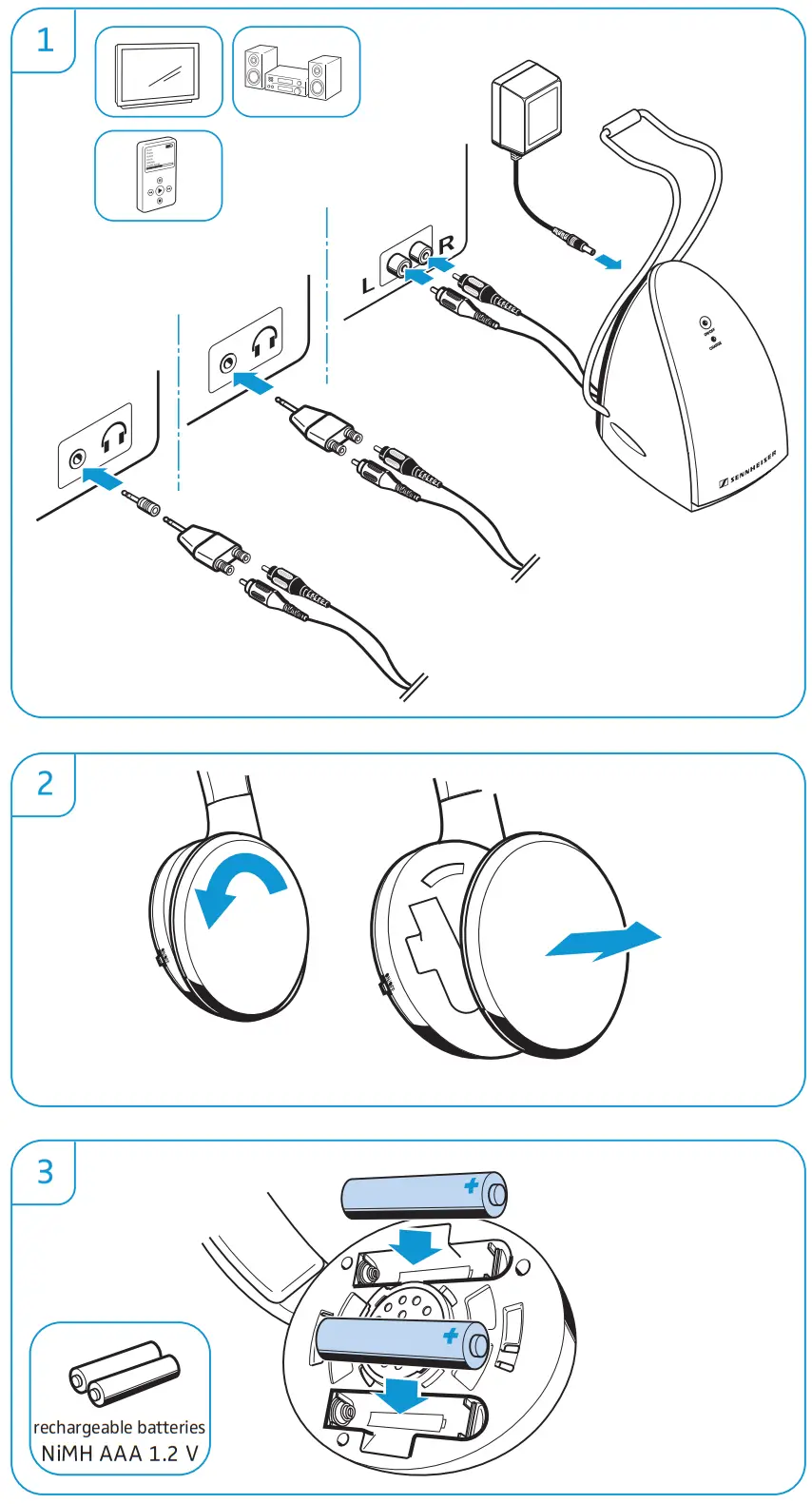
1 Connecting the transmitter to an audio output of your audio source
- Choose a suitable place near your audio source (e.g. TV, stereo or home cinema system). Avoid placing the transmitter close to metal objects such as shelf bars, reinforced concrete walls, etc. as this can decrease the transmitter’s range.
- Connect the transmitter‘s audio connection cable:
- directly to the RCA sockets (outputs) of your audio source, making sure to connect the red RCA plug to the red RCA socket R, or
- to the supplied RCA/3.5 mm adapter for connection to a 3.5 mm headphone socket, or
- to the supplied RCA/3.5 mm adapter and 1/4“ (6.3 mm) adapter for connection to a 1/4“ (6.3 mm) headphone socket.
- Set the volume for the headphone output of your audio source to a medium level. If the headphone output volume is set too low, the transmitter automatically switches off.
Some TVs have a function that mutes the TV loudspeakers when you connect a transmitter. If necessary, change this setting via the operating menu of your TV.
Connecting the transmitter to the mains
- Connect the main unit to the socket at the rear of the transmitter. Plug the mains unit into a wall socket. The transmitter switches on and the ON/OFF LED lights up
green.
2. Opening the battery compartments
- Turn the ear pads in the direction of the arrow until you overcome a slight resistance and lift them off the ear cups.
3 . Inserting and replacing the rechargeable batteries  CAUTION
- Only use NiMH rechargeable batteries, never use standard batteries!
- Insert the supplied rechargeable batteries. Secure the ear pads to the ear cups.
- Charge the rechargeable batteries for at least 24 hours prior to first-time use. Subsequent charging time depends on the previous operating time and is up to 18 hours max.
- Place the headphones on the charging cradle of the transmitter. The red LED lights up, indicating that the batteries are being charged. The LED remains lit even when the rechargeable batteries are fully charged.
Using the RS headphone system
4 Switching on the audio source
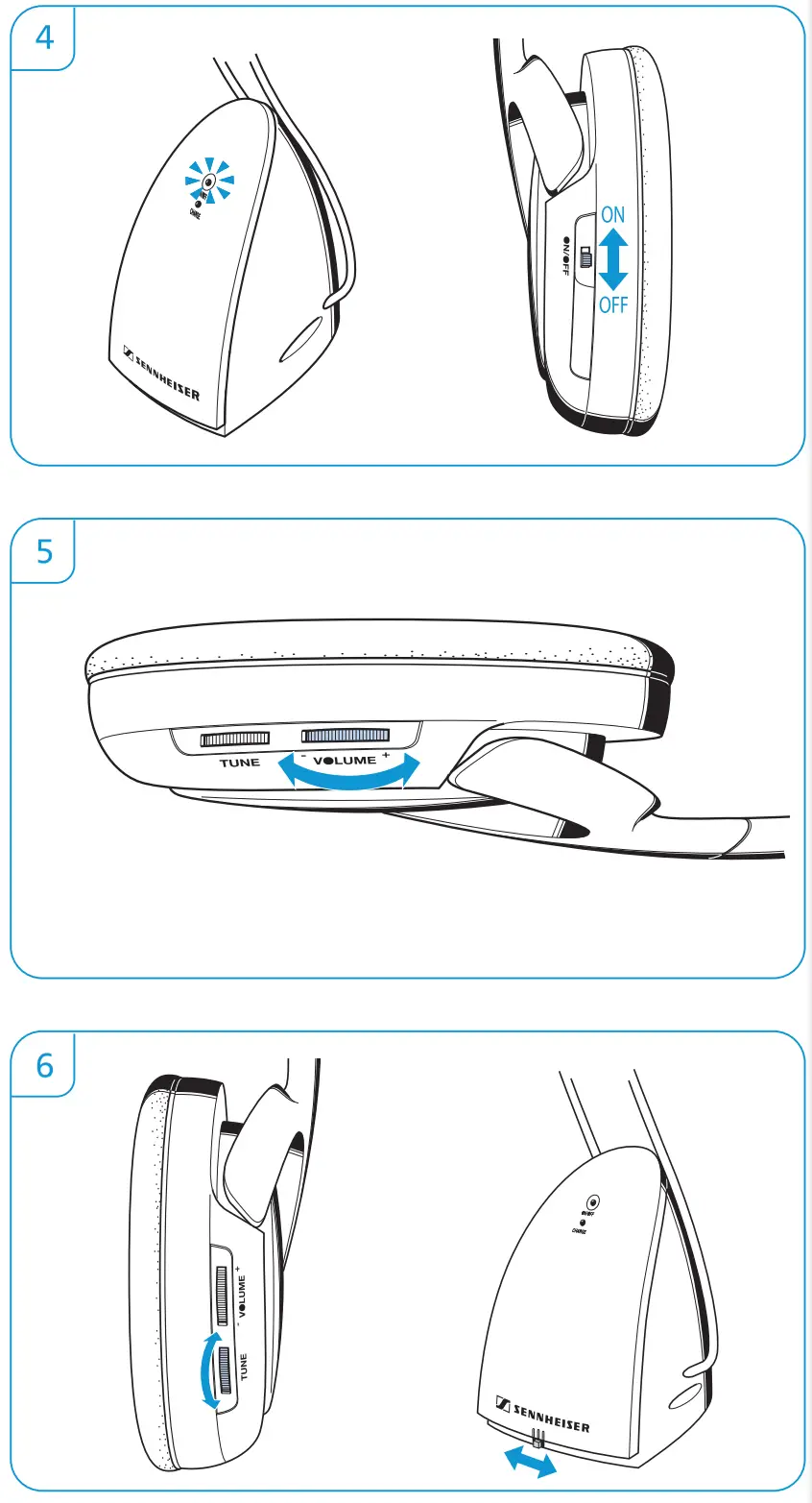
- Switch on the audio source. The transmitter automatically switches on and off together with the audio source. The ON/OFF LED lights up green.
5. Switching on the headphones/adjusting the volume
- First, set the volume on the headphones to a low level.
- Switch on the headphones and set the volume to the desired level.
- Switch off the headphones after use to avoid discharging the batteries.
Optimizing the reception
- Adjust the receiver channel with the TUNE control on the headphones. However, if reception is subject to interference:
- Change the transmission channel by setting the switch at the bottom of the transmitter to another position and re-adjust the receiver channel with the TUNE control on
the headphones. Some electronic devices (e.g. televisions) can cause interference to your wireless headphone system. If this happens, increase the distance between the transmitter and the interference source.
Specifications and Frequently Asked Questions (FAQ’s)
- Visit our website at www.sennheiser.com.

Manufacturer declarations
Warranty
Sennheiser electronic GmbH & Co. KG gives a warranty of 24 months on this product. For the current warranty conditions, please visit our website at www.sennheiser.com or contact your Sennheiser partner.
Before putting the device into operation, please observe the respective country-specific regulations!
FOR AUSTRALIA ONLY
Sennheiser’s goods come with guarantees that cannot be excluded under the Australian Consumer Law.
You are entitled to a replacement or refund for a major failure and compensation for any other reasonably foreseeable loss or damage.
You are also entitled to have the goods repaired or replaced if the goods fail to be of acceptable quality and the failure does not amount to a major failure.
This warranty is in addition to other rights or remedies under the law. Nothing in this warranty excludes, limits, or modifies any liability of Sennheiser which is imposed by law, or limits or modifies any remedy available to the consumer which is granted by law.
To make a claim under this warranty, contact Sennheiser
Australia Pty Ltd, Unit 3, 31 Gibbes Street, Chatswood NSW 2067, Australia; Phone: (02) 9910 6700, email: [email protected].
All expenses of claiming the warranty will be borne by the person making the claim.
The Sennheiser International
Warranty is provided by
Sennheiser Australia Pty Ltd (ABN 68 165 388 312), Unit 3, 31
Gibbes Street, Chatswood NSW 2067, Australia.
Statements regarding FCC and Industry Canada
FCC Declaration of Conformity (DoC) SENNHEISER
Model No:
RS 110 II, RS 116 II,
RS 120 II, RS 126 II
We, Sennheiser Electronic Corporation
One Enterprise Drive • Old Lyme • CT 06371 • USA
Tel: +1 (860) 434 9190
Fax: +1 (860) 434 1759
declare the above device complies with the requirements of the Federal Communications Commission.
This device complies with Part 15 of the FCC rules. Operation is subjected to the following two conditions:
- This device may not cause harmful interference, and
- This device must accept any interference received, including interference that may cause undesired operation.
Responsible Party: Greg Beebe
This device complies with Part 15 of the FCC rules and RSS-210 of Industry Canada. Operation is subjected to the following two conditions: 1) This device may not cause harmful interference, and 2) This device must accept any interference received, including interference that may cause undesired operation.
This equipment has been tested and found to comply with the limits for a Class B digital device, pursuant to part 15 of the FCC Rules and RSS-210 of Industry Canada. These limits are designed to provide reasonable protection against harmful interference in a residential installation. This equipment generates, uses, and can radiate radio frequency energy and, if not installed and used in accordance with the instructions, may cause harmful interference to radio communications. However, there is no guarantee that interference will not occur in a particular installation. If this equipment does cause harmful interference to radio or television reception, which can be determined by turning the equipment off and on, the user is encouraged to try to correct the interference by one or more of the following measures:
- Reorient or relocate the receiving antenna.
- Increase the separation between the equipment and receiver.
- Connect the equipment into an outlet on a circuit different from that to which the receiver is connected.
- Consult the dealer or an experienced radio/TV technician for help.
Changes or modifications made to this equipment not expressly approved by Sennheiser electronic Corp. may void FCC authorization to operate this equipment.
CAN ICES-3 (B)
RF Radiation Exposure Information
Since the radiated output power of this device is far below the FCC radio frequency exposure limits, it is not subjected to routine RF exposure evaluation as per Section 2.1093 of the FCC rules. This device complies with the US and Industry Canada portable device RF exposure limits set forth for an uncontrolled environment and is safe for intended operation as described in the user manual. Further RF exposure reduction can be achieved if the device can be kept as far as possible from the user’s body or set to lower output power if such provision is available. The base portion of this device should be installed and operated at least 20 cm away from the user’s body. Use of other accessories not verified by the manufacturer may not ensure compliance with FCC and Industry Canada RF exposure guidelines. This transmitter must not be co-located or operated in conjunction with any other antenna or transmitter.
Industry Canada statement
This device complies with RSS-210 of Industry Canada. Operation is subject to the following two conditions: (1) This device may not cause harmful interference, and (2) this device must accept any interference received, including interference that may cause undesired operation.
In compliance with:
| USA | FCC ID: DMORS03ABUS |
| Canada | IC: 2099A-TR120II |
| Australia/New Zealand |  |
Sennheiser electronic GmbH & Co. KG
Am Labor 1, 30900 Wedemark, Germany
www.sennheiser.com
Printed in China, Publ. 10/15, 545191/A03
 Sennheiser — Headphones, Microphones, Wireless Systems