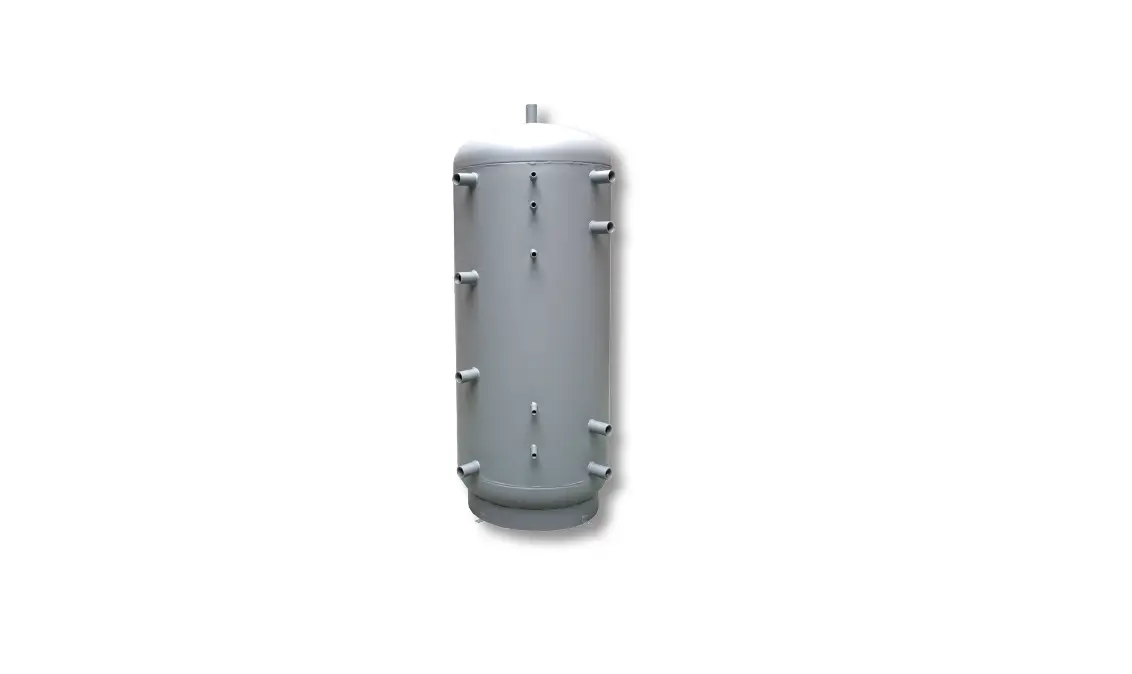
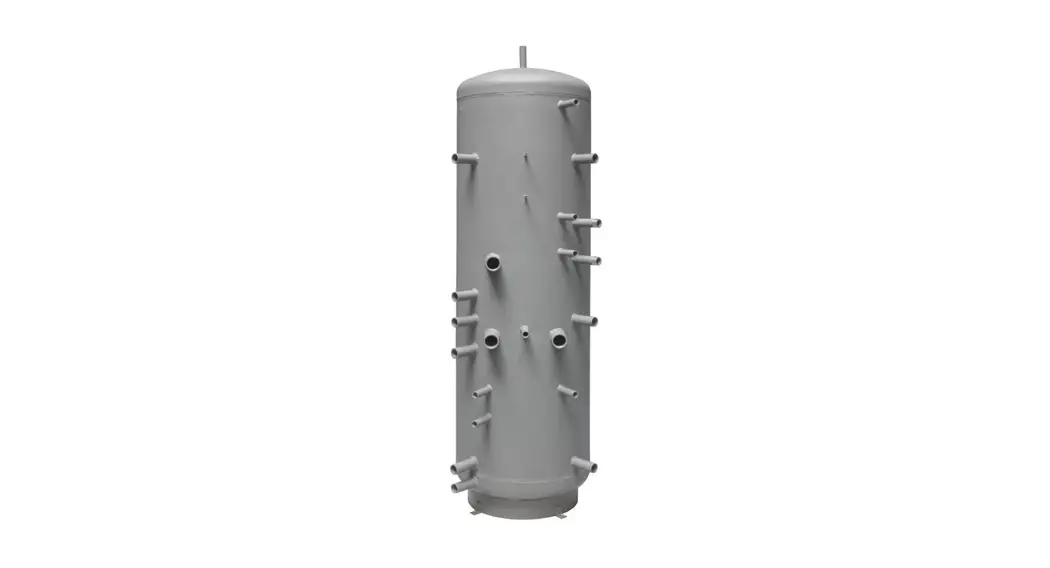
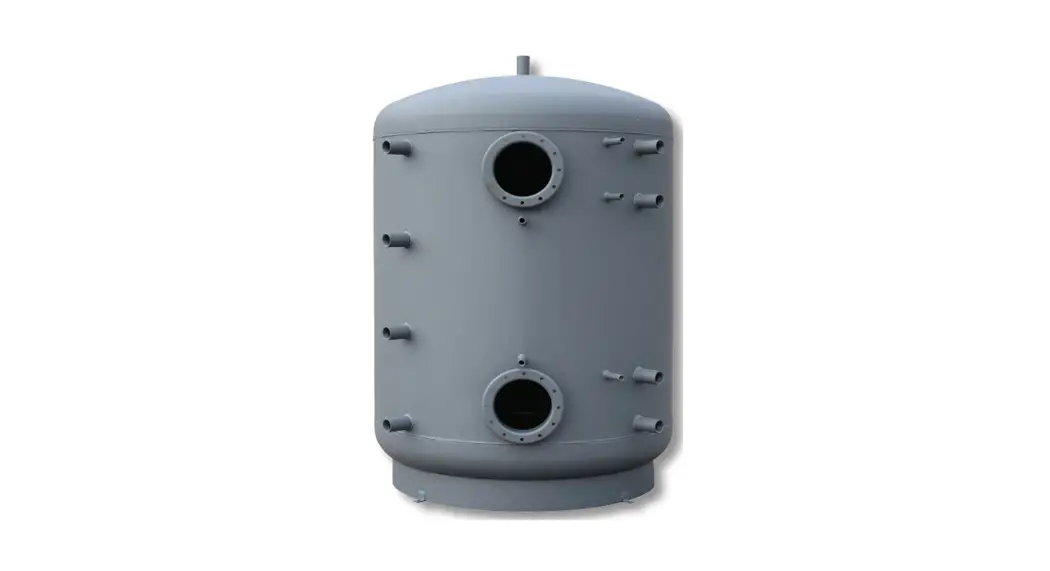
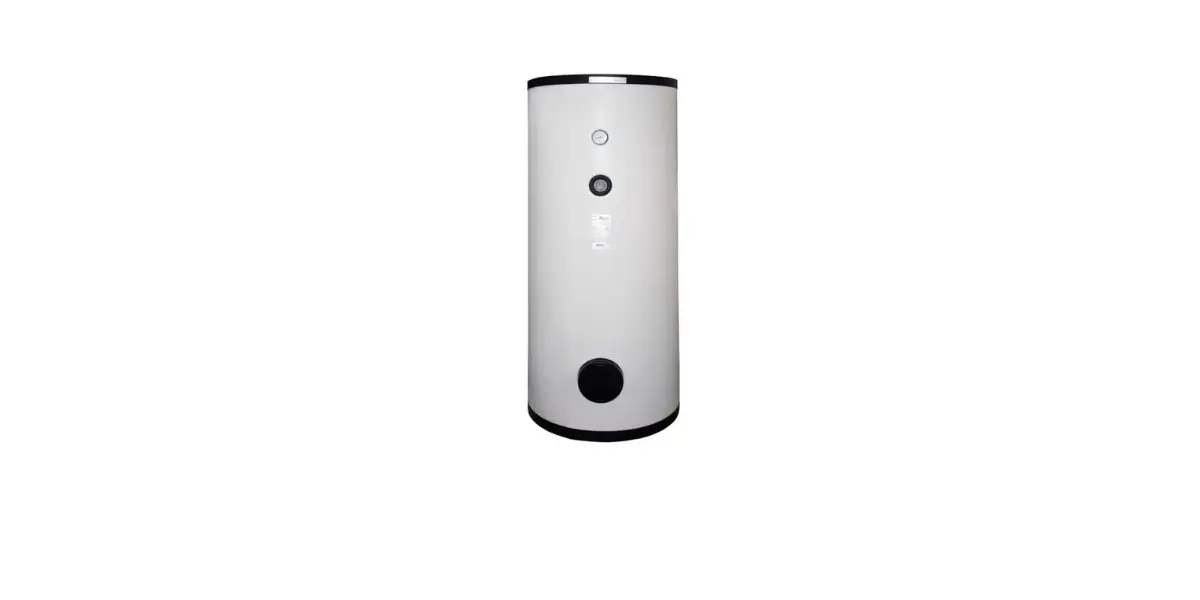
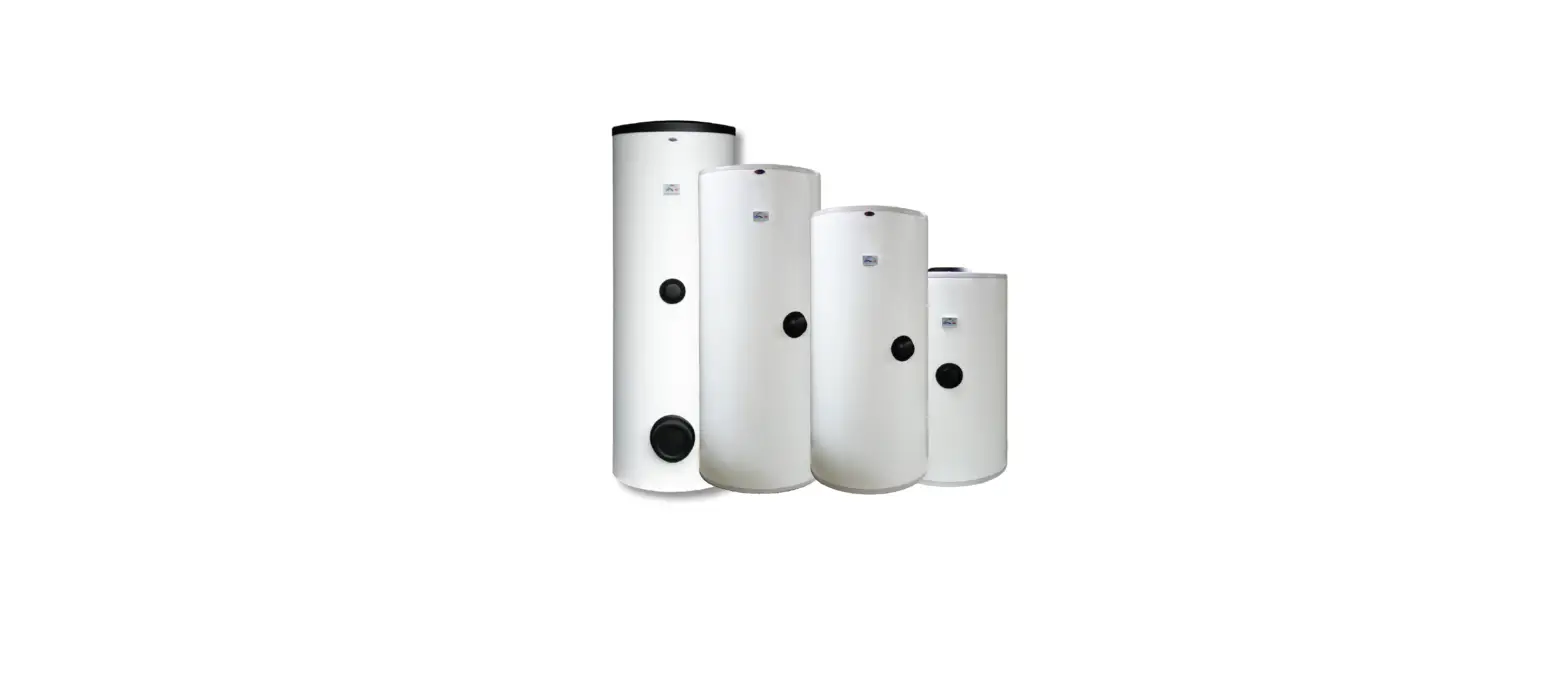
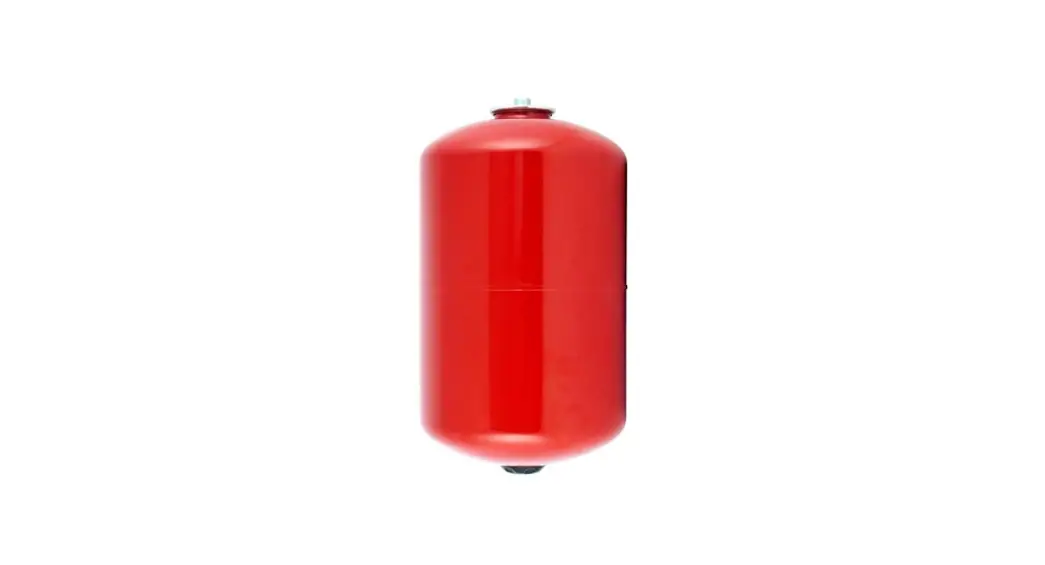
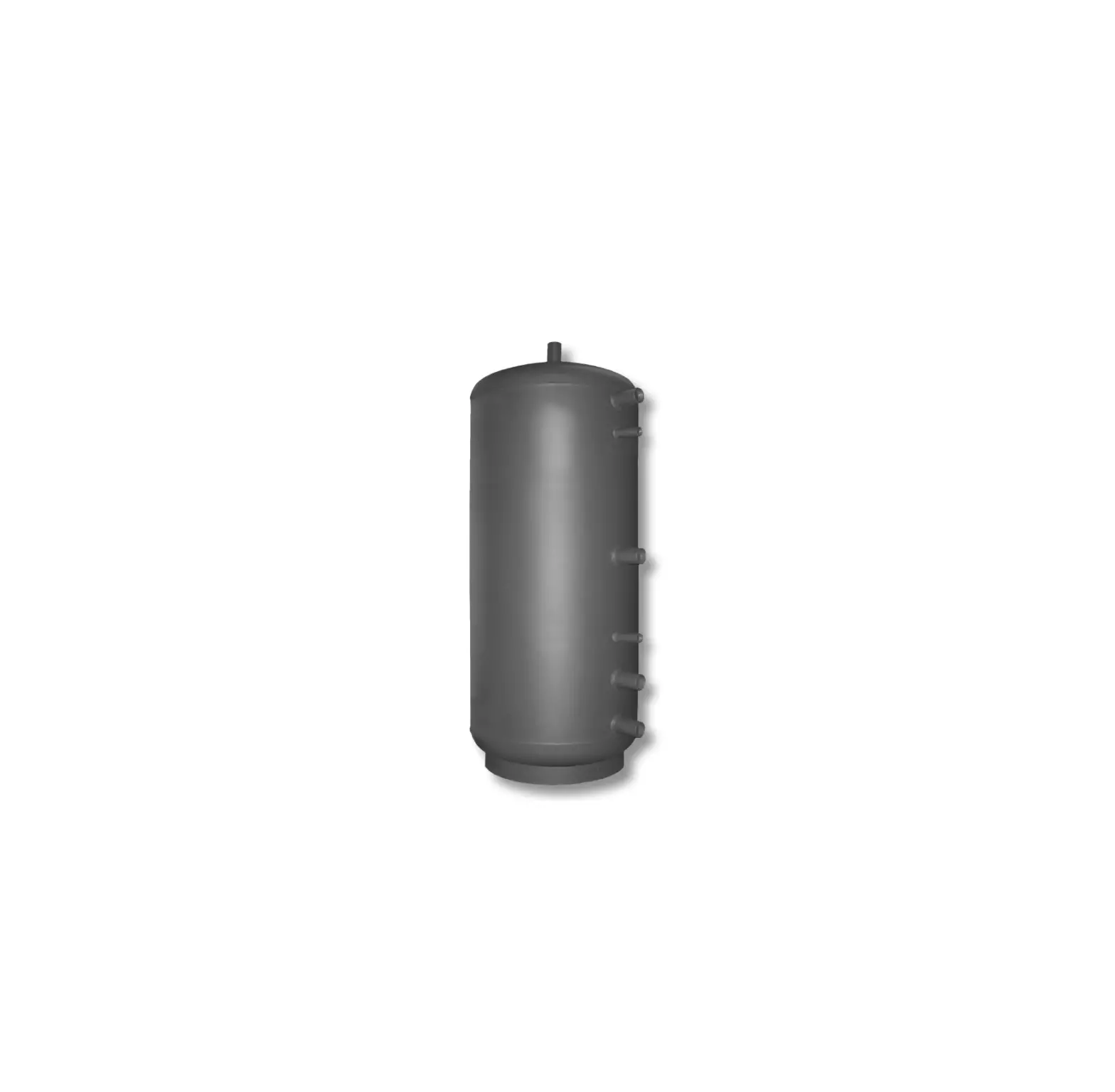
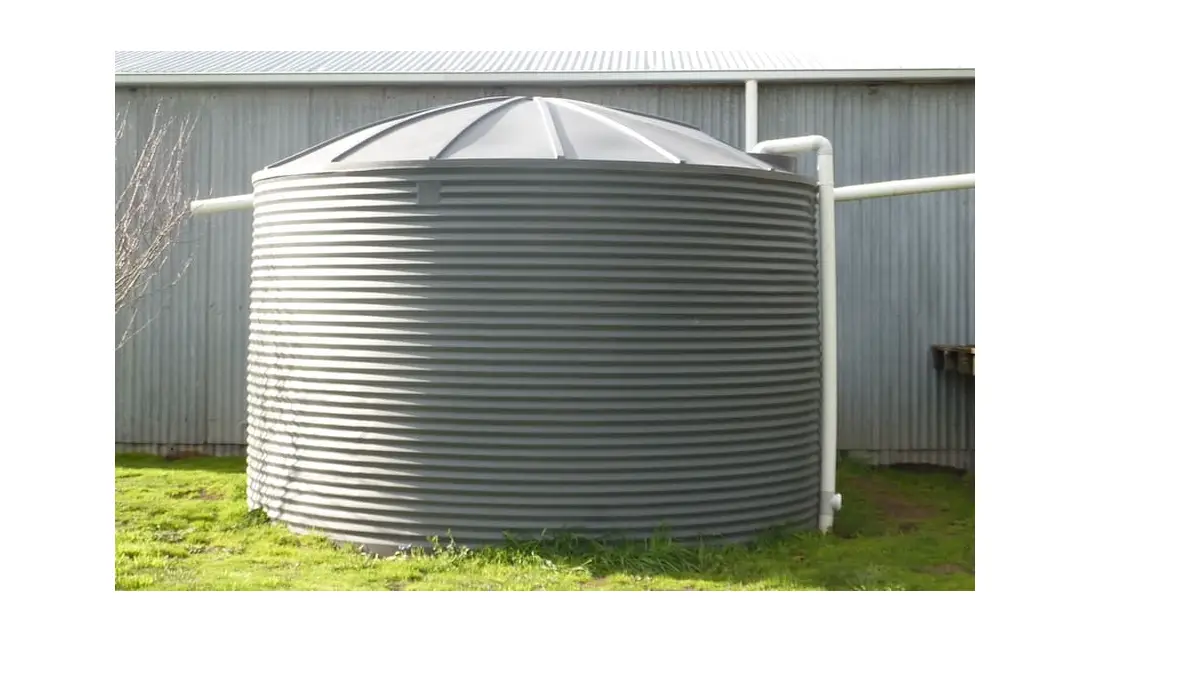
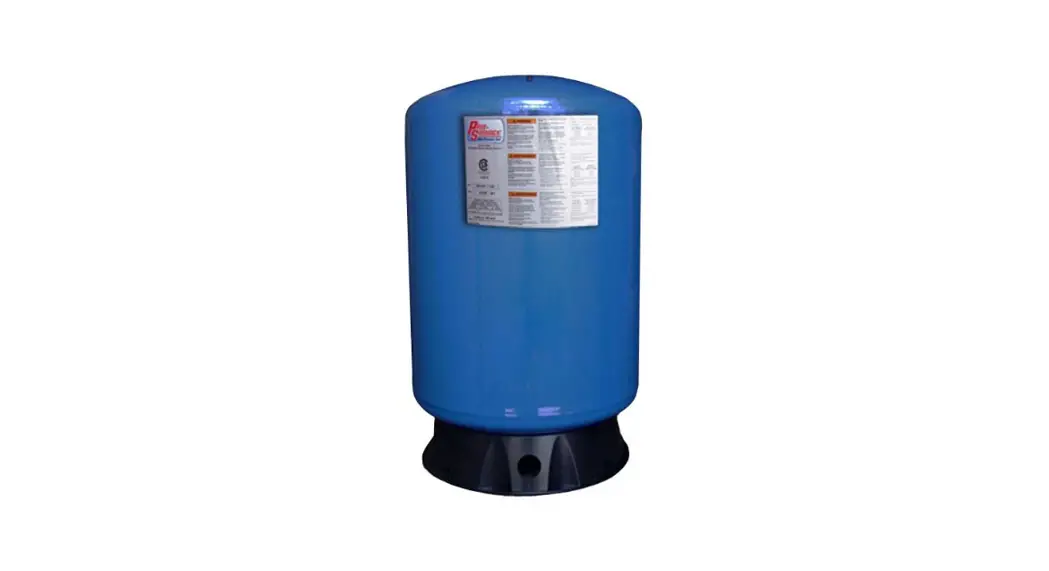
PSWF 300 N Accumulation Tank
Product Information
- Product Name: PSWF N+
- Manufacturer: Regulus
- Website: www.regulus.eu
- Models: PSWF 300 N+, PSWF 500 N+, PSWF 800 N+, PSWF 1000 N+,
PSWF 1500 N+, and PSWF 2000 N+ - Tank Capacity: Six models with capacities of 280, 472, 807,
930, 1498, and 1996 liters - Tank Protection: The inner surface has no finish or
anticorrosion protection, while the outer surface is lacquered in
gray - Thermal Insulation: Available as a separate item made of
fleece, 100 mm thick, with a hard polystyrene surface - Packing: Tanks are delivered standing, screwed to their
pallets, and packed in bubble wrap. Gaskets and bolts for the
flange are included in the package.
Product Usage Instructions
- Design the optimum hydraulics of the system, including the
position of circulation pumps, valves, and non-return valves. - If combining multiple heat sources, it is recommended to use a
smart controller like Regulus IR for both the source and load sides
of the heating circuit. - For easier handling, do not fit the thermal insulation on the
tank until it reaches its definite place of installation. - To use the thermal store for continuous water heating, purchase
a suitably sized heat exchanger (available as an accessory) and
have it installed into the flange. - Do not use the thermal store for purposes other than described
(e.g., as a DHW tank) to avoid damage. - Make sure to read the product’s owner’s manual carefully for
important information on safety, installation, operation, and
maintenance. - The appliance should be installed by a qualified person
according to valid rules and manufacturer’s instructions.
PSWF N+
www.regulus.eu
Installation and Operation Manual EN
THERMAL STORES PSWF 300 N+, PSWF 500 N+, PSWF 800 N+, PSWF 1000 N+, PSWF 1500 N+ and PSWF 2000 N+
PSWF N+
CONTENTS 1 Description ………………………………………………………………………………………………………………………………….. 3 1.1 Models …………………………………………………………………………………………………………………………….. 3 1.2 Tank protection ………………………………………………………………………………………………………………….. 3 1.3 Thermal insulation ……………………………………………………………………………………………………………… 3 1.4 Connection points on the tank …………………………………………………………………………………………….. 3 1.5 Packaging ………………………………………………………………………………………………………………………… 3 2 General Information ……………………………………………………………………………………………………………………… 3 3 Technical Data and Dimensions ……………………………………………………………………………………………………. 4 4 Operation …………………………………………………………………………………………………………………………………….. 5 5 Typical Layout Example with Thermal Store ………………………………………………………………………………….. 5 6 Installation and Commissioning ……………………………………………………………………………………………………. 6 6.1 Connection to heat sources …………………………………………………………………………………………………. 6 6.2 Connection to a solar thermal system ……………………………………………………………………………………. 6 6.3 El. heating element installation ……………………………………………………………………………………………. 6 6.4 Commissioning ………………………………………………………………………………………………………………….. 6 7 Installing Insulation on the Tank …………………………………………………………………………………………………… 6 8 Maintenance ………………………………………………………………………………………………………………………………… 8 9 Disposal ………………………………………………………………………………………………………………………………………. 8
10 Warranty ………………………………………………………………………………………………………………………………………. 8
2
1 – Description
PSWF N+ Thermal Stores are intended for storing and subsequent distribution of thermal energy from solid-fuel fired boilers, heat pumps, solar collectors, electric boilers etc. This thermal store shall be always connected to a sealed heating circuit with forced circulation. It is fitted with one upper flange ready to receive a suitably sized tube heat exchanger. A heat exchanger with 1″ connections is installed in the bottom part. Mating flanges for heat exchangers with either G 1″ or G ¾” connections are available as an option. When no heat exchanger is installed, a blind flange shall be used (option). These heat exchangers are made of finned copper tubes that feature larger surface area and better heat transfer. The lower heat exchanger usually connects to a solar system and the upper one is used for DHW heating (continuous) which limits significantly the risk of Legionella bacteria formation. The tanks are also fitted with nine G 6/4″ side sleeves to connect heat sources, four G ½” ones for sensor sheaths and one G ½” connection for a safety valve. El. heating elements can be installed directly into the 6/4″ connections that are located outside the lower heat exchanger.
In order to reach proper working of the tank, it is necessary to design optimum hydraulics of the whole system, i.e. position of circulation pumps for sources and heating circuits, valves, non-return valves etc. When more heat sources shall be combined, it is recommended to use a smart controller, e.g. Regulus IR, for both the source and load sides of a heating circuit, i.e. also for charging and discharging the thermal store.
1.1 – Models Six models of 280, 472, 807, 930, 1498 and 1996 l capacity.
1.2 – Tank protection The inner surface has no finish, no anticorrosion protection, the outer surface is lacquered in gray.
1.3 – Thermal insulation Thermal insulation is available as a separate item. For easier handling, the insulation shall not be fitted on the tank until it reaches its definite place of installation. The insulation is made of fleece, 100 mm thick, with a hard polystyrene surface. It is closed by a quick lock.
1.4 – Connection points on the tank 1 flange with 210 mm inner diam. 8 side connections in a 90° sector, G 6/4″ F thread 1 top connection, G 6/4″ F thread 4 side connections for sensor sheaths, G ½” F thread 1 side connection for a 3 bar safety valve, G ½” F thread 2 side connections for a heat exchanger, G 1″ F thread
1.5 – Packing Tanks are delivered standing, each screwed to its pallet, packed in bubble wrap. Included in the package are gaskets, bolts for the flange.
2 – General Information
This Owners Manual is an integral and important part of the product and must be handed over to the User. Read carefully the instructions in this Manual as they contain important information concerning safety, installation, operation and maintenance. Keep this Manual for later reference. The appliance shall be installed by a qualified person according to valid rules and Manufacturer`s Instructions.
This appliance is designed to accumulate thermal energy of heating water and distribute it subsequently. It shall be connected to a heating system and heat sources. The equipment is suitable also for continuous water heating. In such a case, the customer needs to buy a suitably sized heat exchanger (available as accessory) and have it installed into the flange.
Using the thermal store for other purposes than above described (e.g. as a DHW tank) is forbidden and the manufacturer accepts no responsibility for damage caused by improper or wrong use.
3
3 – Technical Data and Dimensions
H1
Dimensions
ØD1 ØD
TAPPINGS
pos. connection
Heat sources
B1
G 6/4″ F
B2
G 6/4″ F
Heating system
H1
G 6/4″ F
H2
G 6/4″ F
Control and safety
C1
G 1/2″ F
C2
G 1/2″ F
C3
G 1/2″ F
T
G 1/2″ F
P
G 1/2″ F
Universal inlet / outlet
U1
G 6/4″ F
U2
G 6/4″ F
U3
G 6/4″ F
U4
G 6/4″ F
U5
G 6/4″ F
Solar thermal systems
X1
G 1″ F
X2
G 1″ F
Flanges
L1
12 x M12
Type – model
Tank code Insulation code Total fluid volume in tank [l] Fluid volume in tank [l] Fluid volume in heat exchanger [l] Heat exchanger surface area [sqm] Empty weight [kg] Tipping height without insulation [mm] Dimensions [mm] 4
a b c d e f g V1 ø D1 ø D B1 B2 H1 H2 C1 C2 C3 T P U1 U2 U3 U4 U5 X1 X2 L1
PSWF 300 N+
14732 19342
280 271 9,0 1,5
87 1430 750 550 1120 220 1405 220 1135
520 830 895 375 1120 360 795 520 880 670 220 1010
Tank code: ………………………………………………………………………… a
Insulation code: …………………………………………………………………. b
Total fluid volume in tank: ……………………………………………………. c Fluid volume in tank: ………………………………………………………….. d Fluid volume in heat exchanger: ………………………………………….. e Surface area of heat exchanger: ………………………………………….. f Max. working temperature in tank: ……………………………………….. 95 °C Max. working temperature in heat exchanger: ……………………….. 110 °C Max. working pressure in tank PSWF 300 N+ ÷ PSWF 1000 N+: 4 bar Max. working pressure in tank PSWF 1500 N+ ÷ PSWF 2000 N+:3 bar Max. working pressure in heat exchanger: ……………………………. 10 bar Empty weight: ……………………………………………………………………. g
Tipping height without insulation: ………………………………………….. V1
PSWF 500 N+ 14735 19332
472 461 11,0 2,0 118 1950 800 600 1615 225 1915 225 1630 585 1270 1400 450 1615 435 1155 685 1385 765 225 1515
PSWF 800 N+ 15230 19343
807 792 15,0 2,7 160 1895 1000 800 1455 315 1845 315 1470 685 1155 1250 530 1455 515 1075 695 1235 870 315 1355
PSWF 1000 N+
15232 19325
930 912 18,0 3,2 180 2120 1000 800 1690 300 2080 300 1705 740 1345 1475 525 1690 510 1230 760 1460 950 300 1590
PSWF 1500 N+
15234 19350 1498 1476 22,0
4,0 265 1965 1300 1100 1475 335 1885 335 1490 735 1175 1270 550 1475 535 1095 715 1255 940 335 1375
PSWF 2000 N+
15236 19355 1996 1971 25,0
4,5
311 2050 1450 1250 1510 370 1955 370 1525 760 1210 1305 585 1510 570 1130 750 1290 955 370 1410
4 – Operation
This thermal store is designed to accumulate thermal energy in domestic or industrial applications, however always in sealed pressure circuits with forced circulation. In the thermal store, heating water is heated up from several heat sources like various types of hot-water boilers, renewable energy sources (heat pumps, solar collectors), or electric heating elements. The thermal store is connected to the energy source using a G 6/4″ connection fitting. A solar system thermal connects to the outlets of the inbuilt heat exchanger through G 1″ fittings. The individual tank outlets are fitted according to the circuits to be connected.
5 – Typical Layout Example with Thermal Store
Example Solar collectors, el. heating elements and biomass-fired boiler.
5
THERMOSTAT
THERMOMETER
KEY
1 hot water storage tank 2 el. heating element for DHW w. thermostat 3 CSE SOL solar pump station 4 three-way zone valve 5 solar expansion vessel 6 electric heating elements for heating system 7 finned tube heat exchanger x.xx m2 in flange 8 thermal store for central heating – PSWF xxx N+ 9 heating system expansion vessel 10 boiler load unit – RGMAT 11 biomass boiler (fireplace insert/stove) 12 pump station for heating system – CSE2 MIX 13 pump station for DHW heating CSE OTS ZV 14 solar collectors 15 pump station for DHW recirculation CSE TVMIX ZV 16 safety kit for HW storage tank 17 DHW expansion vessel
SV cold water TV hot water CV hot water recirculation ÚT central heating (heating system)
KK ball valve ZV check valve AOV automatic air vent valve PTR pressure temperature relief valve REDV pressure reducing valve (optional) VK drain valve SVE expansion vessel service valve PV-ÚT safety valve for heating system MFB Magnet Filterball F filter BVTS safety relief valve of boiler cooling loop
6 – Installation and Commissioning
Installation shall meet valid rules and may be done by qualified staff only.
Defects caused by improper installation, use or handling are not covered by warranty.
After the tank is installed and connected to an existing heating system, it is recommended to clean the entire heating system using a suitable cleaning agent, e.g. BP 400. Anti-corrosion protective liquid should be also used, e.g. BP 100 Plus.
6.1 – Connection to heat sources
Place the tank on the floor, as close to your heat source as possible. Mount the insulation, cf. Installing Insulation on the Tank.Connect the heating system according to the recommended connection layout – see Chap. 5. Install a drain valve at the lowest point of the tank. Install an air vent valve at the highest point of the system. Insulate all the connecting piping.
6.2 – Connection to a solar system
This tank is suitable for use with a solar system. In such a case the inlet of heated solar fluid from collectors connects to the G 1″ upper connection of the heat exchanger and the return line from the solar thermal system connects to its lower connection. Insulate meticulously all the piping between the tank and the solar thermal system.
6.3 – El. heating element installation
The tank may be fitted with electric heating elements up to 12kW output depending on the volume of the thermal store – see the table of max. output of heating elements in hot water tanks and thermal stores in the Catalogue. They can be power-supplied either directly (elements with built-in thermostat) or via a controller for the entire heating system. All electric heating elements shall be protected by a safety thermostat.
Electric heating elements shall be installed by an authorized person only.
6.4 – Commissioning Ground the tank before commissioning.
The tank shall be filled up together with the heating system, respecting valid standards and rules. In order to minimize corrosion, special additives for heating systems should be used. The quality of heating water depends on the quality of filling water at commissioning, on the top-up water and on the frequency of topping up. This has a strong influence on the lifetime of heating systems. Poor quality of heating water may cause problems like corrosion or incrustation, esp. on heat
transfer surfaces.
Table of limit values for total dissolved solids in hot water
Description
pH
Total dissolved solids (TDS)
Ca
Max. value
6.5 – 9.5
600 mg/l
40 mg/l
Chlorides 100 mg/l
Mg 20 mg/l
Na 200 mg/l
Fe 0.2 mg/l
Fill the heating circuits with the appropriate fluids and air-bleed the entire system. Check all connections for leaks and verify the system pressure. Set the heating controller in compliance with the documentation and manufacturer’s recommendations. Check regularly proper function of all control and adjustment elements.
7 – Installing Insulation on the Tank
Product description Fleece insulation with a hard polystyrene surface, closed by a quick lock.
Warning Insulation installation shall be done in two or three persons, depending on its size. The fleece insulation must not be installed at temperatures below 20 °C. If this cannot be avoided, the insulation shall be pre-warmed in another room to at least 20 °C. It is impossible to install insulation of lower temperature, there is a risk of damage. Do not use any tools for installation. Keep away from open fire.
6
Installing Insulation 1. Put the bottom insulation under the tank and place the tank following installation instructions. 2. Wrap the insulation around the tank carefully. Check that the insulation adheres to its body perfectly. This can be
reached by rubbing and patting the insulation by hand from its center evenly in both directions until the insulation adheres to the tank’s surface completely and no bubbles are left. 3. Use the holes for sleeves as a rest during the insulation installation. 4. At least one person presses the insulation to the tank, pulling both ends together. The other person closes the quick lock from the side. 5. Put on the upper insulation and cover. 6. Push on the covering plastic rosettes depending on the size of sleeves, or put on the flange plug(s) with insulation. 7. Finish the tank installation in compliance with the respective instructions and valid standards and rules. Warranty on insulation The insulation is covered by a 24-month warranty. This period starts the next day after the insulation is sold. Warranty shall become null and void if: the procedure described in the Installation Manual was not respected, the product was used for other purposes than intended. Warranty does not cover: usual wear and tear, damage caused by fire, water, electricity or a natural disaster, defects caused by failure to use the product in compliance with its intended purpose, by improper use and
insufficient maintenance, defects caused by mechanical damage to the product, defects caused by tampering or incompetent repair.
7
8 – Maintenance
If the tank is fitted with a heating element, disconnect it from the mains first. Clean the exterior of the tank with a soft cloth and a mild detergent. Never use abrasive cleaners or solvents. Check all connections for leaks.
9 – Disposal
Packaging shall be disposed of in compliance with the valid rules. When the product reaches the end of its life, it shall not be disposed of as household waste. It shall be dropped off at a Local Waste Recycling Center. Insulation shall be recycled as plastic and the steel vessel as scrap iron.
10 – Warranty
This product is covered by warranty under the conditions listed in this Manual and in compliance with the Warranty Certificate. A Warranty Certificate is an integral part of this accumulation tank scope of supply.
©2022 We reserve the right to errors, changes and improvements without prior notice.
REGULUS spol. s r.o. E-mail: [email protected] Web: www.regulus.eu
v1.2-12/2022
 Regulus - Energy saving solutions