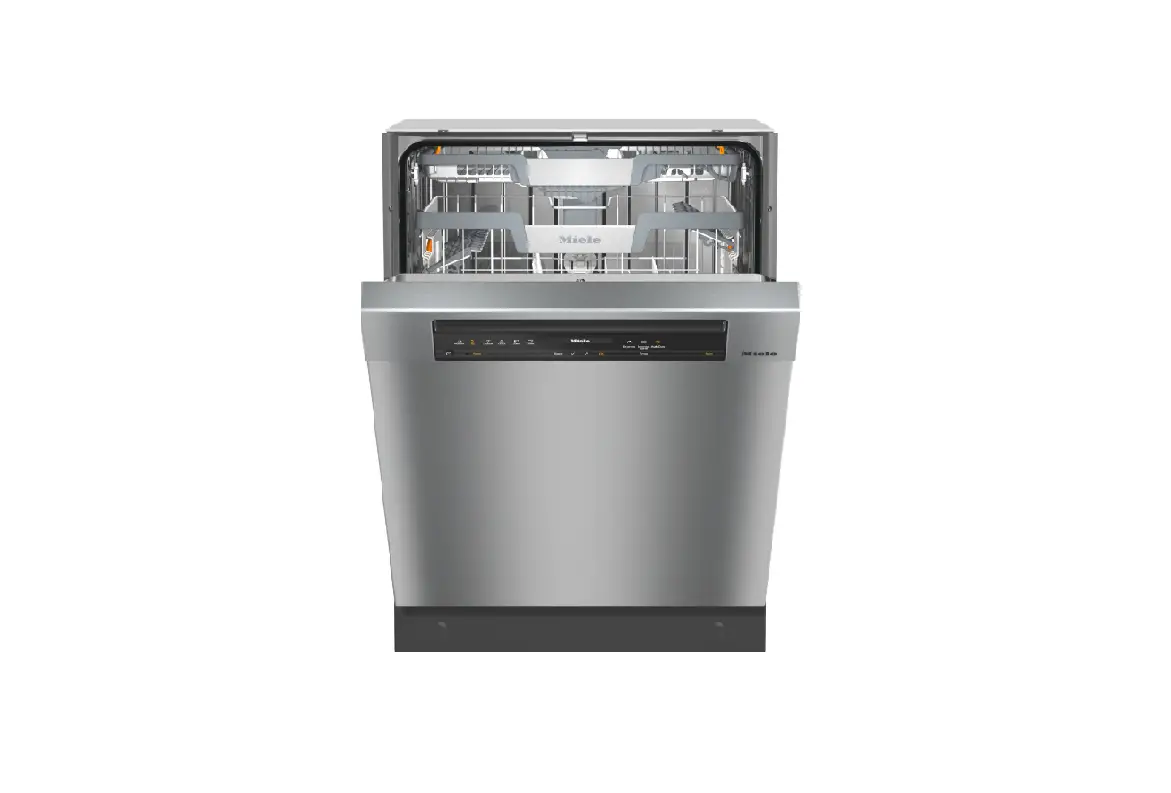
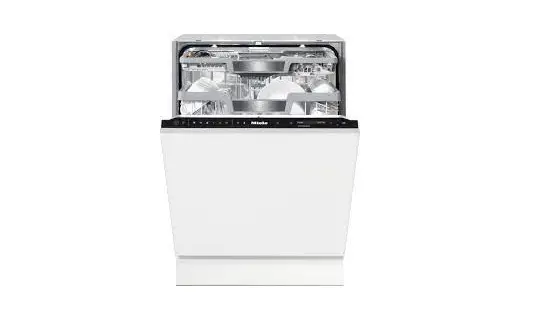
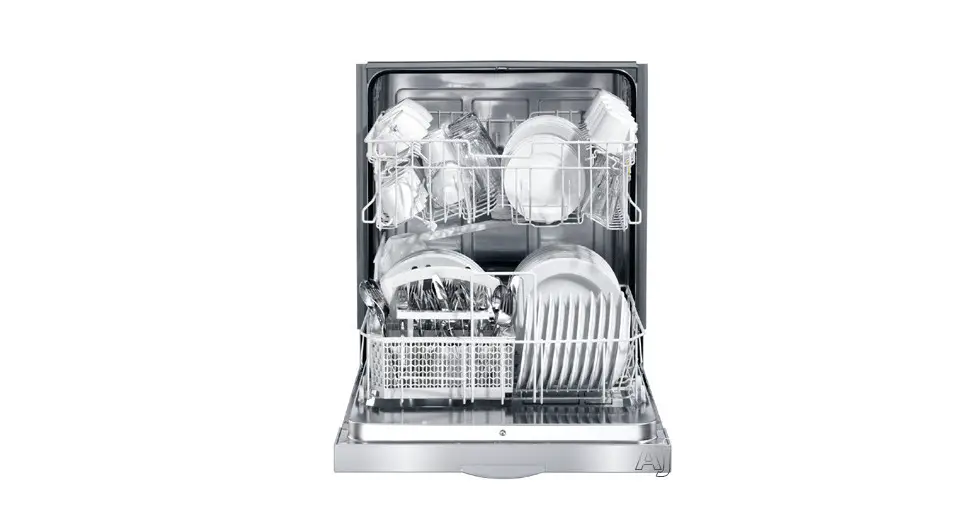
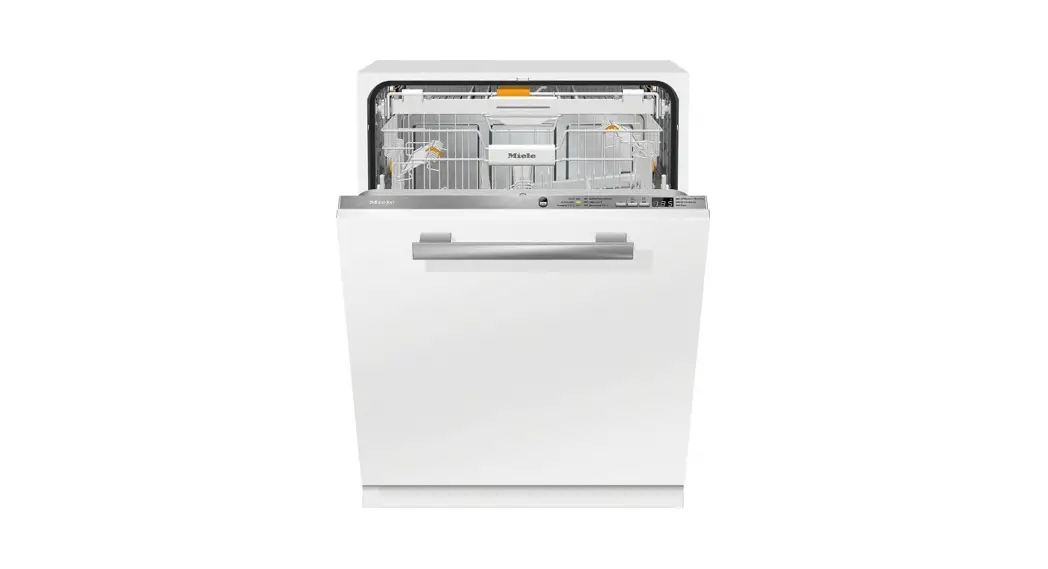
G 7969 Dishwasher 11 872 650-02
Product Information: Dishwasher
The dishwasher is a household appliance designed to clean and
sanitize dishes, utensils, and other kitchenware. It is equipped
with various features and functions to ensure efficient and
effective cleaning results. Please read the following instructions
carefully before operating the dishwasher.
Control Panel
- a In-operation indicator light
- d Touch display for indicating an ongoing wash programme when
the door is closed - b On/Off sensor for switching the dishwasher on and off
- e Back sensor for navigating back to the previous menu or
deleting values - f Home sensor for returning to the Programmes menu
Quick Start Guide
These quick instructions serve as a brief overview of how to use
the dishwasher. For detailed information, refer to the operating
instructions provided with the machine.
Opening the Door
The dishwasher features a motorized door opener activated by
knocking on the door front (Knock2open function). Knock twice on
the top third of the door front to open the door partially.
Filling the Salt Reservoir
1. Remove the lower basket from the wash cabinet and unscrew the
salt reservoir cap.
2. Do not fill the salt reservoir with dishwasher detergent, as
it will damage the water softener.
3. To avoid corrosion, open the salt reservoir only to replenish
salt.
4. For first-time use, fill the salt reservoir with
approximately 2 liters of water.
5. Place the funnel provided over the salt reservoir and
carefully fill it with dishwasher salt until full.
6. Clean any excess salt around the reservoir opening and firmly
screw the cap back on.
Adding Rinse Aid
1. Lift the yellow button on the lid of the rinse aid
container.
2. Fill the rinse aid container until the fill level indicator
turns dark when the door is open horizontally.
3. Close the lid, ensuring it clicks into place.
4. Wipe up any spilled rinse aid to prevent over-foaming during
the next program.
Loading the Dishwasher
Follow the instructions provided in the operating instructions
manual for loading the dishwasher properly.
Detergent Dispensing
There are two ways of dispensing detergent: automatic dispensing
and manual dispensing.
Automatic Detergent Dispensing:
1. Insert a PowerDisk containing powder detergent into the
PowerDisk compartment before using AutoDos.
2. Slide the yellow catch of the AutoDos lid to open it.
3. Remove the transport lock from the PowerDisk compartment
before using AutoDos for the first time.
Manual Detergent Dispensing:
If you have deactivated automatic dispensing, you can dispense
detergent manually. Follow the instructions provided in the
operating instructions manual for manual detergent dispensing.
Please refer to the operating instructions manual for detailed
information on other features, programs, and maintenance of the
dishwasher.
Quick Start Guide
for dishwashers
These short instructions are not a substitute for the operating instructions supplied with the machine. It is essential to familiarise yourself with the dishwasher before using it for the first time. Take note of the Warning and Safety instructions, as well as the full descriptions on how to use your appliance.
en-AU, NZ
M.-Nr. 11 872 650 / 02
Guide to the appliance
Control panel
a In-operation indicator light
d Touch display
For indicating an ongoing wash
For further information, see “Guide to
programme when the door is closed. the appliance – Display functions” in
b On/Off sensor
the operating instructions.
For switching the dishwasher on and e Back sensor
off.
For navigating back to the previous
c Remote control sensor For activating/deactivating the
menu or deleting values which have been set previously.
Remote control option.
f Home sensor
For returning to the Programmes
menu.
Brief instructions
a AutoDos (automatic dispensing) b Detergent compartment c Rinse aid reservoir d Salt reservoir e Filter combination
Opening the door The dishwasher has a motorised door opener which is activated by knocking on the door front (Knock2open function). Knock twice in quick succession on
the top third of the door front. The door will open a little.
Filling the salt reservoir (depending on water hardness) Remove the lower basket from the
wash cabinet and unscrew the salt reservoir cap.
Damage to the water softener
from detergents. Dishwasher detergent will damage the water softener. Do not fill the salt reservoir with powder or liquid detergent.
Risk of corrosion due to saline
solution. Water or saline solution will run out of the reservoir when the cap is opened. Saline solution that runs out can cause corrosion in the wash cabinet and to the dishwasher load. The salt reservoir should therefore only be opened to replenish the salt.
Fill the salt reservoir with approx. 2 l of water (first use only).
Place the funnel provided over the salt reservoir and carefully fill with dishwasher salt until the reservoir is full.
Clean any excess salt from around the reservoir opening and then screw the salt reservoir cap on again firmly.
Immediately after filling the salt container, run the QuickPowerWash 65 °C programme with the Express option and without any load in the dishwasher to dissolve and remove any traces of salt from the cabinet.
Adding rinse aid Lift the yellow button on the lid of the
rinse aid container . Only fill with rinse aid until the fill level
indicator turns dark when the door is open horizontally. Close the lid making sure it clicks into place. Wipe up any spilled rinse aid. This prevents over-foaming occurring during the next programme.
Loading the dishwasher
Detergent dispensing There are two ways of dispensing the detergent. During automatic dispensing, the AutoDos function will automatically dispense the required amount of detergent for each programme once a PowerDisk has been inserted. If you have deactivated automatic dispensing, you can dispense detergent manually.
Automatic detergent dispensing Before you can use AutoDos, you must insert a PowerDisk containing powder detergent into the PowerDisk compartment.
Slide the yellow catch of the AutoDos lid to and open it.
Before you use AutoDos for the first time, remove the transport lock from the PowerDisk compartment.
If the arrows in the PowerDisk holder and in the viewing window are not pointing towards each other, remove the PowerDisk holder.
Put the holder back into place so that the arrows point towards each other and the holder lies flat. When doing this, only hold the PowerDisk holder by the yellow tab in the middle. Do not hold it by the side tab.
Insert the new PowerDisk and press it evenly downwards until it sits flush.
Close the AutoDos lid and slide the yellow catch until it is aligned with the symbol.
The AutoDos function will be activated automatically. This setting applies to all programmes and can be changed in a programme’s “Extras” menu. If the PowerDisk is not in the correct starting position, it will be rotated automatically. Wait until this process is finished before you start a programme. This setting applies to all programmes and can be changed in a programme’s “Extras” menu.
Manual detergent dispensing Dispense detergent manually if you have deactivated automatic dispensing. Follow the detergent dosage
recommended by the manufacturer on the packaging. Unless directed otherwise, use one detergent tab or add 20 to 30 ml of detergent to the detergent compartment, depending on the degree of soiling of the crockery. Lift the yellow catch on the lid of the detergent compartment . The lid will open. Fill the detergent compartment with detergent and push the lid shut until you hear it click into place.
Switching on Turn on the tap if it is turned off. Open the door. Touch the sensor. The “Programmes” menu will appear in the display.
Selecting a programme Select the required programme in the
display. The display will change to the “Extras” menu.
Selecting Extras (if required) All available Extras are shown in the display. Select the Extras you want. If you want to cancel the selection of
an Extra, touch the sensor for the Extra again.
Activating the timer (if required) Touch the Timer option in the
display. Select the function you want. Set the time you want for the timer
and confirm with OK.
Starting a programme Start the programme by closing the
door.
Programme end – Switching off At the end of a programme, the optical in-operation indicator light will flash slowly with the door shut. The signal tones might also sound. The programme has finished when Finished appears in the display and the door has opened slightly (if applicable). The dishwasher can be switched off
at any time using the sensor.
Risk of damage due to steam.
Steam from the dishwasher could damage the edges of delicate worktops when you open the door at the end of the programme if the fan is no longer running. If you have deactivated the automatic door opening function but would still like to open the door at the end of the programme, make sure that you open the door fully.
Unloading the dishwasher Dishes tend to break and chip more easily when they are hot. Allow the dishes to cool until they are comfortable enough to handle before unloading them.
Cleaning and care
Cleaning the spray arms
Particles of food can get stuck in the spray arm jets and bearings. The spray arms should therefore be inspected regularly (approx. every 24 months).
Do not run a wash programme
without the lower spray arm or without the filters fitted.
Switch the dishwasher off. Take out the cutlery tray (if your
dishwasher is fitted with one). Push the upper spray arm upwards to
engage the inner ratchet. Then unscrew the spray arm by rotating the screw thread anti-clockwise (overhead perspective).
1 2
Rotate the screw thread of the middle spray arm clockwise (overhead perspective) (see diagram) and remove the spray arm .
Remove the lower basket.
Rotate the screw thread of the lower spray arm anti-clockwise and pull the spray arm upwards to remove .
Use a pointed object to push food particles stuck in the jets into the spray arm.
Rinse the spray arm thoroughly under running water.
Refit the upper and middle spray arms.
Refit the lower spray arm and ensure that the filter combination lies flat in the base of the wash cabinet.
Rotate the screw thread of the lower spray arm clockwise until the arrow in the viewing window points to the lock symbol .
Make sure the spray arms can rotate freely.
Checking the filters in the wash cabinet
Do not run a wash programme
without the filters or without the lower spray arm fitted.
The message Remove filters and clean them if necessary will appear in the display after every 50 programme sequences. Monitor the condition of the filter
combination regularly and clean it if necessary. Confirm the message with OK.
Cleaning the filters
Switch the dishwasher off. Remove the lower spray arm. Before removing the filter
combination, remove any coarse soiling to prevent it from entering the circulation system.
In order to clean the inside of the filter, pull the microfilter downwards and away from the filter combination.
Rinse all the parts under running water.
Push the microfilter back onto the filter combination.
Refit the filter combination so that it lies flat in the base of the wash cabinet.
Refit the lower spray arm to the filter combination using the screw thread.
Rotate the screw thread clockwise until the arrow in the viewing window points to the lock symbol .
Remove the filter combination.
Programme chart
Crockery
Temperature-sensitive dishes, glasses and plastics
Food deposits
Lightly dried-on food deposits
Programme features
Programme with glass care
All fresh to dried-on food deposits
Variable, sensor-controlled programme
Mixed crockery
Lightly dried-on food deposits
Short programme taking less than an hour
Very quiet programme
Standard dried-on normal food deposits
Robust items that need to be hygienically clean, e.g. baby bottles,
chopping boards
Pots, pans, everyday porcelain and cutlery
Lightly dried-on food deposits
Stubborn dried-on, burnt-on food deposits containing starch or protein1
Water and energy saving programme
Programme with special parameters
for the hygienic cleaning
Maximum cleaning performance
No crockery
Residual salt after refilling the salt container
1 Food such as potatoes, pasta, rice or stews can leave starchy deposits. Deposits containing protein can be left by food such as fried meat or fish.
Flushes out salt residues
Programme2
3 Consumption estimate4
Gentle 45 °C
20 ml
Energy consumption Water consumption Programme duration
Auto 4565 °C
30 ml
Energy consumption Water consumption Programme duration
QuickPowerWash 65 °C
30 ml
Energy consumption Water consumption Programme duration
ExtraQuiet 55 °C
30 ml
Energy consumption Water consumption Programme duration
ECO
30 ml
Energy consumption Water consumption Programme duration
Hygiene 70 °C
30 ml
Energy consumption Water consumption Programme duration
Intensive 75 °C
30 ml
Energy consumption Water consumption Programme duration
QuickPowerWash 65 °C + Express
–
Programme duration 13 minutes, no heating up,
solely for flushing out salt.
2 The programmes can be combined with the “Express” or “IntenseZone” programme options (see “Programme options”). You can also select the “Extra clean”, “Extra dry” and “Second interim rinse” function (if available) (see “Settings”).
3 Recomended amount of detergent (see “Detergent”).
4 The estimated values may change due to the selected settings or programme options, or the conditions in which the appliance is being used.