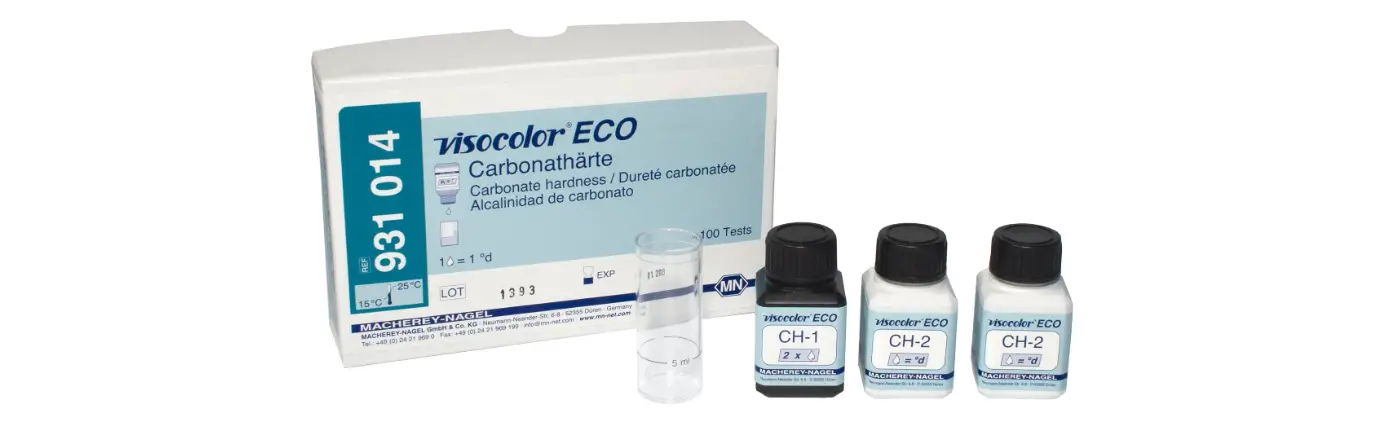
KH Carbonate Hardness Water Test Kit
Product Information
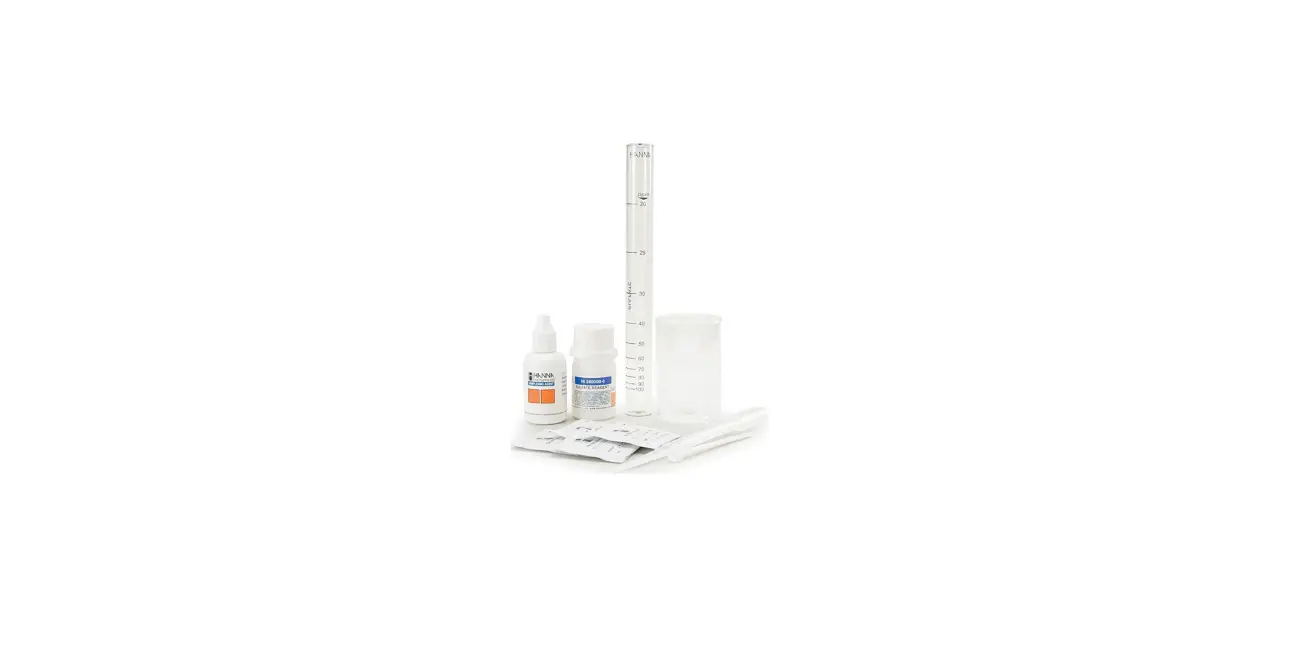
The product is a water testing kit designed to measure the KH
(carbonate hardness) level in water. It comes with two solutions
labeled KH-1 and KH-2.
Product Usage Instructions
- Take a 5 ml sample of water to be tested.
- Add 5 drops of KH-1 solution and mix well. The water sample
should turn blue. - Add KH-2 solution drop by drop while continuously counting the
number of drops being added. Keep adding the solution until the
blue color of the water sample changes to yellow. - Note down the number of drops of KH-2 solution used for the
color change. - Refer to the chart provided with the kit and find the KH level
corresponding to the number of drops used.
For further instructions, you can scan the QR code provided on
the packaging to watch an instructional video or visit the
manufacturer’s website at www.colombo.nl.
English – KH (Carbonate Hardness) General Guidelines · Ensure that the test tube is clean before use. · Clean the tube directly after use. · Take the volume of the water sample as precisely as possible. · Keep the dripping bottle perfectly vertical during dropping. · Take care that no air bubbles are included in the drops.
Test procedure: 1. Take a water sample of 5 ml. 2. Add 5 drops of KH-1 test fluid and mix. The sample should turn lightblue; when it turns yellow, the KH of the water is lower than 1°DH. 3. Mount the plastic tip onto the 1 ml syringe and fill the syringe with KH-2 test fluid. Above the fluid an air bubble will appear, this is normal. The air ompensates for the volume in the tip. 4. Add the fluid slowly until the sample colours yellow. 5. Multiply the amount of KH-2 test fluid in millilitre what was needed to let the colour convert from blue to yellow by 20 to calculate the KH in °DH. Or use the chart in this manual.
Deutsch – KH (Karbonathärte) Allgemeine Richtlinien · Sorgen Sie immer dafür, dass das Reagenzglas vor Verwendung sauber ist. · Reinigen Sie das Reagenzglas sofort nach der Verwendung. · Nehmen Sie die Menge der Wasserprobe so genau wie möglich · Halten Sie beim Tropfen das Fläschchen vollkommen vertikal. · Achten Sie darauf, dass keine Luftbläschen in die Tropfen gelangen.
Testverfahren: 1. Nehmen Sie eine Wasserprobe von 5 ml. 2. Geben Sie 5 Tröpfchen KH-1 Testflüssigkeit dazu und Schütteln Sie das Reagenzglas.
3. Klicken Sie den Kunststoff-Spitze auf die 1-ml-Spritze und füllen Sie es mit KH-2 Testflüssigkeit. Über der Flüssigkeit erscheint eine Luftblase, dies ist normal. Die Luft kompensiert für das Volumen in der Spitze. 4. Fügen Sie dieser Flüssigkeit mit der 1 ml Spritze langsam an der Probe zu bis zu den Probe deutlich gelb verfarbt. 5. Multiplizieren Sie die Menge der KH-2 Testflüssigkeit in Milliliter, was nötig war die Farbe zu konvertieren von blau nach gelb mit 20, um die KH in °DH zu berechnen. Oder verwenden Sie der Tabelle in diesem Gebrauchsanweisung.
Francais – KH (Dureté carbonatée) Consignes générales · Veillez toujours à ce que l’éprouvette soit bien propre avant l’utilisation. · Nettoyez-la soigneusement après chaque utilisation pour qu’elle ne contienne plus aucun résidu chimique qui puisse fausser les résultats suivants. · Prélevez l’échantillon d’eau de façon aussi rigoureuse que possible. · Tenez la fiole à la verticale lors du comptage des gouttes. · Veillez à ce qu’il n’y ait pas de bulles d’air dans les gouttes. Procédure de test: 1. Prélevez un échantillon d’eau de 5 ml. 2. Ajoutez 5 gouttes de liquide de test KH-1 et secouez l’éprouvette. 3. Mettez l’embout en plastique rouge sur la seringue de 1 ml et remplissez la avec le liquide KH-2 test. Au-dessus du liquide une bulle d’air apparaît, ce qui est normal. L’air compense le volume de liquide présent dans l’embout. 4. Ajoutez délicatement le liquide jusqu’à obtenir la couleur jaune. 5. Multipliez par 20 la quantité de liquide KH-2 nécessaire pour changer la couleur de bleue à jaune : vous obtenez ainsi le KH en °DH. Vous pouvez aussi utiliser le tableau suivant.
Nederlands – KH (Karbonaathardheid) Algemene richtlijnen · Zorg er altijd voor dat het testbuisje schoon is voor gebruik. · Maak na gebruik het testbuisje direct goed schoon. · Neem het volume van het watermonster zo precies mogelijk. · Hou bij het druppelen het flesje volledig verticaal. · Zorg ervoor dat er geen luchtbellen in de druppels komen.
Testprocedure: 1. Neem een watermonster van 5 ml. 2. Voeg 5 druppels KH-1-testvloeistof toe en schud het testbuisje. 3. Klik de plastic tip op de 1 ml spuit en vul deze vervolgens met KH-2-testvloeistof. Boven de vloeistof ontstaat een luchtbel, dit is normaal. De luchtbel compenseert het volume in de tip. 4. Voeg de vloeistof met de spuit langzaam toe, totdat het watermonster duidelijk geel is. 5. Vermenigvuldig het aantal milliliter van de KH-2 testvloeistof wat nodig was om de kleur om te laten slaan van blauw naar geel, met 20 om de KH-waarde te berekenen in °DH. Of gebruik de tabel in deze gebruiksaanwijzing.
Italiano – KH (Durezza carbonica) Linee guida generali · Assicuratevi che la provetta sia pulita prima dell’uso. · Pulite la provetta immediatamente dopo l’uso. · Prendete il quantitativo del campione d’acqua nel modo più preciso possibile. · Tenete la bottiglia di gocciolamento perfettamente verticale durante la caduta. · Fate attenzione affinché le bolle d’aria non siano incluse nelle gocce.
Come fare il test: 1. Prendete un campione d’acqua di 5 ml. 2. Aggiungete 5 gocce di KH-1 e mischiate. Il campione d’acqua dovrebbe virare sul blu.
Quando invece va sul giallo, il valore KH dell’acqua è più basso di 1° DH. 3. Montate la punta di plastica della siringa da 1 ml e riempite la siringa con il liquido KH-2. Potrebbe esserci una bolla d’aria, ma questo è normale. 4. Aggiungete lentamente il liquido finché il campione non si colora di giallo. 5. Per calcolare il valore della Durezza Carbonica (KH) in °DH, moltiplicate per 20 la quantità di millilitri del liquido KH-2 che sono stati necessari per consentire al campione d’acqua di virare dal blu al giallo. Oppure usate la scala di valori di questo manuale.
Polski – KH (twardo wglanowa) Ogólne wskazówki: · Przed uyciem upewnij si, e fiolka testowa jest czysta. · Czy fiolk bezporednio po uyciu. · Pobierz próbk wody na tyle precyzyjnie, na ile to jest moliwe. · W czasie wkraplania trzymaj buteleczk kroplomierza w pozycji pionowej. · Zadbaj o to, by krople nie zawieraly pcherzyków powietrza.
Instrukcja wykonania testu: 1. Nabierz do fiolki 5ml wody z akwarium. 2. Dodaj 5 kropli odczynnika KH-1 i zamieszaj. Woda w fiolce powinna przybra jasnoniebieski kolor; jeli zmieni si na ólty, KH wody jest nisze ni 1ºDH. 3. Zaló plastikow kocówk na 1ml strzykawk, nabierz 1ml odczynnika KH-2. Pcherzyk powietrza nad plynem jest zjawiskiem naturalnym. Powietrze równoway pojemno kocówki. 4. Powoli dodawaj mieszajc odczynnik KH-2 do fiolki testowej do momentu, gdy próbka wody stanie si ólta 5. Aby obliczy KH w “DH pomnó przez 20 ilo odczynnika KH-2 dodan w mililitrach do momentu zmiany koloru z niebieskiego w ólty lub uyj do tego dolczonej karty.
0,1 0,2 0,3 0,4 0,5 0,6 0,7 0,8 0,9 1
0,1 0,2 0,3 0,4 0,5 0,6 0,7 0,8 0,9
1 2 3 4 5
1
5 ml 20ml 15ml 10ml 5ml
2
KH-1
3
20ml 15ml 10ml
5ml
4
5
0,1 0,2 0,3 0,4 0,5 0,6 0,7 0,8 0,9 1
20ml
? ml KH-2
15ml
x 20 = °DH
10ml
5ml
KH-2 1 ml
Scan to watch our instruction movie or visit our website www.colombo.nl
5 drops
Add tip
Qty KH-2 added KH (°DH)
0,30
6,0
0,31
6,2
0,32
6,4
0,33
6,6
0,34
6,8
0,35
7
0,36
7,2
0,37
7,4
0,38
7,6
0,39
7,8
0,40
8,0
0,41
8,2
0,42
8,4
0,43
8,6
0,44
8,8
0,45
9
0,46
9,2
0,47
9,4
0,48
9,6
0,49
9,8
0,50
10,0
Qty KH-2 added KH (°DH)
0,50
10,0
0,51
10,2
0,52
10,4
0,53
10,6
0,54
10,8
0,55
11
0,56
11,2
0,57
11,4
0,58
11,6
0,59
11,8
0,60
12,0
0,61
12,2
0,62
12,4
0,63
12,6
0,64
12,8
0,65
13
0,66
13,2
0,67
13,4
0,68
13,6
0,69
13,8
0,70
14,0
Colombo BV www.colombo.nl
Nr: 259227-V3
Made in Holland
 Colombo - Professional products for your aquarium and pond