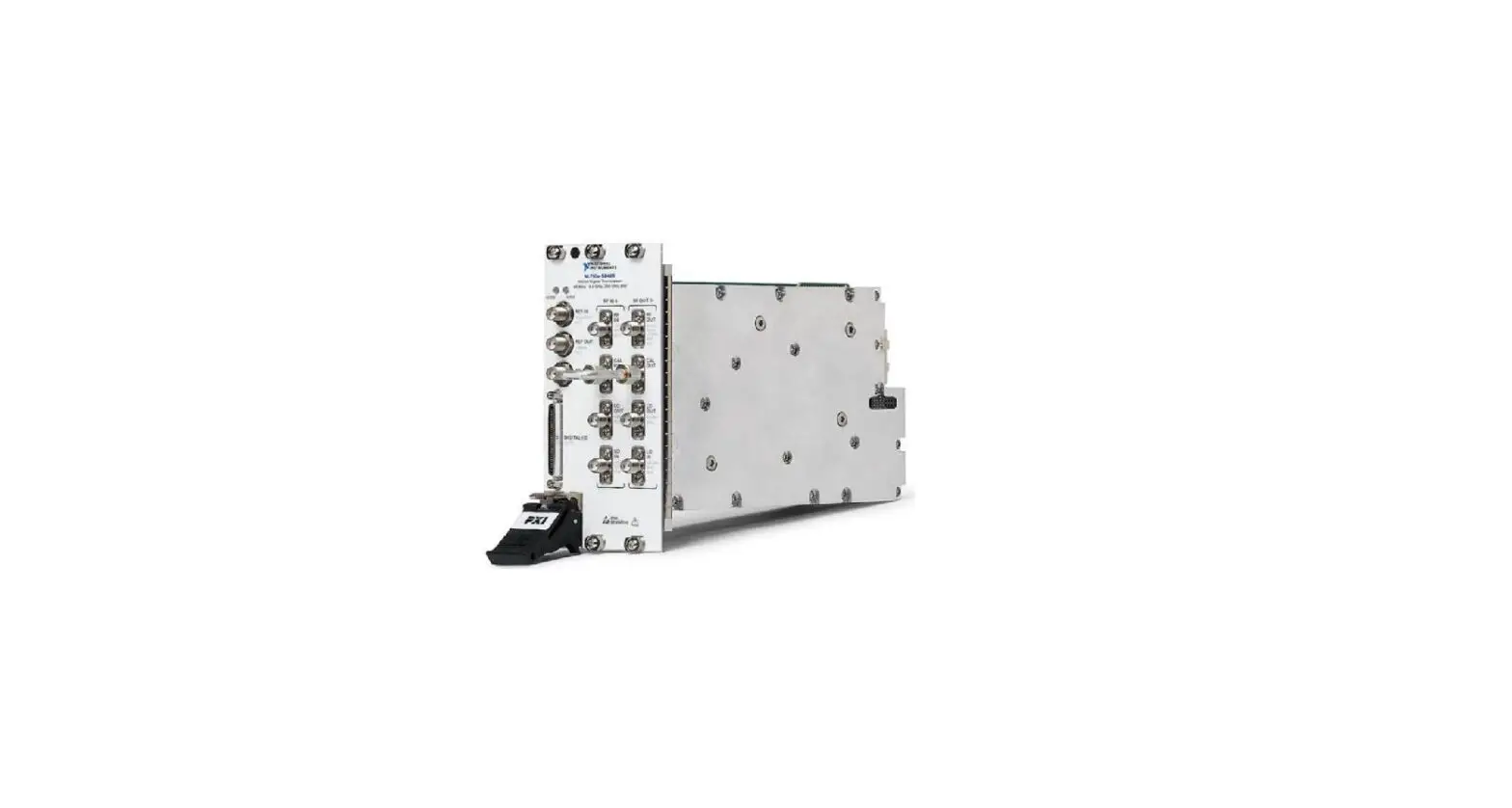
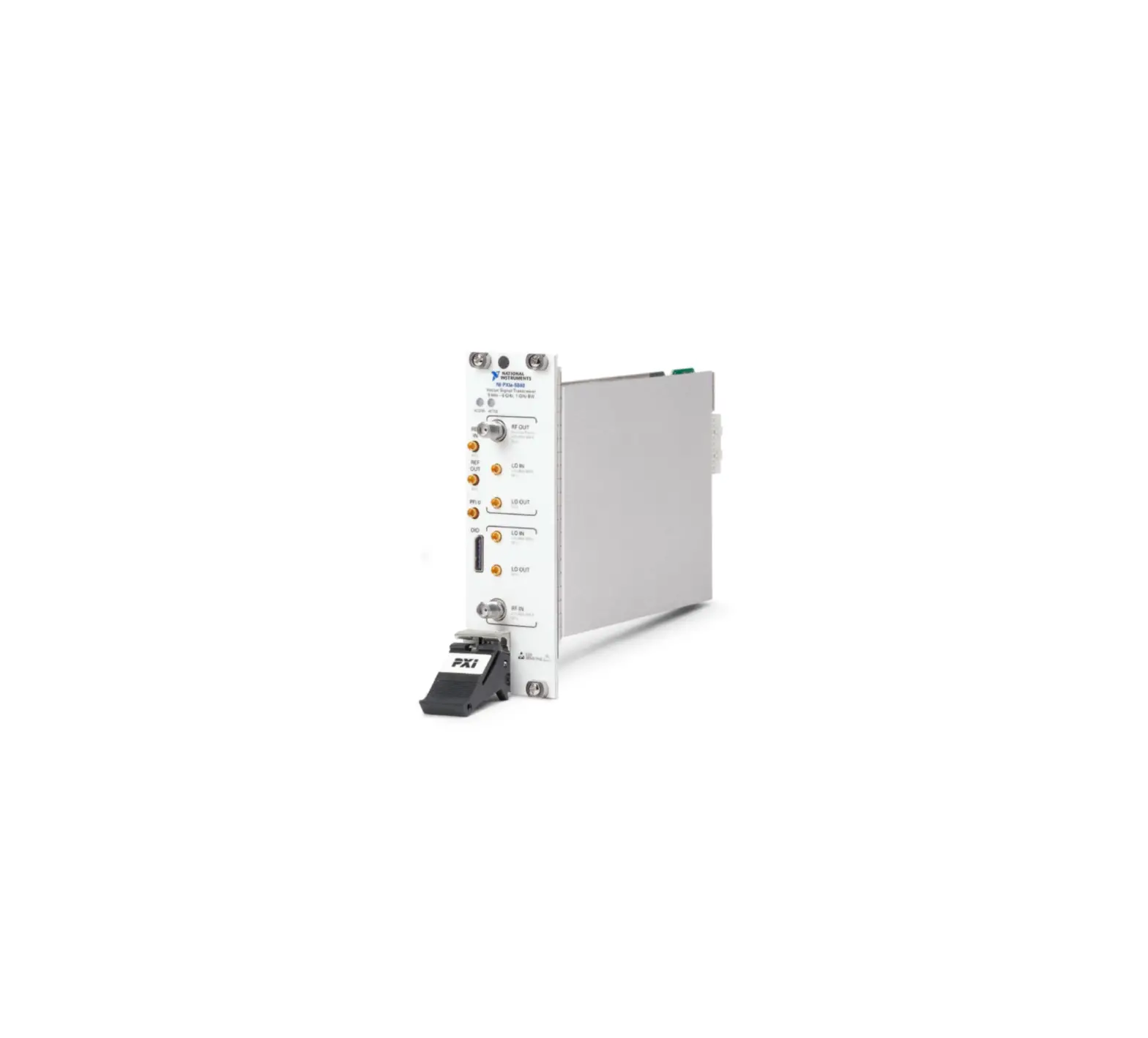
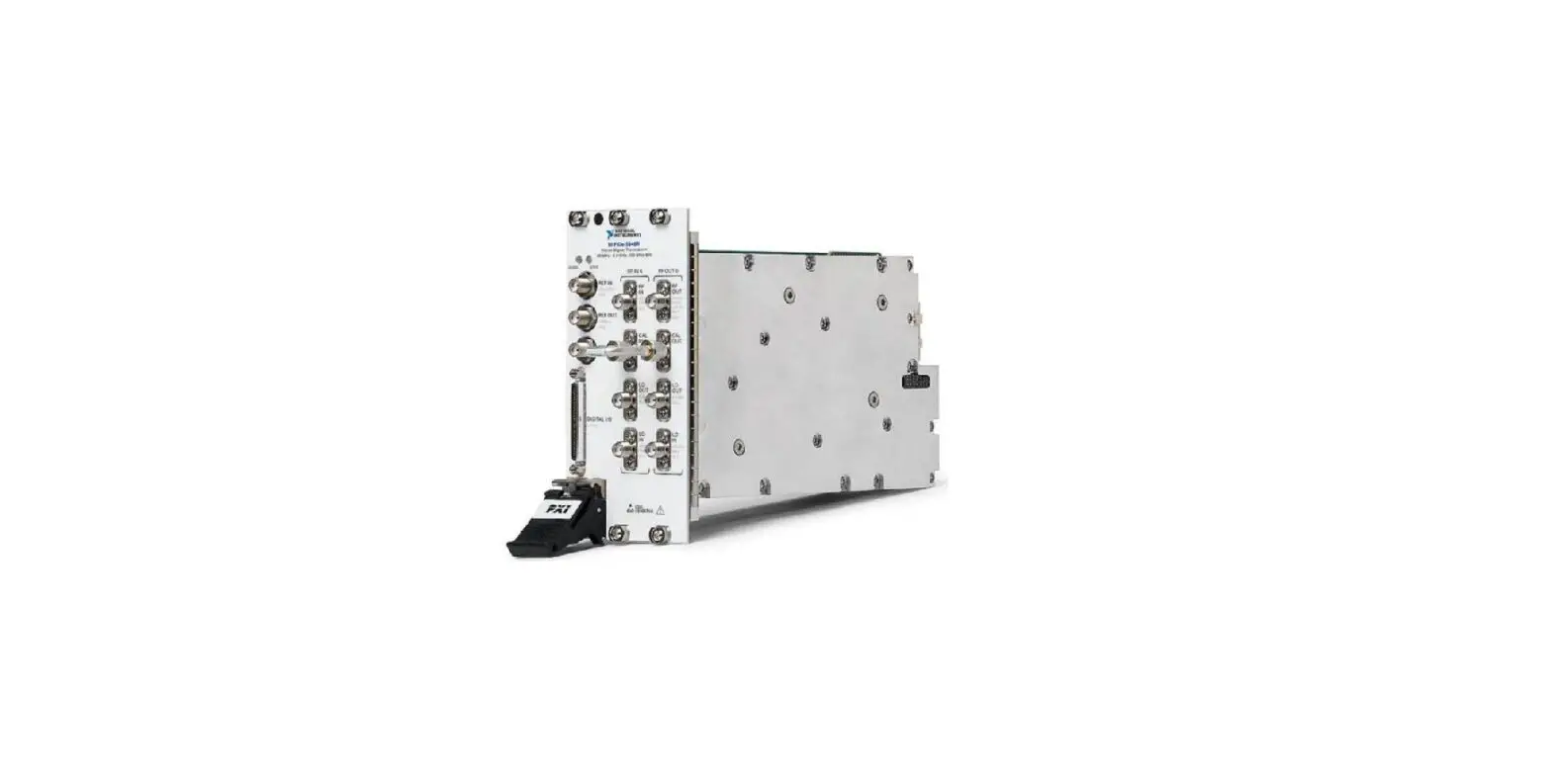
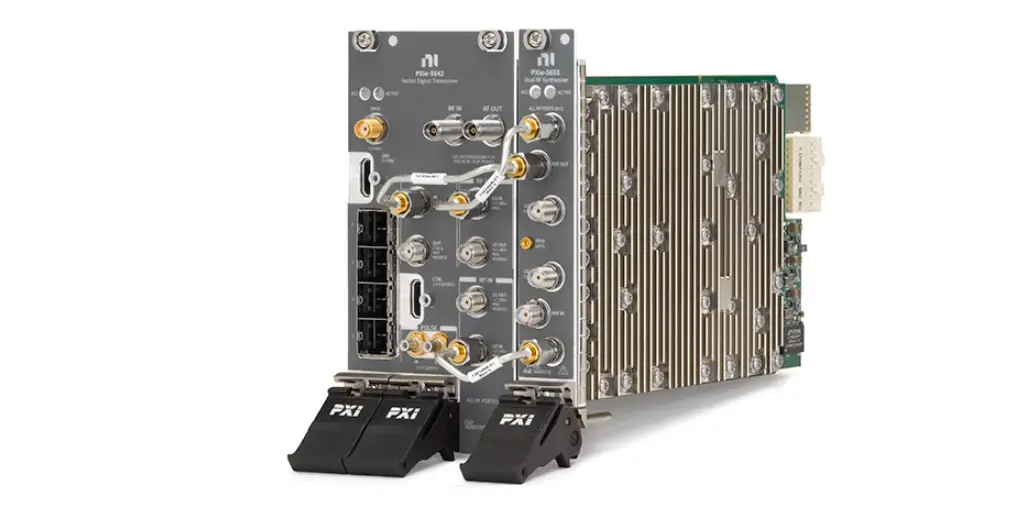
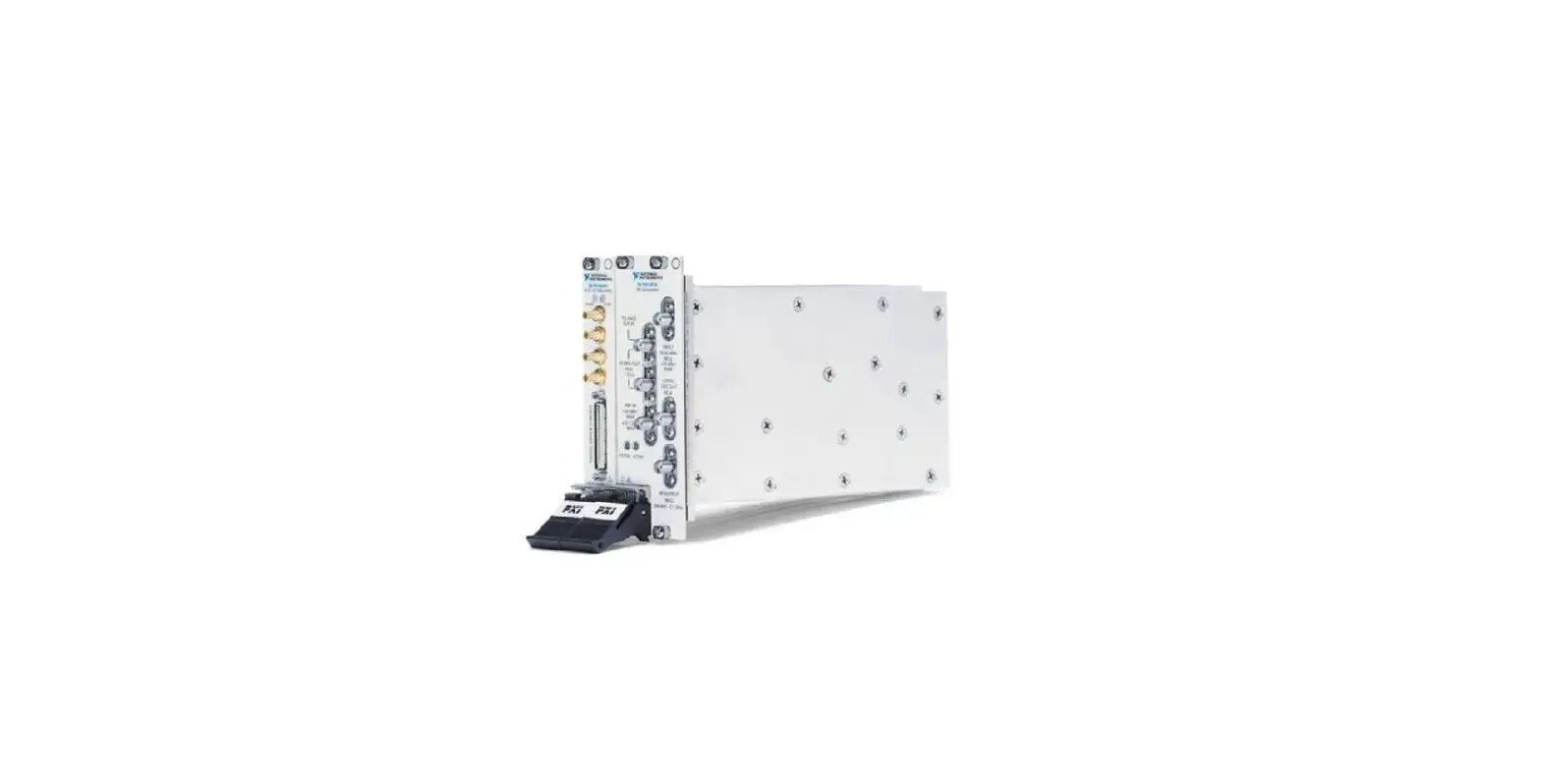
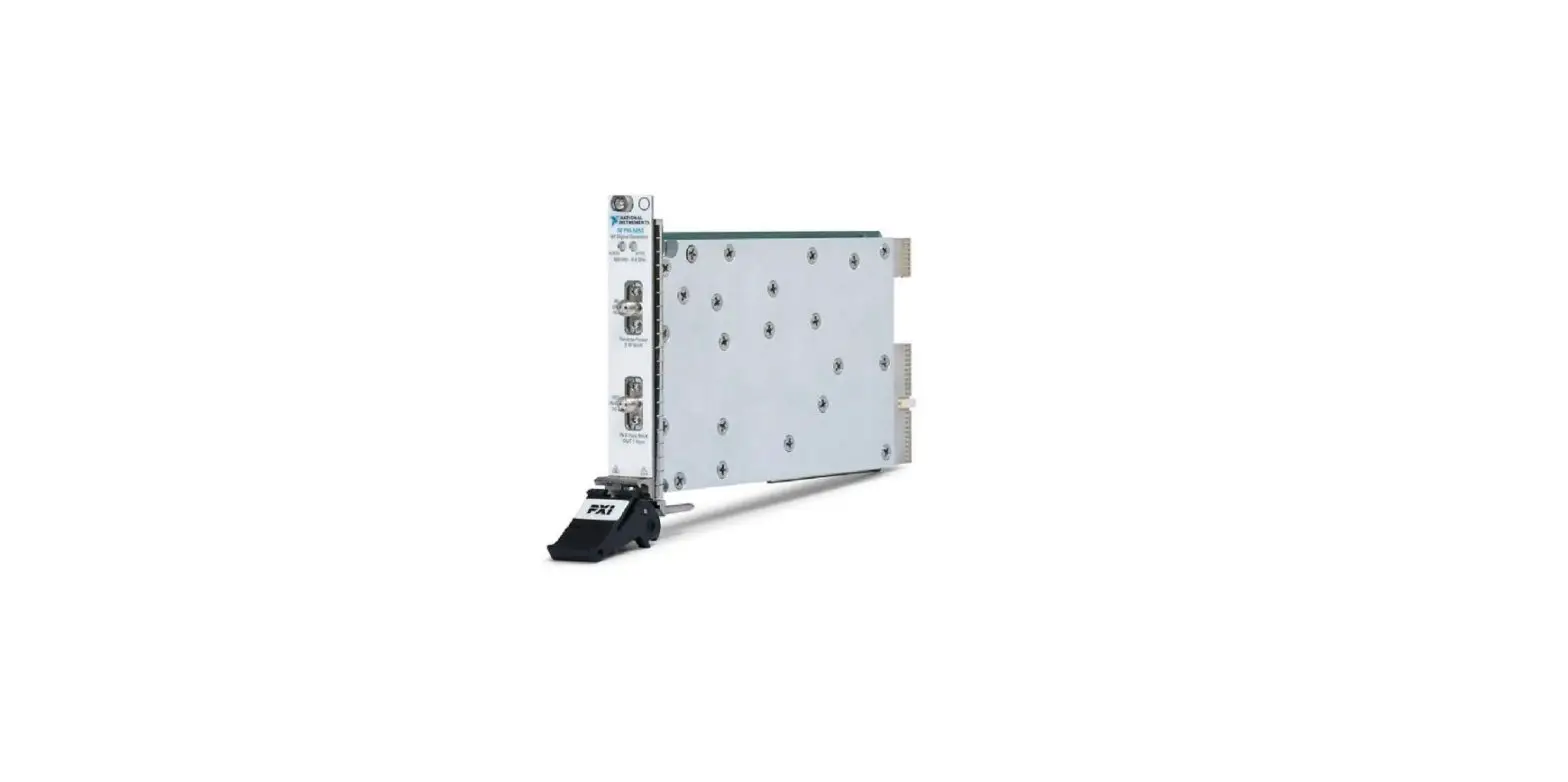
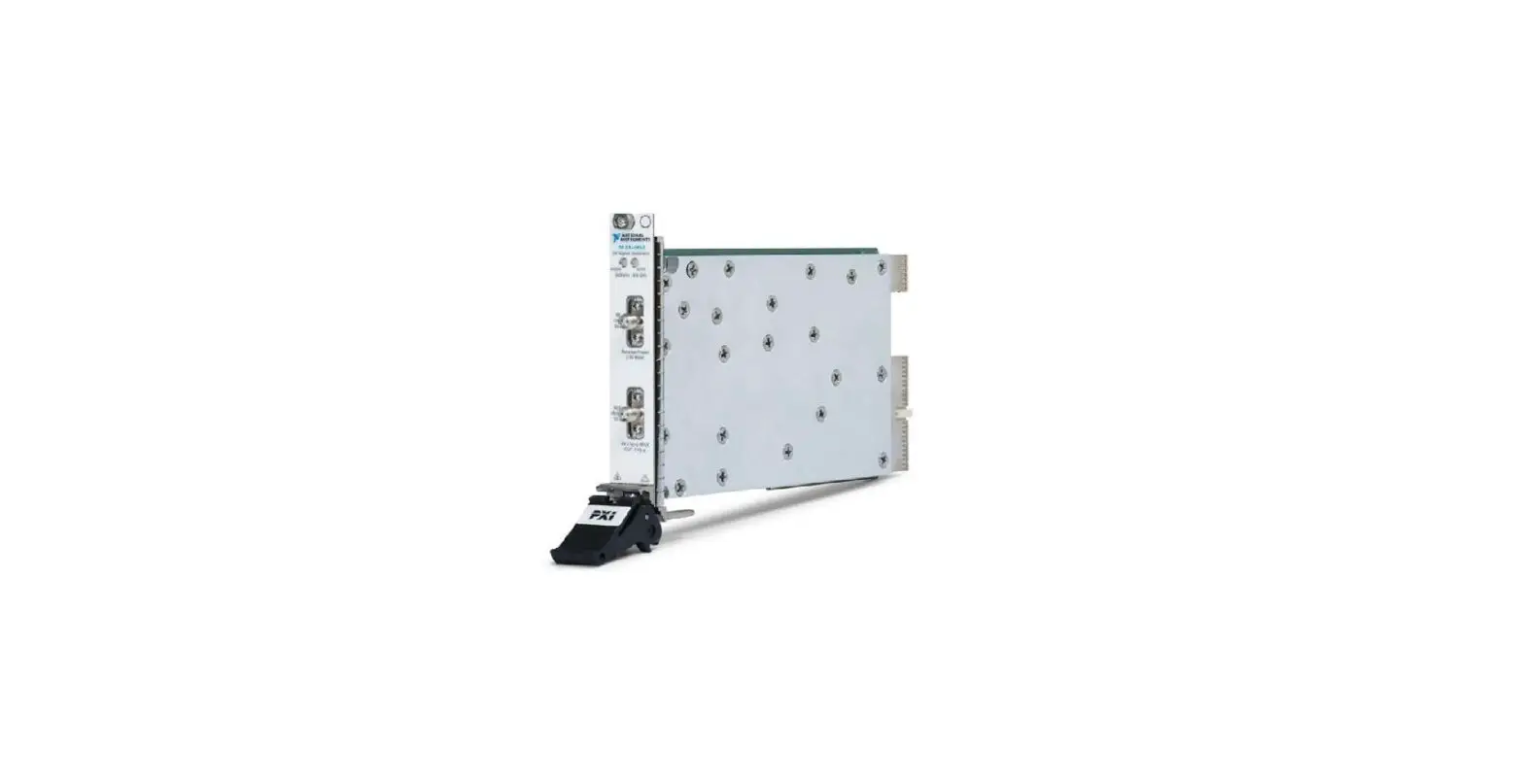
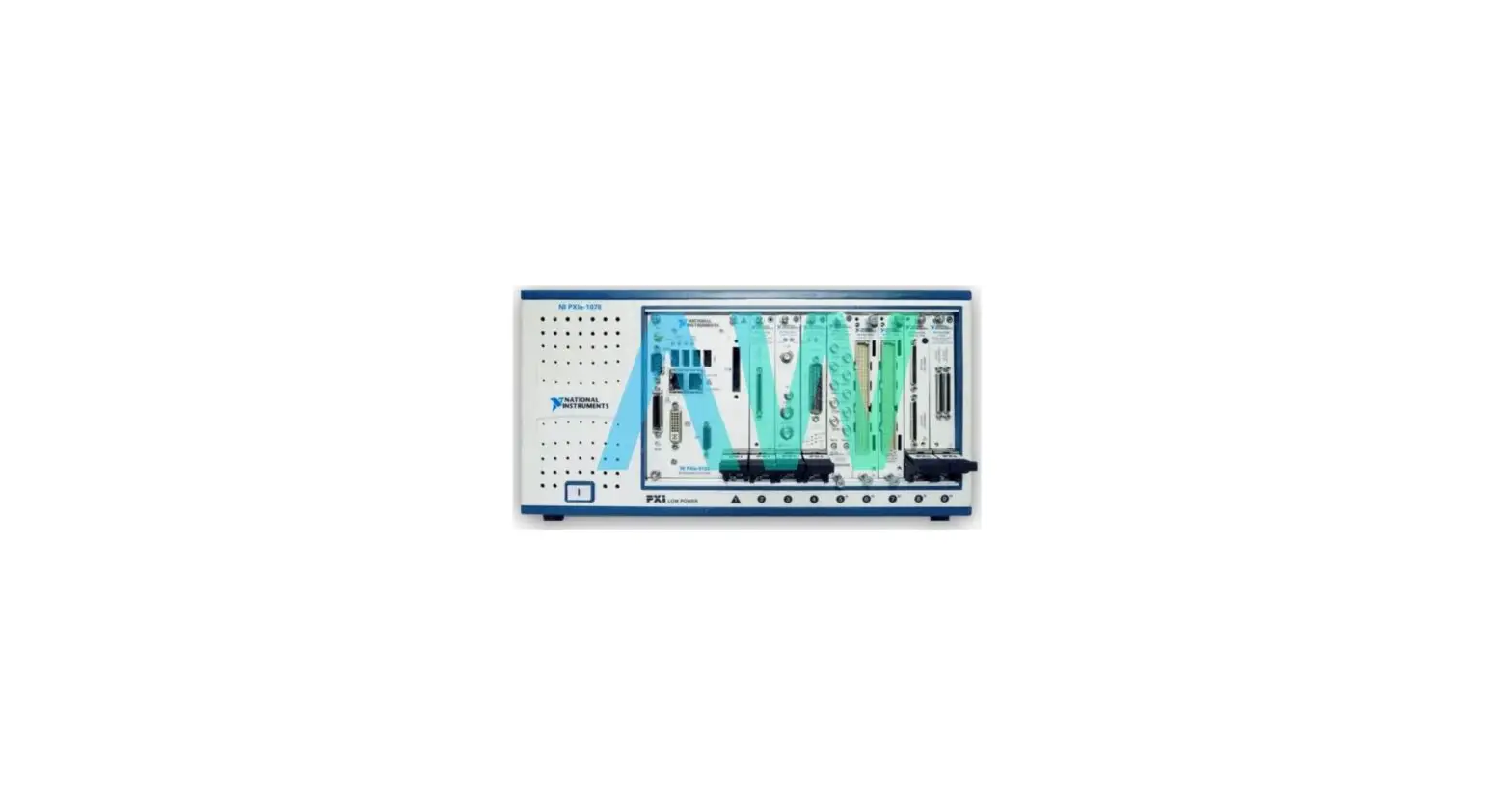
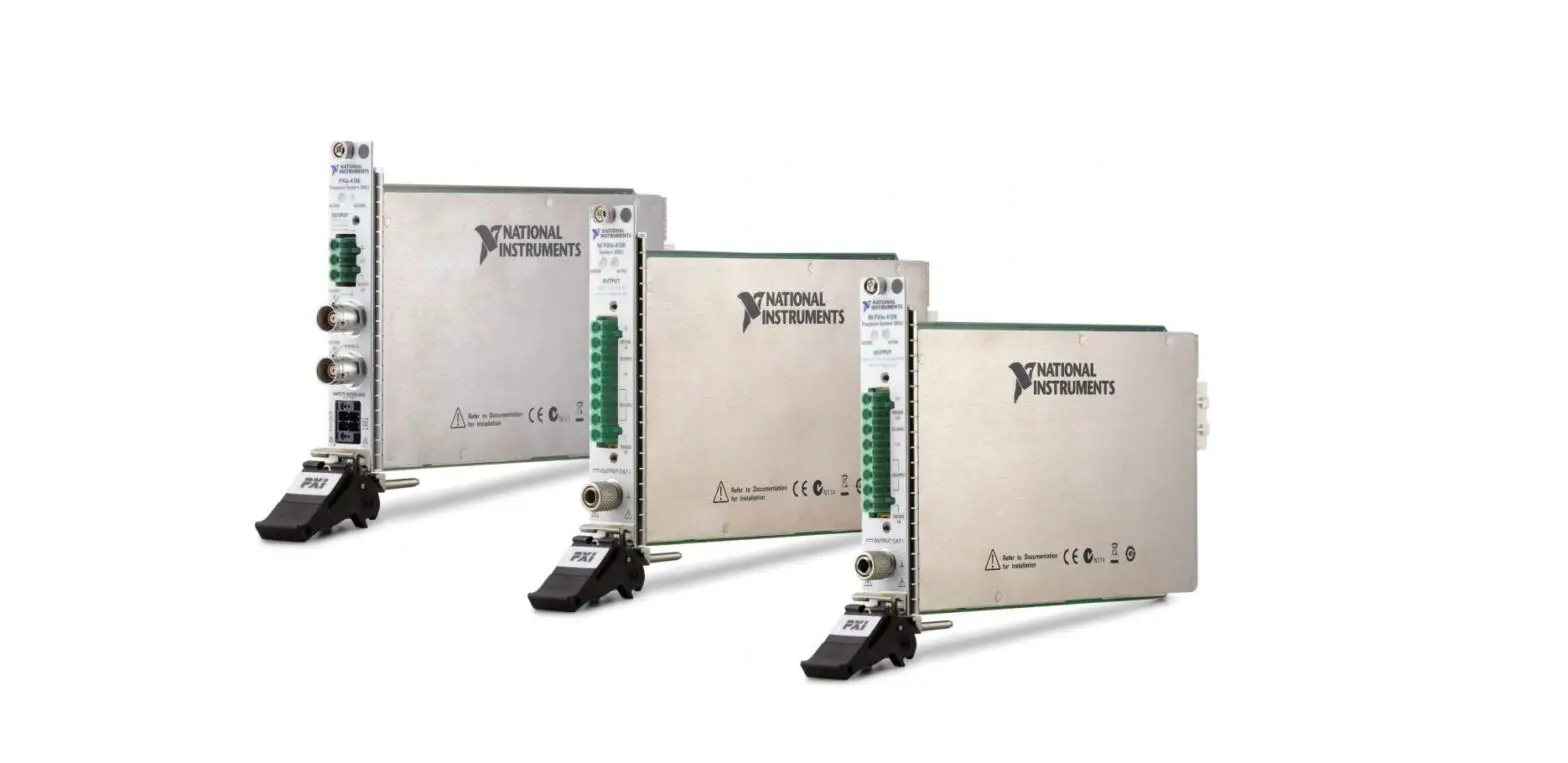
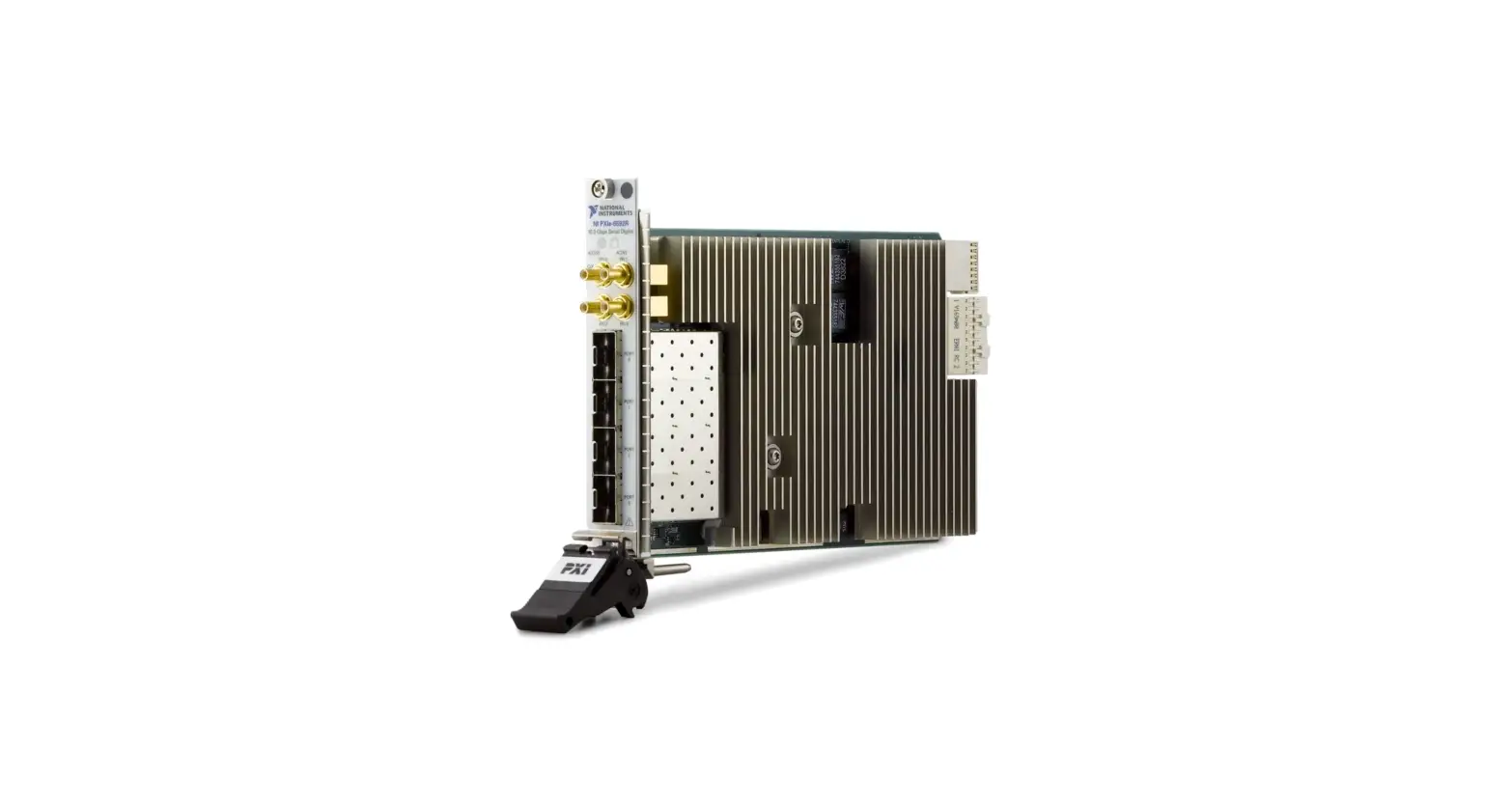
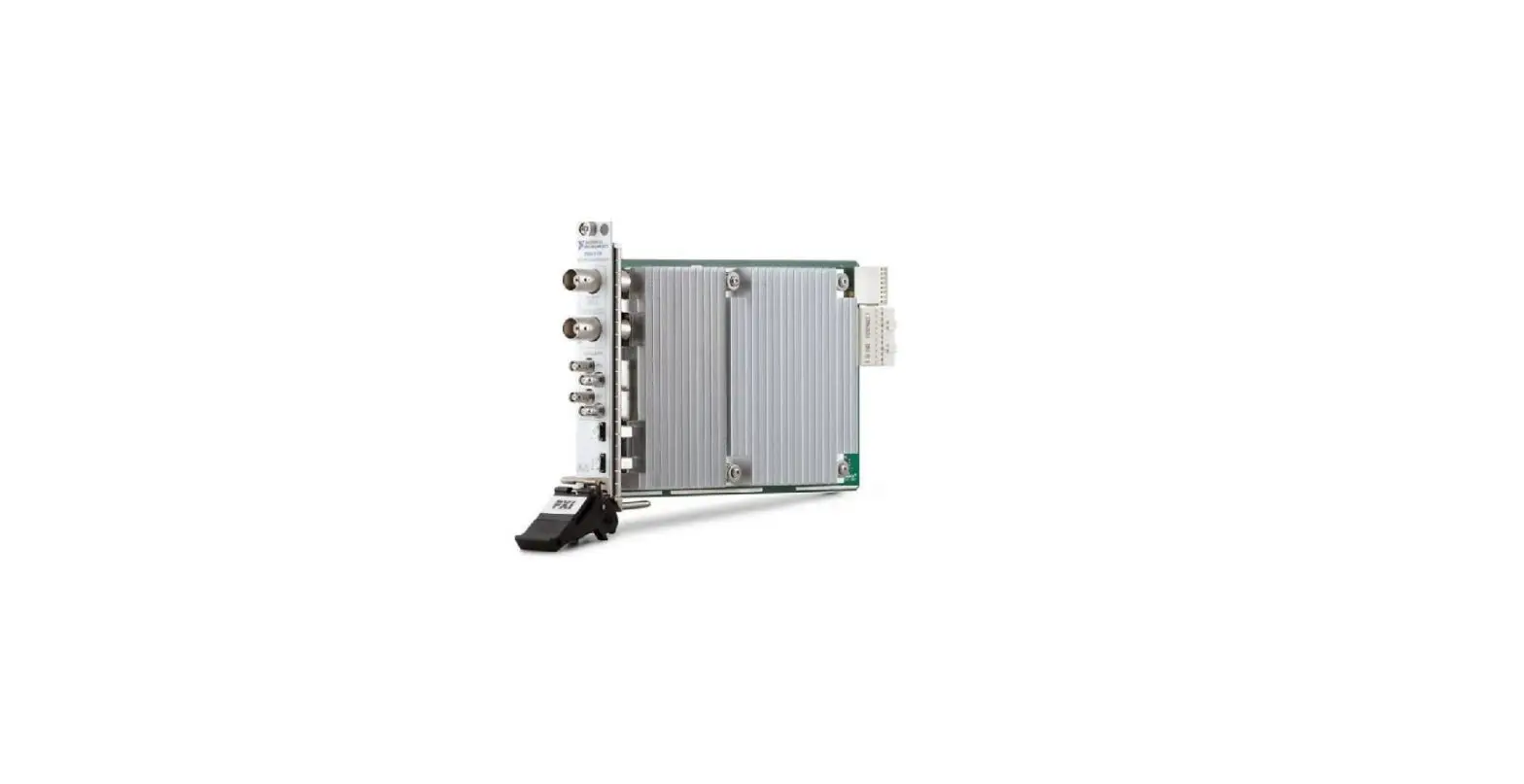
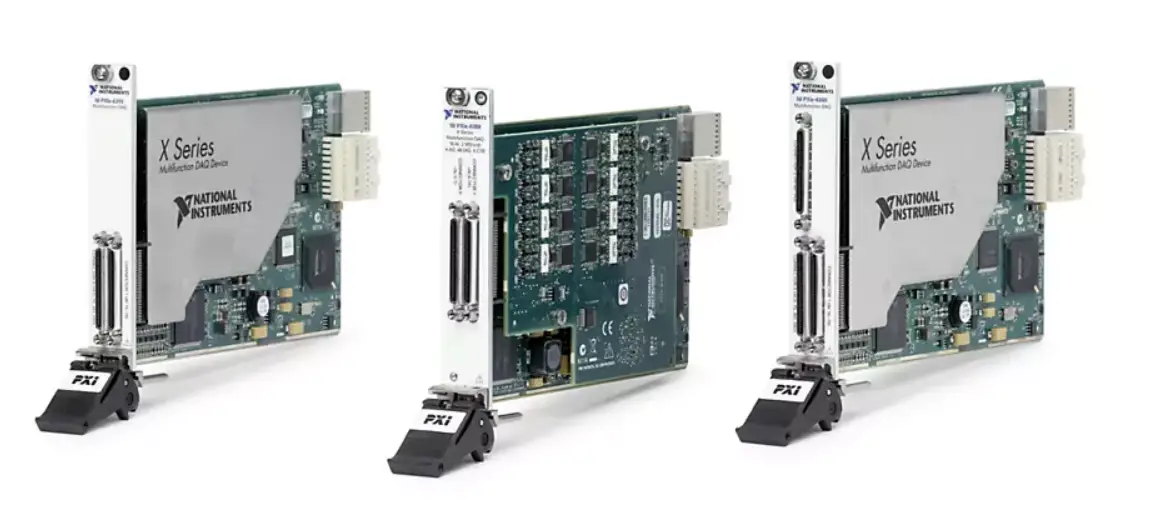
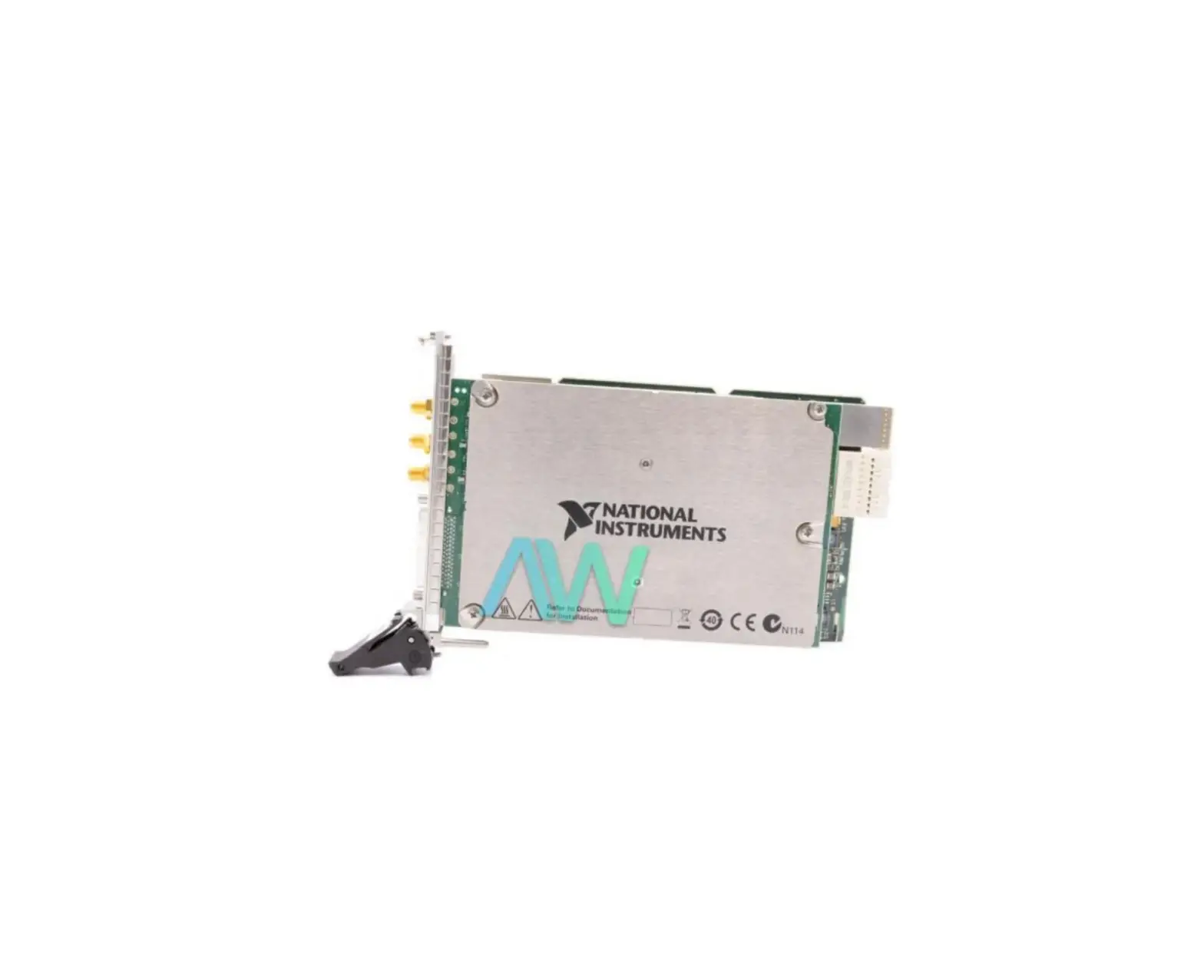
PXIe-5840 PXI Vector Signal Transceivers
PXI Vector Signal Transceivers
The PXI Vector Signal Transceiver (VST) is a combination of an
RF and baseband vector signal analyzer and generator, a high-speed
serial and parallel digital interface, and a user-programmable FPGA
that allows real-time signal processing and control. It is built
for RF automated test and measurement with 1 GHz of instantaneous
RF or complex I/Q bandwidth. It is ideal for applications including
802.11ac/ax device testing, 5G design and testing, RFIC testing,
radar prototyping, spectrum monitoring, and more.
Key Features
- Wide Instantaneous Bandwidth: The NI VSTs offer 80 MHz, 200
MHz, and 1 GHz of instantaneous RF and complex I/Q bandwidth with
excellent measurement accuracy. - EVM Measurement Performance: The modular design of PXI
instruments provides engineers with the most demanding EVM
performance requirements the ability to improve on the VST’s native
performance even further.
Specifications
| Model | Frequency Range | Instantaneous Bandwidth | Phase Noise (10 kHz offset) at 900 MHz | EVM (802.11ax 80 MHz, loopback) | VSG Maximum Output Power (CW @ 1 GHz) | VSG Amplitude Accuracy | VSA Amplitude Accuracy | Tuning Time | Slots | FPGA | Digital I/O | Baseband I/Q Channels |
|---|---|---|---|---|---|---|---|---|---|---|---|---|
| PXIe-5644 | 65 MHz to 6 GHz | 80 MHz | -112 dBc/Hz | -48 dB, w/ phase noise enhancement, external LO | +13 dBm | N/A | N/A | N/A | 3 | Virtex-6 LX195T | 24 channels parallel at 125 MHz | N/A |
| PXIe-5646 | 65 MHz to 6 GHz | 200 MHz | -112 dBc/Hz | -50 dB, w/ phase noise enhancement, external LO | +13 dBm | N/A | N/A | N/A | 3 | Virtex-6 LX240T | 24 channels parallel at 125 MHz | N/A |
| PXIe-5840 | 9 kHz to 6 GHz | 1 GHz | -122 dBc/Hz | -54 dB, w/ phase noise enhancement, external LO | +20 dBm | N/A | N/A | N/A | 2 | VIRTEX-7 X690T | 8 channels parallel at 60 MHz, 4 channels high-speed serial up to 12 Gbps | 1 (I and Q), 100 Ohm Differential |
| PXIe-5645 | 65 MHz to 6 GHz | 80 MHz | -112 dBc/Hz | -48 dB, w/ phase noise enhancement, external LO | +13 dBm | N/A | N/A | N/A | 4 | Virtex-6 LX195T | 24 channels parallel at 125 MHz | 1 (I and Q), 100 Ohm Differential |
| PXI-5820 | DC to 500 MHz | 1 GHz complex I/Q | N/A | N/A | N/A | N/A | N/A | N/A | 2 | VIRTEX-7 X690T | 8 channels parallel at 60 MHz, 4 channels high-speed serial up to 12 Gbps | 1 (I and Q), 100 Ohm Differential |
Product Usage Instructions
To use the PXI Vector Signal Transceiver, follow these
steps:
- Choose the appropriate model based on your frequency range and
instantaneous bandwidth requirements. - Install the VST in a compatible PXI chassis with the
appropriate slots available. - Connect the VST to your device under test (DUT) using the
appropriate cables and connectors. - Configure the VST using the software-defined architecture and
platform-based approach to test and measurement. - Use the VST for a wide range of applications including
802.11ac/ax device testing, 5G design and testing, RFIC testing,
radar prototyping, spectrum monitoring, and more.
PXIe-5840
Have a question? Contact Us.
PRODUCT FLYER
PXI Vector Signal Transceivers
CONTENTS
PXI Vector Signal Transceivers Detailed View of PXIe-5840 RF Vector Signal Transceiver Key Features Software-Defined Architecture Platform-Based Approach to Test and Measurement PXI Instrumentation Hardware Services
Page 1 | ni.com | PXI Vector Signal Transceivers
PXI Vector Signal Transceivers
PXIe-5840, PXIe-5820, PXIe-5646, PXIe-5645, and PXIe-5644
· Software: Includes interactive soft front panel, API support for LabVIEW and text-based languages, shipping examples, and detailed help files
· Up to 6 GHz RF frequency range
· Up to 1 GHz instantaneous/complex I/Q bandwidth
· High-speed serial and parallel digital interface
· Better than -50dB EVM performance for higher order modulation schemes
· Easy synchronization for MIMO configurations using NI-TClk
· Baseband two-channel differential I/Q interface with 4 Vpp differential input and 2 Vpp differential output swing
· LabVIEW-programmable FPGA
Built for RF Automated Test and Measurement
The PXI Vector Signal Transceiver (VST) combines an RF and baseband vector signal analyzer and generator with a user-programmable FPGA and high-speed serial and parallel digital interfaces for realtime signal processing and control. With 1 GHz of instantaneous RF or complex I/Q bandwidth, the NI VST is ideally suited for a wide range of applications including 802.11ac/ax device testing, 5G design and testing, RFIC testing, radar prototyping, spectrum monitoring and more.
The VST incorporates the fast measurement speed and small form factor of a production test box with the flexibility and high performance of an R&D-grade box instrument. This means you can use the VST to test a variety of cellular and wireless standards including Bluetooth, LTE-Advanced Pro, and IEEE 802.11ax with an error vector magnitude of better than -50 dB (0.5 %) at 5.8 GHz. In addition, you can easily expand the VST’s small PXI Express form factor to support multiple input, multiple output (MIMO) configurations. The baseband VST can be tightly synchronized with the PXIe-5840 RF VST to subnanosecond accuracy, to offer a complete solution for RF and baseband differential I/Q testing of wireless chipsets. The VST software is built on LabVIEW FPGA, and features several starting points for your application including application IP, reference designs, examples, and LabVIEW sample projects, while also giving you the ability to fully customize the onboard processing.
Page 2 | ni.com | PXI Vector Signal Transceivers
Table 1. NI offers VSTs up to 1GHz instanteous bandwidth.
PXIe-5644
PXIe-5646
PXIe-5840
PXIe-5645
PXI-5820
Frequency Range
65 MHz to 6 GHz
65 MHz to 6 GHz
9 kHz to 6 GHz
65 MHz to 6 GHz
DC to 500 MHz
Instantaneous Bandwidth
80 MHz
200 MHz
1 GHz
80 MHz
1 GHz complex I/Q
Phase Noise (10 kHz offset) at 900 MHz
-112 dBc/Hz
-112 dBc/Hz
-122 dBc/Hz
-112 dBc/Hz
N/A
EVM (802.11ax 80 MHz, loopback)
-48 dB, w/ phase noise enhancement, external
LO
-50 dB, w/ phase noise enhancement, external
LO
-54 dB, w/ phase noise enhancement, external
LO
VSG Maximum Output Power (CW @ 1 GHz)
+13 dBm
+13 dBm
+20dBm
+13 dBm
N/A
VSG Amplitude Accuracy
±0.6 dB
±0.6 dB
±0.6 dB
±0.6 dB
N/A
VSA Amplitude Accuracy
±0.55 dB
±0.55 dB
±0.5 dB
±0.55 dB
N/A
Tuning Time
380 µs
380 µs
300 µs
380 µs
N/A
Slots
3
3
2
4
2
FPGA
Virtex-6 LX195T
Virtex-6 LX240T
VIRTEX-7 X690T
Virtex-6 LX195T
VIRTEX-7 X690T
Digital I/O
24 channels parallel at 125 MHz
24 channels parallel at 125 MHz
8 channels parallel at 60 MHz,
4 channels high-speed serial up to 12 Gbps
24 channels parallel at 125 MHz
8 channels parallel at 60 MHz,
4 channels high-speed serial up to 12 Gpbs
Baseband I/Q Channels
N/A
N/A
N/A
1 (I and Q), 100 Ohm Differential
1 (I and Q), 100 Ohm Differential
Detailed View of PXIe-5840 RF Vector Signal Transceiver
Page 3 | ni.com | PXI Vector Signal Transceivers
Key Features
Wide Instantaneous Bandwidth
From next-generation wireless technologies like 802.11ax and 5G to advanced aerospace/defense applications like radar test and spectrum monitoring, there is a demand for wider signal bandwidth to achieve higher peak data rates. Leveraging fast sampling, high-linearity DACs and ADCs, and wide-band internal calibration mechanisms, the NI VSTs offer 80 MHz, 200 MHz and 1 GHz of instantaneous RF and complex I/Q bandwidth with excellent measurement accuracy.
Figure 1. Instantaneous RF bandwidth offerings of the NI VSTs
Wider bandwidth introduces the need for advanced signal processing at higher throughputs, and the NI VSTs address this requirement by offering FPGA-based signal processing for applications such as radar target simulation, multi-carrier aggregation, DPD algorithm implementations, 5G prototyping and real-time spectrum analysis. Additionally, the VSTs incorporate patented algorithms for amplitude and phase correction for high absolute amplitude accuracy and low deviation from linear phase across the span of their wide instantaneous bandwidth.
EVM Measurement Performance
The VST uses advanced, patented IQ calibration techniques to deliver best-in-class EVM performance for wideband signals. A critical requirement of next-generation wireless devices is even more stringent EVM performance requirements. With higher order modulation schemes and wideband multicarrier signal configurations, the RF front ends of today’s wireless devices require better linearity and phase noise to deliver the required modulation performance. Because of these requirements, tomorrow’s RF test instrumentation must deliver even more accurate RF performance.
2.4 GHz
5.2 GHz
5.5 GHz
5.8 GHz
-42
-44
-46
EVM (DB)
-48
-50
-52
-54
-30
-25
-20
-15
-10
-5
0
MEASURED AVERAGE POWER (DBM)
5
10
Figure 2. 802.11ax 80 MHZ EVM performance (w/ 5840 Loopback) External LO, Noise Correction Enabled
Page 4 | ni.com | PXI Vector Signal Transceivers
The modular design of PXI instruments provides engineers with the most demanding EVM performance requirements the ability to improve on the VST’s native performance even further. Using a PXI external local oscillator (LO), systems based on the second-generation VST achieve EVM performance better than -50 dB.
Modular and Easily Synchronized
Engineers are employing Multiple Input Multiple Output (MIMO) systems in a wide range of electronic warfare and radar applications ranging from phased array radars to beam forming and direction finding systems. The modern communications standards, such as 802.11ax, LTE-Advanced Pro, and 5G, are also using MIMO schemes with up to 128 antennas on a single device to provide a combination of either higher data rates through more spatial streams or more robust communications through beamforming. Not surprisingly, MIMO technology adds significant design and test complexity. It not only increases the number of ports on a device but also introduces multichannel synchronization requirements. To test a MIMO device, RF test equipment must be able to synchronize multiple RF signal generators and analyzers. In these configurations, the instrument’s form factor and the synchronization mechanism are critical
.
Figure 3. Typical 8×8 MIMO system with eight PXIe-5840 VSTs; with the NI T-Clk API, shared Local Oscillators, and a common reference clock, engineers can synchronize the VST with other PXI instruments
With the compact footprint of the PXI VST, engineers can synchronize up to eight PXIe-5840s or five PXIe-5646s in a single 18-slot PXI chassis. In addition, each of the VSTs can be synchronized in a completely phase-coherent manner. In hardware, each VST features the ability to import or export the LO so that all modules can share a common LO. In software, engineers can use NI’s patented T-Clock technology to easily synchronize multiple instruments using the NI T-Clk API. Using this API, engineers can synchronize multiple VSTs or even synchronize VSTs with other modular instruments, either in LabVIEW, C/C++, or .NET.
Flexible Digital Interface
In addition to the onboard VSG and VSA, the VST features a flexible digital interface capable of both high-speed parallel and high-speed serial interfacing. In PXIe-5644/45/46, the digital I/O buffers are connected directly to the FPGA, allowing the functionality of the individual digital I/O signals to be programmed for custom applications using LabVIEW FPGA. In PXIe-5840, the digital lines are directly connected to a user-programmable FPGA through level shifting buffers. As a result, the digital lines support 1.2, 1.5, 1.8, 2.5, and 3.3 V voltage levels and are exposed on the instrument front panel using a 42-pin Nano-Pitch connector. Using this connector, eight digital lines are dedicated to high-speed parallel interfacing. The parallel interface operates at up to 60 MHz clock rates, and this interface can be controlled in real-time using the instrument’s onboard FPGA.
Page 5 | ni.com | PXI Vector Signal Transceivers
A new addition to the VST is the high-speed serial interface, which features four multi-gigabit transceivers (MGTs) that operate at data rates of up to 12 Gb/s per lane. The serial interface can support high-speed serial standards such as Xilinx Aurora and Serial RapidIO. A benefit of the high-speed serial interface is that it gives users the ability to stream the full instrument’s bandwidth out the front panel to external signal processing modules such as the ATCA-3671. Thus, engineers have two data streaming options and can stream data either out the front panel connector or through the PCI Express backplane.
Figure 4. Digital interfacing ports on the PXIe-5840 front panel
Wide Frequency Range
The VSTs offer a broad and contiguous frequency range from 9 kHz to 6 GHz (center frequency). With the combination of contiguous frequency coverage and full suite of software for wireless standards measurements, engineers can use a single instrument to test a wide range of wireless technologies. Modern electronic systems are increasingly using a blend of multiple wireless technologies. Prevalent examples of this are integrated chipsets that combine AM/FM, Bluetooth, GNSS, and Wi-Fi technologies on the same chipset. Many of these wireless technologies operate below 6 GHz.
Figure 5. Frequency range of 1st generation VST PXIe-5644/ PXIe-5645/ PXIe-5646 and 2nd generation VST PXIe5840 mapped to different application frequency standards
Page 6 | ni.com | PXI Vector Signal Transceivers
With the growing prevalence of combining wireless technologies within the same device, it is increasingly important that test equipment have contiguous frequency coverage from near-DC to 6 GHz. Although both the first- and second-generation VSTs provide contiguous frequency coverage to 6 GHz, the second-generation VST expands the VST frequency at the low end to 9 kHz. Because of the wide frequency range, engineers can not only test the latest wireless technologies for avionics, Wi-Fi, and mobile communications but can also future-proof their test system for new emerging wireless technologies that are not present in today’s electronics.
Baseband I/Q Functionality
The PXIe-5820 and PXIe-5645 baseband vector signal transceivers combine a wideband I/Q digitizer, wideband I/Q arbitrary waveform generator and high-performance user-programmable FPGA into a single two-slot PXI Express module. The PXIe-5820 offers up to 1 GHz baseband complex I/Q generation and analysis bandwidth and supports advanced features for adaptive chipset control, such as programmable common mode ranging and voltage swing. The combination of high linearity, low phase noise, and patented IQ calibration techniques enables the PXIe-5820 to achieve better than -54 dB EVM performance with higher-order modulation schemes such as 802.11ax 1024 QAM.
Figure 6. LabVIEW example to perform envelope tracking and digital predistortion using the NI PXIe-5820, baseband VST in tight-synchronization with the NI PXIe-5840, RF VST
The baseband VST can also be used in tight synchronization with the RF VST to offer a complete solution for RF and baseband differential IQ testing of wireless chipsets with digital predistortion and envelope tracking. The baseband VST software is built on LabVIEW FPGA and features several starting points for your application including application-specific IP, examples, and LabVIEW sample projects.
Page 7 | ni.com | PXI Vector Signal Transceivers
Software-Designed Architecture
Application Programming Interface (API)
NI RFmx provides an intuitive programming API that offers both ease of use and advanced measurement configuration. It offers a highly-optimized API to perform tasks ranging from measurements on digital and analog modulated signals to RF spectral measurements including channel power, adjacent channel power, and power spectrum. It also allows users to automate their programs with accurate, highperformance standard-based measurements for LTE-A, WCDMA/HSPA+, GSM/EDGE, Bluetooth, Bluetooth LE, and more. In addition to the support for cellular and general purpose measurements with RFmx, NI offers wireless test standards software for GPS/GNSS simulation and FM/RDS, and the WLAN Test Toolkit gives you direct and fine control over the generation and analysis of IEEE 802.11a/b/g/n/ac and ax signals, as well as 802.11j/p/ah/af waveforms, with industry-leading speed and accuracy.
Figure 7. Power spectrum measurements performed using NI RFmx in LabVIEW and C
Figure 7 illustrates a power spectrum measurement using an RFmx LabVIEW example with eight function calls. Engineers can get started with one of more than 100 example programs in C, .NET, and LabVIEW that are designed to make instrument automation straightforward. The NI-RFmx API includes high-level parameters that intelligently optimize instrument settings to help you achieve the highest quality measurements with the fewest software calls. Additionally, NI-RFmx has features that vastly simplify the software complexity of multi-measurement parallelism and multi-DUT measurements. The modular software architecture offers access to lower level NI-RFSA instrument- and application-specific functions that provide the ultimate balance of ease of use and test code flexibility. NIRFmx works with all NI software-designed VSTs and preserves the usage of NI-RFSA instrument driver FPGA extensions, which are available only on LabVIEW FPGA-enabled products. As a result, users can achieve industry-leading measurement speeds using the latest processor technologies and easy-toprogram multithreaded measurements for test time reduction.
Page 8 | ni.com | PXI Vector Signal Transceivers
Soft Front Panel
The simplest software use model for the VST is the soft front panel experience. With the soft front panel, users can quickly and easily configure the RF signal generator or analyzer to debug fixtures and obtain fast measurement results. For example, in Figure 8, the soft front panel gives engineers the ability to configure the VST for an adjacent channel power (ACP) measurement.
Figure 8. Users can configure the VST for quick measurements using the RFSA and RFSG soft front panels; other interactive examples are also available and act as soft front panels for different standards
Page 9 | ni.com | PXI Vector Signal Transceivers
Customizable With FPGA Extensions
The most innovative and powerful aspect of the VST’s software experience is its LabVIEW-programmable FPGA. Using LabVIEW FPGA, you can develop FPGA extensions to perform measurement acceleration, closed-loop tests, and real-time algorithm prototyping. Under this design paradigm, the firmware onboard the instrument is written in LabVIEW, and engineers can customize to address application-specific needs. The core firmware is divided into an acquisition loop, a generation loop, and an example user loop, as Figure 9 illustrates.
Figure 9. Channel power measurement in RFmx using LabVIEW FPGA
In Figure 9, the LabVIEW FPGA diagram is divided into three Timed Loops. The first Timed Loop, the acquisition loop, handles IQ input records, timing/triggering, IQ calibration, and storage to memory. The second loop handles the VSG operation and performs similar triggering, calibration, and waveform sequencing for signal generation. The third loop is referred to as the Example User Loop, and it is explicitly designed for user customization. Typical IP for the user loop could be digital control, input-tooutput signal processing, or closed-loop control. The VST family basecard consists of a Xilinx Virtex-7 or Virtex-6 FPGA that you can customize to design FPGA extensions for application-tailored enhancements. Examples of application-specific FPGA IP, developed by NI’s system engineers and alliance partners, include the real-time channelizer, wideband record and playback, real-time spectrum analysis, power servoing, real-time digital predistortion, channel emulator, and radar target simulator.
Page 10 | ni.com | PXI Vector Signal Transceivers
Platform-Based Approach to Test and Measurement
What Is PXI?
Powered by software, PXI is a rugged PC-based platform for measurement and automation systems. PXI combines PCI electrical-bus features with the modular, Eurocard packaging of CompactPCI and then adds specialized synchronization buses and key software features. PXI is both a high-performance and low-cost deployment platform for applications such as manufacturing test, military and aerospace, machine monitoring, automotive, and industrial test. Developed in 1997 and launched in 1998, PXI is an open industry standard governed by the PXI Systems Alliance (PXISA), a group of more than 70 companies chartered to promote the PXI standard, ensure interoperability, and maintain the PXI specification.
Integrating the Latest Commercial Technology
By leveraging the latest commercial technology for our products, we can continually deliver highperformance and high-quality products to our users at a competitive price. The latest PCI Express Gen 3 switches deliver higher data throughput, the latest Intel multicore processors facilitate faster and more efficient parallel (multisite) testing, the latest FPGAs from Xilinx help to push signal processing algorithms to the edge to accelerate measurements, and the latest data converters from TI and ADI continually increase the measurement range and performance of our instrumentation.
Page 11 | ni.com | Digital Multimeters
PXI Instrumentation
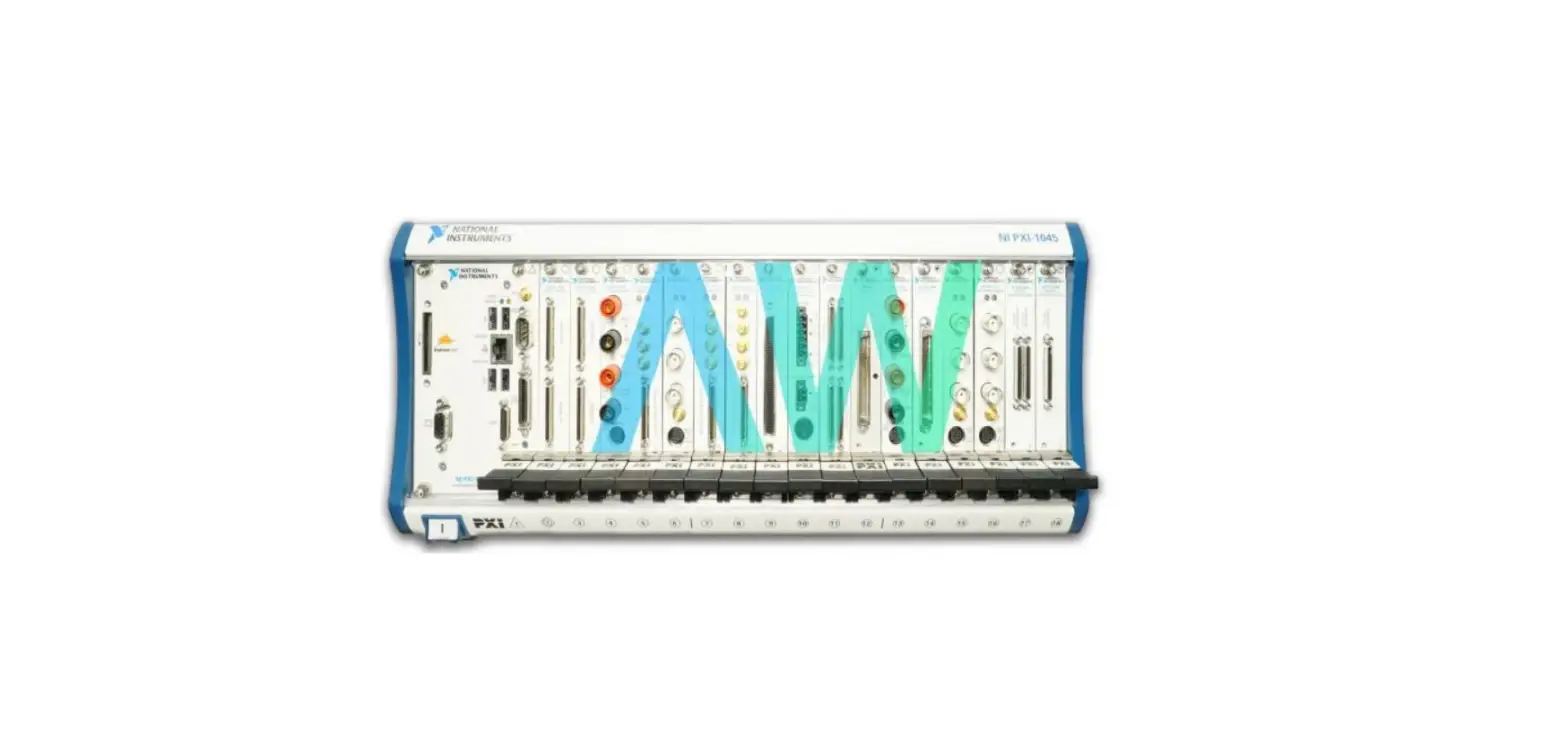
NI offers more than 600 different PXI modules ranging from DC to mmWave. Because PXI is an open industry standard, nearly 1,500 products are available from more than 70 different instrument vendors. With standard processing and control functions designated to a controller, PXI instruments need to contain only the actual instrumentation circuitry, which provides effective performance in a small footprint. Combined with a chassis and controller, PXI systems feature high-throughput data movement using PCI Express bus interfaces and sub-nanosecond synchronization with integrated timing and triggering.
Oscilloscopes
Sample at speeds up to 12.5 GS/s with 5 GHz of analog bandwidth, featuring numerous triggering modes and deep onboard memory
Digital Instruments
Perform characterization and production test of semiconductor devices with timing sets and per channel pin parametric measurement unit (PPMU)
Frequency Counters
Perform counter timer tasks such as event counting and encoder position, period, pulse, and frequency measurements
Power Supplies & Loads
Supply programmable DC power, with some modules including isolated channels, output disconnect functionality, and remote sense
Switches (Matrix & MUX)
Feature a variety of relay types and row/column configurations to simplify wiring in automated test systems
GPIB, Serial, & Ethernet
Integrate non-PXI instruments into a PXI system through various instrument control interfaces
Digital Multimeters
Perform voltage (up to 1000 V), current (up to 3A), resistance, inductance, capacitance, and frequency/period measurements, as well as diode tests
Waveform Generators
Generate standard functions including sine, square, triangle, and ramp as well as user-defined, arbitrary waveforms
Source Measure Units
Combine high-precision source and measure capability with high channel density, deterministic hardware sequencing, and SourceAdapt transient optimization
FlexRIO Custom Instruments & Processing
Provide high-performance I/O and powerful FPGAs for applications that require more than standard instruments can offer
Vector Signal Transceivers
Combine a vector signal generator and vector signal analyzer with FPGA-based, real-time signal processing and control
Data Acquisition Modules
Provide a mix of analog I/O, digital I/O, counter/timer, and trigger functionality for measuring electrical or physical phenomena
Page 12 | ni.com | Digital Multimeters
Hardware Services
All NI hardware includes a one-year warranty for basic repair coverage, and calibration in adherence to NI specifications prior to shipment. PXI Systems also include basic assembly and a functional test. NI offers additional entitlements to improve uptime and lower maintenance costs with service programs for hardware. Learn more at ni.com/services/hardware.
Program Duration
Standard Premium Description 3 or 5 years 3 or 5 years Length of service program
Extended Repair Coverage
System
Configuration,
Assembly, and Test1
Advanced Replacement2
System Return
Material Authorization (RMA)1
NI restores your device’s functionality and includes firmware updates and factory calibration.
NI technicians assemble, install software in, and test your system per your custom configuration prior to shipment.
NI stocks replacement hardware that can be shipped immediately if a repair is needed.
NI accepts the delivery of fully assembled systems when performing repair services.
Calibration Plan (Optional)
Standard
Expedited3
NI performs the requested level of calibration at the specified calibration interval for the duration of the service program.
1This option is only available for PXI, CompactRIO, and CompactDAQ systems. 2This option is not available for all products in all countries. Contact your local NI sales engineer to confirm availability. 3Expedited calibration only includes traceable levels.
PremiumPlus Service Program
NI can customize the offerings listed above, or offer additional entitlements such as on-site calibration, custom sparing, and life-cycle services through a PremiumPlus Service Program. Contact your NI sales representative to learn more.
Technical Support
Every NI system includes a 30-day trial for phone and e-mail support from NI engineers, which can be extended through a Software Service Program (SSP) membership. NI has more than 400 support engineers available around the globe to provide local support in more than 30 languages. Additionally, take advantage of NI’s award winning online resources and communities.
©2017 National Instruments. All rights reserved. LabVIEW, National Instruments, NI, NI TestStand, and ni.com are trademarks of National Instruments. Other product and company names listed are trademarks or trade names of their respective companies. The contents of this Site could contain technical inaccuracies, typographical errors or out-of-date information. Information may be updated or changed at any time, without notice. Visit ni.com/manuals for the latest information.
10 August 2017
Page 13 | ni.com | PXI Vector Signal Transceivers
References
 Engineer Ambitiously - NI
-
Product Documentation - NI
-
RFmx WLAN - NI
-
RFmx SpecAn Download - NI
-
ATCA-3671 - NI
-
Engineer Ambitiously - NI
-
NI Community - National Instruments
-
Contact Us - NI
-
What Are PXI Digital Pattern Instruments? - NI
-
What Are PXI Oscilloscopes? - NI
-
What Are PXI Source Measure Units? - NI
-
What Are PXI Switches? - NI
-
FlexRIO Custom Instruments and Processing - Electronic Test and Instrumentation - NI
-
Frequency Counters - Electronic Test and Instrumentation - NI
-
GPIB, Serial, and Ethernet - Electronic Test and Instrumentation - NI
-
Multifunction I/O - Data Acquisition and Control - NI
-
Power Supplies and Loads - Electronic Test and Instrumentation - NI
-
Waveform Generators - Electronic Test and Instrumentation - NI
-
What Is a PXI Vector Signal Transceiver? - NI
-
PXIe-5644 - NI
-
PXIe-5645 - NI
-
PXIe-5646 - NI
-
PXIe-5820 - NI
-
PXIe-5840 - NI
-
Product Documentation - NI
-
Hardware Services - NI
-
Software Services - NI
-
Support - NI
 PXIe-5840 National Instruments PXI Vector Signal Transceiver | Apex Waves
 Engineer Ambitiously - NI
 RFmx WLAN - NI
 Engineer Ambitiously - NI
 PXIe-5840 National Instruments PXI Vector Signal Transceiver | Apex Waves