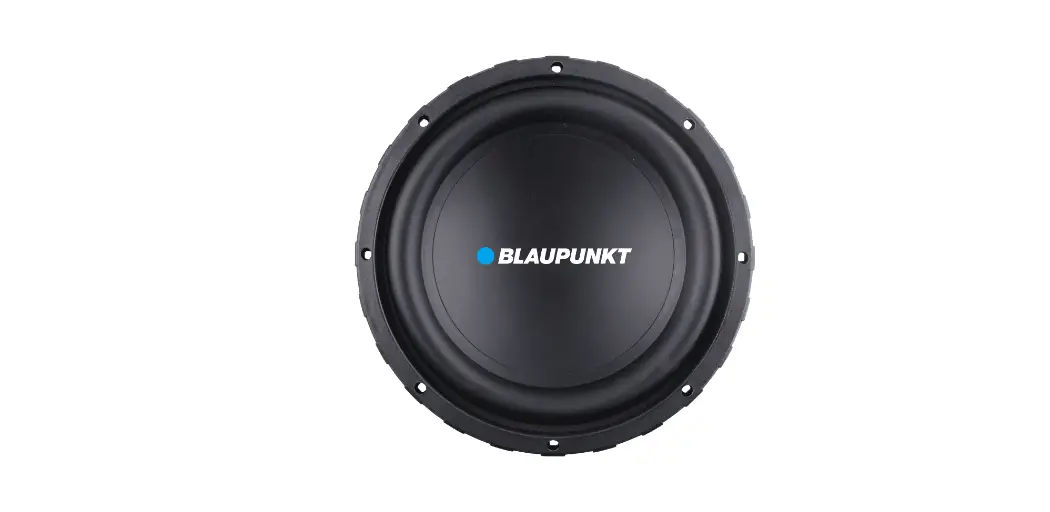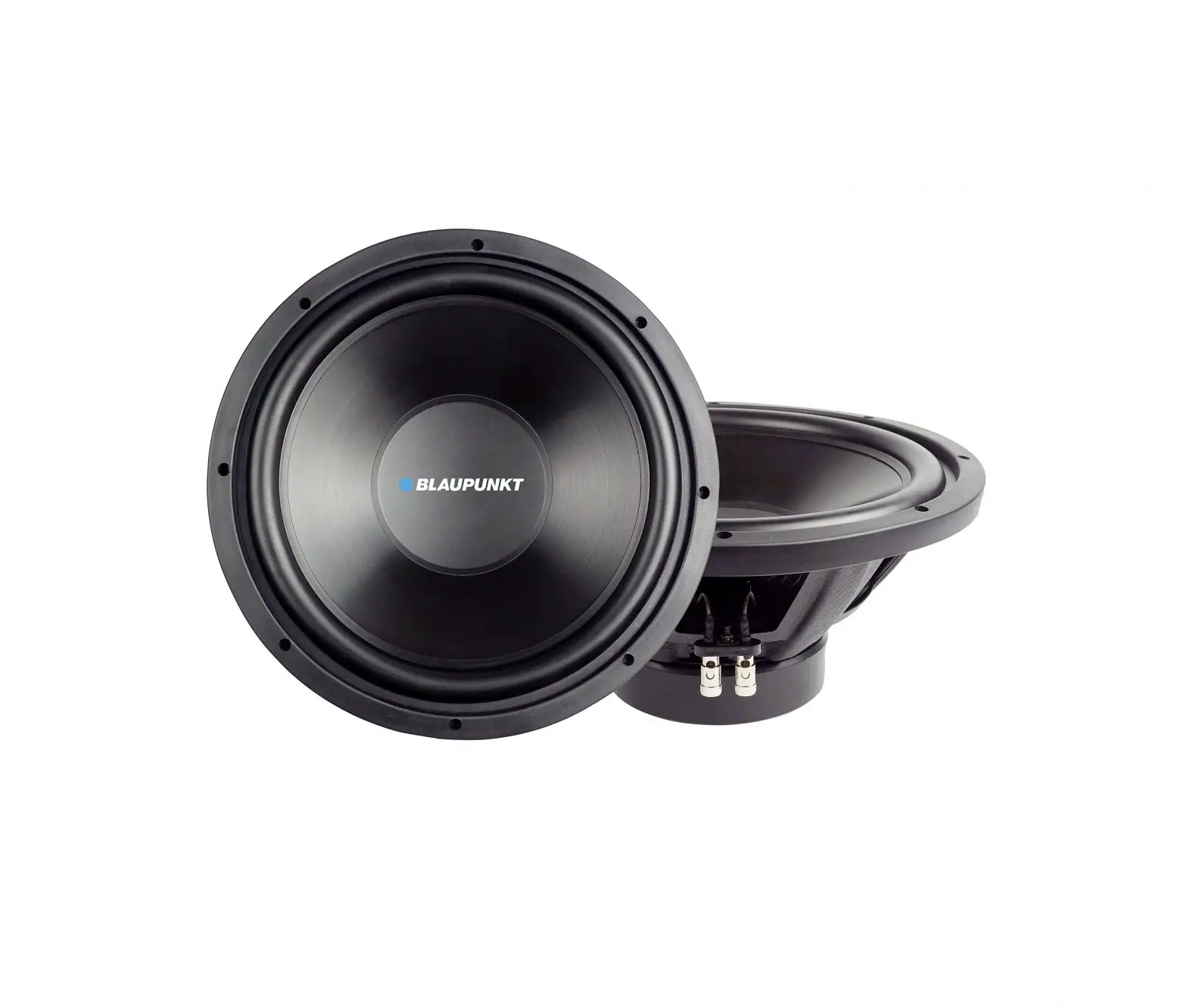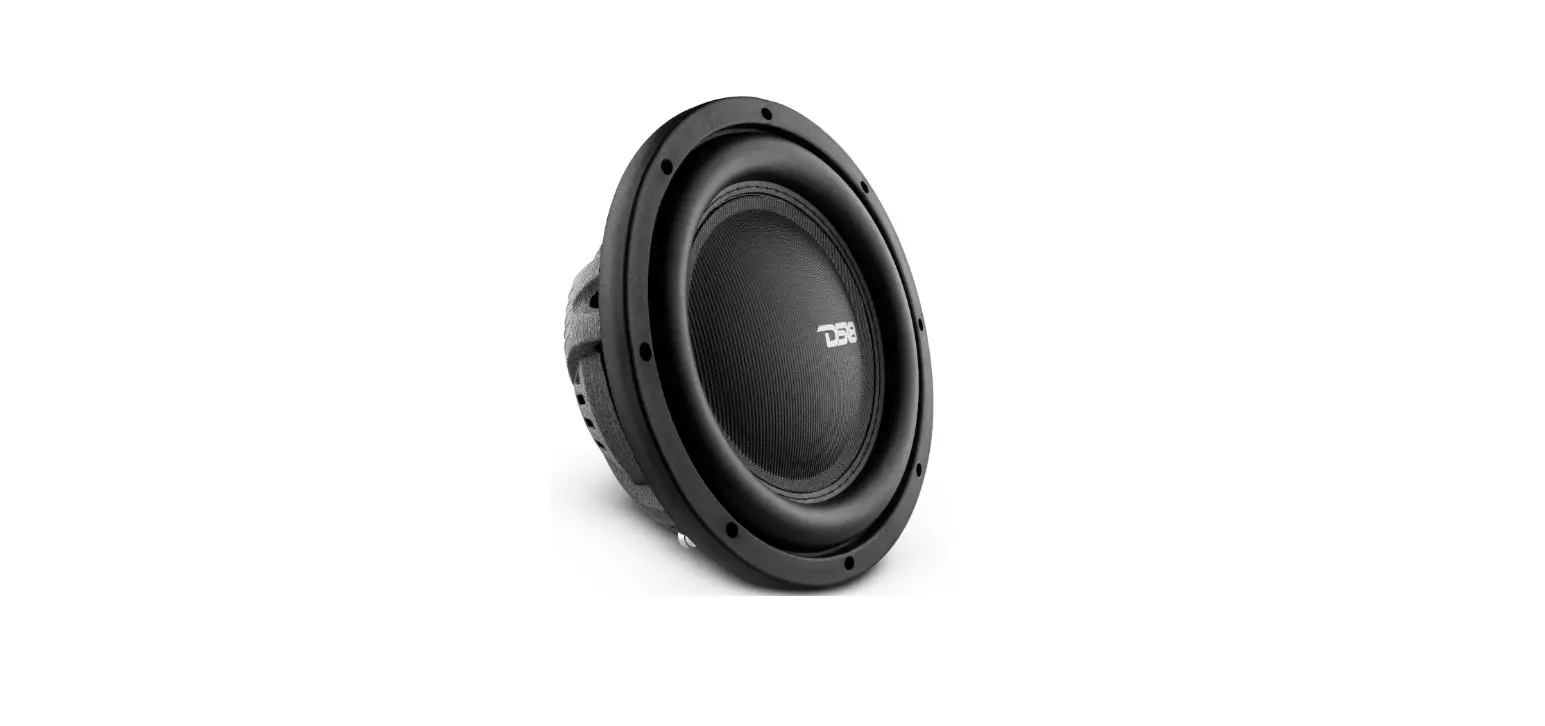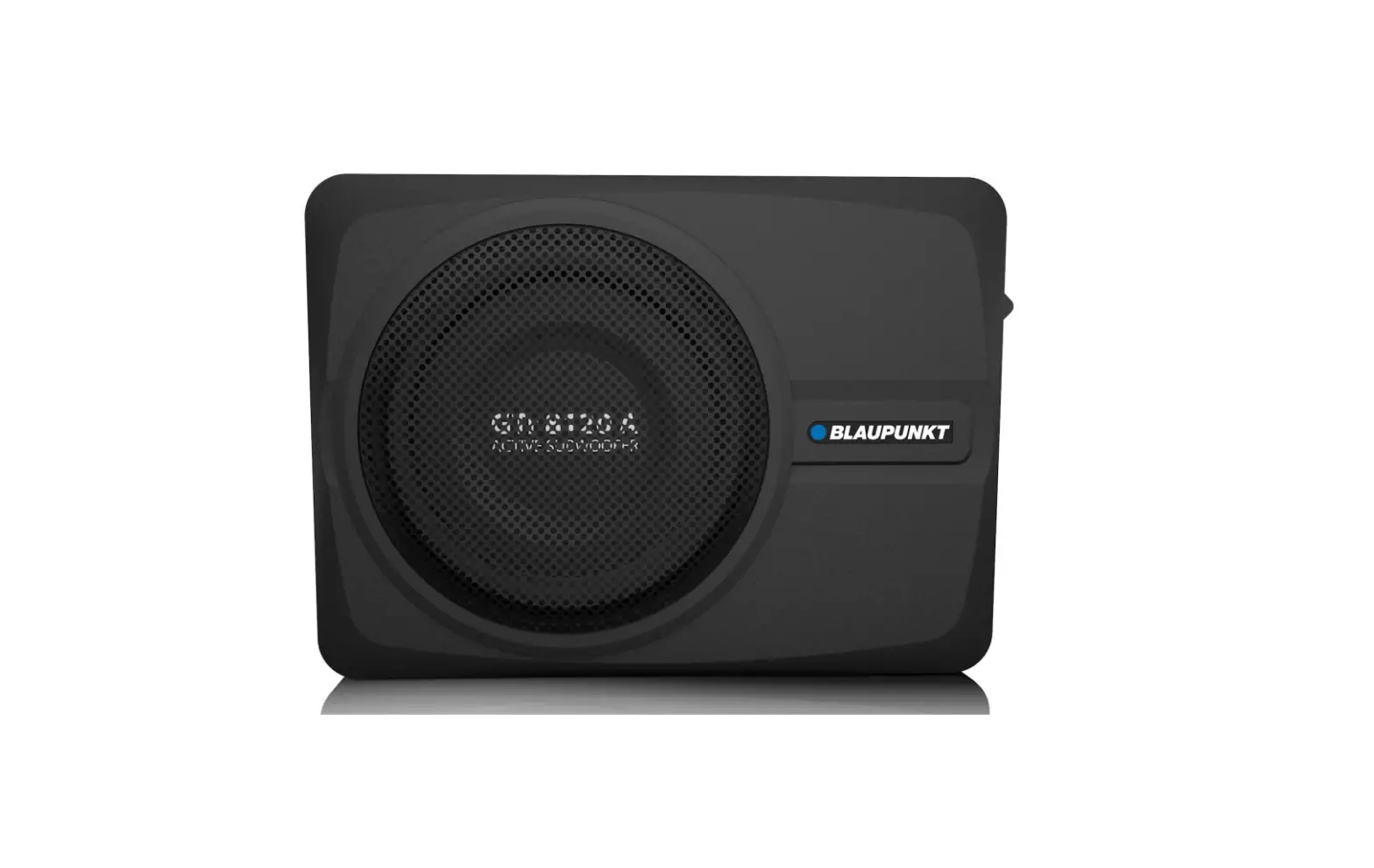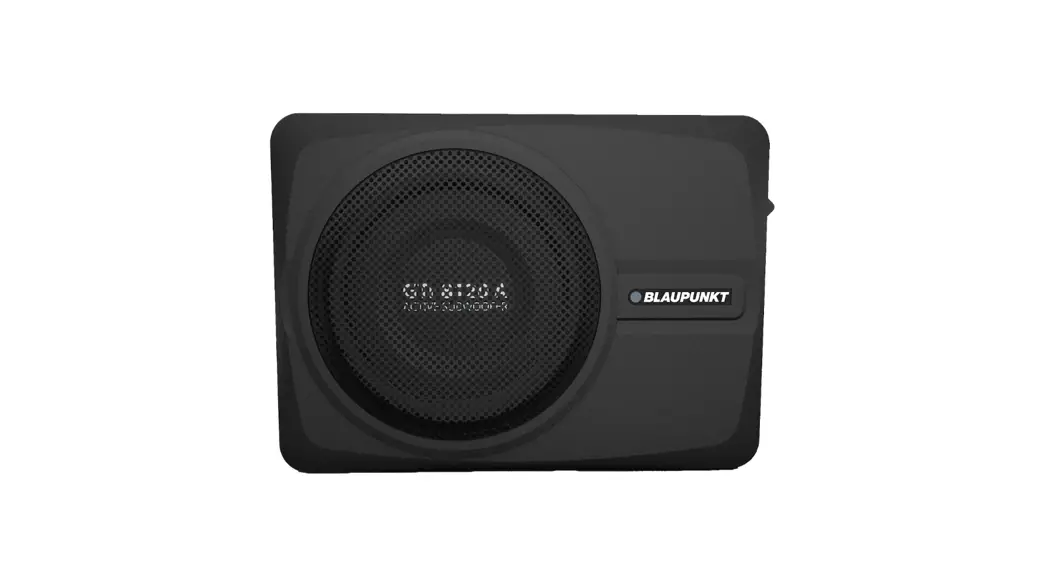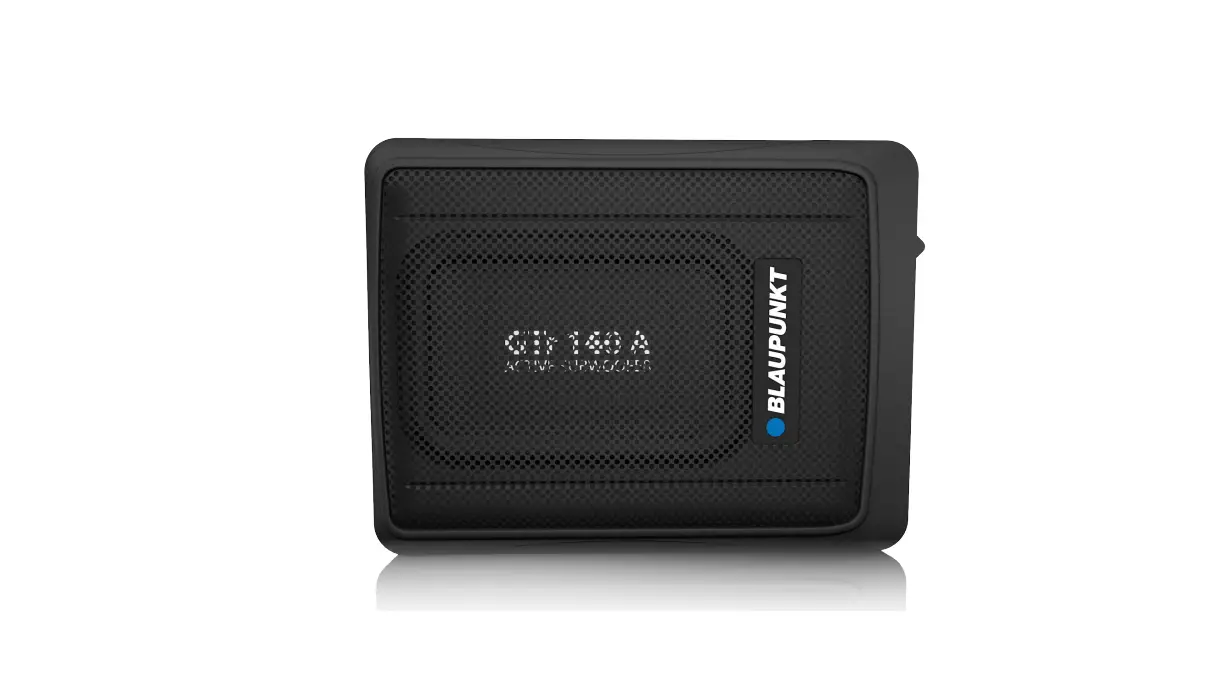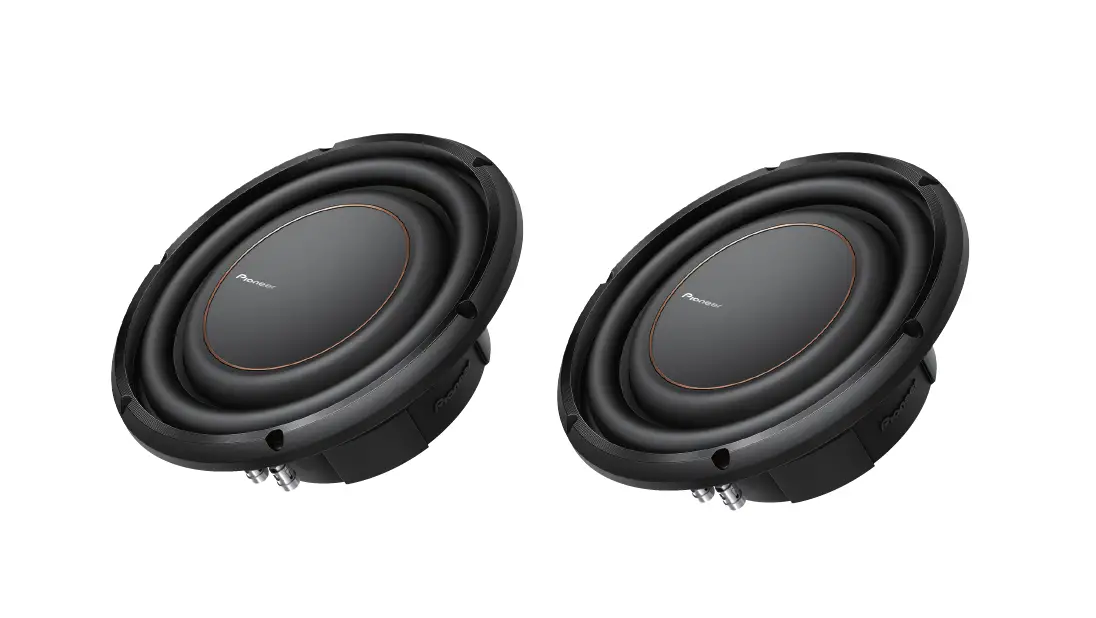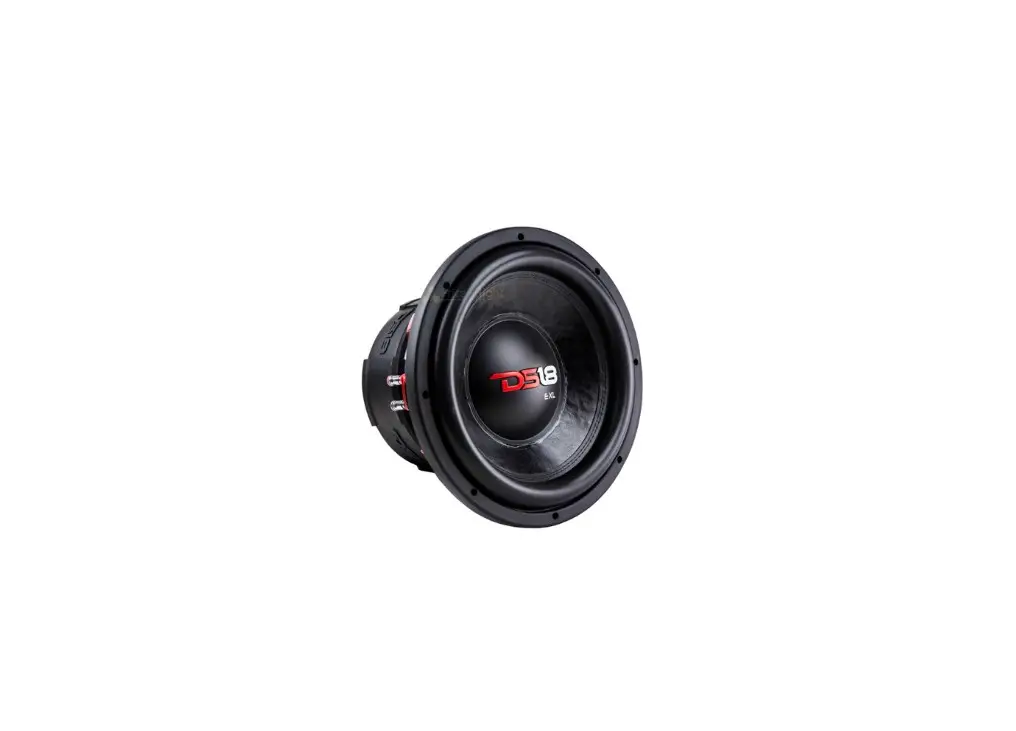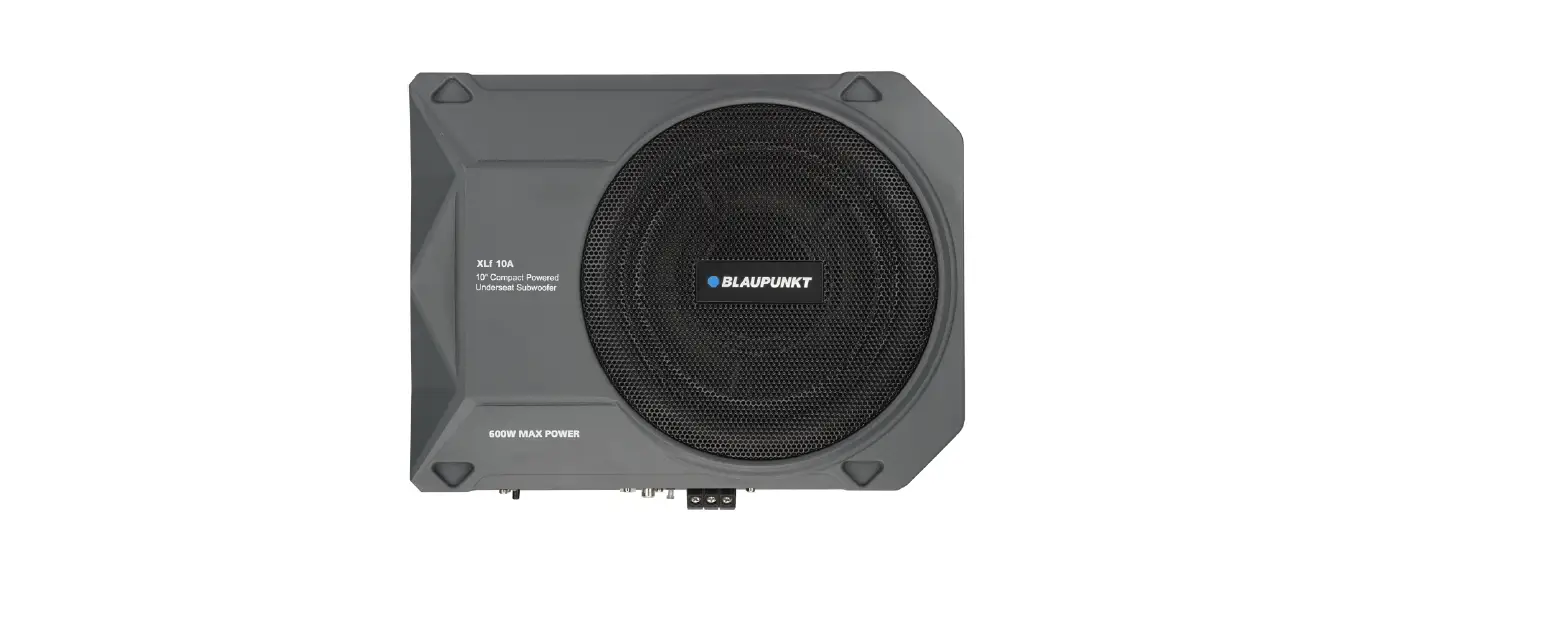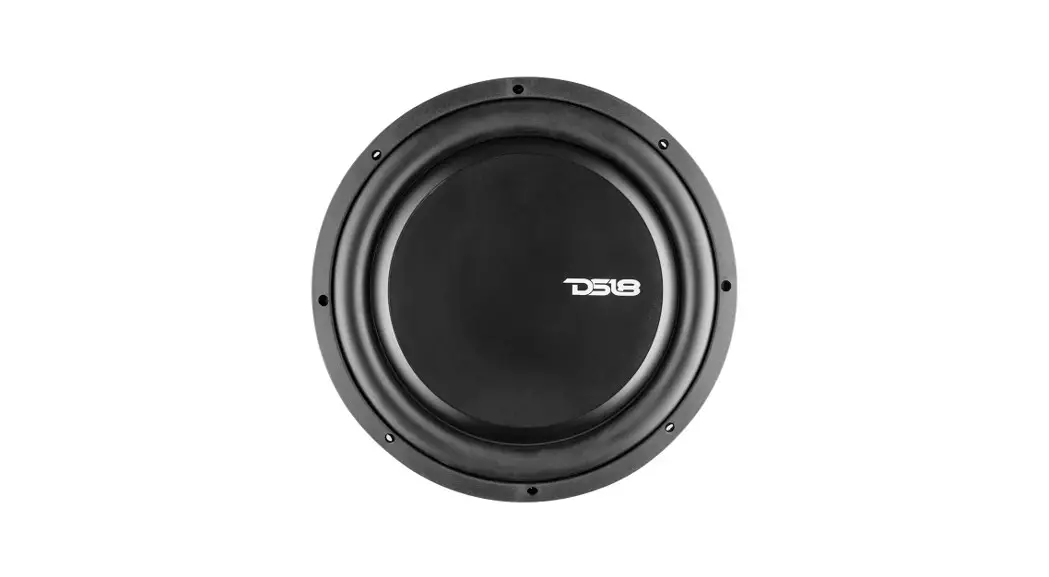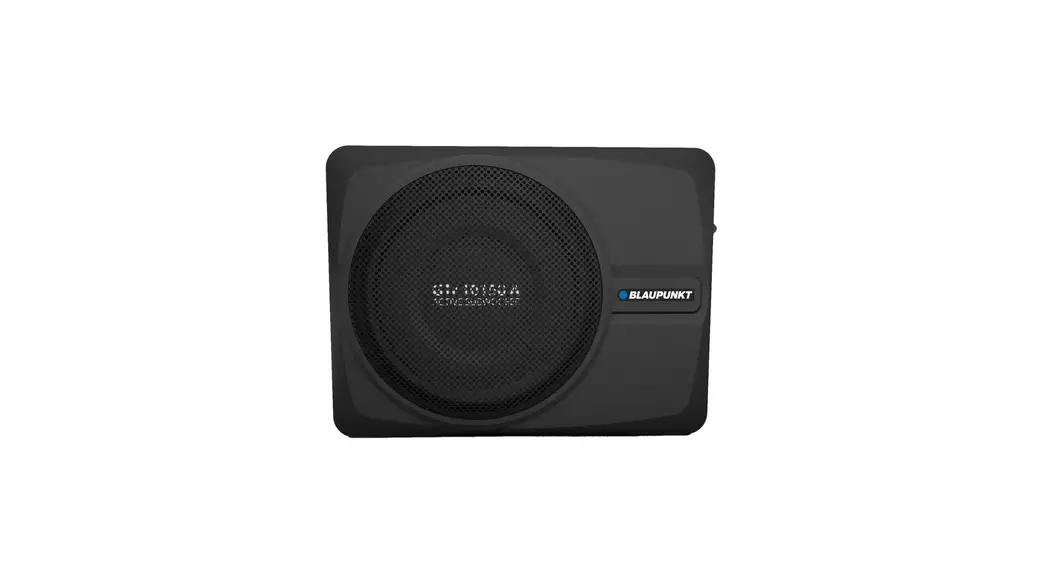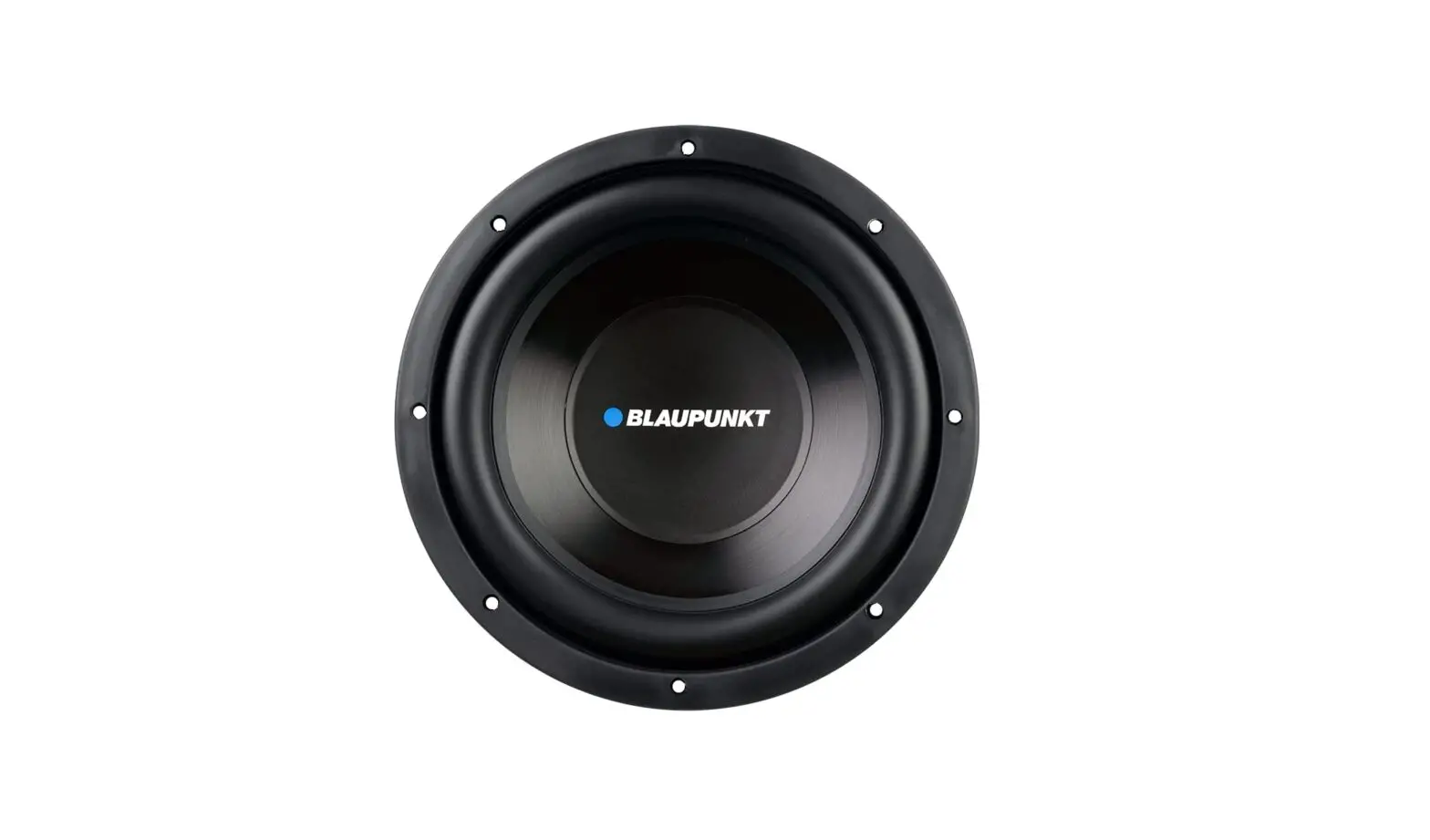

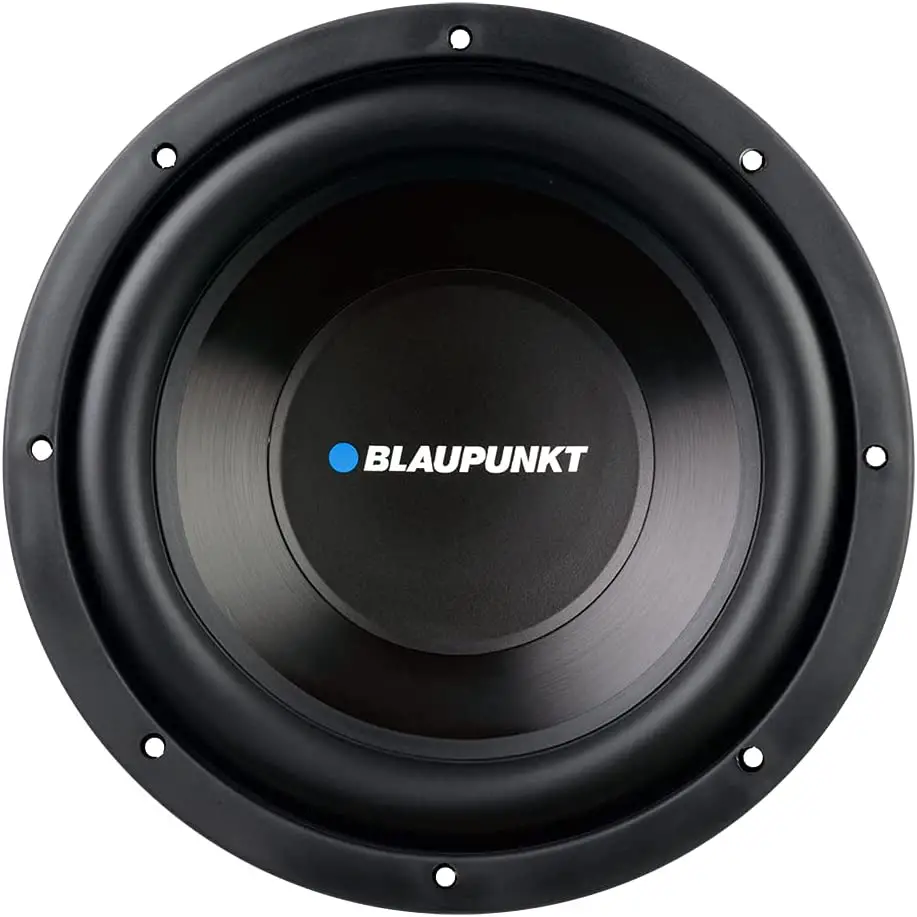
BLAUPUNKT 10″ (GBW101) Single Voice Coil Subwoofer
Dear Customer
Congratulations on your purchase of a BLAUPUNKT subwoofer, we are devoted to making our musical reproduction the very best, and we are pleased you have chosen our product. Through years of engineering expertise, hand craftsmanship, and critical testing procedures, we have created a wide range of products that reproduce music with all the clarity and richness you deserve.
For maximum performance, we recommend you have your BLAUPUNKT product installed by an authorized BLAUPUNKT dealer, as they have the knowledge, and skills that will maximize the performance of your subwoofer. Please read this manual, and keep your receipt, and original carton for possible future use. If after reading this manual, you still have questions regarding your product, we recommend that you see your nearest BLAUPUNKT dealer.
WARNING
Continuous, excessive exposure to sound pressure levels in excess of 85dB can cause hearing loss. While BLAUPUNKT sound systems are capable of producing sound pressure levels greater than 85dB, they are also designed for enjoyment at reasonable levels. Please observe all local sound ordinances while listening to your BLAUPUNKT sound system. Need we say more? Use common sense.
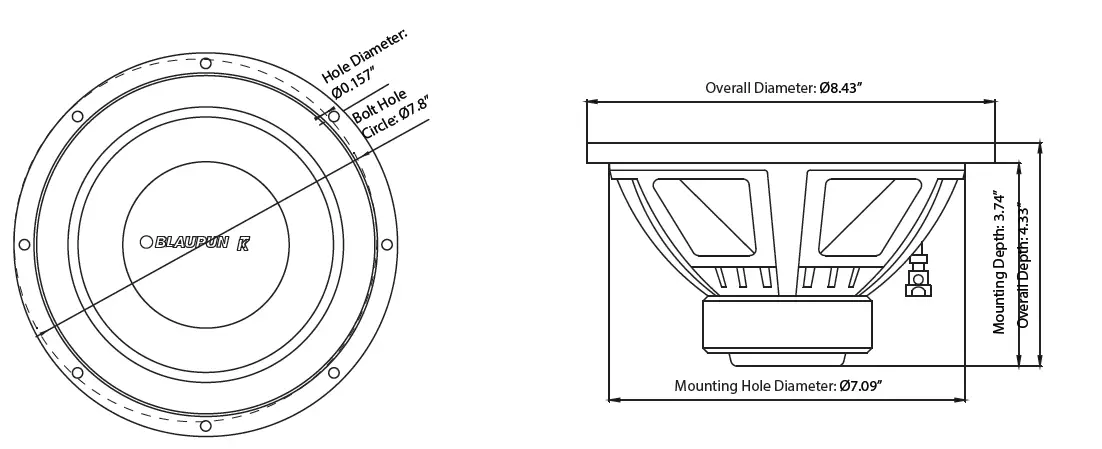
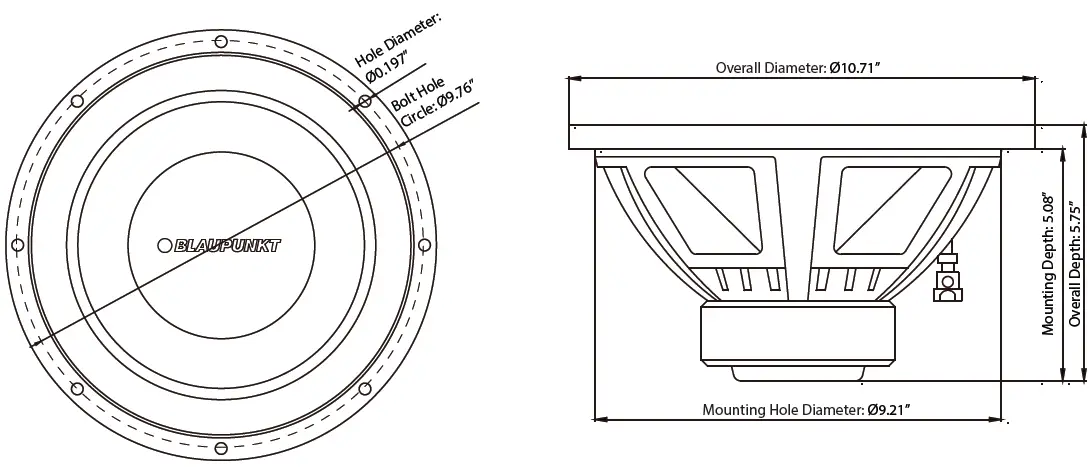
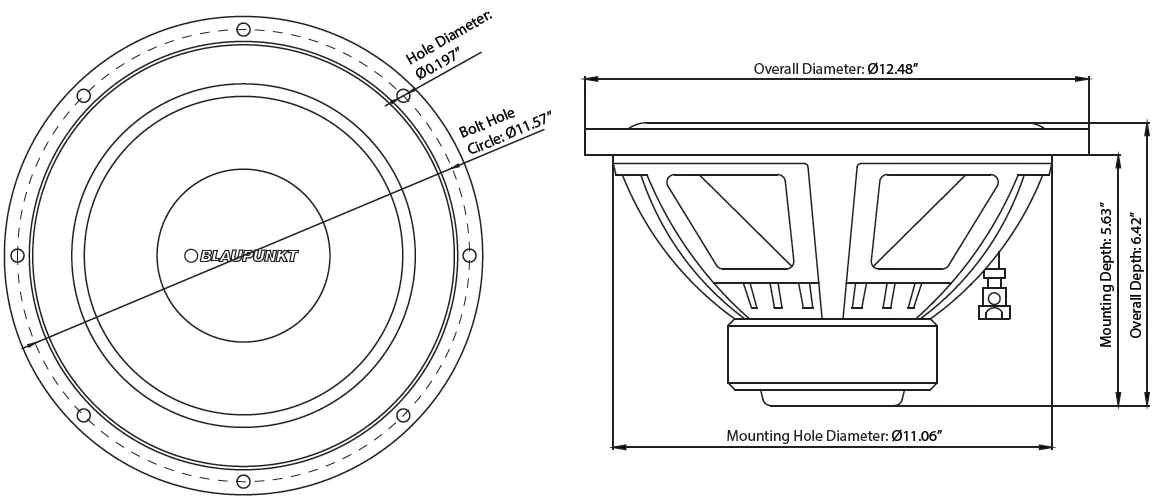
Dimension
Model: GBW801
 Model: GBW101
Model: GBW120
Specifications
- High-Quality Polypropylene Cone
- High-Density Foam Surround
- High-Temperature Aluminium Voice Coil
- High-Performance Strontium Ferrite Magnet
| Model | GBW801 | GBW101 | GBW120 |
| Fo (Hz) | 46 | 36.2 | 32 |
| Re (Ohms) | 3.2 | 3.2 | 3.2 |
| Qts | 0.406 | 0.49 | 0.502 |
| Qes | 0.457 | 0.55 | 0.597 |
| Qms | 3.638 | 4.96 | 3.175 |
| Cms (u M/N) | 149.822 | 198.27 | 106.085 |
| Vas (Ltr) | 13.762 | 33.1 | 38.638 |
| Mms (g) | 44.7 | 97.6 | 130.5 |
| Mmd (g) | 42.4 | 93.9 | 124 |
| No (%) | 0.51 | 0.278 | 0.367 |
| SPL (dB-1W/1M) | 88 | 88 | 88 |
| BL (TxM) | 9.5 | 11.4 | 11.87 |
| Krm (uOhms) | 729.1 | 1367 | 1592 |
| Erm | 1.024 | 0.998 | 0.984 |
| Kxm (mH) | 26.7 | 31.8 | 33 |
| Frequency Response (Hz) | 45Hz~2KHz | 35Hz~2KHz | 32Hz~2KHz |
| Voice Coil (Diameter) | 1.5″ | 2″ | 2″ |
| Magnet Weight | 32.2oz | 47.8oz | 47.8oz |
| Power Rating (RMS) | 200Watts | 300Watts | 400Watts |
| Power Rating (Peak) | 400Watts | 600Watts | 800Watts |
Troubleshooting
- If you start having problems with the distorted sound or loss of performance after installing your subs, you can follow the instructions below to try and locate what is causing the problem.
- If you have any distorted sound, loss of performance, or rattling from your subs, check the connections running from your amplifier or another processor to the box. You will also want to check the connections inside the box to make sure no wires have become unhooked or are loose.
- If the above does not solve the problem, check your enclosure thoroughly to see if there are any leaks, cracks, or broken pieces. Any loss of structural integrity of your enclosure can cause significant performance loss and distortion.
- The next step you can take is to remove the subs and look for any burned wire leads or separated components. You can normally smell something burning when a sub blows or is going bad. Sometimes when you play subs too hard for too long, they will start to heat up.
- If none of the above steps solve the problem, you will want to start looking at the other components in the vehicle. Start by checking all connections to and from the box, amplifier, source unit, or any other processors you may be using. You will need to refer to that particular manufacturer for any setting configurations or troubleshooting.
Warning
Investigate the layout of your automobile thoroughly before a drill or cutting any holes. Take care when you work near gas tanks, gas lines, hydraulic lines, and electrical wiring. Attach the system securely to the automobile to prevent damage, particularly in the event of an accident. Do not mount the system so that the wire connections are unprotected or are subject to pinching or damage from nearby objects. The +12V DC power wire must be fused at the battery positive terminal connection.
Before making or breaking power connections at the system power terminals, disconnect the +12V wire at the battery end. Confirm your radio/head unit or other equipment is turned off while connecting the input jacks and subwoofer terminals. If you need to replace the power fuse, replace it only with a fuse identical to that supplied with the system. Using a fuse of different types or ratings may result in damage to this system.
Mounting
NOTE
BLAUPUNKT strongly recommends that you operate your system at low volume levels prior to the completed installation of your BLAUPUNKT subwoofers. This will allow for a test of the subwoofers before securing them to their permanent location.
CAUTION
Make sure that all subwoofer wiring is fully protected from cuts, tears, and possible wear. Any short circuits developing, as a result, could severely damage the source unit or possibly an amplifier. Make sure all subwoofers wires easily reach the subwoofers terminal with no stress on the wire or connectors.
IMPORTANT
Never cut any metal that is an integral part of the vehicle’s safety or structural support system. Again, If you are unsure, it is best to have the subwoofers professionally installed. It could be a lot less expensive in the long run. Never sacrifice your safety for sound.
CHOOSING A LOCATION
It is always best to plan the complete installation prior to attempting to install any product. The routing of wires, power connections, and mounting locations should be planned first. As with any car stereo installation, all work performance should be checked thoroughly and carefully prior to the operation of the system.
The placement of your BLAUPUNKT subwoofers within your vehicle will greatly affect the overall performance of your audio system. Every model of car is di er ent, so installation into particular locations of the vehicle may not be possible without modifications. Factory-provided locations are usually.
BLAUPUNKT subwoofers are designed to fit in almost any factory location. Again, if at all possible, it is recommended that you use a factory location. This applies mostly to later model cars. For those earlier models that do not have factory locations or are limited to just a front subwoofer, it is recommended that you choose a location amount of air space.
If you allow an amount of air space, the subwoofer may not produce low frequencies very well. It is recommended to mount the subwoofer in the door panels, kick panels, rear decks, etc. Ideally, the subwoofer should be mounted where it will be in enclosed airspace. This will allow for extended bass response.
Troubleshooting
If you start having problems with distorted sound or loss of performance after installing your subs, you can follow the instructions below to try and locate what is causing the problem.
- If you have any distorted sound, loss of performance, or rattling from your subs, check the connections running from your amplifier or other processors to the box. You will also want to check the connections inside the box to make sure no wires have become unhooked or are loose.
- If the above does not solve the problem, check your enclosure thoroughly to see if there are any leaks, cracks, or broken pieces. Any loss of structural integrity of your enclosure can cause significant performance loss and distortion.
- The next step you can take is to remove the subs and look for any burned wire leads or separated components. You can normally smell something burning when a sub blows or is going bad. Sometimes when you play subs too hard for too long, they will start to heat up.
- If none of the above steps solve the problem, you will want to start looking at the other components in the vehicle. Start by checking all connections to and -from the box, amplifier, source unit, or any other processors you may be using. You will need to reference that particular manufacturer for any setting configurations or troubleshooting.
Warning
- Investigate the layout of your automobile thoroughly before a drill or cutting any -holes.
- Take care when you work near gas tanks, gas lines, hydraulic lines, and electrical wiring.
- Attach the system securely to the automobile to prevent damage, particularly in the event of an accident.
- Do not mount the system so that the wire connections are unprotected or are subject to pinching or damage from nearby objects.
- The +12V DC power wire must be fused at the battery positive terminal connection.
- Before making or breaking power connections at the system power terminals, disconnect the +12V wire at the battery end.
- Confirm your radio/head unit or other equipment is tur connecting the input jacks and subwoofer terminals.
- If you need to replace the power fuse, replace it only with a fuse identical to that supplied with the system.
- Using a fuse of different types or ratings may result in damage to this system.
FCC Statement
2016 BLAUPUNKT. All Rights Reserved. This device complies with part 15 of the FCC Rules.
Operation is subject to the following two conditions
- this device may not cause harmful interference, and
- this device must accept any interference received, including interference that may cause undesired operation.
WARNING
This product contains a chemical known to the State of California to cause cancer and reproductive toxicity.
FAQ’s
We recommend a solid break in time of 20–24 hours. Overnight, you can set it up with a strong, clear signal. You are now prepared to install and continue your journey.
Setting the subwoofer
Make the crossover adjustments before playing the subwoofer.
Switch on the power and adjust the subwoofer volume to taste.
If a phase control is provided, adjust it.
Modify the stereo audio equalizer slightly to achieve the desired sound.
Your subwoofer’s failure to produce powerful bass can be attributed to a variety of factors. You’re not giving it enough power is one of the most frequent causes. Other potential problems include a defective head unit or a grounding issue.
Most people find that a playback level of 70 or 75 dB on their SPL meter at their listening position is pleasant.
You’ll notice that the subwoofer plays louder, with a wider dynamic range, and with a deeper bass after it has been properly broken in. The resins in the spider pack in the sub are literally breaking down and softening.
When using your subs in extremely cold weather, exercise extreme caution. Even when the volume wasn’t turned up all the way, I’ve seen cones and surrounding fractures. Because it makes plastic so stiff, the cold is detrimental to it. The same is true for surrounds made of foam, rubber, or even a combination of the two.
Subwoofers are most frequently damaged by sending the automobile audio amplifier an excessive amount of signal. When an amplifier’s power supply voltages are reached by an audio signal with too much signal present, this is known as “clipping.” A “clipped” signal is the end result, which might harm the amplifier and subwoofer.
Registered. Line level is used for the receiver’s subwoofer output. Therefore, you might use headphones or speakers that can handle low bass frequencies to listen while playing something with low bass content through the receiver you are testing. To test, connect to a line level input (such as Aux) of a separate amplifier.
Subwoofers are often positioned in the front of the room, facing the space. Many rooms are best positioned at the front so that your subwoofer and front channel speakers sound in unison. Even if it turns out that’s not the ideal place for you, it’s still a good place to start.
Typically, it takes them five seconds or so for the speaker to convey the trigger.
You can, however, it’s not recommended because the other speaker would be subjected to low-frequency vibrations coming from the subwoofer. Even though it would undoubtedly save room, it’s not a good idea.
Due to the plateaus in the waveform caused by clipping, the subwoofer moves less than usual and generates more heat. The voice coil eventually fails as a result of the voice coil’s excessive heat over time.
Run your break-in cut at a moderate volume for around 15 minutes after the system is up and running. This provides the amplifier and driver with enough time to adjust and start warming up. This stage of a break-in is frequently disregarded.
You ought to be okay. As long as one of your subs can physically fit the amp in place and is big enough. Any significant or even minute vibration impacts on the circuitry of either item should be minimized by the weight damping on the Sub from the amplifier.
Due to the fact that placing anything on top of the subwoofer may induce vibrations, this should be avoided. Items put on top of the subwoofer run the risk of falling.
Can a blown subwoofer be repaired? Yes, a blown subwoofer can be repaired, especially if the cone has only been slightly damaged. A damaged voice coil, however, may be challenging to swap out. The best option, depending on the severity of the issue, is to get a new subwoofer.