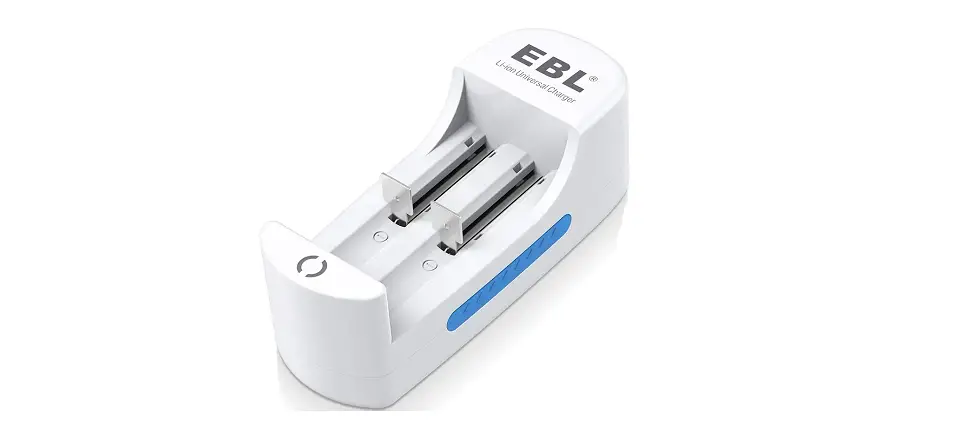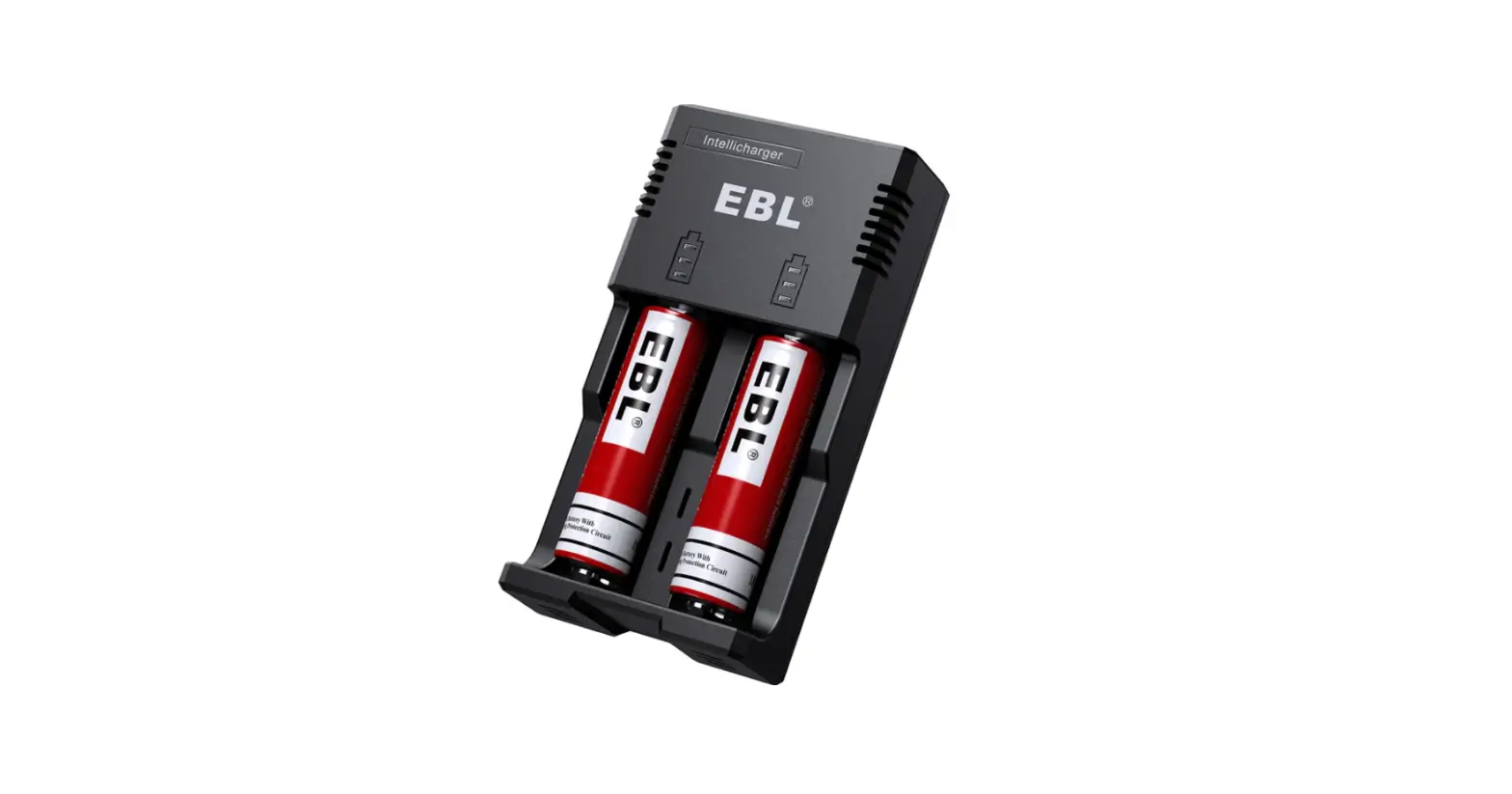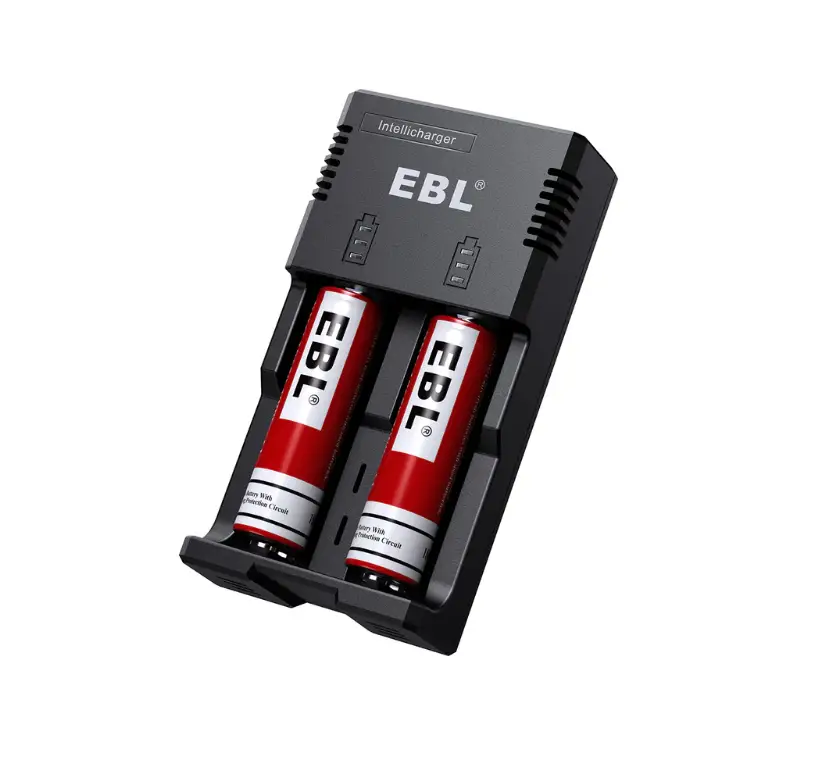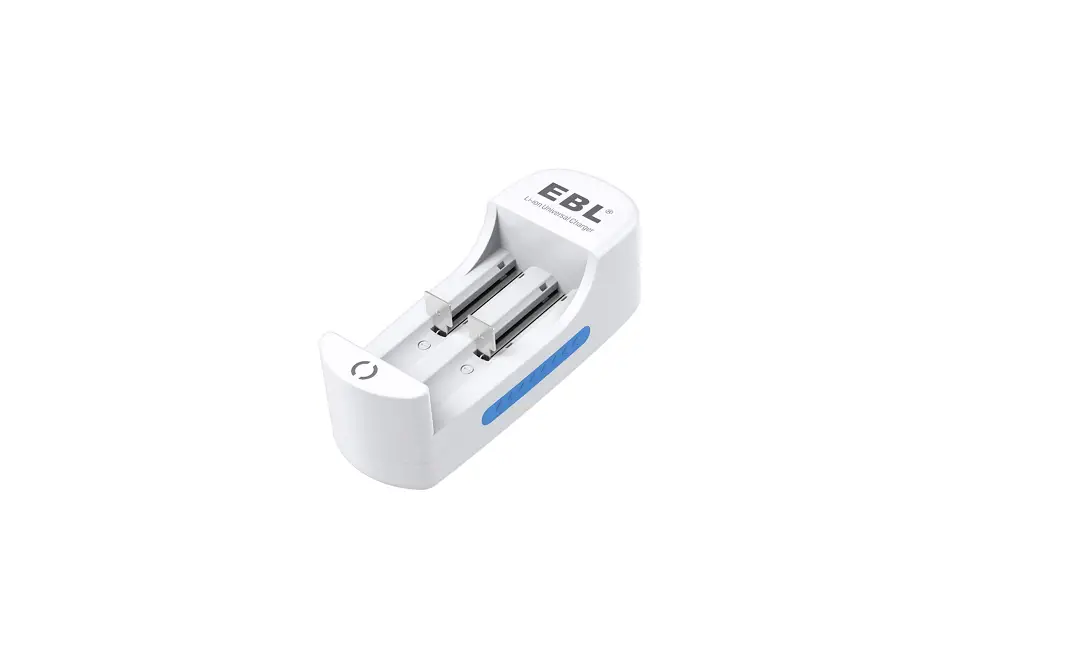

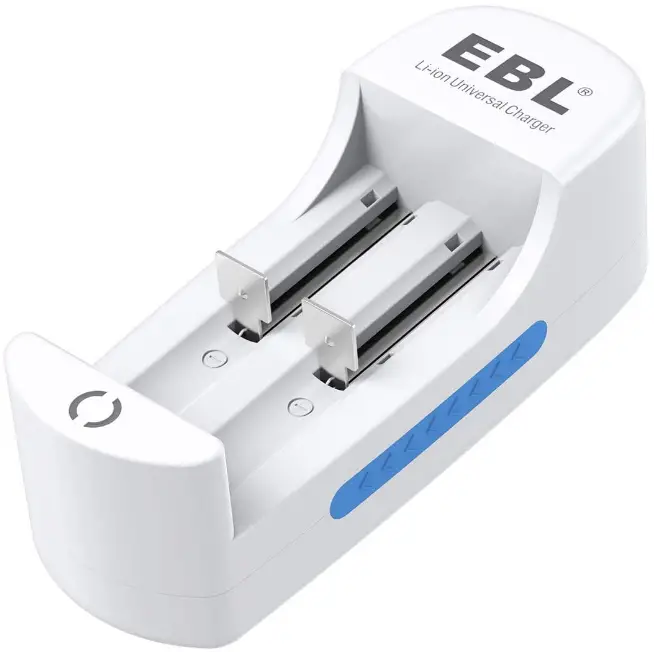
EBL C839 3.7V Universal Battery Charger
Specification
- Brand EBL
- Model C839
- Color Red, Green
- Product Dimensions 4.61″D x 1.77″W x 1.69″H
- Item Weight 0.01 Ounces
- Output Voltage 4.2 Volts
- Input DC 1.0A
- No Load Power Consumption 1W MAX
- Full Load power consumption 7W MAX
- Battery Charge Rate >90%
What’s In the Box
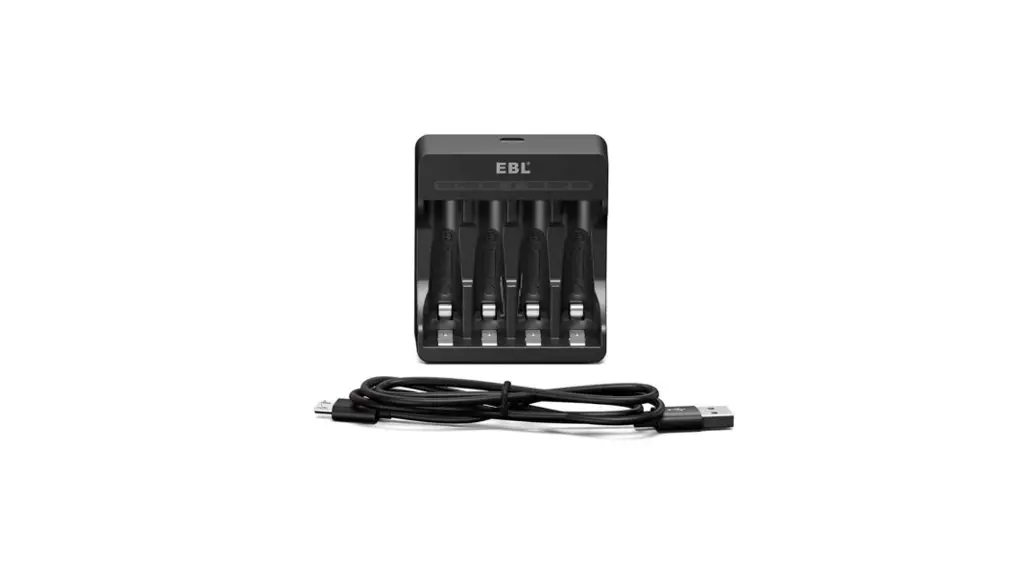
- Universal Battery Charger
Li-ion Rechargeable Batteries are Generally Compatible
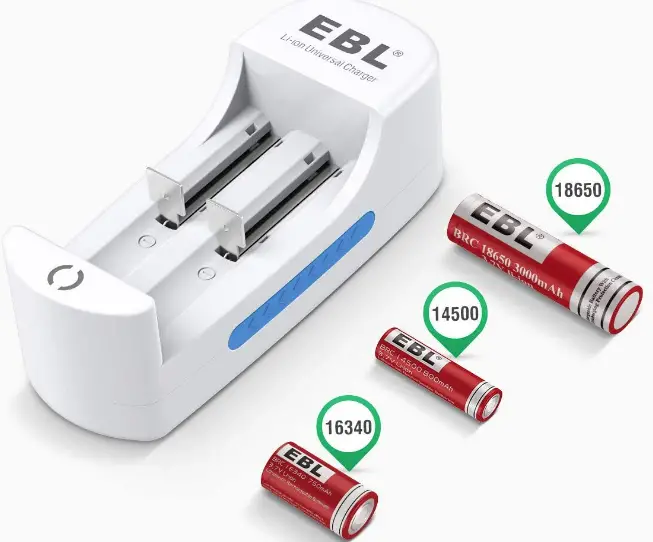
Li-ion battery ultra-fit for 10440/14500/16340/18500/18650
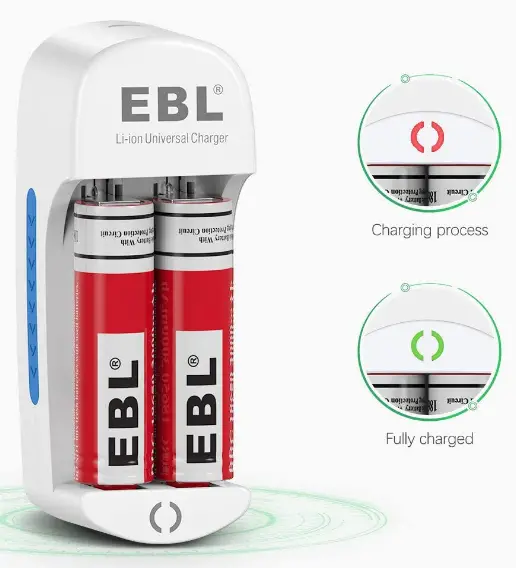
Intelligent LED Indicator
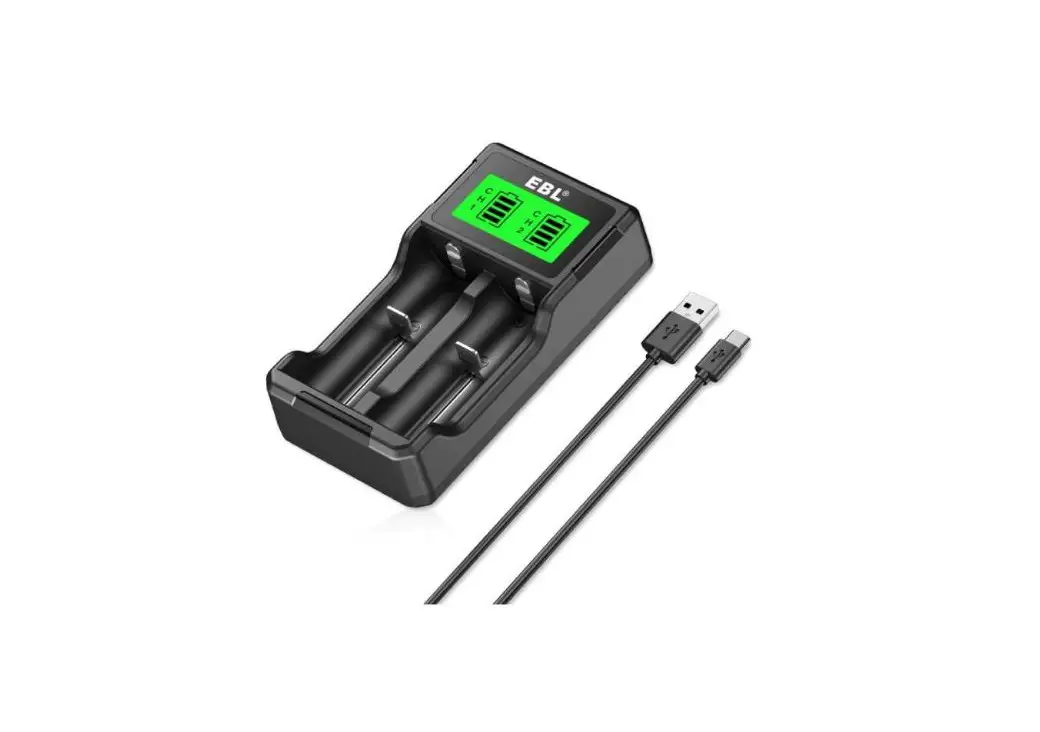
When charging, the LED turns red; once fully charged, it turns green.
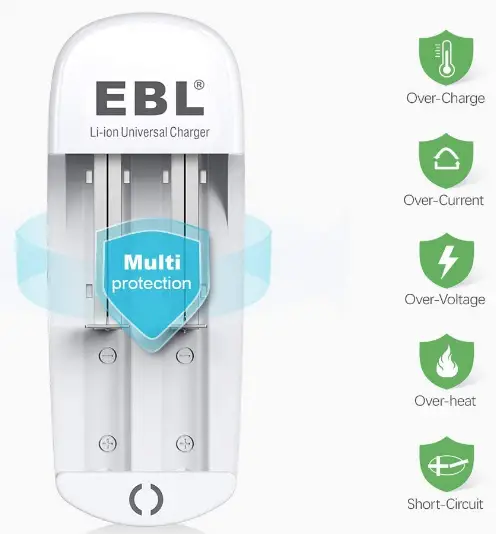
Many Layers of Protection
Short-circuit protection, over-heat and over-current protection, advanced MCU control, and defective battery detection
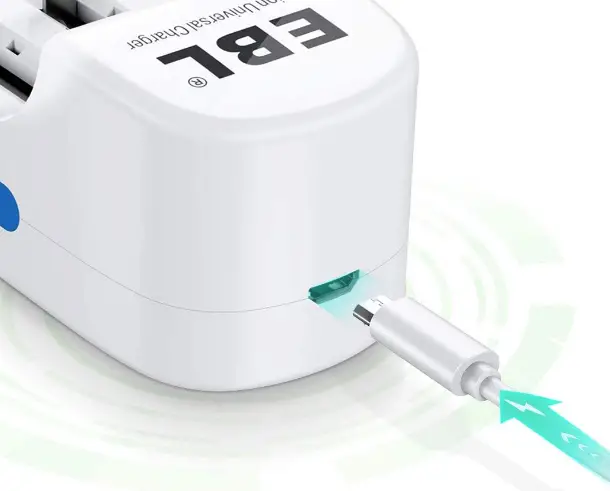
Multi-Charging USB Input
Introduction
EBL is a reputable battery producer with over 20 years of experience. It is one of the top manufacturers of battery chargers, battery charging equipment, AA, AAA, C, D, and 9V Ni-MH and Lithium batteries. Due to their consistent battery lifetime, enhanced rechargeability, and stability, EBL have grown in popularity. Our dedication to ensuring the satisfaction of each and every customer has shaped who we are.
Product Description
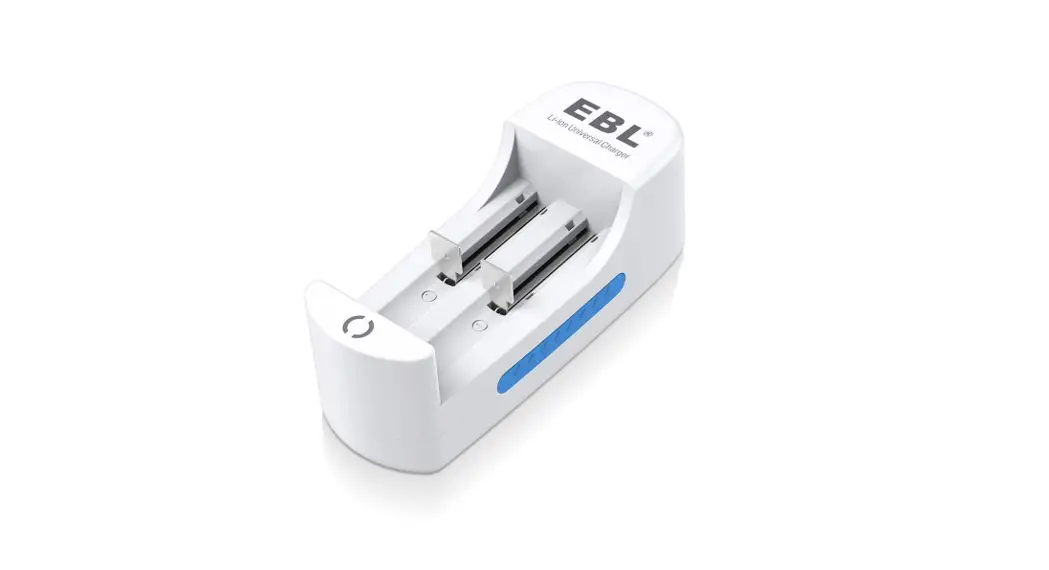
You need a battery charger when your rechargeable batteries run out of power, and this EBL battery charger is a great option for you. Two 16340/14500/10440/18500/18650 lithium batteries might be charged simultaneously. The charger offers a constant current and constant voltage safety model by using MCU control technology. When the battery voltage reaches 4.1V–4.2V, the indicator light changes from red to green.
What’s In the Box
Compatible
Batteries made of lithium-ion IMR INR ICR 18650, 18490, 18500, 18350, 17670, and 16340 RCR123A.
Caution
- After a power cut or a changeover to emergency power, the charger is automatically switched on again.
- When charging batteries other than those specified. There is a risk of explosion.
- Batteries that are no longer usable must be disposed of as hazardous waste. Please observe local, state and federal regulations.
- Further information on the storage and use of Synthes batteries can be found in the respective instruction leaflets.
Features
- Universal Charger for Freely Charging One or Two Li-ion IMR INR ICR 18650, 18490, 18500, 18350, 17670, and RCR123A Batteries.
- A clever LED display, The lithium batteries will be charged by the two slots of the charger when it is plugged in, and the indicator light will flash red before turning green when the charge is complete.
- The charger provides a constant current and constant voltage safety model by using MCU control technology.
- Multi-protection high-quality 18650 battery charger provides added safety for you and your batteries.
- USB Port With a compact but sturdy shell, you can charge your batteries wherever you are with a USB adaptor, car charger, or power bank.
FAQs
Yes, it is.
It is 5V DC.
It is 4.2V DC.
It can charge two batteries at one time.
Yes. We encourage users to leave the charger connected to the batteries and AC when storing the application. Once the charger completes its charge, it will begin monitoring the voltage of the batteries. Lead-acid batteries self-discharge over time and the self-discharge rate increases as batteries age
Depending on your battery charger, it may take 4-8 hours to charge your battery enough to start the car a few times. It may take 10-24 hours to charge your battery up to 100 percent. The longer you charge it, the more strength the charger can put in the car batter
The battery is fully charged when the current drops to 0 or no longer decreases or the automatic charger switches off.
Actual battery chargers take 10-24 hours to charge a car battery. That’s the fast, smart chargers. If you’re using a trickle charger, you could be charging your battery for three or more days. Charging slowly protects the battery.
For the simple and often cheaper battery chargers, the charge current is specified for the nominal battery voltage (= 12 or 24 V). Charging a battery requires a higher charge voltage, namely 14.4 or 28.8 V.
No, not all battery chargers are the same. Battery chargers can vary significantly in terms of their charging speed, the type of battery they are designed to charge, their voltage and amperage output, and their features and capabilities.
Most battery manufacturers recommend sizing the charger at about 25% of the battery capacity (ah = amp hour capacity). Thus, a 100 ah battery would take about a 25 amp charger (or less). Larger chargers may be used to decrease charge time but may decrease battery life.
A basic charger usually charges at around 2 amps – and so needs 24 hours to deliver the 48 amps needed to fully charge a flat, 48 amp hour battery. But there is a wide range of chargers with different charge rates on the market – from 2 to 10 amps. The higher the charge output, the faster a flat battery is recharged.
There are three common methods of charging a battery; constant voltage, constant current and a combination of constant voltage/constant current with or without a smart charging circuit.
You need to ground the charger before hooking it up to the battery. A grounding clip is typically included with the power source. Attach it to a clean section of the vehicle’s frame. You’ll need to investigate the undercarriage in this case.