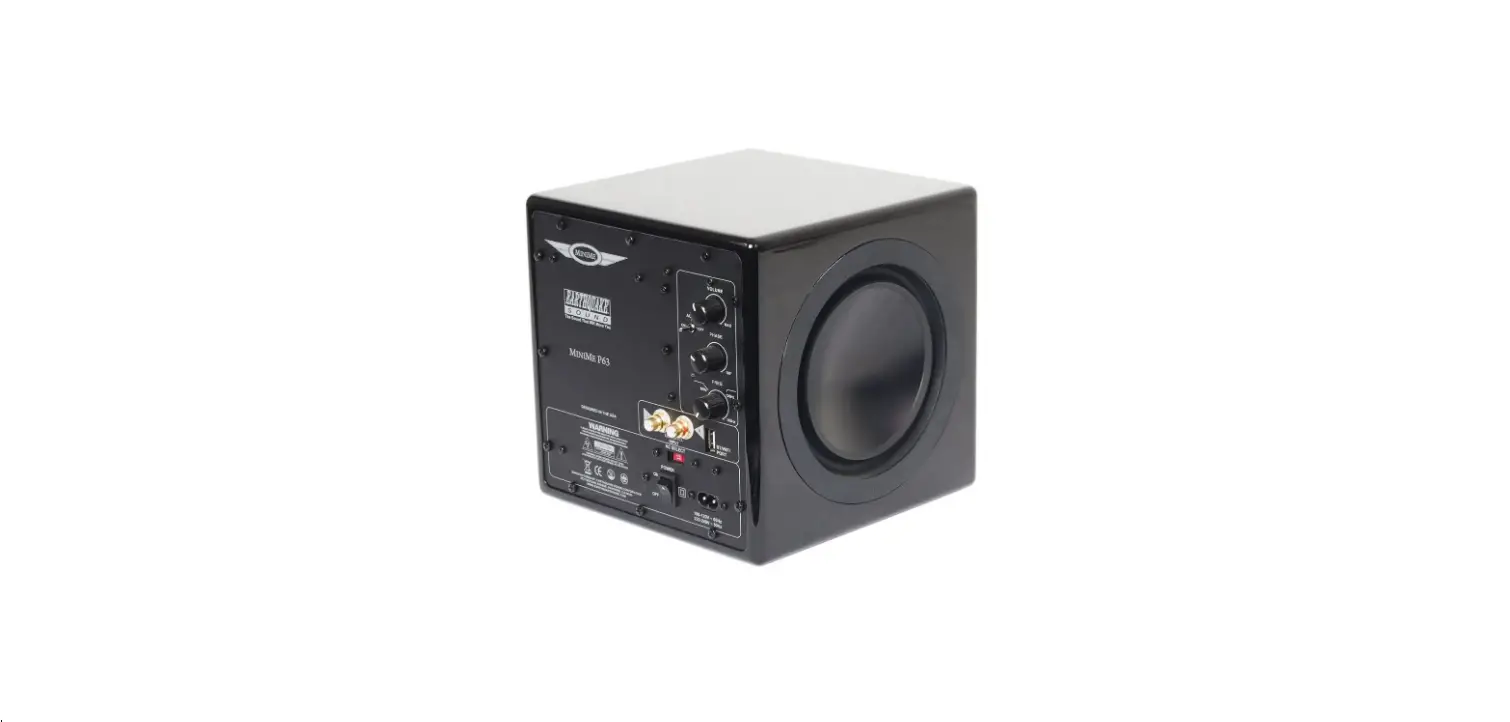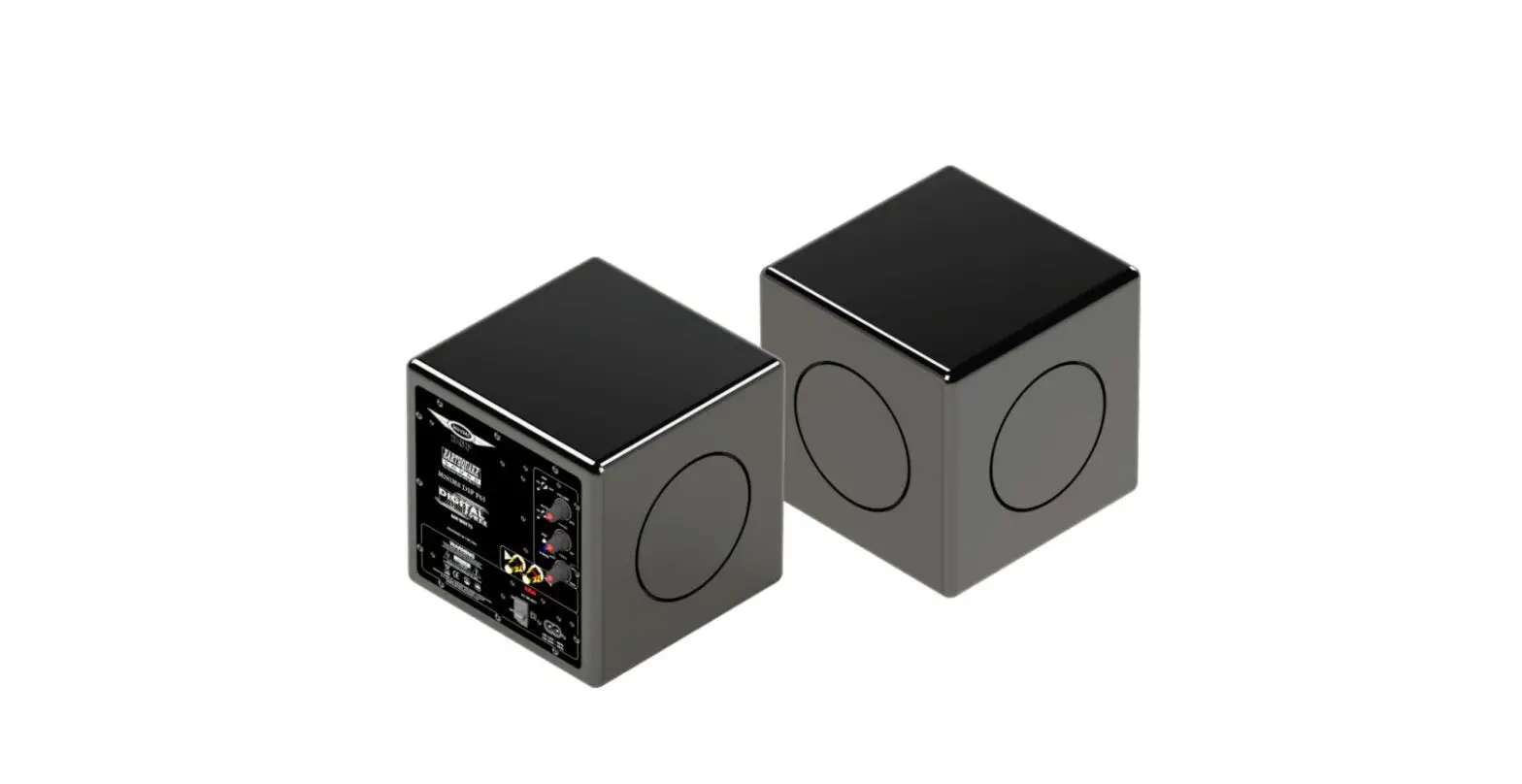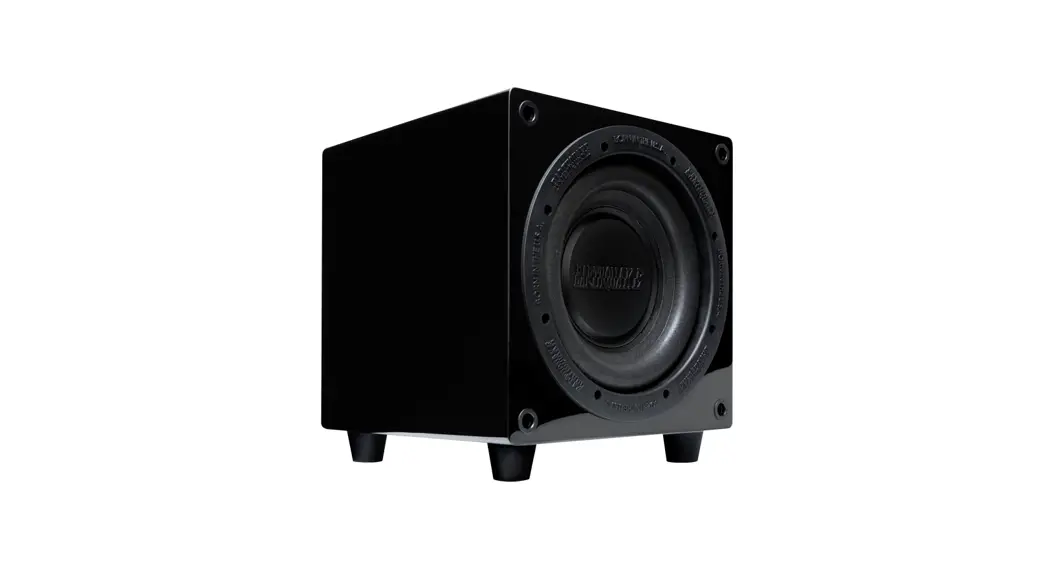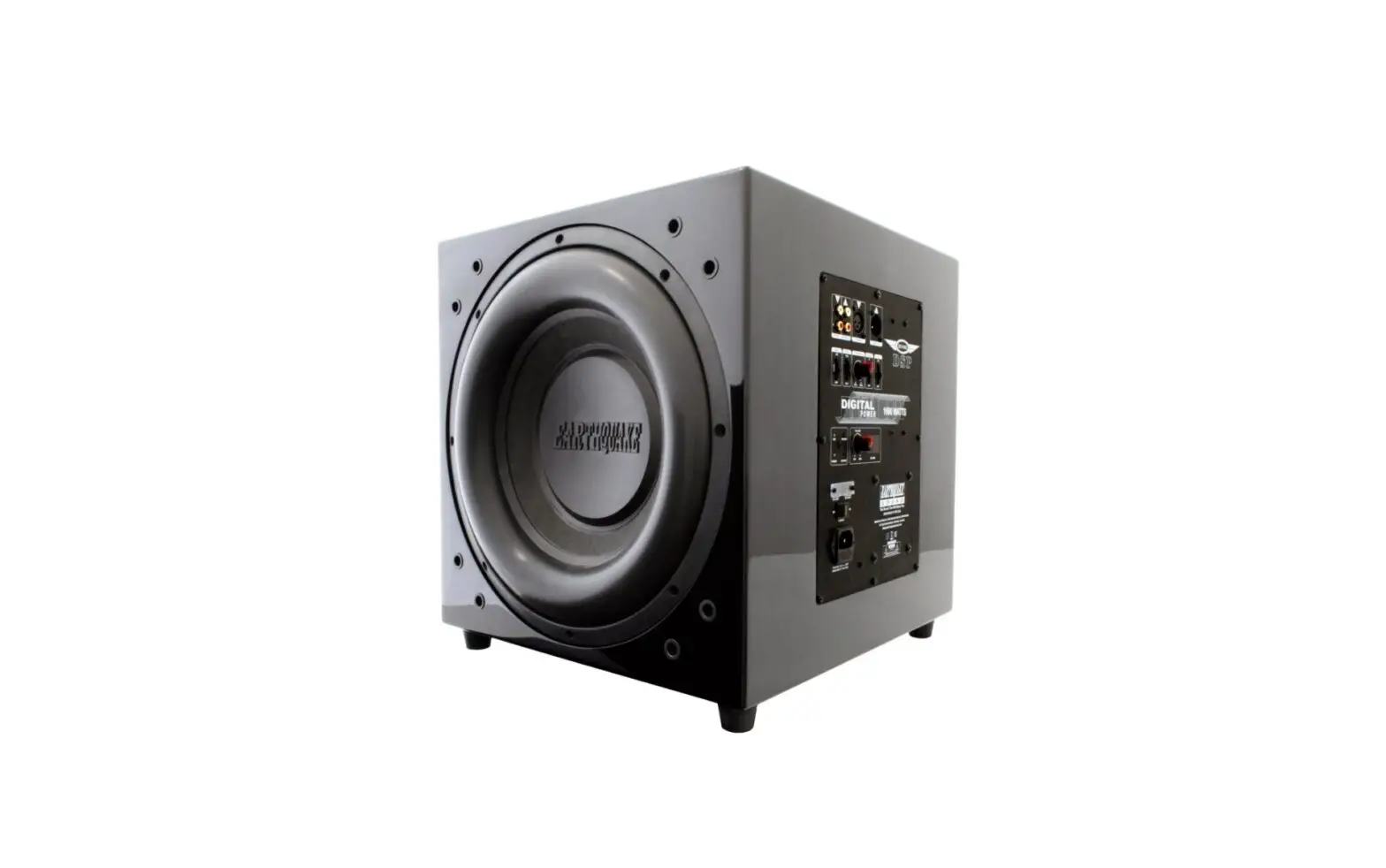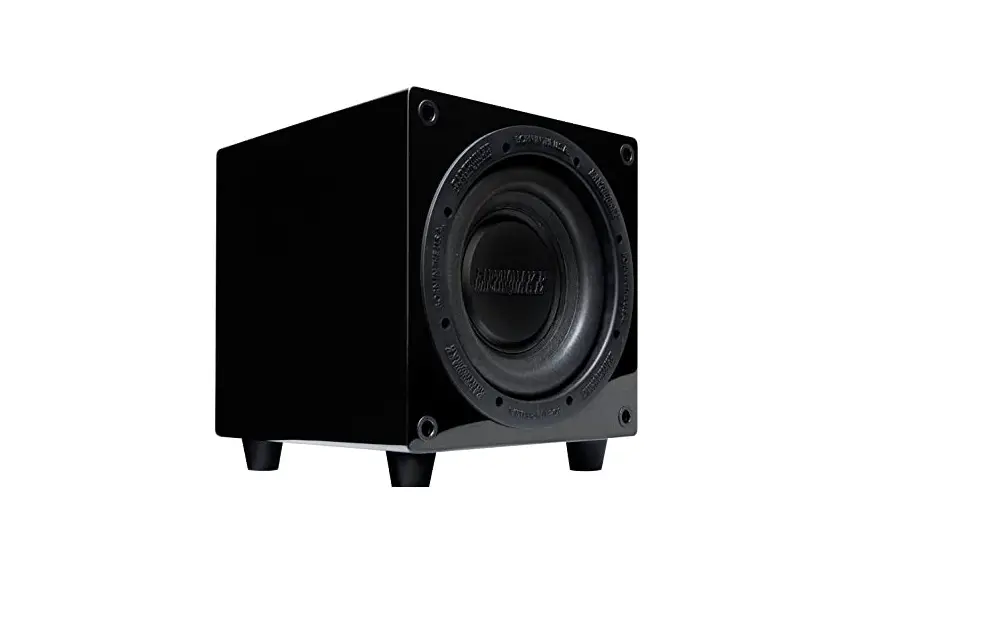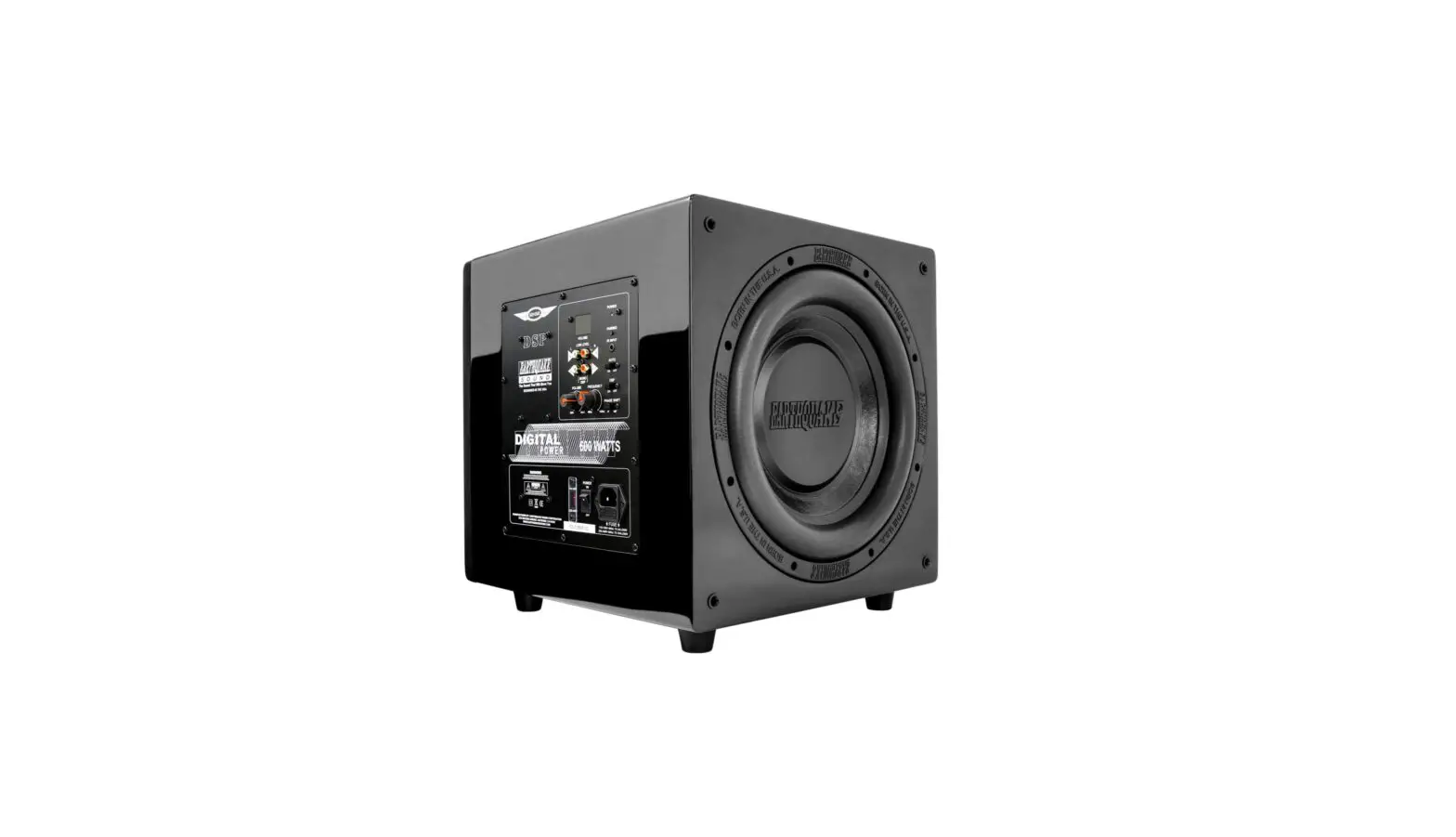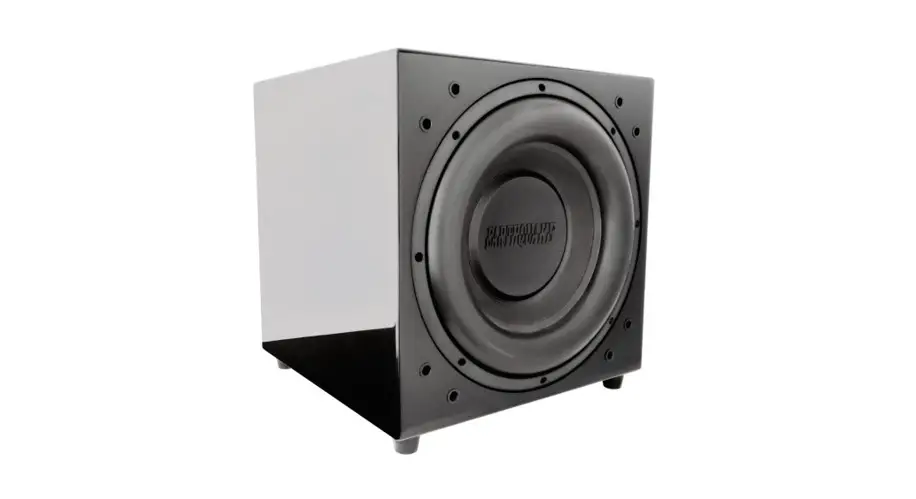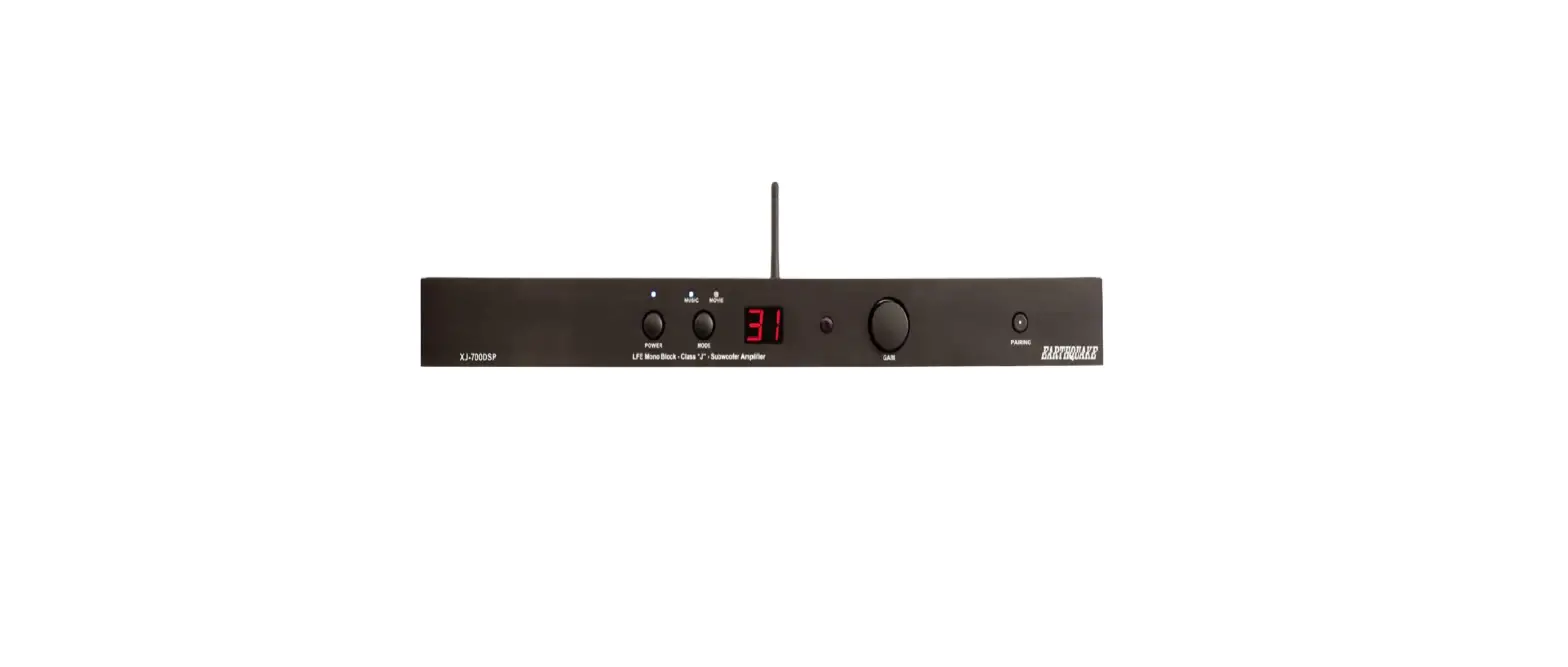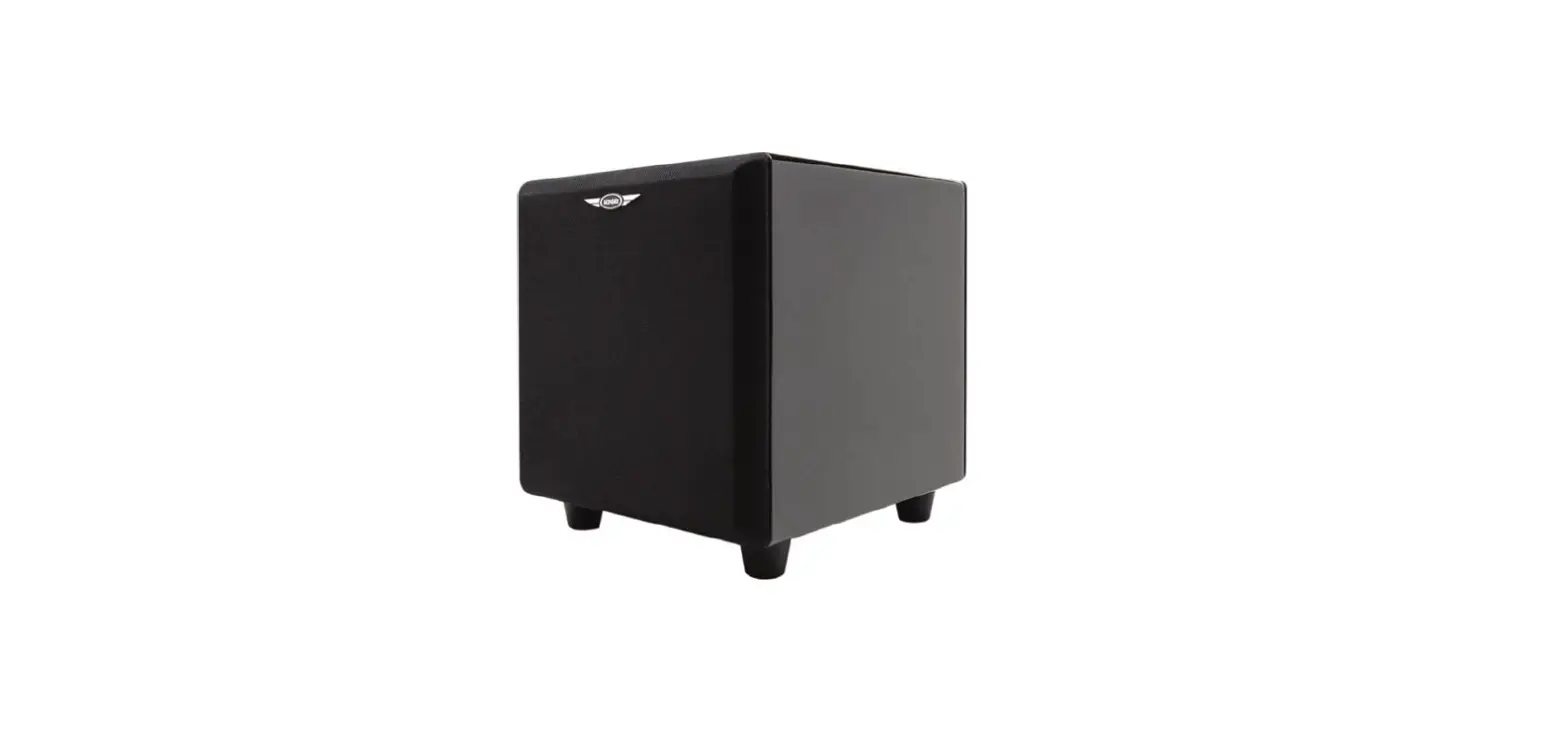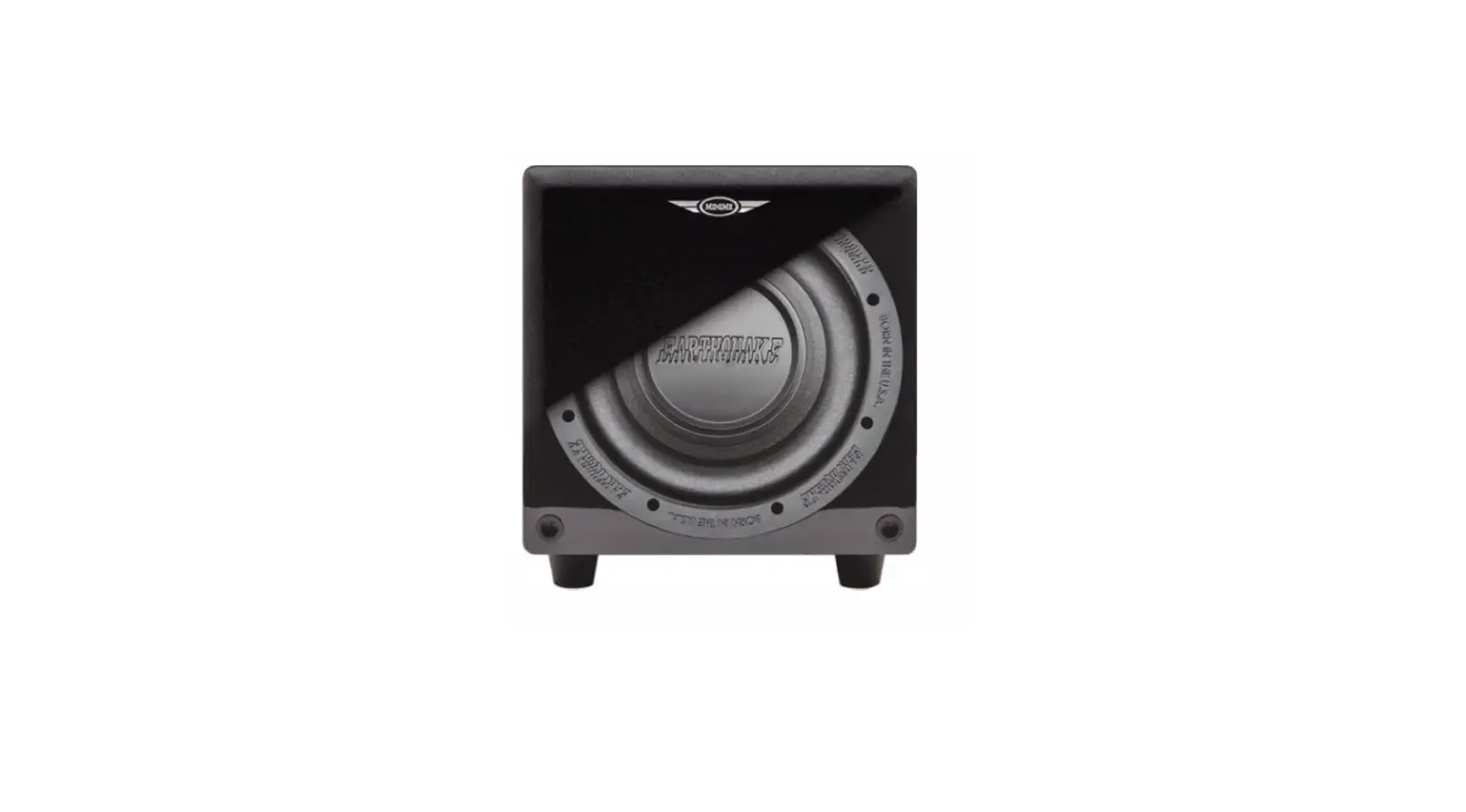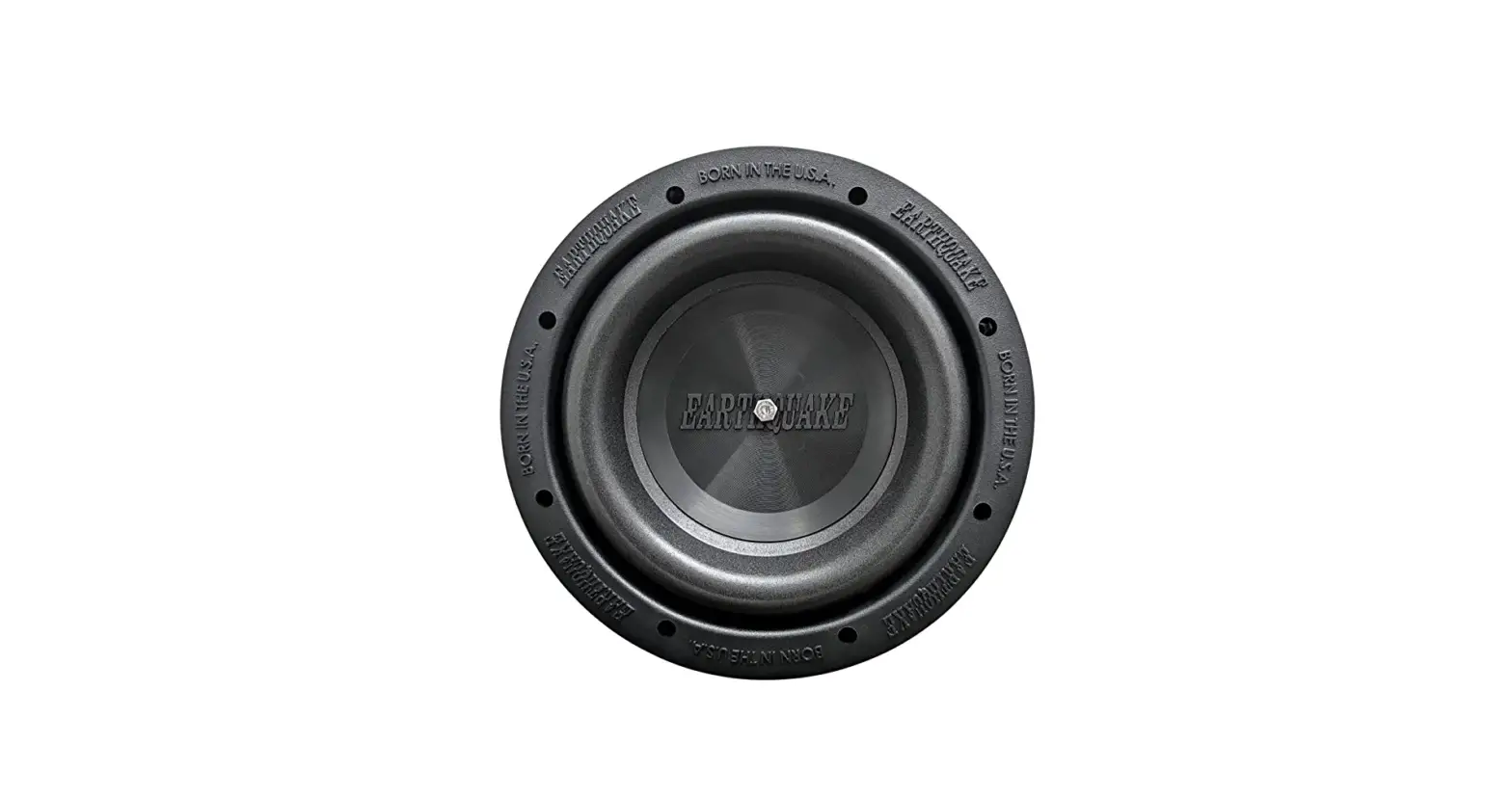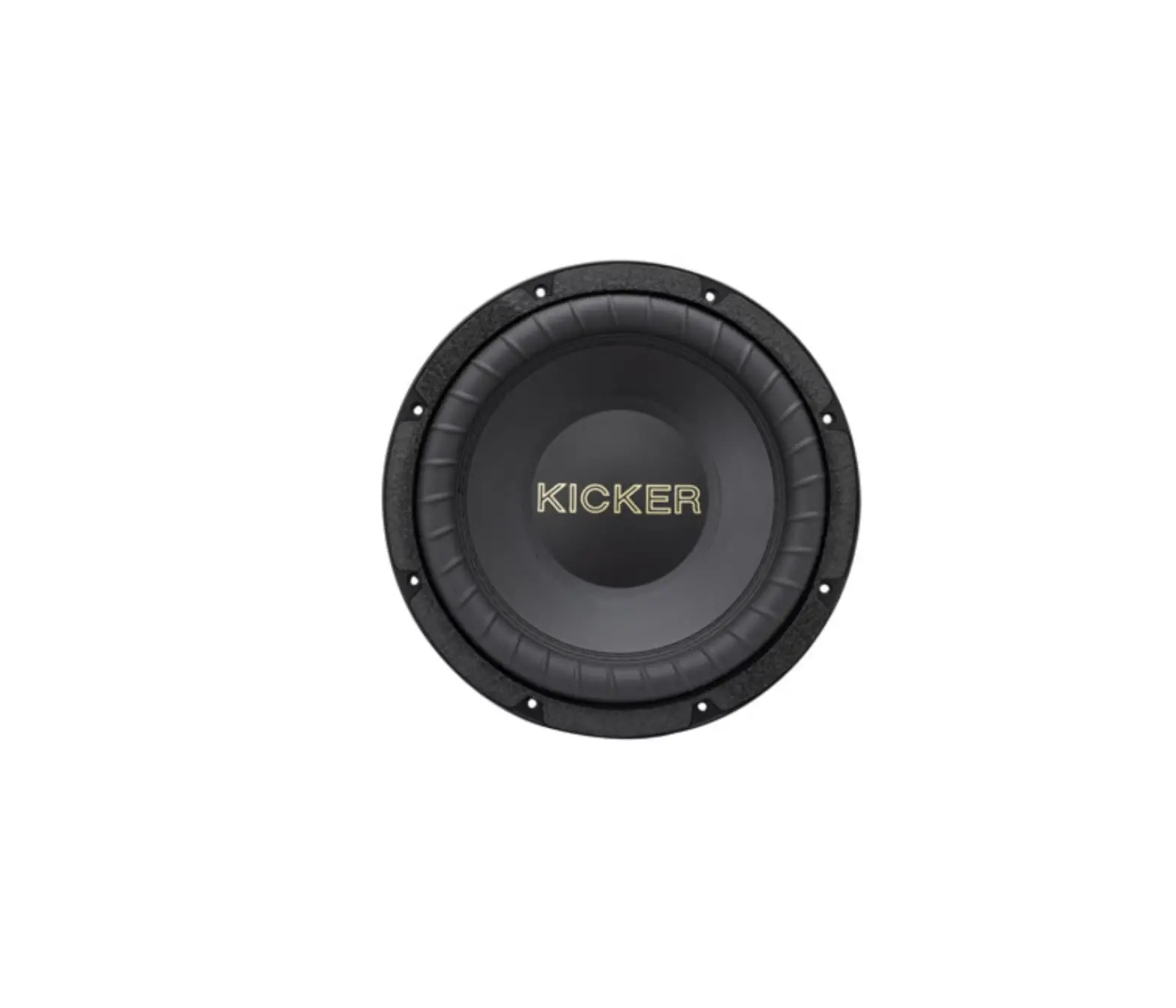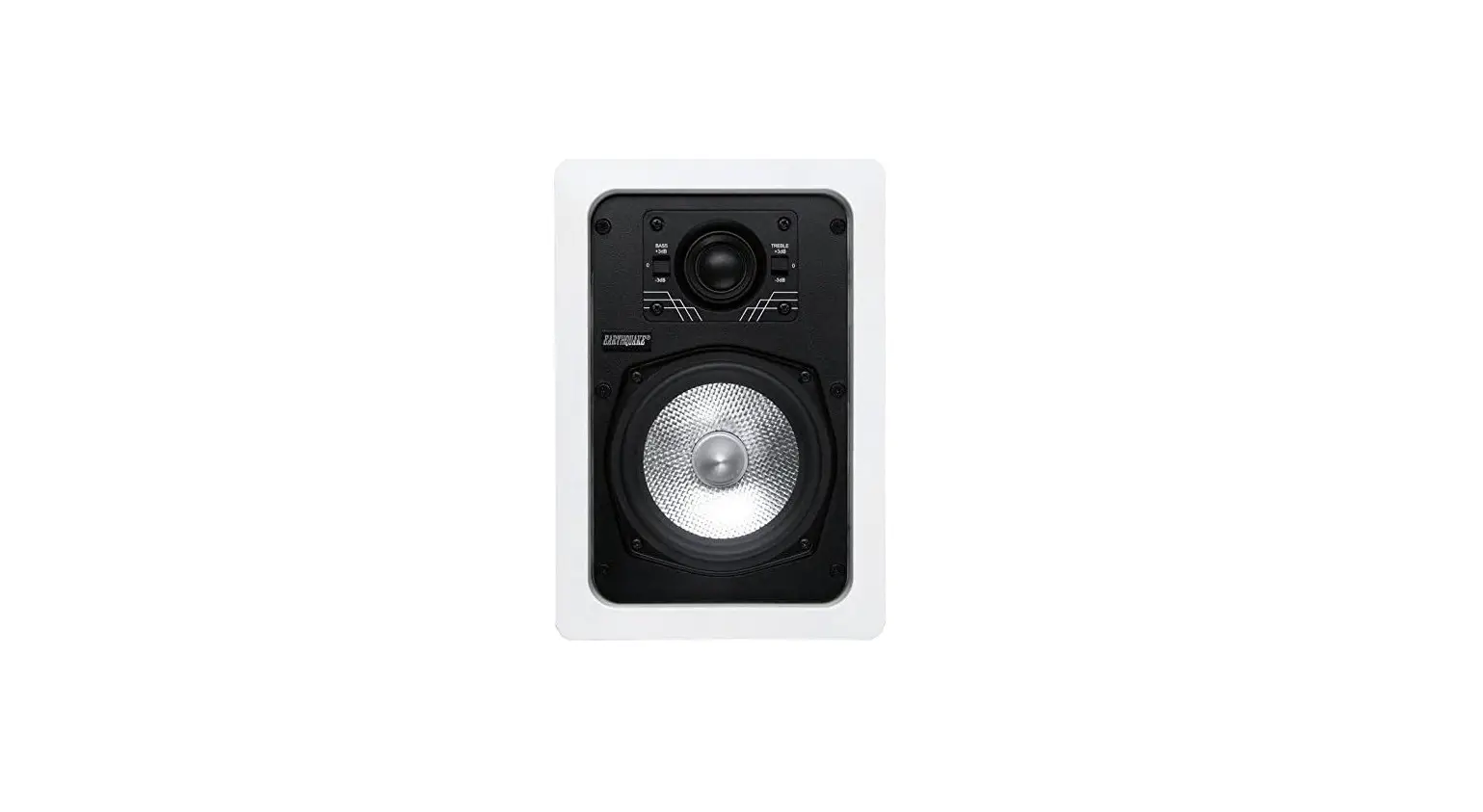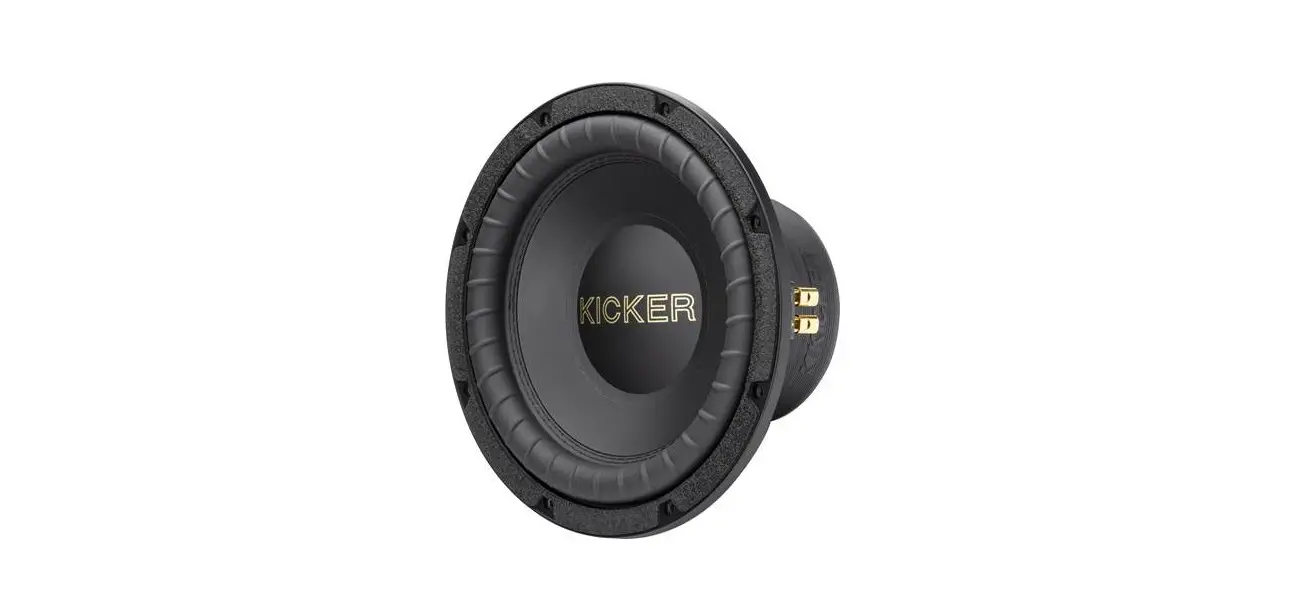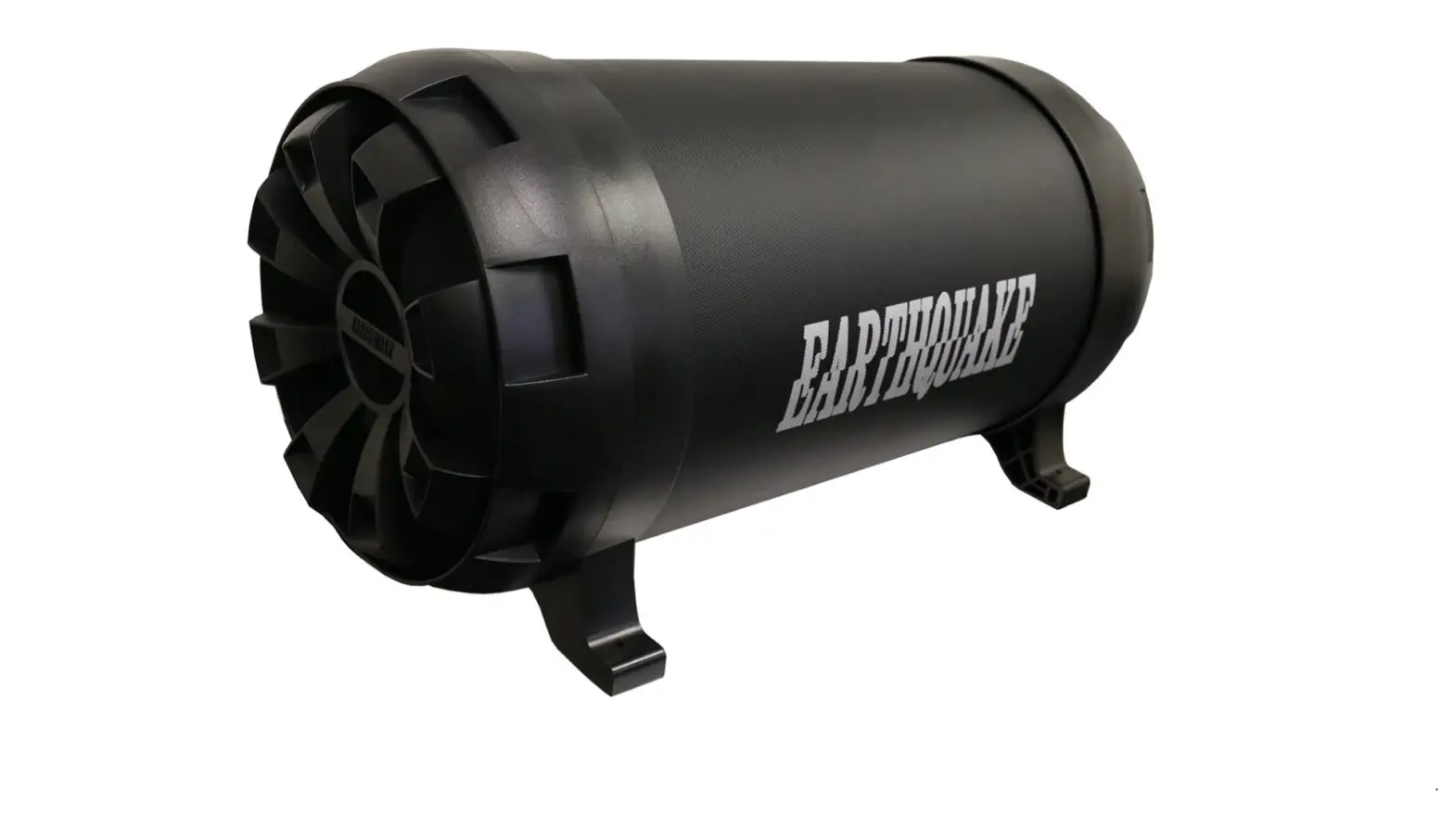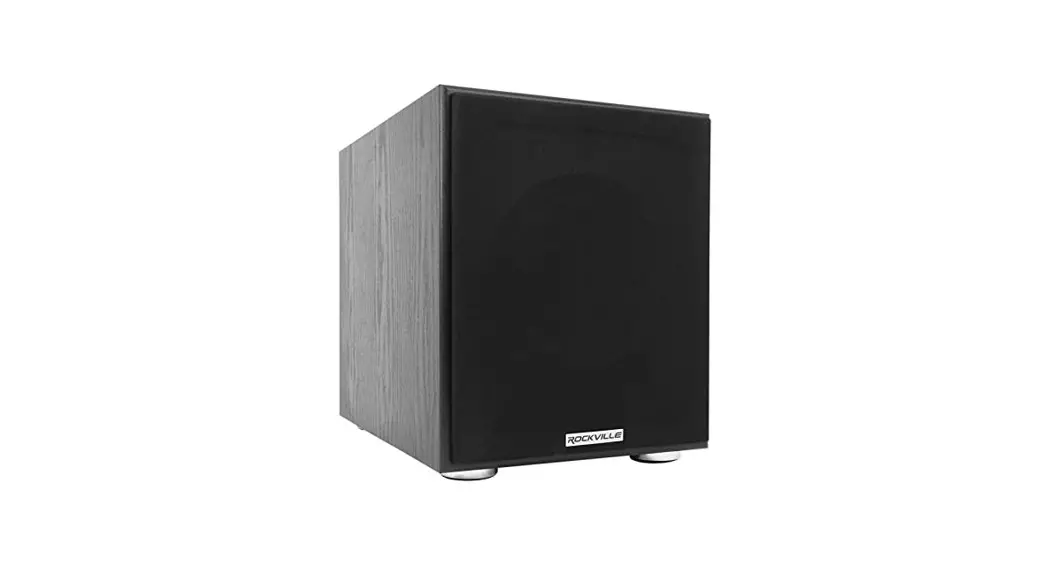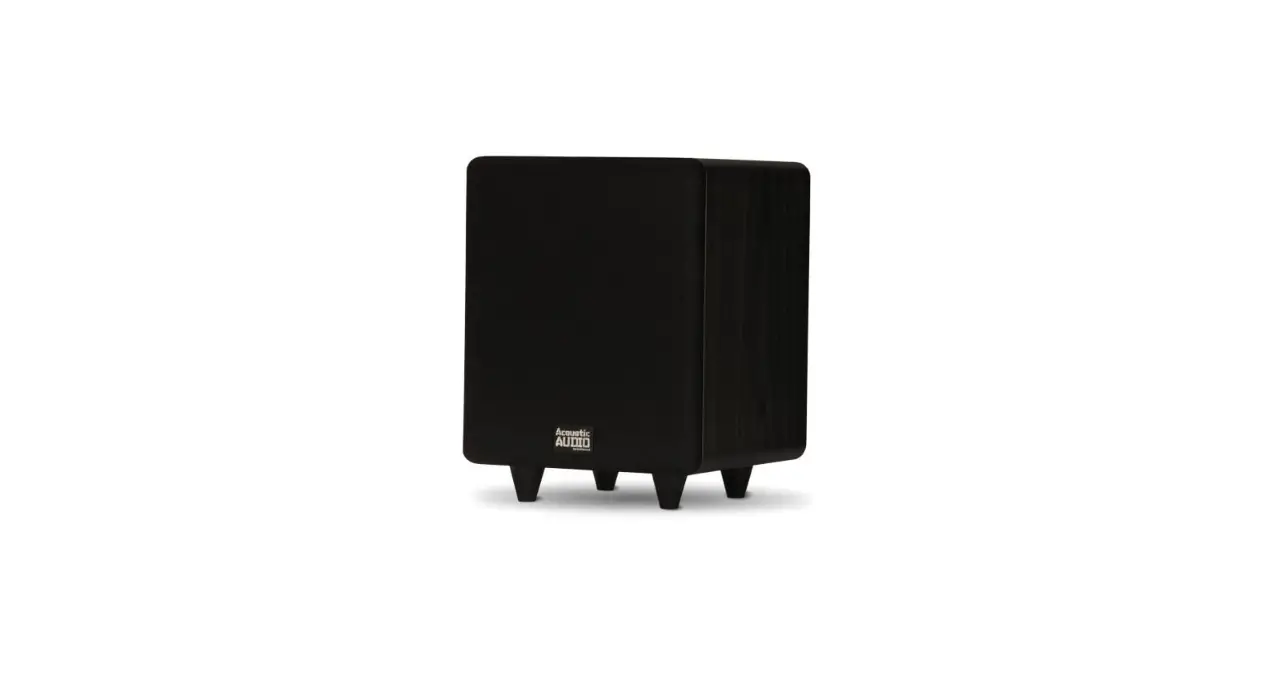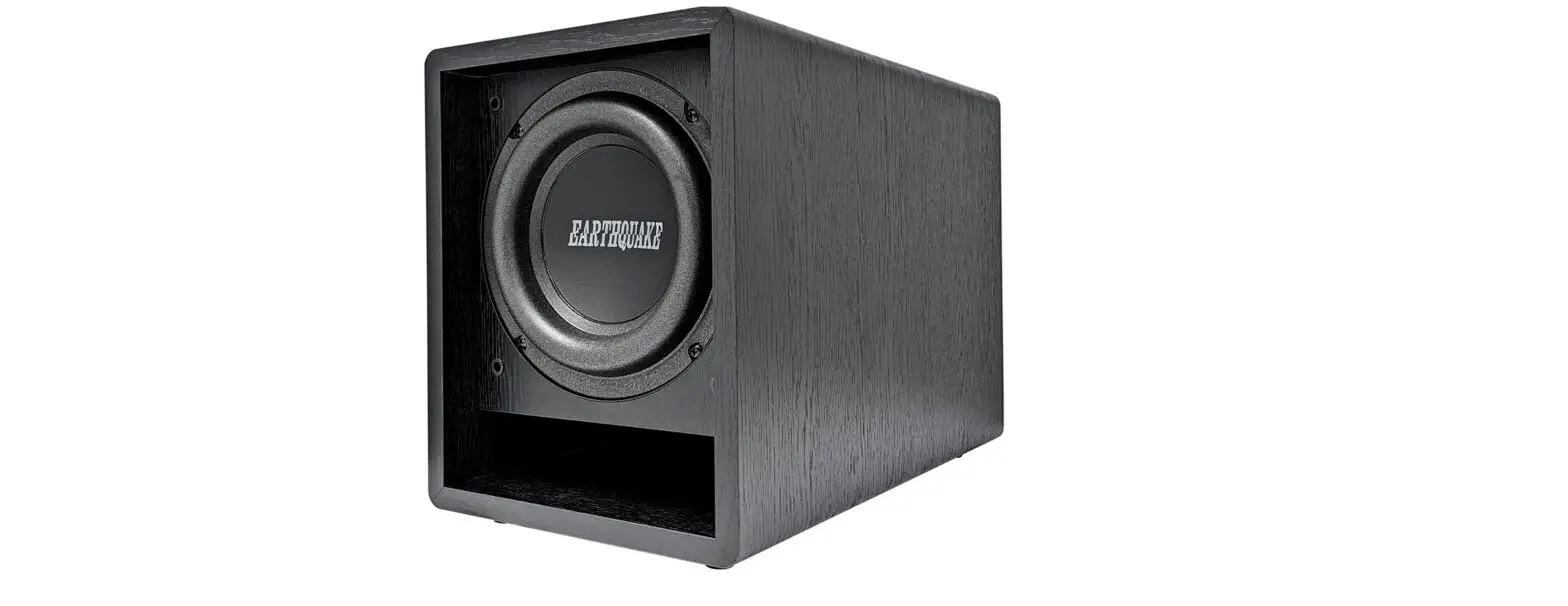

Earthquake Sound FF6.5 6.5-Inch Front Firing Subwoofer
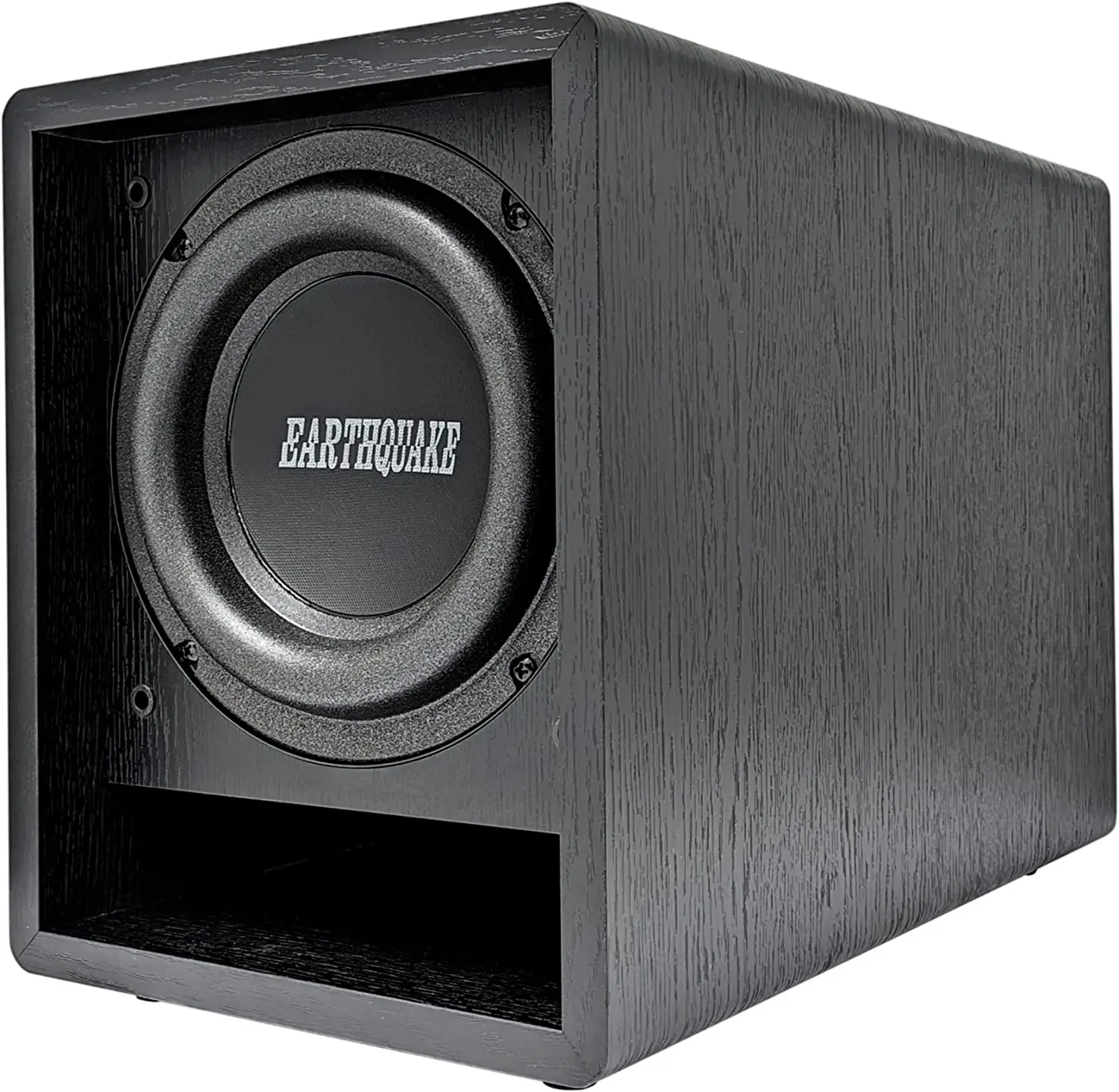
Specifications
- POWER: 150 watts
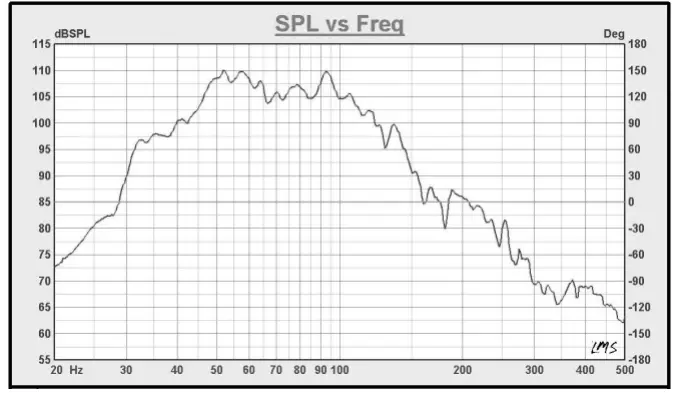
- FREQUENCY RESPONSE: 28-180Hz
- DIMENSIONS
- HEIGHT: 9-15/16″ (252.4mm) – including 3/8” (10.4mm) legs
- WIDTH: 7-11/16” (194mm)
- DEPTH: 14-1/4″ (361mm) – including amplifier controls
- Power Line Voltage: 115-230~AC / 50/60Hz
- OUTPUT LEVELS:
- WEIGHT: 16.5 lbs / 7.5 kgs
For more than 30 years, Earthquake Sound has created a range of excellent audio devices that have won the admiration of audiophile groups all around the world. The engineers work tirelessly to build new, better goods that satisfy customer demands and exceed their expectations. They pay close attention to every detail. Earthquake speakers are expertly made to replicate each and every note accurately for both home and professional audio.
- Five (5) Years Limited Warranty.
Earthquake warrants the original purchaser that all Factory Sealed New Audio Products to be free from defects in material and workmanship under normal and proper use for a period of five (5) years from the date of purchase (as shown on the original sales receipt with serial number affixed/written on it).
The five (5) year warranty period is valid only if an authorized Earthquake dealer properly installs the product and the warranty registration card is properly filled out and sent to Earthquake Sound Corporation. If a non-authorized party installs the product, a ninety (90) day warranty period will be applied. - (A) Five (5) years limited warranty plan coverage guidelines:
First year: Earthquake pays for labor, parts, and ground freight (only in US mainland, not including Alaska and Hawaii. Shipping to us is not covered). Second, third, fourth & fifth year: Earthquake pays labor only. Customer must pay for parts and freight both ways. - (B) Warning:
Products (sent for repair) that are tested by earthquake technicians and deemed to have no problem(s) will not be covered by the five (5) year limited warranty. Customer will be charged a minimum of one (1) hour of labor (at the ongoing rates) plus shipping charges back to customer. - (C) Earthquake will repair or replace at our option all defective products/parts subject to the following provisions:
Defective products/parts have not been altered or repaired by other than an Earthquake factory-approved technicians. Products/parts are not subjected to negligence, misuse, improper use or accident, damaged by improper line voltage, used with incompatible products or have its serial number or any part of it altered, defaced or removed, or have been used in any way that is contrary to Earthquake’s written instructions. - (D) Warranty Limitations:
Warranty does not cover products that have been modified or abused, including but not limited to the following: ! Damages to speaker cabinet and cabinet finish due to misuse, abuse or improper use of cleaning materials/methods. ! Bent speaker frame, broken speaker connectors, holes in speaker cone, surround & dust cap, burnt speaker voice coil. ! Fading and/or deterioration of speaker components & finish due to improper exposure to elements. ! Bent amplifier casing, damaged finish on the casing due to abuse, misuse or improper use of cleaning material. ! Burnt tracers on PCB. ! Product/part damaged due to poor packaging or abusive shipping conditions. ! Subsequent damage to other products. A warranty claim will not be valid if the warranty registration card is not properly filled & returned to earthquake with a copy of the sales receipt. - (E) Service Request:
To receive product service, contact Earthquake Service Department at (510) 732-1000 and request an RMA number (Return Material Authorization). Items shipped without a valid RMA number will be refused. Make sure you provide us with your complete/correct shipping address, a valid phone number, and a brief description of the problem you are experiencing with the product. In most cases, our technicians might be able to resolve the problem over the phone, thus eliminating the need to ship the product. - (F) Shipping Instructions:
Product(s) must be packaged in its original protective box(es) to minimize transport damage and prevent repackaging cost (at the ongoing rates). Shipper claims regarding items damaged in transit must be presented to carrier. Earthquake Sound Corporation reserves the right to refuse improperly packed product. Original bill of sale must accompany product returned to service. We encourage you to include with the package a written description of the problem. Ship product to: - Earthquake Sound Corp.
2727 McCone Avenue, Hayward, CA 94545.
Tel: (510) 732-1000.
You are responsible for the cost of shipping the product to Earthquake Sound Corporation. - (G) Disputes Resolution:
All disputes between clients and Earthquake Sound Corporation resulting from the five (5) year limited warranty policy must be resolved according to the laws & registration of the county of Alameda California.
PRODUCT REGISTRATION
This Earthquake product can be registered by returning the Product Registration card attached to this manual. Please also retain sales receipt, which represents proof of purchase.
PERFORMANCE
Product Overview
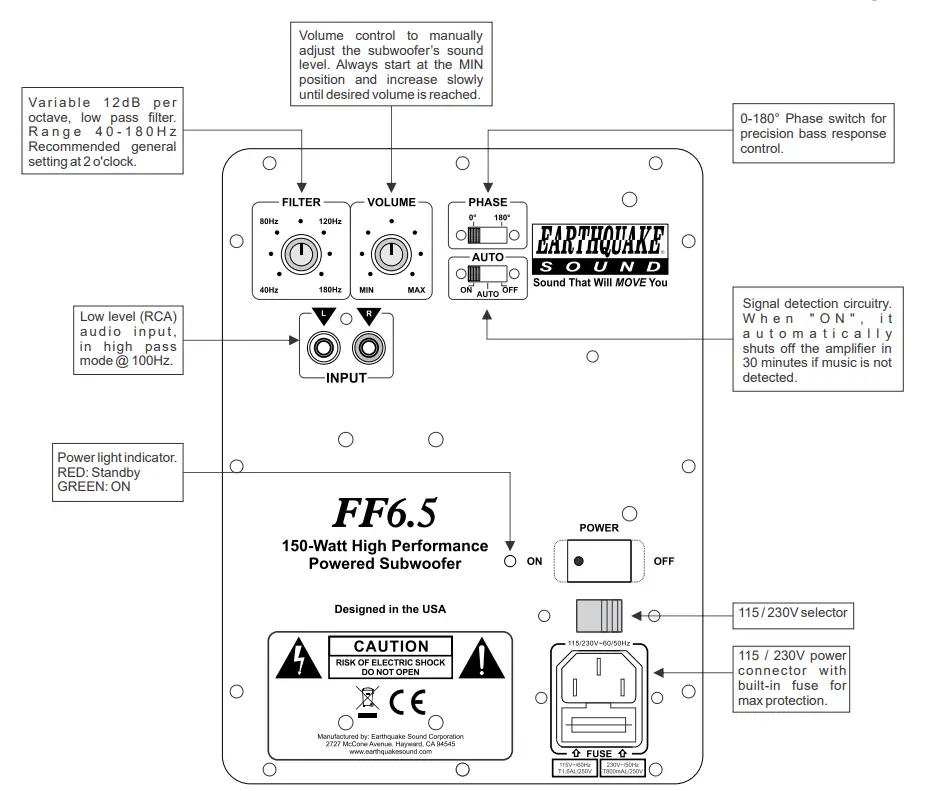
Class “A/B” Amp
- 150 Watts Class “A/B” high efficiency power amplifier
- 12 dB/Octave variable filter from 40 Hz to 180 Hz
- Automatic signal detection circuitry. When “ON”, it automatically turns on the subwoofer when an audio signal is detected. It also shuts the subwoofer off after 30 minutes if no signal is detected
- Low level (RCA) audio inputs
Positioning Your Subwoofer
There is no argument among audio professionals that the loudest bass output from a subwoofer comes from corner placement. The sound flaring outward from a room corner focuses low frequencies giving them no place to go but toward you. In the case of subwoofers, there is no automatic penalty in giving overall balance for this peak bass, since your main speakers can be located elsewhere. It still may be too much bass for your room or (more particularly) your favorite listening spot in the room, but unless you are seated in a “void” spot, where sound from the sub is cancelled or diminished by out-of-phase reflections from elsewhere, there should be plenty of bass from corner placement. If you are seated in such a void spot, your only real choices are to move either the subwoofer or your listening position until the bass returns to the point that satisfies your listening criteria. Turning up the level control or changing the crossover point almost certainly won’t help much. But flipping the phase control 180 degrees sometimes may make a difference, especially if the void is a product of cancellations caused by interaction with low frequencies from your main speakers.
Using Two Subwoofers
If you choose the use two woofers, the sound output will double (an increase of 5dB). Locate the woofers with one in each corner and experiment with the location and phase control to achieve the best bass response. Always drive each woofer through the Left/Mono input even though you are driving one woofer on a right channel drive and the other with a left channel drive. If your pre-amplifier has a single Sub/LFE output, use a ‘Y’ cable to split it into two outputs
Connecting Your Subwoofer
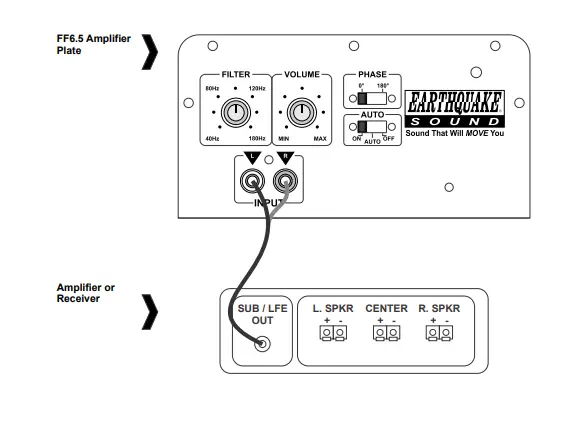
Low Level (RCA) Input Connection
- Locate the LINE IN RCA on the FF6.5 amplifier.
- Connect the FF6.5 to the signal source, i.e., AV receiver. Even though there is no need to have both RCAs to the signal source since the subwoofer is often operated in mono signal, we recommend connecting the receiver to both RCA inputs in order to obtain higher signal level.
- If needed, connect the LINE OUT RCA to another amplifier to drive satellite speakers (front or rear). The LINE OUT RCA has high pass filtered signal at about 70Hz (5dB/Octave cut off).

FAQ’s
- How effective are seismic speakers?
Powerful bookshelf monitors are fantastic! Although I’ve only had these speakers for 24 hours, they haven’t let me down thus far. I know it sounds corny, but I find it difficult to stop listening to them. It’s as if all of my music is brand-new. - Why rumble earthquakes?
People who are very near to a little shallow earthquake may occasionally hear booms or rumbling noises. The booming sound is caused by high-frequency vibrations from the shallow earthquake; these vibrations are never heard during deeper earthquakes. - How do earthquakes sound to you?
Even if the frequency of the majority of ground vibrations is beyond the range of human hearing, we can speed up the signal and make it audible. The spectrogram/seismogram can be used to assist in matching the sound of an earthquake with the occurrence that caused it. - A 10.0 earthquake: is it possible?
No, earthquakes of a magnitude of ten or higher are impossible. The length of the fault where an earthquake occurs has an impact on its magnitude. - How often do earthquakes occur?
0.01 to 10 Hz [3] Even though they can produce greater frequencies, earthquakes typically transmit seismic waves primarily in the frequency range of 0.01 to 10 Hz, according to seism metric data. - Can an earthquake be heard before it is felt?
The movement of energy through the Earth’s crust as shaking is more difficult than the movement of energy through the air as noise. Due to the fact that sound spreads further from the epicenter than shaking, in general, more individuals can hear than can feel an earthquake. - Eruptions can humans hear them?
Why are earthquakes preceded by audible sounds? Since you typically hear an earthquake’s roar before it hits, I was astonished to learn that earthquakes travel far more quickly than sound. In air, sound travels at a speed of 330 meters per second. That speed is indeed excellent in many situations, but not always. - In an earthquake, do trees topple over?
Landslides are the primary reason for tree loss and damage during earthquakes in highland forests. Landslides can range from rock falls that damage a single tree to soil movements that uproot and bury trees across large regions. - In decibels, how loud is an earthquake?
a seismic event. A 5.0 on the Richter scale earthquake is 235 decibels loud at its epicenter. - Can P waves be heard?
The first are compressional waves termed P-waves, undetectable by human hearing but audible to sensitive recording equipment and animals. They travel the quickest but are also the smallest, according to Holtzman.