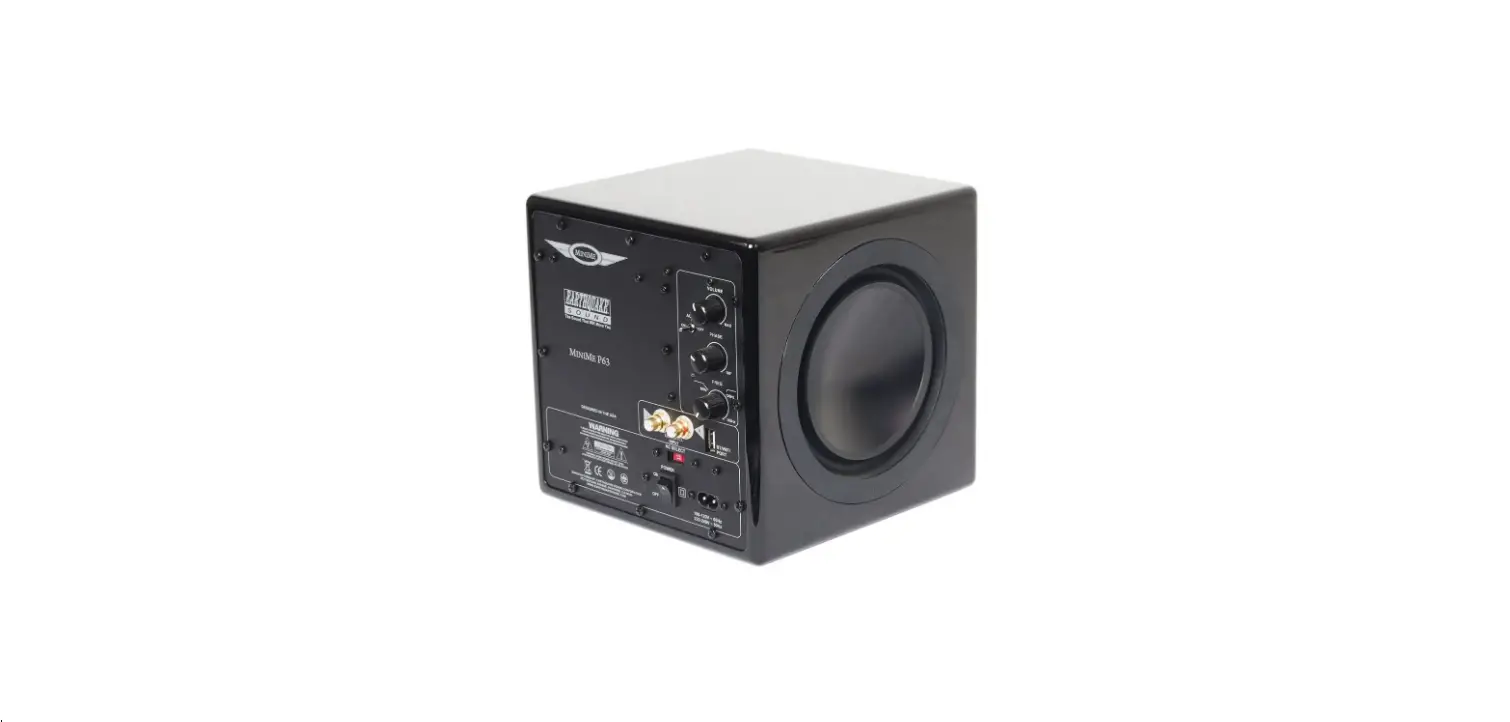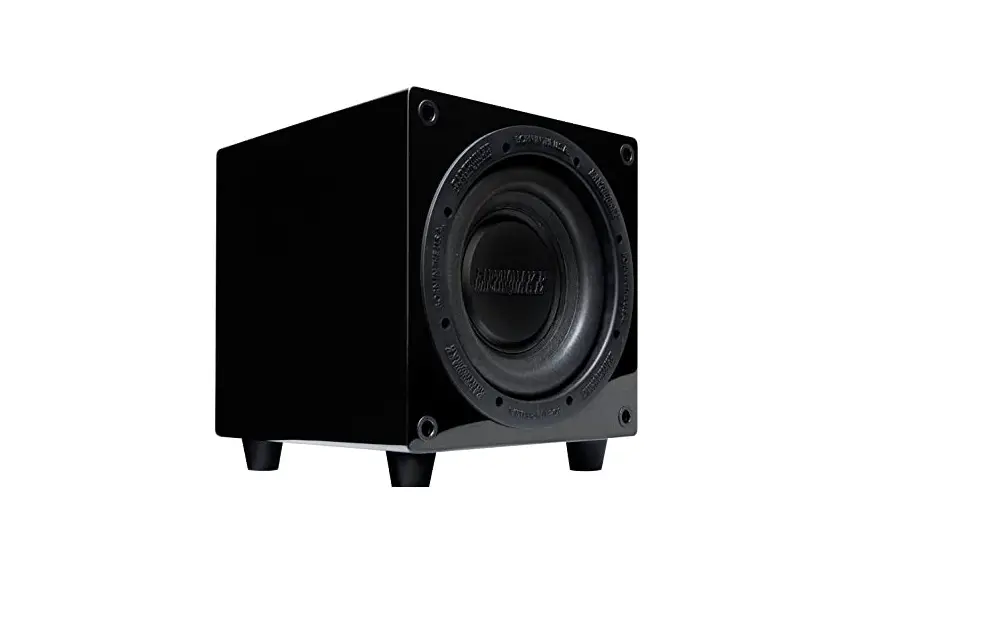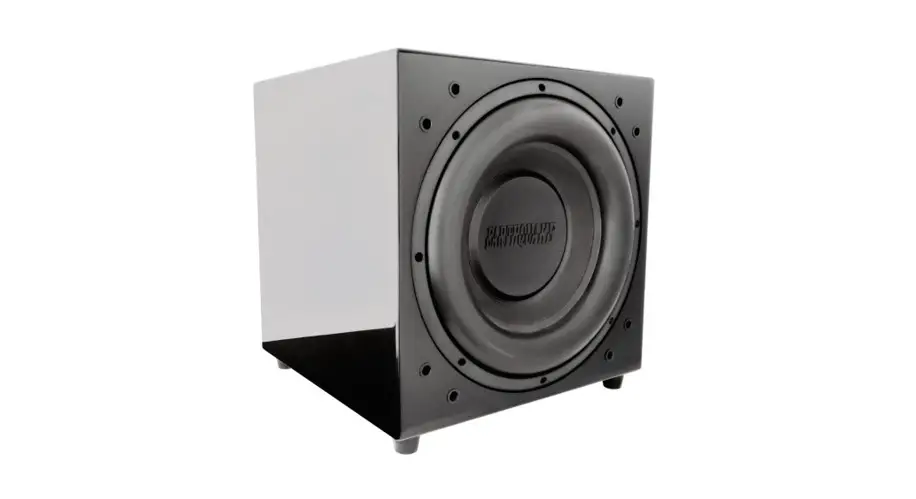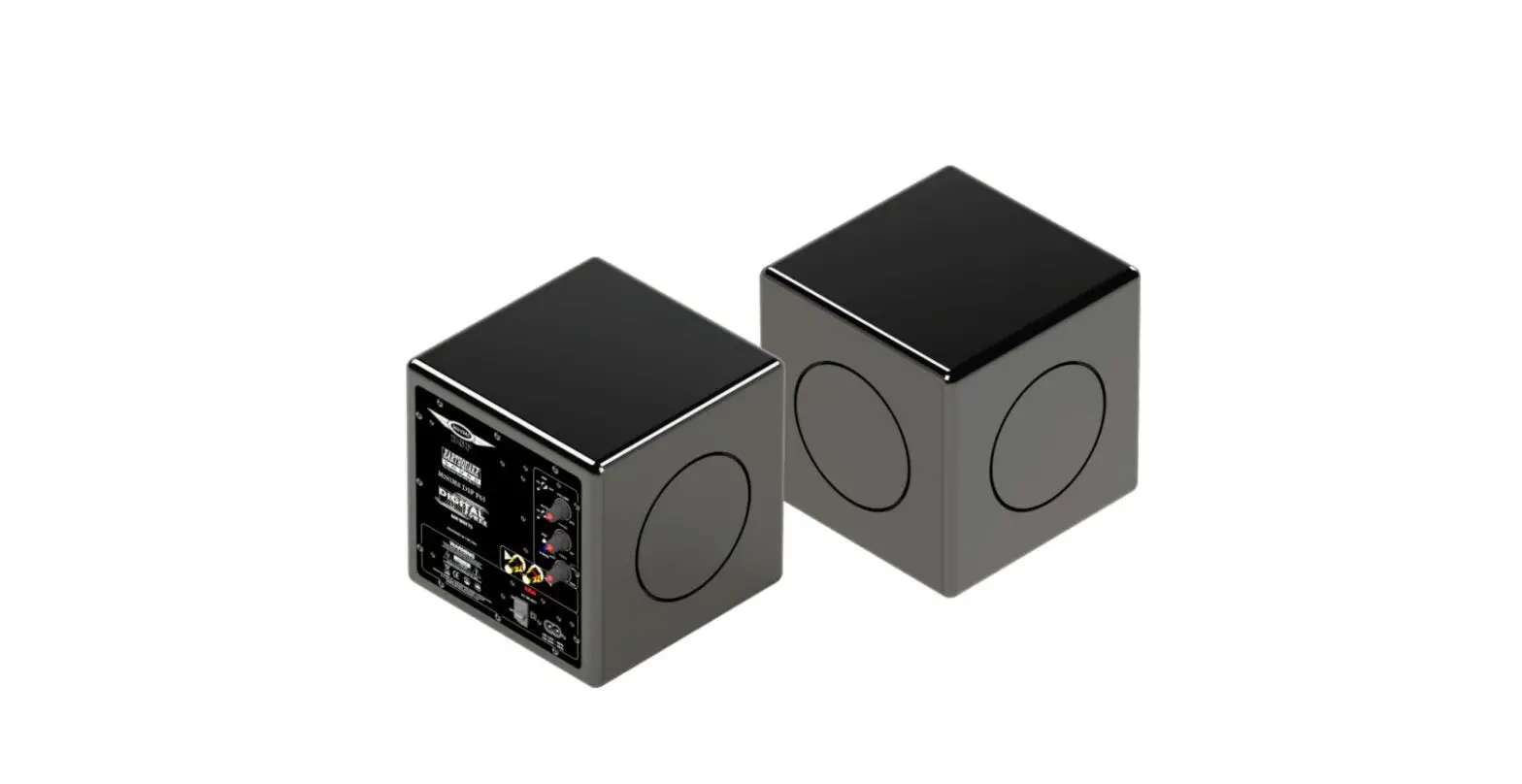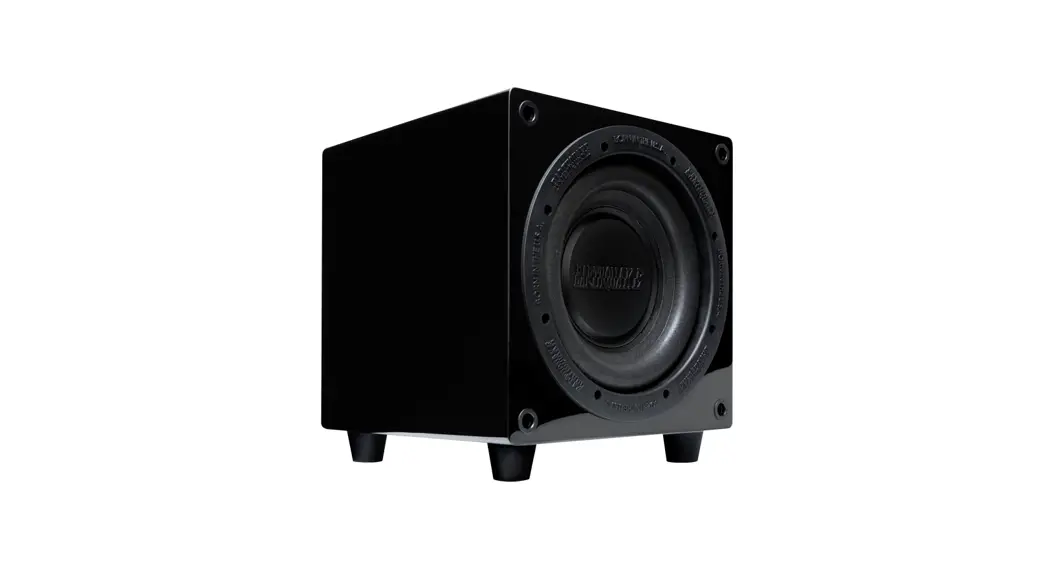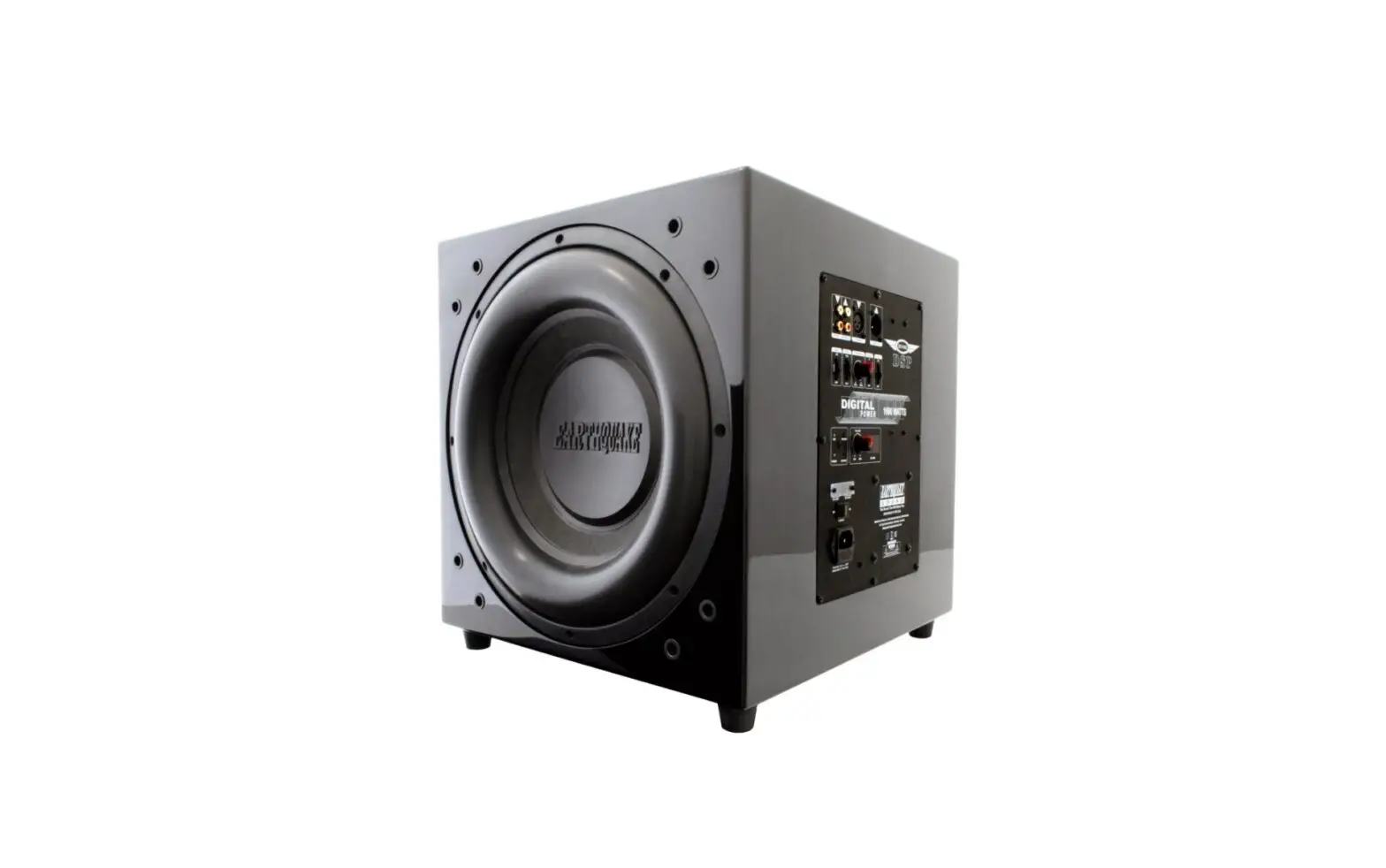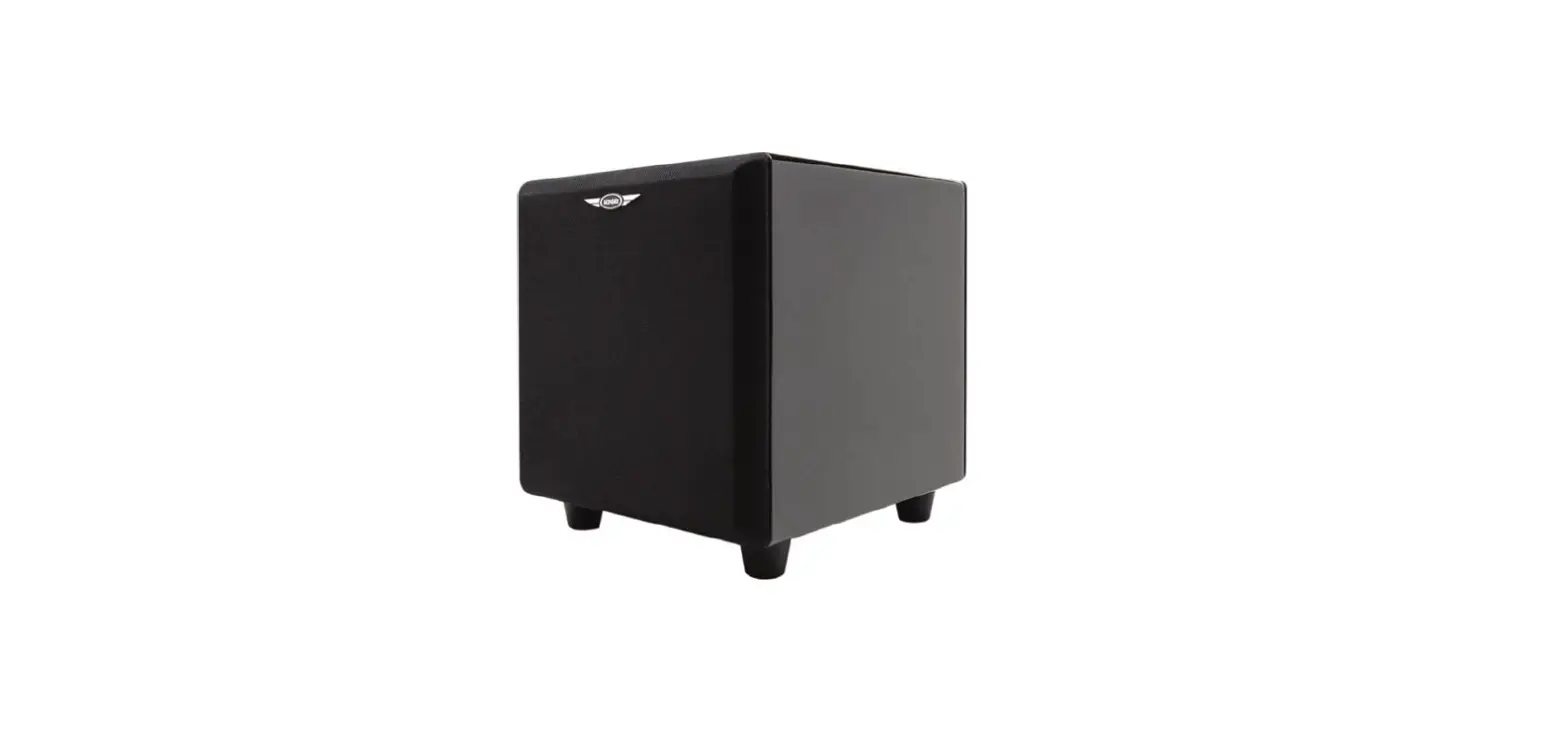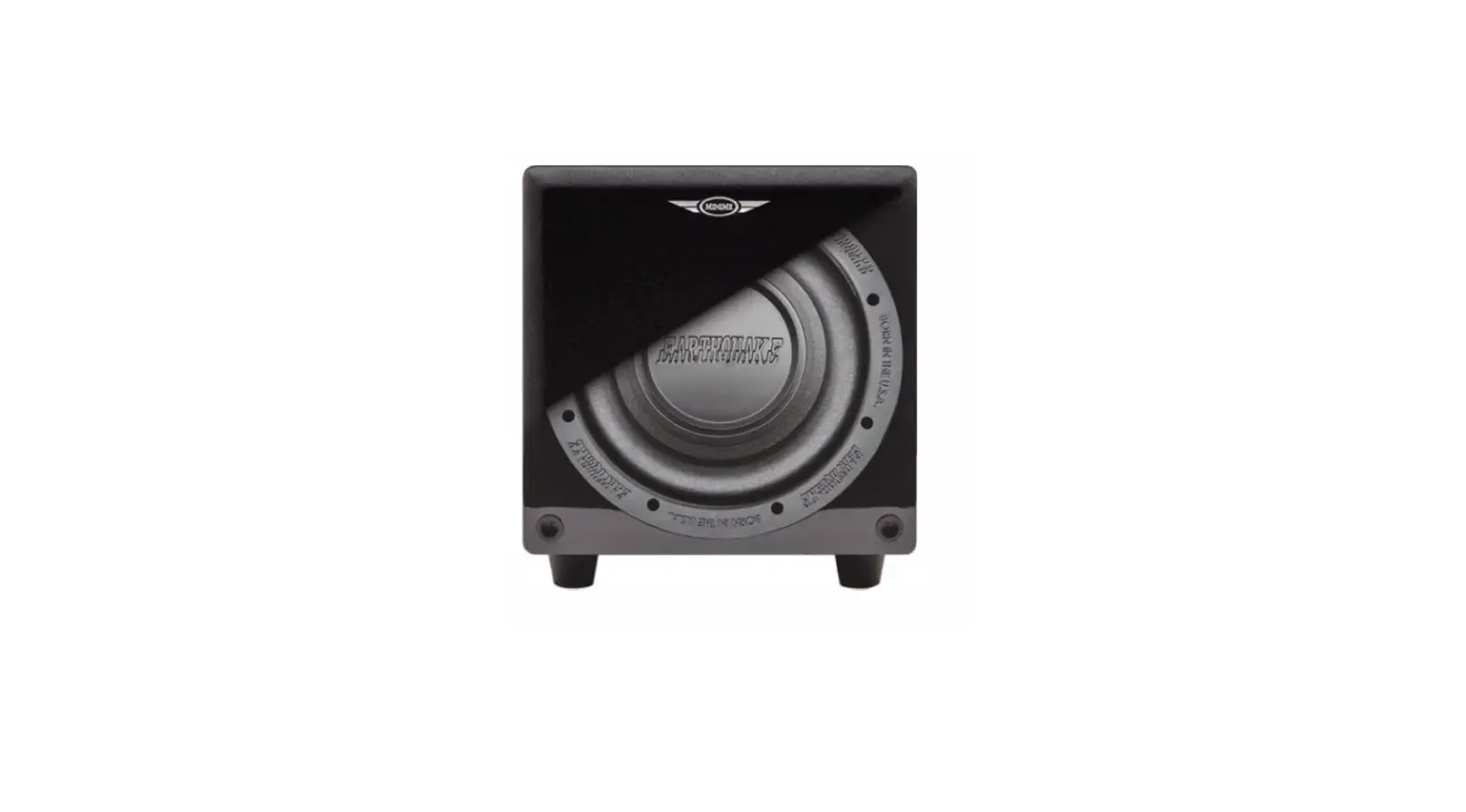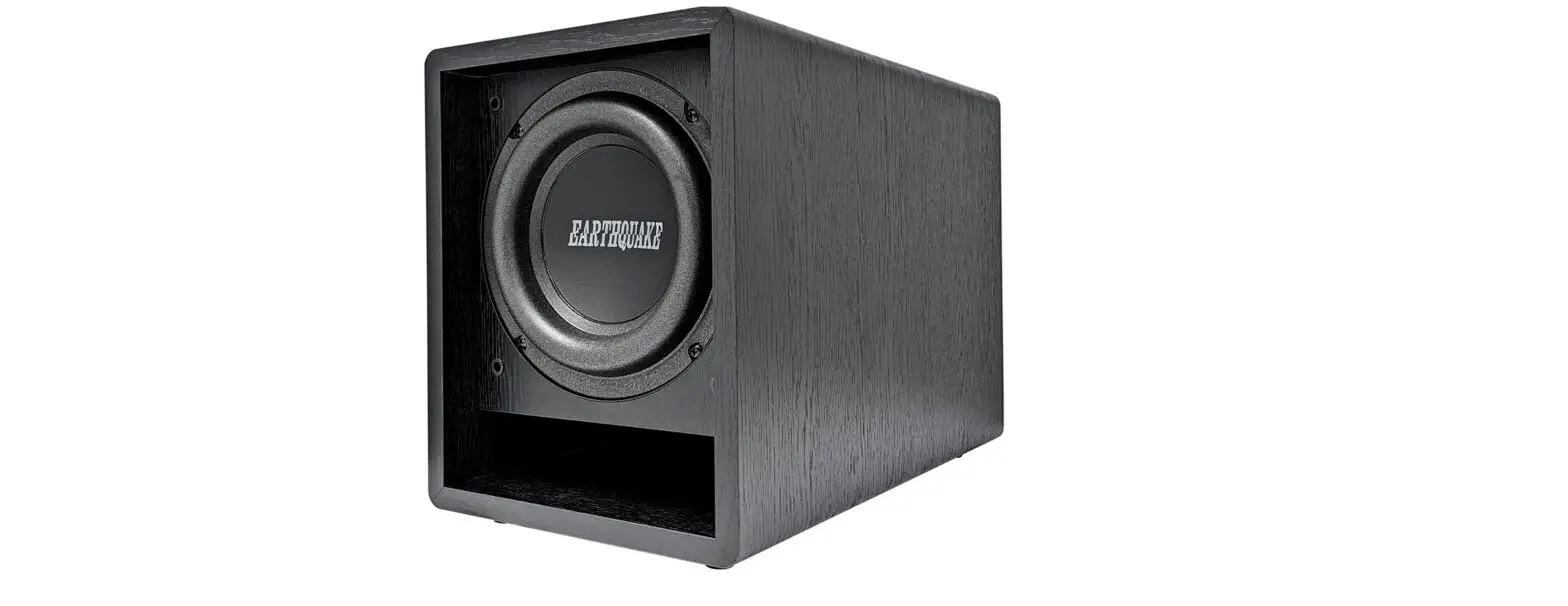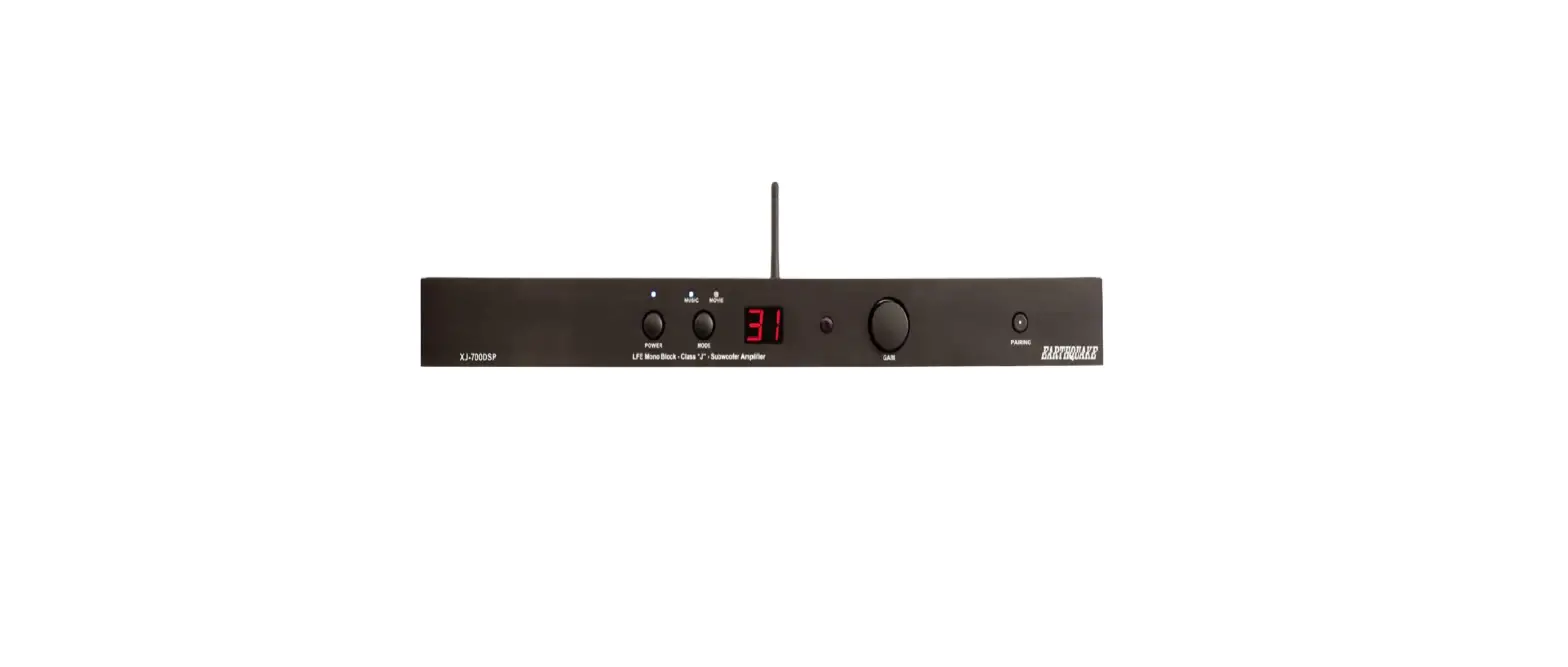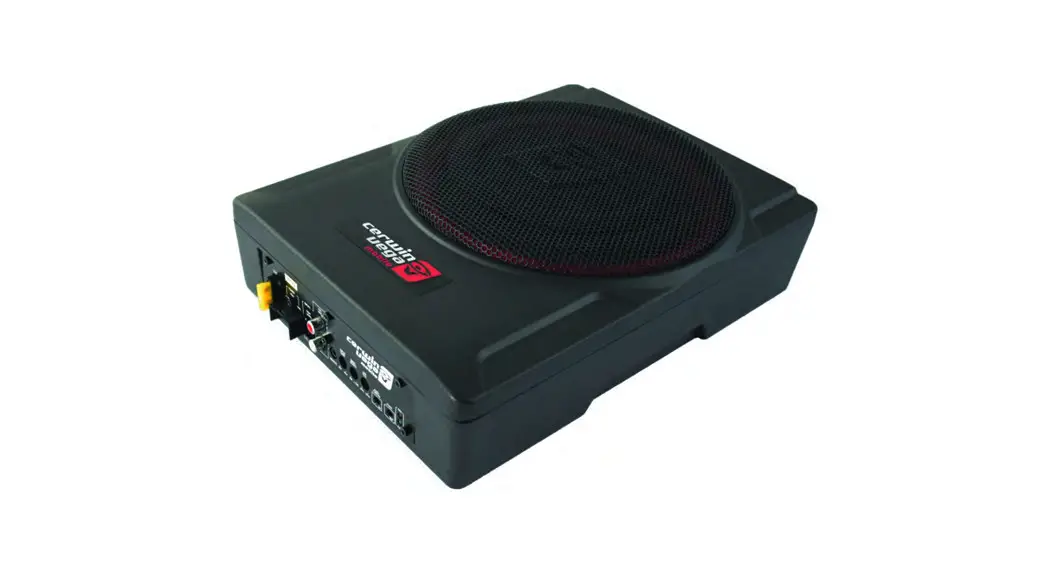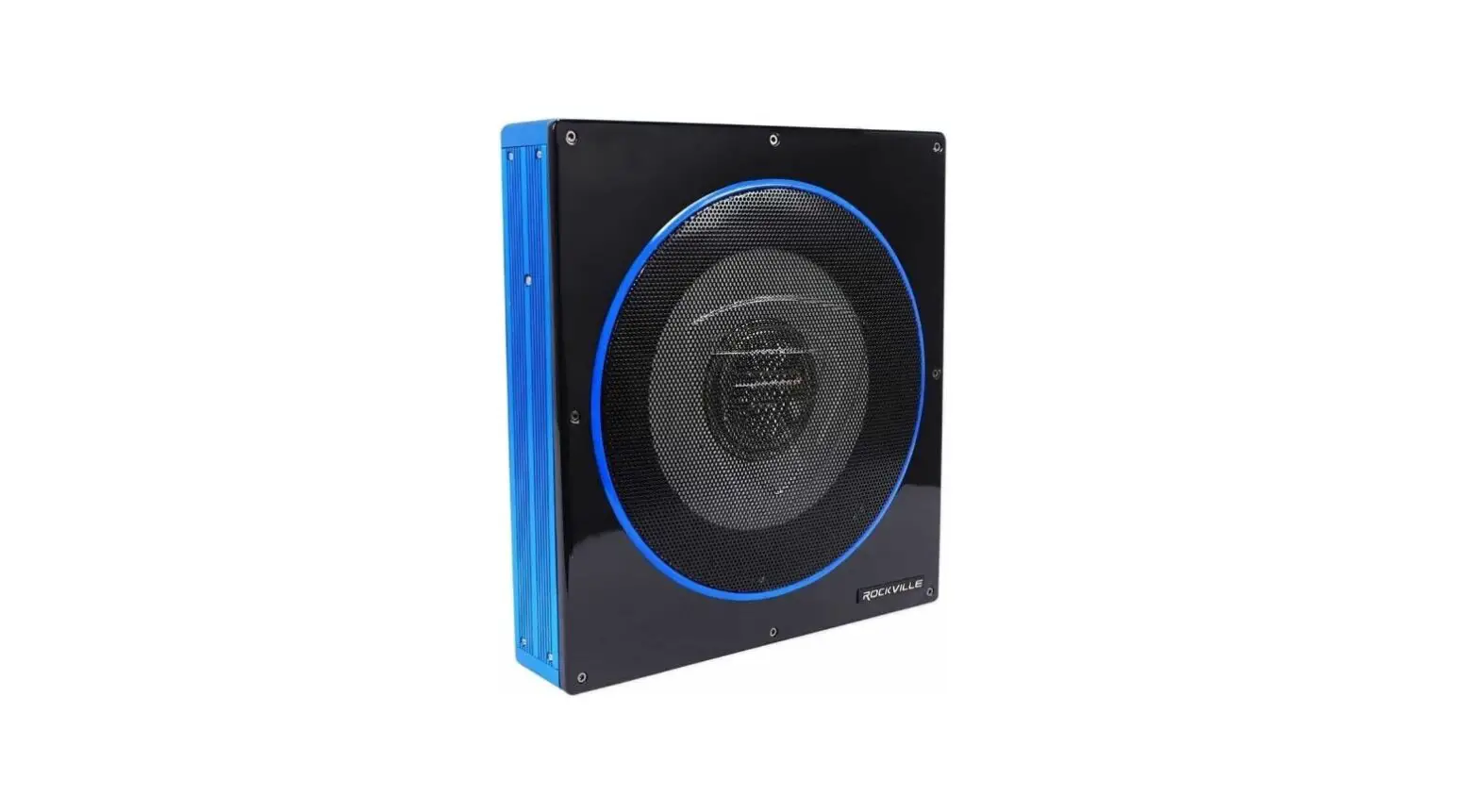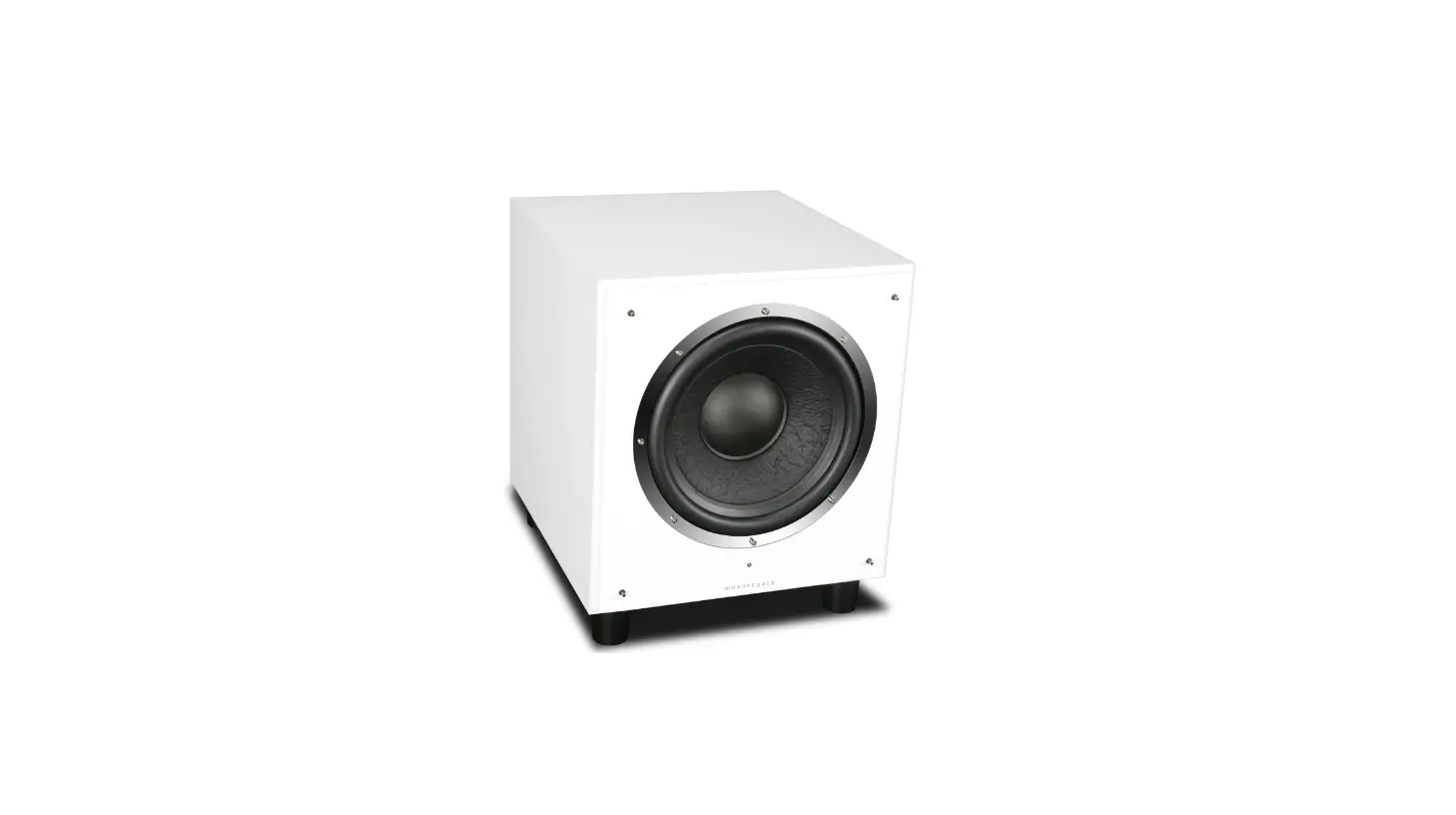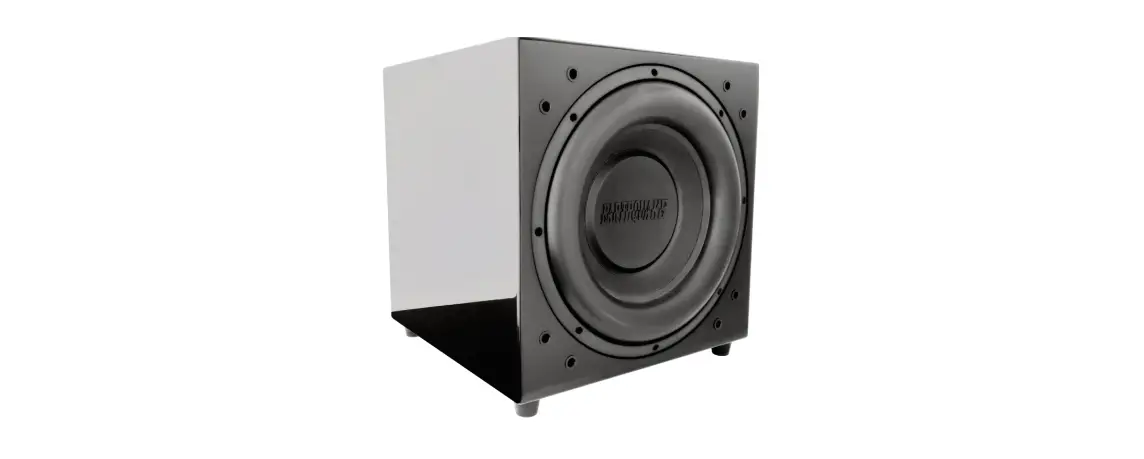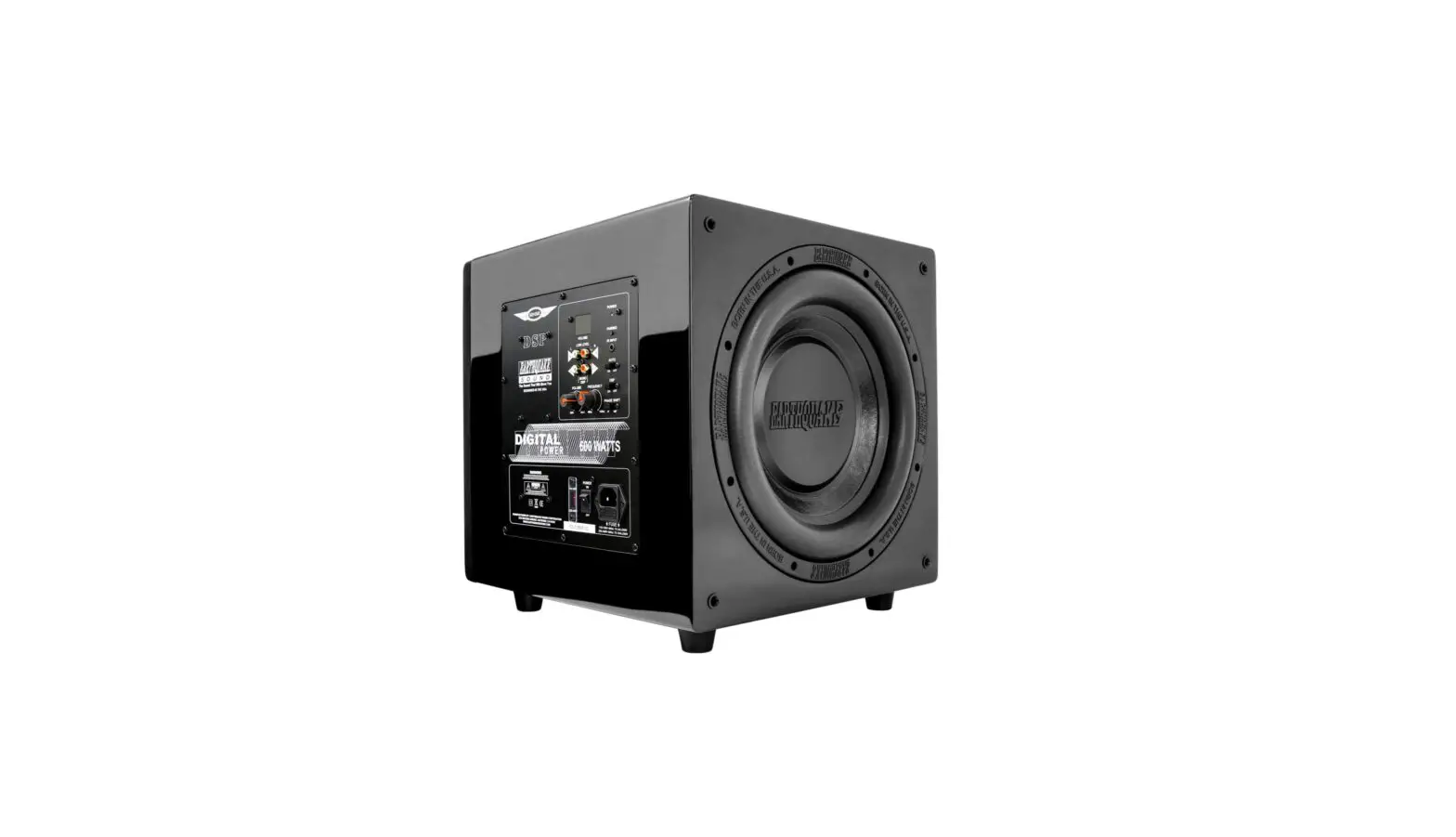

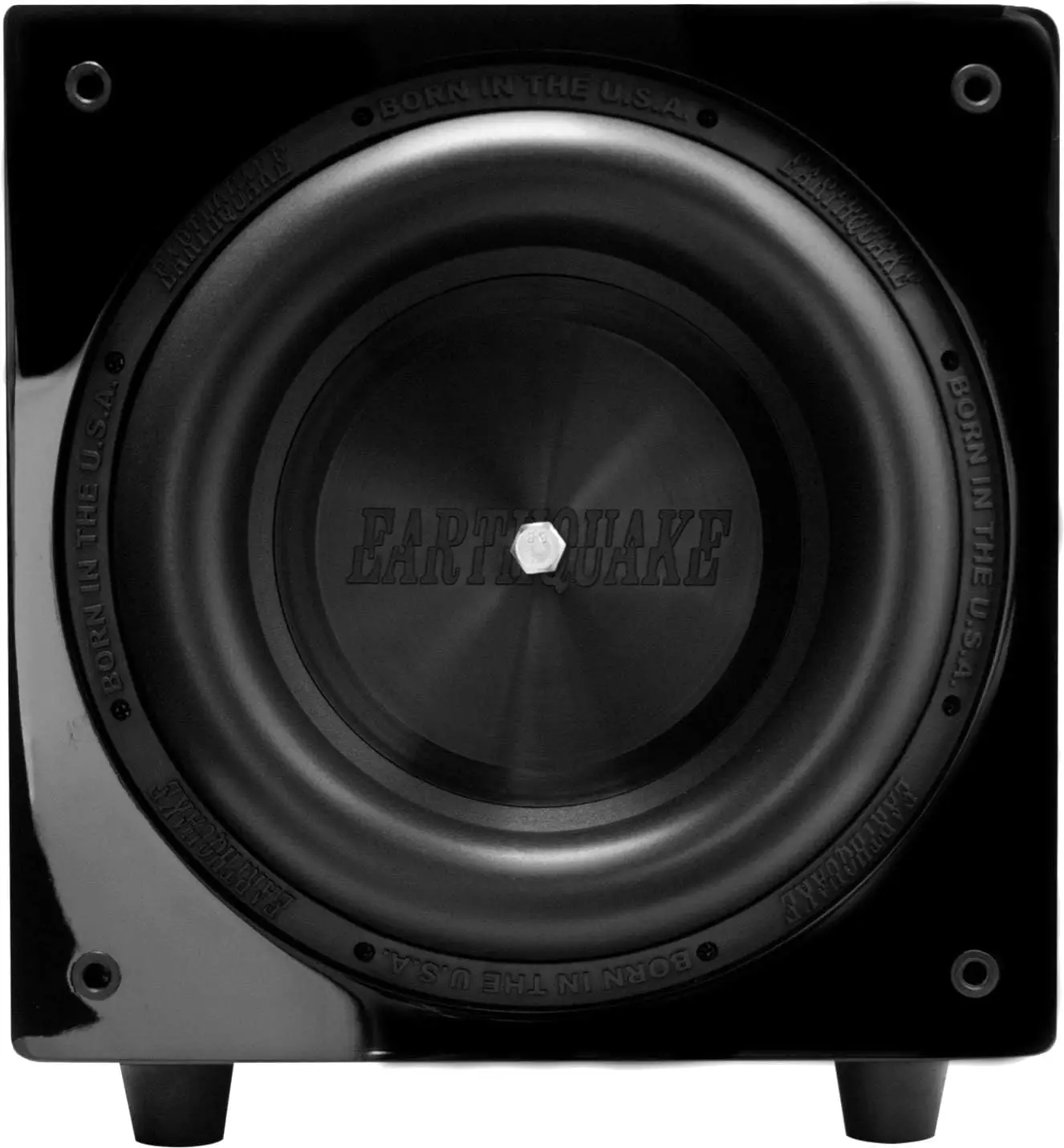
Earthquake Sound MiniMe P10V2 Powered Subwoofer
About Earthquake Sound Corporation
For over 28 years, Earthquake Sound has been producing a variety of high-quality audio products that have impressed audiophile communities around the world. It all started in 1984 when Joseph Sahyoun, a music freak, and Aerospace Engineer unhappy with the existing loudspeaker technology and performance, decided to put his advanced engineering knowledge to use. He pushed technological boundaries to the limit to create the kind of subwoofer he could live with. Earthquake quickly created a name for itself in the car audio industry and became well-known for its powerful subwoofers and amplifiers. In 1997, using his existing expertise in the audio industry, Joseph Sahyoun expanded his company to home audio production.
Earthquake Sound has since evolved into a leader in the home audio industry, producing not only subwoofers and amplifiers but surround speakers and tactile transducers as well. Engineered by audiophiles for audiophiles, Earthquake Sound audio products are meticulously crafted to reproduce each and every single note perfectly, bringing your home theater experience to life. With true dedication and full attention to detail, Earthquake Sound engineers continuously develop new and better products to meet customers’ needs and go beyond their expectations.
From mobile audio to pro sound and home audio, Earthquake Sound has been selected as the winner of many prestigious awards based on sound quality, performance, value, and features. CEA and numerous publications have awarded Earthquake Sound with over a dozen design and engineering awards. Additionally, Earthquake Sound has been granted many design patents by the USPO for revolutionary audio designs that have changed the sound of the audio industry.
Headquartered in a 60,000-square-foot facility in Hayward, California USA, Earthquake Sound currently exports to over 60 countries worldwide. In 2010, Earthquake Sound expanded its export operations by opening a European warehouse in Denmark. This accomplishment was recognized by the US Department of Commerce who honored Earthquake Sound with an Export Achievement award at the 2011 Consumer Electronic Show. Just recently, the US Department of Commerce presented Earthquake Sound with another Export Achievement award for expanding its export operations in China.
Safety Instructions
Safety First
This documentation contains general safety, installation, and operating instructions for the MiniMe P10V2/P12V2 subwoofer. It is important to read this user’s manual before attempting to use this product. Pay particular attention to the safety instructions.
Symbols Explained:
- Appears on the component to indicate the presence of uninsulated, dangerous voltage inside the enclosure – voltage that may be sufficient to constitute a risk of shock.
- Calls attention to a procedure, practice, condition, or the like that, if not correctly performed or adhered to, could result in injury or death.
- Calls attention to a procedure, practice, condition, or the like that, if not correctly performed or adhered to, could result in damage to or destruction of part or all of the product.
- Calls attention to information that is essential to highlight.
Important Safety Instructions:
- Read these instructions in their entirety.
- Store this manual and packaging in a safe place.
- Heed all warnings.
- Follow instructions (do not take shortcuts).
- Do not use this apparatus near water.
- Clean only with a dry cloth.
- Do not block any ventilation openings. Install in accordance with the manufacturer’s instructions.
- Do not install near any heat sources such as radiators, heat registers, stoves, or other apparatuses that produce heat.
- Do not defeat the safety purpose of the polarized or grounding-type plug. A polarized plug has two blades one wider than the other. The grounding-type plug has two blades and a third grounding prong. The wide blade or the third prong is provided for your safety. If the provided plug does not fit into your outlet, consult an electrician for the replacement of the obsolete outlet.
- Protect the power cord from being walked on or pinched, particularly at plugs, convenience receptacles, and the point where they exit from the apparatus.
- Only use attachments and accessories specified by the manufacturer.
- Use only a compatible rack or cart for the final resting position.
- Unplug this apparatus during lightning storms or when unused for a long period of time.
- Refer all servicing to qualified service personnel. Servicing is required when the apparatus has been damaged in a way such as a power-supply cord or plug is damaged, liquid has been spilled or objects have fallen into the apparatus, the apparatus has been exposed to rain or moisture, does not operate normally, or has been dropped.
- To reduce the risk of fire or electric shock, do not expose this apparatus to rain or moisture.
System Installation Considerations
There are several factors to consider before installing Earthquake Sound’s MiniMe P10V2/P12V2 Subwoofer.
- What are the intended listening zones?
- From where in each zone will the listener prefer to control the system? Where will the subwoofer be located?
- Where will the source equipment be located?
Connection Tips
- Keep all power cords away from all signal cables to prevent humming from induced noise.
- Choose reliable signal cable cords (Earthquake Sound also specializes in high-performance RCA cables and patches).
- All speaker wires that are run through the walls should be twisted type to reduce potential hum noise pick-up.
- It is best to use a grounded electrical outlet to power the amplifier. Lack of input ground reference could be unsafe. Consult with your electrical contractor about proper grounding.
Safe & Proper handling
The MiniMe P10V2 subwoofer is considerably lightweight and easy to maneuver. However, we encourage you to take precautions when unpacking the unit to prevent any possible damage to your
MiniMe P10V2/P12V2. We further suggest the following:
- Do not apply pressure or push against the face of the speaker as this will cause irreparable damage to the cone and suspension.
- When carrying the MiniMe P10V2/P12V2, make sure that the speakers/grilles are away from your chest, eliminating the chance of pushing against the face of the speaker.
- Do not drop the MiniMe P10V2/P12V2 or subject it to sudden shocks. This will damage the external finish and weaken the enclosure, creating air leaks.
- Avoid exposing the MiniMe P10V2/P12V2 to moisture. Water will damage the structure as well as the amplifier and speakers.
- Cleaning the MiniMe P10V2/P12V2 is best done using a soft cloth. If needed, use a mild detergent with water. Like any other electrical unit, always unplug the unit before cleaning it.
Unpacking the MiniMe P10 /P12V2
- Keep the original carton and packing materials for future shipment or storage.
- Check for any visual signs of damage. If you encounter any concealed damage, consult your Earthquake Sound dealer before proceeding with the unit installation.
- Retain the sales receipt as it establishes the duration of the limited warranty and provides information for insurance purposes. The MiniMe is packaged well for safety. We highly suggest having a padded surface when unpacking it.
Step 1: On a padded surface, carefully place the box on its side to remove the bottom packing tape and staples.
Step 2: Without tilting the box too much, tug the bottom flaps outward and keep the protective foam in place.
Step 3: Gently reposition the box upright.
Step 4: Slide the box off, minding the protective foam on the top, bottom, and sides of the subwoofer.
Introduction
Earthquake Sound Corp. | (800) 576-7944 | www.earthquakesound.com The MiniMe P10 /P12V2 system is designed to dramatically enhance your enjoyment of music and films at home by adding power and impact to low-frequency sound effects without taking up your entire living space.
Congratulations and thank you for choosing the Earthquake MiniMe P10 /P12V2 subwoofer as a key component of your audiophile system. The MiniMe P10 /P12V2 subwoofer utilizes an advanced digital class “D” amplifier, a premium long throw driver, and a mass-tuned passive radiator with patented SLAPS (Symmetrically Loaded Audio Passive System) Technology. With a ported design and piano gloss enclosure, the MiniMe subwoofer delivers phenomenal bass.
Designed in the USA, the MiniMe P10 /P12V2 subwoofer meets and exceeds all industry standards of performance and quality. With uncompromised “World Class” performance and superior technology, the MiniMe P10 /P12V2 subwoofer embodies both power and elegance.
What Makes a MiniMe?
Digital Class “D” Amplifier
The MiniMe P10V2/P12V2 amplifier utilizes the advanced class “D” circuitry with over 90% efficiency, allowing it to continuously perform without getting hot. The 600-Watt peak power amplifier is fully equipped with IR input, room tuning adjustments, 0 – 180° phase switch, low-level RCA inputs & outputs, auto signal sensing, as well as high-level speaker inputs and outputs.
Premium Long Throw Drivers
The active driver installed in every MiniMe P10V2/P12V2 is specifically designed for accurate reproduction of bass and sub-bass frequencies. Built with TCT (Turbine Cooled Transducer) Technology, stitched tensile leads, anti-wobble cone construction, and reinforced dust cap, the MiniMe P10V2/P12V2 driver effortlessly produces phenomenal bass with extremely low distortion while staying cool the entire time.
Mass Tuned SLAPS (Symmetrically Loaded Audio Passive System)
Earthquake’s own patented SLAPS passive radiator technology dramatically increases the subwoofer’s efficiency and capability for ultra-low frequency reproduction. The unique design of the SLAPS employs dual (identical) suspensions, allowing the passive driver to move the same amount of air in either direction. Coupled with the active driver, the SLAPS enables the sub to deliver louder bass without using more power from the amplifier.
Luxurious Piano Gloss Cabinet
The deep luxurious black piano lacquer begins with a thorough sanding and priming, followed by multiple applications of black lacquer with an additional fine sanding between each layer, and finished with a smooth, high gloss clear coat.
When it comes to elegance and style, the MiniMe P10V2/P12V2 delivers.
Control Panel Overview
- LED Power Signal Indicator
This LED indicator reflects the main power status of the amplifier as well as the state of the amplifier (whether the AUTO Sensing is on/off and whether a signal is being fed to the amplifier). Note that this LED will only light up when the main power switch is in the ON position. - Low-Level RCA Inputs & Outputs
This is the best way to drive an audio signal to the MiniMe P10V2/P12V2.
NOTE: DO NOT USE HIGH-LEVEL AND LOW-LEVEL INPUTS AT THE SAME TIME - Volume Control
These remote buttons and knobs allow the user to control the volume of the subwoofer. Always start at the lowest setting and slowly increase the volume until the desired subwoofer level is reached. Use the MUTE button on the remote to mute or unmute the subwoofer. - Room Tuning Level & Frequency
These control knobs allow the user to optimize the bass response of the subwoofer and obtain a well-balanced system response that matches their specific audio needs and preference. - High-Level Inputs / Outputs
These binding post-style input terminals allow the MiniMe P10V2/P12V2 amplifier to receive a signal from the amplifier or receiver that is powering the surround speakers. The output terminals allow the MiniMe P10V2/P12V2 to drive stereo satellite speakers. - 110V/220V AC Selector
The MiniMe P10V2/P12V2 can operate in a 110-120V or 220-240V environment. Simply slide the selector to the required power setting and replace the fuse to the proper rating prior to connecting the subwoofer to a power source. - Main Power Switch
When switched OFF, the amplifier will remain off as there is no AC power being fed into it. We highly recommend keeping this switch OFF when the subwoofer is not being used for an extended period of time. - IR Input
Simply plug the remote eye provided in the IR INPUT. Once plugged in, place the remote eye anywhere in the room where it is convenient for the user to control the amplifier using the included remote control. - AUTO/ON/OFF Switch
This is a 3-way switch. When ON, the amplifier will remain on regardless of signal presence. When set to AUTO, the amplifier will only turn on when an audio signal is detected. Additionally, the amplifier will go to sleep/standby if it does not detect any signal after 15 minutes. When set to OFF, the amplifier will remain off regardless of signal presence. Note that the MAIN POWER switch must be ON for this feature to work. - 40Hz – 160Hz Frequency Adjustment
This knob allows the user to set the subwoofer’s cut-off frequency. Signals above the set crossover frequency will be gradually rolled off to prevent them from interfering with the surround speakers. - LFE/SUB Operation Switch When the switch is in the LFE position, the subwoofer is running in full range mode (20Hz – 2kHz) and the frequency adjustment is disabled. When the switch is in the SUB position, the subwoofer reverts to manual frequency adjustment, allowing the user to operate and fine-tune the subwoofer to his/her preference.
- 0-180° Phase Adjustment
This 0° – 180° switch allows the user to synchronize the subwoofer to obtain a better and more precise bass response. - AC Power with Built-in Fuse
This AC line connector is fused to protect the subwoofer from unwanted power surges. Be sure to use the proper fuse rating when replacing the fuse: 220-240V~50Hz: ø5x20mm, T3.15AL/250V
To access the fuse compartment, simply unplug the subwoofer from any power source, place a flat-head screwdriver in the small notch, and pry it open as illustrated.
110- 120V~60Hz: ø5x20mm, T6.3AL/250V
Placing Your Subwoofer(s)
You often hear the term “subwoofers are non-directional.” This is not true. It is harder to choose subwoofer placement when low frequencies are crossed. The wider the room, the more directional the subwoofer. The easiest solution is to use two (2) subwoofers, feed a mono signal to both, and place them in the front, one on the left and another on the right.
While having two (2) subs is better than one, the MONO signal that drives those subwoofers keeps them from projecting the three-dimensional images in the sub-harmonics. Using two (2) subwoofers allows you to cross the subs up to 150Hz sound quality, imaging, and staging. In some applications, you might have small front speakers or planar speakers. The two-front-subwoofer system is an excellent solution to planar speakers’ low-frequency response early roll-off from 150Hz on down. When placing these subwoofers in close proximity to the stereo satellite, the subs will enhance low-frequency extension. It will be better to have a stereo subwoofer to help with the lower bass notes and their placement.
Suppose you have only one (1) subwoofer in the room and it is placed on the right side of the room. If a bass guitar player was standing on the left side of the stage and played an EE note (42Hz), then the sub will also respond to that from the right side of the room and completely destroy the stage.
You will see illustrations showing the two (2) different suggested setups. In each of them, note the breakaway and the image separation represented by the black and gray arrows.
The black arrows represent the subharmonic frequencies.
The gray arrows represent the lows, mids, and highs as they follow the action.
The best response is achieved when the subharmonic frequencies are dynamically synchronized with the rest of the audio system, the black and gray arrows are identical
Single Subwoofer Setup
This is a GOOD setup. The subharmonic frequencies (black arrow) always move toward the sub in the single sub setup while the lows, mids, and highs (gray arrow) follow the action.
Placing the subwoofer in the corner of the room will produce a more boomy effect, often preferred for movies and soundtracks. For a music application, place the subwoofer as shown above or against the front wall, about a third of the room width.
Dual Subwoofer Setup with Mono Signal
This is a BETTER setup. In a dual subwoofer setup, the subharmonic frequencies (black arrow) always move toward the middle of the room while the lows, mids, and highs follow the action (gray arrow).
Notice the breakaway and image separation is less in this setup than in the single subwoofer setup.
Connecting Your Subwoofer(s)
Low-Level Setup – Single Sub
This is the best way to drive an audio signal into the MiniMe P10V2/P12V2. Today, all signal processors (5.1/6.1 and more advanced ones) come equipped with built-in pre-amplifier outputs (RCA) that include a subwoofer output. Generally, the SUB PRE OUT is in mono format. Connect the SUB PRE OUT from the processor/receiver to the MiniMe P10V2/P12V2’s LOW-LEVEL INPUT using a “Y” RCA cable.
We strongly recommend that you use the best available RCA connectors and cables. High-quality cables are normally triple-shielded and the connectors are gold-plated with forceful grasping.
When using this connection, the MiniMe P10V2/P12V2 only receives bass signals from the source. Therefore, the crossover frequency should be set at max value.
Low-Level Setup – Dual Sub
For a more realistic sound stage and greater theater experience, we suggest having two (2) subwoofers and running them in stereo. Using a “Y” RCA cable, connect the SUB PRE OUT 1 of the receiver to the LOW-LEVEL INPUT of the left side MiniMe P10V2/P12V2. Using another “Y” RCA cable, connect the SUB PRE OUT 1 of the receiver to the LOW-LEVEL INPUT of the right side MiniMe P10V2/P12V2. In case the subwoofers become out of phase with the main front speakers, flip the phase switches to correct the problem. Note that maximum bass is only achieved when the sub is in phase with the speakers in your system.
NOTE: DO NOT USE HIGH-LEVEL AND LOW-LEVEL INPUTS AT THE SAME TIME
High-Level Setup – Single Sub
The MiniMe P10V2/P12V2 has a high/speaker-level input connection. This setup is a solution when you experience excessive noise or hum with the line-level input. Simply connect the speaker wire (up to 16-gauge) from the receiver’s SPEAKER OUTPUTS to the MiniMe P10V2/P12V2’s SPEAKER.
Remember to always connect red-to-red and black-to-black when making connections between a receiver/processor to the subwoofer. You will notice a lack of bass from your subwoofer if you inadvertently reverse one of the connections (i.e. red-to-black).
In case the MiniMe P10V2/P12V2 becomes out of phase with the main front speakers, adjust the phase shift to correct the problem. Note that maximum bass is only achieved when the sub is in phase with the speakers in your system.
NOTE: DO NOT USE HIGH-LEVEL AND LOW-LEVEL INPUTS AT THE SAME TIME
High-Level Single Sub + Satellite Setup
The MiniMe P10V2/P12V2 has a high/speaker level output connection that can be used to drive the stereo front or rear speakers.
Using speaker wires (up to 16-gauge), simply connect the receiver’s front speaker outputs to the MiniMe P10V2/P12V2 speaker level inputs. Then using speaker wires, connect the MiniMe P10V2/P12V2 speaker level outputs to the speakers.
Remember to always connect red-to-red and black-to-black when making connections between a receiver/processor to the subwoofer. You will notice a lack of bass from your subwoofer if you inadvertently reverse one of the connections (i.e. red-to-black).
In case the MiniMe P10V2/P12WV2 becomes out of phase with the main front speakers, adjust the phase shift to correct the problem. Note that maximum bass is only achieved when the sub is in phase with the speakers in your system.
NOTE: DO NOT USE HIGH-LEVEL AND LOW-LEVEL INPUTS AT THE SAME TIME
High-Level Dual Sub
Connect the speaker wire (up to 16-gauge) from the receiver’s RIGHT SPEAKER OUTPUTS to the MiniMe P10V2/P12V2’s RIGHT SPEAKER INPUTS.
Then, connect the speaker wire from the receiver’s LEFT SPEAKER OUTPUTS to the MiniMe P10V2/P12V2’s LEFT SPEAKER INPUTS.
Remember to always connect red-to-red and black-to-black when making connections between a receiver/processor to the subwoofer. You will notice a lack of bass from your subwoofer if you inadvertently reverse one of the connections (i.e. red-to-black).
In case the subwoofers become out of phase with the main front speakers, adjust the phase shift to correct the problem. Note that maximum bass is only achieved when the sub is in phase with the speakers
in your system.
NOTE: DO NOT USE HIGH-LEVEL AND LOW-LEVEL INPUTS AT THE SAME TIME
Room Tuning Your Subwoofer(s)
The room tuning EQ on the MiniMe P10V2/P12V2 is a cut EQ whose cut frequency and level are variables that can be adjusted to better suit the room.
There are two main methods for adjusting the level, crossover frequency, and phase of the Earthquake MiniMe P10V2/P12V2 to match a system: