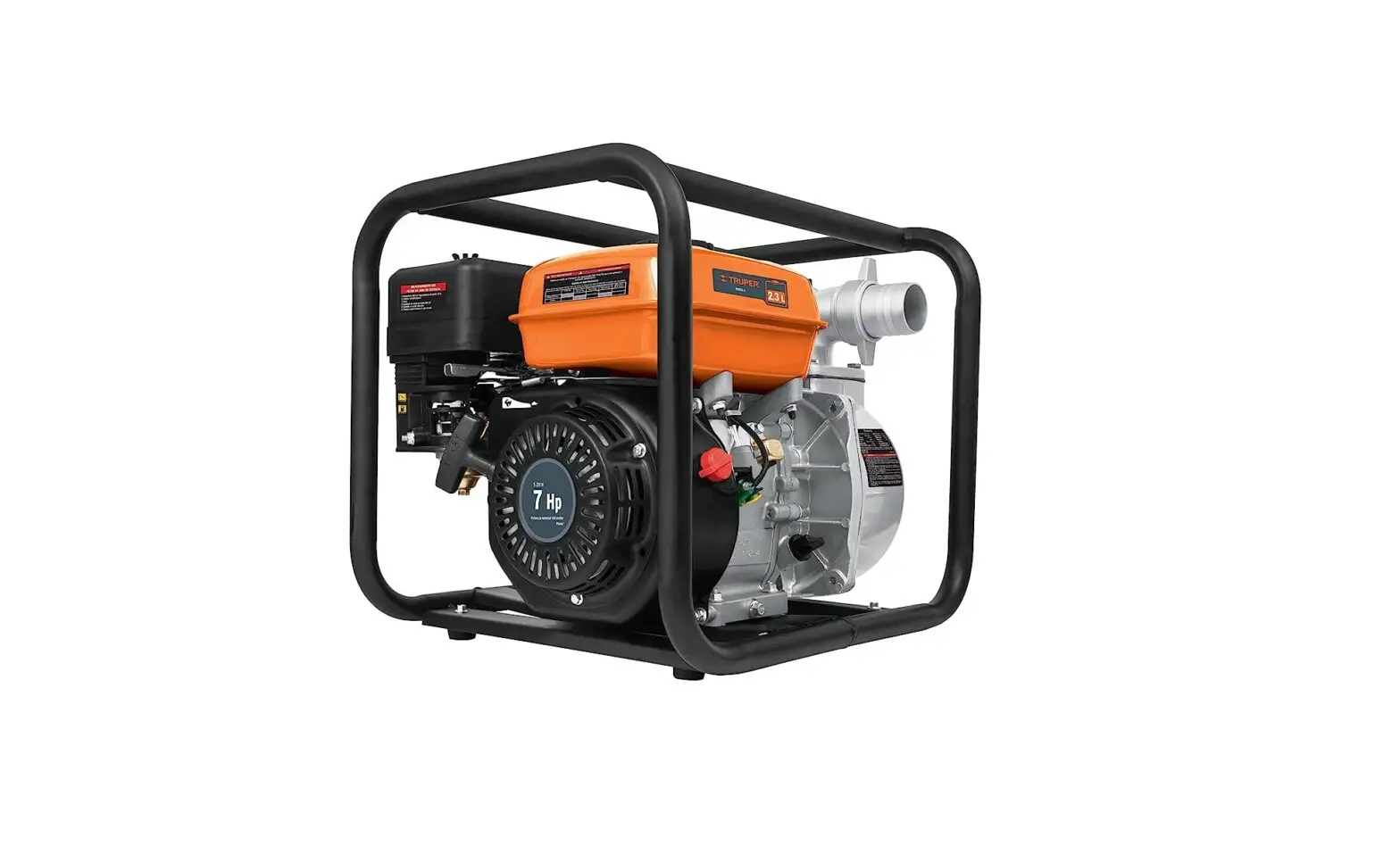
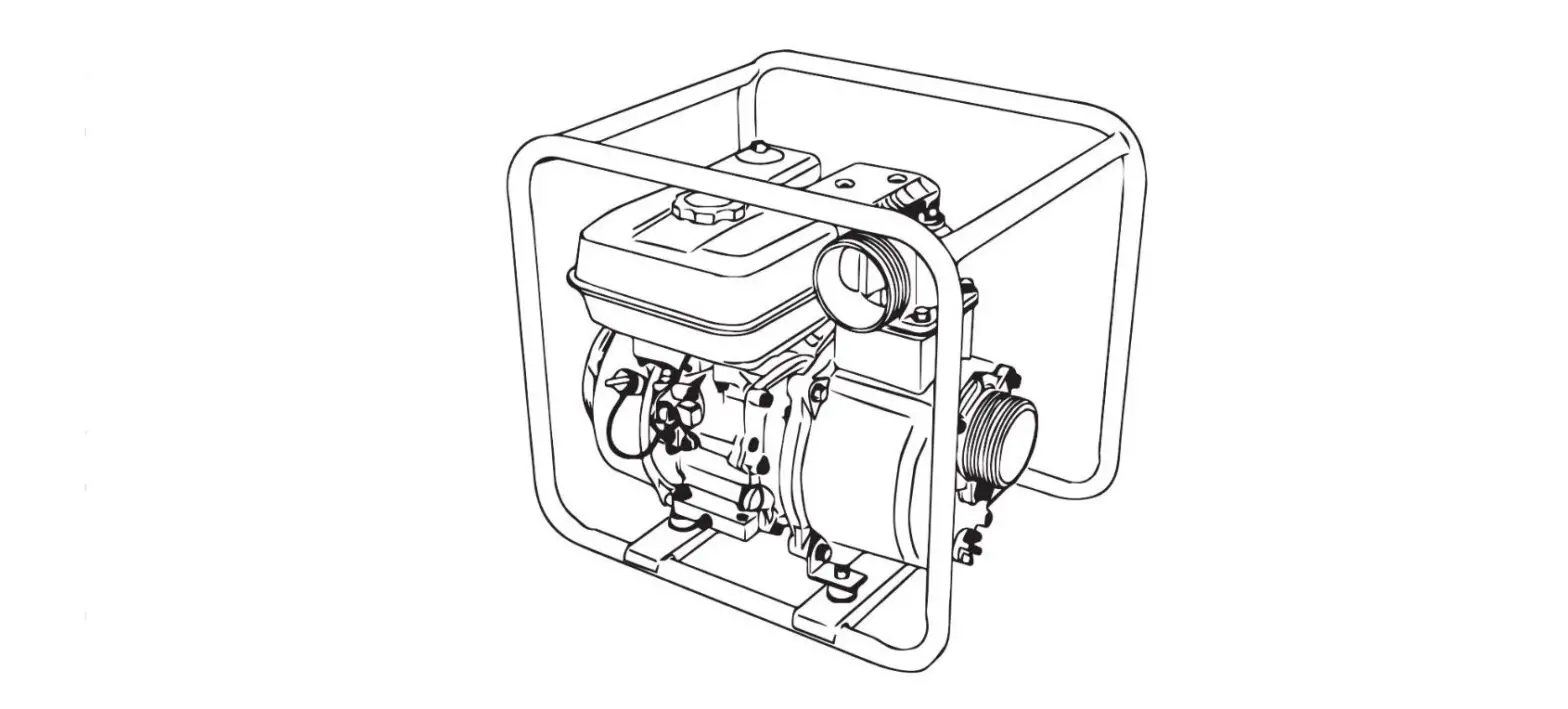
MOTB-2P Water Pump
Water Pump – Product Information and Usage Instructions
Product Information
Applies for: Code 28029
Model: MOTB-2P
For: Agriculture
Technical Data
| Code | Description | Motor Cylinders | Motor Rated Power | Motor Type | No Load Speed | Fuel | Gas Tank Capacity | Fuel Yield at 100% Fill Up | Oil Type | Inlet and Outlet Diameters | Maximum Suction Depth | Maximum Height | Maximum Flow | Noise Level | Thermal Energy Consumption | Weight |
|---|---|---|---|---|---|---|---|---|---|---|---|---|---|---|---|---|
| 28029 | Water Pump | 3 | 6.5 Hp | 4-stroke OHV | 650 RPM – 3 700 RPM | Gasoline | 0.8 gal | 1.8 hours | SAE-10W 30 | 2 inches | 16.4 feet | 82 feet | 132 gal/min | Lower than 81 dB at 13′ | 1.39 L/h | 44 lb |
Fuel Specifications
Use UNLEADED FUEL with a PON octane equal or greater than 86, or
a RON octane equal or greater than 91. Never use contaminated
gasoline or gasoline-oil mix.
Do not use the equipment in closed areas. Prevent breathing
accumulated carbon monoxide, an odorless, toxic and potentially
fatal gas.
Never smoke near fuel. Do not smoke near the filling-up area or
while operating the equipment.
Product Usage Instructions
CAUTION
Read the manual thoroughly before using the tool. To gain the
best performance of the tool, prolong the duty life, make the
warranty valid if necessary, and to avoid hazards of fatal injuries
please read and understand this manual before using the tool. Keep
this manual for future references.
Set Up
Place the pump on a firm and level surface.
Fuel and Oil
Fill the pump completely with water before starting. Do not turn
the pump on without oil, otherwise, the engine could be damaged.
Use SAE-10W 30 oil type.
Maintenance
Perform periodic maintenance to your machine. Refer to page 11
of the manual for instructions.
Start Up
- Make sure the pump is on a firm and level surface.
- Fill the pump completely with water.
- Turn on the fuel valve.
- Move the choke lever to the closed position.
- Pull the starter grip until you feel resistance, then give it a
strong pull. - After the engine starts, move the choke lever to the open
position. - Adjust the throttle lever to set the engine speed.
Warnings
- Keep your work area clean, tidy, and well-lit. Cluttered and
dark areas may cause accidents. - Never use the tool in explosive areas or in the presence of
flammable liquids. - Before starting the motor, keep the tool at least 9 meters (30
feet) away from the fill-up area. - Keep children and passersby at a safe distance while operating
the tool. Distractions could cause losing control and cause
accidents. - Avoid contact with power lines and circuits. Find and avoid
power lines and circuits, especially hidden wiring as well as any
grounded object. - Stay alert, use care and common sense. Familiarity with the
tool operation could lead to distractions. It could cause
accidents. - Refrain from using the tool if tired or under the influence of
drugs, alcohol, or medication. Being momentarily distracted while
using the tool could cause severe personal injury. - Operate the tool with guards and protection devices in place
and in good working condition. Failure to comply with this warning
is a hazard of severe personal injury. - Do not force the tool. Working within the tool’s working design
assures a better and safer job. - Keep the tool in a safe place and out of the reach of
children.
By following these instructions, you can safely and effectively
use the Water Pump (Code 28029, Model MOTB-2P) for agricultural
purposes.
INGLÉS
ESPAÑOL
Manual
Water Pump
Applies for: Code 28029
Model MOTB-2P
For Agriculture
CAUTION
Read this manual thoroughly before using the tool.
Technical Data
3
Fuel Specifications
3
General Safety Warnings for Motor Tools
4
Safety Warnings for Water Pumps
5
Parts
6
Assembly
7
Set Up
8
Fuel and Oil
9
Start Up
10
Maintenance
11
Troubleshooting
13
Notes
14
Authorized Service Centers
15
Warranty Policy
16
Contents
CAUTION
To gain the best performance of the tool, prolong the duty life,
make the Warranty valid if necessary, and to avoid hazards of fatal injuries please read and understand this Manual before
using the tool.
Keep this manual for future references. The illustrations in this manual are for reference only. They might be different from the real tool.
Use and care recommendations
FILL THE PUMP completely with water before starting.
DO NOT TURN THE PUMP ON WITHOUT OIL,
MAX. NIVEL
otherwise the engine could be damaged
USE UNLEADED FUEL with a PON octane equal or greater than 86, or a RON octane equal or greater than 91. Never use contaminated gasoline or gasoline-oil mix
Place the pump on a FIRM AND LEVEL SURFACE.
Perform periodic MAINTENANCE to your machine. (Page 11) 2 ENGLISH
Technical Data
Code Description Motor Cylinders Motor Rated Power Motor Type No Load Speed
Fuel Gas Tank Capacity Fuel Yield at 100% Fill Up
Oil Type Inlet and Outlet Diameters
Maximum Suction Depth Maximum Height Maximum Flow Noise Level
Thermal Energy Consumption Weight
MOTB-2P 28029
Water Pump 212 cc 6.5 Hp
4-stroke OHV 3 650 RPM – 3 700 RPM
Gasoline 0.8 gal 1.8 hours SAE-10W 30
2″ 16.4 feet 82 feet 132 gal/min Lower than 81 dB at 13′ 1.39 L/h
44 lb
Fuel Specifications
· EThe equipment has an air-cooled 4-stroke motor using pure unleaded gasoline. · For no reason at all mix oil with the fuel.
WARNING · For no reason at all use fuel mixed with ethyl alcohol (gasohol), ethanol or methane. These attract humidity causing separation and acid build up when stored. Acidity can damage the motor fuel system when stored. · To avoid having problems with the motor, please drain the fuel system before storing the equipment 30 days or longer. Drain the gasoline tank, start the motor and leave it running until the fuel lines are empty. Next season, use fresh gasoline.
· Never use inside the gasoline tank products to clean motors or carburetors. Those products can cause permanent damage to the Motor.
Do not use the equipment in closed areas.
DANGER Prevent breathing accumulated carbon monoxide, an odorless, toxic and potentially fatal gas.
Never smoke near fuel.
DANGER Do not smoke near the filling-up area or while operating the equipment.
ENGLISH 3
General Safety Warnings for Motor Tools
Keep your work area clean, tidy and well lit.
CAUTION Cluttered and dark areas may cause accidents.
Never use the tool in explosive areas or in the presence of flammable liquids.
DANGER Before starting the motor keep the tool at least 9 meters (30 feet) away from the fill up area.
Keep children and passersby at a safe distance while operating the tool.
WARNING Distractions could cause loosing control and cause accidents.
Avoid contact with power lines and circuits.
DANGER Find and avoid power lines and circuits, especially hidden wiring as well as any grounded object.
Stay alert, use care and common sense.
CAUTION Familiarity with the tool operation could lead to distractions. It could cause accidents.
Refrain from using the tool if tired or under the influence of drugs, alcohol or medication.
DANGER Being momentarily distracted while using the tool could cause severe personal injury.
Operate the tool with guards and protection devices in place and in good working condition.
WARNING Failure to comply with this warning is a hazard of severe personal injury.
Do not force the tool.
CAUTION Working within the tool’s working design assures a better and safer job.
Keep the tool in a safe place and out of the reach of children.
WARNING Motor powered tools are dangerous to inexperienced people.
Wear proper clothes.
WARNING Loose clothes, jewelry or long hair could get caught in the mobile parts.
Keep hands away from rotating and/or mobile parts.
WARNING Failure to comply with this warning is a hazard of severe personal injury.
Do not operate the tool in enclosed areas.
DANGER Avoid breathing accumulated carbon monoxide, a potentially deadly odorless toxic gas.
Wear adequate protective safety accessories.
CAUTION Wear eye protection, dust mask, non-skid safety shoes, helmet and ear plugs. These safety gears reduce the risk of injury.
Turn off the tool before adjusting, changing accessories or storin.
WARNING Double check the tool switch is in the off position.
Refrain from operating the tool if the switch is not working or is not properly assembled.
WARNING Failure to complain with this warning is a hazard of
personal injury. Immediately send it to a
Authorized Service Center.
Do not overreach.
CAUTION Good balance and support lead to better controlling the tool in unexpected situations.
Avoid the tool to unintentionally start.
WARNING Double-check the tool motor is off before maintenance or putting it away.
Remove brackets before turning on the tool.
DANGER Additional tools or vices installed in a rotating part could cause severe personal injury.
Service the tool and double-check it is in good working conditions before operating.
CAUTION Carefully check mobile parts, alignment and assembly.
Do it periodically. Look for any damaged element or part
not working properly. Repair immediately in a
Authorized Service Center.
Accessories.
CAUTION
Use only accessories or spare parts indicated in this
Manual or certified by
.
Never leave a running tool unattended.
DANGER Turn off and disconnect the tool after using. Set it in a safe position to avoid severe injury.
Never smoke in the proximity of fuel.
DANGER Do not smoke in the proximity of the fuelling area or when using the tool.
Do not touch parts with high temperatures.
The surface of the engine and the exhaust reach high temperatures during the operation of the tool..
Service and repair.
Always go to a
Authorized Service Center to use identical spare
parts and maintain the security of the tool.
4 ENGLISH
Safety Warnings for Water Pumps
Appropriate use
· Do not use the pump to pump flammable or corrosive liquids such as gasoline, oils and acids, neither pumping sea water, fuels and / or similar substances. · Set the pump on a firm, flat surface, 3,2 feet at least away from any wall and away from flammable things. · Double check you know how to stop and operate the pump. Never let the pump be used under risky conditions or violating safety regulations. · Inadequate use of the pump or modifications, components not approved or tested by the manufacturer, liberates the manufacturer from any legal liability.
WARNING · Do not install the water pump in areas where there is risk of explosion or near liquid fuels or gases.
WARNING · Do not aim the water jet against the water pump or other electrical components. There is danger of death due to electric shock. · Symbols adhered onto the water pump shall not be removed or covered. All information regarding the equipment that is no longer legible shall be immediately replaced. · Read and obey the operation instructions before installing or starting the motor pump. Any malfunction caused by omission of the indications in this manual can damage the pump and make the Warranty void. · The time it takes for the water to start flowing through the pump may vary depending on the suction depth. Do not operate the pump empty (with no water) longer than 12 minutes. This action could damage the mechanical seal in the system. · Before starting the pump verify the suction hose is properly connected. Water leaks in the connection will prevent the right operation of the pump. · The pump is built with an oil level sensor bulb that prevents the motor to start if the level is not the right one. · Purge the pump before each operation once it is connected and set in the working place.
Fuel Handling
· Never smoke close to where there is fuel, nor the filling up zone or when operating the pump. · To reduce risk of fire or burns, handle fuel with care. It is extremely flammable. · Prevent gasoline or oil to be in contact with your skin. · Protect your eyes to guard off gasoline or oil splashes. In the event of accidental contact, wash immediately with clear water. If irritations persist, go see a physician. · Store fuel in a dedicated container.
WARNING · Before re-fueling, shut down the motor, set the equipment on clear terrain and wait for it to cool down.
CAUTION · Wipe clean all the spilled fuel before operating the equipment.
CAUTION · Check for fuel leaks to prevent fire, or burns. If there are leaks, mend them before using the pump. · Under no reason at all burn spilled fuel to get rid of it. · Por ningún motivo utilice cualquier otro tipo de combustible que el especificado en el instructivo.
ENGLISH 5
Water Outlet
Fuel Tank Cap
Purge Cap
Water Inlet
Water Drain Cap
Pump
Throttle Choke Lever
Parts
Exhaust Air Filter
Spark Plug Oil Supply Cap Tubular Chassis
Water Outlet
Fuel Key
Starter jack-line
6 ENGLISH
Oil Supply Cap
Oil Drain Cap Start Knob
Assembly
Coupling Mounting
· Insert the coupling (A) in the screw (B) as shown in figure . · Set the seal (C) in the coupling . · Screw the screw in the inlet / outlet of the pump (D).
B
A C
D
Outlet Coupling
Inlet Coupling
ENGLISH 7
· Place the equipment on a dry, firm, flat and leveled surface. · Connect one end of the suction hose (not included) to the pump water inlet (A), and the other end of the hose to the filter (B). · Set the release hose (not included) to the pump water outlet (C).
CAUTION · All the connections shall be secured with the right clamps (D).
CAUTION · Hoses shall be continuous, with no twists in their structure. Length of the suction hose shall not exceed the required length to operate the pump correctly.
CAUTION · Using a filter is essential (B) to prevent particles entering into the system and damage the motor. · Submerge the suction hose end with the filter in the water source.
C
Set Up
A
D B
8 ENGLISH
Fuel and Oil
Oil Supply (A)
· Set the equipment onto a flat and leveled surface. · Turn and remove the oil supply cap. · Use 4-stroke motor oil. Using SAE-10W 30 general oil for all temperatures is recommended. As indicated in the following table, other viscosities can be used when the local average temperature is within the indicated range.
-30 -20 -10
10 W – 40 10 W – 30
0 10 20
30 40 °C
Fuel Supply (B)
· Set the Pressure Washer on a flat and leveled surface. · Clean and dry the area around the fuel cap. · Remove the fuel cap. · Using a funnel fill slowly the fuel tank up to the lower part of the tank neck. Do not overfill to allow fuel expansion and prevent spillage. · Clean any fuel spills. · Cover the tank rotating the cap until hearing a click. · Clean any spilled fuel before starting up.
B
· Set back the cap and remove it to check oil level in the cap oil measuring rod. · Once the oil tank is in the right level indicated in the rod, tighten the cap to prevent leaks.
CAUTION · Do not exceed the oil maximum level because it causes a lot of smoke when starting the motor.
CAUTION · Check the oil level before each use. If necessary, add oil until the level is between the limits in the cap rod.
CAUTION · Replace oil after 20 hours’ operation or each season. It may be necessary to replace oil more often during dusty or dirt conditions.
High Altitude Operation
· In high altitudes, the air-fuel combination in a standard carburetor will be rich in fuel. Performance will be low and fuel consumption will increase. · Performance while operating in high altitudes may improve if the carburetor is regulated adjusting the main knob. The machine is adjusted to operate at altitudes above 6000 feet over sea level. If noticing the machine is not operating efficiently go to a Authorized Service Center to carry out the modification needed in the carburetor. · Even though the carburetor is having an adequate injection, the motor power will diminish approximately 3,5% per each increase of 1000 feet after 6890 feet above sea level. The power decrease will be higher if no modifications are carried out in the carburetor.
WARNING · If the machine is operated in a height inadequate to the carburetor adjustment, low performance, overheating and severe damage in the motor can be caused due to the excessive air mix in the fuel.
A
Maximum Minimum
ENGLISH 9
Purge
· The system shall be purged of any air bubble by filling the pump with clear water before starting. · Remove the purge cap (F). Fill up with water up to the orifice level and screw back the cap. Only then the pump can be started.
WARNING Never star the pump when empty. If it accidentally starts shut down the pump immediately, wait until it cools down and fill it again with clean water.
Start Up
F
Start Up
CAUTION Before starting the pump some topics need to be taken care of. Otherwise it can get damaged and the Warranty cancelled: · All the hoses shall be disconnected, totally untangled and with no kinks. · Water supply shall be connected and fully open. · Gasoline and oil levels shall be right. · The system shall be purged as previously indicated.
B
C
D
A
· Open the fuel valve (A).
· Move the choke lever into the off
position (B).
· Set the switch (C) in the ON position ( I ). · Move the throttle lever (G) to the
E
high-speed position ( ).
· Slowly pull the starter lever (D) until filling resistance in the line. Then, pull with force to start
the motor. CAUTION Carefully return the lever to its place. do not release it, otherwise it
would snap back and get damaged.
· Allow the motor to run 5 seconds, and then move the choke lever into the “ON” position (E).
CAUTION · Keep on paying CAUTION to the water source level because during the
pumping operation the level could go so low until the suction hose end is out of the water. In
this situation turn off the pump immediately and correct the suction hose depth. Avoid making
the pump function with no water, otherwise it may get damaged.
Shut OFF
· Move the throttle lever (G) into the low speed position ( ). · Turn off the switch (C).
G
· Move the fuel lever (A) moving the lever into the closed (OFF) position.
· Move the choke lever (D) into the “OFF” position.
CAUTION · To stop the motor during an emergency, set the motor switch directly intp the “OFF” position.
10 ENGLISH
Maintenance
CAUTION · Regular and careful maintenance is essential to maintain the safety levels and the optimal performance of the equipment. · Before cleaning, repairing, inspecting or storing the equipment, shut off the motor and wait until the motor is completely cooled down. · Keep nuts, bolts and screws tight to assure the equipment is in a safe working condition. · Do not alter the safety devises. Verify regularly if they work right.
Regular Maintenance
Before Each Use
Every 20 h of use
· Any worn or damaged part shall be replaced before using the equipment. Do not try to repair the parts. It can damage the equipment and become a risk to your safety. · Any repair or maintenance works different to those described in this section, for example, adjusting the carburetor, shall be carried out only in a
Authorized Service Center.
Every 50 h of use
Every 100 h of use
Every 300 h of use
General Inspection Carry Out
Motor Oil Check
Change
Change
Air Filter Check
Change
Sediment Container
Clean
Spark Plug
Clean / Readjust
Valve Clearance
Clean / Readjust (2)
Fuel Tank and Sieve
Clean (2)
Fuel Line
Check and replace every 3 years if necessary (2)
Fuel Tank Cap
Clean
Fuel Filter
Clean
Bring to an Authorized Service Center
every 300 hours of use
Air Filter
· Check the air filter to ensure is in good conditions. Remember, a dirty filter can make starting difficult, loosing performance and shorten the working life of the motor. · Remove the wing nut, then remove the filter cover and the filter element. · Set apart both the sponge filter from the paper filter elements. · Wash the sponge filter with a detergent and hot water solution. Let the filter dry completely. · Soak the sponge filter in clean SAE-20 motor oil. Squeeze out until eliminating excessive oil. The motor may expel smoke during start up if too much oil is left. · Install back the filter in its container and set the cover back in place.
CAUTION Never use gasoline to clean the air filter. It could cause and explosion or fire. Never start the motor with the air filter removed. The motor will wear out faster.
C
Oil Replacement
· The oil drain cap is under the motor (B). · Set the dedicated container underneath the motor to receive the oil. Remove the drain cap and then, the tank cap (C). When the oil has drained, set back the drain cap. · Wipe clean any leak or spill. · Fill up the tank with SAE-10W/30 oil. · Check oil level placing the oil tank cap without screwing it back. Oil level shall be between the maximum and minimum marks in the oil measuring rod. Double check the level is not exceeding the maximum mark. When the level is right, tighten the tank cap. · Start the motor. Leave it running a few moments. Stop the motor, wait one minute and check again oil level. Fill up if necessary. · For no reason at all, pour oil in the drain. Take used oil and oil filter to a recycling unit.
Maximum
B
Minimum
ENGLISH 11
Maintenance
Fuel Filter
· The fuel filter stops water or dirt present in the fuel tank to enter into the carburetor. If the motor has not been run after a long period of time, the sediment container need cleansing. · With the motor off and ambient temperature close the fuel key (E). · Remove the sediment container (F). Clean its interior. · Leave the container drying completely. · Verify the washer (G) is in good conditions and set the sediment container back in place. · The tank fuel filter shall be washed according to the maintenance program indicated in page 11.
E
G
Spark Plug
· Before removing the spark plug (B), wipe clean the area around the spark plug base to stop dust and debris entering the motor. Then, using a spark-plug wrench remove the spark plug. · Clean the carbon deposits from the spark plug electrodes using a spark plug cleaner or a wire brush. · Replace the old spark plug with a new one if damaged, worn or if in doubt. · Measure the gap between both electrodes. Use a spark plug gauge. The distance between the center electrode and the side electrode shall be between 0,27″ and 0,31″ · Check the spark plug washer is in good conditions. Insert the spark plug manually to prevent maladjustment. · After setting the spark plug, tighten with a spark plug wrench to compress the washer.
CAUTION If installing a new spark plug, tighten half-a-turn until the spark plug is in place and can press the washer. If installing a used spark-plug, tighten 1/8 of a turn after the spark plug is in place and can press the washer.
WARNING Improperly installed or out of range spark plugs cause overheating and damage the motor.
F
Fuel Drain
· Set a dedicated container under the tank to receive gasoline. Use a funnel to prevent fuel spills. · Close the fuel key. Remove and clean the fuel filter as indicated above. · Before setting the filter, open the filter key to drain all the fuel tank contents. When drained, place the filter and the sediment container. · Set a dedicated container under the carburetor to receive gasoline. Use a funnel to prevent fuel spills. · Remove the drain bolt (A). · When fuel has been drained into the container, set the drain bolt back and the washer. Tighten firmly. · Wipe clean all the fuel spills.
B
A
Storing and Transportation
· When moving the equipment, shut down the motor switch and close the fuel key. Keep the equipment leveled to prevent fuel spills. · When storing the equipment long periods of time: · Drain completely all the fuel as indicated in the previous paragraph. Then, start the motor until all the fuel inside the motor is consumed. · Replace oil as indicated in page 11. · Remove the spark plug and pour a spoonful of SAE-10W/30 oil into the cylinder. Pull the jack-line to distribute the oil through the system. Set the spark plug back in place. · Pull softly the jack-line handle until feeling resistance. This indicated the cylinder is reaching the compression phase and the escape and absorption valves are closed. Storing the equipment in these conditions prevents internal corrosion. · Wipe clean the equipment with a damp cloth and cover it to prevent dust accumulation. · Store the equipment in a clean, dry place, away from the reach of children.
12 ENGLISH
Troubleshooting
Problem
Motor does not start.
Cause
· The switch is OFF. · Not enough fuel. · Oil level is too low or there is no oil.
· Gasoline is not getting into the carburetor.
· No spark in the spark plug.
Solution
· Turn ON the switch.
· Fill up fuel tank.
· Check oil level as indicated in page 9.
· Having the fuel tank full, verify fuel flow in the
carburetor:
1. Set a dedicated container under the
carburetor and use a funnel to prevent fuel
spills.
2. Remove the drain bolt. Fuel shall flow freely.
Otherwise, go to a
Authori-
zed Service Center.
· Verify the spark plug spark:
1. Disconnect the spark plug cable, wipe clean
dust around the spark plug and remove it.
2. Connect the cable to the spark plug.
3. Turn on the motor.
4. Make the spark plug electrode contact any
metal part in the motor that is free of fuel.
CAUTION Is important to carry out tests
in a ventilated area with no fuel spilled, otherwise
an explosion may occur.
5. Pull the jack-line handle to generate a spark
between the spark plug central electrode and the
metal part. If there is no spark, the spark plug
needs replacement.
6. If with a new spark plug still is no spark go to a
Authorized Service Center.
The motor starts but · Oil level is too low. stops unexpectedly.
· Check motor level as indicated on page 9. Start the motor again.
The pump is not pumping water.
· The suction hose is put from the water source. · The filter is blocked. · The hose is tangled. · The suction distance is too high.
· Submerge the suction hose end. · Remove obstacles from the filter. · Straighten the hose. · Do not go over the 5m height needed for suction.
If problems persist despite all the corrective actions contact a Authorized Service Center.
ENGLISH 13
Notes
14 ENGLISH
Authorized Service Centers
In the event of any problem contacting a Truper Authorized Service Center, please see our webpage www.truper.com to get an updated list, or call our toll-free numbers 800 690-6990 or 800 0187-8737 to get information about the nearest Service Center.
AGUASCALIENTES DE TODO PARA LA CONSTRUCCIÓN GRAL. BARRAGÁN #1201, COL. GREMIAL, C.P. 20030, AGUASCALIENTES, AGS. TEL.: 449 994 0537
BAJA SUCURSAL TIJUANA CALIFORNIA AV. LA ENCANTADA, LOTE #5, PARQUE INDUSTRIAL EL
FLORIDO II, C.P 22244, TIJUANA, B.C. TEL.: 664 969 5100 BAJA FIX FERRETERÍAS CALIFORNIA SUR FELIPE ÁNGELES ESQ. RUIZ CORTÍNEZ S/N, COL. PUEBLO NUEVO, C.P. 23670, CD. CONSTITUCIÓN, B.C.S. TEL.: 613 132 1115 CAMPECHE TORNILLERÍA Y FERRETERÍA AAA AV. ÁLVARO OBREGÓN #324, COL. ESPERANZA C.P. 24080 CAMPECHE, CAMP. TEL.: 981 815 2808 CHIAPAS FIX FERRETERÍAS AV. CENTRAL SUR #27, COL. CENTRO, C.P. 30700, TAPACHULA, CHIS. TEL.: 962 118 4083 CHIHUAHUA SUCURSAL CHIHUAHUA AV. SILVESTRE TERRAZAS #128-11, PARQUE INDUSTRIAL BAFAR, CARRETERA MÉXICO CUAUHTÉMOC, C.P. 31415, CHIHUAHUA, CHIH. TEL. 614 434 0052 MEXICO FIX FERRETERÍAS CITY EL MONSTRUO DE CORREGIDORA, CORREGIDORA # 22, COL. CENTRO, C.P. 06060, CUAUHTÉMOC, CDMX. TEL: 55 5522 5031 / 5522 4861 COAHUILA SUCURSAL TORREÓN CALLE METAL MECÁNICA #280, PARQUE INDUSTRIAL ORIENTE, C.P. 27278, TORREÓN, COAH. TEL.: 871 209 68 23 COLIMA BOMBAS Y MOTORES BYMTESA DE MANZANILLO BLVD. MIGUEL DE LA MADRID #190, COL. 16 DE SEPTIEMBRE, C.P. 28239, MANZANILLO, COL. TEL.: 314 332 1986 / 332 8013 DURANGO TORNILLOS ÁGUILA, S.A. DE C.V. MAZURIO #200, COL. LUIS ECHEVERRÍA, DURANGO, DGO.TEL.: 618 817 1946 / 618 818 2844 ESTADO DE SUCURSAL CENTRO JILOTEPEC MÉXICO AV. PARQUE INDUSTRIAL 1, COL. PARQUE INDUSTRIAL JILOTEPEC, JILOTEPEC, EDO. DE MÉX. C.P. 54257, TEL: 76 1782 9101 EXT. 5728 Y 5102 GUANAJUATO CÍA. FERRETERA NUEVO MUNDO S.A. DE C.V. AV. MÉXICO – JAPÓN #225, CD. INDUSTRIAL, C.P. 38010, CELAYA, GTO. TEL.: 461 617 7578 / 79 / 80 / 88 GUERRERO CENTRO DE SERVICIO ECLIPSE CALLE PRINCIPAL MZ.1 LT. 1, COL. SANTA FE, C.P. 39010, CHILPANCINGO, GRO. TEL.: 747 478 5793 HIDALGO FERREPRECIOS S.A. DE C.V. LIBERTAD ORIENTE #304 LOCAL 30, INTERIOR DE PASAJE ROBLEDO, COL. CENTRO, C.P. 43600, TULANCINGO, HGO. TEL.: 775 753 6615 / 775 753 6616 JALISCO SUCURSAL GUADALAJARA AV. ADOLFO B. HORN # 6800, COL: SANTA CRUZ DEL VALLE, C.P.: 45655, TLAJOMULCO DE ZUÑIGA, JAL. TEL.: 33 3606 5285 AL 90 MICHOACÁN FIX FERRETERÍAS AV. PASEO DE LA REPÚBLICA #3140-A, COL. EX-HACIENDA DE LA HUERTA, C.P. 58050, MORELIA, MICH. TEL.: 443 334 6858
MORELOS FIX FERRETERÍAS CAPITÁN ANZURES #95, ESQ. JOSÉ PERDIZ, COL. CENTRO, C.P. 62740, CUAUTLA, MOR. TEL.: 735 352 8931
NAYARIT HERRAMIENTAS DE TEPIC MAZATLAN #117, COL. CENTRO, C.P. 63000, TEPIC, NAY. TEL.: 311 258 0540
NUEVO LEÓN SUCURSAL MONTERREY CARRETERA LAREDO #300, 1B MONTERREY PARKS, COLONIA PUERTA DE ANÁHUAC, C.P. 66052, ESCOBEDO, NUEVO LEÓN, TEL.: 81 8352 8791 / 81 8352 8790
OAXACA FIX FERRETERÍAS AV. 20 DE NOVIEMBRE #910, COL. CENTRO, C.P. 68300, TUXTEPEC, OAX. TEL.: 287 106 3092
PUEBLA SUCURSAL PUEBLA AV PERIFÉRICO #2-A, SAN LORENZO ALMECATLA, C.P. 72710, CUAUTLACINGO, PUE. TEL.: 222 282 8282 / 84 / 85 / 86
QUERÉTARO ARU HERRAMIENTAS S.A DE C.V. AV. PUERTO DE VERACRUZ #110, COL. RANCHO DE ENMEDIO, C.P. 76842, SAN JUAN DEL RÍO, QRO. TEL.: 427 268 4544
QUINTANA ROO FIX FERRETERÍAS CARRETERA FEDERAL MZ. 46 LT. 3 LOCAL 2, COL EJIDAL, C.P. 77710 PLAYA DEL CARMEN, Q.R. TEL.: 984 267 3140
SAN LUIS FIX FERRETERÍAS POTOSÍ AV. UNIVERSIDAD #1850, COL. EL PASEO, C.P. 78320, SAN LUIS POTOSÍ, S.L.P. TEL.: 444 822 4341
SINALOA SUCURSAL CULIACÁN AV. JESÚS KUMATE SUR #4301, COL. HACIENDA DE LA MORA, C.P. 80143, CULIACÁN, SIN. TEL.: 667 173 9139 / 173 8400
SONORA FIX FERRETERÍAS CALLE 5 DE FEBRERO #517, SUR LT. 25 MZ. 10, COL. CENTRO, C.P. 85000, CD. OBREGÓN, SON. TEL.: 644 413 2392
TABASCO SUCURSAL VILLAHERMOSA CALLE HELIO LOTES 1, 2 Y 3 MZ. #1, COL. INDUSTRIAL, 2A ETAPA, C.P. 86010, VILLAHERMOSA, TAB. TEL.: 993 353 7244
TAMAULIPAS VM ORINGS Y REFACCIONES CALLE ROSITA #527 ENTRE 20 DE NOVIEMBRE Y GRAL. RODRÍGUEZ, FRACC. REYNOSA, C.P. 88780, REYNOSA, TAMS. TEL.: 899 926 7552
TLAXCALA SERVICIOS Y HERRAMIENTAS INDUSTRIALES PABLO SIDAR #132, COL . BARRIO DE SAN BARTOLOMÉ, C.P. 90970, SAN PABLO DEL MONTE, TLAX. TEL.: 222 271 7502
VERACRUZ LA CASA DISTRIBUIDORA TRUPER BLVD. PRIMAVERA. ESQ. HORTENSIA S/N, COL. PRIMAVERA C.P. 93308, POZA RICA, VER. TEL.: 782 823 8100 / 826 8484
YUCATÁN SUCURSAL MÉRIDA CALLE 33 #600 Y 602, LOCALIDAD ITZINCAB Y MULSAY, MPIO. UMÁN, C.P. 97390, MÉRIDA, YUC. TEL.: 999 912 2451
ENGLISH 15
Warranty poWliacryranty policy
Code 28029
Model MOTB-2P
Brand
This product is guaranteed for 1 year. To make the warranty valid or purchase parts and components you must present the product in Corregidora 22, Col. Centro, Alc. Cuauhtémoc, CDMX C.P. 06060 or at the establishment where you purchased it, or at any Truper® Service Center listed in the annex to the warranty policy and/or in www.truper.com . Transportation costs resulting from compliance of this warranty will be covered by For questions or comments, call 800-690-6990. Made in China. Imported by Truper S.A. de C.V. Parque Industrial 1, Parque Industrial Jilotepec, Jilotepec, Edo. de Méx. C.P. 54257.
1
YEAR
Stamp of the business. Purchase date:
www.truper.com
16
12-2021
Póliza de Garantía
Código 28029
Modelo MOTB-2P
Marca
Este producto está garantizado por 1 año. Para hacer válida la garantía o adquirir piezas y componentes deberá presentar el producto en Corregidora 22, Col. Centro, Alc. Cuauhtémoc, CDMX C.P. 06060 o en el establecimiento donde lo compró, o en algún Centro de Servicio Truper® de los enlistados en el anexo de la póliza de garantía y/o en www.truper.com . Los gastos de transportación que resulten para su cumplimiento serán cubiertos por Para dudas o comentarios, llame al 800-690-6990. Hecho en China. Importado por Truper S.A. de C.V. Parque Industrial 1, Parque Industrial Jilotepec, Jilotepec, Edo. de Méx. C.P. 54257.
1
AÑO
Sello del establecimiento comercial. Fecha de compra:
16 ESPAÑOL
www.truper.com 12-2021
Centros de Servicio Autorizados
En caso de tener algún problema para contactar un Centro de Servicio Autorizado Truper® consulte nuestra página www.truper.com donde obtendrá un listado actualizado, o llame al: 800 690-6990 ó 800 0187-8737 donde le informarán cuál es el Centro de Servicio más cercano.
AGUASCALIENTES DE TODO PARA LA CONSTRUCCIÓN GRAL. BARRAGÁN #1201, COL. GREMIAL, C.P. 20030, AGUASCALIENTES, AGS. TEL.: 449 994 0537
BAJA SUCURSAL TIJUANA CALIFORNIA AV. LA ENCANTADA, LOTE #5, PARQUE INDUSTRIAL EL
FLORIDO II, C.P 22244, TIJUANA, B.C. TEL.: 664 969 5100 BAJA FIX FERRETERÍAS CALIFORNIA SUR FELIPE ÁNGELES ESQ. RUIZ CORTÍNEZ S/N, COL. PUEBLO NUEVO, C.P. 23670, CD. CONSTITUCIÓN, B.C.S. TEL.: 613 132 1115 CAMPECHE TORNILLERÍA Y FERRETERÍA AAA AV. ÁLVARO OBREGÓN #324, COL. ESPERANZA C.P. 24080 CAMPECHE, CAMP. TEL.: 981 815 2808 CHIAPAS FIX FERRETERÍAS AV. CENTRAL SUR #27, COL. CENTRO, C.P. 30700, TAPACHULA, CHIS. TEL.: 962 118 4083 CHIHUAHUA SUCURSAL CHIHUAHUA AV. SILVESTRE TERRAZAS #128-11, PARQUE INDUSTRIAL BAFAR, CARRETERA MÉXICO CUAUHTÉMOC, C.P. 31415, CHIHUAHUA, CHIH. TEL. 614 434 0052 CIUDAD DE FIX FERRETERÍAS MÉXICO EL MONSTRUO DE CORREGIDORA, CORREGIDORA # 22, COL. CENTRO, C.P. 06060, CUAUHTÉMOC, CDMX. TEL: 55 5522 5031 / 5522 4861 COAHUILA SUCURSAL TORREÓN CALLE METAL MECÁNICA #280, PARQUE INDUSTRIAL ORIENTE, C.P. 27278, TORREÓN, COAH. TEL.: 871 209 68 23 COLIMA BOMBAS Y MOTORES BYMTESA DE MANZANILLO BLVD. MIGUEL DE LA MADRID #190, COL. 16 DE SEPTIEMBRE, C.P. 28239, MANZANILLO, COL. TEL.: 314 332 1986 / 332 8013 DURANGO TORNILLOS ÁGUILA, S.A. DE C.V. MAZURIO #200, COL. LUIS ECHEVERRÍA, DURANGO, DGO.TEL.: 618 817 1946 / 618 818 2844 ESTADO DE SUCURSAL CENTRO JILOTEPEC MÉXICO PARQUE INDUSTRIAL 1, COL. PARQUE INDUSTRIAL JILOTEPEC, JILOTEPEC, EDO. DE MÉX. C.P. 54257 TEL: 76 1782 9101 EXT. 5728 Y 5102 GUANAJUATO CÍA. FERRETERA NUEVO MUNDO S.A. DE C.V. AV. MÉXICO – JAPÓN #225, CD. INDUSTRIAL, C.P. 38010, CELAYA, GTO. TEL.: 461 617 7578 / 79 / 80 / 88 GUERRERO CENTRO DE SERVICIO ECLIPSE CALLE PRINCIPAL MZ.1 LT. 1, COL. SANTA FE, C.P. 39010, CHILPANCINGO, GRO. TEL.: 747 478 5793 HIDALGO FERREPRECIOS S.A. DE C.V. LIBERTAD ORIENTE #304 LOCAL 30, INTERIOR DE PASAJE ROBLEDO, COL. CENTRO, C.P. 43600, TULANCINGO, HGO. TEL.: 775 753 6615 / 775 753 6616 JALISCO SUCURSAL GUADALAJARA AV. ADOLFO B. HORN # 6800, COL: SANTA CRUZ DEL VALLE, C.P.: 45655, TLAJOMULCO DE ZUÑIGA, JAL. TEL.: 33 3606 5285 AL 90 MICHOACÁN FIX FERRETERÍAS AV. PASEO DE LA REPÚBLICA #3140-A, COL. EX-HACIENDA DE LA HUERTA, C.P. 58050, MORELIA, MICH. TEL.: 443 334 6858
MORELOS FIX FERRETERÍAS CAPITÁN ANZURES #95, ESQ. JOSÉ PERDIZ, COL. CENTRO, C.P. 62740, CUAUTLA, MOR. TEL.: 735 352 8931
NAYARIT HERRAMIENTAS DE TEPIC MAZATLAN #117, COL. CENTRO, C.P. 63000, TEPIC, NAY. TEL.: 311 258 0540
NUEVO LEÓN SUCURSAL MONTERREY CARRETERA LAREDO #300, 1B MONTERREY PARKS, COLONIA PUERTA DE ANÁHUAC, C.P. 66052, ESCOBEDO, NUEVO LEÓN, TEL.: 81 8352 8791 / 81 8352 8790
OAXACA FIX FERRETERÍAS AV. 20 DE NOVIEMBRE #910, COL. CENTRO, C.P. 68300, TUXTEPEC, OAX. TEL.: 287 106 3092
PUEBLA SUCURSAL PUEBLA AV PERIFÉRICO #2-A, SAN LORENZO ALMECATLA, C.P. 72710, CUAUTLACINGO, PUE. TEL.: 222 282 8282 / 84 / 85 / 86
QUERÉTARO ARU HERRAMIENTAS S.A DE C.V. AV. PUERTO DE VERACRUZ #110, COL. RANCHO DE ENMEDIO, C.P. 76842, SAN JUAN DEL RÍO, QRO. TEL.: 427 268 4544
QUINTANA ROO FIX FERRETERÍAS CARRETERA FEDERAL MZ. 46 LT. 3 LOCAL 2, COL EJIDAL, C.P. 77710 PLAYA DEL CARMEN, Q.R. TEL.: 984 267 3140
SAN LUIS FIX FERRETERÍAS POTOSÍ AV. UNIVERSIDAD #1850, COL. EL PASEO, C.P. 78320, SAN LUIS POTOSÍ, S.L.P. TEL.: 444 822 4341
SINALOA SUCURSAL CULIACÁN AV. JESÚS KUMATE SUR #4301, COL. HACIENDA DE LA MORA, C.P. 80143, CULIACÁN, SIN. TEL.: 667 173 9139 / 173 8400
SONORA FIX FERRETERÍAS CALLE 5 DE FEBRERO #517, SUR LT. 25 MZ. 10, COL. CENTRO, C.P. 85000, CD. OBREGÓN, SON. TEL.: 644 413 2392
TABASCO SUCURSAL VILLAHERMOSA CALLE HELIO LOTES 1, 2 Y 3 MZ. #1, COL. INDUSTRIAL, 2A ETAPA, C.P. 86010, VILLAHERMOSA, TAB. TEL.: 993 353 7244
TAMAULIPAS VM ORINGS Y REFACCIONES CALLE ROSITA #527 ENTRE 20 DE NOVIEMBRE Y GRAL. RODRÍGUEZ, FRACC. REYNOSA, C.P. 88780, REYNOSA, TAMS. TEL.: 899 926 7552
TLAXCALA SERVICIOS Y HERRAMIENTAS INDUSTRIALES PABLO SIDAR #132, COL . BARRIO DE SAN BARTOLOMÉ, C.P. 90970, SAN PABLO DEL MONTE, TLAX. TEL.: 222 271 7502
VERACRUZ LA CASA DISTRIBUIDORA TRUPER BLVD. PRIMAVERA. ESQ. HORTENSIA S/N, COL. PRIMAVERA C.P. 93308, POZA RICA, VER. TEL.: 782 823 8100 / 826 8484
YUCATÁN SUCURSAL MÉRIDA CALLE 33 #600 Y 602, LOCALIDAD ITZINCAB Y MULSAY, MPIO. UMÁN, C.P. 97390, MÉRIDA, YUC. TEL.: 999 912 2451
ESPAÑOL 15
Notas
14 ESPAÑOL
Solución de problemas
Problema
El motor no arranca.
Causa
Solución
· El interruptor está apagado.
· Encienda el interruptor.
· No hay suficiente combustible.
· Llene el tanque de combustible.
· El nivel de aceite es muy bajo o no tiene aceite. · Revise el nivel de aceite del motor como se
indica en la pagina 9.
· La gasolina no llega al carburador.
· Con el tanque de combustible lleno, verifique
el flujo de combustible en el carburador:
1. Coloque debajo del carburador un
contenedor adecuado para recibir gasolina y
utilice un embudo para evitar que se salpique el
combustible.
2. Retire el perno de drenaje, el combustible debe
de fluir libremente. De lo contrario acuda a un
Centro de Servicio Autorizado
.
· No hay chispa en la bujía.
· Verifique la chispa de la bujía:
1. Desconecte el cable de la bujía, limpie el polvo
alrededor de la bujía y retírela.
2. Conecte el cable a la bujía.
3. Encienda el interruptor del motor.
4. Ponga en contacto el electrodo de la bujía con
cualquier parte metálica del motor libre de
combustible. ATENCIÓN Es importante
realizar la prueba en áreas ventiladas y sin
combustible derramado, de lo contrario podría
ocasionar una explosión.
5. Tire de la manija del arrancador para generar
una chispa entre el electrodo central de la bujía y
la parte metálica. De no haber chispa la bujía
debe reemplazarse.
6. En caso de que no se produzca chispa con la
bujía nueva acuda a un Centro de Servicio
Autorizado
.
El motor arranca pero · El nivel de aceite es muy bajo. se detiene inesperadamente.
· Revise el nivel de aceite del motor como se indica en la página 9. Encienda de nuevo el motor.
La motobomba no bombea agua.
· Manguera de succión fuera de la fuente de agua. · El filtro se encuentra bloqueado. · Manguera torcida. · La distancia de succión es muy alta.
· Sumerja el extremo de la manguera de succión.
· Retire los obstáculos del filtro. · Enderece la manguera. · No supere los 5 m de altura de succión.
Si los problemas persisten a pesar de realizar las acciones correctivas recomendadas,
contacte a un Centro de Servicio Autorizado
.
ESPAÑOL 13
Mantenimiento
Filtro de combustible
· El filtro del combustible impide que agua o polvo presentes en el tanque de combustible, entren al carburador. Si el motor no se ha encendido después de mucho tiempo, el contenedor de sedimentos deberá limpiarse: · Con el motor apagado y a temperatura ambiente cierre la llave de combustible (E). · Retire el contenedor de sedimento (F), limpie su interior. · Permita que el contenedor se seque por completo. · Verifique que el empaque (G) se encuentre en buenas condiciones y vuelva a colocar el contenedor de sedimentos en su lugar. · El filtro de combustible del tanque deberá lavarse de acuerdo al programa de mantenimiento indicado en la página 11.
E
G
Bujía
· Antes de extraer la bujía (B), limpie el área alrededor de la base de la bujía para que no ingresen polvo ni desechos al motor. Después retire la bujía con ayuda de una llave. · Limpie los depósitos de carbón de los electrodos de la bujía con un limpiador para bujías o un cepillo de alambre. · Reemplace la bujía por otra igual si está dañada, desgastada o su reutilización es dudosa. · Mida la abertura que existe entre los dos electrodos con un calibrador de bujías. La distancia entre el electrodo central y el electrodo lateral deberá medir entre 0,7 mm y 0,8 mm · Revise que la arandela de la bujía está en buenas condiciones, inserte la bujía manualmente para prevenir una posición desajustada. · Después que se haya colocado la bujía, ajústela con la llave para bujías para comprimir la arandela.
ATENCIÓN En caso de instalar una bujía nueva, apriete hasta media vuelta después que la bujía esté en su lugar y se pueda comprimir la arandela. Si va a instalar una bujía usada, apriete hasta 1/8 – 1/4 de vuelta después que la bujía esté en su lugar y se pueda comprimir la arandela.
ADVERTENCIA Las bujías mal instaladas o fuera de rango se pueden sobrecalentar dañando el motor.
F
Drenado de combustible
· Coloque debajo del tanque un contenedor adecuado para recibir gasolina y utilice un embudo para evitar que se salpique el combustible. · Con la llave del combustible cerrada retire y limpie el filtro de combustible como se indica más arriba. · Antes de colocar el filtro abra la llave de combustible para drenar todo el contenido del tanque de combustible. Una vez drenado coloque el filtro y el contenedor de sedimentos. · Coloque debajo del carburador un contenedor adecuado para recibir gasolina y utilice un embudo para evitar que se salpique el combustible. · Retire el perno de drenaje (A). · Una vez que se ha drenado el combustible en el contenedor, coloque de nuevo el perno de drenaje y su arandela, apretándolos firmemente. · Limpie todo derrame de combustible.
B
Almacenaje y transporte
· Cuando mueva de lugar el equipo, apague el interruptor del motor y cierre la llave de combustible, mantenga nivelado el equipo para prevenir que se derrame combustible. · Cuando almacene el equipo por periodos largos: · Drene por completo todo el combustible del equipo como se indica en el apartado anterior. Después arranque el motor hasta que se consuma todo el combustible del interior del motor. · Reemplace el aceite como se indica en la página 11. · Retire la bujía y vierta una cucharada de aceite SAE-10W/30 en el cilindro. Tire de la manija del arrancador para que el aceite se distribuya en el sistema. Después coloque la bujía. · Jale suavemente la manija del arrancador hasta que sienta resistencia. Lo que indica que el cilindro está llegando a su fase de compresión y las válvulas de escape y absorción están cerradas. Guardar el equipo en éstas condiciones evita corrosiones internas. · Limpie el equipo con un trapo húmedo y cúbralo para evitar la acumulación y entrada de polvo. · Almacene el equipo en un lugar limpio, seco y fuera del alcance de los niños.
A
12 ESPAÑOL
Mantenimiento
ATENCIÓN · El mantenimiento regular y cuidadoso es esencial para mantener los niveles de seguridad y el desempeño óptimos del equipo. · Antes de limpiar, reparar, inspeccionar o guardar el equipo, apague el motor y espere a que el motor se enfríe por completo. · Mantenga tuercas, pernos y tornillos ajustados para asegurarse de que el equipo se encuentre en una condición de trabajo segura.
Mantenimiento periódico
Inspección general
Antes de cada uso realizar
Cada 20 h de uso
· No altere los dispositivos de seguridad. Verifique su
correcto funcionamiento regularmente.
· Cualquier parte gastada o dañada debe de ser
reemplazada antes de utilizar el equipo. No intente
reparar las piezas, pues pueden dañar el equipo y poner
en riesgo su seguridad.
· Cualquier reparación o mantenimiento distintos a los
descritos en esta sección, como por ejemplo el ajuste del
carburador, debe ser realizado únicamente en un Centro
de Servicio Autorizado
.
Cada 50 h de uso
Cada 100 h de uso
Cada 300 h de uso
Aceite del motor Filtro de aire
revisar revisar
cambiar
cambiar cambiar
Contenedor de sedimentos
limpiar
Bujía
limpiar / reajustar
Despeje de válvula
revisar / reajustar
Tanque de combustible y colador
limpiar
Línea de combustible
revisar y cambiar de ser necesario cada 3 años (2)
Tapa del tanque de combustible
limpiar
Filtro de combustible
limpiar
Llevar a Centro de Servicio Autorizado
cada 300 horas de uso.
Filtro de aire
· Revise el filtro de aire para asegurarse de que esté en buenas condiciones. Recuerde que un filtro sucio puede causar dificultades de arranque, pérdida de rendimiento y acortar la vida útil del motor. · Retire la tuerca de mariposa y después quite la cubierta del filtro y quite el elemento del filtro. · Separe el elemento filtro de esponja del elemento filtro papel. · Lave el filtro de esponja con una solución de detergente y agua caliente. Deje secar por completo el filtro. · Remoje el filtro de esponja en aceite de motor limpio SAE-20. Exprima hasta eliminar el exceso de aceite. El motor podría desprender humo durante el arranque si se deja mucho aceite en el filtro. · Instale el filtro en su contenedor y regrese la cubierta a su lugar.
ATENCIÓN Nunca utilice gasolina para limpiar el filtro de aire, podría ocasionar una explosión o incendio. Nunca encienda el equipo sin el filtro de aire. El motor se desgastará más rápido.
Cambio de aceite
· El tapón de drenaje de aceite se localiza debajo del motor (B). · Coloque un contenedor adecuado debajo del motor para recibir el aceite, retire el tapón de drenaje y después el tapón del tanque (C). Una vez que se vacíe el aceite, vuelva a colocar el tapón de drenaje. · Limpie cualquier derrame o salpicadura. · Rellene el tanque con aceite SAE-10W/30. · Revise el nivel de aceite colocando el tapón del tanque de aceite sin atornillarlo. El nivel de aceite debe estar entre las marcas mínimo y máximo de la varilla. Asegúrese de que el nivel no exceda la marca de máximo. Apriete el tapón del tanque cuando el nivel sea el adecuado. · Arranque el motor y permita que corra brevemente. Detenga el motor, espere un minuto y revise el nivel de aceite de nuevo. Rellene si es necesario. · Por ningún motivo tire el aceite al drenaje. Lleve el aceite usado y el filtro de aceite a una unidad de reciclaje.
C
B
Máximo
Mínimo
ESPAÑOL 11
Puesta en marcha
Purga
· El sistema debe de ser purgado de cualquier burbuja de aire llenando la bomba con agua limpia antes de encenderla. · Retire el tapón de purga (F). Llene de agua hasta que alcance el nivel del orificio y atornille el tapón. Sólo entonces puede encender la motobomba.
ADVERTENCIA Nunca ponga en marcha la motobomba cuando la bomba esté vacía. Si esto ocurre accidentalmente apague la bomba de inmediato, espere a que se enfríe y luego llénela usando agua limpia.
Encendido
ATENCIÓN Antes de encender la motobomba es indispensable cumplir con los siguientes puntos, de lo contrario podría dañarse y la garantía se invalidaría: · Todas las mangueras deben de estar conectadas, completamente desenredadas y sin torceduras. · El suministro de agua debe de estar conectado y totalmente abierto. · Los niveles de gasolina y aceite deben de ser los correctos. · El sistema debe de ser purgado como se indica más arriba.
F
B
C
D
A
· Abra la válvula de combustible (A).
· Mueva la palanca del ahogador a la
posición de “apagado” (B).
· Coloque el interruptor (C) en posición de “encendido” ( I ).
E
· Mueva la palanca de aceleración (G) a la
posición de velocidad alta ( ).
· Jale suavemente la manija del arrancador (D) hasta sentir resistencia en la línea. Después jale con fuerza para arrancar el
motor. ATENCIÓN Regrese la manija a su lugar con cuidado. No la suelte, de lo contrario regresará bruscamente y
podría dañarse.
· Permita que el motor funcione 5 segundos y después mueva la palanca del ahogador a la posición de
“Encendido” (E).
ATENCIÓN · Ponga atención en todo momento al nivel de la fuente de agua, ya que
durante la operación de bombeo el nivel podría disminuir hasta que el extremo de la manguera
de succión quede fuera del agua. De ser así apague la motobomba inmediatamente y corrija la
profundidad de la manguera de succión. Evite que la motobomba funcione sin agua, de lo
contrario podría dañarse.
Apagado
G
· Mueva la palanca de aceleración (G) a la posición de velocidad baja ( ). · Apague el interruptor (C). · Cierre la válvula de combustible (A) moviendo la palanca a la posición cerrada (OFF). · Mueva la palanca del ahogador (D) a la posición de apagado (OFF).
ATENCIÓN · Para detener el motor en momentos de emergencia, directamente coloque el interruptor del
motor en la posición de “apagado”.
10 ESPAÑOL
Combustible y aceite
Abastecimiento de aceite (A)
· Coloque el equipo en una superficie plana y nivelada. · Gire y retire el tapón de abastecimiento de aceite. · Utilice aceite para motor de 4 tiempos. Se recomienda aceite SAE-10W 30 para uso general a cualquier temperatura. Como se indica en la siguiente tabla, otras viscosidades podrán utilizarse cuando la temperatura promedio en su localidad se encuentre dentro del rango indicado.
-30 -20 -10
10 W – 40 10 W – 30
0 10 20
30 40 °C
· Coloque de nuevo el tapón y retírelo para revisar el nivel de aceite en la varilla del tapón. · Una vez que el tanque tenga el nivel correcto de aceite indicado en la varilla, apriete el tapón para evitar fugas.
ATENCIÓN · No exceda el nivel máximo de aceite, ya que puede salir mucho humo del silenciador cuando arranque el motor.
ATENCIÓN · Revise el nivel de aceite antes de cada uso. De ser necesario agregue aceite hasta que el nivel se encuentre entre los límites de la varilla del tapón.
ATENCIÓN · Cambie el aceite después de 20 horas de operación o cada temporada. En condiciones de mucho polvo o suciedad puede ser necesario hacer el cambio de aceite más a menudo.
Abastecimiento de combustible (B)
· Coloque el equipo en una superficie plana y nivelada. · Limpie y seque el área alrededor de la tapa del combustible. · Retire la tapa del combustible. · Con ayuda de un embudo llene el tanque de combustible lentamente hasta la parte baja del cuello del tanque. No llene demasiado para permitir la expansión del combustible y evitar derrames. · Limpie cualquier derrame de combustible. · Tape el tanque girando la tapa hasta escuchar un clic. · Limpie todo derrame de combustible antes de encender.
B
Operación a gran altitud
· A una gran altitud, la mezcla aire-combustible del carburador estándar será rica en combustible. El desempeño disminuirá y el consumo de combustible aumentará. · El desempeño durante una operación a gran altitud podrá mejorar si se regula el carburador ajustando el perno principal. La motobomba está ajustada para operar a altitudes superiores a 1820 metros (6000 pies) sobre el nivel del mar. Si nota que la motobomba no opera de manera eficiente, acuda a un Centro de Servicio Autorizado
para que se realicen las modificaciones correspondientes al carburador. · Aunque el carburador cuente con una inyección adecuada, la potencia del motor disminuirá aproximadamente 3,5% por cada incremento de 305 m (1 000 pies) después de 2 100 m (6 890 pies) sobre el nivel del mar. La disminución de potencia, será mayor si no se realizan modificaciones al carburador.
ADVERTENCIA · Si la motobomba es operada a una altitud inadecuada al ajuste del carburador, se podría obtener un bajo rendimiento, sobrecalentamiento y daños graves al motor provocados por la mezcla excesiva de aire en el combustible.
A
Máximo Mínimo
ESPAÑOL 9
· Coloque el equipo en una superficie seca, firme, plana y nivelada. · Conecte un extremo de la manguera de succión (no incluida) a la entrada de agua de la motobomba (A) y el otro extremo de la manguera al filtro (B). · Conecte la manguera de desfogue (no incluida) a la salida de agua de la motobomba (C).
ATENCIÓN · Todas las conexiones deben ser aseguradas con abrazaderas adecuadas (D).
ATENCIÓN · Las mangueras deberán de ser continuas sin torceduras en su estructura. El largo de la manguera de succión no deberá exceder el largo requerido para que la bomba opere adecuadamente.
ATENCIÓN · Es imprescindible el uso del filtro (B) para evitar que partículas entren al sistema y dañen el motor. · Sumerja el extremo de la manguera de succión con el filtro colocado en la fuente de agua.
C
Instalación
A
D B
8 ESPAÑOL
Ensamble
Montaje de coples
· Inserte el cople (A) en la tuerca (B) como se muestra en el gráfico. · Coloque el sello (C) detrás del cople. · Enroscar la tuerca en la entrada y/o salida de la motobomba (D).
B
A
C
D
Cople de salida
Cople de entrada
ESPAÑOL 7
Salida de agua
Tapón del tanque de combustible Tapón de
purga
Entrada de agua
Tapón para drenado de
agua
Bomba
Acelerador Palanca del ahogador
Partes
Escape
Filtro de aire
Bujía Tapón de abastecimiento de aceite Chasis tubular
Salida de agua
Llave de combustible
Manija de piola del arrancador
6 ESPAÑOL
Perilla de encendido
Tapón de abastecimiento
de aceite Tapón para drenado de aceite
Advertencias de Seguridad para uso de bombas de agua
Usos adecuados
· No utilice la motobomba para bombear líquidos infamables o corrosivos como gasolina, aceites y ácidos, tampoco para bombear agua de mar, combustibles y/o sustancias similares. · Coloque la motobomba en una zona firme y plana, por lo menos a 1 m de cualquier pared y lejos de cosas inflamables. · Asegúrese de saber cómo detener el motor y cómo operar la motobomba. No permita que la motobomba se utilice bajo condiciones de riesgo o violando las reglas de seguridad. · El uso inadecuado o las modificaciones a la motobomba, el uso de componentes que no han sido probados y aprobados por el fabricante, pueden tener como resultado daños imprevistos al equipo y al operador, y libera al fabricante de su responsabilidad legal.
ADVERTENCIA · No instale la motobomba en áreas donde exista el peligro de explosión o cerca de líquidos combustibles o gases.
ADVERTENCIA · No dirija el chorro de agua contra la motobomba u otros componentes eléctricos. Existe peligro de muerte debido a una descarga eléctrica. · Los símbolos adheridos a la motobomba no deben retirarse ni cubrirse. Toda información sobre el equipo que ya no sea legible, debe ser reemplazada de inmediato. · Lea y obedezca las instrucciones de operación antes de instalar y poner en marcha la motobomba. Cualquier desperfecto ocasionado por la omisión de las indicaciones de éste instructivo puede dañar la motobomba e invalidar la garantía. · El tiempo que toma el agua en empezar a fluir por la motobomba puede variar dependiendo de la profundidad de succión. No opere la motobomba en vacío (sin agua) por más de 12 minutos. Esto podría dañar el sello mecánico del sistema. · Antes de iniciar la operación de la motobomba verifique que la manguera de succión esté bien conectada. Una fuga en esta conexión impedirá la correcta operación. · La motobomba cuenta con un bulbo sensor de nivel de aceite que evita que el motor se encienda si este nivel no es el adecuado. · Purgue la motobomba antes de cada operación una vez que ésta esté conectada y colocada en el lugar de uso.
Manejo de combustible
· Nunca fume cerca del combustible, ni de la zona en donde se abastezca de la gasolina, ni al operar la motobomba. · Para reducir el riesgo de incendio o quemaduras maneje el combustible con cuidado, es muy inflamable. · No permita que la gasolina o el aceite tengan contacto con la piel. · Protéjase los ojos para evitar salpicaduras de la gasolina y el aceite. En caso de contacto accidental lávelos inmediatamente con agua limpia. Si persiste la irritación acuda a un médico. · Almacene el combustible en un recipiente diseñado para tal fin.
ADVERTENCIA · Antes de reabastecer el equipo de combustible, apague el motor, colóquelo en suelo despejado y espere a que el motor se enfríe.
ATENCIÓN · Limpie todo el combustible que pueda haber caído en el equipo antes de operarlo.
ATENCIÓN · Revise si hay fugas de combustible, de ser así corríjalas antes de usar el equipo, para evitar incendios o lesiones por quemadura. · Bajo ninguna circunstancia queme el combustible derramado para eliminarlo. · Por ningún motivo utilice cualquier otro tipo de combustible que el especificado en el instructivo.
ESPAÑOL 5
Advertencias Generales de Seguridad para uso de herramientas motorizadas
Mantenga su área de trabajo limpia, ordenada y bien iluminada.
ATENCIÓN Áreas desordenadas y obscuras pueden provocar accidentes.
Nunca utilice el equipo en ambientes explosivos, o en presencia de líquidos inflamables.
PELIGRO Aleje el equipo al menos 9 metros (30 pies) del lugar de recarga de combustible antes de arrancar el motor.
Mantenga a los niños y a otras personas a una distancia segura mientras utiliza el equipo.
ADVERTENCIA Las distracciones pueden hacerle perder el control y provocar accidentes.
Evite hacer contacto con líneas y circuitos eléctricos.
PELIGRO Ubique y evite todas las líneas y circuitos eléctricos, especialmente el cableado oculto. Así como cualquier objeto conectado a tierra.
Esté siempre alerta, sea prudente y utilice el sentido común.
ATENCIÓN No deje que la familiaridad con el uso del equipo lo distraiga mientras lo utiliza. Esto puede provocar accidentes.
No utilice el equipo si está cansado, o bajo la influencia de drogas, alcohol o medicamentos.
PELIGRO Un momento de distracción mientras utiliza el equipo puede provocar lesiones personales graves.
Utilice el equipo con sus guardas y protectores en su lugar y en buen estado.
ADVERTENCIA De no hacerlo se expone a lesiones personales graves.
Nunca fuerce el equipo.
ATENCIÓN Trabajar dentro del rango para el que fue diseñado asegura un mejor trabajo y es más seguro.
Guarde el equipo en un lugar seguro fuera del alcance de los niños.
ADVERTENCIA Los equipos motorizados son peligrosas en manos inexpertas.
Utilice la indumentaria adecuada.
ADVERTENCIA La ropa suelta, joyas o cabello largo pueden ser atrapados por las piezas móviles.
Mantenga las manos alejadas de las partes giratorias y/o móviles.
ADVERTENCIA De no hacerlo se expone a lesiones personales graves.
No utilice el equipo en espacios encerrados.
PELIGRO Para evitar respirar la acumulación de monóxido de carbono, gas inodoro tóxico y potencialmente mortal.
4 ESPAÑOL
Utilice equipo adecuado de protección personal.
ATENCIÓN Usar protección para los ojos, mascarillas antipolvo, zapatos de seguridad antideslizantes, casco, protección para los oídos y guantes de seguridad, reduce considerablemente el riesgo de lesiones.
Apague el equipo antes de hacer ajustes, cambiar sus accesorios o guardarlo.
ADVERTENCIA Asegúrese de que el interruptor del equipo esté en posición
de apagado.
Nunca utilice el equipo si el interruptor no funciona o no está debidamente ensamblado.
ADVERTENCIA De hacerlo se expone a lesiones personales
graves, repárelo inmediatamente en un
Centro de Servicio Autorizado
.
No sobre extienda su campo de acción.
ATENCIÓN Un buen apoyo y equilibrio permiten un mejor control del equipo en situaciones inesperadas.
Evite encendidos accidentales.
ADVERTENCIA Asegúrese de que el motor del equipo esté apagado antes de dejarlo o darle mantenimiento.
Retire cualquier llave de ajuste antes de encender el equipo.
PELIGRO Herramientas adicionales o llaves colocadas en piezas
giratorias del equipo puede provocar lesiones personales
graves.
Déle mantenimiento al equipo y cerciórese que se encuentra en condiciones óptimas antes de utilizarlo.
ATENCIÓN Revise cuidadosamente sus partes móviles, su
alineación y montaje. Hágalo periódicamente.
Busque cualquier elemento dañado o pieza que no
funcione adecuadamente para su inmediata reparación
en un Centro de Servicio Autorizado
.
Accesorios.
ATENCIÓN
Utilice sólo los accesorios o refacciones indicados en este instructivo o certificados por
Nunca deje el equipo en marcha sin supervisión.
PELIGRO Apáguelo después de operarlo y antes de colocarlo en un lugar seguro para evitar accidentes graves.
Nunca fume cerca del combustible.
PELIGRO No fume cerca de la zona en donde se abastezca de combustible, ni al operar el equipo.
No toque las partes con altas temperaturas.
La superficie del motor y del escape alcanzan altas temperaturas durante la operación del equipo.
Servicio y reparación
Acuda siempre a un Centro de Servicio Autorizado
para utilizar
piezas de respuesto idénticas y así mantener la seguridad de la herramienta.
Especificaciones técnicas
Código Descripción Cilindrada del motor Potencia nominal del motor Tipo de motor Velocidad sin carga Combustible Capacidad del tanque de gasolina Rendimiento de combustible al 100 % de carga
Tipo de aceite Diámetro de entrada y salida Máxima profundidad de succión
Altura máxima Flujo máximo Nivel sonoro Consumo de energía térmica
Peso
MOTB-2P 28029
Motobomba 212 cm3 (cc) 6.5 Hp (4 900 W) OHV a 4 tiempos 3 650 r/min – 3 700 r/min
Gasolina 3.2 L
1.8 horas
SAE-10W 30 2″ (50 mm)
5 m 25 m 500 L/min Menor a 81 dB a 4 m 1.39 L/h 20 kg
Requerimientos de combustible
· El equipo tiene un motor de 4 tiempos enfriado por aire que utiliza gasolina pura sin plomo. · Por ningún motivo mezcle aceite con el combustible.
ADVERTENCIA · Por ningún motivo utilice combustibles mezclados con alcohol etílico (gasohol), etanol o metano, ya que pueden atraer humedad, la cual provoca la separación y la formación de ácidos durante el almacenaje. La acidez puede dañar el sistema de combustible del motor cuando se encuentre almacenado. · Para no tener problemas con el motor se debe vaciar el sistema de combustible antes de almacenar el equipo por periodos de 30 días o más tiempo. Vacíe el tanque de gasolina, arranque el motor y déjelo funcionar hasta que
las líneas de combustible y el carburador se vacíen. La siguiente temporada, use gasolina fresca. · Nunca use dentro del tanque de gasolina, productos para limpiar motores o carburadores ya que puede ocasionar daño permanente.
No utilice el equipo en espacios encerrados.
PELIGRO Para evitar respirar la acumulación de monóxido de carbono, gas inodoro tóxico y potencialmente mortal.
Nunca fume cerca del combustible.
PELIGRO No fume cerca de la zona en donde se abastezca de combustible, ni al operar el equipo.
ESPAÑOL 3
Especificaciones técnicas
3
Requerimientos de combustible
3
Advertencias Generales de Seguridad
para uso de herramientas motorizadas
4
Advertencias de Seguridad para
uso de bombas de agua
5
Partes
6
Ensamble
7
Instalación
8
Combustible y aceite
9
Puesta en marcha
10
Mantenimiento
11
Solución de problemas
13
Notas
14
Centros de Servicio Autorizados
15
Póliza de Garantía
16
Índice
ATENCIÓN
Para poder sacar el máximo provecho de la herramienta, alargar su vida útil, hacer válida
la garantía en caso de ser necesario y evitar riesgos o lesiones graves, es fundamental
leer este instructivo por completo antes de usar la
herramienta.
Guarde este instructivo para futuras referencias.
Los gráficos de este instructivo son para referencia, pueden variar del aspecto real de la
herramienta.
Recomendaciones de uso y cuidados
LLENE LA BOMBA completamente con agua antes de arrancar.
NO ENCIENDA LA MOTOBOMBA SIN ACEITE,
MAX. NIVEL
de lo contrario el motor se podría desbielar.
UTILICE COMBUSTIBLE SIN PLOMO con un octanaje PON igual o superior a 86 o RON igual o superior a 91. NUNCA UTILICE GASOLINA CONTAMINADA, descompuesta y/o con mezcla gasolina-aceite.
Coloque la motobomba en una SUPERFICIE FIRME Y NIVELADA.
Realice MANTENIMIENTO periódico a su máquina. (página 11) 2 ESPAÑOL
ESPAÑOL
ENGLISH
Instructivo de
Motobomba
Este instructivo es para:
Código
Modelo
28029
MOTB-2P
Uso agrícola
ATENCIÓN
Lea este instructivo por completo antes de usar la herramienta.