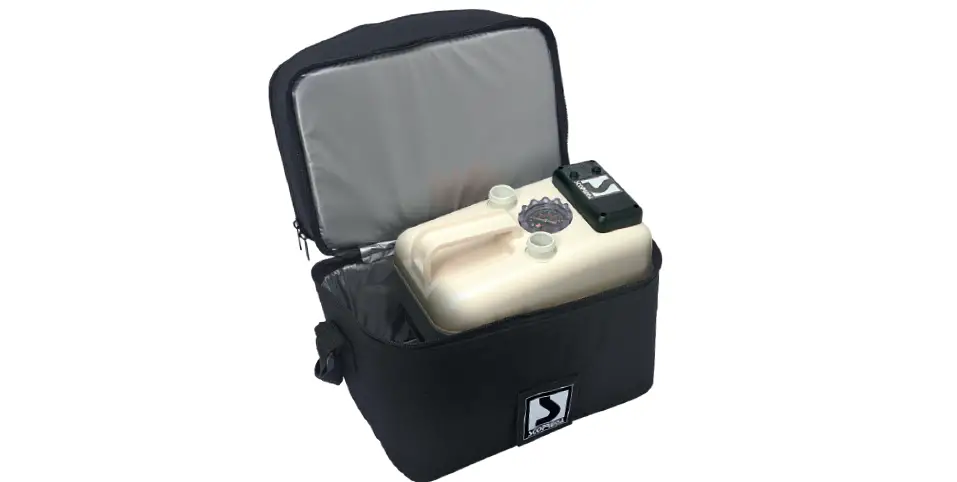
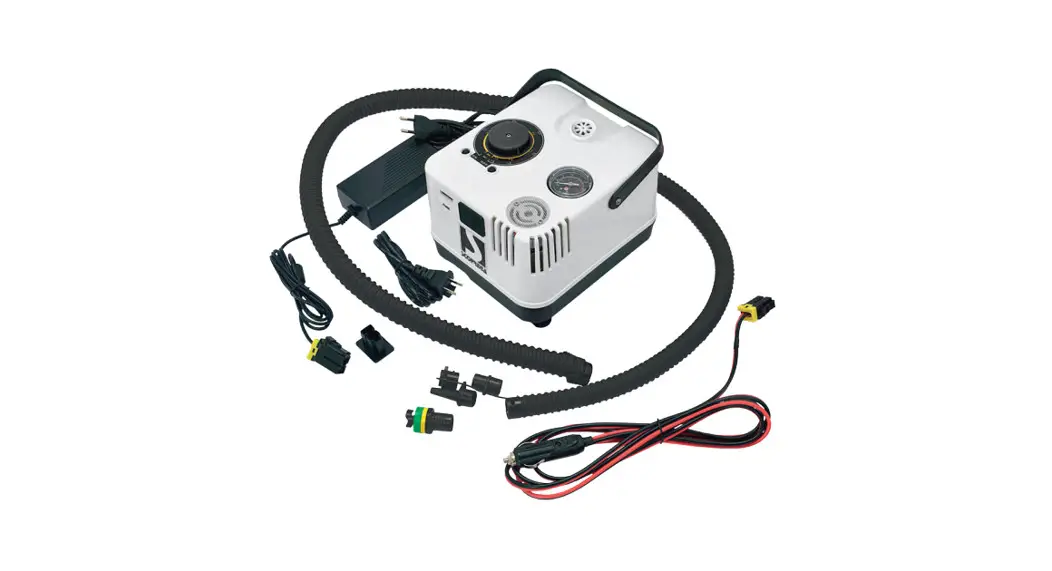
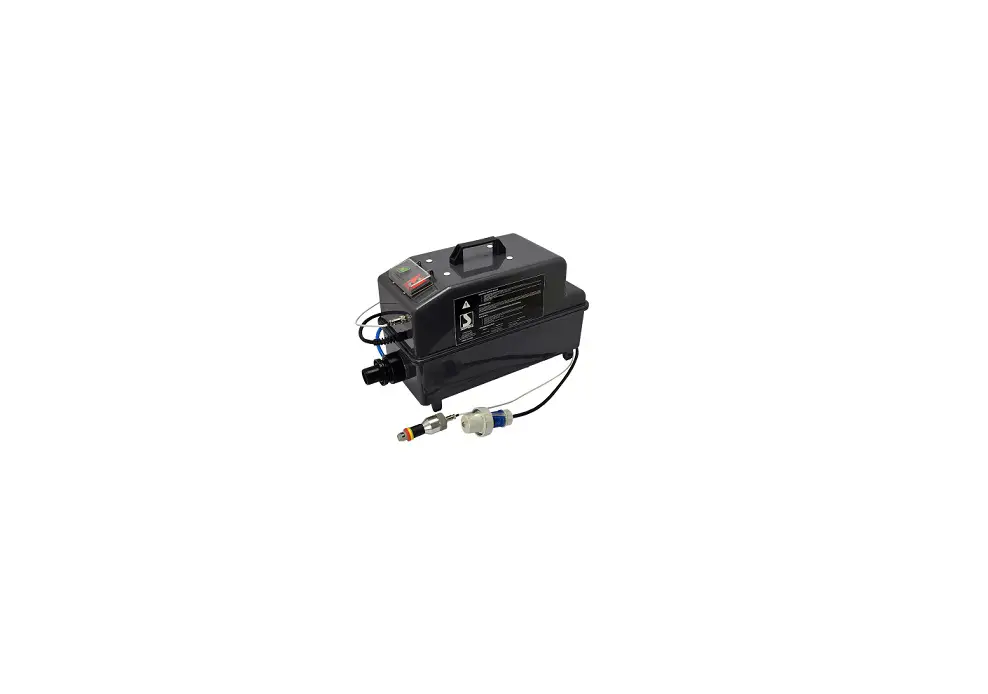
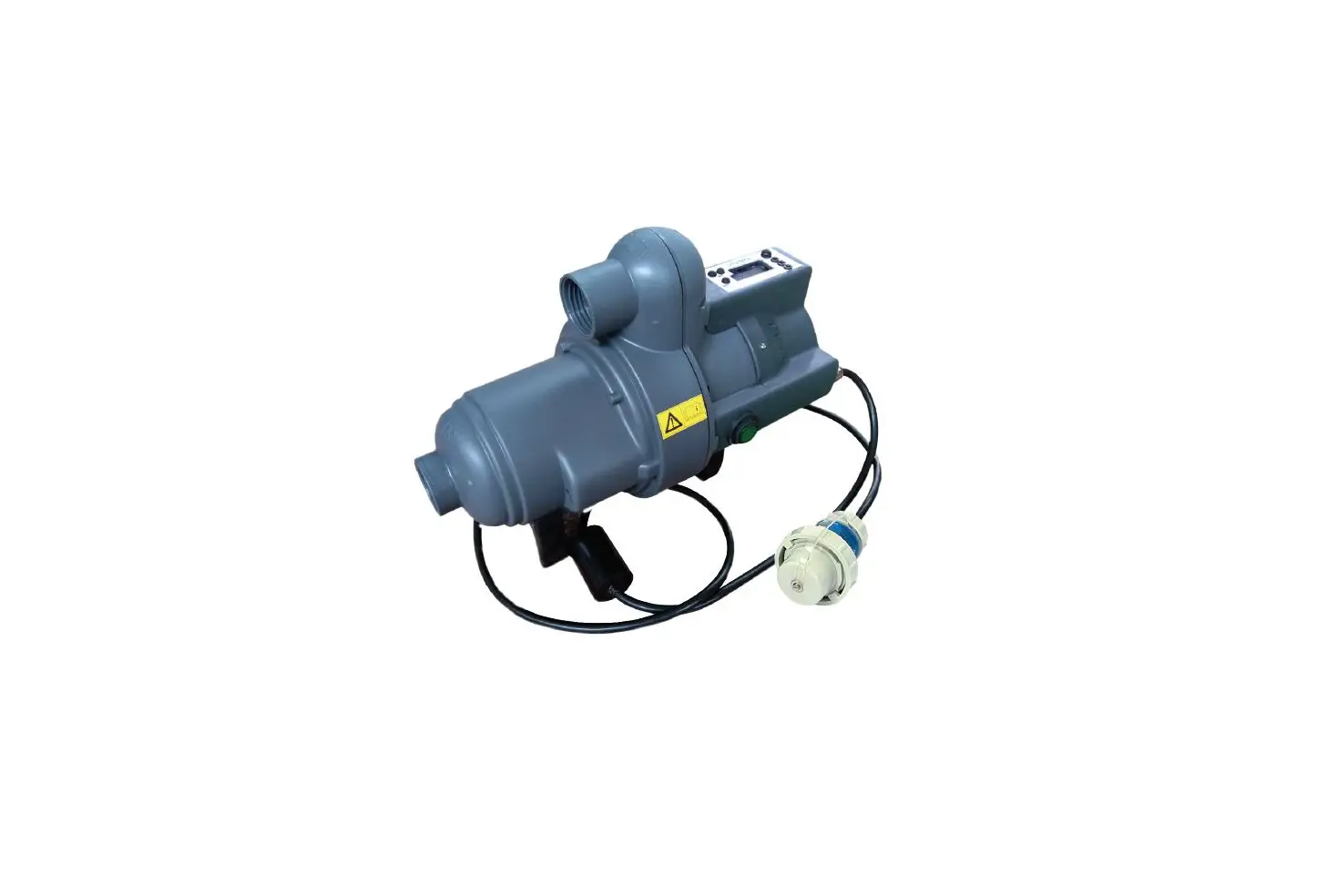
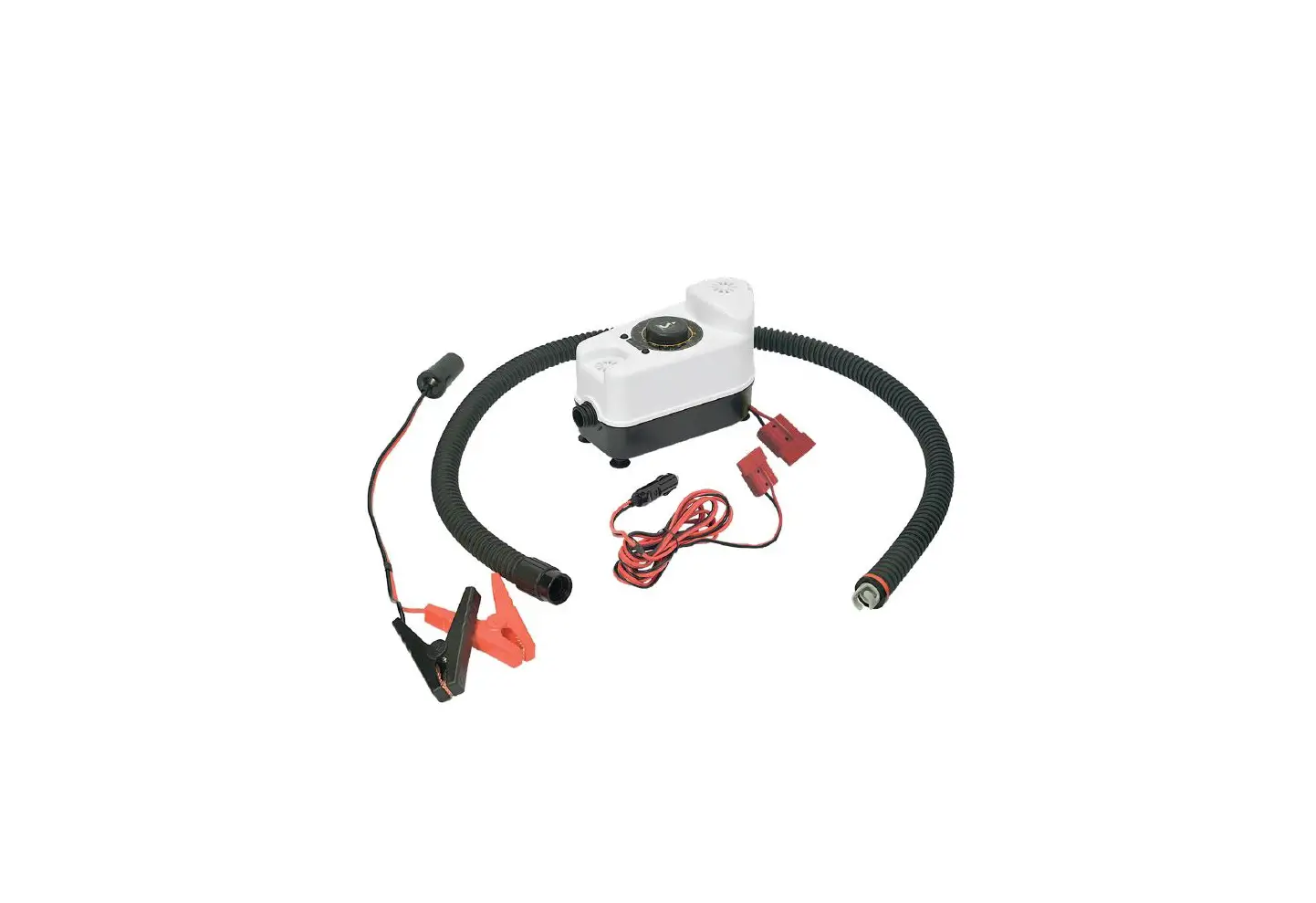
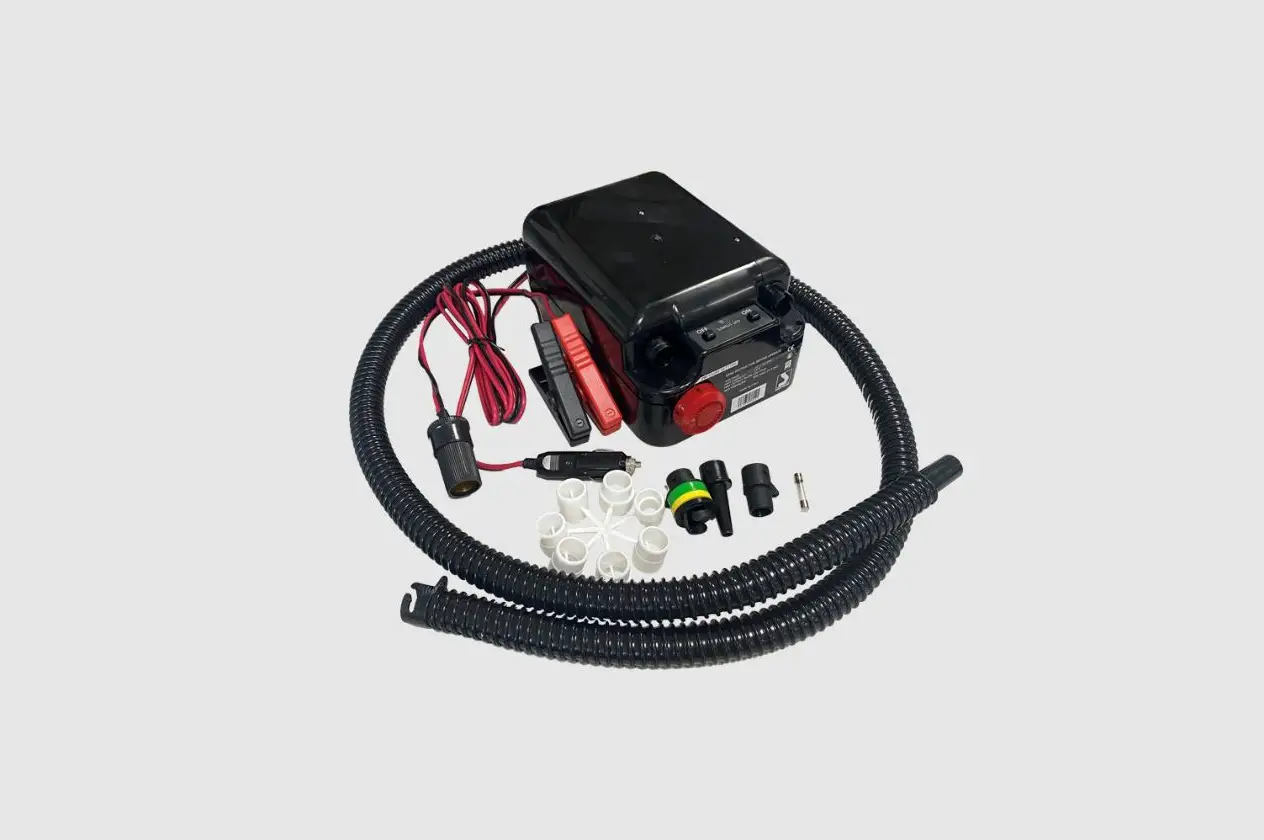
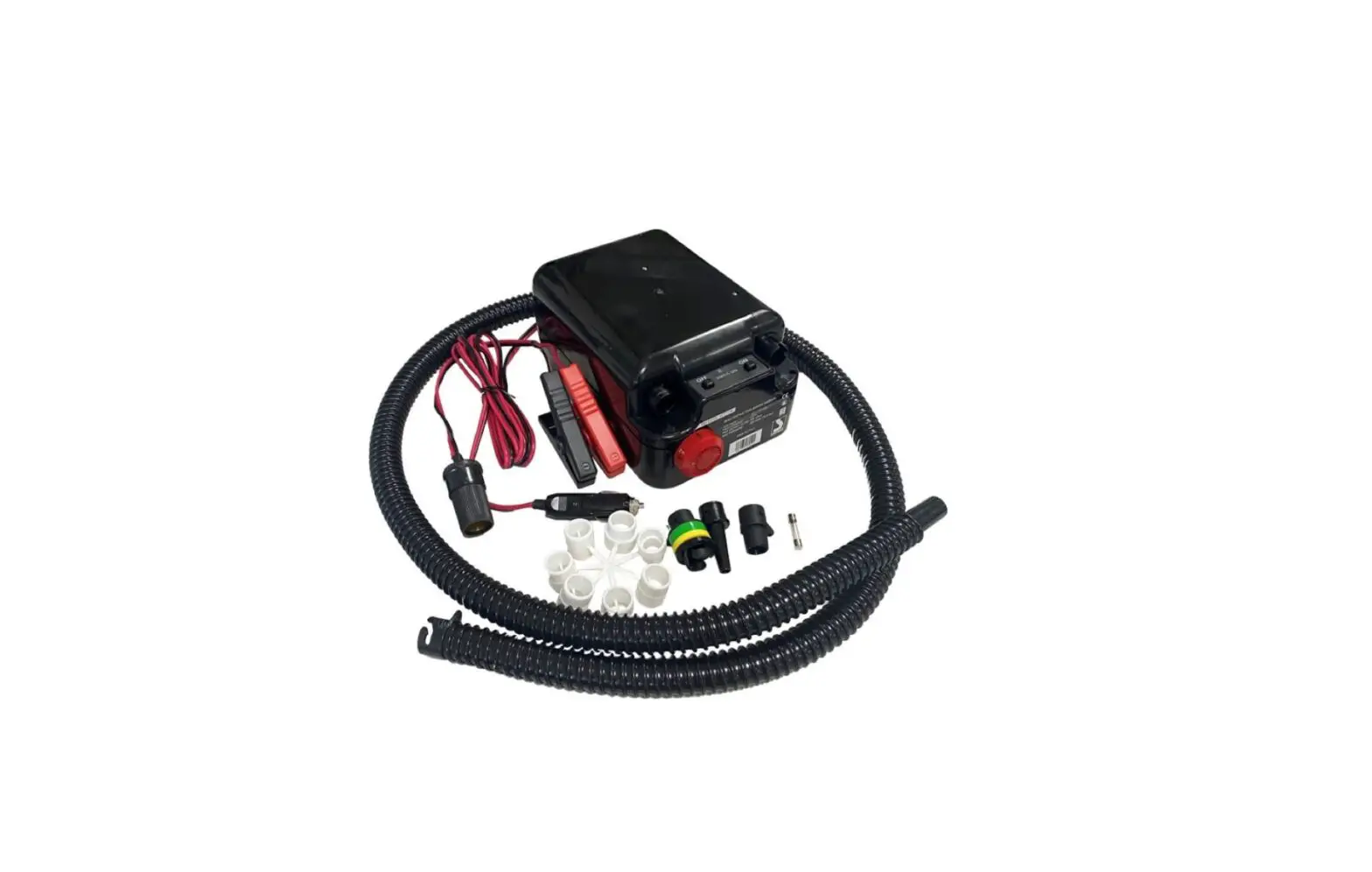
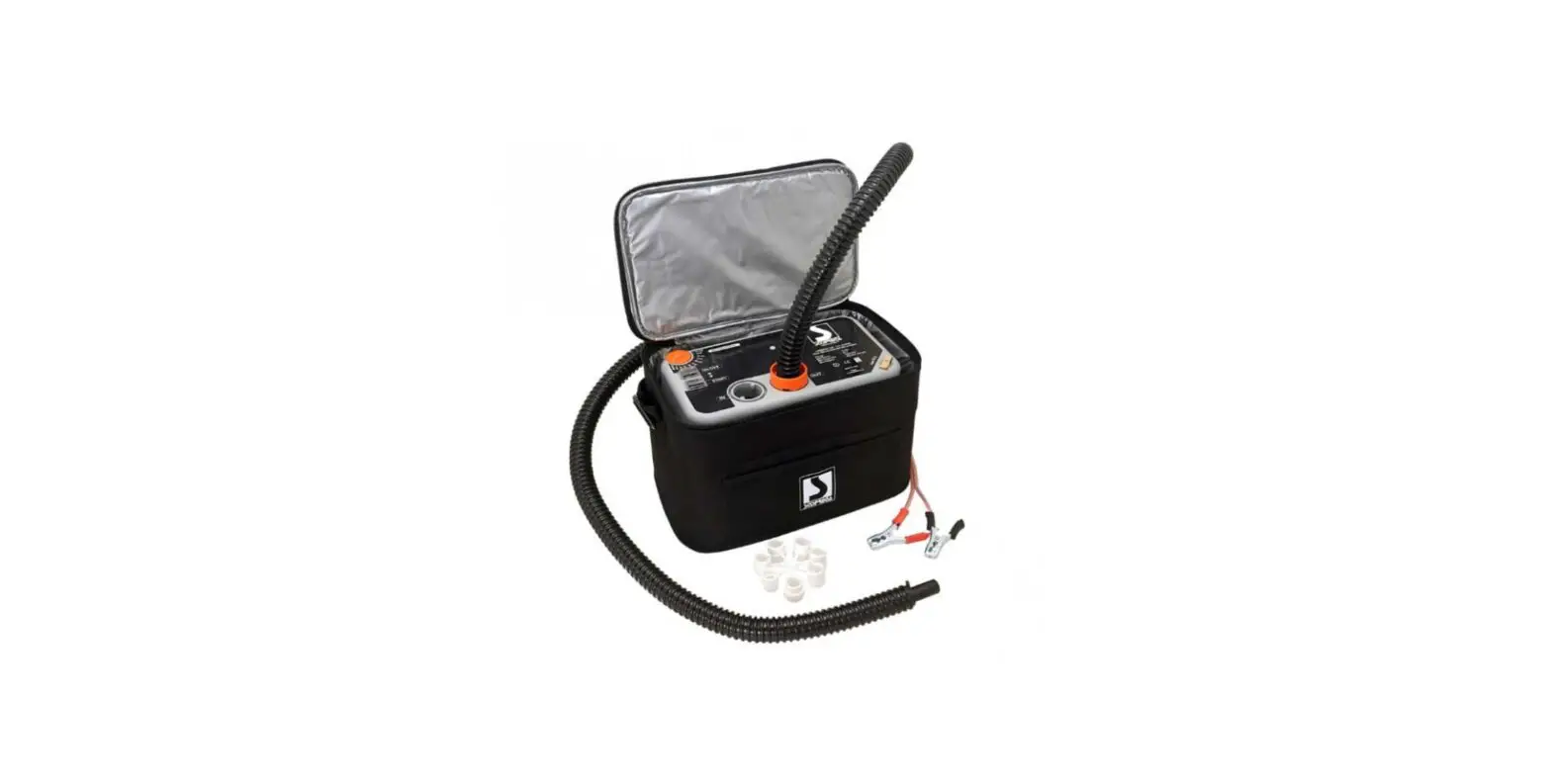
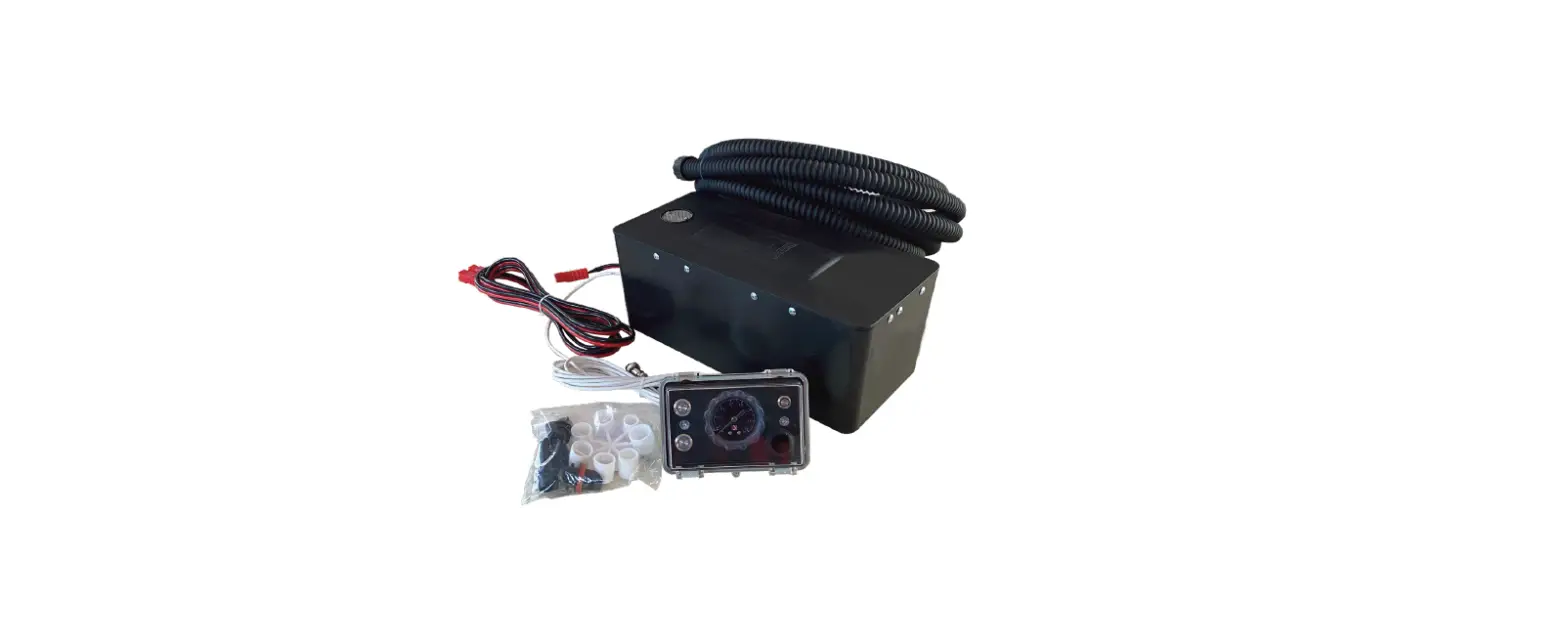
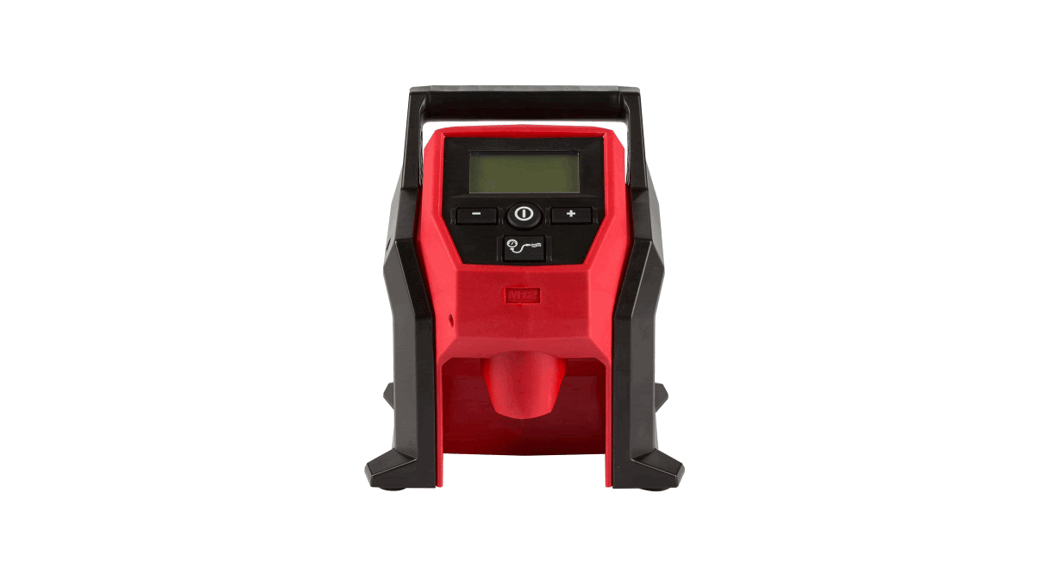
K6130702 GE20-2 Electric Inflator
Product Information
Product Name: GE20-2 Electric Inflator
Model Number: K6130702
Description: The GE20-2 Electric Inflator is a versatile and
efficient tool for inflating various objects such as SUPs, small
boats, kayaks, kites, rafts, air mattresses, and pool inflatables.
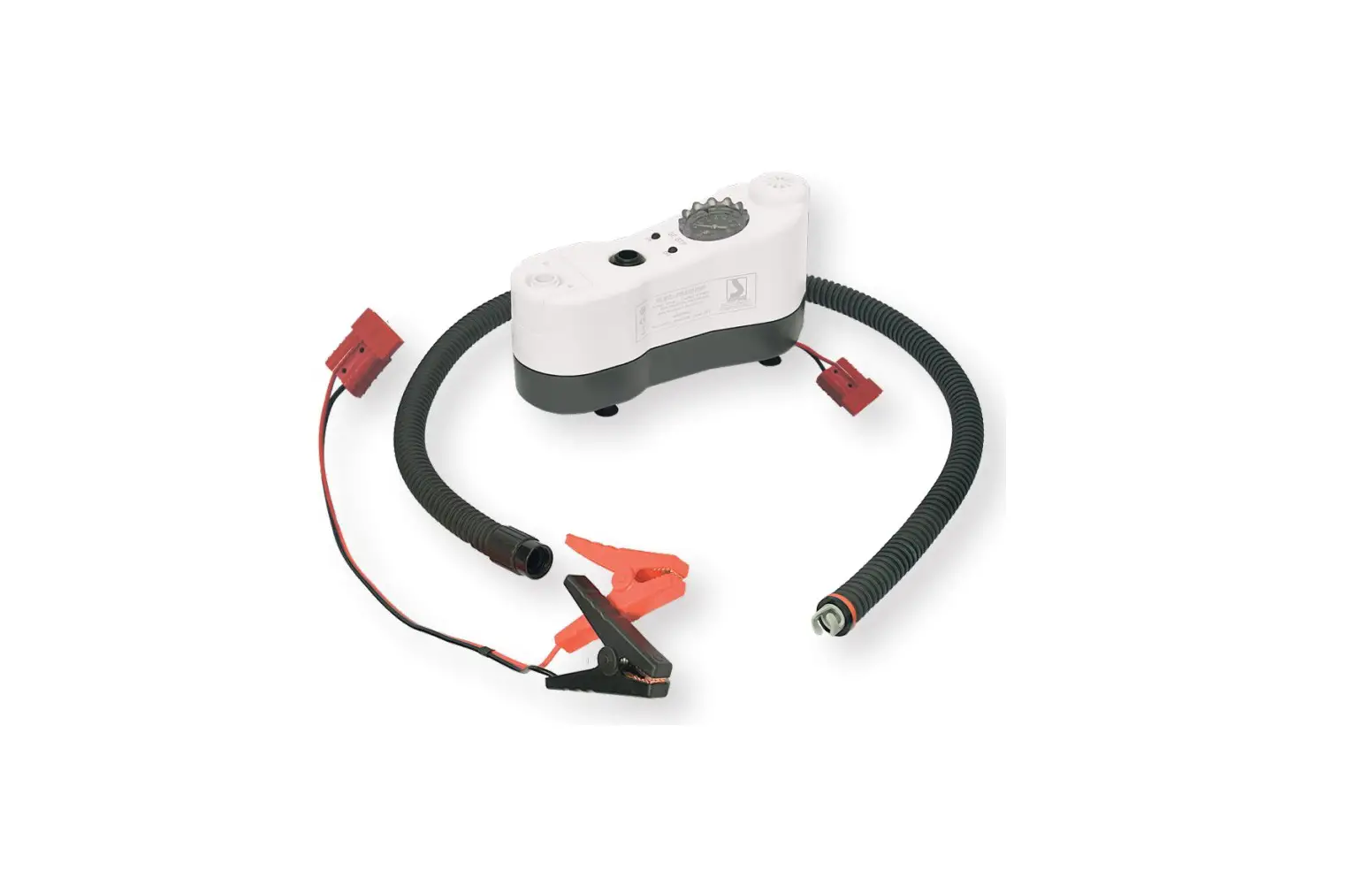
It features an on-off button, a pressure regulation gauge with a
light indicator, an inflation outlet, an air intake/inflation
nozzle, an air hose with adapters, a 110-240V transformer, and a
12V power cable with clamps. Please note that this inflator does
not have a deflation function.
Product Usage Instructions
- Make sure to read and understand all the instructions in this
manual before using the inflator. - Ensure a safe working environment by keeping the inflator away
from rain and avoiding use in the presence of flammable liquids or
gases. - Avoid accidental start-up by not starting the inflator when the
air intake nozzle is in contact with dust or water. - Pay attention to what you are doing and use common sense while
operating the inflator. - When using the battery, keep the charger away from any liquids
as it may cause a short circuit. - Connect the hose properly to both the inflator and the
inflatable object, ensuring there are no leaks. Use the provided
seals/gaskets if necessary. - Take caution when connecting the power cable to the battery and
prevent the battery from coming into contact with conductive
objects such as rings, bracelets, or keys. The battery or
transformer may overheat and cause injuries. - Check the voltage and do not connect the inflator to a 12V
battery if it requires a 24V battery. - If there are any internal components issues, immediately turn
off the inflator. - If you encounter any problems, refer to the troubleshooting
section of the manual for possible causes and solutions.
Please refer to the user manual for more detailed instructions
and safety information. Keep this manual for future reference.
GE20-2 K6130702
IT GONFIATORE ELETTRICO
CONSERVARE QUESTE ISTRUZIONI
EN ELECTRIC INFLATOR
SAVE THIS INSTRUCTIONS MANUAL FOR REFERENCE
DE ELEKTRISCHE LUFTPUMPE
BITTE BEWAHREN SIE DIESE ANLEITUNG GUT AUF
FR GONFLEUR ÉLECTRIQUE
CONSERVER CES INSTRUCTIONS
ES INFLADOR ELECTRICO
CONSERVE ESTAS INSTRUCCIONES
1
INDICE
1. DESCRIZIONE FUNZIONALE 2. PREMESSA 3. AVVERTENZE PRELIMINARI 4. REGOLE DI SICUREZZA GENERALI 5. REGOLE DI UTILIZZO BATTERIA 6. INTRODUZIONE 7. UTILIZZI CONSIGLIATI 8. DATI TECNICI 9. UTILIZZO PER GONFIARE 10. RISOLUZIONE DEI PROBLEMI
10.1 AVVERTENZA SUGLI ACCESSORI
2
1. DESCRIZIONE FUNZIONALE
7
35
1 2 4
6
GE 20-2
1. TASTI ON – OFF 2. MANOMETRO REGOLAZIONE PRESSIONE CON INDICATORE LUMINOSO 3. BOCCA D’USCITA (GONFIARE) 4. TUBO ARIA CON ADATTATORI 5. BOCCA D’INGRESSO / DI AERAZIONE 6. TRASFORMATORE 110-240V 7. CAVO CON MORSETTI DI ALIMENTAZIONE 12V
ATTENZIONE
Questo gonfiatore non ha la funzione di sgonfiaggio.
3
MANUALEDI CONSERVARE QUESTE ISTRUZIONI
2. PREMESSA
Gentile cliente, congratulazioni per aver scelto Scoprega. Progettiamo e fabbrichiamo prodotti della massima qualità secondo le esigenze della nostra clientela. Scoprega offre la massima qualità anche nell’assistenza. I nostri uffici dedicati garantiscono consulenza e istruzioni in caso di bisogno, oltre a un’assistenza tecnica completa.
La ringraziamo per la fiducia.
ATTENZIONE
Leggere queste istruzioni prima di utilizzare il gonfiatore. La mancata osservanza di tutte le istruzioni elencate di seguito può provocare danni al prodotto e/o causare lesioni gravi alle persone.
3. AVVERTENZE PRELIMINARI
1. Attenersi a tutte le istruzioni presenti su questo documento. 2. Conservare le presenti istruzioni. 3. Non ostruire le bocchette di aerazione (N.5 A PAG. 3). 4. Proteggere sempre il cavo di alimentazione. 5. Non aprire il gonfiatore. Far eseguire tutte le attività di manutenzione a manutentori qualificati autorizzati da Scoprega. La manutenzione è necessaria quando l’apparecchio risulta in qualche modo danneggiato o non funzionante. 6. Non manomettere il prodotto. L’apertura del gonfiatore comporta la decadenza della garanzia. 7. Fornire una ventilazione adeguata 8. Evitare di posizionare oggetti nelle vicinanze del prodotto durante il suo funzionamento. 9. Tenere il presente prodotto fuori dalla portata dei bambini. 10. Il gonfiatore in moto produce vibrazioni per cui, per evitare cadute accidentali, ne consigliamo l’utilizzo a pavimento.
N.B. Questo gonfiatore non ha la funzione di sgonfiaggio.
NON ALIMENTARE IL GONFIATORE AD UNA TENSIONE PIÙ ALTA DI QUELLA NOMINALE.
4. REGOLE DI SICUREZZA GENERALI
1. CONSIDERARE SEMPRE L’AMBIENTE DI LAVORO. Non esporre il gonfiatore alla pioggia. Non utilizzare in presenza di liquidi o gas infiammabili. 2. EVITARE L’AVVIO ACCIDENTALE. Non avviare il gonfiatore con la bocca di ingresso in contatto con polvere o acqua. 3. PRESTARE ATTENZIONE. Prestare attenzione a quello che si sta facendo. Usare il buon senso.
4
ISTRUZIONI
4. CONTROLLARE CHE NON VI SIANO PARTI DANNEGGIATE. Prima di usare il gonfiatore, ispezionare con attenzione le pareti esterne e i suoi componenti. 5. NON AVVIARE i gonfiatori portatili nei pressi di liquidi infiammabili o atmosfere gassose o esplosive. I motori di questi gonfiatori producono scintille che possono rilasciare fumi. 6. ATTENZIONE A NON INALARE! L’aria compressa proveniente dal gonfiatore non è pura. Non inalare mai aria dal gonfiatore. 7. ATTENZIONE! PERICOLO DI SCOPPIO. Gonfiare l’unità gonfiabile solo seguendo le raccomandazioni del costruttore. Una pressione eccessiva può causare l’esplosione del gonfiabile, che può cagionare lesioni personali. 8. NON LASCIARE MAI IL DISPOSITIVO SENZA SORVEGLIANZA. Il gonfiaggio eccessivo può causare gravi lesioni e danni materiali. 9. ATTENZIONE! PERICOLO DI FUNZIONAMENTO NON SICURO Non modificare o tentare di riparare l’unità. Non forare o apportare modifiche al gonfiatore o ai suoi accessori. Qualunque modifica al prodotto comporta la decadenza della garanzia. 10. Non trasportare mai il gonfiatore dal tubo flessibile né dal cavo di alimentazione.
5. REGOLE DI UTILIZZO DELLA BATTERIA
1. Al primo utilizzo inserire nel gonfiatore il fusibile presente nella borsetta. 2. Effettuare un ciclo di ricarica completo della batteria (durata 8 ore). 3. Per avere una migliore resa, ricaricare la batteria quando la temperatura ambientale è compresa tra i 18°- 24°C (65°F – 75°F). NON ricaricare la batteria con temperature inferiori a +4,5°C (+40°F), o superiori a +40,5°C (+105°F). Questo è necessario per prevenire seri danni alla batteria. 4. Durante la ricarica, il caricatore e la batteria possono diventare caldi. Questa è una normale condizioni di funzionamento e non indica alcun problema. 5. NON immergere il caricatore in acqua o in altri liquidi.
TENERE LONTANO IL CARICATORE DA OGNI LIQUIDO. PUO’ CAUSARE CORTO CIRCUITO
6. NON tentare di caricare la batteria con un caricatore diverso da quello fornito. Il caricatore e la batteria sono progettati per lavorare abbinati. 7. Non utilizzare il caricatore per uso differente da quello di caricare la batteria del gonfiatore. Ogni altro utilizzo potrebbe causare incendi, scosse o corto circuito. 8. Assicurarsi che il cavo sia messo in modo da non essere calpestato, strappato o danneggiato. 9. Non utilizzare il caricatore con il cavo o la spina danneggiati. 10. Non utilizzare il caricatore se ha preso un colpo, è caduto o si è danneggiato in qualsiasi modo. 11. Non smontare il caricatore. Il rimontaggio non corretto può causare scossa, corto circuito o incendio. 12. Non utilizzare mai altri caricatori per caricare quest’apparato. Utilizzare sempre solo pezzi di ricambio originali.
5
6. INTRODUZIONE
Il GE 20-2 è un gonfiatore elettrico portatile di nuova generazione ad alta efficienza, sinonimo di affidabilità e funzionalità. Il GE 20-2 è dotato di un gruppo pompante a doppio pistone che permette di gonfiare qualsiasi oggetto a una pressione compresa tra i 10 ed i 1500 mbar. Il gonfiatore si avvia quando si preme il tasto ON e si spegne automaticamente quando raggiunge la pressione impostata sul manometro. Quando l’utilizzatore preme il tasto OFF, l’apparato si arresta. Il GE 20-2 è completamente portatile poiché la batteria è integrata nell’apparato. Quando la batteria è scarica (luce rossa sul manometro), si può collegare il gonfiatore ad una presa accendisigari o a una batteria esterna 12V tramite i morsetti di alimentazione. La batteria è, inoltre, ricaricabile tramite presa accendisigari 12V o trasformatori 110-240 AC/DC. La bocca d’ingresso è protetta da un filtro multistrato, la bocca d’uscita è dotata di una valvola di non ritorno. L’unità è protetta contro il surriscaldamento. In caso di temperatura esterna elevata o in caso di sovra utilizzo, il gonfiatore si arresterà automaticamente e un led rosso sul manometro segnalerà lo stato. Quando il led rosso si spegne, sarà possibile riavviare l’apparato.
7.UTILIZZI CONSIGLIATI
Oggetti gonfiabili come: SUP / Piccoli Gommoni (3/4 m) / Kayak / Kite / Zattere / Materassi ad aria / Gonfiabili da piscina / ecc..
8. DATI TECNICI
ARTICOLO
PORTATA (L/minuto)
FUSIBILE DI PRESSIONE MAX
PROTEZIONE
(mbar)
FUNZIONI
GE 20-2
125
30 A
1500 (22 PSI)
GONFIA
IMPOSTAZIONI DI PRESSIONE: MANOMETRO CON SPEGNIMENTO AUTOMATICO RACCORDI DI GONFIAGGIO: DISPONIBILI PER TUTTE LE PIU’ COMUNI VALVOLE DIMENSIONI BORSA: 220x320x220 mm
9. UTILIZZO PER GONFIARE
ACCESSORI E CAVI DI ALIMENTAZIONE 1. Tutti gli accessori si trovano nel vano superiore della borsa: tubo di gonfiaggio, cavi di alimentazione e carica batteria. COLLEGAMENTO DEGLI ACCESSORI 1. Il gonfiatore è fornito con adattatori conici standard che si trovano nel vano superiore della borsetta. 2. Assicurarsi che sia premuto il tasto OFF. 3. Prendere il tubo dalla borsa. 4. Collegare il tubo dell’aria alla bocca per gonfiare (OUT). 5. Montare l’adattatore più idoneo per il gonfiabile.
ACCENSIONE DEL GONFIATORE 1. Per GONFIARE collegare il tubo alla bocca d’uscita (N3 fig. a p3). 2. Impostare sul pressostato la pressione desiderata (N2 fig. a p3). Il gonfiatore si arresterà automaticamente quando raggiunge la pressione impostata. 3. Premere il tasto ON; l’apparato si avvia. A seconda dello stato della batteria il led del manometro mostrerà tre diversi colori: VERDE: batteria carica. GIALLO: batteria in esaurimento. ROSSO: batteria scarica. Quando il led non è VERDE si consiglia di ricaricare prima di mettere in funzione. In alternativa, è possibile utilizzare il gonfiatore collegandolo alla presa accendisigari di un automobile (N8 a p3) o ad una batteria esterna tramite cavo a morsetti di alimentazione (N7 a p3). N.B. Utilizzando il cavo accendisigari o il cavo a morsetti, non verrà ricaricata la batteria del gonfiatore. 4. Se il led sul manometro diventasse GIALLO premere il tasto OFF e collegare il gonfiatore a una presa accendisigari di una automobile o a una batteria esterna tramite cavo e morsetti di alimentazione. 5. Se il led sul manometro diventa ROSSO premere il tasto OFF e collegare il gonfiatore a una batteria esterna tramite cavo e morsetti di alimentazione.
6
COLLEGARE CORRETTAMENTE IL TUBO AL GONFIATORE ED AL GONFIABILE ASSICURANDOSI CHE NON VI SIANO PERDITE. SCEGLIERE OPPORTUNAMENTE LE GUARNIZIONI TRA QUELLE FORNITE IN DOTAZIONE.
ATTENZIONE
Assicurarsi della corretta polarità (morsetto rosso al positivo). In caso contrario il gonfiature NON SI AVVIERÀ.
ATTENZIONE
Prestare attenzione quando si collega il cavo alla batteria ed evitare che la batteria entri in contatto con oggetti conduttori quali anelli, braccialetti e chiavi. La batteria o il trasformatore potrebbero surriscaldarsi e causare lesioni.
ATTENZIONE
Controllare la tensione. Non collegare il gonfiatore a 12V con una batteria a 24V.
ATTENZIONE
Non lasciare mai incustodito il gonfiatore acceso. Il gonfiaggio eccessivo di un oggetto può provocare gravi conseguenze.
IL GONFIATORE SI PUÒ DANNEGGIARE A CAUSA DI SABBIA, POLVERE O ACQUA CHE PENETRANO ALL’INTERNO DELLA PORTA DI INGRESSO. CIÒ CAUSERÀ IL SURRISCALDAMENTO E DANNEGGERÀ I
COMPONENTI INTERNI. IN TAL CASO SPEGNERE IMMEDIATAMENTE IL GONFIATORE.
10. SOLUZIONE DEI PROBLEMI
PROBLEMA
POSSIBILE CAUSA
POSSIBILE SOLUZIONE
Batteria SCARICA
Ricaricare la batteria con il caricabatteria 110-240V o collegare
l’apparato a una batteria esterna tramite i morsetti di alimentazione
Il gonfiatore non si avvia
Il gonfiatore non gonfia
Non è stato premuto il tasto ON. Il fusibile di protezione è bruciato o
disinserito. L’apparato è danneggiato
Errato collegamento del tubo. Errata impostazione della pressione
Batteria SCARICA con led ROSSO ACCESO
Premere il tasto ON.
Inserire o sostituire il fusibile con uno dello stesso tipo (30 A)
Rivolgersi a un centro di assistenza SCOPREGA.
Collegare il tubo dell’aria alla bocca corretta (N3 a p3).
Correggere l’impostazione della pressione.
Collegare l’apparato a una batteria esterna tramite cavo e morsetti di
alimentazione o ricaricare l’apparato.
10.1 AVVERTENZA SUGLI ACCESSORI Gli accessori raccomandati nell’utilizzo del gonfiatore sono quelli originali SCOPREGA. L’uso di qualsiasi accessorio non raccomandato per questo gonfiatore può essere pericoloso.
7
INDEX
1. FUNCTIONAL DESCRIPTION 2. FOREWORD 3. PRELIMINARY WARNINGS 4. GENERAL SAFETY RULES 5. BATTERY USE RULES 6. INTRODUCTION 7. RECOMMENDED USES 8. TECHNICAL SPECIFICATIONS 9. USE FOR INFLATING 10. TROUBLESHOOTING
10.1 ACCESSORY WARNING
8
1. FUNCTIONAL DESCRIPTION
7
35
1 2 4
6
GE 20-2
1. ON – OFF BUTTONS 2. PRESSURE SETTING GAUGE WITH LIGHT INDICATOR 3. OUTLET (INFLATE) PORT 4. AIR HOSE WITH ADAPTERS 5. INLET PORT / AIR VENT 6. 110-240V ADAPTER 7. CABLE WITH 12V POWER CLAMPS
WARNING
This inflator is not to be used for deflating operations.
9
M A N U A L OF SAVE THIS INSTRUCTIONS MANUAL FOR REFERENCE
2. FOREWORD
Dear customer, congratulations on choosing Scoprega. We design and manufacture products of the highest quality to meet the needs of our customers. Scoprega offers the highest quality in service as well. Our specialised departments provide support and instructions when needed, as well as comprehensive technical service.
We thank you for your trust.
WARNING
Read these instructions before using the inflator. Failure to follow all the instructions listed below may result in damage to the product and/or cause serious injury to persons.
3. PRELIMINARY WARNINGS
1. Comply with all instructions in this document. 2. Keep these instructions. 3. Do not block the air vents (No.5 ON PAGE 3). 4. Always protect the power cable. 5. Do not open the inflator. Refer all servicing to qualified service personnel authorised by Scoprega. Servicing is required when the device is damaged or not working in any way. 6. Do not tamper with the product. Opening the inflator will void its warranty. 7. Provide suitable ventilation 8. Avoid placing objects near the product during operation. 9. Keep this product out of the reach of children. 10. The operating inflator produces vibrations: therefore, we recommend you to use it on the floor, so as to avoid accidental falls.
NOTE This inflator is not to be used for deflating operations.
DO NOT POWER THE INFLATOR WITH A VOLTAGE HIGHER THAN THE RATED ONE.
4. GENERAL SAFETY RULES
1. ALWAYS TAKE INTO ACCOUNT THE WORKING ENVIRONMENT. Do not expose the inflator to rain. Do not use in the presence of flammable liquids or gases. 2. AVOID UNINTENTIONAL STARTING. Do not start the inflator with the inlet in contact with dust or water. 3. PAY ATTENTION. Pay attention to what you are doing. Use common sense.
10
INSTRUCTIONS
4. CHECK THAT THERE ARE NO DAMAGED PARTS. Before using the inflator, carefully check its outer sides and components. 5. DO NOT OPERATE portable inflators near flammable liquids or in gaseous or explosive atmospheres. The inflator motors produce sparks that can release fumes. 6. DO NOT INHALE! The compressed air coming from the inflator is not clean. Never inhale air from your inflator. 7. WARNING! RISK OF EXPLOSION. Inflate the unit only complying with the manufacturer’s recommendations. Exceeding the pressure rating could cause the inflator to explode, resulting in personal injury. 8. NEVER LEAVE THE DEVICE UNATTENDED. Overinflation could result in serious injury and property damage. 9. WARNING! RISK OF UNSAFE OPERATION Do not modify or attempt to repair the unit. Do not drill into or make any modifications to the inflator or its accessories. Any modification to the product will void its warranty. 10. Never carry the inflator by the flexible hose or power cable.
5. BATTERY USE RULES
1. To operate the inflator for the first time, insert the fuse located inside the carry bag. 2. Perform a complete battery charge cycle (lasting 8 hours). 3. For best performance, charge the battery when the ambient temperature is between 18°- 24°C (65°F – 75°F). DO NOT charge the battery with temperatures below +4.5°C (+40°F), or above +40.5°C (+105°F). This will prevent serious damage to the battery. 4. The charger and battery may become warm to touch while charging. This is a normal condition, and does not indicate a problem. 5. DO NOT immerse the charger in water or any other liquids.
KEEP THE CHARGER AWAY FROM ALL LIQUIDS. IT MAY CAUSE A SHORT CIRCUIT
6. DO NOT try to charge the battery with any chargers other than those provided. The charger and battery are specifically designed to work together. 7. The charger is not intended for any use other than charging the inflator battery. Any other use may result in risk of fire, electric shock or short circuit. 8. Make sure that the cable is located so as it will not be stepped over, torn or damaged. 9. Do not operate the charger with a damaged cable or plug. 10. Do not operate the charger if it has received a sharp blow, been dropped or damaged in any way. 11. Do not disassemble the charger. Incorrect reassembly can result in a risk of electric shock, short circuit or fire. 12. Never use other chargers to charge this device. Always use original spare parts only.
11
6. INTRODUCTION
The GE 20-2 is a next-generation high-efficiency portable electric inflator, which stands for reliability and functionality. The GE 20-2 is equipped with a double-piston pumping unit that allows any object to be inflated to a pressure between 10 and 1,500 mbar. The inflator starts when the ON button is pressed and automatically stops when the set pressure in the pressure gauge is reached. The device stops when the user presses the OFF button. The GE 20-2 is fully portable as the battery is integrated in the device. When the battery is low (red light on the pressure gauge), the inflator can be connected to a cigarette lighter socket or to an external 12V battery via the power clamps. The battery can also be charged by a 12V cigarette lighter socket or 110-240 AC/DC adapters. The inlet port is protected by a multilayer filter, the outlet port is equipped with a check valve. The unit is protected against overheating. In the event of high outside temperature or overuse, the inflator will automatically stop and a red LED on the pressure gauge will indicate its status. The device can be restarted when the red LED goes OFF.
7.RECOMMENDED USES
Inflatable items, such as: SUPs / Small rubber dinghies (3/4 m) / Kayak / Kites / Rafts / Air mattresses / Swimming pool floats / etc.
8. TECHNICAL SPECIFICATIONS
ITEM
FLOW RATE (L / minute)
SAFETY FUSE
MAX. PRESSURE (mbar)
FUNCTIONS
GE 20-2
125
30 A
1,500 (22 PSI)
INFLATION
PRESSURE SETTINGS: PRESSURE GAUGE WITH AUTOMATIC SWITCHING OFF INFLATION FITTINGS: AVAILABLE FOR MOST COMMON VALVES CARRY BAG DIMENSIONS: 220x320x220 mm
9. USE FOR INFLATING
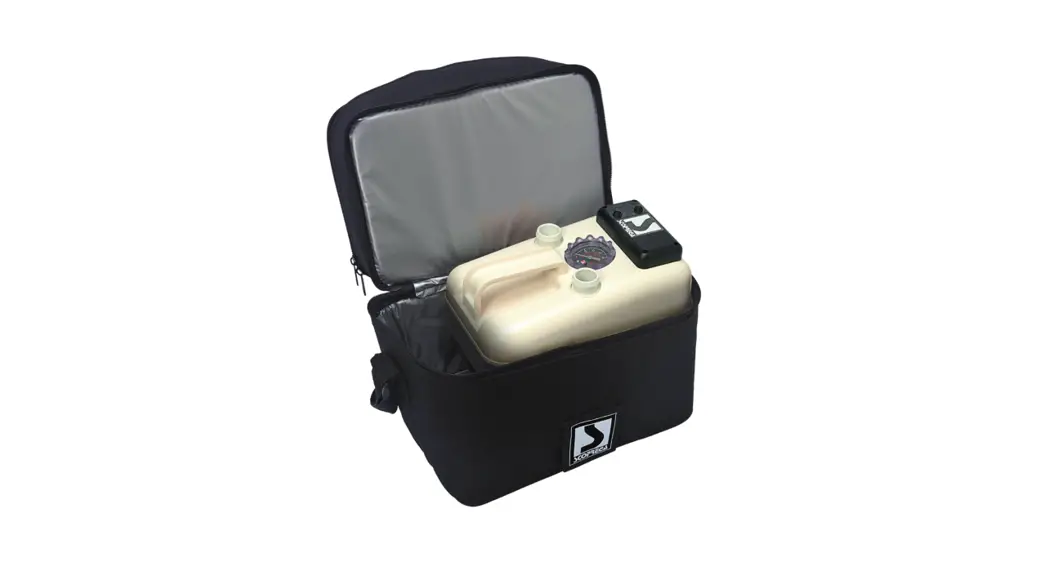
ACCESSORIES AND POWER CABLES 1. All accessories are located inside carry bag upper compartment: inflation hose, power cables, and battery charger. CONNECTING THE ACCESSORIES 1. The inflator is supplied with standard conical adapters that are located inside carry bag upper compartment. 2. Make sure that the OFF button has been pressed. 3. Take the hose from the carry bag. 4. Connect the air hose to the port to inflate (OUT). 5. Assemble the most suitable adapter for the inflator.
TURNING ON THE INFLATOR
1. To INFLATE, connect the hose to the outlet port (N3 fig. on p.3). 2. Set the desired pressure on the pressure switch (N2 fig. on p.3). The inflator will automatically stop when the set pressure is reached. 3. The device starts when the ON button is pressed. Depending on the battery level, the pressure gauge LED will show three different colours: GREEN: charged battery. YELLOW: battery running low. RED: battery low. When the LED is not GREEN, we recommend you to recharge before operating. Otherwise, the inflator can be used by connecting it to a car cigarette lighter socket (N8 on p.3) or to an external battery via a cable with power clamps (N7 on p.3). NOTE The inflator battery will not be charged when using the cigarette lighter cable or the power terminal cable. 4. If the LED on the pressure gauge turns YELLOW, press the OFF button and connect the inflator to a car cigarette lighter socket or an external battery via cable and power clamps. 5. If the LED on the pressure gauge turns RED, press the OFF button and connect the inflator to an external battery via cable and power clamps.
12
CORRECTLY CONNECT THE HOSE TO THE INFLATOR AND THE INFLATABLE, ENSURING THAT THERE ARE NO LEAKS. CHOOSE THE APPROPRIATE GASKET FROM THOSE SUPPLIED.
WARNING
Make sure polarity is correct (red terminal to positive). Otherwise the inflator WILL NOT START.
WARNING
Be careful when connecting the cable to the battery, in order not to short the battery with conducting materials such as rings, bracelets and keys. The battery or adapter may overheat and cause injury.
WARNING
Check the voltage. Do not connect the 12V inflator to a 24V battery.
WARNING
Do not leave the inflator running unattended. Overinflating an object could result in serious injury.
THE INFLATOR CAN BE DAMAGED BY SAND, DUST OR WATER GETTING INSIDE THE INLET PORT. THIS WILL CAUSE OVERHEATING AND DAMAGE THE INTERNAL COMPONENTS. SHOULD THIS BE THE CASE,
IMMEDIATELY SWITCH THE INFLATOR OFF.
10. TROUBLESHOOTING
PROBLEM
POSSIBLE CAUSE
POSSIBLE SOLUTION
Battery LOW
Recharge the battery using the 110-240V battery charger or connect the device to
an external battery via power clamps
The inflator does not start
The inflator does not inflate
The ON button has not been pressed. The safety fuse is blown or disconnected. The device is damaged
Hose wrong connection.
Wrong pressure setting
Press the ON button.
Insert or replace the fuse with one of the same type (30 A)
Contact a SCOPREGA service centre.
Connect the air hose to the correct port (N3 on p.3). Correct pressure setting.
Battery LOW with RED LED ON
Connect the device to an external battery via cable and power clamps or recharge
the device.
10.1 ACCESSORY WARNING The recommended accessories when using the inflator are the original SCOPREGA ones. The use of any accessory not recommended for this inflator can be dangerous.
13
INHALTSVERZEICHNIS
1. BESCHREIBUNG DER FUNKTIONSWEISE 2. VORWORT 3. VORWARNUNGEN 4. ALLGEMEINE SICHERHEITSREGELN 5. NUTZUNGSREGELN DER BATTERIE 6. EINLEITUNG 7. EMPFOHLENE ANWENDUNGEN 8. TECHNISCHE DATEN 9. VERWENDUNG ZUM BEFÜLLEN 10. PROBLEMABHILFE
10.1 WARNHINWEIS ZUM ZUBEHÖR
14
1. BESCHREIBUNG DER FUNKTIONSWEISE
1
7
35
2
4
6
GE 20-2
1. TASTEN ON – OFF 2. DRUCKMESSER ZUR DRUCKREGULIERUNG MIT KONTROLLLEUCHTE 3. AUSLASSÖFFNUNG (BEFÜLLEN) 4. LUFTSCHLAUCH MIT ADAPTERN 5. EINLASSÖFFNUNG/BELÜFTUNGSÖFFNUNG 6. WANDLER 110240 V 7. KABEL MIT 12 V VERSORGUNGSKLEMMEN
ACHTUNG
Diese Luftpumpe hat keine Entleerungsfunktion.
15
BETRIEBSANLEITUNG BITTE BEWAHREN SIE DIESE ANLEITUNG GUT AUF
2. VORWORT
Sehr geehrte/r Kundin/Kunde, herzlichen Glückwunsch zur Wahl von Scoprega. Wir entwickeln und fertigen hochwertige Produkte, die den Bedürfnissen unserer Kunden gerecht werden. Scoprega bietet auch einen hochqualitativen Kundendienst. Unsere dafür zuständigen Abteilungen sichern Ihnen Beratung und vollständige technische Unterstützung zu und geben im Bedarfsfall die erforderlichen Anweisungen.
Wir danken Ihnen für Ihr Vertrauen.
ACHTUNG
Lesen Sie diese Anleitung vor der Verwendung der Luftpumpe. Die Nichtbeachtung aller nachstehenden Anweisungen kann zu Schäden am Produkt und/oder zu schweren Verletzungen von Personen führen.
3. VORWARNUNGEN
1. Befolgen Sie alle in diesem Dokument enthaltenen Anweisungen. 2. Bewahren Sie diese Anleitungen gut auf. 3. Versperren Sie die Einlassöffnungen nicht (NR. 5 AUF S. 3). 4. Schützen Sie stets das Netzkabel. 5. Öffnen Sie die Luftpumpe nie. Lassen Sie alle Wartungsarbeiten vom autorisierten, qualifizierten Wartungspersonal von Scoprega ausführen. Die Wartung ist notwendig, wenn das Gerät in irgendeiner Weise beschädigt ist oder nicht funktioniert. 6. Nehmen Sie keine Manipulationen am Produkt vor. Das Öffnen der Luftpumpe hat den Verfall der Garantie zur Folge. 7. Gewährleisten Sie eine angemessene Belüftung. 8. Vermeiden Sie es Gegenstände in der Nähe des Produkts abzustellen, während es in Betrieb steht. 9. Bewahren Sie das Produkt außerhalb der Reichweite von Kindern auf. 10. Die laufende Luftpumpe erzeugt Vibrationen. Um zu verhindern, dass sie herunterfällt, empfehlen wir sie am Boden stehend zu verwenden. HINWEIS Diese Luftpumpe hat keine Entleerungsfunktion.
VERSORGEN SIE DIE LUFTPUMPE NIE MIT EINER SPANNUNG, DIE HÖHER ALS DIE NENNSPANNUNG IST.
4. ALLGEMEINE SICHERHEITSREGELN
1. BERÜCKSICHTIGEN SIE IMMER DAS ARBEITSUMFELD. Setzen Sie die Luftpumpe nie dem Regen aus. Nie bei Vorhandensein von entzündlichen Flüssigkeiten oder Gasen verwenden. 2. VERMEIDEN SIE EIN UNBEABSICHTIGTES EINSCHALTEN. Starten Sie die Luftpumpe nicht, wenn die Einlassöffnung mit Staub oder Wasser in Berührung kommt. 3. GEHEN SIE ACHTSAM VOR. Üben Sie bei der Handhabung der Luftpumpe höchste Achtsamkeit. Verwenden Sie den gesunden Menschenverstand.
16
ANLEITUNG
4. ÜBERPRÜFEN SIE, DASS KEINE BESCHÄDIGTEN TEILE VORHANDEN SIND. Prüfen Sie vor der Verwendung der Luftpumpe sorgfältig ihre Außenwände und Komponenten. 5. VERWENDEN Sie die tragbaren Luftpumpen nicht in der Nähe von entzündlichen Flüssigkeiten oder von gasförmigen oder in explosionsgefährdeten Atmosphären. Die Motoren dieser Luftpumpen erzeugen Funken, die Rauch und Dämpfe entzünden können. 6. ACHTUNG, NICHT EINATMEN! Die aus der Luftpumpe austretende Druckluft ist keine reine Luft. Atmen Sie nie die aus der Luftpumpe austretende Luft ein. 7. ACHTUNG! BERSTGEFAHR. Befüllen Sie den aufblasbaren Gegenstand ausschließlich gemäß den Herstellerempfehlungen. Ein übermäßiger Druck kann zum Bersten des aufblasbaren Gegenstands und damit einhergehend zu Verletzungen von Personen führen. 8. LASSEN SIE DAS GERÄT NIEMALS UNBEAUFSICHTIGT. Übermäßiges Befüllen kann zu schweren Verletzungen und Sachschäden führen. 9. ACHTUNG! GEFAHR EINER UNSICHEREN FUNKTIONSWEISE Nehmen Sie keine Änderungen oder Reparaturversuche vor. Bohren Sie die Luftpumpe nicht an und nehmen Sie keine Änderungen daran oder an ihrem Zubehör vor. Jede Änderung am Produkt hat den Verfall der Garantie zur Folge. 10. Transportieren Sie die Luftpumpe niemals am Schlauch oder am Netzkabel.
5. NUTZUNGSREGELN DER BATTERIE
1. Fügen Sie bei der erstmaligen Verwendung die in der Tasche enthaltene Sicherung in die Luftpumpe ein. 2. Nehmen Sie einen vollständigen Batterieladezyklus vor (Dauer 8 Stunden). 3. Zum Erhalt einer bestmöglichen Leistung, die Batterie bei einer Umgebungstemperatur zwischen 18 °C – 24 °C (65 °F75 °F) aufladen. Laden Sie die Batterie NICHT bei Temperaturen unter +4,5 °C (+40 °F) oder über +40,5 °C (+105 °F) auf. Dies ist wichtig, um schwere Schäden an der Batterie zu vermeiden. 4. Während dem Ladevorgang der Batterie können sowohl das Ladegerät als auch die Batterie warm werden. Dies ist eine normale Betriebsbedingung und ist kein Anzeichen für ein Problem. 5. Tauchen Sie das Ladegerät NICHT in Wasser oder andere Flüssigkeiten.
HALTEN SIE DAS LADEGERÄT VON JEGLICHEN FLÜSSIGKEITEN FERN. DIESE KÖNNEN EINEN KURZSCHLUSS VERURSACHEN
6. Versuchen Sie NICHT, die Batterie mit einem anderen Ladegerät als dem mitgelieferten zu laden. Das Ladegerät und die Batterie wurden entwickelt, um im Verbund zu arbeiten. 7. Verwenden Sie das Ladegerät nicht für andere Zwecke als zum Aufladen der Batterie der Luftpumpe. Jede hiervon abweichende Verwendung kann Unfälle, Stromschläge oder einen Kurzschluss verursachen. 8. Stellen Sie sicher, dass das Kabel so angeordnet ist, dass nicht darauf getreten und es weder herausgerissen oder beschädigt werden kann. 9. Verwenden Sie das Ladegerät nicht, wenn das Kabel oder der Stecker beschädigt ist. 10. Verwenden Sie das Ladegerät nicht, wenn es einen Stoß abbekommen hat, heruntergefallen ist oder anderweitig beschädigt wurde. 11. Zerlegen Sie das Ladegerät nie in seine Einzelteile. Ein falscher Zusammenbau kann einen Stromschlag, Kurzschluss oder Brand verursachen. 12. Verwenden Sie nie andere Ladegeräte zum Laden dieser Vorrichtung. Verwenden Sie stets nur Original-Ersatzteile.
17
6. EINLEITUNG
Die GE 20-2 ist eine hocheffiziente, tragbare elektrische Luftpumpe der neuen Generation, die für Zuverlässigkeit und Funktionalität steht. Die GE 20-2 ist mit einer Doppelkolben-Pumpeinheit ausgestattet, mit der Sie jeden Gegenstand auf einen Druck von 10 bis 1500 mbar befüllen können. Die Luftpumpe wird durch Drücken der Taste ON eingeschaltet und schaltet sich automatisch aus, sobald der am Druckmesser eingestellte Druck erreicht ist. Drückt der Benutzer die Taste OFF stoppt das Gerät. Die GE 20-2 ist komplett tragbar, da die Batterie im Gerät integriert ist. Bei entladener Batterie (rotes Licht am Druckmesser) kann die Luftpumpe an einen Zigarettenanzünder oder über die Klemmen des Netzkabels an eine externe Batterie mit 12 V angeschlossen werden. Die Batterie kann auch über einen 12 V Zigarettenanzünder oder 110240 AC/DC Wandler aufgeladen werden. Die Einlassöffnung ist durch einen Mehrschichtfilter geschützt, die Auslassöffnung ist mit einem Rückschlagventil ausgestattet. Das Gerät verfügt über einen Überhitzungsschutz. Bei hoher Außentemperatur oder Überbeanspruchung stoppt die Luftpumpe automatisch und eine rote LED am Druckmesser weist auf diesen Zustand hin. Erlischt die rote LED, kann das Gerät wieder gestartet werden.
7.EMPFOHLENE ANWENDUNGEN
Befüllbare Gegenstände wie: Paddleboards / Kleine Schlauchboote (3/4 m) / Kajaks / Kite-Flügel / Flöße / Luftmatratzen / Aufblasbare Gegenstände für die Nutzung im Schwimmbad / usw.
8. TECHNISCHE DATEN
ARTIKEL
DURCHSATZ (l/Minute)
SICHERUNG
MAX. DRUCK (mbar)
FUNKTIONEN
GE 20-2
125
30 A
1500 (22 PSI)
BEFÜLLEN
DRUCKEINSTELLUNGEN: DRUCKMESSER MIT AUTOMATISCHER ABSCHALTFUNKTION AUSLASSANSCHLÜSSE: FÜR ALLE GÄNGIGEN VENTILE ERHÄLTLICH ABMESSUNGEN DER TRANSPORTTASCHE: 220x320x220 mm
9. VERWENDUNG ZUM BEFÜLLEN
ZUBEHÖR UND NETZKABEL 1. Alle Zubehörteile befinden sich im oberen Fach der Tasche: Luftschlauch, Netzkabel und Batterieladegerät.
ANSCHLUSS DES ZUBEHÖRS 1. Die Luftpumpe wird mit konischen Standard-Adaptern geliefert, die im oberen Taschenfach untergebracht sind. 2. Stellen Sie sicher, dass die Taste OFF gedrückt ist. 3. Nehmen Sie den Luftschlauch aus der Tasche. 4. Schließen Sie den Luftschlauch an die zum Befüllen vorgesehene Öffnung an (OUT). 5. Montieren Sie den für den zu befüllenden Gegenstand am besten geeigneten Adapter.
EINSCHALTEN DER LUFTPUMPE 1. Zum BEFÜLLEN müssen Sie den Luftschlauch an die Auslassöffnung anschließen (N3 Abb. auf S. 3). 2. Stellen Sie am Druckwächter den gewünschten Druck ein (N2 Abb. auf S. 3). Die Luftpumpe schaltet sich automatisch aus, wenn der eingestellte Druck erreicht ist. 3. Drücken Sie die Taste ON, dann schaltet sich das Gerät ein. Abhängig vom Batterieladezustand leuchtet die LED des Druckmessers in drei unterschiedlichen Farben: GRÜN: Batterie geladen. GELB: Batterie im Aufbrauch. ROT: Batterie entladen. Leuchtet die LED nicht mehr GRÜN, sollte die Batterie vor der Inbetriebnahme nachgeladen werden. Alternativ kann die Luftpumpe an den Zigarettenanzünder eines Autos (N8 auf S.3) oder an eine externe Batterie über das Netzkabel mit Klemmen (N7 auf S.3) angeschlossen werden. HINWEIS Bei Verwendung des Zigarettenanzünderkabels oder des Kabels mit Klemmen wird die Batterie der Luftpumpe nicht nachgeladen. 4. Drücken Sie die Taste OFF, wenn die LED am Druckmesser GELB wird und schließen Sie die Luftpumpe an den Zigarettenanzünder eines Autos oder über das Netzkabel mit Klemmen an eine externe Batterie an. 5. Wird die LED am Druckmesser ROT, drücken Sie die Taste OFF und schließen die Luftpumpe über das Netzkabel mit Klemmen an eine externe Batterie an.
18
DEN SCHLAUCH KORREKT AN DER PUMPE UND AM AUFBLASBAREN GEGENSTAND ANSCHLIEßEN. SICH DARÜBER VERGEWISSERN, DAß ES KEINE LUFTLECKS GIBT. DIE RICHTIGE DICHTUNGEN AUS DER LIEFERUMFANG AUSWÄHLEN.
ACHTUNG
Stellen Sie die korrekte Polarität sicher (rote Klemme am Pluspol). Andernfalls WIRD DIE PUMPE NICHT STARTEN.
ACHTUNG
Seien Sie beim Anschließen des Kabels an die Batterie vorsichtig und vermeiden Sie den Kontakt der Batterie mit leitfähigen Gegenständen wie Ringen, Armbändern und Schlüsseln. Die Batterie oder der Wandler könnten sich überhitzen und Verletzungen verursachen.
ACHTUNG
Kontrollieren Sie die Spannung. Schließen Sie die Luftpumpe mit 12 V nie an einer 24 V Batterie an.
ACHTUNG
Lassen Sie die eingeschaltete Luftpumpe nie unbeaufsichtigt. Ein übermäßiges Befüllen des Gegenstands kann schwerwiegende Folgen haben.
DIE LUFTPUMPE KANN DURCH SAND, STAUB ODER WASSER BESCHÄDIGT WERDEN, DIE DURCH DIE LUFTEINLASSKLAPPE EINDRINGEN. DIES VERURSACHT EINE ÜBERHITZUNG UND BESCHÄDIGT DIE INTERNEN KOMPONENTEN. IN DIESEM FALL MUSS DIE LUFTPUMPE SOFORT AUSGESCHALTET WERDEN.
10. PROBLEMABHILFE
PROBLEM
MÖGLICHE URSACHE
Batterie ENTLADEN
MÖGLICHE ABHILFE
Laden Sie die Batterie mit dem Ladegerät 110240 V auf oder schließen Sie das Gerät über die Versorgungsklemmen an eine externe Batterie an.
Die Luftpumpe startet nicht
Die Luftpumpe füllt nicht auf
Die Taste ON wurde nicht gedrückt.
Drücken Sie die Taste ON.
Die Sicherung ist durchgebrannt oder Setzen Sie die Sicherung ein oder ersetzen Sie
herausgesprungen.
diese durch eine neue vom gleichen Typ (30 A).
Das Gerät ist beschädigt
Wenden Sie sich an eine autorisierte SCOPREGA Kundendienststelle.
Falsch angeschlossener Schlauch. Falsch eingestellter Druck
Schließen Sie den Luftschlauch an der richtigen Öffnung an (N3 auf S. 3).
Korrigieren Sie die Druckeinstellung.
Batterie ENTLADEN Bei ROT leuchtender LED
Verbinden Sie das Gerät über das Netzkabel und die Klemmen mit einer externen Batterie oder laden Sie das
Gerät auf.
10.1 WARNHINWEIS ZUM ZUBEHÖR Das für die Verwendung der Luftpumpe empfohlene Zubehör ist das Original-Zubehör von SCOPREGA. Das Verwenden von nicht für diese Luftpumpe empfohlenem Zubehör kann gefährlich sein.
19
TABLE DES MATIÈRES
1. DESCRIPTION FONCTIONNELLE 2. AVANT-PROPOS 3. AVERTISSEMENTS PRÉLIMINAIRES 4. RÈGLES GÉNÉRALES DE SÉCURITÉ 5. RÈGLES D’UTILISATION DE LA BATTERIE 6. INTRODUCTION 7. UTILISATIONS RECOMMANDÉES 8. DONNÉES TECHNIQUES 9. UTILISATION POUR LE GONFLAGE 10. DÉPANNAGE
10.1 AVERTISSEMENT SUR LES ACCESSOIRES
20
1. DESCRIPTION FONCTIONNELLE
7
35
1 2 4
6
GE 20-2
1. BOUTONS ON – OFF 2. MANOMÈTRE RÉGULATEUR DE PRESSION AVEC INDICATEUR LUMINEUX 3. BOUCHE DE SORTIE (GONFLER) 4. TUYAU D’AIR AVEC ADAPTATEURS 5. BOUCHE D’ENTRÉE / D’AÉRATION 6. TRANSFORMATEUR 110-240V 7. CÂBLE AVEC BORNES D’ALIMENTATION 12V
ATTENTION
Ce gonfleur ne dispose pas d’une fonction de dégonflage.
21
M A N U E L D’ CONSERVER CES INSTRUCTIONS
2. AVANT-PROPOS
Cher client, félicitations pour avoir choisi Scoprega. Nous concevons et fabriquons des produits de qualité supérieure qui répondent aux besoins de nos clients. Scoprega offre également un service d’assistance de la plus haute qualité. Nos bureaux dédiés vous fournissent tous conseils et instructions au besoin, en plus d’un service complet d’assistance technique.
Nous vous remercions de votre confiance.
ATTENTION
Lire ces instructions avant d’utiliser le gonfleur. Le non-respect de l’ensemble des instructions énumérées ci-dessous peut endommager le produit et/ou causer des blessures graves.
3. AVERTISSEMENTS PRÉLIMINAIRES
1. Suivre toutes les instructions de ce document. 2. Conserver ces instructions. 3. Ne pas obstruer les bouches d’aération (N.5 À LA PAGE 3). 4. Toujours protéger le câble d’alimentation. 5. Ne pas ouvrir le gonfleur. Tout entretien doit être effectué par du personnel d’entretien qualifié et autorisé par Scoprega. L’entretien est nécessaire lorsque l’appareil est endommagé de quelque façon que ce soit ou ne fonctionne pas. 6. Ne pas altérer le produit. L’ouverture du gonfleur annule la garantie. 7. Fournir une ventilation adéquate. 8. Éviter de placer des objets à proximité du produit pendant son fonctionnement. 9. Garder ce produit hors de portée des enfants. 10. Le gonfleur en mouvement produit des vibrations ; pour éviter les chutes accidentelles, nous recommandons de l’utiliser sur le sol.
N.B. Ce gonfleur ne dispose pas d’une fonction de dégonflage.
NE PAS ALIMENTER LE GONFLEUR À UNE TENSION SUPÉRIEURE À CELLE NOMINALE.
4. RÈGLES GÉNÉRALES DE SÉCURITÉ
1. TOUJOURS CONSIDÉRER L’ENVIRONNEMENT DE TRAVAIL. Ne pas exposer le gonfleur à la pluie. Ne pas utiliser en présence de liquides ou de gaz inflammables. 2. ÉVITER TOUT DÉMARRAGE ACCIDENTEL. Ne pas démarrer le gonfleur avec la bouche d’entrée en contact avec de la poussière ou de l’eau. 3. FAIRE ATTENTION. Faire attention aux gestes effectués. Faire preuve de bon sens.
22
INSTRUCTIONS
4. VÉRIFIER QU’IL N’Y A AUCUNE PIÈCE ENDOMMAGÉE. Avant d’utiliser le gonfleur, examiner attentivement les parois extérieures et les composants. 5. NE PAS DÉMARRER les gonfleurs portables à proximité de liquides inflammables ou d’atmosphères gazeuses ou explosives. Les moteurs de ces gonfleurs produisent des étincelles qui peuvent libérer des fumées. 6. VEILLER À NE PAS INHALER ! L’air comprimé du gonfleur n’est pas pur. Ne jamais inhaler l’air provenant du gonfleur. 7. ATTENTION ! DANGER D’ÉCLATEMENT. Ne gonfler l’unité gonflable que conformément aux recommandations du fabricant. Une pression excessive peut provoquer l’explosion du gonflable, ce qui peut entraîner des blessures corporelles. 8. NE JAMAIS LAISSER LE DISPOSITIF SANS SURVEILLANCE. Le surgonflage peut provoquer des blessures graves et des dommages matériels. 9. ATTENTION ! DANGER DE FONCTIONNEMENT NON SÛR Ne pas modifier ou tenter de réparer l’unité. Ne pas percer ou modifier le gonfleur ou ses accessoires. Toute modification du produit annule la garantie. 10. Ne jamais transporter le gonfleur par le tuyau flexible ou le câble d’alimentation.
5. RÈGLES D’UTILISATION DE LA BATTERIE
1. Lors de la première utilisation, insérer le fusible à l’intérieur du sac dans le gonfleur. 2. Effectuer un cycle complet de recharge de la batterie (durée 8 heures). 3. Pour de meilleures performances, recharger la batterie lorsque la température ambiante est comprise entre 18 °C et 24° C (65 °F – 75 °F). NE PAS recharger la batterie à des températures inférieures à +4,5 °C (+40 °F) ou supérieures à +40,5 °C (+105 °F). Ceci est nécessaire pour éviter d’endommager sérieusement la batterie. 4. Pendant la recharge, le chargeur et la batterie peuvent devenir chauds. Il s’agit d’une condition de fonctionnement normale et n’indique pas un problème. 5. NE PAS immerger le chargeur dans l’eau ou tout autre liquide.
GARDER LE CHARGEUR À L’ÉCART DE TOUT LIQUIDE. IL PEUT PROVOQUER UN COURT-CIRCUIT
6. NE PAS tenter de charger la batterie avec un chargeur autre que celui fourni. Le chargeur et la batterie sont conçus pour fonctionner ensemble. 7. Ne pas utiliser le chargeur à d’autres fins que la charge de la batterie du gonfleur. Toute autre utilisation peut provoquer un incendie, un choc ou un court-circuit. 8. Veiller à ce que le câble soit placé de manière à ce qu’il ne soit pas piétiné, déchiré ou endommagé. 9. Ne pas utiliser le chargeur avec un câble ou une fiche endommagés. 10. Ne pas utiliser le chargeur s’il a subi un choc, est tombé ou a été endommagé de quelque façon que ce soit. 11. Ne pas démonter le chargeur. Un remontage incorrect peut provoquer un choc, un court-circuit ou un incendie. 12. Ne jamais utiliser un autre chargeur pour charger cet appareil. Toujours utiliser uniquement des pièces de rechange d’origine.
23
6. INTRODUCTION
Le GE 20-2 est un gonfleur électrique portable de nouvelle génération à haute efficacité, synonyme de fiabilité et de fonctionnalité. Le GE 20-2 est équipé d’une unité de pompage à double piston qui peut gonfler tout objet à une pression comprise entre 10 et 1500 mbar. Le gonfleur démarre en appuyant sur le bouton ON et s’arrête automatiquement lorsqu’il atteint la pression réglée sur le manomètre. Lorsque l’utilisateur appuie sur le bouton OFF, l’appareil s’arrête. Le GE 20-2 est entièrement portable car la batterie est intégrée à l’appareil. Lorsque la batterie est déchargée (témoin rouge sur le manomètre), le gonfleur peut être connecté à une prise allumecigare ou à une batterie externe de 12V via les bornes d’alimentation. La batterie peut également être rechargée via une prise allume-cigare 12V ou un transformateur 110-240 CA/CC. La bouche d’entrée est protégée par un filtre multicouche, la bouche de sortie est équipée d’un clapet anti-retour. L’unité est protégée contre la surchauffe. En cas de température extérieure élevée ou de surutilisation, le gonfleur s’arrête automatiquement et une LED rouge sur le manomètre indique l’état. Lorsque la LED rouge s’éteint, l’appareil peut être redémarré.
7.UTILISATIONS RECOMMANDÉES
Objets gonflables tels que : SUP / petits bateaux gonflables (3/4 m) / kayaks / cerfs-volants / radeaux / matelas pneumatiques / gonflables de piscine / etc.
8. DONNÉES TECHNIQUES
ARTICLE
CAPACITÉ (l/minute)
FUSIBLE DE PROTECTION
PRESSION MAXI (mbar)
FONCTIONS
GE 20-2
125
30A
1500 (22 PSI)
GONFLE
RÉGLAGES DE LA PRESSION : MANOMÈTRE AVEC EXTINCTION AUTOMATIQUE RACCORDS DE GONFLAGE : DISPONIBLES POUR TOUTES LES VANNES COURANTES DIMENSIONS DU SAC : 220x320x220 mm
9. UTILISATION POUR LE GONFLAGE
ACCESSOIRES ET CÂBLES D’ALIMENTATION 1. Tous les accessoires se trouvent dans le compartiment supérieur du sac : tuyau de gonflage, câbles d’alimentation et chargeur de batterie. CONNEXION DES ACCESSOIRES 1. Le gonfleur est fourni avec des adaptateurs coniques standard qui se trouvent dans le compartiment supérieur du sac. 2. S’assurer que le bouton OFF est enfoncé. 3. Sortir le tuyau du sac. 4. Raccorder le tuyau à air à la bouche de gonflage (OUT). 5. Installer l’adaptateur le plus approprié pour le gonflable.
ALLUMAGE DU GONFLEUR 1. Pour GONFLER, raccorder le tuyau à la bouche de sortie (N3 fig. à la page 3). 2. Régler la pression souhaitée sur le pressostat (N2 fig. à la page 3). Le gonfleur s’arrête automatiquement lorsque la pression réglée est atteinte. 3. Appuyer sur le bouton ON ; l’appareil démarre. En fonction de l’état de la batterie, la LED du manomètre affiche trois couleurs différentes : VERT : batterie chargée. JAUNE : batterie faible. ROUGE : batterie déchargée. Lorsque la LED n’est pas VERTE, il est conseillé de recharger avant de démarrer. Il est également possible d’utiliser le gonfleur en le connectant à la prise allume-cigare d’une voiture (N8 à la page 3) ou à une batterie externe par le biais d’un câble à bornes d’alimentation (N7 à la page 3). N.B. L’utilisation du câble allume-cigare ou du câble à bornes ne permet pas de recharger la batterie du gonfleur. 4. Si la LED du manomètre devient JAUNE, appuyer sur le bouton OFF et connecter le gonfleur à une prise allume-cigare de voiture ou à une batterie externe via le câble et les bornes d’alimentation. 5. Si la LED du manomètre devient ROUGE, appuyer sur le bouton OFF et connecter le gonfleur à une batterie externe via le câble et les bornes d’alimentation.
24
CONNECTER CORRECTEMENT LE TUYAU AU GONFLEUR ET À LA STRUCTURE GONFLABLE, EN S’ASSURANT QU’IL N’Y A PAS DE FUITES. CHOISIR LES JOINTS APPROPRIÉS PARMI CEUX QUI SONT FOURNIS.
ATTENTION
Veiller à une polarité correcte (borne rouge vers le positif). Sinon, le gonfleur NE DÉMARRERA PAS.
ATTENTION
Faire attention en connectant le câble à la batterie et éviter que la batterie n’entre en contact avec des objets conducteurs tels que des bagues, des bracelets et des clés. La batterie ou le transformateur peuvent devenir chauds et provoquer des blessures.
ATTENTION
Vérifier la tension. Ne pas connecter le gonfleur 12V avec une batterie 24V.
ATTENTION
Ne jamais laisser le gonfleur allumé sans surveillance. Le surgonflage d’un objet peut avoir de graves conséquences.
LE GONFLEUR PEUT ÊTRE ENDOMMAGÉ PAR DU SABLE, DE LA POUSSIÈRE OU DE L’EAU PÉNÉTRANT DANS LA BOUCHE D’ENTRÉE. CELA ENTRAÎNERA UNE SURCHAUFFE ET ENDOMMAGERA LES COMPOSANTS INTERNES. DANS CE CAS, ARRÊTER IMMÉDIATEMENT LE GONFLEUR.
10. DÉPANNAGE
PROBLÈME
CAUSE POSSIBLE
SOLUTION POSSIBLE
Batterie DÉCHARGÉE
Recharger la batterie avec le chargeur 110-240V ou connecter l’appareil à une batterie externe via les bornes d’alimentation.
Le gonfleur ne démarre pas.
Le gonfleur ne gonfle pas.
Le bouton ON n’a pas été enfoncé. Le fusible de protection a sauté ou est
éteint. L’appareil est endommagé.
Mauvais branchement du tuyau.
Mauvais réglage de la pression.
Appuyer sur le bouton ON.
Insérer ou remplacer le fusible par un fusible de même type (30A).
Contacter un centre d’assistance SCOPREGA.
Raccorder le tuyau à air à la bouche correcte (N3 à la page 3).
Corriger le réglage de la pression.
Batterie DÉCHARGÉE avec LED ROUGE ALLUMÉE
Connecter l’appareil à une batterie externe via le câble et les bornes
d’alimentation ou recharger l’appareil.
10.1 AVERTISSEMENT SUR LES ACCESSOIRES Les accessoires recommandés lors de l’utilisation du gonfleur sont les accessoires d’origine SCOPREGA. L’utilisation de tout accessoire non recommandé pour ce gonfleur peut être dangereuse.
25
ÍNDICE
1. DESCRIPCIÓN FUNCIONAL 2. PREMISA 3. ADVERTENCIAS PRELIMINARES 4. REGLAS GENERALES DE SEGURIDAD 5. REGLAS DE USO BATERÍA 6. INTRODUCCIÓN 7. USOS RECOMENDADOS 8. DATOS TÉCNICOS 9. USO PARA INFLAR 10. SOLUCIÓN DE PROBLEMAS
10.1 ADVERTENCIA SOBRE LOS ACCESORIOS
26
1. DESCRIPCIÓN FUNCIONAL
7
35
1 2 4
6
GE 20-2
1. BOTONES ON – OFF 2. MANÓMETRO REGULACIÓN PRESIÓN CON INDICADOR LUMINOSO 3. PUERTO DE SALIDA (INFLAR) 4. TUBO AIRE CON ADAPTADORES 5. PUERTO DE ENTRADA / DE AIREACIÓN 6. TRANSFORMADOR 110-240V 7. CABLE CON TERMINALES DE ALIMENTACIÓN 12V
ATENCIÓN
Este inflador no tiene la función de deflación.
27
MANUAL CONSERVE ESTAS INSTRUCCIONES
DE
2. PREMISA
Estimado cliente: Felicitaciones por elegir Scoprega. Diseñamos y fabricamos productos de máxima calidad según las exigencias de nuestros clientes. Scoprega ofrece la máxima calidad también en la asistencia. Nuestras oficinas específicas garantizan asesoramiento e instrucciones en caso de necesidad, así como una completa asistencia técnica.
Le agradecemos por la confianza manifestada.
ATENCIÓN
Lea estas instrucciones antes de utilizar el inflador. El incumplimiento de las instrucciones mencionadas a continuación podría resultar en daños al producto y/o causar lesiones graves.
3. ADVERTENCIAS PRELIMINARES
1. Respete todas las instrucciones presentes en este documento. 2. Conserve las presentes instrucciones. 3. No bloquee las salidas de aire (N.º 5 EN LA PÁG. 3). 4. Proteja siempre el cable de alimentación. 5. No abra el inflador. Asegúrese de que todas las actividades de mantenimiento sean efectuadas por personal de mantenimiento cualificados autorizados por Scoprega. El mantenimiento es necesario cuando el dispositivo resulta dañado en alguna medida o no funciona. 6. No altere el producto. La apertura del inflador implica la nulidad de la garantía. 7. Asegúrese de proporcionar una ventilación adecuada 8. Evite colocar objetos en proximidad del producto durante su funcionamiento. 9. Mantenga el presente dispositivo fuera del alcance de los niños. 10. El inflador en movimiento produce vibraciones por tanto, para evitar caídas accidentales, recomendamos el uso en el suelo.
ATENCIÓN Este inflador no tiene la función de deflación.
NO ALIMENTE EL INFLADOR A UNA TENSIÓN SUPERIOR A LA NOMINAL.
4. REGLAS GENERALES DE SEGURIDAD
1. CONSIDERE SIEMPRE EL ENTORNO DE TRABAJO.
No exponga el inflador a la lluvia. No utilice en presencia de líquidos o gases inflamables. 2. EVITE LA PUESTA EN MARCHA ACCIDENTAL. No encienda el inflador con el puerto de entrada en contacto con polvo o agua. 3. PRESTE ATENCIÓN. Preste atención a lo que está haciendo. Use el sentido común.
28
INSTRUCCIONES
4. COMPRUEBE QUE NO HAYA PIEZAS DAÑADAS. Antes de usar el inflador, inspeccione atentamente las paredes externas y sus componentes. 5. NO PONGA EN MARCHA los infladores portátiles en proximidad de líquidos inflamables o atmósferas gaseosas o explosivas. Los motores de estos infladores producen chispas que pueden generar humo. 6. ¡NO INHALAR! El aire comprimido que sale del inflador no es puro. No inhalar nunca aire del inflador. 7. ¡ATENCIÓN! PELIGRO DE EXPLOSIÓN. Infle la unidad hinchable solo siguiendo las recomendaciones del fabricante. Una presión excesiva puede causar la explosión del hinchable, provocando lesiones personales. 8. NO DEJE NUNCA EL DISPOSITIVO SIN LA SUPERVISIÓN DE ALGUIEN. Una inflación excesiva puede provocar graves lesiones y daños materiales. 9. ¡ATENCIÓN! PELIGRO DE FUNCIONAMIENTO NO SEGURO No modifique ni intente reparar la unidad. No perfore ni efectúe modificaciones al inflador o a sus accesorios. Cualquier modificación al producto implica la nulidad de la garantía. 10. No trasporte nunca el inflador del tubo flexible ni del cable de alimentación.
5. REGLAS DE USO DE LA BATERÍA
1. Al usar por primera vez, introduzca el fusible presente en la bolsa en el inflador. 2. Efectúe un ciclo de recarga completo de la batería (duración 8 horas). 3. Para obtener un mejor rendimiento, recargue la batería cuando la temperatura ambiental se encuentra entre los 18 °C- 24 °C (65 °F – 75 °F). NO recargue la batería con temperaturas inferiores a +4,5 °C (+40 °F), o superiores a +40,5 °C (+105 °F). Esto es necesario para evitar graves daños a la batería. 4. Durante la recarga, el cargador y la batería pueden calentarse. Esta es una condición normal de funcionamiento y no indica ningún problema. 5. NO sumerja el cargador en agua o en otros líquidos.
MANTENGA EL CARGADOR ALEJADO DE CUALQUIER LÍQUIDO. PUEDE PROVOCAR CORTOCIRCUITO
6. NO intente cargar la batería con un cargador diferente del suministrado. El cargador y la batería han sido diseñados para funcionar juntos. 7. No utilice el cargador para un uso diferente de la carga de la batería del inflador. Cualquier otro uso podría provocar incendios, descargas eléctricas o cortocircuito. 8. Asegúrese de que el cable esté colocado de manera que no se pueda pisar, tirar o dañar. 9. No utilice el cargador con el cable o el enchufe dañados. 10. No utilice el cargador si ha recibido un golpe, se ha caído o se ha dañado de algún modo. 11. No desmonte el cargador. El reensamblaje incorrecto puede causar descargas eléctricas, cortocircuitos o incendio. 12. No utilice nunca otros cargadores para cargar este dispositivo. Utilice siempre exclusivamente piezas de recambio originales.
29
6. INTRODUCCIÓN
El GE 20-2 es un inflador eléctrico portátil de nueva generación de alta eficiencia, sinónimo de fiabilidad y funcionalidad. El GE 20-2 está dotado de un grupo de bombeo de doble pistón que permite inflar cualquier objeto a una presión comprendida entre los 10 y los 1500 mbar. El inflador se pone en marcha cuando se presiona el botón ON y se apaga de forma automática cuando alcanza la presión configurada en el manómetro. Cuando el usuario presiona el botón OFF, el dispositivo se detiene. El GE 20-2 es completamente portátil ya que la batería está integrada en el dispositivo. Cuando la batería está descargada (luz roja en el manómetro), se puede conectar el inflador a una toma de mechero o a una batería externa 12V mediante los terminales de alimentación. Además, la batería se puede recargar mediante la toma de mechero 12V o transformadores 110-240 AC/DC. El puerto de entrada está protegido por un filtro multicapa, el puerto de salida está dotado de una válvula antirretorno. La unidad está protegida contra el sobrecalentamiento. En caso de temperatura externa elevada o en caso de exceso de uso, el inflador se detendrá de forma automática y se visualizará el estado mediante un led rojo en el manómetro. Cuando el led rojo se apaga, se podrá reiniciar el dispositivo.
7. USOS RECOMENDADOS
Objetos hinchables como: SUP / Barcas pequeñas hinchables (3/4 m) / Kayak / Kite / Balsas / Colchones de aire / Hinchables de piscina / etc..
8. DATOS TÉCNICOS
ARTÍCULO
CAPACIDAD (L/minuto)
GE 20-2
125
FUSIBLE DE PRESIÓN MÁXIMA
PROTECCIÓN
(mbar)
30 A
1500 (22 PSI)
FUNCIONES INFLACIÓN
CONFIGURACIÓN DE LA PRESIÓN: MANÓMETRO CON APAGADO AUTOMÁTICO ACCESORIOS DE INFLACIÓN: DISPONIBLES PARA TODAS LAS VÁLVULAS MÁS COMUNES DIMENSIONES BOLSA: 220x320x220 mm
9. USO PARA INFLAR
ACCESORIOS Y CABLES DE ALIMENTACIÓN 1. Todos los accesorios se encuentran en el compartimiento superior de la bolsa: tubo de inflación, cables de alimentación y carga batería. CONEXIÓN DE LOS ACCESORIOS 1. El inflador se suministra con adaptadores cónicos estándar que se encuentran en el compartimiento superior de la bolsa. 2. Asegúrese de que el botón OFF esté presionado. 3. Tome el tubo de la bolsa. 4. Conecte el tubo del aire al puerto para inflar (OUT). 5. Instale el adaptador más adecuado para el hinchable. ENCENDIDO DEL INFLADOR
1. Para INFLAR conecte el tubo al puerto de salida (N.º 3 fig. en la pág. 3). 2. Configurar en el presostato la presión deseada (N.º 2 fig. en la pág. 3). El inflador se detendrá de forma automática cuando alcance la presión configurada. 3. Presione el botón ON; el dispositivo se enciende. Según el estado de la batería el led del manómetro mostrará tres colores diferentes: VERDE: batería cargada. AMARILLO: batería agotándose. ROJO: batería descargada. Cuando el led no está VERDE se recomienda recargar antes de poner en funcionamiento. Como alternativa, se puede utilizare el inflador conectándolo a la toma del mechero de un automóvil (N.º 8 en la pág. 3) o a una batería externa mediante el cable de terminales de alimentación (N.º 7 en la pág. 3). ATENCIÓN La batería del inflador no se cargará utilizando el cable mechero o el cable de terminales. 4. Si el led del manómetro cambia a AMARILLO presione el botón OFF y conecte el inflador a una toma de mechero de un automóvil o a una batería externa mediante el cable de terminales de alimentación. 5. Si el led del manómetro cambia a ROJO presione el botón OFF y conecte el inflador a una batería externa mediante el cable de terminales de alimentación.
30
CONECTAR CORRECTAMENTE LA MANGUERA AL INFLADOR Y AL INFLABLE, ASEGURÁNDOSE DE QUE NO HAYA FUGAS. ELEGIR ADECUADAMENTE LAS JUNTAS ENTRE LAS SUMINISTRADAS.
ATENCIÓN
Asegúrese de la polaridad correcta (terminal rojo en el positivo). De lo contrario, el inflador NO SE ENCENDERÁ.
ATENCIÓN
Preste atención al conectar el cable a la batería y evite que la batería entre en contacto con objetos conductores como anillos, pulseras y llaves. La batería o el transformador podrían sobrecalentarse y provocar lesiones.
ATENCIÓN
Controle la tensión. No conecte el inflador a 12V con una batería de 24V.
ATENCIÓN
No deje nunca el inflador encendido sin vigilancia. Una inflación excesiva de un objeto puede provocar graves consecuencias.
EL INFLADOR SE PUEDE DAÑAR DEBIDO A LA PENETRACIÓN DE ARENA, POLVO O AGUA EN EL PUERTO DE ENTRADA. ESTO PROVOCARÁ EL SOBRECALENTAMIENTO Y DAÑARÁ LOS COMPONENTES INTERNOS. EN
DICHO CASO APAGAR INMEDIATAMENTE EL INFLADOR.
10. SOLUCIÓN DE PROBLEMAS
PROBLEMA
POSIBLE CAUSA
SOLUCIÓN POSIBLE
Batería DESCARGADA
Recargue la batería con el cargador de batería 110-240V o conecte el dispositivo
a una batería externa mediante los terminales de alimentación
El inflador no se pone en
marcha
El inflador no infla
No se ha presionado el botón ON.
Presione el botón ON.
El fusible de protección está quemado Introduzca o sustituya el fusible por uno
o desactivado.
del mismo tipo (30 A)
El dispositivo está dañado
Póngase en contacto con un centro de asistencia SCOPREGA.
Conexión incorrecta del tubo. Configuración incorrecta de la presión
Conecte el tubo del aire al puerto correcto (N.º 3 en la pág. 3).
Corrija el ajuste de presión.
Batería DESCARGADA con led ROJO ENCENDIDO
Conecte el dispositivo a una batería externa mediante el cable de terminales de alimentación o recargue el dispositivo.
10.1 ADVERTENCIA SOBRE LOS ACCESORIOS Los accesorios recomendados para el uso del inflador son los originales SCOPREGA. El uso de cualquier accesorio no recomendado para este inflador puede resultar peligroso.
31
REV. 4 31 – 05 -2023 32