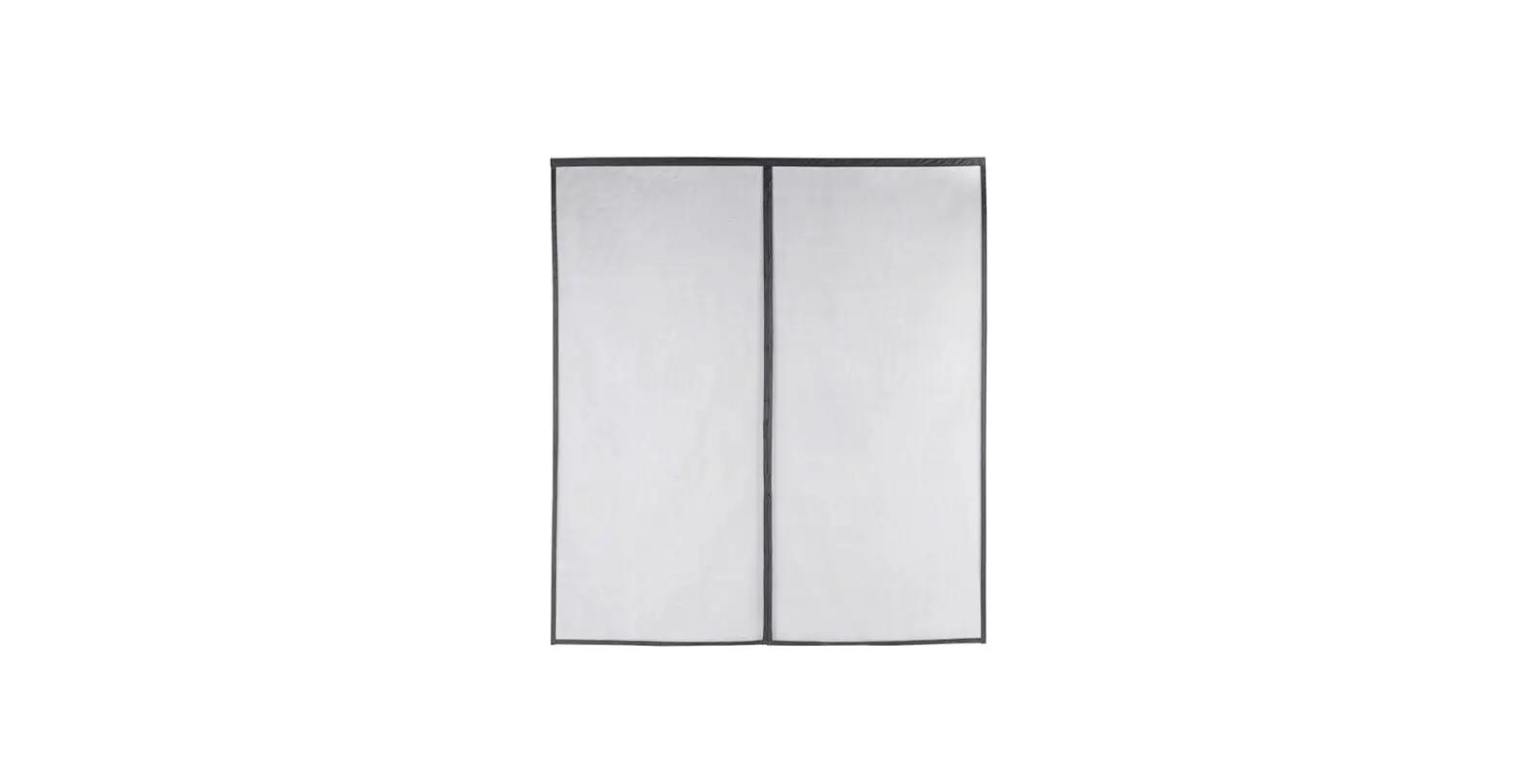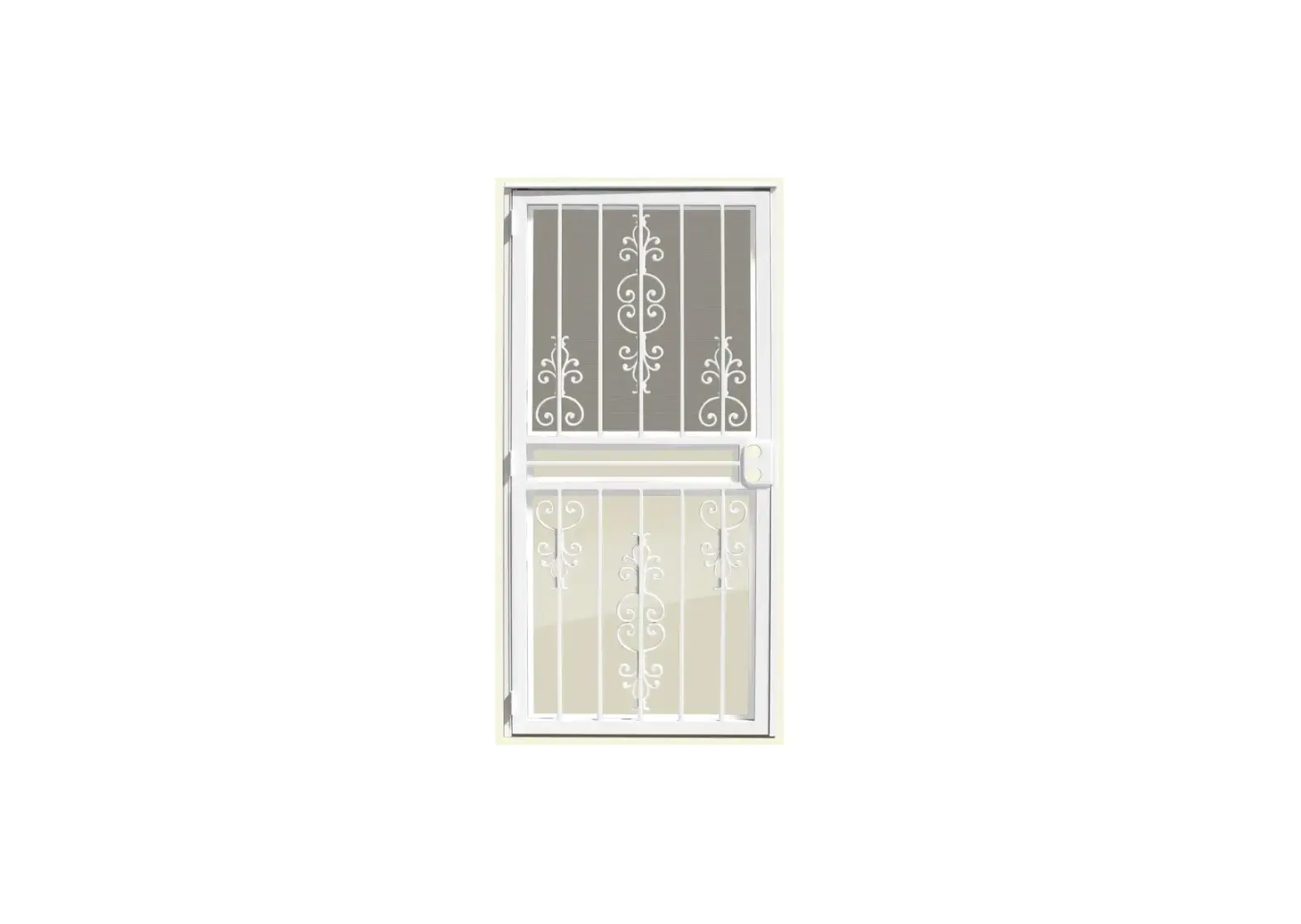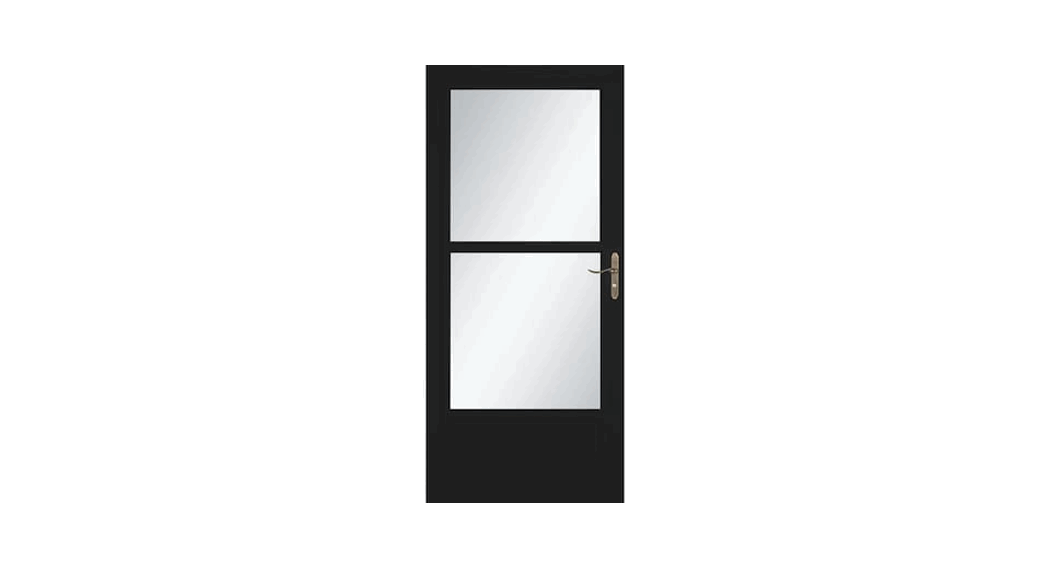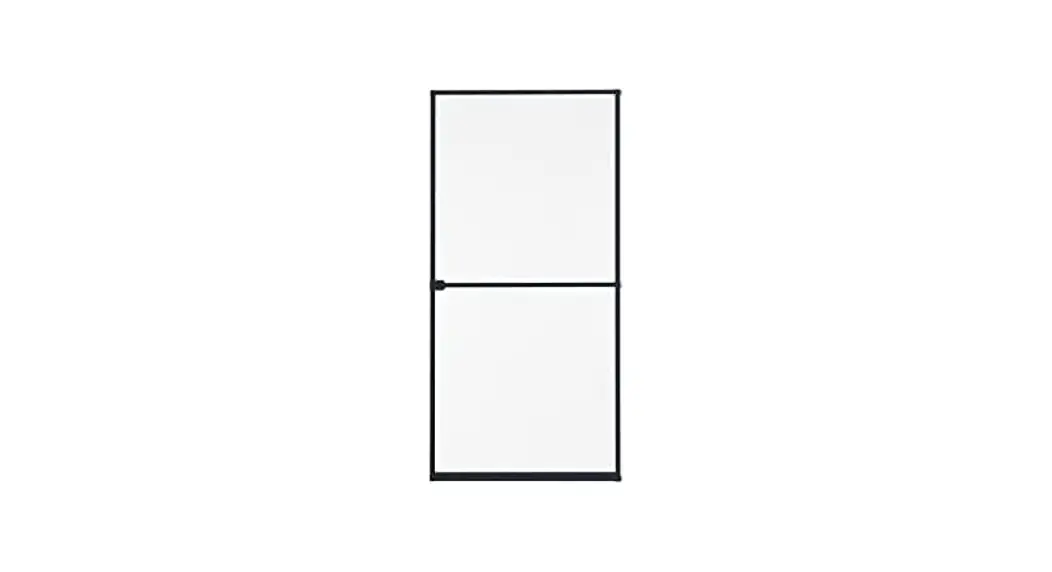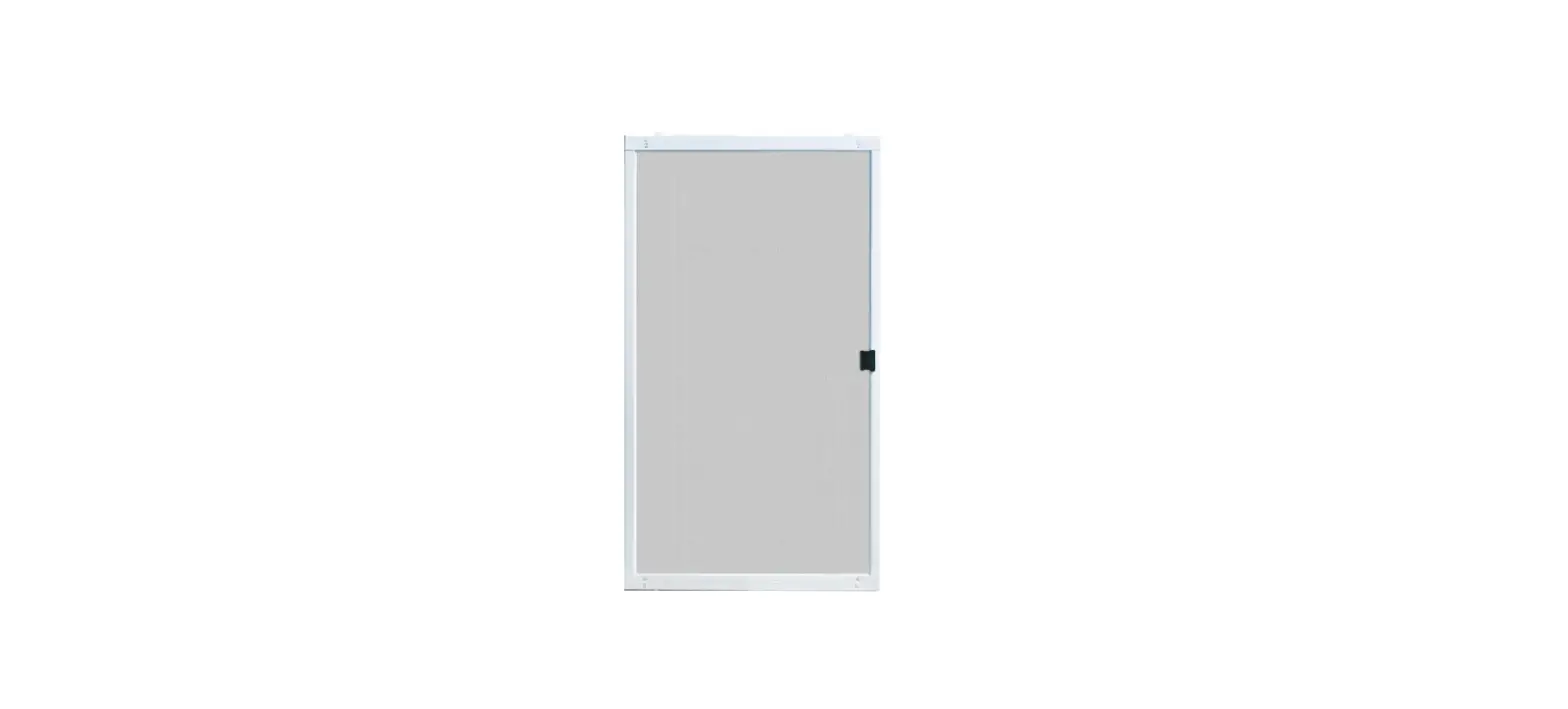

Unique Home Designs Standard Metal Patio Screen Door
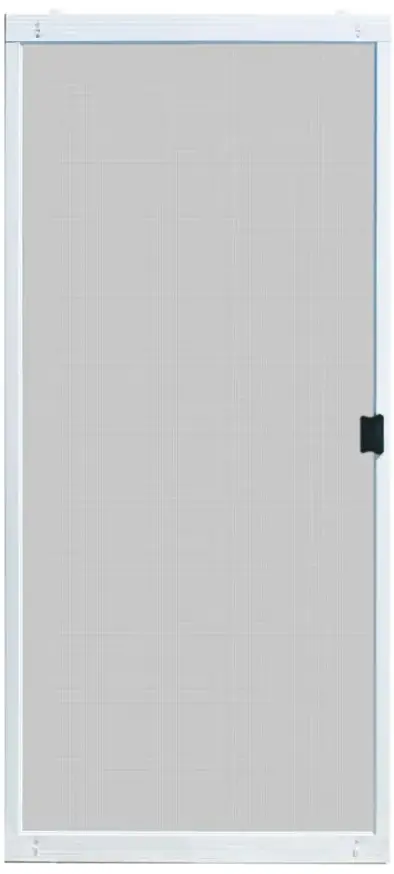
IMPORTANT: Replacement screen door fit range
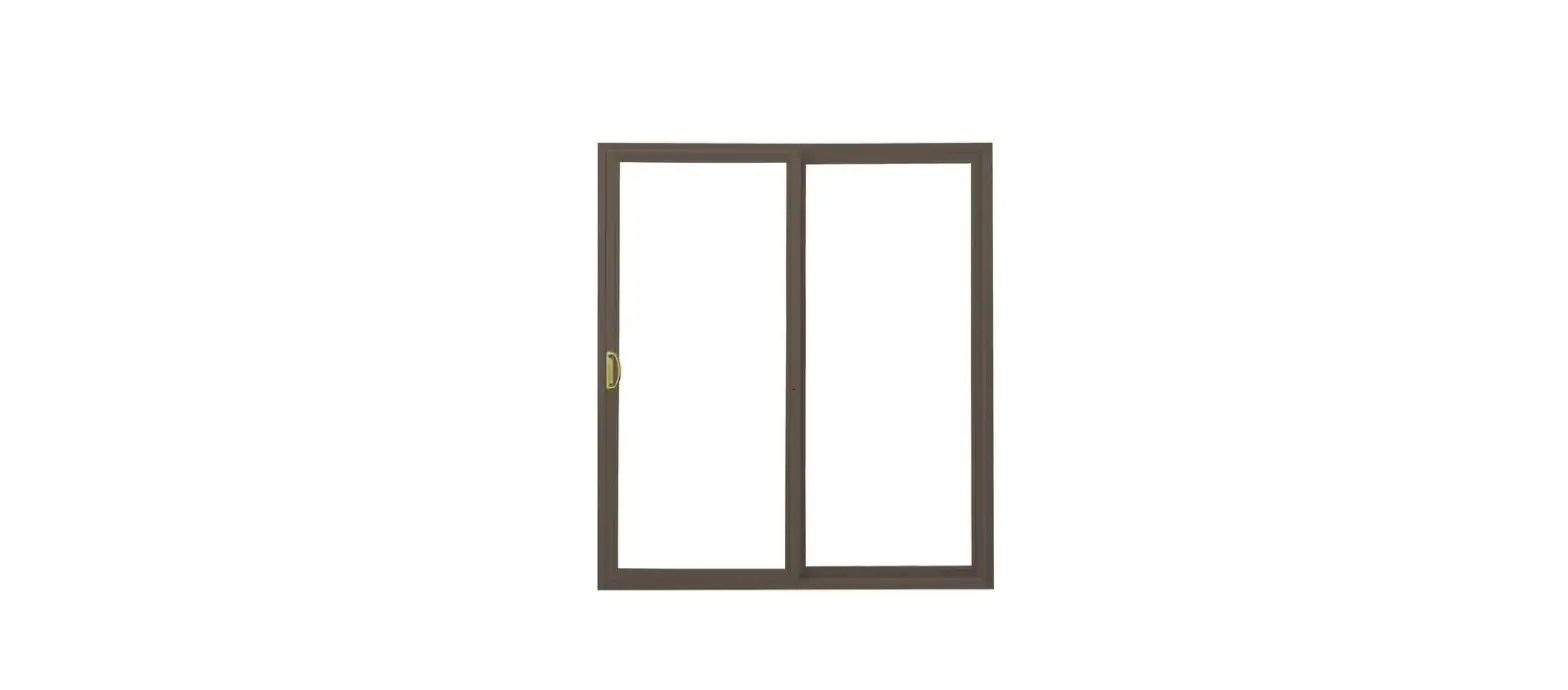
Be sure you have selected the proper replacement screen size according to your patio door dimensions.
- 30″ x 80″ screens fit most common 5′ wide x 6’8″ high doors
- 36″ x 80″ screens fit most common 6′ wide x 6’8″ high doors
- 48″ x 80″ screens fit most common 8′ wide x 6’8″ high doors
This screen is adjustable in height only.
- Height Fit Range: 77-5/8″ up to 80″
NOTE: DO NOT ATTEMPT TO CUT OR MODIFY THE REPLACEMENT SCREEN FRAME!
Tools & Hardware Required
Tools required
- Phillips-head screwdriver
Optional tools
- Slotted screwdriver
- Tape measure
- Level
- Utility knife
- Pencil
- Safety glasses
- Step stool
- Putty knife
- Scissors or Sheet metal snips
Hardware provided
- Complete Door Latch Assembly
- Surface Mount Pull Handle
- Screws
- Plastic top guides
- Bug plugs (4)
- Latch shims (3)
NOTICE: Not intended to limit or prevent passage of children, pets, etc., or to deter vandalism or burglary.
INSTALLATION INSTRUCTIONS
Sliding screen door preparation and orientation
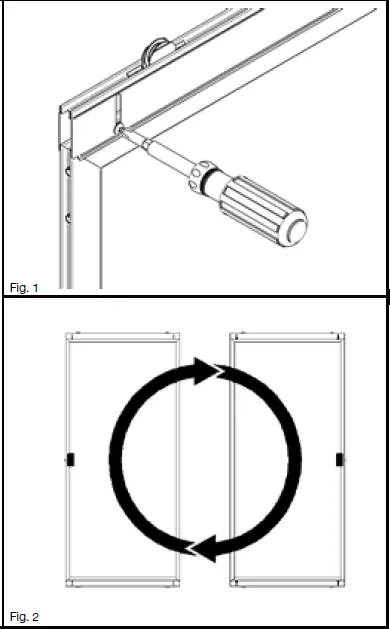
- Loosen both top and both bottom expander channel screws (Fig. 1). Fully retract both expanders (setting the patio door to it’s smallest possible height) and tighten the expander screws. Determine which way the sliding screen panel should slide. The handle side of the new sliding screen panel should be the same as the sliding glass door. The screen latch release should face toward the inside of your home. Carefully remove the vertical bug sweep from the nonhandle side of the screen door. Set aside.
- To reverse which side the handle is on, cartwheel the sliding screen panel 180° (Fig. 2).
Determine type of top frame sill track
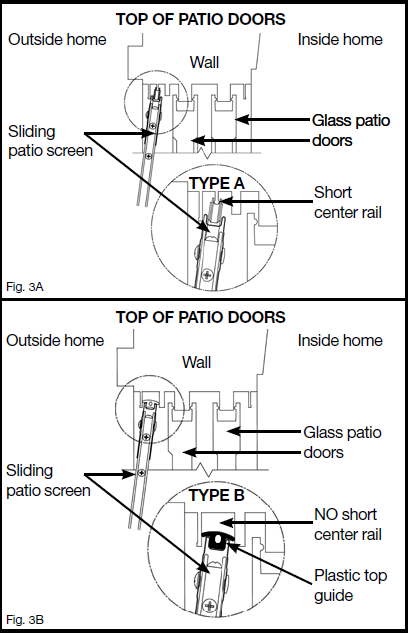
- If frame sill track configuration looks like Type A with a short center rail, insert top of sliding patio screen into patio door frame and engage top rollers on the center rail. (Fig. 3A)
- If frame sill track looks like Type B without a short center rail, use a Phillips-head screwdriver to removethe top roller assemblies by removing the 2 screws that attach each wheel assembly to the screen door frame. Install plastic top guides provided into the channel on top of the screen door frame near each corner. Insert top of sliding patio screen door into the top frame sill track. If the plastic top guides are too wide for the pocket, carefully trim excess from each side of each plastic top guide using scissors or sheet metal snips. You may safely trim up to 1/8″ from each side of the clip. (Fig. 3B)
Install sliding patio screen door in patio door track
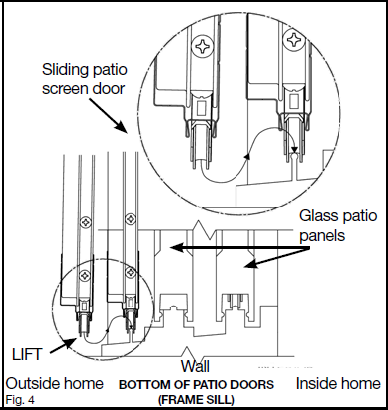
- Place the top of the patio screen door into the top sill track of the patio door. Lift the bottom of the sliding screen door into the bottom sill track of the patio door. This may be a tight fit. If so, slip a putty knife under one wheel assembly, compress the assembly, and lift that side of the screen door into the track. Repeat for the other wheel. Ensure that the wheel rests on the guide rail in the patio door sill track, if applicable. (Fig. 4)
Adjust sliding patio screen door height
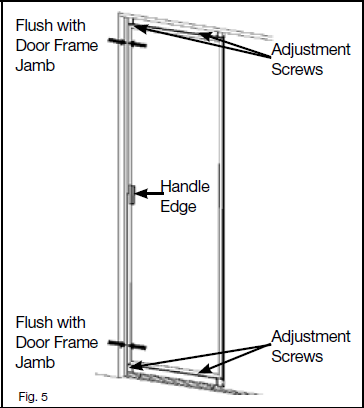
- For most applications, the height of the door will require adjustment. This may require adjusting the top, bottom, or both expanders. Start with the top expander. Loosen a top expander screw using a Phillips-head screwdriver.
- Use a flat head screwdriver at the edge of the door as a lever to extend the expander until it is fully engaged in the top sill track of the patio door. Tighten the expander screw. Repeat for the other top corner of the sliding patio screen door. If the top of the door is still not fully engaged in the patio door sill track, repeat this adjustment at each bottom corner of the patio screen door to increase the height of the screen door until it fully engages in the patio door top sill track.
- Test to check if the door slides smoothly. If not, make small adjustments to each corner of the bottom expander until satisfied. (Fig. 5)
Install and trim the bug sweep
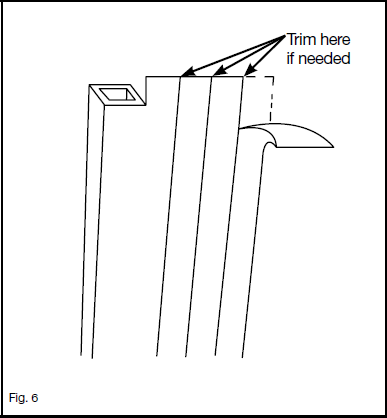
- Press the bug sweep back into the door frame in the channel opposite the handle side. If bug sweep is too long for the installed height of the patio screen door, carefully trim excess with a utility knife. When the screen is closed, the bug sweep should fit snugly against the stationary glass panel of the patio door. If bug sweep is too wide, impeding the operation of the screen door, carefully trim excess along the grooves provided. (Fig. 6)
Latch alignment and adjustment
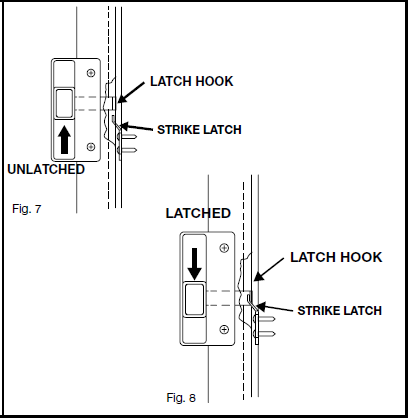
- Place screen handle latch bar in uppermost “unlatched” position.
- Place strike latch at frame jamb. Align top of strike latch slightly below latch hook as shown in (Fig. 7). Mark screw hole locations.
- Attach strike latch to frame jamb and test latch engagement by sliding handle latch bar downward (Fig. 8).
If the strike latch will not catch the sliding patio door handle latch bar, add shim(s) provided underneath the strike latch until it catches.
Installing the bug plugs

If space around each expander screw allows, install the 4 bug plugs provided in the hardware bag by pressing into adjustment screw holes on the expanders at TOP and BOTTOM of the patio door. (Fig. 9)
Warranty Information
Your Unique Home Designs screen door is warranted against manufacturer defects for one year from the purchase date. If the door breaks or structural defects occur, Unique Home Designs will, at our discretion, repair or replace the door. Replacement items may vary in style due to changes in suppliers and product. This limited warranty will not apply if the part has been misused, abused or altered. Cutting parts not specified by the installation guide or parts drilled incorrectly are not included in this warranty. Screen material is excluded from warranty coverage. Warranty is not transferable. To make a claim under this Warranty, send a brief written description of the problem, a picture of the claim, proof of purchase, and your contact information to: Unique Home Designs, 973 N. Colorado Street, Gilbert AZ. 85233 Attn: Warranty Claims.
VIEW INSTALLATION VIDEOS AND LATEST INFORMATION AT: helpmeinstallit.com