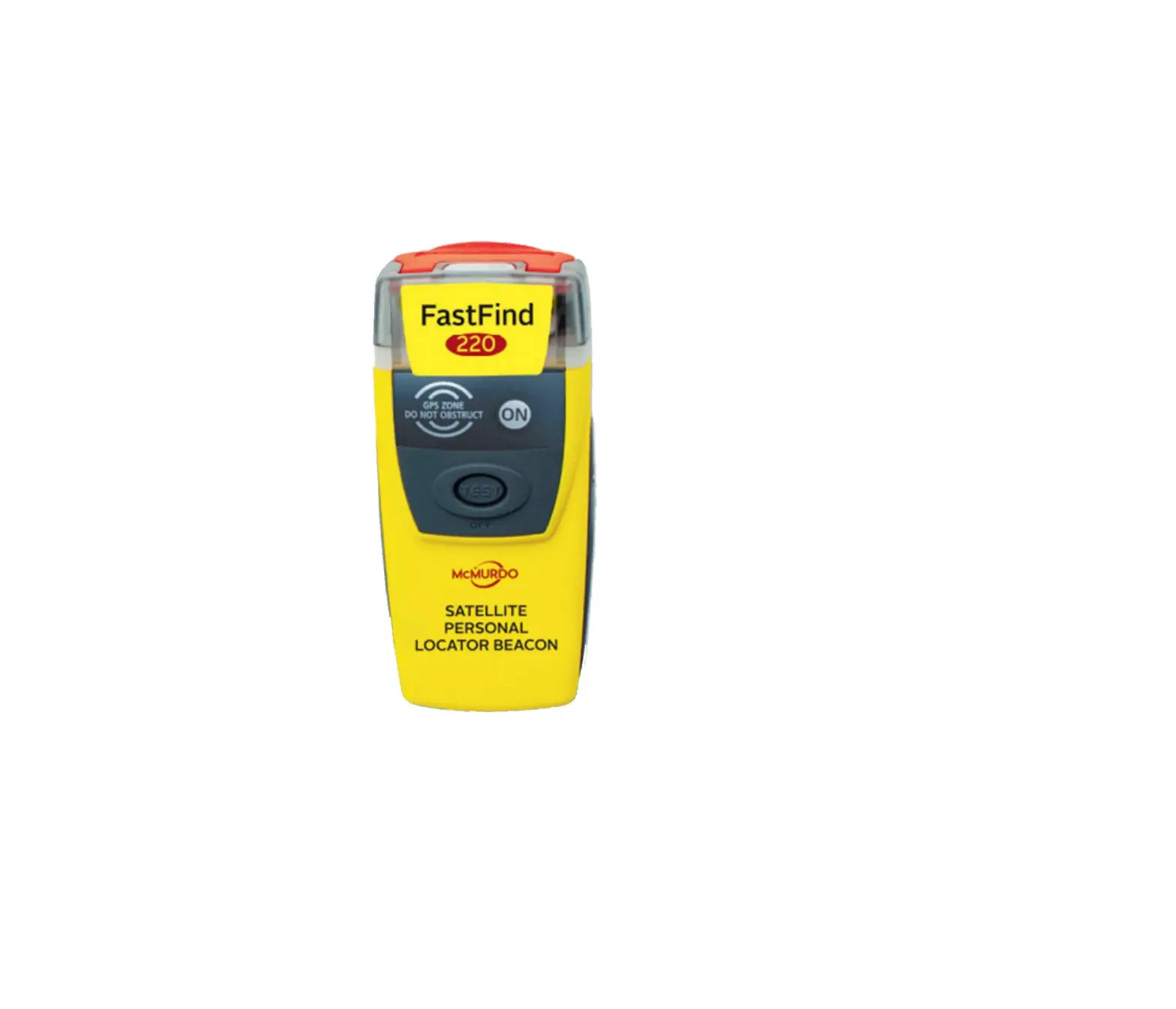
 McMurdo 91-001-220A-C FAST FIND 220 Personal Locator Beacon
 McMurdo 91-001-220A-C FAST FIND 220 Personal Locator Beacon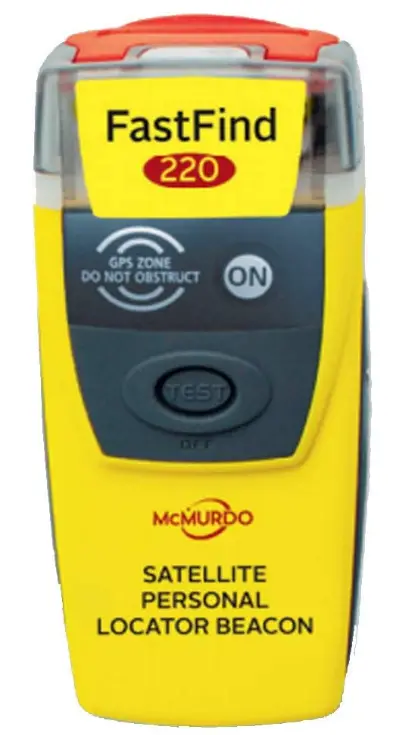
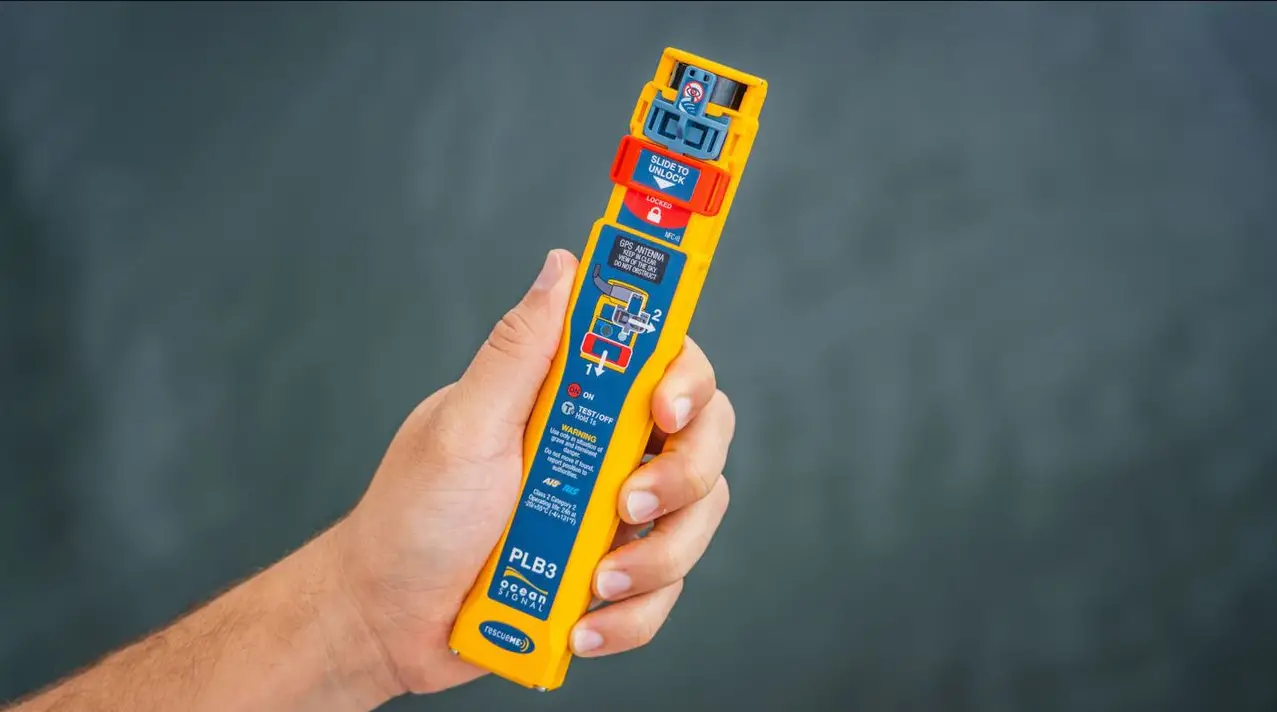
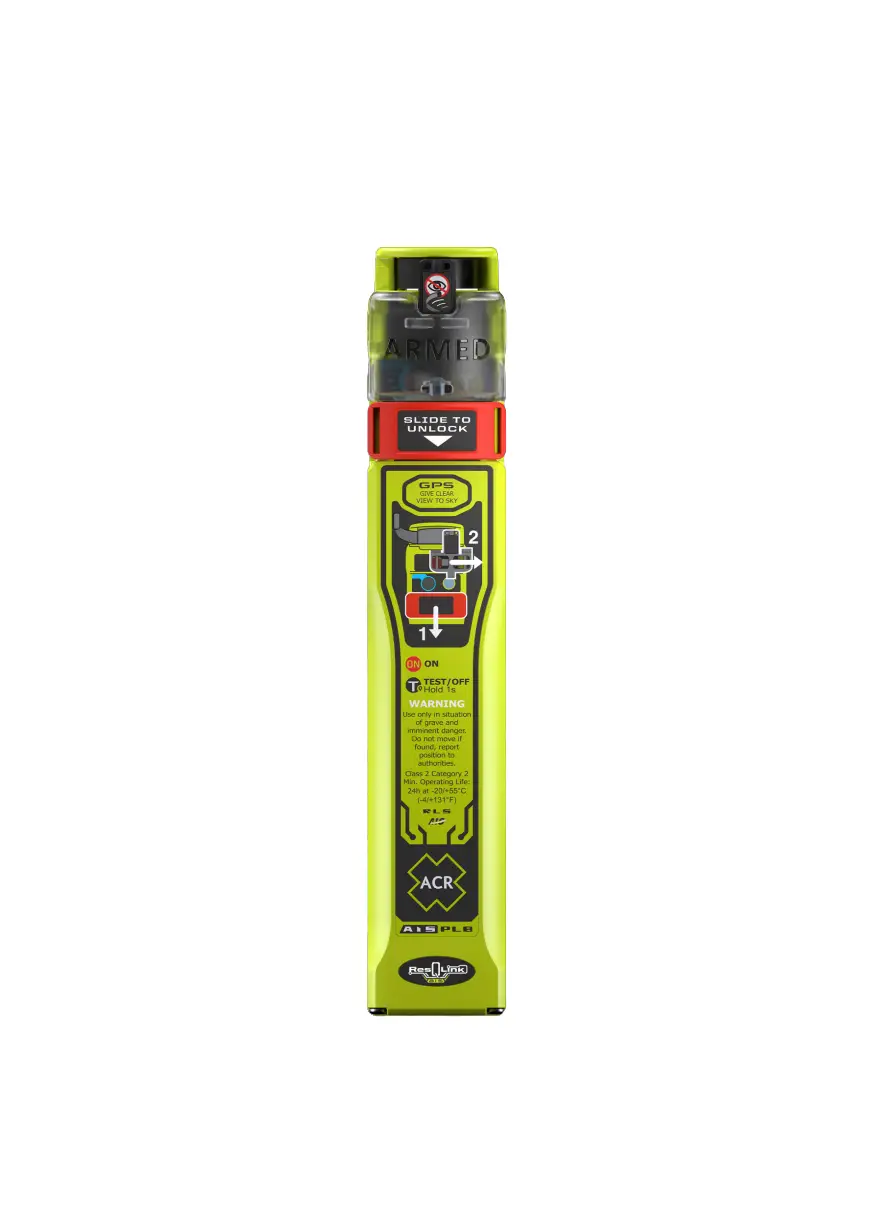
In the event of an emergency, on land or at sea, a personal location beacon (PLB) alerts search and rescue services and enables them to locate you quickly
| ONLY IN EMERGENCY FALSE ALERTS ENDANGER LIVES | 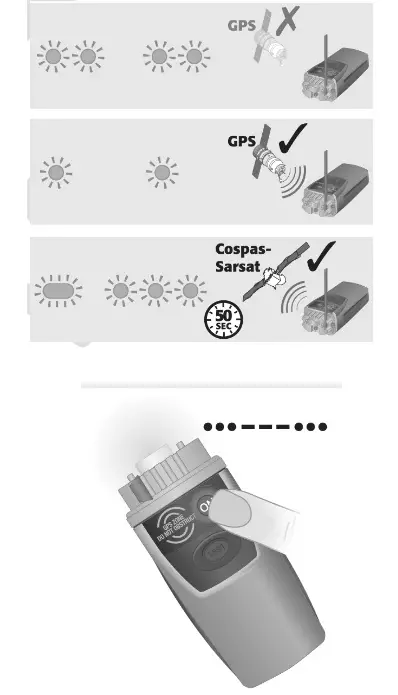 |
| ONLY PULL IN AN EMERGENCY Pulling breaks the plastic anti-tamper seal that cannot be reset by the user. |
|
|
HOLD
MAINTENEZ LE DECLENCHEUR
MANTENER | |
|
ORDER NEW CAP
COMMANDEZ UN NOUVEAU CAPOT
PIDA UNA NUEVA TAPA |
|
SAFETY NOTICES
It is recommended that the Self-Test is performed once a month in the limit of 10 tests per year – unnecessary testing reduces battery life in the event of an emergency. Return the unit to a service center for battery replacement if battery level is low (single flash in Self-Test mode).
- Confirm that the battery expiry date shown is in date for the duration of intended use.
- Transmission of the first emergency alert message occurs 50 seconds after the unit is activated. This allows time for the unit to be switched off before the rescue services are alerted if accidentally activated.
- For optimum transmission, the antenna must be pointing vertically upwards at all times.
- Do not hold the antenna.
- Fit the lanyard through the eye hole in the base of the unit and fasten securely to your clothing.
- The unit will not float without the buoyancy pouch.
- The unit is not designed to float in an upright position or transmit a distress alert when floating in water. Once activated it must always be kept above water, as direct contact with the sea will severely reduce the transmission range.
- Ensure that the area marked “GPS Zone” is not obstructed or covered in any way and always has a clear view of the sky.
- In strong winds, turn the unit so the indicator light faces into the wind.
INDICATOR LIGHT
As soon as the PLB is activated, the indicator light will start to flash:
- Two flashes every second indicates the unit is activated and is attempting to acquire a GPS position fix.
- One flash every 3 seconds indicates that a GPS position fix has been acquired.
- A long flash followed by three rapid flashes every 50 seconds indicates that the PLB has transmitted a distress signal along with the current GPS position.
While the PLB is active, pressing the ON button again will cause the indicator light to flash a Morse code SOS pattern. This can be used to attract attention in low light conditions. The SOS pattern is repeated four times each time ON is pressed.
NOTE: To conserve battery life a maximum of 30 presses is allowed, after which this feature is disabled.
CAUTIONS
ACTIVATE ONLY IN AN EMERGENCY
- This PLB should only be used in SITUATIONS OF GRAVE AND IMMINENT DANGER to life.
- False alerts endanger lives and cause expensive disruption to Search & Rescue services. Deliberate misuse of the device could result in a penalty.
- Spring action antenna. Mount and deploy in such a way as to avoid eye injury.
- Product and battery pack contain no user-serviceable parts. Do not dismantle.
- Contains lithium batteries. Do not incinerate, puncture, deform, short-circuit or recharge.
- Avoid cleaning the unit with chemical solvents as this may damage the case material.
- Radio Licensing. This product is a radio transmitter. Although US and UK owners are not required to hold a radio license to operate a PLB on land, some administrations may require that the user holds a valid radio license to cover its ownership and use.
- This product emits low levels of radio frequency energy during operation. Avoid handling the antenna once activated.
- The unit will not float if removed from the buoyancy pouch, fit a lanyard restraint when near water to avoid loss.
- The top cap is fitted with an anti-tamper seal which is broken on activation of the unit and must then be replaced. A new cap should then be fitted and the battery has to be replaced following any operation other than a Self-test or a GNSS Test.
- For future servicing by a service center, keep the original packaging for transportation.
- False alarm: If the unit has been accidentally activated or you are no longer in danger prior to the arrival of the rescue services, switch off the unit and contact the relevant rescue services as soon as possible to provide the following: 15-Hex ID, date, time, duration and cause of false alarm, location at the time of activation.
SELF TEST
These Self Tests verify all key functions of the PLB including the remaining battery life and transmitter operation. Please refer to the end of Section 1 to identify your beacon’s variant.
WARNING: only self-test in the first five minutes of the hour.
NOTE: The TEST button must be pressed hard to activate – if necessary, use a blunt object such as a pencil.
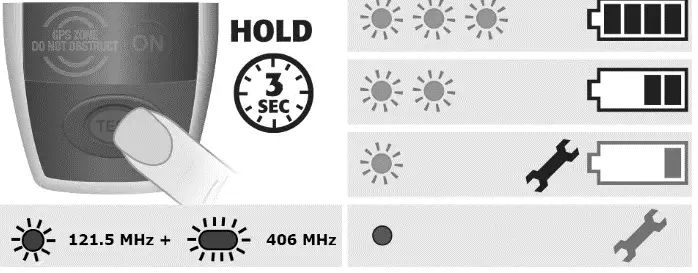
- Press the TEST button for 3 seconds and release it. The indicator light flashes once after release.
- After a few seconds, there will be one short flash for 121.5 MHz homing signal transmission and one long flash for 406 MHz test signal transmission.
- At the end of the test, there will be a sequence of flashes.
- The PLB will switch off after the test is completed.

GNSS SIGNAL ACQUISITION TEST
IMPORTANT: To preserve battery life, a maximum of 10 GNSS Tests are permitted during each battery’s 6 year storage life, after which further GNSS Tests are prohibited until the battery is replaced.
- Please refer to end of Section 1 to identify your beacon’s variant.
- Begin this test indoors, out of view of the open sky.
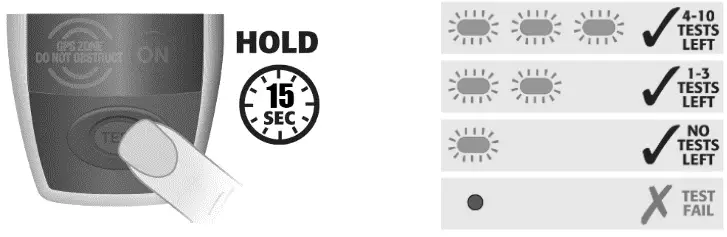
- To start the GNSS Signal Acquisition Test, press and hold the TEST button again for 15 seconds until the indicator light will start flashing slowly, indicating that the GNSS is searching for a signal. Then, release the TEST button.
- Move outside so that the PLB now has a clear view of the sky.
- Ensure GNSS Zone on unit is not obstructed.
- Unit will flash slowly until GNSS fix is acquired. When no GNSS Test remains, the unit will only flash once a single long flash and the PLB will switch off without performing the GNSS Test.
- A series of long flashes indicates a successful GNSS fix and the number of GNSS tests remaining.
- If no GNSS fix is acquired after 5 minutes, the test will fail and the indicator light will stop flashing.

SPECIFICATION
- STANDARDS: COSPAS-SARSAT T.001/T.007 class2, RTCM 11010.2, ETSI EN 302152-1, AS/NZS 4280.2, NSS-PLB11
- SEALING DEPTH: Immersion to 10 m (30 ft) for 5 minutes
- OPERATING TEMPERATURE: -20 to +55 °C (-4 to + 131 °F)
- STORAGE TEMPERATURE: -30 to +70 °C (-22 to +158 °F)
- ALTITUDE: 12,192 m (40,000 ft)
- BUOYANCY: Category 2, will not float (keep in buoyancy pouch provided)
- BATTERY TYPE: Lithium Manganese
- TRANSMIT DURATION: > 24 hours @ -20 °C (-4 °F)
- BATTERY LIFE (STORAGE): 6 years
- BATTERY REPLACEMENT: Service center
- BATTERY USE: Logged by microprocessor
- TRANSMITTER FREQUENCY:031 MHz (alert) / 121.5 MHz (homer)
- TRANSMITTER POWER: 5 W (alert) / 50 mW (homer) nominal
- UNIQUE ID NUMBER: Factory or dealer programmed
- GNSS RECEIVER: GPS(L1)+GALILEO(E1), 72 channel, ceramic patch antenna
- SIZE (D X W X L): 34 x 47 x 106 mm (1.34 x 1.85 x 4.17 in)
- WEIGHT: 152 g (5.36 oz)
- INDICATOR LIGHT: High brightness LED signal light
- SOS FLASH LIGHT: Morse code SOS flash pattern, 30 operations
- ACTIVATION: Manual, three stage
- SELF-TEST: Tests transmitters, battery and light
- STANDARD COMPASS SAFE DISTANCE: 1 m (3 ft)
- WARRANTY: 1 year (+ 4 years with online registration)
This PLB will not float unless held in the buoyancy pouch provided. A PLB is not an ELT or an EPIRB and does not meet the regulatory requirements for an ELT or an EPIRB.
REGISTRATION INFORMATION
Registration of the PLB with the relevant national authority is mandatory. For further information applicable to your region refer to the information on the registration form provided and the annex at the end of this manual.
Some national authorities provide the registered user with a label which must be fitted to the rear of the PLB as proof of registration.
Failure to register the PLB is illegal and could delay a Search & Rescue response.
Some national authorities require a completed registration application form to be submitted by letter or fax, others offer an online registration. For more information, visit the emergency beacon registration database IBRD at www.406registration.com and also at www.cospas-sarsat.org. The addresses of the national authorities are listed in the annex at the end of this manual.
Sale or transfer: The new owner must file a new user registration. Should the country hosting the user registration also change then the PLB will need to be re-programmed by a service agent.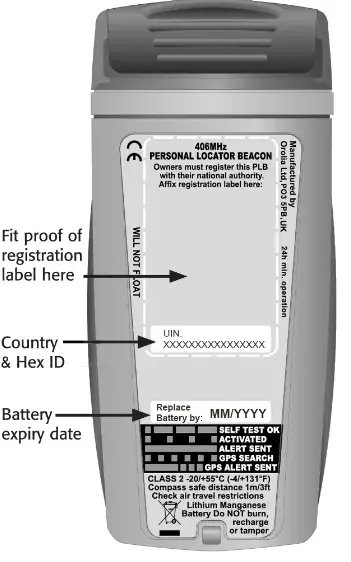
ACCESSORIES
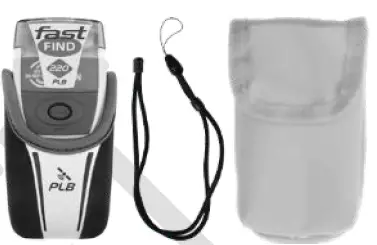
Included with your Fast Find 220 PLB are:
- A buoyancy pouch (float pouch)
- A neck lanyard (not to scale)
- A universal pouch
TRANSPORTATION
- The product contains a lithium metal battery with a lithium content exceeding 2 g and a total net quantity of 0.068 kg. It is classified as dangerous goods for transportation purposes: Class 9, UN3091, Lithium metal Batteries Contained in Equipment.
- Transport by air: the product cannot be carried on a passenger aircraft either as carry-on or checked in baggage. For transport by air, the product must be packaged and shipped as cargo via a qualified dangerous goods shipper. Packing instruction P970 Section 1 applies.
- Transport by sea: It may be possible to carry the product in a private vehicle or as carry-on baggage – this must be checked with the ferry company/shipping line prior to travel. If this is not allowed, the product must be packaged and shipped as cargo via a qualified dangerous goods shipper. Packing instruction P903 applies.
- Transport by road: The transport of dangerous goods regulations do not apply to items carried in a private vehicle for personal use. Product being transported by courier/road haulier must be packaged and shipped as cargo via a qualified dangerous goods shipper. Packing instruction P903 applies.
FAQs
It is a one-time use? If yes, then after using what do you do with it? Send it back to manufacture or just throw it in the garbage?
I believe you would send it back to the manufacturer for a battery replacement. This service is recommended after about 5 years anyway to ensure you have good batteries. Then it can be used an additional 5 years before it is retired. Hopefully, if you ever need to use the device to summon a rescue, you won’t be worried about the cost of a battery replacement.
How easy would it be to accidentally activate the beacon, thanks.
Not very easy. You have to deliberately remove the top first. I have never had a problem in two years. I carry it in my backpack.
how do you make sure the battery doesn’t die while you’re out on a hike?
Unless you push the “SOS” button, the power is off.
Is there any service fee or any monthly cost ?
There are no monthly fees, you just need to register the device. It is strictly for rescue only–not like some beacons that allow you to send out an I’m OK ping. The battery is supposed to last 6 years.
How much does it cost for sending the item back to manufacture to replace battery?
Find out in 7 years.
Can I register this device in Europe? in one of the answers it is said that “a beacon purchased in the USA only can be registered in US”
If you buy the device listed on Amazon.com it will be programmed with a US country code and can only be registered in the US. If you wish to register in Europe you will either need to buy the same device on an EU Amazon site or have the one you buy in the US reprogrammed. The device will work worldwide regardless of where you buy and register.
When were these units manufactured?
I know the one I purchased last fall has date of manufacture on it (and was recent), but I also know I spent quite a bit more for mine than some being sold on Amazon, and people asking why battery life stated is conflicting. My guess would be over runs, then sitting in warehouses running out battery time.
Does it have built-in GPS ?
Go to the McMurdo website it tells you it transmits a unique code and GPS coordinates. Go to the rei website and says the same thing and mentions the built in GPS.
if registered in USA will it work in Canada?
Yes these devices have international coverage.
Can I replace the battery myself?
No, the unit must be returned to the manufacturer to have the battery replaced.
Regarding maintenance, what is the current battery replacement cost/fee by the manufacturer?
Find out in 7 years.
Does this have to be turned on to give location? If someone is unconscious and did not get to turn it on, will I still get location?
If someone is unconscious and did not get to turn it on, will I still get location? You won’t get the location regardless of whether it is on or off. When activated by the user the unit broadcasts its’ location on the emergency radio frequencies that are monitored by various authorities (and passing airliners).
Where is this made?
This is made in the UK.
Is it strictly for marine use or can I use it for hiking in the mountains also?
while primarily used in the marine environment as evidenced by the fact that NOAA administers the database and receives the distress ping, yes it can be used anywhere. I primarily use mine in the mountains also as a signal is treated as an emergency distress signal once received by NOAA and if on land they will contact the appropriate sheriff and/or search and rescue to begin facilitating the rescue. This coupled with the onetime cost is why I prefer it over the “SPOT” locater as agencies can and do occasionally treat those signals as missing persons and don’t necessarily put the urgency on the signal as a true EPRB.
how close does the signal get search & rescue to your position?
They are accurate as GPS, so under normal conditions – you have reasonable visibility to the sky, within a few meters. In addition it broadcasts a homing signal at 121.5 MHz, the aircraft guard frequency. A USCG helo carries VHF position locating gear for that frequency, so they can home in on a signal in the last few 1000 yards(meters).