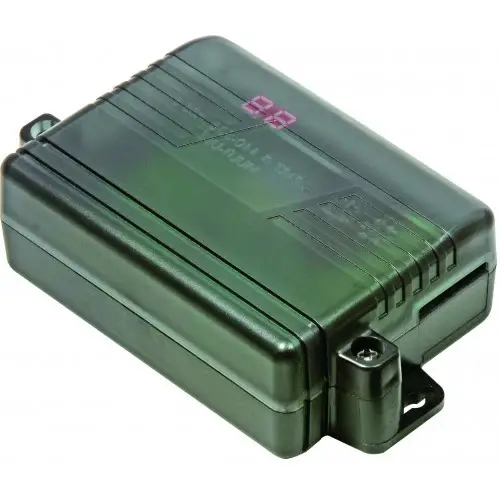
PRC-4090 Tactical HF SDR Transceiver
Product Information: Product Name: BARRETT PRC-4090 TACTICAL
HF SDR TRANSCEIVER Product Type: Tactical HF SDR Transceiver
Installation Manual: BARRETT PRC-4090 TACTICAL HF SDR TRANSCEIVER –
INSTALLATION Supported Configurations: Manpack Installations
Product Usage Instructions: 1. Control Handset Mounting: The
PRC-4090 Control Handset can be mounted to webbing or molle using
the PRC-4090 Molle Attachment (P/N 4090-05-02). Follow the steps
below for mounting: a. Attach the PRC-4090 Molle Attachment to the
webbing or molle. b. The transceiver can be stored with the screen
facing outwards or reversed for screen protection. c. The Molle
Attachment can also be used to attach to solid surfaces. 2. Audio
Routing: When in a manpack configuration, all audio and microphone
options are active. The volume for both the PRC-4090 Control
Handset and the H250 handset is controlled by the PRC-4090 Control
Handset. 3. Battery Pack: The BARRETT PRC-4090 Tactical HF SDR
Transceiver uses a 16Ah battery pack (P/N 4090-03-05/BCA409005).
The battery pack is shipped with the battery cells isolated. Follow
the steps below to connect the battery cells for use: a. Ensure
that nothing is connected to the battery. b. Use a Philips head
screwdriver to remove the screws securing the isolator in place. c.
Remove the isolator. d. Turn the isolator 180 degrees and gently
replace it evenly in the socket, ensuring that “Battery Connected”
is now at the top of the isolator. e. Return the screws to their
original positions. The e-ink display will turn black. f. Connect
the charger to the battery to begin use. 4. Re-isolating the
battery: If you need to re-isolate the battery, follow the steps
below: a. Ensure that nothing is connected to the battery. b.
Remove the screws securing the isolator with a Philips head
screwdriver. c. Gently and evenly prise the isolator from the
socket. d. Turn the isolator 180 degrees and gently replace it
evenly in the socket, ensuring that “Battery Isolated” is now at
the top of the isolator. e. Return the screws to their original
positions. Note: It is important to follow the provided
instructions carefully for safe and proper usage of the BARRETT
PRC-4090 Tactical HF SDR Transceiver. For additional information on
AC/DC Input Universal Power Adaptor Unit and Tactical Solar Panel,
please refer to the installation manual (pages 117-119).
BARRETT PRC-4090 TACTICAL HF SDR TRANSCEIVER – INSTALLATION
Manpack Installations
When combined with a battery pack, the PRC-4090 easily adapts to suit manpack configurations. The Control Handset can be easily mounted to molle or webbing with a molle attachment.
112
BARRETT PRC-4090 TACTICAL HF SDR TRANSCEIVER – INSTALLATION
Control Handset Mounting
The PRC-4090 Control Handset can easily be mounted to webbing or molle using the PRC-4090 Molle Attachment (P/N 4090-05-02). The transceiver can be stored screen facing outwards or reversed so that the screen is protected. The Molle Attachment can also be used to attach to solid surfaces.
113
BARRETT PRC-4090 TACTICAL HF SDR TRANSCEIVER – INSTALLATION
Audio Routing
When in manpack configuration, all audio and microphone options are active as illustrated by the below images. Volume for both the PRC-4090 Control Handset and the H250 handset are controlled by the PRC-4090 Control Handset.
Control Handset · Control Handset mic and speaker
are enabled · Volume control via the Control
Handset
ON OFF
EMERG. Z
ON OFF
EMERG. Z
Control Handset and H250
· Control Handset mic and speaker are enabled
· H250 mic and speaker are enabled
· Volume control via the Control Handset
114
BARRETT PRC-4090 TACTICAL HF SDR TRANSCEIVER – INSTALLATION
Battery Pack
The Barrett PRC-4090 Transceiver can be powered in multiple ways. For manpack use, it has been designed to use the Barrett PRC-4090 16Ah Battery pack or external military battery. The PRC-4090 Battery Pack has an in-built charger/ battery management system. This battery pack can be charged in multiple ways as outlined over the following pages. With the battery pack fitted, the transceiver can be operated and the battery pack charged simultaneously when a DC input of between 10 V DC and 60 V DC is supplied to the unit. Additionally, the PRC-4090 battery pack can be charged connected or disconnected to the manpack using the AC/DC input universal power adaptor unit or directly from a 12 or 24 V tactical solar panel (MPPT charger fitted for optimised current input), or BB series military battery.
115
BARRETT PRC-4090 TACTICAL HF SDR TRANSCEIVER – INSTALLATION
Removing the battery isolator
The 16Ah battery pack (P/N 4090-03-05/BCA409005 ) is, by default, shipped with the battery cells isolated (see below). To use the battery, the cells must be connected. Follow the steps below to switch the isolator from”Battery Isolated” to “Battery Connected”.
Isolated
BATTERY ISOLATED
BATTERY ISOLATED
BATTERY ISOLATED
BATTERY ISOLATOR BATTERY CONNECTED
BATTERY ISOLATOR BATTERY CONNECTED
Connected
BATTERY PACK Li-ion BATTERY ISOLATED
0-5% 40-60%
5-20% 60-80%
20-40% 80-100%
CHARGE STATUS DC IN10-70 V
BATTERY ISOLATOR BATTERY CONNECTED
BATTERY PACK Li-ion BATTERY ISOLATOR BATTERY CONNECTED
0-5% 40-60%
5-20% 60-80%
20-40% 80-100%
CHARGE STATUS DC IN10-70 V
1. Ensuring that nothing is connected to the battery, use a Philips head screw driver to remove the screws securing the isolator in place, as shown opposite.
2. Remove the isolator.
116
BARRETT PRC-4090 TACTICAL HF SDR TRANSCEIVER – INSTALLATION 3. Turn the isolator 180o and
gently replace the isolator evenly in the socket, ensuring that “Battery Connected” is now at the top of the isolator.
4. Return the screws to their original positions. The e-ink display will turn black.
5. Connect the charger to the battery to begin use.
Re-isolating the battery
1. Ensuring that nothing is connected to the battery, remove the screws securing the isolator with a Philips head screw driver.
2. Using an appropriate tool, gently and evenly prise the isolator from the socket (see opposite).
3. Turn the isolator 180o and gently replace the isolator evenly in the socket, ensuring that “Battery Isolated” is now at the top of the isolator.
4. Return the screws to their original positions.
117
BARRETT PRC-4090 TACTICAL HF SDR TRANSCEIVER – INSTALLATION
AC/DC Input Universal Power Adaptor Unit P/N 2090-03-01
For operation from a mains voltage between 100-254 V AC sources:
118
BARRETT PRC-4090 TACTICAL HF SDR TRANSCEIVER – INSTALLATION
Tactical Solar Panel P/N 2090-03-02 or 03
119
BARRETT PRC-4090 TACTICAL HF SDR TRANSCEIVER – INSTALLATION
Military battery
The PRC-4090 can interface with off-the-shelf Military standard batteries such as BB series batteries. To interface with such batteries, the adaptor and interface cable are required.
Battery Charge Indicator of the 4090
120
BARRETT PRC-4090 TACTICAL HF SDR TRANSCEIVER – INSTALLATION
The e-ink display of the PRC-4090 Battery Pack displays five dots indicating battery charge levels:
Zero dots Solid 1 black dots Solid 2 black dots Solid 3 black dots Solid 4 black dots Solid 5 black dots
<5% 5%-20% 20%-40% 40%-60% 60%-80% 80%-100%
When charging the 4090 Battery Pack, the LED indication will animate. 5 running dots: Filling up 0 – 20% charge 1 solid dot and 4 running dots: 20% – 40% charge 2 solid dots and 3 running dots: 40% – 60% charge 3 solid dots and 2 running dots: 60% – 80% charge 4 solid dots and 1 dot blinking: 80% – 95% charge 5 dots: charge complete
The Control Handset display will also display the following icon when charging:
121
BARRETT PRC-4090 TACTICAL HF SDR TRANSCEIVER – INSTALLATION
Tactical Antenna Options
The PRC-4090 manpack can be used with the 10 metre throw over long-wire provided or the optional 3 metre collapsible whip. Note: Either the whip or the long-wire can be used but not both together.
Collapsible Whip Antenna (P/N 4090-02-07)
The gooseneck is fitted to the whip antenna stud and the whip to the gooseneck by bayonet fitting. The whip antenna should then be unfolded to its maximum height. If using the Barrett manpack while walking in the backpack configuration it is suggested that while in receive standby mode the collapsible antenna be only extended to half height and secured using the Velcro tab. When a call is received extend the antenna to full height before transmission. When using an un-tuned antenna such as the whip or the long-wire the selection “Antenna Type” (see page 24) in the standard menu should be used to enable the automatic tuner i.e. select “Whip/Long-wire” operation. When this is selected the in-built tuner automatically tunes the whip or long-wire whenever the unit transmits after a channel change. Note: Do not use the whip antenna near metallic structures. This can produce high voltages within tuner and may cause damage.
Whip
antenna fully extended
Whip antenna and adjuster
in suggested folded posi-
tion for receive operation while used as a manpack
122
BARRETT PRC-4090 TACTICAL HF SDR TRANSCEIVER – INSTALLATION
Throw Over Long-wire Antenna (P/N 4090-02-06)
The long-wire antenna should be unfurled and the end away from the manpack Transceiver should be attached to any structure available and as high as possible. When using an un-tuned antenna such as the whip or the long-wire the selection “Antenna Type” (see page 24) in the standard menu should be used to enable the automatic tuner i.e. select “Whip/Long-wire” operation. When this is selected the in-built tuner automatically tunes the whip or long-wire whenever the unit transmits after a channel change.
1
3
5 6
1 Balun 2 Spool 3 Cord 4 Weight 5 Antenna 6 Coaxial connector
2 4
123
BARRETT PRC-4090 TACTICAL HF SDR TRANSCEIVER – INSTALLATION
DIRECTION OF
45°
RECEIVING STATION
1
2
3
DIRECTION OF RECEIVING STATION
1 Antenna 2 Earth (ground) 3 PRC-4090 Transceiver (P/N 4090-00-01)
124
BARRETT PRC-4090 TACTICAL HF SDR TRANSCEIVER – INSTALLATION
DIRECTION OF RECEIVING STATION AT RIGHT ANGLES TO ANTENNA
1
3
2
1 Antenna 2 Earth (ground) 3 PRC-4090 Transceiver (P/N 4090-00-01)
125
BARRETT PRC-4090 TACTICAL HF SDR TRANSCEIVER – INSTALLATION
Single-wire Counterpoise (P/N 4090-02-09)
When using either a whip or the long-wire antenna use of the counterpoise supplied is recommended for better efficiency. This is connected to the PRC4090 via the ground post.
126
BARRETT PRC-4090 TACTICAL HF SDR TRANSCEIVER – INSTALLATION
Tactical Broadband Dipole Antenna (2090-02-03)
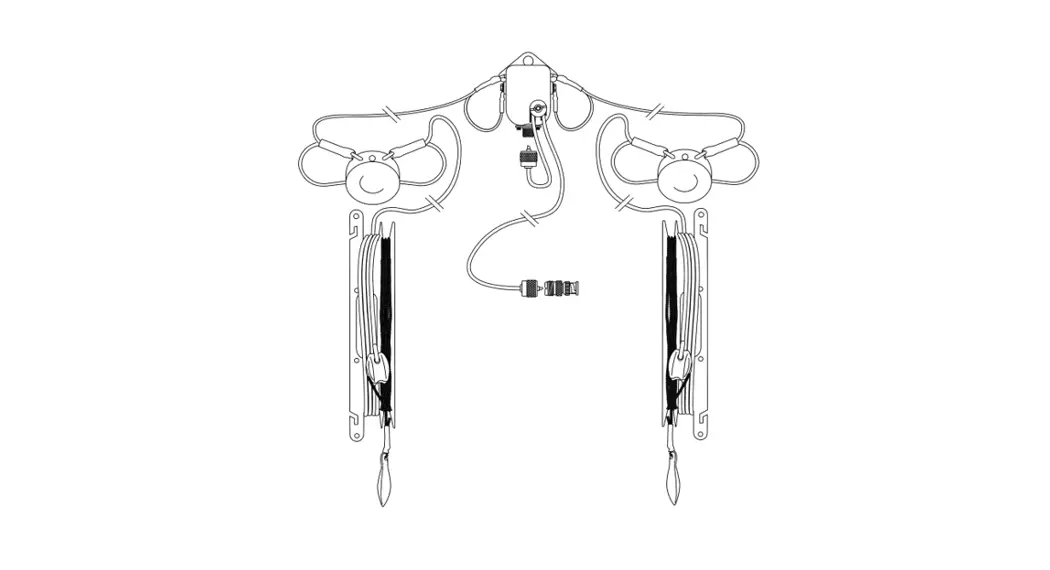
The Tactical Broadband Dipole Antenna is a dipole antenna with loading to allow broadband operation. For operation, each side of the antenna is unwound to its full length. Throwing cords are provided that can be used to elevate the antenna or tie it to ground for an inverted V configuration. The antenna will handle continuous data and CW transmission with a Barrett 30 W manpack transceiver. Only low duty cycle voice operation is supported for operation with 100 W transmitters. The antenna can be used in a number of configurations, depending on structures available for elevation.
Tactical Broadband Dipole Antenna Configurations
Horizontal Dipole The horizontal dipole has maximum gain on the broadsides of the antenna and reduced gain along the axis. Height above ground affects radiation angle. Lower heights give higher angle radiation, better for NVIS (short distance). Higher heights give lower radiation angle, better for long distance communication.
127
BARRETT PRC-4090 TACTICAL HF SDR TRANSCEIVER – INSTALLATION Inverted V The inverted-V has a more omni-directional pattern than the Horizontal Dipole, with lower maximum gain. The ends of the antenna should be at least 0.5 m above ground. Suitable mainly for NVIS and medium distance.
Sloping Dipole Radiation with the Sloping Dipole becomes more directional, with increased gain in the direction of the lower end of the antenna, and reduced gain towards the higher end.
128
BARRETT PRC-4090 TACTICAL HF SDR TRANSCEIVER – INSTALLATION Inverted U The inverted U has a radiation pattern between that of horizontal dipole and inverted V. For optimum performance, the radiating elements should be fully unwound, and should not touch the ground. Suitable for NVIS to medium distance. Longer distance performance will be enhanced by erecting the antenna at a height of 10 m or more.
129
6 Mhz
13 Mhz
8 Mhz
9 Mhz
BARRETT PRC-4090 TACTICAL HF SDR TRANSCEIVER – INSTALLATION
Tactical Tuned Wire Dipole Antenna (2090-02-01)
The Tactical Tuned Dipole Antenna is a tuned antenna with frequency labels to indicate tuned lengths. For operation, each side of the antenna is unwound to the tuned length for the frequency required. For operation at a labelled frequency, the label should be level with the end of the winder as shown in the picture below. Lengths for intermediate frequencies should be estimated and tied off appropriately. The remaining wire remains on the winder. The throwing cord can then be used to elevate the antenna. The antenna will handle 100 W continuous data and CW transmission. The antenna can be used in a number of configurations, depending on structures available for elevation.
Tactical Tuned Wire Dipole Antenna Configurations
Horizontal Dipole The horizontal dipole has maximum gain on the broadsides of the antenna, and reduced gain along the axis. Height above ground affects radiation angle. Lower heights give higher angle radiation, better for NVIS (short distance). Higher heights give lower radiation angle, better for long distance communication.
130
20Mhz
18Mhz
18Mhz
20Mhz
11Mhz
11Mhz
11Mhz
20Mhz
18Mhz
20Mhz
11Mhz
hz 18M
BARRETT PRC-4090 TACTICAL HF SDR TRANSCEIVER – INSTALLATION Inverted V The inverted-V has a more omni-directional pattern than the Horizontal Dipole, with lower maximum gain. The ends of the antenna should be at least 1 m above ground. Suitable mainly for NVIS and medium distance.
Sloping Dipole Radiation with the Sloping Dipole becomes somewhat asymmetrical, with increased gain in the direction of the lower end of the antenna, and reduced gain towards the higher end.
131
20Mhz
11Mhz 18Mhz
20Mhz
11Mhz 18Mhz
20Mhz
11Mhz 18Mhz
18Mhz
20Mhz
11Mhz
BARRETT PRC-4090 TACTICAL HF SDR TRANSCEIVER – INSTALLATION Single Ended For rapid deployment, with reduced but still acceptable efficiency, the antenna can be operated single ended. In this configuration, one side of the antenna (labelled “antenna”) is unwound to the desired frequency and tied to an elevated structure. The central balun should be located close to the ground, and the remaining side of the antenna (“earth”) partly unwound (5 to 10 m) and stretched out on the ground below the radiating element.
132