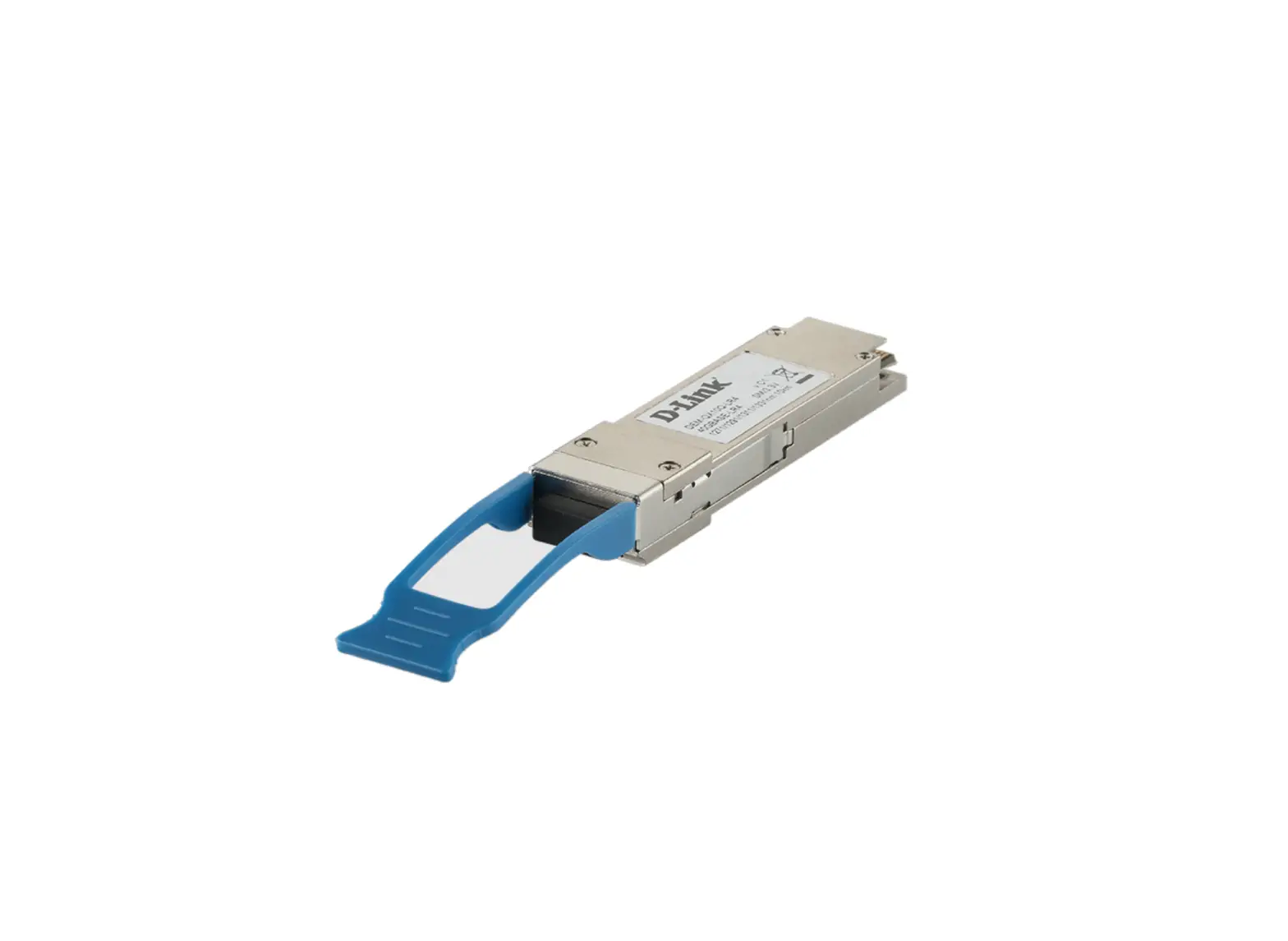
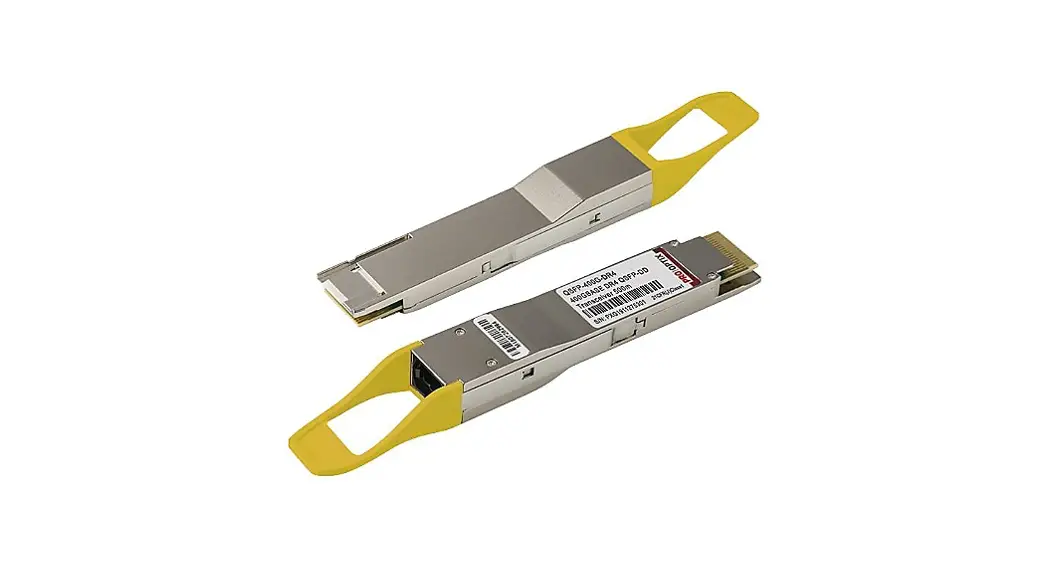
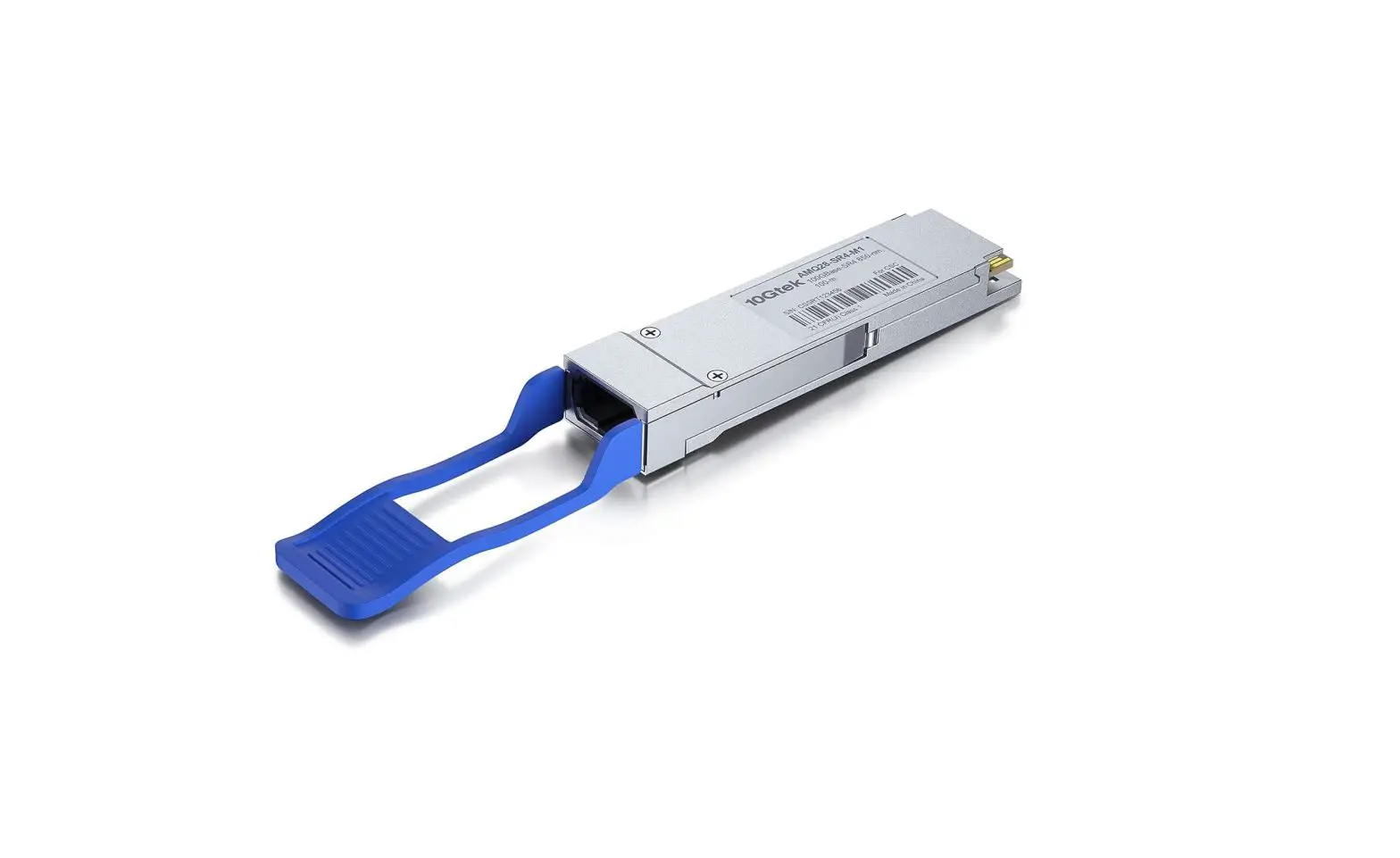
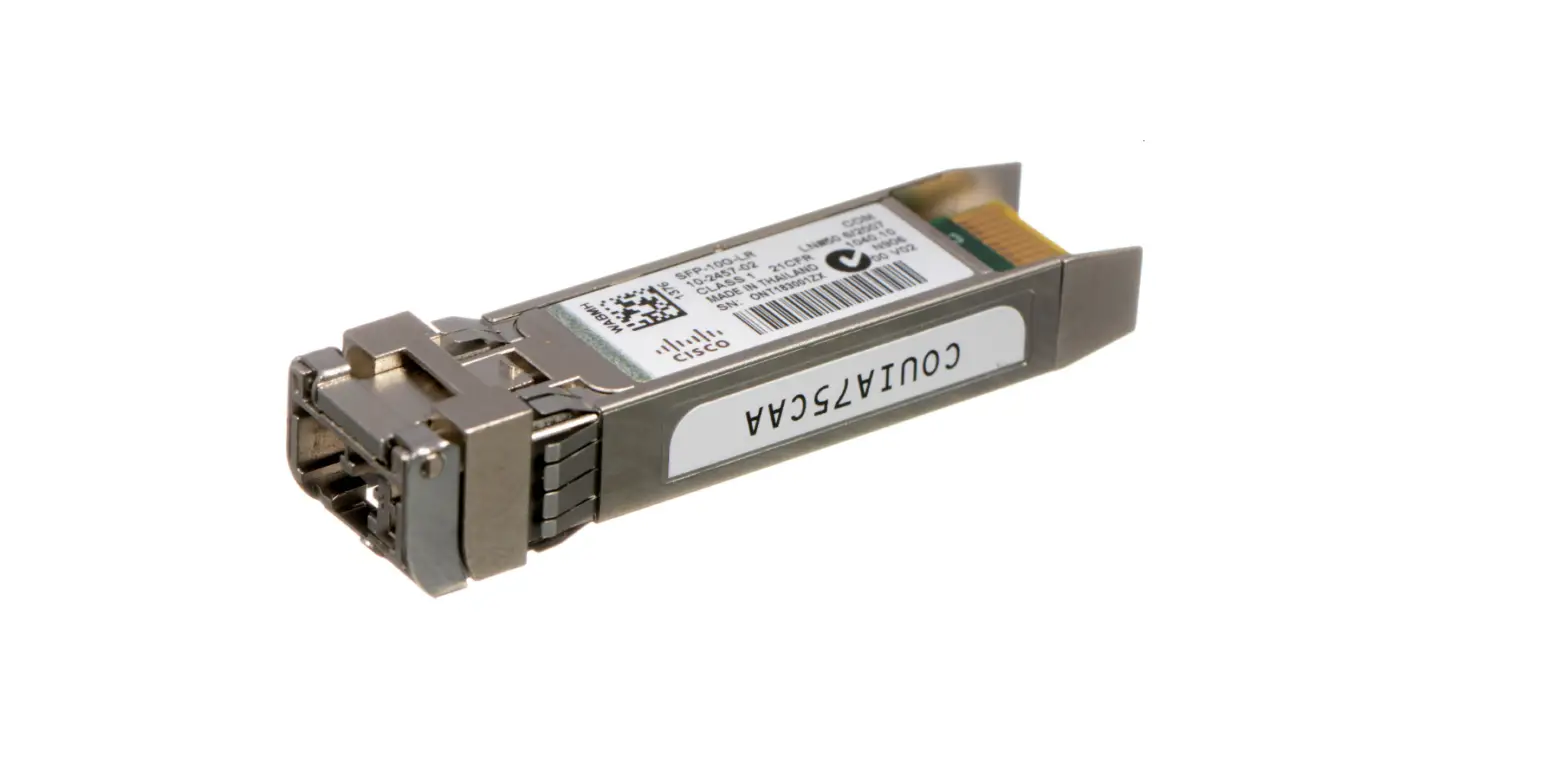
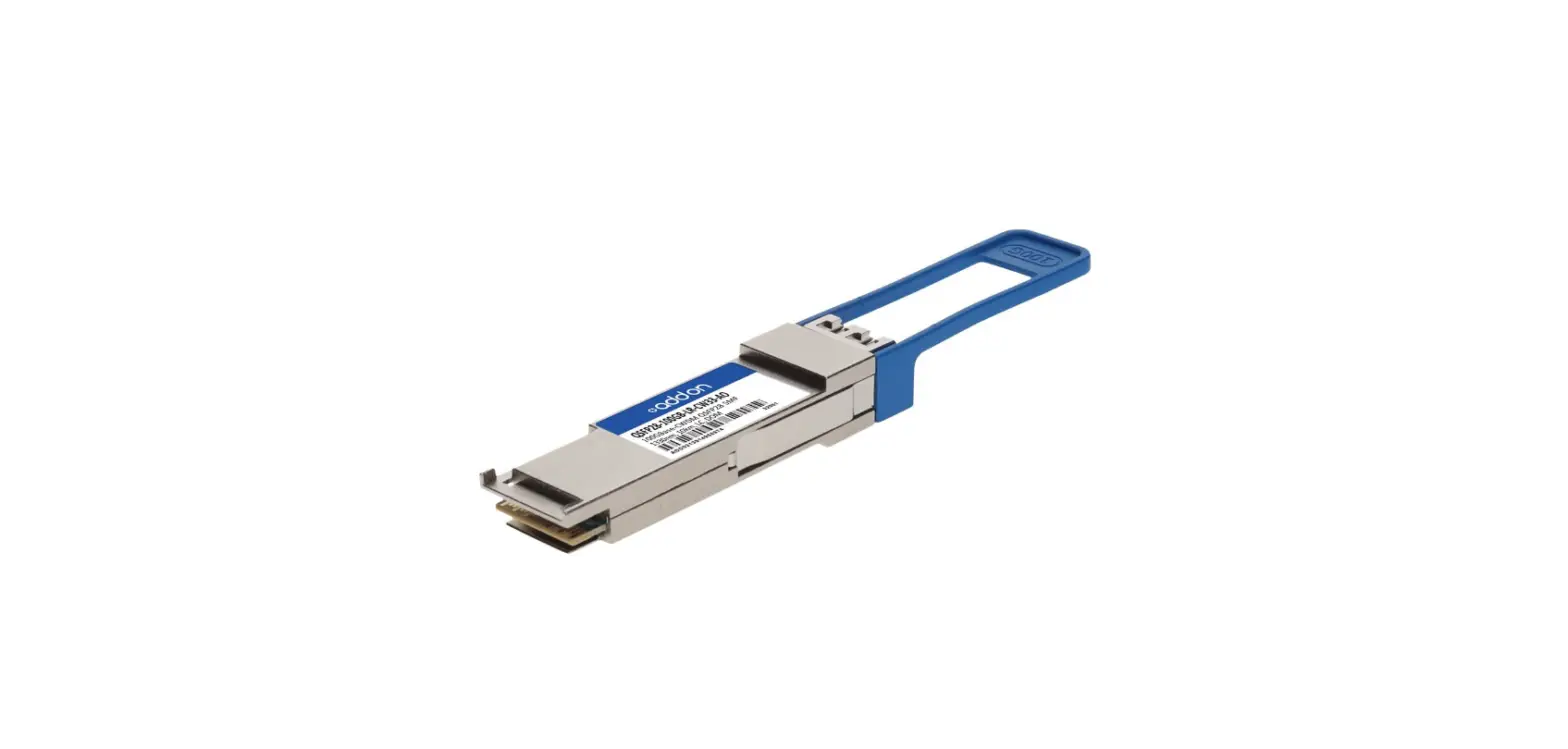
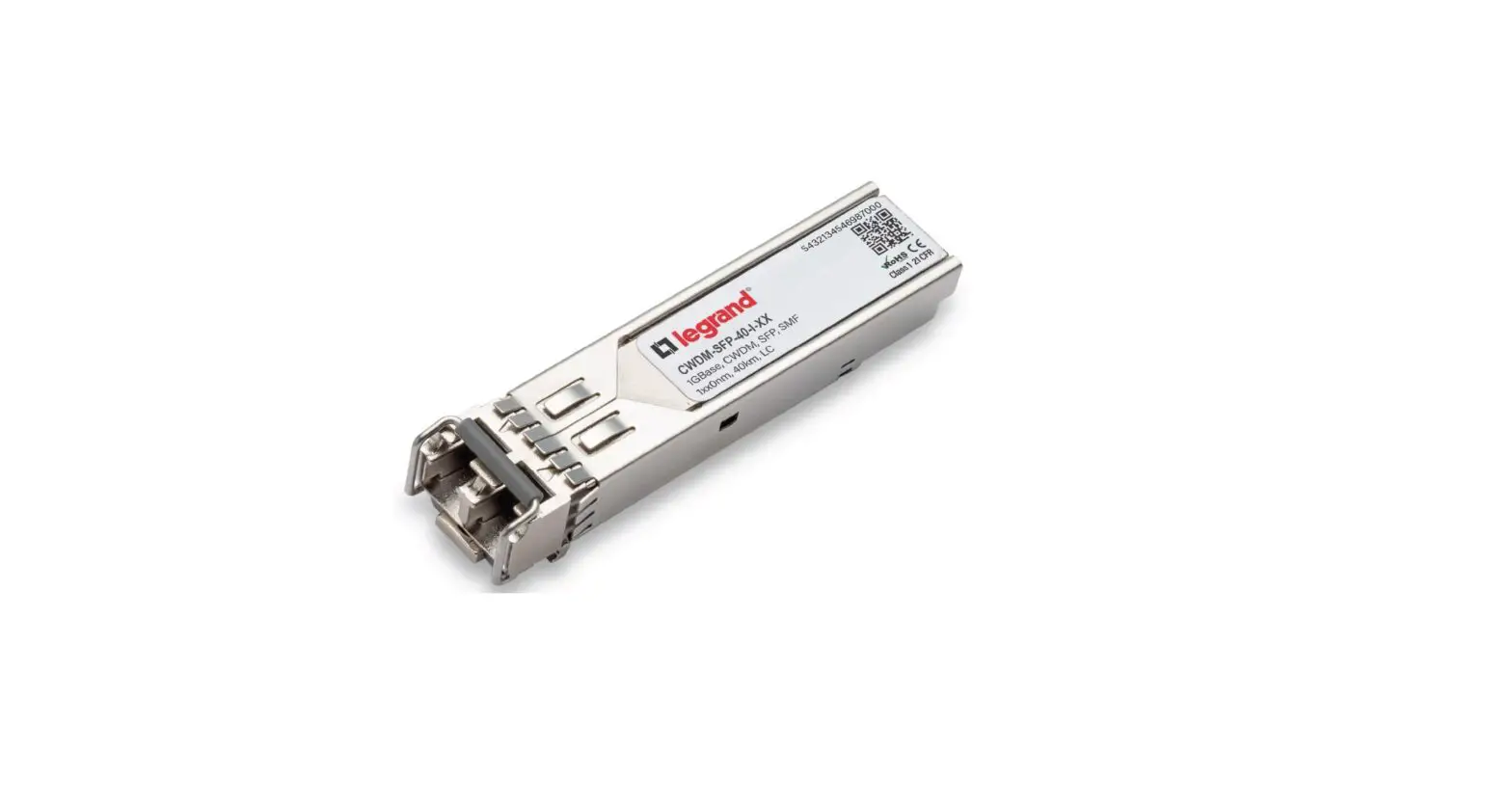
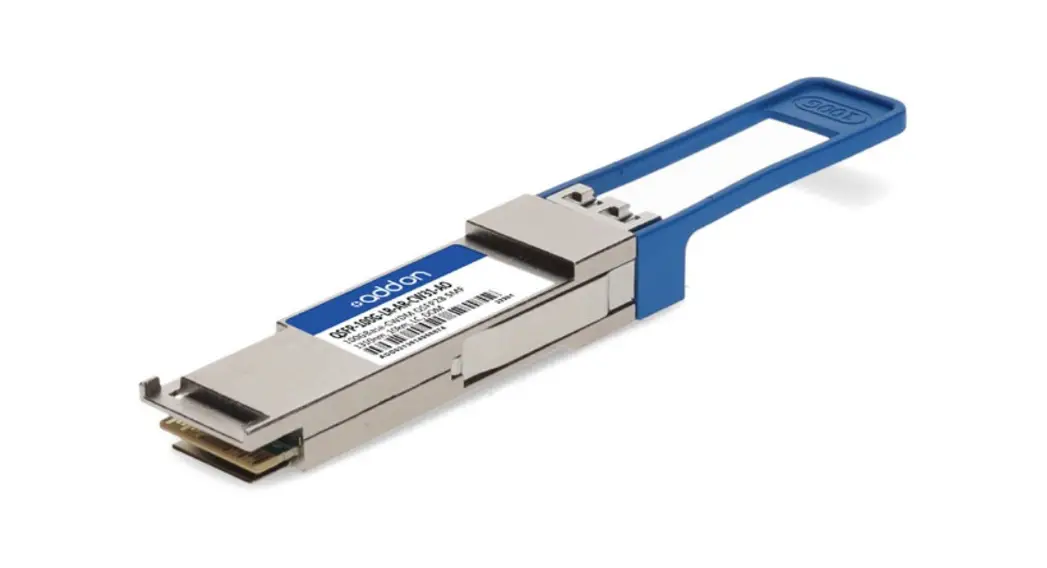
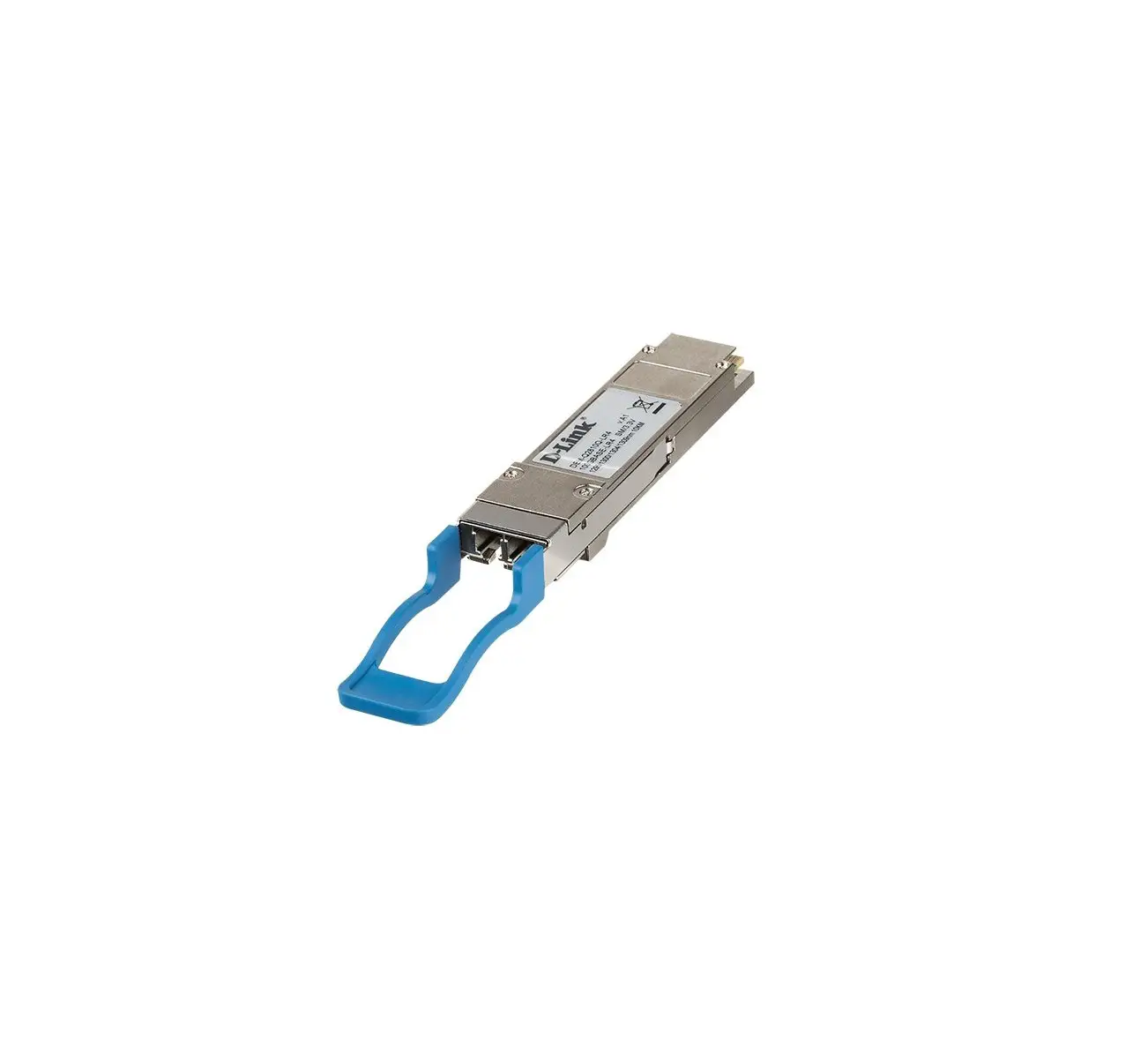
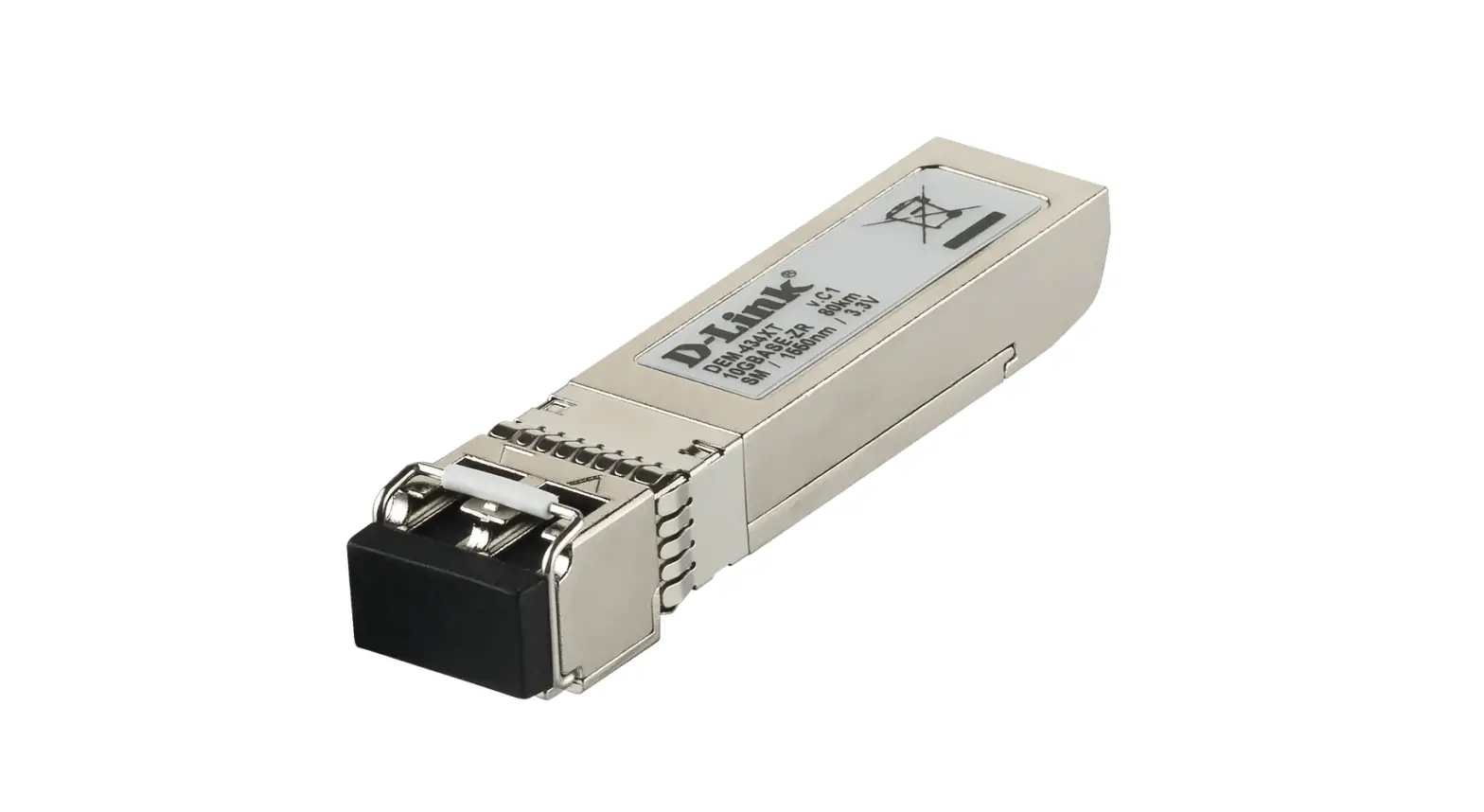
QSFPP-40G-ZR4 Lite 40Gbps QSFP+ ZR4 Lite Transceiver
Product Information:
Product Name: QSFPP-40G-ZR4-Lite
Description: 40Gbps QSFP+ ZR4 Lite Transceiver, Single
Mode, 60km Reach
Product Features:
- 4 CWDM lanes MUX/DEMUX design
- Up to 11.2Gbps per channel bandwidth
- Aggregate bandwidth of > 40Gbps
- Duplex LC connector
- Compliant with 40G Ethernet IEEE802.3ba and 40GBASE-ZR4
Lite - QSFP MSA compliant
- APD photo-detector
- Up to 60 km transmission
Fiber Optic Module:
- RoHS Compliant Part
Applications:
- Data Centers Switches and Routers
- Rack to Rack
- Metro Networks
- 40GBASE-ZR4 Lite
Product Description:
The central wavelengths of the 4 CWDM channels are 1271, 1291,
1311, and 1331 nm as members of the CWDM wavelength grid defined in
ITU-T G694.2. It contains a duplex LC connector for the optical
interface and a 38-pin connector for the electrical interface. To
minimize the optical dispersion in the long-haul system,
single-mode fiber (SMF) has to be applied in this module.
The product is designed with form factor, optical/electrical
connection, and digital diagnostic interface according to the QSFP
Multi-Source Agreement (MSA). It has been designed to meet the
harshest external operating conditions including temperature,
humidity, and EMI interference. The module operates from a single
+3.3V power supply and LVCMOS/LVTTL global control signals such as
Module Present, Reset, Interrupt, and Low Power Mode are available
with the modules. A 2-wire serial interface is available to send
and receive more complex control signals and to obtain digital
diagnostic information. Individual channels can be addressed and
unused channels can be shut down for maximum design
flexibility.
The QSFPP-40G-ZR4-Lite is designed with form factor,
optical/electrical connection, and digital diagnostic interface
according to the QSFP Multi-Source Agreement (MSA). It has been
designed to meet the harshest external operating conditions
including temperature, humidity, and EMI interference. The module
offers very high functionality and feature integration, accessible
via a two-wire serial interface.
Absolute Maximum Ratings:
| Parameter | Symbol | Min | Typical | Max | Unit |
|---|---|---|---|---|---|
| Storage Temperature | TS | -40 | +85 | °C | |
| Supply Voltage | VCCT, R | -0.5 | 4 | V | |
| Relative Humidity | RH | 0 | 85 | % |
Recommended Operating Environment:
| Parameter | Symbol | Min | Typical | Max | Unit |
|---|---|---|---|---|---|
| Case Operating Temperature | TC | 0 | +70 | °C | |
| Supply Voltage | VCCT, R | +3.13 | +3.47 | V | |
| Supply Current | ICC | 3.3 | A | ||
| Power Dissipation | PD | 5 | W |
Data Rate per Channel:
| Parameter | Symbol | Min | Typical | Max | Unit |
|---|---|---|---|---|---|
| Data Rate per Channel | 10.3125 | 11.2 | Gbps | ||
| Power Consumption | 2.5 | 5 | W | ||
| Supply Current | Icc | 0.75 | 1.3 | A | |
| Control I/O Voltage-High | VIH | 2.0 | Vcc | V | |
| Control I/O Voltage-Low | VIL | 0 | 0.7 | V | |
| Inter-Channel Skew | TSK | 150 | ps | ||
| RESETL Duration | 10 | us | |||
| RESETL De-assert time | 100 | ms | |||
| Power On Time | 100 | ms | |||
| Single Ended Output Voltage Tolerance | 0.3 | 15 | V | ||
| Common mode Voltage Tolerance | 4 | mV | |||
| Transmit Input Diff Voltage | V |
Product Usage Instructions:
To use the QSFPP-40G-ZR4-Lite transceiver, follow these
steps:
- Ensure that the transceiver is compatible with your device and
network requirements. - Connect the duplex LC connector of the transceiver to the
optical interface of your device using single-mode fiber
(SMF). - Connect the 38-pin connector of the transceiver to the
electrical interface of your device. - Make sure the transceiver is powered by a single +3.3V power
supply. - If necessary, use LVCMOS/LVTTL global control signals such as
Module Present, Reset, Interrupt, and Low Power Mode to configure
the transceiver. - For more complex control signals and diagnostic information,
use the available 2-wire serial interface. - To address individual channels or shut down unused channels,
refer to the documentation for your specific device. - Ensure that the operating conditions, including temperature,
humidity, and EMI interference, are within the recommended range
for the transceiver.
For any further assistance or troubleshooting, refer to the user
manual or contact customer support.
QSFPP-40G-ZR4-Lite
40Gbps QSFP+ ZR4 Lite Transceiver, Single Mode, 60km Reach
Product Features
4 CWDM lanes MUX/DEMUX design Up to 11.2Gbps per channel bandwidth Aggregate bandwidth of > 40Gbps Duplex LC connector Compliant with 40G Ethernet IEEE802.3ba and 40GBASE-ZR4 Lite QSFP MSA compliant APD photo-detector Up to 60 km transmission
Fiber Optic Module
Compliant with QDR/DDR Infiniband data rates Single +3.3V power supply operating Built-in digital diagnostic functions Temperature range 0°C to 70°C
RoHS Compliant Part
Applications
Data Centers Switches and Routers Switches and Routers Rack to Rack Metro Networks 40GBASE-ZR4 Lite
Description
The QSFPP-40G-ZR4-Lite is a transceiver module designed for 60km optical communication applications. The design is compliant to 40GBASE-ER4 of the IEEE P802.3ba standard. The module converts 4 inputs channels of 10Gb/s electrical data to 4 CWDM optical signals, and multiplexes them into a single channel for 40Gb/s optical transmission. Reversely, on the receiver side, the module optically de-multiplexes a 40Gb/s input into 4 CWDM channels signals, and converts them to 4 channel output electrical data.
The central wavelengths of the 4 CWDM channels are 1271, 1291, 1311 and 1331 nm as members of the CWDM wavelength grid defined in ITU-T G694.2. It contains a duplex LC connector for the optical interface and a 38-pin connector for the electrical interface. To minimize the optical dispersion in the long-haul system, single-mode fiber (SMF) has to be applied in this module.
The product is designed with form factor, optical/electrical connection and digital diagnostic interface according to the QSFP Multi-Source Agreement (MSA). It has been designed to meet the harshest external operating conditions including temperature, humidity and EMI interference.
The module operates from a single +3.3V power supply and LVCMOS/LVTTL global control signals such as Module Present, Reset, Interrupt and Low Power Mode are available with the modules. A 2-wire serial interface is available to send and receive more complex control signals and to obtain digital diagnostic information. Individual channels can be addressed and unused channels can be shut down for maximum design flexibility.
The QSFPP-40G-ZR4-Lite is designed with form factor, optical/electrical connection and digital diagnostic interface according to the QSFP Multi-Source Agreement (MSA). It has been designed to meet the harshest external operating conditions including temperature,
FIBER MALL CO.,LIMITED
Rev 1.1
PAGE 2 / 14
Fiber Optic Module
humidity and EMI interference. The module offers very high functionality and feature integration, accessible via a two-wire serial interface.
TX3
DFB Driver
4-wavelength
TX2
Array (4ch)
DFB laser
Array (4ch)
TX1
Optical MUX
TX0
RX3
APD
APD
RX2
Array (4ch)
Array (4ch)
RX1
Optical DeMUX
RX0
40Gb/s QSFP ZR4-Lite Transceiver Block Diagram
Dual-LC Connector
Single Mode Fiber
Absolute Maximum Ratings
Parameter
Symbol
Storage Temperature
TS
Supply Voltage
VCCT, R
Relative Humidity
RH
Min
Typical
Max
Unit
-40
+85
°C
-0.5
4
V
0
85
%
Recommended Operating Environment
Parameter
Symbol Min
Case Operating Temperature
TC
0
Supply Voltage
VCCT, R
+3.13
Supply Current
ICC
Power Dissipation
PD
Typical
3.3
Max
+70 +3.47 1000
3.5
Unit
°C V mA W
FIBER MALL CO.,LIMITED
Rev 1.1
PAGE 3 / 14
Fiber Optic Module
Electrical Characteristics (TOP = 0 to 70 °C, VCC = 3.13 to 3.47 Volts)
Parameter
Data Rate per Channel
Symbol Min
–
Typical
10.3125
Max
11.2
Unit
Gbps
Power Consumption
–
2.5
5
W
Supply Current
Icc
0.75
1.3
A
Control I/O Voltage-High
VIH
2.0
Vcc
V
Control I/O Voltage-Low
VIL
0
0.7
V
Inter-Channel Skew
TSK
150
Ps
RESETL Duration
10
Us
RESETL De-assert time
100
ms
Power On Time
100
ms
Single Ended Output Voltage Tolerance
Common mode Voltage Tolerance
Transmitter
0.3 15
4
V
mV
Transmit Input Diff Voltage
VI
150
1200
mV
Transmit Input Diff Impedance
ZIN
85
100
115
Data Dependent Input Jitter
DDJ
0.3
UI
Single Ended Output Voltage Tolerance
Rx Output Diff Voltage
Receiver
0.3
4
V
Vo
370
600
950
mV
Rx Output Rise and Fall Voltage
Tr/Tf
35
ps
Total Jitter
TJ
0.3
UI
Note
1 1
Notes: 1. 20%~80%
FIBER MALL CO.,LIMITED
Rev 1.1
PAGE 4 / 14
Fiber Optic Module
Optical Parameters (TOP = 0 to 70 °C, VCC = 3.0 to 3.6 Volts)
Parameter
Symbol
Min
Typical Max Unit Notes
Transmitter
L0
1264.5
1271 1277.5 nm
L1 Wavelength Assignment
L2
1284.5 1304.5
1291 1311
1297.5 nm 1317.5 nm
L3
1324.5
1331 1337.5 nm
Side-mode Suppression Ratio
SMSR
30
–
–
dB
Total Average Launch Power
PT
–
Average Launch Power, each Lane
+3
–
Transmit OMA per Lane
TxOMA
0.3
Difference in launch power between any two lanes (OMA) Transmitter Dispersion Penalty
each Lane
TDP
Extinction Ratio
ER
5.5
6.5
Transmitter Eye Mask Definition {X1, X2, X3, Y1, Y2, Y3}
{0.25, 0.4, 0.45, 0.25, 0.28, 0.4}
Optical Return Loss Tolerance
–
–
Average Launch Power OFF Transmitter, each Lane
Poff
Relative Intensity Noise
Rin
10.5 dBm
7
dBm
5.0 dBm
4.7 dBm
2.6
dB
dB
20
dB
-30 dBm
-128 dB/HZ
1
Optical Return Loss Tolerance
–
–
12
dB
Damage Threshold
Average Power at Receiver Input, each Lane
Receive Electrical 3 dB upper Cut off Frequency, each Lane
RSSI Accuracy
Receiver Reflectance
Receiver Power (OMA), each Lane
Receiver
THd
0
R
-23
-2 Rrx
–
dBm
1
-6
dBm
12.3 GHz
2
dB
-26
dB
–
-4
dBm
FIBER MALL CO.,LIMITED
Rev 1.1
PAGE 5 / 14
Fiber Optic Module
Receive Electrical 3 dB upper Cutoff Frequency, each Lane
LOS De-Assert
LOSD
LOS Assert
LOSA
-35
LOS Hysteresis
LOSH
0.5
12.3 GHz -25 dBm
dBm dB
Note 1: 12dB Reflection
Diagnostic Monitoring Interface
Digital diagnostics monitoring function is available on all QSFP+ ER4. A 2-wire serial interface provides user to contact with module. The structure of the memory is shown in flowing. The memory space is arranged into a lower, single page, address space of 128 bytes and multiple upper address space pages. This structure permits timely access to addresses in the lower page, such as Interrupt Flags and Monitors. Less time critical time entries, such as serial ID information and threshold settings, are available with the Page Select function. The interface address used is A0xh and is mainly used for time critical data like interrupt handling in order to enable a one-time-read for all data related to an interrupt situation. After an interrupt, IntL has been asserted, the host can read out the flag field to determine the affected channel and type of flag.
FIBER MALL CO.,LIMITED
Rev 1.1
PAGE 6 / 14
Fiber Optic Module
FIBER MALL CO.,LIMITED
Rev 1.1
PAGE 7 / 14
Fiber Optic Module
EEPROM Serial ID Memory Contents (A0h)
Data Length Address (Byte)
Name of Length
Description and Contents
128
1
Base ID Fields
Identifier
Identifier Type of serial Module(D=QSFP+)
129
1
Ext. Identifier
Extended Identifier of Serial Module(90=2.5W)
130
1
131-138
8
139
1
Connector
Specification compliance
Encoding
Code of connector type(7=LC)
Code for electronic compatibility or optical compatibility(40GBASE-LR4)
Code for serial encoding algorithm(5=64B66B)
140
1
BR, Nominal
Nominal bit rate, units of 100 MBits/s(6C=108)
141
1
Extended rateselect Compliance
Tags for extended rate select compliance
142
1
Length(SMF)
Link length supported for SMF fiber in km (28=60km)
143
1
Length(OM3 50um)
Link length supported for EBW 50/125um fiber(OM3), units of 2m
144
1
Length(OM2 50um) Link length supported for 50/125um fiber(OM2), units of 1m
145
1
Length(OM1 62.5um)
Link length supported for 62.5/125um fiber (OM1), units of 1m
Link length of copper or active cable, unites of 1m Link
146
1
Length(Copper)
length supported for 50/125um fiber (OM4), units of 2m when Byte 147 declares 850nm VCSEL as defined in Table
37
147
1
Device tech
Device technology
148-163
16
Vendor name
QSFP+ vendor name: TIBTRONIX (ASCII)
164
1
Extended Module
Extended Module codes for InfiniBand
165-167
3
Vendor OUI
QSFP+ vendor IEEE company ID(000840)
168-183 184-185
186-187
16
Vendor PN
Part number: TQPLFG60D (ASCII)
2
Vendor rev
Revision level for part number provided by vendor (ASCII) (X1)
2
Wave length or Copper cable Attenuation
Nominal laser wavelength (wavelength=value/20 in nm) or copper cable attenuation in dB at 2.5GHz (Adrs 186) and
5.0GHz (Adrs 187) (65A4=1301)
FIBER MALL CO.,LIMITED
Rev 1.1
PAGE 8 / 14
Fiber Optic Module
188-189 190 191
192-195 196-211 212-219
220 221 222 223
224-255
Guaranteed range of laser wavelength(+/- value) from
2
Wavelength tolerance nominal wavelength. (wavelength Tol.=value/200 in nm)
(1C84=36.5)
1
Max case temp.
Maxinum case temperature in degrees C (70)
1
CC_BASE
Check code for base ID fields (addresses 128-190)
Extended ID fields
4
Options
Rate Select, TX Disable, Tx Fault, LOS, Warning indicators for: Temperature, VCC, RX, power, TX Bias
16
Vendor SN
Serial number provided by vendor (ASCII)
8
Date Code
Vendor’s manufacturering date code
1
Diagnostic Monitoring Type
Indicates which types of diagnostic monitoring are implemented (if any) in the Module. Bit 1, 0 Reserved
(8=Average Power)
1
Enhanced Options
Indicates which optional enhanced features are implemented in the Module.
1
Reserved
1
CC_EXT
Check code for the Extended ID Fields (addresses 192-222)
Vendor Specific ID Fields
32
Vendor Specific EEPROM
Timing for Soft Control and Status Functions
Parameter
Symbol
Initialization Time
Reset Init Assert Time
Serial Bus Hardware Ready
Time Monitor Data Ready Time
Reset Assert Time
t_init t_reset_init
t_serial t_data t_reset
LPMode Assert Time
ton_LPMode
Max
2000 2
2000 2000 2000 100
Unit
ms s ms ms ms s
Conditions
Time from power on1, hot plug or rising edge of Reset until the module is fully functional2
A Reset is generated by a low level longer than the minimum reset pulse time present on the ResetL pin.
Time from power on1 until module responds to data transmission over the 2-wire serial bus
Time from power on1 to data not ready, bit 0 of Byte 2, deasserted and IntL asserted
Time from rising edge on the ResetL pin until the module is fully functional2
Time from assertion of LPMode (Vin:LPMode =Vih) until module power consumption enters lower Power
Level
FIBER MALL CO.,LIMITED
Rev 1.1
PAGE 9 / 14
Fiber Optic Module
IntL Assert Time
ton_IntL
200
IntL Deassert Time
toff_IntL
500
Rx LOS Assert Time
ton_los
100
Flag Assert Time
ton_flag
200
Mask Assert Time ton_mask
100
Mask De-assert Time
toff_mask
100
ModSelL Assert Time
ton_ModSelL
100
ModSelL Deassert Time
toff_ModSelL
100
Power_over-ride
or Power-set
ton_Pdown
100
Assert Time
Power_over-ride
or Power-set De- toff_Pdown
300
assert Time
ms
Time from occurrence of condition triggering IntL until Vout:IntL = Vol
toff_IntL 500 s Time from clear on read3 operation
s
of associated flag until Vout:IntL = Voh. This includes deassert times for Rx LOS, Tx Fault and other flag
bits.
ms
Time from Rx LOS state to Rx LOS bit set and IntL asserted
ms
Time from occurrence of condition triggering flag to associated flag bit set and IntL asserted
ms
Time from mask bit set4 until associated IntL assertion is inhibited
ms
Time from mask bit cleared4 until associated IntlL operation resumes
Time from assertion of ModSelL until module s responds to data transmission over the 2-wire serial
bus
Time from deassertion of ModSelL until the module s does not respond to data transmission over the 2-wire
serial bus
ms
Time from P_Down bit set 4 until module power consumption enters lower Power Level
ms
Time from P_Down bit cleared4 until the module is fully functional3
Note
1. Power on is defined as the instant when supply voltages reach and remain at or above the minimum specified value. 2. Fully functional is defined as IntL asserted due to data not ready bit, bit 0 byte 2 de-asserted. 3. Measured from falling clock edge after stop bit of read transaction. 4. Measured from falling clock edge after stop bit of write transaction.
FIBER MALL CO.,LIMITED
Rev 1.1
PAGE 10 / 14
Pin Assignment
Fiber Optic Module
Diagram of Host Board Connector Block Pin Numbers and Name
Pin Description
Pin
Logic
Symbol
1
GND
2
CML-I
Tx2n
3
CML-I
Tx2p
4
GND
5
CML-I
Tx4n
6
CML-I
Tx4p
7
GND
8
LVTTL-I
ModSelL
9
LVTTL-I
ResetL
10
VccRx
11 LVCMOS-I/O
SCL
12 LVCMOS-I/O
SDA
13
GND
Name/Description
Ground Transmitter Inverted Data Input Transmitter Non-Inverted Data output
Ground Transmitter Inverted Data Output Transmitter Non-Inverted Data Output
Ground Module Select Module Reset +3.3V Power Supply Receiver 2-Wire Serial Interface Clock 2-Wire Serial Interface Data
Ground
Notes
1 1 1 2 1
FIBER MALL CO.,LIMITED
Rev 1.1
PAGE 11 / 14
Fiber Optic Module
14
CML-O
Rx3p
Receiver Inverted Data Output
15
CML-O
Rx3n
Receiver Non-Inverted Data Output
16
GND
Ground
1
17
CML-O
Rx1p
Receiver Inverted Data Output
18
CML-O
Rx1n
Receiver Non-Inverted Data Output
19
GND
Ground
1
20
GND
Ground
1
21
CML-O
Rx2n
Receiver Inverted Data Output
22
CML-O
Rx2p
Receiver Non-Inverted Data Output
23
GND
Ground
1
24
CML-O
Rx4n
Receiver Inverted Data Output
25
CML-O
Rx4p
Receiver Non-Inverted Data Output
26
GND
Ground
1
27
LVTTL-O
ModPrsL
Module Present
28
LVTTL-O
IntL
Interrupt
29
VccTx
+3.3V Power Supply Transmitter
2
30
Vcc1
+3.3V Power Supply
2
31
LVTTL-I
LPMode
Low Power Mode
32
GND
Ground
1
33
CML-I
Tx3p
Transmitter Inverted Data Output
34
CML-I
Tx3n
Transmitter Non-Inverted Data Output
35
GND
Ground
1
36
CML-I
Tx1p
Transmitter Inverted Data Output
37
CML-I
Tx1n
Transmitter Non-Inverted Data Output
38
GND
Ground
1
Notes 1. GND is the symbol for single and supply(power) common for QSFP modules, All are
FIBER MALL CO.,LIMITED
Rev 1.1
PAGE 12 / 14
Fiber Optic Module
common within the QSFP module and all module voltages are referenced to this potential otherwise noted. Connect these directly to the host board signal common ground plane. Laser output disabled on TDIS >2.0V or open, enabled on TDIS <0.8V. 2. VccRx, Vcc1 and VccTx are the receiver and transmitter power suppliers and shall be applied concurrently. Recommended host board power supply filtering is shown below. VccRx, Vcc1 and VccTx may be internally connected within the QSFP transceiver module in any combination. The connector pins are each rated for maximum current of 500mA
Recommended Circuit
FIBER MALL CO.,LIMITED
Rev 1.1
PAGE 13 / 14
Mechanical Dimensions
Fiber Optic Module
Ordering Information
Part Number
Product Description
QSFPP-40G-ZR4-Lite CWDM4 Wavelengths, 40Gbps, LC Connectors, 60km, 0°C~+70°C, with DDM
FIBER MALL CO.,LIMITED
Rev 1.1
PAGE 14 / 14