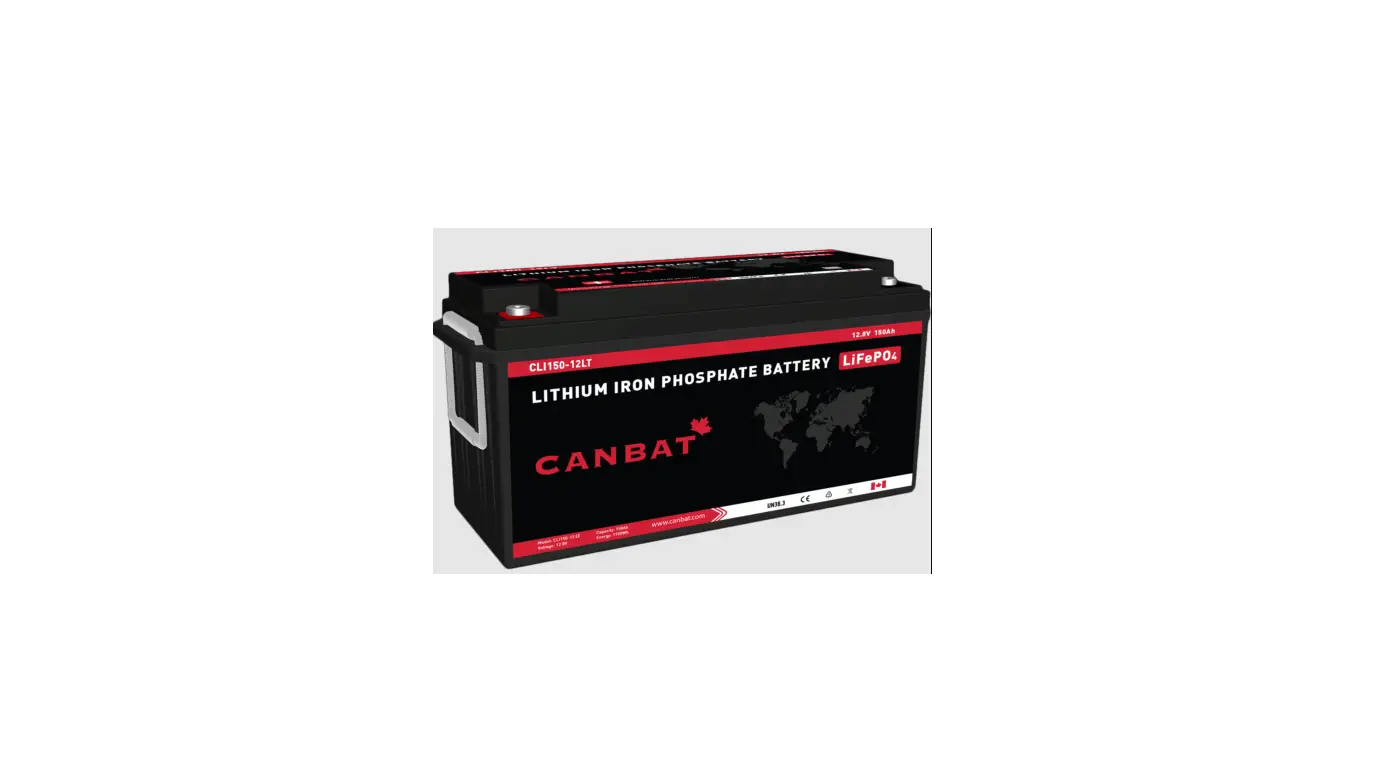
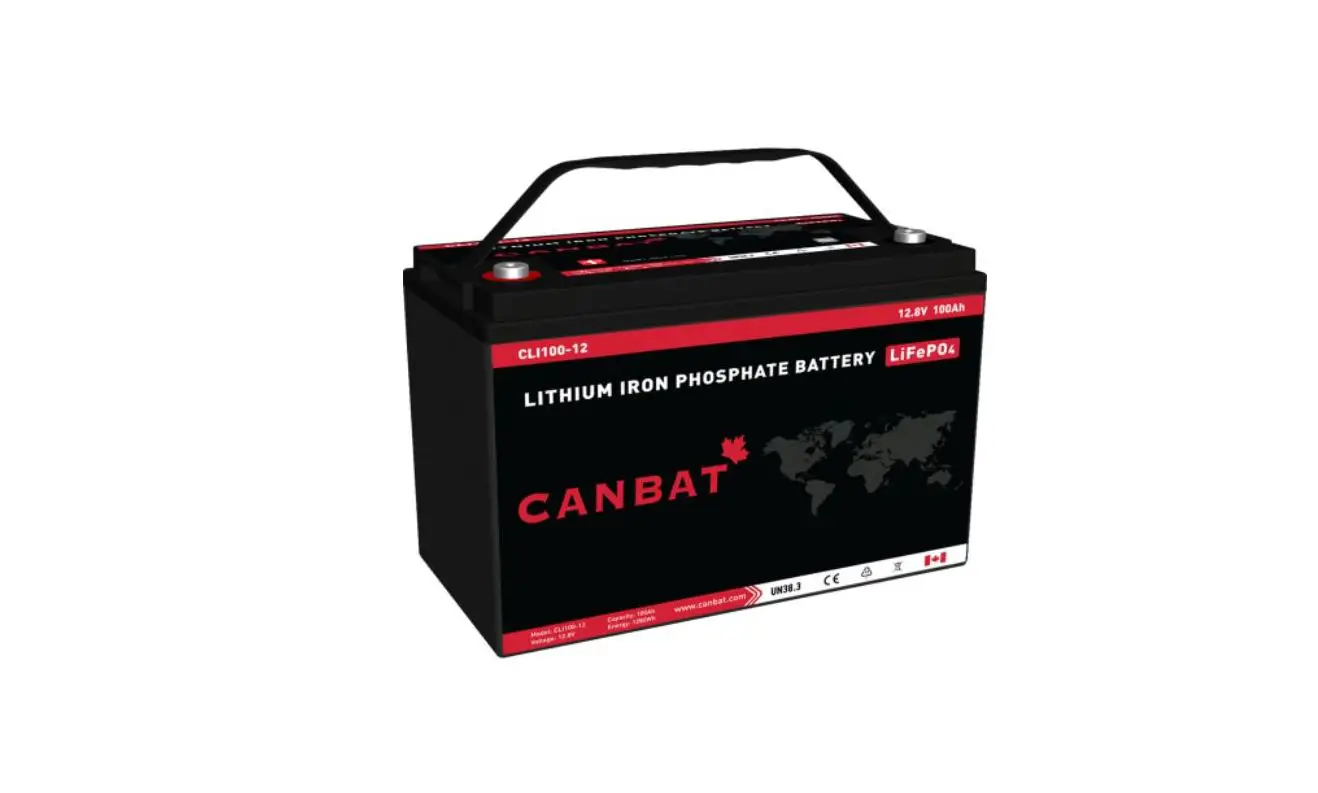
CLC100-12 Lead Carbon Batteries
CANBAT TECHNOLOGIES INC. – Lead Carbon Batteries
User Manual
Safety Information
It is essential to read, understand, and follow these
instructions prior to installing or operating Canbat lead carbon
batteries.
Warning: This is a hazardous situation which,
if not avoided, could result in serious injury or death.
Warning: Do not place or install near flammable
or explosive materials.
Warning: Install Canbat lead carbon batteries
out of the reach of children and animals.
Warning: Canbat lead carbon batteries are
heavy, and may cause serious back injury. Lift with multiple people
and lifting equipment.
Warning: Do not dispose of this product with
household waste.
Caution: Risk of electric shock.
Attention: Disconnect the battery before
carrying out maintenance or repair.
Attention: Read this instruction manual before
installing and operating the battery.
Note: Indicates points of particular emphasis
that make operation more efficient or convenient.
Recyclable: Please contact Canbat for recycling
instructions.
General Safety Precautions and
Instructions
In addition to the General Safety Precautions and Instructions,
the following guidelines should be observed when handling Canbat
lead carbon batteries.
Transportation
Ensure you have the necessary tools and safety equipment when
working with any battery system.
Storage
Keep your batteries away from heaters and organic solvents. An
increased storage temperature results in an increased
self-discharge rate, so store them in a cool dry environment.
Response to Emergency Situations
Canbat lead carbon batteries are designed to prevent hazards
resulting from failures; however, no battery system is 100% safe,
and Canbat cannot guarantee its absolute safety.
In the unlikely event of a fire, if possible, first shut off the
source of the electricity. We recommend having a fire extinguisher
in close proximity to your power generating equipment. Class ABC
extinguishers are easily obtainable and are best suited for
multipurpose fire types such as wood, flammable liquids, and
electrical appliances.
Qualified Personnel
When working with any battery system, ensure you have the
necessary tools and safety equipment, including but not limited
to:
- Protective gloves
- Safety glasses
- Fire extinguisher
- Insulated tools
- Proper ventilation
Overview
Canbat lead carbon batteries are cost-effective,
maintenance-free batteries offering superior performance in PSoC
applications. These batteries are designed for residential or light
commercial off-grid, backup, or self-consumption applications.
Premium Pure Lead Punched Grid Cycling Battery, with excellent
anti-corrosion performance, and low float current, greatly
extending calendar and cyclic life.
Features
Canbat lead carbon batteries offer the following features:
- Cost-effective
- Maintenance-free
- Superior performance in PSoC applications
- Premium Pure Lead Punched Grid Cycling Battery
- Excellent anti-corrosion performance
- Low float current
- Extended calendar and cyclic life
Product Technology
The Canbat lead carbon batteries utilize advanced technology to
provide reliable and efficient power storage. The Premium Pure Lead
Punched Grid Cycling Battery design ensures excellent
anti-corrosion performance and low float current, resulting in
extended calendar and cyclic life.
Operation
The operation of Canbat lead carbon batteries involves charging,
discharging, and recharging. Please refer to the specific sections
below for detailed information and instructions.
Charging
When charging the batteries, follow these guidelines:
- Refer to the Charging Characteristics section for specific
charging requirements. - Ensure proper temperature compensation during charging.
Discharging
When discharging the batteries, follow these guidelines:
- Refer to the Discharge Characteristics section for specific
discharging information. - Consider the temperature characteristics during
discharging. - Be aware of the self-discharge rate.
Recharging
When recharging the batteries, follow these guidelines:
- Ensure the batteries are properly discharged before
recharging. - Refer to the specific instructions provided in the Recharging
section.
Open-Circuit Voltage (OCV) vs. State of Charge
(SoC)
The Open-Circuit Voltage (OCV) vs. State of Charge (SoC)
relationship is an important indicator of battery performance.
Refer to the OCV vs. SoC section for more information.
Cycle Life
The cycle life of Canbat lead carbon batteries determines their
durability and longevity. Refer to the Cycle Life section for
detailed information on the expected cycle life of these
batteries.
Environmental Protection
Canbat lead carbon batteries are designed with environmental
protection in mind. Please refer to the Environmental Protection
section for more information on their eco-friendly features.
Recycling
Proper recycling of batteries is important for environmental
sustainability. Please contact Canbat for recycling instructions to
ensure the responsible disposal of your lead carbon batteries.
CANBAT TECHNOLOGIES INC.
Lead Carbon Baeries
USER MANUAL
As is the case with all baeries, the risk of shock is present. When handling baeries, use protecve measures including, but not limited to, safety glasses, insulated gloves, and protecve footwear. When working with or installing baeries, use electrically insulated gloves and tools. Remove personal metal items such as watches, rings, bracelets, etc. The informaon included in this manual is accurate at the me of publicaon. However, this manual is subject to change without prior noce as we connuously improve our products. Addionally, the illustraons in this manual are for demonstraon only and are intended to help explain the installaon of Canbat lead carbon baeries. Details may vary slightly depending upon the market region and the product version. Please note: If this unit is installed by someone other than the end-user, the installer must explain the contents of this installaon and user’s manual to the end-user.
2
TABLE OF CONTENTS
Safety Information
5
Symbols Used in this Manual
5
General Safety Precautions and Instructions
6
Battery Handling Guide
6
Transportation
8
Storage
8
Response to Emergency Situations
9
Qualified Personnel
10
Overview
12
Features
12
Product Technology
13
3
Operation
14
Charging
14
Charging Characteristics
14
Temperature Compensation
16
Discharging
16
Discharge Characteristics
16
Discharge Temperature Characteristics
17
Self-Discharge
17
Recharging
18
Open-Circuit Voltage (OCV) vs. State of Charge (SoC) 19
Cycle Life
20
Environmental Protection
21
Toxic and Poison Checklist
21
Recycling
21
4
Safety Information
Symbols Used in this Manual
It is essenal to read, understand, and follow these instrucons prior to installing or operang Canbat lead carbon baeries.
Warning:
This is a hazardous situaon which, if not avoided, could result in serious injury or death.
Warning:
Do not place or install near flammable or explosive materials.
Warning:
Install Canbat lead carbon baeries out of the reach of children and animals.
Warning:
Canbat lead carbon baeries are heavy, and may cause serious back injury. Li with mulple people and liing equipment.
Warning:
Do not dispose of this product with household waste.
Cauon:
Risk of electric shock.
Aenon:
Disconnect the baery before carrying out maintenance or repair.
Aenon:
Read this instrucon manual before installing and operang the baery.
Note:
Indicates points of parcular emphasis that make operaon more efficient or convenient.
Recyclable:
Please contact Canbat for recycling instrucons.
5
General Safety Precauons and Instrucons
· Do not aempt to use any baery that appears damaged during shipment or otherwise.
· Do not submerge Canbat lead carbon baeries. This could cause injury and will void your warranty.
· Do not aempt to disassemble the baeries. Its components are not user serviceable. This could cause personal injury and will void your warranty.
· To avoid the risk of shock or fire, ensure all wire is properly sized and in good condion.
· Do not impact, pull, drag, or step on lead carbon baeries.
· Verify all equipment be connected to the lead carbon baery is off before making connecons.
· A small risk of spark does exist while making connecons. Ensure the area is free of explosive gasses and liquids and is not installed in confined areas. This includes flammable fuel powered machinery, holding tanks, pipe fings, and connectors.
· Respiratory irritaon may be caused if a lead carbon baery is punctured or cracked.
· Skin contact with a punctured or otherwise open baery can cause irritaon.
· If a Canbat lead carbon baery becomes punctured or cracked, use appropriate respiratory and hand protecon.
· High voltage baery connecons (configuraons of greater than 36V DC nominal) can be dangerous in any DC system. A 48V nominal baery bank can have 60VDC at the terminals when fully charged!
· DC voltages over 52V can stop the human adult heart; please be careful and wear insulated gloves.
6
In addion to the General Safety Precauons and Instrucons, the following guidelines should be observed when handling Canbat lead carbon baeries.
Transportaon
· Because lead carbon bateries are heavy, they should be moved with the help of mulple people and moving/liing equipment. · Do not drop Canbat lead carbon baeries. · If you are transporng Canbat lead carbon baeries on a pallet, do not stack them more than 5 layers high. · Only transport Canbat lead carbon baeries facing up. · Check immediately aer transporng. · If the baery is damaged in any way, do not use it; contact Canbat immediately.
Storage
In addion to the General Safety Precauons and Instrucons, the following guidelines should be observed when storing lead carbon baeries.
· Store in a clean, dry, shaded, and well venlated area, at a temperature between 15 °C and 35 °C. · Charge to at least 70% (the state of charge upon delivery) before storage. · Charge at least once every 6 months. · Repeated (100%) discharges will decrease baery capacity.
7
· Fully charge the baery within 15 days of a deep discharge of 90% or more. · Do not drop, stack, or turn upside down. · Store away from children and animals.
Keep your baeries away from heaters and organic solvents. An increased storage temperature results in an increased self-discharge rate, so store them in a cool dry environment.
Response to Emergency Situaons
Canbat lead carbon baeries are designed to prevent hazards resulng from failures; however, no baery system is 100% safe, and Canbat cannot guarantee its absolute safety.
In the unlikely event of a fire, if possible, first shut off the source of the electricity. We recommend having a fire exnguisher in close proximity of your power generang equipment.
Class ABC exnguishers are easily obtainable and are best suited for mulpurpose fire types such as wood, flammable liquids, and electrical appliances.
8
Qualified Personnel
This guide, and the tasks and procedures described in this manual, are intended for use by qualified personnel only. Only qualified personnel shall install, operate, overhaul, or maintain Canbat lead carbon baeries. During maintenance or overhaul, at least two people (equipped with protecve measures, including but not limited to, safety glasses, insulated gloves, and safety shoes) must be present. Qualified personnel are defined as being a trained and locally cerfied electrician or installer who has the following knowledge, skills, and experience:
· Funconal principles and operaon of on-grid and off-grid (backup) electrical systems · Dangers and risks associated with installing and using electrical devices and acceptable migaon methods · Installaon of electrical devices · Knowledge of and adherence to the informaon in this guide, to all applicable safety precauons, and to electrical industry best pracces
When working with any baery system, ensure you have the necessary tools and safety equipment, including but not limited to:
· Insulated tools · Rubber apron and gloves
9
· Face protecon/face shield · Safety goggles · Fire exnguisher · Emergency eyewash and shower, if available · Acid spill cleanup kit
Use the following safety precauons:
· Pay aenon to electrical warning symbols to avoid serious injury or death caused by electrical shock or burns. · Remove all rings and jewelry while working on baeries. · Mul-cell baery systems can aain high voltage and/or currents. Do NOT touch uninsulated baeries, connectors, or terminals. To prevent serious electrical burns and shock, use EXTREME CAUTION when working with DC Baery system. · Always wear protecve clothing. · Protect your eyes and any exposed skin. · Use non-conducve or insulated tools when working with ANY baery system. · All installaon tools should be adequately covered with vinyl electrical tape or suitable non conducve material to minimize the possibility of shorng across connecons. · Never lay tools or other conducve objects on the baery. · Do not short circuit these baeries. · Do NOT throw away these baeries, they are recyclable.
10
Overview
Features
· Maintenance Free: No watering, 2-year shelf life, and low self-discharge. · Maximized Cycle Life: Affordable high performance with 3000 Cycles at 50% depth of discharge (DoD). · Super-Fast Charging: High charge rates allow Canbat lead carbon baeries to go from 50% up to 90% state of charge in under an hour. · Exceponal Value: Less cost per kWh cycle than other lead acid baeries. · Advanced Technology: Canbat high power, energy dense baeries have a specially formulated carbon addive that enhances the overall baery life. · Paral State of Charge (PSoC) Applicaons: Pure lead + carbon = greater cycle life in both PSoC and non-PSoC off-grid operaons. · 2 Year Limited Warranty.
Canbat lead carbon baeries are cost-effecve, maintenance-free baery offering superior performance in PSoC applicaons. These baeries are designed for residenal or light commercial off-grid, backup, or self-consumpon applicaons. Premium Pure Lead Punched Grid Cycling Baery, with excellent an-corrosion performance, and low float current, greatly extending calendar and cyclic life.
11
Canbat lead carbon baeries have advanced Pure Lead + Carbon, which offers superior performance in PSoC applicaons. Other lead acid chemistry baeries sulfate and lose overall performance when le in a low state of charge over me. Solar energy storage could be discharged, followed by an extended period of cloudy days, reducing the charging performance of the solar panel, and therefore not charging the energy storage baery for days. With the Canbat lead carbon baeries, this is not a problem.
Canbat lead carbon baeries have strong high temperature ABS/Polycarbonate Flame Retardant jars to UL94V-0 and <28% LOI (liming Oxygen Index). Plate design provides consistent, low internal resistance, and larger reacon surface. The large top posts allow low connector resistance, and the convenient Front Terminal Adapter allows fast and easy installaon, zero overhead space requirement, and easier maintenance records documentaon.
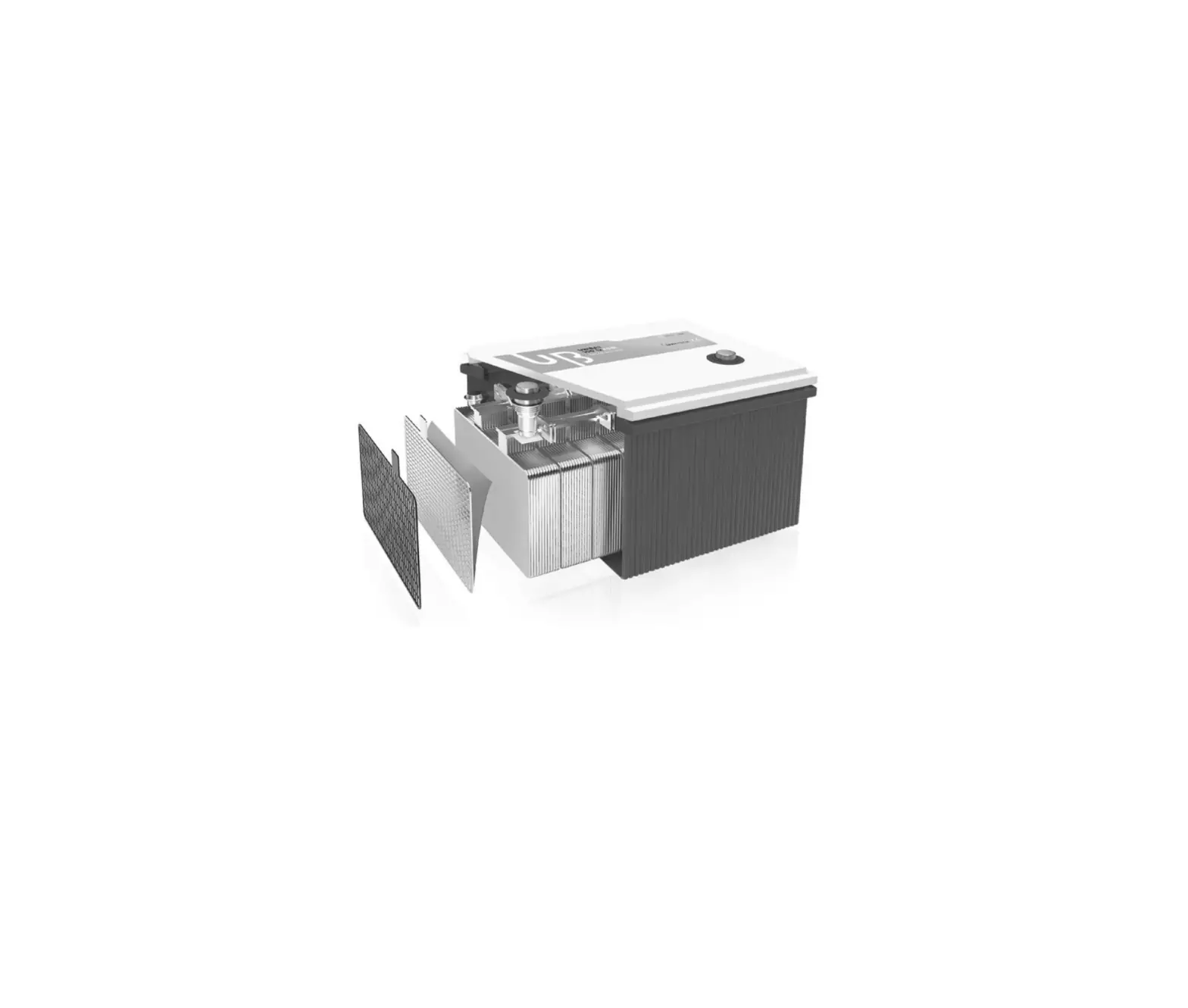
Product Technology
· Valve Regulated Lead Acid (VRLA) maintenance free. · Pure lead punched grid plate with low self-discharge. · Excellent charging acceptance with high charging efficiency. · UL94V-0 ABS+PC enclosure. · Excellent PSoC cycle performance. · Super-fast charging: from 50% up to 90% state of charge in under an hour. · Integrated valve design controlling water loss, acid fog, and improved explosion resistance.
12
Operation
Charging
Canbat lead carbon baeries are usually charged using a three-stage charging cycle: bulk, absorpon, and float stages. Bulk is a constant-current stage. The purpose of the bulk stage is to raise the baery voltage to a relavely high level with an inial fast charge. Absorpon is a constant voltage stage. It is established upon reaching the absorb voltage sengs. The baery is considered to be full when the following condions are met: The charge current must taper down to 1% of the total baery amp-hours while maintaining the absorpon voltage. The charger can then exit absorpon and then enter the float stage. The float stage is a maintenance stage which ensures the baery remains fully charged.
Charging Characteriscs
Not all chargers are designed or programmed the same way. Please use the following sengs for chargers, inverter/chargers, and charge controllers.
· Bulk / Absorpon: 14.1-14.4VDC · Equalize (rarely needed): 14.1VDC
Only needed if canbat carbon baeries are stored longer than 3 months, floated more than one year or discharged more than 80%
· Float: 13.62VDC
13
Charging voltage/v
3.0 2.8 2.6
2.4 2.2 2.0 1.8
0
25°C constant current
C/5
C/10
C/15
C/20
Canbat Lead Carbon Baeries
Generic AGM Baery
5
10
15
20
25
Charging me/hour
Figure 1: Constant Current Charge
Charge Charging Charging Volume Current Voltage
(%)
140
(XCA) (V/cell)
120 0.10
2.50
100 0.08 2.33
80 0.06
60
2.16
0.04
40
2.00
0.02
20
1.83
0
0
0
0.1CA-2.25V/cell Temperature 25°C
Charged Volume
Charge Voltage
Aer 50% Discharge 50% DOD Aer 100% Discharge 100% DOD
Charging Current
Figure 2: Constant Voltage Charge
14
Temperature Compensaon
To achieve longer baery life, compensate for temperatures above or below 77°F (25°C). For Canbat lead carbon baeries we recommend -30mV/°C (-5mV/cell/°C).
Discharging
Baery capacity depends on the discharge current or discharge rate. If the discharge current is smaller, the discharge capacity will be larger. If the discharge current is larger, the discharge capacity will be smaller.
Discharge Characteriscs
The final voltage is based on the discharge current and the minimum allowed by the system setup.
Terminal Voltage(V)
13.2 12.6 12.0 11.4 10.8 10.2
0.01
10Hr 2Hr 5Hr 8Hr
0 5Hr 1Hr .
0.1
0.5 1 2
5 10
Discharge Time (hours)
120Hr 100
Figure 3: Discharge Curves Given Different Discharge Currents
15
Discharge Temperature Characteriscs
Baery capacity increases with the temperature. The size of the effect the temperature has is affected by the discharge current/discharge rate. This effect becomes more obvious when the baery is discharged at a larger current.
10
C5
1
C1
C 0.25
0.1
Discharge Time (h)
0.01 -40°C
-30°C
-20°C
-10°C
0°C
10°C
20°C
30°C
40°C
Temperature (°C)
Figure 4: Temperature Effects on Capacity Discharge Rates
Self-Discharge
Stored baeries will need to be recharged to recover from self-discharge. The rate of self discharge increases as the temperature increases.
16
Remaining Capacity (%)
100 90
77°F(25°C) 113°F(45°C) 131°F(55°C)
80 70
60
50
Canbat Lead Carbon Batteries
Generic AGM Battery
40
30
20
0 10 20 30 40 50 60 70
Storage Time (Weeks)
Figure 5: Self-Discharge Curves
Recharging
Generally speaking, lead sulfate will be produced on the baery negave plate when they are stored for a long me. Canbat lead carbon baeries can be stored for up to 24 months. Because lead sulfate is an electrical insulator, it negavely affects the performance of the baery. We recommend the following recharge schedule based on storage temperatures.
If a baery is stored under 68°F (20°C), it should be recharged every 9 months, at a constant 13.38V to 13.62V, current limit 0.25C10 for 2 to 3 days.
If it is stored between 68°F and 86°F (20°C to 30°C), it should be recharged every 6 months at 13.8V to 14.4V, current limit 0.25C10 for 10 to 16 hours.
17
If it is stored between 86°F and 104°F (30°C to 40°C), it should be recharged every 3 months at 13.8V to 14.4V (temperature compensated -3mV/°C), current limit 0.1C10 for 8 hours or 0.05 C10 for 16 hours.
Open-Circuit Voltage (OCV) vs. State of Charge (SoC)
The open-circuit voltage of lead acid baeries varies with the specific gravity of the electrolyte. While discharging, the specific gravity of the electrolyte changes greatly but cannot be measured in a closed baery, so the open-circuit voltage is measured and the approximate residual capacity is calculated.
OCV/Cell
OCV/Cell vs. SoC
2.3
2.2
2.1
2
1.9
1.8 20%
40%
60%
SoC
80%
100%
Figure 6: OCV/Cell vs. SoC
18
Cycle Count
Cycle Life
The cycle service life of the baery is related to the frequency of discharge, the depth of discharge, the floang voltage, and the working environment. Total cycle life decreases with increasing temperatures and depths of discharge.
Cycle Life
8000 7000 6000 5000 4000 3000 2000 1000
0 10% 20% 30% 40% 50% 60% 70% 80% 90% 100%
Depth of discharge
Figure 7: Approximate Total Cycle Count vs. DoD
19
Environmental Protection
Toxic and Poison Checklist
Baery Component Cu
Presence of Toxic or Poisonous Substances
Pb
Hg
Cd
Cr(IV) PBB
PBDE
Terminal
Present
Not Present
Not
Not
Present Present
Not
Not
Present Present
Not Present
Container
Not Present
Inner
Materials
Not Present
Not Present Present
Not Present Not Present
Not Present Not Present
Not
Not
Present Present
Not
Not
Present Present
Not Present Not Present
Recycling
This baery cannot be disposed of with other waste. In order to prevent the release of potenally hazardous substances, risks to the environment, and risks to human health from improper hazardous waste disposal, do not throw away this baery in the general waste stream. Please recycle it.
In order to recycle this baery, please use your local recycling system or contact your waste management authority for the proper lead-acid baery recycling procedures in your area.
20
TECHNICAL SUPPORT
If you have technical quesons about your Canbat baery, please contact the original place of purchase or Canbat Technologies Inc. directly:
+1 (778) 358-3925
86
www.canbat.com
CANADIAN BATTERY MANUFACTURER
Canbat Technologies Inc. provides customers with the highest quality and safest lead carbon baery products. All rights reserved. Canbat Technologies Inc. is not liable for damages that may result from any informaon provided in or omied from this publicaon, under any circumstances. Failure to follow Canbat installaon guidelines may invalidate the warranty. Canbat reserves the right to make adjustments to this publicaon at any me, without noce or obligaon.
 Canbat Technologies Inc. - Lithium & sealed lead acid battery manufacturer