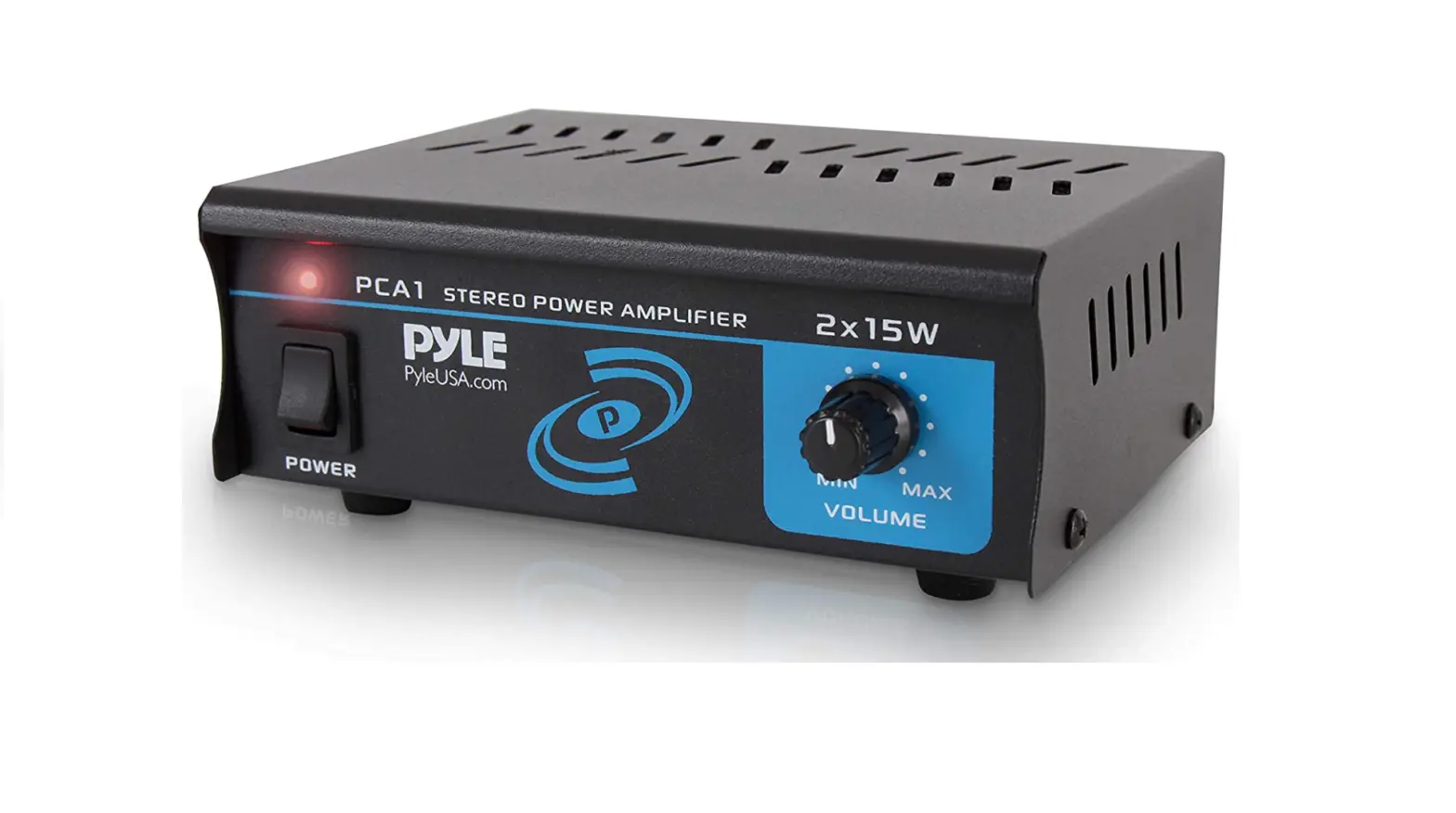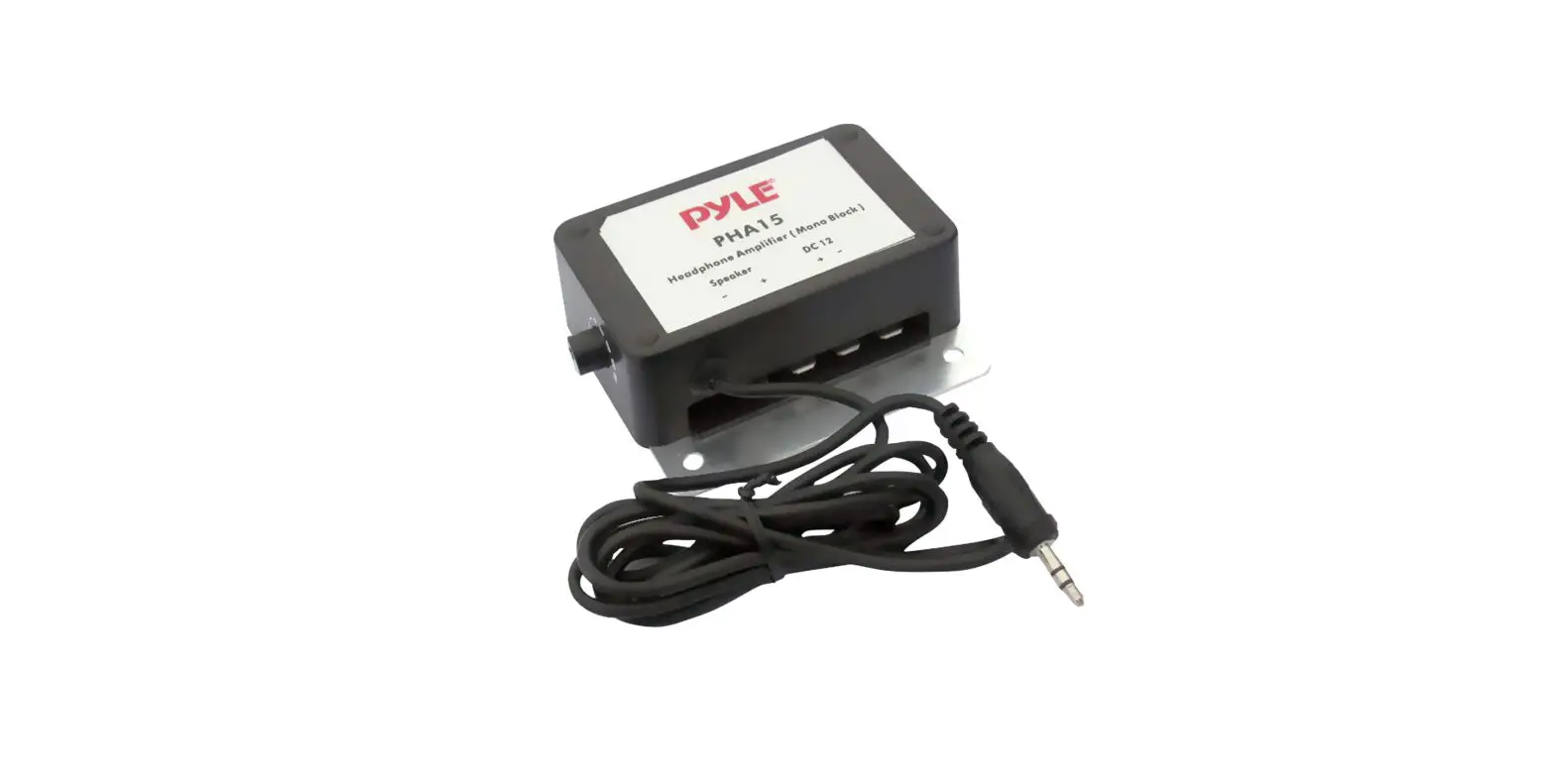

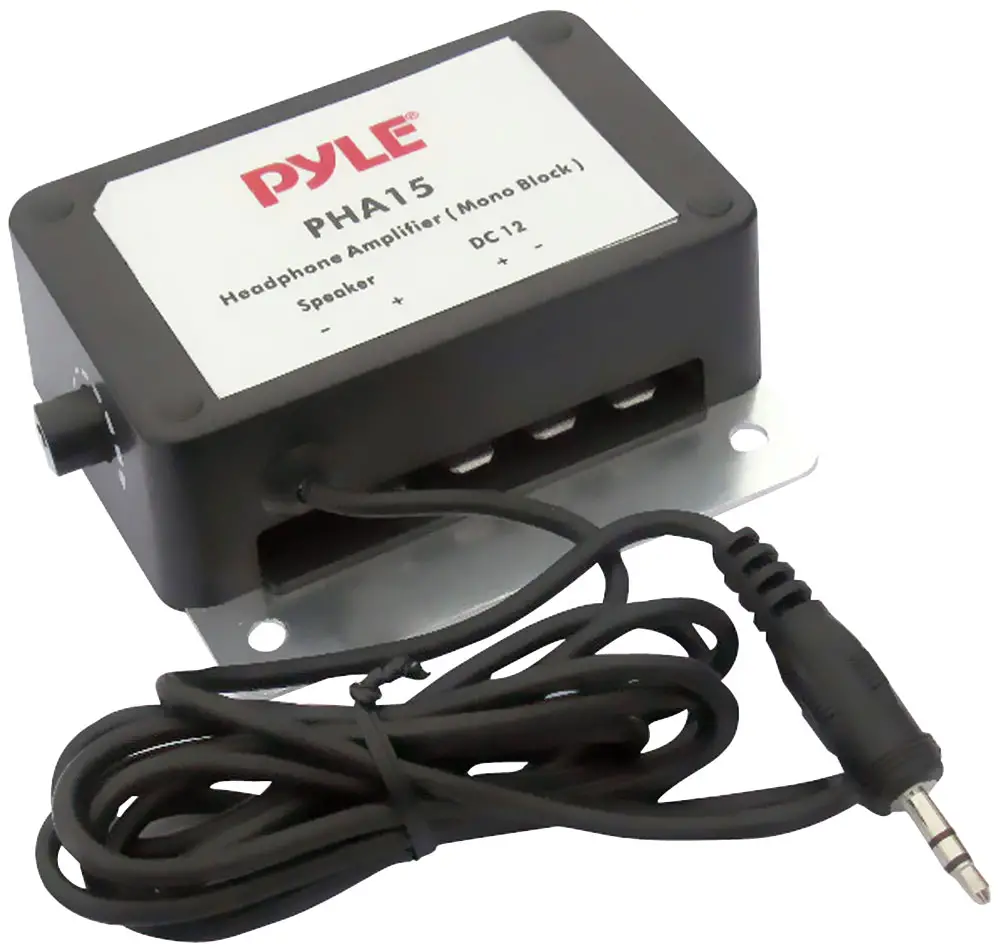
Pyle Home PHA15 3.5mm 150 Watt Mono Audio Amplifier
Specification
- Product dimensions 1.25 x 6.25 x 7.25 inches
- Item Weight 4.8 ounces
- Item Model number PHA15
- Weight 0.38 Pounds
Description
This amplifier amplifies the signal coming from a digital music player so that it is richer and stronger. This gadget is amazing if you have high-end speakers; you’ll hear sections of the music you’ve never heard before and you won’t want to listen to it any other way. Try the PHA15 for improved clarity, power, and frequency response. It has a single speaker output and a mono 3.5mm male connection for input. a 12 V connection is necessary.
About this product
- Male Audio Input 3.5 mm / 1/8″ Speaker
- Output audio
- 15W x 1 RMS Peak audio output: 150 W
- 4 Ohm audio output Stable
- Designed to work with any audio player that has a 3.5mm /1/8″ audio output, such as an MP3 player or an iPod.
What’s in the box
- Headphones amplifier (Mono Block)
FAQ’s
It works with a 12-volt wall outlet. I think it’s dc.
There was no power supply provided. The single 6×9 speaker I powered with a 12v tap from a PC power supply has been operating flawlessly. Although I haven’t measured it, I don’t think the current pull is much more than 2A. A 2A inline fuse I installed has never blown.
Indeed produces amplifier boards. They may have a mono amp on hand, in my opinion. Just plug in a mono amp should I come up
I’ve never tried to use it that way, so I can’t say for sure. It serves merely as a microphone for a speaker amplifier that I am utilizing. For this usage, it’s perfect.
A 3.5 mm jack is utilized for the audio input, and a 1/4 flat push-on is used for power.
Two amp channels are combined into one mono, a much more potent amp channel in bridge mono mode. This is typically applied to subwoofers. Specifications for bridged mono and stereo power handling are different for amplifiers.
The first and simplest option is to power your center speaker just through one channel of your stereo amplifier. Simply connect the speaker to the amp’s matching output while connecting the preamp’s mono center channel output to the amp’s right or left channel input.
Since it only has one channel, a mono-block amplifier cannot be bridged. A monoblock amplifier has two outputs that can be used to connect numerous subwoofers with ease. Look at the speaker terminals to determine whether your amplifier is a monoblock or a multi-channel unit.
Only one channel can be amplified with a mono amp. Two channels are needed for stereo reproduction, so either two mono amps or one stereo amp could be utilized. A monoblock amplifier consists of a single component that amplifies a single channel. They are more expensive per channel, heavier, and bigger.
Amplifiers shouldn’t be left on since prolonged and continuous heat exposure might cause internal components, including the filament, to wear out. Quality and dependable amplifiers can run continuously for hours, days, or even weeks without experiencing any damage. It’s advisable to switch your amps off when not in use, though.
The term “dual mono” designates two entirely distinct, independent, and unrelated channels. For instance, you might run a vocal through one channel of a dual mono preamp with its own control settings and a bass guitar through the second channel with a totally distinct set of parameters.
The Signature Series monoblock amplifier should only be connected to a maximum of four subwoofers. No additional subwoofers should be connected if a subwoofer with a native resistance of just 1 ohm is already connected to the monoblock amplifier from the Signature series.
A mono jack will have 2 prongs, 1 is a ground wire, and the other is the power/live wire used to power your pickups. A stereo jack, on the other hand, will have 3 prongs. The configurations are the same as above with the addition of an auxiliary prong that can be used for power switching
In this usage, “mono” refers to one channel and two poles (ground and signal). Two separate channels and three poles are stereos (ground, left signal, right signal).
Mono audio is usually louder than stereo audio because it only has one channel. Stereo audio is usually louder than surround sound audio because it has two channels.