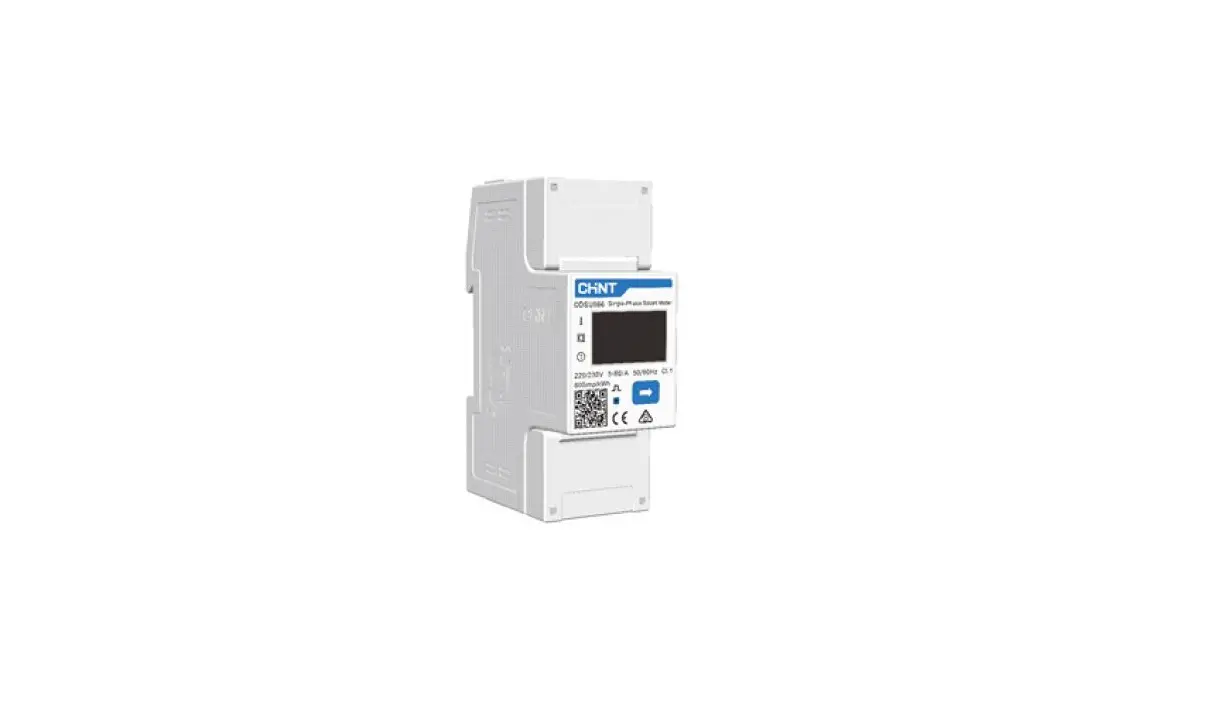
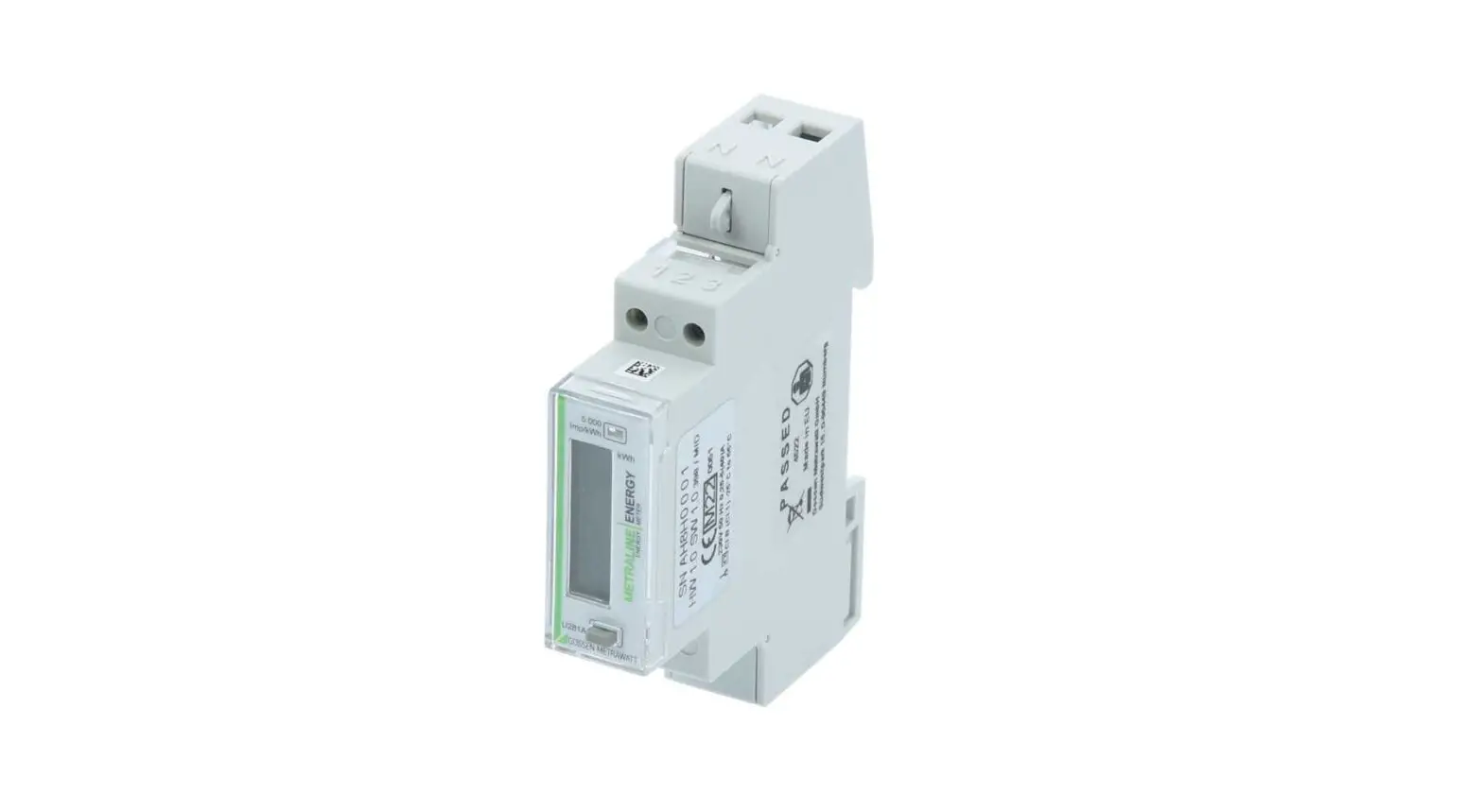
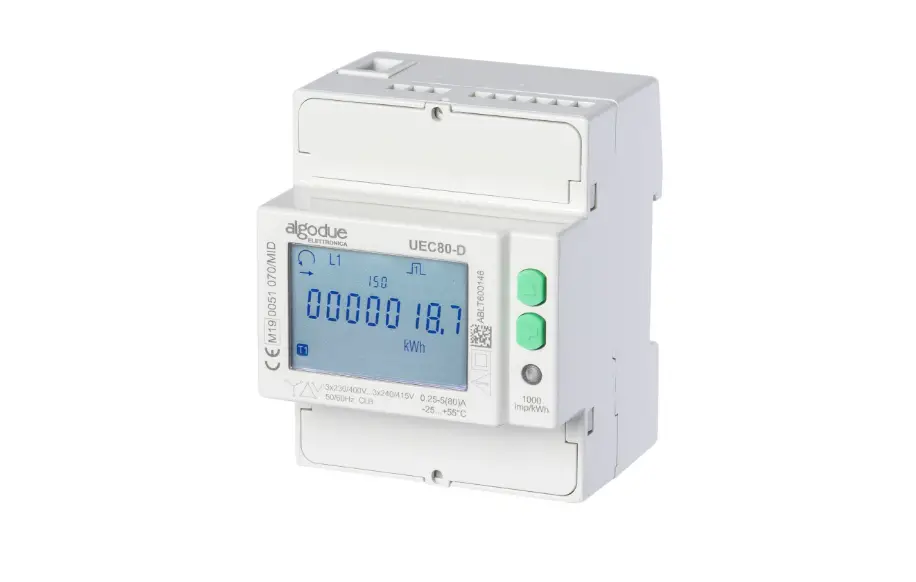
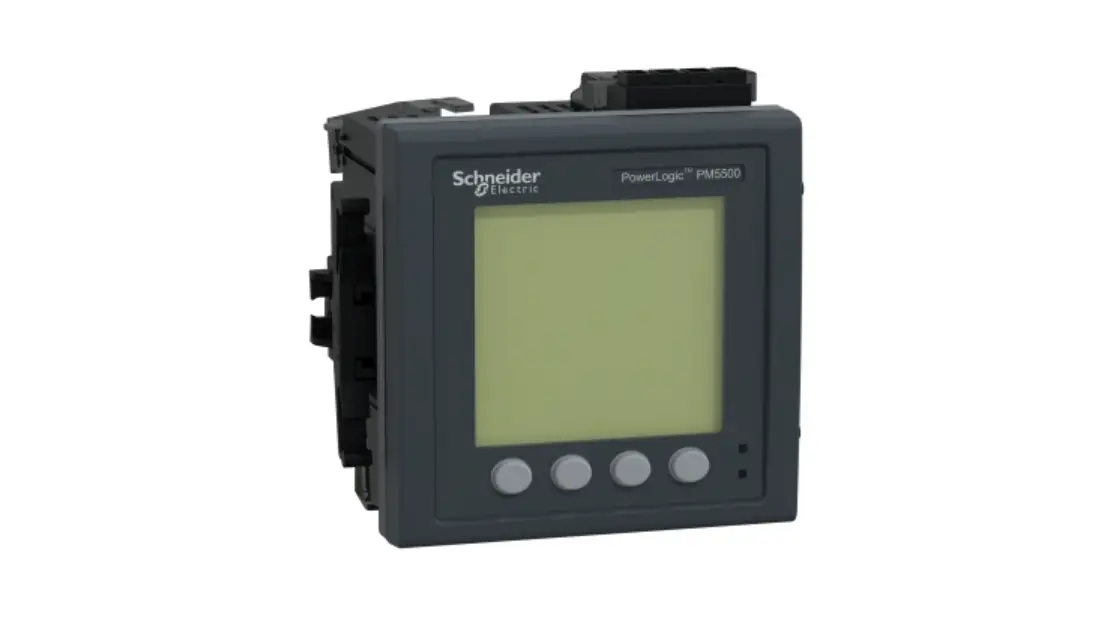
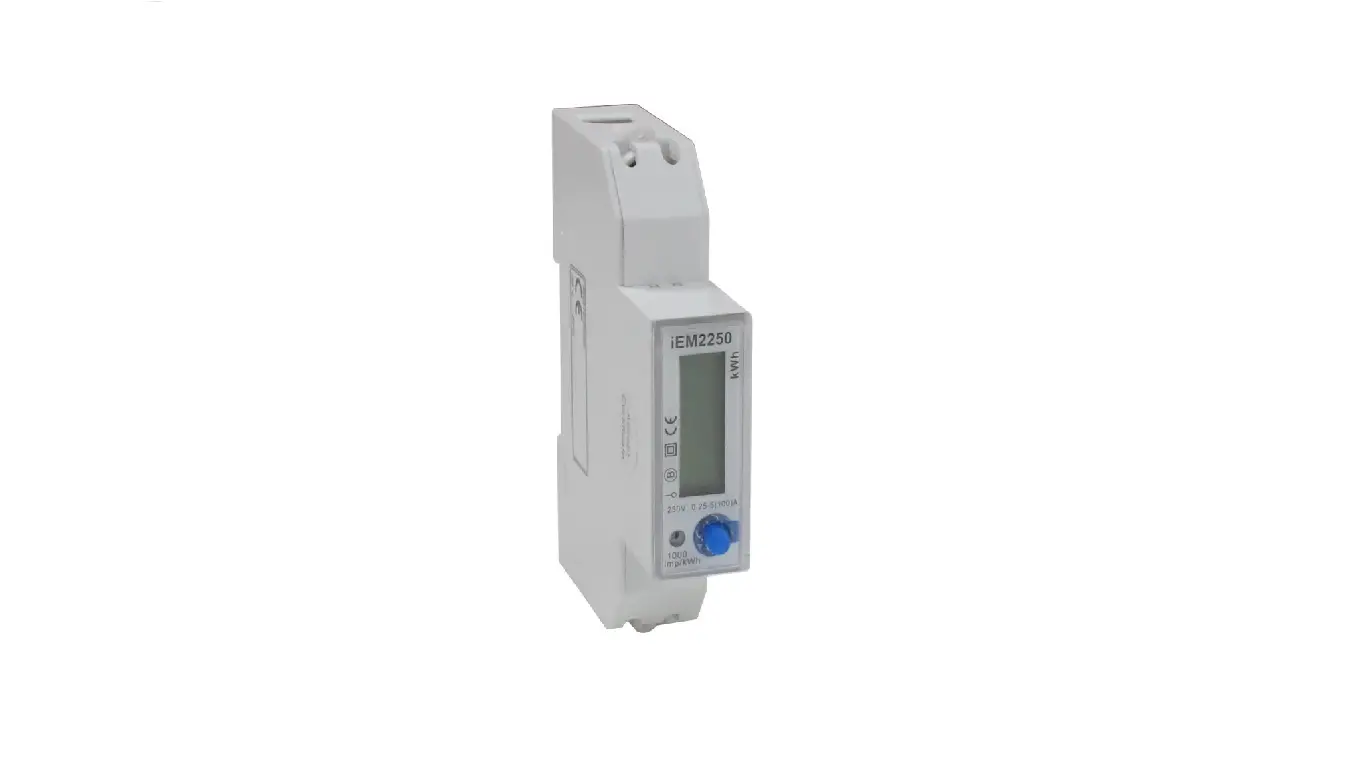
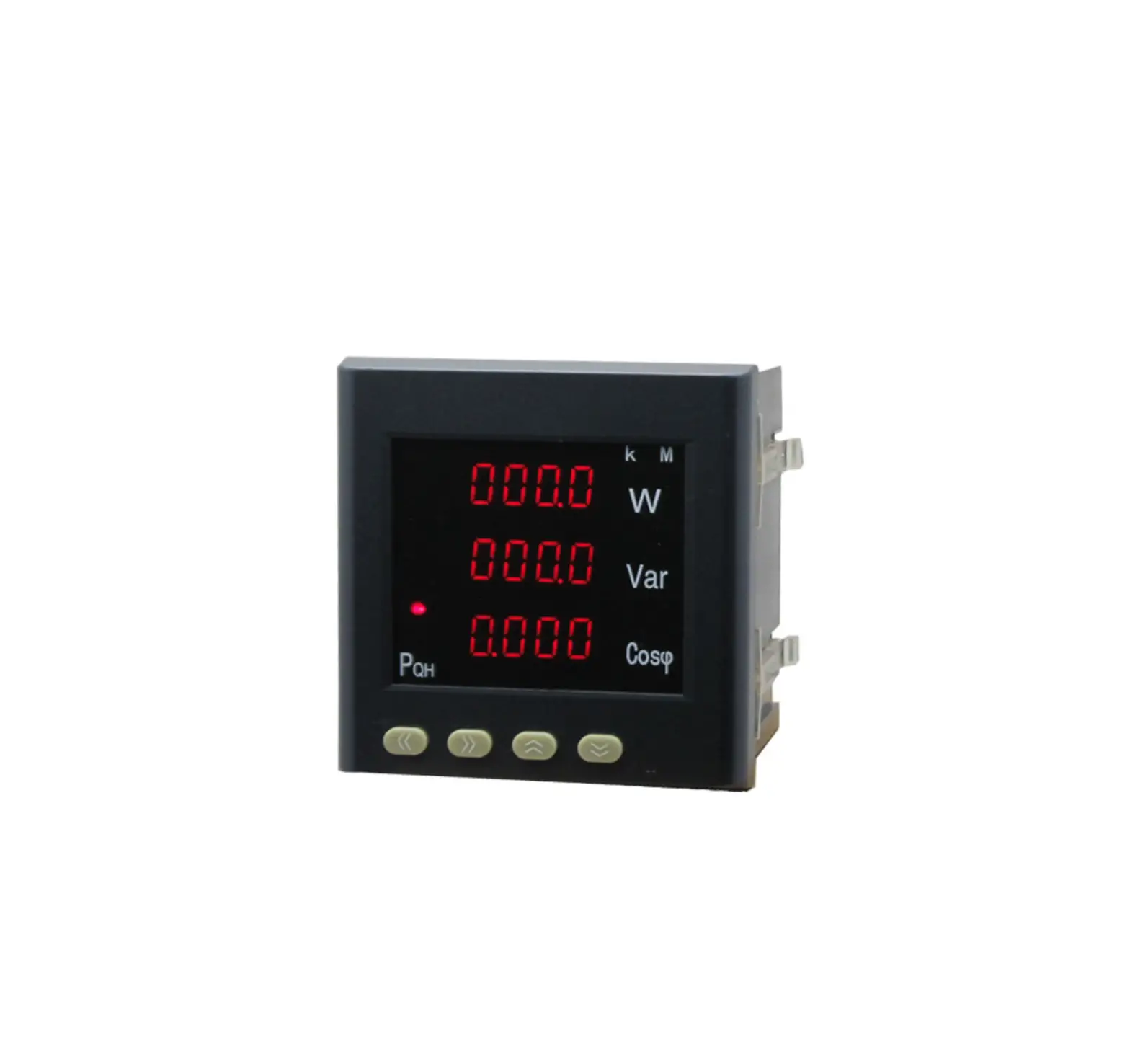
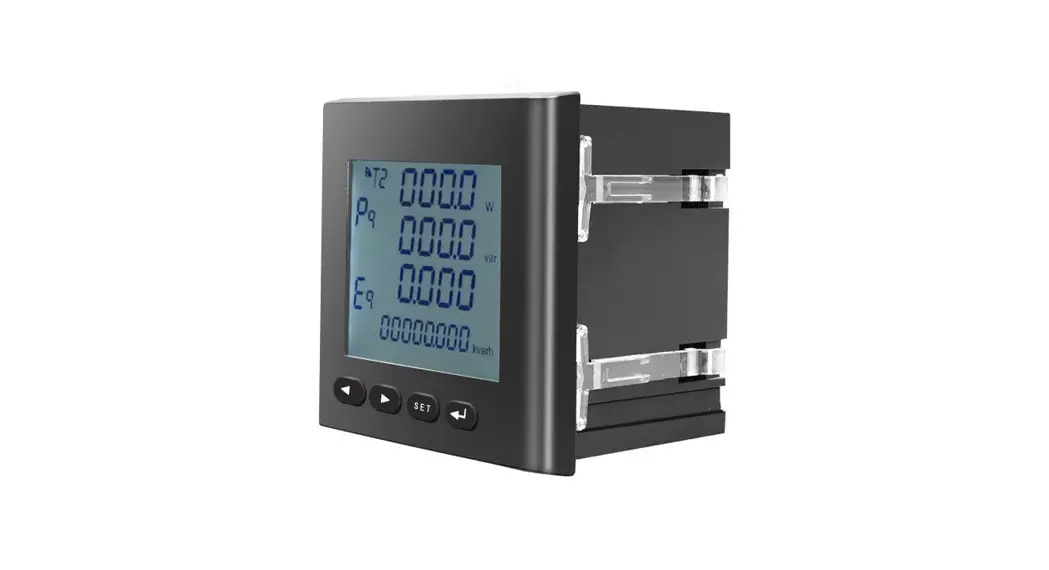
DDSU666 Single Phase Energy Meter
Product Information
Model Number: DDSU666 SIAMETER1P666CU01H
The DDSU666 SIAMETER1P666CU01H is a bidirectional Smart Meter
that records the load curve and controls the various energy flows,
giving highly accurate measurements and rapid communication through
the chosen communication network. It is designed to work with nJoy
inverters models that are compatible with this product:
- Astris Series Grid-tied inverter Monophase
2K/3K/4K/5K/6K/7K/8K/10K - Ascet Series Hybrid inverter Monophase 5k/6K
The product comes with a user manual that should be read
carefully before using the product. The package contents should
also be checked upon delivery to ensure that all items are included
and not damaged.
Product Usage Instructions
Before using the DDSU666 SIAMETER1P666CU01H, please carefully
read the user manual provided and retain it for future reference.
The following are the steps to use the product:
- Ensure that the DDSU666 SIAMETER1P666CU01H is compatible with
your nJoy inverter model. - Check that all package contents are included and not
damaged. - Install the DDSU666 SIAMETER1P666CU01H according to the
instructions provided in the user manual. - Connect the DDSU666 SIAMETER1P666CU01H to your nJoy inverter
model either directly or via transformer, depending on the current
range required. - Turn on the power supply and monitor the load curve and energy
flows through the DDSU666 SIAMETER1P666CU01H. - If any issues arise, refer to the user manual or contact the
shop where you purchased the product for assistance.
DDSU666
SIAMETER1P666CU01H
User manual
322.10.23.0 Before using this product, carefully read all product documentation and retain it for future reference.
Thank you for purchasing our products!
Please read this manual before using the product.
A Smart Meter is a bidirectional device that records the load curve and controls the various energy flows, giving highly accurate measurements and rapid communication through the chosen communication network. nJoy inverters models that are compatible with this product:
Astris Series Grid-tied inverter Monophase
2K/3K/4K/5K/6K/ 7K/8K/10K
Ascet Series Hybrid inverter Monophase
5k/6K
NOTE! If any of the above package content is missing or is damaged please contact the shop where you have bought the product from.
2
1 Brief Introduction
1.1. Main application & applicable range Type DDSU666 single phase electronic energy meter (din-rail) (hereinafter referred to as the “instrument”) is designed based on power monitoring and energy metering demands for electric power system, communication industry, construction industry, etc. as a new generation of intelligent instrument combining measurement and communication function, mainly applied into the measurement and display for the electric parameters in the electric circuit including voltage, current, power, frequency, power factor, active energy, etc. The network can be realized through RS485 communication interface and external device. Adopting the standard DIN35mm din rail mounting and modular design, it is characterized with small volume, easy installation and easy networking, widely applied into the internal energy monitoring and assessment for industrial and mining enterprises, hotels, schools, large public buildings. 1.2. Product Features 1) Metering the positive and negative active power. 2) Adopting wide LCD, it has clear vision. 3) RS485 communication function with communication protocol complied with Modbus-RTU. 4) Adopting DIN35mm standard din rail mounting, structural modular design, it is characterized with small volume, easy installation and easy networking. 1.3 Model composition and meanings
Figure 1 Model No. & meanings
3
1.4 Applicable environmental condition. Regulated working temperature range: -25°~C+60°C Limited working temperature range: -35°C~+70°C Relative humidity(Annually average):75% Atmospheric pressure:86kPa~106kPa
2 Working Principle
The working principle block diagram of the instrument is shown in figure 2:
Figure 2 Work principle block diagram
3 Main Technical Performance & Parameters
3.1 Model specification
Model
Accuracy class
Frequency
Reference voltage
Current specification
Instrument constant
Type
DDSU666.004.0004
Active Class 1
60Hz
230 V
5(80)A
DDSU666.004.0004
Active Class1
60Hz
230 V
1.5(6)A
NOTE!
Table 1 Model specification
Please take the physical sign as standard.
800imp/ kWh
6400imp/ kWh
Direct connection
Via transformer
4
3.2Percentage error
Type Via CT Direct connection
Current range
0.01InI<0.05In 0.05InIImax 0.02InI<0.1In 0.1InIImax 0.05IbI<0.1Ib 0.1IbIImax 0.01IbI<0.2Ib 0.2IbIImax
Power factor
1 1 0.5L, 0.8C 0.5L, 0.8C 1 1 0.5L, 0.8C 0.5L, 0.8C
Percentage error limit of each class
instrument (%) Class 1 ±1.5 ±1.0 ±1.5 ±1.0 ±1.5 ±1.0 ±1.5 ±1.0
Table 2 Percentage error of single phase energy meter not exceeding the below corresponding
NOTE!
limited value
In: secondary rated current of the current transformer; Ib: calibrated current of the meter;
L:inductive; C: capacitive;
3.3 Start
Instrument
Direct connection Via transformer
Accuracy class of the energy meter Class 1 0.004Ib 0.002In
Power factor 1
Table 3 Under the referenced voltage and table 4, the energy meter can be started and
continuously measure the energy
3.4 Defluction The electric energy meter should have good anti-defluction logic. When the voltage loop with 1.15 times of referenced voltage and the current loop is disconnected, the energy will not produce more than one pulse.
5
3.5 Defluction
Specified operating voltage range Extended operating voltage range Ultimate operating voltage range Power consumption of the voltage circuit Power consumption of the current circuit
Table 4 Electrical parameters
3.6 Other technical parameters
0.9Un~1.1Un 0.8Un~1.15Un 0 Un~1.15Un
1W/8VA 2.5VA
Measuring range
Display mode Communication
protocol
0~999999.99 kWh (only display 6 bit, automatic shift of decimal point) LCD display
Modbus-RTU protocol
Table 5 Other technical parameters
3.7 Adoption for key components
Metering chip Crystal
Power transformer
Printed wiring board
Current transformer
SH79F7019
32.768kHz
ZTY6.170.234
1.5 (6) A:ZTY8.067.2729V2, ZTY8.067.2731V2, ZTY8.067.2732V2
5 (80) A : ZTY8.067.2729V2, ZTY8.067.2730V2
ZTY6.176.301
NOTE!
Table 6 Adoption for key components
The actual plate number is determined according to the actual sample table.
4 Main functions
4.1 Metering function
1) Accurately metering the positive and negative active power;
2) The storage data of the electric energy meter will not lost after powering off.
4.2 Displayed functions
When the energy meter is in normal working condition (on load state), the positive pulse indicator should be flashed. If long time for no flashing or light for the indicator, please check whether the wiring mode of the energy meter is right or not.
6
Symbol V A W
var
Hz kWh
Table 7 LCD logo meanings
Meaning The unit of the voltage, the display data of indicating LCD is voltage The unit of the current, the display data of indicating LCD is current The unit of the active power, the display data of indicating LCD is active power The unit of the reactive power, the display data of indicating LCD is reactive
power The unit of the frequency, the display data of indicating LCD is frequency The unit of the active energy, the display data of indicating LCD is active energy
The display time of the measurement data is five seconds and information sample for every page of the measured information of measurement data (if not consistent with the instrument panel, please take the object as standard.)
Light time of the background: 1 min.
Display interface
Instruction
Means the current display voltage is U, the unit is “V”, the left picture is U=220.0V
Means the current display current is I, the unit is “A”, the left picture is I=5.000A.
Means the current display is the active power P, the unit is “kW”, the left picture is P=1.100kW.
7
Means the current display is the power factor Ft, the left picture is Ft=1.000.
Means the current display is frequency F, the left picture is F=50.00Hz.
Means the current positive active energy EImp, the unit is “kWh”, the left picture is EImp=1.20kWh.
Means the current negative active energy EExp, the unit is “kWh”, the left picture is EExp=1.00kWh.
Means the current combination active energy total ComEp, the unit is “kWh”, the left picture is ComE-
p=2.20kWh.
Means the current communication protocol is Modbus.
Represents 8 data bits, no effect bit and one stop bit of the current communication protocol.
Means the current communication address is 11.
Means the current communication baud rate is 9600.
8
Keyboard operation: After pressing the button for a long time, the display interface enters the switching interface of setting 645 protocol and Modbus protocol. Shortly press can switch the protocol, not the address page (only the ModBus protocol can be switched to the address page), the address of ModBus can be set by the button, the button can set the address range 1-99
Figure 3 Long press button
4.3 Communication function The instrument adopts RS485 communication mode with baud rate to be set as 1200, 2400bps, 4800bps and 9600bps.For a same communication circuit, it can at most be connected with thirty-two instruments at the same time, with each instrument to be set as their communication address. For the communication connection, it should use shielded twisted pair with copper mesh with wire diameter not below 0.5mm2 . On wiring arrangement, the communication line shall be away from strong cable or other strong electric field with the maximum transmission distance to be 1200m. For the typical networking connection mode, please see the below figure, users can select other suitable connection mode based on detailed conditions.
9
Figure 4 Schematic diagram of communication connection
When the instrument is set to be ModBus-RTU transmission mode, ModBus-RTU communication protocol adopts host-slave response in one communication line. Firstly, the host computer’s signal will seek for a terminal device (slave) with only one address, then the terminal device will produce response signal and transmit to the host computer in opposite direction, that is, half duplex working mode. This protocal only allows communication between the host (PC, PLC, etc.) and the terminal device, rather than data exchanges between the independent terminal devices. Thus, each terminal device will not occupy the communication circuits in their initialization, and only be limited to response the query signal to the host computer. The instrument can provide ModBus-RTU communication protocol (see appendix A), for the parameter information to be read or modified by the communication, please see the below table.
Parameter address 0000H 0001H
0002H
0003H 0004H 0005H
P a r a m e t e r Instruction of the Type of data
code
parameters
UCode
P r o g r a m m i n g 16-bit with
password codE
symbols
REV.
Reserved, actual 16-bit with
read is the
symbols
version number
ClrE
Electric energy
16-bit with
zero clearing
symbols
CLr.E(1:zero
clearing)
RESERVED RESERVED
16-bit with symbols
RESERVED RESERVED
16-bit with symbols
ChangePro- Protocol chang- 16-bit with
tocol
ing-over
symbols
Length of data Read&write
Word
attributes
1
R/W
1
R
1
R/W
1
1
1
R/W
10
0006H 0007H 0008H 0009H 000AH 000BH 000CH
000DH 000EH 000FH 0010H 2000H 2002H 2004H
2006H
2008H 200AH 200CH 200EH 2010H
4000H
Addr
C o m m u n i c a t i o n 16-bit with
address Addr
symbols
1
Urat
RESERVED
16-bit with
symbols
1
Irat
RESERVED
16-bit with
symbols
1
RESERVED RESERVED
16-bit with symbols
1
RESERVED RESERVED
16-bit with symbols
1
RESERVED RESERVED
16-bit with symbols
1
BAud
C o m m u n i c a t i o n 16-bit with
baud rate
symbols
1
bAud
RESERVED RESERVED
16-bit with symbols
1
RESERVED RESERVED
16-bit with symbols
1
RESERVED RESERVED
16-bit with
1
RESERVED RESERVED
16-bit with
1
U
Voltage
single precision floating decimal
2
I
Current
single precision floating decimal
2
P
Conjunction active single precision
power, the unit is floating decimal
2
KW
Q
Conjunction
single precision
reactive power,
floating decimal
2
the unit is Kvar
RESERVED RESERVED
single precision floating decimal
2
RESERVED
Conjunctioon power factor
single precision floating decimal
2
RESERVED RESERVED
single precision floating decimal
2
Freq
Frequency
single precision floating decimal
2
RESERVED RESERVED
single precision floating decimal
2
Electrical data of the secondary side
Ep
Active in electric- single precision
ity
floating decimal
2
R/W
R/W
R R R R R R R R R R
11
ChangeProtocol such as protocol switching, data for 2 for Modbus RTU protocol -, data to 1 for DL/T 645-2007; The CLr. E power reset write 1 removal of total power; BAud rate: 1:2400bps; 2:4800bps; 3:9600bps; 4.4 Outline &Mounting Dimension Outline dimension: 36mm×98mm×65mm Din rail mounting dimension: 35mm, with configuration to be shown as figure 4
Figure 5 Configuration
5 Installation & Operation Instruction 5.1 Inspection 1) Before installation, firstly check whether the model No. and specification of the product on the package is the same as the object. If not, please contact the supplier. 2) Check whether the product shell in the carton is damaged, if is, please contact the supplier. 5.2 Installation Directly clip the instrument on the rail and install it on the distribution box. 1)When installing, firstly clip one terminal of the slot and then clip to the rail with power. 2)When disassembling, press the movable card with a screwdriver and take out the instrument.
12
5.3 Wiring mode 6.3.1 Instruction of wiring terminal Before powering, you must check whether the wiring mode of the instrument is correct, and the wiring diagram is shown as below:
Figure 6 Direct connection
6
Figure 7 Via transformer
13
6 Diagnosis, analysis and elimination of common faults
Fault phenomenon
Display fault
Communication fault
Analysis of causes
The wiring may not connected according to
the wiring diagram of the
meter
The communication setting information of the meter may be incorrect
Troubleshooting
Check if the actual connection is the same as the requirement of the wiring diagram. Pay special attention to “N” position of the voltage, the high&low end of the current and terminal labeling are different from actual number.
Check if the communication setting information such as comunication address, baud rate, verification mode is the same as
the PC settings.
Remark
While checking the connection, be sure the meter is in the state of disconnection, guarantee the safety of
human life.
If the above method cannot eliminate the fault, please contact with the aftersale service of digital meter from Zhejiang CHINT Instrument Co., Ltd.
7 Transportation & Storage
The package of the instrument shall adopt materials complied with environmental protection, under package condition, the instrument and accessories shall be stored in the dry and ventilated places, to avoid humidity and corrosive gas erosion, with the limited environmental temperature for storage to be -40°C!+70°C and relative humidity not exceeding 75%. The package of the instrument shall comply with the provisions of GB/T 133842008 of General specifications for packings of mechanical and electrical products with the environmental temperature requirement and transportation for the normal storage complied with the provisions of GB/T 25480-2010 of Basic environmental conditions and testing methods for instruments transportation and storage
Complete set of package for single product, including:
1) One set of instrument
2) One operation manual
3) One bag of desiccant
4) Certificate
14
8 Maintenance & Service
Appendix A: MODBUS-RTU Communication Protocol
A.1 Communication format
Information transmission adopts asynchronous mode, taking byte as the unit. The communication date transmitted between the host and slave computer is the format of 10-digit characters, including one start bit(0), 8 data bits without check bit, two stop bits(1)(other format can be customized). Format of information frame:
Start
More than 3.5-character
dead time
Address code
Function code
1 character 1 character
Data field n characters
CRC check code
2 characters
End
More than 3.5-character
dead time
Table A.1
A.2 Communication information transmitting procedure
When communication command is transmitted from the host computer to the slave computer, the slave computer which matches the address code sent by the host computer receives the communication command. If CRC checks without any fault, then the corresponding operation will be carried out, after
that the implement result (date) is returned to the host computer. The returned information contains address code, function code, implement date and CRC check code.
A.2.1 Address code
Address code is the first byte of each communication frame, with the range from 1 to 247. Each slave must have an exclusive address code in the bus, only the slave computer which matches the address code sent by the host computer can respond returned information. When the slave computer returns the information, the returned data will begin with their respective address codes. The address code sent from the host computer indicates the slave address, the returned address code from the slave computer indicates the slave address, while the corresponding address code indicates where the information comes from.
A.2.2 Function code
It’s the second byte of each communication frame. It’s sent by the host and tells the slave computer what actions should be carried out through function code. The slave will respond, and the functional code is the same as that sent
15
by the host computer, which indicates that the slave computer has responded the host and complemented the relative operation. The instrument supports the following two function codes:
Function code 03H
10H
Definition
Read register Write multichannel
register
Operation Read one or several register data Write n 16-bit binary data into n continuous registers
Table A.2
A.2.3 Data area
The data field will be different based on different function codes. These data can be numerical values, reference addresses and so on. For different slave computers, both the address and data information are different, and the communication information table should be provided. The host utilizes communicate command (function code 03H and 10H) to read and modify the data registers of the slave freely. But the data length which is read or write at one time should not be out of the effective range of the data register’s address.
A.3 Brief introduction of function code
A.3.1 Function code 03H: Read register
For example: The slave address which the host intends to read is 01H, the start register address is two register data of 0CH, sent by the host:
The host sends
Address code
Function code
Start register address
High byte low byte
Register number
High byte low byte
low byte CRC
High byte
Send message 01H 03H 00H 0CH 00H 02H 04H 08H
Table A.3
If the data of the slave register 0CH, 0DH is 0000H, 1388H, the slave will return:
16
The slave returns Address code
Return message 01H
Function code
03H
Bytes
04H
High byte
00H
Register 0CH data
low byte
00H
High byte
13H
Register 0DH data
low byte
88H
low byte
F7H
CRC check code
High byte
65H
Table A.4
A.3.2 Function code 10H: Write multi-port register
For example: The host intends to save data of 0002H, 1388H, 000AH into the slave address of 01H, the start register address is the three registers of 00H, sent by the host:
The host sends
Address code
Function code
Register 0CH data
High byte low byte
Register 0DH data
High byte low byte
Write bytes
The data to be written in 00H register
High byte low byte
The data to be written in 01H register
High byte low byte
The data to be written in 02H register
High byte low byte
CRC check cod
low byte High byte
Table A.5
Send message 01H 10H 00H 00H 00H 03H 06H 00H 02H 13H 88H 00H 0AH 9BH E9H
17
Returned by the slave
The slave returns
Address code
Function code
Start register address
High byte low byte
Register number
High byte low byte
Register number
low byte High byte
Table A.6
Return message 01H 10H 00H 00H 00H 03H 80H 08H
A.4 16-digit CRC check code
The host or slave computer can be judged by the check code to see if the received information is correct or not. The interruption by electronic noises or other factors may cause errors during information transmission.
16-digit CRC check code is calculated by the host, located at the end of the transmit information frame. The slave recalculates the received information of CRC and compares if the calculated CRC goes in line with the received CRC, if not, there is an error. Only 8 data bits are used during CRC calculation, both the start bits and the stop bits are not involved in the calculation.
The calculation method of CRC check code is stated as follows:
1) Pre-arrange one 16-digit register as a hexadecimal FFFF ( i.e. fully 1), the register is called CRC register;
2) Make the first 8-digit binary data ( the first byte of the communication information frame) with the lower 8 digits of the 16-digit CRC register by XOR calculation, the result is placed in CRC register;
3) Shift the content of CRC register rightward by one digit (towards the lower digit) and fill in the highest digit with 0, check the shift-out digit after rightward shifting;
4) If the shift-out digit is 0: repeat step 3) (shift rightward one digit again); If the shift-out digit is 1: make CRC register with multinomial A001 by XOR calculation
5) Repeat step 3) and 4) until shift rightward for 8 times, then all the 8 digits are processed;
6) Repeat step 2) and 5), process the next byte of the communication information frame;
18
7) After calculating all the bytes of the communication information frame (exclude CRC check code) according to the above steps, the content of the CRC register to be get is: 16-digit CRC check code
A.5 Error handling
When the meter detects other errors except the error of CRC check code, the information will be returned to the host, the highest digit of the function code is 1, i.e. the function code returned to the host from the slave is adding 128 base on the function code sent from the host. The error returned from the slave is as follows:
Address code 1 byte
Addr Function code(top digit is 1)
1 byte
Error code 1 byte
CRC check code low byte
1 byte
CRC check code High byte
1 byte
Table A.7
Error code is as follows:
01H
Illegal function code
The function code received is not supported by the instrument
02H
Illegal register address
The register address received is out of the register address range
03H
Illegal data value
The data value received is out of the corresponding address data range
Table A.8
19