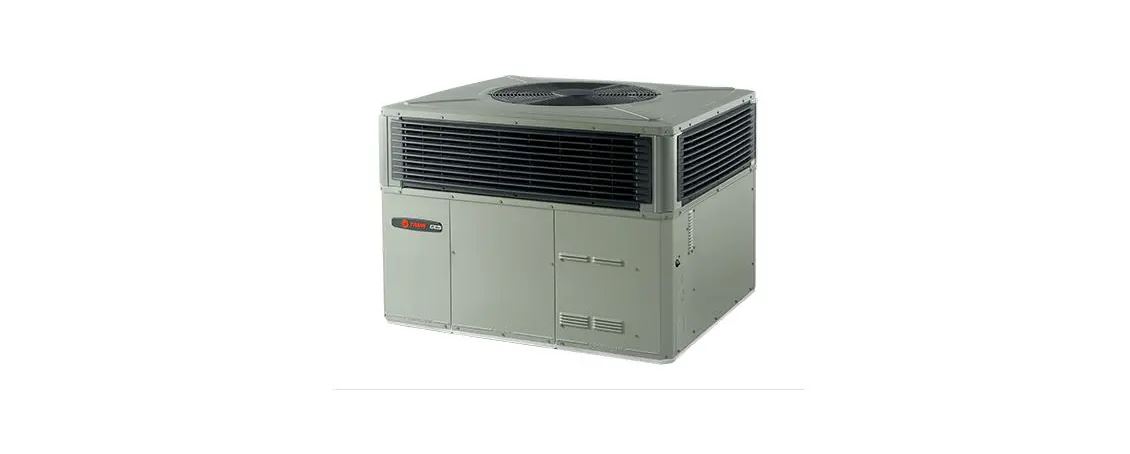
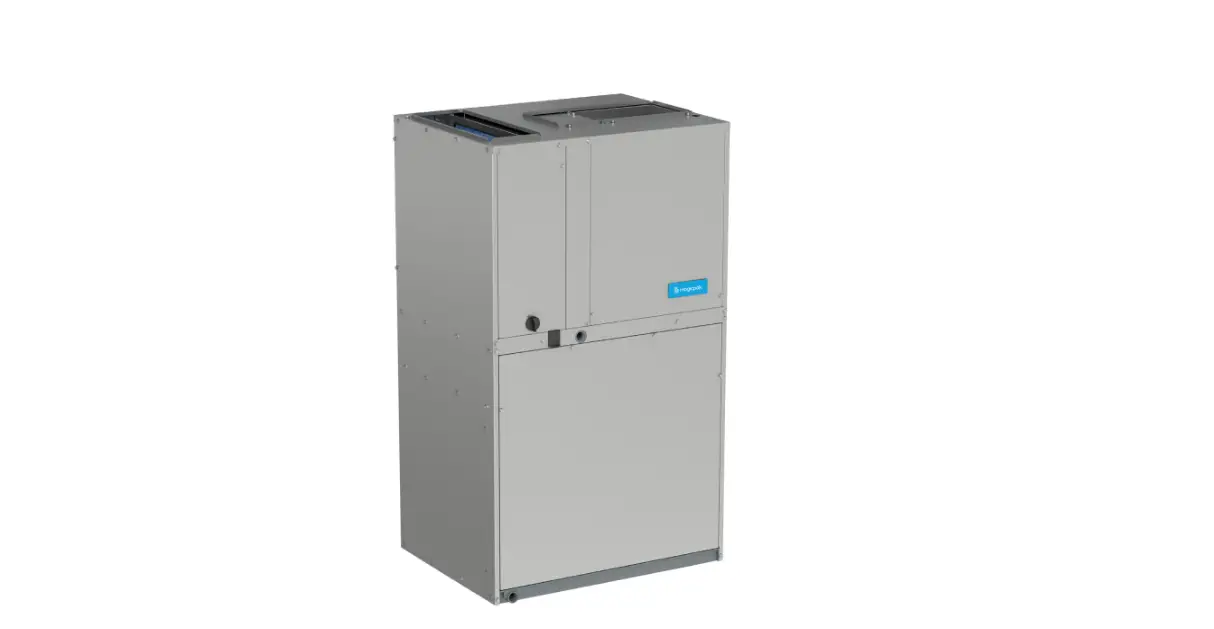
4TCC4024E1000A Single Packaged Cooling/Electric Heat
Product Information:
The 4TCC series are heating, ventilating, and air-conditioning
equipment units. The series has six models – 4TCC4024E1000A,
4TCC4030E1000A, 4TCC4036E1000A, 4TCC4042E1000A, 4TCC4048E1000A, and
4TCC4060E1000A. The units contain R-410A refrigerant and require
proper service tools for servicing. The product contains chemicals,
such as lead, which could cause cancer and birth defects. The air
filters and media wheels or plates used in the equipment shall meet
the test requirements in UL 900. The product has a wiring diagram,
a parts list, and service information for qualified personnel.
Product Usage Instructions:
Only qualified personnel should install and service the
equipment. The installation, starting up, and servicing of the
equipment can be hazardous and requires specific knowledge and
training. Improperly installed, adjusted or altered equipment by an
unqualified person could result in death or serious injury. When
working on the equipment, observe all precautions in the literature
and on the tags, stickers, and labels that are attached to the
equipment.
Before servicing, disconnect all electric power, including
remote disconnects. Follow proper lockout/tagout procedures to
ensure the power cannot be inadvertently energized. Only qualified
personnel should perform servicing other than that contained in
these operating instructions. All grounding devices must be
reconnected after inspection or use of proper service tools to
avoid equipment damage or personal injury.
Operating the unit without the access panels properly installed
may result in severe personal injury or death. Do not operate the
unit without the evaporator fan access panel or evaporator coil
access panel in place. Wear appropriate gloves, arm sleeve
protectors, and eye protection when servicing or maintaining this
equipment.
Installation and Operations Manual
Single Packaged Cooling/Electric Heat 13.4 SEER2 Convertible, 2 5 Ton
4TCC4024E1000A 4TCC4030E1000A 4TCC4036E1000A 4TCC4042E1000A 4TCC4048E1000A 4TCC4060E1000A
Note: “Graphics in this document are for representation only. Actual model may differ in appearance.”
Note: “Unit specific Service Facts available online.”
SAFETY WARNING
Only qualified personnel should install and service the equipment. The installation, starting up, and servicing of heating, ventilating, and air-conditioning equipment can be hazardous and requires specific knowledge and training. Improperly installed, adjusted or altered equipment by an unqualified person could result in death or serious injury. When working on the equipment, observe all precautions in the literature and on the tags, stickers, and labels that are attached to the equipment.
December 2022
18-EB39D1-1B-EN
SAFETY SECTION
Important — This document contains a wiring diagram, a parts list, and service information. This is customer property and is to remain with this unit. Please return to service information pack upon completion of work.
WARNING
HAZARDOUS VOLTAGE!
Failure to follow this Warning could result in property damage, severe personal injury, or death. Disconnect all electric power, including remote disconnects before servicing. Follow proper lockout/tagout procedures to ensure the power cannot be inadvertently energized.
WARNING
SAFETY AND ELECTRICAL HAZARD!
Failure to follow this Warning could result in property damage, severe personal injury, or death. These servicing instructions are for use by qualified personnel only. To reduce the risk of electrical shock, do not perform any servicing other than that contained in these operating instructions unless you are qualified to do so.
CAUTION
GROUNDING REQUIRED!
Failure to inspect or use proper service tools may result in equipment damage or personal injury. Reconnect all grounding devices. All parts of this product that are capable of conducting electrical current are grounded. If grounding wires, screws, straps, clips, nuts, or washers used to complete a path to ground are removed for service, they must be returned to their original position and properly fastened.
WARNING
UNIT CONTAINS R-410A REFRIGERANT!
Failure to use proper service tools may result in equipment damage or personal injury. R-410A operating pressure exceeds the limit of R22. Proper service equipment is required. Service using only R-410A Refrigerant and approved POE compressor oil.
WARNING
SAFETY HAZARD!
Operating the unit without the access panels properly installed may result in severe personal injury or death. Do not operate the unit without the evaporator fan access panel or evaporator coil access panel in place.
WARNING
WARNING!
This product can expose you to chemicals including lead, which are known to the State of California to cause cancer and birth defects or other reproductive harm. For more information go to www.P65Warnings.ca.gov.
Important: Wear appropriate gloves, arm sleeve protectors and eye protection when servicing or maintaining this equipment.
Important: Air filters and media wheels or plates shall meet the test requirements in UL 900.
©2022
18-EB39D1-1B-EN
Table of Contents
Introduction, Unit Inspection and Specification . . . . . . . . . . . . . . . . . . . . . . . . . . . . . . . 4
Introduction . . . . . . . . . . . . . . . . . . . . . . . . . . . . . . 4 Inspect Shipment . . . . . . . . . . . . . . . . . . . . . . . . . 4 Product Specification . . . . . . . . . . . . . . . . . . . . . 5 Charging in Cooling above 55°F OD Ambient . . . . . . . . . . . . . . . . . . . . . . . . . . . . . . . . . 6
Determine Unit Clearances . . . . . . . . . . . . . . . . . 7
Review Location and Recommendation Information. . . . . . . . . . . . . . . . . . . . . . . . . . . . . . . . . 9
Unit Installation . . . . . . . . . . . . . . . . . . . . . . . . . . . 10 Ground Level Installation. . . . . . . . . . . . . . . . . 10 Rooftop Installation — Curb Mounting . . . . . . . . . . . . . . . . . . . . . . . . . . . . . . . 10 Lifting and Rigging . . . . . . . . . . . . . . . . . . . 11 Rooftop Installation — Frame Mounting . . . . . . . . . . . . . . . . . . . . . . . . . . . . . . . 12 Rooftop Installation — No Curb/ Frame . . . . . . . . . . . . . . . . . . . . . . . . . . . . . . . . . . 12 Ductwork Installation . . . . . . . . . . . . . . . . . . . . 15
Attaching Downflow Ductwork to Roof Curb . . . . . . . . . . . . . . . . . . . . . . . . . . . 15 Attaching Downflow Ductwork to Roof Frame . . . . . . . . . . . . . . . . . . . . . . . . . . 15 Condensate Drain Piping . . . . . . . . . . . . . . . . . 15 Air Filter Installation . . . . . . . . . . . . . . . . . . . . . 15 Electrical Wiring . . . . . . . . . . . . . . . . . . . . . . . . . 16
Unit Startup . . . . . . . . . . . . . . . . . . . . . . . . . . . . . . . 19 Pre-Start Quick Checklist . . . . . . . . . . . . . . . . . 19 Starting the Unit in Cooling Mode. . . . . . . . . 19 Starting the Unit in Heating Mode. . . . . . . . . 19 Sequence of Operation. . . . . . . . . . . . . . . . . . . 20 Final Installation Checklist . . . . . . . . . . . . 21 Maintenance . . . . . . . . . . . . . . . . . . . . . . . . . . . . 21 Owner Maintenance. . . . . . . . . . . . . . . . . . 21 Service Maintenance . . . . . . . . . . . . . . . . . 21 Pressure Curves . . . . . . . . . . . . . . . . . . . . . . . . . 22 Indoor Fan Performance. . . . . . . . . . . . . . . . . . 28 Refrigerant Circuits . . . . . . . . . . . . . . . . . . . . . . 30 Troubleshooting Chart . . . . . . . . . . . . . . . . . . . 31
Important Product Information . . . . . . . . . . . 32
18-EB39D1-1B-EN
3
Introduction, Unit Inspection and Specification
Introduction
Read this manual carefully before attempting to install, operate, or perform maintenance on this unit. Installation and maintenance should be performed by qualified service technicians only. This unit is listed by Underwriters Laboratory.
Packaged units are designed for outdoor mounting with a vertical condenser discharge. They can be located either at ground level or on a roof in accordance with local codes. Each unit contains an operating charge of refrigerant as shipped.
Extreme mounting kits are available for slab (BAYEXMK003A), utility curb (BAYEXMK002B) and perimeter curb (BAYEXMK001A) mountings.
Inspect Shipment
1. Check for damage after the unit is unloaded. Report promptly to the carrier any damage found to the unit. Do not drop the unit.
Important: To prevent damage to the sides and top of the unit when hoisting, use “spreader bars” see, “Rooftop Installation — No Curb/Frame,” p. 12.
2. Check the unit’s nameplate to determine if the unit is correct for the intended application. The power supply must be adequate for both the unit and all accessories.
3. Check to be sure the refrigerant charge has been retained during shipment. Remove the Compressor access panel to access the 1/4″ flare pressure taps.
4. If this unit is being installed on a curb, verify that the correct curb is provided with the unit.
· 4TCC4024036 use model BAYCURB050A,
· 4TCC4042060 use model BAYCURB051A
5. If the unit is being hoisted, accessory kit BAYLIFT002A is recommended. It includes a kit of four (4) lifting lugs and instructions.
Notes:
· If practical, install any internal accessories to the unit at the shop.
· The packaged units have been evaluated in accordance with the Code of Federal Regulations, Chapter XX, Part 3280 or the equivalent. “SUITABLE FOR MOBILE HOME USE.”
4
18-EB39D1-1B-EN
Introduction, Unit Inspection and Specification
Product Specification
MODEL
4TCC4024
4TCC4030
4TCC4036
4TCC4042
4TCC4048
4TCC4060
RATED Volts/PH/Hz
208230/1/60
Performance Cooling BTUH(a)
23200
28000
36400
39500
46000
57000
Indoor Airflow (CFM)
785
880
1215
1450
1625
1770
Power Input (KW)
LOCATED ON UNIT NAMEPLATE
EER2/SEER2 (BTU/Watt-Hr.)(b)
11.0 / 13.40
10.80 / 13.40
11.0 / 13.40
Sound Power Rating [dB(A)](c)
66.6
70
69.3
74.6
72.5
73.2
POWER CONN. — V/Ph/Hz
208230/1/60
Min. Brch. Cir. Ampacity(d)
LOCATED ON UNIT NAMEPLATE
Fuse Size — Max. (amps)
25
30
40
45
50
60
Fuse Size — Recmd. (amps)
25
30
40
45
50
60
COMPRESSOR
SCROLL
Volts/Ph/Hz
208230/1/60
R.L. Amps — L.R. Amps
LOCATED ON UNIT NAMEPLATE
OUTDOOR COIL — TYPE
SPINE-FIN
Rows/F.P.I
2 / 24
Face Area (sq. ft.)
13.32
13.32
15.49
15.63
20.54
22.99
Tube Size (in.)
3/8
INDOOR COIL — TYPE
MCHE
PLATE FIN
Rows/F.P.I
2 / 16
Face Area (sq. ft.)
2.7
2.7
2.7
3.9
3.9
5
Refrigeration Control
EXPANSION VALVE
Drain Conn. Size (in.)
3/4 FEMALE NPT
OUTDOOR FAN — TYPE
PROPELLER
DIA. (IN.)
23.4
23.4
23.4
28.25
28.25
28.25
DRIVE/NO. SPEEDS
DIRECT / 1
CFM @ 0.0 in. w.g(e)
2350
2800
3080
3400
3400
4800
Motor — HP/R.P.M
1 / 12 / 810
1/6 /825
1/5 / 825
1/4 / 825
1/4 / 825
1/3 / 825
Volts/Ph/Hz
208230/1/60
F.L. Amps/L.R Amps
LOCATED ON UNIT NAMEPLATE
INDOOR FAN — TYPE
CONSTANT TORQUE ECM
Dia. x Width (in.)
10.62 X 10.62
Drive/No. Speeds
DIRECT / 4
CFM @ 0.0 in. w.g(f)
SEE FAN PERFORMANCE TABLE
Motor — HP / R.P.M.
1/3 / 1050
1/2 / 1050
3/4 / 1050
3/4 / 1050
3/4 / 1050
1 / 1050
Volts/Ph/Hz
208230/1/60
F.L. Amps
LOCATED ON UNIT NAMEPLATE
FILTER / FURNISHED
NO
Type Recommended
THROWAWAY
Recmd. Face Area (sq. ft)(g)
4
4
4
5.3
5.3
5.3
REFRIGERANT
R-410A
Charge (lbs.)
LOCATED ON UNIT NAMEPLATE
CHARGING SPECIFICATIONS
Subcooling
10°
8°
11°
10°
10°
11°
(a) Rated in accordance with AHRI Standard 210/240. (b) Rated in accordance with D.O.E. test procedure. (c) Sound Power values are not adjusted for AHRI 27095 tonal corrections. (d) Calculated in accordance with currently prevailing Nat’l Electrical Code. (e) Standard Air — Dry Coil — Outdoor. (f) Standard Air — Dry Coil — Indoor (g) Filters must be installed in return air stream. Square footages listed are based on 300 f.p.m. face velocity. If permanent filters are used size per
manufacturer’s recommendation with a clean resistance of 0.05″ W.C.
18-EB39D1-1B-EN
5
Introduction, Unit Inspection and Specification
Charging in Cooling above 55°F OD Ambient
If servicing the equipment requires system evacuation, then re-charge the system to the weight specified on the nameplate. Verify the system subcooling using the Subcooling Charging Table and, if necessary, adjust the charge using the procedure below.
1. For best results — the indoor temperature should be kept between 70°F to 80°F. Add system heat if needed.
2. Whenever charge is removed or added, the system must be operated for a minimum of 20 minutes to stabilize before accurate measurements can be made.
3. Measure Liquid Line Temperature and Refrigerant Pressure at service valved in the compressor compartment.
4. Locate your liquid line temperature in the left column of the table, and the intersecting liquid line
pressure under the subcool value column, Add refrigerant to raise the pressure to match the table, or remove refrigerant to lower the pressure. Again, wait 20 minutes for the system conditions to stabilize before adjusting charge again.
Note: System charge shall never be more than 110% or less than 90% of nameplate charge. If specified subcooling cannot be achieved within those charge bounds, contact your Field Service Representative.
5. When system is correctly charged, you can refer to System Pressure Curves to verify typical performance.
CHARGING BELOW 55°F
Evacuate system and weigh in nameplate charge or use factory charge. Correct subcooling may be verified when the temperature is above 55°F.
R-410A REFRIGERANT CHARGING CHART Refer to Service Facts or Installer’s Guide for charging method
DESIGN SUBCOOLING (°F)
LIQUID
TEMP
6
8
9
10
11
12
13
14
16
(°F)
LIQUID GAGE PRESSURE (PSI)
55
174
179
182
185
188
191
195
198
205
60
189
195
198
201
204
208
211
215
222
65
205
211
215
218
222
225
229
232
240
70
222
229
232
236
240
243
247
251
259
75
240
247
251
255
259
263
267
271
279
80
259
267
271
275
279
283
287
291
301
85
279
287
291
296
300
304
309
313
323
90
301
309
313
318
322
327
331
336
347
95
323
331
336
341
346
351
355
360
371
100
347
355
360
365
370
376
381
386
398
105
371
381
386
391
396
402
407
413
425
110
398
407
413
418
424
429
435
441
454
115
425
435
441
446
452
458
464
470
484
120
454
464
470
476
482
488
495
501
516
125
484
495
501
507
514
520
527
533
549
From Dwg. D154557P01
6
18-EB39D1-1B-EN
Determine Unit Clearances
Figure 1. Space on Sides Requirements EE
CC
DD
BB
FF
2 – 3 TON Units
3.5 – 5 TON Units
RECOMMENDED SERVICE CLEARANCE mm [Inches]
W/ ECONOMIZER
W/ ECONOMIZER
BACK SIDE 305 [12] 762 [30] 305 [12] 762 [30]
LEFT SIDE 762 [30] 914 [36] 914 [36] 1067 [42]
RIGHT SIDE 610 [24]
–
610 [24]
–
FRONT SIDE 1067 [42]
–
762 [30]
–
CLEARANCE TO COMBUSTIBLE MATERIAL mm [Inches]
BOTTOM
0
0
BACK SIDE
25 [1]
25 [1]
LEFT SIDE
152 [6]
152 [6]
RIGHT SIDE
152 [6]
152 [6]
FRONT SIDE
305 [12]
305 [12]
TOP
914 [36]
914 [36]
DIMENSIONS mm [Inches]
A
HEIGHT OF UNIT – TABLE NEXT PAGE
BB
CENTER OF GRAVITY – TABLE NEXT PAGE
CC
CENTER OF GRAVITY – TABLE NEXT PAGE
DD -Depth
1049.02 [41-5/16]
1125.22 [44-5/16]
EE -Width
1240.28 [48-27/32]
1487.17 [58-9/16]
FF
469.93 [18-1/2]
551.48 [ 21-23/32]
18-EB39D1-1B-EN
7
Determine Unit Clearances
Figure 2. Bottom and Back Duct Openings
B
C D E
H G
E
F
I
J
M
L J K
N
Height mm [in] A -Height
4TCC4024 898.53 [35 – 3/8] 4TCC4030 949.33 [37 – 3/8] 4TCC4036 4TCC4042 898.53 [35 – 3/8] 4TCC4048 1000.13 [39 – 3/8] 4TCC4060
B 304.80 [12.0]
457.20 [18.0]
C 75.41 [2.93]
75.41 [2.97]
D 75.41 [2.93]
75.41 [2.97]
PHYSICAL DIMENSIONS mm [in]
E
F
G
H
I
J
K
L
M
N
406.40 167.89 173.46 304.80 79.50 398.22 176.07 177.55 296.62 1155.45 [16.0] [6.61] [6.8] [12.0] [3.13] [15.68] [6.93] [6.99] [11.68] [45.49]
381.00 244.09 318.75 381.00 79.50 449.02 176.07 322.84 372.82 1402.34 [15.0] [9.61] [12.55] [15.0] [3.13] [17.68] [6.93] [12.71] [14.68] [55.21]
4TCC4024 4TCC4030 4TCC4036 4TCC4042 4TCC4048
4TCC4060
W1 58.3 [129] 61.3 [135] 61.7 [136] 71.8 [158] 72.0 [159]
78.0 [172]
Corner Weights KG [LBS]
W2
W3
W4
36.8 [81] 26.1 [58] 41.0 [90]
38.7 [85] 27.5 [61] 43.1 [95]
38.7 [85] 27.7 [61] 43.7 [96]
47.2 [104] 35.2 [78] 53.6 [118]
45.0 [99] 33.8 [75] 54.4 [120]
46.3 [85] 34.9 [77] 59.0 [130]
SHIPPING WEIGHT UNIT WEIGHT
KG [LBS]
KG [LBS]
196.1 [432]
162.4 [358]
204.8 [451]
171.1 [377]
205.7 [453]
172.0 [379]
254.5 [561]
207.3 [457]
252.6 [557]
205.4 [453]
265.8 [586]
218.6 [482]
Center Of Gravity mm [inch]
BB
CC
479.8 [18.9] 527.8 [20.8]
406.5 [16.0] 594.1 [23.4]
414.3 [16.3] 697.6 [27.5]
470.0 [18.5] 731.0 [28.8]
433.0 [17.0] 743.3 [29.3]
414.0 [16.3] 635.0 [25.0]
8
18-EB39D1-1B-EN
Review Location and Recommendation Information
Horizontal Airflow Units
1. Location of the unit must allow service clearance around it to ensure adequate serviceability, maximum capacity, and peak operating efficiency.
2. These units are designed for outdoor installation. They may be installed directly on a slab, wood flooring, or on Class A, B, or C roof covering material. The discharge air from the condenser fans must be unrestricted for a minimum of 3 feet above the unit.
3. Check the handling facilities to ensure the safety of personnel and the unit(s).
4. The unit must be mounted level for proper drainage of water through the drain holes in the base pan.
5. The unit should not be exposed to direct roof water runoff.
6. Flexible duct connectors must be of a flame retardant material. All duct work outside of the structure must be insulated and weatherproofed in accordance with local codes.
7. Holes through exterior walls or roof must be sealed in accordance with local codes.
8. All fabricated outdoor ducts should be as short as possible.
Clearances
1. The recommended clearances for single-unit installations are illustrated in “Determine Unit Clearances,” p. 7.
2. Any reduction of the unit clearances indicated in these figures may result in condenser coil starvation or the recirculation of warm condenser air. Actual clearances, which appear to be inadequate should be reviewed with a local engineer.
3. See the unit’s nameplate for the absolute minimum clearance between the unit and any combustible surfaces.
Down Airflow Units
1. Location of the unit must allow service clearance around it to ensure adequate serviceability, maximum capacity, and peak operating efficiency.
2. Refer to the Installation section for instruction on converting the supply and return airflow covers to down airflow.
3. The field assembled Roof Mounting Curb (BAYCURB050A or BAYCURB051A) or a field fabricated curb should be in place before the unit is hoisted to the roof top. The Roof Mounting Curb (frame) must be installed on a flat, level section of the roof (maximum of 1/4″ per foot pitch) and provide a level mounting surface for the unit. Also, be sure to provide sufficient height above the roof to prevent water from entering the unit.
4. Be sure the mounting curb spans structural members (trusses) of the roof, thereby providing sufficient support for the weight of the unit, the curb, the duct(s), and any factory or field installed accessories.
5. The unit must be mounted level for proper drainage of water through the drain holes in the base pan.
6. Be sure the hole in the structure for the ducts is large enough to accommodate the fabricated ducts and the insulation surrounding them. Flexible duct connectors must be of a flame retardant material. All duct work outside of the structure must be insulated and weatherproofed in accordance with local codes.
7. Holes through exterior walls or roof must be sealed in accordance with local codes.
8. These units are design certified for outdoor installation. They may be installed directly on a slab, wood flooring, or on Class A, B, or C roof covering material. The discharge air from the condenser fans must be unrestricted for a minimum of 3 feet above the unit.
9. Check the handling facilities to ensure the safety of personnel and the unit(s).
Clearances
1. The recommended clearances for single-unit installations are illustrated in “Determine Unit Clearances,” p. 7.
2. Any reduction of the unit clearances indicated in these figures may result in condenser coil starvation or the recirculation of warm condenser air. Actual clearances, which appear to be inadequate should be reviewed with a local engineer.
3. See the unit’s nameplate for the absolute minimum clearance between the unit and any combustible surfaces.
18-EB39D1-1B-EN
9
Unit Installation
Note: The factory ships this unit for horizontal installation.
Ground Level Installation
To Install the unit at ground level:
1. Place the unit on a pad the size of the unit or larger. The unit must be mounted level for proper drainage of water through the holes in the base pan. To attach the unit securely to the slab, use extreme mounting kit, BAYEXMK003A. The pad must not come in contact with the structure. Be sure the outdoor portion of the supply and return air ducts are as short as possible.
Unit requires vibration support as indicated in Table 1, p. 12.
2. Location of the unit must allow service clearance around it. Clearance of the unit must be given careful consideration. See, “Determine Unit Clearances,” p. 7.
Note: Any reduction of the unit clearances indicated in these illustrations may result in condenser coil starvation or the recirculation of warm condenser air. Actual clearances, which appear to be inadequate should be reviewed with a local engineer.
Important: A minimum 0″ clearance to combustible material shall be maintained on air outlet duct.
3. Attach the supply and return air ducts to the unit as explained in the ductwork Installation section.
4. Flexible duct connectors must be of a flame retardant material. Insulate any ductwork outside of the structure with at least two (2) inches of insulation and weatherproof. There must be a
weatherproof seal where the duct enters the structure.
5. Do not expose the unit to direct roof water runoff.
6. Seal all holes through exterior walls in accordance with local codes.
7. Continue with the following installation sections to complete the installation: Ductwork, Filter and Electrical Wiring.
Rooftop Installation — Curb Mounting
Convert Horizontal Airflow to Down Airflow
The factory ships the unit for horizontal airflow. Perform this procedure to convert it to down airflow:
1. Remove the three (3) sheet metal screws securing the supply air cover and the four (4) sheet metal screws securing the return air cover from the base of the unit. Remove the covers from the base.
2. Place the covers over the horizontal supply and return openings (painted side out). Align the screw holes, and secure using the same screws removed in step 1.
Install Full Perimeter Roof Mounting Curb
1. Verify that the roof mounting curb is correct for the unit. There are two curbs depending on the unit cabinet sizes:
· 4TCC4024036 use model BAYCURB050A,
· 4TCC4042060 use model BAYCURB051A
2. Assemble and install the curb following the instructions in the Installer’s Guide included with the appropriate curb.
Figure 3. Typical Ground Level Application Note: Use the extreme mounting kit, BAYEXMK002AA, to secure the unit to the slab.
SIDING
RETURN SUPPLY AIR DUCT AIR DUCT
OUTDOOR AIR DISCHARGE
EXTERIOR WALL
INSULATE WEATHERPROOF OR RAIN SHIELD
FLEXIBLE DUCT CONNECTORS
SUPPORT PAD FOUNDATION
3/4″ VIBRATION ISOLATORS, USE 7 ISOLATORS
10
18-EB39D1-1B-EN
Figure 4. Converting Horizontal to Down Airflow
Unit Installation
Lifting and Rigging
WARNING
IMPROPER UNIT LIFT!
Failure to properly lift unit could result in death or serious injury or possible equipment or propertyonly damage. Test lift unit approximately 24 inches to verify proper center of gravity lift point. To avoid dropping of unit, reposition lifting point if unit is not level.
Important: Do not lift the unit without test lifting for balance and rigging. Do not lift the unit in windy conditions or above personnel. Do not lift the unit by attaching clevis, hooks, pins, or bolts to the unit casing, casing hardware, corner lugs, angles, tabs, or flanges. Failure to observe these warnings may result in equipment damage.
1. Before preparing the unit for lifting, check the unit dimension drawings for center of gravity for lifting safety (“Determine Unit Clearances,” p. 7). Because of placement of internal components, the unit’s weight may be unevenly distributed. Approximate unit weights are also provided in the unit drawings.
Note: Unit rigging and hoisting requires accessory kit BAYLIFT002BA. It includes a kit of four (4) lifting lugs.
2. Insert the four lifting lugs in the openings provided in the drip lip on each end of the unit. A tap or jerk to the lug will overcome the interference that arises due to the dimple on the lug.
3. When hoisting the unit, be sure that a proper method of rigging is used. Use slings and spreader bars for protection during lifting. Always test-lift the unit to determine the exact unit balance and stability before hoisting it to the installation location.
4. When the curb and air ducts have been properly installed, the unit is ready to be hoisted to the roof and set in position.
Important:
· To prevent damage to the sides and top of the unit when hoisting use “spreader bars”.
· The unit must be lowered into position. The P.V.C. rubber tape on the curb flange permits the unit to be repositioned if required without destroying the P.V.C. rubber seals affixed to the mounting curb.
Placing the Unit on the Mounting Curb
1. The unit is designed with a perimeter drip lip that is lower than the unit base pan, see, Table 2, p. 13.
2. Position the unit drip lip down over and in contact with the outside corner of the curb.. Continue to lower the unit on top of the curb, with the unit drip lip astraddle, and in contact with, both the end and side rail of the curb. The unit should now rest on top of the curb. Use the extreme mounting kit, BAYEXMK001A, to add additional hold down strength to the mounting.
Note: The ductwork is installed as part of the curb installation. Do not attach ductwork to the unit and lower the unit with ductwork onto the curb.
18-EB39D1-1B-EN
11
Unit Installation
Table 1. Vibration Isolators/Snow Feet Locations
Note: These views represent the base as viewed looking up from underneath the unit.
Important: Unit requires vibration isolator support in the general areas shown. Locate 3/4″ thick vibration isolators on the bottom of the basepan as illustrated by black dots for ground level pad applications. Modify vibration isolator location as necessary for frame and rail applications.
Small Cabinet ****4024 – 4036
Medium Cabinet ****4042 – 4060
Rooftop Installation — Frame Mounting
For rooftop applications using field fabricated frame and ducts use the following procedure:
1. Locate and secure the frame to the roof by bolting or welding. Frame must provide adequate center support via a cross member centrally located channel rail. See, Table 5, p. 14. Vibration isolators should be installed as indicated in Table 1, p. 12, adjust as necessary for your frame. The isolators must be placed on base pan, not drip lip. Add flashing as required. Flashing must conform to local building codes.
2. Prepare the hole in the roof in advance of installing the unit.
3. Secure the horizontal or down airflow ducts to the roof. Refer to the previous Convert from Horizontal Airflow to Down Airflow section if conversion is needed.
4. All fabricated outdoor ducts should be as short as possible.
5. Place the unit on the frame.
6. The unit must be mounted level for proper drainage of water through the holes in the base pan.
7. Secure the unit to the frame.
8. Insulate any ductwork outside of the structure with at least two (2) inches of insulation and then weatherproof. There must be a weatherproof seal where the duct enters the structure.
9. The unit should not be exposed to direct roof water runoff.
10. Flexible duct connectors must be of a flame retardant material. All duct work outside of the structure must be insulated and weatherproofed in accordance with local codes.
11. Access and service clearances for the unit must be given careful consideration when locating the duct entrance openings. “Determine Unit Clearances,” p. 7 provide unit dimensions.
12
12. Continue with the following installation sections to complete the installation: Ductwork, Filter, and Electrical Wiring.
Rooftop Installation — No Curb/ Frame
For roof top applications using field fabricated ducts and sleeper rails rather than a curb or frame, use the following procedure:
1. Locate and secure the sleeper rails to the roof by bolting (three (3) rails required). One on each end to support the edges of the unit and one across the center of the unit. The center rail must run inside both drip lips. Vibration isolators should be installed, adjust as necessary for your sleeper rails. The isolators must be placed on base pan, not drip lip. Add flashing as required. Flashing must conform to local building codes.
2. Prepare the hole in the roof in advance of installing the unit.
3. Secure the horizontal or down airflow ducts to the roof. Refer to the previous Convert from Horizontal Airflow to Down Airflow section if conversion is needed.
4. All fabricated outdoor ducts should be as short as possible.
5. Place the unit on the rails.
6. The unit must be mounted level for proper drainage of water through the holes in the base pan.
7. Secure the unit to the rails.
8. Insulate any ductwork outside of the structure with at least two (2) inches of insulation and then weatherproof. There must be a weatherproof seal where the duct enters the structure.
9. No exposure to direct roof water runoff.
10. Flexible duct connectors must be of a flame retardant material. All duct work outside of the structure must be insulated and weatherproofed in accordance with local codes.
18-EB39D1-1B-EN
Unit Installation
11. Access and service clearances for the unit must be given careful consideration when locating the duct entrance openings. “Determine Unit Clearances,” p. 7 provide unit dimensions.
Table 2. Lifting and Rigging
Base of unit rest on top of curb rails
Drip lip on perimeter of unit
12. Continue with the following installation sections: Ductwork, Filter and Electrical Wiring.
Spreader Bars
Table 3. Curb Dimensions
Gasket Seal
Drip Lip
Dimple
BAYLIFT002A Lifting Lugs
This drawing was prepared by the manufacturer in order to provide detail regarding job layout only. This drawing is not intended to be used as a basis to construct, build or modify the item depicted in the drawing. The manufacturer is not responsible for the unauthorized use of this drawing and expressly disclaims any liability for damages resulting from such unauthorized use.
18-EB39D1-1B-EN
13
Unit Installation
Table 4. Typical Rooftop Horizontal Airflow Application with Frame
Supply Air Return Air
Roof Flashing
Channel Iron Center Support (Center Support required on all frame applications).
Table 5. Typical Rooftop Down Airflow Application with Frame
Angle Iron Frame
Return Air Roof Flashing
Channel Iron Center Support (center support required on all frame applications).
14
Supply Air Roof Flashing
Angle Iron Frame
18-EB39D1-1B-EN
Unit Installation
Ductwork Installation
Attaching Downflow Ductwork to Roof Curb
Supply and return air flanges are provided on the roof curb for easy duct installation. All ductwork must be run and attached to the curb before the unit is set into place.
Attaching Downflow Ductwork to Roof Frame
Follow these guidelines for ductwork construction:
Connections to the unit should be made with three (3) inch canvas connectors to minimize noise and vibration transmission.
Elbows with turning vanes or splitters are recommended to minimize air noise and resistance.
The first elbow in the ductwork leaving the unit should be no closer than two (2) feet from the unit, to minimize noise and resistance.
To prevent leaking, do not attach the ductwork to the bottom of the unit base. Refer to the bottom example in the figure below.
Figure 5. Attaching Down Airflow Ductwork
AIR PROOF THIS SEAM
UNIT BASE
FIELD DUCT
UNIT DUCT FLANGE
UNIT DUCT FLANGE
FIELD DUCT
AIR PROOF THIS SEAM
UNIT BASE FIELD DUCT
AIR PROOF THIS SEAM
UNIT BASE
UNIT DUCT FLANGE
UNIT BASE
UNIT DUCT FLANGE
NOT RECOMMENDED
WATERPROOF SEAM WITH BUTYL OR SILICONE
FIELD DUCT
Attaching Horizontal Ductwork to Unit
All conditioned air ductwork should be insulated to minimize heating and cooling duct losses. Use a minimum of two (2) inches of insulation with a vapor barrier. The outside ductwork must be weatherproofed between the unit and the building.
When attaching ductwork to a horizontal unit, provide a flexible watertight connection to prevent noise transmission from the unit to the ducts. The flexible
18-EB39D1-1B-EN
connection must be indoors and made out of heavy canvas. Note: Do not draw the canvas taut between the solid
ducts. Figure 6. Attaching Horizontal Airflow Ductwork
UNIT EXTERIOR WEATHERPROOF
THIS SEAM FIELD DUCT
UNIT EXTERIOR WEATHERPROOF
THIS SEAM FIELD DUCT
Condensate Drain Piping
A 3/4-inch female NPT condensate drain connection is provided on the evaporator access panel end of the unit. Provide a trap and fill it with water before starting the unit to avoid air from being drawn through. Follow local codes and standard piping practices when running the drain line. Pitch the line downward away from the unit. Avoid long horizontal runs. See Figure 7, p. 15. Note: Do not use reducing fittings in the drain lines. The condensate drain must be: · Made of 3/4″ pipe size · Pitched 1/4″ per foot to provide free drainage to
convenient drain system · Trapped · Must be connected to a closed drain system unless
the trap is properly vented Figure 7. Typical Condensate Drain Piping
3/4″ PVC OR COPPER TUBING AND FITTINGS
1-1/2″ MIN.
1-1/2″ MIN.
Air Filter Installation
The packaged unit requires an air filter. The unit does not come with a factory installed filter rack in it, however, two filter frame accessories are offered that will allow the installation of a filter within the unit, BAYFLTR101 & BAYFLTR201. Otherwise a field supplied filter rack must be installed by the installer in the return duct work. Refer to table for field supplied filter racks.
15
Unit Installation
Table 6. Filter Sizes (field supplied filter rack)
UNIT
NOMINAL CFM
FILTER (a) SIZE (Sq Ft)
FILTER RESISTANCE
(“W.C.)
4~CC4024A
800
2.67
0.08
4~CC4030A
1000
3.33
0.08
4~CC4036A
1200
4.00
0.08
4~CC4042A
1400
4.67
0.08
4~CC4048A
1600
5.33
0.08
4~CC4060A
2000
6.67
0.08
(a) Filters must be installed in the return air system. The above square footages are based on 300 F.P.M. face velocity. If permanent filters are used, size per mfg. Recommendation with clear resistance of 0.05″WC.
Important: Air filters and media wheels or plates shall meet the test requirements in UL 900.
Electrical Wiring
Note: This unit is factory wired for 230V. See wiring diagram for 208V conversion.
Electrical Connections
Electrical wiring and grounding must be installed in accordance with local codes or, in the absence of local codes, with the National Electrical Code ANSI/NFPA 70, Latest Revision.
Electrical Power
It is important that proper electrical power be available for the unit. Voltage variation should remain within the limits stamped on the unit nameplate.
Disconnect Switch
Provide an approved weatherproof disconnect within close proximity and within sight of the unit.If disconnect must be mounted to the cabinet, the location shown in Table 9, p. 16 should be the only one considered.
Over Current Protection
The branch circuit feeding the unit must be protected as shown on the unit’s rating plate.
Power Wiring
The power supply lines must be run in weather-tight conduit to the disconnect and into the side of the unit control box. Provide strain relief for all conduit with suitable connectors.
Provide flexible conduit supports whenever vibration transmission may cause a noise problem within the building structure.
1. Remove the Control/Heat access panel. Pass the power wires through the Power Entry hole in the end of the unit. See Table 7, p. 16.
2. Connect the high voltage wires to the appropriate contactor terminals. Single phase units use a two (2) pole contactor and three phase units use three
16
(3) pole contactor. Connect the ground to the ground lug on the chassis. See Table 9, p. 16. Ensure all connections are tight. Table 7. Power Wiring
Run power supply lines through weather-tight conduit and secure to unit with strain relief.
Table 8. Power Connections
Contactor
Unit Ground Lug
Table 9. Mounted Disconnect Location
18-EB39D1-1B-EN
Table 10. Field Wiring Diagram
Notes:
1. Fused disconnect size, power wiring and grounding of equipment must comply with codes..
2. Be sure power supply agrees with equipment and heater nameplate.
3. Low voltage wiring to be 18 AWG minimum conductor.
4. See heater nameplate for current rating of heater used.
5. See unit and heater diagram for electrical connection details.
6. Jumper must be connected between 1 and 2 for fan to operate in heating.
7. Some thermostats provide the `G’ signal in the cooling mode only. To provide the `G’ signal in the heating mode an accessory relay is required. See fig. 3 for proper connections.
8. For cooling only omit the electric heater, associated power wires and the `W’ signal thermostat wire.
9. Fig. 4 demonstrates connection of the two stage electric heat thermostat accessory only. For further unit connection details refer to the other figures.
10. The 41A (BR) wire is first stage electric heat. If the electric heater accessory has two heating stages the 41C (BR) wire is second stage electric heat.
Unit Installation
UNIT CONTROL BOX
UNIT HEATER AREA
POLARIZED PLUG
ELECTRIC HEATER CONTROL BOX
B COMMON G FAN (GR) Y COMPRESSOR W1 HEAT FIRST STAGE (WH) W2 HEAT SECOND STAGE (WH)
R 24V
GROUND WIRE
1 PH 1 PH POWER POWER
3 PH 3 PH POWER POWER UNIT HEATER
NOTE 1,8
TYPICAL THERMOSTAT
FIELD PROVIDED JUMPER NOTE 6
UNIT CONTROL BOX
TO COMPR. CONTACTOR
UNIT HEATER AREA
FIELD PROVIDED FIELD CONNECTED WIRED
ELECTRIC HEATER CONTROL BOX
TO ECONOMIZER FACTORY PROVIDED FIELD INSTALLED WIRES
UNIT LOW VOLTAGE AREA
SPE ACCESSORY KIT
UNIT FUSES
HEATER FUSES
1 PH POWER
3 PH POWER
GROUND WIRE
SEE SPEK INSTALLER’S GUIDE FOR ALL OTHER EXAMPLES
SINGLE POWER ENTRY
UNIT LOW VOLTAGE AREA
TYPICAL 2-STAGE THERMOSTAT
B
G
Y W1 W2 R
FIELD INSTALLED JUMPERS
UNIT LOW VOLTAGE AREA
B G Y W1 W2 R
BAY24X042
FIELD INSTALLED JUMPERS
TYPICAL THERMOSTAT
UNIT LOW VOLTAGE AREA
NOTE 10 (WH) W1
(WH)W2
TYPICAL THERMOSTAT
FIELD INSTALLED JUMPERS
756977i2
18-EB39D1-1B-EN
17
Unit Installation
Control Wiring (Class II)
Low voltage control wiring should not be run in conduit with power wiring unless Class 1 wire of proper voltage rating is used. Route the thermostat cable or equivalent single leads of No. 18 AWG colored wire from the thermostat subbase terminals through the rubber grommet on the unit. See, “Determine Unit Clearances,” p. 7 for the control entry (24V Entry) location. Make connections as shown on the wiring diagrams.
Do not short thermostat wires since this will damage the control transformer.
Refer to the table below for recommended wire sizes and lengths for installing the unit thermostat. The total resistance of these low voltage wires must not exceed one (1) ohm. Any resistance in excess of 1 ohm may
cause the control to malfunction because of the excessive voltage drop.
Table 11. Thermostat Wire Size and Maximum Length
Wire Size 18 16 14
Maximum Length (Ft) 75 125 200
Important: Upon completion of wiring, check all electrical connections, including factory wiring within the unit, and make sure all connections are tight. Replace and secure all electrical box covers and access panels before leaving the unit or turning on the power to the unit.
18
18-EB39D1-1B-EN
Unit Startup
Pre-Start Quick Checklist
Is the unit properly located and level with the proper clearances? See, “Determine Unit Clearances,” p. 7.
Is the duct work correctly sized, run, taped, insulated, and weatherproofed with proper unit arrangement as shown in the ductwork installation section?
Is the condensate line properly sized, run, trapped, and pitched and shown in the Condensate Drain Piping section?
Is the filter of the correct size and quantity? Is it clean and in place? See Air Filter Installation section.
Is the wiring properly sized and run according to the unit wiring diagram?
Are all the wiring connections, including those in the unit tight?
Has the unit been properly grounded and fused with the recommended fuse size?
Is the thermostat well located, level, and correctly wired? See Electrical Wiring section
Have the air conditioning systems been checked at the service ports for charge and leak tested if necessary?
Do the condenser fan and indoor blower turn free without rubbing and are they tight on the shafts?
Has all work been done in accordance with applicable local and national codes?
Are all covers and access panels in place to prevent air loss and safety hazards?
Starting the Unit in Cooling Mode
Note: See the section on Sequence of Operation for a description of the cooling operating sequence.
To start the unit in the cooling mode, set the comfort control to COOL and to a setting below room temperature. The condenser fan motor, compressor and evaporator fan motor will operate automatically. Continuous fan mode during Cooling operation may not be appropriate in humid climates. If the indoor air exceeds 60% relative humidity or simply feels uncomfortably humid, it is recommended that the fan only be used in the AUTO mode.
Operating Pressure Checks
After the unit has operated in the cooling mode for a short period of time, install pressure gauges on the gauge ports of the discharge and suction line valves (behind the Compressor access panel). Check the suction and discharge pressures and compare them to the normal operating pressures provided in the unit’s SERVICE FACTS.
Note: Do not use the PRESSURE CURVES from the unit’s SERVICE FACTS to determine the unit refrigerant charge. The correct charge is shown on the unit nameplate. To charge the system accurately, weigh in the charge according to the unit nameplate and check subcooling against the Subcooling Charging Table in the SERVICE FACTS.
Voltage Check
With the compressor operating, check the line voltage at the unit (contactor is located behind the Control access panel). The voltage should be within the range shown on the unit nameplate. If low voltage is encountered, check the size and length of the supply line from the main disconnect to the unit. The line may be undersized for the length of the run.
Cooling Shut Down
Set the comfort control to OFF or to a setting above room temperature.
Important: De-energize the main power disconnect ONLY when servicing the unit. Power may be required to keep the heat pump compressor warm and to boil off refrigerant in the compressor.
Starting the Unit in Heating Mode
Note: See the section on Sequence of Operation for a description of the heat pump heating operating sequence.
Check that all grills and registers are open and all unit access panels are closed before start-up.
Set the comfort control above room temperature until achieving a first stage call for heat and set the fan to AUTO or ON.
Heating Shut Down
Set the comfort control to OFF or at a setting below room temperature.
18-EB39D1-1B-EN
19
Unit Startup
Sequence of Operation
General
Operation of the unit heating and cooling cycles is automatic when the system is in the HEAT or COOL functions (the optional automatic changeover thermostat, when in the AUTO position, automatically changes to heat or cool with an appropriate room temperature change). The fan can be set to ON, causing continuous evaporator (indoor) fan operation or set to AUTO causing fan operation to coincide with heating or cooling run cycles. Continuous fan mode during Cooling operation may not be appropriate in humid climates. If the indoor air exceeds 60% relative humidity or simply feels uncomfortably humid, it is recommended that the fan only be used in the AUTO mode.
Cooling Mode
Note: The TSH and TSC are contacts that are internal to the indoor comfort control.
With the disconnect switch in the ON position, current is supplied to the control transformer. The cooling cycle is enabled through the low voltage side of the control transformer to the “R” terminal on the indoor thermostat. With the comfort control set to AUTO and TSC-1 contacts closed, power is supplied to the “O ” terminal on the indoor thermostat to the switchover valve coil (SOV). This energizes the switch-over valve (SOV) and places it in the cooling position (it is in the heating position when de-energized).
When the indoor temperature rises 1-1/2 degrees, TSC2 contacts close, supplying power to the “Y” terminal on the indoor thermostat, and to the compressor contactor (CC). This starts the outdoor fan motor and compressor. The TSC-2 contacts also provide power to the “G” terminal which provides power to the indoor fan motor.
Heating Mode
With the comfort control set to ON, current is supplied to the transformer. Starting at the “R” terminal on the indoor comfort control, current goes through the system switch (which is in “AUTO” position) to the TSH-1 contacts. When closed, these contacts supply power to terminal “Y” on the indoor thermostat as well as to the heating anticipator. The switch-over valve will not energize because of the high resistance of the heating anticipator in the thermostat. Power is provided from “Y” to the compressor contactor (CC)
which starts the compressor and outdoor fan motor. The indoor thermostat contact TSH-1 also provides power to “G” terminal on the indoor thermostat energizing the indoor fan motor.
Supplementary Heat
The supplementary electric heat is brought on when the indoor temperature drops 1-1/2 degrees below the thermostat setting. TSH-2 contacts close providing power to the “W” terminal on the indoor thermostat and to the supplementary heater control circuit. An outdoor thermostat may have been added to disallow the second stage (if provided) of electric heat above a selected outdoor temperature. If the outdoor temperature falls below the setting on the outdoor thermostat, this additional heater stage will come on. When the outdoor air temperature rises, and the outdoor T-stat setpoint is reached, the system will revert back to first stage electric heating.
When the indoor ambient is satisfied, TSH-2 contacts will open and the unit will revert back to the compressor only heating mode and then off. For emergency heat (use of supplementary electric heat only), an emergency (EMERG) heat switch is provided within the comfort control. When placed in the emergency heat position, it will disable the compressor, bypass the outdoor thermostats, if provided, and engage the supplementary electric heaters and indoor fan.
Demand Defrost Operation
During the heating cycle, the outdoor coil may require a defrost cycle which is determined by the demand defrost control (DFC). This control continuously measures the outdoor coil temperature (CBS) and the outdoor ambient temperature (ODS-B) and calculates the difference or delta-T measurement. When the calculated delta-T is met, the demand defrost control (DFC) opens the circuit to the outdoor fan motor (ODM) and energizes the switch-over valve (SOV), placing the unit in the cooling mode to defrost the outdoor coil. The outdoor coil temperature sensor (CBS) terminates the defrost cycle, or times out after fifteen minutes in defrost, the (DFC) energizes the outdoor fan motor (ODM) and twelve seconds later deenergizes the (SOV), which returns the unit to the heating mode. Supplementary electric heat, if provided, is brought on to control indoor temperature during the defrost cycle.
20
18-EB39D1-1B-EN
Unit Startup
Final Installation Checklist
Important: Perform a final unit inspection to be sure that factory tubing has not shifted during shipment. Adjust tubing if necessary so tubes do not rub against each other when the unit runs. Also be sure that wiring connections are tight and properly secured.
Does the unit run and operate as described in the Sequence of Operation section in response to the room thermostat?
Are the condenser fan and indoor blower operating correctly with proper rotation and without undue noise?
Is the compressor operating correctly and has the system been checked with a charging chart?
Has the voltage and running current been checked to determine if it is within limits?
Has the thermostat been checked for calibration and the air discharge grills adjusted to balance the system?
Has the ductwork been checked for air leaks and condensation?
Has the furnace manifold pressure been checked and adjusted if necessary?
Has the heating air temperature rise been checked? Has the unit been checked for tubing and sheet
metal rattles? Are there any other unusual noises to be checked? Are all covers and panels in place and properly fastened? Has the owner been instructed on the proper operation and maintenance of the unit? Be sure to leave this manual with the owner.
Maintenance
Owner Maintenance
Some of the periodic maintenance functions of the unit can be performed by the owner; this includes replacing the disposable or cleaning the permanent air filters, cleaning the unit cabinet, cleaning the condenser coil, and conducting a general unit inspection on a regular basis.
Filters
When the system is in constant operation, inspect the filters at least once each month.
If the unit has disposable-type filters, replace them with new filters of the same type and size. Do not attempt to clean disposable filters.
Permanent-type filters can be cleaned by washing them with a mild detergent and water. Make sure that the filters are thoroughly dry before reinstalling them in the unit (or duct system).
Note: It may be necessary to replace permanent filters annually if washing fails to clean the filter or if the filter shows signs of deterioration. Be sure to use the same type and size as was originally installed.
Condenser Coil
Be sure to keep all vegetation and debris away from the condenser coil area.
Service Maintenance
Cooling Season
To keep the unit operating safely and efficiently, the manufacturer recommends that a qualified service technician check the entire system at least once each year or sooner if needed. The service technician should examine these areas of the unit:
· filters (for cleaning or replacement) · motors and drive system components · economizer gaskets (for possible replacement) · safety controls (for mechanical cleaning) · electrical components and wiring (for possible
replacement and connection tightness) · condensate drain (for proper sealing and cleaning) · unit duct connections (to see that they are
physically sound and sealed to the unit casing) · unit mounting support (for structural integrity) · the unit (for obvious unit deterioration)
Heating Season
Complete the following unit inspections and service routines at the beginning of each heating season.
· Visually inspect the unit to ensure that the airflow required for combustion and condenser coil is not obstructed from the unit.
· Inspect the control panel wiring to verify that all electrical connections are tight and that the wire insulation is intact.
Indoor Fan Motor Speed Tap Setting
The 208/230 units are factory set to medium speed.
18-EB39D1-1B-EN
21
Unit Startup
Pressure Curves
SUCTION PRESSURE (PSIG)
Liquid PRESSURE (PSIG)
Figure 8. 4TCC4024E1
Cooling
500 450
INDOOR ENTERING WET BULB CURVES TOP TO BOTTOM 71, 67, 63 AND 59 DEG
400
350 (4)
(3)
300
250
200 40
(1)
60
80
100
(2)
120
OUTDOOR TEMPERATURE (Degree F)
170 165 160 155
INDOOR ENTERING WET BULB CURVES TOP TO BOTTOM 71, 67, 63 AND 59 DEG F.
150
145
(3)
140 (5)
135
130
125
120
115
110 40
(1)
60
80
(2)
100
120
OUTDOOR TEMPERATURE (Degree F)
COOLING PERFORMANCE CAN BE CHECKED WHEN THE OUTDOOR TEMP IS ABOVE 65 DEG F. TO CHECK COOLING PERFORMANCE, SELECT THE PROPER INDOOR CFM, ALLOW PRESSURES TO STABILIZE. MEASURE INDOOR WET BULB TEMPERATURE, OUTDOOR TEMPERATURE, DISCHARGE AND SUCTION PRESSURES. ON THE PLOTS LOCATE OUTDOOR TEMPERATURE (1); LOCATE INDOOR WET BULB (2); FIND INTERSECTION OF OD TEMP. & ID W.B. (3); READ LIQUID (4) OR SUCTION (5) PRESSURE IN LEFT COLUMN.
EXAMPLE:
(1) OUTDOOR TEMP. 82 F. (2) INDOOR WET BULB 67 F. (3) AT INTERSECTION
(4) DISCHARGE PRESSURE @ 800 CFM CFM IS 333 PSIG.
(5) SUCTION PRESSURE @ 800 CFM CFM IS 141 PSIG.
ACTUAL: DISCHARGE PRESSURE SHOULD BE +/- 10 PSI OF CHART SUCTION PRESSURE SHOULD BE +/- 3 PSIG OF CHART
DWG.NO. 4TCC4024E1
22
18-EB39D1-1B-EN
Unit Startup
Figure 9. 4TCC4030E1
Cooling
Liquid PRESSURE (PSIG)
500
INDOOR ENTERING
(2)
WET BULB CURVES
TOP TO BOTTOM
450
71, 67, 63 AND 59 DEG
400
350 (4)
(3)
300
250
200
40
60
80
100
120
OUTDOOR TEMPERATURE (Degree F)
210 190 170
INDOOR ENTERING WET BULB CURVES TOP TO BOTTOM 71, 67, 63 AND 59 DEG F.
150
(3) 130 (5)
110
90
70
50 40
(1)
60
80
(2)
100
120
SUCTION PRESSURE (PSIG)
OUTDOOR TEMPERATURE (Degree F)
COOLING PERFORMANCE CAN BE CHECKED WHEN THE OUTDOOR TEMP IS ABOVE 65 DEG F. TO CHECK COOLING PERFORMANCE, SELECT THE PROPER INDOOR CFM, ALLOW PRESSURES TO STABILIZE. MEASURE INDOOR WET BULB TEMPERATURE, OUTDOOR TEMPERATURE, DISCHARGE AND SUCTION PRESSURES. ON THE PLOTS LOCATE OUTDOOR TEMPERATURE (1); LOCATE INDOOR WET BULB (2); FIND INTERSECTION OF OD TEMP. & ID W.B. (3); READ LIQUID (4) OR SUCTION (5) PRESSURE IN LEFT COLUMN.
EXAMPLE: (1) OUTDOOR TEMP. 82 F. (2) INDOOR WET BULB 67 F. (3) AT INTERSECTION
(4) DISCHARGE PRESSURE @ 900 CFM CFM IS 320 PSIG.
(5) SUCTION PRESSURE @ 900 CFM CFM IS 136 PSIG.
ACTUAL: DISCHARGE PRESSURE SHOULD BE +/- 10 PSI OF CHART SUCTION PRESSURE SHOULD BE +/- 3 PSIG OF CHART
DWG.NO. 4TCC4030E1
18-EB39D1-1B-EN
23
Unit Startup
Figure 10. 4TCC4036E1
Cooling
Liquid PRESSURE (PSIG)
500
INDOOR ENTERING
(2)
WET BULB CURVES
TOP TO BOTTOM
450
71, 67, 63 AND 59 DEG
400
350 (4)
(3)
300
250
200
40
60
80
100
120
OUTDOOR TEMPERATURE (Degree F)
170 165 160 155
INDOOR ENTERING WET BULB CURVES TOP TO BOTTOM 71, 67, 63 AND 59 DEG F.
150
145
(3)
140 (5)
135
130
125
120
115
110 40
(1)
60
80
(2)
100
120
SUCTION PRESSURE (PSIG)
OUTDOOR TEMPERATURE (Degree F)
COOLING PERFORMANCE CAN BE CHECKED WHEN THE OUTDOOR TEMP IS ABOVE 65 DEG F. TO CHECK COOLING PERFORMANCE, SELECT THE PROPER INDOOR CFM, ALLOW PRESSURES TO STABILIZE. MEASURE INDOOR WET BULB TEMPERATURE, OUTDOOR TEMPERATURE, DISCHARGE AND SUCTION PRESSURES. ON THE PLOTS LOCATE OUTDOOR TEMPERATURE (1); LOCATE INDOOR WET BULB (2); FIND INTERSECTION OF OD TEMP. & ID W.B. (3); READ LIQUID (4) OR SUCTION (5) PRESSURE IN LEFT COLUMN.
EXAMPLE: (1) OUTDOOR TEMP. 82 F. (2) INDOOR WET BULB 67 F. (3) AT INTERSECTION
(4) DISCHARGE PRESSURE @ 1200 CFM CFM IS 326 PSIG.
(5) SUCTION PRESSURE @ 1200 CFM CFM IS 144 PSIG.
ACTUAL: DISCHARGE PRESSURE SHOULD BE +/- 10 PSI OF CHART SUCTION PRESSURE SHOULD BE +/- 3 PSIG OF CHART
DWG.NO. 4TCC4036E1
24
18-EB39D1-1B-EN
Unit Startup
Figure 11. 4TCC4042E1
Cooling
Liquid PRESSURE (PSIG)
500
INDOOR ENTERING
(2)
WET BULB CURVES
TOP TO BOTTOM
450
71, 67, 63 AND 59 DEG
400
350 (4)
(3)
300
250
200
40
60
80
100
120
OUTDOOR TEMPERATURE (Degree F)
170 165 160 155
INDOOR ENTERING WET BULB CURVES TOP TO BOTTOM 71, 67, 63 AND 59 DEG F.
150
145
(3)
140 (5)
135
130
125
120
115
110 40
(1)
60
80
(2)
100
120
SUCTION PRESSURE (PSIG)
OUTDOOR TEMPERATURE (Degree F)
COOLING PERFORMANCE CAN BE CHECKED WHEN THE OUTDOOR TEMP IS ABOVE 65 DEG F. TO CHECK COOLING PERFORMANCE, SELECT THE PROPER INDOOR CFM, ALLOW PRESSURES TO STABILIZE. MEASURE INDOOR WET BULB TEMPERATURE, OUTDOOR TEMPERATURE, DISCHARGE AND SUCTION PRESSURES. ON THE PLOTS LOCATE OUTDOOR TEMPERATURE (1); LOCATE INDOOR WET BULB (2); FIND INTERSECTION OF OD TEMP. & ID W.B. (3); READ LIQUID (4) OR SUCTION (5) PRESSURE IN LEFT COLUMN.
EXAMPLE: (1) OUTDOOR TEMP. 82 F. (2) INDOOR WET BULB 67 F. (3) AT INTERSECTION
(4) DISCHARGE PRESSURE @ 1450 CFM CFM IS 326 PSIG.
(5) SUCTION PRESSURE @ 1450 CFM CFM IS 145 PSIG.
ACTUAL: DISCHARGE PRESSURE SHOULD BE +/- 10 PSI OF CHART SUCTION PRESSURE SHOULD BE +/- 3 PSIG OF CHART
DWG.NO. 4TCC4042E1
18-EB39D1-1B-EN
25
Unit Startup
Figure 12. 4TCC4048E1
Cooling
Liquid PRESSURE (PSIG)
500
INDOOR ENTERING
(2)
WET BULB CURVES
TOP TO BOTTOM
450
71, 67, 63 AND 59 DEG
400
350 (4)
(3)
300
250
200
40
60
80
100
120
OUTDOOR TEMPERATURE (Degree F)
170 165 160 155
INDOOR ENTERING WET BULB CURVES TOP TO BOTTOM 71, 67, 63 AND 59 DEG F.
150
145
140 (5)
(3)
135
130
125
120
115
110 40
(1)
60
80
(2)
100
120
SUCTION PRESSURE (PSIG)
OUTDOOR TEMPERATURE (Degree F)
COOLING PERFORMANCE CAN BE CHECKED WHEN THE OUTDOOR TEMP IS ABOVE 65 DEG F. TO CHECK COOLING PERFORMANCE, SELECT THE PROPER INDOOR CFM, ALLOW PRESSURES TO STABILIZE. MEASURE INDOOR WET BULB TEMPERATURE, OUTDOOR TEMPERATURE, DISCHARGE AND SUCTION PRESSURES. ON THE PLOTS LOCATE OUTDOOR TEMPERATURE (1); LOCATE INDOOR WET BULB (2); FIND INTERSECTION OF OD TEMP. & ID W.B. (3); READ LIQUID (4) OR SUCTION (5) PRESSURE IN LEFT COLUMN.
EXAMPLE: (1) OUTDOOR TEMP. 82 F. (2) INDOOR WET BULB 67 F. (3) AT INTERSECTION
(4) DISCHARGE PRESSURE @ 1650 CFM CFM IS 327 PSIG.
(5) SUCTION PRESSURE @ 1650 CFM CFM IS 139 PSIG.
ACTUAL: DISCHARGE PRESSURE SHOULD BE +/- 10 PSI OF CHART SUCTION PRESSURE SHOULD BE +/- 3 PSIG OF CHART
DWG.NO. 4TCC4048E1
26
18-EB39D1-1B-EN
Unit Startup
Figure 13. 4TCC4060E1
Cooling
Liquid PRESSURE (PSIG)
500
INDOOR ENTERING
(2)
WET BULB CURVES
TOP TO BOTTOM
450
71, 67, 63 AND 59 DEG
400
350 (4)
(3)
300
250
200
40
60
80
100
120
OUTDOOR TEMPERATURE (Degree F)
170 165 160 155
INDOOR ENTERING WET BULB CURVES TOP TO BOTTOM 71, 67, 63 AND 59 DEG F.
150
145
140 (5)
(3)
135
130
125
120
115
110 40
(1)
60
80
(2)
100
120
SUCTION PRESSURE (PSIG)
OUTDOOR TEMPERATURE (Degree F)
COOLING PERFORMANCE CAN BE CHECKED WHEN THE OUTDOOR TEMP IS ABOVE 65 DEG F. TO CHECK COOLING PERFORMANCE, SELECT THE PROPER INDOOR CFM, ALLOW PRESSURES TO STABILIZE. MEASURE INDOOR WET BULB TEMPERATURE, OUTDOOR TEMPERATURE, DISCHARGE AND SUCTION PRESSURES. ON THE PLOTS LOCATE OUTDOOR TEMPERATURE (1); LOCATE INDOOR WET BULB (2); FIND INTERSECTION OF OD TEMP. & ID W.B. (3); READ LIQUID (4) OR SUCTION (5) PRESSURE IN LEFT COLUMN.
EXAMPLE:
(1) OUTDOOR TEMP. 82 F. (2) INDOOR WET BULB 67 F. (3) AT INTERSECTION
(4) DISCHARGE PRESSURE @ 1750 CFM CFM IS 335 PSIG.
(5) SUCTION PRESSURE @ 1750 CFM CFM IS 140 PSIG.
ACTUAL: DISCHARGE PRESSURE SHOULD BE +/- 10 PSI OF CHART SUCTION PRESSURE SHOULD BE +/- 3 PSIG OF CHART
DWG.NO. 4TCC4060E1
18-EB39D1-1B-EN
27
Unit Startup
Indoor Fan Performance
4TCC4024E1 Motor Speed
LOW
Watts CFM
MEDLOW
Watts CFM
MEDHIGH
Watts CFM
HIGH
Watts CFM
EXTERNAL STATIC PRESSURE (IN.WG) Horizontal Airflow [Cooling Down Airflow]
0.0
0.1
0.2
0.3
0.4
0.5
0.6
0.7
0.8
0.9
1
84 [85]
91 [92]
98 [98]
105 [106]
–
–
–
–
–
–
–
873 [865]
811 [803]
754 [746]
690 [683]
–
–
–
–
–
–
–
–
114 [115]
121 [122]
128 [129]
138 [138]
–
–
–
–
–
–
–
900 [891]
846 [838]
794 [786]
729 [722]
–
–
–
–
–
–
–
–
–
158 [159]
167 [167]
175 [176]
185 [186]
–
–
–
–
–
–
–
890 [881]
836 [828]
777 [769]
707 [700]
–
–
–
–
–
–
–
–
[249]
256 [258]
264 [266]
274 [276]
282 [284]
–
–
–
–
–
–
[899]
863 [854]
818 [810]
773 [765]
731 [724]
–
–
Note: Airflow must not exceed 900 CFM due to condensate blowoff.
4TCC4030E1
EXTERNAL STATIC PRESSURE (IN.WG) Horizontal Airflow [Cooling Down Airflow]
Motor Speed
0.0
0.1
0.2
0.3
0.4
0.5
0.6
0.7
0.8
0.9
1
Watts
126 [126]
134 [135]
142 [143]
150 [150]
158 [158]
–
–
–
–
–
–
LOW
CFM
1051 [1041]
994 [984]
939 [930]
889 [880]
840 [831]
–
–
–
–
–
–
MED-
Watts
–
175 [176]
184 [185]
192 [193]
200 [201]
209 [210]
219 [220]
–
–
–
–
LOW
CFM
–
1107
1054
[1096] [1044]
1009 [999]
965 [956]
919 [910]
862 [853]
–
–
–
–
Watts
–
MED-
–
239 [240]
247 [248]
256 [258]
267 [269]
274 [276]
282 [284]
–
–
–
HIGH
CFM
–
–
1108 [1097]
1070 [1059]
1027 [1017]
975 [965]
920 [911]
875 [866]
–
–
–
Watts
–
–
–
–
259 [260]
268 [270]
278 [279]
289 [290]
–
–
–
HIGH
CFM
–
–
–
–
1099 [1088]
1059 [1048]
1017 [1007]
968 [959]
–
–
–
Note: Airflow must not exceed 1125 CFM due to condensate blowoff.
4TCC4036E1 Motor Speed
LOW
Watts CFM
MEDLOW
Watts CFM
MEDHIGH
Watts CFM
HIGH
Watts CFM
0.0 247 [248] 1192 [1180]
–
–
–
–
–
–
EXTERNAL STATIC PRESSURE (IN.WG) Horizontal Airflow [Cooling Down Airflow]
0.1
0.2
0.3
0.4
0.5
0.6
0.7
0.8
0.9
258 [260]
267 [269]
277 [279]
287 [289]
–
–
–
–
–
1160 [1148]
1126 [1115]
1091 [1080]
1052 [1041]
–
–
–
–
–
352 [354]
361 [363]
372 [374]
382 [384]
392 [394]
404 [406]
416 [418]
–
–
1272
1243
1214
[1259] [1231] [1202]
1186 [1174]
1154 [1142]
1116 [1105]
1072 [1061]
–
–
–
–
–
489 [492]
500 [503]
511 [514]
523 [526]
537 [540]
548 [551]
–
–
–
1349 [1336]
1319 [1306]
1277 [1264]
1242 [1230]
1199 [1187]
1160 [1148]
–
–
–
–
516 [519]
527 [530]
539 [542]
552 [555]
566 [569]
–
–
–
–
1326 [1299]
1296 [1270]
1263 [1238]
1225 [1201]
1183 [1159]
Note: Airflow must not exceed 1350 CFM due to condensate blowoff.
1
–
–
–
–
558 [561] 1124 [1113] 575 [578] 1150 [1127]
28
18-EB39D1-1B-EN
Unit Startup
4TCC4042E1 Motor Speed
LOW
Watts CFM
MEDLOW
Watts CFM
MEDLOW
Watts CFM
HIGH
Watts CFM
0.0 224 [228] 1358 [1345] 306 [312] 1521 [1506]
–
–
–
–
EXTERNAL STATIC PRESSURE (IN.WG) Horizontal Airflow [Cooling Down Airflow]
0.1
0.2
0.3
0.4
0.5
0.6
0.7
0.8
0.9
233 [238]
242 [247]
252 [257]
262 [267]
–
–
–
–
–
1393 [1379]
1348 [1334]
1296 [1283]
1253 [1241]
–
–
–
–
–
316 [322]
327 [333]
337 [344]
348 [354]
359 [366]
369 [377]
382 [389]
395 [403]
–
1490
1448
[1475] [1433]
1391 [1377]
1362 [1348]
1338 [1325]
1315 [1302]
1307 [1293]
1254 [1241]
–
–
–
–
455 [464]
467 [477]
477 [487]
490 [499]
503 [513]
513 [523]
–
–
–
1529 [1514]
1491 [1476]
1467 [1453]
1425 [1411]
1385 [1371]
1345 [1331]
–
–
–
490 [499]
502 [511]
514 [523]
527 [536]
540 [550]
554 [564]
–
–
–
1533 [1518]
1505 [1490]
1476 [1461]
1447 [1433]
1415 [1401]
1383 [1369]
1 –
–
–
–
–
568 [578] 1347 [1334]
Note: Airflow must not exceed 1575 CFM due to condensate blowoff.
4TCC4048E1
EXTERNAL STATIC PRESSURE (IN.WG) Horizontal Airflow [Cooling Down Airflow]
Motor Speed
0.0
0.1
0.2
0.3
0.4
0.5
0.6
0.7
0.8
0.9
1
Watts
302 [308]
313 [320]
324 [330]
332 [339]
346 [352]
–
–
–
–
–
–
LOW
CFM
1583
1542
[1567] [1526]
1502 [1487]
1460 [1445]
1415 [1401]
–
–
–
–
–
–
MED-
Watts
414 [422]
426 [434]
436 [444]
448 [457]
459 [468]
471 [480]
483 [493]
495 [505]
510 [520]
–
–
LOW
CFM
1763
1723
1689
[1745] [1706] [1672]
1648 [1632]
1609 [1593]
1568 [1552]
1527 [1512]
1488 [1473]
1447 [1433]
–
–
MED-
Watts
–
577 [589]
591 [603]
604 [616]
617 [629]
631 [644]
643 [656]
655 [668]
599 [611]
–
–
HIGH
CFM
–
1786 [1768]
1757 [1739]
1729 [1712]
1700 [1683]
1675 [1658]
1648 [1632]
1624 [1608]
1504 [1489]
–
–
Watts
–
–
–
–
–
613 [625]
631 [644]
643 [656]
647 [660]
611 [623]
–
HIGH
CFM
–
–
–
–
–
1769 [1751]
1728 [1711]
1688 [1671]
1652 [1635]
1545 [1530]
–
Note: Airflow must not exceed 1800 CFM due to condensate blowoff.
4TCC4060E1
EXTERNAL STATIC PRESSURE (IN.WG) Horizontal Airflow [Cooling Down Airflow]
Motor Speed
0.0
0.1
0.2
0.3
0.4
0.5
0.6
0.7
0.8
0.9
1
Watts
515 [524]
523 [533]
533 [545]
544 [558]
–
–
–
–
–
–
–
LOW
CFM
1857
1831
[1831] [1802]
1800 [1765]
1766 [1728]
–
–
–
–
–
–
–
MED-
Watts
594 [611]
609 [627]
624 [642]
639 [658]
653 [672]
667 [686]
681 [701]
695 [715]
709 [730]
–
–
LOW
CFM
2031
2003
1974
[2003] [1975] [1946]
1940 [1913]
1907 [1880]
1874 [1848]
1837 [1811]
1805 [1780]
1771 [1746]
–
–
MED-
Watts
749 [770]
759 [781]
769 [790]
779 [804]
788 [819]
803 [832]
816 [845]
830 [858]
845 [872]
860 [887]
–
HIGH
CFM
2083 [2054]
2058 [2030]
2032 [2010]
2003 [1976]
1974 [1946]
1943 [1911]
1911 [1879]
1877 [1848]
1843 [1817]
1807 [1781]
–
Watts
900 [940]
910 [936]
921 [937]
932 [948]
941 [962]
956 [975]
969 [990]
983 [992]
997 [987]
1010 [985]
–
HIGH
CFM
2201 [2201]
2177 [2151]
2152 [2120]
2127 [2095]
2105 [2066]
2071 [2033]
2041 [1999]
2009 [1937]
1975 [1921]
1940 [1871]
–
Note: Airflow must not exceed 2250 CFM due to condensate blowoff.
18-EB39D1-1B-EN
29
Unit Startup
Refrigerant Circuits
INDOOR COIL
EXPANSION VALVE BULB
SCHRADER VALVE LO
LPCO
SCHRADER VALVE HI
COMPRESSOR
HPCO
EQUALIZER LINE
SCHRADER VALVE LIQUID
EXPANSION VALVE
LIQUID LINE
DRIER
INDICATES DIRECTION OF REFRIGERATION FLOW
OUTDOOR COIL
30
18-EB39D1-1B-EN
Troubleshooting Chart
P-PRIMARY CAUSES / S-SECONDARY CAUSES
Unit Startup
Power Supply High Voltage Wiring
Compr. I0L Run Capacitor Start capacitor
Start Relay Contactor Contacts Low Voltage Wiring Control Transformer
Contactor Coil Low Voltage Fuse Stuck Compressor Ineffecient Compressor Refrigerant Undercharge Refrigerant Overcharge Excessive Evap. Load Noncondensables Restricted O.D. Airflow O.D. Air Recirculation TXV Stuck Open
Low Superheat High Superheat Restricted I.D. Airflow Ref. Circuit Restrictions
SYSTEM FAULTS
REFRIGERANT CIRCUIT Liquid Pressure too High
P
SPS
S
Liquid Pressure too Low
SP
S
S
S
Suction Pressure too High
S
PP
SS
Suction Pressure too Low
S
SPS
Liquid Refrigerant Floodback (TXV System)
SS
P
I.D. Coil Frosting
P
S
PS
Compressor Runs Inadequate or No Cooling
SP
PSS S
SPS
ELECTRICAL
Compressor & O.D. Fan Do Not Start
P
P
S S PPP
Compressor will not Start but O.D. Fan Runs
P SPPP
S
O.D. Fan will Not Start
P
P
Compressor Hums but will Not Start
P
PPPS
S
Compressor Cycles on IOL
P SPPPS
PS P SSSS S
S
S
I.D. Blower willnot Start
PS
SP
P
18-EB39D1-1B-EN
31
Important Product Information
Packaged Unit Serial Number_____________________________________________________ Packaged Unit Model Number_____________________________________________________ Date of Installation_______________________________________________________________ Dealer___________________________________________________________________________ Service Information Call your installing dealer if the unit is inoperative. Before you call, always check the following to be sure service is required: 1. Be sure the main switch that supplies power to the unit is in the ON position. 2. Replace any burned-out fuses or reset circuit breakers. 3. Be sure the thermostat is properly set. Service Phone ___________________________________________________________________
About Trane and American Standard Heating and Air Conditioning Trane and American Standard create comfortable, energy efficient indoor environments for residential applications. For more information, please visit www.trane.com or www.americanstandardair.com.
The AHRI Certified mark indicates company participation in the AHRI Certification program. For verification of individual certified products, go to ahridirectory.org.
The manufacturer has a policy of continuous data improvement and it reserves the right to change design and specifications without notice. We are committed to using environmentally conscious print practices.
18-EB39D1-1B-EN 16 Dec 2022 Supersedes 18-EB39D1-1A-EN (March 2022)
©2022
 Trane Heating & Air Conditioning