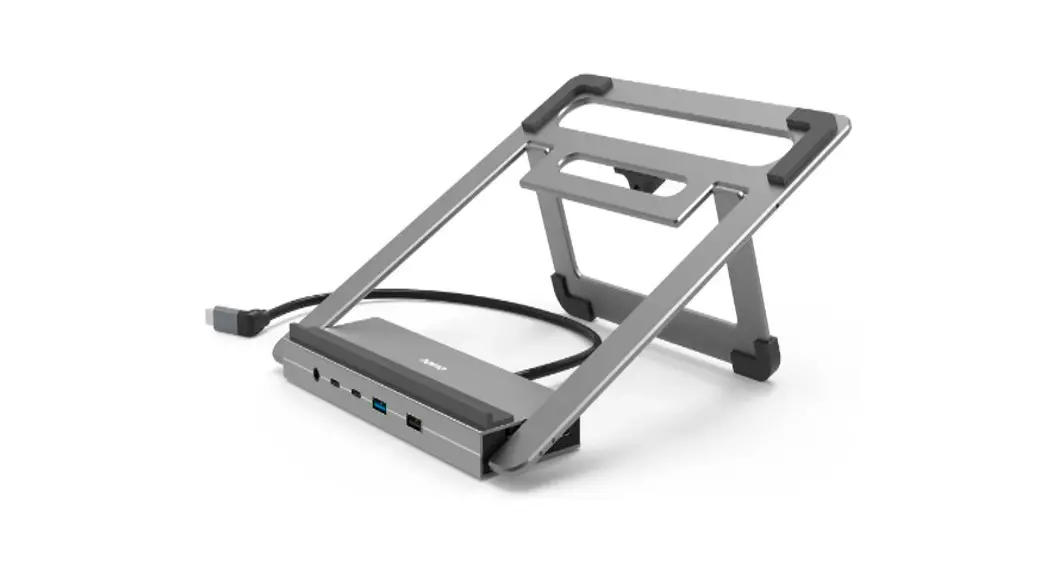
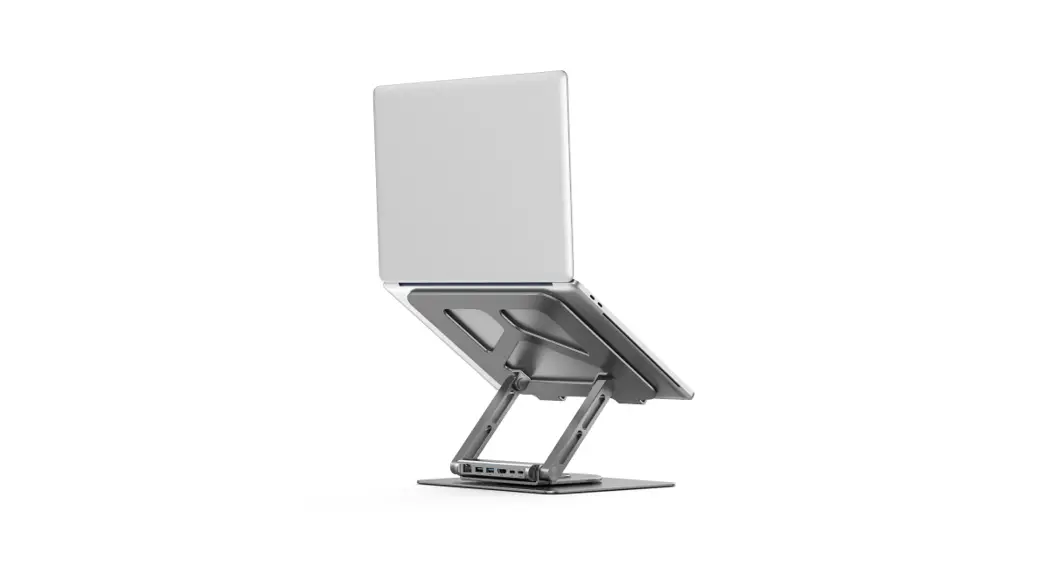
STAND-V000LD Aluminum Laptop Riser Docking Station
Product Information: Aluminum Laptop Riser Docking Station
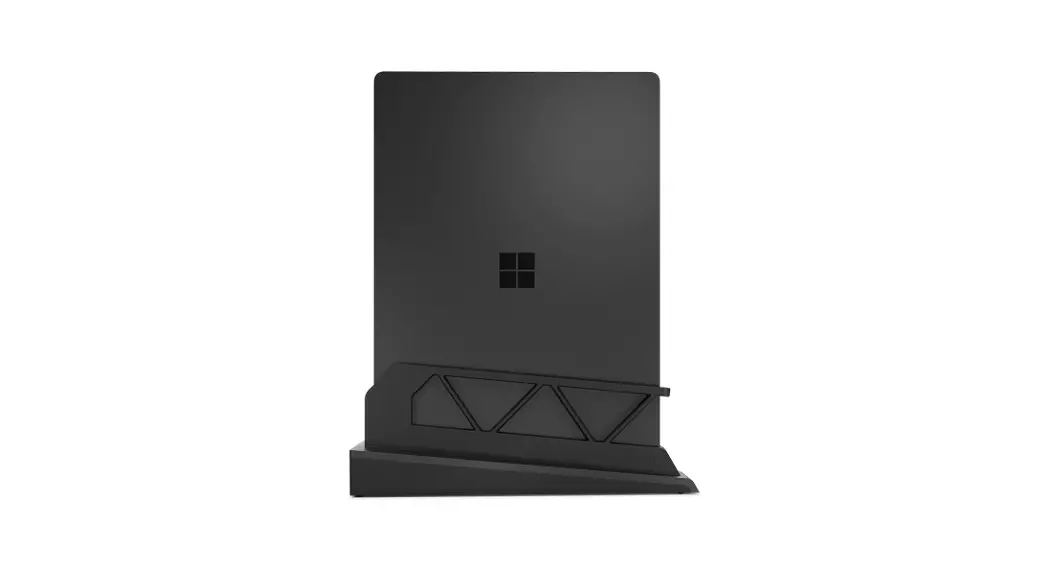
The Aluminum Laptop Riser Docking Station (SKU: STAND-V000LD) is
a device that can help you connect your laptop to various
peripherals, such as displays, ethernet, and USB devices. It has
multiple ports and connectors that can support up to 5Gbps data
transfer rate and bi-directional power delivery up to 100W. It also
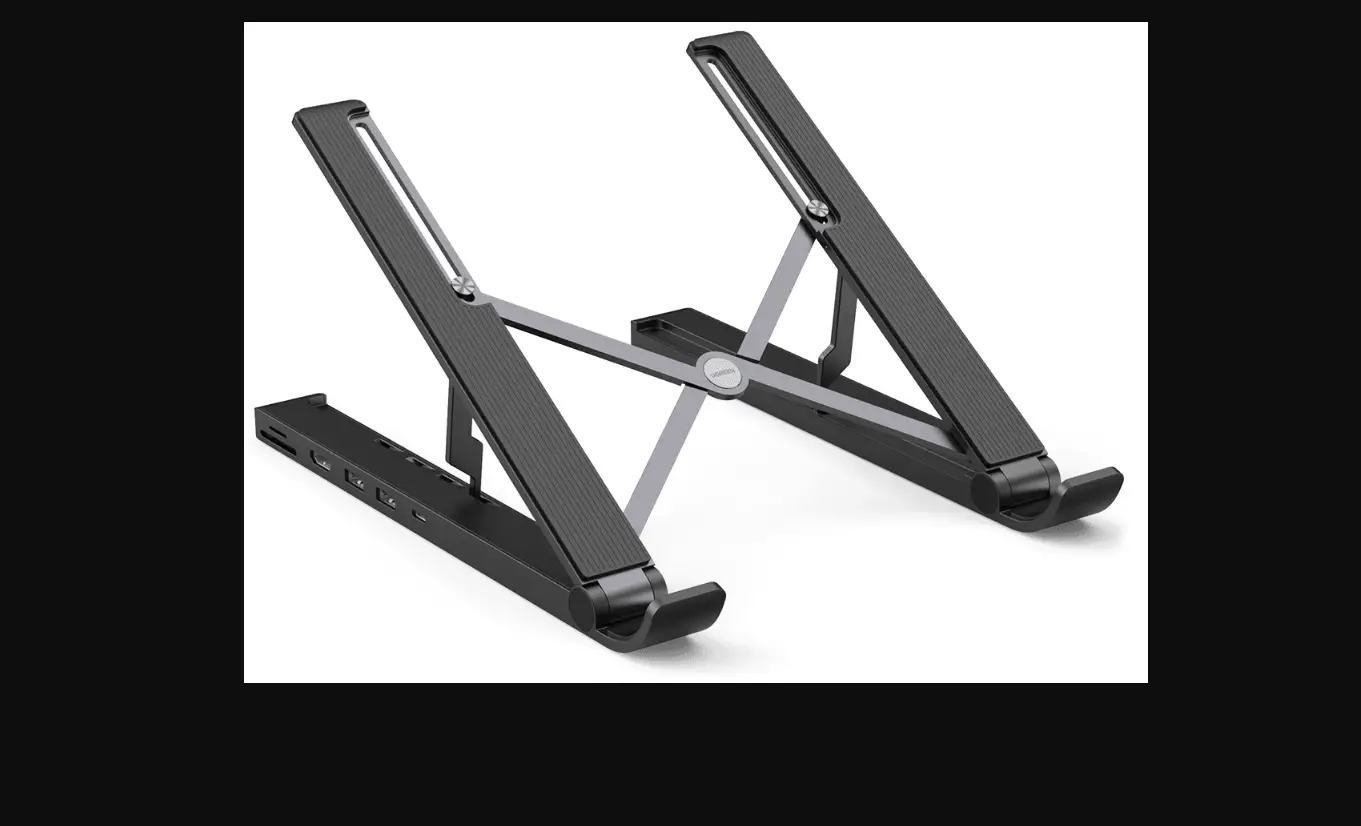
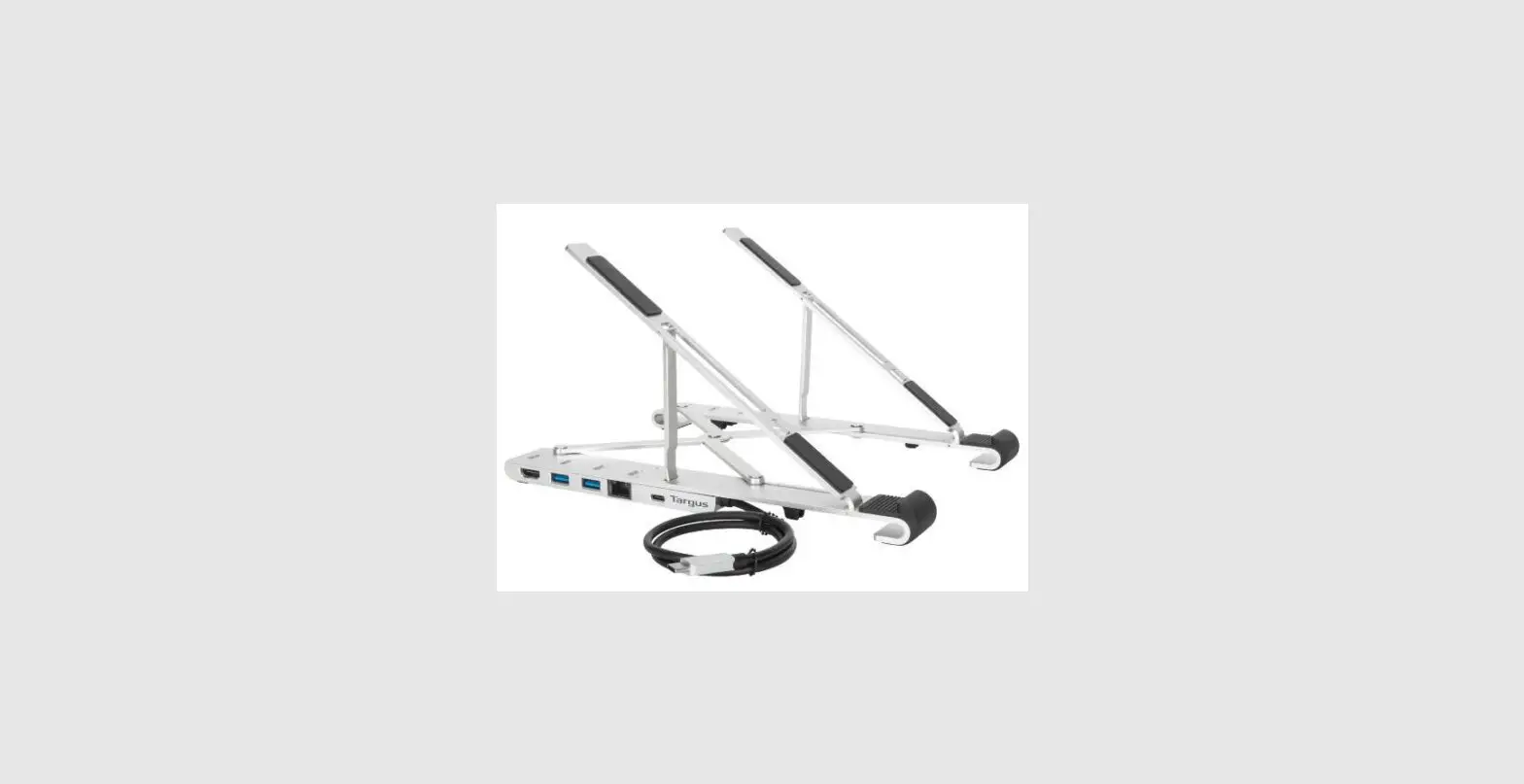
has an aluminum riser that can elevate your laptop to eye level for
a more comfortable viewing experience.
Package Contents:
- A (x1)
- B (x1)
- Riser with Dock
- USB Type-C to Type-C Cable
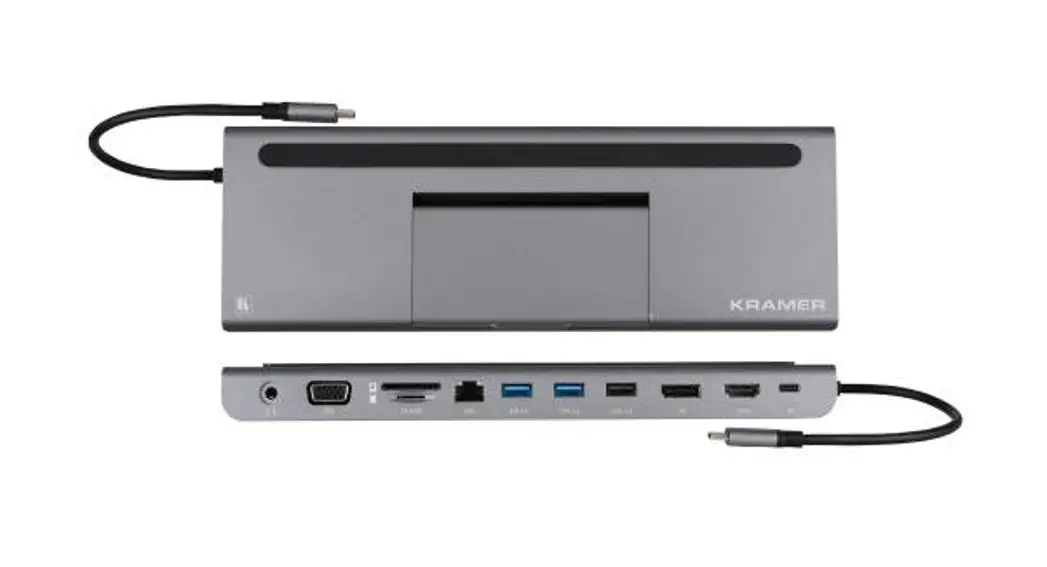
Docking Station Layout:
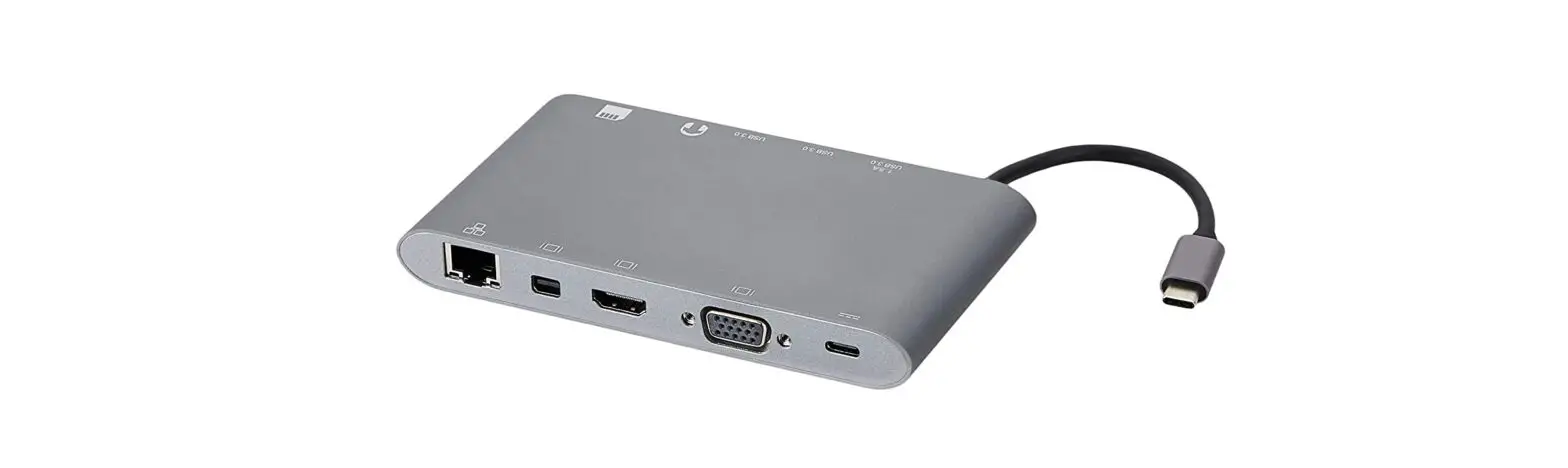
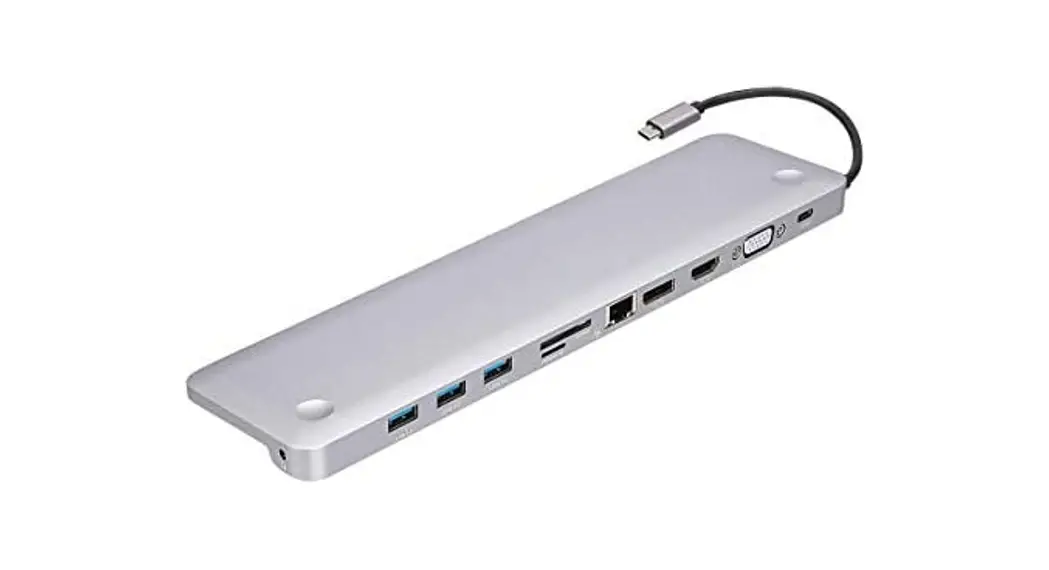
- 3.5mm Headphone Jack: Connect to headset (includes audio and
microphone compatibility). - RJ-45 Gigabit Ethernet: Connect to ethernet router or switch
(Supports 1000/100/10 Mbps). - USB 3.0/BC 1.2 Type-A: Support USB UASP mode, 5Gbps speed and
5V/1.5A power output. Connect for USB peripherals. - USB 3.0 Type-A: Support USB UASP mode, 5Gbps speed and 5V/0.9A
power output. Connect for USB peripherals. - USB 3.0/BC 1.2 Type-C: Support USB UASP mode, 5Gbps speed and
5V/1.5A power output. Connect for USB peripherals. - Displayport Video Output: Connect to Displayport display.
Resolution up to 3840x2160p@60Hz (Please refer to MST output table
on page 4). - HDMI Video Output: Connect to HDMI display. Resolution up to
3840x2160p@60Hz (Please refer to MST output table on page 4). - PD Charging Input: Connect to your PD charger (Not included).
Input: Max 100W (15W needed for docking station power). - USB-C Host: Connect to USB-C port which supports DP Alt Mode
and Power Delivery. (Please use included USB Type-C to Type-C
cable)
System Requirements:
The device requires a USB-C port that supports DP Alt Mode and
Power Delivery. Not all USB-C ports support the full functionality
of the USB Type-C standard. For more information, please refer to
the information provided by the manufacturers.
Product Usage Instructions:
WARNING! ELECTRICAL SAFETY INSTRUCTIONS:
Do not exceed weight capacity. Failure to do so may result in
serious injury.
Normal Use Setup:
- Plug one end of the USB-C to USB-C Cable (B) into the USB-C
Host Port (Port 9) on the docking station. - Plug the other end into your laptop’s Host USB-C port.
- Power delivery is not available with this setup.
- Charge your laptop normally while using this
configuration.
Power Delivery Setup:
- Plug one end of the USB-C to USB-C Cable (B) into the USB-C
Host (Port 9) on the docking station. - Plug the other end into your laptop’s Host USB-C port
(Thunderbolt 3 compatible). - Plug the USB-C end of your AC to USB-C power cable (Not
Included) into the PD Charging Input (Port 8) on the docking
station. - Then plug the AC plug into the wall outlet.
- Refer to the Power Delivery Performance Chart on page 7 for
more details.
Aluminum Laptop Riser Docking Station
Instruction Manual
SKU: STAND-V000LD
Scan the QR code with your mobile device or follow the link for helpful videos and specifications related to this product.
Aluminum Laptop Riser Docking Station
GET IN TOUCH | Monday-Friday from 7:00am-7:00pm CST
www.vivo-us.com Chat live with an agent!
309-278-5303
WARNING!
If you do not understand these directions, or if you have any doubts about the safety of the installation, please call a qualified technician. Check carefully to make sure there are no missing or defective parts. Improper installation may cause damage or serious injury. Do not use this product for any purpose that is not explicitly specified in this manual. Do not exceed weight capacity. We cannot be liable for damage or injury caused by improper mounting, incorrect assembly or inappropriate use.
ELECTRICAL SAFETY INSTRUCTIONS
THIS PRODUCT IS POWERED BY ELECTRICITY. IN ORDER TO AVOID BURNS, FIRE AND ELECTRIC SHOCK, PLEASE READ THE FOLLOWING INSTRUCTIONS CAREFULLY. · DO NOT CLEAN PRODUCT WHILE POWER IS CONNECTED. · DO NOT DISASSEMBLE OR REPLACE COMPONENTS WHILE POWER IS CONNECTED. · NEVER OPERATE THE SYSTEM WITH A DAMAGED CORD OR PLUG. PLEASE CONTACT YOUR SELLER TO REPLACE
DAMAGED PARTS. · NEVER OPERATE SYSTEM IN DAMP ENVIRONMENTS OR IF ANY ELECTRICAL COMPONENTS HAVE MADE CONTACT
WITH LIQUIDS. · ALTERATIONS OF THE GIVEN POWER UNIT ARE NOT ALLOWED. · OUTDOOR USE IS PROHIBITED.
PACKAGE CONTENTS
DO NOT EXCEED WEIGHT CAPACITY.
Failure to do so may result in serious injury.
A (x1)
B (x1)
Riser with Dock USB Type-C to Type-C Cable
6lbs (2.7kg)
Docking Station Layout
1
2
3
4
5
6
7
8
9
1. 3.5mm Headphone Jack: Connect to headset (includes audio and microphone compatibility). 2. RJ-45 Gigabit Ethernet: Connect to ethernet router or switch (Supports 1000/100/10 Mbps). 3. USB 3.0/BC 1.2 Type-A: Support USB UASP mode, 5Gbps speed and 5V/1.5A power output. Connect
for USB peripherals. 4. USB 3.0 Type-A: Support USB UASP mode, 5Gbps speed and 5V/0.9A power output. Connect for USB
peripherals. 5. USB 3.0/BC 1.2 Type-C: Support USB UASP mode, 5Gbps speed and 5V/1.5A power output. Connect
for USB peripherals. 6. Displayport Video Output: Connect to Displayport display. Resolution up to 3840x2160p@60Hz
(Please refer to MST output table on page 4). 7. HDMI Video Output: Connect to HDMI display. Resolution up to 3840x2160p@60Hz (Please refer to
MST output table on page 4). 8. PD Charging Input: Connect to your PD charger (Not included). Input: Max 100W (15W needed for
docking station power). 9. USB-C Host: Connect to USB-C port which supports DP Alt Mode and Power Delivery. (Please use
included USB Type-C to Type-C cable) Not all USB-C ports support the full functionality of the USB
Type-C standard. Ensure that your host USB-C port supports all functions.
2
Quick Start Guide
Normal Use Setup
Plug one end of the USB-C to USB-C Cable (B) into the USB-C Host Port (Port 9) on the docking station. Plug the other end into your laptop’s Host USB-C port. Power delivery is not available with this setup. Charge your laptop normally while using this configuration.
B
Power Delivery Setup
Plug one end of the USB-C to USB-C Cable (B) into the USB-C Host (Port 9) on the docking station. Plug the other end into your laptop’s Host USB-C port (Thunderbolt 3 compatible). Plug the USB-C end of your AC to USB-C power cable (Not Included) into the PD Charging Input (Port 8) on the docking station. Then plug the AC plug into the wall outlet. Refer to the Power Delivery Performance Chart on page 7 for more details.
B
Up to 100W AC to USB-C Cable (Not Included) 3
System Requirements
· Host computer system with an available USB Type-C port (Thunderbolt 3 compatible) that supports DP Alt Mode and Power Delivery.
· Windows 11/10/8.1/8/7 (32/64 bit). · Only Windows OS will support the MST function. · Mac OS can only mirror the device screen.
What is USB 3.1 Type-C?
· USB 3.1 Type-C is a new generation connector interface of USB 3.1 standard, that is capable to support
for the following:
·
USB 3.1 Gen 1 support up to 5Gbps data transfer rate and USB 3.1 Gen 2 support up to 10Gbps
data transfer rate.
·
Bi-directional power delivery up to 100W, if both the USB host connection and the device
support it.
·
DP Alternate modes, the signal is based on the DisplayPort version to deliver different speeds.
Not all USB-C ports support the full functionality of the USB Type-C standard. For more information, please refer to the information provided by the manufacturers.
DP Alt Mode (DisplayPort Alternative Mode)
This docking station supports DP Alt mode, which means a DisplayPort video signal can be transferred over a USB-C cable. Because the docking station supports DP alt mode, so the Alt mode video port can output the video directly via DP Alt mode with the other driver installs.
USB Power Delivery
This docking station supports USB Power Delivery, which means it delivers up to 100 watts of power to your connected host laptop (your laptop’s USB-C port must support power delivery). USB Power Delivery is a specification that allows power to be sent over a USB-C or Thunderbolt 3 cable that supports the specification. Ensure your USB-C cable can support PD 100W transfer or use the included USB-C cable.
What is DisplayPort MST? (Multi-Stream Transport)
MST has been a feature of the DisplayPort standard since version 1.2 was released. The key factor of the technology’s usefulness for desktop users is that it allows multiple independent displays to be driven from a single DisplayPort output source device. The combined data requirements of all the displays cannot exceed the limits of the single DisplayPort port that the video source originates from, nor exceed the capabilities of your graphics cards.
MST Video Output Table
4
Assembly Removing the Docking Station
To remove the docking station, pull up and away from the the base of the riser.
Installing the Docking Station
To install the docking station, align the slots on the sides of the docking station with the tabs near the base of the riser. Push down while keeping alignment. The docking station will be held in place with the built-in magnets.
5
Range of Motion
To adjust the tilt angle, first remove the laptop from the platform. Use two hands to adjust the riser to your desired position. Slowly place laptop back onto riser, making sure it is in a stable orientation. Note: The riser joints are tight to allow use with heavier laptops. The tension on the joints cannot be adjusted. Do not exceed recommended tilt angles listed below.
Upper Tilt
0° to 60°
(from horizontal)
Lower Tilt 0° to 60°
6
Q & A / Troubleshooting
Why am I using a 100W PD charger but only getting 85W charging?: The media hub needs 15W for all the port functions to operate simultaneously (100W-15W=85W). Refer to the “Power Delivery Performance Chart” below for more details.
Why is my laptop not able to do 85W charging?: Your laptop must support 85W charging. Not all laptops support or require 85W for charging. Check in your laptop manual or with the laptop manufacturer for more details.
Why does MST video output have no video?: Ensure your USB-C host port on your laptop can support DP Alt mode. Check in your laptop manual or with the laptop manufacturer for more details.
Why does MST only have one video output?: This is due to bandwidth limit. Please refer to the MST Video output table and adjust the video output resolution on your monitors accordingly.
Do I need to install and software or drivers?: The docking station is plug-and-play out of the box. This device does not need any driver or software installs to make it work properly.
Need an additional question answered that is not listed throughout this manual? Get in touch with our dedicated support team who can offer immediate assistance. Our contact information can be found on the last page of the manual.
Power Delivery PerfPoorwmeraDnelciveeryCPhearfrotrmance Chart
Provided Power of your Power required
USB-C Cable
charger
for dock
(Watts)
(Watts)
(Watts)
Power to the host device
(Watts)
Host Devices (Partial List)
MacBook Air MacBook Pro
Windows Laptop
20
15
30
15
45
15
60
15
65
15
100
87
15
90
15
96
15
100
15
5xx
x
15
xx
30
45
50
72
75
81
85
x
x
x
x
xx
x
Ox
x
OO
O
Recommended O Slow Charging Speed x Not Recommended
7
Love your new VIVO setup and want to share? Tag us in your photo! @vivo_us
LAST UPDATED: 04/04/2022 REV1.1
Open Monday – Friday 7:00am – 7:00pm CST, our dedicated support team can offer immediate assistance with rapid response times. If any parts are received damaged or defective, please contact us. We are happy to replace parts to ensure you have a fully functioning product.
309-278-5303
AVG. RESOLUTION TIME (within office hrs): 5M 4S
www.vivo-us.com
Chat live with an agent!
AVG. RESOLUTION TIME (within office hrs): < 15 M
AVG. RESPONSE TIME (within office hrs): 1HR 8M – 23% within < 15m – 38% within < 30m – 61% within < 1hr – 83% within < 2hr – 92% within < 3hr
FOR MORE VIVO PRODUCTS, CHECK OUT OUR WEBSITE AT: www.vivo-us.com
 Register a .US.COM domain today!
 VIVO - Desks, Monitor Mounting, and More Home & Office Solutions – VIVO - desk solutions, screen mounting, and more
 Aluminum Laptop Riser Docking Station – VIVO - desk solutions, screen mounting, and more