VS-SKEY2-345 Key Fob
Product Information:
Product Name: Vivint Key Fob (SKEY2)
Model Number: VS-SKEY2-345
Part Number (P/N): 77-600051-001 REV 1.0
Ink: Black
Material: 20 lb Mead Bond
Size: 5.50 x 8.50
Scale: 1:1
Folds: Tri-fold vertical, tri-fold horizontal
(to fit in box)
Product Usage Instructions:
- To disarm the system, press the button until the red LED
illuminates. - To arm in stay mode, press the button until the red LED
illuminates. - To arm in away mode, press the button until the red LED
illuminates. - To send a panic signal, hold down both buttons until the red
LED begins blinking rapidly for about 4 seconds.
Note: Up to 4 devices can be in Secure Mode. In Secure Mode
programming, the key fob must be within 5 feet/1.5 m of the panel
and kept there until the LED stops flashing (about 10-15
seconds).
Battery Installation:
- To install or replace the battery, insert a coin into the top
left corner slot and carefully twist to open the device. - Use only the recommended replacement battery type: Panasonic
CR2032 or equivalent lithium battery. - Warning: The polarity of the battery must be
observed. Improper handling of lithium batteries may result in heat
generation, explosion, or fire, which may lead to personal injury.
Replace only with the same or equivalent battery type as
recommended by the manufacturer. - The red LED will blink one, two, or three times upon battery
insertion, indicating the operating mode.
*For complete regulatory compliance information, visit
vivint.com/fcc.
PRINT INSTRUCTIONS: REFERENCE SHEET FOR VS-SKEY2-345, P/N 77-600051-001 REV 1.0 | INK: BLACK | MATERIAL: 20 LB MEAD BOND | SIZE: 5.50″ X 8.50″ SCALE 1:1 | FOLDS: TRI-FOLD VERTICAL, TRI-FOLD HORIZONTAL (TO FIT IN BOX)
Key Fob
(VS-SKEY2-345)
Quick Reference (User Manual)
4931 N 300 W Provo, UT 84604
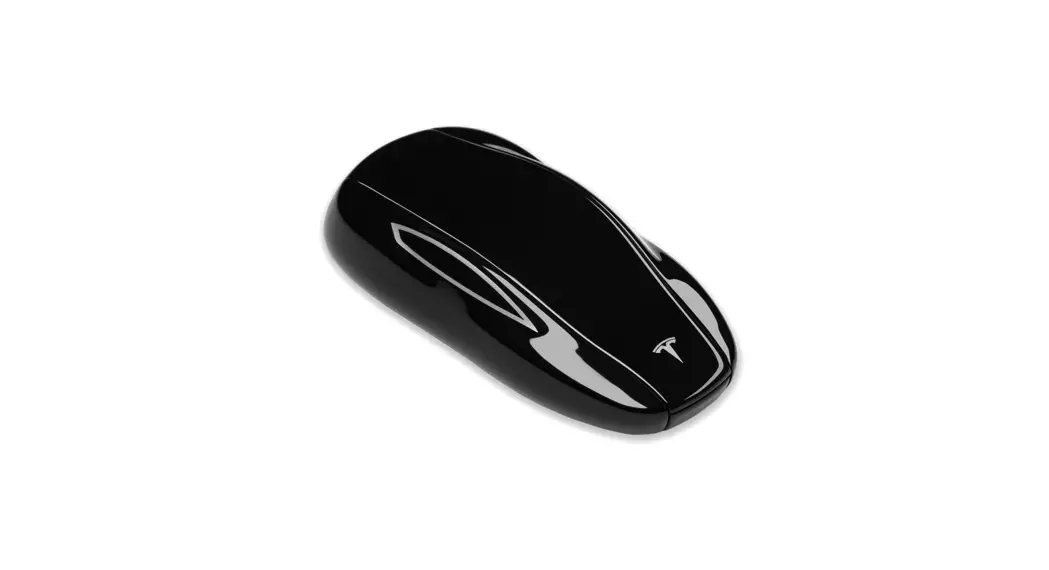
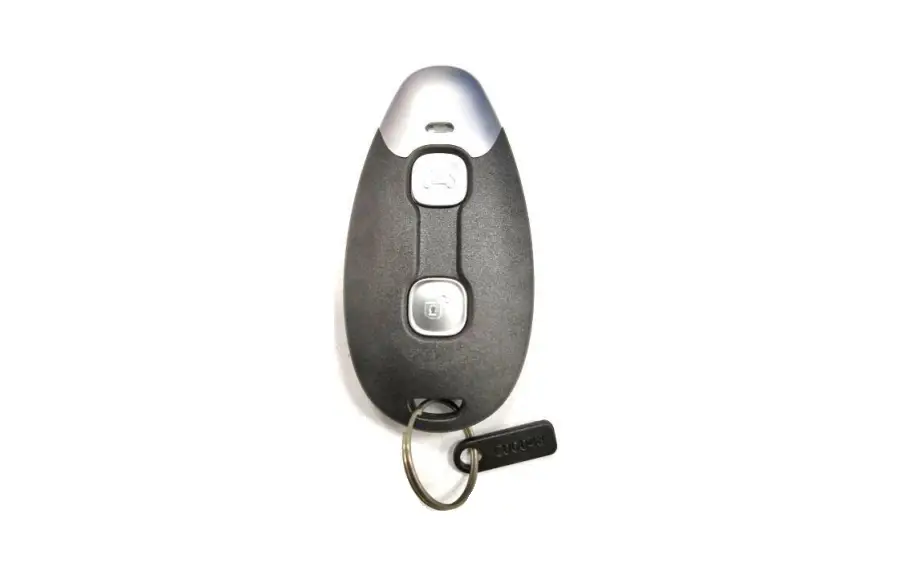
The Vivint Key Fob (SKEY2) works with any Vivint Smart Home system, letting users control their system with the touch of a button. Combining style and convenience, the key fob allows you to arm (Stay or Away) and disarm your system anywhere within transmission range of the panel. Users can disarm their system as they pull up to their house or arm it on their way out the door. A total of 20 key fobs can be added to a system with a maximum of 4 in Secure Mode (see below).
The SKEY2 also provides added protection by letting you send an encrypted panic signal to the panel when the first and third buttons are held down.
Programming Instructions Use these instructions to add an SKEY2 device to the Vivint system and program its operating mode.
OPERATING MODE PROGRAMMING: When programming an SKEY2 key fob in Secure Mode (IMPORTANT: up to 4 devices can be in Secure Mode), it must be within 5 feet/1.5 m of the panel and kept there until the LED stops flashing (about 10-15 seconds).
· Open the SKEY2 device, insert the battery, and close the device tightly. · Within 60 seconds of inserting the battery, press one of the buttons (described below) for 10 seconds.
· Disarm Button (1) — Legacy Mode (the LED blinks once to indicate successful mode selection) · Stay Button (2) — Legacy Mode + GDR1 (the LED blinks twice to indicate this mode) · Away Button (3) — Secure Mode (the LED blinks three times to indicate this mode) Secure Mode should always be used if possible. Once the key fob is programmed in Secure Mode it cannot be changed to either of the Legacy Modes (1 or 2). IMPORTANT: If the panel is replaced when a key fob is using Secure Mode, the device’s operating mode must be reprogrammed with the new panel.
Button Functionality Disarm: Press until the red LED illuminates to disarm the system. Stay: Press until the red LED illuminates to arm in stay mode. Away: Press until the red LED illuminates to arm in away mode. Panic (Disarm + Away): Hold down both buttons until the red LED begins blinking rapidly (for about 4 seconds) to send a panic signal.
Installer / User Test Test each button’s functionality by holding it down separately (for approximately 2 seconds) until the red LED flashes. (IMPORTANT: If the panel is NOT in Test Mode, the signals will activate the actual designated event.)
Technical / Hardware Specifications
Vivint Part Number (P/N) V-SKEY2-345
Model Number (M/N) KF01
Wireless Signal Range 300 ft. (91.4 m), open air
Battery
Panasonic CR2032 or
equivalent lithium battery
Battery Life
3-5 years (normal usage)
Transmitter Frequency 345 MHz
Code Outputs
Arm Away, Arm Stay,
Disarm, Panic, Auxiliary
Supervisory Interval
Not applicable
Operating Temperature. 32° to 120°F (0° to 49°C)
Limits
Relative Humidity
5-95% Non-Condensing
Standards Certifications & Listings
UL 1023
Standard for Household Burglar-
Alarm System Units
CAN/ULC-S304 Standard for Control Units,
Accessories and Receiving Equipment
for Intrusion Alarm System
FCC ID:
2AAAS-KF01
IC:
10941A-KF01
*For complete regulatory compliance information, go to: vivint.com/fcc.
Battery Installation
To install or replace the battery, insert a coin into the top left corner slot and carefully twist to open the device. Use only the recommended replacement battery type (see Specifications). NOTE: The red LED will blink either one, two, or three times upon battery insertion, indicating the operating mode.
WARNING! The polarity of the battery must be observed (as shown in the image). Improper handling of lithium batteries may result in heat generation, explosion, or fire, which may lead to personal injury. Replace only with the same or equivalent battery type as recommended by the manufacturer.
AVERTISSEMENT! La polarité de la batterie doit être observée (comme indiqué dans l’image). Une mauvaise manipulation des piles au lithium peut conduire à la production de chaleur, une explosion ou un incendie, ce qui peut entraîner des blessures. Remplacez-le par le même type ou équivalent de la batterie tel que recommandé par le fabricant.
Batteries must not be recharged, disassembled, or disposed of in fire. Disposal of used batteries must be made in accordance with the waste recovery and recycling regulations in your area. Keep away from small children. If batteries are swallowed, promptly see a doctor. California Only: This Perchlorate warning applies ONLY to Manganese Dioxide Lithium cells sold or distributed in California, USA. Perchlorate material special handling may apply. (For more information, visit: www.dtsc.ca.gov/hazardouswaste/perchlorate)
Wireless Product Notice
Wireless communications hardware provides reliable communication; however, there are limitations which must be observed. · The transmitters are required to comply with all applicable wireless rules and regulations. As such, they have limited transmitter power and limited range. · Wireless signals may be blocked by radio signals that occur on or near their operating frequencies.
FCC and ISED Canada Regulatory Compliance Declarations*
CAUTION: Unauthorized changes or modifications could void the user’s authority to operate the equipment.
This device has been tested and found to comply with the limits for a Class B digital device, pursuant to Part 15 of FCC Rules and Industry Canada license-exempt RSS standard(s). Operation is subject to the following two conditions:
(1) This device may not cause harmful interference, and (2) This device must accept any interference received, including interference that may cause undesired operation of the device. These limits are designed to provide reasonable protection against harmful interference in a residential installation. This equipment generates, uses, and can radiate radio frequency energy and, if not installed and used in accordance with the instructions, may cause harmful interference to radio communications. However, there is no guarantee that interference will not occur in a particular installation. If this equipment does cause harmful interference to radio or television reception, which can be determined by turning the equipment off and on, the user is encouraged to try to correct the interference by one or more of the following measures: · Reorient or relocate the receiving antenna. · Increase the separation between the equipment and the receiver. · Connect the equipment into an outlet on a circuit different from that to which the receiver is connected. · Consult the dealer or an experienced radio/television technician for help.
PRUDENCE: Changements ou modifications pourraient annuler le droit de l’utilisateur à utiliser l’équipement non autorisées.
Conformément à la réglementation d’Industrie Canada, le présent émetteur radio peut fonctionner avec une antenne d’un type et d’un gain maximal (ou inférieur) approuvé pour l’émetteur par Industrie Canada. Dans le but de réduire les risques de brouillage radioélectrique à l’intention des autres utilisateurs, il faut choisir le type d’antenne et son gain de sorte que la puissance isotrope rayonnée équivalente (p.i.r.e.) ne dépasse pas l’intensité nécessaire à l’établissement d’une communication satisfaisante. Le présent appareil est conforme aux CNR d’Industrie Canada applicables aux appareils radio exempts de licence. L’exploitation est autorisée aux deux conditions suivantes: (1) l’appareil ne doit pas produire de brouillage, et (2) l’utilisateur de l’appareil doit accepter tout brouillage radioélectrique subi, même si le brouillage est susceptible d’en compromettre le fonctionnement. Ces limites sont conçues pour fournir une protection raisonnable contre les interférences nuisibles dans une installation résidentielle. Cet équipement génère, utilise et peut émettre une énergie de radiofréquence et, s’il n’est pas installé et utilisé conformément aux instructions, il peut causer des interférences nuisibles aux communications radio. Cependant, il n’existe aucune garantie que des interférences no se produiront pas dans une installation particulière. Si cet équipement provoque des interférences nuisibles à la réception radio ou télévision, ce qui peut être déterminé en mettant l’équipement hors et sous tension, l’utilisateur est encouragé à essayer de corriger l’interférence par une ou plusieurs des mesures suivantes:
· Réorienter ou déplacer l’antenne de réception. · Augmentez la distance entre l’équipement et le récepteur. · Connecter l’équipement à une sortie sur un circuit différent de celui sur lequel le récepteur est branché. · Consulter le revendeur ou un technicien radio / télévision expérimenté pour de l’aide.
© 2022 Vivint Inc. All Rights Reserved. | www.vivint.com | M/N: KF01 | Doc P/N: 77-600051-001 Rev. 1.0
 Vivint's Policies | Updated Terms And Conditions
 dtsc.ca.gov/hazardouswaste/perchlorate
 Vivint® Smart Home Security & Alarm Systems | 855.832.1550