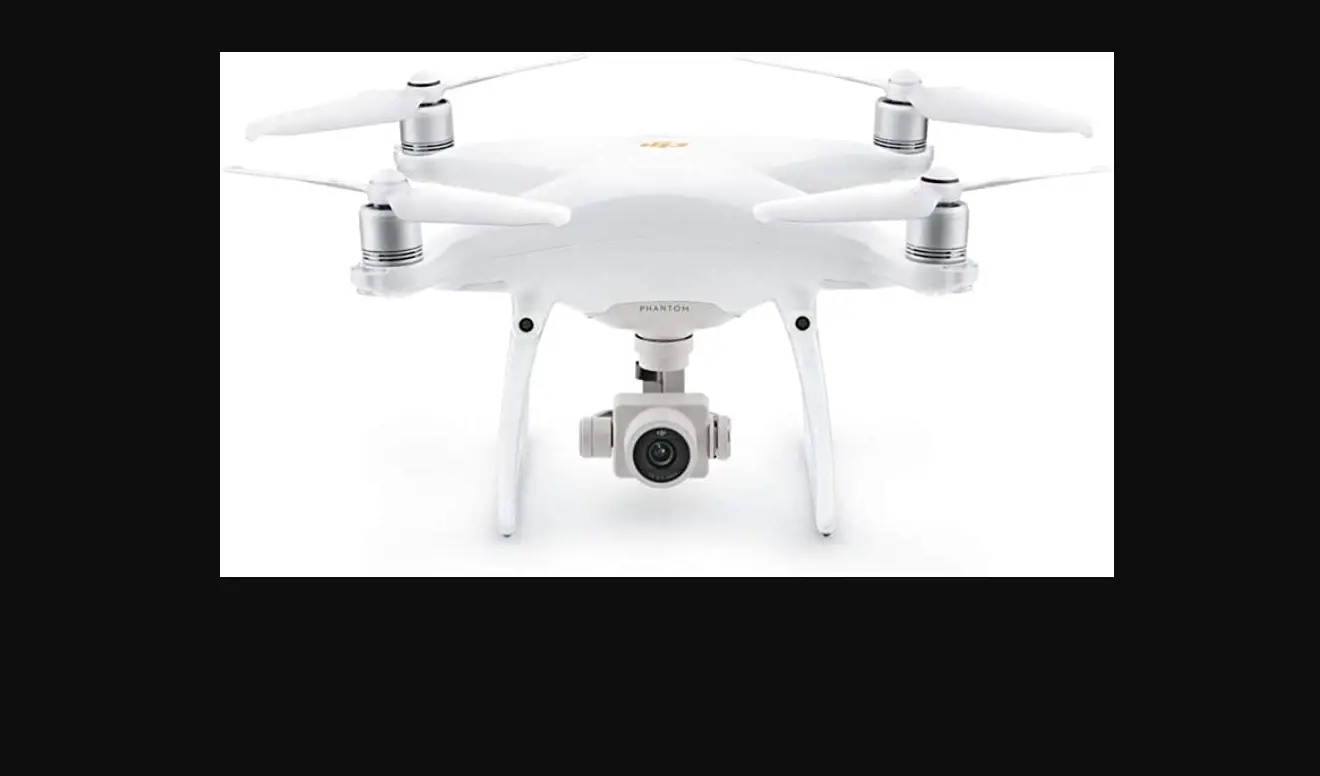
PHANTOM 4 ADVANCED
Quick Start Guide
V1.0
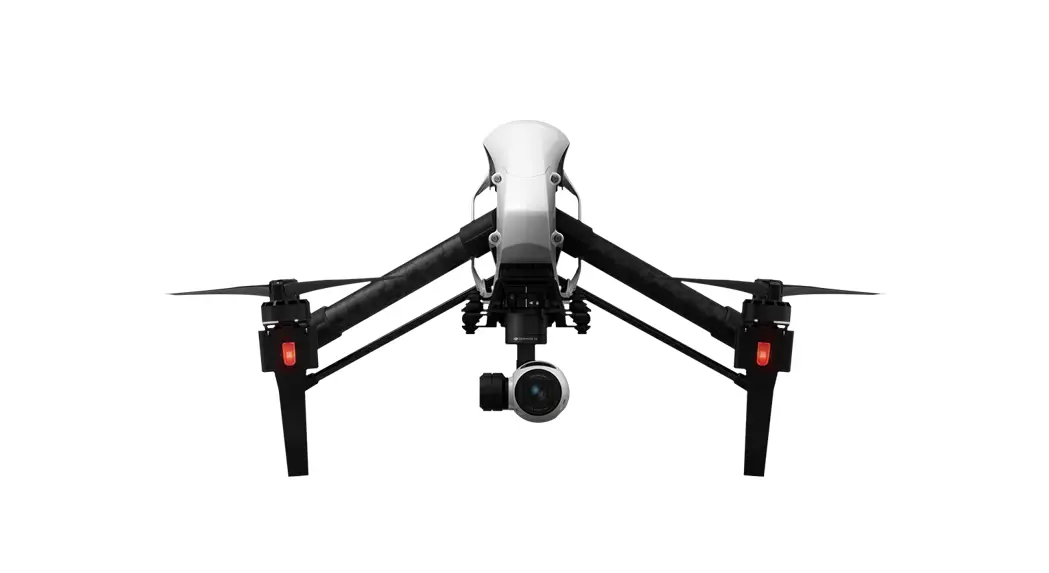
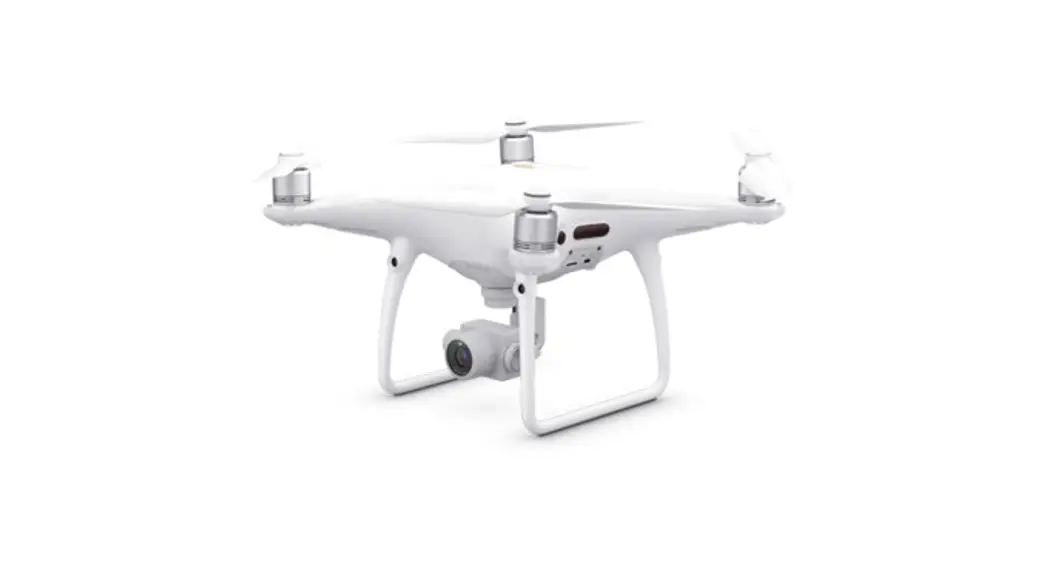
The DJI™ PHANTOM™ 4 Advanced is a smart prosumer flying camera capable of shooting 4K video at 60fps and at up to 100mbps, and capturing 20 megapixel stills. Using upgraded TapFly™ and ActiveTrack™ through the DJI GO™ 4 app, you can fly anywhere visible on your screen or track a moving subject smoothly and easily with a simple tap. The brand new camera uses a 1-inch CMOS sensor offering unprecedented clarity, lower noise, and better quality images.
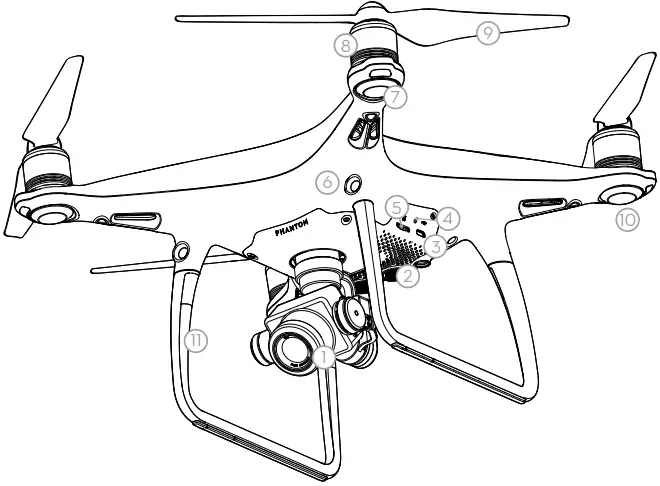
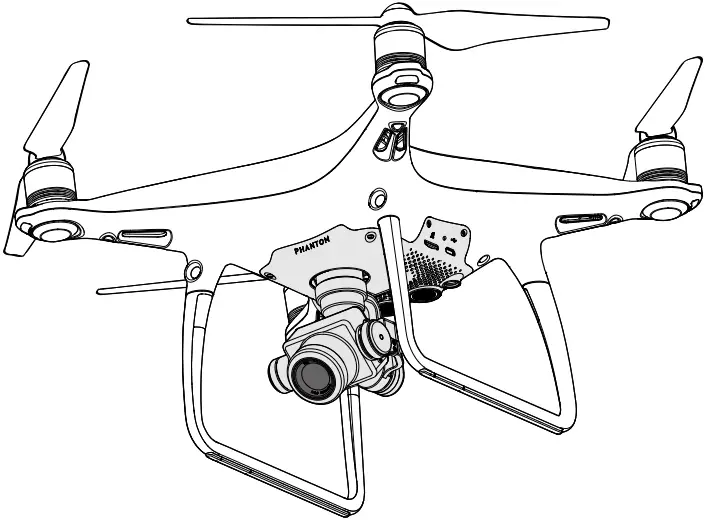
- Gimbal and Camera
- Downward Vision System*
- Micro USB Port
- Camera/Linking Status Indicator and Link Button
- Camera Micro SD Card Slot
- Forward Vision System
- Front LEDs
- Motors
- Propellers
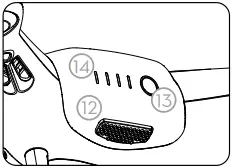
- Aircraft Status Indicators
- Antennas
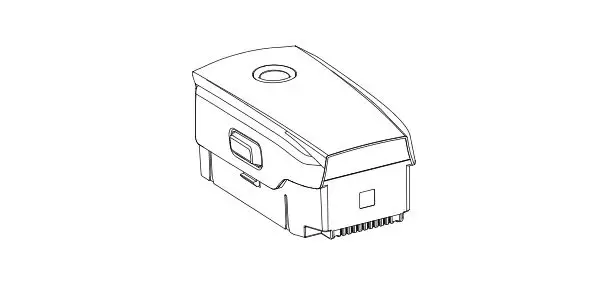
- Intelligent Flight Battery
- Power Button
- Battery Level Indicators
* The Vision System is affected by surrounding conditions. Read the Disclaimer and Safety Guidelines and watch the tutorials in the DJI GO 4 app or on the official DJI website to learn more.
http://www.dji.com/phantom-4-adv
Remote Controller
The powerful remote controller of the Phantom 4 Advanced has a transmission range extending up to 4.3 mi (7 km)*. It features physical buttons and dials to control exposure, camera tilt, photo capture and video recording.
Built into the remote controller is DJI LIGHTBRIDGE™, which when paired with a compatible mobile device gives you a live HD view from the Phantom’s camera. An internal battery ensures a long battery life and ease of use.
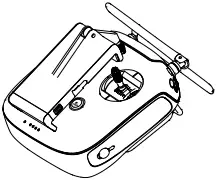 Folded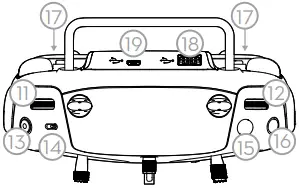
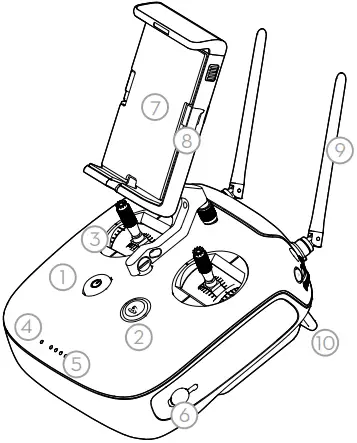
- Power Button
- Return-to-Home (RTH) Button
- Control Sticks
- Status LED
- Battery Level LEDs
- Power Port
- Mobile Device Holder
- Small Device Positioning Tabs (for mobile phones)
- Antennas
- Handle Bar
- Gimbal Dial
- Camera Settings Dial
- Record Button
- Flight Mode Switch
- Shutter Button
- Intelligent Flight Pause Button
- C1 and C2 Buttons (customizable)
- USB Port
- Micro USB Port
The default flight control is known as Mode 2. The left stick controls the aircraft’s altitude and heading, while the right stick controls its forward, backward, left and right movements. The gimbal dial controls the camera’s tilt.
Left Stick Right Stick
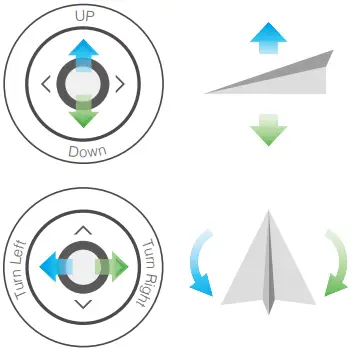
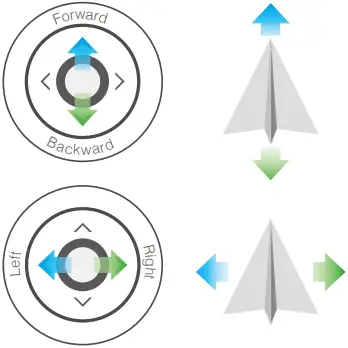
Gimbal Dial
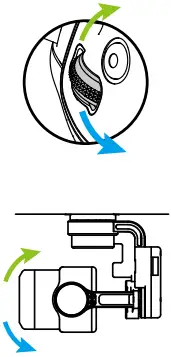
* The remote controller is able to reach its maximum transmission distance (FCC) in a wide open area with no Electro-Magnetic Interference, and at an altitude of about 400 feet (120 meters).
Using Phantom 4 Advanced
1. Download the DJI GO 4 App
Search for `DJI GO 4′ on the App Store or Google Play, and install the app on your mobile device.
 DJI GO 4 App
2. Watch the Tutorial Videos
Watch the tutorial videos at www.dji.com or in the DJI GO 4 app.
 Tutorial Videos
 • DJI GO 4 supports iOS 9.0 (or later) or Android 4.4 (or later).
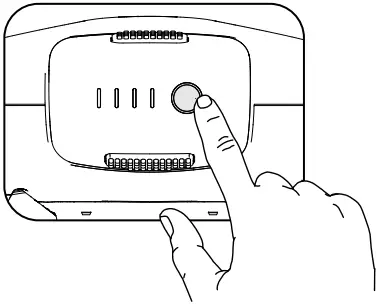
3. Check the Battery Levels
 Low
Low  Battery Level
 High
High 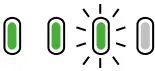
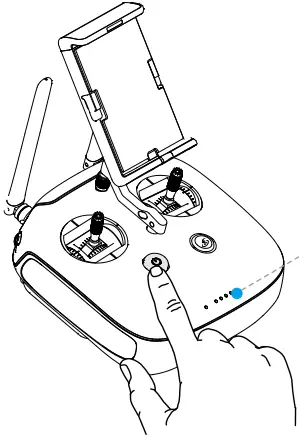 Low Battery LevelHigh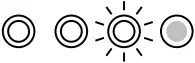
Press once to check the battery level. Press once, then again and hold to turn on/off.
4. Charge the Batteries
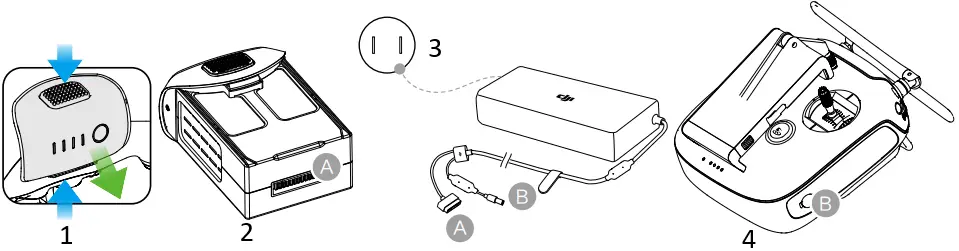
- Remove the battery.
- Charge Time: ~1 hr 20 min
- Power Outlet 100 – 240V
- Charge Time: ~3 hr 40 min
• When charging is complete, the battery level indicators will automatically turn off.
5. Prepare the Remote Controller

A Unfold
B Strong
C Weak
D Press the button to release the clamp.
E Place your mobile device and adjust the clamp to secure.
F Connect your mobile device with a USB cable.
6. Prepare for Takeoff
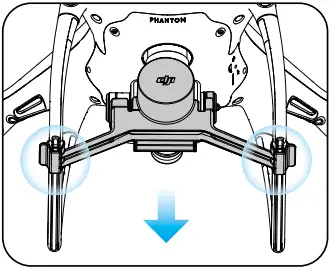

Remove the gimbal clamp from the camera.
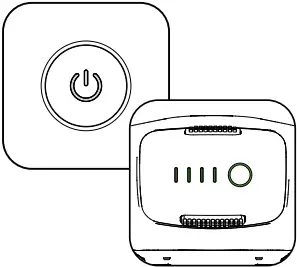
Power on the remote controller and the aircraft.
Launch DJI GO 4, complete the first-time setup, and tap GO FLY.
 First-time activation requires your DJI account and internet connection.
Internet
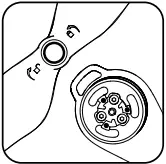
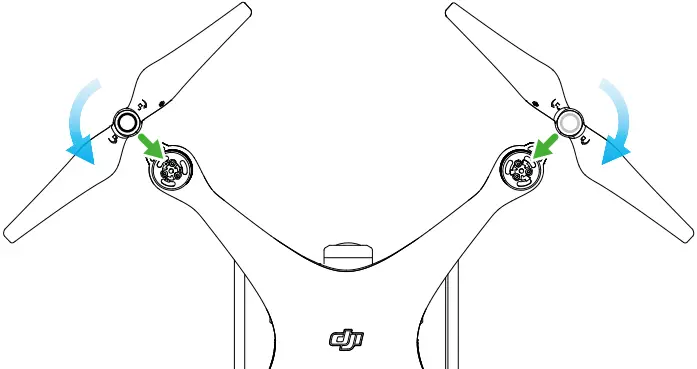
Black propeller rings go on motors with black dots.
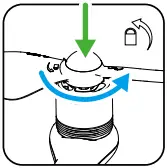
Press the propeller down onto the mounting plate and rotate in the lock direction  until secure.
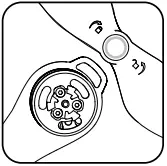
Silver propeller rings go on motors without black dots.
• Check that the propellers are secure before each flight.
7. Flight
Ready to Go (GPS)
Before taking off, make sure the Aircraft Status Bar in the DJI GO 4 app indicates `Ready to Go (GPS)’ or `Ready to Go (Vision)’ if flying indoors.
In the DJI GO 4 App:
 Auto Takeoff
The aircraft will take off and hover at an altitude of 4 feet (1.2 meters).
 Auto Landing
The aircraft will land vertically and stop its motors.
 Return-to-Home (RTH)
Bring the aircraft back to the Home Point. Tap again to stop the procedure.
 Normal
You are in control of the Phantom, with satellite and Return-to-Home support.
 TapFly
Tap on your screen to fly your Phantom in that direction, avoiding obstacles as it flies.
 ActiveTrack
Mark an object on your screen to track it as it moves.
- Watch the tutorial in the DJI GO 4 app or on the official DJI website to learn more.
- Always set an appropriate RTH altitude before takeoff. When the aircraft is returning to the Home Point, you should guide it with the control sticks. Refer to the Disclaimer and Safety Guidelines for more details.
Manual Takeoff
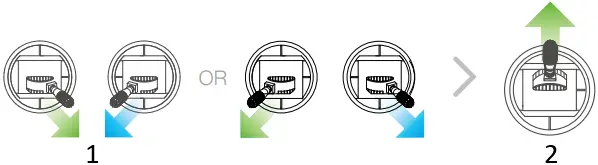
- Combination Stick Command to start/stop the motors
- Left stick up (slowly) to take off
Manual Landing
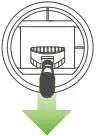
Left stick down (slowly) until you touch the ground
Hold a few seconds to stop the motors
- Rotating propellers can be dangerous. Do not start the motors when there are people nearby.
- Always keep your hands on the remote controller so long as the motor is still spinning.
- Stop motor mid-flight: Pull the left stick to the bottom inside corner while simultaneously pressing the RTH button. Only stop motors mid-flight in emergency situations when doing so can reduce the risk of damage or injury. Refer to the user manual for details.
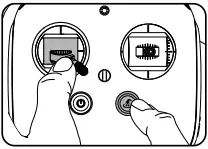 Stop motor mid-flight
 It’s important to understand basic flight guidelines, for the safety of both you and those around you. Don’t forget to read the Disclaimer and Safety Guidelines.
Specifications
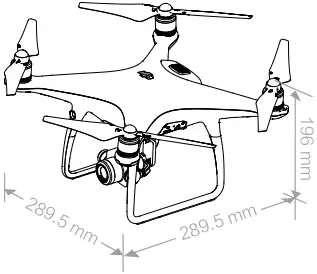
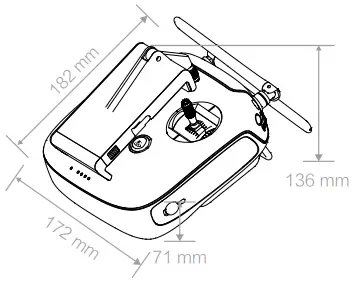
| ● Aircraft | ||
| Weight (Battery & Propellers Included) | 1368 g | |
| Max Ascent Speed | S-mode: 6 m/s; P-mode: 5 m/s | |
| Max Descent Speed | S-mode: 4 m/s; P-mode: 3 m/s | |
| Max Speed | 45 mph (72 kph) (S-mode); 36mph (58 kph) (A-mode); 31 mph (50 kph) (P-mode) | |
| Max Service Ceiling Above Sea Level | 19685 ft (6000 m) | |
| Max Flight Time | Approx. 30 minutes | |
| Operating Temperature | 32° to 104° F ( 0° to 40° C) | |
| Satellite Positioning Systems | GPS/GLONASS | |
| Hover Accuracy Range | Vertical: ±0.1 m (With Vision Positioning); ±0.5 m (With GPS Positioning) Horizontal: ±0.3 m (With Vision Positioning); ±1.5 m (With GPS Positioning) | |
| ● Gimbal | ||
| Controllable Range | Pitch: -90° to +30° | |
| ● Vision System | ||
| Velocity Range | ≤31 mph (50 kph) at 6.6 ft (2 m) above ground | |
| Altitude Range | 0 – 33 ft (0 – 10 m) | |
| Operating Range | 0 – 33 ft (0 – 10 m) | |
| Obstacle Sensory Range | 2 – 98 ft (0.7 – 30 m) | |
| Operating Environment | Surfaces with clear patterns and adequate lighting (> 15 lux) | |
| ● Camera | ||
| Sensor | 1’’ CMOS; Effective pixels: 20M | |
| Lens | FOV (Field of View) 84°, 8.8 mm (35 mm format equivalent: 24 mm), f/2.8 – f/11, auto focus at 1 m – ∞ | |
| ISO Range | Video: 100 – 3200 (Auto); 100 – 6400 (Manual); Photo: 100 – 3200 (Auto); 100 – 12800 (Manual) | |
| Mechanical Shutter | 8 – 1/2000 s | |
| Electronic Shutter | 8 – 1/8000 s | |
| Max Image Size | 3:2 Aspect Ratio: 5472×3648; 4:3 Aspect Ratio: 4864×3648; 16:9 Aspect Ratio: 5472×3078 | |
| Still Photography Modes | Single Shot Burst Shooting: 3/5/7/10/14 frames Auto Exposure Bracketing (AEB): 3/5 bracketed frames at 0.7EV Bias Interval: 2/3/5/7/10/15/30/60 s | |
| Video Recording Modes | H.265 ● C4K: 4096×2160 24/25/30p ● 4K: 3840×2160 24/25/30p ● 2.7K: 2720×1530 24/25/3 0/48/50/60p ● FHD: 1920×1080 24/25/30/48/50/60/120p ● HD: 1280×720 24/25/30/48/50/60/120p | H.264 ● C4K: 4096×2160 24/25/30/48/50/60p ● 4K: 3840×2160 24/25/30/48/50/60p ● 2.7K: 2720×1530 24/25/30/48/50/60p ● FHD: 1920×1080 24/25/30/48/50/60/120p ● HD: 1280×720 24/25/30/48/50/60/120p |
| Video Storage Bitrate | 100 Mbps | |
| Supported File Systems | FAT32 (≤ 32 GB); exFAT (> 32 GB) | |
| Photo | JPEG, RAW (DNG), JPEG + RAW | |
| Video | MP4/MOV (AVC/H.264; HEVC/H.265) | |
| Supported SD Cards | Micro SD, Max Capacity: 128 GB. Class 10 or UHS-1 rating required | |
| Operating Temperature | 32° to 104° F (0° to 40° C) | |
| ● Remote Controller | ||
| Operating Frequency | 2.400 – 2.483 GHz | |
| Max Transmission Distance | FCC: 4.3 mi (7 km); CE: 2.2 mi (3.5 km); SRRC: SRRC: 2.5 mi (4 km); (Unobstructed, free of interference) | |
| Operating Temperature | 32° to 104° F (0° to 40° C) | |
| Battery | 6000 mAh LiPo 2S | |
| Transmitter Power (EIRP) | 26 dBm (FCC); 17 dBm (CE); 20 dBm (SRRC) | |
| Operating Voltage | 1.2 A @ 7.4 V | |
| ● Charger | ||
| Voltage | 17.5 V | |
| Rated Power | 100 W | |
| ● Intelligent Flight Battery (PH4-5870mAh-15.2V) | ||
| Capacity | 5870 mAh | |
| Voltage | 15.2 V | |
| Battery Type | LiPo 4S | |
| Energy | 89.2 Wh | |
| Net Weight | 468 g | |
| Charging Temperature Range | 41° to 104° F (5° to 40° C) | |
| Max Charging Power | 100 W | |
 For more information, read the User Manual:
http://www.dji.com/phantom-4-adv
※ This content is subject to change without prior notice.
PHANTOM and DJIare trademarks of DJI.
Copyright © 2017 DJI All Rights Reserved.
Designed by DJI. Printed in China.

 DJI - Official Website