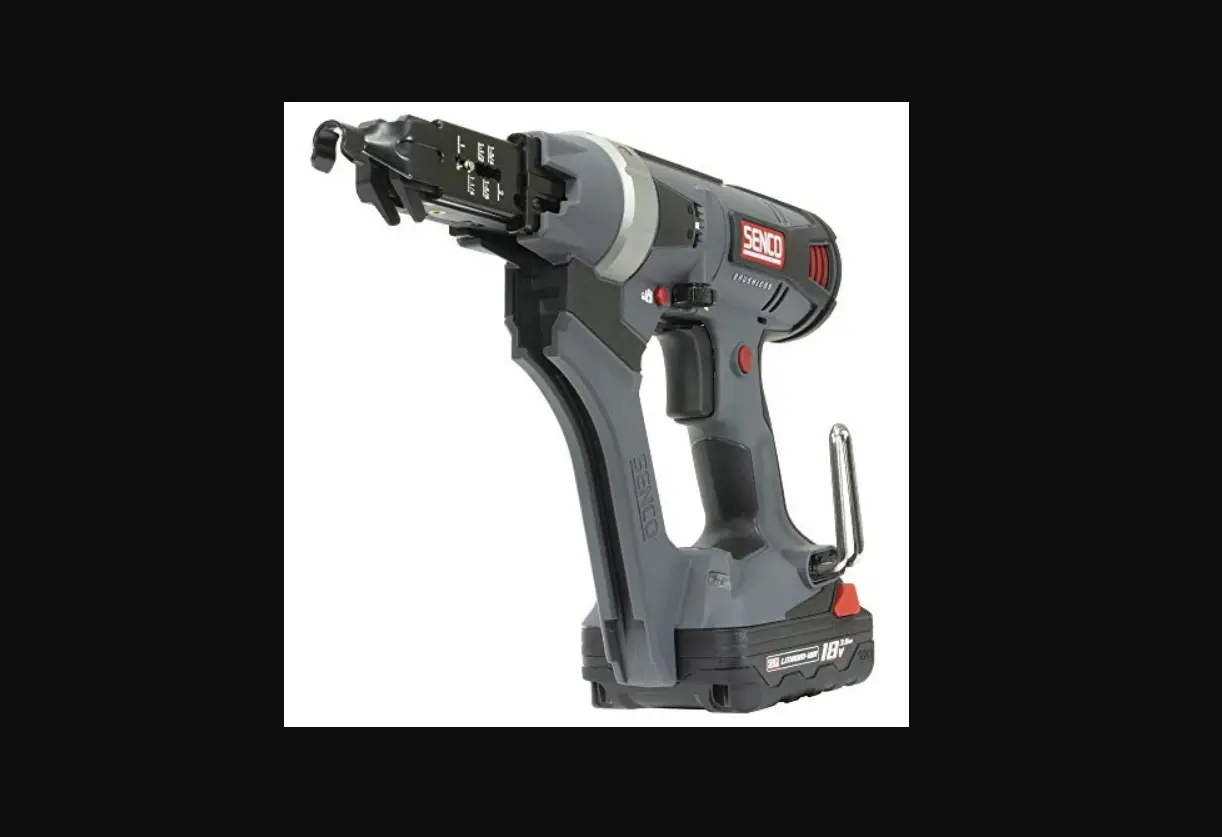
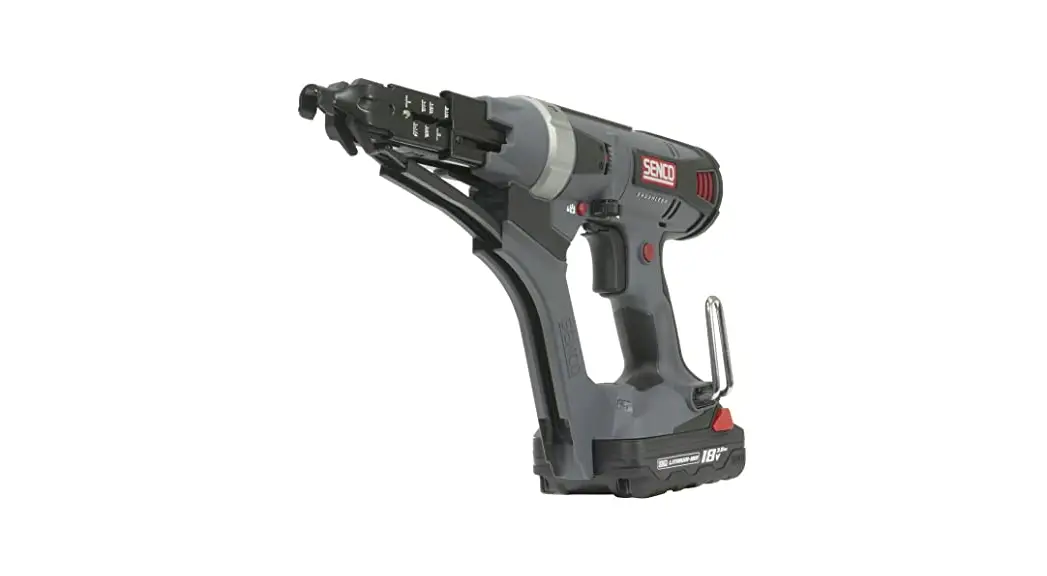
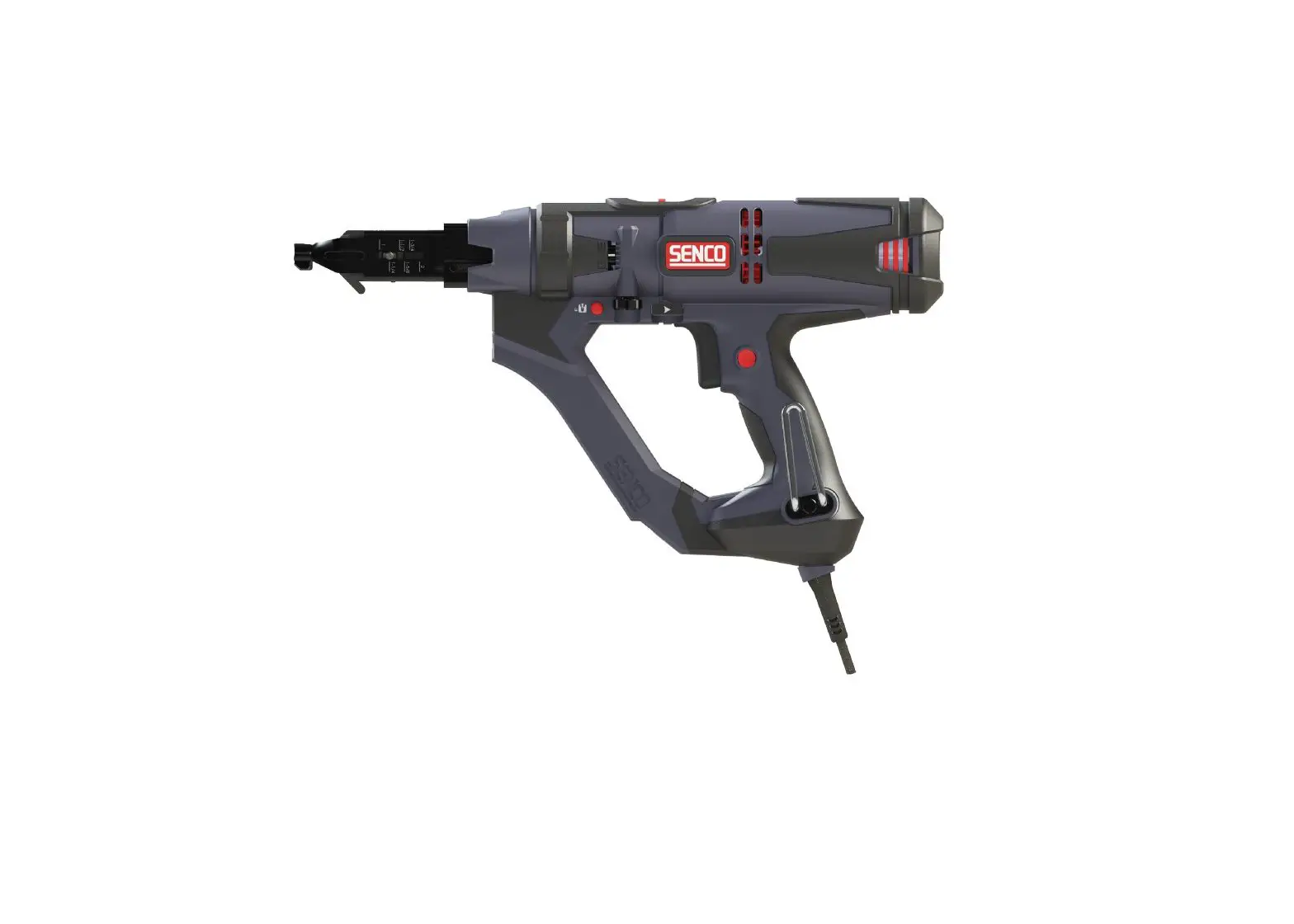
DS522-18V Duraspin Screwdriver
Product Information
The DuraSpin Auto-Feed Screwdriver is a power tool that is
designed to make screw driving faster and easier. It is
manufactured by KYOCERA SENCO Netherlands B.V. and is intended for
use in construction, woodworking, and other related industries. The
screwdriver uses Lithium-ion batteries which are rechargeable. The
product is equipped with a safety alert symbol that indicates
potential personal injury hazards. The product comes with an
operator’s manual that contains important safety warnings,
instructions, illustrations, and specifications that must be
followed to avoid electric shock, fire, and/or serious injury.
Product Usage Instructions
- Read the operator’s manual before using the product.
- Ensure that the screwdriver is fully charged before use.
- Wear eye protection with side shields marked to comply with
ANSI Z87.1 CE EN166. - Do not use the product in wet conditions or expose it to
rain. - Keep your hands away from the blade to avoid serious personal
injury. - Consult your local waste authority for information regarding
available recycling and/or disposal options for the Lithium-ion
batteries used in the product. - Properly interpret the symbols used on the product to operate
it in a better, safer manner. - Save all warnings and instructions for future reference.
DS522-18V · DS525-18V DS722-18V
Operating Instructions
(_O__r_ig__in_a__l _In__s_tr_u_c__ti_o_n_s_)_______________
Betriebsanleitung
(_Ü__b_e_r_s_e__tz_u__n_g__d_e_r__U_r_s_p_r_ü__n_g_l_ic_h_e__n_A__nweisungen )
Gebruiksaanwijzing
(_V__e_r_ta__li_n_g__v_a_n__d_e__O__o_r_s_p_r_o_n__k_e_l_ij_k_e__G_ebruiksaanwijzing)
Mode d’Emploi
(_T__ra__d_u_c_t_io__n__d_e_s__In__s_tr_u__c_ti_o_n_s__O__r_ig_i_n_a_les)
Käyttöohjeet
(_A__lk_u__p_e_r_ä_i_s_te__n__O_h__je_i_d_e_n__K__ä_ä_n__n_ö_s_)__
Bruksvisning
(_O__v_e_r_s_e__tt_e_l_s_e__a_v__d_e__O__ri_g_i_n_a_l_e__In_s__tr_u_ksjonene)
Bruksvisning
(_Ö__v_e_r_s_ä__tt_n_i_n_g__a_v__d_e__U__rs_p__r_u_n_g_l_ig__a_U__ndervisningarna)
Brugsanvisning
(_O__v_e_r_s_æ__t_t_e_ls__e_a__f _d_e__O__r_ig_i_n_a_l_e__In__s_tr_u_ktioner)
Instrucciones de Empleo
(_L__a_T__ra__d_u_c_c__ió_n__d_e__l_a_s__In__s_t_ru__c_c_io__n_e_s_ Originales)
Instruziono per l’Uso
(_T__ra__d_u_z_i_o_n_e__d_e__ll_e__Is_t_r_u_z_i_o_n_i_O__r_ig__in_a__li)
Instrukcja Obslugi
(_T__lu_m__a__c_z_e_n_i_e__o_r_y_g_i_n_a_l_n_e_j_i_n_s_t_r_u_k_c_j_i)_
(____________________________________)
Kullanma Talimatlari
(_O__r_ij_in__a_l _t_a_li_m__a_t_la_r_i_n__ç_e_v_i_ri_s_i_) ________
(___________________________________)_
IMPORTANT: Read before use.
DuraSpin Auto-Feed Screwdriver
KYOCERA SENCO Netherlands B.V. Pascallaan 88 8218 NJ Lelystad, The Netherlands +31 320 295 575 senco.com EMEA: senco.eu
NFE2DS2012020
© 2020 by KYOCERA SENCO Netherlands B.V.
EN English
3
DE Deutsch
20
NL Nederlands
40
FR Français
59
FI Suomi
78
NO Norsk
95
SE Svenska
112
DK Dansk
129
ES Español
146
IT Italiano
166
PL Polski
185
RU
205
TR Türkçe
224
GR
243
2
English
Table of Contents
EN General Power Tool Safety Warnings ……………………………………………………………………………………… 6 Work Area Safety …………………………………………………………………………………………………………… 6 Electrical Safety…………………………………………………………………………………………………………….. 6 Personal Safety …………………………………………………………………………………………………………….. 6 Power Tool Use and Care………………………………………………………………………………………………….. 7 Battery Tool Use and Care…………………………………………………………………………………………………. 7 Service ………………………………………………………………………………………………………………………. 8
Screwdriver Safety Warnings……………………………………………………………………………………………….. 8 Safety Warnings for Charger and Battery………………………………………………………………………………… 8 Functional Description……………………………………………………………………………………………………….10 Tool Operation ………………………………………………………………………………………………………………… 11
Adjusting for Fastener Length……………………………………………………………………………………………. 11 Loading the Tool ……………………………………………………………………………………………………………12 Drive Speed Adjustment …………………………………………………………………………………………………..12 Driving Screws ……………………………………………………………………………………………………………..12 Trigger Lock…………………………………………………………………………………………………………………12 Depth of Drive Adjustment ………………………………………………………………………………………………..12 Reverse Operation …………………………………………………………………………………………………………13 Bit Replacement ……………………………………………………………………………………………………………13 Nosepiece Replacement…………………………………………………………………………………………………..14 Belt Hook Adjustment ……………………………………………………………………………………………………..14 Battery Pack Installation ………………………………………………………………………………………………….15 Battery Pack Removal……………………………………………………………………………………………………..15 Battery Charging …………………………………………………………………………………………………………..15 Maintenance…………………………………………………………………………………………………………………… 17 Accessories…………………………………………………………………………………………………………………….. 17 Technical Specifications…………………………………………………………………………………………………….. 17 Troubleshooting ……………………………………………………………………………………………………………….18
4
SYMBOLS
The following signal words and meanings are intended to explain the levels of risk associated with this product.
SYMBOL SIGNAL
MEANING
DANGER:
Indicates a hazardous situation, which, if not avoided, will result in death
or serious injury.
EN
WARNING:
Indicates a hazardous situation, which, if not avoided, could result in death or serious injury.
CAUTION:
Indicates a hazardous situation, which, if not avoided, may result in minor or moderate injury.
NOTICE:
(Without Safety Alert Symbol) indicates information considered important, but not related to a potential injury (e.g. messages relating to property damage).
Some of the following symbols may be used on this product. Please study them and learn their meaning. Proper interpretation of these symbols will allow you to operate the product in a better, safer manner.
SYMBOL NAME
DESIGNATION/EXPLANATION
Safety Alert
Indicates a potential personal injury hazard.
Read Operator’s Manual Eye Protection
Wet Conditions Alert
To reduce the risk of injury, user must read and understand operator’s manual before using this product.
Always wear eye protection with side shields marked to comply with ANSI Z87.1. CE EN166
Do not expose to rain or use in damp locations.
No Hands Recycle
V min
no …/min
Volts Minutes Direct Current No Load Speed Per Minute
Failure to keep your hands away from blade will result in serious personal injury.
This product uses Lithium-ion batteries. Local, state, or federal laws may prohibit disposal of batteries in ordinary trash. Consult your local waste authority for information regarding available recycling and or disposal options.
Voltage
Time
Type or characteristic of current
Rotational speed, at no load
Revolutions, strokes, surface speed, orbits, etc. per minute
5
General Power Tool Safety Warnings
WARNING Read all safety warnings, instructions, illustrations and specifications provided with this
power tool. Failure to follow all instructions listed below may result in electric shock, fire and/or serious injury.
Save all warnings and instructions for future reference.
EN The term “power tool” in the warnings refers to your mains-operated (corded) power tool or battery-operated (cordless) power tool.
WORK AREA SAFETY
1. Keep work area clean and well lit. Cluttered or dark areas invite accidents. 2. Do not operate power tools in explosive atmospheres, such as in the presence of flammable liquids,
gases or dust. Power tools create sparks which may ignite the dust or fumes. 3. Keep children and bystanders away while operating a power tool. Distractions can cause you to lose
control.
ELECTRICAL SAFETY
4. Power tool plugs must match the outlet. Never modify the plug in any way. Do not use any adapter plugs with earthed (grounded) power tools. Unmodified plugs and matching outlets will reduce risk of electric shock.
5. Avoid body contact with earthed or grounded surfaces, such as pipes, radiators, ranges and refrigerators. There is an increased risk of electric shock if your body is earthed or grounded.
6. Do not expose power tools to rain or wet conditions. Water entering a power tool will increase the risk of electric shock.
7. Do not abuse the cord. Never use the cord for carrying, pulling or unplugging the power tool. keep cord away from heat, oil, sharp edges or moving parts. Damaged or entangled cords increase the risk of electric shock.
8. When operating a power tool outdoors, use an extension cord suitable for outdoor use. Use of a cord suitable for outdoor use reduces the risk of electric shock.
9. If operating a power tool in a damp location is unavoidable, use a residual current device (RCD) protected supply. Use of an RCD reduces the risk of electric shock.
PERSONAL SAFETY
10. Stay alert, watch what you are doing and use common sense when operating a power tool. Do not use a power tool while you are tired or under the influence of drugs, alcohol or medication. A moment of inattention while operating power tools may result in serious personal injury.
11. Use personal protective equipment. Always wear eye protection. Protective equipment such as dust mask, non-skid safety shoes, hard hat or hearing protection used for appropriate conditions will reduce personal injuries.
12. Prevent unintentional starting. ensure the switch is in the off-position before connecting to power source and/or battery pack, picking up or carrying the tool. Carrying power tools with your finger on the switch or energizing power tools that have the switch on invites accidents.
13. Remove any adjusting key or wrench before turning the power tool on. A wrench or a key left attached to a rotating part of the power tool may result in personal injury.
6
GENERAL POWER TOOL SAFETY WARNINGS
14. Do not overreach. keep proper footing and balance at all times. This enables better control of the power tool in unexpected situations.
15. Dress properly. Do not wear loose clothing or jewelry. keep your hair, clothing away from moving parts. Loose clothes, jewelry or long hair can be caught in moving parts.
16. If devices are provided for the connection of dust extraction and collection facilities, ensure these are EN connected and properly used. Use of dust collection can reduce dust-related hazards.
17. Do not let familiarity gained from frequent use of tools allow you to become complacent and ignore tool safety principles. A careless action can cause severe injury within a fraction of a second.
POWER TOOL USE AND CARE
18. Do not force the power tool. use the correct power tool for your application. The correct power tool will do the job better and safer at the rate for which it was designed.
19. Do not use the power tool if the switch does not turn it on and off. Any power tool that cannot be controlled with the switch is dangerous and must be repaired.
20. Disconnect the plug from the power source and/or remove the battery pack, if detachable, from the power tool before making any adjustments, changing accessories, or storing power tools. Such preventive safety measures reduce the risk of starting the power tool accidentally.
21. Store idle power tools out of the reach of children and do not allow persons unfamiliar with the power tool or these instructions to operate the power tool. Power tools are dangerous in the hands of untrained users.
22. Maintain power tools and accessories. check for misalignment or binding of moving parts, breakage of parts and any other condition that may affect the power tool’s operation. if damaged, have the power tool repaired before use. Many accidents are caused by poorly maintained power tools.
23. Keep cutting tools sharp and clean. Properly maintained cutting tools with sharp cutting edges are less likely to bind and are easier to control.
24. Use the power tool, accessories and tool bits, etc. in accordance with these instructions, taking into account the working conditions and the work to be performed. Use of the power tool for operations different from those intended could result in a hazardous situation.
25. Keep handles and grasping surfaces dry, clean and free from oil and grease. Slippery handles and grasping surfaces do not allow for safe handling and control of the tool in unexpected situations.
BATTERY TOOL USE AND CARE
26. Recharge only with the charger specified by the manufacturer. A charger that is suitable for one type of battery pack may create a risk of fire when used with another battery pack.
27. Use power tools only with specifically designated battery packs. Use of any other battery packs may create a risk of injury and fire.
28. When battery pack is not in use, keep it away from other metal objects, like paper clips, coins, keys, nails, screws or other small metal objects, that can make a connection from one terminal to another. Shorting the battery terminals together may cause burns or a fire.
29. Under abusive conditions, liquid may be ejected from the battery; avoid contact. if contact accidentally occurs, flush with water. if liquid comes into contact with eyes, additionally seek seek medical help. Liquid ejected from the battery may cause irritation or burns.
7
GENERAL POWER TOOL SAFETY WARNINGS
30. Do not use a battery pack or tool that is damaged or modified. Damaged or modified batteries may exhibit unpredictable behaviour resulting in fire, explosion or risk of injury.
31. Do not expose a battery pack or tool to fire or excessive temperature. Exposure to fire or temperature above 130 °C may cause explosion.
EN 32. Follow all charging instructions and do not charge the battery pack or tool outside the temperature range specified in the instructions. Charging improperly or at temperatures outside the specified range may damage the battery and increase the risk of fire.
SERVICE
33. Have your power tool serviced by a qualified repair person using only identical replacement parts. This will ensure that the safety of the power tool is maintained.
34. Never service damaged battery packs. Service of battery packs should only be performed by the manufacturer or authorized service providers.
Screwdriver Safety Warnings
1. Hold the power tool by insulated gripping surfaces, when performing an operation where the fastener may contact hidden wiring. Fasteners contacting a “live” wire may make exposed metal parts of the power tool “live” and could give the operator an electric shock.
2. Do not use the power tool in locations where the ambient temperature may reach 0°c (32°F) or exceed 40°c (105°F).
Safety Warnings for Charger and Battery
1. This manual contains important safety and operating instructions for the SENCO battery charger VB0192 (EU)/ VB0198 (UK). Use with approved Senco batteries stated on the charger label.
2. Before using the SENCO battery charger VB0192 (EU)/VB0198 (UK), read all instructions and cautionary markings on (1) battery charger, (2) battery, and (3) product using battery.
3. Do not expose charger to water, rain or snow. 4. Use indoors. 5. Use of an attachment not recommended or sold by the battery charger manufacturer may result in a risk of fire,
electric shock, or injury to persons. 6. To reduce risk of damage to electric plug and cord, pull by plug rather than cord when disconnecting charger. 7. Make sure cord is located so that it will not be stepped on, tripped over, or otherwise subjected to damage or
stress.
Length of Cord (Meters)
8m 15m 30m 46m
AWG Size of Cord
1.3mm 1.3mm 1.3mm 1.6mm
Table 1 – Recommended minimum AWG size for battery charger extension cords.
8
SAFETY WARNINGS FOR CHARGER AND BATTERY
8. An extension cord should not be used unless absolutely necessary. Use of improper extension cord could result
in a risk of fire and electric shock. If extension cord must be used, make sure:
a. That pins on plug of extension cord are the same number, size, and shape as those of plug on charger;
b. That extension cord is properly wired and in good electrical condition; and
c. That wire size is at least as large as the one specified in the table.
EN
9. Do not operate charger with damaged cord or plug- replace them immediately.
10. Do not operate charger if it has received a sharp blow, been dropped, or otherwise damaged in any way; take it
to a SENCO Authorized Service Centre.
11. Do not disassemble charger or battery cartridge; take it to a SENCO Authorized Service Centre when service or
repair is required. Incorrect reassembly may result in a risk of electric shock or fire.
12. To reduce risk of electric shock, unplug charger from outlet before attempting any maintenance or cleaning.
13. Store battery packs in a 30%-50% charged condition.
14. Every six months of storage charge the pack as normal.
15. For best results, your battery should be charged in a location where the temperature is above 10°C (50°F) but
below 38°C (100°F).
16. Do not store outside or in vehicles.
17. Do not attempt to use a step-up transformer, an engine generator or DC power receptacle.
18. Do not allow anything to cover or clog the charger vents.
19. Do not recharge non-rechargeable batteries.
20. This appliance is not intended for use by persons (including children) with reduced physical, sensory or mental
capabilities, or lack of experience and knowledge, unless they have been given supervision or instructions
concerning use of the appliance by a person responsible for their safety.
21. Children should be supervised to ensure that they do no play with the appliance.
22. If the supply cord is damaged, it must be replaced by the manufacturer, its service agent or similarly qualified
persons to avoid a hazard.
23. A battery short can cause a large current flow, overheating, possible burns and even a breakdown.
a. Do not touch the terminals with any conductive material.
b. Avoid storing battery cartridge in a container with other metal objects such as nails, coins, etc.
c. Do not expose battery cartridge to excessively humid conditions, water, snow or rain.
24. Do not store the tool and battery cartridge in locations where the temperature may reach or exceed 27°C (80° F).
25. Do not incinerate the battery cartridge even if it is severely damaged or is completely worn out. The battery
cartridge can explode in a fire.
26. Do not use tool without Warning Label on tool. If label is missing, damaged or unreadable, contact your SENCO
representative to obtain a new label at no cost.
27. Never attempt to connect two (2) chargers together. Consecutive charging may cause overheating. If you need
to recharge batteries consecutively, wait about 15 minutes for the charger to cool.
28. Battery leakage may occur under conditions of extreme usage or temperature. If liquid comes in contact with
skin, wash quickly with soap and water, then with lemon juice or vinegar. If liquid gets in your eyes, wash with
water for at least 10 minutes and seek medical attention immediately.
9
EN 10
Functional Description
Depth of Drive Indicator
Nosepiece Retention Screw
Detachable Auto-Feed System Locking Collar
Tool-less Nosepiece Adjustment Pin
Slide Body Loading Point
Strip Guide (Only on DS722)
Depth of Drive Lock Button Depth of Drive Adjustment Knob
Variable Speed Trigger
Strip Guide Track
Drive Speed Adjustment 1600/2500 RPM
(Low Speed Tools Only) LED Light
Figure 1 – Tool Functions and Features
Bit Quick Release
Forward/Reverse Switch Trigger Lock
Adjustable and Reversible Belt Hook
18V Battery (3Ah Shown)
Grasping Surface
Tool Operation
Read sections titled “Safety Warnings” before operating tool.
For best results, charge new battery before using (see “Battery Charging” page 15).
WARNING Do not use this product if it is not completely assembled or if any parts appear to be missing or
damaged. Use of a product that is not properly and completely assembled or with damaged or missing parts could result EN in serious personal injury.
WARNING Do not attempt to modify this product or create accessories or attachments not recommended for use
with this product. Any such alteration or modification is misuse and could result in hazardous conditions possibly leading to serious personal injury.
If any parts are damaged or missing, please call +31 320 295 575 for assistance.
ADJUSTING FOR FASTENER LENGTH
1. Remove battery before adjusting nosepiece for fastener length. 2. Depress the screw selector pin until it is flush with nosepiece and slide the nosepiece to the desired setting by
aligning hatch marks with the silver adjustment pin. 3. Release pin and make sure it is fully engaged in selected nosepiece slot for proper operation.
2
1-3/4 1-5/8
1-1/2
1-1/4
1
DS522-18V DS525-18V DS722-18V
25mm
25mm
25mm
30mm
30mm
30mm
35mm
35mm
35mm
40mm
40mm
40mm
45mm
45mm
45mm
50mm
50mm
50mm
55mm
65mm
70mm
75mm
BIT TYPE
Phillips Square SENCO
DS522-18V/ DS525-18V EA0326B EA0327B EA0333B
DS722-18V
EA0400B EA0401B EA0402B
11
TOOL OPERATION
LOADING THE TOOL
1. Check to be sure the heads of the screws are resting on top of the plastic collation material. This will ensure proper strip advancement and prevent jamming.
EN 1
2
3
4
5
2. Check for proper fastener length setting (see “Adjusting for Fastener Length” above). 3. Feed the strip into the strip guide track up toward the nose of the tool. 4. Feed the strip into the slide body until the first screw is aligned with the bit. The tool will feed all subsequent
screws automatically as the tool is pulled back off the work surface, returning to its relaxed state. 5. To remove the strip, pull it through from the top of the side body.
DRIVE SPEED ADJUSTMENT
Low speed tools can be switched from 2500 to 1600 RPM for driving self-drilling and tapping screws into heavy steel applications. This can be done by depressing the drive speed adjustment button shown in Figure 1. A red LED will indicate that low speed mode (1600 RPM) is engaged. Click the button again to toggle back to normal mode (2500 RPM). The most recently selected mode will be maintained indefinitely until the user presses the button again.
DRIVING SCREWS
1. Whenever possible, hold the tool at a right angle to the work surface. 2. Pull the trigger to start the motor. 3. Press the nosepiece with constant force against the work surface. Do not remove the tool from the work surface
until the clutch disengages and the bit stops rotating, signalling a fully driven screw. 4. Continue to allow the motor to run. The next screw will be automatically fed into place when the tool is pulled
off the work surface.
CAUTION During the driving process it is possible for the tool to “cut-out” or stop the motor prematurely as a
safety function to preserve the tool. If the motor senses a torque spike, an over-current protection function will activate. A partially driven screw can be driven fully by squeezing the trigger again to reset the tool/motor. If this cut-out occurs repeatedly, please review the troubleshooting section for more details, or discontinue use in that application.
TRIGGER LOCK
To lock the trigger for continuous operation, depress the trigger and push in the locking button then release the trigger. The tool will continue to run. To turn off, squeeze and release the trigger.
DEPTH OF DRIVE ADJUSTMENT
This tool is equipped with a locking depth control adjustment:
12
TOOL OPERATION
1. Release the thumbwheel by depressing the red lock button.
EN
2. Adjust the countersink by turning the depth adjustment thumbwheel. 3. Refer to the markings on the tool for proper direction. 4. Release the lock button after adjustment. Test drive screws while adjusting until the desired countersink is reached. This tool has a depth-sensing clutch. When the screw is countersunk to the preset depth, it automatically disengages and makes a click or ratcheting sound. This is normal and signals completion of the drive.
CAUTION When the battery is low, or the drive requires too much torque, the tool may stall at the bottom of the
drive (before the clutch can disengage). The same procedure should be followed as mentioned above for tool cut-out. The tool may stall when confronted with a high voltage or electrostatic discharge. Please release the trigger and restart the tool after removing high voltage condition.
REVERSE OPERATION WARNING To prevent the feed system from unintentionally falling off the tool, ensure the locking collar is at the
locked position before starting to drive screws or when carrying tools. To operate tool in reverse for removal of screws (see Figure 1):
1. Flip the forward/reverse switch to the right for reverse rotation. 2. Turn the locking collar on the detachable feed system to the unlock position.
Locked
Unlocked
3. Slide the feed system off the tool to expose the bit. 4. Insert bit into screw and apply/maintain pressure to engage clutch. 5. Pull trigger until screw is completely disengaged.
BIT REPLACEMENT
Due to wear or damage, the bit will need to be replaced periodically or when changing between drive types.
The bit can be removed/replaced in two ways:
13
TOOL OPERATION
1. Without removing feed system
i. Remove fasteners from the tool.
ii. Slide bit release button to rear.
iii. Tilt tool forward and pulse trigger.
EN
iv. Bit will fall out.
v. Hold tool upright.
vi. Insert the new bit into the slide body.
vii. Slide bit release button to rear.
viii. Pulse tool and release button when bit drops into place.
2. Removal of tool front end/feed system
i. Turn the locking collar on the detachable feed system to the unlock position.
ii. Slide the feed system off the tool to expose the bit.
iii. Slide bit release button to rear.
iv. Pull the old bit out and release button.
v. Insert the new bit into the bit retainer and push until it clicks into place. (Slight rotation of the bit may be
necessary for proper alignment and full insertion.)
vi. Install feed system and rotate collar to lock position.
NOSEPIECE REPLACEMENT
1. Remove battery before changing the nosepiece. 2. Remove retention screw with flat-tip screwdriver.
3. Set the nosepiece on the longest setting possible. 4. Depress the screw selector pin until it is completely depressed. It will be necessary to use a screw or thin object
to depress to this depth. 5. While holding the pin in this position, slide the nosepiece forward and off the slide body 6. Install the new nosepiece. 7. Replace the nosepiece retention screw ensuring it is seated snug against the slide body.
BELT HOOK ADJUSTMENT
To adjust the belt hook offset from the tool: 1. Remove the belt hook thumb screw until the locking plate can be removed. 2. Slide the belt hook out to the desired position, replace the locking plate, then re-install the thumb screw.
To relocate the belt hook to opposite side of the tool: 1. Remove the thumb screw, locking plate, threaded plate and belt hook.
14
TOOL OPERATION
EN
2. Insert the threaded plate on the opposite side of tool and re-install the hook at the desired position using locking plate and thumb screw.
BATTERY PACK INSTALLATION CAUTION Only SENCO VB-Series 18V batteries should be used on SENCO tools:
VB0194 (EU/UK). 1. Align battery ribs with slots on the tool. 2. Push battery until it seats tightly on the tool. 3. A click can be heard when the release mechanism seats properly.
BATTERY PACK REMOVAL
1. Depress buttons on both sides of battery. 2. Slide battery off tool.
BATTERY CHARGING
1. Place battery pack in charger. 2. Align raised ribs on battery pack with groove in charger. 3. Press down on battery pack to be sure contacts on battery pack engage properly with contacts in charger. When
properly connected, the red light will turn on. Red flashing light indicates fast charging mode. 4. Red and green light flashing indicates defective battery pack. Return battery pack to your nearest SENCO
Authorized Service Centre for inspection or replacement. 5. Solid red light indicates that the battery is charging. 6. When your battery pack becomes 80% charged, the red light will stay on and the green light will flash. When
battery pack is fully charged, the red light will turn off and the green light will turn on. 7. After normal usage, 1 hour of charge time is required to be fully charged. A maximum charge time of 1 hour or
less is required to recharge a completely discharged battery pack. 8. The battery pack will become slightly warm to the touch while charging. This is normal and does not indicate a
problem. The battery pack houses 4 coloured LED lights. These LEDs indicate the state of charge and possible problems inside the battery pack.
15
TOOL OPERATION
The battery pack houses 4 coloured LED lights. These LEDs indicate the state of charge and possible problems inside the battery pack.
Mode
Battery Pack Inserted?
EN
Standby/Power
No
Power Fade
Charging/Full X
Condition X
Evaluate X
Temp. Delay X
Defective X
Standby Full
Yes
Fade
Fade
Ready for Use
X
X
X
Charging
Yes
Solid Green Flashing Green
<80%
X
X
X
Fully Charged
Yes
Fading Green Fading Green
100%
X
X
X
Evaluating
Yes
Solid Green
X
Measuring Flash Orange
X
X
*Temp Delay
Yes
Solid Green
X
Hot/Cold
X
Flash Orange
X
Defective
Yes
Solid Green
X
Damaged
X
*Delay up to 20 minutes depending on battery cell temperature inside pack.
Figure 2 – Battery Charge Level Lights
X
Solid Red
Press raised red button on battery pack to check charge: y Red Flashing = 0-15% Charge y Red On = 16-25% Charge y Red and Orange On = 26-50% Charge y Red, Orange, and Green On = 51-75% Charge y All On = 76-100% Charge
Tips for maintaining maximum battery life: y Charge the battery pack before it is completely discharged. y Always stop tool operation and charge the battery when you notice less tool power. y Never recharge a fully charged battery. y Overcharging shortens the battery service life.
Battery Disposal y To preserve natural resources, please recycle or dispose of properly. This product contains Li-Ion. Local state or
federal laws may prohibit disposal of Li-Ion batteries in ordinary trash. y Consult your local waste authority for information regarding available recycling and/or disposal options. y Do not dispose of electric tools together with household waste material! In observance of European Directive
2002/96/EC on waste electrical equipment and its implementation in accordance with national law, electric
tools that have reached the end of their lives must be collected separately and returned to an environmentally
compatible recycling facility.
16
Maintenance
Read section titled “Safety Warnings” before maintaining tool.
1. With battery removed, make daily inspection to ensure free movement of nosepiece and trigger. Do not use tool
if nosepiece or trigger sticks or binds.
2. Lubrication of the feed system is not necessary. DO NOT OIL.
3. Wipe tool clean daily and inspect for wear, especially the bit and nosepiece. Replace as necessary.
EN
WARNING Repairs other than those described here should be performed only by trained, qualified personnel.
Contact SENCO for information at +31 320 295 575.
Accessories
SENCO offers a full line of DuraSpin screws and accessories for your SENCO tools, including: y Bits y Batteries y Battery Chargers y Storage Bag y Assorted Nosepieces y Safety Glasses
For more information or a fully illustrated catalogue of Senco accessories, contact your sales representative or call Senco
at +31 320 295 575. www.senco.eu
Technical Specifications
SPECIFICATION
VOLTAGE BATTERY AMPACITY RPM WEIGHT HEIGHT LENGTH WIDTH RECHARGE TIME FASTENER CAPACITY TORQUE DELIVERED GENERATED NOISE VIBRATION FASTENER LENGTH FASTER RANGE
DS522-18V
18V 3000MAH 0-1600, 0-2500 REV/MIN 2.48KG W/ BATTERY 243.5mm MAX 372.4mm MAX 85.4mm MAX 1 HOUR 50 SCREWS (1 STRIP) 8Nm MIN 84DB(A) 2.5M/S2 MAX 25mm – 55mm 3.5mm – 5.5mm
DS525-18V
18V 3000MAH 0-5000 REV/MIN 2.46KG MAX 243.5mm MAX 372.4mm MAX 85.4mm MAX 1 HOUR 50 SCREWS (1 STRIP) 5Nm MIN 84DB(A) 2.5M/S2 MAX 25mm – 55mm 3.5mm – 5.5mm
17
DS722-18V
18V 3000MAH 0-1600, 0-2500 REV/MIN 2.70KG MAX 243.5mm MAX 419.5mm MAX 85.4mm MAX 1 HOUR 50 SCREWS (1 STRIP) 8Nm MIN 84DB(A) 2.5M/S2 MAX 25mm – 75mm 3.5mm – 5.5mm
Troubleshooting
Problem/Symptom
Tool will not start or run slowly EN
Tool will not fully drive fastener
Tool does not advance fastener
Screws “kick out” or misdrive during use
Bit will not install
Bit will not release
Probable Cause
Battery is discharged or defective Trigger switch is defective Motor is defective Bit is worn or incorrect bit installed Power capabilities of the tool have been exceeded Tool is in reverse Depth of drive not set properly Screw length/nosepiece position is improperly set Return spring is weak or broken
Defective collation material
Defective slide body
Screw strip is jammed in guide track
Screw length/nosepiece position is improperly set Incorrect bit installed
Defective or damaged feed system
Bit not properly inserted into drive shaft Clutch teeth not aligned
Not a Senco bit Not a Senco bit Clutch teeth not aligned
Corrective Action
Replace with charged battery pack Replace or return to Senco authorized service centre for repair
Replace bit Discontinue use for that application
Switch tool to forward See p. 12-13 See p. 11
Replace or return to authorized service centre for repair Use Senco branded fasteners for optimum performance Replace or return to authorized service centre for repair Ensure strip slides freely in guide track See p. 11
Ensure correct bit type and length are installed Return to Senco or Authorized service centre for repair See p. 13
Pulse trigger while holding back release button Use only the appropriate Senco bit Use only the appropriate Senco bit Pulse trigger while holding back release button
18
Bit slips off screw or screw is driven Tool slid forward during drive
at an angle
Bit is worn or broken
Hold tool firmly while driving Replace bit
Nosepiece is worn or damaged
Replace or return to Senco authorized service centre for repair
Bit is worn or broken
Replace bit
EN
Fastener Jams
Screw length/nosepiece position is See p. 11
improperly set
Defective collation material
Use Senco branded fasteners for optimum performance
Nosepiece damaged or bent
Replace or return to authorized service centre for repair
Screw partially driven into collation Remove jammed screw with fingers material then feed system released or pliers and resume use
Feed system “sticks” or returns slowly
Debris build-up on mechanism Return spring is weak or broken
Clean mechanism
Replace or return to authorized service centre for repair
Bit sticking in collation material
Use Senco branded fasteners for optimum performance
Always attempt to store screws in cool dry place before use. Overheated collation can get soft and cause a delay in feed system return
Tool overheats
Drive application requires too much Discontinue use for that application torque
Pushing force becomes excessive Improper screw for application
Consider alternative fastener
CAM screw is loose or damaged
Tighten or replace CAM screw
Debris build-up on mechanism
Clean mechanism
Battery will not charge
Defective battery
See p. 15 for battery error code description
Tool front-end will not install onto console
The collar is not turned to the full unlock position
Rotate the collar to full unlock position
Foreign object stuck inside the connection
Be sure that no objects or parts are jammed inside the connection
Components in connector may be damaged
Replace front-end assembly or return to Senco Authorized service centre for repair
Tool front-end will not separate from The collar is not turned to the full
console
unlock position
Rotate the collar to full unlock position
Components in the connector may be Return to Senco Authorized service
damaged
centre for repair
19
 Home - SENCO