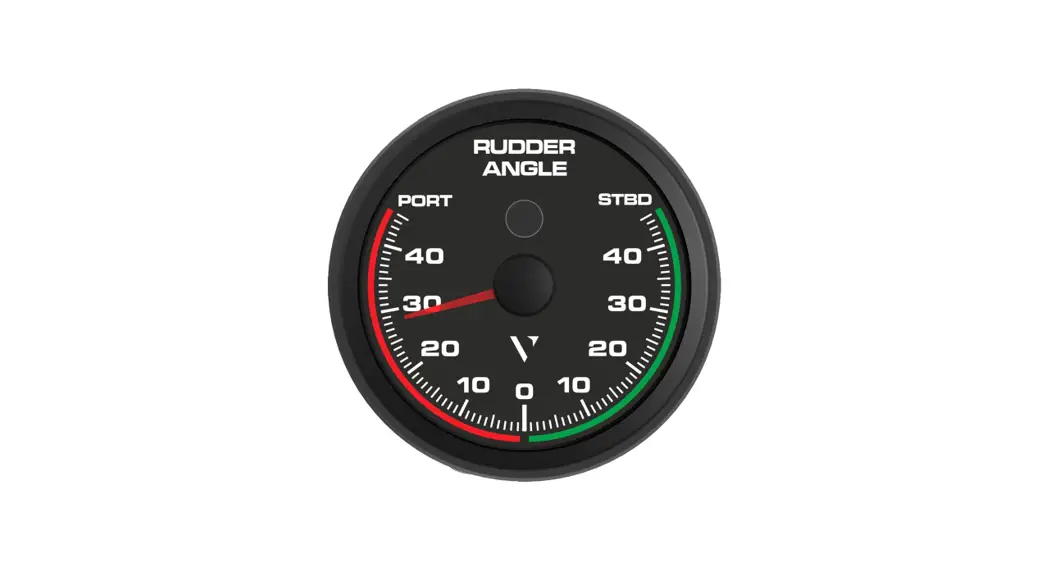
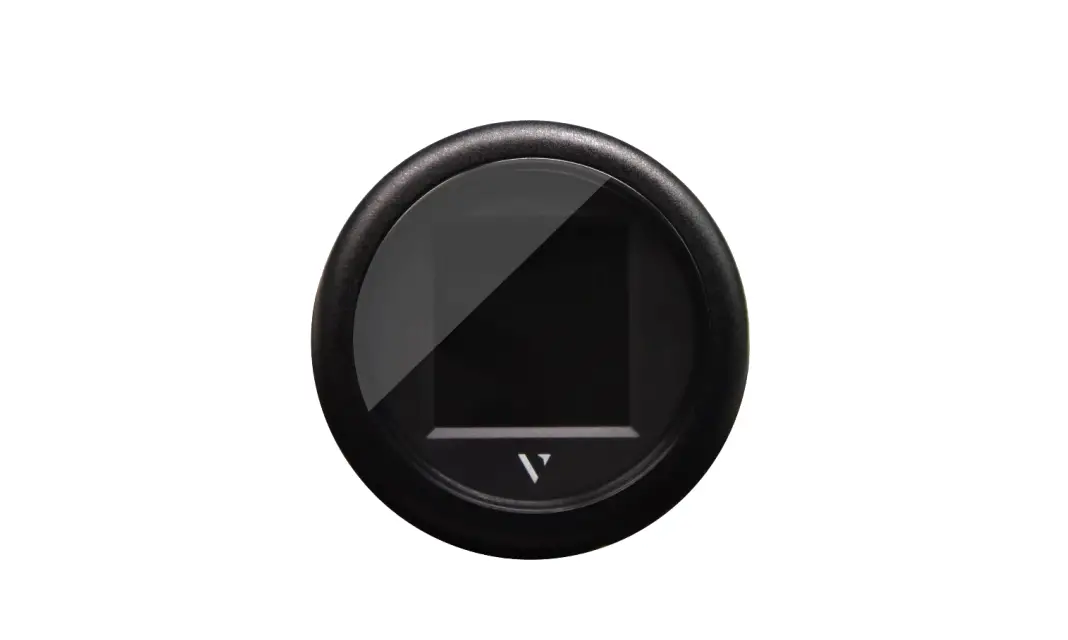
B00067401 Professional Rudder Angle Indicator
Professional Rudder Angle Indicator
The Professional Rudder Angle Indicator is a device that
indicates the angle of the rudder on a ship or boat. This device
comes with detailed operating instructions in multiple languages
like English, German, Italian, French, Spanish, and Portuguese. The
product package includes a Rudder Angle Indicator gauge B00067401,
a Mounting Spinlock A2C1376090001, a Wire Harness A2C1507870001,
and a Safety Instructions B000100.
Installation Instructions
Safety Information
Ensure that conventional test lamps are not used during
installation as they can damage control units or other electronic
systems. Also, check the Ingress Protection (IP) ratings (IEC
60529) after installation. Only connect cables according to the
electrical wiring diagram.
Mechanical Installation
Before assembly, turn off the ignition and remove the ignition
key. If necessary, remove the main circuit switch. Disconnect the
negative terminal on the battery. Make sure the battery cannot
unintentionally restart. Place the device at least 300 mm away from
any magnetic compass.
Installation with Spinlock
- Create a circular hole in the panel considering the device
dimensions. - Remove the spinlock and insert the device from the front.
- Adjust the spinlock as shown in picture [C] according to the
panel thickness. - Carefully screw in the spinlock by hand at least two turns and
install the connector.
Flush Mounting
- Create a circular hole in the panel considering the device
dimensions. - Remove the spinlock.
- Remove the bezel using slip joint pliers. Note: the bezel
cannot be used after removal since it can be damaged. - Insert the instrument into the drill hole from the back.
- Adjust the instrument so that the gauge is level and fasten it
to the stud bolts on the rear side of the panel, using the assembly
kit accessories. - Insert the connector.
Electrical Installation
Check the pinout and connections diagram for resistive rudder
angle sensor and second gauge connected via NMEA 0183. The device
comes with a Molex MX150 12-poles plug Male, product side view.
Configuration Instructions
Default Sensor Calibration
The default calibration for the resistive sensor is 3, 90,
180.
Calibration Adjustment
In order to adjust the default calibration of the sensor, a
simple three-steps procedure is implemented. The embedded infrared
pushbutton placed above the pointer (see picture) must be used to
confirm each step.
PROFESSIONAL RUDDER ANGLE INDICATOR
OPERATING INSTRUCTIONS rev. AB
EN DE IT FR ES PT
B000856
LANGUAGE ENGLISH DEUTSCH ITALIANO FRANÇAIS
PAGE 3 18 34 50
B000856
PROFESSIONAL RUDDER ANGLE INDICATOR
OPERATING INSTRUCTIONS rev. AB
EN DE IT FR ES PT
B000856
CONTENT
Content ……………………………………………………………………. 2 Introduction …………………………………………………………….. 3
Packaging Content …………………………………………………………..3 Safety Information……………………………………………………4
Safety during Installation…………………………………………………4 Safety after Installation…………………………………………………….5 Electrical Connection ………………………………………………………5 Mechanical Installation ……………………………………………6 Before the Assembly ………………………………………………………..6 Installation with Spinlock………………………………………………… 7 Flush Mounting………………………………………………………………….8 Electrical Installation ……………………………………………….9 Pinout …………………………………………………………………………………..9 Connections Diagrams…………………………………………………..10 Configuration …………………………………………………………. 11 Default Sensor Calibration ……………………………………………. 11 Calibration Adjustment………………………………………………….. 11 Technical Data ……………………………………………………….. 13 Datasheet………………………………………………………………………….. 13 Supported NMEA 0183 Data……………………………………….. 13 Accessories ……………………………………………………………. 14
CONTENT
B000856
INTRODUCTION
PACKAGING CONTENT
1x Rudder Angle Indicator gauge B00067401
1x Mounting Spinlock A2C1376090001
INTRODUCTION
1x Wire Harness A2C1507870001
1x Safety Instructions B000100
B000856
SAFETY INFORMATION
SAFETY INFORMATION
WARNING · No smoking! No open fire or heat sources!
· The product was developed, manufactured and inspected according to the basic safety requirements of EC Guidelines and state-ofthe-art technology.
· The instrument is designed for use in grounded vehicles and machines as well as in pleasure boats, including non-classified commercial shipping.
· Use our product only as intended. Use of the product for reasons other than its intended use may lead to personal injury, property damage or environmental damage. Before installation, check the vehicle documentation for vehicle type and any possible special features!
· Use the assembly plan to learn the location of the fuel/hydraulic/compressed air and electrical lines!
· Note possible modifications to the vehicle, which must be considered during installation!
· To prevent personal injury, property damage or environmental damage, basic knowledge of motor vehicle/shipbuilding electronics and mechanics is required.
· Make sure that the engine cannot start unintentionally during installation!
· Modifications or manipulations to veratron products can affect safety. Consequently, you may not modify or manipulate the product!
· When removing/installing seats, covers, etc., ensure that lines are not damaged and plug-in connections are not loosened!
· Note all data from other installed instruments with volatile electronic memories.
SAFETY DURING INSTALLATION
· During installation, ensure that the product’s components do not affect or limit vehicle functions. Avoid damaging these components!
· Only install undamaged parts in a vehicle! · During installation, ensure that the product
does not impair the field of vision and that it cannot impact the driver’s or passenger’s head! · A specialized technician should install the product. If you install the product yourself, wear appropriate work clothing. Do not wear loose clothing, as it may get caught in moving parts. Protect long hair with a hair net. · When working on the on-board electronics, do not wear metallic or conductive jewellery such as necklaces, bracelets, rings, etc. · If work on a running engine is required, exercise extreme caution. Wear only appropriate work clothing as you are at risk of personal injury, resulting from being crushed or burned. · Before beginning, disconnect the negative terminal on the battery, otherwise you risk a
short circuit. If the vehicle is supplied by auxiliary batteries, you must also disconnect the negative terminals on these batteries! Short circuits can cause fires, battery explosions and damages to other electronic systems. Please note that when you disconnect the battery, all volatile electronic memories lose their input values and must be reprogrammed. · If working on gasoline boat motors, let the motor compartment fan run before beginning work. · Pay attention to how lines and cable harnesses are laid so that you do not drill or saw through them! · Do not install the product in the mechanical and electrical airbag area! · Do not drill holes or ports in load-bearing or stabilizing stays or tie bars!
B000856
· When working underneath the vehicle, secure it according to the specifications from the vehicle manufacturer.
· Drill small ports; enlarge and complete them, if necessary, using taper milling tools, sabre saws, keyhole saws or files. Deburr edges. Follow the safety instructions of the tool manufacturer.
· Use only insulated tools if work is necessary on live parts.
· Use only the multimeter or diode test lamps provided, to measure voltages and currents in the vehicle/machine or boat. Use of
SAFETY INFORMATION conventional test lamps can cause damage to control units or other electronic systems.
· The electrical indicator outputs and cables connected to them must be protected from direct contact and damage. The cables in use must have enough insulation and electric strength and the contact points must be safe from touch.
· Use appropriate measures to also protect the electrically conductive parts on the connected consumer from direct contact. Laying metallic, uninsulated cables and contacts is prohibited.
SAFETY AFTER INSTALLATION
· Connect the ground cable tightly to the negative terminal of the battery.
· Reenter/reprogram the volatile electronic memory values.
· Check all functions. · Use only clean water to clean the components.
Note the Ingress Protection (IP) ratings (IEC 60529).
ELECTRICAL CONNECTION
· Note cable cross-sectional area! · Reducing the cable cross-sectional area leads
to higher current density, which can cause the cable cross-sectional area in question to heat up! · When installing electrical cables, use the provided cable ducts and harnesses; however, do not run cables parallel to ignition cables or to cables that lead to large electricity consumers. · Fasten cables with cable ties or adhesive tape. Do not run cables over moving parts. Do not attach cables to the steering column! · Ensure that cables are not subject to tensile, compressive or shearing forces. · If cables are run through drill holes, protect them using rubber sleeves or the like. · Use only one cable stripper to strip the cable. Adjust the stripper so that stranded wires are not damaged or separated. · Use only a soft soldering process or commercially available crimp connector to solder new cable connections!
· Make crimp connections with cable crimping pliers only. Follow the safety instructions of the tool manufacturer.
· Insulate exposed stranded wires to prevent short circuits.
· Caution: Risk of short circuit if junctions are faulty or cables are damaged.
· Short circuits in the vehicle network can cause fires, battery explosions and damages to other electronic systems. Consequently, all power supply cable connections must be provided with weldable connectors and be sufficiently insulated.
· Ensure ground connections are sound. · Faulty connections can cause short circuits.
Only connect cables according to the electrical wiring diagram.
· If operating the instrument on power supply units, note that the power supply unit must be stabilized and it must comply with the following standard: DIN EN 61000, Parts 6-1 to 6-4.
B000856
MECHANICAL INSTALLATION
MECHANICAL INSTALLATION
BEFORE THE ASSEMBLY 1. Before beginning, turn off the ignition and remove the ignition key. If necessary, remove the main circuit switch 2. Disconnect the negative terminal on the battery. Make sure the battery cannot unintentionally restart.
3. Place the device at least 300 mm away from any magnetic compass.
B000856
INSTALLATION WITH SPINLOCK
MECHANICAL INSTALLATION
1. Create a circular hole in the panel considering the device dimensions. [A] 2. Remove the spinlock and insert the device from the front. [B]
3. Adjust the spinlock ad shown in picture [C] according to the panel thickness
4. Carefully screw in the spinlock by hand at least two turns and install the connector.
A
B
C
B000856
FLUSH MOUNTING
MECHANICAL INSTALLATION
1. Create a circular hole in the panel considering the device dimensions. [A]
2. Remove the spinlock.
3. Remove the bezel using slip joint pliers. [B] Note: the bezel cannot be used after removal since it can be damaged.
4. Insert the instrument into the drill hole from the back. [C] 5. Adjust the instrument so that the gauge is level and fasten it to the stud bolts on the rear side of the panel, using the assembly kit accessories. [D] 6. Insert the connector
A
B
C
D
B000856
ELECTRICAL INSTALLATION
ELECTRICAL INSTALLATION
PINOUT
Pin No. Wire color Description
1
Red
KL. 30 Battery Power 12 / 24 V
2
Black
KL. 31 Ground
3
White
Signal GND
4
Green
5 V output (Sensor feed)
5
Blue
NMEA 0183 OUT +
6
Blue / White NMEA 0183 OUT –
7
Yellow KL. 15 Ignition
8
Grey
Resistive sensor input 0 400
9
Brown
0-5 V sensor input
10
Orange KL.58 Illumination
11
Light Blue NMEA 0183 IN +
12
Purple NMEA 0183 IN –
Device rear view
Molex MX150 12-poles plug Male, product side view
B000856
CONNECTIONS DIAGRAMS
ELECTRICAL INSTALLATION
Connections diagram for resistive rudder angle sensor and second gauge connected via NMEA 0183
Connections diagram for 0 5 V rudder angle sensor and second gauge connected via NMEA 0183
B000856
CONFIGURATION
DEFAULT SENSOR CALIBRATION
0 5 V Sensor 0 V 2.5 V 5 V
Rudder Position 40° PORT Center 40° STBD
CONFIGURATION
Resistive Sensor 3 90
180
Rudder Position 40° PORT Center 40° STBD
CALIBRATION ADJUSTMENT
In order to adjust the default calibration of the sensor, a simple three-steps procedure is implemented.
It is required to steer the rudder angle sensor to three key positions (20° STBD, CENTER and 20° PORT) in order to store the sensor reading at these points.
The embedded infrared pushbutton placed above the pointer (see picture) must be used to confirm each step.
Simply near your finger to the infrared sensor area for more than two seconds [A] to activate the pushbutton.
B000856
1. Keep pushing the infrared pushbutton (IR) to start the calibration process. [A]
2. The illumination now blinks every 1 sec and the pointer indicates 20° PORT
3. Move the rudder to 20° PORT. [B]
4. Keep “pushing” the IR button to store the PORT reading. [A]
5. The illumination will blink twice every 1 sec and the pointer indicates the center position (0°).
CONFIGURATION
6. Move the rudder to the center. [C]
7. Keep “pushing” the IR button to store the CENTER reading. [A]
8. The illumination will blink three times every 1 sec and the pointer indicates the 20° STBD.
9. Move the rudder to 20° STBD. [D]
10. Keep “pushing” the IR button to store the STBD reading. [A]
11. The gauge resets and the adjusted calibration is now stored.
A
B
C
D
B000856
TECHNICAL DATA
DATASHEET Nominal Voltage Operating Voltage Current consumption Protection class Illumination Dial Pointer Lens Housing Operating temperature Storage temperature Connector
12 V / 24 V 8 32 V Max. 100 mA IP X7 Red LED Black with graphics Red illuminated, translucent backlighting, black cap Plastic double lens anti-reflection Plastic (flame-retardant) acc. UL94 -30°C to 80°C -40°C to 85°C Molex MX150 12 pin
TECHNICAL DATA
SUPPORTED NMEA 0183 DATA
Data Rudder Sensor Angle
NMEA 0183 sentence $RSA
B000856
ACCESSORIES
Accessory
Pigtail cable with MX 150 connector Spinlock Nut Flush Mount kit Rudder Angle Sensor Single Station Rudder Angle Sensor Dual Station
Part Number
A2C15078700 A2C1376090001 N05-800-792 A2C1102950001 A2C1102960001
Please visit http://www.veratron.com for the complete list of accessories.
ACCESSORIES
B000856
veratron AG Industriestrasse 18 9464 Rüthi, Switzerland
T +41 71 7679 111 [email protected] veratron.com
Any distribution, translation or reproduction, partial or total, of the document is strictly prohibited unless with prior authorization in writing from veratron AG, except for the following actions:
· Printing the document in its original format, totally or partially. · Copying contents without any modifications and stating Veratron AG as copyright owner.
Veratron AG reserves the right to make modifications or improvements to the relative documentation without notice.
Requests for authorization, additional copies of this manual or technical information on the latter, must be addressed to veratron AG.
B000856
PROFESSIONELLER RUDERLAGENANZEIGER
BEDIENUNGSANLEITUNG rev. AB
EN DE IT FR ES PT
B000856
INHALT
Inhalt ……………………………………………………………………………………. 2 Einführung…………………………………………………………………………… 3
VerpackungsInhalt ………………………………………………………………………… 3 Sicherheitshinweise …………………………………………………………….4
Während des Einbaus beachten ……………………………………………….. 4 Nach dem Einbau beachten ……………………………………………………….. 5 Elektrischer Anschluss………………………………………………………………….. 5 Mechanische Installation ……………………………………………………. 7 Vor der Installation ………………………………………………………………………….7 Einbau mit Spinlock ………………………………………………………………………. 8 Bündige Montage………………………………………………………………………….. 9 Elektrische Installation………………………………………………………10 Pinbelegung ………………………………………………………………………………….. 10 Verbindungsschemas ……………………………………………………………………11 Konfiguration…………………………………………………………………….. 12 Standard-Sensorkalibrierung …………………………………………………….. 12 Kalibrierung anpassen ………………………………………………………………….12 Technische Daten ……………………………………………………………… 14 Datenblatt………………………………………………………………………………………. 14 Unterstützte NMEA 0183-Daten…………………………………………….. 14 Zubehör……………………………………………………………………………… 15
INHALT
B000856
EINFÜHRUNG
VERPACKUNGSINHALT
1x Professioneller Ruderlagenanzeiger B00067401
1x SpinlockBefestigungsmutter A2C1376090001
EINFÜHRUNG
1x Kabelbaum A2C1507870001
1x Sicherheitshinweise B000100
B000856
SICHERHEITSHINWEISE
SICHERHEITSHINWEISE
WARNUNG · Nicht rauchen! Kein offenes Feuer oder Wärmequellen!
· Das Produkt wurde unter Beachtung der grundlegenden Sicherheitsanforderungen der EG-Richtlinien und dem anerkannten Stand der Technik entwickelt, gefertigt und geprüft.
· Das Gerät ist für den Einsatz in der Sportschifffahrt konzipiert.
· Das Gerät ist für den Einsatz in erdgebundenen Fahrzeugen und Maschinen sowie den Einsatz in der Sportschifffahrt, inklusive der nicht klassifizierten Berufsschifffahrt bestimmt.
· Setzen Sie unser Produkt nur bestimmungsgemäss ein. Die Folgen einer nicht bestimmungsgemässen Verwendung des Produktes können Personenschäden sowie Sachschäden oder Umweltschäden sein. Informieren Sie sich vor dem Einbau anhand der Fahrzeug-Papiere über den Fahrzeugtyp und über eventuelle Besonderheiten!
· Informieren Sie sich anhand von Bauplänen über die Lage von Kraftstoff- /Hydraulik/Druckluft und elektrischen Leitungen!
· Beachten Sie eventuelle Veränderungen am Fahrzeug, die beim Einbau zu berücksichtigen sind!
· Für den Einbau sind Grundkenntnisse der Kfz/Schiffbau-Elektrik und -Mechanik erforderlich, um Personenschäden, Sachschäden oder Umweltschäden zu vermeiden.
· Stellen Sie sicher, dass kein unbeabsichtigter Motorstart während des Einbaus ausgeführt werden kann!
· Veränderungen oder Manipulationen am Veratronprodukt können die Sicherheit beeinflussen. Es darf deshalb nicht verändert oder manipuliert werden!
· Beim Aus-/Einbau von Sitzen, Abdeckungen o. ä. darauf achten, dass Sie keine Leitungen beschädigen oder Steckverbindungen lösen!
· Alle Daten von anderen installierten Geräten mit flüchtigen elektronischen Speichern notieren.
WÄHREND DES EINBAUS BEACHTEN
· Achten Sie beim Einbau darauf, dass die Komponenten des Produkts die Fahrzeugfunktionen nicht beeinflussen oder behindern und selbst nicht beschädigt werden!
· Bauen Sie nur unbeschädigte Teile in ein Fahrzeug ein!
· Achten Sie beim Einbau darauf, dass durch das Produkt der Sichtbereich nicht beeinträchtigt wird und das Produkt nicht im Kopfaufschlagbereich des Fahrers und Beifahrers positioniert wird!
· Den Einbau des Produktes sollten Sie von einem darauf spezialisierten Fachmann ausführen lassen. Wenn Sie den Einbau selbst vornehmen, tragen Sie geeignete Arbeitskleidung. Tragen Sie keine weite Kleidung. Sie kann von beweglichen Teilen
erfasst werden. Tragen Sie bei langen Haaren ein Haarnetz. Bei Arbeiten an der Bordelektrik keinen metallischen oder leitfähigen Schmuck wie Ketten, Armbänder, Ringe etc. tragen.
· Falls notwendige Arbeiten am laufenden Motor erforderlich sind, besondere Vorsicht walten lassen. Tragen Sie nur entsprechende Arbeitskleidung, da Verletzungsgefahr durch Quetschungen und Verbrennungen besteht. Vor Beginn der Arbeiten ist der Minuspol der Batterie abzuklemmen, da sonst Kurzschlussgefahr besteht. Wenn das Fahrzeug über Zusatzbatterien verfügt, müssen ggf. auch die Minuspole dieser Batterien abgeklemmt werden! Kurzschlüsse können Kabelbrände, Batterieexplosionen und Beschädigungen von anderen elektronischen
B000856
Systemen verursachen. Bitte beachten Sie, dass beim Abklemmen der Batterie alle flüchtigen elektronischen Speicher ihre eingegebenen Werte verlieren und neu programmiert werden müssen.
· Lassen Sie bei Bootsmotoren vor Beginn der Arbeiten im Motorraum bei Benzinmotoren den Motorraumlüfter laufen.
· Achten Sie auf den Verlauf von Leitungen oder Kabelsträngen, um diese bei Bohr- und Sägearbeiten nicht zu beschädigen!
· Den Einbauort nicht im mechanischen und elektrischen Airbag-Bereich wählen!
· Bohrungen und Einbauöffnungen nicht in tragende oder stabilisierende Streben oder Holme anbringen!
· Bei Arbeiten unter dem Fahrzeug, dieses nach Vorschrift des Fahrzeugherstellers sichern.
· Beim Einbauort auf den nötigen Freiraum hinter den Bohrungen oder der Einbauöffnung achten. Notwendige Einbautiefe 65 mm.
· Einbauöffnungen klein vorbohren, mit Konusfräser, Loch-, Stichsäge oder Feile gegebenenfalls vergrössern und fertig stellen. Kanten entgraten. Unbedingt die
SICHERHEITSHINWEISE Sicherheitshinweise der Handwerkzeughersteller beachten.
· Bei notwendigen Arbeiten ohne Spannungsunterbrechung darf nur mit isoliertem Werkzeug gearbeitet werden.
· Benutzen Sie zum Messen von Spannungen und Strömen im Fahrzeug/ Maschine bzw. Schiff nur dafür vorgesehene Multimeter oder Diodenprüflampen. Die Benutzung herkömmlicher Prüflampen kann die Beschädigung von Steuergeräten oder anderer elektronischer Systeme zur Folge haben.
· Die elektrischen Ausgänge des Anzeigegerätes und daran angeschlossene Kabel müssen vor direkter Berührung und Beschädigung geschützt werden. Dazu müssen die verwendeten Kabel eine ausreichende Isolation bzw. Spannungsfestigkeit besitzen und die Kontaktstellen berührungssicher sein.
· Auch die elektrisch leitenden Teile der angeschlossenen Verbraucher sind durch entsprechende Massnahmen vor direkter Berührung zu schützen. Das Verlegen metallisch blanker Kabel und Kontakte ist nicht zulässig.
NACH DEM EINBAU BEACHTEN
· Massekabel an den Minuspol der Batterie fest anklemmen.
· Werte der flüchtigen elektronischen Speicher neu eingeben/programmieren.
· Prüfen Sie alle Funktionen. · Zur Reinigung der Komponenten nur klares
Wasser verwenden. IP-Schutzarten (IEC
60529) beachten.
ELEKTRISCHER ANSCHLUSS
· Kabelquerschnitt beachten! · Eine Verringerung des Kabelquerschnitts führt
zu einer höheren Stromdichte. Dies kann zu einer Erhitzung des betreffenden Kabelabschnitts führen! · Bei der elektrischen Kabelverlegung benutzen Sie vorhandene Kabel kanäle und Kabelstränge, führen Sie die Kabel jedoch nicht parallel zu Zündkabeln oder parallel zu Kabeln, die zu grossen Stromverbrauchern führen.
· Fixieren Sie die Kabel mit Kabelbindern oder Klebeband. Führen Sie die Kabel nicht über bewegliche Teile. Kabel nicht an der Lenksäule befestigen!
· Achten Sie darauf, dass die Kabel keinen Zug-, Druck- oder Scherkräften ausgesetzt sind.
· Wenn die Kabel durch Bohrungen geführt werden, schützen Sie die Kabel mittels Gummitüllen oder ähnlichem.
· Benutzen Sie zum Abisolieren der Kabel nur eine Abisolierzange. Stellen Sie die Zange so
B000856
ein, dass keine Litzen beschädigt oder abgetrennt werden.
· Verlöten Sie neu zu schaffende Kabelverbindungen nur im Weichlötverfahren oder verwenden Sie handelsübliche Quetschverbinder!
· Nehmen Sie Quetschverbindungen nur mit einer Kabelquetschzange vor. Achten Sie auf die Sicherheitshinweise der Handwerkzeughersteller.
· Isolieren Sie freigelegte Litzen so, dass keine Kurzschlüsse entstehen können.
· Achtung: Kurzschlussgefahr durch fehlerhafte Verbindungsstellen oder beschädigte Kabel.
· Kurzschlüsse im Bordnetz können Kabelbrände, Batterieexplosionen und
SICHERHEITSHINWEISE Beschädigungen anderer elektronischer Systeme verursachen. Deshalb müssen alle Verbindungen der Spannungsversorgung mit verschweissbaren Stossverbindern versehen und ausreichend isoliert sein.
· Achten Sie besonders auf einwandfreie Masseverbindungen.
· Falschanschlüsse können zu Kurzschlüssen führen. Schliessen Sie die Kabel nur entsprechend dem elektrischen Anschlussplan an.
· Bei Betrieb des Gerätes an Netzteilen beachten Sie, dass das Netzteil stabilisiert sein muss und den folgenden Normen entsprechen muss: DIN EN 61000- Teil 6-1 bis 6-4.
B000856
MECHANISCHE INSTALLATION
MECHANISCHE INSTALLATION
WARNUNG Vor Beginn der Arbeiten ist der Minuspol der Batterie abzuklemmen, da sonst Kurzschlussgefahr besteht. Wenn das Fahrzeug über Zusatzbatterien verfügt, müssen ggf. auch die Minuspole dieser Batterien abgeklemmt werden! Kurzschlüsse können Kabelbrände, Batterieexplosionen und Beschädigungen von anderen elektronischen Systemen verursachen. Bitte beachten Sie, dass beim Abklemmen der Batterie alle flüchtigen elektronischen Speicher ihre eingegebenen Werte verlieren und neu programmiert werden müssen.
VOR DER INSTALLATION
1. Vor Beginn der Arbeiten schalten Sie die Zündung aus und ziehen Sie den Zündschlüssel ab. Entfernen Sie ggf. den Hauptstromschalter.
2. Klemmen Sie den Minuspol der Batterie ab. Sichern Sie die Batterie gegen irrtümliches Wiedereinschalten.
3. Bei einer Montage des Gerätes in der Nähe eines Magnetkompasses beachten Sie den magnetischen Schutzabstand zum Kompass.
B000856
EINBAU MIT SPINLOCK
1. Erstellen Sie ein rundes Loch in der Platte unter Berücksichtigung der Geräteabmessungen. [A]
2. Entfernen Sie den Spinlock und setzen Sie das Gerät von vorne ein. [B]
A
MECHANISCHE INSTALLATION
3. Stellen Sie die in Abbildung [C] gezeigte Spinlock-Anzeige entsprechend der Plattendicke ein.
4. Schrauben Sie den Spinlock vorsichtig mindestens zwei Umdrehungen von Hand ein und stecken Sie das Kabel ein.
B
C
B000856
BÜNDIGE MONTAGE
1. Erstellen Sie ein rundes Loch in der Platte unter Berücksichtigung der Geräteabmessungen. [A]
2. Entfernen Sie den Spinlock.
3. Entfernen Sie die Blende mit einer Gleitzange. [B] Hinweis: Die Blende kann nach dem Ausbau nicht mehr verwendet werden, da sie beschädigt werden kann.
MECHANISCHE INSTALLATION
4. Führen Sie das Instrument von hinten in das Bohrloch ein. [C]
5. Richten Sie das Gerät so aus, dass es waagerecht steht, und befestigen Sie es mit dem Zubehör des Zusammenbausatzes an den Stehbolzen auf der Rückseite der Platte. [D]
6. Einsetzen des Steckers
A
B
C
D
B000856
ELEKTRISCHE INSTALLATION
ELEKTRISCHE INSTALLATION
PINBELEGUNG
Pin Nr. 1
Farbe des Kabels
Rot
Beschreibung KL. 30 – Batterie Plus 12 / 24 V
2
Schwarz KL. 31 – Masse
3
Weiss
Signal Masse
4
Grün
5V Ausgang (Sensorversorgung)
5
Blau
NMEA 0183 OUT +
6
Blau/Weiss NMEA 0183 OUT –
7
Gelb
KL. 15 Zündung Plus
8
Grau
Widerstandsabhängiger Sensoreingang 0 – 400
9
Braun
0-5 V Sensoreingang
10
Orange KL.58 – Beleuchtung
11
Hellblau NMEA 0183 IN +
12
Lila
NMEA 0183 IN –
Rückseite des Geräts
Molex MX150 12-Pol-Stecker Männlich
B000856
VERBINDUNGSSCHEMAS
ELEKTRISCHE INSTALLATION
Anschlussplan für widerstandsabhängigen Ruderlagen-Sensor und zweites Gerät über NMEA 0183 angeschlossen
Anschlussplan für Ruderlagen-Sensor 0 – 5 V und zweites Gerät über NMEA 0183 angeschlossen
B000856
KONFIGURATION
KONFIGURATION
STANDARD-SENSORKALIBRIERUNG
0 – 5 V Sensor 0 V 2.5 V 5 V
Ruderstellung 40° Backbord
Mitte 40° Steuerbord
Widerstandsabhängiger Sensor 3
90
180
Ruderstellung 40° Backbord
Mitte 40° Steuerbord
KALIBRIERUNG ANPASSEN
Um die Standardkalibrierung des Sensors anzupassen, wird ein einfaches drei-Schritte-Verfahren angewendet.
Es ist erforderlich, den Ruderlagen-Sensor in drei Schlüsselpositionen (20° STBD, CENTER und 20° PORT) zu steuern, um den Sensorwert an diesen Punkten zu speichern.
Der eingebettete Infrarot-Taster oberhalb des Zeigers (siehe Abbildung) muss zur Bestätigung der einzelnen Schritte verwendet werden.
Halten Sie Ihren Finger einfach länger als zwei Sekunden in die Nähe des Infrarotsensors [A], um den Druckknopf zu aktivieren.
B000856
1. Halten Sie die Infrarot-Taste (IR) gedrückt, um den Kalibrierungsvorgang zu starten. [A]
2. Die Beleuchtung blinkt nun im Sekundentakt und der Zeiger zeigt 20° Backbord an.
3. Das Ruder auf 20° Backbord stellen. [B]
4. Halten Sie die IR-Taste gedrückt, um den Backbord-Wert zu speichern. [A]
5. Die Beleuchtung blinkt jede Sekunde zweimal und der Zeiger zeigt die Mittelstellung (0°) an.
KONFIGURATION
6. Bewegen Sie das Ruder in die Mitte. [C]
7. Halten Sie die IR-Taste gedrückt, um den Mittelstellungs-Wert zu speichern. [A]
8. Die Beleuchtung blinkt jede Sekunde dreimal und der Zeiger zeigt die 20° Steuerbord an.
9. Stellen Sie das Ruder auf 20° Steuerbord. [D]
10. Halten Sie die IR-Taste gedrückt, um den Steuerbord-Wert zu speichern. [A]
11. Das Gerät wird zurückgesetzt und die eingestellte Kalibrierung ist nun gespeichert.
A
B
C
D
B000856
TECHNISCHE DATEN
TECHNISCHE DATEN
DATENBLATT Nennspannung Betriebsspannung Stromverbrauch Schutzklasse Beleuchtung Ziffernblatt Zeiger Frontglas Gehäuse Betriebstemperatur Lagertemperatur Anschluss
12 V / 24 V
8 – 32 V
Max. 100 mA
IP X7
Rote LED
Schwarz mit Grafiken Rot beleuchtet, durchscheinende Hintergrundbeleuchtung, schwarze Kappe Kunststoff-Doppellinse, entspiegelt Kunststoff (flammhemmend) nach UL94 -30°C bis 80°C
-40°C bis 85°C
Molex MX150 12 Pin
UNTERSTÜTZTE NMEA 0183-DATEN Daten Rudder Sensor Angle
NMEA 0183-Satz $RSA
B000856
ZUBEHÖR
Zubehör
Pigtail-Kabel mit MX 150-Stecker Spinlock-Mutter Kit für bündige Montage Ruderlagen-Sensor Single Station Ruderlagen-Sensor Dual Station
Teilenummer
A2C15078700 A2C1376090001 N05-800-792 A2C1102950001 A2C1102960001
Eine vollständige Liste des Zubehörs finden Sie unter http://www.veratron.com.
ZUBEHÖR
B000856
veratron AG Industriestrasse 18 9464 Rüthi, Schweiz
T +41 71 7679 111 [email protected] veratron.com
Jegliche Verbreitung, Übersetzung oder Vervielfältigung des Dokuments, ganz oder teilweise, ist ohne vorherige schriftliche Genehmigung der veratron AG strengstens untersagt, mit Ausnahme der folgenden Massnahmen:
– Drucken des Dokuments in seinem ursprünglichen Format, ganz oder teilweise. – Kopieren von Inhalten ohne Änderungen und unter Angabe der Veratron AG als Urheberin.
Veratron AG behält sich das Recht vor, ohne Vorankündigung Änderungen oder Verbesserungen an der entsprechenden Dokumentation vorzunehmen.
Anfragen zur Autorisierung, zu zusätzlichen Kopien dieses Handbuchs oder zu technischen Informationen über dieses Handbuch sind an die veratron AG zu richten.
B000856
INDICATORE ANGOLO DI BARRA PROFESSIONALE
ISTRUZIONI PER L’USO rev. AA
EN DE IT FR ES PT
B000856
INDICE
Indice ………………………………………………………………………………… 2 Introduzione …………………………………………………………………….. 3
Contenuto della confezione …………………………………………………….. 3 Indicazioni per la sicurezza ………………………………………………. 4
Sicurezza durante il montaggio……………………………………………….. 4 Sicurezza dopo il montaggio…………………………………………………….. 5 Collegamento elettrico ……………………………………………………………… 5 Installazione……………………………………………………………………… 7 Prima del montaggio ……………………………………………………………………7 Installazione tramite spinlock…………………………………………………… 8 Montaggio a filo pannello………………………………………………………….. 9 Connessione del dispositivo…………………………………………… 10 Piedinatura ………………………………………………………………………………….. 10 Schema di collegamento……………………………………………………………11 Configurazione …………………………………………………………………12 Taratura di default dei sensori………………………………………………….12 Regolazione della calibrazione………………………………………………..12 Dati tecnici ……………………………………………………………………… 14 Datasheet…………………………………………………………………………………….. 14 Dati NMEA 0183 supportati……………………………………………………. 14 Accessori…………………………………………………………………………. 15
INDICE
B000856
INTRODUZIONE
CONTENUTO DELLA CONFEZIONE 1x Indicatore Angolo di barra B00067401
1x Spinlock A2C1376090001
INTRODUZIONE
1x Cablaggio con Molex MX150 A2C1507870001
1x Istruzioni di sicurezza B000100
B000856
INDICAZIONI PER LA SICUREZZA
INDICAZIONI PER LA SICUREZZA
AVVERTENZA · Non fumare! Evitare fiamme libere o fonti di calore!
· Il prodotto è stato messo a punto, fabbricato e controllato secondo i requisiti fondamentali di sicurezza della direttiva CE e in base agli standard tecnici comunemente accettati.
· Questo prodotto è stato progettato per l’utilizzo su imbarcazioni da diporto e non per utilizzo professionale.
· L’apparecchio è destinato all’uso in veicoli e macchine messi a terra e per l’uso nella navigazione sportiva compresa quella professionale non classificata.
· Utilizzare il prodotto esclusivamente per l’uso per cui è previsto. Le conseguenze di un utilizzo improprio del prodotto possono causare lesioni a persone e danni a cose o all’ambiente. Prima del montaggio accertarsi del tipo di veicolo e della presenza di eventuali particolarità deducendo i dati necessari dai documenti del veicolo!
· Accertarsi in base ai disegni costruttivi della posizione dei condotti del carburante/della
parte idraulica/ dei condotti elettrici e dell’aria compressa!
· Tenere conto nel montaggio di eventuali modifiche apportate al veicolo.
· Per effettuare il montaggio è necessario avere nozioni di base in campo automobilistico/nella parte elettrica e meccanica delle costruzioni navali allo scopo di evitare lesioni a persone, danni a cose e all’ambiente.
· Accertarsi che sia impossibile mettere inavvertitamente in moto il motore durante le operazioni di montaggio!
· Modifiche o manipolazioni del prodotto veratron possono compromettere la sicurezza. Non sono pertanto ammesse manovre di modifica o manipolazione.
· Per il montaggio/lo smontaggio dei sedili, ricoperture ecc. accertarsi di non danneggiare cavi né staccare collegamenti a spina.
· Annotare tutti i dati relativi ad altri apparecchi installati con memoria elettronica transitoria.
SICUREZZA DURANTE IL MONTAGGIO
· Nell’esecuzione del montaggio accertarsi che i componenti del prodotto non condizionino né compromettano le funzioni del veicolo e che non si danneggino!
· Montare esclusivamente pezzi integri sul veicolo!
· Durante il montaggio accertarsi che il campo visivo non venga compromesso dal prodotto e che il prodotto non venga posizionato in un punto in cui possa entrare in collisione con la testa del conducente e del passeggero.
· Far eseguire il montaggio del prodotto da un addetto specializzato. Se si desidera effettuare personalmente il montaggio indossare abbigliamento da lavoro adeguato non largo
perché potrebbe impigliarsi nelle parti mobili. Se necessario indossare una retina per i capelli lunghi. · Per lavorare alla parte elettrica di bordo non portare gioielli metallici o in materiale conduttore come collane, bracciali, anelli ecc. · Prestare particolare cautela allo svolgimento di eventuali lavori con il motore acceso. Portare solo abbigliamento da lavoro adeguato per evitare possibili rischi di lesioni da schiacciamento o scottatura. · Prima di iniziare a lavorare staccare il morsetto del polo negativo della batteria per evitare il rischio di corto circuito. Se il veicolo è dotato di batterie supplementari occorre staccare
B000856
eventualmente anche il polo negativo di tutte le batterie. I corto circuiti possono bruciare i cavi, far esplodere le batterie e causare danni ad altri sistemi elettronici. Ricordarsi che staccando la batteria tutti i dati inseriti nella memoria elettronica transitoria andranno persi e dovranno essere riprogrammati.
· Nelle barche con motore a benzina accendere il ventilatore del motore prima di iniziare a lavorare al vano motore.
· Attenzione al percorso di cavi o fasci di fili per evitare di danneggiarli durante operazioni di perforazione e taglio con la sega!
· Non effettuare il montaggio nella parte meccanica ed elettrica dell’airbag!
· Non praticare fori né aperture in sostegni o longheroni portanti o stabilizzanti!
· Prima di lavorare sotto il veicolo metterlo in sicurezza come indicato dal produttore.
· Il punto in cui effettuare il montaggio deve avere uno spazio libero sufficiente dietro i fori o le aperture di montaggio. La profondità di lavoro necessaria è di 65 mm.
· Praticare dei fori piccoli con il trapano, utilizzando una fresa conica eventualmente ingrandirli con una fresatura conica, con una
INDICAZIONI PER LA SICUREZZA sega da traforo, una sega a coda o con una lima e rifinirli. Sbavare i bordi. Attenersi assolutamente alle indicazioni di sicurezza del produttore dell’utensile.
· Per i lavori per cui è necessario interrompere la tensione utilizzare esclusivamente un utensile isolato.
· Per la misurazione della tensione e della corrente nel veicolo/macchina o barca utilizzare solo l’apposito multimetro o lampade di controllo a diodi. L’impiego delle tradizionali lampade di controllo può causare danni agli apparecchi di controllo o ad altri sistemi elettronici.
· Le uscite elettriche degli indicatori e i cavi collegati non devono essere a contatto diretto e devono essere protette da possibili danneggiamenti. A questo scopo i cavi utilizzati devono essere sufficientemente isolati e avere una sufficiente resistenza alla tensione. I punti di contatto devono essere sicuri se toccati.
· Anche le parti conduttrici elettriche del dispositivo assorbitore di corrente collegato vanno protette dal contatto diretto mediante adeguate misure. È vietata la posa di cavi metallici e contatti non rivestiti.
SICUREZZA DOPO IL MONTAGGIO
· Il cavo di massa sia ben fisso al polo negativo della batteria.
· Riprogrammare/programmare i valori della memoria elettronica transitoria.
· Verificare tutte le funzioni. · Per la pulizia dei componenti utilizzare solo
acqua pulita. Rispettare i tipi di protezione IP
(IEC 60529).
COLLEGAMENTO ELETTRICO
· Utilizzare solo il cavo con la sezione richiesta! · Riducendo la sezione del diametro del cavo si
ottiene una maggiore densità della corrente con conseguente riscaldamento della parte di cavo interessata! · Nella posa dei cavi elettrici utilizzare le canaline e le fascette di cavi presenti non mettendo però i cavi parallelamente a quelli dell’accensione o parallelamente a quelli di dispositivi che assorbono molta corrente.
· Fissare i cavi con le apposite fascette o nastri. Non farli passare su parti mobili e non fissarli al piantone dello sterzo!
· Assicurarsi che i cavi non siano esposti a trazioni, pressioni o a condizioni in cui possano essere recisi.
· Se i cavi passano attraverso i fori proteggerli con passanti isolanti in gomma o simili.
· Per isolare i cavi utilizzare una pinza isolante maneggiandola in modo da evitare danni o tagli di cavetti.
B000856
· Unire i nuovi collegamenti praticati tra i cavi solo con saldature dolci o utilizzare il collegamento a pressione comunemente in commercio!
· Effettuare i collegamenti a pressione solo con una pinza pressacavi attenendosi alle indicazioni di sicurezza del produttore dell’utensile.
· Isolare i cavetti liberi per evitare corto circuiti. · Attenzione: pericolo di corto circuito causato
da collegamenti difettosi o cavi danneggiati.
· I corto circuiti alla rete di bordo possono bruciare cavi, causare esplosioni delle batterie
INDICAZIONI PER LA SICUREZZA e danni di altri sistemi elettronici, perciò tutti i collegamenti dell’alimentazione di tensione vanno dotati di giunti di testa saldabili e devono essere sufficientemente isolati.
· Verificare in particolare l’efficienza dei collegamenti a massa.
· I collegamenti sbagliati possono causare corto circuiti. Collegare i cavi solo seguendo lo schema elettrico degli attacchi.
· Per il funzionamento dell’apparecchio con alimentatori di rete assicurarsi che gli alimentatori siano stabili e che siano stati prodotti in conformità alle seguenti norme: DIN EN 61000 parte 6-1 fino al punto 6-4.
B000856
INSTALLAZIONE
INSTALLAZIONE
AVVERTENZA Prima di iniziare a lavorare staccare il morsetto del polo negativo della batteria per evitare il rischio di corto circuito. Se il veicolo è dotato di batterie supplementari occorre staccare eventualmente anche il polo negativo di tutte le batterie. I corto circuiti possono bruciare i cavi, far esplodere le batterie e causare danni ad altri sistemi elettronici. Ricordarsi che staccando la batteria tutti i dati inseriti nella memoria elettronica transitoria andranno persi e dovranno essere riprogrammati.
PRIMA DEL MONTAGGIO
1. Prima di iniziare a lavorare spegnere l’accensione ad estrarre la chiave di accensione. Eventualmente rimuovere l’interruttore principale della corrente.
2. Staccare il polo negativo della batteria. Evitare che la batteria possa erroneamente essere ricollegata.
3. In caso di montaggio dell’apparecchio in prossimità di una bussola magnetica mantenere la distanza di protezione dalla bussola.
B000856
INSTALLAZIONE TRAMITE SPINLOCK
INSTALLAZIONE
1. Creare un foro circolare di 85 mm nel pannello considerando l’ingombro del dispositivo. [A] 2. Rimuovere lo spinlock ed inserire frontalmente il dispositivo. [B]
3. Orientare lo spinlock come mostrato in figura [C] in base allo spessore del pannello
4. Avvitare lo spinlock a mano con cautela per almeno due giri ed inserire il connettore.
A
B
C
B000856
MONTAGGIO A FILO PANNELLO
INSTALLAZIONE
1. Creare un foro circolare di 83 mm nel pannello considerando l’ingombro del dispositivo. [A]
2. Rimuovere lo spinlock.
3. Rimuovere la cornice dello strumento con l’aiuto di una chiave a pappagallo. [B] Nota: dopo la rimozione la mascherina non può più essere usata perché danneggiata.
4. Inserire il dispositivo dal retro del pannello utilizzando il foro appena creato. [C] 5. Fissare il dispositivo utilizzando gli accessori del kit di montaggio (non incluso). [D] 6. Inserire il connettore.
A
B
C
D
B000856
CONNESIONE DEL DISPOSITIVO
CONNESSIONE DEL DISPOSITIVO
PIEDINATURA
Pin No.
Colore del filo
Descrizione
1
Rosso
KL. 30 Positivo batteria 12/24 V
2
Nero
KL. 31 Massa
3
Bianco
4
Verde
5
Blu
Massa segnale
Uscita 5 V (Alimentazione sensore)
NMEA 0183 OUT +
6
Blu / Bianco NMEA 0183 OUT –
7
Giallo
KL. 15 Accensione
8
Grigio
Ingresso sensore resistivo 0 400
9
Marrone
Ingresso sensore 0-5 V
10
Arancione KL.58 Illuminazione
11
Azzurro
NMEA 0183 IN +
12
Viola
NMEA 0183 IN –
Retro del dispositivo
Connettore Molex MX150 12-poli Maschio, vista strumento
B000856
SCHEMA DI COLLEGAMENTO
CONNESSIONE DEL DISPOSITIVO
Schema di collegamento con sensore angolo di barra resistivo e secondo indicatore connesso via NMEA 0183
Schema di collegamento con sensore angolo di barra 0 5 V e secondo indicatore connesso via NMEA 0183
B000856
CONFIGURAZIONE
CONFIGURAZIONE
TARATURA DI DEFAULT DEI SENSORI
Sensore 0 5 V
0 V 2.5 V 5 V
Posizione del
timone 40° babordo (PORT)
Centrale 40° tribordo (STBD)
Sensore resistivo
3 90 180
Posizione del
timone 40° babordo (PORT)
Centrale 40° tribordo (STBD)
REGOLAZIONE DELLA CALIBRAZIONE
Per regolare la calibratura di default del sensore collegato, è necessario seguire una semplice procedura in tre passi.
La procedura richiede l’orientamento del timone in tre posizioni chiave (20° a babordo (PORT), CENTRO e 20° a tribordo (STBD)) in maniera tale da permettere al dispositivo di memorizzare la lettura del sensore in queste tre posizioni.
Per questa procedura è necessario utilizzare il bottone ad infrarossi integrato posizionato sopra alla lancetta (vedi foto).
Per confermare ogni step della procedura è sufficiente avvicinare il dito al sensore ad infrarossi per più di due secondi [A].
B000856
1. Tenere premuto il bottone ad infrarossi (IR) per iniziare la procedura di calibrazione. [A]
Il dispositivo a questo punto lampeggia ogni secondo e la lancetta indica 20° a babordo (PORT).
2. Orientare il timone 20° a babordo (PORT). [B]
3. Tenere premuto il bottone ad infrarossi per memorizzare la lettura del sensore. [A]
Il dispositivo a questo punto lampeggia due volte al secondo e la lancetta indica 0°.
4. Orientare il timone al centro. [C]
CONFIGURAZIONE
5. Tenere premuto il bottone ad infrarossi per memorizzare la lettura del sensore. [A]
Il dispositivo a questo punto lampeggia tre volte al secondo e la lancetta indica 20° a tribordo (STBD).
6. Orientare il timone 20° a tribordo (STBD). [D]
7. Tenere premuto il bottone ad infrarossi per memorizzare la lettura del sensore. [A]
Il dispositivo a questo punto si resetta e la nuova calibrazione viene memorizzata.
A
B
C
D
B000856
DATI TECNICI
DATASHEET
Tensione di alimentazione nominale Tensione di esercizio Consumo di corrente Grado di protezione IP Illuminazione Quandrante Lancetta Lente Alloggiamento Temperatura di stoccaggio Temperatura di esercizio Connettore
12 V / 24 V
8 32 V
Max. 100 mA
IP 6K7
Rossa a LED
Nero con grafiche Illuminata rossa, retroilluminazione traslucida, cappuccino nero Doppia lente in plastica anti riflesso Plastico (ritardante di fiamma) conf. UL94 -40°C a 85°C
-30°C a 80°C
Molex MX150 12 poli
DATI NMEA 0183 SUPPORTATI
Dato Rudder Sensor Angle
Stringa NMEA 0183 $RSA
DATI TECNICI
B000856
ACCESSORI
Accessorio
Cablaggio con connettore Molex MX 150 Spinlock Kit montaggio a filo pannello Sensore angolo di barra Singola Stazione Sensore angolo di barra Doppia Stazione
Numero di parte
A2C15078700 A2C1376090001 N05-800-792 A2C1102950001 A2C1102960001
Visita http://www.veratron.com per la lista completa degli accessori disponibili.
ACCESSORI
B000856
veratron AG Industriestrasse 18
9464 Rüthi, Switzerland
T +41 71 7679 111 [email protected] veratron.com
Qualsiasi distribuzione, traduzione o riproduzione, parziale o totale, del documento è severamente vietata se non previa autorizzazione scritta di veratron AG, ad eccezione delle seguenti azioni:
– Stampare il documento nel suo formato originale, totalmente o parzialmente. – Copiare i contenuti senza alcuna modifica e indicare Veratron AG come proprietario del copyright.
Veratron AG si riserva il diritto di apportare modifiche o miglioramenti alla relativa documentazione senza preavviso.
Le richieste di autorizzazione, di copie aggiuntive del presente manuale o di informazioni tecniche su quest’ultimo, devono essere indirizzate a Veratron AG.
B000856
INDICATEUR D’ANGLE DE BARRE PROFESSIONEL
MODE D’EMPLOI rev. AB
EN DE IT FR ES PT
B000856
CONTENU
Contenu ……………………………………………………………………………. 2 Introduction ……………………………………………………………………… 3
Contenu de l’emballage…………………………………………………………….. 3 Consignes de sécurité………………………………………………………. 4
Pendant le montage, veiller aux faits suivants……………………… 4 A observer après le montage ……………………………………………………. 5 Raccordement électrique …………………………………………………………. 5 Installation ……………………………………………………………………….. 7 Avant le montage ………………………………………………………………………….7 Montage avec spinlock………………………………………………………………. 8 Montage affleurant …………………………………………………………………….. 9 Connexion de l’appareil………………………………………………….. 10 Brochage ……………………………………………………………………………………… 10 Configuration …………………………………………………………………..12 Calibrage du capteur par défaut……………………………………………..12 Réglage de l’étalonnage ……………………………………………………………12 Données techniques ………………………………………………………. 14 Fiche technique …………………………………………………………………………. 14 Données NMEA 0183 pris en charge……………………………………. 14 Accessoires …………………………………………………………………….. 15
CONTENU
B000856
INTRODUCTION
CONTENU DE L’EMBALLAGE
1x Indicateur d’angle de barre B00067401
1x Spinlock à rainure 85 mm A2C1376090001
INTRODUCTION
1x Faisceau de câbles A2C1507870001
1x Consignes de sécurité B000100
B000856
CONSIGNES DE SÉCURITÉ
CONSIGNES DE SÉCURITÉ
AVERTISSEMENT · Ne pas fumer! Pas de flamme ni de lumière vive!
· Ce produit a été conçu, fabriqué et contrôlé dans le respect des exigences de sécurité de base des directives CE et conformément aux Règles de l’art.
· Le produit est conçu pour être utilisé dans la navigation maritime de plaisance.
· Cet appareil est conçu pour une utilisation dans des véhicules terrestres et machines ainsi que dans le domaine de la navigation sportive, y compris la navigation professionnelle non classifiée.
· N’utilisez notre produit que de manière conventionnelle. Une utilisation non conforme à l’usage prévu de ce produit peut causer des dommages corporels, matériels ou environnementaux. Informez-vous, avant l’installation, sur le type du véhicule à l’aide des papiers de celui-ci et sur d’éventuelles particularités !
· Consultez les plans de construction pour connaître l’emplacement des conduites de carburant/hydrauliques/d’air comprimé et électriques!
· Attention aux éventuelles modifications apportées au véhicule et à prendre en considération dans le cadre du montage!
· Des connaissances de base dans le domaine de l’électricité et de la mécanique automobile/navale sont nécessaires lors du montage, afin d’éviter tout dommage corporel, matériel ou environnemental.
· Assurez-vous que le moteur ne peut pas être mis en route par inadvertance pendant le montage !
· Le fait de modifier ou de manipuler le produit Veratron peut avoir des conséquences sur la sécurité. C’est pourquoi il ne doit pas être modifié ou manipulé!
· Veillez à ne pas endommager les conduites ou à desserrer les connecteurs lors du démontage/montage de sièges, caches ou autres!
· Notez toutes les données des autres appareils installés disposant de mémoires électroniques transitoires.
PENDANT LE MONTAGE, VEILLER AUX FAITS SUIVANTS
· Veillez, lors du montage, à ce que les composants du produit ne risquent pas d’agir, de gêner ou d’endommager les fonctions du véhicule!
· Ne montez que des pièces intactes dans le véhicule !
· Veillez, lors de l’installation, à ce que le produit ne gêne pas la visibilité et à ce qu’il ne soit pas positionné au niveau de la zone d’impact de la tête du conducteur et du passager !
· Faites monter ce produit par un professionnel spécialisé. Portez une tenue vestimentaire appropriée, si vous effectuez le montage vousmême. Ne portez pas de vêtements larges. Ils pourraient être happés par des pièces en
mouvement. Si vous avez les cheveux longs, portez un filet. Dans le cas d’interventions sur l’équipement électrique de bord, ne portez aucun bijou métallique ou conducteur tel les chaînes, bracelets, bagues etc. · S’il est nécessaire d’intervenir sur le moteur en route, la plus grande prudence est de rigueur. Ne portez que des tenues vestimentaires adaptées en raison des risques de blessures par pincement et brûlure. · Avant toute intervention, le pôle négatif de la batterie doit être débranché en raison des risques de court-circuit. Si le véhicule dispose de batteries supplémentaires, couper également les pôles négatifs de ces batteries!
B000856
Les courts-circuits peuvent causer des incendies de câbles, des explosions de batteries et endommager d’autres systèmes électroniques. Sachez que toute coupure de la batterie provoque la perte des valeurs consignées aux mémoires électroniques transitoires et qu’il es toujours requis de les reprogrammer.
· Dans le cas de moteurs de bateaux, laissez tourner le ventilateur du compartiment moteur avant toute intervention dans le compartiment moteur des moteurs à essence.
· Notez la trajectoire des conduites ou faisceaux de câbles afin de ne pas les endommager en perçant ou sciant !
· Renoncer à monter l’appareil dans la zone mécanique ou électrique de l’airbag!
· Ne pas placer les perçages et orifices de montage dans les traverses ou longerons porteurs ou de stabilisation !
· Bloquer le véhicule selon les instructions du constructeur lors de toute intervention sous le véhicule.
· À l’emplacement de montage, veillez à garder l’espace libre nécessaire derrière les alésages ou les orifices de montage. La profondeur de montage nécessaire est de 65 mm.
· Effectuez un premier perçage léger que vous pourrez ensuite, le cas échéant, élargir à l’aide
CONSIGNES DE SÉCURITÉ d’une fraise conique, d’une scie à guichet, d’une scie sauteuse ou d’une lime puis installez. Ebarbez les arêtes. Respecter impérativement les consignes de sécurité du constructeur de l’outillage.
· N’utilisez que des outils isolés pour autant qu’il soit requis d’intervenir sans coupure de la tension.
· Pour mesurer les tensions et courants du véhicule/de la machine ou du bateau, n’utilisez que des multimètres ou lampes de mesure à diodes prévus à cet effet. L’utilisation de lampes de mesure traditionnelles peut endommager les dispositifs de commande ou autres systèmes électroniques.
· Les sorties électriques de l’appareil de lecture et les câbles y étant rattachés doivent être protégés de tout contact direct et endommagement. Pour cela, les câbles utilisés doivent être suffisamment isolés ou suffisamment résister à la tension et les points de contact doivent être protégés contre les contacts accidentels.
· Les pièces électriques conductrices des consommateurs branchés sont également à protéger de tout contact direct en appliquant les mesures correspondantes. La pose de câbles et contacts métalliques non gainés est interdite.
A OBSERVER APRÈS LE MONTAGE
· Raccorder le câble de mise à la terre au pôle négatif de la batterie.
· Saisir / programmer à nouveau les valeurs des mémoires électroniques transitoires.
· Vérifiez toutes les fonctions. · N’utilisez que de l’eau claire pour nettoyer les
composants. Tenez compte des types de
protection IP (IEC 60529).
RACCORDEMENT ÉLECTRIQUE
· Respecter la section des câbles ! · Une diminution de la section des câbles
entraîne une densité de courant plus élevée. Cela peut conduire à un échauffement de la section du câble concerné ! · Lors de la pose des câbles électriques, utilisez les caniveaux et / ou faisceaux de câbles existants, mais ne les poser pas parallèlement
aux câbles d’allumage ou aux câbles menant aux gros consommateurs électriques. · Fixez les câbles à l’aide de serre-câbles ou de ruban adhésif. · Ne faites pas passer les câbles au-dessus de pièces mobiles. Ne fixez pas les câbles à l’arbre de direction !
B000856
· Veillez à ce que les câbles ne soient soumis à aucune force de traction, de pression ou de cisaillement.
· Si les câbles traversent des vides de forure, protégez-les par des passe-câbles ou des gaines similaires.
· Ne dénudez les câbles qu’avec une pince à dénuder. Réglez la pince de telle manière qu’aucun fil toronné ne puisse être endommagé ou coupé.
· Ne soudez les nouvelles jonctions de câbles qu’à l’étain ou utilisez des sertisseurs disponibles dans le commerce.
· N’effectuez le sertissage qu’avec une pince à sertir. Respectez les consignes de sécurité du constructeur de l’outillage.
· Isolez les fils toronnés dénudés de manière à éviter tout court-circuit.
· Attention: une jonction de câble incorrecte ou un câble endommagé risquerait de causer un court-circuit.
CONSIGNES DE SÉCURITÉ · Des courts-circuits au niveau du réseau de
bord peuvent entraîner des incendies de câbles, des explosions de batteries et endommager d’autres systèmes électroniques. C’est pourquoi tous les raccords d’alimentation en tension doivent être pourvus de manchons pouvant être soudés et doivent être suffisamment isolés.
· Veillez particulièrement à ce que les raccords à la masse soient intacts.
· Les raccords incorrects peuvent causer des courts-circuits. Ne raccordez les câbles que conformément au schéma de branchement électrique.
· Si l’appareil fonctionne avec un bloc d’alimentation, notez que celui-ci doit être stabilisé et doit correspondre aux normes suivantes : DIN EN 61000 – partie 6-1 à 6-4.
B000856
INSTALLATION
INSTALLATION
AVERTISSEMENT
Avant de commencer à travailler, débrancher le pôle négatif de la batterie, pour éviter tout risque de court-circuit. Si le véhicule est équipé de batteries supplémentaires, il y a lieu, le cas échéant, de débrancher également le pôle négatif de ces batteries. Les courts-circuits peuvent mettre le feu aux
câbles ou provoquer l’explosion des batteries et peuvent endommager les systèmes électroniques. Il faut savoir également, qu’en débranchant la batterie, toutes les données électroniques entrées transitoirement en mémoire seront perdues et devront être programmées à nouveau.
AVANT LE MONTAGE
1. Avant d’intervenir, couper l’allumage et retirer la clé de contact. Ôter, le cas échéant, l’interrupteur de courant principal.
2. Débrancher le pôle négatif de la batterie. Sécuriser la batterie afin qu’elle ne puisse pas être rebranchée accidentellement.
3. En présence d’une boussole magnétique, placer le dispositif à au moins 30 cm de la boussole.
B000856
MONTAGE AVEC SPINLOCK
INSTALLATION
1. Percer un trou circulaire, en tenant compte des dimensions d’encombrement du dispositif. [A] 2. Enlever le spinlock et introduire le dispositif par l’avant. [B]
3. Orienter le spinlock comme cela est indiqué à la figure [C] selon l’épaisseur du panneau.
4. Faire passer le câble dans le spinlock, brancher le connecteur puis visser le spinlock à la main avec précaution d’au moins deux tours. [D]
A
B
C
D
B000856
MONTAGE AFFLEURANT
INSTALLATION
1. Percer un trou circulaire, en tenant compte des dimensions d’encombrement du dispositif. [A]
2. Enlever le spinlock.
3. Enlever le cache à l’aide d’une pince multiprise [B] Remarque: une fois enlevé, le cache est endommagé et donc inutilisable.
4. Emboîter l’appareil par derrière dans le vide de forure. [C] 5. Orienter l’appareil en veillant à ce que l’affichage soit vertical et le fixer au moyen de l’étrier d’attache du joint pour montage encastré sur le boulon d’entretoisement prévu sur la face arrière du panneau. [D] 6. Brancher le connecteur.
A
B
C
D
B000856
CONNEXION DE L`APPAREIL
CONNEXION DE L’APPAREIL
BROCHAGE
Broche Couleur
Description
1
Rouge
Borne 30 Batterie 12 / 24 V
2
Noir
Borne 31 Masse
3
Blanc
Signal de masse
4
Vert
5 V sortie (alimentation du capteur)
5
Bleu
NMEA 0183 OUT +
6
Bleu / Blanc NMEA 0183 OUT –
7
Jaune
Borne 15 allumage plus
8
Gris
Entrée de capteur résistif 0 400
9
Marron Entrée de capteur 0-5 V
10
Orange Borne 58 éclairage
11
Bleu clair NMEA 0183 IN +
12
Violet
NMEA 0183 IN –
Vue arrière de l’appareil
Connecteur Molex MX150 12 broches Mâle, vue produit
B000856
SCHÉMA DES CONNEXIONS
CONNEXION DE L’APPAREIL
Schéma des connexions pour capteur d’angle de barre résistif et deuxième appareil connecté via NMEA 0183
Schéma de raccordement pour capteur d’angle de barre 0-5 V et deuxième appareil connecté via NMEA 0183
B000856
CONFIGURATION
CONFIGURATION
CALIBRAGE DU CAPTEUR PAR DÉFAUT
Capteur 0 5 V
0 V 2.5 V 5 V
Position du gouvernail 40° PORT Centre 40° STBD
Capteur résistif
3 90 180
Position du gouvernail 40° PORT Centre 40° STBD
RÉGLAGE DE L’ÉTALONNAGE
Afin d’ajuster l’étalonnage par défaut du capteur, une procédure simple en trois étapes est mise en oeuvre.
Il est nécessaire de diriger le capteur d’angle de barre sur trois positions clés (20 ° STBD, CENTRE et 20 ° PORT) afin de stocker la lecture du capteur à ces points.
Le bouton poussoir infrarouge (IR) intégré placé au-dessus du pointeur (voir photo) doit être utilisé pour confirmer chaque étape.
Approcher votre doigt de la zone du capteur infrarouge pendant plus de deux secondes [A] pour activer le bouton-poussoir.
B000856
1. Continuer à appuyer sur le bouton-poussoir infrarouge (IR) pour démarrer le processus d’étalonnage. [A]
L’éclairage clignote maintenant toutes les 1 seconde et le pointeur indique 20 ° PORT.
2. Déplacer le gouvernail à 20 ° PORT. [B]
3. Continuer à appuyer sur le bouton IR pour enregistrer la lecture du PORT. [A]
L’éclairage clignote deux fois toutes les 1 seconde et le pointeur indique la position centrale (0 °).
CONFIGURATION
4. Déplacer le gouvernail vers le centre. [C]
5. Continuer à appuyer sur le bouton IR pour enregistrer la lecture du CENTRE. [A]
L’éclairage clignote trois fois toutes les 1 seconde et le pointeur indique 20 ° STBD.
6. Déplacer le gouvernail à 20° STBD. [D]
7. Continuer à appuyer sur le bouton IR pour enregistrer la lecture du STBD. [A]
L’appareil se réinitialise et l’étalonnage ajusté est maintenant enregistré.
A
B
C
D
B000856
DONNÉES TECHNIQUES
DONNÉES TECHNIQUES
FICHE TECHNIQUE Tension Nominale Tension de fonctionnement Consommation de courant Classe de protection Éclairage Cadran Pointeur Lentille Logement Température de stockage Température de fonctionnement Connecteur
12 V / 24 V 8 32 V – Protection contre linversion de polarité Max. 100 mA
IP 6K7
LED rouge
Noir avec graphiques Rétroéclairage translucide rétroéclairé rouge, capuchon noir Double lentille en plastique antireflet Plastique (ignifuge) selon UL94
-40°C à 85°C
-30°C à 80°C
Molex MX150 12 broches
DONNÉES NMEA 0183 PRIS EN CHARGE
Données Position du gouvernail
NMEA 0183 données $RSA
B000856
ACCESSOIRES
Accessoire
Câble Pigtail avec connecteur MX 150 Spinlock à rainure Kit de montage affleurant Capteur dangle de barre Poste simple Capteur dangle de barre Poste double (passerelle haute)
Numéro d’article
A2C15078700 A2C1376090001 N05-800-792 A2C1102950001 A2C1102960001
Veuillez visiter http://www.veratron.com pour la liste complète des accessoires.
ACCESSOIRES
B000856
veratron AG Industriestrasse 18
9464 Rüthi, Switzerland
T +41 71 7679 111 [email protected] veratron.com
Toute distribution, traduction ou reproduction, partielle ou totale, du document est strictement interdite, sauf autorisation préalable et écrite de veratron AG, à l’exception des actions suivantes :
– Imprimer le document dans son format original, totalement ou partiellement. – Copie du contenu sans aucune modification et mentionnant Veratron AG comme propriétaire du copyright.
Veratron AG se réserve le droit d’apporter des modifications ou des améliorations à la documentation correspondante sans préavis.
Les demandes d’autorisation, de copies supplémentaires de ce manuel ou d’informations techniques sur ce dernier, doivent être adressées à veratron AG.
B000856
 Veratron - Outdoor Instrumentation engineered in Switzerland
 Veratron - Outdoor Instrumentation engineered in Switzerland