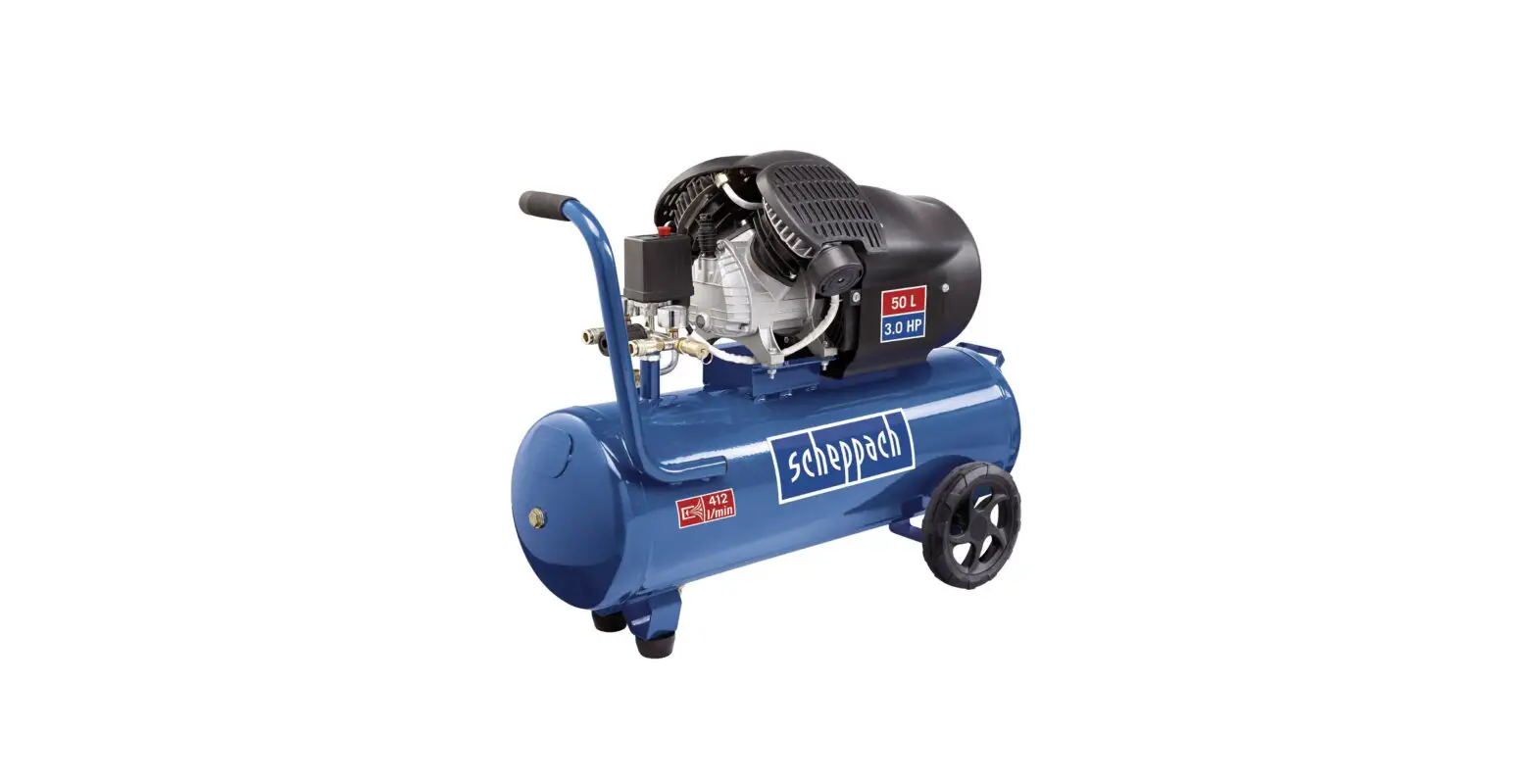
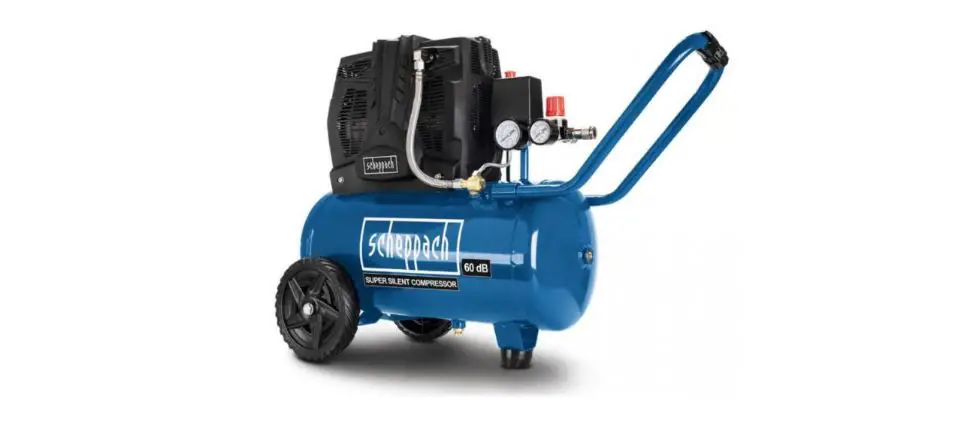
HC53DC Compressor
Product Information
Product Name: Kompressor
Model Number: HC53DC
Manufacturer: Scheppach
Product Usage Instructions
- Before starting the compressor, read and follow the user manual
and safety instructions. - Wear a respiratory mask for protection.
- Make sure to be aware of the risk of electric shock.
- Refer to the website www.scheppach.com for more
information. - Ensure your work area is organized and tidy.
- Store unused power tools safely.
- Avoid accidental startups by making sure the switch is off
before plugging into the power outlet. - Use the cable drum only when it is fully unrolled.
- Always be attentive and use the power tool with caution. Do not
use if you are distracted or unfocused. - Have your power tool repaired by a qualified electrician.
- Follow the maintenance and safety instructions provided in the
user manual. - Keep the safety instructions in a safe place.
- Be cautious and keep a safe distance from others while
working.
Art.Nr. 5906102942 AusgabeNr. 5906102942_2001 Rev.Nr. 03/02/2023
HC53DC
DE
Kompressor
Originalbedienungsanleitung
5
GB Compressor Translation of original instruction manual
19
CZ Kompresor Peklad originálního návodu k obsluze
30
SK Kompresor Preklad originálneho návodu na obsluhu
41
HU Kompresszor Eredeti használati utasítás fordítása
52
PL Kompresor Tlumaczenie oryginalnej instrukcji obslugi
64
HR Kompresor Prijevod originalnog prirucnika za uporabu
76
SI Kompresor Prevod originalnih navodil za uporabo
87
Nachdrucke, auch auszugsweise, bedürfen der Genehmigung. Technische Änderungen vorbehalten. Abbildungen beispielhaft!
1
12 1 16 2
8
9 10
2
3
15
ON 16
14 OFF
3
4
6
357 14 13
11
14 17
7 5 17.1 17.3
17.2
2
www.scheppach.com
4
5
11 21
19 20
20 22 23 24 24
21
9 25
11 15 14 14
19 11
22 20
6
7
A 9
8
9
14 www.scheppach.com
B 3
10 15 18
11 min max 12
12
13
G
C
C
D E
F
D
E
4
www.scheppach.com
Erklärung der Symbole auf dem Gerät
Vor Inbetriebnahme Bedienungsanleitung und Sicherheitshinweise lesen und beachten!
Tragen Sie einen Atemschutz!
Tragen Sie einen Gehörschutz. Die Einwirkung von Lärm kann Gehörverlust bewirken.
Warnung vor heißen Oberflächen.
93
Warnung vor elektrischer Spannung
Warnung! Das Gerät ist mit einer automatisierten Anlaufsteuerung ausgestattet. Halten Sie Dritte vom Arbeitsbereich des Gerätes fern!
Achtung! Vor Erstinbetriebnahme Ölstand überprüfen und Ölverschlussstopfen austauschen!
Setzen Sie die Maschine nicht dem Regen aus. Das Gerät darf nur unter trockenen Umgebungsbedingungen stationiert, gelagert und betrieben werden.
Angabe des Schallleistungspegels in dB
Das Produkt entspricht den geltenden europäischen Richtlinien.
www.scheppach.com
DE | 5
Inhaltsverzeichnis:
Seite:
1. Einleitung …………………………………………………………………………………………….. 7
2. Gerätebeschreibung (Abb. 1 – 14) …………………………………………………………… 7
3. Lieferumfang………………………………………………………………………………………… 7
4. Bestimmungsgemäße Verwendung ………………………………………………………… 8
5. Sicherheitshinweise………………………………………………………………………………. 8
6. Technische Daten …………………………………………………………………………………. 11
7. Vor Inbetriebnahme ………………………………………………………………………………. 11
8. Aufbau und Bedienung ………………………………………………………………………….. 12
9. Elektrischer Anschluss ………………………………………………………………………….. 13
10. Reinigung, Wartung und Lagerung …………………………………………………………. 13
11. Entsorgung und Wiederverwertung ………………………………………………………… 15
12. Störungsabhilfe…………………………………………………………………………………….. 16
6 | DE
www.scheppach.com
1. Einleitung
Hersteller:
Scheppach GmbH Günzburger Straße 69 D-89335 Ichenhausen
Verehrter Kunde, Wir wünschen Ihnen viel Freude und Erfolg beim Arbeiten mit Ihrem neuen Gerät.
Hinweis: Der Hersteller dieses Gerätes haftet nach dem geltenden Produkthaftungsgesetz nicht für Schäden, die an diesem Gerät oder durch dieses Gerät entstehen bei: · unsachgemäßer Behandlung, · Nichtbeachtung der Bedienungsanleitung, · Reparaturen durch Dritte, nicht autorisierte Fach-
kräfte, · Einbau und Austausch von nicht originalen Ersatz-
teilen, · nicht bestimmungsgemäßer Verwendung, · Ausfällen der elektrischen Anlage bei Nichtbeach-
tung der elektrischen Vorschriften und VDE-Bestimmungen 0100, DIN 57113 / VDE0113.
Beachten Sie: Lesen Sie vor der Montage und vor Inbetriebnahme den gesamten Text der Bedienungsanleitung durch. Diese Bedienungsanleitung soll es Ihnen erleichtern, Ihr Elektrowerkzeug kennenzulernen und dessen bestimmungsgemäßen Einsatzmöglichkeiten zu nutzen. Die Bedienungsanleitung enthält wichtige Hinweise, wie Sie mit dem Elektrowerkzeug sicher, fachgerecht und wirtschaftlich arbeiten, und wie Sie Gefahren vermeiden, Reparaturkosten sparen, Ausfallzeiten verringern und die Zuverlässigkeit und Lebensdauer des Elektrowerkzeugs erhöhen. Zusätzlich zu den Sicherheitsbestimmungen dieser Bedienungsanleitung müssen Sie unbedingt die für den Betrieb des Elektrowerkzeugs geltenden Vorschriften Ihres Landes beachten. Bewahren Sie die Bedienungsanleitung, in einer Plastikhülle geschützt vor Schmutz und Feuchtigkeit, bei dem Elektrowerkzeug auf. Sie muss von jeder Bedienungsperson vor Aufnahme der Arbeit gelesen und sorgfältig beachtet werden. An dem Elektrowerkzeug dürfen nur Personen arbeiten, die im Gebrauch des Elektrowerkzeugs unterwiesen und über die damit verbundenen Gefahren unterrichtet sind.
Das geforderte Mindestalter ist einzuhalten. Neben den in dieser Bedienungsanleitung enthaltenen Sicherheitshinweisen und den besonderen Vorschriften Ihres Landes sind die für den Betrieb von baugleichen Maschinen allgemein anerkannten technischen Regeln zu beachten. Wir übernehmen keine Haftung für Unfälle oder Schäden, die durch Nichtbeachten dieser Anleitung und den Sicherheitshinweisen entstehen.
2. Gerätebeschreibung (Abb. 1 – 14)
1. Transportgriff 2. Druckschalter 3. Schnellkupplung (geregelte Druckluft) 4. Manometer (eingestellter Druck kann abgelesen
werden) 5. Druckregler 6. Manometer (Kesseldruck kann abgelesen werden) 7. Schnellkupplung (ungeregelte Druckluft) 8. Druckbehälter 9. Standfuß (2x) 10. Ablassschraube für Kondenswasser 11. Rad (2x) 12. Öl-Ablassschraube / Öl-Schauglas 13. Verdichterpumpe 14. Luftfilter 15. Öl-Verschlusstopfen 16. Ein-/ Aus-Schalter 17. Sicherheitsventil 18. Öl-Einfüllöffnung 19. Schraube (Rad) 20. Beilagscheibe (Rad) 21. Federring (Rad) 22. Mutter (Rad) 23. Schraube (Standfuß) 24. Beilagscheibe (Standfuß) 25. Mutter (Standfuß)
3. Lieferumfang
m ACHTUNG Gerät und Verpackungsmaterialien sind kein Kinderspielzeug! Kinder dürfen nicht mit Kunststoffbeuteln, Folien und Kleinteilen spielen! Es besteht Verschluckungs- und Erstickungsgefahr!
· 2x Luftfilter · 2x Standfuß · 2x Rad · 1x Montagematerial
www.scheppach.com
DE | 7
· 1x Öl-Verschlussstopfen · 1x Ölflasche · 1x Bedienungsanleitung
· Öffnen Sie die Verpackung und nehmen Sie das Gerät vorsichtig heraus.
· Entfernen Sie das Verpackungsmaterial sowie Verpackungs-/ und Transportsicherungen (falls vorhanden).
· Überprüfen Sie, ob der Lieferumfang vollständig ist. · Kontrollieren Sie das Gerät und die Zubehörteile
auf Transportschäden. · Bewahren Sie die Verpackung nach Möglichkeit bis
zum Ablauf der Garantiezeit auf.
4. Bestimmungsgemäße Verwendung
Der Kompressor dient zum Erzeugen von Druckluft für druckluftbetriebene Werkzeuge, welche mit einer Luftmenge bis ca. 234 l/min. betrieben werden können (z.B. Reifenfüller, Ausblaspistole und Lackierpistole).
Die Maschine darf nur nach ihrer Bestimmung verwendet werden. Jede weitere darüber hinausgehende Verwendung ist nicht bestimmungsgemäß. Für daraus hervorgerufene Schäden oder Verletzungen aller Art haftet der Benutzer/Bediener und nicht der Hersteller.
Bitte beachten Sie, dass unsere Geräte bestimmungsgemäß nicht für den gewerblichen, handwerklichen oder industriellen Einsatz konstruiert wurden. Wir übernehmen keine Gewährleistung, wenn das Gerät in Gewerbe-, Handwerks- oder Industriebetrieben sowie bei gleichzusetzenden Tätigkeiten eingesetzt wird.
5. Sicherheitshinweise
m Achtung! Beim Gebrauch von Elektrowerkzeugen sind zum Schutz gegen elektrischen Schlag, Verletzungs- und Brandgefahr folgende grundsätzliche Sicherheitsmaßnahmen zu beachten. Lesen Sie alle diese Hinweise, bevor Sie dieses Elektrowerkzeug benutzen, und bewahren Sie die Sicherheitshinweise gut auf.
m Achtung! Beim Gebrauch dieses Kompressors sind zum Schutz gegen elektrischen Schlag, Verletzungsund Brandgefahr folgende grundsätzlichen Sicherheitsmaßnahmen zu beachten. Lesen und beachten Sie diese Hinweise, bevor Sie das Gerät benutzen.
Sicheres Arbeiten 1 Halten Sie Ihren Arbeitsbereich in Ordnung
– Unordnung im Arbeitsbereich kann Unfälle zur Folge haben.
2 Berücksichtigen Sie Umgebungseinflüsse – Setzen Sie Elektrowerkzeuge nicht dem Regen aus. – Benutzen Sie Elektrowerkzeuge nicht in feuchter oder nasser Umgebung. Gefahr durch Stromschlag! – Sorgen Sie für gute Beleuchtung des Arbeitsbereichs. – Benutzen Sie Elektrowerkzeuge nicht, wo Brandoder Explosionsgefahr besteht.
3. Schützen Sie sich vor elektrischem Schlag – Vermeiden Sie Körperberührung mit geerdeten Teilen (z. B. Rohren, Radiatoren, Elektroherden, Kühlgeräten)
4 Halten Sie Kinder fern! – Lassen Sie andere Personen nicht das Werkzeug und das Kabel berühren, halten Sie sie von Ihrem Arbeitsbereich fern.
5 Bewahren Sie unbenutzte Elektrowerkzeuge sicher auf
– Unbenutzte Elektrowerkzeuge sollten an einem trockenen, hochgelegenen oder abgeschlossenen Ort, außerhalb der Reichweite von Kindern, abgelegt werden.
6 Überlasten Sie Ihr Elektrowerkzeug nicht – Sie arbeiten besser und sicherer im angegebenen Leistungsbereich.
7 Tragen Sie geeignete Kleidung – Tragen Sie keine weite Kleidung oder Schmuck, sie könnten von beweglichen Teilen erfasst werden. – Bei Arbeiten im Freien sind Gummihandschuhe und rutschfestes Schuhwerk empfehlenswert. – Tragen Sie bei langen Haaren ein Haarnetz.
8 Verwenden Sie das Kabel nicht für Zwecke, für die es nicht bestimmt ist
– Benutzen Sie das Kabel nicht, um den Stecker aus der Steckdose zu ziehen. Schützen Sie das Kabel vor Hitze, Öl und scharfen Kanten.
9 Pflegen Sie Ihre Werkzeuge mit Sorgfalt – Halten Sie Ihren Kompressor sauber, um gut und sicher zu arbeiten. – Befolgen Sie die Wartungsvorschriften. – Kontrollieren Sie regelmäßig die Anschlussleitung des Elektrowerkzeugs und lassen Sie diese bei Beschädigung von einem anerkannten Fachmann erneuern.
8 | DE
www.scheppach.com
– Kontrollieren Sie Verlängerungsleitungen regelmäßig und ersetzen Sie diese, wenn sie beschädigt sind.
10 Ziehen Sie den Stecker aus der Steckdose – Bei Nichtgebrauch des Elektrowerkzeugs, vor der Wartung und beim Wechsel von Werkzeugen wie z. B. Sägeblatt, Bohrer, Fräser.
11 Vermeiden Sie unbeabsichtigten Anlauf – Vergewissern Sie sich, dass der Schalter beim Einstecken des Steckers in die Steckdose ausgeschaltet ist.
12 Benutzen Sie Verlängerungskabel für den Außenbereich
– Verwenden Sie im Freien nur dafür zugelassene und entsprechend gekennzeichnete Verlängerungskabel.
– Verwenden Sie die Kabeltrommel nur im abgerollten Zustand.
13 Seien Sie stets aufmerksam – Achten Sie darauf, was Sie tun. Gehen Sie mit Vernunft an die Arbeit. Benutzen Sie das Elektrowerkzeug nicht, wenn Sie unkonzentriert sind.
14 Überprüfen Sie das Elektrowerkzeug auf eventuelle Beschädigungen
– Vor weiterem Gebrauch des Elektrowerkzeugs müssen Schutzvorrichtungen oder leicht beschädigte Teile sorgfältig auf ihre einwandfreie und bestimmungsgemäße Funktion untersucht werden.
– Überprüfen Sie, ob die beweglichen Teile einwandfrei funktionieren und nicht klemmen oder ob Teile beschädigt sind. Sämtliche Teile müssen richtig montiert sein und alle Bedingungen erfüllen, um den einwandfreien Betrieb des Elektrowerkzeugs zu gewährleisten.
– Beschädigte Schutzvorrichtungen und Teile müssen bestimmungsgemäß durch eine anerkannte Fachwerkstatt repariert oder ausgewechselt werden, soweit nichts anderes in der Bedienungsanleitung angegeben ist.
– Beschädigte Schalter müssen bei einer Kundendienstwerkstatt ersetzt werden.
– Benutzen Sie keine fehlerhaften oder beschädigten Anschlussleitungen.
– Benutzen Sie keine Elektrowerkzeuge, bei denen sich der Schalter nicht ein- und ausschalten lässt.
15 Lassen Sie Ihr Elektrowerkzeug durch eine Elektrofachkraft reparieren
– Dieses Elektrowerkzeug entspricht den einschlägigen Sicherheitsbestimmungen. Reparaturen dürfen nur von einer Elektrofachkraft ausgeführt werden, indem Originalersatzteile verwendet werden; anderenfalls können Unfälle für den Benutzer entstehen.
16 Achtung! – Zu Ihrer eigenen Sicherheit, benutzen Sie nur Zubehör und Zusatzgeräte, die in der Bedienungsanleitung angegeben oder vom Hersteller empfohlen oder angegeben werden. – Der Gebrauch anderer als der in der Bedienungsanleitung oder im Katalog empfohlenen Einsatzwerkzeuge oder Zubehöre kann eine persönliche Verletzungsgefahr für Sie bedeuten.
17 Geräusch – Bei Verwendung des Kompressors Gehörschutz tragen.
18 Austausch der Anschlussleitung – Wenn die Anschlussleitung beschädigt wird, muss sie vom Hersteller oder einer Elektrofachkraft ersetzt werden, um Gefährdungen zu vermeiden. Gefahr durch Stromschläge
19 Befüllung von Reifen – Kontrollieren Sie den Reifendruck unmittelbar nach der Befüllung durch ein geeignetes Manometer, z.B. an einer Tankstelle.
20 Straßenfahrbare Kompressoren im Baustellenbetrieb
– Achten Sie darauf, dass alle Schläuche und Armaturen für den höchst zulässigen Arbeitsdruck des Kompressors geeignet sind.
21 Aufstellort – Stellen Sie den Kompressor nur auf einer ebenen Fläche auf.
22 Es ist empfohlen, dass Zuführschläuche bei Drücken über 7 bar mit einem Sicherheitskabel, z.B. einem Drahtseil ausgestattet werden sollten.
23 Vermeiden Sie starke Belastungen auf das Leitungssystem, indem Sie flexible Schlauchanschlüsse verwenden, um Knickstellen zu vermeiden.
24 Verwenden Sie einen Fehlerstromschutzschalter mit einem Auslösestrom von 30 mA oder weniger. Der Einsatz eines Fehlerstromschutzschalters vermindert das Risiko eines elektrischen Schlages.
www.scheppach.com
DE | 9
25. Stellen Sie sicher, dass die Ölkühleinrichtungen sauber gehalten werden und die Schutzeinrichtungen im betriebsfähigen Zustand bleiben.
26. Verbrennungsgefahr am heißen Öl – Tragen Sie geeignete Schutzhandschuhe. – Arbeiten Sie mit dem Kompressor nie in der Nähe offener Flammen. – Achten Sie darauf, kein Öl zu verschütten.
27. Bei niedrigen Temperaturen unter 0°C ist der Motoranlauf verboten.
m WARNUNG! Dieses Elektrowerkzeug erzeugt während des Betriebs ein elektromagnetisches Feld. Dieses Feld kann unter bestimmten Umständen aktive oder passive medizinische Implantate beeinträchtigen. Um die Gefahr von ernsthaften oder tödlichen Verletzungen zu verringern, empfehlen wir Personen mit medizinische Implantaten ihren Arzt und den Hersteller vom medizinischen Implantat zu konsultieren, bevor das Elektrowerkzeug bedient wird.
ZUSÄTZLICHE SICHERHEITSHINWEISE
Beachten Sie die entsprechenden Betriebsanleitungen der jeweiligen Druckluftwerkzeuge / Druckluftvorsatzgeräte! Die folgenden allgemeinen Hinweise sind zusätzlich zu beachten:
Sicherheitshinweise zum Arbeiten mit Druckluft und Ausblaspistolen · Achten Sie auf ausreichenden Abstand zum Pro-
dukt, mind. jedoch 2,50 m und halten Sie die Druckluftwerkzeuge / Druckluftvorsatzgeräte während des Betriebs vom Kompressor fern. · Verdichterpumpe und Leitungen erreichen im Betrieb hohe Temperaturen. Berührungen führen zu Verbrennungen. · Die vom Kompressor angesaugte Luft ist frei von Beimengungen zu halten, die in der Verdichterpumpe zu Bränden oder Explosionen führen können. · Halten Sie beim Lösen der Schlauchkupplung das Kupplungsstück des Schlauches mit der Hand fest. So vermeiden Sie Verletzungen durch den zurückschnellenden Schlauch. · Bei Arbeiten mit der Ausblaspistole Schutzbrille tragen. Durch Fremdkörper und weggeblasene Teile können leicht Verletzungen verursacht werden.
· Tragen Sie bei Arbeiten mit der Druckluftpistole Schutzbrille und Atemschutzmaske. Stäube sind gesundheitsschädlich! Durch Fremdkörper und weggeblasene Teile können leicht Verletzungen verursacht werden.
· Mit der Ausblaspistole keine Personen anblasen oder Kleidung am Körper reinigen. Verletzungsgefahr!
Sicherheitshinweise beim Verwenden von Spritzund Sprühvorsatzgeräten (z.B. Farbspritzen): · Halten Sie beim Befüllen das Sprühvorsatzgerät
vom Kompressor entfernt, damit keine Flüssigkeit in Kontakt mit dem Kompressor kommt. · Sprühen Sie nie mit dem Sprühvorsatzgeräten (z.B. Farbspritzen) in Richtung des Kompressors. Feuchtigkeit kann zu elektrischen Gefährdungen führen! · Keine Lacke oder Lösungsmittel mit einem Flammpunkt von weniger als 55° C verarbeiten. Explosionsgefahr! · Lacke und Lösungsmittel nicht erwärmen. Explosionsgefahr! · Werden gesundheitsschädliche Flüssigkeiten verarbeitet, sind zum Schutz Filtergeräte (Gesichtsmasken) erforderlich. Beachten Sie auch die von den Herstellern solcher Stoffe gemachten Angaben über Schutzmaßnahmen. · Die auf den Umverpackungen der verarbeiteten Materialien aufgebrachten Angaben und Kennzeichnungen der Gefahrstoffverordnung sind zu beachten. Gegebenenfalls sind zusätzliche Schutzmaßnahmen zu treffen, insbesondere geeignete Kleidung und Masken zu tragen. · Während des Spritzvorgangs sowie im Arbeitsraum darf nicht geraucht werden. Explosionsgefahr! Auch Farbdämpfe sind leicht brennbar. · Feuerstellen, offenes Licht oder funkenschlagende Maschinen dürfen nicht vorhanden sein bzw. betrieben werden. · Speisen und Getränke nicht im Arbeitsraum aufbewahren oder verzehren. Farbdämpfe sind gesundheitsschädlich. · Der Arbeitsraum muss größer als 30 m³ sein und es muss ausreichender Luftwechsel beim Spritzen und Trocknen gewährleistet sein. · Nicht gegen den Wind spritzen. Grundsätzlich beim Verspritzen von brennbaren bzw. gefährlichen Spritzgütern die Bestimmungen der örtlichen Polizeibehörde beachten.
10 | DE
www.scheppach.com
· Verarbeiten Sie in Verbindung mit dem PVC-Druckschlauch keine Medien wie Testbenzin, Butylalkohol und Methylenchlorid. Diese Medien zerstören den Druckschlauch.
· Der Arbeitsbereich muss vom Kompressor abgetrennt sein, sodass dieser nicht direkt mit dem Arbeitsmedium in Kontakt kommen kann.
Betrieb von Druckbehältern · Wer einen Druckbehälter betreibt, hat diesen in ei-
nem ordnungsgemäßen Zustand zu erhalten, ordnungsgemäß zu betreiben, zu überwachen, notwendige Instandhaltungs- und Instandsetzungsarbeiten unverzüglich vorzunehmen und die den Umständen nach erforderlichen Sicherheitsmaßnahmen zu treffen. · Die Aufsichtsbehörde kann im Einzelfall erforderliche Überwachungsmaßnahmen anordnen. · Ein Druckbehälter darf nicht betrieben werden, wenn er Mängel aufweist, durch die Beschäftigte oder Dritte gefährdet werden. · Kontrollieren Sie den Druckbehälter vor jedem Betrieb auf Rost und Beschädigungen. Der Kompressor darf nicht mit einem beschädigten oder rostigen Druckbehälter betrieben werden. Stellen Sie Beschädigungen fest, so wenden Sie sich bitte an die Kundendienstwerkstatt.
Bewahren Sie die Sicherheitshinweise gut auf.
Restrisiko
Halten Sie die vorgegebenen Wartungs- und Sicherheitshinweise der Bedienungsanleitung ein. Seien Sie stets aufmerksam bei der Arbeit und halten Sie dritte Personen in einem sicheren Abstand von Ihrem Arbeitsplatz fern.
Auch bei sachgemäßer Verwendung des Gerätes bleibt immer ein gewisses Restrisiko, das nicht ausgeschlossen werden kann. Aus der Art und Konstruktion des Gerätes können die folgenden potentiellen Gefährdungen abgeleitet werden: · Unbeabsichtigte Inbetriebsetzung des Produktes. · Schädigung des Gehöres, wenn kein vorgeschrie-
bener Gehörschutz getragen wird. · Schmutzpartikel, Staub etc. können trotz des Tra-
gens der Schutzbrille in Ihr Auge oder Gesicht gelangen. · Einatmen von aufgewirbelten Partikeln.
6. Technische Daten
Netzanschluss Motorleistung Betriebsart Kompressor-Drehzahl Druckbehältervolumen Betriebsdruck Theo. Ansaugleistung Effektive Abgabemenge bei 1 bar Schutzart Gerätegewicht Öl (15W 40) Max. Aufstellhöhe (üNN)
230 V~ 50 Hz 2200 W S1
2850 min-1 50 l
ca. 10 bar ca. 371 l/min ca. 234 l/min
IPX2 ca. 38 kg ca. 0,25 l
1000 m
Die Geräuschemissionswerte wurden entsprechend EN ISO 3744 ermittelt.
Tragen Sie einen Gehörschutz. Die Einwirkung von Lärm kann Gehörverlust bewirken.
m Warnung: Lärm kann gravierende Auswirkungen auf Ihre Gesundheit haben. Übersteigt der Maschinenlärm 85 dB (A), tragen Sie bitte einen geeigneten Gehörschutz.
Schallleistungspegel LwA Schalldruckpegel LpA Unsicherheit KwA/pA
93 dB(A) 71,2 dB(A) 2,03 dB(A)
7. Vor Inbetriebnahme
· Überzeugen Sie sich vor dem Anschließen, dass die Daten auf dem Typenschild mit den Netzdaten übereinstimmen.
· Entfernen Sie vor Erstinbetriebnahme den Transportstopfen (B) und füllen Sie das Verdichterpumpengehäuse mit Öl, wie unter Punkt 8.4 beschrieben.
· Überprüfen Sie das Gerät auf Transportschäden. Etwaige Schäden sofort dem Transportunternehmen melden, mit dem der Kompressor angeliefert wurde.
· Die Aufstellung des Kompressors muss in der Nähe des Verbrauchers erfolgen.
www.scheppach.com
DE | 11
· Lange Luftleitungen und lange Zuleitungen (Verlängerungskabel) sind zu vermeiden.
· Auf trockene und staubfreie Ansaugluft achten. · Den Kompressor nicht in feuchtem oder nassem
Raum aufstellen. · Der Kompressor darf nur in geeigneten Räumen
(gut belüftet, Umgebungstemperatur +5°C bis 40°C) betrieben werden. Im Raum dürfen sich keine Stäube, keine Säuren, Dämpfe, explosive oder entflammbare Gase befinden. · Der Kompressor ist geeignet für den Einsatz in trockenen Räumen. In Bereichen, in denen mit Spritzwasser gearbeitet wird, ist der Einsatz nicht zulässig. · Vor Inbetriebnahme muss der Ölstand im Verdichterpumpengehäuse kontrolliert werden. · Der Kompressor darf nur kurzzeitig, bei trockenen Umgebungsbedingungen, im Außenbereich benutzt werden. · Der Kompressor muss stets trocken gehalten werden und darf nach der Arbeit nicht im Freien verbleiben.
8. Aufbau und Bedienung
m Achtung! Vor der Inbetriebnahme das Gerät unbedingt komplett montieren!
Zur Montage benötigen Sie: · 2x Gabelschlüssel 17 mm (nicht im Lieferumfang
enthalten) · 2x Gabelschlüssel 14 mm (nicht im Lieferumfang
enthalten)
8.1 Montage der Räder (Abb. 5) · Montieren Sie die beiliegenden Räder (11) wie dar-
gestellt.
8.2 Montage des Standfußes (2x) (Abb. 6) · Montieren Sie den beiliegenden Standfuß (2x) wie
dargestellt.
8.3 Montage des Luftfilters (2x) (Abb. 7, 8) · Entfernen Sie den Transportstopfen (A) und schrau-
ben Sie den Luftfilter (14) am Gerät fest.
8.4 Austausch des Transportdeckels (B) (Abb. 9, 10)
· Entfernen Sie den Transportdeckel (B) der Öleinfüllöffnung (18).
· Füllen Sie das mitgelieferte Kompressorenöl in das Verdichterpumpengehäuse und setzen Sie den beiliegenden Öl-Verschlussstopfen (15) in die Öleinfüllöffnung (18) ein.
8.5 Netzanschluss · Der Kompressor ist mit einer Netzleitung mit Schutz-
kontaktstecker ausgerüstet. Dieser kann an jeder Schutzkontaktsteckdose 230 V~ 50 Hz, welche mit 16 A abgesichert ist, angeschlossen werden. · Achten Sie vor Inbetriebnahme darauf, dass die Netzspannung mit der Betriebsspannung und mit der Maschinenleistung auf dem Datenschild übereinstimmt. · Lange Zuleitungen, sowie Verlängerungen, Kabeltrommeln usw. verursachen Spannungsabfall und können den Motoranlauf verhindern. · Bei niedrigen Temperaturen unter +5°C ist der Motoranlauf durch Schwergängigkeit gefährdet.
8.6 Ein-/ Ausschalter (Abb. 2) · Zum Einschalten des Kompressors wird der Ein/
Ausschalter (16) nach oben gezogen. Zum Abschalten wird der Ein-/Ausschalter nach unten gedrückt.
8.7 Druckeinstellung: (Abb. 1, 3) · Mit dem Druckregler (5) wird der Druck am Mano-
meter (4) eingestellt. · Der eingestellte Druck kann an der Schnellkupplung
(3) entnommen werden. · Am Manometer (6) wird der Kesseldruck abgelesen. · Der Kesseldruck wird an der Schnellkupplung (7)
entnommen.
8.8 Druckschaltereinstellung (Abb. 1) · Der Druckschalter (2) ist werkseitig eingestellt.
Einschaltdruck ca. 8 bar Ausschaltdruck ca. 10 bar
8.9 Thermoschutzschalter Der Thermoschutzschalter ist im Gerät verbaut. Löst der Thermoschutzschalter aus, gehen Sie wie folgt vor: · Ziehen Sie den Netzstecker. · Warten Sie circa zwei bis drei Minuten. · Stecken Sie das Gerät wieder ein. · Startet das Gerät nicht, wiederholen Sie den Vorgang.
12 | DE
www.scheppach.com
· Startet das Gerät erneut nicht, schalten Sie das Gerät am Ein-/Ausschalter (16) aus und wieder an.
· Wenn Sie alle oben genannten Schritte durchgeführt haben und das Gerät trotzdem nicht funktioniert, kontaktieren Sie unseren Service.
9. Elektrischer Anschluss
Der installierte Elektromotor ist betriebsfertig angeschlossen. Der Anschluss entspricht den einschlägigen VDE- und DIN-Bestimmungen. Der kundenseitige Netzanschluss sowie die verwendete Verlängerungsleitung müssen diesen Vorschriften entsprechen.
Beim Arbeiten mit Spritz- und Sprühvorsatzgeräten sowie bei vorübergehender Anwendung im Freien ist das Gerät unbedingt über einen Fehlerstromschutzschalter mit einem Auslösestrom von 30 mA oder weniger anzuschließen.
Wichtige Hinweise Bei Überlastung des Motors schaltet dieser selbstständig ab. Nach einer Abkühlzeit (zeitlich unterschiedlich) lässt sich der Motor wieder einschalten.
Schadhafte Elektro-Anschlussleitung. An elektrischen Anschlussleitungen entstehen oft Isolationsschäden. Ursachen hierfür können sein: · Druckstellen, wenn Anschlussleitungen durch Fens-
ter oder Türspalten geführt werden. · Knickstellen durch unsachgemäße Befestigung
oder Führung der Anschlussleitung. · Schnittstellen durch Überfahren der Anschlusslei-
tung. · Isolationsschäden durch Herausreißen aus der
Wandsteckdose. · Risse durch Alterung der Isolation.
Solch schadhafte Elektro-Anschlussleitungen dürfen nicht verwendet werden und sind aufgrund der Isolationsschäden lebensgefährlich. Elektrische Anschlussleitungen regelmäßig auf Schäden überprüfen. Achten Sie darauf, dass beim Überprüfen die Anschlussleitung nicht am Stromnetz hängt. Elektrische Anschlussleitungen müssen den einschlägigen VDE- und DIN-Bestimmungen entsprechen. Verwenden Sie nur Anschlussleitungen mit Kennzeichnung ,,H05VV-F”.
Ein Aufdruck der Typenbezeichnung auf dem Anschlusskabel ist Vorschrift.
Wechselstrommotor: · Die Netzspannung muss 230 V~ betragen. · Verlängerungsleitungen bis 25 m Länge müssen
einen Querschnitt von 1,5 Quadratmillimeter aufweisen.
Anschlüsse und Reparaturen der elektrischen Ausrüstung dürfen nur von einer Elektro-Fachkraft durchgeführt werden.
Bei Rückfragen bitte folgende Daten angeben: · Stromart des Motors · Daten des Maschinen-Typenschildes · Daten des Motor-Typenschildes
10. Reinigung, Wartung und Lagerung
m Achtung! Ziehen Sie vor allen Reinigungs- und Wartungsarbeiten den Netzstecker! Verletzungsgefahr durch Stromstöße!
m Achtung! Warten Sie bis das Gerät vollständig abgekühlt ist! Verbrennungsgefahr!
m Achtung! Vor allen Reinigungs- und Wartungsarbeiten ist das Gerät drucklos zu machen! Verletzungsgefahr!
10.1 Reinigung · Halten Sie das Gerät so staub- und schmutzfrei wie
möglich. Reiben Sie das Gerät mit einem sauberen Tuch ab oder blasen Sie es mit Druckluft bei niedrigem Druck aus. · Wir empfehlen, dass Sie das Gerät direkt nach jeder Benutzung reinigen. · Reinigen Sie das Gerät regelmäßig mit einem feuchten Tuch und etwas Schmierseife. Verwenden Sie keine Reinigungs- oder Lösungsmittel; diese könnten die Kunststoffteile des Gerätes angreifen. Achten Sie darauf, dass kein Wasser in das Geräteinnere gelangen kann. · Schlauch und Spritzwerkzeuge müssen vor Reinigung vom Kompressor getrennt werden. Der Kompressor darf nicht mit Wasser, Lösungsmitteln o. Ä. gereinigt werden.
www.scheppach.com
DE | 13
10.2 Wartung des Druckbehälters (Abb. 1) Achtung! Für dauerhafte Haltbarkeit des Druckbehälters (8) ist nach jedem Betrieb das Kondenswasser durch Öffnen der Ablassschraube (10) abzulassen. Lassen Sie zuvor den Kesseldruck ab (s. 10.7.1). Die Ablassschraube wird durch Drehen gegen den Uhrzeigersinn geöffnet (Blickrichtung von der Kompressorunterseite auf die Schraube), damit das Kondenswasser vollständig aus dem Druckbehälter ablaufen kann. Verschließen Sie danach die Ablassschraube wieder (Drehen im Uhrzeigersinn). Kontrollieren Sie den Druckbehälter vor jedem Betrieb auf Rost und Beschädigungen Der Kompressor darf nicht mit einem beschädigten oder rostigen Druckbehälter betrieben werden. Stellen Sie Beschädigungen fest, so wenden Sie sich bitte an die Kundendienstwerkstatt.
m Achtung! Das Kondenswasser aus dem Druckbehälter enthält Ölrückstände. Entsorgen Sie das Kondenswasser umweltgerecht bei einer entsprechenden Sammelstelle.
10.3 Sicherheitsventil (Abb. 3) Das Sicherheitsventil (17) ist auf den höchstzulässigen Druck des Druckbehälters eingestellt. Es ist nicht zulässig, das Sicherheitsventil, zu verstellen oder die Verbindungssicherung (17.2) zwischen der Ablassmutter (17.1) und deren Kappe (17.3) zu entfernen.
Damit das Sicherheitsventil im Bedarfsfall richtig funktioniert, muss dieses alle 30 Betriebsstunden mind. jedoch 3-mal jährlich betätigt werden. Drehen Sie die perforierte Ablassmutter (17.1) zum Öffnen gegen den Uhrzeigersinn und ziehen dann die Ventilstange über die perforierte Ablassmutter (17.1) von Hand nach außen, um den Auslass des Sicherheitsventils zu öffnen. Das Ventil lässt nun hörbar Luft ab. Anschließend drehen Sie die Ablassmutter wieder im Uhrzeigersinn fest.
10.4 Ölstand regelmäßig kontrollieren (Abb. 11) Kompressor auf eine ebene, gerade Fläche stellen. Der Ölstand muss sich zwischen MAX und MIN des Öl-Schauglases (12) befinden. Ölwechsel: Empfohlenes Öl: SAE 15W 40 oder gleichwertiges. Die Erstfüllung muss nach 10 Betriebsstunden gewechselt werden; danach ist alle 50 Betriebsstunden das Öl abzulassen und neues nachzufüllen.
10.5 Ölwechsel (Abb. 1, 10, 11) Schalten Sie den Motor ab und ziehen Sie den Netzstecker aus der Steckdose. Entfernen Sie den Ölverschlussstopfen (15). Nachdem Sie den eventuell vorhandenen Luftdruck abgelassen haben, können Sie die Öl-Ablassschraube (12) an der Verdichterpumpe (13) herausschrauben. Damit das Öl nicht unkontrolliert herausläuft, halten Sie eine kleine Blechrinne darunter und fangen Sie das Öl in einem Behälter auf. Falls das Öl nicht vollständig herausläuft, empfehlen wir den Kompressor ein wenig zu neigen. Ist das Öl herausgelaufen, setzen Sie die Öl-Ablassschraube (12) wieder ein. Das Altöl entsorgen Sie bei einer entsprechenden Annahmestelle für Altöl. Um die richtige Ölmenge einzufüllen, achten Sie darauf, dass der Kompressor auf einer geraden Fläche steht. Füllen Sie das neue Öl in die Öleinfüllöffnung (18), bis der Ölstand die maximale Füllmenge erreicht. Diese ist durch einen roten Punkt auf dem Öl-Schauglas (12) gekennzeichnet (Abb. 11). Überschreiten Sie nicht die maximale Füllmenge. Eine Überfüllung kann einen Geräteschaden zur Folge haben. Setzen Sie den Ölverschlussstopfen (15) wieder in die Öleinfüllöffnung (18).
10.6 Reinigen des Ansaugfilters (Abb. 3, 12, 13) Der Ansaugfilter verhindert das Einsaugen von Staub und Schmutz. Es ist notwendig, diesen Filter mindestens alle 300 Betriebsstunden zu reinigen. Ein verstopfter Ansaugfilter vermindert die Leistung des Kompressors erheblich. Entfernen Sie den Ansaugfilter (2x), indem Sie die Schraube (E) öffnen.
Ziehen Sie danach den Filterdeckel (D) ab. Sie können nun den Luftfilter (F) herausnehmen. Klopfen Sie Luftfilter und Filterdeckel und Filtergehäuse vorsichtig aus. Diese Bauteile müssen danach mit Druckluft (ca. 3 bar) ausgeblasen und in umgekehrter Reihenfolge wieder montiert werden.
10.7 Lagerung m Achtung! Ziehen Sie den Netzstecker, entlüften Sie das Gerät und alle angeschlossenen Druckluftwerkzeuge. Stellen Sie den Kompressor so ab, dass dieser nicht von Unbefugten in Betrieb genommen werden kann.
14 | DE
www.scheppach.com
m Achtung! Den Kompressor nur in trockener und für Unbefugte unzugänglicher Umgebung aufbewahren. Nicht kippen, nur stehend aufbewahren! Öl kann auslaufen!
10.7.1 Ablassen des Überdrucks Lassen Sie den Überdruck im Kompressor ab, indem Sie den Kompressor ausschalten und die noch im Druckbehälter vorhandene Druckluft verbrauchen, z.B. mit einem Druckluftwerkzeug im Leerlauf oder mit einer Ausblaspistole.
10.8 Service-Informationen Es ist zu beachten, dass bei diesem Produkt folgende Teile einem gebrauchsgemäßen oder natürlichen Verschleiß unterliegen bzw. folgende Teile als Verbrauchsmaterialien benötigt werden. Verschleißteile*: Riemen und Kupplung
* nicht zwingend im Lieferumfang enthalten!
Ersatzteile und Zubehör erhalten Sie in unserem Service-Center. Scannen Sie hierzu den QR-Code auf der Titelseite.
11. Entsorgung und Wiederverwertung
Hinweise zur Verpackung
Die Verpackungsmaterialien sind recycelbar. Bitte Verpackungen umweltgerecht entsorgen.
Hinweise zum Elektro- und Elektronikgerätegesetz (ElektroG)
Elektro- und Elektronik-Altgeräte gehören nicht in den Hausmüll, sondern sind einer getrennten Erfassung bzw. Entsorgung zuzuführen! · Altbatterien oder -akkus, welche nicht fest im Altgerät verbaut sind, müssen vor Abgabe zerstörungsfrei entnommen werden! Deren Entsorgung wird über das Batteriegesetz geregelt. · Besitzer bzw. Nutzer von Elektro- und Elektronikgeräten sind nach deren Gebrauch gesetzlich zur Rückgabe verpflichtet. · Der Endnutzer trägt die Eigenverantwortung für das Löschen seiner personenbezogenen Daten auf dem zu entsorgenden Altgerät!
· Das Symbol der durchgestrichenen Mülltonne bedeutet, dass Elektro- und Elektronikaltgeräte nicht über den Hausmüll entsorgt werden dürfen.
· Elektro- und Elektronikaltgeräte können bei folgenden Stellen unentgeltlich abgegeben werden: – Öffentlich-rechtliche Entsorgungs- bzw. Sammelstellen (z. B. kommunale Bauhöfe) – Verkaufsstellen von Elektrogeräten (stationär und online), sofern Händler zur Rücknahme verpflichtet sind oder diese freiwillig anbieten. – Bis zu drei Elektroaltgeräte pro Geräteart, mit einer Kantenlänge von maximal 25 Zentimetern, können Sie ohne vorherigen Erwerb eines Neugerätes vom Hersteller kostenfrei bei diesem abgeben oder einer anderen autorisierten Sammelstelle in Ihrer Nähe zuführen. – Weitere ergänzende Rücknahmebedingungen der Hersteller und Vertreiber erfahren Sie beim jeweiligen Kundenservice.
· Im Falle der Anlieferung eines neuen Elektrogerätes durch den Hersteller an einen privaten Haushalt, kann dieser die unentgeltliche Abholung des Elektroaltgerätes, auf Nachfrage vom Endnutzer, veranlassen. Setzen Sie sich hierzu mit dem Kundenservice des Herstellers in Verbindung.
· Diese Aussagen gelten nur für Geräte, die in den Ländern der Europäischen Union installiert und verkauft werden und die der Europäischen Richtlinie 2012/19/EU unterliegen. In Ländern außerhalb der Europäischen Union können davon abweichende Bestimmungen für die Entsorgung von Elektro- und Elektronik-Altgeräten gelten.
www.scheppach.com
DE | 15
12. Störungsabhilfe
Störung
Mögliche Ursache Kompressor läuft nicht.
Kompressor läuft nicht.
Netzspannung zu niedrig. Außentemperatur zu niedrig.
Motor überhitzt.
Sicherheitsventil (17) undicht.
Kompressor läuft, jedoch kein Druck.
Dichtungen kaputt.
Ablassschraube für Kondenswasser (10) undicht.
Kompressor läuft, Druck wird am Manometer angezeigt, jedoch Werkzeuge laufen nicht.
Schlauchverbindungen undicht.
Schnellkupplung undicht.
Zu wenig Druck am Druckregler (5) eingestellt.
Abhilfe
Kabel, Netzstecker, Sicherung und Steckdose überprüfen.
Zu lange Verlängerungskabel vermeiden. Verlängerungskabel mit ausreichendem Aderquerschnitt verwenden.
Nicht unter +5° C Außentemperatur betreiben.
Motor abkühlen lassen ggf. Ursache der Überhitzung beseitigen.
Sicherheitsventil (17) austauschen.
Dichtungen überprüfen, kaputte Dichtungen bei einer Fachwerkstatt ersetzen lassen.
Schraube per Hand nachziehen. Dichtung auf der Schraube überprüfen, ggf. ersetzen.
Druckluftschlauch und Werkzeuge überprüfen, ggf. austauschen.
Schnellkupplung überprüfen, ggf. ersetzen.
Druckregler weiter aufdrehen.
16 | DE
www.scheppach.com
Garantiebedingungen
Revisionsdatum 26.11.2021
Sehr geehrte Kundin, sehr geehrter Kunde, unsere Produkte unterliegen einer strengen Qualitätskontrolle. Sollte ein Gerät dennoch nicht einwandfrei funktionieren, bedauern wir dies sehr und bitten Sie, sich an unseren Servicedienst unter der unten angegebenen Adresse zu wenden. Gerne stehen wir Ihnen auch telefonisch über die Servicerufnummer zur Verfügung. Die nachfolgenden Hinweise sollen Ihnen für eine problemlose Bearbeitung und Regulierung im Schadensfall dienen.
Für die Geltendmachung von Garantieansprüchen – innerhalb Deutschland – gilt folgendes:
1. Diese Garantiebedingungen regeln unsere zusätzlichen Hersteller-Garantieleistungen für Käufer (private Endverbraucher) von Neugeräten. Die gesetzlichen Gewährleistungsansprüche werden von dieser Garantie nicht berührt. Für diese ist der Händler zuständig, bei dem Sie das Produkt erworben haben.
2. Die Garantieleistung erstreckt sich ausschließlich auf Mängel an einem von Ihnen erworbenen neuen Gerät, die auf einem Material- oder Herstellungsfehler beruhen und ist – nach unserer Wahl – auf die unentgeltliche Reparatur solcher Mängel oder den Austausch des Gerätes beschränkt (ggf. auch Austausch mit einem Nachfolgemodell). Ersetzte Geräte oder Teile gehen in unser Eigentum über. Bitte beachten Sie, dass unsere Geräte bestimmungsgemäß nicht für den gewerblichen, handwerklichen oder beruflichen Einsatz konstruiert wurden. Ein Garantiefall kommt daher nicht zustande, wenn das Gerät innerhalb der Garantiezeit in Gewerbe-, Handwerks- oder Industriebetrieben verwendet wurde oder einer gleichzusetzenden Beanspruchung ausgesetzt war.
3. Von unseren Garantieleistungen ausgenommen sind: – Schäden am Gerät, die durch Nichtbeachtung der Montageanleitung, nicht fachgerechte Installation, Nichtbeachtung der Bedienungsanleitung (z.B. Anschluss an eine falsche Netzspannung oder Stromart) bzw. der Wartungs- und Sicherheitsbestimmungen oder durch Einsatz des Geräts unter ungeeigneten Umweltbedingungen sowie durch mangelnde Pflege und Wartung entstanden sind. – Schäden am Gerät, die durch missbräuchliche oder unsachgemäße Anwendungen (wie z.B. Überlastung des Gerätes oder Verwendung von nicht zugelassenen Werkzeugen bzw. Zubehör), Eindringen von Fremdkörpern in das Gerät (wie z.B. Sand, Steine oder Staub), Transportschäden, Gewaltanwendung oder Fremdeinwirkungen (wie z. B. Schäden durch Herunterfallen) entstanden sind. – Schäden am Gerät oder an Teilen des Geräts, die auf einen bestimmungsgemäßen, üblichen (betriebsbedingten) oder sonstigen natürlichen Verschleiß zurückzuführen sind sowie Schäden und/oder Abnutzung von Verschleißteilen. – Mängel am Gerät, die durch Verwendung von Zubehör-, Ergänzungs- oder Ersatzteilen verursacht wurden, die keine Originalteile sind oder nicht bestimmungsgemäß verwendet werden. – Geräte, an denen Veränderungen oder Modifikationen vorgenommen wurden. – Geringfügige Abweichungen von der Soll-Beschaffenheit, die für Wert und Gebrauchstauglichkeit des Geräts unerheblich sind. – Geräte an denen eigenmächtig Reparaturen oder Reparaturen , insbesondere durch einen nicht autorisierten Dritten, vorgenommen wurden. – Wenn die Kennzeichnung am Gerät bzw. die Identifikationsinformationen des Produktes (Maschinenaufkleber) fehlen oder unlesbar sind. – Geräte die eine starke Verschmutzung aufweisen und daher vom Servicepersonal abgelehnt werden. Schadensersatzansprüche sowie Folgeschäden sind von dieser Garantieleistung generell ausgeschlossen.
4. Die Garantiezeit beträgt regulär 24 Monate* (12 Monate bei Batterien / Akkus) und beginnt mit dem Kaufdatum des Gerätes. Maßgeblich ist das Datum auf dem Original-Kaufbeleg. Garantieansprüche müssen jeweils nach Kenntniserlangung unverzüglich erhoben werden. Die Geltendmachung von Garantieansprüchen nach Ablauf der Garantiezeit ist ausgeschlossen. Die Reparatur oder der Austausch des Gerätes führt weder zu einer Verlängerung der Garantiezeit noch wird eine neue Garantiezeit durch diese Leistung für das Gerät oder für etwaige eingebaute Ersatzteile in Gang gesetzt. Dies gilt auch bei Einsatz eines Vor-Ort-Services. Das betroffene Gerät ist in gesäubertem Zustand zusammen mit einer Kopie des Kaufbelegs, – hierin enthalten die Angaben zum Kaufdatum und der Produktbezeichnung – der Kundendienststelle vorzulegen bzw. einzusenden. Wird ein Gerät unvollständig, ohne den kompletten Lieferumfang eingesendet, wird das fehlende Zubehör wertmäßig in Anrechnung / Abzug gebracht, falls das Gerät ausgetauscht wird oder eine Rückerstattung erfolgt. Teilweise oder komplett zerlegte Geräte können nicht als Garantiefall akzeptiert werden. Bei nicht berechtigter Reklamation bzw. außerhalb der Garantiezeit trägt der Käufer generell die Transportkosten und das Transportrisiko. Einen Garantiefall melden Sie bitte vorab bei der Servicestelle (s.u.) an. In der Regel wird vereinbart, dass das defekte Gerät mit einer kurzen Beschreibung der Störung per Abhol-Service (nur in Deutschland) oder – im Reparaturfall außerhalb des Garantiezeitraums – ausreichend frankiert, unter Beachtung der entsprechenden Verpackungs- und Versandrichtlinien, an die unten angegebene Serviceadresse eingesendet wird. Beachten Sie bitte, dass Ihr Gerät (modellabhängig) bei Rücklieferung, aus Sicherheitsgründen – frei von allen Betriebsstoffen ist. Das an unser Service-Center eingeschickte Produkt, muss so verpackt sein, dass Beschädigungen am Reklamationsgerät auf dem Transportweg vermieden werden. Nach erfolgter Reparatur / Austausch senden wir das Gerät frei an Sie zurück. Können Produkte nicht repariert oder ausgetauscht werden, kann nach unserem eigenen freien Ermessen ein Geldbetrag bis zur Höhe des Kaufpreises des mangelhaften Produkts erstattet werden, wobei ein Abzug aufgrund von Abnutzung und Verschleiß berücksichtigt wird. Diese Garantieleistungen gelten nur zugunsten des privaten Erstkäufers und sind nicht abtret- oder übertragbar.
www.scheppach.com
DE | 17
5. Für die Geltendmachung Ihres Garantieanspruches kontaktieren Sie bitte unser Service-Center.
Bitte verwenden Sie vorzugsweise unser Formular auf unserer Homepage: https://www.scheppach.com/de/service Bitte senden Sie uns keine Geräte ohne vorherige Kontaktaufnahme und Anmeldung bei unserem Service-Center. Für die Inanspruchnahme dieser Garantiezusagen ist der Erstkontakt mit unserem Service-Center zwingende Voraussetzung.
6. Bearbeitungszeit – Im Regelfall erledigen wir Reklamationssendungen innerhalb 14 Tagen nach Eingang in unserem Service-Center.
Sollte in Ausnahmefällen die genannte Bearbeitungszeit überschritten werden, so informieren wir Sie rechtzeitig.
7. Verschleißteile – Verschleißteile sind: a) mitgelieferte, an- und/oder eingebaute Batterien / Akkus sowie b) alle modellabhängigen Verschleißteile (siehe Bedienungsanleitung). Von der Garantieleistung ausgeschlossen sind tief entladene bzw. an Gehäuse und oder Batteriepolen beschädigte Batterien / Akkus.
8. Kostenvoranschlag – Von der Garantieleistung nicht oder nicht mehr erfasste Geräte reparieren wir gegen Berechnung. Auf Nachfrage bei unserem Service-Center können Sie die defekten Geräte für einen Kostenvoranschlag einsenden und ggf. dem Service-Center schriftlich (per Post, eMail) die Reparaturfreigabe erteilen. Ohne Reparaturfreigabe erfolgt keine weitere Bearbeitung.
9. Andere Ansprüche, als die oben genannten, können nicht geltend gemacht werden.
Die Garantiebedingungen gelten nur in der jeweils aktuellen Fassung zum Zeitpunkt der Reklamation und können ggf. unserer Homepage (www.scheppach.com) entnommen werden. Bei Übersetzungen ist stets die deutsche Fassung maßgeblich.
Scheppach GmbH · Günzburger Str. 69 · 89335 Ichenhausen (Deutschland) · www.scheppach.com Telefon: +800 4002 4002 (Service-Hotline/Freecall Rufnummer dt. Festnetz**) · Telefax +49 [0] 8223 4002 20 · E-Mail: [email protected] · Internet: http://www.scheppach.com
* Produktabhängig auch über 24 Monate; länderbezogen können erweiterte Garantieleistungen gelten ** Verbindungskosten: kostenlos aus dem deutschen Festnetz Änderungen dieser Garantiebedingungen ohne Voranmeldung behalten wir uns jederzeit vor.
Ersatzteile Zubehör
Kontakt
Reparatur Dokumente
18 | DE
www.scheppach.com
Explanation of the symbols on the equipment
Read and follow the operating and safety instructions before you start working with this power tool.
Wear respiratory protection.
Wear ear-muffs. The impact of noise can cause damage to hearing.
Beware of hot parts!
93
Beware of electrical voltage!
Warning! The unit is equipped with an automatic start control. Keep others away from the work area of the device!
Caution! Before using for the first time, check the oil level and replace the oil sealing plug!
Do not expose the machine to rain. The device may only be stationed, stored and operated in dry ambient conditions.
Sound power level specified in dB
The product complies with the applicable European directives.
www.scheppach.com
GB | 19
Table of contents:
Page:
1. Introduction ………………………………………………………………………………………….. 21
2. Device description (Fig. 1 – 14)……………………………………………………………….. 21
3. Scope of delivery ………………………………………………………………………………….. 22
4. Intended use ………………………………………………………………………………………… 22
5. Safety information…………………………………………………………………………………. 22
6. Technical data………………………………………………………………………………………. 25
7. Before starting the equipment ………………………………………………………………… 25
8. Attachment and operation ……………………………………………………………………… 25
9. Electrical connection …………………………………………………………………………….. 26
10. Cleaning, maintenance and storage………………………………………………………… 27
11. Disposal and recycling…………………………………………………………………………… 28
12. Troubleshooting ……………………………………………………………………………………. 29
20 | GB
www.scheppach.com
1. Introduction
Manufacturer:
Scheppach GmbH Günzburger Straße 69 D-89335 Ichenhausen
Dear customer, we hope your new tool brings you much enjoyment and success.
Note: According to the applicable product liability laws, the manufacturer of the device does not assume liability for damages to the product or damages caused by the product that occurs due to: · Improper handling, · Non-compliance of the operating instructions, · Repairs by third parties, not by authorized service
technicians, · Installation and replacement of non-original spare
parts, · Application other than specified, · A breakdown of the electrical system that occurs
due to the non-compliance of the electric regulations and local regulations.
We recommend: Read through the complete text in the operating instructions before installing and commissioning the device. The operating instructions are intended to help the user to become familiar with the machine and take advantage of its application possibilities in accordance with the recommendations. The operating instructions contain important information on how to operate the machine safely, professionally and economically, how to avoid danger, costly repairs, reduce downtimes and how to increase reliability and service life of the machine. In addition to the safety regulations in the operating instructions, you have to meet the applicable regulations that apply for the operation of the machine in your country. Keep the operating instructions package with the machine at all times and store it in a plastic cover to protect it from dirt and moisture. Read the instruction manual each time before operating the machine and carefully follow its information.
The machine can only be operated by persons who were instructed concerning the operation of the machine and who are informed about the associated dangers. The minimum age requirement must be complied with. In addition to the safety notices contained in this operating manual and the particular instructions for your country, the generally recognised technical regulations for the operation of identical devices must be complied with. We accept no liability for damage or accidents which arise due to non-observance of these instructions and the safety information.
2. Device description (Fig. 1 – 14)
1. Transport handle 2. Pressure switch 3. Quick-lock coupling (regulated compressed air) 4. Pressure gauge (for reading the preset vessel
pressure) 5. Pressure regulator 6. Pressure gauge (for reading the vessel pressure) 7. Quick-lock coupling (unregulated compressed air) 8. Pressure vessel 9. Supporting foot (2x) 10. Drain plug for condensation water 11. Wheel (2x) 12. Oil drain plug/ Oil level window 13. Compressor pump 14. Air filter 15. Oil sealing plug 16. ON/OFF switch 17. Safety valve 18. Oil filler opening 19. Screw (Wheel) 20. Washer (Wheel) 21. Spring washer (Wheel) 22. Nut (Wheel) 23. Screw (Supporting foot) 24. Washer (Supporting foot) 25. Nut (Supporting foot)
www.scheppach.com
GB | 21
3. Scope of delivery
m ATTENTION! The device and packaging materials are not toys! Children must not be allowed to play with plastic bags, film and small parts! There is a risk of swallowing and suffocation!
· 2x Air filter · 2x Supporting foot · 2x Wheel · 1x Mounting material · 1x Oil sealing plug · 1x Oil bottle · 1x Translation of Original Operating Manual
· Open the packaging and remove the device carefully.
· Remove the packaging material as well as the packaging and transport bracing (if available).
· Check that the delivery is complete. · Check the device and accessory parts for trans-
port damage. · If possible, store the packaging until the warranty
period has expired.
4. Intended use
The compressor is designed to generate compressed air for compressed-air driven tools which can be driven with an air volume of up to approx. 234 l/min (e.g. tire inflator, blow-out pistol and paint spray gun).
The equipment is to be used only for its prescribed purpose. Any other use is deemed to be a case of misuse. The user / operator and not the manufacturer will be liable for any damage or injuries of any kind caused as a result of this.
Please note that our equipment has not been designed for use in commercial, trade or industrial applications. Our warranty will be voided if the equipment is used in commercial, trade or industrial businesses or for equivalent purposes.
5. Safety information
m Attention! The following basic safety measures must be observed when using electric tools for protection against electric shock, and the risk of injury and fire. Read all these notices before using the electric tool and keep the safety instructions for later reference.
m Attention! The following basic safety actions must be taken when using this compressor in order to protect the user from electric shocks and the risk of injury and fire. Read and follow these instructions before using the equipment.
Safe work 1 Keep the work area orderly
– Disorder in the work area can lead to accidents. 2 Take environmental influences into account
– Do not expose electric tools to rain. – Do not use electric tools in a damp or wet environ-
ment. There is a risk of electric shock! – Make sure that the work area is well-illuminated. – Do not use electric tools where there is a risk of
fire or explosion. 3 Protect yourself from electric shock
– Avoid physical contact with earthed parts (e.g. pipes, radiators, electric ranges, cooling units).
4 Keep children away – Do not allow other persons to touch the equipment or cable, keep them away from your work area.
5 Securely store unused electric tools – Unused electric tools should be stored in a dry, elevated or closed location out of the reach of children.
6 Do not overload your electric tool – They work better and more safely in the specified output range.
7 Wear suitable clothing – Do not wear wide clothing or jewellery, which can become entangled in moving parts. – Rubber gloves and non-slip shoes are recommended when working outdoors. – Tie long hair back in a hair net.
8 Do not use the cable for purposes for which it is not intended
– Do not use the cable to pull the plug out of the outlet. Protect the cable from heat, oil and sharp edges.
22 | GB
www.scheppach.com
9 Take care of your tools – Keep your compressor clean in order to work well and safely. – Follow the maintenance instructions. – Check the connection cable of the electric tool regularly and have it replaced by a recognised specialist when damaged. – Check extension cables regularly and replace them when damaged.
10 Pull the plug out of the outlet – During non-use of the electric tool or prior to maintenance and when replacing tools such as saw blades, bits, milling heads.
11 Avoid inadvertent starting – Make sure that the switch is switched off when plugging the plug into an outlet.
12 Use extension cables for outdoors – Only use approved and appropriately identified extension cables for use outdoors. – Only use cable reels in the unrolled state.
13 Remain attentive – Pay attention to what you are doing. Remain sensible when working. Do not use the electric tool when you are distracted.
14 Check the electric tool for potential damage – Protective devices and other parts must be carefully inspected to ensure that they are fault-free and function as intended prior to continued use of the electric tool. – Check whether the moving parts function faultlessly and do not jam or whether parts are damaged. All parts must be correctly mounted and all conditions must be fulfilled to ensure fault-free operation of the electric tool. – Damaged protective devices and parts must be properly repaired or replaced by a recognised workshop, insofar as nothing different is specified in the operating manual. – Damaged switches must be replaced at a customer service workshop. – Do not use any faulty or damaged connection cables. – Do not use any electric tool on which the switch cannot be switched on and off.
15 Have your electric tool repaired by a qualified electrician
– This electric tool conforms to the applicable safety regulations. Repairs may only be performed by an electrician using original spare parts. Otherwise accidents can occur.
16 Important! – For your own safety you must only use the accessories and additional units listed in the operating instructions or recommended or specified by the manufacturer. The use of mounted tools or accessories other than those recommended in the operating instructions or catalogue may place your personal safety at risk.
17 Noise – Wear ear muffs when you use the compressor.
18 Replacing the power cable – To prevent hazards, leave the replacement of damaged power cables strictly to the manufacturer or a qualified electrician. There is a risk of electric shock!
19 Inflating tires – Directly after inflating tires, check the pressure with a suitable pressure gauge, for example at your filling station.
20 Roadworthy compressors for building site operations
– Make sure that all lines and fittings are suitable for the maximum permissible operating pressure of the compressor.
21 Place of installation – Set up the compressor on an even surface.
22 Supply hoses at pressures above 7 bar should be equipped with a safety cable (e.g. a wire rope).
23 Avoid over-stressing the piping system by using flexible hose connections to prevent kinking.
24 Use a residual current circuit breaker with a trigger current of 30 mA or less. Using a residual current circuit breaker reduces the risk of an electric shock.
25. Ensure that oil cooling devices are kept clean and protective devices remain in operational condition.
26. Risk of burns from hot oil – Wear suitable protective gloves. – Never work with the compressor near naked flames. – Be careful not to spill oil.
27. Motor start-up is prohibited at low temperatures below 0 °C.
m WARNING! This electric tool generates an electromagnetic field during operation. This field can impair active or passive medical implants under certain conditions. In order to prevent the risk of serious or deadly injuries, we recommend that persons with medical implants consult with their physician and the manufacturer of the medical implant prior to operating the electric tool.
www.scheppach.com
GB | 23
ADDITIONAL SAFETY INSTRUCTIONS
Safety instructions for working with compressed air and blasting guns · The compressor pump and lines can become very
hot during operation. Touching these parts will burn you. · The air which is sucked in by the compressor must be kept free of impurities that could cause fires or explosions in the compressor pump. · When releasing the hose coupling, hold the hose coupling piece with your hand. This way, you can protect yourself against injury from the rebounding hose. · Wear safety goggles when working with the blowout pistol. Foreign bodies or blown off parts can easily cause injuries. · Do not blow at people with the blow-out pistol and do not clean clothes while being worn. Risk of injury!
Safety instructions when using spraying attachments (e.g. paint sprayers) · Keep the spray attachment away from the compres-
sor when filling so that no liquid comes into contact with the compressor. · Never spray in the direction of the compressor when using the spraying attachments (e.g. paint sprayers). Moisture can lead to electrical hazards! · Do not process any paints or solvents with a fl ash point below 55 °C. Risk of explosion! · Do not heat up paints or solvents. Risk of explosion! · If hazardous liquids are processed, wear protective filter units (face guards). Also, adhere to the safety information provided by the manufacturers of such liquids. · The details and designations of the Ordinance on Hazardous Substances, which are displayed on the outer packaging of the processed material, must be observed. Additional protective measures are to be undertaken if necessary, particularly the wearing of suitable clothing and masks. · Do not smoke during the spraying process and/or in the work area. Risk of explosion! Paint vapours are easily combustible. · Never set up or operate the equipment in the vicinity of a fire place, open lights or sparking machines. · Do not store or eat food and drink in the work area. Paint vapours are harmful to your health.
· The work area must exceed 30 m³ and suffi cient ventilation must be ensured during spraying and drying.
· Do not spray against the wind. Always adhere to the regulations of the local police authority when spraying combustible or hazardous materials.
· Do not process media such as white spirit, butyl alcohol and methylene chloride with the PVC pressure hose. These media will destroy the pressure hose.
· The work area must be separated from the compressor so that it cannot come into direct contact with the working medium.
Operating pressure vessels · You must keep your pressure vessel in good work-
ing order, operate the vessel correctly, monitor the vessel, carry out necessary maintenance and repair work immediately and meet the relevant safety precautions. · The supervisory authority may enforce essential control measures in individual cases. · A pressure vessel is not allowed to be used if it has faults or deficiencies that can endanger workers or third parties. · Check the pressure vessel for signs of rust and damage each time before using. Do not use the compressor with a damaged or rusty pressure vessel. If you discover any damage, then please contact the customer service workshop.
Do not lose these safety instructions
Residual risks
Comply with the stipulated maintenance and safety instructions in the operating instructions. Remain attentive at all times when working, and keep third parties at a safe distance from your work area.
Even when the device is being used properly, there will always be certain residual hazards that cannot be completely ruled out. The following potential hazards can arise due to the type and design of the device: · Unintentional starting up of the product. · Damage to hearing if the stipulated hearing protection
is not worn. · Dirt particles, dust etc. can get irritate the eyes or face
despite wearing safety goggles. · Inhaling swirled up particles.
24 | GB
www.scheppach.com
6. Technical data
Mains connection
230 V~ 50 Hz
Motor rating
2200 W
Operating mode
S1
Compressor speed
2850 min-1
Pressure vessel capacity
50 l
Operating pressure
approx. 10 bar
Theoretical intake capacity
approx. 371 l/min
Effective delivery quantity at 1 bar
approx. 234 l/min
Protection type
IPX2
Weight of the unit
approx. 38 kg
Oil (15W 40) l
approx. 0.25 l
Max. altitude (above mean sea level)
1000 m
The noise emission values were measured in accordance with EN ISO 3744.
Wear hearing protection. The effects of noise can cause a loss of hearing.
m Warning: Noise can have serious effects on your health. If the machine noise exceeds 85 dB (A), please wear suitable hearing protection.
Sound power level LwA Sound pressure level LpA Uncertainty KwA/pA
93 dB(A) 71.2 dB(A) 2.03 dB(A)
7. Before starting the equipment
· Before you connect the equipment to the mains supply make sure that the data on the rating plate are identical to the mains data.
· Prior to initial commissioning, remove the transport plug (B) and fill the crank housing with oil as described in item 8.4.
· Check the equipment for damage which may have occurred in transit. Report any damage immediately to the transport company which was used to deliver the compressor.
· Install the compressor near the point of consumption.
· Avoid long air lines and supply lines (extension cables).
· Make sure that the intake air is dry and dustfree. · Do not install the compressor in a damp or wet
room. · The compressor may only be used in suitable rooms
(with good ventilation and an ambient temperature from +5 °C to 40 °C). There must be no dust, acids, vapors, explosive gases or inflammable gases in the room. · The compressor is designed to be used in dry rooms. It is prohibited to use the compressor in areas where work is conducted with sprayed water. · The oil level in the compressor pump has to be checked before putting the equipment into operation. · The compressor may only be used outdoor briefly when the ambient conditions are dry. · The compressor must always be kept dry and must not be left outdoors after work is complete.
8. Attachment and operation
m Important! You must fully assemble the appliance before using it for the first time!
You will require the following tools for assembly and installation: · 2 x open-ended wrench size 17 mm (not included) · 2 x open-ended wrench size 14 mm (not included)
8.1 Fitting the wheels (Fig. 5) · Fit the supplied wheels (11) as shown.
8.2 Fitting the supporting foot (2x) (Fig. 6) · Fit the supplied supporting foot (2x) as shown.
8.3 Fitting the air filter (2x) (Fig. 7, 8) · Remove the transportation stop (A) and screw the
air filter (14) to the equipment.
8.4 Changing the transportation cover (B) (Fig. 9, 10)
· Remove the transport lid (B) of the oil filling opening (18).
· Fill the included compressor oil into the crank housing and insert the included oil sealing plug (15) into the oil filling opening (18).
www.scheppach.com
GB | 25
8.5 Mains connection · The compressor is equipped with a mains cable with
shock-proof plug. This can be connected to any 230 – 240 V~ 50 Hz shock-proof socket. · Before you use the machine, make sure that the mains voltage is the same as the operating voltage (see the rating plate). · Long supply cables, extensions, cable reels etc. cause a drop in voltage and can impede motor start-up. · At low temperatures below +5°C, sluggishness may make starting difficult or impossible.
8.6 ON/OFF switch (Fig. 2) · Pull the ON/OFF switch (16) upwards to switch on
the compressor. To switch off the compressor, press the ON/OFF switch down.
8.7 Setting the pressure (Fig. 1, 3) · Use the pressure regulator (5) to set the pressure
on the pressure gauge (4). · The set pressure can be drawn from the quick lock
coupling (3).
· The vessel pressure can be read off the pressure gauge (6).
· The vessel pressure is drawn from the quick lock coupling (7).
8.8 Setting the pressure switch (Fig. 1) · The pressure switch (2) is set at the factory.
Cut in pressure approx. 8 Bar Cut-out pressure approx. 10 Bar.
8.9 Thermal protector The thermal protector is built into the device. If the thermal protector has tripped, proceed as follows: · Pull out the mains plug. · Wait about two to three minutes. · Plug the device in again. · If the device does not start, repeat the process. · If the device does not start again, switch the device off
and on again using the on/off switch (16). · If you have carried out all of the steps above and the
device still does not work, contact our service team.
9. Electrical connection
The electrical motor installed is connected and ready for operation. The connection complies with the applicable VDE and DIN provisions. The customer`s mains connection as well as the extension cable used must also comply with these regulations.
When working with spray attachments and during temporary use outdoors, the device must be connected to a residual current circuit breaker with a trigger current of 30 mA or less.
Important information In the event of an overloading the motor will switch itself off. After a cool-down period (time varies) the motor can be switched back on again.
Damaged electrical connection cable The insulation on electrical connection cables is often damaged.
This may have the following causes: · Passage points, where connection cables are
passed through windows or doors. · Kinks where the connection cable has been improp-
erly fastened or routed. · Places where the connection cables have been cut
due to being driven over. · Insulation damage due to being ripped out of the
wall outlet. · Cracks due to the insulation ageing.
Such damaged electrical connection cables must not be used and are life-threatening due to the insulation damage. Check the electrical connection cables for damage regularly. Make sure that the connection cable does not hang on the power network during the inspection. Electrical connection cables must comply with the applicable VDE and DIN provisions. Only use connection cables with the marking ,,H05VV-F”.
The printing of the type designation on the connection cable is mandatory.
AC motor · The mains voltage must be 230 V~ · Extension cables up to 25 m long must have a
cross-section of 1.5 mm2.
26 | GB
www.scheppach.com
Connections and repairs of electrical equipment may only be carried out by an electrician.
Please provide the following information in the event of any enquiries: · Type of current for the motor · Machine data – type plate · Motor data – type plate
10. Cleaning, maintenance and storage
m Important! Pull out the power plug before doing any cleaning and maintenance work on the equipment. Risk of injury from electric shock!
m Important! Wait until the equipment has cooled down completely! Risk of burns!
m Important! Always depressurize the equipment before carrying out any cleaning and maintenance work! Risk of injury!
10.1 Cleaning · Keep the equipment free of dirt and dust as far as
possible. Wipe the equipment with a clean cloth or blow it down with compressed air at low pressure. · We recommend that you clean the equipment immediately after you use it. · Clean the equipment regularly with a damp cloth and some soft soap. Do not use cleaning agents or solvents; these may be aggressive to the plastic parts in the equipment. Ensure that no water can get into the interior of the equipment. · You must disconnect the hose and any spraying tools from the compressor before cleaning. Do not clean the compressor with water, solvents or the like.
10.2 Maintenance work on the pressure vessel (Fig. 1)
Important! To ensure a long service life of the pressure vessel (8), drain off the condensed water by opening the drain valve (10) each time after using. Release the vessel pressure first (see 10.7.1). Open the drain screw by turning counter-clockwise (looking at the screw from the bottom of the compressor) so that all the condensed water can run out of the pressure vessel.
Then close the drain screw again (turn it clockwise). Check the pressure vessel for signs of rust and damage each time before using. Do not use the compressor with a damaged or rusty pressure vessel. If you discover any damage, then please contact the customer service workshop.
m Important! The condensed water from the pressure vessel will contain residual oil. Dispose of the condensed water in an environmentally compatible manner at a suitable collection point.
10.3 Safety valve (Fig. 3) The safety valve (17) has been set for the highest permitted pressure of the pressure vessel. It is not permitted to adjust the safety valve or remove the connection lock (17.2) between the exhaust nut (17.1) and its cap (17.3).
Actuate the safety valve every 30 operating hours but at least 3 times a year, to ensure that it works when required. Turn the perforated exhaust nut (17.1) counterclockwise to open it and use your hands to pull the valve rod outwards over the perforated exhaust nut (17.1) to open the safety valve outlet. Now, the valve audibly releases air. Then, tighten the exhaust nut clockwise again.
10.4 Checking the oil level at regular intervals (Fig. 11)
Place the compressor on a level and straight surface. The oil level must be between the MAX and MIN marks on the oil level window (12). Oil change: we recommend SAE 15W 40 or equivalent. The original oil filling must be changed after 10 hours in operation; thereafter the oil must be drained and replaced with new oil after every 50 hours in operation.
10.5 Changing the oil (Fig. 1, 10, 11) Switch off the engine and pull the mains plug out of the socket. Remove the oil sealing plug (15). After releasing any air pressure you can unscrew the oil drain plug (12) from the compressor pump (13). To prevent the oil from running out in an uncontrolled manner, hold a small metal chute under the opening and collect the oil in a vessel. If the oil does not drain out completely, we recommend tilting the compressor slightly. When the oil has drained out, re-fit the oil drain plug (12).
www.scheppach.com
GB | 27
Dispose of the old oil at a drop-off point for old oil. To fill in the correct quantity of oil, make sure that the compressor stands on an even surface. Fill new oil through the oil filler opening (18) until it comes up to the maximum level. This is marked with a red dot on the oil level window (12) (Fig. 11). Do not exceed the maximum filling quantity. Overfilling the equipment may result in damage. Reinsert the oil sealing plug (15) into the oil filler opening (18).
10.6 Cleaning the intake filter (Fig. 3, 12, 13) The intake filter prevents dust and dirt being drawn in. It is essential to clean this filter after at least every 300 hours in service. A clogged intake filter will decrease the compressor’s performance dramatically. Open the screw (E) to remove the intake filter (2x). Then pull off the filter cover (D). Now you can remove the air filter (F). Carefully tap out the air filter, filter cover and filter housing. Then blow out these parts with compressed air (approx. 3 bar) and reinstall in reverse order.
10.7 Storage m Important! Pull out the mains plug and ventilate the equipment and all connected pneumatic tools. Switch off the compressor and make sure that it is secured in such a way that it cannot be started up again by any unauthorized person.
m Important! Store the compressor only in a dry location which is not accessible to unauthorized persons. Always store upright, never tilted! Oil may leak out! 10.7.1 Releasing excess pressure Release the excess pressure by switching off the compressor and using the compressed air which is still left in the pressure vessel, e.g. with a compressed air tool running in idle mode or with a blow-out pistol.
10.8 Service information Please note that the following parts of this product are subject to normal or natural wear and that the following parts are therefore also required for use as consumables. Wear parts*: belt, coupling * Not necessarily included in the scope of delivery!
Spare parts and accessories can be obtained from our service centre. To do this, scan the QR code on the cover page.
11. Disposal and recycling
Notes for packaging
The packaging materials are recyclable. Please dispose of packaging in an environmentally friendly manner.
Notes on the electrical and electronic equipment act [ElektroG]
Waste electrical and electronic equipment does not belong in household waste, but must be collected and disposed of separately! Used batteries or rechargeable batteries that are not installed permanently in the old appliance must be removed non-destructively before disposal. Their disposal is regulated by the battery law. Owners or users of electrical and electronic devices are legally obliged to return them after use. The end user is responsible for deleting their personal data from the old device being disposed of! The symbol of the crossed-out dustbin means that waste electrical and electronic equipment must not be disposed of with household waste. Waste electrical and electronic equipment can be handed in free of charge at the following places: Public disposal or collection points (e.g. municipal works yards) Points of sale of electrical appliances (stationary and online), provided that dealers are obliged to take them back or offer to do so voluntarily. Up to three waste electrical devices per type of device, with an edge length of no more than 25 centimetres, can be returned free of charge to the manufacturer without prior purchase of a new device from the manufacturer or taken to another authorised collection point in your vicinity. Further supplementary take-back conditions of the manufacturers and distributors can be obtained from the respective customer service. If the manufacturer delivers a new electrical appliance to a private household, the manufacturer can arrange for the free collection of the old electrical appliance upon request from the end user. Please contact the manufacturer’s customer service for this.
28 | GB
www.scheppach.com
These statements only apply to devices installed and sold in the countries of the European Union and which are subject to the European Directive 2012/19/EU. In countries outside the European Union, different regulations may apply to the disposal of waste electrical and electronic equipment.
12. Troubleshooting
Fault
Possible cause No supply voltage.
Remedy
Check the supply voltage, the power plug and the socket-outlet.
The compressor does not start.
Insufficient supply voltage. Outside temperature is too low.
Make sure that the extension cable is not too long. Use an extension cable with large enough wires.
Never operate with an outside temperature of below +5° C.
Motor is overheated.
Allow the motor to cool down. If necessary, remedy the cause of the overheating.
The non-return valve (17) leaks.
Have a service center replace the non-return valve.
The compressor starts but there is no pressure.
The seals are damaged.
The drain plug for condensation water (10) leaks.
Check the seals and have any damaged seals replaced by a service center.
Tighten the screw by hand. Check the seal on the screw and replace if necessary.
The compressor starts, pressure is shown on the pressure gauge, but the tools do not start.
The hose connections have a leak.
A quick-lock coupling has a leak.
Insufficient pressure set on the pressure regulator (5.
Check the compressed air hose and tools and replace if necessary.
Check the quick-lock coupling and replace if necessary.
Increase the set pressure with the pressure regulator.
www.scheppach.com
GB | 29
Vysvtlení symbol na pístroji
Ped uvedením do provozu si pectte a dodrzujte návod k obsluze a bezpecnostní pokyny.
Noste ochranu dýchacích cest.
Nosit ochranu sluchu.
Varování ped horkými díly!
93
Varování ped elektrickým naptím!
Pozor! Jednotka je vybavena automatickou regulací startu. Vezmme si zasazenou oblast – Zákaz vstupu!
Pozor! Ped prvním uvedením do provozu zkontrolovat stav oleje a vymnit uzavírací zátku oleje!
Stroj nikdy nevystavujte desti. Pístroj se smí instalovat, skladovat a provozovat pouze za suchých okolních podmínek.
Údaje o hladin akustického výkonu v dB
Výrobek odpovídá platným evropským smrnicím.
30 | CZ
www.scheppach.com
Obsah:
Strana:
1. Úvod……………………………………………………………………………………………………. 32
2. Popis pístroje (obr. 1 – 14) …………………………………………………………………….. 32
3. Rozsah dodávky …………………………………………………………………………………… 33
4. Pouzití podle úcelu urcení ……………………………………………………………………… 33
5. Bezpecnostní pokyny ……………………………………………………………………………. 33
6. Technická data……………………………………………………………………………………… 36
7. Ped uvedením do provozu…………………………………………………………………….. 36
8. Montáz a obsluha …………………………………………………………………………………. 37
9. Elektrická pípojka ………………………………………………………………………………… 37
10. Cistní, údrzba a ulození……………………………………………………………………….. 38
11. Likvidace a recyklace ……………………………………………………………………………. 39
12. Odstraování závad………………………………………………………………………………. 40
www.scheppach.com
CZ | 31
1. Úvod
Výrobce:
Scheppach GmbH Günzburger Straße 69 D-89335 Ichenhausen
Vázený zákazníku, pejeme Vám hodn radosti a úspch pi práci s Vasím novým pístrojem.
Poznámka, V souladu s platnými zákony, které se týkají odpovdnosti za výrobek, výrobce zaízení nepebírá odpovdnost za poskození výrobku nebo za skody zpsobené výrobkem, ke kterým z následujících dvod: · Nesprávná manipulace. · Nedodrzení pokyn pro obsluhu. · Opravy provádné tetí stranou, opravy neprovád-
né v autorizovaném servisu. · Montáz neoriginálních díl nebo pouzití neoriginál-
ních díl pi výmn. · Jiné nez specifikované pouzití. · Porucha elektrického systému, která byla zpsobe-
na nedodrzením elektrických pedpis a pedpis VDE 0100, DIN 57113, VDE0113.
Doporucujeme: Ped montází a obsluhou tohoto zaízení si pectte kompletní text v návodu k obsluze. Pokyny pro obsluhu jsou urceny k tomu, aby se uzivatel seznámil s tímto zaízením a aby pi jeho pouzití vyuzil vsech jeho mozností v souladu s uvedenými doporuceními. Tento návod k obsluze obsahuje dlezité informace o tom, jak provádt bezpecnou, profesionální a hospodárnou obsluhu stroje, jak se zabránit rizikm, jak usetit náklady na opravy, jak zkrátit doby prostoj a jak zvýsit spolehlivost a prodlouzit provozní zivotnost stroje. Mimo bezpecnostních pedpis uvedených v návodu k obsluze musíte dodrzovat take platné pedpisy, které se týkají provozu stroje ve vasí zemi. Uchovávejte návod k obsluze stále v blízkosti stroje a ulozte jej do plastového obalu, aby byl chránn ped necistotami a vlhkostí. Pectte si návod k obsluze ped kazdým pouzitím stroje a pecliv dodrzujte v nm uvedené informace.
Stroj mohou obsluhovat pouze osoby, které byly ádn proskoleny v jeho obsluze a které byly ádn informovány o rizicích spojených s jeho obsluhou. Pi obsluze stroje musí být splnn stanovený minimální vk. Vedle bezpecnostních pokyn a upozornní obsazených v tomto návodu k obsluze a zvlástních pedpis vasí zem je nutné dodrzovat vseobecn uznávané technické pedpisy pro provoz. Nepebíráme zádnou záruku za nehody nebo skody zpsobené nedodrzením tohoto návodu a bezpecnostních pokyn.
2. Popis pístroje (obr. 1 – 14)
1. Pepravní rukoje 2. Tlakový spínac 3. Rychlospojka (regulovaný stlacený vzduch) 4. Manometr (nastavený tlak mze být odecten) 5. Regulátor tlaku 6. Manometr (tlak tlakové nádoby mze být odecten) 7. Rychlospojka (neregulovaný stlacený vzduch) 8. Tlaková nádoba 9. Podstavec (2x) 10. Vypoustcí sroub kondenzátu 11. Kolo (2x) 12. Sroub vypoustcího otvoru oleje / Okénko
olejoznaku 13. Cerpadlo kompresoru 14. Vzduchový filtr 15. Uzavírací zátka oleje 16. Za-/vypínac 17. Pojistný ventil 18. Otvor na plnní oleje 19. Sroub (Kolo) 20. Podlozka (Kolo) 21. Pruzný krouzek (Kolo) 22. Matka (Kolo) 23. Sroub (Podstavec) 24. Podlozka (Podstavec) 25. Matka (Podstavec)
32 | CZ
www.scheppach.com
3. Rozsah dodávky
m POZOR! Pístroj a obalové materiály nejsou hracka! Dtem nepatí do rukou plastikové sácky, fólie ani drobné soucástky! Hrozí nebezpecí jejich spolknutí a udusení!
· 2x Vzduchový filtr · 2x Vypoustcí sroub na kondenzovanou vodu · 2x Kolecko · 1x Montázní materiál · 1x Uzavírací zátka oleje · 1x Nádoba s olejem · 1x Návod k obsluze
· Otevete balení a opatrn vyjmte pístroj. · Odstrate materiál obalu a obalové a pepravní po-
jistky (pokud je jimi výrobek opaten). · Zkontrolujte, zda je obsah dodávky úplný. · Zkontrolujte pístroj a díly píslusenství, zda se pi
peprav neposkodily. · Uchovejte obal dle mozností az do uplynutí záruc-
ní doby.
4. Pouzití podle úcelu urcení
Kompresor slouzí k výrob stlaceného vzduchu pro nástroje provozované se stlaceným vzduchem, které mohou být provozovány s mnozstvím vzduchu az cca 234 l/min. (nap. hustilka pneumatik, vyfukovací pistole a lakovací pistole).
Stroj smí být pouzíván pouze podle svého úcelu urcení. Kazdé dalsí, toto pekracující pouzití, neodpovídá pouzití podle úcelu urcení. Za z toho vyplývající skody nebo zranní vseho druhu rucí uzivatel/obsluhující osoba a ne výrobce.
Dbejte prosím na to, ze nase pístroje nebyly podle svého úcelu urcení konstruovány pro zivnostenské, emeslnické nebo prmyslové pouzití. Nepebíráme zádné rucení, pokud je pístroj pouzíván v zivnostenských, emeslných nebo prmyslových podnicích a pi srovnatelných cinnostech.
5. Bezpecnostní pokyny
m Pozor! Pi pouzívání elektrických nástroj musí být za úcelem ochrany ped zásahem elektrickým proudem a nebezpecí zranní a pozáru dodrzována následující základní bezpecnostní opatení. Ped pouzitím tohoto elektrického nástroje si pectte vsechny tyto pokyny a bezpecnostní pokyny dobe uschovejte.
m Pozor! Pi pouzití tohoto kompresoru je teba na ochranu proti úderu elektrickým proudem, nebezpecí úrazu a pozáru dbát následujících bezpecnostních opatení. Pectte si a dbejte tchto pokyn, jest nez zacnete pístroj pouzívat.
Bezpecná práce 1 Udrzujte Vase pracovist v poádku
– Nepoádek na pracovisti pedstavuje nebezpecí úrazu.
2 Zohlednte vlivy prostedí – Nevystavujte elektrické náadí desti. Nepouzívejte elektrické náadí ve vlhkém nebo mokrém prostedí. – Postarejte se o dobré osvtlení. Nebezpecí úderu elektrickým proudem! – Nepouzívejte elektrické náadí v blízkosti holavých kapalin nebo plyn. – Elektrický nástroj nepouzívejte, hrozí-li nebezpecí pozáru nebo výbuchu.
3 Chrate se ped úderem elektrickým proudem – Vyhýbejte se tlesnému kontaktu s uzemnnými cástmi nap. rourami, topnými tlesy, sporáky, lednickami.
4 Nepoustjte do blízkosti dti! – Nenechte jiné osoby dotýkat se náadí nebo kabelu, nepoustjte je na své pracovist.
5 Náadí uschovávejte bezpecn – Nepouzívané náadí musí být ulozeno na suchém, uzamceném míst a mimo dosah dtí.
6 Náadí nepetzujte – Na tzké práce nepouzívejte moc slabé náadí nebo pídavné náadí.
7 Noste vhodné pracovní oblecení – Nenoste siroké oblecení nebo sperky. Mohly by být zachyceny pohyblivými cástmi. – Pi práci ve volném prostranství jsou vhodné gumové rukavice a pevná neklouzavá obuv – V pípad dlouhých vlas noste vlasovou síku.
www.scheppach.com
CZ | 33
8 Nepouzívejte kabel na úcely, pro které není urcen – Nenoste náadí za kabel a nepouzívejte ho na vytazení zástrcky ze zásuvky. Chrate kabel ped horkem, olejem a ostrými hranami.
9 Náadí pecliv osetujte – Udrzujte Vás kompresor cistý, abyste mohli dobe a bezpecn pracovat. – Dodrzujte pedpisy pro údrzbu. – Pravideln kontrolujte zástrcku a kabel a v pípad poskození je nechte obnovit autorizovaným odborníkem. – Pravideln kontrolujte prodluzovací kabely a poskozené nahrate.
10 Vytáhnte vidlici z elektrické zásuvky – Pokud elektrický nástroj nepouzíváte, ped údrzbou a pi výmn nástroj, nap. pilového listu, vrták, fréz.
11 Vyhnte se neúmyslnému spustní – Ujistte se, ze je spínac pi zasunutí vidlice do elektrické zásuvky vypnutý.
12 Venku pouzívejte prodluzovací kabel. – Venku pouzívejte pouze k tomu schválené a odpovídajícím zpsobem oznacené prodluzovací kabely. – Naviják prodluzovacích kabel pouzívejte pouze s odvinutým kabelem.
13 Bute soustední – Dávejte pozor na to, co se dje. Pracujte s rozumem. Elektrický nástroj nepouzívejte, jestlize se nesoustedíte.
14 Zkontrolujte náadí, zda není poskozeno – Ped dalsím pouzitím náadí musí být pecliv pekontrolována bezvadná a ádná funkce ochranných zaízení nebo lehce poskozených cástí. – Pekontrolujte, zda je v poádku bezvadná funkce pohyblivých díl, jestli neuvázly nebo jestli nejsou díly poskozeny. Vsechny cásti musí být správn namontovány, aby byla zajistna bezpecnost pístroje. – Poskozená bezpecnostní zaízení a díly musí být ádn opraveny nebo vymnny v díln zákaznického servisu, pokud není v návodu k pouzití uvedeno jinak. – Poskozené vypínace musí být nahrazeny v díln zákaznického servisu. – Nepouzívejte zádné vadné nebo poskozené pívodní kabely. – Nepouzívejte stroje, u kterých se nedá za- a vypnout vypínac.
15 Svj elektrický nástroj nechávejte opravovat odbornými elektrikái.
– Toto elektrické náadí odpovídá píslusným bezpecnostním ustanovením. Opravy smí provádt pouze odborný elektriká; v jiném pípad nelze vyloucit úrazy provozovatele.
16 Pozor!
– Z dvod vlastní bezpecnosti pouzívejte pouze píslusenství nebo pídavné pístroje, které jsou uvedeny v návodu k obsluze nebo byly výrobcem doporuceny nebo uvedeny. Pouzívání jiných pídavných pístroj nebo píslusenství, které nejsou doporuceny v návodu k obsluze nebo katalogu, mze pro Vás osobn znamenat nebezpecí zranní.
17 Hluk
– Pi pouzívání kompresoru nosit ochranu sluchu. 18 Výmna napájecího vedení
– Pokud je poskozeno napájecí vedení, musí být nahrazeno výrobcem nebo odborným elektri-
káem, aby se zabránilo ohrozením. Nebezpecí úder elektrickým proudem! 19 Hustní pneumatik – Kontrolujte tlak v pneumatikách bezprostedn po naplnní vhodným manometrem, nap. Na cerpací stanici. 20 Pojízdné kompresory ve stavenistním provozu – Dbejte na to, aby byly vsechny hadice a armatury vhodné pro nejvyssí pípustný pracovní tlak kompresoru.
21 Místo instalace – Postavte kompresor pouze na rovnou plochu.
22 Pívodní hadice by mly být v pípad tlaku nad 7 bar vybaveny bezpecnostním kabelem (nap. drátným lanem).
23 Vyvarujte se silného zatízení systému vedení, picemz pouzívejte flexibilní hadicové pípojky, abyste zabránili jejich zlomení.
24 Pouzívejte proudový chránic se spoustcím proudem 30 mA nebo mén. Pouzití vlozky pro proudový chránic zmíruje riziko zasazení elektrickým proudem.
25. Zajistte, aby byla zaízení na chlazení oleje udrzována v cistot a ochranná zaízení zstávala v provozuschopném stavu.
26. Nebezpecí popálení o horký olej – Noste vhodné ochranné rukavice. – Nikdy nepracuje s kompresorem v blízkosti otevených plamen. – Dbejte na to, abyste olej nerozlili.
34 | CZ
www.scheppach.com
27. Pi nízkých teplotách pod 0°C je rozbh motoru zakázán.
m UPOZORNNÍ! Tento elektrický nástroj vytváí bhem provozu elektromagnetické pole. Toto pole mze za urcitých podmínek ovlivovat aktivní nebo pasivní zdravotní implantáty. Pro snízení rizika vázných nebo smrtelných úraz doporucujeme osobám se zdravotními implantáty, aby se ped obsluhou tohoto elektrického nástroje obrátily na svého lékae nebo na výrobce zdrvotního implantátu.
DOPLUJÍCÍ BEZPECNOSTNÍ POKYNY
Dodrzujte píslusné návody k obsluze píslusných pneumatických nástroj / pídavných pneumatických pístroj! Navíc je teba dodrzovat následující vseobecné pokyny.
Bezpecnostní pokyny pro práci se stlaceným vzduchem a vyfukovacími pistolemi · Dbejte na dostatecnou vzdálenost od výrobku, min.
vsak 2,50 m a drzte pneumatické nástroje / pídavné pneumatické pístroje bhem provozu mimo dosah kompresoru. · Cerpadlo kompresoru a vedení dosahují pi provozu vysokých teplot. Kontakt s nimi vede k popálení. · Vzduch nasávaný kompresorem je teba udrzovat bez pímsí, které by mohly vést v cerpadle kompresoru k pozáru nebo výbuchu. · Pi uvolování hadicové spojky drzte spojovací díl hadice pevn rukou. Tím zabráníte zranním zpsobeným vymrstním hadice. · Pi práci s pneumatickou pistolí noste ochranné brýle a ochrannou dýchací masku. Prach je zdraví skodlivý! Cizími tlesy a odfouknutými cásteckami mohou být zpsobena lehká zranní. · Vyfukovací hadicí nefoukat na zádné osoby nebo necistit oblecení na tle. Nebezpecí zranní!
Bezpecnostní pokyny pi pouzívání stíkacích a pídavných rozprasovacích pístroj (nap. nástiky barvou) · Pi plnní drzte pídavný rozprasovací pístroj mimo
dosah kompresoru, aby zádná kapalina nepisla do styku s kompresorem. · Rozprasování pídavnými rozprasovacími pístroji (nap. nástiky barvou) nikdy neprovádjte smrem ke kompresoru. Vlhkost mze vést k ohrození v dsledku zasazení elektrickým proudem!
· Nepracujte s laky nebo rozpoustdly o bodu vznícení nizsím nez 55° C. Nebezpecí výbuchu!
· Laky a rozpoustdla nezahívejte. Nebezpecí výbuchu!
· Pokud se zpracovávají zdraví skodlivé kapaliny, jsou zapotebí ochranné filtracní pístroje (oblicejové masky). Respektujte také údaje výrobc takových látek ohledn ochranných opatení.
· ite se údaji a oznaceními naízení o nebezpecných látkách uvedenými na obalech zpracovávaných materiál. Pípadn je teba ucinit doplková ochranná opatení, pedevsím pouzívat vhodný odv a masky.
· Bhem stíkacího procesu a v pracovním prostoru je zakázáno kouit. Nebezpecí výbuchu! I výpary barev jsou lehce vzntlivé.
· V prostoru se nesmí vyskytovat zádné topenist, otevené svtlo nebo stroje generující jiskry, resp. se nesmí provozovat.
· V pracovním prostoru neukládejte ani nekonzumujte jídla ani nápoje. Výpary barev jsou zdraví skodlivé.
· Pracovní prostor musí být vtsí nez 30 m³ a musí mít zajistnou dostatecnou výmnu vzduchu pi nástiku a schnutí.
· Nestíkejte proti vtru. Pi nástiku holavých, resp. nebezpecných nástikových materiál zásadn dodrzujte naízení místního policejního úadu.
· Ve spojení s tlakovou hadicí z PVC nepracujte s médii jako lakový benzín, butylalkohol a metylenchlorid. Tato média nicí tlakovou hadici.
· Pracovní oblast musí být oddlena od kompresoru, aby nemohl pijít do pímého styku s pracovním médiem.
Pouzívání tlakových nádrzí · Provozovatel tlakové nádrze ji musí udrzovat v ád-
ném stavu, ádn ji pouzívat, kontrolovat, provádt okamzit nutné údrzbové práce a opravy a podle okolností ucinit potebná bezpecnostní opatení. · Dozorcí úad mze v jednotlivých pípadech naídit potebná kontrolní opatení. · Tlaková nádrz nesmí být pouzívána, pokud vykazuje nedostatky, které by mohly ohrozit zamstnance nebo tetí osoby. · Ped kazdým pouzitím zkontrolujte tlakovou nádrz, zda není zrezivlá nebo poskozená. Kompresor nesmí být provozován s poskozenou nebo zrezivlou tlakovou nádrzí. Pokud zjistíte poskození, obrate se prosím na zákaznický servis.
www.scheppach.com
CZ | 35
Bezpecnostní pokyny si dobe ulozte. Zbylé riziko
Dodrzujte pokyny k údrzb a bezpecnostní pokyny uvedené v návodu k pouzití. Pi práci bute vzdy pozorní a tetí osoby udrzujte v bezpecné vzdálenosti od svého pracovist.
I pi správném pouzití pístroje existuje urcité zbylé riziko, které nelze vyloucit. Z typu a konstrukce pístroje mohou vyplývat následující potenciální nebezpecí: · Neúmyslné uvedení pístroje do provozu. · Poskození sluchu, pokud není pouzívána pedepsa-
ná ochrana sluchu. · Cástice necistot, prach atd. se mohou i pi pouzívání
ochranných brýlí dostat do ocí nebo obliceje. · Vdechnutí rozvíených cástic.
6. Technická data
Síová pípojka Výkon motoru
Druh provozu
Pocet otácek kompresoru Objem tlakové nádrze Provozní tlak Teor. sací výkon Efektivní dodané mnozství pi 1 bar
Druh ochrany Hmotnost pístroje Olej (15W 40) Max. nadmoská výska instalace (n.m.):
230 V~ 50 Hz 2200 W S1
2850 min-1 50 l
cca. 10 bar cca. 371 l/min
cca. 234 l/min
IPX2 cca. 38 kg cca. 0,25 l
1000 m
Hodnoty emise hluku zmeny podle normy EN ISO 3744.
Noste ochranu sluchu. Psobení hluku mze vést ke ztrát sluchu.
m Varování: Hluk mze mít závazný vliv na vase zdraví. Jestlize hluk stroje pekrocí 85 dB (A), pouzijte, prosím, vhodnou ochranu sluchu.
Hladina akustického výkonu LwA Hladina akustického tlaku LpA Kolísavost KwA/pA
93 dB(A) 71,2 dB(A) 2,03 dB(A)
7. Ped uvedením do provozu
· Ped pipojením se ujistte, zda údaje na typovém stítku souhlasí s údaji sít.
· Ped prvním uvedením do provozu sejmte pepravní zátku (B) a naplte klikovou skí olejem, jak je popsáno v bod 8.4.
· Zkontrolujte pístroj, zda nebyl pi peprav poskozen. Eventuální poskození ihned nahlásit pepravní firm, která kompresor dodala.
· Instalace kompresoru musí být provedena v blízkosti spotebice.
· Vyvarujte se dlouhým vzduchovým a pívodním vedením (prodluzovací kabel).
· Dbát na suchý a bezprasný nasávaný vzduch. · Kompresor neumisovat ve vlhké nebo mokré míst-
nosti. · Kompresor smí být provozován pouze ve vhodných
místnostech (dobe vtrané, teplota okolí +5°C az 40°C). V místnosti nesmí být zádné prachy, kyseliny, výpary, výbusné nebo zápalné plyny. · Kompresor je vhodný k pouzití v suchých místnostech. V oblastech, ve kterých se pracuje se stíkající voudou, není pouzití pípustné. · Ped uvedením do provozu musí být zkontrolován stav oleje v cerpadle kompresoru. · Kompresor se smí pouzívat ve vnjsím prostedí za suchých okolních podmínek pouze po krátkou dobu. · Kompresor musí být neustále udrzován v suchu a po skoncení práce nesmí zstat pod sirým nebem.
36 | CZ
www.scheppach.com
8. Montáz a obsluha
m Pozor! Ped uvedením do provozu pístroj bezpodmínecn kompletn smontovat!
K montázi potebujete: · 2x rozvidlený klíc 17 mm (není obsazen v rozsahu
dodávky) · 2x rozvidlený klíc 14 mm (není obsazen v rozsahu
dodávky)
8.1 Montáz kolecek (obr. 5) · Namontujte pilozená kolecka(11) tak, jak je zná-
zornno na obr. 5.
8.2 Montáz nohy (2x) (obr. 6) · Pilozenou nohu (2x) namontujte tak, jak je mzná-
zornno na obr. 6.
8.3 Montáz vzduchového filtru (2x) (obr. 7, 8) · Odstrate pepravní zátku (A) a nasroubujte vzdu-
chový filtr (14) na pístroj.
8.4 Výmna pepravního vícka (B) (obr. 9, 10) · Sejmte pepravní víko (B) plnicího otvoru oleje
(18). · Naplte dodaný kompresorový olej do klikové skí-
n a nasate pilozený uzávr oleje (15) do plnicího otvoru oleje (18).
8.5 Pipojení na sí · Kompresor je vybaven síovým vedením s vidlicí s
ochranným kontaktem. Tato mze být pipojena na kazdou zásuvku s ochranným kolíkem 230 V~ 50 Hz, která je jistna 16 A. · Ped uvedením do provozu dbejte na to, aby síové naptí souhlasilo s provozním naptím (podle výkonového listu pístroje). · Dlouhá pívodní vedení, jako téz prodlouzení, kabelové bubny atd. zpsobují pokles naptí a mohou zabránit nabhnutí motoru. · Pi nízkých teplotách pod +5 °C je nabhnutí motoru ohrozeno tzkým chodem.
8.6 Za-/vypínac (obr. 2) · Na zapnutí kompresoru se za-/vypínac (16) vytáhne
smrem nahoru. Na vypnutí se za-/vypínac stlací smrem dol.
8.7 Nastavení tlaku: (obr. 1, 3) · Tlak na manometru (5) se nastavuje pomocí regu-
látoru tlaku (4). · Nastavený tlak mze být odebrán z rychlospojky (3). · Na manometru (6) mze být odecten tlak tlakové
nádoby. · Tlak tlakové nádoby se odebírá z rychlospojky (7).
8.8 Nastavení tlakového spínace (obr. 1) · Tlakový spínac (2) je nastaven ze závodu. Zapínací
tlak cca 8 Bar Vypínací tlak cca 10 Bar
8.9 Tepelný ochranný vypínac Tepelný ochranný vypínac je zabudovaný v pístroji. Vypne-li se tepelný ochranný vypínac, postupujte následujícím zpsobem: · Vytáhnte síovou zástrcku. · Vyckejte cca dv az ti minuty. · Zapojte znovu pístroj. · Pokud se pístroj nespustí, opakujte postup. · Pokud se pístroj opt nespustí, vypnte pístroj za-/
vypínacem (17). · Pokud jste provedli vsechny výse uvedené kroky a
pístroj pesto nefunguje, kontaktujte nás servis.
9. Elektrická pípojka
Instalovaný elektromotor je zabudován v provozuschopném stavu. Pípojka musí odpovídat píslusným pedpism VDE a DIN. Tmto pedpism musí odpovídat síová pípojka zákazníka i pouzité prodluzovací kabely.
Pi provádní prací se stíkacími a pídavnými rozprasovacími pístroji a pi docasném pouzívání pod sirým nebem je nutné pístroj bezpodmínecn pipojit pes proudový chránic se spoustcím proudem 30 mA nebo mén.
Dlezité pokyny Pi petízení se motor automaticky vypne. Po urcité dob na vychladnutí (cas se lisí) nechte motor znovu zapnout.
Vadný elektrický pívodní kabel U elektrických pívodních kabel casto dochází k poskození izolace.
www.scheppach.com
CZ | 37
Jeho pícinami mohou být: · Poskození tlakem, je-li pívodní kabel veden oknem
nebo strbinou ve dveích. · Prohnutí kvli nevhodnému upevnní nebo vedení
pívodního kabelu. · Zlomení kvli pejízdní pes pívodní kabel. · Poskození izolace kvli vytrhnutí z elektrické zá-
suvky ve stn. · Protrzení v dsledku stárnutí izolace. Tyto vadné elektrické pívodní kabely nesmí být pouzívány a kvli poskození izolace jsou zivotu nebezpecné. Pravideln kontrolujte poskození elektrických pívodních kabel. Dávejte pozor, aby nebyl pívodní kabel pi kontrole pipojen do elektrické sít. Elektrické pívodní kabely musí odpovídat píslusným pedpism VDE a DIN. Pouzívejte pouze pívodní kabely s oznacením ,,H05VV-F”. Uvedení typového oznacení na pívodním kabelu je povinné.
Motor na stídavý proud · Naptí v síti musí cinit 230 V~ · Prodluzovací kabely do délky 25 m mít prmr 1,5
milimetru ctverecního.
Pipojení a opravy elektrického vybavení mohou provádt pouze odborní elektrikái.
Pi zptných dotazech uvádjte prosím tyto údaje: · Typ proudu napájejícího motor · Údaje z typového stítku stroje · Údaje z typového stítku motoru
10. Cistní, údrzba a ulození
m Pozor! Ped vsemi cisticími a údrzbovými pracemi vytáhnte síovou zástrcku! Nebezpecí zranní úderem elektrického proudu!
m Pozor! Pockejte, az se pístroj úpln ochladí! Nebezpecí popálení!
m Pozor! Ped vsemi cisticími a údrzbovými pracemi musí být pístroj beztlaký! Nebezpecí zranní!
10.1 Cistní · Udrzujte pístroj tak prostý prachu a necistot, jak je
to jen mozné. Otete pístroj cistým hadrem nebo ho profouknte stlaceným vzduchem pi nízkém tlaku. · Doporucujeme pímo po kazdém pouzití pístroj vycistit. · Pravideln pístroj cistte vlhkým hadrem a trochou mazlavého mýdla. Nepouzívejte cisticí prostedky nebo rozpoustdla; tyto by mohly narusit plastové díly pístroje. Dbejte na to, aby se do pístroje nedostala voda. · Hadice a stíkací nástroje musí být ped cistním z kompresoru odstranny. Kompresor nesmí být cistn pomocí vody, rozpoustdel, apod.
10.2 Údrzba tlakové nádrze (obr. 1) Pozor! Pro trvalou zivotnost tlakové nádrze (8) je teba po kazdém pouzití vypustit kondenzovanou vodu otevením vypoustcího sroubu (10). Nejdíve vypuste tlakovou nádobu (viz bod 10.7.1). Vypoustcí sroub se oteve otácením proti smru hodinových rucicek (pi pohledu ze spodní strany kompresoru na sroub), aby mohla kondenzovaná voda úpln odtéct z tlakové nádrze. Vypoustcí sroub poté opt uzavete (otácení ve smru hodinových rucicek). Ped kazdým pouzitím zkontrolujte tlakovou nádrz, zda není zrezivlá nebo poskozená. Kompresor nesmí být provozován s poskozenou nebo zrezivlou tlakovou nádrzí. Pokud zjistíte poskození, obrate se prosím na zákaznický servis.
m Pozor! Kondenzovaná voda z tlakové nádrze obsahuje zbytky oleje. Zlikvidujte kondenzovanou vodu ekologicky v píslusné sbrn.
10.3 Pojistný ventil (obr. 3) Pojistný ventil (17) je nastaven na maximální pípustný tlak tlakové nádoby. Není pípustné penastavit pojistný ventil nebo odstranit spojovací pojistku (17.2) mezi vypoustcí maticí (17.1) a její cepickou (17.3).
Aby pojistný ventil v pípad poteby správn fungoval, musí se kazdých 30 provozních hodin, minimáln vsak 3 x rocn aktivovat. Pro otevení otácejte vypoustcí maticí (17.1) proti smru pohybu hodinových rucicek a poté vytáhnte tycku ventilu pes perforovanou vypoustcí matici (17.1) smrem ven, abyste oteveli výpust pojistného ventilu. Ventil nyní slysiteln vypoustí vzduch. Následn vypoustcí maticí zase utáhnte otácením po smru pohybu hodinových rucicek.
38 | CZ
www.scheppach.com
10.4 Pravidelná kontrola stavu oleje (obr. 11) Kompresor postavit na tvrdý, rovný podklad. Stav oleje se musí nalézat mezi znackami MAX a MIN na okénku olejoznaku (12). Výmna oleje: doporucený olej: SAE 15W 40 nebo rovnocenný. První nápl oleje musí být vymnna po 10 provozních hodinách; poté je teba kazdých 50 provozních hodin olej vypustit a doplnit nový.
10.5 Výmna oleje (obr. 1, 10, 11) Vypnte motor a vytáhnte zástrcku ze zásuvky. Odstrate tsnicí zátku oleje (15). Po vypustní zbývajícího tlaku vzduchu mzete vysroubovat sroub vypoustcího otvoru oleje (12) na cerpadle kompresoru (13). Aby olej nekontrolovan nevytékal, podrzte pod ním plechový zlábek a olej zachyte do nádoby. Pokud olej úpln nevytece, doporucujeme kompresor trochu naklonit. Az olej vytece, nasate opt sroub vypoustcího otvoru oleje (12). Pouzitý olej zlikvidujte na píslusném sbrném míst. Abyste naplnili správné mnozství oleje, dbejte na to, aby stál kompresor na rovné plose. Naplte nový olej do otvoru na plnní oleje (18), az stav oleje dosáhne maximálního mnozství naplnní. To je oznaceno cerveným bodem na okénku olejoznaku (12) (obr. 11). Nepekracujte maximální mnozství naplnní. Peplnní mze vést ke skodám na pístroji. Uzavírací zátku oleje (15) opt nasate do otvoru na plnní oleje (18).
10.6 Cistní sacího filtru (obr. 3, 12, 13) Sací filtr zabrauje nasávání prachu a necistot. Je nutné cistit tento filtr minimáln kazdých 300 provozních hodin. Ucpaný sací filtr výrazn snizuje výkon kompresoru. Odstrate sací filtr (2x) tak, ze vysroubujete sroub (E). Stáhnte potom kryt filtru (D). Nyní mzete vyjmout vzduchový filtr (F). Vyklepejte opatrn vzduchový filtr, kryt a tleso filtru. Tyto soucásti by mly být poté vyfouknuty stlaceným vzduchem (cca 3 bary) a v opacném poadí namontovány.
10.7 Ulození m Pozor! Vytáhnte síovou zástrcku, odvzdusnte pístroj a vsechny pipojené pneumatické nástroje. Kompresor odstavte tak, aby nemohl být uveden do provozu nepovolenými osobami.
m Pozor! Kompresor skladovat pouze v suchém a pro nepovolené osoby nepístupném okolí. Nenaklánt, skladovat pouze ve svislé poloze! Olej mze vytéct ven!
10.7.1 Vypustní petlaku Vypuste petlak v kompresoru tak, ze kompresor vypnete a spotebujete jest pítomný stlacený vzduch v tlakové nádrzi, nap. spustním pneumatického nástroje do volnobhu nebo pomocí vyfukovací pistole.
10.8 Servisní informace Je teba dbát na to, ze u tohoto pístroje podléhají následující díly opotebení pimenému pouzití nebo pirozenému opotebení, resp. jsou potebné jako spotební materiál. Rychle opotebitelné díly*: Pás, Spojky
* není nutn obsazeno v rozsahu dodávky!
Náhradní díly a píslusenství obdrzíte v nasem servisním stedisku. Naskenujte k tomu QR kód na titulní stran.
11. Likvidace a recyklace
Upozornní k obalu
Balicí materiály jsou recyklovatelné. Obaly prosím likvidujte zpsobem setrným k zivotnímu prostedí.
Upozornní k zákonu o elektrických a elektronických zaízeních (ElektroG)
Odpadní elektrická a elektronická zaízení nepatí do domovního odpadu, ale musí se sbírat a likvidovat oddlen! Staré baterie nebo akumulátory, které nejsou napevno zabudované ve starém pístroji, musí být ped odevzdáním bez poskození vyjmuty! Jejich likvidaci upravuje zákon o bateriích. Majitelé nebo uzivatelé elektrických a elektronických zaízení jsou ze zákona povinni je po pouzití vrátit. Koncový uzivatel je zodpovdný za vymazání svých osobních údaj ze starého zaízení urceného k likvidaci!
www.scheppach.com
CZ | 39
Symbol peskrtnuté popelnice znamená, ze se odpadní elektrická a elektronická zaízení nesmí likvidovat spolecn s domovním odpadem. Elektrická a elektronická zaízení mzete bezplatn odevzdat na následujících místech: Veejné skládky nebo sbrná místa odpad (nap. obecní stavební dvory) Prodejní místa elektrospotebic (stacionární a online), pokud jsou obchodníci povinni je odebírat nebo to nabízejí dobrovoln. Az ti kusy elektroodpadu od jednoho typu spotebice s délkou hrany maximáln 25 cm lze bezplatn vrátit výrobci, aniz by bylo nutné pedtím zakoupit nový spotebic od výrobce nebo jej odevzdat na jiném autorizovaném sbrném míst ve vasem okolí.
12. Odstraování závad
Pro dalsí doplující podmínky zptného odbru výrobc a distributor se obrate na píslusný zákaznický servis. V pípad, ze výrobce dodá nový elektrospotebic do soukromé domácnosti, mze na zádost koncového uzivatele zajistit bezplatný sbr elektroodpadu. Za tímto úcelem kontaktujte zákaznický servis výrobce. Tato prohlásení se vztahují pouze na pístroje instalované a prodávané v zemích Evropské unie a podléhající evropské smrnici 2012/19/EU. V zemích mimo Evropskou unii mohou pro likvidaci elektroodpadu platit jiné pedpisy.
Závada
Mozná pícina Není k dispozici síové naptí.
Odstranní
Pekontrolovat kabel, síovou zástrcku, pojistku a zásuvku.
Kompresor nebzí.
Moc nízké síové naptí. Moc nízká vnjsí teplota.
Vyhýbat se pouzití moc dlouhých prodluzovacích kabel. Pouzívat prodluzovací kabely s dostatecným prezem zíly.
Neprovozovat pi vnjsí teplot nizsí nez +5 °C.
Pehátý motor.
Motor nechat ochladit, event. odstranit pícinu pehátí.
Netsný pojistný ventil (17).
Vymnit Pojistný ventil (17).
Kompresor bzí, ovsem není k
Znicená tsnní.
dispozici tlak.
Netsný vypoustcí sroub na kondenzo-
vanou vodu (10).
Tsnní pekontrolovat, znicená tsnní nechat vymnit v odborném servisu.
Sroub dotáhnout rucn. Pekontrolovat tsnní sroubu, event. vymnit.
Kompresor bzí, Netsné hadicové spojení.
na manometru
je ukazován
Netsná rychlospojka.
tlak, ovsem ná-
stroje nebzí. Na regulátoru tlaku (5) je nastaven moc
nízký tlak.
Pekontrolovat hadici stlaceného vzduchu a nástroje, event. vymnit. Pekontrolovat rychlospojku, event. vymnit.
Regulátor tlaku více otevít.
40 | CZ
www.scheppach.com
Vysvetlenie symbolov na zariadení
Pred uvedením do prevádzky si precítajte návod na obsluhu a bezpecnostné upozornenia a dodrziavajte ich!
Pouzívajte ochranu dýchacích ciest.
Pouzívajte ochranu sluchu.
Výstraha pred horúcimi dielmi
93
Výstraha pred elektrickým napätím
Výstraha! Jednotka je riadená diakovo a môze sa rozbehnú bez predchádzajúceho varovania. Zabráte prístupu tretích osôb do pracovnej oblasti zariadenia!
Pozor! Pred uvedením do prevádzky skontrolova stav oleja a vymeni olejovú zátku!
Nevystavujte stroj dazu. Zariadenie sa smie umiestni, uskladni a prevádzkova len v suchých okolitých podmienkach.
Údaj o hladine akustického tlaku
Výrobok zodpovedá platným európskym smerniciam.
www.scheppach.com
SK | 41
Obsah:
Strana:
1. Úvod……………………………………………………………………………………………………. 43
2. Popis prístroja (obr. 1 – 14) …………………………………………………………………….. 43
3. Rozsah dodávky …………………………………………………………………………………… 43
4. Správny spôsob pouzitia ……………………………………………………………………….. 44
5. Bezpecnostné pokyny …………………………………………………………………………… 44
6. Technické údaje ……………………………………………………………………………………. 47
7. Pred uvedením do prevádzky …………………………………………………………………. 47
8. Zlozenie a obsluha………………………………………………………………………………… 47
9. Elektrická prípojka ………………………………………………………………………………… 48
10. Cistenie, údrzba a skladovanie ………………………………………………………………. 49
11. Likvidácia a recyklácia…………………………………………………………………………… 50
12. Odstraovanie porúch ………………………………………………………………………….. 51
42 | SK
www.scheppach.com
1. Úvod
Výrobca:
Scheppach GmbH Günzburger Straße 69 D-89335 Ichenhausen
Vázený zákazník, Zeláme Vám vea zábavy a úspechov pri práci s Vasím novým prístrojom.
Poznámka, V súlade s platnými zákonmi, ktoré sa týkajú zodpovednosti za výrobok, výrobca zariadenia nepreberá zodpovednos za poskodenia výrobku alebo za skody spôsobené výrobkom, ku ktorým doslo z nasledujúcich dôvodov: · nesprávnej manipulácie, · nedodrzania pokynov na obsluhu, · opravy vykonanej treou stranou, opravy nevykona-
nej v autorizovanom servise, · montáze neoriginálnych dielcov alebo pouzitia neo-
riginálnych dielcov pri výmene, · iného nez specifikované pouzitia, · poruchy elektrického systému, ktorá bola spôsobe-
ná nedodrzaním elektrických predpisov a predpisov VDE 0100, DIN 57113, VDE0113.
Odporúcame: Pred montázou a obsluhou tohto zariadenia si precítajte kompletný text v návode na obsluhu. Pokyny na obsluhu sú urcené na to, aby sa pouzívate oboznámil s týmto zariadením a aby pri jeho pouzití vyuzil vsetky jeho moznosti v súlade s uvedenými odporuceniami. Tento návod na obsluhu obsahuje dôlezité informácie o tom, ako vykonáva bezpecnú, profesionálnu a hospodárnu obsluhu stroja, ako zabráni rizikám, ako usetri náklady na opravy, ako skráti casy prestojov a ako zvýsi spoahlivos a predzi prevádzkovú zivotnos stroja. Okrem bezpecnostných predpisov uvedených v návode na obsluhu musíte dodrziava tiez platné predpisy, týkajúce sa prevádzky stroja vo vasej krajine. Uchovávajte návod na obsluhu stále v blízkosti stroja a ulozte ho do plastového obalu, aby bol chránený pred necistotami a vlhkosou. Precítajte si návod na obsluhu pred kazdým pouzitím stroja a dôkladne dodrziavajte v om uvedené informácie.
Stroj môzu obsluhova iba osoby, ktoré boli riadne preskolené v jeho obsluhe a ktoré boli riadne informované o rizikách spojených s jeho obsluhou. Pri obsluhe stroja musí by splnený stanovený minimálny vek. Popri bezpecnostných pokynoch a upozorneniach obsiahnutých v tomto návode na obsluhu a zvlástnych predpisoch vasej krajiny je nutné dodrziava vseobecne uznávané technické predpisy pre prevádzku. Nepreberáme rucenie za ziadne nehody alebo skody, ktoré vznikli nedodrzaním tohto návodu a bezpecnostných upozornení.
2. Popis prístroja (obr. 1 – 14)
1. Transportná rukovä 2. Tlakový spínac 3. Rýchla spojka (regulovaný stlacený vzduch) 4. Manometer (môzete si precíta nastavený tlak) 5. Regulátor tlaku 6. Merac tlaku (na cítanie tlaku kotla) 7. Rýchla spojka (nevyvázený stlacený vzduch) 8. Tlakový akumulátor 9. Stojan (2x) 10. Skrutka na vypúsanie kondenzátu 11. Okrúhly (2x) 12. Skrutka na vypúsanie oleja / Olejoznak 13. Cerpadlo hustiaca 14. Vzduchový filter 15. Zastavenie oleja 16. Prepínac On / Off 17. Poistný ventil 18. Otvor plniaceho otvoru oleja 19. Skrutka (koleso) 20. Podlozka (koleso) 21. Jarný prste (koleso) 22. Matica (koleso) 23. Skrutka (stojan) 24. Podlozka (stojan) 25. Matica (stojan)
3. Rozsah dodávky
m POZOR! Prístroj a obalové materiály nie sú hrackami pre deti! Deti sa nesmú hra s plastovými vreckami, fóliami ani drobnými súciastkami! Vzniká nebezpecenstvo prehltnutia a udusenia!
· 2x Vzduchový filter · 2x Vypúsacia skrutka na kondenzovanú vodu · 2x Koleso
www.scheppach.com
SK | 43
· 1x Montázny materiál · 1x Olejová zátka · 1x Fasa na olej · 1x Návod na obsluhu
· Otvorte obal a opatrne vyberte prístroj. · Odstráte obalový materiál, ako aj obalové a pre-
pravné poistky (ak sú pouzité). · Skontrolujte, ci je rozsah dodávky kompletný. · Prístroj a diely príslusenstva skontrolujte ohadom
poskodení spôsobených prepravou. · Obal poda moznosti uschovajte az do uplynutia
zárucnej doby.
4. Správny spôsob pouzitia
Kompresor slúzi na výrobu stlaceného vzduchu pre pneumaticky poháané nástroje, ktoré sa môzu prevádzkova s mnozstvom vzduchu do cca 234 l/min (napr. plnenie pneumatík, vyfukovacia pisto a lakovacia pisto).
Prístroj smie by pouzitý len na ten úcel, na ktorý bol urcený. Kazdé iné odlisné pouzitie sa povazuje za nespajúce úcel pouzitia. Za skody alebo zranenia akéhokovek druhu spôsobené nesprávnym pouzívaním rucí pouzívate/obsluhujúca osoba, nie vsak výrobca.
Prosím berte ohad na skutocnos, ze nase prístroje neboli svojim urcením konstruované na profesionálne, remeselnícke ani priemyselné pouzitie. Nepreberáme ziadne zárucné rucenie, ak sa prístroj bude pouzíva v profesionálnych, remeselníckych alebo priemyselných prevádzkach ako aj na cinnosti rovnocenné s takýmto pouzitím.
5. Bezpecnostné pokyny
m Pozor! Pri pouzívaní elektrických prístrojov je nutné na ochranu pred zásahom elektrickým prúdom, pred nebezpecenstvom poranenia a nebezpecenstvom poziaru dodrziava nasledujúce základné bezpecnostné upozornenia. Predtým ako pouzijete tento elektrický prístroj, precítajte si vsetky bezpecnostné upozornenia a dobre ich uschovajte.
m Pozor! Pri pouzití tohto kompresora je potrebné kvôli ochrane pred elektrickým úrazom, nebezpecenstvom zranenia a nebezpecenstvom vzniku poziaru, dodrziava nasledovné základné bezpecnostné opatrenia. Pred pouzívaním tohto prístroja si precítajte a dodrziavajte tieto pokyny.
Bezpecná práca 1 Udrzujte Vase pracovisko vzdy v cistom stave
– Neporiadok na pracovisku môze spôsobi nebezpecenstvo úrazu.
2 Dbajte na vplyvy okolia – Nevystavujte elektrické prístroje dazu. – Nepouzívajte elektrické nástroje vo vlhkom alebo mokrom prostredí. Nebezpecenstvo elektrického úderu! – Postarajte sa o dobré osvetlenie. Nepouzívajte elektrické prístroje v blízkosti horavých tekutín alebo plynov. – Elektrické prístroje nepouzívajte na miestach, kde hrozí nebezpecenstvo vzniku poziaru alebo výbuchu.
3 Chráte sa pred elektrickým úrazom – Zabráte telesnému dotyku s uzemnenými predmetmi, ako napríklad potrubnými rúrami, radiátormi, pecami, chladnickami.
4 Zabráte prístup deom! – Nedovote iným osobám dotýka sa prístroja alebo káblu pocas práce, zabráte im vstupu do Vasej pracovnej oblasti.
5 Ukladajte Vase prístroje na bezpecnom mieste – Nepouzívané nástroje musia by uskladnené v suchej, uzatvorenej miestnosti a mimo dosahu detí.
6 Nepreazujte Vase prístroje – Práca je dôkladnejsia a bezpecnejsia v rozmedzí uvedeného výkonu prístroja.
7 Pri práci pouzívajte vhodný pracovný odev – Nenoste pri práci s prístrojom voné oblecenie ani sperky. Môzu by totiz zachytené pohyblivými súciastkami. – Pri prácach vonku sa odporúcajú gumené rukavice a protismyková pevná obuv. – Ak máte dlhé vlasy, pouzívajte sieku na vlasy.
8 Nepouzívajte kábel na iné úcely – Nenoste prístroj zavesený za elektrický kábel a nepouzívajte ho na vyahovanie zástrcky von zo zásuvky. Chráte elektrický kábel pred teplom, olejom a ostrými hranami.
9 Dôkladne osetrujte Vase prístroje – Udrzujte vás kompresor vzdy cistý, aby ste mohli pracova dôkladne a bezpecne. – Dodrziavajte predpisy pre údrzbu. – Pravidelne kontrolujte zástrcku a kábel, a pri eventuálnom poskodení ich nechajte vymeni autorizovaným odborníkom. – Pravidelne kontrolujte predlzovací kábel a nahrate káble, ktoré sú poskodené.
44 | SK
www.scheppach.com
10 Zástrcku vytiahnite zo zásuvky. – Pri nepouzívaní elektrického prístroja, pred údrzbou a pri výmene nástrojov, napr. pílového kotúca, vrtáka, frézky.
11 Zabráte neúmyselnému nábehu. – Uistite sa, ze je spínac pri zasunutí zástrcky do zásuvky vypnutý.
12 Pre vonkajsiu oblas pouzívajte predlzovací kábel. – Na vonom priestranstve pouzívajte iba povolené a príslusne oznacené predlzovacie káble. – Pouzívajte káblový bubon iba v rozvinutom stave.
13 Bute opatrní. – Dávajte pozor na to, co robíte. Pri práci pouzívajte rozum. Elektrický prístroj nepouzívajte, ak sa nesústredíte.
14 Pravidelne kontrolujte prípadné poskodenia vásho prístroja
– Pred alsím pouzívaním prístroja starostlivo skontrolova, ci sú ochranné zariadenia alebo ahko poskodené súciastky stále v nálezitom funkcnom stave poda predpisov.
– Skontrolujte, ci je funkcia vsetkých pohyblivých dielov prístroja v poriadku, t.j. ci nedochádza k ich blokovaniu alebo nie sú poskodené. Vsetky diely musia by správne namontované, aby sa zabezpecila bezpecnos prístroja.
– Poskodené ochranné zariadenia a súciastky musia by odborne opravené alebo vymenené v zákazníckom servise, pokia nie je v návodoch na obsluhu uvedené inak.
– Poskodené spínace musia by nahradené v zákazníckom servise.
– Nepouzívajte chybné ani poskodené prípojné vedenia.
– V ziadnom prípade nepouzívajte prístroje, ak na nich nie je mozné vypnú a zapnú ich vypínac.
15 Elektrický prístroj nechajte opravi vyuceným elektrikárom.
– Tento elektrický prístroj je v súlade s príslusnými bezpecnostnými smernicami. Opravy smie vykonáva len odborný elektrikár, v opacnom prípade môze dôjs k úrazu obsluhujúcej osoby.
16 Pozor!
– Pouzívajte kvôli vasej vlastnej bezpecnosti vzdy len príslusenstvo a prídavné zariadenia, ktoré sú uvedené v návode na obsluhu alebo sú odporúcané resp. uvádzané výrobcom prístroja. Pouzitie obrábacích nástrojov alebo príslusenstva, ktoré nie sú uvedené v návode na obsluhu alebo v katalógu, môze pre vás osobne znamena vznik eventuálneho nebezpecenstva zranenia
17 Hluk – Pri pouzívaní kompresora pouzíva ochranu sluchu.
18 Výmena prípojného vedenia – V prípade poskodenia prípojného vedenia sa musí vymeni výrobcom alebo odborným elektrikárom, aby sa zabránilo rizikám. Nebezpecenstvo elektrického úderu!
19 Plnenie pneumatík – Skontrolujte tlak pneumatík bezprostredne po naplnení pomocou vhodného tlakomeru, napr. na cerpacej stanici.
20 Pojazdné kompresory v prevádzke na stavbách – Dbajte nato, aby boli vsetky hadice a armatúry vhodné pre najvyssí prípustný pracovný tlak kompresoru.
21 Miesto postavenia – Postavte kompresor len na rovnú plochu.
22 V prípade tlaku vyssieho ako 7 barov by mali by privádzacie hadice vybavené bezpecnostným káblom (napr. drôteným lanom).
23 Zabráte silným zaazeniam na systém vedení tým, ze pouzijete flexibilné hadicové prípojky, aby ste zabránili zalomeným miestam.
24 Pouzívajte prúdový chránic s vypínacím prúdom 30 mA alebo mensím. Pouzívanie ochranného vypínaca proti chybnému prúdu znizuje riziko zásahu elektrickým prúdom.
25. Zabezpecte, aby boli zariadenia na chladenie oleja udrziavané v cistote a ochranné zariadenia pripravené na prevádzku.
26. Nebezpecenstvo popálenia na horúcom oleji – Noste vhodné ochranné rukavice. – S kompresorom nikdy nepracujte v blízkosti otvorených plameov. – Dávajte pozor, aby ste nerozliali ziadny olej.
27. Pri nízkych teplotách pod 0 °C je rozbeh motora zakázaný.
m VAROVANIE! Tento elektrický prístroj vytvára pocas prevádzky elektromagnetické pole. Toto pole môze za urcitých okolností ovplyvni aktívne alebo pasívne implantáty. Na znízenie nebezpecenstva závazných alebo smrtených poranení odporúcame osobám s implantátmi prekonzultova situáciu so svojím lekárom a výrobcom implantátu este predtým, ako zacnú obsluhova elektrický prístroj.
www.scheppach.com
SK | 45
DODATOCNÉ BEZPECNOSTNÉ UPOZORNENIA
Dodrziavajte príslusné návody na obsluhu jednotlivých pneumatických nástrojov/pneumatických prídavných prístrojov! Nasledujúce vseobecné pokyny sa musia dodatocne dodrziava.
Bezpecnostné pokyny pre prácu so stlaceným vzduchom a vyfukovacími pistoami · Dbajte na dostatocnú vzdialenos od produktu, min.
vsak 2,50 m a udrziavajte pneumatické nástroje/ pneumatické prídavné prístroje pocas prevádzky v dostatocnej vzdialenosti od kompresora. · Hustiaca pumpa a vedenia dosahujú pocas prevádzky vysoké teploty. Kontakt môze vies k popáleniam. · Vzduch nasávaný kompresorom nesmie obsahova prímesi, ktoré by mohli v hustiacej pumpe vies k vzniku poziarov alebo explózií. · Pri uvoovaní hadicovej spojky pevne drzte rukou spojkový diel hadice. Takto zabránite prípadnému zraneniu spätným úderom hadice. · Pri prácach s pneumatickou pistoou noste ochranné okuliare a respirátor. Prach je zdraviu skodlivý! Cudzie telesá a vyfúknuté diely môzu ahko spôsobi poranenia. · Vyfukovacou pistoou nesmerova prúd vzduchu na osoby alebo na odev na tele. Nebezpecenstvo poranenia!
Bezpecnostné upozornenia pri pouzívaní postrekovacov a rozprasovacích prídavných zariadení (napr. rozprasovace farby) · Udrziavajte rozprasovacie prídavné zariadenie v
dostatocnej vzdialenosti od kompresora, aby sa nedostal do kontaktu s tekutinou. · Pouzívajte rozprasovacie prídavné zariadenia (napr. rozprasovace farby) v smere kompresora. Vlhkos môze vies ku elektrickým rizikám! · Nespracúvajte laky alebo rozpúsadlá s bodom vzplanutia nizsím ako 55 °C. Nebezpecenstvo výbuchu! · Laky a rozpúsadlá nezahrievajte. Nebezpecenstvo výbuchu! · Ak sa spracovávajú zdraviu skodlivé kvapaliny, vyzadujú sa na ochranu filtracné prístroje (masky na tvár). Dodrziavajte tiez informácie o ochranných opatreniach poskytnutých výrobcami takýchto látok.
· Dbajte na údaje uvedené na obaloch spracúvaných materiálov a oznacenia nariadenia o nebezpecných látkach. V prípade potreby sa musia urobi dodatocné ochranné opatrenia, predovsetkým sa musí nosi vhodné oblecenie a masky.
· Pocas procesu striekania, ako aj v pracovnom priestore sa nesmie fajci. Nebezpecenstvo výbuchu! ahko horavé sú aj výpary z farieb.
· Ohniská, otvorený plame alebo stroje tvoriace iskry nesmú by prítomné, resp. prevádzkované.
· Jedlá a nápoje neuchovávajte ani nekonzumujte v pracovnom priestore. Výpary z farieb sú zdraviu skodlivé.
· Pracovný priestor musí by väcsí ako 30 m³ a pri striekaní a susení musí by zaistená dostatocná výmena vzduchu.
· Nikdy nestriekajte proti vetru. Pri postrekovaní horavých, resp. nebezpecných postrekovacích materiálov respektujte ustanovenia miestneho policajného orgánu.
· Pomocou PVC tlakovzdusnej hadice nespracúvajte médiá, ako lakový benzín, butylalkohol a dichlórmetán. Tieto médiá poskodzujú tlakovzdusnú hadicu.
· Pracovná oblas musí by od kompresora oddelená tak, aby sa tento nedostal do priameho kontaktu s pracovným médiom.
Prevádzka tlakových nádrzí · Prevádzkovate tlakovej nádrze musí nádrz udrzia-
va v dobrom stave poda predpisov, správne vykonáva jej prevádzku, kontrolova ju, realizova nevyhnutné údrzbové práce a opravy v prípade potreby a poda okolností zavies potrebné bezpecnostné opatrenia. · Dozorný úrad môze v jednotlivých prípadoch nariadi kontrolné opatrenia. · Tlaková nádrz sa nesmie prevádzkova vtedy, ke sa na nej vyskytujú nedostatky, ktoré by mohli ohrozova zamestnancov alebo iné osoby. · Skontrolujte tlakovú nádobu pred kazdým pouzitím, ci nie je skorodovaná alebo poskodená. Kompresor sa nesmie prevádzkova s poskodenou alebo skorodovanou tlakovou nádobou. V prípade, ze sa zistia poskodenia, obráte sa prosím na zákaznícky servis.
Starostlivo uschovajte tieto bezpecnostné pokyny.
46 | SK
www.scheppach.com
Zvyskové riziko
Dodrzte urcené údrzbové a bezpecnostné upozornenia návodu na obsluhu. Pri práci bute vzdy pozorní a tretie osoby udrziavajte v bezpecnej vzdialenosti od vásho pracoviska.
Urcité zvyskové riziko, ktoré nie je mozné vylúci, pretrváva vzdy aj pri odbornom pouzívaní prístroja. Z druhu a konstrukcie prístroja je mozné odvodi nasledujúce potenciálne ohrozenia: · Neúmyselné uvedenie výrobku do prevádzky. · Poskodenie sluchu, ak sa nenosí predpísaná ochra-
na sluchu. · Castice necistôt, prach at. sa do vasich ocí alebo
tváre môzu dosta aj napriek noseniu ochranných okuliarov. · Vdychovanie rozvírených castíc.
6. Technické údaje
Sieové pripojenie Výkon motora W Pracovný rezim Otácky kompresora Objem tlakovej nádrze Prevádzkový tlak Teor. nasávací výkon Úcinné dodávané mnozstvo pri 1 bar Druh ochrany Hmotnos prístroja Olej (15W 40) Max. nadmorská výska (m. n. m.):
230 V~ 50 Hz 2200 W S1
2850 min-1 50 l
cca. 10 bar cca. 371 l/min
cca. 234 l/min
IPX2 cca. 38 kg cca. 0,25 l
1000 m
Emisné hodnoty hluku boli merané poda EN ISO 3744.
Noste ochranu sluchu. Vplyv hluku môze spôsobi stratu sluchu.
m Varovanie: Hluk môze ma závazný vplyv na vase zdravie. Ak hluk stroja presiahne 85 dB (A), noste, prosím, vhodnú ochranu sluchu.
Hladina akustického výkonu LwA Hladina akustického tlakuLpA Nepresnos KwA/pA
93 dB(A) 71,2 dB(A) 2,03 dB(A)
7. Pred uvedením do prevádzky
· Presvedcite sa pred zapojením prístroja do siete o tom, ci údaje na typovom stítku prístroja súhlasia s údajmi elektrickej siete.
· Pred prvým uvedením do prevádzky odmontujte prepravné zátky (B) a naplte kukovú skriu olejom tak, ako je popísané v bode 8.4.
· Skontrolujte prípadné poskodenie transportom. Akékovek poskodenia ihne ohláste dopravnej spolocnosti, ktorá dodala zakúpený kompresor.
· Postavenie kompresora sa musí uskutocni v blízkosti spotrebica.
· Dlhé vzduchové vedenia a dlhé prívodné vedenia (predlzovacie káble) sa neodporúcajú.
· Dba na suchý a bezprasný nasávaný vzduch. · Neumiestujte kompresor vo vlhkej alebo mokrej
miestnosti. · Kompresor smie by pouzívaný len vo vhodných
miestnostiach (dobre vetraných, s teplotou okolia +5 °C az 40 °C). V miestnostiach sa nesmie nachádza prach, kyseliny, výpary, explozívne ani zápalné plyny. · Kompresor je vhodný pre pouzitie v suchých miestnostiach. V oblastiach, kde sa pracuje so striekajúcou vodou, je pouzitie prístroja zakázané. · Pred prvým uvedením do prevádzky musí by skontrolovaný stav oleja v cerpadle kompresora. · Kompresor sa smie pouzíva len krátky cas, v suchých okolitých podmienkach a v exteriéri. · Kompresor musí by vzdy suchý a nesmie sa po práci necháva vo vonom priestore.
8. Zlozenie a obsluha
m Pozor! Pred uvedením do prevádzky prístroj bezpodmienecne kompletne zmontova!
Na montáz potrebujete: · 2 x vidlicový skrutkovac 17 mm (nie je súcasou do-
dávky) · 2 x vidlicový skrutkovac 14 mm (nie je súcasou do-
dávky)
www.scheppach.com
SK | 47
8.1 Montáz kolies (obr. 5) · Namontujte prilozené kolesá (11) tak, ako je to zná-
zornené na obrázku 5.
8.2 Montáz podstavcovej nohy (2x) (obr. 6) · Namontujte prilozenú podstavcovú nohu (2x) tak,
ako je to znázornené na obrázku 6.
8.3 Montáz vzduchového filtra (obr. 7, 8) · Odstráte transportnú zátku (A) a pevne priskrut-
kujte vzduchový filter (14) na prístroji.
8.4 Výmena transportného krytu (B) (obr. 9, 10) · Odstráte prepravné veko (B) na otvore na plne-
nie oleja (18). · Naplte kukovú skriu doruceným kompresorovým
olejom a na otvor na plnenie oleja namontujte (18) uzavieraciu zátku oleja (15).
8.5 Sieové pripojenie · Kompresor je vybavený sieovým elektrickým káb-
lom so zástrckou s ochranným kontaktom. Táto zástrcka môze by zapojená na kazdej zásuvke s ochranným vodicom 230 V~ 50Hz, ktorá je zabezpecená istením s hodnotou 16 A. · Pred uvedením do prevádzky dbajte na to, ci prítomné sieové napätie zodpovedá prevádzkovému napätiu (poda typového stítku na prístroji). · Dlhé prívodné vedenia, ako aj predlzovacie káble, káblové bubny at. Spôsobujú znízenie napätia a môzu tak zabráni rozbehnutiu motora. · Pri nízkych teplotách pod +5 °C je nábeh motora ohrozený azkým chodom.
8.6 Vypínac zap/vyp (obr. 2) · Kompresor sa zapína vytiahnutím vypínaca zap/
vyp (16) smerom nahor. Kompresor sa vypína zatlacením vypínaca zap/vyp smerom nadol.
8.7 Nastavenie tlaku: (obr. 1, 3) · Pomocou tlakového regulátora (5) sa nastavuje tlak
na manometri (4). · Nastavený tlak sa môze odobera cez rýchlospoj-
ku (3). · Na manometri (6) sa odcíta tlak kotla. · Tlak kotla sa odoberá cez rýchlospojku (7).
8.8 Nastavenie tlakového spínaca (obr. 1) · Tlakový spínac (2) je nastavený výrobcom. Zapínací
tlak cca 8 Bar Vypínací tlak cca 10 Bar
8.9 Tepelný ochranný spínac Tepelný ochranný spínac je zabudovaný do prístroja. Ak sa tepelný ochranný spínac spustí, postupujte nasledovne: · Vytiahnite sieovú zástrcku. · Pockajte cca 2 az 3 minúty. · Opä pripojte prístroj. · Ak sa prístroj nespustí, zopakujte proces. · Ak sa prístroj opä nespustí, vypnite a opä zapnite
prístroj cez zapínac/vypínac (16). · Ak ste vykonali vsetky vyssie uvedené kroky a prí-
stroj napriek tomu nefunguje, kontaktujte nás servis.
9. Elektrická prípojka
Nainstalovaný elektromotor je pripojený a pripravený na prevádzku. Pripojenie zodpovedá príslusným ustanoveniam VDE a DIN. Sieová prípojka na strane zákazníka, ako aj predlzovacie vedenie musia zodpoveda týmto predpisom.
Pri prácach s postrekovacmi a rozprasovacími prídavnými zariadeniami, ako aj pri docasnom pouzívaní vo vonom priestore, sa musí prístroj pripoji len pomocou prúdového chránica s vypínacím prúdom 30 mA.
Dôlezité upozornenia Pri preazení motora sa tento samocinne vypne. Po vychladení (casovo odlisné) je mozné motor znovu zapnú. Poskodené elektrické prípojné vedenie Na elektrických prípojných vedeniach casto vznikajú skody na izolácii.
Prícinami môzu by: · Stlacené miesta, ke sa prípojné vedenia vedú cez
okno alebo medzeru medzi dverami. · Zalomené miesta v dôsledku neodborného upevne-
nia alebo vedenia prípojného vedenia. · Rozrezané miesta vzniknuté pri prejazde cez prí-
pojné vedenie. · Skody na izolácii pri vytrhnutí zo zásuvky v stene. · Trhliny pri zostarnutí izolácie. Takéto poskodené elektrické prípojné vedenia sa nesmú pouzíva a z dôvodu poskodenia izolácie sú zivotunebezpecné. Elektrické prípojné vedenia pravidelne kontrolujte ohadne poskodení. Dávajte pozor na to, aby pri kontrole prípojného vedenia nebolo toto pripojené k elektrickej sieti.
48 | SK
www.scheppach.com
Elektrické prípojné vedenia musia zodpoveda príslusným ustanoveniam VDE a DIN. Pouzívajte iba prípojné vedenia s oznacením ,,H05VV-F”.
Vytlacenie oznacenia typu na prípojnom kábli je predpis.
Motor na striedavý prúd · Sieové napätie musí predstavova 230 V~. · Predlzovacie vedenia do dzky 25 m musia vykazo-
va priemer 1,5 mm².
Prípojky a opravy elektrickej výbavy smie vykonáva iba vyucený elektrikár.
V prípade otázok uvete, prosím, nasledujúce údaje: · druh prúdu motora, · údaje z typového stítka stroja, · údaje o motore z typového stítka.
10. Cistenie, údrzba a skladovanie
m Pozor! Pred vsetkými cistiacimi a údrzbovými prácami vytiahnite kábel zo siete! Nebezpecenstvo poranenia elektrickými údermi!
m Pozor! Pockajte, kým bude prístroj úplne vychladnutý! Nebezpecenstvo popálenia!
m Pozor! Pred vsetkými cistiacimi a údrzbovými prácami zbavi prístroj tlaku! Nebezpecenstvo poranenia!
10.1 Cistenie · Udrzujte prístroj vzdy v co najcistejsom stave bez
prachu a necistôt. Utrite prístroj cistou utierkou alebo ho vycistite vyfúkaním stlaceným vzduchom pri nastavení na nízky tlak. · Odporúcame, aby ste prístroj cistili priamo po kazdom pouzití. · Cistite prístroj pravidelne pomocou vlhkej utierky a malého mnozstva tekutého mydla. Nepouzívajte ziadne agresívne cistiace prostriedky ani riedidlá; tieto prostriedky by mohli napadnú umelohmotné diely prístroja. Dbajte na to, aby sa do vnútra prístroja nedostala voda. · Hadica a striekacie nástroje sa
 scheppach | scheppach