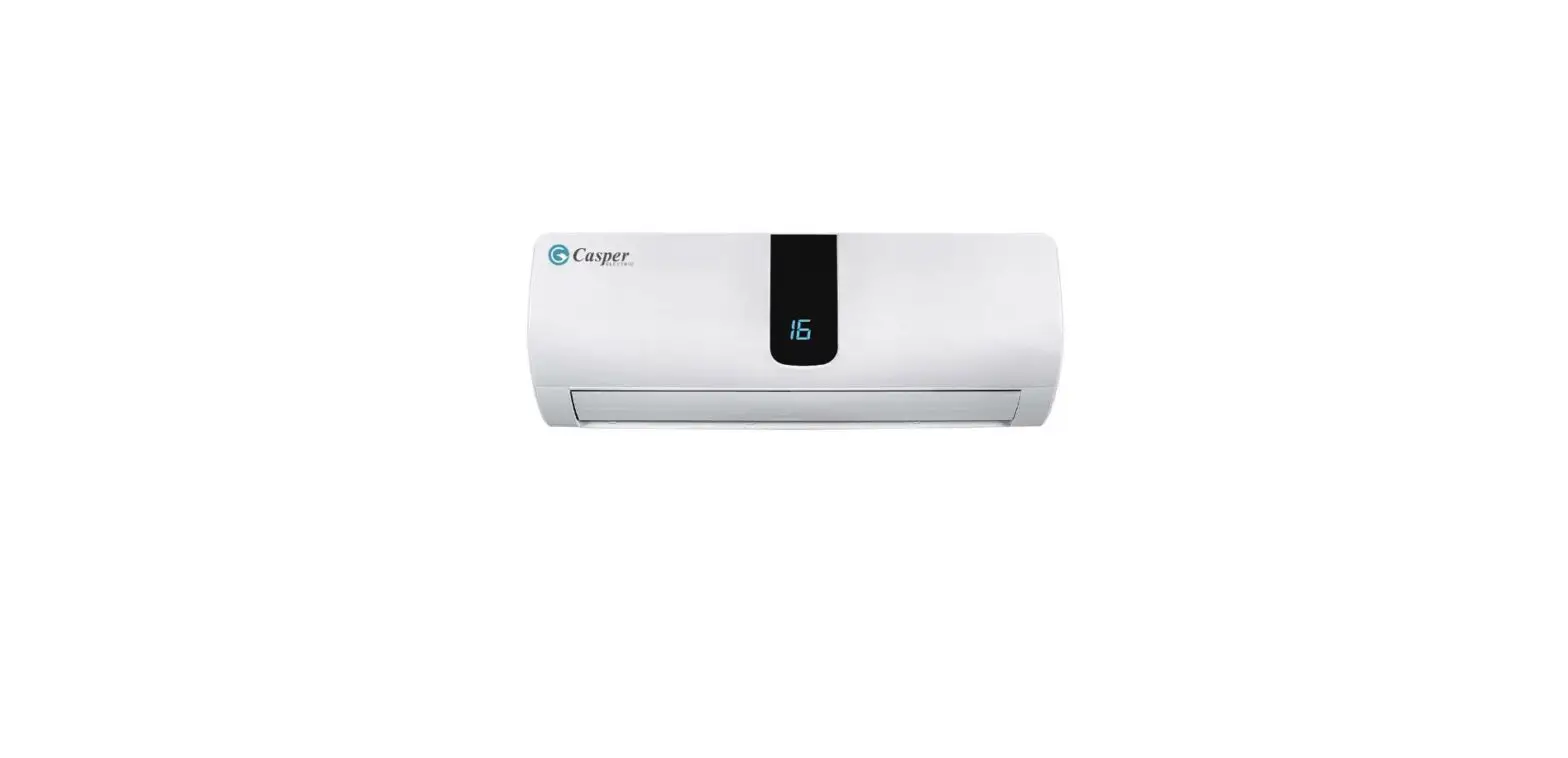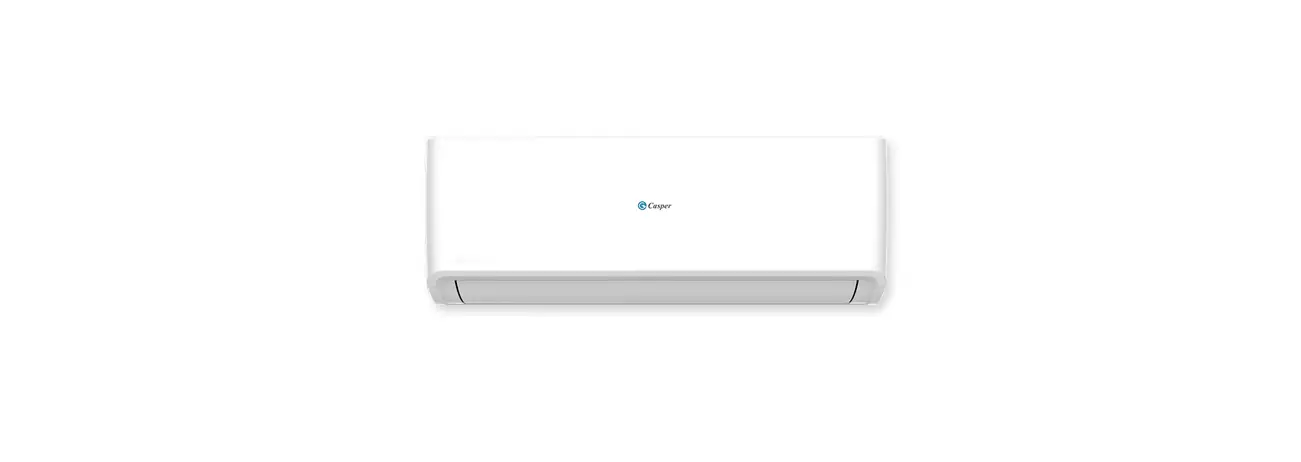

Casper SC Series Air Conditioner
ERROR CODE SC MODEL
| No. | Error Name | Reference Code |
| 1 | Overcurrent Protection of Indoor Unit | E0 |
| 2 | Indoor Unit temperature sensor error | E1 |
| 3 | Outdoor Unit coil sensor error | E2 |
| 4 | Indoor Unit coil sensor error | E3 |
| 5 | Indoor Unit motor error of wall mounted air conditioner(PG motor) | E4 |
| 6 | Indoor Unit motor error of wall mounted air conditioner(DC motor) | E4 |
| 7 | Indoor EE Failure | Eb |
| 8 | High-pressure protection | P2 |
| 9 | Liquid Deficiency Protection | P3 |
- E0 – Overcurrent Protection of Indoor Unit
Explanation of error
Cause: The main PCB detects that the working current of the system exceeds the upper limit of protection, and will indicate “indoor unit overcurrent protectin:. The air conditioner stopps running for protection and displays the failure code E0. Inspection path: current transformer → power line → compressor line → connector assembly
Tools required for inspection Current clamp and multimeter
Frequent problematic part Indoor unit panel, power line, compressor and complete machine
Inspection procedure and key
points
1. If it is a fixed-frequency model, observe whether the live line passes through the current transformer; if not, lay the line accordingly and reboot for inspection. 2. The current clamp is used to measure the working current and determine whether it is within the normal working current range of the nameplate. If normal working current is detected, it may be the fault of the current transformer and replace the main PCB of the indoor unit.
3. Measure whether the power supply voltage is within the normal operating voltage range; if the working voltage is not normal, it is necessary to consider whether the local grid voltage is stable.
4. If the working current exceeds the range and the working voltage is normal, the system may be blocked and the air-conditioning may be overloaded, which needs to be checked according to the actual situation.
- E1- Indoor Unit temperature sensor error
Explanation of error
Cause: The detection of short circuit or open circuit of Indoor Unit temperature
sensor during the inspection of main PCB in the Indoor Unit machine, indicated by “Indoor Unit temperature sensor error”.
Inspection path: Sensor→Sensor wire→Connectors→Indoor Unit main PCB
Tools required for inspection Multimeter, 15KΩ standard sensor(25℃) Frequent problematic part Indoor Unit temperature sensor, Indoor Unit main PCB
Inspection procedure and key
points
1. Check whether there’s resistance problem, short circuit or open circuit in the sensor; the resistance value shall be within a reasonable range (15KΩ under the temperature of 25℃) 2. Check whether the sensor wire is broken.
3. Check whether the terminal connectors are well fixed; check whether the weld between the terminal and the main PCB is loose, and pull the terminal slightly for inspection if necessary.
4. Check whether the sensor is affected with damp.
5. In case no standard sensor is available at present, replace the Indoor Unit temperature sensor by other sensor asides, and then check whether the error still exists; if the error disappears, replace the sensor; if the error still exists, check the Indoor Unit main PCB and change if necessary.
Special attention
Most Indoor Unit temperature sensors have a resistance value of 15KΩ. Do not use improper sensor during repairing and maintenance, or it may led to the wrong temperature sensing of the machine, the start error or shutdown error. You can switch the air conditioner to the “Blowing” mode, and judge the accuracy of sensor though environmental temperature displayed on the screen.
In case a sensor with the resistance value over 15KΩ is used, the detected temperature will be much lower than the actual temperature, which may lead to the shutdown error under heating mode, or the startup error under cooling mode.
In case a sensor with the resistance value below 15KΩ is used, the detected
temperature will be much higher than the actual temperature, which may lead to the startup error under heating mode, or the shutdown error under cooling mode.
- E2 -Outdoor Unit coil sensor error
Explanation of error
Cause: The detection of short circuit or open circuit of Outdoor Unit coil sensor during the inspection of Outdoor Unit main PCB, indicated by “Outdoor Unit coil sensor error”.
Inspection path: Sensor→Sensor wire→Connectors→Outdoor Unit main PCB
Tools required for inspection Multimeter, 20KΩ standard sensor (25℃) Frequent problematic part Outdoor Unit coil sensor, Outdoor Unit main PCB
Inspection procedure and key
points
1. Check whether there’s resistance problem, short circuit or open circuit in the sensor; the resistance value shall with a reasonable range (about 20KΩ)
2. Check whether the sensor wire is broken.
3. Check whether the terminal connectors are well fixed; check whether the weld between the terminal and the main PCB is loose, and pull the terminal slightly for inspection if necessary.
4. Check whether the sensor is affected with damp. The coil sensor is quite easy to be affected with damp in case the lead of coil sensor is above the copper pipe.
5. In case no standard sensor is available at present, replace the temperature sensor of Outdoor Unit coil by other sensor asides, and then check whether the error still exists; if the error disappears, replace the sensor; if the error still exists, check the Indoor Unit main PCB and change if necessary.
Special attention
Most Indoor Unit temperature sensors have a resistance value of 20KΩ. Do not use improper sensor during repairing and maintenance, or it may led to the start of protection mode due to wrong temperature sensing of the machine, or the protection error.
In case a sensor with the resistance value over 20KΩ is used, the detected temperature will be much lower than the actual temperature, which may lead to the frequent entering of defrost mode, the illusory defrosting or the protection error during the cooling process.
In case a sensor with the resistance value below 20KΩ is used, the detected temperature will be much higher than the actual temperature, which may lead to defrost error during the heating process, or the start of protection during the cooling process.
- E3 -Indoor Unit coil sensor error
Explanation of error
Cause: The detection of short circuit or open circuit of Indoor Unit coil sensor during the inspection of Indoor Unit main PCB, indicated by “Indoor Unit coil sensor error”. Inspection path: Sensor→Sensor wire→Connectors→Indoor Unit main PCB
Tools required for inspection Multimeter,, 5KΩ or 20KΩ standard sensoe(25℃)
Frequent problematic part Indoor Unit temperature sensor, Indoor Unit main PCB
Inspection procedure andkey
points
1. Check whether there’s resistance problem, short circuit or open circuit in the sensor; the resistance value shall with a reasonable range (about 20KΩ)
2. Check whether the sensor wire is broken.
3. Check whether the terminal connectors are well fixed; check whether the weld between the terminal and the main PCB is loose., and pull the terminal slightly for inspection if necessary.
4. Check whether the sensor is affected with damp. The coil sensor is quite easy to be affected with damp in case the lead of coil sensor is above the copper pipe.
5. In case no standard sensor is available at present, replace the temperature sensor of Indoor Unit coil by other sensor asides, and then check whether the error still exists; if the error disappears, replace the sensor; if the error still exists, check the Indoor Unit main PCB and change if necessary.
Special attenion
Most Indoor Unit temperature sensors have a resistance value of 20KΩ.
Do not use improper sensor during repairing and maintenance, or it may led to the start of anti-frosting or overheat protection mode due to wrong temperature sensing of the machine.
In case a sensor with the resistance value over 20KΩ is used, the detected temperature will be much lower than the actual temperature, which may lead to the high pressure of cold-blast protection system during the heating process, or the frequent start of anti-freezing protection during the cooling process.
n case a sensor with the resistance value below 20KΩ is used, the detected temperature will be much higher than the actual temperature, which may lead to the frequent start of overheat protection mode during the heating or the overload protection during the cooling process.
- E4 -Indoor Unit motor error of wall mounted air conditioner(PG motor)
Explanation of error
Cause: PG motor is equipped with speed feedback signal line. When the feedback signal of speed is not received by the Indoor Unit main PCB, it has no way to recognize the rotating speed of motor, which will be indicated as “Indoor Unit motor error”. Main causes for the disappearance of speed feedback signal are as follows: The fan is stucked; 2. The speed feedback component in the motor is broken; 3. Error of receiving circuit for the speed feedback signal from the Indoor Unit main PCB.
Inspection path:Is PG motor stucked→Speed feedback line→Speed feedback terminal connector→Indoor Unit main PCB.
Tools required for inspection Multimeter, A PG motor in normal working condition
Frequent problematic part Mechanical jam problem of Indoor Unit motor, PG motor, Indoor Unit main PCB
Inspection procedure and key
points
1. Check whether the motor can work for a period of time before the error occurs. If yes, the reason of mechanical jam can be exclude.
2. Disconnect the power supply and move the fan blade of Indoor Unit machine by hand to see if there’s any resistance. Some occasional Indoor Unit motor error may relate to bearing coordination.
3. Reconnect the drive wire and speed feedback wire, thus to exclude any motor error due to connector loosening.
4. Check whether the plug-in terminal of speed feedback on the PCB is loose, and pull the terminal slightly for inspection if necessary.
5. Replace the motor in the faulted air conditioner with other PG motor (do not fix it with the fan for the time being), if the main PCB still indicates “Indoor Unit motor error”, then replace the Indoor Unit main PCB; if the error disappears, replace the Indoor Unit motor.
Special attention
The Indoor Unit main PCB will not indicates “Indoor Unit motor error” when the Indoor Unit motor is still rotating; sometimes such error will not be reported when obvious motor problems exist (such as the low-speed rotation due to damaged motor capacitors, or non-uniform rotating speed due to abnormal speed feedback.
Therefore, patience of the maintenance staff is required for the troubleshooting of motor error. You shall compare it with the normal condition, and detect and solve the problem in a flexible way.
- E4- Indoor Unit motor error of wall mounted air conditioner (DC motor)
Explanation of error
Cause: The Indoor Unit motor of some highly energy efficient models is DC motor using a green plug through which the Indoor Unit main PCB can drive the motor and sense the current rotational speed feedback. When the Indoor Unit main PCB cannot receive the rotational speed feedback signal of the motor, it will indicate “DC motor error”. Disappearance of the rotational speed feedback signal may be caused by: 1 The fan is stuck and cannot work; 2 The speed feedback element inside the motor is destroyed; 3 There’s something wrong with the speed feedback signal receiving circuit of the Indoor Unit main PCB.
Inspection path: Is DC motor stuck by foreign matter→motor destroyed → Motor terminal connectors→Indoor Unit main PCB
Tools required for inspection Multimeter, a DC motor in normal working condition
Frequent problematic part Mechanical jam of Indoor Unit motor, Indoor Unit DC motor, Indoor Unit main PCB
Inspection procedure and key
points
1. Check whether the motor accelerates to extremely high speed before the error occurs. If it can work for a period, the reason of mechanical jam can be excluded.
2. Plug and unplug the terminal of the DC motor again to exclude any motor error due to connector loosening, and pull the terminal slightly for inspection if necessary.
3. Replace the motor in the faulted air conditioner with other DC motor to plug in the Indoor Unit main PCB (do not fix it with the fan for the time being), if the main PCB still indicates “DC motor error”, then replace the Indoor Unit main PCB; if the error disappears, replace the DC motor.
4. Multimeter can be used to distinguish whether it is main PCB problem or motor problem by: connect the motor with the main PCB and pay attention to the second (yellow) and fourth (black) wire from the outermost side among four lines of the terminal of the DC motor. After the air conditioner powers on in the cooling mode for a while, the voltage between the yellow and black wires should rise gradually and the motor should accelerates slowly, if the DC motor still won’t rotate, then the DC motor is destroyed.
Special attention
Five lead wires division: Count from the outermost side of the four wires of the DC motor terminal, the first blue wire is the speed feedback wire with a voltage of 0.5-5V when the motor rotates; the second yellow wire is the motor driving wire with a voltage of 2.0-7.5V when the motor rotates; the second white wire is 15V power cord with a voltage of 15V in normal condition; the fourth black wire is 0V DC earth wire which is the benchmark of all the voltage tests; the fifth (red) wire is 310V wire which is strong with a voltage of 310V in normal condition, so be careful of electric shock.
- Eb- Indoor EE Failure
Explanation of error
Cause: Many parameters need to be preset for the running of the indoor unit of the air conditioner and such parameters are placed in a data storage 8-feet chip, which is called “EEPROM” or “EE” for short. The motor on the Indoor Unit main PCB can only work after reading the data stored in EE and if not read, the failure code
“Outdoor EE Failure” will be indicated and raised in the indoor unit. Reasons for data not being read are as follows:
1. wrong EE chip data format;
2. EE chip is broken;
3. bad contact of EE or fault of EE reading circuit;
4. backward installation of EE chip. Inspection path: Indoor Unit main PCB.
Tools required for inspection /
Frequent problematic part Bad contact of EE, Indoor Unit main PCB.
Inspection procedure and key
points
Replace the Indoor Unit main PCB directly.
- P2- High-pressure protection
Explanation of error
Cause: In standby state or when the equipment is running, the High-pressure switch is disconnected three times (within 20 minutes) and reported as ” High-pressure protection”;
Inspection path: High-pressure switch cable → connector → High-pressure switch → main PCB
Tools required for inspection Multimeter, connectoin line and High-pressure swtich
Frequent problematic part High-pressure swtich connectoin line, fluorine deficiency of unit and High-pressure swtich Inspection procedure and key
points
1. Check whether the plug-in terminals are firmly connected and whether the terminals and the main PCB are welded loosely. If necessary, gently pull them to check;
2. Use a multimeter to measure whether it is disconnected;
3. Use the multimeter to check the state of the High-pressure swtich and check whether it is in the OFF state (normally OFF, unusual disconnection);
4. If the pressure is normal and the High-pressure switch is kept open, it is positive that the pressure voltage is faulted;
5. If the pressure switch is normal and the connection line is tact and the failure is still reported, replace the corresponding main PCB.
Special attention
The reason why High-pressure switches are often disconnected is the leakage of equipment. When the high voltage switch is off, first check whether the air conditioner’s pressure is normal. If it is normal but the failure is still displayed aftere replacing the Outdoor Unit main PCB, it is possible that the connecting pipe may be too long or the Outdoor Unit ambinet temperature is too low
- P3- Liquid Deficiency Protection
Explanation of error
Cause: The liquid volume of the system is less than 30%, which leads to non- refrigeration and liquid shortage protection.
Inspection path: whether the valves of the outdoor unit are opened → whether the evaporator, condenser, connectoin pipe are damanged or cracked → whether the
environmental temperature sensor and the coil temperature sensor are damaged at the same time
Tools required for inspection Hex nut, multimeter, pressure gauge
Frequent problematic part Stop valve, evaporator, condenser and connection pipe
Inspection procedure and key
points
1. Check the stop valve and turn it counterclockwise with hexagons to see if the valve is not open and the opening is not enough;
2. Check whether the evaporator, condenser and connection pipe are damaged or cracked, and focus on checking whether there is refrigerant leakage in the welding part and connection pipe joint;
3. Measure the temperature sensor with the multimeter at ambient temperature, and whether the coil temperature sensor has abnormal resistance at the same time.