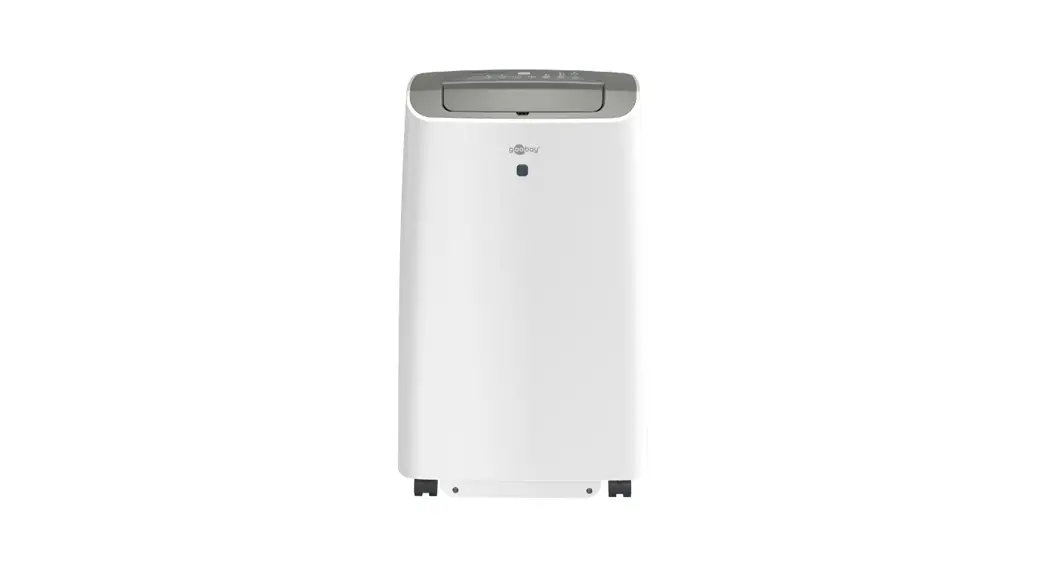
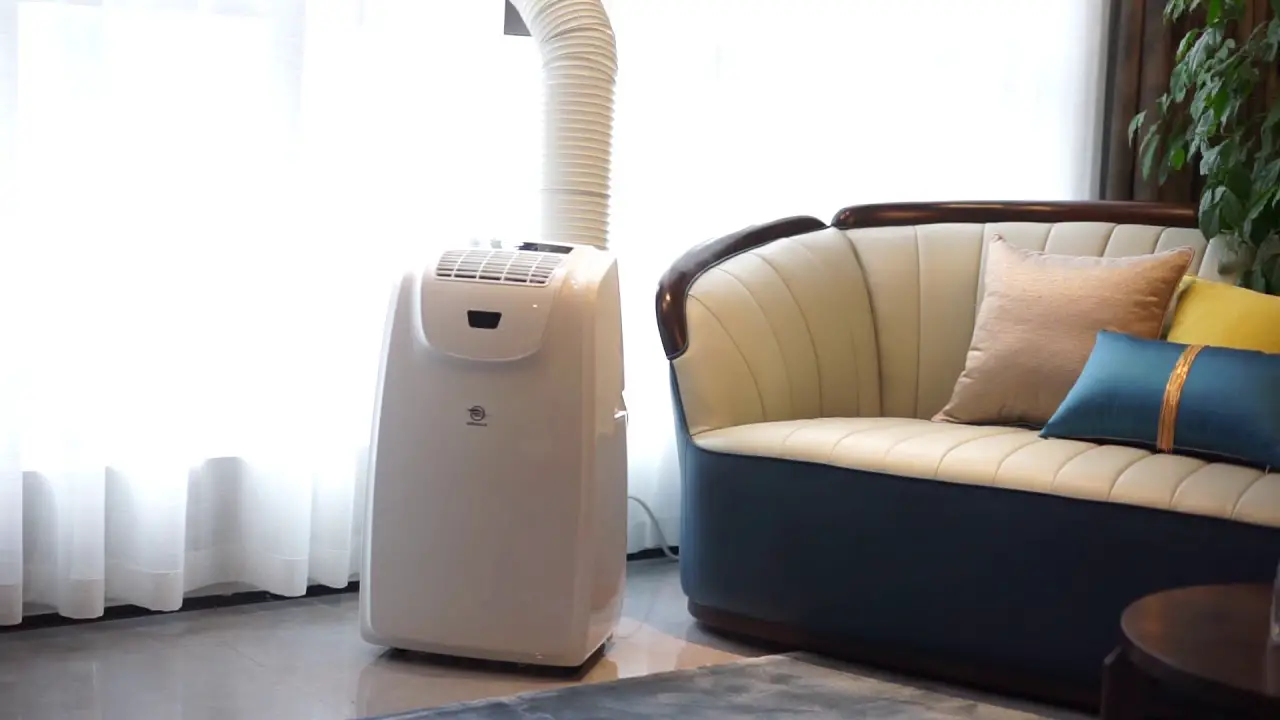
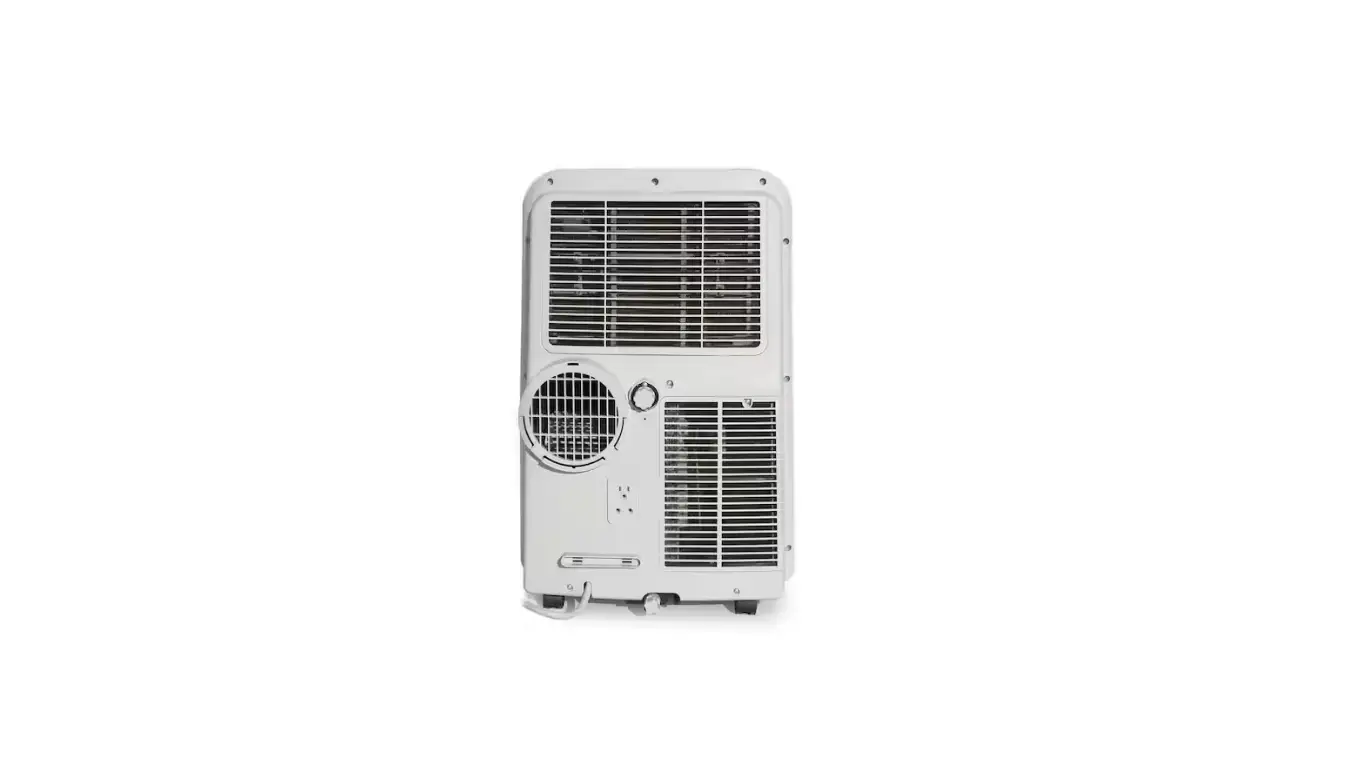
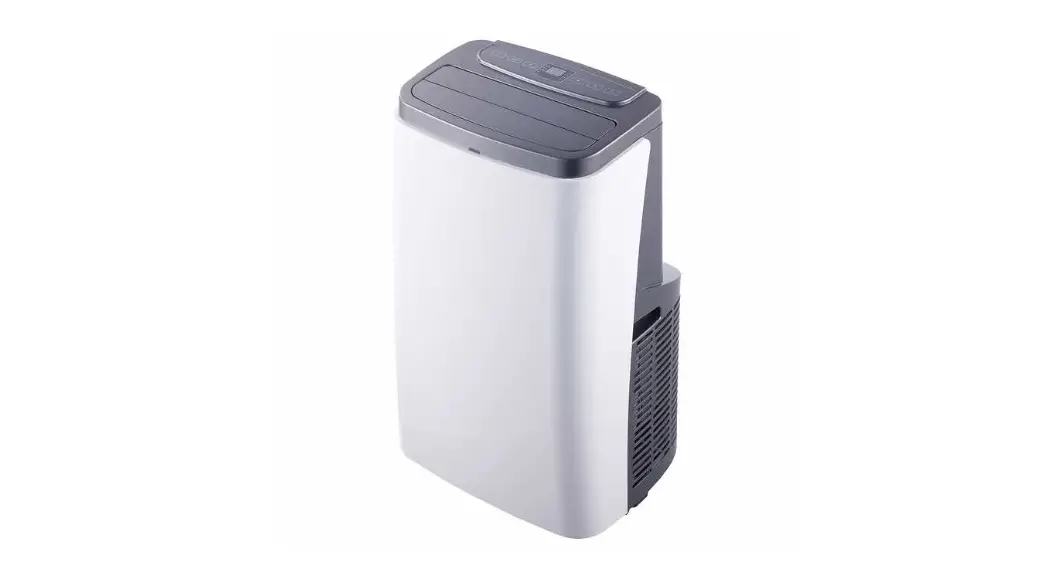
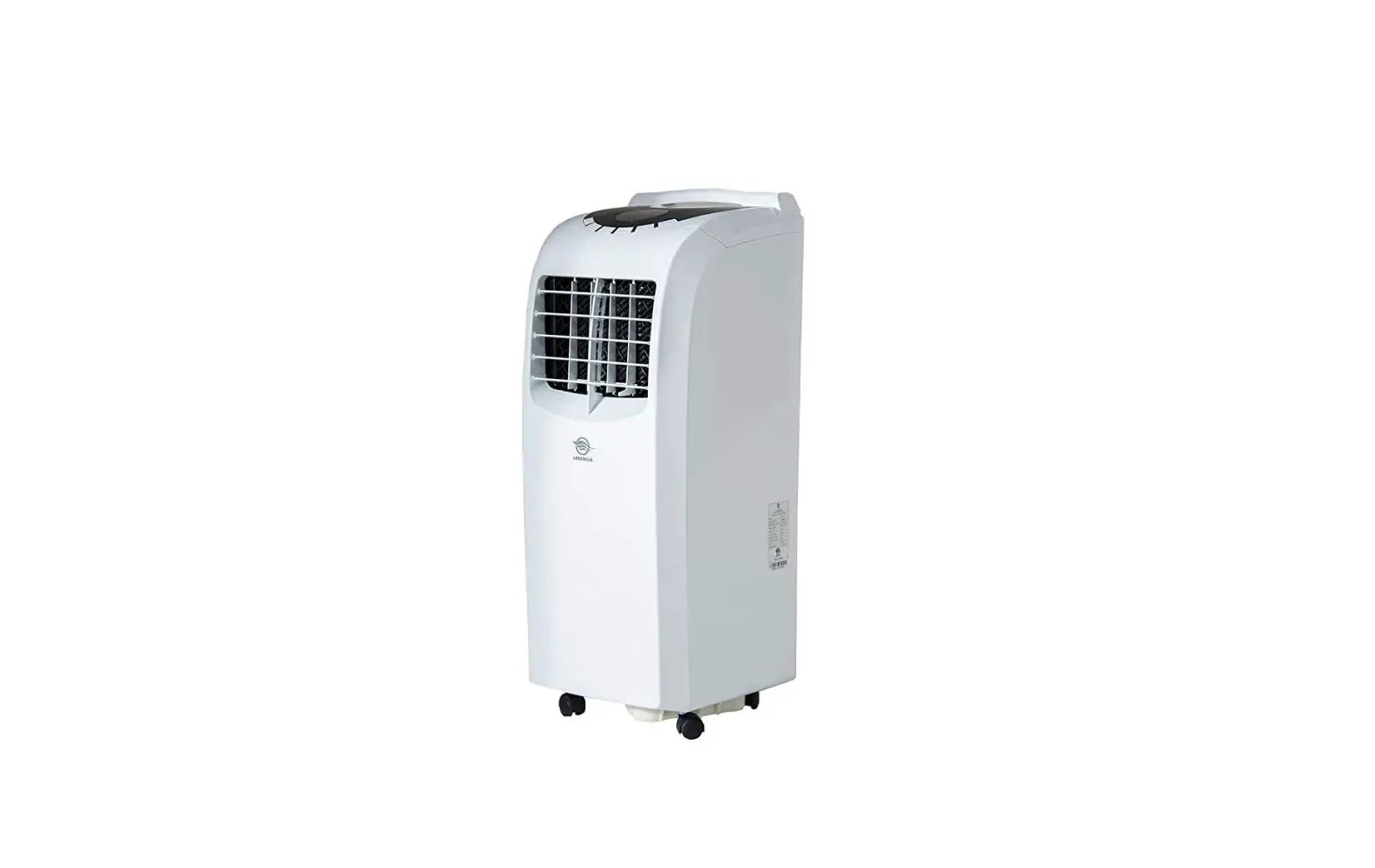
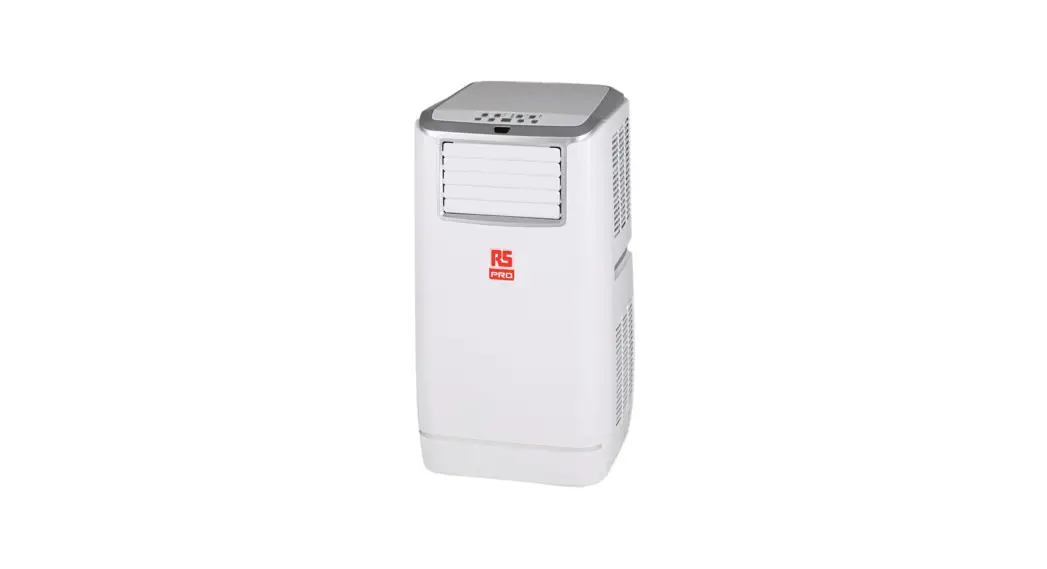
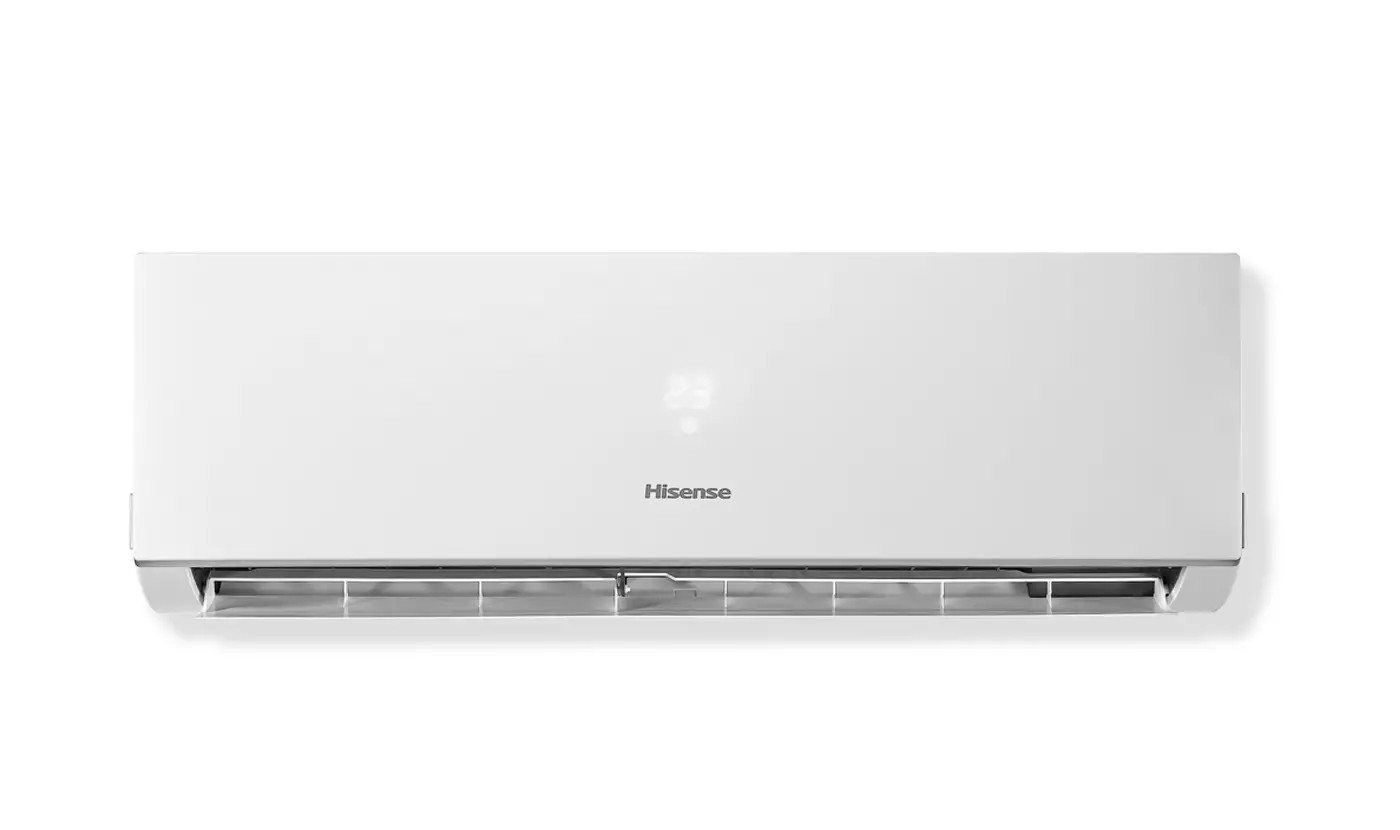
59513 Local Air Conditioner
Product Information
Product Name: Local Air Conditioner
Model Number: 59513
Power: 9000 BTU/2600 Watt
Features: The local air conditioner is equipped with a lithium
button cell battery for the remote control. It comes with various
safety features and has a maximum cooling capacity of 2.6 kW.
Technical Specifications:
- Article Number: 59513
- Model Number: FDP26-1080R5
- Nominal Voltage / Frequency: 220-240 V / 50 Hz
- Power Consumption: 950 W / 4.3 A
- Sound Pressure Level: 54 dB(A)
- Sound Power Level: 65 dB(A)
- Weight: 507 g
- Color: Gray
Product Usage Instructions
1. Safety Instructions
– Make sure the power is disconnected before cleaning or
servicing the air conditioner.
– Use appropriate protective measures to prevent accidental use
of the air conditioner when it is unplugged.
– The remote control uses a replaceable lithium button cell
battery. Handle it with care.
2. Description and Function
The local air conditioner is designed to cool a specific area
and has a cooling capacity of 9000 BTU/2600 Watt.
3. Installation
– Attach the hose adapter to one end of the exhaust hose by
turning it counterclockwise.
– Install the exhaust hose according to the provided
instructions.
– Use the window kit to seal the window opening and prevent hot
air from entering the room.
– Use the window cover to cover the remaining window
opening.
4. Operation
– Press the power button (ON/OFF) to turn on or off the air
conditioner.
– Use the function buttons and status indicators to control and
monitor the air conditioner’s settings and operation.
– The sleep mode, timer function, and automatic mode can be
activated using the respective buttons.
Note: Please refer to the complete user manual
for detailed instructions on installation, operation, and
maintenance of the local air conditioner.
Betriebsanleitung User manual Mode d`emploi Istruzioni per l`uso Instrucciones de uso
Art. 59513
Gebruiksaanwijzing Brugervejledning Bruksanvisning Návod k pouzití Instrukcja obslugi
Lokales Klimagerät 9000 BTU/2600 Watt
Plaatselijke airconditioner 9000 BTU/2600 Watt
Local air conditioner 9000 BTU/2600 Watt
Lokalt klimaanlæg 9000 BTU/2600 Watt
Climatiseur local 9000 BTU/2600 Watt
Apparat för lokal luftkonditionering 9000 BTU/2600 Watt
Condizionatore d`aria locale 9000 BTU/2600 Watt
Místní klimatizátor vzduchu 9000 BTU/2600 Watt
Acondicionador de aire local de 9000 BTU/2600 vatios
Klimatyzator lokalny 9000 BTU/2600 Watt
Betriebsanleitung
DE BETRIEBSANLEITUNG
Inhaltsverzeichnis
1 Sicherheitshinweise 2 2 Beschreibung und Funktion 5
21 Produkt 5 22 Lieferumfang 5 23 Bedienelemente und Teile 5 24 Technische Daten 6 3 Bestimmungsgemäßer Gebrauch7 4 Gerät auspacken 7 5 Transport7 6 Montage8 7 Aufstellung und Installation9 71 Aufstellort auswählen 9 72 Abluftschlauch verlegen 9 73 Fenstereinsatz verwenden 9 74 Fensterabdeckung verwenden 10 8 Inbetriebnahme 11 9 Funktionstasten und Statusanzeigen 11 10 Fernbedienung12 101 Fernbedienung aktivieren 12 102 Erläuterung der Tasten 13 103 Batterie wechseln 13 11 Bedienung13 111 Betriebsarten 13 112 Klimagerät einschalten und ausschalten 14 113 Betriebsart auswählen 14 114 Temperatur einstellen 14 115 Gebläsestufe einstellen 14 116 Timerfunktion einstellen 14 117 Kindersicherung aktivieren und deaktivieren 14 12 Wartung und Pflege 15 121 Sichtprüfung des Geräteinneren auf Verschmutzungen 15 12.2 Luftfilter reinigen 15 123 Kondensatbehälter entleeren 16 13 Lagerung16 14 Fehler und Störungen 17 141 Sicherheitseinrichtung 17 142 Fehlerbehebung 17 143 Fehlercodes 18 15 Entsorgungshinweise19 151 Produkt 19 152 Batterien 19 153 Verpackung 19 16 EU-Konformitätserklärung 19 17 Verwendete Symbole20
1
1 Sicherheitshinweise
DE
Hinweise zur Betriebsanleitung Die Betriebsanleitung ist Bestandteil des Produktes und enthält wichtige Hinweise zum korrekten Gebrauch.
· Lesen Sie die Betriebsanleitung vollständig und sorgfältig vor Gebrauch Die Betriebsanleitung muss bei Unsicherheiten und Weitergabe des Produktes verfügbar sein.
· Bewahren Sie die Betriebsanleitung auf
Warnstufen Die folgenden Signalwörter werden in dieser Betriebsanleitung verwendet, um auf Gefahren bei der Verwendung des Klimageräts hinzuweisen Beachten und befolgen Sie unbedingt alle Warnhinweise, um Risiken zu vermeiden!
GEFAHR! WARNUNG! VORSICHT! ACHTUNG!
Warnung vor Gefahren, die bei Missachtung der Sicherheitshinweise unmittelbar zum Tod oder schweren Verletzungen führen Warnung vor Gefahren, die bei Missachtung der Sicherheitshinweise zum Tod oder schweren Verletzungen führen können Warnung vor Gefahren, die bei Missachtung der Sicherheitshinweise zu Verletzungen führen können Warnung vor Gefahren, die bei Missachtung der Hinweise zu Sachschäden führen können
Hinweise im Zusammenhang mit brennbarem Kältemittel Propan Das Klimagerät enthält Propan (R290) als Kältemittel Propan ist ein farbloses, geruchloses Gas mit geringem Treibhauspotenzial, das den europäischen Umweltvorschriften für Kältemittel entspricht Bei nicht bestimmungsgemäßer Handhabung oder bei nicht vorhersehbaren Ereignissen kann es zu Unfällen oder Beschädigungen kommen, bei denen Gas aus dem Klimagerät entweicht
Die Gefahr eines Zwischenfalls mit schwerwiegenden Folgen ist bei Klimageräten dieser Baugröße sehr gering
Propan ist in Verbindung mit Luft hochentzündlich und kann explosionsartig verbrennen. · Betreiben und lagern Sie das Klimagerät nur in Räumen mit einer Fläche von mindestens 10 m², um die Gefahr einer entzündlichen Gas-Konzentration zu vermeiden
Wenn der Kühlkreislauf undicht ist, kann sich das entweichende Propan entzünden. · Wenn Gas aus dem Klimagerät strömt, rufen Sie unverzüglich die Feuerwehr! Ziehen Sie in diesem Fall nicht den Netzstecker und schalten Sie keine anderen elektrischen Geräte ein oder aus · Beschädigen Sie den Kühlkreislauf oder Teile davon nicht
Das Gas steht unter Druck und kann bei Erwärmung explodieren. · Installieren und verwenden Sie das Gerät nur in Übereinstimmung mit nationalen Bestimmungen · Beachten Sie die nationalen Gasvorschriften · Verwenden Sie keine Mittel, um den Abtauvorgang zu beschleunigen · Die in den technischen Daten (Kap 24) angegebene Kältemittelmenge darf nicht überschritten werden
Brennendes Propan kann nicht mit Wasser gelöscht werden. · Löschen Sie brennendes Propan mit einem Feuerlöscher mit alkohlbeständigem Schaum, Kohlendioxid (CO2) oder Löschpulver
Propan ist farblos, geruchslos und schwerer als Luft. Austretendes Gas kann nur schwer ermittelt werden. Propan ist gering toxisch. Vergiftung durch Einatmen ist bei hoher Propankonzentration möglich.
· Meiden Sie die Nähe von austretendem Propan · Begeben Sie sich sofort an die frische Luft, wenn Sie Propan eingeatmet haben
Propan entzieht der Umgebung beim Austritt aus dem Klimagerät viel Wärme. Verbrennungen der Haut sind möglich.
· Wenn Sie mit Propan in Berührung gekommen sind, spülen Sie die betroffenen Stellen mit reichlich kaltem bis lauwarmem Wasser
· Suchen Sie umgehend einen Arzt auf, wenn Sie bei sich Übelkeit oder Verbrennungen durch Propan feststellen
2
Betriebsanleitung
DE
Stromschlaggefahr Kommt das Produkt mit Wasser in Berührung, kann das zu Stromschlägen führen.
· Benutzen Sie das Produkt nicht mit feuchten Händen
· Benutzen Sie das Produkt nicht in unmittelbarer Nähe von Wasser, wie z B Badewannen,
Waschbecken oder Pools
· Setzen Sie das Produkt keinem direkten Wasserstrahl aus
Regen, der auf das Produkt spritzt, kann zu einem Stromschlag führen.
· Stellen Sie das Produkt nicht an ein offenes Fenster
Spannungsfrei nur bei gezogenem Stecker.
· Ziehen Sie im Notfall, nach Gebrauch und bei Gewitter den Netzstecker direkt am Steckergehäu-
se aus der Steckdose
Ziehen Sie nicht den Netzstecker, wenn Propan aus dem Klimagerät strömt.
· Öffnen Sie niemals das Gehäuse
· Modifizieren Sie Produkt und Zubehör nicht.
· Schließen Sie Anschlüsse und Schaltkreise nicht kurz
· Stecken Sie keine Gegenstände oder Finger in Lüftungsschlitze oder Anschlussbuchsen!
Das Gerät darf nicht mit einem defekten Anschlusskabel in Betrieb genommen werden!
· Überprüfen Sie regelmäßig, ob das Gerätekabel noch intakt ist
· Benutzen Sie das Gerät nur mit abgewickeltem Netzkabel
· Benutzen Sie das Produkt nicht, wenn das Kabel beschädigt ist
· Ziehen Sie das Produkt immer am Stecker, nicht am Kabel
· Knicken oder dehnen Sie nicht das Netzkabel
· Verwenden Sie das Produkt nur mit Schutzkontaktsteckdosen
· Vergleichen Sie die technischen Daten von Produkt, Stromnetz und Peripheriegeräten
Diese müssen identisch sein
Ein defektes Gerät darf nicht in Betrieb genommen werden, sondern muss sofort vom Netz getrennt
und gegen unbeabsichtigte Weiterbenutzung gesichert werden.
· Benutzen Sie Produkt, Produktteile und Zubehör nur in einwandfreiem Zustand
· Wenden Sie sich bei Fragen, Defekten, mechanischen Beschädigungen, Störungen und anderen
nicht durch die Begleitdokumentation behebbaren Problemen an Händler oder Hersteller
· Reparieren Sie defekte Produkte nicht selbst, sondern wenden Sie sich an den Händler oder Her-
steller
Vergiftungsgefahr · Trinken Sie nicht das Kondensat
Stolpergefahr · Achten Sie darauf, dass das Anschlusskabel so verlegt wird, dass es niemanden behindert und nicht beschädigt wird
Betriebs- und Lagerbedingungen · Lassen Sie das Produkt im Betrieb NIE unbeaufsichtigt · Decken Sie das Produkt nicht ab · Halten Sie alle Lüftungsschlitze frei · Stellen Sie sicher, dass die Lufteinlässe und die Luftauslässe frei sind · Stellen Sie sicher, dass die Ansaugseite frei von Schmutz ist · Betreiben Sie das Produkt nicht in staubigen Umgebungen oder bei mangelhafter Belüftung · Betreiben Sie das Produkt nicht im Bereich von explosiven und/oder brennbaren Gasen · Betreiben Sie das Produkt nicht in explosionsgefährdeter Umgebung · Platzieren und betreiben Sie das Produkt nicht in der Nähe von offenen Flammen und Koch- oder wärmeerzeugenden Produkten wie Heizkörpern oder Öfen · Halten Sie das Gerät mindestens 1 Meter von Fernseh- oder Radiogeräten entfernt, um elektromagnetische Störungen zu vermeiden · Platzieren Sie das Produkt auf einer stabilen, ebenen, trockenen und staubfreien Fläche, sodass es während des Betriebs nicht kippen und der Untergrund nicht durch Vibrationen beschädigt werden kann · Stellen Sie das Gerät auf eine ebene Fläche mit weniger als 5° Neigung · Achten Sie auf einen festen Stand
Das Gerät darf nicht auf dem Netzkabel stehen, damit es während des Betriebs nicht umkippt.
· Schalten Sie das Gerät aus und trennen Sie das Produkt bei Nichtgebrauch, zur Reinigung oder bei Störung vom Netz
· Vermeiden Sie extreme Belastungen wie Hitze und Kälte, Nässe und direkte Sonneneinstrahlung,
3
Mikrowellen sowie Vibrationen und mechanischen Druck · Lagern Sie das Produkt kühl und trocken
DE
· Setzen Sie sich nicht auf das Produkt
· Legen Sie keine Gegenstände auf das Produkt
· Beachten Sie beim Aufstellen die Mindestabstände zu Wänden und Gegenständen
· Transportieren Sie das Gerät nur mit entleertem Kondensatbehälter
· Lassen Sie das Klimagerät nach jedem Transport mindestens 12 Stunden stehen, damit sich das
Kältemittel im Kompressor sammeln kann
Zielguppeninformationen Servicearbeiten wie Wartung, Pflege und Fehlerbehebung dürfen nur gemäß den Herstellervorgaben durchgeführt werden.
· Beachten Sie die Informationen in Kap. 12 ,,Wartung und Pflege”. · Beachten Sie die Informationen in Kap. 14 ,,Fehler und Störungen”.
Der gesamte Kältemittelkreislauf ist ein wartungsfreies, hermetisch geschlossenes System und darf nur von Fachbetrieben für Kälte- und Klimatechnik in Stand gesetzt werden. Wartungstätigkeiten, die das Öffnen des Gehäuses erfordern, dürfen ausschließlich von Fachbetrieben für Kälte- und Klimatechnik durchgeführt werden. Das Gerät darf nur durch einen autorisierten Fachmann repariert oder gewartet werden. Jede Person, die an einem Kältemittelkreislauf arbeitet, muss einen Befähigungsnachweis von einer akkreditierten Stelle vorweisen können.
Nicht für Kinder und Personen mit physisch und/oder psychisch eingeschränkten Fähigkeiten geeignet. · Sichern Sie das Produkt gegen unbeabsichtigte Benutzung · Sichern Sie Verpackung, Kleinteile und Dämmmaterial gegen unbeabsichtigte Benutzung
Batteriegefahren Die Fernbedienung ist mit einer Lithium-Knopfzelle ausgestattet. Diese ist tauschbar.
· Halten Sie Batterien von Kindern fern
Wenn diese verschluckt wird, kann dies zu schweren inneren Verätzungen und zum Tode führen. Wenn Sie vermuten, dass die Batterie verschluckt oder auf andere Weise in den Körper gelangt ist, suchen Sie umgehend einen Arzt auf.
· Verwenden Sie niemals Batterien, wenn diese verbeult, undicht oder beschädigt sind · Entfernen Sie ausgelaufene, deformierte oder korrodierte Zellen aus dem Produkt und entsorgen
Sie diese mittels geeigneter Schutzvorrichtungen
Wenn eine Batterie ausgelaufen ist, vermeiden Sie den Kontakt mit Haut, Augen und Schleimhäuten. Spülen Sie ggf. die betroffenen Stellen mit Wasser und suchen Sie umgehend einen Arzt auf.
· Verformen, verbrennen oder zerlegen Sie Batterien nicht und zerlöchern Sie diese niemals mit einem scharfen Gegenstand
Extreme Hitzeeinwirkung kann zu einer Explosion und/oder zum Austreten von ätzenden Flüssigkeiten führen. Mechanische Beschädigungen können zu gasförmigen Substanzen führen, die stark reizend, brennbar oder giftig sein können.
· Schließen Sie Batterien nicht kurz und tauchen Sie diese nicht in Flüssigkeiten ein Es besteht die Gefahr von Explosion, Feuer, Hitze, Rauch und/oder Gasentwicklung.
· Nehmen Sie die Batterie sofort aus dem Wasser, wenn Sie versehentlich hineingefallen ist Legen Sie die Batterie in einen sicheren, offenen Bereich und halten Sie sich fern, bis sie vollständig getrocknet ist Verwenden Sie die getrocknete Batterie nicht wieder, sondern entsorgen Sie diese wie in Kapitel 152 angegeben
4
Betriebsanleitung
DE 2 Beschreibung und Funktion 2.1 Produkt
Das Produkt ist ein Einkanal-Raumklimagerät (lokales Klimagerät), das zum Kühlen, Umwälzen und Entfeuchten der Raumluft verwendet wird Das Klimagerät ist mobil und kann bequem transportiert und in verschiedenen Räumen verwendet werden Das Klimagerät kann über ein Bedienpanel oder über eine Fernbedienung gesteuert werden und verfügt über eine Timerfunktion
2.2 Lieferumfang
Lokales Klimagerät (9000 BTU/2600 Watt) Abluftschlauch Schlauchadapter Fenstereinsatz Adapter für den Fenstereinsatz Fixierschraube Fixiermutter
Unterlegscheibe Fensterabdeckung Klettband Fernbedienung 1x Lithium-Knopfzelle (CR2025) Betriebsanleitung
2.3 Bedienelemente und Teile
1 Luftauslass mit Klappe 2 Signalempfänger 3 Rollen 4 Bedienpanel 5 Transportgriff 6 Netzkabel mit Aufwicklung 7 Lufteinlass mit Luftfilter 8 Oberer Auslass für Kondensat mit
Verschlussstopfen 9 Luftauslass für Abluft 10 Unterer Auslass für Kondensat mit
Verschlussstopfen
5
11 Fernbedienung 12 Batteriefach 13 Fensterabdeckung 14 Klettband 15 Schlauchadapter 16 Abluftschlauch 17 Adapter für den Fenstereinsatz 18 Fenstereinsatz 19 Fixiermutter 20 Unterlegscheibe 21 Fixierschraube
2.4 Technische Daten
Artikelnummer
DE 59513
Klimagerät
Modellnummer
FDP26-1080R5
Nennkühlleistung
2,6 kW / 9000 BTU
Nennspannung / Frequenz
220-240 V / 50 Hz
Kühleingangsleistung
950 W / 4,3 A
Druck Auslassseite
2,5 MPa
Druck Ansaugseite
1,2 MPa
Schalldruckpegel LPA Schallleistungspegel LWA
54 dB(A) 65 dB(A)
Schutzklasse
Schutzart Sicherung Nenn-Leistung im Kühlbetrieb (Prated im Kühlbetrieb) Nenn-Leistungsaufnahme im Kühlbetrieb (PEER) Nenn-Leistungszahl im Kühlbetrieb (EERrated) Leistungsaufnahme im Bereitschaftszustand (PSB) Stromverbrauch vom EinkanalRaumklimagerät im Kühlbetrieb (QSD) Treibhauspotenzial (GWP) Energieeffizienzklasse Entfeuchtungsleistung Luftvolumenstrom Anwendungsfläche / Raumgröße Kabellänge (inkl Stecker)
Maße Gewicht Betriebstemperatur Max Raumluftfeuchte Min Abstand zu Wänden und Gegenständen
Kältemittel Typ Füllmenge
Abluftschlauch Maße (Ø x Länge)
Gewicht | Farbe Fenstereinsatz
Maße
Gewicht | Farbe
250 V
I IPX0 , 3,15 A, T oder F
2,6 kW
1,0 kW 2,8
0,4 W
1,0 kWh/h
3 kg CO2 Äq A
1,1 l/h 350 m³/h 10 – 20 m²
1,8 m 41,6 x 33 x 67,1 cm
24 kg 15 °C ~ 43 °C
80 % 60 cm
Propan (R290) 185 g
15,5 x 31,5 ~ 200 cm 520 g | weiß
Länge: 62 – 115 cm Breite: 11 cm Höhe: 2 cm
507 g | grau
6
Betriebsanleitung
DE
Fensterabdeckung
Maße
400 x 38,5 cm
Gewicht | Farbe
155 g | weiß
Klettband
Breite | Länge
2,6 cm | 8 m
Gewicht | Farbe
90 g | weiß
Fernbedienung
Typ
Infrarot
Eingangsspannung
3,0 V
Maße | Gewicht
40 x 86 x 7 | 11 g
Reichweite
5 m
Batterie
Typ
Lithium-Knopfzelle (CR2025)
Nennspannung, Kapazität
3,0 V , 150 mAh
Gewicht
3 g
3 Bestimmungsgemäßer Gebrauch
Dieses Produkt ist ausschließlich für den privaten Gebrauch und den dafür vorgesehenen Zweck vorgesehen Dieses Produkt ist nicht für den gewerblichen Gebrauch bestimmt Eine andere als in Kapitel ,,Beschreibung und Funktion” bzw. in den ,,Sicherheitshinweisen” beschriebene Verwendung ist nicht gestattet Dieses Produkt darf nur in trockenen Innenräumen benutzt werden Das Nichtbeachten und Nichteinhalten dieser Bestimmungen und der Sicherheitshinweise kann zu schweren Unfällen, Personen- und Sachschäden führen IPX0: Dieses Produkt ist nicht gegen Wasser geschützt
4 Gerät auspacken
ACHTUNG!
Sachschäden!
· Gehen Sie beim Auspacken vorsichtig vor, um das Klimagerät und den Kühlkreislauf nicht zu be-
schädigen!
1 Öffnen Sie den Karton 2 Entnehmen Sie das Zubehör sowie das Klimagerät und stellen Sie es vorsichtig ab 3 Kontrollieren Sie den Lieferumfang auf Vollständigkeit und Unversehrtheit 4 Wickeln Sie das Netzkabel vollständig ab und stellen Sie sicher, dass es nicht beschädigt ist
Wenden Sie sich an den Händler oder Hersteller, wenn Sie Beschädigungen oder fehlendes Zubehör feststellen. 5 Vergleichen Sie die technischen Daten von Produkt, Stromnetz und Peripheriegeräten Diese müssen identisch sein.
5 Transport
ACHTUNG!
Sachschäden
Bei falschem Transport kann das Klimagerät beschädigt werden.
· Neigen Sie das Klimagerät nicht weiter als 35°
· Rollen Sie das Klimagerät nur auf ebenen Flächen
· Heben Sie die Originalverpackung für den Transport auf
· Platzieren Sie das Klimagerät besonders vorsichtig, um das Gehäuse nicht zu beschädigen
Das Klimagerät verfügt über Rollen (3) und kann über kleine Distanzen gerollt werden, wenn der Untergrund eben ist Auf unebenen Flächen, Treppen oder über große Distanzen muss das Klimagerät von mindestens 2 Personen getragen werden Beachten Sie, dass ggf zusätzliche Transportvorschriften für Geräte mit brennbarem Kältemittel bestehen
7
Vor jedem Transport · Schalten Sie das Klimagerät aus und ziehen Sie das Netzkabel am Stecker aus der Steckdose
DE
· Entleeren Sie den Kondensatbehälter
Beim Transport · Greifen Sie das Klimagerät nur an den Transportgriffen (5) · Ziehen Sie sich rutschfeste, stabile Handschuhe an · Ziehen Sie nicht am Netzkabel, um das Klimagerät zu bewegen · Beim Transport mit einem Fahrzeug: positionieren Sie das Klimagerät so, dass es nicht verrutschen oder umfallen kann
Nach jedem Transport · Stellen Sie das Klimagerät aufrecht hin · Lassen Sie das Klimagerät mindestens 12 Stunden stehen, bevor Sie es in Betrieb nehmen, damit sich das Kältemittel im Kompressor sammeln kann Ansonsten kann der Kompressor beschädigt werden!
6 Montage
Wenn Sie das Klimagerät in den Betriebsarten Kühlen, Entfeuchten und Automatik verwenden wollen, muss der Abluftschlauch (16) montiert werden, damit die Abluft aus dem Raum abgeleitet werden kann In der Betriebsart Umwälzen entsteht keine Abluft Gehen Sie folgendermaßen vor, um den Abluftschlauch am Klimagerät zu montieren:
1 Ziehen Sie den Abluftschlauch (16) an beiden Enden auseinander Achten Sie vor allem darauf, dass die Lamellen am Anfang und am Ende des Abluftschlauchs vollständig entfaltet sind.
2 Befestigen Sie den Schlauchadapter (15) an einem Ende des Abluftschlauchs Drehen Sie dazu den Schlauchadapter etwa 3 bis 4 Mal gegen den Uhrzeigersinn auf den Abluftschlauch
Die Verbindung sollte möglichst luftdicht sein.
3 Befestigen Sie den Adapter für den Fenstereinsatz (17) am anderen Ende des Abluftschlauchs Drehen Sie dazu den Adapter für den Fenstereinsatz etwa 3 bis 4 Mal gegen den Uhrzeigersinn auf den Abluftschlauch
Die Verbindung sollte möglichst luftdicht sein.
4 Befestigen Sie den Schlauchadapter am Luftauslass für Abluft (9), indem Sie den Schlauchadapter von oben in den Rahmen schieben
Das Klimagerät ist nun montiert.
8
Betriebsanleitung
DE 7 Aufstellung und Installation 7.1 Aufstellort auswählen
GEFAHR!
Brandgefahr!
Das Klimagerät enthält Propan (R-290) als Kältemittel. Propan ist in Verbindung mit Luft hochentzünd-
lich und kann explosionsartig verbrennen.
· Betreiben Sie das Klimagerät nur in einem Raum mit mindestens 10 m² Fläche, damit sich even-
tuelle Kältemittelverluste nicht anstauen können
· Betreiben Sie das Klimagerät nicht in Räumen, in denen sich Zündquellen befinden (z. B. offene
Flammen, Elektroheizer, eingeschaltete Gasgeräte)
Der Aufstellort für das Klimagerät sollte sorgfältig gewählt werden Beachten Sie folgende Aspekte:
Der Raum, in dem das Klimagerät aufgestellt und verwendet wird, sollte max 20 m² groß sein Es besteht die Möglichkeit, dass Wasser aus dem Klimagerät tropft (z B wenn ein Auslass für
Kondensat nicht richtig verschlossen ist) Ein Mindestabstand von 60 cm zu Wänden und Gegenständen muss auf allen Seiten eingehal-
ten werden Positionieren Sie das Klimagerät mindestens 1 m entfernt von Fernseh- oder Radiogeräten, um
elektromagnetische Störungen zu vermeiden Verwenden Sie das Gerät nicht mit einem Verlängerungskabel oder über einen Adapter Schließen Sie das Netzkabel mit dem Netzstecker direkt an eine Schutzkontaktsteckdose an Wenn Sie das Klimagerät in den Betriebsarten Kühlen, Entfeuchten oder Automatik verwenden,
muss die Möglichkeit bestehen, den Abluftschlauch so zu verlegen, dass die Abluft nach außen strömen kann
Beachten Sie außerdem die Informationen in Kap. 1 ,,Sicherheitshinweise”!
7.2 Abluftschlauch verlegen
Der Abluftschlauch (16) dient dazu, die Abwärme und Feuchtigkeit nach draußen abzuleiten Es gibt verschiedene Möglichkeiten, den Abluftschlauch zu verlegen Er kann beispielsweise in eine Tür oder ein Fenster eingeklemmt werden Das Ende des Abluftschlauchs muss dann so gesichert werden, dass er nicht verrutschen kann Wenn Sie den Abluftschlauch durch ein Fenster verlegen, sollten Sie für einen effizienten Betrieb den mitgelieferten Fenstereinsatz (18) oder die Fensterabdeckung (13) installieren (siehe Kap 73 oder 74)
Der Schlauch sollte möglichst gerade oder mit einer Steigung verlegt werden Es sollten keine Knickstellen im Abluftschlauch sein Knickstellen sorgen dafür, dass die Abluft nicht richtig ableiten kann Ausgestoßene Luft und Kondensat können sich anstauen und zu Fehlfunktionen führen
Der Abluftschlauch sollte möglichst kurz verlegt werden Je kürzer der Abluftschlauch, desto geringer der Energieverbrauch Der mitgelieferte Abluftschlauch ist auf das Gerät abgestimmt Ersetzen oder verlängern Sie ihn nicht mit anderen Schläuchen
7.3 Fenstereinsatz verwenden
Der Fenstereinsatz (18) ist für die Verwendung mit Schiebefenstern vorgesehen Der Fenstereinsatz dichtet offene Stellen ab und hält warme Luft sowie Regen draußen
Fenstereinsatz zusammenbauen Der Fenstereinsatz (18) besteht aus zwei gegeneinander verschiebbaren Teilen Ein Teil hat eine Öffnung für die Abluft (linker Teil) und der andere Teil hat eine Führungsnut in der Mitte (rechter Teil) So können Sie die Breite frei einstellen Die gewünschte Breite wird dann mit der Fixiermutter (19), Unterlegscheibe (20) und Fixierschraube (21) festgelegt
9
1 Schieben Sie die beiden Teile des Fenstereinsatzes auseinander 2 Schieben Sie die Unterlegscheibe auf die Fixierschraube
DE
3 Führen Sie die Fixierschraube mit Unterlegscheibe durch das Loch im linken Teil vom Fensterein-
satz Die Fixierschraube und der Fenstereinsatz sollten beide waagerecht auf einer Linie liegen.
4 Schieben Sie die beiden Teile des Fenstereinsatzes aufeinander Die Fixierschraube mit Unter-
legscheibe wird in die Führungsnut im rechten Teil des Fenstereinsatzes geschoben
5 Stellen Sie die gewünschte Breite ein
6 Schrauben Sie die Fixiermutter auf die Fixierschraube Der Fenstereinsatz ist jetzt zusammengebaut und sieht in etwa so aus:
Fenstereinsatz installieren Der Fenstereinsatz (18) kann sowohl bei senkrecht als auch waagerecht schließenden Fenstern verwendet werden
1 Öffnen Sie das Fenster 2 Setzen Sie den Fenstereinsatz in den Fensterrahmen ein 3 Passen Sie die Breite des Fenstereinsatzes ggf ein weiteres
Mal an
VFiOngReSrICunHdTG! liedmaßen kQöunneetsncghegqeufaehtsrc!ht werden. · Halten Sie Finger und Gliedmaßen nicht zwischen Fenster,
Rahmen oder Fenstereinsatz 4 Schieben Sie das Fenster zu, sodass der Fenstereinsatz zwi-
schen Fenster und Rahmen eingeklemmt wird Der Fenstereinsatz ist nun installiert. An den Seiten des Fensterensatzes sollte es möglichst keine Freiräume geben. 5 Klemmen Sie das Ende des Abluftschlauchs mit dem Adapter für den Fenstereinsatz (17) in den Fenstereinsatz ein Die Abluft aus dem Klimagerät wird nun nach außen abgeleitet und die warme Luft draußen gehalten.
7.4 Fensterabdeckung verwenden
Die Fensterabdeckung (13) ist für die Verwendung mit Flügelfenstern vorgesehen Sie dichtet offene Stellen ab und hält warme Luft sowie Regen draußen Die Fensterabdeckung ist universell einsetzbar für Flügelfenster mit einem Umfang bis 400 cm Für die Installation der Fensterabdeckung wird das Klettband (14) benötigt
Fensterabdeckung installieren 1 Öffnen Sie das Fenster 2 Verlegen Sie das Klettband entlang des Fensterrahmens und entlang des geöffneten Fensters Das Klettband ist selbstklebend und kann nach Bedarf zugeschnitten werden. 3 Befestigen Sie die Fensterabdeckung über das Klettband am Fensterrahmen und am geöffneten Fenster Die gerade Seite der Fensterabdeckung (A) wird am Fensterrahmen angebracht. Die gewölbte Seite der Fensterabdeckung (B) wird am geöffneten Fenster angebracht. 4 Verschieben Sie den Reißverschluss an die Stelle, an der der Abluftschlauch positioniert werden soll Die Fensterabdeckung ist nun installiert.
10
Betriebsanleitung
DE Abluftschlauch durch die Fensterabdeckung führen
1 Führen Sie den Abluftschlauch (16) durch die Öffnung in der Fensterabdeckung
2 Befestigen Sie den Abuftschlauch, indem Sie die beiden Reißverschlüsse schließen Sie können zusätzlich Kabelbinder verwenden, um die Befestigung zu verstärken (nicht im Lieferumfang enthalten). Die Abluft aus dem Klimagerät wird nun nach außen abgeleitet und die warme Luft draußen gehalten.
8 Inbetriebnahme
ACHTUNG!
Sachschäden!
Im Klimagerät befindet sich Kältemittel. Wenn das Klimagerät bewegt wird, verteilt sich das Kältemit-
tel. Wenn das Klimagerät in diesem Zustand angeschaltet wird, kann das zu Schäden oder Verlust der
Kühlleistung führen.
· Lassen Sie das Klimagerät mindestens 12 Stunden lang stehen, bevor Sie es in Betrieb nehmen,
damit sich das Kältemittel im Kompressor sammeln kann
· Bewegen Sie das Klimagerät nicht während des Betriebs
1 Stecken Sie das Netzkabel (6) in eine freie und gut zugängliche Steckdose
Achten Sie darauf, dass das Kabel so verlegt wird, dass es niemanden behindert und nicht beschädigt wird. Es ertönt ein Signalton.
2 Öffnen Sie die Klappe vom Luftauslass (1) 3 Stellen Sie sicher, dass die Lufteinlässe und Luftauslässe frei sind 4 Stellen Sie sicher, dass keine Gegenstände (z B Vorhänge) von den Lufteinlässen angesaugt
werden können oder die Luftströmung behindern 5 Stellen Sie sicher, dass der Luftfilter (7) richtig eingesetzt und frei von Verunreinigungen ist.
Das Klimagerät kann nun eingeschaltet und verwendet werden.
9 Funktionstasten und Statusanzeigen
Auf dem Bedienpanel (4) des Klimageräts sind die Funktionstasten und Statusanzeigen zu finden. In der nachfolgenden Abbildung und Tabelle werden die Funktionstasten und Statusanzeigen erläutert
Buchstabe a b c d
Bezeichnung Statusanzeige
SLEEP Statusanzeige
TIMER
Statusdisplay
Statusanzeige für starkes Gebläse
Beschreibung Die Statusanzeige leuchtet grün, wenn der Modus SLEEP aktiv ist
Die Statusanzeige blinkt gelb, während ein Timer eingestellt wird Die Statusanzeige leuchtet gelb, wenn ein Timer aktiv ist
Im Statusdisplay werden die Temperatur, Timerdauer und Fehlercodes angezeigt
Die Statusanzeige leuchtet gelb, wenn das starke Gebläse aktiv ist
11
e
Statusanzeige für Die Statusanzeige leuchtet grün, wenn das leichte Gebläse aktiv
DE
leichtes Gebläse ist
f
Statusanzeige Die Statusanzeige leuchtet gelb, wenn die Betriebsart Umwälzen
Umwälzen
aktiv ist (siehe Kap 111)
g
Statusanzeige Die Statusanzeige leuchtet grün, wenn die Betriebsart EntfeuchEntfeuchten ten aktiv ist (siehe Kap 111)
h
Statusanzeige Die Statusanzeige leuchtet grün, wenn die Betriebsart Kühlen ak-
Kühlen
tiv ist (siehe Kap 111)
i
Statusanzeige Die Statusanzeige leuchtet grün, wenn die Betriebsart Automatik
Automatik
aktiv ist (siehe Kap 111)
j
Statusanzeige Die Statusanzeige leuchtet rot, wenn das Klimagerät eingeschal-
AN/AUS
tet ist
k
Taste AN/AUS
Drücken Sie die Taste, um das Klimagerät ein- oder auszuschalten (siehe Kap 112)
l
Statusanzeige Die Statusanzeige leuchtet grün, wenn die Kindersicherung aktiv
LOCK
ist
Drücken Sie die Taste, um den Modus SLEEP zu aktivieren oder
zu deaktivieren Der Modus SLEEP kann nur in der Betriebsart
Kühlen aktiviert werden
m
Taste SLEEP Im Modus SLEEP wird automatisch das leichte Gebläse einge-
stellt Die eingestellte Raumtemperatur wird nach einer Stunde
um 1 °C erhöht, nach 2 Stunden um 2 °C erhöht und nach 6 Stun-
den schaltet sich das Klimagerät selbst aus
n
Taste TIMER
Drücken Sie die Taste, um die Timerfunktion einzustellen (siehe Kap 116)
o
Taste DOWN
Drücken Sie die Taste, um den ausgewählten Wert (Temperatur, Timer) zu verringern
p
Taste UP
Drücken Sie die Taste, um den ausgewählten Wert (Temperatur, Timer) zu erhöhen
q
Taste SPEED
Drücken Sie die Taste, um die Gebläsestufe einzustellen (siehe Kap 115)
r
Taste MODE
Drücken Sie die Taste, um die Betriebsart einzustellen (siehe Kap 113)
s
Taste LOCK
Drücken Sie die Taste etwa 5 Sekunden lang, um die Kindersicherung zu aktivieren oder zu deaktivieren (siehe Kap 117)
10 Fernbedienung
10.1 Fernbedienung aktivieren
· Ziehen Sie den Kontaktschutz aus dem Batteriefach (12) Die Fernbedienung ist nun aktiviert.
12
Betriebsanleitung
DE 10.2 Erläuterung der Tasten
Sie können das Klimagerät alternativ auch über die Fernbedienung steuern Im Folgenden werden die Tasten auf der Fernbedienung erläutert
Symbol Bezeichnung Beschreibung
Taste AN/AUS
Drücken Sie die Taste, um das Klimagerät ein- oder auszuschalten
Taste UP
Drücken Sie die Taste, um den ausgewählten Wert (Temperatur, Timer) zu erhöhen
Taste DOWN
Drücken Sie die Taste, um den ausgewählten Wert (Temperatur, Timer) zu verringern
Taste TIMER
Drücken Sie die Taste, um die Timerfunktion einzustellen
Taste MODE
Drücken Sie die Taste, um die Betriebsart einzustellen
Taste SPEED
Drücken Sie die Taste, um die Gebläsestufe einzustellen
Taste SLEEP
Drücken Sie die Taste, um den Modus SLEEP zu aktivieren oder zu deaktivieren
10.3 Batterie wechseln
Tauschen Sie die leere Batterie bei Bedarf mit einer neuen gleichen Typs (siehe Kap 24) 1 Öffnen Sie das Batteriefach (12), indem Sie den kleinen Hebel zur Seite drücken und dann das Batteriefach herausziehen 2 Entnehmen Sie die leere Batterie 3 Legen Sie die neue Batterie mit dem Pluspol nach oben in das Batteriefach 4 Schieben Sie das Batteriefach wieder zu 5 Entsorgen Sie die leere Batterie fachgerecht Lesen Sie hierzu auch das Kapitel 15.2.
11 Bedienung 11.1 Betriebsarten
Das Klimagerät kann in vier Betriebsarten verwendet werden Die Betriebsarten Umwälzen, Entfeuchten, Kühlen und Automatik stehen zur Verfügung Das Klimagerät verfügt über einen internen Speicher Die Einstellungen von Temperatur und Gebläsestufe in den Betriebsarten bleiben erhalten, wenn Sie das Klimagerät aus- und wieder einschalten
Umwälzen In der Betriebsart Umwälzen wird die Raumluft zirkuliert Sie können die Gebläsestufe einstellen Es findet keine Kühlung oder Entfeuchtung statt. In dieser Betriebsart wird die Raumtemperatur nicht beeinflusst.
Entfeuchten In der Betriebsart Entfeuchten wird die relative Luftfeuchtigkeit verringert Das Klimagerät durchläuft automatisch unterschiedliche Zyklen In dieser Betriebsart sollte die Luft nicht aus dem Raum entweichen können (z B durch ein geöffnetes Fenster) Die Gebläsestufe Leicht ist aktiv und kann nicht geändert werden In dieser Betriebsart wird die Raumtemperatur nicht beeinflusst.
Kühlen In der Betriebsart Kühlen wird der Raumluft Wärme entzogen und die gekühlte Luft wird wieder in den Raum geleitet Ein Teil der Luft, die entzogene Wärme sowie entstehendes Kondensat werden über den Abluftschlauch nach draußen abgegeben In dieser Betriebsart sollte aus einem Nebenraum Luft nachströmen können, beispielsweise durch einen Türspalt Die Gebläsestufe sowie die gewünschte Raumtemperatur können eingestellt werden Außerdem kann der Modus SLEEP aktiviert werden
13
Automatik In der Betriebsart Automatik wechselt das Klimagerät automatisch zwischen den Betriebsarten Umwäl-
DE
zen und Kühlen, um die Temperatur von 24 °C zu halten
Bei einer Raumtemperatur 24 °C wechselt das Klimagerät in die Betriebsart Kühlen
Bei einer Raumtemperatur < 24 °C wechselt das Klimagerät in die Betriebsart Umwälzen
11.2 Klimagerät einschalten und ausschalten
1 Drücken Sie die Taste AN/AUS (k), um das Klimagerät einzuschalten Im Statusdisplay (c) wird die Raumtemperatur angezeigt und das Klimagerät befindet sich in der Betriebsart Automatik.
2 Drücken Sie die Taste AN/AUS (k) erneut, um das Klimagerät auszuschalten
11.3 Betriebsart auswählen
· Drücken Sie die Taste MODE (r), um die Betriebsart zu wechseln
Die Betriebsarten werden in dieser Reihenfolge durchlaufen:
11.4 Temperatur einstellen
Die Temperatur (Solltemperatur) kann in einem Bereich von 15 °C bis 31 °C in Schritten von 1 °C eingestellt werden Das Klimagerät verfügt nicht über eine Heizfunktion Wenn die eingestellte Temperatur höher ist als die Raumtemperatur, arbeitet das Klimagerät nicht Die Temperatur kann nur in der Betriebsart Kühlen eingestellt werden
· Drücken Sie die Taste UP (p), um den Wert um 1 °C zu erhöhen · Drücken Sie die Taste DOWN (o), um den Wert um 1 °C zu verringern
Die eingestellte Temperatur blinkt im Statusdisplay (c) auf. Nach 5 Sekunden wird im Statusdisplay wieder die aktuelle Raumtemperatur angezeigt.
11.5 Gebläsestufe einstellen
Es stehen zwei Gebläsestufen zur Verfügung: leichtes Gebläse und starkes Gebläse · Drücken Sie die Taste SPEED, um die Gebläsestufe zu wechseln Die Gebläsestufen werden in dieser Reihenfolge durchlaufen:
11.6 Timerfunktion einstellen
Das Klimagerät verfügt über eine Timerfunktion Die Timerfunktion kann in einem Intervall von einer Stunde bis 24 Stunden eingestellt werden
1 Drücken Sie die Taste TIMER (n), um die Timerfunktion zu aktivieren Im Statusdisplay (c) blinkt der Wert für den Timer auf. Die Statusanzeige TIMER blinkt gelb.
2 Drücken Sie die Taste UP (p), um den Wert um 1 Stunde zu erhöhen 3 Drücken Sie die Taste DOWN (o), um den Wert um 1 Stunde zu verringern 4 Wenn Sie die gewünschte Dauer für den Timer eingestellt haben, warten Sie etwa 5 Sekunden
Das Statusdisplay schaltet auf die aktuelle Raumtemperatur um und der eingestellte Timer ist aktiv. Die Statusanzeige TIMER leuchtet gelb. 5 Drücken Sie die Taste TIMER (n) erneut, um die Timerfunktion zu deaktivieren
11.7 Kindersicherung aktivieren und deaktivieren
Das Klimagerät verfügt über eine Kindersicherung Wenn die Kindersicherung aktiv ist, dann ist die Funktion aller Tasten auf dem Bedienpanel und der Fernbedienung gesperrt
1 Drücken Sie die Taste LOCK (s) für etwa 5 Sekunden, um die Kindersicherung zu aktivieren Ein Signalton ertönt. Die Statusanzeige LOCK (l) leuchtet grün.
2 Drücken Sie die Taste LOCK (s) erneut für etwa 5 Sekunden, um die Kindersicherung zu deaktivieren
14
Betriebsanleitung
DE 12 Wartung und Pflege
GEFAHR!
Stromschlaggefahr!
· Ziehen Sie vor jeder Reinigung den Netzstecker · Benutzen Sie das Produkt nicht mit feuchten Händen · Achten Sie darauf, dass kein Wasser oder Feuchtigkeit in das Geräteinnere gelangt! · Setzen Sie niemals einen nassen oder feuchten Luftfilter in das Klimagerät ein! · Setzen Sie das Produkt keinem direkten Wasserstrahl aus
ACHTUNG!
Sachschäden
· Achten sie darauf, dass kein Wasser mit elektrischen Bauteilen in Berührung kommt!
· Verwenden Sie zum Reinigen nur ein trockenes und weiches Tuch
· Bei starken Verschmutzungen kann das Reinigungstuch leicht mit Wasser angefeuchtet werden
· Verwenden Sie keine Reinigungsmittel und Chemikalien
· Gehen Sie beim Reinigen vorsichtig vor, um Kratzer zu vermeiden
Wartungsintervalle
Wartungsaufgabe
Lufteinlässe und Luftauslässe auf Verschmutzungen prüfen und ggf reinigen Reinigung des Gehäuses Sichtprüfung des Geräteinneren auf Verschmutzungen Luftfilter reinigen Klimagerät auf Beschädigungen prüfen Kondensatbehälter leeren
vor jeder Inbetriebnahme x
x
bei Bedarf x x x x
x
mindestens mindestens
alle 2 Wochen
jährlich
x x x
12.1 Sichtprüfung des Geräteinneren auf Verschmutzungen
Blicken Sie in alle Öffnungen des Klimageräts Verwenden Sie ggf eine Taschenlampe, um Ihre Sicht zu verbessern. Sie können außerdem den Luftfilter (7) entfernen, um das Geräteinnere besser sehen zu können Wenn Sie eine dicke Staubschicht erkennen, lassen Sie das Klimagerät von einem Fachbetrieb für Kälte- und Klimatechnik professionell reinigen
12.2 Luftfilter reinigen
Der Luftfilter (7) muss regelmäßig gereinigt werden. Ansonsten kann es zu Störungen oder reduzierter Leistung des Geräts kommen. Wie oft der Luftfilter gereinigt werden muss, hängt von den Umgebungsbedingungen ab. Bei regelmäßiger Verwendung des Klimageräts sollte der Luftfilter etwa alle 2 Wochen oder nach ca 100 Betriebsstunden gereinigt werden In besonders staubiger Umgebung sollte der Luftfilter öfter gereinigt werden. Gehen Sie folgendermaßen vor, um den Luftfilter zu reinigen:
1 Schalten Sie das Klimagerät aus und ziehen Sie das Netzkabel am Stecker aus der Steckdose
2 Fassen Sie den Griff rechts am Luftfilter. 3 Ziehen Sie den Luftfilter zu sich, bis er sich löst. 4 Reinigen Sie den Luftfilter mit einem trockenen, weichen Tuch oder
saugen Sie ihn vorsichtig mit einem Staubsauger ab 41 Wenn der Luftfilter stark verschmutzt ist, können Sie auch lauwar-
mes Wasser und ein sanftes Reinigungsmittel verwenden, um ihn zu reinigen 42 Lassen Sie den Luftfilter vollständig trocknen.
Setzen Sie niemals einen feuchten oder nassen Luftfilter in das Klimagerät ein! 5 Stellen Sie sicher, dass der Luftfilter weder abgenutzt noch beschädigt ist. 6 Setzen Sie den Luftfilter wieder ein.
Sie müssen ggf. etwas fester drücken, bis Sie ein einrasten hören.
15
12.3 Kondensatbehälter entleeren
DE
WARNUNG!
Vergiftungsgefahr!
Das Kondensat hat keine Trinkwasserqualität und kann bei Konsum Vergiftungen verursachen.
· Trinken Sie nicht das Kondensat!
ACHTUNG!
Sachschäden
Wasser, das aus dem Klimagerät fließt, kann Fußböden und Möbel beschädigen.
· Entleeren Sie den Kondensatbehälter an einem geeigneten Ort (z. B. über einem Abfluss).
· Achten Sie darauf, dass die Auslässe für Kondensat richtig verschlossen sind
In den Betriebsarten Kühlen und Entfeuchten entsteht Kondensat Ein großer Teil des Kondensats wird über die Abluft nach draußen abgegeben Das übrige Kondensat sammelt sich in einem Behälter im Gehäuseinneren. Wenn im Statusdisplay (c) der Fehlercode ,,E4″ erscheint, muss der Kondensatbehälter entleert werden Gehen Sie folgendermaßen vor, um den Kondensatbehälter zu entleeren:
1 Schalten Sie das Klimagerät aus und ziehen Sie das Netzkabel am Stecker aus der Steckdose 2 Transportieren Sie das Klimagerät an einen geeigneten Ort und nehmen Sie einen Auffangbehäl-
ter zur Hand
Der Auffangbehälter sollte ca. 1,1 l fassen können.
3 Halten Sie den Auffangbehälter unter den oberen Auslass für Kondensat (8) 4 Öffnen Sie den oberen Auslass für Kondensat und lassen sie das Kondensat in den Auffangbe-
hälter ablaufen 5 Verschließen Sie den oberen Auslass für Kondensat mit dem Verschlussstopfen 6 Entleeren Sie den Auffangbehälter 7 Halten Sie den Auffangbehälter unter den unteren Auslass für Kondensat (10)
71 Alternativ können Sie das Klimagerät über einem Bodenabfluss positionieren. 8 Öffnen Sie den unteren Auslass für Kondensat und lassen sie das Kondensat in den Auffangbe-
hälter oder in einen Bodenabfluss ablaufen. 9 Verschließen Sie den unteren Auslass für Kondensat mit dem Verschlussstopfen
Der Kondensatbehälter ist nun entleert. Der Fehlercode im Statusdisplay wird nicht mehr angezeigt.
13 Lagerung
GEFAHR!
Brandgefahr!
Das Klimagerät enthält Propan (R290) als Kältemittel. Propan ist in Verbindung mit Luft hochentzünd-
lich und kann explosionsartig verbrennen.
· Lagern Sie das Klimagerät nur in einem Raum mit mindestens 10 m² Fläche, damit sich eventuel-
le Kältemittelverluste nicht anstauen können
· Lagern Sie das Klimagerät nicht in Räumen, in denen sich Zündquellen befinden (z. B. offene
Flammen, Elektroheizer, eingeschaltete Gasgeräte)
VORSICHT!
Reizung der Atemwege!
Feuchtigkeit im Klimagerät kann zu Ablagerungen und Schimmelbildung führen.
· Wenn Sie das Klimagerät in den nächsten sieben Tagen nicht verwenden, lagern Sie es gemäß
den folgenden Anweisungen
Führen Sie die folgenden Arbeitsschritte aus, bevor Sie das Klimagerät einlagern: 1 Entleeren Sie den Kondensatbehälter (siehe Kap 124) 2 Reinigen Sie den Luftfilter (siehe Kap. 12.3). 3 Lassen Sie das Klimagerät für 5 bis 6 Stunden in einem trockenen Raum in der Betriebsart Umwälzen laufen, damit das Innere des Klimageräts trocknen kann 4 Entnehmen Sie die Batterien aus der Fernbedienung 5 Lagern Sie das Klimagerät an einem geeigneten Ort Beachten Sie vor allem die Hinweise im Abschnitt ,,Betriebs- und Lagerbedingungen” in Kap. 1.
16
Betriebsanleitung
DE 14 Fehler und Störungen 14.1 Sicherheitseinrichtung
Das Klimagerät ist mit einer Sicherheitseinrichtung ausgestattet, die dazu dient, den Verdichter zu schonen. Bei häufigem Ein- und Ausschalten oder plötzlicher Trennung vom Stromnetz kann es zu Verzögerungen von bis zu 3 Minuten kommen Diese Funktion ist gewollt und stellt keine Fehlfunktion dar Die Sicherheitseinrichtung wird auch aktiv, wenn das Klimagerät außerhalb der zulässigen Betriebstemperatur eingesetzt wird (siehe Kap 24)
14.2 Fehlerbehebung
Im Nachfolgenden werden einige Fehler aufgelistet, die Sie selbst beseitigen können Wenn Sie den aufgetretenen Fehler nicht in der nachfolgenden Tabelle ausfindig machen können oder die Lösungsvorschläge nicht funktionieren, wenden Sie sich an den Händler oder Hersteller oder kontaktieren Sie einen autorisierten Fachbetrieb für Kälte- und Klimatechnik
Fehler
Das Klimagerät lässt sich nicht einschalten
Das Klimagerät arbeitet nur für eine kurze Zeit
Das Klimagerät arbeitet in der Betriebsart Kühlen, aber die Raumtemperatur sinkt nicht
Ursache
Die Sicherheitseinrichtung hat ausgelöst
Der Netzstecker ist nicht eingesteckt Die Batterien der Fernbedienung sind leer
Die eingebaute Sicherung ist durchgebrannt
Die eingestellte Temperatur ist höher als oder entspricht der Raumtemperatur
Der Luftauslass ist blockiert
Warme Luft von außen strömt durch eine geöffnete Tür oder ein geöffnetes Fenster herein
Ein anderes Gerät im Raum erzeugt Abwärme Der Luftfilter ist verschmutzt. Der Lufteinlass oder Luftauslass ist blockiert Die eingestellte Temperatur ist höher als die Raumtemperatur Das Klimagerät beginnt zu vereisen und wechselt in den Abtauvorgang Der Abluftschlauch ist nicht richtig verlegt oder blockiert
Der Raum ist größer als 20 m²
Abhilfe Warten Sie 3 Minuten und versuchen
Sie anschließend, das Klimagerät erneut einzuschalten Stecken Sie den Netzstecker in eine Steckdose Setzen Sie neue Batterien in die Fernbedienung ein Wenden Sie sich an den Händler oder Hersteller oder kontaktieren Sie einen autorisierten Fachmann
Stellen Sie eine niedrigere Temperatur ein
Entfernen Sie die Blockierung vom Luftauslass
Schließen Sie die Tür oder das Fenster Wenn der Abluftschlauch durch die Tür oder das Fenster geführt wird, muss dieses geöffnet bleiben
Schalten Sie das wärmeerzeugende Gerät aus
Reinigen Sie den Luftfilter.
Entfernen Sie die Blockierung
Stellen Sie eine niedrigere Temperatur ein
Warten Sie den Abtauvorgang ab Anschließend können Sie das Klimagerät wie gewohnt weiterbenutzen
Befolgen Sie die Anweisungen in Kap 72
Verwenden Sie das Klimagerät in Räumen mit einer Größe von max 20 m²
17
Das Klimagerät wurde bewegt, ohne dass der Kondensatbehälter entleert wurde
Entleeren Sie den Kondensatbehälter, bevor Sie das Klimagerät bewegen
DE
Wasser tropft aus dem Klimagerät
Das Klimagerät steht auf einer Stellen Sie das Klimagerät an einen ge-
unebenen Fläche
eigneteren Ort (siehe Kap 71)
Der obere oder untere Auslass für Kondensat ist nicht richtig verschlossen
Verschließen Sie den Auslass mit dem Verschlussstopfen
Der eingestellte Timer ist abgelaufen
Schalten Sie das Klimagerät wieder ein
Das Klimagerät schaltet sich plötzlich ab oder hört auf zu ar-
Die eingestellte Temperatur ist erreicht
beiten
Der Kondensatbehälter ist voll
und im Statusdisplay erscheint
der Fehlercode ,,E4″.
Stellen Sie eine niedrigere Temperatur ein oder warten Sie den nächsten Kühlzyklus ab
Entleeren Sie den Kondensatbehälter (siehe Kap 124)
Das Klimagerät verursacht ungewöhnliche Das Klimagerät ist an einem Geräusche oder vib- ungeeigneten Ort aufgestellt riert stark
Stellen Sie das Klimagerät an einen geeigneteren Ort (siehe Kap 71)
Das Klimagerät verursacht blubbernde Geräusche
Kältemittel fließt durch den Kühlkreislauf
Dies stellt keine Fehlfunktion dar, sondern ist ein normales Betriebsgeräusch
Das Klimagerät riecht unangenehm
Im Klimagerät haben sich Ablagerungen oder Schimmel gebildet
Lassen Sie das Klimagerät von einem autorisierten Fachbetrieb für Kälte- und Klimatechnik professionell reinigen
14.3 Fehlercodes
Im Statusdisplay (c) können folgende Fehlercodes erscheinen:
Fehlercode Ursache
Abhilfe
Entleeren Sie den Kondensatbehälter (siehe
Kap 124)
E4
Der Kondensatbehälter ist voll
Wenn dieser Fehlercode sehr häufig auftritt, wenden Sie sich an den Händler oder Hersteller
oder kontaktieren Sie einen autorisierten Fach-
betrieb für Kälte- und Klimatechnik
Der Sensor zur Ermittlung der
E2
Raumtemperatur ist gestört
oder defekt
Der Sensor zur Überwachung Wenden Sie sich an den Händler oder Hersteller
E3
des Verdampfers ist gestört
oder kontaktieren Sie einen autorisierten Fach-
oder defekt
betrieb für Kälte- und Klimatechnik
Der Sensor zur Überwachung
E5
des Kompressors ist gestört
oder defekt
18
Betriebsanleitung DE 15 Entsorgungshinweise
15.1 Produkt
Elektrische und elektronische Geräte dürfen nach der europäischen WEEE Richtlinie nicht mit dem Hausmüll entsorgt werden Deren Bestandteile müssen getrennt der Wiederverwertung oder Entsorgung zugeführt werden, weil giftige und gefährliche Bestandteile bei unsachgemäßer Entsorgung die Gesundheit und Umwelt nachhaltig schädigen können Sie sind als Verbraucher nach dem Elektrogesetz (ElektroG) verpflichtet, elektrische und elektronische Geräte am Ende ihrer Lebensdauer an den Hersteller, die Verkaufsstelle oder an dafür eingerichtete, öffentliche Sammelstellen kostenlos zurückzugeben Einzelheiten dazu regelt das jeweilige Landesrecht Das Symbol auf dem Produkt, der Betriebsanleitung und/oder der Verpackung weist auf diese Bestimmungen hin Mit dieser Art der Stofftrennung, Verwertung und Entsorgung von Altgeräten leisten Sie einen wichtigen Beitrag zum Schutz unserer Umwelt WEEE Nr: 82898622
15.2 Batterien
Batterien und Akkumulatoren dürfen nicht mit dem Hausmüll entsorgt werden Deren Bestandteile müssen getrennt der Wiederverwertung oder Entsorgung zugeführt werden, weil giftige und gefährliche Bestandteile bei unsachgemäßer Entsorgung die Umwelt nachhaltig schädigen können. Sie sind als Verbraucher verpflichtet, diese am Ende ihrer Lebensdauer an den Hersteller, die Verkaufsstelle oder an dafür eingerichtete, öffentliche Sammelstellen kostenlos zurückzugeben Einzelheiten dazu regelt das jeweilige Landesrecht Das Symbol auf dem Produkt, der Betriebsanleitung und/oder der Verpackung weist auf diese Bestimmungen hin Mit dieser Art der Stofftrennung, Verwertung und Entsorgung von Altbatterien und -akkumulatoren leisten Sie einen wichtigen Beitrag zum Schutz unserer Umwelt D-34000-1998-0099
15.3 Verpackung
Verpackungen können kostenlos in den entsprechenden Sammelstellen entsorgt werden – Papier in der Papiertonne, Kunststoffe im gelben Sack und Glas im Altglas-Container DE4535302615620
16 EU-Konformitätserklärung
Mit dem CE-Zeichen erklärt Goobay®, eine registrierte Marke der Wentronic GmbH, dass das Produkt die grundlegenden Anforderungen und Richtlinien der europäischen Bestimmungen erfüllt
19
17 Verwendete Symbole
DE
Folgende Sicherheitszeichen und Symbole werden auf dem Gerät und in der Bedienungsanleitung ver-
wendet
Warnung vor feuergefährlichen Stoffen
ISO 7010 – W021
Hinweis, dass die Bedienungsanleitung beim Betrieb des Gerätes zu beachten ist
ISO 7000 – 1641
Hinweis darauf, dass die Bedienungsanleitung oder die Karte gelesen werden sollte, bevor der Vorgang fortgesetzt wird
ISO 7000 – 0790
Hinweis darauf, dass das technische Benutzerhandbuch herangezogen werden muss
Das Prüfzeichen ,,GS” steht für ,,Geprüfte Sicherheit”. Verwendungsfertige Produkte und Arbeitsmittel, die mit dem GS-Zeichen gekennzeichnet sind, entsprechen den Anforderungen des deutschen Produktsicherheitsgesetzes (ProdSG) Wechselspannung Gleichspannung
ISO 7000 – 1659
IEC 60417- 5032 IEC 60417- 5031
Recycling
ISO 7001 – PI PF 066
Schutzerdung (Schutzklasse I)
IEC 60417- 5019
20
User Manual
USER MANUAL
EN
Table of contents
1 Safety instructions 22
2 Description and function 25
21 Product 25
22 Scope of delivery 25
23 Operating elements and parts 25
2.4 Specifications 26
3 Intended use 27
4 Unpacking the device 27
5 Transport27
6 Assembly 28
7 Set up and installation 29
71 Choosing the installation site 29
72 Laying the exhaust hose 29
73 Using the window insert 29
74 Using the window cover 30
8 Commissioning 31
9 Function buttons and status indicators 31
10 Remote control 32
101 Activating the remote control 32
102 Explanation of the buttons 33
103 Changing the battery 33
11 Operation 33
111 Operating modes 33
112 Switching the air conditioner on and off 34
113 Selecting an operating mode 34
114 Setting the temperature 34
115 Setting the fan speed 34
116 Setting the timer function 34
117 Activating and deactivating the child lock 34
12 Maintenance and care 35
121 Visual inspection of the inside of the unit for dirt 35
12.2 Cleaning the air filter 35
123 Emptying the condensate container 36
13 Storage 36
14 Faults and malfunctions37
141 Safety device 37
142 Troubleshooting 37
143 Error codes 38
15 Disposal instructions39
151 Product 39
152 Batteries 39
153 Packaging 39
16 EU Declaration of conformity 39
17 Symbols used 40
21
1 Safety instructions
Information regarding the user manual
The user manual is part of the product and contains important information for correct use.
EN
· Read the user manual completely and carefully before use
The user manual must be available for uncertainties and passing the product.
· Keep this user manual
Warning levels The following signal words are used in this user manual to indicate dangers when operating the air conditioner Be sure to observe and follow all warnings to avoid risks!
DANGER!
WARNING!
CAUTION! NOTICE!
Warnings against hazards that will result directly in serious injuries or death in case of non-observance Warnings against hazards that may result in serious injuries or death in case of nonobservance Warnings against hazards that may result in injuries in case of non-observance Warnings against hazards that may result in material damage in case of non-observance
Notes regarding the combustible refrigerant propane The air conditioner contains propane (R290) as a refrigerant Propane is a colourless, odourless gas with minimal global warming potential that complies with European environmental regulations on refrigerants Improper handling or unforeseen events can lead to accidents or damage that cause gas to leak from the air conditioner The danger of an incident with severe consequences occurring is very minimal with an
air conditioner of this size
Propane in combination with air is highly combustible and can lead to an explosion.
· Only operate and store the air conditioner in rooms with an area of 10 m² to avoid the danger of a
concentration of flammable gas building up in the air.
If the cooling circuit is leaking, the escaping propane can ignite.
· If gas flows out of the air conditioner, call the fire brigade immediately!
In this case, do not pull the mains plug and do not switch on or off any other electrical devices
· Do not damage the cooling circuit or any of its components
The gas is pressurised and can explode if heated.
· Only install and operate the unit in accordance with national regulations
· Observe national gas regulations
· Do not use any medium to accelerate the thawing process
· The refrigerant levels outlined in the technical specifications (chapter 2.4) must not be exceeded. Propane that is on fire cannot be extinguished with water.
· Extinguish burning propane with a fire extinguisher containing alcohol-resistant foam, carbon di-
oxide Propane is
c(ColOou2)rloersse,xotindgouuirslehsinsgapnodwhdeearv ier
than
air.
Leaking
gas
is
very
difficult
to
detect.
Propane is mildly toxic. Inhaling high concentrations of propane can lead to poisoning.
· Avoid the vicinity of leaking propane
· Immediately seek fresh air if you have inhaled propane
Propane removes a large amount of heat from its immediate vicinity as it leaks out from the air conditio-
ner. Propane has the potential to burn the skin.
· If you come into direct contact with propane, thoroughly rinse the area of contact with cold to lu-
kewarm water
· If you receive burns or experience nausea due to propane, seek immediate medical attention
22
User Manual
Risk of electric shock
The product may cause an electric shock if it comes into contact with water.
· Do not use the product with wet hands
EN
· Do not use the product in the immediate vicinity of water, for example, bathtubs, sinks or swimming pools
· Do not expose the product to direct streams of water
Rain splashing on the product may cause an electric shock.
· Do not place the product near an open window
Voltage-free only with pulled plug.
· In case of emergency, after use and during a thunderstorm, pull the mains plug out of the socket
directly at the plug housing
Do not pull the mains plug when propane is leaking from the air conditioner.
· Do not open the housing
· Do not modify product and accessories
· Do not short-circuit connectors and circuits
· Do not insert any objects or fingers into ventilation slots or connection sockets!
The unit must not be operated with a defective mains cable!
· Check regularly that the appliance cable is still intact
· Only use the unit with the mains cable unwound
· Do not use the product if the cable is damaged
· Always hold the plug and not the cable when removing it from a socket
· Do not kink or stretch the mains cable
· Use the product only with earthed sockets
· Compare the technical data of the product, mains and peripheral devices
These must be identical
A defective device may not be put into operation, but must be disconnected from mains and protected
against further use.
· Use product, product parts and accessories only in perfect condition
· In case of questions, defects, mechanical damage, trouble and other problems, non-recoverable
by the documentation, contact your dealer or manufacturer
· Do not repair defective products yourself, but contact the dealer or the manufacturer
Risk of poisoning · Do not drink the condensate
Tripping hazard · Mind placing cables in a way that they do not form obtacles and cannot be damaged
Operation and storage conditions · NEVER leave the product unattended while in operation · Do not cover the product · Keep all ventilation slots free · Make sure that the air inlet and air outlet are clear · Make sure that the inlet side is free of dirt · Do not operate the product in dusty environments or in areas with inadequate ventilation · Do not operate the fan in the vicinity of explosive and/or flammable gases. · Do not operate the product in an explosive environment · Do not place or operate the product near open flames, cooking appliances or devices that generate heat such as radiators or stoves · Keep the unit at least 1 metre away from televisions or radios to avoid electromagnetic interference · Place the product on a stable, level, dry and dust-free surface so that it cannot tip over during operation and the surface cannot be damaged by vibrations · Place the unit on a flat surface with a slope of less than 5°. · Make sure that the product stands securely
The unit must not stand on the mains cable to prevent it from tipping over during operation.
· Avoid stresses such as heat and cold, moisture and direct sunlight, microwaves, vibrations and mechanical pressure
· Switch off the unit and disconnect it from the mains when it is not in use, when cleaning it or when it malfunctions
· Store the product in a cool and dry place · Do not sit on the product
23
· Do not place any objects on the product
· Observe the minimum distances to walls and objects when installing
· Only transport the unit if the condensate container is empty
· Allow the air conditioner to stand for at least 12 hours after each transport to allow the refrigerant to collect in the compressor
EN
Target group information Service work such as maintenance, care and troubleshooting may only be carried out in accordance
with the manufacturer`s instructions.
· Observe the information in chap. 12 ,,Maintenance and care”. · Observe the information in chap. 14 ,,Faults and malfunctions”. The entire refrigerant circuit is a hermetically sealed system that does not require maintenance and may only be repaired by companies that specialise in refrigerant and air conditioning technology. Maintenance work that requires opening the housing may only be performed by companies that specialise in refrigerant and air conditioning technology.
The unit may only be repaired or serviced by an authorised specialist. Any person that works on a refrigerant circuit must be able to provide proof of a certificate of competency issued by an accredited authority.
Not recommended for children and people with physical and/or mentally limited capabilities. · Secure the product against accidental use · Secure packaging, small parts and insulation against accidental use
Battery hazards The remote control is equipped with a lithium button cell. It can be replaced.
· Keep batteries out of the reach of children
If swallowed, there is a risk of severe internal burns or even death. Seek immediate medical attention if you believe someone may have swallowed or otherwise ingested the battery.
· Never use batteries when they are dented, leaked or damaged · Remove leaked, deformed or corroded batteries from the product and dispose them by appropria-
te protectives
If a battery has leaked, avoid contact with skin, eyes and mucous membranes. If necessary, rinse affected areas with water and seak medical attention immediately.
· Do not deform, burn or disassemble batteries and never puncture them with a sharp object Extreme heat can lead to explosion and/or leakage of corrosive liquid. Mechanical damage can cause gaseous substances to escape, which can be highly irritating, flammable or toxic.
· Do not short-circuit batteries or immerse them in liquids There is a risk of explosion, fire, heat, smoke and/or gas development.
· If the battery is accidentally dropped into water, remove it immediately Place the battery in a safe, open area and stay away until it is completely dry Do not reuse the dried battery, but dispose of it as indicated in chapter 152
24
User Manual
2 Description and function
2.1 Product
EN
The product is a single duct air conditioner (local air conditioner) used for cooling, circulating and dehumidifying room air The air conditioner is mobile and can be conveniently transported and used in diffe-
rent rooms
The air conditioner can be controlled via a control panel or remote control and has a timer function
2.2 Scope of delivery
Local air conditioner (9000 BTU/2600 Watt) Exhaust hose Hose adapter Window insert Adapter for window insert Fixing screw Fixing nut
2.3 Operating elements and parts
Washer Window cover Velcro tape Remote control 1x lithium button cell (CR2025) User manual
1 Air outlet with cover 2 Signal receiver 3 Wheels 4 Control panel 5 Transport handle 6 Mains cable with winder 7 Air inlet with air filter 8 Upper outlet for condensate with plug 9 Air outlet for exhaust air 10 Lower outlet for condensate with plug 11 Remote control
12 Battery compartment 13 Window cover 14 Velcro tape 15 Hose adapter 16 Exhaust hose 17 Adapter for window insert 18 Window insert 19 Fixing nut 20 Washer 21 Fixing screw
25
2.4 Specifications
Article number
59513
Air conditioner
EN
Model number
FDP26-1080R5
Cooling capacity
26 kW / 9000 BTU
Rated voltage / frequency
220-240 V / 50 Hz
Cooling input power
950 W / 43 A
Pressure (outlet side)
25 MPa
Pressure (inlet side)
12 MPa
Sound pressure level LPA Sound power level LWA
54 dB(A) 65 dB(A)
Protection class
Protection level Fuse
Rated capacity for cooling (Prated for cooling) Rated power input for cooling (PEER)
Rated energy efficiency ratio (EERrated) Power consumption in standby mode (PSB)
Electricity consumption of single duct appliances for cooling (QSD)
Global warming potential (GWP) Energy efficiency class
Dehumidification capacity Air flow volume
Area of use / room size Cable length (incl plug)
Dimensions Weight
Operating temperature Max room humidity
Min distance to walls and objects Refrigerant
Type Fill level
Exhaust hose Dimensions (Ø x Length)
Weight | Colour Window insert
Dimensions
Weight | Colour
Dimensions Weight | Colour
Window cover
250 V
I IPX0 , 315 A, T or F 26 kW 10 kW 28 04 W
10 kWh/h
3 kg CO2 eq A
11 l/h 350 m³/h 10 – 20 m²
18 m 416 x 33 x 671 cm
24 kg 15 °C ~ 43 °C
80 % 60 cm
Propane (R290) 185 g
155 x 315 ~ 200 cm 520 g | white
Length: 62 – 115 cm Width: 11 cm Height: 2 cm
507 g | grey
400 x 38,5 cm 155 g | white
26
User Manual
Velcro tape
Width | Length
26 cm | 8 m
EN
Weight | Colour
90 g | white
Remote control
Type
Infrared
Input voltage
30 V
Dimensions | Weight
40 x 86 x 7 | 11 g
Range
5 m
Battery
Type
Lithium button cell (CR2025)
Nominal voltage, Capacity
30 V , 150 mAh
Weight
3 g
3 Intended use
This product is intended exclusively for private use and its intended purpose This product is not intended for commercial use We do not permit using the device in other ways like described in chapter ,,Description and Function” or in the ,,Safety Instructions”. Use the product only in dry interior rooms Not attending to these regulations and safety instructions might cause fatal accidents, injuries, and damages to persons and property IPX0: This product is not protected against water
4 Unpacking the device
NOTICE!
Material damage!
· Be careful when unpacking so as not to damage the air conditioner and the cooling circuit!
1 Open the carton 2 Remove the accessories and the air conditioner and set them down carefully 3 Check that the scope of delivery is complete and undamaged 4 Unwind the mains cable completely and make sure that it is not damaged
Contact the dealer or manufacturer if you notice any damage or missing accessories. 5 Compare the technical data of the product, power supply and peripheral devices
These must be identical.
5 Transport
NOTICE!
Material damage!
The air conditioner may be damaged if transported incorrectly.
· Do not tilt the air conditioner more than 35°
· Only roll the air conditioner on flat surfaces.
· Keep the original packaging for transport
· Place the air conditioner with special care so as not to damage the housing
The air conditioner has wheels (3) and can be rolled over small distances if the surface is level On uneven surfaces, stairs or over long distances, the air conditioner must be carried by at least 2 people Note that there may be additional transport regulations for units with flammable refrigerant.
Before each transport · Switch off the air conditioner and pull the mains cable out of the socket at the plug · Empty the condensate container
During transport · Grip the air conditioner only by the transport handles (5) · Put on non-slip, sturdy gloves · Do not pull on the mains cable to move the air conditioner · When transporting with a vehicle: position the air conditioner so that it cannot slide or fall over
27
After each transport
· Place the air conditioner in an upright position
· Allow the air conditioner to stand for at least 12 hours before operating it so that the refrigerant
can collect in the compressor Otherwise, the compressor may be damaged!
EN
6 Assembly
If you want to use the air conditioner in the operating modes cooling, dehumidification and automatic, the exhaust hose (16) must be fitted in order for the exhaust air to be discharged from the room. No exhaust air is produced in the operating mode ventilation Proceed as follows to fit the exhaust air hose to the air conditioner:
1 Pull the exhaust hose (16) apart at both ends Pay particular attention that the fins at the beginning and end of the exhaust hose are fully unfolded.
2 Attach the hose adapter (15) to one end of the exhaust hose To do this, turn the hose adapter about 3 to 4 times counterclockwise onto the exhaust hose The connection should be as airtight as possible.
3 Attach the adapter for the window insert (17) to the other end of the exhaust hose To do this, turn the adapter for the window insert about 3 to 4 times counterclockwise onto the exhaust air hose The connection should be as airtight as possible.
4 Attach the hose adapter to the air outlet for exhaust air (9) by pushing the hose adapter into the frame from above The air conditioner is now assembled.
28
User Manual
7 Set up and installation
7.1 Choosing the installation site
EN DANGER!
Fire hazard!
The air conditioner contains propane (R290) as a refrigerant. Propane in combination with air is highly
combustible and can lead to an explosion.
· Only operate and store the air conditioner in rooms with an area of 10 m² to avoid the danger of a
concentration of flammable gas building up in the air. · Do not operate the air conditioner in rooms where there are sources of ignition (e.g. naked fla-
mes, electric heaters, gas appliances that are switched on)
The choose the installation site for the air conditioner carefully Consider the following aspects:
The room in which the air conditioner is installed and used should not exceed 20 m² There is a possibility of water dripping from the air conditioner (eg if an outlet for condensate is
not properly closed) A minimum distance of 60 cm from walls and objects must be maintained on all sides Position the air conditioner at least 1 m away from televisions or radios to avoid electromagnetic
interference Do not use the unit with an extension cord or over an adapter Connect the mains cable with the mains plug directly to an earthed socket If you use the air conditioner in the operating modes cooling, dehumidification or automatic, it
must be possible to route the exhaust hose so that the exhaust air can flow to the outside.
Also observe the information in chapter 1 ,,Safety instructions”!
7.2 Laying the exhaust hose
The exhaust hose (16) is used to discharge the waste heat and humidity to the outside There are various ways to install the exhaust hose For example, it can be clamped in a door or window The end of the exhaust hose must then be secured so that it cannot slip If you route the exhaust air hose through a window, you should install the supplied window insert (18) or window cover (13) for efficient operation (see Chap 73 or 74)
The hose should be laid as straight as possible or with an incline There should be no kinks in the exhaust hose Kinks prevent the exhaust air from being discharged properly Ejected air and condensate can accumulate and lead to malfunctions
The exhaust hose should be as short as possible The shorter the exhaust hose, the lower the energy consumption The supplied exhaust hose is matched to the unit Do not replace or extend it with other hoses
7.3 Using the window insert
The window insert (18) is intended for use with sliding windows The window insert seals open spaces and keeps warm air and rain outside
Assembling the window insert The window insert (18) consists of two parts that slide against each other One part has an opening for the exhaust air (left part) and the other part has a guide groove in the middle (right part) This allows you to freely adjust the width. The desired width is then fixed with the fixing nut (19), washer (20) and fixing screw (21).
1 Slide the two parts of the window insert apart 2 Slide the washer onto the fixing screw. 3 Insert the fixing screw with washer through the hole in the left part of the window insert.
The fixing screw and the window insert should both lie horizontally in line. 4 Slide the two parts of the window insert onto each other. Slide the fixing screw with washer into
29
the guide groove in the right part of the window insert
5 Set the desired width
6 Screw the fixing nut onto the fixing screw.
The window insert is now assembled and looks something like this:
EN
Installing the window insert The window insert (18) can be used with both vertically and horizontally closing windows
1 Open the window 2 Insert the window insert into the window frame 3 Adjust the width of the window insert a second time if neces-
sary
CFiAngUeTrIsOaNn!d limbs can beRcirsukshoefdc.rushing! · Do not hold fingers or limbs between the window, frame or
window insert
4 Slide the window closed so that the window insert is wedged between the window and the frame The window insert is now installed. There should be as little free space as possible on the sides of the window insert.
5 Clamp the end of the exhaust air hose with the window insert adapter (17) into the window insert The exhaust air from the air conditioner is now discharged to the outside and the warm air is kept outside.
7.4 Using the window cover
The window cover (13) is intended for use with casement windows It seals open spaces and keeps warm air and rain outside The window cover can be used universally for casement windows with a circumference of up to 400 cm The velcro tape (14) is needed to install the window cover
Installing the window cover 1 Open the window 2 Lay the velcro tape along the window frame and along the opened window The velcro tape is self-adhesive and can be cut to size as required. 3 Attach the window cover to the window frame and to the open window using the velcro tape The straight side of the window cover (A) is attached to the window frame. The curved side of the window cover (B) is attached to the open window. 4 Move the zip to the place where the exhaust hose is to be positioned The window cover is now installed.
30
User Manual
Passing the exhaust hose through the window cover
EN
1 Guide the exhaust hose (16) through the opening in the window cover 2 Secure the exhaust hose by closing the two zips
You can additionally use cable ties to reinforce the fastening (not inclu-
ded in the scope of delivery).
The exhaust air from the air conditioner is now discharged to the outside
and the warm air is kept outside.
8 Commissioning
NOTICE!
Material damage!
There is refrigerant in the air conditioner. When the air conditioner is moved, the refrigerant is disper-
sed. If the air conditioner is switched on in this condition, it may cause damage or loss of cooling capa-
city.
· Allow the air conditioner to stand for at least 12 hours before operating it to allow the refrigerant to
collect in the compressor
· Do not move the air conditioner during operation
1 Plug the mains cable (6) into a free and easily accessible socket
Make sure that the cable is laid in such a way that it does not obstruct anyone and is not damaged. A signal tone sounds.
2 Open the cover of the air outlet (1) 3 Make sure that the air inlets and outlets are clear 4 Make sure that no objects (e.g. curtains) can be sucked in by the air inlets or obstruct the air flow. 5 Make sure that the air filter (7) is correctly inserted and free of impurities.
The air conditioner can now be switched on and used.
9 Function buttons and status indicators
The function buttons and status indicators are located on the control panel (4) of the air conditioner The following illustration and table explain the function buttons and status indicators
Letter a b c d
Designation Status indicator
SLEEP Status indicator
TIMER
Status display
Status indicator for strong fan
Description The status indicator lights up green when the SLEEP mode is active The status indicator flashes yellow while a timer is being set. The status indicator lights up yellow when a timer is active The status display shows the temperature, timer duration and error codes
The status indicator lights up yellow when the strong fan is active
31
e
Status indicator for light fan
The status indicator lights up green when the light fan is active
f
Status indicator The status indicator lights up yellow when the ventilation operating
Ventilation
mode is active (see chapter 111)
EN
g
Status indicator The status indicator lights up green when the dehumidification Dehumidification operating mode is active (see chapter 111)
h
Status indicator The status indicator lights up green when the cooling operating
Cooling
mode is active (see chapter 111)
i
Status indicator The status indicator lights up green when the automatic operating
Automatic
mode is active (see chapter 111)
j
Status indicator The status indicator lights up red when the air conditioner is swit-
ON/OFF
ched on
k
Button ON/OFF
Press the button to switch the air conditioner on or off (see chapter 112)
l
Status indicator LOCK
The status indicator lights up green when the child lock is active
Press the button to activate or deactivate the SLEEP mode
SLEEP mode can only be activated in cooling mode
m
Button SLEEP
In SLEEP mode, the light fan is set automatically The set room temperature is increased by 1 °C after one hour, increased by
2 °C after 2 hours and the air conditioner switches itself off after 6
hours
n
Button TIMER Press the key to set the timer function (see chapter 116)
o
Button DOWN
Press the button to decrease the selected value (temperature, timer)
p
Button UP
Press the button to increase the selected value (temperature, timer)
q
Button SPEED Press the button to set the fan level (see chapter 115)
r
Button MODE Press the button to set the operating mode (see chapter 113)
s
Button LOCK
Press the button for about 5 seconds to activate or deactivate the child lock (see chapter 117)
10 Remote control
10.1 Activating the remote control
· Pull the contact protector out of the battery compartment (12) The remote control is now activated.
32
User Manual
10.2 Explanation of the buttons
Alternatively, you can also control the air conditioner via the remote control The buttons on the remote
control are explained below
EN
Symbol Designation Description
Button ON/OFF
Press the button to switch the air conditioner on or off
Button UP
Press the button to increase the selected value (temperature, timer)
Button DOWN
Press the button to decrease the selected value (temperature, timer)
Button TIMER Press the key to set the timer function
Button MODE Press the button to set the operating mode
Button SPEED Press the button to set the fan level
Button SLEEP
Press the button to activate or deactivate the SLEEP mode
10.3 Changing the battery
If necessary, replace the empty battery with a new one of the same type (See chapter 24) 1 Open the battery compartment (12) by pushing the small lever to the side and then pulling out the battery compartment 2 Remove the empty battery 3 Place the new battery in the battery compartment with the positive pole facing upwards 4 Close the battery compartment again 5 Dispose of the empty battery properly See also chapter 15.2.
11 Operation 11.1 Operating modes
The air conditioner can be used in four operating modes The operating modes ventilation, dehumidification, cooling and automatic are available The air conditioner has an internal memory The temperature and fan speed settings in the operating modes are retained when you switch the air conditioner off and on again
Ventilation In ventilation mode, the room air is circulated You can set the fan speed No cooling or dehumidification takes place. In this operating mode, the room temperature is not affected
Dehumidification In dehumidification mode, the relative humidity is reduced The air conditioner automatically runs through different cycles In this operating mode, air should not be able to escape from the room (eg through an open window) The low fan speed is active and cannot be changed In this operating mode, the room temperature is not affected
Cooling In the cooling operating mode, heat is extracted from the room air and the cooled air is fed back into the room Part of the air, the extracted heat and any condensate are discharged outside via the exhaust hose. In this operating mode, air should be able to flow in from an adjacent room, for example through a door gap The fan speed and the desired room temperature can be set In addition, the SLEEP mode can be activated
33
Automatic
In the automatic operating mode, the air conditioner automatically switches between the ventilation and
cooling operating modes to maintain a temperature of 24 °C
At a room temperature 24 °C, the air conditioner switches to cooling mode At a room temperature < 24 °C, the air conditioner switches to ventilation mode
EN
11.2 Switching the air conditioner on and off
1 Press the ON/OFF button (k) to switch on the air conditioner
The status display (c) shows the room temperature and the air conditioner is in automatic mode.
2 Press the ON/OFF button (k) again to switch off the air conditioner
11.3 Selecting an operating mode
· Press the MODE button (r) to change the operating mode
The operating modes are cycled through in this order:
11.4 Setting the temperature
The temperature (set temperature) can be set in a range from 15 °C to 31 °C in steps of 1 °C The air conditioner does not have a heating function If the set temperature is higher than the room temperature, the air conditioner will not work The temperature can only be set in cooling mode
· Press the UP button (p) to increase the value by 1 °C · Press the DOWN button (o) to decrease the value by 1 °C
The set temperature flashes in the status display (c). After 5 seconds, the status display shows the current room temperature again.
11.5 Setting the fan speed
Two fan speeds are available: light fan and strong fan · Press the SPEED button to change the fan speed The fan speeds are cycled through in this order:
11.6 Setting the timer function
The air conditioner has a timer function The timer function can be set at intervals from one hour to 24 hours
1 Press the TIMER button (n) to activate the timer function The value for the timer flashes in the status display (c). The TIMER status indicator flashes yellow.
2 Press the UP button (p) to increase the value by 1 hour 3 Press the DOWN button (o) to decrease the value by 1 hour 4 When you have set the desired duration for the timer, wait about 5 seconds
The status display switches to the current room temperature and the set timer is active. The TIMER status indicator lights up yellow. 5 Press the TIMER button (n) again to deactivate the timer function
11.7 Activating and deactivating the child lock
The air conditioner has a child lock When the child lock is active, the function of all buttons on the control panel and the remote control is locked
1 Press the LOCK button (s) for about 5 seconds to activate the child lock A signal tone sounds. The LOCK status indicator (l) lights up green.
2 Press the LOCK button (s) again for about 5 seconds to deactivate the child lock
34
User Manual
12 Maintenance and care
DANGER!
Risk of electric shock!
EN
· Always disconnect the mains plug before cleaning · Do not use the product with wet hands
· Make sure that no water or moisture gets inside the unit!
· Never insert a wet or damp air filter into the air conditioner!
· Do not expose the product to direct water jets
NOTICE!
Material damage!
· Make sure that no water comes into contact with electrical components!
· Only use a dry and soft cloth for cleaning
· In case of heavy soiling, the cleaning cloth can be slightly moistened with water
· Do not use detergents or chemicals
· Be careful when cleaning to avoid scratches
Maintenance intervals
Maintenance task
Checking air inlets and outlets for dirt and clean if necessary Cleaning the housing Visual inspection of the inside of the unit for dirt Cleaning the air filter Examining the air conditioner for damage Emptying the condensate container
before each use x
x
if necessary x x x x
at least every 2 weeks x
x
at least annually
x x
12.1 Visual inspection of the inside of the unit for dirt
Look into all openings of the air conditioner If necessary, use a torch to improve visibility You can also remove the air filter (7) to better see the inside of the unit. If you see a thick layer of dust, have the air conditioner professionally cleaned by a specialist refrigeration and air conditioning company
12.2 Cleaning the air filter
The air filter (7) must be cleaned regularly. Otherwise, malfunctions or reduced performance of the unit may occur. How often the air filter must be cleaned depends on the ambient conditions. If the air conditioner is used regularly, you need to clean the air filter approximately every 2 weeks or after about 100 hours of operation. In particularly dusty environments, the air filter should be cleaned more often. Follow these steps to clean the air filter:
1 Switch off the air conditioner and unplug the mains cable from the socket at the plug
2 Grasp the handle on the right side of the air filter. 3 Pull the air filter towards you until it comes off. 4 Clean the air filter with a dry, soft cloth or vacuum it carefully with a
hoover 41 If the air filter is very dirty, you can also use lukewarm water and a
gentle detergent to clean it 42 Allow the air filter to dry completely.
Never insert a damp or wet air filter into the air conditioner! 5 Make sure that the air filter is neither worn nor damaged. 6 Reinstall the air filter.
You may have to press a little harder until you hear it click into place.
35
12.3 Emptying the condensate container
WARNING!
Risk of poisoning!
The condensate is not of drinking water quality and can cause poisoning if consumed. · Do not drink the condensate!
EN
NOTICE!
Material damage!
Water flowing out of the air conditioner can damage floors and furniture.
· Empty the condensate container in a suitable place (eg over a drain)
· Make sure that the outlets for condensate are properly closed
Condensate is produced in the operating modes cooling and dehumidification. A large part of the condensate is discharged to the outside via the exhaust air The remaining condensate collects in a container inside the unit. If the error code ,,E4″ appears in the status display (c), the condensate container must be emptied Proceed as follows to empty the condensate container:
1 Switch off the air conditioner and disconnect the mains cable from the socket at the plug 2 Transport the air conditioner to a suitable place and take a collection container
The collection container should be able to hold approx. 1.1 l. 3 Hold the collection container under the upper condensate outlet (8) 4 Open the upper condensate outlet and allow the condensate to drain into the collection container 5 Close the upper condensate outlet with the plug 6 Empty the collection container 7 Hold the collection container under the lower condensate outlet (10)
71 Alternatively, you can position the air conditioner above a floor drain. 8 Open the lower condensate outlet and allow the condensate to drain into the collection container
or into a floor drain. 9 Close the lower condensate outlet with the plug
The condensate container is now empy. The error code in the status display is no longer shown.
13 Storage
DANGER!
Fire hazard!
The air conditioner contains propane (R290) as a refrigerant. Propane in combination with air is highly combustible and can lead to an explosion.
· Only operate and store the air conditioner in rooms with an area of 10 m² to avoid the danger of a concentration of flammable gas building up in the air.
· Do not operate the air conditioner in rooms where there are sources of ignition (e.g. naked flames, electric heaters, gas appliances that are switched on)
CAUTION!
Irritation of the respiratory tract!
Moisture in the air conditioner can lead to deposits and mould.
· If you do not use the air conditioner for the next seven days, store it according to the following
instructions
Perform the following operations before storing the air conditioner: 1 Empty the condensation tank (see chapter 124) 2 Clean the air filter (see chapter 12.3). 3 Leave the air conditioner running in ventilation mode for 5 to 6 hours in a dry room to allow the inside of the air conditioner to dry 4 Remove the batteries from the remote control 5 Store the air conditioner in a suitable place In particular, observe the instructions in the section ,,Operation and storage conditions” in chapter 1.
36
User Manual
14 Faults and malfunctions
14.1 Safety device
EN
The air conditioner is equipped with a safety device designed to protect the compressor In case of frequent switching on and off or sudden disconnection from the mains, delays of up to 3 minutes may oc-
cur This function is intentional and does not represent a malfunction
The safety device also becomes active if the air conditioner is used outside the permissible operating
temperature (see chapter 24)
14.2 Troubleshooting
In the following, some errors are listed that you can fix yourself. If you cannot find the error in the following table or if the suggested solutions do not work, contact the dealer or manufacturer or contact an
authorised specialist company for refrigeration and air-conditioning technology
Error
Cause
Solution
The safety device has been triggered
Wait 3 minutes and then try to switch on the air conditioner again
The air conditioner cannot be switched on
The mains plug is not plugged in
The batteries of the remote control are empty
Plug the mains plug into a wall socket Insert new batteries into the remote
control
The built-in fuse has blown
Contact the dealer or manufacturer or contact an authorised specialist
The air conditioner operates only for a short time
The set temperature is higher than or equal to the room temperature
The air outlet is blocked
Set a lower temperature Remove the blockage from the air outlet
Warm air from outside is coming in through an open door or window
Close the door or window If the exhaust hose is routed through the door or window, it must remain open
Another appliance in the room Switch off the heat-generating applian-
is generating waste heat
ce
The air conditioner operates in cooling mode, but the room temperature does not drop
The air filter is dirty.
Clean the air filter.
The air inlet or outlet is blocked Remove the blockage
The set temperature is higher than the room temperature
Set a lower temperature
The air conditioner starts to freeze and goes into defrost mode
Wait for the defrosting process Then you can continue to use the air conditioner as usual
The exhaust air hose is not routed correctly or is blocked
Follow the instructions in chapter 72
The room is larger than 20 m²
Use the air conditioner in rooms with a maximum size of 20 m²
Water is dripping from the air conditioner
The air conditioner has been moved without emptying the condensate container
The air conditioner is placed on an uneven surface
Empty the condensate container before moving the air conditioner
Move the air conditioner to a more suitable location (see chapter 71)
The upper or lower condensate outlet is not properly closed
Close the outlet with the plug
37
The set timer has expired
Switch the air conditioner on again
The air conditioner suddenly switches off
The set temperature has been reached
Set a lower temperature or wait for the next cooling cycle
EN
or stops working
The condensate container is full and the error code “E4″ appears in the status display
Empty the condensate container (see chapter 124)
The air conditioner makes unusual noises or vibrates strongly
The air conditioner is installed in an unsuitable location
Move the air conditioner to a more suitable location (see chapter 71)
The air conditioner makes bubbling noises
Refrigerant is flowing through the cooling circuit
This does not represent a malfunction, but is a normal operating noise
The air conditioner has an unpleasant smell
Deposits or mould have formed in the air conditioner
Have the air conditioner professionally cleaned by an authorised specialist company for refrigeration and air conditioning
14.3 Error codes
The following error codes may appear in the status display (c):
Error code Cause
Solution
Empty the condensate container (see chapter
124)
E4
The condensate container is full
If this error code occurs very frequently, contact the dealer or manufacturer or contact an autho-
rised specialist company for refrigeration and air
conditioning
The sensor for determining the
E2
room temperature is disturbed
or defective
The sensor for monitoring the Contact the dealer or manufacturer or contact
E3
evaporator is disturbed or de-
an authorised specialist company for refrigerati-
fective
on and air-conditioning technology
The sensor for monitoring the
E5
compressor is disturbed or de-
fective
38
User Manual
15 Disposal instructions
15.1 Product
EN
According to the European WEEE directive, electrical and electronic equipment must not be disposed with consumers waste Its components must be recycled or disposed apart from each
other Otherwise contaminative and hazardous substances can damage the health and pollute
the environment
As a consumer, you are committed by law to dispose electrical and electronic devices to the producer,
the dealer, or public collecting points at the end of the devices lifetime for free Particulars are regulated
in national right The symbol on the product, in the user manual, or at the packaging alludes to these
terms With this kind of waste separation, application, and waste disposal of used devices you achieve
an important share to environmental protection
WEEE No: 82898622
15.2 Batteries
(Rechargeable) batteries must not be disposed of with household waste Their components have to be supplied separately to the recycling or disposal, because toxic and dangerous ingredients can harm the environment if not disposed of sustainably As a consumer, you are obliged to return them at the end of their service lives to the manufacturer, the sales outlet or established for this purpose, public collection points for free Details regulates the respective country`s law The symbol on the product, the instruction manual and / or the packaging draws attention to those provisions With this kind of material separation, recovery and disposal of waste (rechargeable) batteries you make an important contribution to protecting our environment D-34000-1998-0099
15.3 Packaging
Packaging can be disposed of free of charge at the suitable collection points paper belongs in
paper bins, plastics belong in yellow sacks and glass belongs in used glass bins
DE4535302615620
16 EU Declaration of conformity
With the CE sign, Goobay®, a registered trademark of the Wentronic GmbH, ensures that the product is conformed to the basic European standards and directives
39
17 Symbols used
The following safety signs and symbols are used on the appliance and in the operating instructions
Warning; Flammable material
ISO 7010 – W021
EN
To indicate that the when operating the
operating device
instructions
should
be
considered
ISO
7000
–
1641
To indicate that the operator’s manual or card should be read before continuing the operation
ISO 7000 – 0790
To indicate that the technical manual shall be consulted
ISO 7000 – 1659
The ,,GS” test symbol stands for ,,Tested Safety”. Ready-to-use
products and work equipment marked with the GS mark comply with the requirements of the German Product Safety Act
–
(ProdSG)
Alternating current
IEC 60417- 5032
Direct current
IEC 60417- 5031
Recycling
ISO 7001 – PI PF 066
Protective earth; protective ground (Class I equipment)
IEC 60417- 5019
40
Mode d`emploi
MODE D`EMPLOI Table des matières
1 Consignes de sécurité 42 2 Description et fonction 45 FR 21 Produit 45
22 Contenu de la livraison 45 23 Eléments de commande et pièces 45 2.4 Spécifications 46 3 Utilisation prévue 47 4 Déballage de l`appareil 47 5 Transport47 6 Montage48 7 Mise en place et installation49 71 Sélectionner le site d`installation 49 72 Pose du tuyau d`évacuation d`air 49 73 Utiliser l`insert de fenêtre 49 74 Utiliser la couverture de la fenêtre 50 8 Mise en service51 9 Boutons de fonction et indicateurs d`état51 10 Télécommande 52 101 Activation de la télécommande 52 102 Explication des boutons 53 103 Remplacement de la pile 53 11 Opération 53 111 Modes de fonctionnement 53 112 Mise en marche et arrêt du climatiseur 54 113 Sélectionner le mode de fonctionnement 54 114 Régler la température 54 115 Régler la vitesse du ventilateur 54 116 Régler la fonction de minuterie 54 117 Activer et désactiver la sécurité enfant 54 12 Maintenance et entretien 55 12.1 Contrôle visuel de l`intérieur de l`appareil pour vérifier l`absence de saleté 55 12.2 Nettoyer le filtre à air 55 123 Vider le récipient de condensat 56 13 Stockage56 14 Défauts et dysfonctionnements 57 141 Dispositif de sécurité 57 142 Dépannage 57 143 Codes d`erreur 58 15 Instructions pour l’élimination 59 151 Produit 59 152 Batteries 59 153 Emballages 59 16 Déclaration UE de conformité59 17 Symboles utilisés 60
41
1 Consignes de sécurité
Informations concernant le mode d`emploi
Le mode d`emploi fait partie intégrante du produit et comprend d`importantes informations pour une
bonne installation et une bonne utilisation.
· Lisez le mode d`emploi attentivement et complètement avant de l`utiliser
Le mode d`emploi doit être disponible à des incertitudes et transfert du produit.
FR
· Conservez soigneusement ce mode d`emploi
Niveaux d`alerte Les mots de signalisation suivants sont utilisés dans ce mode d`emploi pour indiquer les dangers lors de l`utilisation du climatiseur. Veillez à observer et à suivre tous les avertissements pour éviter les risques !
DANGER ! MISENGARDE ! ATTENTION ! AVERTISSEMENT !
Mises en garde contre les dangers entraînant directement des blessures sérieuses ou la mort en cas de non respect Mises en garde contre les dangers pouvant entraîner des blessures graves ou la mort en cas de non respect Mises en garde contre les dangers pouvant entraîner des blessures en cas de non respect Mises en garde contre les dangers pouvant entraîner les dommages matériels en cas de non respect
Informations relatives au fluide frigorigène inflammable propane Le fluide frigorigène utilisé par le climatiseur est le propane (R290). Le propane est un gaz incolore et inodore à faible potentiel de réchauffement planétaire qui remplit les critères fixés par les directives environnementales européennes relatives aux fluides frigorigènes. Une manipulation non conforme du climatiseur ou des événements imprévisibles peuvent provoquer des accidents ou des détériorations occasionnant des fuites de gaz
Le risque d’incident entraînant de graves conséquences est très faible avec les climatiseurs de cette taille
Lorsqu’il est en contact avec l’air, le propane est hautement inflammable et sa combustion peut être ex-
plosive.
· Utiliser et stocker le climatiseur uniquement dans des pièces d’une surface minimale de 10 m²
afin d’éviter tout risque de concentration de gaz inflammable. Si le circuit frigorifique présente une fuite, le propane qui s`échappe peut s`enflammer.
· Si du gaz s`échappe du climatiseur, appelez immédiatement les pompiers !
Dans ce cas, ne débranchez pas la fiche secteur et n`allumez ou n`éteignez pas d`autres appa-
reils électriques
· Ne pas endommager le circuit frigorifique ni aucun de ses composants. Le gaz est sous pression et peut exploser sous l’effet de la chaleur.
· Installer et utiliser l’appareil dans le strict respect des dispositions nationales applicables
· Veuillez tenir compte des réglementations nationales en matière de gaz
· Éviter toute manipulation visant à accélérer le processus de dégivrage.
· Ne pas dépasser la quantité de fluide frigorigène indiquée dans les caractéristiques techniques
(chapitre 24) Le propane enflammé ne s’éteint pas avec de l’eau.
· En cas de fuite de propane enflammée, utiliser un extincteur à mousse résistante à l’alcool, à di-
Le
oxyde propane
de est
cinacrboolonree,(iCnOod2)oroeueàt
poudre. plus lourd
que
l’air.
Les
fuites
de
gaz
sont
difficiles
à
détecter.
La toxicité du propane est faible. Une intoxication par inhalation est possible en cas de forte concentra-
tion en propane.
· En cas de fuite de propane, ne pas rester à proximité de l’appareil.
· En cas d’inhalation de propane, sortir immédiatement à l’air libre. Le propane dégage beaucoup de chaleur lorsqu’il sort du climatiseur. Tenir compte du risque de brûlu-
res cutanées.
· En cas de contact avec le propane, rincer abondamment les zones concernées à l’eau froide ou
tiède
· En cas de nausées ou de brûlures causées par le propane, consulter immédiatement un méde-
cin
42
Mode d`emploi
Risque de choc électrique Lorsque le produit entre en contact avec de l`eau, cela peut provoquer un choc électrique.
· N’utilisez pas le produit avec des mains humides · N`utilisez pas le produit à proximité immédiate de l`eau, comme les baignoires, les lavabos ou les
piscines · Ne pas disperser le produit avec un jet d’eau direct FR La pluie éclaboussant le produit peut provoquer un choc électrique. · Ne posez pas le produit près d’une fenêtre ouverte Sans surcharge de tension uniquement lorsque le bouchon est tiré. · En cas d`urgence, après l`utilisation et pendant un orage, retirez la fiche secteur de la prise direc-
tement au niveau du boîtier de la fiche. Ne débranchez pas la fiche secteur lorsque du propane s`écoule du climatiseur.
· Ne pas ouvrir le boîtier · Ne modifiez pas le produit et les accessoires. · Pas court-circuiter des connexions et circuits · N`insérez pas d`objets ou de doigts dans les fentes de ventilation ou les prises de connexion ! Ne pas faire fonctionner l`appareil avec un câble secteur défectueux ! · Vérifiez régulièrement si le câble de l’appareil est encore intact. · N`utilisez l`appareil que lorsque le câble secteur est déroulé. · N’utilisez pas le produit si le câble est endommagé. · Tirez toujours le produit par la fiche, et non par le câble. · Ne pas plier ou étirer le câble secteur. · N`utilisez le produit qu`avec des prises de courant reliées à la terre. · Comparez les données techniques du produit, du secteur et des périphériques
Ils doivent être identiques Un appareil défectueux ne doit pas être mis en service. Il doit au contraire être immédiatement mis hors tension et protégé contre toute utilisation involontaire.
· Utilisez le produit, pièces et accessoires des produits uniquement en parfait état · En cas de questions, les défauts, les dommages mécaniques, des ingérences et d`autres problè-
mes, non récupérables par la documentation, contactez votre revendeur ou le fabricant · Ne réparez pas vous-même les produits défectueux, mais contactez le revendeur ou le fabricant
Risque d’intoxication · Ne pas boire le condensat
Risque de trébucher · Faire attention à placer les câbles de sorte que qu`ils ne soient pas endommagés et que personne ne soit entravé
Exploitation et les conditions de stockage · NE JAMAIS laisser sans surveillance pendant l`opération · Ne couvrez pas le produit · Gardez toutes les fentes de ventilation libres · Assurez-vous que l`entrée et la sortie d`air sont dégagées · Assurez-vous que le côté aspiration est exempt de saleté · N’utilisez pas le produit dans des environnements poussiéreux ou insuffisamment aérés. · N’utilisez pas le produit à proximité de gaz explosifs et/ou inflammables. · Ne faites pas fonctionner le produit dans un environnement explosif · N’installez et n’utilisez pas le produit à proximité de flammes nues et de produits de cuisson ou générant de la chaleur comme les radiateurs ou les fours · Maintenez l`appareil à une distance d`au moins 1 mètre des téléviseurs ou des radios pour éviter les interférences électromagnétiques · Placez le produit sur une surface stable, plane, sèche et sans poussière afin qu`il ne puisse pas basculer pendant le fonctionnement et que la surface ne soit pas endommagée par les vibrations · Placez l`appareil sur une surface plane avec une inclinaison inférieure à 5°. · Veillez à ce que le produit tienne bien debout.
Ne posez pas l`appareil sur le câble secteur pour éviter qu`il ne se renverse pendant le fonctionnement. · Éviter des conditions extrêmes, telles que la chaleur extrême et froid, l`humidité et de la lumière directe du soleil, ainsi que microondes, des vibrations et de la pression mécanique · Éteignez l`appareil et débranchez-le du secteur lorsque vous ne l`utilisez pas, pour le nettoyer ou en cas de dysfonctionnement · Stockez le produit dans un endroit frais et sec
43
· Ne pas s’asseoir sur le produit
· Ne posez aucun objet sur le produit
· Lors de l’installation, veiller à laisser un espace minimal suffisant entre l’appareil et les murs/les
objets environnants
· Vider le récipient de condensation avant de transporter l’appareil
· Laissez le climatiseur reposer pendant au moins 12 heures après chaque transport pour permet-
tre au fluide frigorigène de s`accumuler dans le compresseur.
FR
Informations sur le groupe cible Les travaux de service tels que la maintenance, l`entretien et le dépannage ne peuvent être effectués que conformément aux instructions du fabricant.
· Respectez les informations du chapitre 12 ,,Maintenance et entretien”. · Respectez les informations du chapitre 14 ,,Défauts et dysfonctionnements”. Le circuit frigorifique est un système hermétique ne nécessitant aucun entretien et dont la mise en service doit obligatoirement être effectuée par des frigoristes. Les opérations de maintenance impliquant d’ouvrir le boîtier ne peuvent être réalisées que par des frigoristes.
Les réparations et interventions de maintenance doivent être réalisées par des techniciens agréés. Toute personne intervenant sur un circuit frigorifique doit détenir une attestation de capacité délivrée par un organisme officiel.
Non recommandé pour les enfants et les personnes dont les capacités physiques et/ou mentaux limités.
· Protégez le produit contre toute utilisation accidentelle · Sécuriser l`emballage, petites pièces et l`isolation contre l`utilisation accidentelle
Risques de batterie La télécommande est équipée d`une pile bouton au lithium. Elle peut être remplacée.
· Tenez les piles à l’écart des enfants. En cas d’ingestion, cela peut provoquer de graves brûlures internes et la mort. Si vous pensez que la pile a été avalée ou a été ingérée de quelque manière que ce soit, consultez immédiatement un médecin.
· N’utilisez jamais des piles cabossées, endommagées ou qui fuient
· Retirer expiré, les cellules déformées ou corrodées au moyen de dispositifs de sécurité appro-
priés à partir du produit et en disposer. Si une pile a fui, évitez tout contact avec la peau, les yeux et les muqueuses. Si nécessaire, rincez les zones touchées à l`eau et faites immédiatement appel à un médecin.
· Ne déformez pas, ne brûlez pas et ne démontez pas les piles et ne les perforez jamais avec un
objet pointu Une chaleur extrême peut entraîner une explosion et/ou une fuite de liquide corrosif. Les dommages mécaniques peuvent provoquer la fuite de substances gazeuses, qui peuvent être très irritantes, inflammables ou toxiques.
· Ne court-circuitez pas les piles et ne les plongez pas dans des liquides Il y a un risque d`explosion, d`incendie, de chaleur, de fumée et/ou de dégagement de gaz.
· Si la batterie est accidentellement tombée dans l`eau, retirez-la immédiatement Placez la batterie
dans un endroit sûr et ouvert et tenez-vous à l`écart jusqu`à ce qu`elle soit complètement sèche. Ne réutilisez pas la batterie sèche, mais jetez-la comme indiqué au chapitre 152
44
Mode d`emploi
2 Description et fonction
2.1 Produit
Le produit est un climatiseur à simple conduit (climatiseur local) utilisé pour refroidir, faire circuler et
déshumidifier l`air ambiant. Le climatiseur est mobile et peut être commodément transporté et utilisé
dans différentes pièces
FR
Le climatiseur peut être commandé par un panneau de commande ou une télécommande et dispose d`une fonction de minuterie
2.2 Contenu de la livraison
Climatiseur local (9000 BTU/2600 Watt) Tuyau d`évacuation d`air Adaptateur pour tuyau Insert de fenêtre Adaptateur pour insert de fenêtre Vis de fixation Écrou de fixation
Rondelle Couverture de fenêtre Bande velcro Télécommande 1x pile bouton au lithium (CR2025) Mode d`emploi
2.3 Eléments de commande et pièces
1 Sortie d’air avec clapet 2 Récepteur de signaux 3 Roues 4 Panneau de commande 5 Poignée de transport 6 Câble secteur avec enrouleur 7 Entrée d’air avec filtre à air 8 Sortie supérieure pour les condensats avec
bouchon 9 Sortie d`air pour l`air vicié 10 Sortie inférieure pour les condensats avec
bouchon
11 Télécommande 12 Compartiment des piles 13 Couverture de fenêtre 14 Bande velcro 15 Adaptateur pour tuyau 16 Tuyau d`évacuation d`air 17 Adaptateur pour insert de fenêtre 18 Insert de fenêtre 19 Écrou de fixation 20 Rondelle 21 Vis de fixation
45
2.4 Spécifications
Numéro de l`article
59513
Climatiseur
Numéro de modèle
FDP26-1080R5
Puissance frigorifique nominale Tension / fréquence nominale
2,6 kW / 9000 BTU
FR
220-240 V / 50 Hz
Puissance d`entrée du refroidissement
950 W / 4,3 A
Pression côté évacuation
2,5 MPa
Pression côté aspiration
1,2 MPa
Niveau de pression acoustique LPA Niveau de puissance acoustique LWA
54 dB(A) 65 dB(A)
Classe de protection
I
Degré de protection
IPX0
Fusible
250 V , 3,15 A, T ou F
Puissance frigorifique nominale (Prated frigorifique)
Puissance frigorifique absorbée nominale (PEER)
Coefficient d`efficacité énergétique nominal (EERrated)
Consommation d’électricité en mode «veille» (PSB)
Consommation d`électricité des appareils simple conduit relatives
au refroidissement (QSD)
Potentiel de réchauffement planétaire (GWP)
Classe d`efficacité énergétique
2,6 kW 1,0 kW
2,8 0,4 W
1,0 kWh/h 3 kg CO2 eq
A
Capacité de déshumidification
1,1 l/h
Débit d`air
350 m³/h
Zone d`application / taille de la pièce
10 – 20 m²
Longueur du câble (y compris la fiche)
1,8 m
Dimensions
41,6 x 33 x 67,1 cm
Poids
24 kg
Température de service
15 °C ~ 43 °C
Max humidité ambiante
80 %
Distance minimale aux murs et aux objets
60 cm
Fluide frigorigène
Type
Propane (R290)
Quantité de remplissage
185 g
Tuyau d`échappement
Dimensions (Ø x Longueur)
15,5 x 31,5 ~ 200 cm
Poids | Couleur
520 g | blanc
Insert de fenêtre
Dimensions
Longueur: 62 – 115 cm Largeur: 11 cm Hauteur: 2 cm
Poids | Couleur
507 g | gris
46
Mode d`emploi
Couverture de fenêtre
Dimensions
400 x 38,5 cm
Poids | Couleur
155 g | blanc
Bande velcro
FR
Largeur | Longueur
Poids | Couleur
2,6 cm | 8 m 90 g | blanc
Télécommande
Type
Infrarouge
Tension d`entrée
3,0 V
Dimensions | Poids
40 x 86 x 7 | 11 g
Portée
5 m
Batterie
Type
Pile bouton au lithium (CR2025)
Tension nominale, Capacité
3,0 V , 150 mAh
Poids
3 g
3 Utilisation prévue
Ce produit est exclusivement destiné à un usage privé et aux fins initialement prévues. Ce produit n’est pas destiné à un usage commercial. Nous n’autorisons pas l’utilisation du dispositif d’une façon différente de celle décrite au chapitre ,,Description et Fonctions” et ,,Consignes de sécurité”. Utilisez le produit uniquement dans des espaces intérieurs secs. Ne pas respecter ces instructions de sécurité et points de règlement est susceptible de provoquer des accidents mortels, blessures et dommages à la personne et à ses biens. IPX0 : Ce produit n`est pas protégé contre l`eau
4 Déballage de l`appareil
AVERTISSEMENT !
Dommages matériels!
· Faites attention lors du déballage afin de ne pas endommager le climatiseur et le circuit frigorifi-
que !
1 Ouvrez le carton
2 Retirez les accessoires et le climatiseur et posez-les soigneusement
3 Vérifiez que le contenu de la livraison est complet et non endommagé. 4 Déballez complètement le câble secteur et assurez-vous qu`il n`est pas endommagé.
Contactez le revendeur ou le fabricant si vous remarquez des dommages ou des accessoires manquants. 5 Comparez les données techniques du produit, de l`alimentation et des périphériques Ils doivent être identiques.
5 Transport
AVERTISSEMENT !
Dommages matériels!
Le climatiseur peut être endommagé s`il est transporté de manière incorrecte.
· N`inclinez pas le climatiseur de plus de 35°
· Ne faites rouler le climatiseur que sur des surfaces planes
· Conservez l`emballage d`origine pour le transport
· Placez le climatiseur avec une attention particulière afin de ne pas endommager le boîtier.
Le climatiseur est équipé de roues (3) et peut être déplacé sur de petites distances si la surface est plane Sur des surfaces inégales, des escaliers ou sur de longues distances, le climatiseur doit être porté par au moins 2 personnes Notez qu`il peut exister des réglementations de transport supplémentaires pour les unités contenant un réfrigérant inflammable.
47
Avant chaque transport · Éteignez le climatiseur et retirez le câble secteur de la prise au niveau de la fiche. · Videz le récipient de condensat
Pendant le transport
· Saisissez le climatiseur uniquement par les poignées de transport (5)
· Mettez des gants robustes et antidérapants
FR
· Ne tirez pas sur le câble secteur pour déplacer le climatiseur.
· Lors du transport avec un véhicule : positionnez le climatiseur de manière à ce qu`il ne puisse
pas glisser ou tomber
Après chaque transport · Placez le climatiseur en position verticale · Laissez le climatiseur reposer pendant au moins 12 heures avant de le faire fonctionner afin que le réfrigérant puisse s`accumuler dans le compresseur Sinon, le compresseur risque d`être endommagé !
6 Montage
Si vous souhaitez utiliser le climatiseur dans les modes de fonctionnement refroidissement, déshumidification et automatique, le tuyau d`évacuation d`air (16) doit être monté de manière à ce que l`air vicié puisse être évacué de la pièce Aucun air vicié n`est produit en mode de fonctionnement ventilation Procédez comme suit pour monter le tuyau d`évacuation d`air sur le climatiseur :
1 Détachez le tuyau d`évacuation d`air (16) à ses deux extrémités. Faites particulièrement attention à ce que les ailettes au début et à la fin du tuyau d`évacuation d`air soient complètement dépliées.
2 Fixez l`adaptateur de tuyau (15) à une extrémité du tuyau d`échappement Pour ce faire, tournez l`adaptateur de tuyau environ 3 à 4 fois dans le sens inverse des aiguilles d`une montre sur le tuyau d`évacuation d`air La connexion doit être aussi étanche que possible.
3 Fixez l`adaptateur pour l`insert de fenêtre (17) à l`autre extrémité du tuyau d`évacuation d`air Pour ce faire, tournez l`adaptateur de l`insert de fenêtre environ 3 à 4 fois dans le sens inverse des aiguilles d`une montre sur le tuyau d`évacuation d`air La connexion doit être aussi étanche que possible.
4 Fixez l`adaptateur de tuyau à la sortie d`air pour l`air vicié (9) en poussant l`adaptateur de tuyau dans le cadre par le haut Le climatiseur est maintenant monté.
48
Mode d`emploi
7 Mise en place et installation 7.1 Sélectionner le site d`installation
DANGER !
Risque d’incendie!
Le fluide frigorigène utilisé par le climatiseur est le propane (R290). Lorsqu’il est en contact avec l’air, le
propane est hautement inflammable et sa combustion peut être explosive.
FR
· Utiliser et stocker le climatiseur uniquement dans des pièces d’une surface minimale de 10 m²
afin d’éviter tout risque de concentration de gaz inflammable.
· Ne faites pas fonctionner le climatiseur dans des pièces où se trouvent des sources d`inflammati-
on (par exemple, des flammes nues, des chauffages électriques, des appareils à gaz allumés).
Le site d`installation du climatiseur doit être choisi avec soin Considérez les aspects suivants :
La pièce dans laquelle le climatiseur est installé et utilisé ne doit pas dépasser 20 m² Il est possible que de l`eau s`écoule du climatiseur (par exemple, si une sortie pour le condensat
n`est pas correctement fermée) Une distance minimale de 60 cm par rapport aux murs et aux objets doit être respectée sur tous
les côtés Placez le climatiseur à au moins 1 m des téléviseurs ou des radios pour éviter les interférences
électromagnétiques N`utilisez pas l`appareil avec une rallonge ou sur un adaptateur Branchez le câble secteur avec la fiche secteur directement sur une prise de courant mise à la
terre Si vous utilisez le climatiseur dans les modes de fonctionnement refroidissement, déshumidifica-
tion ou automatique, il doit être possible de faire passer le tuyau d`évacuation d`air de manière à ce que l`air évacué puisse s`écouler à l`extérieur.
Respectez également les informations du chapitre 1 ,,Consignes de sécurité” !
7.2 Pose du tuyau d`évacuation d`air
Le tuyau d`évacuation d`air (16) permet d`évacuer la chaleur et l`humidité résiduelles vers l`extérieur Il existe plusieurs façons d`installer le tuyau d`évacuation d`air Il peut, par exemple, être fixé dans une porte ou une fenêtre. L`extrémité du tuyau d`échappement doit ensuite être fixée de manière à ce qu`elle ne puisse pas glisser Si vous faites passer le tuyau d`évacuation d`air par une fenêtre, vous devez installer l`insert de fenêtre (18) ou le couvercle de fenêtre (13) fourni pour un fonctionnement efficace (voir Chap. 7.3 ou 7.4).
Le tuyau doit être posé aussi droit que possible ou avec une inclinaison Le tuyau d`évacuation d`air ne doit pas être plié Les plis empêchent l`air d`être évacué correctement L`air éjecté et le condensat peuvent s`accumuler et entraîner des dysfonctionnements
Le tuyau d`évacuation d`air doit être aussi court que possible Plus le tuyau d`évacuation d`air est court, plus la consommation d`énergie est faible Le tuyau d`évacuation d`air fourni est adapté à l`appareil. Ne pas le remplacer ou le prolonger avec d`autres tuyaux
7.3 Utiliser l`insert de fenêtre
L`insert de fenêtre (18) est destiné à être utilisé avec des fenêtres coulissantes. L`insert de fenêtre scelle les espaces ouverts et maintient l`air chaud et la pluie à l`extérieur.
Assembler l`insert de fenêtre L`insert de fenêtre (18) se compose de deux parties qui glissent l`une contre l`autre Une partie comporte une ouverture pour l`évacuation de l`air (partie gauche) et l`autre partie comporte une rainure de guidage au milieu (partie droite) Cela vous permet de régler librement la largeur La largeur souhaitée est ensuite fixée avec l`écrou de fixation (19), la rondelle (20) et la vis de fixation (21).
49
1 Séparer les deux parties de l`insert de fenêtre en les faisant glisser
2 Faites glisser la rondelle sur la vis de fixation.
3 Insérez la vis de fixation avec la rondelle dans le trou de la partie gauche de l`insert de fenêtre. La vis de fixation et l`insert de la fenêtre doivent être alignés horizontalement.
4 Faites glisser les deux parties de l`insert de fenêtre l`une sur l`autre. Faites glisser la vis de fixati-
on avec la rondelle dans la rainure de guidage située dans la partie droite de l`insert de fenêtre
5 Définissez la largeur souhaitée.
FR
6 Vissez l`écrou de fixation sur la vis de fixation.
L`insert de fenêtre est maintenant assemblé et ressemble à ceci :
Installer l`insert de fenêtre L`insert de fenêtre (18) peut être utilisé avec des fenêtres à fermeture verticale ou horizontale
1 Ouvrez la fenêtre 2 Insérez l`insert de fenêtre dans le cadre de la fenêtre 3 Ajustez la largeur de l`insert de la fenêtre une deuxième fois si
nécessaire
ATTENTION !
Risque d`écrasement!
Les doigts et les membres peuvent être écrasés.
· Ne tenez pas vos doigts ou vos membres entre la fenêtre,
le cadre ou l`insert de la fenêtre
4 Faites glisser la fenêtre en la fermant de manière à ce que l`insert de fenêtre soit calé entre la fenêtre et le cadre L`insert de la fenêtre est maintenant installé. Il doit y avoir le moins d`espace libre possible sur les côtés de l`insert de fenêtre.
5 Fixez l`extrémité du tuyau d`évacuation d`air avec l`adaptateur de l`insert de fenêtre (17) dans l`insert de fenêtre L`air vicié du climatiseur est maintenant évacué à l`extérieur et l`air chaud est conservé à l`extérieur.
7.4 Utiliser la couverture de la fenêtre
La couverture de fenêtre (13) est destinée à être utilisée avec des fenêtres à battant. Il scelle les espaces ouverts et maintient l`air chaud et la pluie à l`extérieur. Le couvre-fenêtre peut être utilisé de manière universelle pour les fenêtres à battant dont la circonférence peut atteindre 400 cm. La bande velcro (14) est nécessaire pour installer le couvre-fenêtre
Installer la couverture de la fenêtre 1 Ouvrez la fenêtre 2 Posez la bande velcro le long du cadre de la fenêtre et le long de la fenêtre ouverte La bande velcro est auto-adhésive et peut être coupée à la taille voulue. 3 Fixez le couvre-fenêtre au cadre de la fenêtre et à la fenêtre ouverte à l`aide de la bande velcro. Le côté droit de la couverture de fenêtre (A) est fixé au cadre de la fenêtre. Le côté incurvé de la couverture de fenêtre (B) est fixé à la fenêtre ouverte. 4 Déplacez la fermeture éclair à l`endroit où le tuyau d`évacuation d`air doit être positionné La couverture de la fenêtre est maintenant installée.
50
Mode d`emploi
Faites passer le tuyau d`évacuation d`air à travers la couverture de la fenêtre
1 Guidez le tuyau d`évacuation d`air (16) à travers l`ouverture du couver-
cle de la fenêtre
2 Fixez le tuyau d`évacuation d`air en fermant les deux fermetures éclair
Vous pouvez également utiliser des serre-câbles pour renforcer la fixati-
FR
on (non inclus dans la livraison).
L`air vicié du climatiseur est maintenant évacué à l`extérieur et l`air
chaud est conservé à l`extérieur.
8 Mise en service
AVERTISSEMENT !
Dommages matériels!
IIl y a du réfrigérant dans le climatiseur. Lorsque le climatiseur est déplacé, le réfrigérant est dispersé. Si le climatiseur est mis en marche dans ces conditions, il peut provoquer des dommages ou une perte
de capacité de refroidissement.
· Laissez le climatiseur reposer pendant au moins 12 heures avant de le faire fonctionner pour per-
mettre au réfrigérant de s`accumuler dans le compresseur
· Ne déplacez pas le climatiseur pendant son fonctionnement
1 Branchez le câble secteur (6) dans une prise libre et facilement accessible. Veillez à ce que le câble soit posé de manière à ce qu`il ne gêne personne et ne soit pas endommagé.
Un signal sonore retentit.
2 Ouvrez le clapet de la sortie d`air (1) 3 Assurez-vous que les entrées et sorties d`air sont dégagées 4 Assurez-vous qu`aucun objet (par exemple des rideaux) ne peut être aspiré par les entrées d`air
ou obstruer le flux d`air. 5 Assurez-vous que le filtre à air (7) est correctement inséré et qu`il est exempt d`impuretés.
Le climatiseur peut maintenant être mis en marche et utilisé.
9 Boutons de fonction et indicateurs d`état
Les touches de fonction et les indicateurs d`état sont situés sur le panneau de commande (4) du climatiseur L`illustration et le tableau suivants expliquent les boutons de fonction et les indicateurs d`état
Lettre a b c
Désignation Indicateur SLEEP
Indicateur TIMER
Affichage de l`état
Description L`indicateur d`état s`allume en vert lorsque le mode SLEEP est actif
L`indicateur d`état clignote en jaune lorsqu`une minuterie est en cours de réglage L`indicateur d`état s`allume en jaune lorsqu`une minuterie est active
L`affichage d`état indique la température, la durée de la minuterie et les codes d`erreur
51
d
Indicateur d`état du L`indicateur d`état s`allume en jaune lorsque le ventilateur puisventilateur puissant sant est actif
e
Indicateur d`état du ventilateur de lumière
L`indicateur d`état s`allume en vert lorsque le ventilateur de lumière est actif
f
Indicateur
L’indicateur d’état s’allume en jaune lorsque le mode de ventilati-
FR
Ventilation
on est actif (voir chapitre 111)
g
Indicateur
L`indicateur d`état s`allume en vert lorsque le mode de déshumidi-
Déshumidification fication est actif (voir chapitre 111)
h
Indicateur
L`indicateur d`état s`allume en vert lorsque le mode de refroidisse-
Refroidissement ment est actif (voir chapitre 111)
i
Indicateur Automatique
L`indicateur d`état s`allume en vert lorsque le mode automatique est actif (voir chapitre 111)
j
Indicateur Marche/Arrêt
L`indicateur d`état s`allume en rouge lorsque le climatiseur est en marche
k
Bouton Marche/Arrêt
Appuyez sur le bouton pour mettre en marche ou arrêter le climatiseur (voir chapitre 112)
l
Indicateur LOCK
L`indicateur d`état s`allume en vert lorsque la sécurité enfant est active
Appuyez sur le bouton pour activer ou désactiver le mode SLEEP
Le mode SLEEP ne peut être activé qu`en mode refroidissement
m
Bouton SLEEP
En mode SLEEP, le ventilateur de lumière est réglé automatiquement La température ambiante réglée est augmentée de 1 °C
après une heure, de 2 °C après 2 heures et le climatiseur s`éteint
après 6 heures
n
Bouton TIMER
Appuyez sur le bouton pour régler la fonction de minuterie (voir chapitre 116)
o
Bouton DOWN
Appuyez sur le bouton pour diminuer la valeur sélectionnée (température, minuterie)
p
Bouton UP
Appuyez sur le bouton pour augmenter la valeur sélectionnée (température, minuterie)
q
Bouton SPEED
Appuyez sur le bouton pour régler le niveau du ventilateur (voir chapitre 115)
r
Bouton MODE
Appuyez sur le bouton pour régler le mode de fonctionnement (voir chapitre 113)
s
Bouton LOCK
Appuyez sur le bouton pendant environ 5 secondes pour activer ou désactiver la sécurité enfant (voir chapitre 117)
10 Télécommande
10.1 Activation de la télécommande
· Retirez la protection de contact du compartiment des piles (12) La télécommande est maintenant activée.
52
Mode d`emploi
10.2 Explication des boutons
Vous pouvez également commander le climatiseur à l`aide de la télécommande. Les boutons de la télécommande sont expliqués ci-dessous
Symbole Désignation Description
Bouton
Appuyez sur le bouton pour mettre en marche ou
FR
Marche/Arrêt arrêter le climatiseur
Bouton UP
Appuyez sur le bouton pour augmenter la valeur sélectionnée (température, minuterie)
Bouton DOWN
Appuyez sur le bouton pour diminuer la valeur sélectionnée (température, minuterie)
Bouton TIMER
Appuyez sur le bouton pour régler la fonction de minuterie
Bouton MODE
Appuyez sur le bouton pour régler le mode de fonctionnement
Bouton SPEED
Appuyez sur le bouton pour régler le niveau du ventilateur
Bouton SLEEP
Appuyez sur le bouton pour activer ou désactiver le mode SLEEP
10.3 Remplacement de la pile
Si nécessaire, remplacez la pile vide par une nouvelle pile du même type (Voir le chapitre 24) 1 Ouvrez le compartiment de piles (12) en poussant le petit levier sur le côté, puis en tirant sur le compartiment de piles 2 Retirez la pile vide 3 Placez la nouvelle pile dans son compartiment avec le pôle positif vers le haut 4 Refermez le compartiment de piles 5 Mettez la pile vide au rebut de manière appropriée Voir également le chapitre 15.2.
11 Opération 11.1 Modes de fonctionnement
Le climatiseur peut être utilisé dans quatre modes de fonctionnement Les modes de fonctionnement suivants sont disponibles : ventilation, déshumidification, refroidissement et automatique Le climatiseur dispose d`une mémoire interne Les réglages de température et de vitesse du ventilateur dans les modes de fonctionnement sont conservés lorsque vous éteignez et rallumez le climatiseur
Ventilation En mode ventilation, l`air de la pièce est brassé Vous pouvez régler la vitesse du ventilateur Aucun refroidissement ou déshumidification n`a lieu. Dans ce mode de fonctionnement, la température ambiante n`est pas affectée
Déshumidification En mode déshumidification, l`humidité relative est réduite Le climatiseur fonctionne automatiquement selon différents cycles Dans ce mode de fonctionnement, l`air ne doit pas pouvoir s`échapper de la pièce (par exemple, par une fenêtre ouverte) Le niveau de ventilation douce est actif et ne peut pas être modifié. Dans ce mode de fonctionnement, la température ambiante n`est pas affectée
Refroidissement En mode refroidissement, la chaleur est extraite de l`air ambiant et l`air refroidi est renvoyé dans la pièce. Une partie de l`air, la chaleur extraite et les condensats éventuels sont évacués à l`extérieur par le tuyau d`air extrait Dans ce mode de fonctionnement, l`air doit pouvoir entrer depuis une pièce adjacente, par exemple par l`interstice d`une porte Il est possible de régler la vitesse du ventilateur et la température ambiante souhaitée En outre, le mode SLEEP peut être activé
53
Automatique En mode automatique, le climatiseur bascule automatiquement entre les modes ventilation et refroidissement pour maintenir une température de 24 °C À une température ambiante 24 °C, le climatiseur passe en mode refroidissement A une température ambiante < 24 °C, le climatiseur passe en mode ventilation
11.2 Mise en marche et arrêt du climatiseur
FR
1 Appuyez sur le bouton ON/OFF (k) pour mettre le climatiseur en marche L`affichage d`état (c) indique la température ambiante et le climatiseur est en mode automatique.
2 Appuyez à nouveau sur la bouton ON/OFF (k) pour éteindre le climatiseur.
11.3 Sélectionner le mode de fonctionnement
· Appuyez sur le bouton MODE (r) pour changer le mode de fonctionnement
Les modes de fonctionnement sont parcourus dans cet ordre :
11.4 Régler la température
La température (température de consigne) peut être réglée dans une plage allant de 15 °C à 31 °C par pas de 1 °C Le climatiseur ne dispose pas d`une fonction de chauffage Si la température réglée est supérieure à la température ambiante, le climatiseur ne fonctionne pas. La température ne peut être réglée qu`en mode refroidissement
· Appuyez sur le bouton UP (p) pour augmenter la valeur de 1 °C · Appuyez sur le bouton DOWN (o) pour diminuer la valeur de 1 °C
La température réglée clignote dans l`affichage d`état (c). Après 5 secondes, l`affichage d`état indique à nouveau la température ambiante actuelle.
11.5 Régler la vitesse du ventilateur
Deux vitesses de ventilation sont disponibles : ventilateur léger et ventilateur fort · Appuyez sur le bouton SPEED pour modifier la vitesse du ventilateur. Les vitesses du ventilateur se succèdent dans cet ordre :
11.6 Régler la fonction de minuterie
Le climatiseur dispose d`une fonction de minuterie. La fonction de minuterie peut être réglée à des intervalles allant d`une heure à 24 heures.
1 Appuyez sur le bouton TIMER (n) pour activer la fonction de minuterie La valeur de la minuterie clignote dans l`affichage d`état (c). L`indicateur d`état TIMER clignote en jaune.
2 Appuyez sur le bouton UP (p) pour augmenter la valeur d`une heure 3 Appuyez sur le bouton DOWN (o) pour diminuer la valeur d`une heure 4 Lorsque vous avez réglé la durée souhaitée pour le minuteur, attendez environ 5 secondes
L`affichage d`état indique la température ambiante actuelle et la minuterie réglée est active. L`affichage de l`état de la TIMER s`allume en jaune. 5 Appuyez à nouveau sur le bouton TIMER (n) pour désactiver la fonction de minuterie.
11.7 Activer et désactiver la sécurité enfant
Le climatiseur est équipé d`une sécurité enfant Lorsque la sécurité enfant est active, la fonction de tous les boutons du panneau de commande et de la télécommande est verrouillée
1 Appuyez sur le bouton LOCK (s) pendant environ 5 secondes pour activer la sécurité enfant Un signal sonore retentit. L`indicateur d`état LOCK (l) s`allume en vert.
2 Appuyez à nouveau sur le bouton LOCK (s) pendant environ 5 secondes pour désactiver la sécurité enfant
54
Mode d`emploi
12 Maintenance et entretien
DANGER !
Risque de choc électrique!
· Débranchez toujours la prise de courant avant de nettoyer
· N`utilisez pas le produit avec des mains mouillées
· Assurez-vous qu`aucune eau ou humidité ne pénètre dans l`appareil !
FR
· N`insérez jamais un filtre à air mouillé ou humide dans le climatiseur !
· N`exposez pas le produit à des jets d`eau directs.
AVERTISSEMENT !
Dommages matériels!
· Veillez à ce que l`eau n`entre pas en contact avec les composants électriques !
· Utilisez uniquement un chiffon doux et sec pour le nettoyage
· En cas de forte salissure, le chiffon de nettoyage peut être légèrement humidifié avec de l`eau.
· Ne pas utiliser de détergents et de produits chimiques
· Faites attention lors du nettoyage pour éviter les rayures
Intervalles de maintenance
Tâche de maintenance
avant chaque mise en service
Vérifier que les entrées et
sorties d`air ne sont pas encrassées et les nettoyer si
x
nécessaire
Nettoyer le boîtier
Contrôle visuel de l`intérieur de l`appareil pour vérifier l`absence de saleté
Nettoyer le filtre à air
Vérifier que le climatiseur n`est pas endommagé
x
Vider le récipient de condensat
si nécessaire
x x x x
x
au moins toutes les 2 semaines
x
au moins une fois par an
x x
12.1 Contrôle visuel de l`intérieur de l`appareil pour vérifier l`absence de saleté
Regardez dans toutes les ouvertures du climatiseur Si nécessaire, utilisez une torche pour améliorer votre visibilité. Vous pouvez également retirer le filtre à air (7) pour mieux voir l`intérieur de l`appareil. Si vous voyez une épaisse couche de poussière, faites nettoyer le climatiseur par une entreprise spécialisée dans la réfrigération et la climatisation
12.2 Nettoyer le filtre à air
Le filtre à air (7) doit être nettoyé régulièrement. Dans le cas contraire, des dysfonctionnements ou une réduction des performances de l`appareil peuvent se produire. La fréquence à laquelle le filtre à air doit être nettoyé dépend des conditions ambiantes. Si le climatiseur est utilisé régulièrement, le filtre à air doit être nettoyé environ toutes les 2 semaines ou après environ 100 heures de fonctionnement Dans les environnements particulièrement poussiéreux, le filtre à air doit être nettoyé plus souvent. Suivez les étapes suivantes pour nettoyer le filtre à air :
1 Mettez le climatiseur hors tension et débranchez le câble secteur de la prise au niveau de la fiche.
2 Saisissez la poignée située sur le côté droit du filtre à air. 3 Tirez le filtre à air vers vous jusqu`à ce qu`il se détache. 4 Nettoyez le filtre à air avec un chiffon sec et doux ou passez l`aspira-
teur avec précaution 41 Si le filtre à air est très sale, vous pouvez également utiliser de
l`eau tiède et un détergent doux pour le nettoyer 42 Laissez le filtre à air sécher complètement.
Ne jamais insérer un filtre à air humide ou mouillé dans le climatiseur ! 5 Assurez-vous que le filtre à air n`est ni usé ni endommagé.
55
6 Insérez le filtre