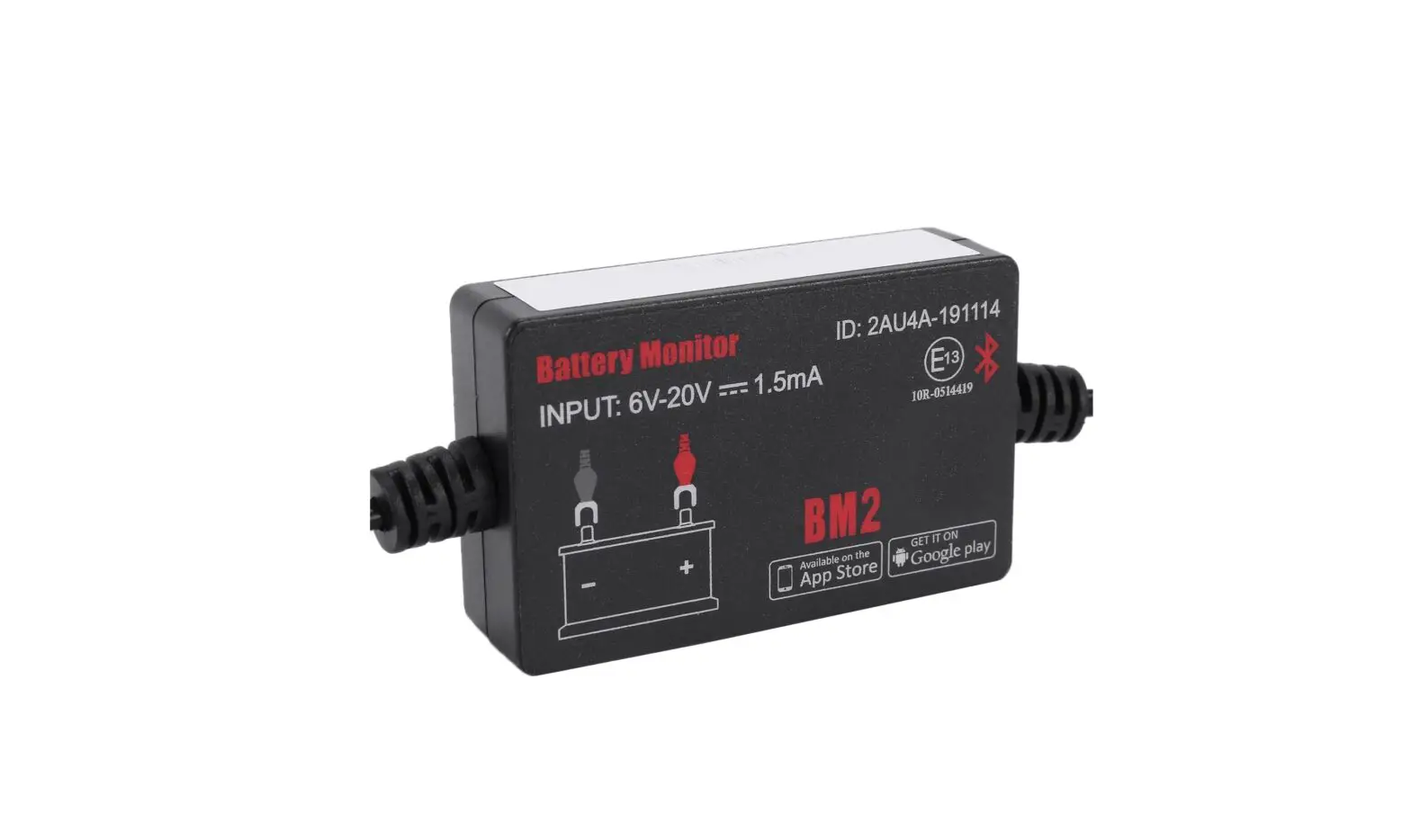
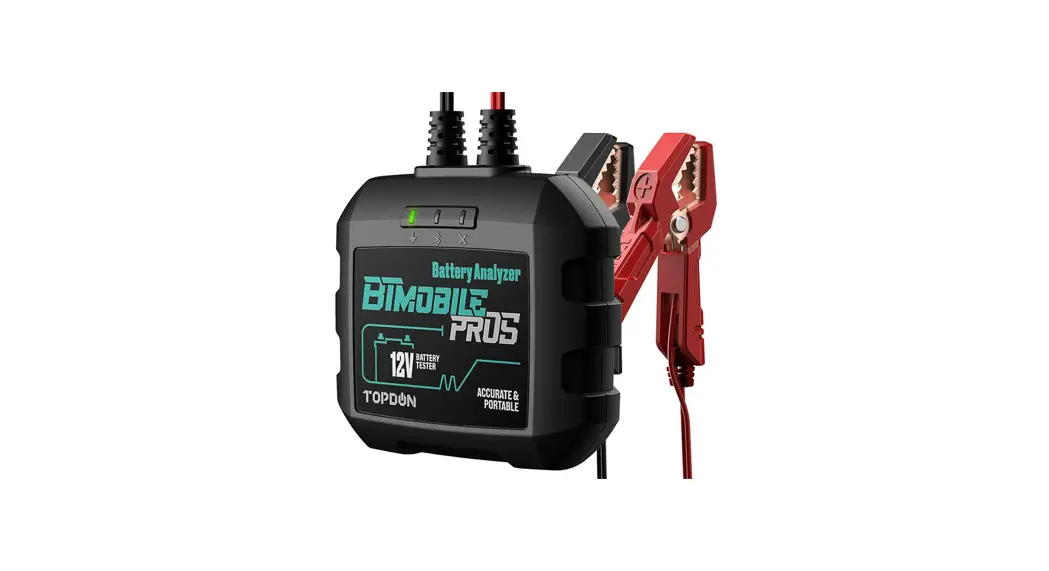
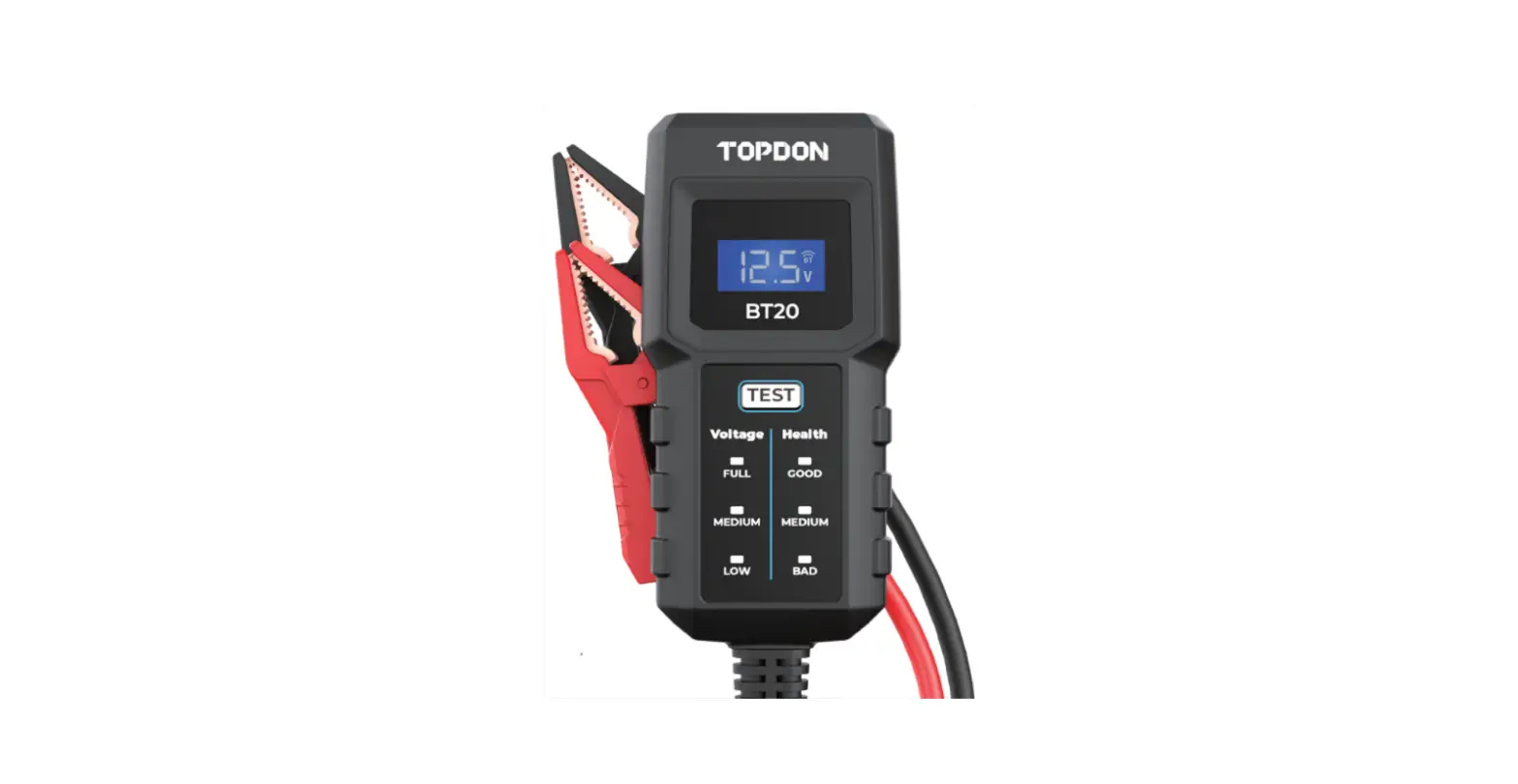
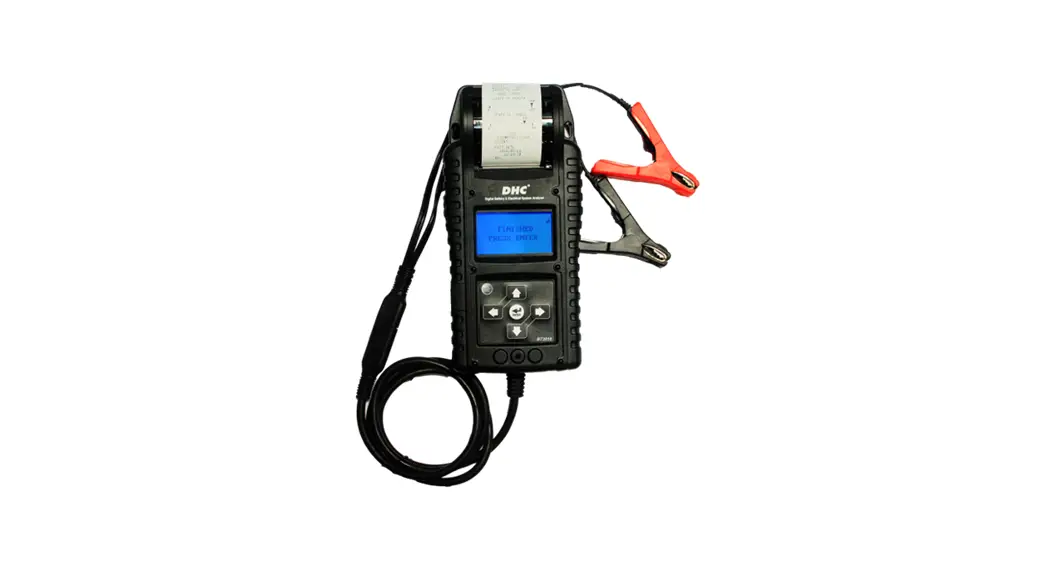
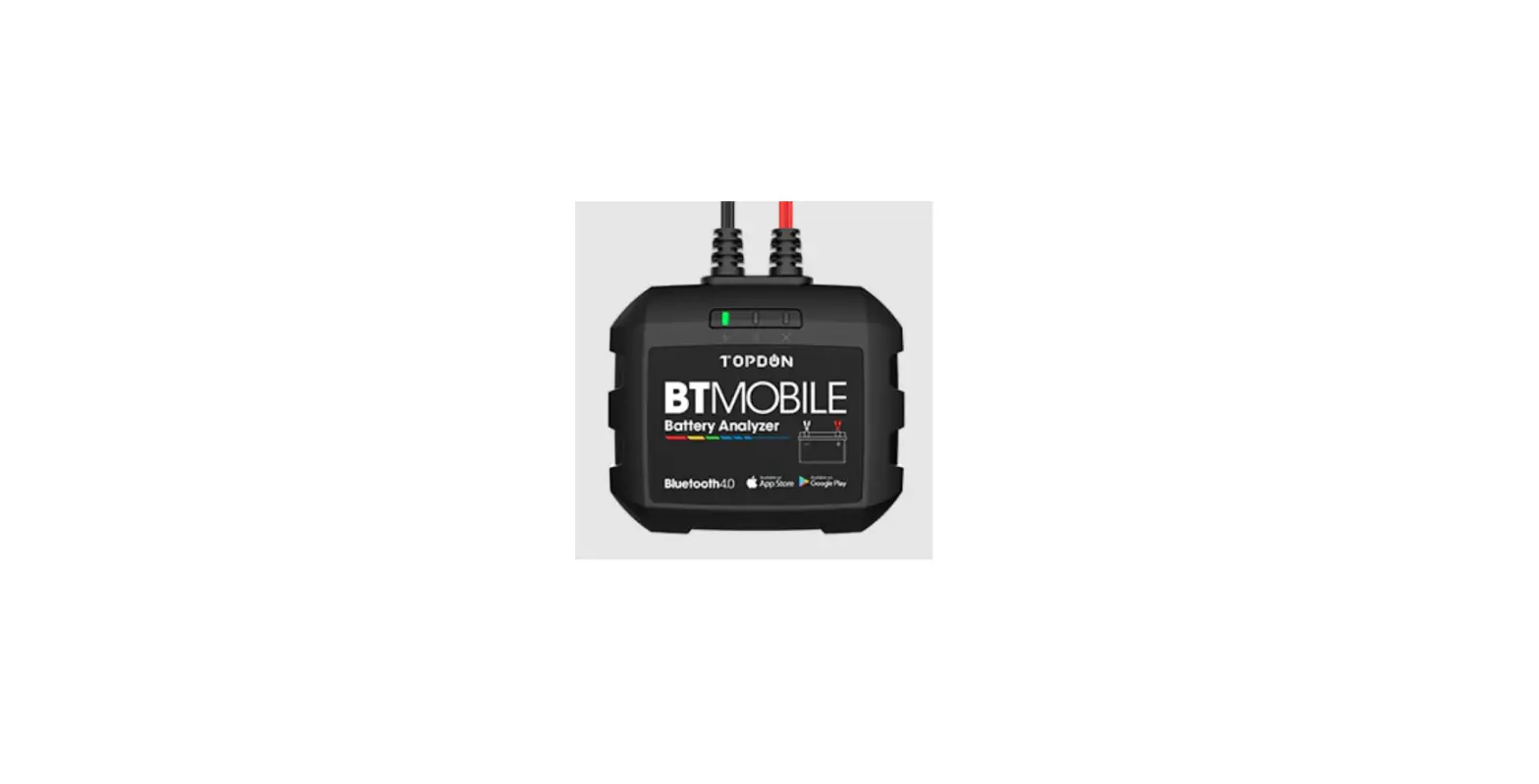
ET0055A Bluetooth Battery System Tester
Product Information
Bluetooth 4.0
ITEM: ET0055A
1. Introduction
1.1 The Product:
This Battery Analyzer is designed to test the condition of
automotive batteries using the conductance method. Unlike the
conventional method of draining the battery by applying resistance
load and obtaining the result from a meter gauge, this analyzer
utilizes a series of pulsed voltage across the battery cells and
observes the AC current that flows in response to it.
The benefits of this test method are:
- It is maintenance-free and does not require internal batteries.
It powers up when connected to the battery posts during
testing. - The operation is fast and simple. The displayed instructions on
the screen will lead you through, and a warning tone will caution
you to perform the correct steps when hooked up to the battery
posts. - The result is consistent and repeatable and can be performed
numerous times without heating up the unit. It is very safe as it
does not create any sparks when connected to the battery terminals
during testing on the vehicle.
1.2 Specifications:
- System Voltage: 12V
- Input voltage range: 9V~30V
- Analyzing Capacity(Amps): CCA 100~2000, EN 100~2000, IEC
100~1400, DIN 100~1400, JIS (100~2000 CCA) - Power Requirements: No internal batteries required. Power on
when hooked up during testing. - Application: Use to test a wide range of 12V batteries
(Starting [SLI], Deep Cycled and Marine) of Wet (Flooded), VRLA or
Maintenance Free (MF), Sealed Maintenance Free (SMF), Absorption
Glass Mat (AGM) and GEL cell. The major battery standards JIS, SAE,
EN, DIN, and IEC are supported.
2. Safety Measures:
For safety reasons, read this manual thoroughly before operating
the Tool.
Always refer to and follow the safety instructions and testing
procedures provided by the car or equipment manufacturer. The
safety messages presented below and throughout this user’s manual
are reminders to the operator to exercise extreme care when using
this test instrument.
2.1 Safety Precautions:
Working with Batteries
Lead-acid batteries contain a sulfuric acid electrolyte, which
is a highly corrosive poison and will produce gases when recharged
and explode if ignited. This can cause harm.
When working with batteries, you need to have plenty of
ventilation, remove your jewelry, wear protective eyewear (safety
glasses) and clothing, and exercise caution.
Do not allow battery electrolyte to mix with salt water. Even
small quantities of this combination will produce chlorine gas that
can be fatal.
Whenever possible, please follow the manufacturer’s instructions
for testing, jumping, installing, charging, and equalizing
batteries.
4. Types of Batteries
Basically, the major types of batteries are as follows:
- Starting Battery: Sometimes called SLI
(Starting, Lighting, and Ignition) battery, it is designed to start
and run engines. It delivers quick bursts of energy (such as
starting engines) and has a greater plate count. The plates are
thinner and composed of a lead sponge, similar in appearance to a
very fine foam sponge. This gives a very large surface area, but if
deep cycled, this sponge will quickly be consumed and fall to the
bottom of the cells.
Product Usage Instructions
1. Connect the Battery Analyzer to the automotive battery by
attaching it to the battery posts.
2. The analyzer will power on automatically when connected to
the battery posts.
3. Follow the displayed instructions on the screen to perform
the battery test.
4. Pay attention to the warning tone that cautions you to
perform the correct steps.
5. The result of the battery test will be displayed on the
screen.
6. The analyzer can be used multiple times without
overheating.
7. Ensure proper ventilation and remove jewelry before working
with batteries.
8. Wear protective eyewear and clothing for safety.
9. Avoid mixing battery electrolyte with salt water, as it can
produce harmful chlorine gas.
10. Refer to the manufacturer’s instructions for specific
battery testing, jumping, installing, charging, and equalizing
procedures.
Bluetooth 4.0
ITEM: ET0055A
1.Introduction
1.1 The Product:
This Battery Analyzer is designed to test the condition of the automotive battery using conductance method. Unlike the conventional method of draining the battery by applying resistance load to it and obtain the result from the meter gauge; this analyzer utilizes a series of pulsed voltage across the battery cells and observes the AC current that flows in response to it.
The benefits of this test method are:
· Conductance correlates directly to the battery capacity · Passive testing method is safe. · Never discharges or drain the battery. · Able to test condition of discharged battery. · Consistent and repeatable results. · Provides unique indication of battery conditions.
It is maintenance free and no internal batteries required. It powers up when connected to the battery posts during testing.
The operation is fast and simple. When hooked up to the battery posts, the displayed instructions on the screen will lead you through and a warning tone to caution you to perform the correct steps.
Its result is consistent and repeatable and can be performed numerous times without heating up the unit. It is very safe as it does not create any sparks when connected to the battery terminals during testing on the vehicle.
1.2 Specifications:
System Voltage:
12V
Input voltage range: Analyzing Capacity(Amps): 9V~30V
CCA
100~2000
EN
100~2000
IEC
100~1400
DIN
100~1400
JIS
(100~2000 CCA)
Power Requirements: No internal batteries required. Power on when hooked up during testing.
Application: Use to test a wide range of 12V batteries (Starting [SLI], Deep Cycled and Marine) of Wet (Flooded), VRLA or Maintenance Free (MF), Sealed
Maintenance Free (SMF), Absorption Glass Mat (AGM) and GEL cell. The major battery
standards JIS, SAE, EN, DIN and IEC are supported.
2. Safety Measures:
For safety reasons, read this manual thoroughly before operating the Tool.
Always refer to and follow the safety instructions and testing procedures provided by the car or equipment manufacturer. The safety messages presented below and throughout this user’s manual are reminders to the operator to exercise extreme care when using this test instrument.
2.1 Safety Precautions:
· This battery analyzer is meant for testing of 12 Volts batteries only.
· Its operating voltage is from 9V ~ 15V DC and should not be tested on 24V directly. It will cause damage the unit. For 12V x 2 batteries (in series or parallel), disconnect the connections and test them individually.
· Battery that has just been charged by the charger contains surface charge and it should be discharged by turning ON the Head lights for 3~5 minutes before testing.
· Always attached the analyzer clips on the lead side of the battery terminal posts during testing so that it has a good contact. This will provide better and accurate results.
· Do not attach the analyzer clips directly onto the steel bolt that tightened to the battery terminal posts; this may give inaccurate readings or inconsistent results. (Note: This also applies to all other battery testing methods.)
· If the battery terminal posts were oxidized or badly corroded and the connections were bad, the analyzer will prompt you to check the connections. In this case, clean the terminal posts and performs testing directly on the terminal posts it-self.
· During testing on the battery whist it is still in the car, make sure the engine is OFF.
· Do not store the battery analyzer near high humidity or temperature area. Exposing to extreme temperatures will cause damage to the unit.
3. Working with Batteries
Lead-acid batteries contain a sulfuric acid electrolyte, which is a highly corrosive poison and will produce gasses when recharged and explode if ignited. This will hurt you–BAD
When working with batteries, you need to have plenty of ventilation, remove your jewelry, wear protective eyewear (safety glasses) and clothing, and exercise caution.
Do not allow battery electrolyte to mix with salt water. Even small quantities of this combination will produce chorine gas that can KILL you!
Whenever possible, please follow the manufacturer’s instructions for testing, jumping, installing, charging and equalizing batteries.
4. Types of Batteries Basically the major types of batteries are as follows:
·
Starting Battery
Sometimes it is called SLI (Starting, Lighting and Ignition) battery and it is designed to start and run engines. It delivers quick bursts of energy (such as starting engines) and have a greater plate count.
The plates will also be thinner and are composed of a Lead “sponge”, similar in appearance to a very fine foam sponge. This gives a very large surface area, but if deep cycled, this sponge will quickly be consumed and fall to the bottom of the cells.
Automotive batteries will generally fail after 30-150 deep cycles if deep cycled, while they may last for thousands of cycles in normal starting use (2-5% discharge).
Starting batteries are usually rated at “CCA”, or cold cranking amps, or “MCA”, Marine cranking amps – the same as “CA”.
·
Deep Cycle Battery
These batteries are used mainly on golf cart, scooter, solar, RV, etc has less instant energy but greater long-term energy delivery.
They are designed to be discharged down as much as 80% time after time, and have much thicker plates. The major difference between a true deep cycle battery and others is that the plates are SOLID Lead plates – not sponge.
Deep cycle batteries are usually rated at “AH” or Amperes Hour.
·
Marine Battery
These batteries are usually actually a “hybrid”, and fall between the starting and deep-cycle batteries. The plates may be composed of Lead sponge, but it is coarser and heavier than that used in starting batteries.
“Hybrid” types should not be discharged more than 50%
5. Operation Instruction
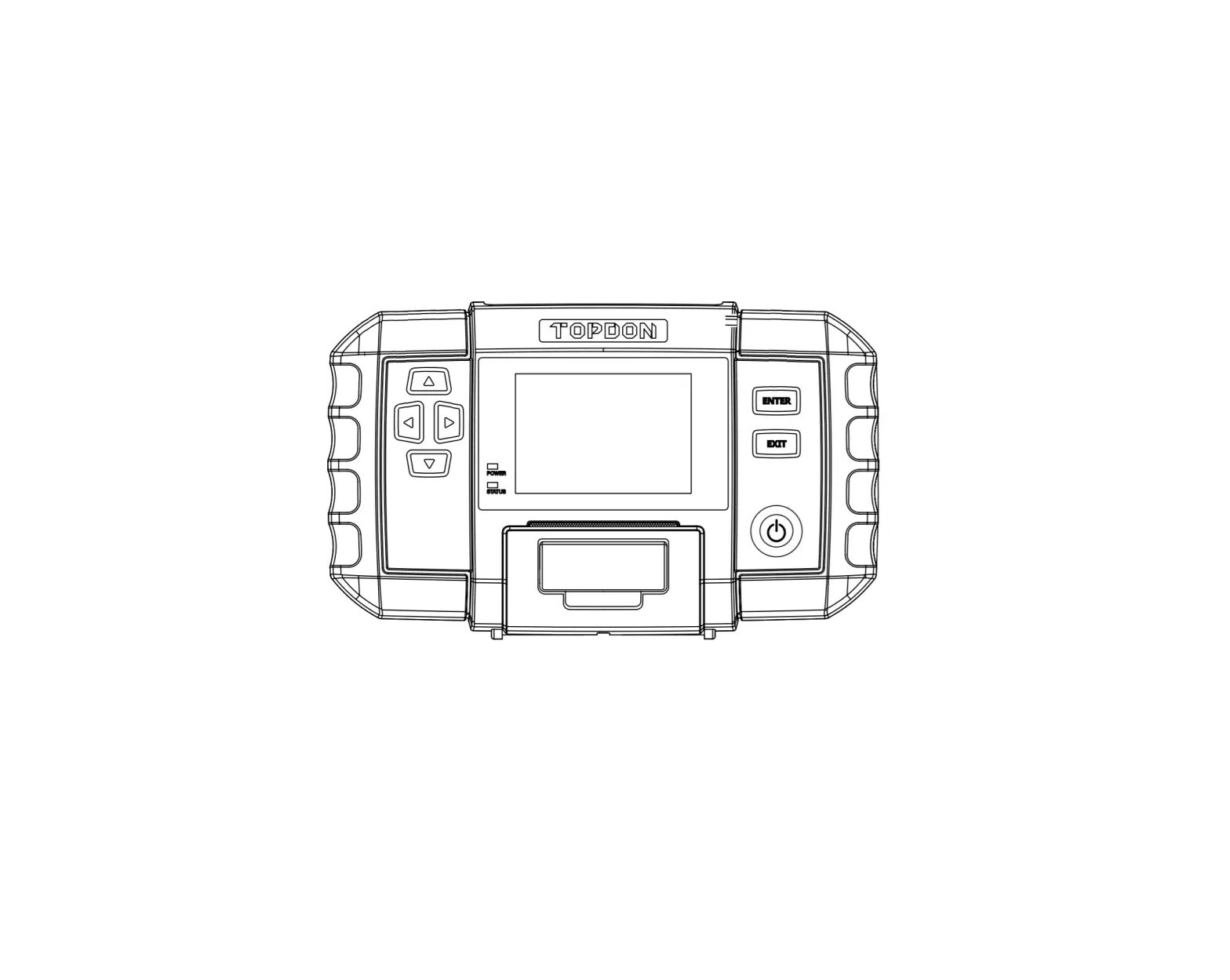
5.1 Tool Description
1
4 2
3
1.LCD DISPLAY–Indicates test results. It is a backlit 2-line display with 8 characters on each line.
2. ENTER BUTTON–Confirms a selection (or action) from a menu list, or returns to the main menu.
3. SCROLL BUTTON–Scrolls through menu items or cancel an operation
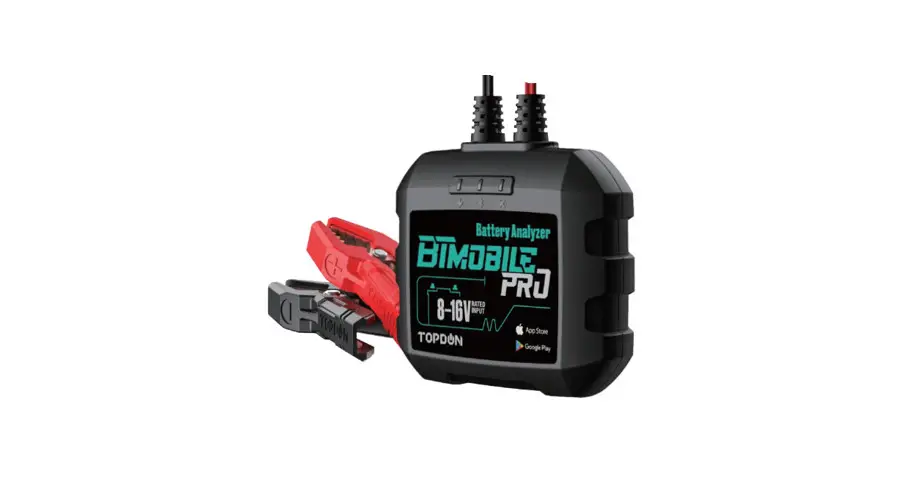
4.Clip–Connects the battery test to the vehicle’s battery with + and – point
5.2 Product Specifications
1. Display: LCD, 2 lines, 8 characters, backlit
2. Operating Temperature: 0 to 50°C (-32 to 122 F°)
3. Storage Temperature: -20 to 70°C (-4 to 158 F°)
4. Dimensions: Length
Width
126 mm ( 5.0″) 78 mm ( 3.2″) 28mm (0.85″)
5. Weight: 200g (7.12 oz)
Height
5.3 Connecting the Analyzer Before Testing
Before the test, please use the wire brush and alkaline cleaner clean battery pole column, as well as grease and dust have error on test results.
At the start of the test, to ensure that all of the car electronics has closed, the door closed, and the ignition key is turned off. The red test clip to the battery positive electrode, the black test clip to battery cathode.
Tester require two clips polar to contact with the battery polarity is good, but with bad connection, the tester will not be able to boot. If this happens, please clean the terminal after properly connected again.
Tester has an automatic protection function, if the red and black clip is negative, screen is not bright, but it will not have any adverse effects on tester and the motor load.
5.4 Testing
Tester will start automatically when clip folder correct, display boot interface.
BATTERY TOOL Ver 1.00
5.4.1 Out off Vehicle & In Vehicle Use “SCROLL” to choose battery’s in actual position.
After confirmation, put “ENTER” button.
OUT OF VEHICLE
IN
VEHICLE OR
In Vehicle: battery connect with engine or vehicle electric. Out off vehicle: disconnect the battery connection
5.4.2 Types of Batteries Choose Use “SCROLL” to choose the types of battery, it has CCA,DIN, JIS, EN, IEC, GB,
SAE, MCA, BCI, CA. And then put “ENTER” button.
STANDARD CCA
5.4.3 Battery rated system setting. Follow the battery actually marked Rating System standards and select the input
rated capacity battery rated by SCROLL button
ET0055A battery tester will test each battery according to the selected system and rating.
Use SCROLL button to select according to the actual system standard and rating marked on the battery. Use Scroll button to select according to the actual system standard and rating marked on the battery. See in the below picture, the arrow indicated location.
CCA: Cold start current value of the most common specifications developed by the SAE & BCI, is the most common starting battery rated O ° F (-18 ° C).
BCI: International Battery Standards Committee. CA: Effective starting current rating at O ° C. MCA: Marine Battery Standard, Effective starting current rating at O ° C.
JIS: Japanese Industrial Standard display a combination of numbers and letters on the battery, like 55D23,80D26.
DIN: German automotive industry standards committee. EN: The European Automobile Manufacturers Association standards. SAE: American Society of Engineers Standards. GB: China National Standard.
Rating range as following
Measure Standard
Measure Range
CCA
100-2000
BCI CA MCA JIS DIN
100-2000 100-2000 100-2000 26A17–245H52 100-1400
IEC EN SAE
100-1400 100-2000 100-2000
GB
100-1400
Choose the right measure standard, press ENTER, then come up the below menu
Rated 500A CCA
Press SCROLL to increase or reduce 5 units, then to the right rated volume, if wanto change it, press SCROLL button last to 3 seconds, then it will come as below menu, press SCROLL again, then turn to the opposite mark.
If the battery does not show the standard in the label, please select CCA; If the battery does not mark the rating value, please take 7 times of Quantity
of electric charge as reference value, such as 12V, 60AH, then input 60 * 7 = 420 CCA;
After choose the correct test standard and rated capacity, put “ENTER” button, and the analyzer is testing as below:
TESTING ***
5.4.4 test result For less than 3 seconds, the results of the testing will be displayed on the LCD screen.
12.52 V 470 CCA
INTERNAL R= 6.3 m
100% OF HEALTHY
86% CHARGE
Press ENTER button to exit.
5.4.5 Battery Test Result
As the battery test results to The battery test data to determine the battery condition description: 1. Healthy>60%, Voltage>12.4V– Good battery 2. Healthy>60%, Voltage<12.4V– Good, Recharge 3. Healthy<60%, Voltage>12.4V– Replace 4. Healthy<60%, Voltage<12.4V– Charge, Retest
Battery test result includes 5 types as following: 1) Good Battery
12.64 V 490 A
RATING 500A
96% OF HEALTHY
98% CHARGE
GOOD BATTERY
The battery is without any problem, please be relaxed to use! (Healthy>60%, Voltage>12.4V)
2) Good, Recharge
12.20 V 440 A
RATING 500A
78% OF HEALTHY
30% CHARGE
GOOD RECHARGE
Good battery but low current, recharge before using. (Healthy>60%, Voltage>12.4V)
3) Replace
12.68 V 340 A
RATING 500A
46% OF HEALTHY
80% CHARGE
REPLACE
The battery is near to or already reached the end of the using life, replace battery, otherwise, bigger danger will be followed. (Healthy<60%, Voltage>12.4V)
4) Bad Cell, Replace
10.64 V 0 A
RATING 500A
0% OF HEALTHY
20% CHARGE
BAD CELL REPLACE
Battery interior damaged, broken cell or short circuit, replace battery. (Healthy=0, Voltage<12.4V, Electric Current=0A or 0CCA)
5) Charge, Retest
12.08 V 310 A
RATING 500A
39% OF HEALTHY
20% CHARGE
CHARGE RETEST
Unstable battery shall be recharged and retested to avoid error. If same test result appears after recharge and retest, the battery is regarded as damaged, replace the battery.
(Healthy<60%, Voltage<12.40V)
Attention: If “Replace” resulted from IN-VEHICLE mode, it mig ht be the reason that vehicle cable is not well connected with the battery. Ensure to cut off the cable and retest the battery under OUT-OF-VEHICLE before making a decision to replace battery. NOTE: After testing, if need to return, press SCROLL key to directly return to the startup interface.
24V system testing. It should not be tested on 24V directly. It will cause damage the unit. For 12V x 2 batteries (in series or parallel), disconnect the connections and test them individually. The battery in parallel must be disconnected from the negative connection, and then tested on a single battery. If you do not cut off the negative connection, will lead to erroneous battery test results.
Language If you hold the machine has a multi-language version, go to the menu and select the language you use appropriate language and click ENTER and confirm the launch, so you can use the language version of the machine
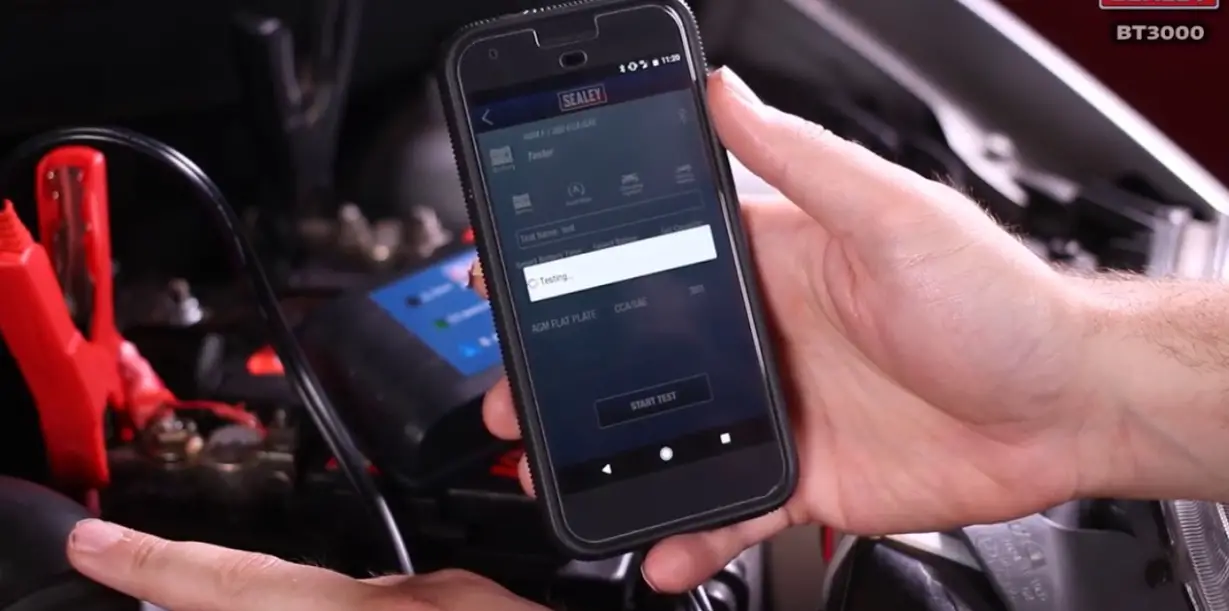
6. App mode 1. Search Battery Analyzer 200 from App Store or Google Play, then download and install it to the iPhone after 4S or Android phone after 4.3 version.
2. Open the App: then it will remind to open the Bluetooth device..
3. Connect the Bluetooth and the battery tester will show “APP mode”, then it need set the battery relative information as the battery label. Press “Add”, then it can check the battery status and record it.
4. Battery testing status.
It will show the battery status including Battery voltage, battery CCA, battery Resistance, battery charge status. Battery health. Battery testing result.
5. Battery Cranking system test It will show the cranking voltage of the Battery. And the battery voltage graph record. Also show the cranking system testing result.
6. Charging system test It will show the charging voltage in idle Speed, and high RPM. And also show the Charging voltage ripple. Also show the charging system testing result.