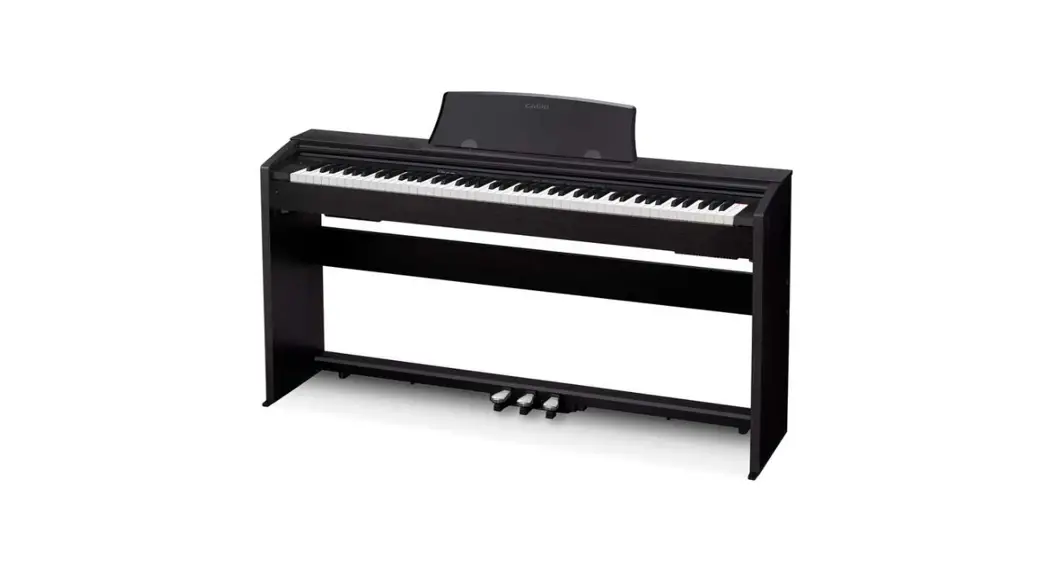
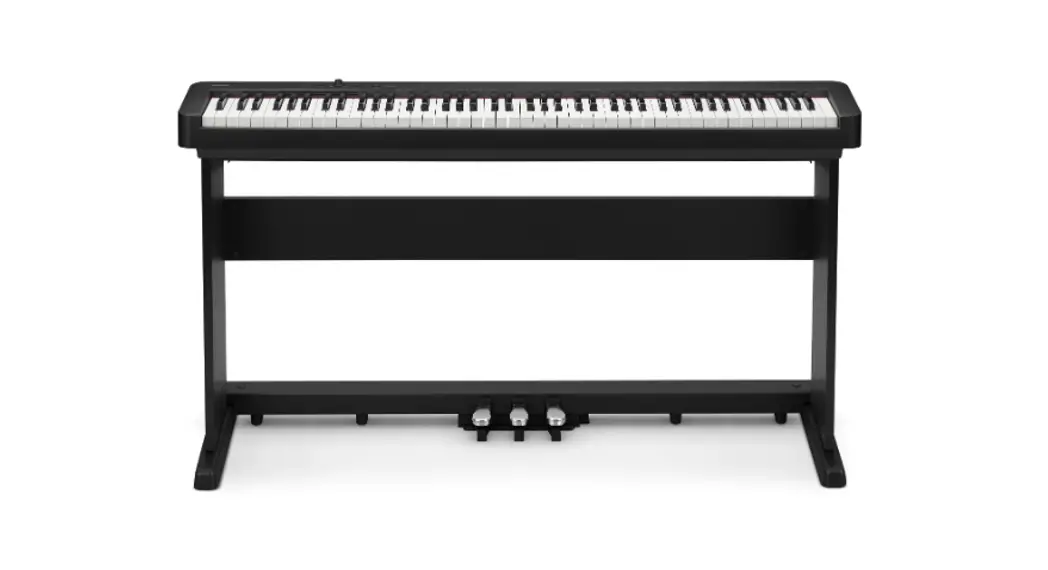
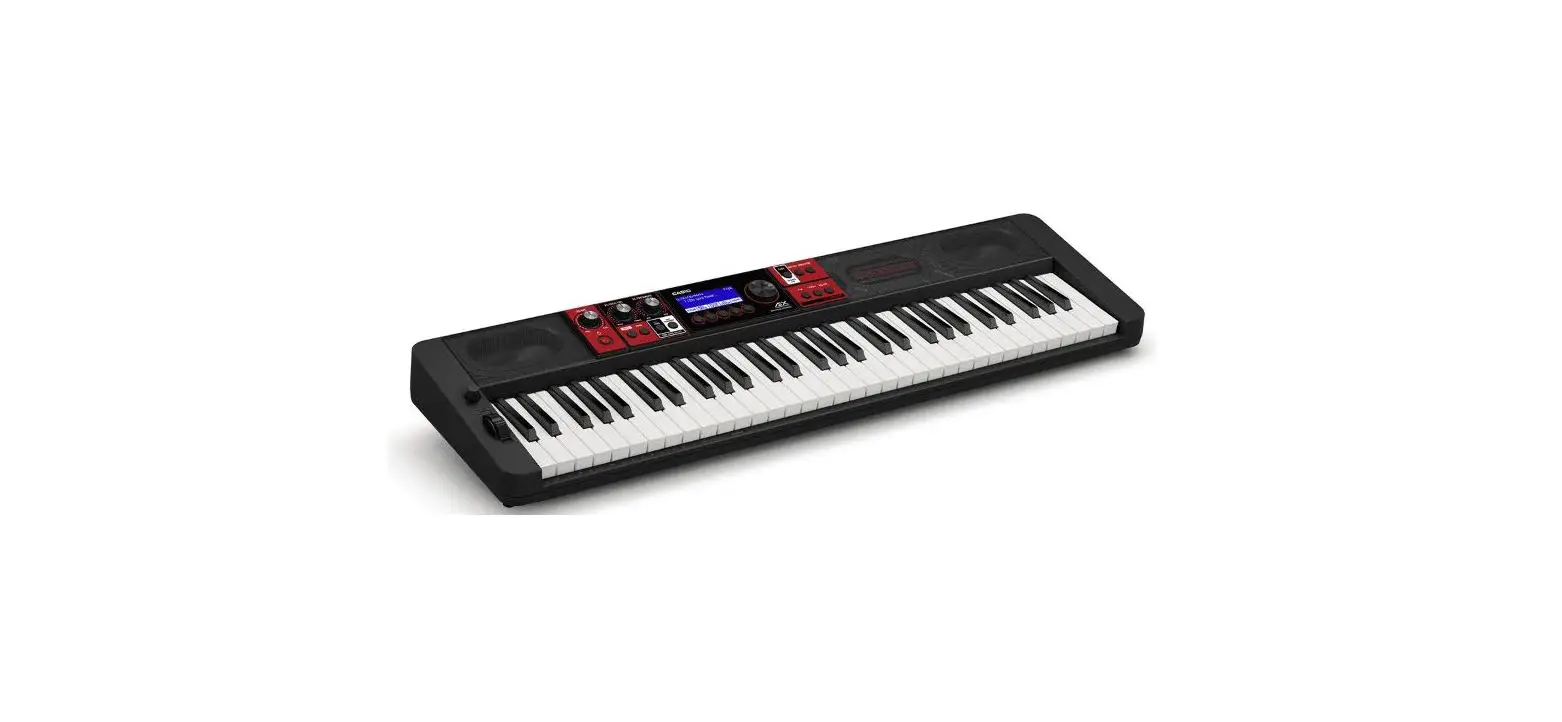
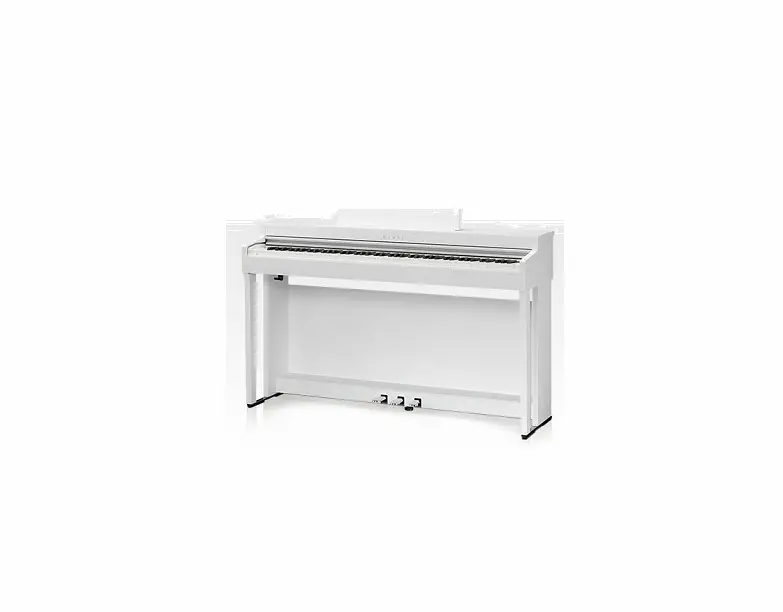
CT-S1 Implementation Piano
Product Information
The CT-S1 MIDI is a musical instrument manufactured by CASIO
COMPUTER CO., LTD. It consists of three main sections: System
Section, Performance Controller Section, and Sound Generator
Section.
System Section
The System Section of the CT-S1 MIDI is responsible for the
overall configuration of the device as a MIDI device.
Performance Controller Section
The Performance Controller Section of the CT-S1 MIDI allows
users to control various aspects of their performance, such as
modulation, portamento time, data entry, channel volume, pan,
expression control, damper pedal (sustain), portamento on/off,
sostenuto, soft pedal, filter resonance, release time, attack time,
filter cutoff frequency, portamento control, and reverb send
level.
Sound Generator Section
The Sound Generator Section of the CT-S1 MIDI is responsible for
generating the actual sound based on the MIDI messages received
from external devices.
Product Usage Instructions
To use the CT-S1 MIDI effectively, follow these
instructions:
Timbre Type Specific Operation
Refer to the user manual for specific instructions on how to
operate each timbre type.
Controlling Send/Receive of MIDI Messages in Each Instrument
Part
Refer to the user manual for instructions on how to control the
send and receive of MIDI messages in each instrument part.
Channel Message
The CT-S1 MIDI supports various channel messages, including Note
Off, Note On, Control Change, Program Change, Channel Pressure
(Aftertouch), and Pitch Bend Change. Refer to the user manual for
detailed instructions on how to utilize each channel message.
System Message
The CT-S1 MIDI also supports system messages, such as Active
Sensing and System Exclusive Messages. Refer to the user manual for
instructions on how to use these system messages.
Setting Values and Send/Receive Values
For detailed information on setting values and send/receive
values, refer to the user manual’s Setting Value Tables
section.
CT-S1 MIDI Implementation
CASIO COMPUTER CO., LTD.
Contents
I Overview
3
1 1.1 1.2 1.3
Product Configuration as a MIDI Device
3
System Section . . . . . . . . . . . . . . . . . . . . . . . . . . . . . . . . . . . . . . . . . . 3
Performance Controller Section . . . . . . . . . . . . . . . . . . . . . . . . . . . . . . . . . 3
Sound Generator Section . . . . . . . . . . . . . . . . . . . . . . . . . . . . . . . . . . . . 3
2
Timbre Type Specific Operation
5
3
Controlling Send/Receive of MIDI Messages in Each Instrument Part
5
4
Conditions that Disable Message Send and Receive
5
II Channel Message
6
5
Note Off
6
6
Note On
6
7
Control Change
6
7.1 Bank Select (00H,20H) . . . . . . . . . . . . . . . . . . . . . . . . . . . . . . . . . . . . . 6
7.2 Modulation wheel or lever (01H) . . . . . . . . . . . . . . . . . . . . . . . . . . . . . . . . 7
7.3 Portamento Time (05H) . . . . . . . . . . . . . . . . . . . . . . . . . . . . . . . . . . . . . 7
7.4 Data Entry (06H,26H) . . . . . . . . . . . . . . . . . . . . . . . . . . . . . . . . . . . . . . 7
7.5 Channel Volume (07H) . . . . . . . . . . . . . . . . . . . . . . . . . . . . . . . . . . . . . 7
7.6 Pan (0AH) . . . . . . . . . . . . . . . . . . . . . . . . . . . . . . . . . . . . . . . . . . . . 8
7.7 Expression Controller (0BH) . . . . . . . . . . . . . . . . . . . . . . . . . . . . . . . . . . 8
7.8 Damper pedal (sustain) (40H) . . . . . . . . . . . . . . . . . . . . . . . . . . . . . . . . . 8
7.9 Portamento On/Off (41H) . . . . . . . . . . . . . . . . . . . . . . . . . . . . . . . . . . . . 9
7.10 Sostenuto (42H) . . . . . . . . . . . . . . . . . . . . . . . . . . . . . . . . . . . . . . . . . 9
7.11 Soft Pedal (43H) . . . . . . . . . . . . . . . . . . . . . . . . . . . . . . . . . . . . . . . . . 9
7.12 Filter Resonance (47H) . . . . . . . . . . . . . . . . . . . . . . . . . . . . . . . . . . . . . 10
7.13 Release Time (48H) . . . . . . . . . . . . . . . . . . . . . . . . . . . . . . . . . . . . . . . 10
7.14 Attack Time (49H) . . . . . . . . . . . . . . . . . . . . . . . . . . . . . . . . . . . . . . . . 10
7.15 Filter Cutoff Frequency (4AH) . . . . . . . . . . . . . . . . . . . . . . . . . . . . . . . . . 10
7.16 Portamento Control (54H) . . . . . . . . . . . . . . . . . . . . . . . . . . . . . . . . . . . 11
7.17 Reverb Send Level (5BH) . . . . . . . . . . . . . . . . . . . . . . . . . . . . . . . . . . . . 11
7.18 RPN (64H,65H) . . . . . . . . . . . . . . . . . . . . . . . . . . . . . . . . . . . . . . . . . 11
1
7.19 All Sound Off (78H) . . . . . . . . . . . . . . . . . . . . . . . . . . . . . . . . . . . . . . . 12 7.20 Reset All Controllers (79H) . . . . . . . . . . . . . . . . . . . . . . . . . . . . . . . . . . . 12 7.21 All Notes Off (7BH) . . . . . . . . . . . . . . . . . . . . . . . . . . . . . . . . . . . . . . . 13 7.22 Omni Mode Off (All Notes Off) (7CH) . . . . . . . . . . . . . . . . . . . . . . . . . . . . 13 7.23 Omni Mode On (All Notes Off) (7DH) . . . . . . . . . . . . . . . . . . . . . . . . . . . . 13 7.24 Mono Mode On (Poly Mode Off) (All Notes Off) (7EH) . . . . . . . . . . . . . . . . . . . 13 7.25 Poly Mode On (Mono Mode Off) (All Notes Off) (7FH) . . . . . . . . . . . . . . . . . . . 13
8
Program Change
13
9
Channel Pressure (Aftertouch)
14
10
Pitch Bend Change
14
III System Message
16
11
Active Sensing
16
12 12.1 12.2 12.3
System Exclusive Message
16
Universal Real Time System Exclusive Message . . . . . . . . . . . . . . . . . . . . . . . . 16
Universal Non Real Time System Exclusive Message . . . . . . . . . . . . . . . . . . . . . 17
CASIO General System Exclusive . . . . . . . . . . . . . . . . . . . . . . . . . . . . . . . 18
IV Setting Values and Send/ Receive Values
19
13 13.1 13.2 13.3 13.4 13.5 13.6 13.7 13.8
Setting Value Tables
19
0 – 127 Setting Value Table . . . . . . . . . . . . . . . . . . . . . . . . . . . . . . . . . . . 19
Off/On Setting Value Table . . . . . . . . . . . . . . . . . . . . . . . . . . . . . . . . . . . 19
Sustain Pedal Setting Value Table . . . . . . . . . . . . . . . . . . . . . . . . . . . . . . . 19
64 – 0 – +63 Setting Value Table . . . . . . . . . . . . . . . . . . . . . . . . . . . . . . . 19
Pan Setting Value Table . . . . . . . . . . . . . . . . . . . . . . . . . . . . . . . . . . . . . 19
Fine Tuning Setting Value Table . . . . . . . . . . . . . . . . . . . . . . . . . . . . . . . . 20
Reverb Type Setting Value Table . . . . . . . . . . . . . . . . . . . . . . . . . . . . . . . . 20
Reverb Type (CASIO General System Exclusive) Setting Value Table . . . . . . . . . . . 20
V MIDI Implementation Notation
22
14
Value Notation
22
14.1 Hexadecimal Notation . . . . . . . . . . . . . . . . . . . . . . . . . . . . . . . . . . . . . . 22
14.2 Binary Notation . . . . . . . . . . . . . . . . . . . . . . . . . . . . . . . . . . . . . . . . . 22
2
Part I
Overview
1 Product Configuration as a MIDI Device
As a MIDI device, this Instrument consists of the System Section, Sound Generator Section, and Performance Controller Section described below. Each of these sections can send and receive specific MIDI Messages in accordance with its function.
1.1 System Section
The System Section manages the Instrument status and user data.
1.2 Performance Controller Section
The Performance Controller Section performs keyboard play and controller operations, and generates performance messages. Basically, generated performance messages are sent to external destinations while also being transmitted to the Sound Generator Section. The channel number of the sent channel message is in accordance with the Instrument’s MIDI setting. For details about the MIDI setting, see the Instrument’s User’s Guide.
1.3 Sound Generator Section
The Sound Generator Section mainly performs receive of performance information and sound source setting information. It consists of a common part that does not depend on the channel and a musical instrument part that is independent of each channel.
1.3.1 Sound Generator Common Block The common block consists of system effects, master control, etc. These can be controlled effect function, general universal system exclusive messages, or the Instrument’s system exclusive messages or all. There are two types of system effects on this instrument: system effects applied to keyboard playing parts and system effects applied to other parts.
1.3.2 Instrument Part Block The instrument part section is devided into A, B, C group for every 16 parts, and it consists of a total of 48 parts. The settings of each part can be changed using channel messages or Instrument’s system exclusive messages or all. Of these, only the C group channels can be controlled by external channel messages.
The functions assigned to each part are shown below.
3
Port A A A A A A A A A A A A A A A A
Part number 01 02 03 04 05 06 07 08 09 10 11 12 13 14 15 16
MIDI Receive Ch –
MIDI Transmit ch 1-16 1-16 8 –
Assigned Function Upper1 Upper2 Metronome –
Details –
Port Part number MIDI Receive Ch MIDI Transmit Ch Assigned Function
B
17
–
–
Recorder
B
18
–
–
Recorder
B
19
–
B
20
–
B
21
–
B
22
–
B
23
–
B
24
–
B
25
–
B
26
–
B
27
–
B
28
–
B
29
–
B
30
–
B
31
–
B
32
–
–
–
–
–
–
–
–
–
–
–
–
–
–
Notification Tone
–
Upper1 Selected
Tone
–
Upper2 Selected
Tone
–
–
–
–
–
–
–
–
–
–
Details System Track Upper1 System Track Upper2 –
–
–
4
Port C C C C C C C C C C C C C C C C
Part number 33 34 35 36 37 38 39 40 41 42 43 44 45 46 47 48
MIDI Receive Ch 1 2 3 4 5 6 7 8 9 10 11 12 13 14 15 16
MIDI Transmit Ch –
Assigned Function MIDI/Auto Play MIDI/Auto Play MIDI/Auto Play MIDI/Auto Play MIDI/Auto Play MIDI/Auto Play MIDI/Auto Play MIDI/Auto Play MIDI/Auto Play MIDI/Auto Play MIDI/Auto Play MIDI/Auto Play MIDI/Auto Play MIDI/Auto Play MIDI/Auto Play MIDI/Auto Play
Details –
2 Timbre Type Specific Operation
The sound source operation performed for a sound generator instrument receive message may depend on the value of the Timbre Type (see “About the Timbre Type” in “8 Program Change”) of each part’s operation mode. For details, see the explanation for each message.
3 Controlling Send/Receive of MIDI Messages in Each Instrument Part
Send and receive of MIDI messages for each instrument part can be controlled by global Instrument MIDI settings and Instrument-specific system exclusive messages. See the Instrument’s User’s Guide for details.
4 Conditions that Disable Message Send and Receive
No MIDI messages at all can be sent or received while the instrument starts up, shuts down, accesses flash memory, etc.
5
Part II
Channel Message
5 Note Off
Format
Message Format:
n: kk: vv:
8nH kkH vvH 9nH kkH 00H(receive only) MIDI Channel Number Key Number velocity
Transmit Sent when something is played on the keyboard. The key number changes in accordance with on the Transpose function and Octave Shift function.
Receive Receipt stops a note being sounded by a note on message.
6 Note On
Message Format: n:
kk: vv:
9nH kkH vvH MIDI Channel Number Key Number Velocity
Transmit Sent when something is played on the keyboard. The key number changes in accordance with on the Transpose function and Octave Shift function.
Receive Receipt sounds a note of the corresponding instrument part.
7 Control Change
Message Format: BnH ccH vvH n: MIDI Channel Number
cc: Control Number vv: Value For details about messages, see each section of this manual that covers them.
7.1 Bank Select (00H,20H)
Message Format:
n: mm: ll:
BnH 00H mmH (MSB) BnH 20H llH (LSB) MIDI Channel Number MSB Value(Note1) LSB Value(Transmit:00H, Receive:Ignored)
6
Note1: For details about the relationship between the MSB value and the tone, see the Tone List that comes with the Instrument.
Transmit Sent when a tone setup number is selected.
Receive Receipt causes a change in the tone bank number stored in Instrument memory, but the tone is not actually changed until a Program Change message is received. For details, see “8 Program Change”.
7.2 Modulation wheel or lever (01H)
Message Format: n:
vv:
BnH 01H vvH MIDI Channel Number Value
Receive Receipt adds, to the tone being sounded, modulation of a depth specified by the value. In the case of a tone that already has modulation applied, receipt of this message increases the modulation depth. The modulation effect differs according to the tone being used.
7.3 Portamento Time (05H)
Message Format: n:
vv:
BnH 05H vvH MIDI Channel Number Value
Receive Receipt changes the portamento application time.
7.4 Data Entry (06H,26H)
Message Format:
n: mm: ll:
BnH 06H mmH (MSB) BnH 26H llH (LSB) MIDI Channel Number MSB Value LSB Value
Receive Receipt changes the parameter assigned to RPN, NRPN.
7.5 Channel Volume (07H)
Message Format: n:
vv:
BnH 07H vvH MIDI Channel Number Value
Transmit Sent when part volume is used.
Receive Receipt changes the part volume.
7
7.6 Pan (0AH)
Message Format: n:
vv:
BnH 0AH vvH MIDI Channel Number Value(Note1)
Note1: For information about the relationship between setting values and send/receive values, see “13.5 Pan Setting Value Table” in “IV Setting Values and Send/Receive Values”.
Receive Receipt changes the pan of the corresponding part.
7.7 Expression Controller (0BH)
Message Format: n:
vv:
BnH 0BH vvH MIDI Channel Number Value
Receive Receipt changes the expression value.
7.8 Damper pedal (sustain) (40H)
Message Format: n:
vv:
BnH 40H vvH MIDI Channel Number Value
Transmit Sent when a pedal that has a sustain function is operated.
Receive Receipt performs an operation equivalent to a sustain pedal operation.
Timbre Type Specific Operation This operation differs in accordance with the Timbre Type (see “About the Timbre Type” in “8 Program Change”) setting.
· Timbre Type: Melody,Hex Layer Sustain off/on control is performed in accordance with the value of the received message. For information about the relationship between setting values and send/receive values, see the “13.2 Off/On Setting Value Table” in “IV Setting Values and Send/Receive Values”.
· Timbre Type: Piano Continuous control of the following is performed in accordance with the value of the received message.
Piano note decay rate
For information about the relationship between setting values and send/receive values, see “13.3 Sustain Pedal Setting Value Table” in “IV Setting Values and Send/Receive Values.”
· Timbre Type: LM (Linear Morphing) Piano Continuous control of the following is performed in accordance with the value of the received message.
8
Piano note decay rate Resonance characteristics and decay rate of Damper Resonance effect resonance note see “13.3 Sustain Pedal Setting Value Table” in “IV Setting Values and Send/Receive Values.” · Timbre Type: Drum The received message does not affect sound source operation.
7.9 Portamento On/Off (41H)
Message Format: n:
vv:
BnH 41H vvH MIDI Channel Number Value (Note1)
Note1: For information about the relationship between setting values and send/receive values, see the “13.2 Off/On Setting Value Table” in “IV Setting Values and Send/Receive Values” of this document.
Receive Receipt changes the portamento on/off setting.
7.10 Sostenuto (42H)
Message Format: n:
vv:
BnH 42H vvH MIDI Channel Number Value (Note1)
Note1: For information about the relationship between setting values and send/receive values, see the “13.2 Off/On Setting Value Table” in “IV Setting Values and Send/Receive Values” of this document.
Transmit Sent when a pedal that has a sostenuto function is operated. Receive Receipt performs an operation equivalent to a sostenuto pedal operation.
7.11 Soft Pedal (43H)
Message Format: n:
vv:
BnH 43H vvH MIDI Channel Number Value (Note1)
Note1: For information about the relationship between setting values and send/receive values, see the “13.2 Off/On Setting Value Table” in “IV Setting Values and Send/Receive Values” of this document.
Transmit Sent when a pedal that has a soft pedal function is operated. Receive Receipt performs an operation equivalent to a soft pedal operation.
9
7.12 Filter Resonance (47H)
Message Format: n:
vv:
BnH 47H vvH MIDI Channel Number Value
Receive Receipt changes the filter resonance intensity.
7.13 Release Time (48H)
Message Format: n:
vv:
BnH 48H vvH MIDI Channel Number Value (Note1)
Note1: For information about the relationship between setting values and send/receive values, see the “13.4 64 – 0 – +63 Setting Value Table” in “IV Setting Values and Send/Receive Values” of this document.
Transmit It will be changed when sustain is used and when setting is changed.
Receive Receipt makes a relative change in the time it takes for a note to decay to zero after a key is released.
7.14 Attack Time (49H)
Message Format: n:
vv:
BnH 49H vvH MIDI Channel Number Value (Note1)
Note1: For information about the relationship between setting values and send/receive values, see the “13.4 64 – 0 – +63 Setting Value Table” in “IV Setting Values and Send/Receive Values” of this document.
Receive Receipt makes a relative change in the time it takes for a note to rise to its maximum level.
7.15 Filter Cutoff Frequency (4AH)
Message Format: n:
vv:
BnH 4AH vvH MIDI Channel Number Value (Note1)
Note1: For information about the relationship between setting values and send/receive values, see the “13.4 64 – 0 – +63 Setting Value Table” in “IV Setting Values and Send/Receive Values” of this document.
Receive Receipt changes the filter cutoff frequency.
10
7.16 Portamento Control (54H)
Message Format: n:
vv:
BnH 54H vvH MIDI Channel Number Source Key Number
Receive Receipt of this message first stores the Source Note Number for the next note. When the next Note On is received, the portamento effect is applied to the note using this Source Note Number as the pitch start point and the Note On event key number as the end point. If there already is a note being sounded by Source Note Number at this time, the new note on is not performed and the portamento effect is applied to the pitch of the note being sounded. That is to say that legato play is performed.
7.17 Reverb Send Level (5BH)
Message Format: n:
vv:
BnH 5BH vvH MIDI Channel Number Value
Receive Receipt changes the reverb send of the corresponding part.
7.18 RPN (64H,65H)
Message Format:
n: ll: mm:
BnH 64H llH (LSB) BnH 65H mmH (MSB) MIDI Channel Number LSB Value MSB Value
7.18.1 Pitch Bend Sensitivity
Message Format:
n: mm: ll:
BnH 64H 00H BnH 65H 00H BnH 06H mmH BnH 26H llH MIDI Channel Number MSB Value(00H – 18H) LSB Value(Receive:Ignored)
Receive Receipt changes bend range of the corresponding part.
7.18.2 Channel Fine Tuning
11
Message Format:
n: mm: ll:
BnH 64H 01H BnH 65H 00H BnH 06H mmH BnH 26H llH MIDI Channel Number MSB Value LSB Value
Receive Receipt changes the fine tune of the corresponding part.
7.18.3 Channel Coarse Tune
Message Format:
n: mm: ll:
BnH 64H 02H BnH 65H 00H BnH 06H mmH BnH 26H llH MIDI Channel Number MSB Value(28H – 58H) LSB Value(Receive:Ignored)
Receive Receipt changes the coarse tune of the corresponding part. Does not affect sound source operation when the Timbre Type (see “About the Timbre Type” in “8 Program Change”) is Drum.
7.18.4 Null
Message Format: n:
BnH 64H 7FH BnH 65H 7FH MIDI Channel Number
Receive Receipt de-selects RPN, NRPN.
7.19 All Sound Off (78H)
Message Format: BnH 78H 00H n: MIDI Channel Number
Transmit Sent when MIDI send related settings are changed. Receive Receipt stops all voices that are sounding.
7.20 Reset All Controllers (79H)
Message Format: BnH 79H 00H n: MIDI Channel Number
Transmit Sent when MIDI send related settings are changed.
12
Receive Receipt initializes each performance controller.
7.21 All Notes Off (7BH)
Message Format: BnH 7BH 00H n: MIDI Channel Number
Receive Receipt releases (key release) all voices that are sounding.
7.22 Omni Mode Off (All Notes Off ) (7CH)
Message Format: BnH 7CH 00H n: MIDI Channel Number
Receive Receipt performs the same operation as when All Notes Off is received.
7.23 Omni Mode On (All Notes Off ) (7DH)
Message Format: BnH 7DH 00H n: MIDI Channel Number
Note: This Instrument always operates in Omni Mode Off.
Receive Receipt performs the same operation as when All Notes Off is received.
7.24 Mono Mode On (Poly Mode Off ) (All Notes Off ) (7EH)
Message Format: BnH 7EH 00H n: MIDI Channel Number
Note: This Instrument always operates in Poly Mode On.
Receive Receipt performs the same operation as when All Notes Off is received.
7.25 Poly Mode On (Mono Mode Off ) (All Notes Off ) (7FH)
Message Format: BnH 7FH 00H n: MIDI Channel Number
Receive Receipt performs the same operation as when All Notes Off is received.
8 Program Change
Message Format: n:
pp:
CnH ppH MIDI Channel Number Program Number (Note1)
13
Note1: For details about the relationship between the program number and the tone, see the Tone List that comes with the Instrument.
Transmit Sent when a tone number is selected. Sent when the Program number send function is used.
Receive Receipt changes the tone of the corresponding part. The selected tone is determined by the program value of this message and the Bank Select message value received prior to this message. Also note that receipt of this message also may change the Timbre Type that corresponds to the selected tone. For more information, see “About the Timbre Type” below.
About the Timbre Type Tones that are selected by each Instrument part have an attribute that depends on the sound source operation type. This attribute is called the “timbre type,” which is one of the types described below.
· Melody This timbre type optimizes for normal melody tones. The damper pedal performs on/off operations.
· Piano This Timbre Type is for piano tones. The decay rate of the voice being sounded is seamlessly altered in accordance with the damper pedal position. The method for producing sound in response to the note messages also is different from that of the melody Timbre Type, and operation is optimized for piano.
· LMPiano This Timbre Type is for Linear Morphing piano tones. The decay rate of the voice being sounded and Damper Resonance effect characteristics are seamlessly altered in accordance with the damper pedal position. The method for producing sound in response to the note messages also is different from that of the melody Timbre Type, and operation is optimized for piano.
· Drum This setting optimizes for drum sounds. The damper pedal does not function. The Hold1, Channel Coarse Tune, and Master Coarse Tune messages are ignored if they are received.
9 Channel Pressure (Aftertouch)
Message Format: n:
vv:
DnH vvH MIDI Channel Number Value
Receive Receipt adds, to the tone being sounded, modulation of a depth specified by the value. In the case of a tone that already has modulation applied, receipt of this message increases the modulation depth. The modulation effect differs according to the tone being used.
10 Pitch Bend Change
Message Format: n:
ll: mm:
EnH llH mmH MIDI Channel Number Value LSB Value MSB
14
Receive Receipt changes the pitch of the currently sounding note. The range of the pitch change depends on the bend range value setting.
15
Part III
System Message
11 Active Sensing
Message Format: FEH
Receive Once this message is received, the Active Sensing mode is entered. If no MIDI message is received for a specified amount of time, voices being sounded by this Instrument’s sound source are released, the controller is reset, and the Active Sensing mode is exited.
12 System Exclusive Message
Message Format: F0H iiH….F7H ii: ID Number
The Instrument sends and receives standard universal system exclusive messages, and system exclusive messages that have Instrument-specific formats.
ID Number The ID numbers handed by this Instrument are shown below.
ID Number 44H 7EH 7FH
ID Name Casio Computer Co. Ltd Non Real Time System Exclusive Message Real Time System Exclusive Message
12.1 Universal Real Time System Exclusive Message
Message Format: F0H 7FH 7FH….F7H
12.1.1 Master Volume
Message Format: ll: mm:
F0H 7FH 7FH 04H 01H llH mmH F7H LSB Value(Receive:Ignored) MSB Value
Receive Receipt changes the song volume.
12.1.2 Master Fine Tuning
Message Format: ll: mm:
F0H 7FH 7FH 04H 03H llH mmH F7H LSB Value(Note1) MSB Value(Note1)
Note1: For information about the relationship between setting values and send/receive values, see “13.6 Fine Tuning Setting Value Table” in “IV Setting Values and Send/Receive Values” of this document.
16
Transmit Sent when the tuning setting is changed. Receive Receipt changes the tuning setting. 12.1.3 Master Coarse Tuning
Message Format: ll: mm:
F0H 7FH 7FH 04H 04H llH mmH F7H LSB Value(Transmit:00H,Receive:Ignored) MSB Value(28H – 58H)
Receive Receipt changes the Master Coarse Tuning parameter.
12.1.4 Reverb Type
Message Format: F0H 7FH 7FH 04H 05H 01H 01H 01H 01H 01H 00H vvH F7H vv: Value(Note1)
Note1: For information about the relationship between setting values and send/receive values, see “13.7 Reverb Type Setting Value Table” in “IV Setting Values and Send/Receive Values” of this document.
Receive Receipt changes the reverb type. 12.1.5 Reverb Time
Message Format: F0H 7FH 7FH 04H 05H 01H 01H 01H 01H 01H 01H vvH F7H vv: Value
Receive Receipt changes the reverb duration.
12.2 Universal Non Real Time System Exclusive Message
Message Format: F0H 7EH 7FH….F7H 12.2.1 GM System On
Message Format: F0H 7EH 7FH 09H 01H F7H Receive Receipt puts the sound source into a GM sound source mode. 12.2.2 GM System Off
Message Format: F0H 7EH 7FH 09H 02H F7H Receive Receipt changes the sound source setting to the Instrument presetting. 12.2.3 GM2 System On
Message Format: F0H 7EH 7FH 09H 03H F7H
17
Receive Though the Instrument does not support GM2, receipt of the GM2 System On message has the same result as receipt of the GM System On message.
12.3 CASIO General System Exclusive
Message Format: F0H 44H 7EH 7FH iiH ccH ssH ggH ppH ddH … F7H ii: Device ID (7FH) cc: Category ID ss: Sub Category ID gg: Group ID (00H) pp: Parameter ID
dd …: Data
This message can be used to perform sound source parameter operations.
12.3.1 Reverb Type
Message Format: cc: tt:
F0H 44H 7EH 7FH 7FH 04H 00H 00H 00H ccH ttH F7H Channel(Note1) Type(Note2)
Note1: For information about the relationship between setting values and send/receive values, see “MIDI Receive Ch” in “1.3.2 Instrument Part Block” of this document.
Note2: For information about the relationship between setting values and send/receive values, see “13.8 Reverb Type (CASIO General System Exclusive) Setting Value Table” in “IV Setting Values and Send/Receive Values” of this document.
Transmit Sent when the reverb type is changed. Receive Receipt changes the reverb type.
18
Part IV
Setting Values and Send/ Receive Values
13 Setting Value Tables
13.1 0 – 127 Setting Value Table
Receive Value 00H – 00H : 7FH – 7FH
DSP Parameter Value 00H : 7FH
Parameter 0 : 127
13.2 Off/On Setting Value Table
Transmit Value 00H 7FH
Receive Value 00H – 3FH 40H – 7FH
Parameter Off On
13.3 Sustain Pedal Setting Value Table
Transmit Value : –
Receive Value 00H : 7FH
Parameter Off (continuous) Full
13.4 64 – 0 – +63 Setting Value Table
Transmit Value 00H : 40H : 7FH
Receive Value 00H : 40H : 7FH
Parameter -64 : 0 : +63
13.5 Pan Setting Value Table
Transmit Value 00H : 40H : 7FH
Receive Value 00H : 40H : 7FH
Parameter Left : Center : Right
19
13.6 Fine Tuning Setting Value Table
Transmit Value (LSB, MSB) (43H, 00H) (65H, 00H) (07H, 01H) (29H, 01H) : (40H, 3FH) (60H, 3FH) (00H, 40H) (20H, 40H) (40H, 40H) : (54H, 7EH) (73H, 7EH) (11H, 7FH) (30H, 7FH)
Receive Value
(00H, 00H) – (5FH, 00H) (60H, 00H) – (7FH, 00H) (00H, 01H) – (1FH, 01H) (20H, 01H) – (3FH, 01H) : (30H, 3FH) – (4FH, 3FH) (50H, 3FH) – (6FH, 3FH) (70H, 3FH) – (1FH, 40H) (20H, 40H) – (3FH, 40H) (40H, 40H) – (5FH, 40H) : (50H, 7EH) – (6FH, 7EH) (70H, 7EH) – (0FH, 7FH) (10H, 7FH) – (2FH, 7FH) (30H, 7FH) – (7FH, 7FH)
Parameter
415.5 Hz 415.6 Hz 415.7 Hz 415.8 Hz : 439.8 Hz 439.9 Hz 440.0 Hz 440.1 Hz 440.2 Hz : 465.6 Hz 465.7 Hz 465.8 Hz 465.9 Hz
13.7 Reverb Type Setting Value Table
Transmit Value –
Receive Value 00H 01H 02H 03H 04H 08H
Parameter Small Room Medium Room Large Room Medium Hall Large Hall Plate
13.8 Reverb Type (CASIO General System Exclusive) Setting Value Table
20
Transmit Value 00H 01H 02H 03H 04H 05H 06H 07H 08H 0AH 0BH 0CH 0DH 0EH 0FH 10H 11H 16H 17H 18H 19H 1AH 1EH 1FH 20H 2DH
Receive Value 00H 01H 02H 03H 04H 05H 06H 07H 08H 0AH 0BH 0CH 0DH 0EH 0FH 10H 11H 16H 17H 18H 19H 1AH 1EH 1FH 20H 2DH
Parameter Room1 Room2 Room3 Hall1 Hall2 Plate1 Delay Pan Delay Plate2 Large Room1 Large Room2 Stadium1 Stadium2 Long Delay1 Long Delay2 Room4 Room5 Church Hall3 Hall4 Hall5 Hall6 Cathedral Stadium3 Off Tone
21
Part V
MIDI Implementation Notation
14 Value Notation
14.1 Hexadecimal Notation
MIDI implementation sometimes requires that data be expressed in hexadecimal format. Hexadecimal values are indicated by the letter “H” after the value. The hexadecimal equivalents of decimal values 10 through 15 are expressed as the letters A through F.
The table below shows the hexadecimal equivalents for decimal values 0 through 127, which are often used in MIDI messages.
Decimal 0 1 2 3 4 5 6 7 8 9 10 11 12 13 14 15 16 17 18 19 20 21 22 23 24 25 26 27 28 29 30 31
Hexadecimal 00H 01H 02H 03H 04H 05H 06H 07H 08H 09H 0AH 0BH 0CH 0DH 0EH 0FH 10H 11H 12H 13H 14H 15H 16H 17H 18H 19H 1AH 1BH 1CH 1DH 1EH 1FH
Decimal 32 33 34 35 36 37 38 39 40 41 42 43 44 45 46 47 48 49 50 51 52 53 54 55 56 57 58 59 60 61 62 63
Hexadecimal 20H 21H 22H 23H 24H 25H 26H 27H 28H 29H 2AH 2BH 2CH 2DH 2EH 2FH 30H 31H 32H 33H 34H 35H 36H 37H 38H 39H 3AH 3BH 3CH 3DH 3EH 3FH
Decimal 64 65 66 67 68 69 70 71 72 73 74 75 76 77 78 79 80 81 82 83 84 85 86 87 88 89 90 91 92 93 94 95
Hexadecimal 40H 41H 42H 43H 44H 45H 46H 47H 48H 49H 4AH 4BH 4CH 4DH 4EH 4FH 50H 51H 52H 53H 54H 55H 56H 57H 58H 59H 5AH 5BH 5CH 5DH 5EH 5FH
Decimal 96 97 98 99 100 101 102 103 104 105 106 107 108 109 110 111 112 113 114 115 116 117 118 119 120 121 122 123 124 125 126 127
Hexadecimal 60H 61H 62H 63H 64H 65H 66H 67H 68H 69H 6AH 6BH 6CH 6DH 6EH 6FH 70H 71H 72H 73H 74H 75H 76H 77H 78H 79H 7AH 7BH 7CH 7DH 7EH 7FH
14.2 Binary Notation
When a MIDI implementation data value is expressed in binary, the letter “B” (for “binary”) is affixed at the end of the value. The table below shows the binary equivalents for the decimal values 0 through 127, which are often used for settings.
22
Decimal 0 1 2 3 4 5 6 7 8 9 10 11 12 13 14 15 16 :
125 126 127
Hexadecimal 00H 01H 02H 03H 04H 05H 06H 07H 08H 09H 0AH 0BH 0CH 0DH 0EH 0FH 10H : 7DH 7EH 7FH
Binary 00000000B 00000001B 00000010B 00000011B 00000100B 00000101B 00000110B 00000111B 00001000B 00001001B 00001010B 00001011B 00001100B 00001101B 00001110B 00001111B 00010000B
01111101B 01111110B 01111111B
23