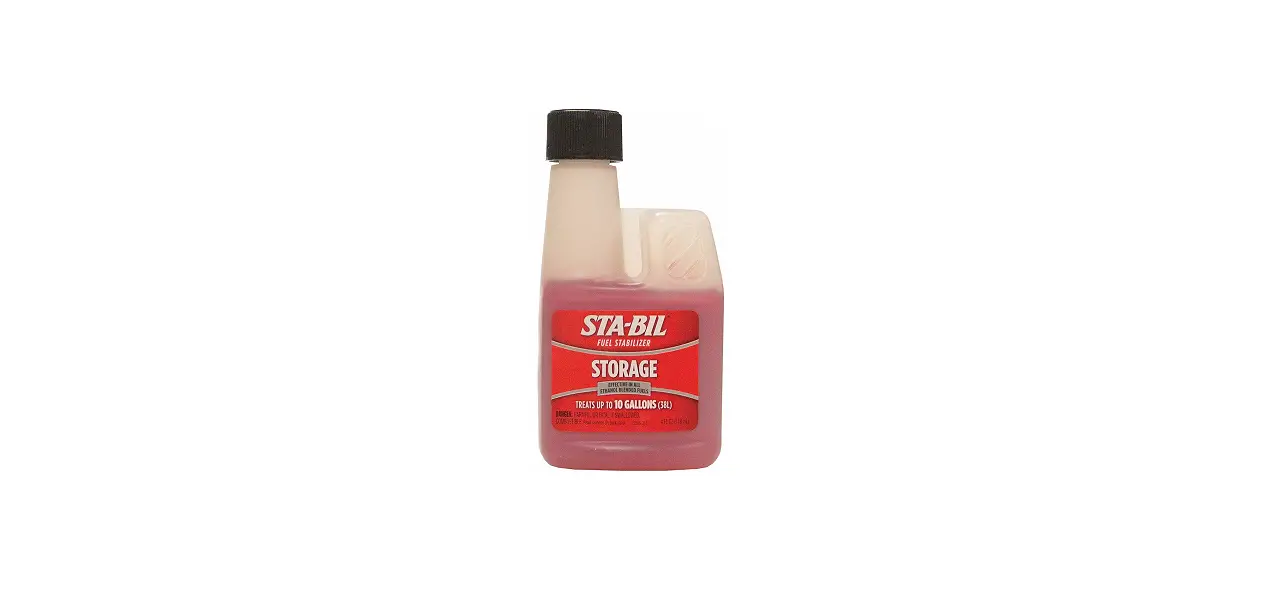

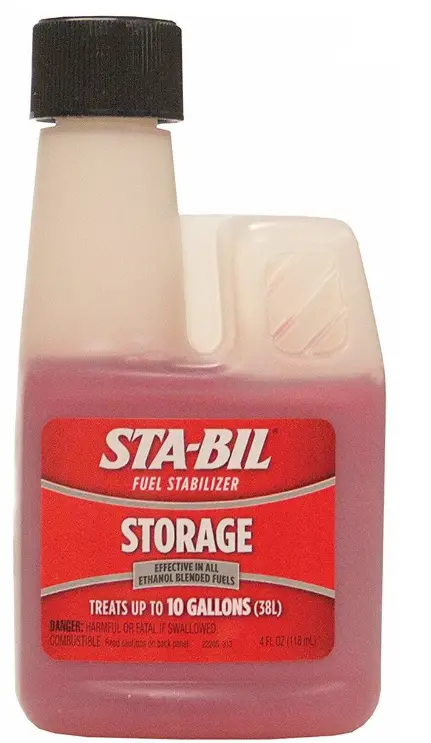
GOLD EAGLE 22204 Fuel Stabilizer
Safety Data Sheet
Section 1: Identification
Product identifier
Product Name • WERC’s StaBil® Fuel Stabilizer – Storage
Synonyms • Sta-Bil®
Product Code 22204; 22205; 22206; 22207; 22208; 22209; 22211; 22213; 22214; 22215; 22216; 22218; 22219; 22234; 22249; 22256; 22258; 22259; 22261; 22280; 22287; 22289; 22298; 22803; 22807; 22808; 22809; 22810; 22812
Relevant identified uses of the substance or mixture and uses advised against
- Recommended use
- Fuel stabilizer
- Restrictions on use
- Do NOT use in diesel fuel
Details of the supplier of the safety data sheet
- Manufacturer
- Gold Eagle Co.4400 S. Kildare Avenue Chicago, IL 60632-4372 United States http://www.goldeagle.com/ Telephone (General)
- 773-376-4400
Emergency telephone number
- Manufacturer
- 1-800-535-5053 – (INFOTRAC #22283)
Section 2: Hazard Identification
United States (US)
According to: OSHA 29 CFR 1910.1200 HCS
Classification of the substance or mixture
- OSHA HCS 2012
- Flammable Liquids 4
Aspiration 1
- Specific Target Organ Toxicity Single Exposure 3: Narcotic Effects Carcinogenicity 2 Reproductive Toxicity 2
- Label elements
- OSHA HCS 2012
Hazard statements
- Combustible liquid May be fatal if swallowed and enters airways May cause drowsiness or dizziness Suspected of causing cancer. Suspected of damaging fertility or the unborn child.
Precautionary statements
Prevention
- Obtain special instructions before use. Do not handle until all safety precautions have been read and understood. Keep away from heat, sparks, open flames and/or hot surfaces. – No smoking. Avoid breathing mist/vapours/spray. Use only outdoors or in a well-ventilated area. Wear protective gloves/protective clothing/eye protection/face protection.
Response
- In case of fire: Use appropriate media for extinction.
IF INHALED: Remove victim to fresh air and keep at rest in a position comfortable for breathing. Call a POISON CENTER or doctor/physician if you feel unwell. IF SWALLOWED: Immediately call a POISON CENTER or doctor/physician. Do NOT induce vomiting. IF exposed or concerned: Get medical advice/attention.
Storage/Disposal
- Store in a well-ventilated place. Keep container tightly closed. Keep cool. Store locked up. Dispose of content and/or container in accordance with local, regional, national, and/or international regulations.
Other hazards
OSHA HCS 2012
- Under United States Regulations (29 CFR 1910.1200 – Hazard Communication Standard), this product is considered hazardous.
Other information
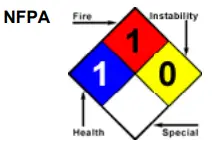
Section 3 – Composition/Information on Ingredients
Substances
- Material does not meet the criteria of a substance.
Mixtures
Section 4: First-Aid Measures
Description of first aid measures
Inhalation
- Move victim to fresh air. Administer oxygen if breathing is difficult. Give artificial respiration if victim is not breathing. If signs/symptoms continue, get medical attention.
Skin
- In case of burns, immediately cool affected skin for as long as possible with cold water. Donot remove clothing if adhering to skin. Remove and isolate contaminated clothing. Wash skin with soap and water.
Eye
- Hold eye open and rinse slowly and gently with water for 15-20 minutes. Remove contactlenses, if present, after the first five minutes, then continue rinsing eye. Get medical attention immediately.
Ingestion
- Do NOT induce vomiting. Get medical attention immediately.
Most important symptoms and effects, both acute and delayed
- Refer to Section 11 – Toxicological Information.
Indication of any immediate medical attention and special treatment needed
Notes to Physician
- All treatments should be based on observed signs and symptoms of distress in the patient. Consideration should be given to the possibility that overexposure to materials other than this product may have occurred.
Section 5: Fire-Fighting Measures
Extinguishing media
- Suitable Extinguishing Media: Use carbon dioxide, dry chemical, foam and/or water fog.
- Unsuitable Extinguishing Media: No data available
Special hazards arising from the substance or mixture
- Unusual Fire and Explosion Hazards: Containers may explode when heated. Vapor explosion hazard indoors, outdoors or in sewers. Combustible material: may burn but does not ignite readily. Many liquids are lighter than water. Most vapors are heavier than air. They will spread along ground and collect in low or confined areas (sewers, basements, tanks). Runoff to sewer may create fire or explosion hazard. Vapors may form explosive mixtures with air. Vapors may travel to source of ignition and flash back. Water may cause frothing.
- Hazardous Combustion Products: No data available
- Advice for firefighters: Structural firefighters’ protective clothing will only provide limited protection. Wear positive pressure self-contained breathing apparatus (SCBA). Move containers from fire area if you can do it without risk. LARGE FIRES: Cool containers with flooding quantities of water until well after fire is out.
Section 6 – Accidental Release Measures
Personal precautions, protective equipment and emergency procedures
- Personal Precautions: Do not walk through spilled material. Use appropriate Personal Protective Equipment (PPE) Do not touch damaged containers or spilled material unless wearing appropriate protective clothing.
- Emergency Procedures: As an immediate precautionary measure, isolate spill or leak area for at least 50 meters (150 feet) in all directions. If tank, rail car or tank truck is involved in a fire, ISOLATE for 800 meters (1/2 mile) in all directions; also, consider initial evacuation for 800 meters (1/2 mile) in all directions. LARGE SPILL: Consider initial downwind evacuation for at least 300 meters (1000 feet) ELIMINATE all ignition sources (no smoking, flares, sparks or flames in the immediate area). Keep unauthorized personnel away. Stay upwind. Keep out of low areas. Ventilate closed spaces before entering.
- Environmental precautions: Prevent entry into waterways, sewers, basements or confined areas.
Methods and material for containment and cleaning up
- Containment/Clean-up Measures: Stop leak if you can do it without risk. Absorb or cover with dry earth, sand or other non-combustible material and transfer to containers. Use clean non-sparking tools to collect absorbed material. A vapor-suppressing foam may be used to reduce vapors. All equipment used when handling the product must be grounded.
- LARGE SPILLS: Dike far ahead of liquid spill for later disposal.
- LARGE SPILLS: Water spray may reduce vapor, but may not prevent ignition in closed spaces.
Section 7 – Handling and Storage
Precautions for safe handling
Handling: Use only in well ventilated areas. Avoid contact with heat and ignition sources. Take precautionary measures against static charges. Do not use sparking tools. All equipment used when handling the product must be grounded. Wear appropriate personal protective equipment, avoid direct contact. Avoid breathing vapors, dust, or spray mist. Avoid contact with skin, eyes, and clothing. Wash thoroughly with soap and water after handling and before eating, drinking, or using tobacco.
Conditions for safe storage, including any incompatibilities
Storage: Store in a tightly closed container. Keep away from incompatible materials. Store in a well-ventilated place. Store in an area equipped with automatic sprinklers or fire extinguishing system. Store below 150º F. Empty containers contain product residues, assume emptied containers to have same hazards as full containers.
Section 8 – Exposure Controls/Personal Protection
Control parameters
Exposure controls
Engineering Measures/Controls: Good general ventilation should be used. Ventilation rates should be matched to conditions. If applicable, use process enclosures, local exhaust ventilation, or other engineering controls to maintain airborne levels below recommended exposure limits. If exposure limits have not been established, maintain airborne levels to an acceptable level. Use only appropriately classified electrical equipment.
Personal Protective Equipment
- Respiratory: In case of insufficient ventilation, wear suitable respiratory equipment. Follow the OSHA respirator regulations found in 29 CFR 1910.134. Use a NIOSH/MSHA approved respirator if exposure limits are exceeded or symptoms are experienced.
- Eye/Face: Wear chemical splash safety goggles.
Skin/Body: Wear appropriate gloves. - Environmental Exposure Controls: Controls should be engineered to prevent release to the environment, including procedures to prevent spills, atmospheric release and release to waterways. Follow best practice for site management and disposal of waste.
Key to abbreviations
- ACGIH = American Conference of Governmental Industrial Hygiene
- NIOSH = National Institute of Occupational Safety and Health
- OSHA = Occupational Safety and Health Administration
- STEL = Short Term Exposure Limits are based on 15-minute exposures
- TWA = Time-Weighted Averages are based on 8h/day, 40h/week exposures
Section 9 – Physical and Chemical Properties
Information on Physical and Chemical Properties
| Material Description | |||
| Physical Form | Liquid | Appearance/Description | Red liquid with a solvent odor. |
| Color | Red | Odor | Solvent |
| Odor Threshold | No data available | ||
| General Properties | |||
| Boiling Point | 180 °F(82.2222 °C) | Melting Point/Freezing Point | No data available |
| Decomposition Temperature | No data available | pH | No data available |
| Specific Gravity/Relative Density | = 0.8 Water=1 | Water Solubility | Negligible < 0.1 % |
| Viscosity | 3 Centistoke (cSt, cS) or mm2/sec @ 40 °C(104 °F) | Explosive Properties | No data available |
| Oxidizing Properties: | No data available | ||
| Volatility | |||
| Vapor Pressure | 97 mmHg (torr) | Vapor Density | > 1 Air=1 |
| Evaporation Rate | > 1 n-Butyl Acetate = 1 | VOC (Wt.) | 100 % |
| Volatiles (Vol.) | 100 % | ||
| Flammability | |||
| Flash Point | > 141.5 °F(> 60.8333 °C) | UEL | 0.8 % |
| LEL | 7 % | Autoignition | No data available |
| Flammability (solid, gas) | Not relevant. | ||
Section 10: Stability and Reactivity
- Reactivity: No dangerous reaction known under conditions of normal use.
- Chemical stability: Stable under normal temperatures and pressures.
- Possibility of hazardous reactions: Hazardous polymerization will not occur.
- Conditions to avoid: Excess heat. Incompatible materials.
- Incompatible materials: Strong oxidants.
- Hazardous decomposition products: Excessive heating and/or incomplete combustion will produce carbon monoxide.
Section 11 – Toxicological Information
Information on toxicological effects
| GHS Properties | Classification |
| Acute toxicity | OSHA HCS 2012 • Data lacking |
| Skin corrosion/Irritation | OSHA HCS 2012 • Data lacking |
| Serious eye damage/Irritation | OSHA HCS 2012 • Data lacking |
| Skin sensitization | OSHA HCS 2012 • Data lacking |
| Respiratory sensitization | OSHA HCS 2012 • Data lacking |
| Aspiration Hazard | OSHA HCS 2012 • Aspiration 1 |
| Carcinogenicity | OSHA HCS 2012 • Carcinogenicity 2 |
| Germ Cell Mutagenicity | OSHA HCS 2012 • Data lacking |
| Toxicity for Reproduction | OSHA HCS 2012 • Toxic to Reproduction 2 |
| STOT-SE | OSHA HCS 2012 • Specific Target Organ Toxicity Single Exposure 3: Narcotic Effects |
| STOT-RE | OSHA HCS 2012 • Data lacking |
Potential Health Effects Inhalation
- Acute (Immediate): May affect the central nervous system. Symptoms may include dizziness, drowsiness, lethargy, coma and death.
- Chronic (Delayed): No data available.
Skin
- Acute (Immediate) : Material is classified as non-irritant and non-corrosive using GHS criteria.
- Chronic (Delayed): No data available.
Eye
- Acute (Immediate): Material is classified as non-irritant using GHS criteria.
- Chronic (Delayed): No data available.
Ingestion
- Acute (Immediate): Material may be aspirated into lungs during ingestion and/or subsequent vomiting. Aspiration of this material will cause severe lung injury, chemical pneumonitis, pulmonary edema or death.
- Chronic (Delayed): No data available.
- Carcinogenic Effects: Suspected of causing cancer. This product contains components that are considered carcinogenic by OSHA, IARC, NTP.
- Reproductive Effects: Animal tests for components have shown adverse reproductive effects.
Key to abbreviations
- LD = Lethal Dose
- MLD = Mild
- SEV = Severe
- TC = Toxic Concentration
- TD = Toxic Dose
Section 12 – Ecological Information
- Toxicity: Non-mandatory section – information about this substance not complied for this reason.
- Persistence and degradability: Non-mandatory section – information about this substance not complied for this reason.
- Bioaccumulative potential: Non-mandatory section – information about this substance not complied for this reason.
- Mobility in Soil: Non-mandatory section – information about this substance not complied for this reason.
- Other adverse effects: Non-mandatory section – information about this substance not complied for this reason.
Section 13 – Disposal Considerations
Waste treatment methods
- Product waste: Dispose of content and/or container in accordance with local, regional, national, and/or international regulations.
- Packaging waste: Dispose of content and/or container in accordance with local, regional, national, and/or international regulations.
Section 14 – Transport Information
| UN number | UN proper shipping name | Transport hazard class(es) | Packing group | Environmental hazards | |
| DOT | None applicable | Gasoline Additive, N.O.I. | NDA | NDA | NDA |
- Special precautions for user: None specified.
- Transport in bulk according to Annex II of MARPOL 73/78 and the IBC Code: No data available
Section 15 – Regulatory Information
Safety, health and environmental regulations/legislation specific for the substance or mixture
- SARA Hazard Classifications: Acute, Chronic
United States
Environment
- U.S. – CAA (Clean Air Act) – 1990 Hazardous Air Pollutants
- Not Listed
- U.S. – CAA (Clean Air Act) – Accidental Release Prevention – Flammable Substances
- Not Listed
- U.S. – CAA (Clean Air Act) – Accidental Release Prevention – Toxic Substances
- Not Listed
- U.S. – CERCLA/SARA – Hazardous Substances and their Reportable Quantities
- Not Listed
- U.S. – CERCLA/SARA – Section 302 Extremely Hazardous Substances EPCRA RQs
- Not Listed
- U.S. – CERCLA/SARA – Section 302 Extremely Hazardous Substances TPQs
- Not Listed
- U.S. – CERCLA/SARA – Section 313 – Emission Reporting
- Not Listed
- U.S. – CERCLA/SARA – Section 313 – PBT Chemical Listing
- Not Listed
- U.S. – CWA (Clean Water Act) – Hazardous Substances
- Not Listed
- U.S. – CWA (Clean Water Act) – Toxic Pollutants
- Not Listed
Other Information
WARNING: This product can expose you to naphthalene, which is known to the state of California to cause cancer, and benzene which is known to the state of California to cause birth defects or other reproductive harm. For more information, go to www.P65Warning.ca.gov.
- Revision Date: 21/November/2018
- Preparation Date: 11/June/2015
- Other Information: Schedule B Number: 3811.90.0000.
- Disclaimer/Statement of Liability: Information presented herein is believed to be factual, as it has been derived from the works and opinions of persons believed to be qualified experts. However, nothing contained in this information is to be taken as warranty or representation for which the Gold Eagle Co. bears legal responsibility. The user should review any recommendations in the specific context of the intended use to determine whether they are appropriate.
Key to abbreviations
- NDA = No Data Available