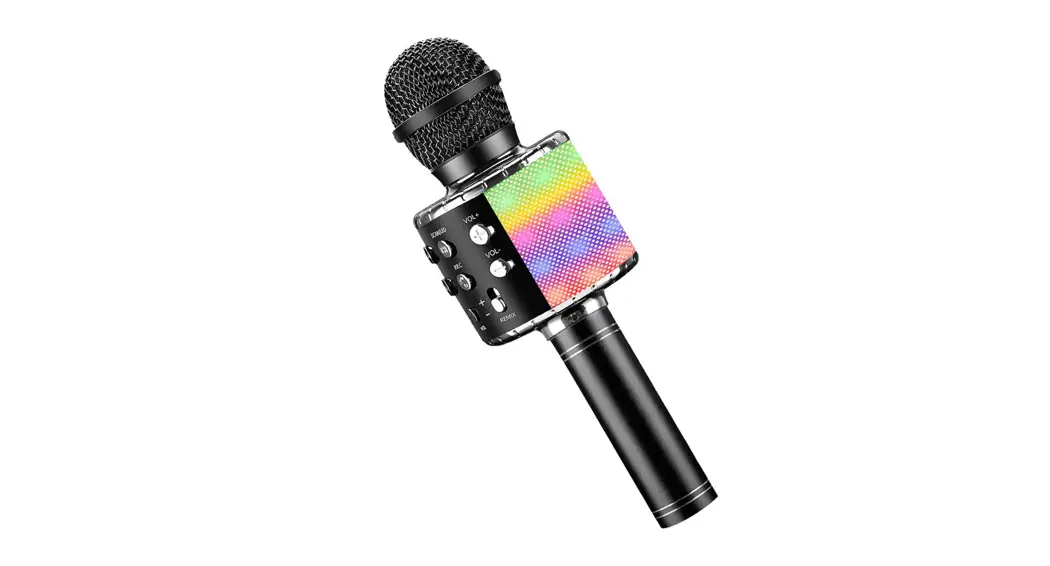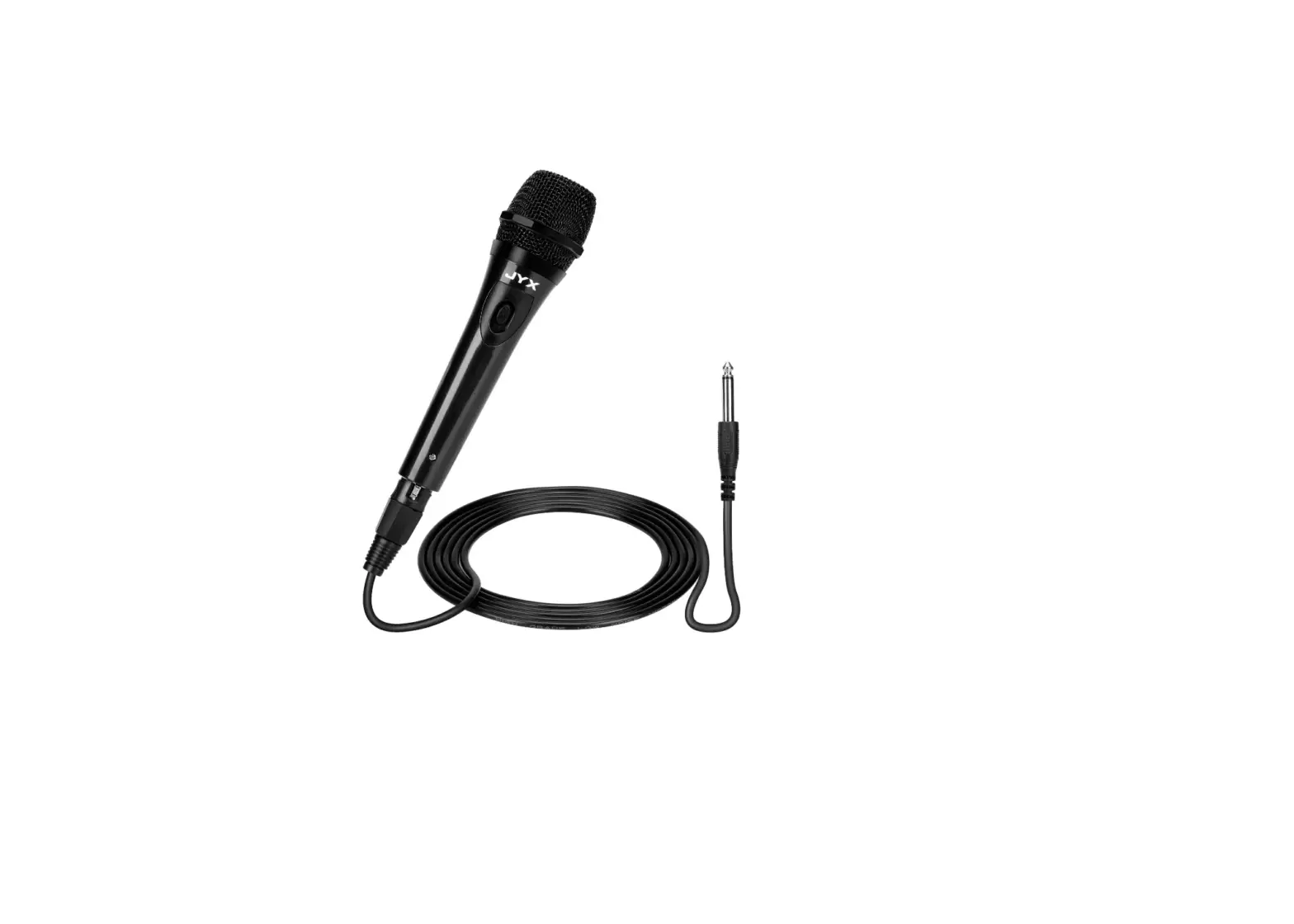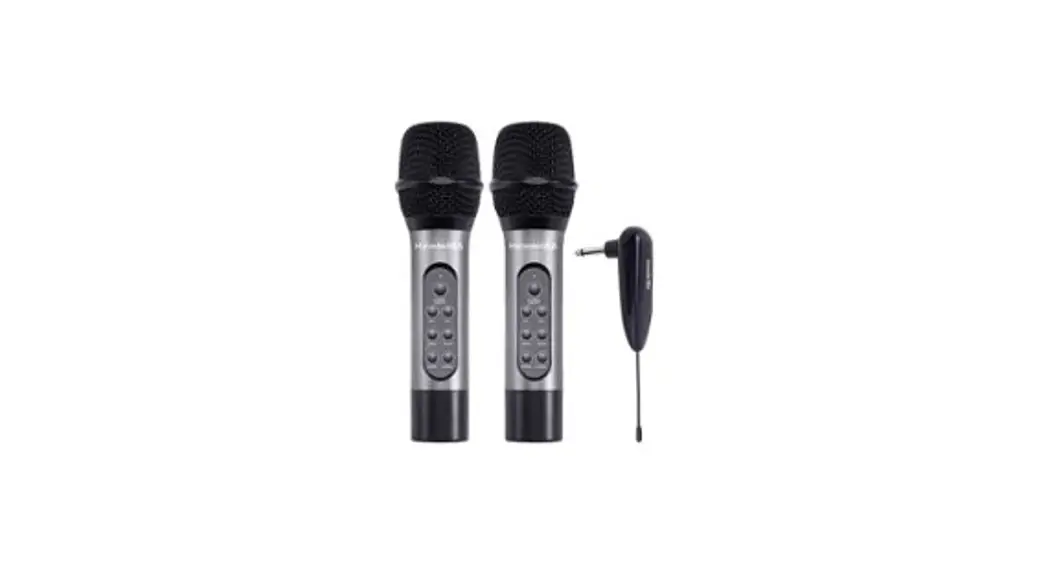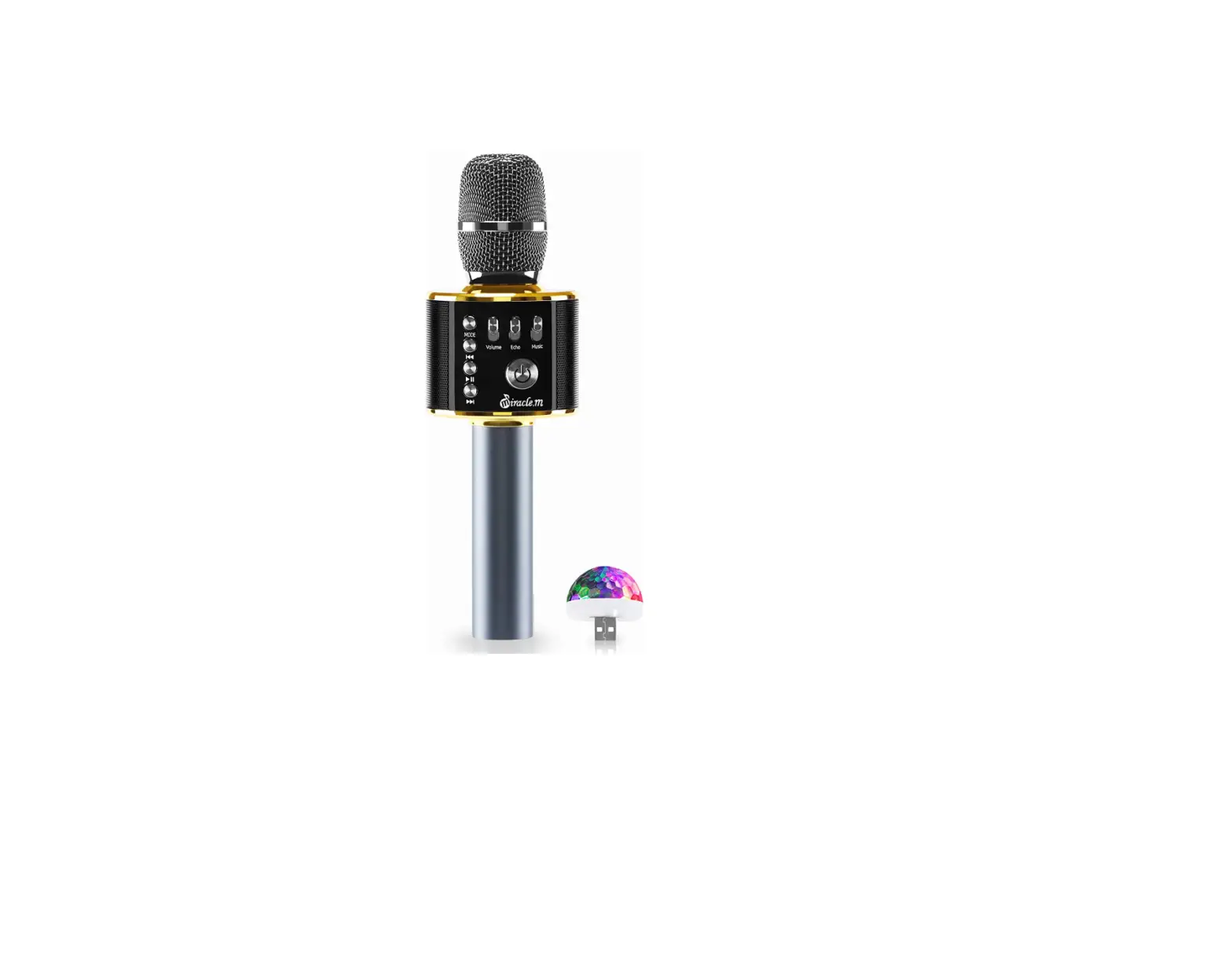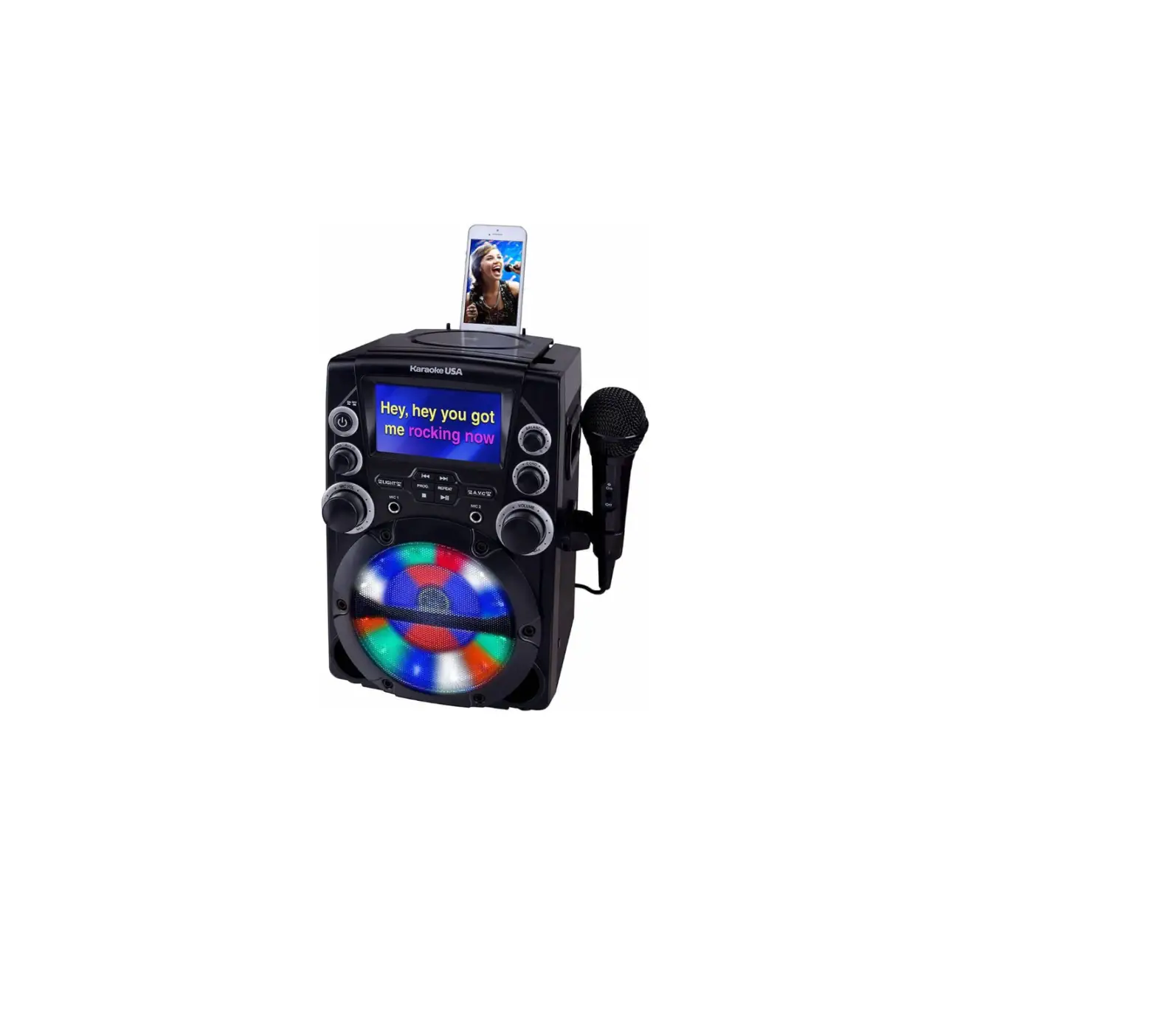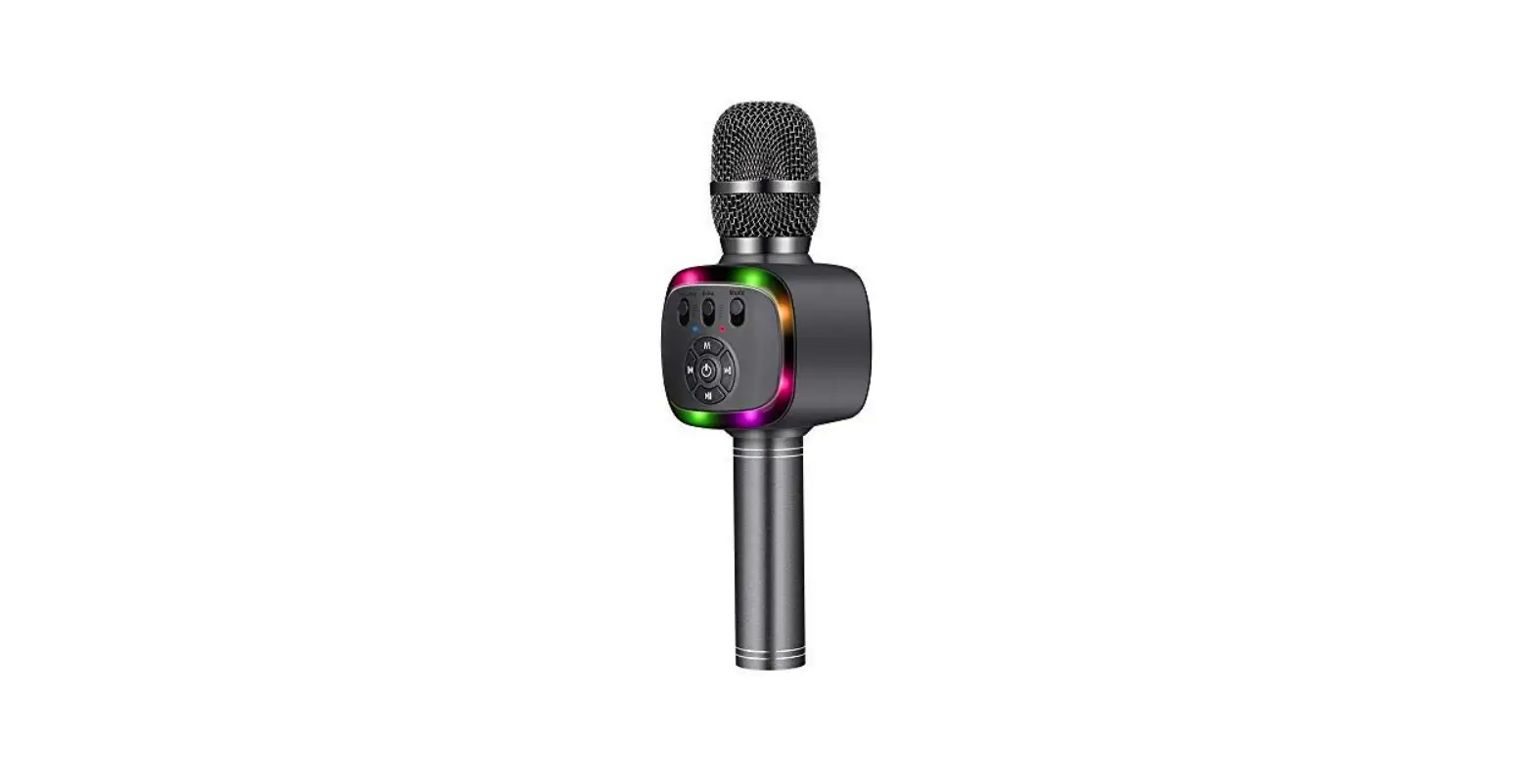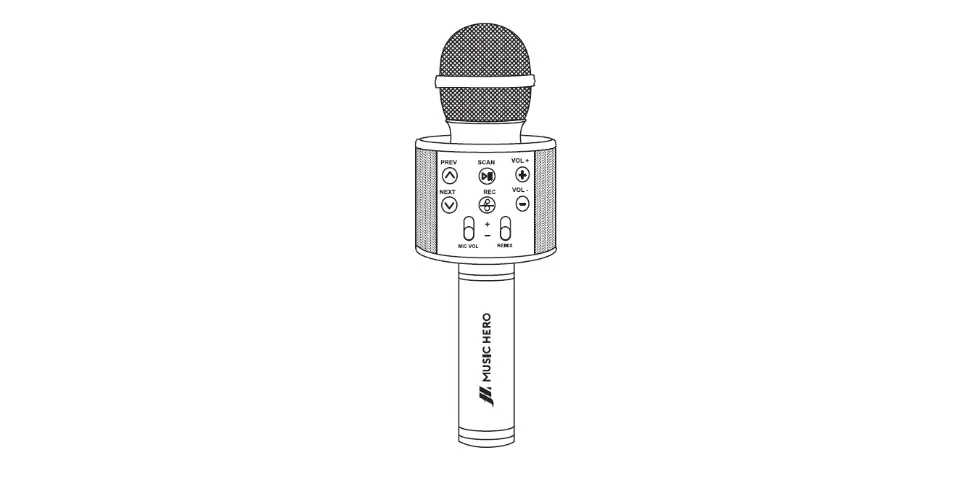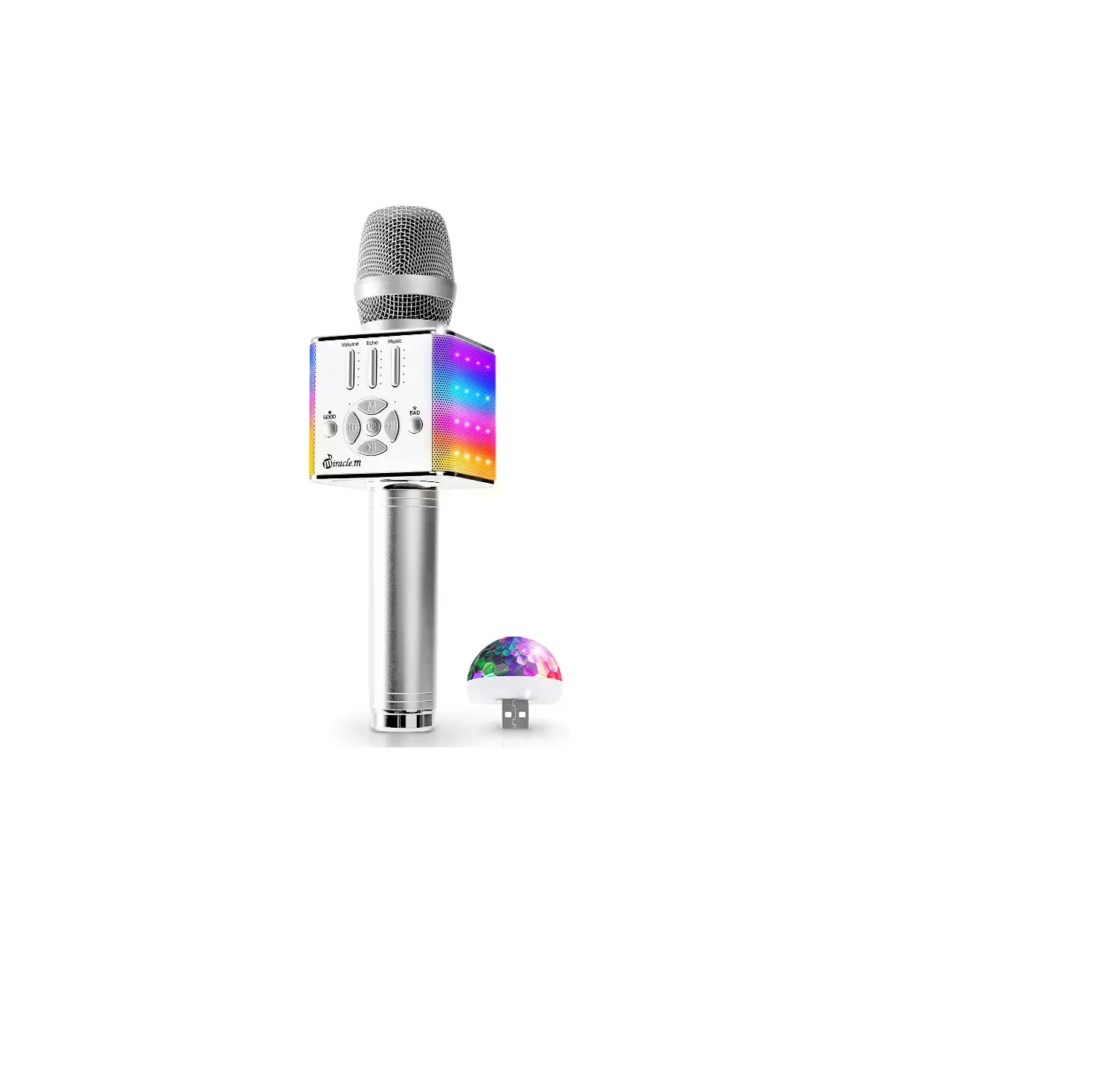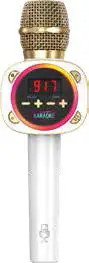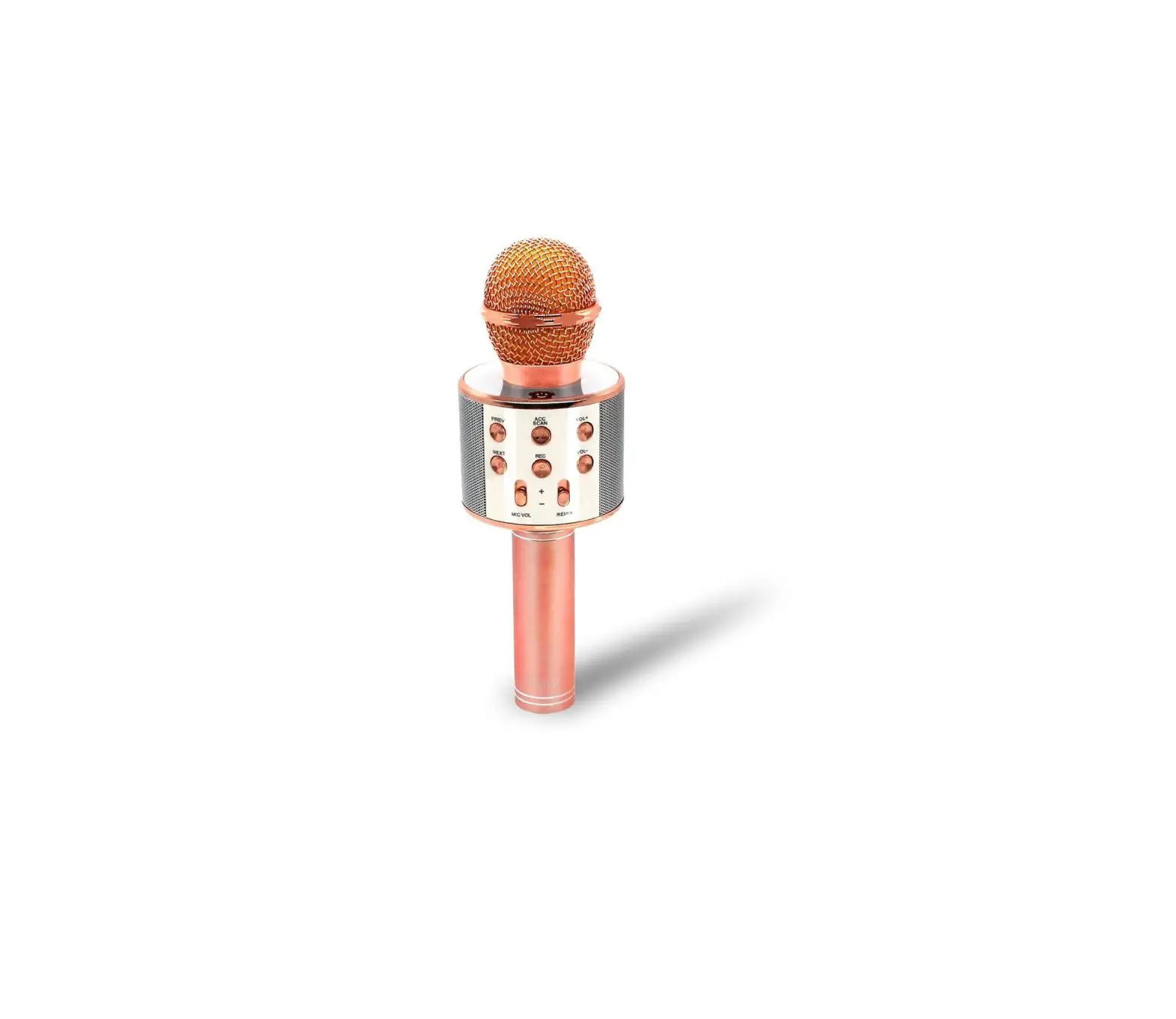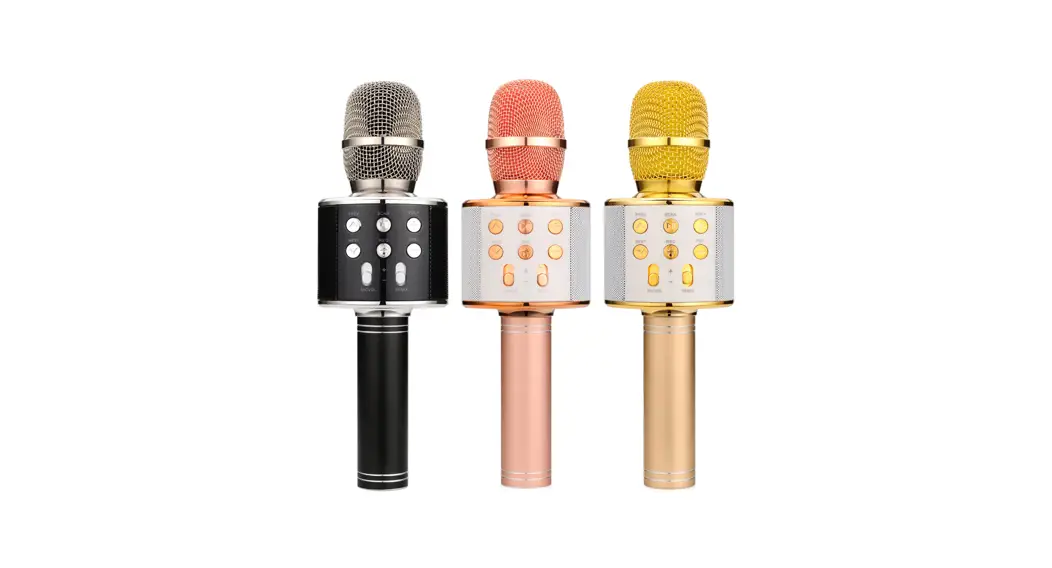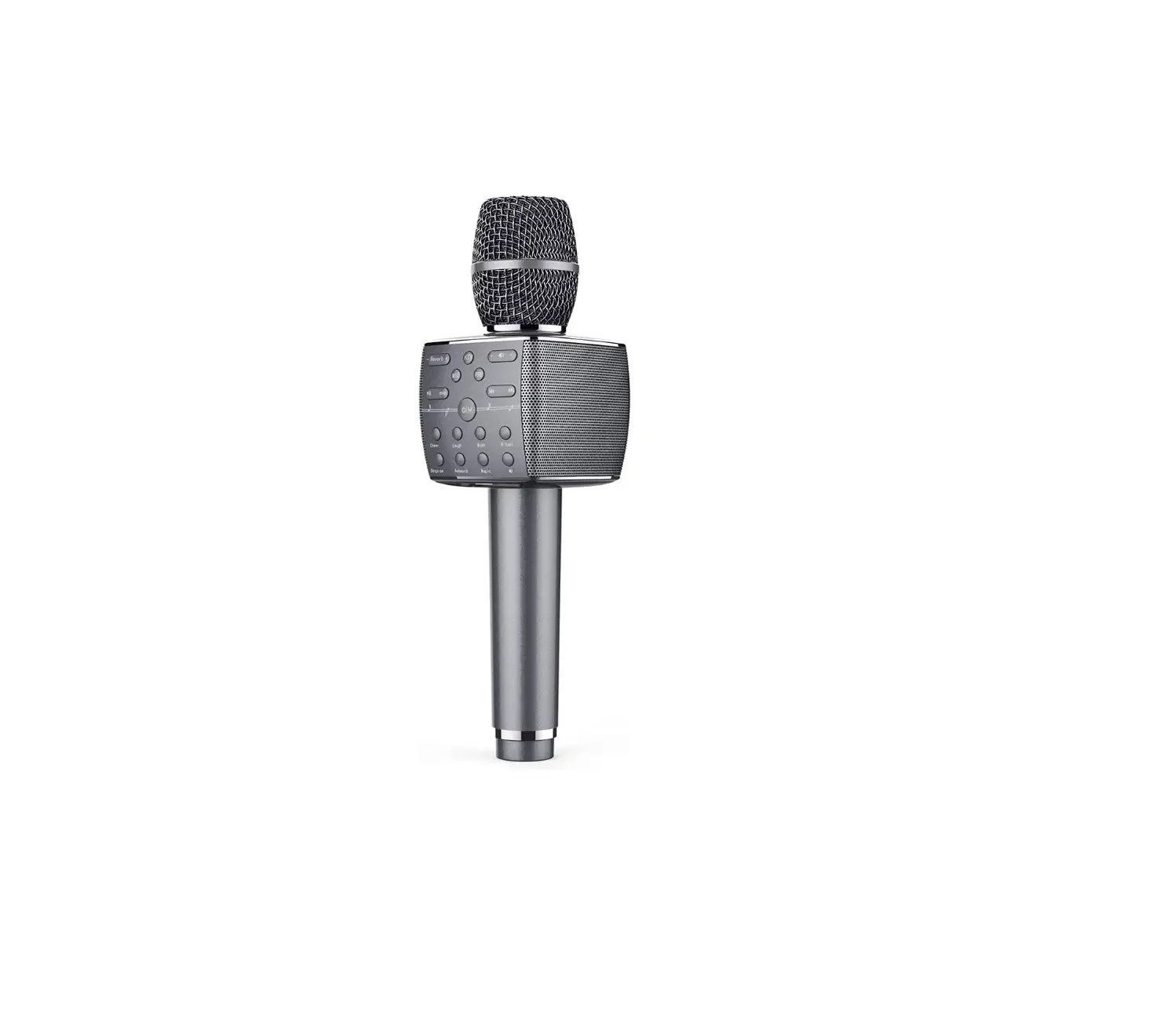

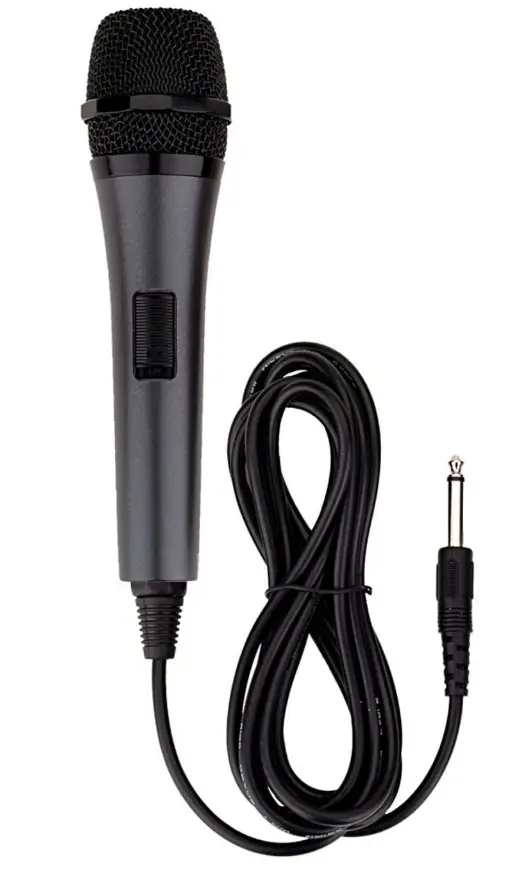
Karaoke USA M187 Professional Dynamic Microphone
Specifications
- DIMENSIONS:5 x 4.4 x 2.8 inches
- WEIGHT: 6 pounds
- MODEL: M187
- COLOR: Black
- MICROPHONE TYPE: Dynamic
- FREQUENCY RESPONSE: 80Hz~11kHz
- SENSITIVITY: -72dB +/- 3dB (1kHz)
- OUTPUT IMPEDANCE: 620 ohms +30% (1kHz)
Introduction
Karaoke USA presents one of the most basic mic at a very good price. It is a plain black mic which is super simple to use. It is a plug-n-play mic. This mic has a sensitivity of -72dB which means it is quite sensitive and can detect your voice quite effectively. The pattern of this mic is cardioid which means it is a unidirectional mic. This means it has a polar pattern and features full sensitivity on-axis.
This microphone also has a pretty impressive frequency response ranging of 80Hz to 11kHz. The mic is pretty universal. It is a wired microphone. It has a non-detachable cord with a 3.5mm audio jack on its one end. It can be connected to any device that comes with a 3.5mm audio port.
This mic is simple, cheap and works extremely. It is the perfect mic to use in parties for your rowdy guests as they can’t really damage it.
What’s in the box?
- Karaoke USA M187 Dynamic Microphone x 1
How to connect the microphone to your device?
The microphone is compatible with any device that features a 3.5mm audio port. Simply connect the 3.5mm audio jack of the microphone to the audio port of your device.
How to turn on the mic?
The mic comes with a slider on its body. Slide it to turn on the mic and simialry slide it downwards to turn it off.
Frequently Asked Questions
By connecting your microphone directly to your computer and using YouTube, Spotify, a Karaoke app, or a CD-G disc for the audio and lyrics, you may set up karaoke using a PC. To view the lyric video, simply connect your karaoke equipment straight to your computer.
In fact, modern Smart TVs now come equipped with cameras and microphones. Cameras and microphones are frequently mounted above the margins of smart TV screens. Due to the frequent pairing of these two elements in video calls, they are frequently positioned close together.
Due to the simplicity and ease of use that a cable connection offers, many musicians and sound engineers favor connected microphones. Users of wired microphones never have to worry about battery life or frequency selection.
Sound is transformed by wired microphones into an electrical audio signal and transmitted to an audio system via cable. When using a wired microphone, your options are limited by the length of the cable that the microphone is connected to.
No, they don’t need batteries.
Before, wireless microphones were cumbersome, noisy, and unreliable. Today, however, the quality is nearly on par with what the wired alternatives provide, even at the lower end of the market.
It is possible to connect a microphone to a speaker directly. How to physically connect a microphone to a speaker: First, we must locate the speaker input connector. Next, we must use the appropriate cable adapters to connect the microphone’s output signal to the speaker input.
A microphone can be used without any speakers, headphones, or other playback devices.
Nowadays, the majority of laptops and computers include a single audio connector intended for usage with both headphones and a microphone. Since most wired headphones have the common 3.5mm TRRS connection, which is suitable for integrated audio, this typically isn’t a problem.
The generic names for these connectors are CB connector, mobile connector, microphone connector, and power connector.
Ribbon, condenser, and dynamic microphones are the three main types.
Usually, the same cable that carries a microphone’s audio also powers it. This holds true for USB power, T-power, plug-in power, DC biassing, and phantom power. It applies to external power supply devices as well, albeit these cables often feature extra pins for power transmission.
The main distinction between active and passive microphones is that active microphones contain circuitry that run on phantom power. Yes, that is accurate. In order to function, these ribbon microphones need phantom power.
In the entertainment industry, television broadcasting, and public speaking, wireless microphones are frequently used to allow performers, interviewers, and entertainers to move around freely while using a microphone without needing a cord tied to the microphone.
The built-in microphone on a camera is inferior to an external microphone in terms of audio quality. Additionally, since some of them have their own power source, the battery life is increased. External microphones are often directional, which means they only capture sounds that are directly in front of them.
The port is typically located near the back of a desktop computer. Thankfully, many contemporary devices also offer a front-facing port, which is typically located alongside a USB port and maybe an SD card reader. Simply connect in your headset, then review the outcomes.