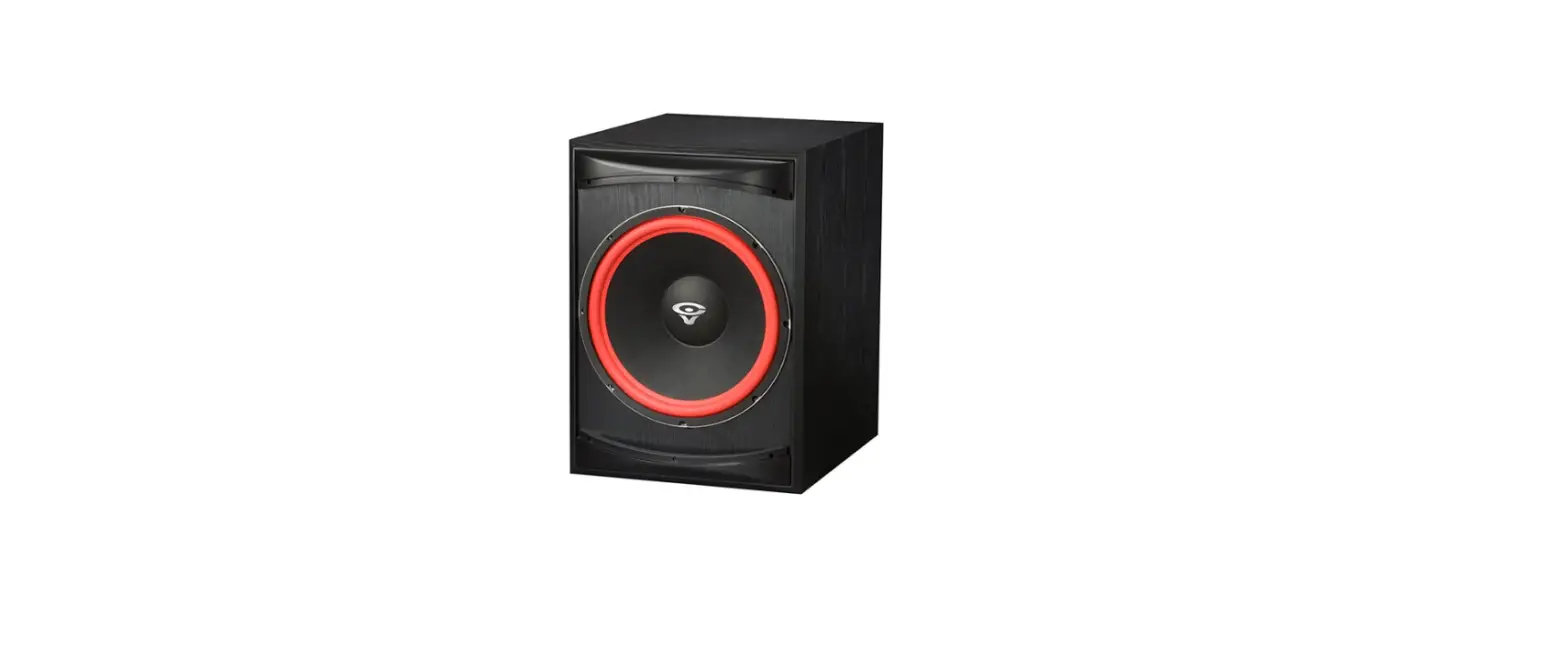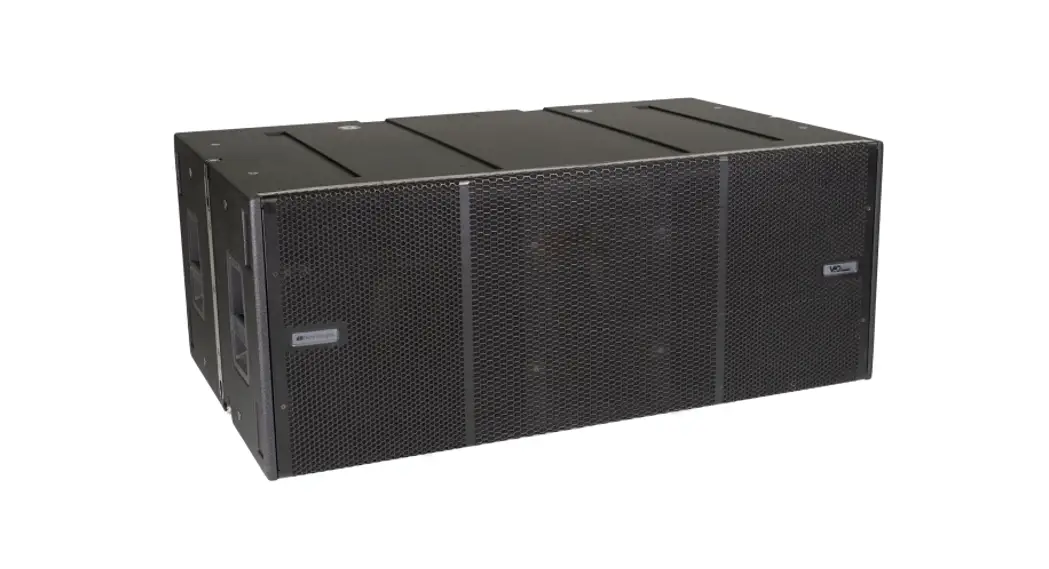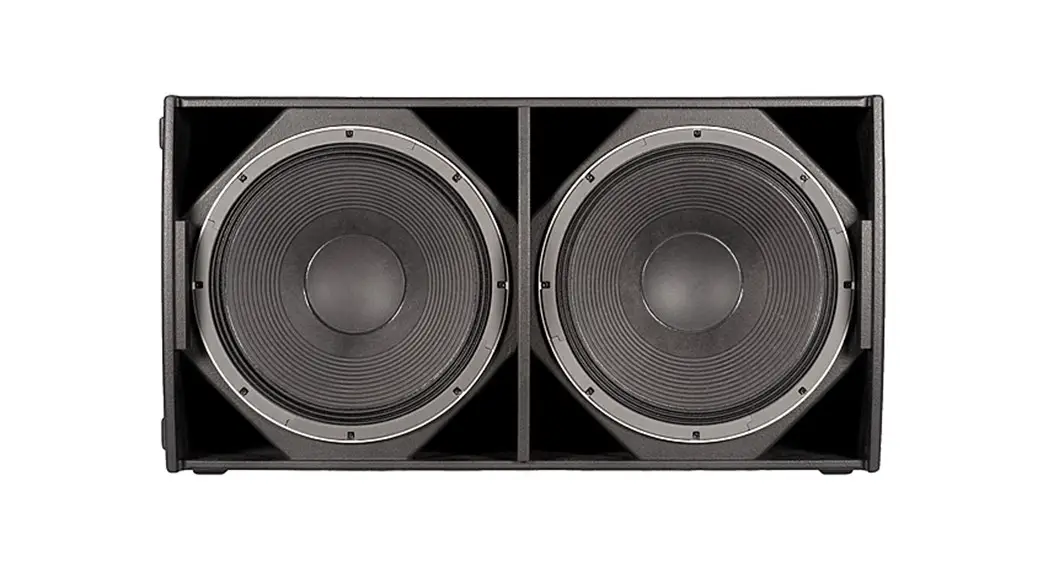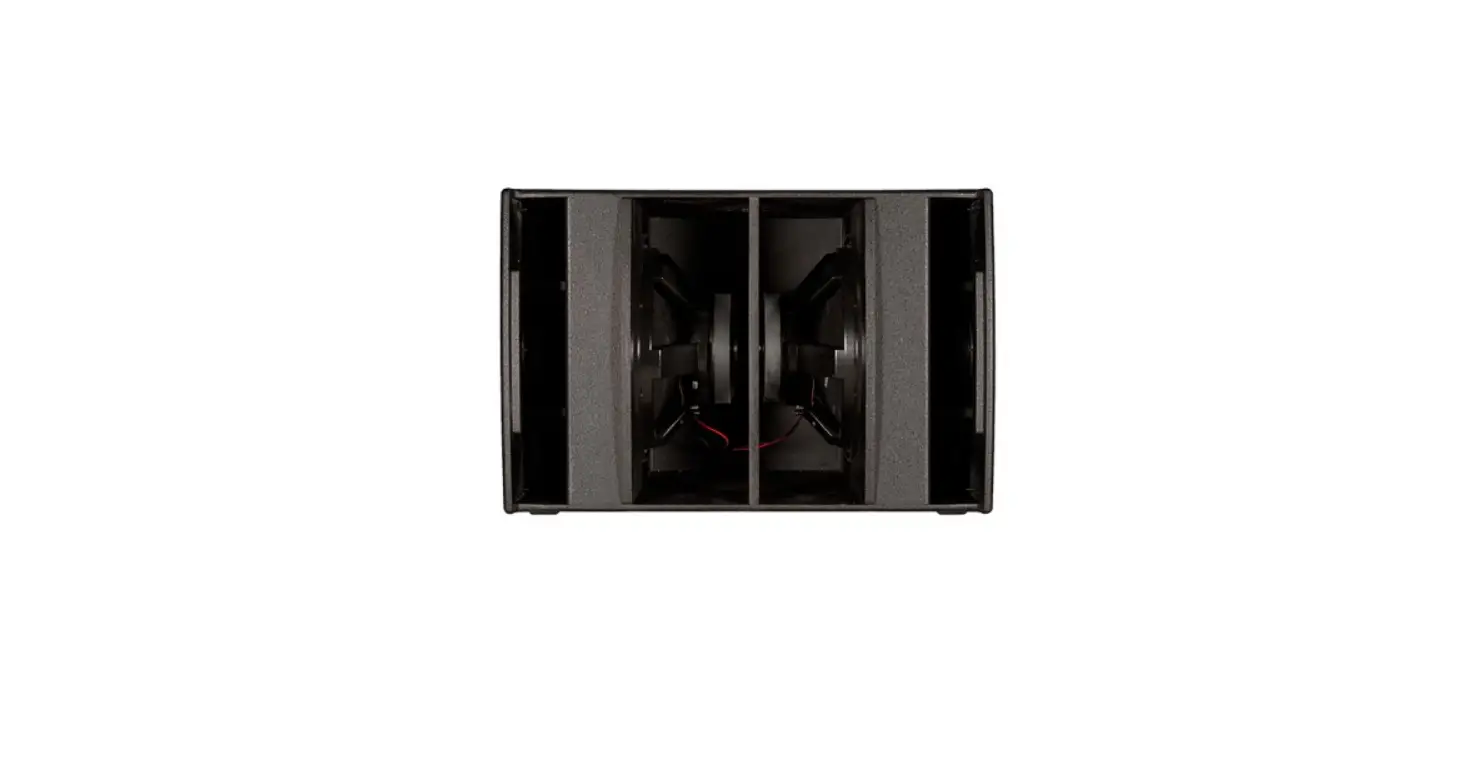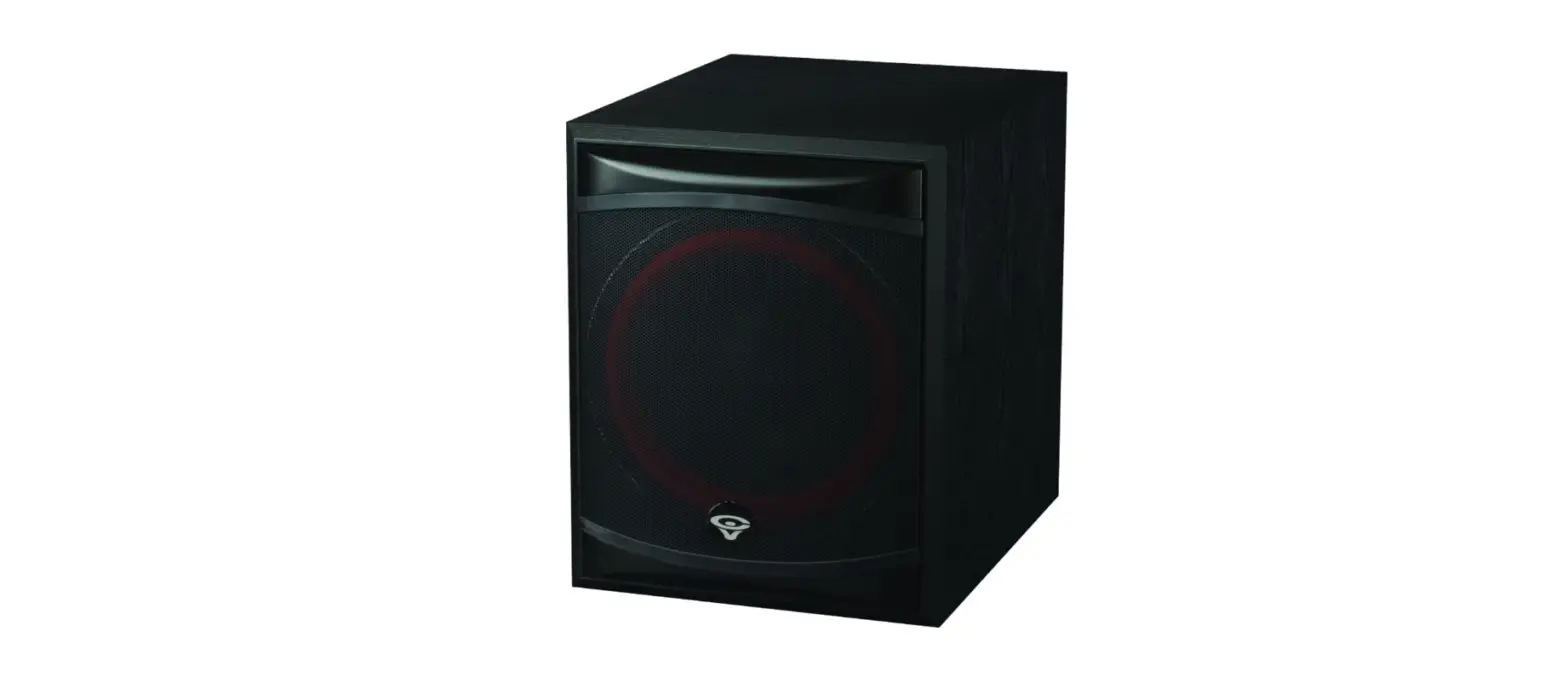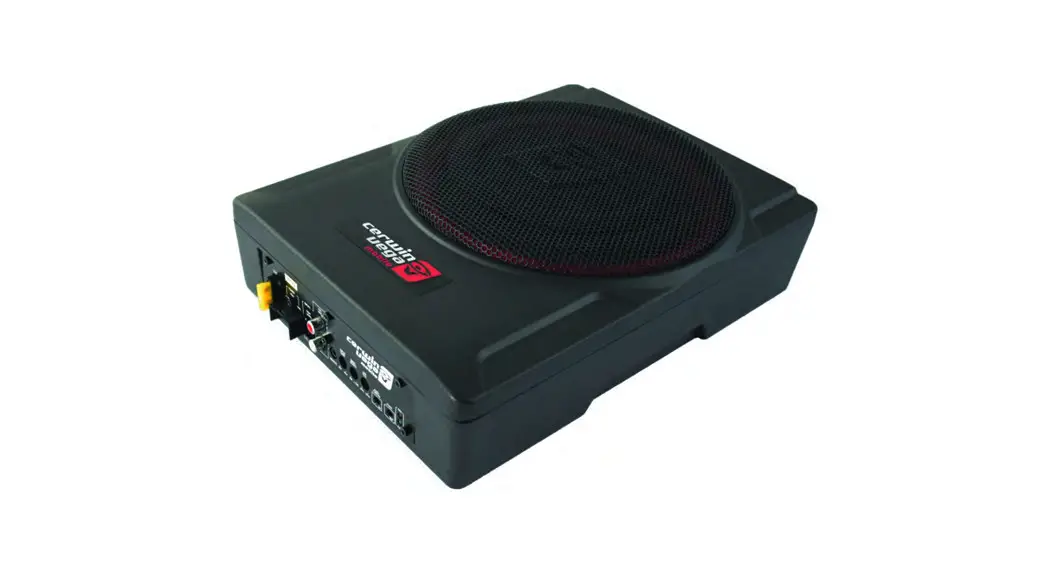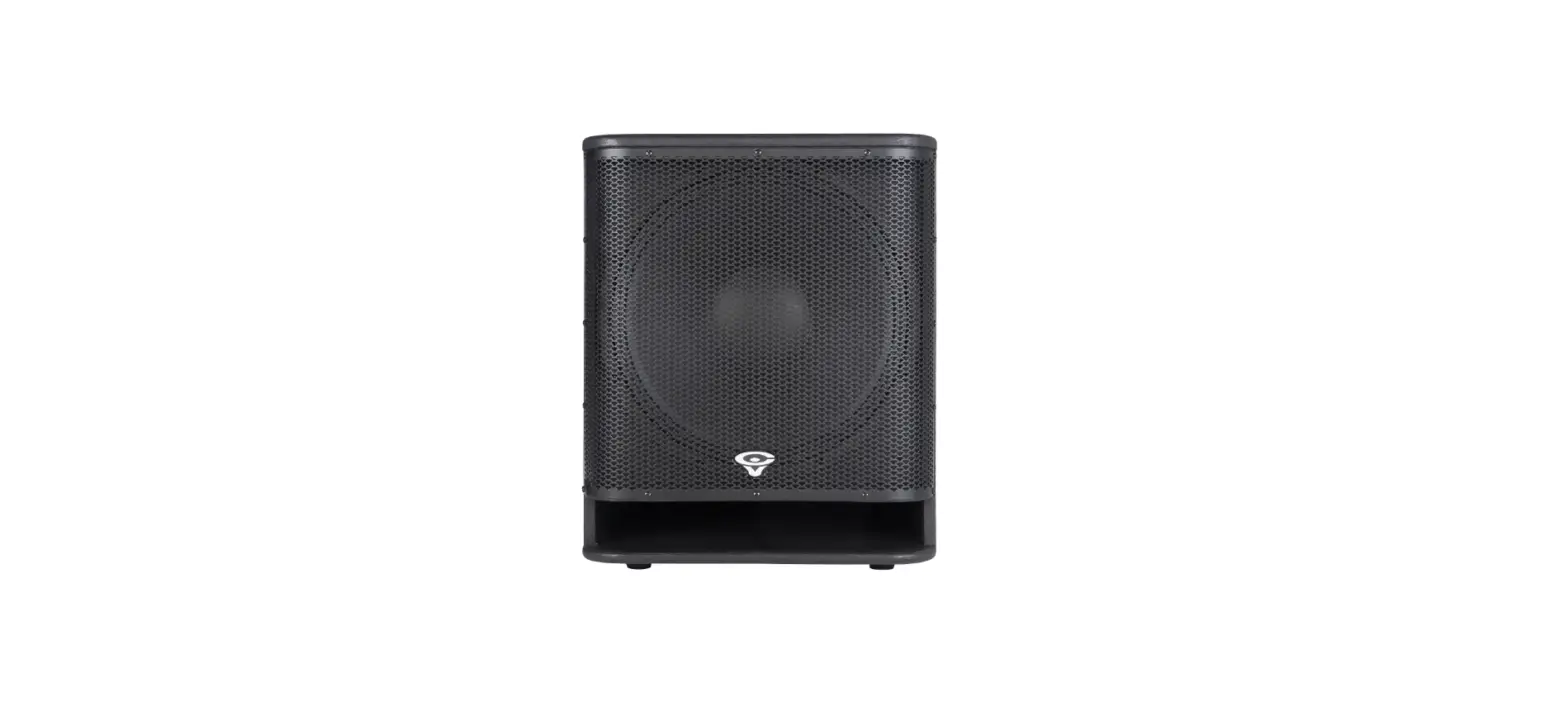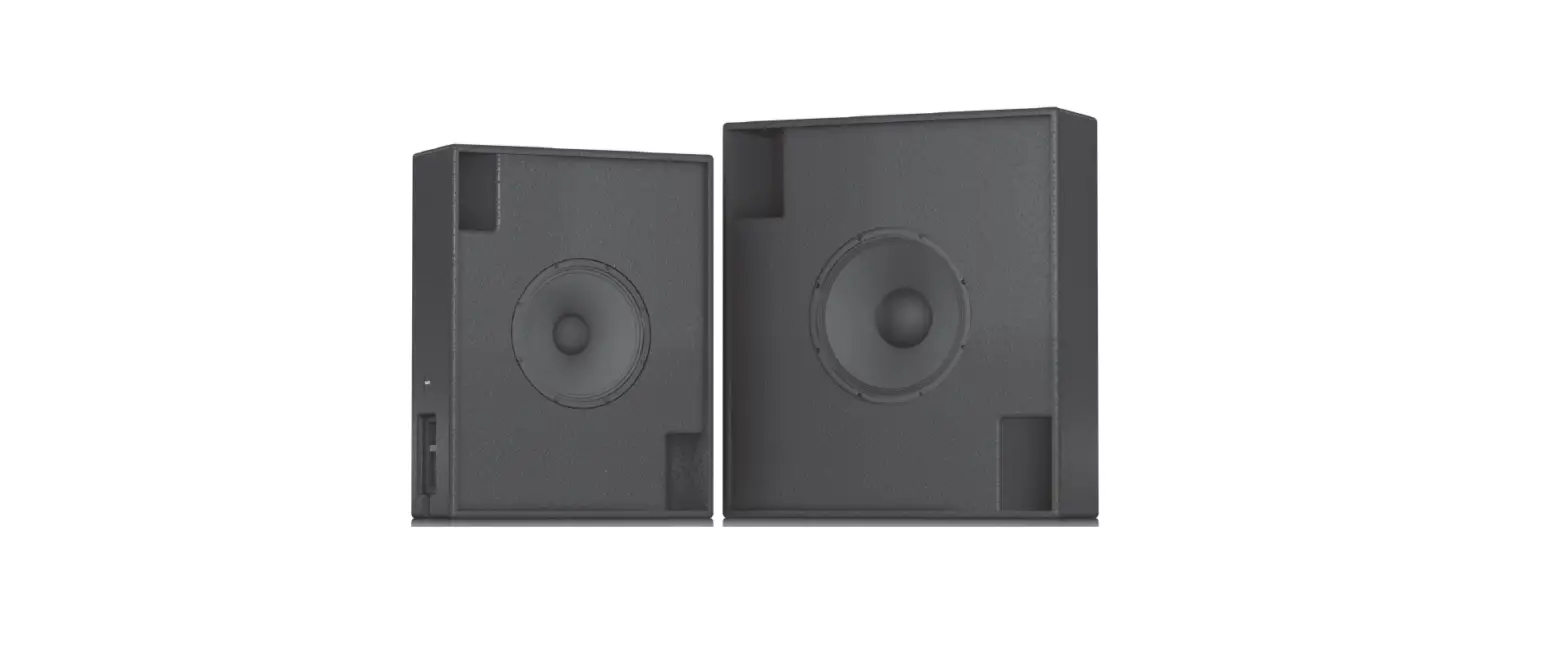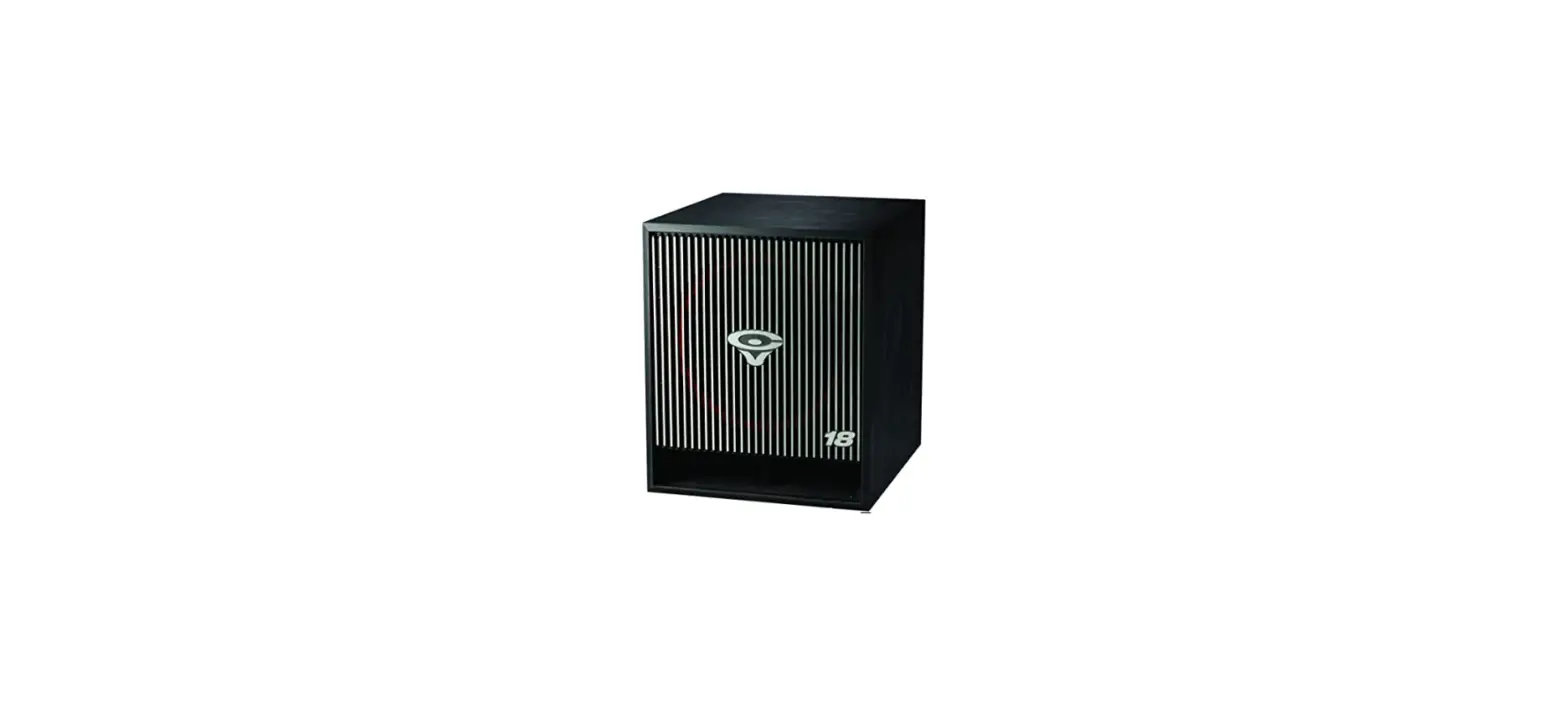

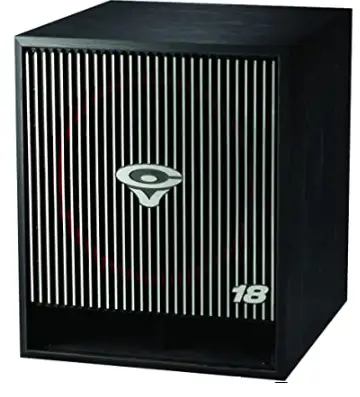
Cerwin-Vega Cvhf-A18S 18-Inch Active Front-Firing Cvhf Stroker Subwoofer
Introduction
Congratulations! Welcome to the Cerwin-Vega! family. You’ve joined a growing group of audio enthusiasts who’ve turned to Cerwin-Vega! for the most advanced audio reproduction systems available. All Cerwin-Vega! systems are thoroughly tested to ensure that they meet or exceed our performance specifications. Backed by the best service in the industry, Cerwin-Vega! is dedicated to quality and reliability. For a complete overview of Cerwin-Vega! products and services, please visit our website at www.cerwin-vega.com
Before yoU begin
Cerwin-Vega! subwoofers are easily capable of generating sound pressure levels (SPL) sufficient to cause permanent hearing damage to performers, production crew and audience members. Caution should be taken to avoid prolonged exposure to SPL in excess of 90 dB.
Built-in Amplifier Precautions
Do not attempt to service this unit beyond the instructions contained in this manual. Refer all servicing to a Cerwin-Vega! / Stanton Authorized Service Center. Servicing is required when the apparatus has been damaged in any way, such as power-supply input connector is damaged, liquid has been spilled or objects have fallen into the apparatus, the apparatus has been exposed to rain or moisture, does not operate normally, or has been dropped. Keep your Cerwin-Vega! subwoofer amplifier module away from sources of heat, such as a radiator or oven. Do not cover or surround your Cerwin-Vega! subwoofer amplifier module with material that may retain heat, such as a blanket or curtain. Be certain that the vents on the panel of the amplifier module are clear of all obstructions during operation.
Warning
- Shock Hazard: To reduce the risk of fire or electric shock, do not expose this unit to rain or moisture.
- Do not immerse your Cerwin-Vega! subwoofer amplifier module in any liquid.
- Do not operate your Cerwin-Vega! subwoofer near a pool, bathtub, or other standing water.
- Do not bypass or defeat the grounding or polarization means used on the Cerwin-Vega! subwoofer amplifier module.
- Make sure all blades on the polarized power plug can be fully inserted into the receptacle or other outlet that will be used with the unit.
- Your Cerwin-Vega! subwoofer amplifier module should be cleaned only with a dry cloth.
- Take care of the power cord attached to your Cerwin-Vega! subwoofer amplifier module. Avoid situations where your cord might be stretched, pinched, or otherwise abused. Route it to avoid foot traffic. Pay special attention to the cord connector and attachment points.
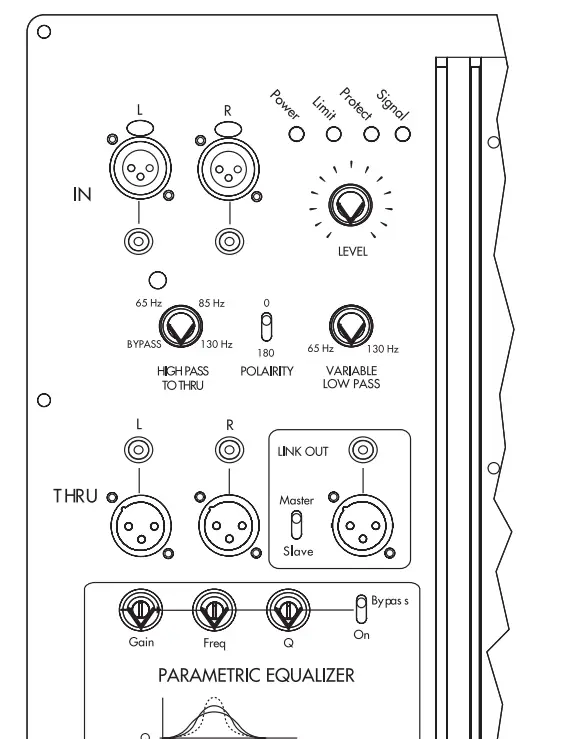
Overview oF ControlS (Figure 2.1)
indiCatorS: Illumination of LED indicates the status of the amplifier.
- Power = electric current is live and present in the system
- Limit = the system is being driven to its maximum capacity (clipping)
- Protect = the built-in amplifier has shut down to protect itself
- Signal = a line-level signal is present in the system
- in l & r inputs: Electronically balanced XLR and RCA connectors accept input signal from line-level sources. IN L & R also routes to THRU L & R outputs.
- Level: Controls the master volume at the pre-amp stage.
- High Pass Filter: When sending a full range signal through the subwoofer to the top cabinet, the HPF blocks LF signals below indicated frequencies from reaching the top cabinet.
- Variable low PaSS Filter: When sending a full range signal to the subwoofer, the variable LPF blocks HF signals above indicated frequencies from reaching the subwoofer. In the full count.
- tHrU l & r outputs: Provide a loop-thru of the signals coming in on the L and R inputs. The High Pass filter is active on these outputs. These outputs and the High Pass filter are always active regardless of whether the unit is in master or slave mode. Typically these outputs are used for top cabinets.
- Polarity SwitCH: Changes the polarity of the subwoofer, also referred to as the “phase.” Listen and adjust for maximum bass.
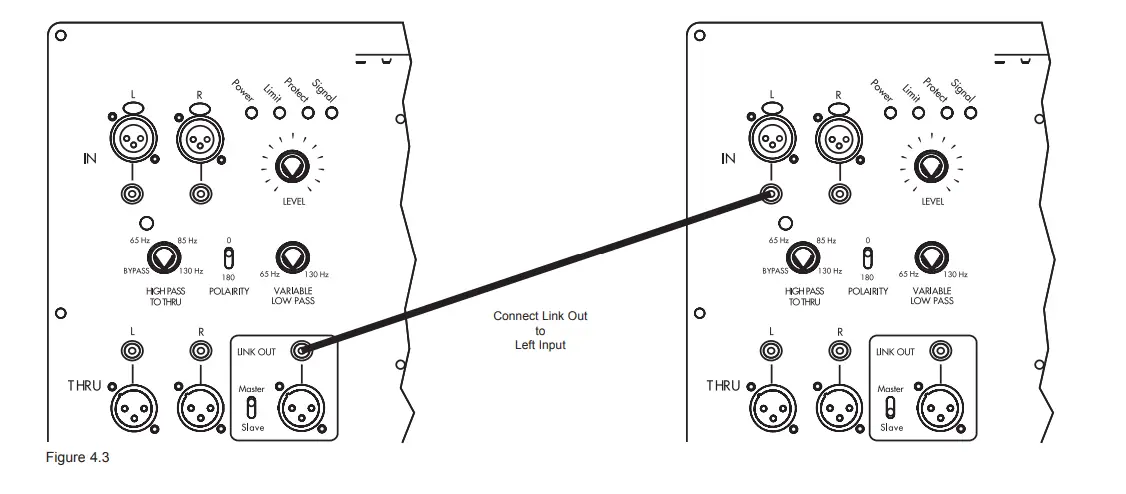
- Master / SlaVe: This mode is used to provide the ability to adjust multiple subunits from the master sub. When switched to MASTER, all sub-controls are functional and both L and R inputs are operational. The LINK OUT connector sums the input signals from both L and R inputs and is used to send a signal to a sub in SLAVE mode. When set to SLAVE mode, only the L input connector is active and the LEVEL, POLARITY, and LOW PASS FILTER are inactive. To attach more subs, set them to SLAVE mode, use the LINK OUT of the previous sub, and send this signal to the L IN on the SLAVE.
- Link out: Used to send a signal to a subset to SLAVE mode. When the sub is set to SLAVE mode, the LINK OUT provides a summed signal of the L and R inputs. (See MASTER / SLAVE for ore information).
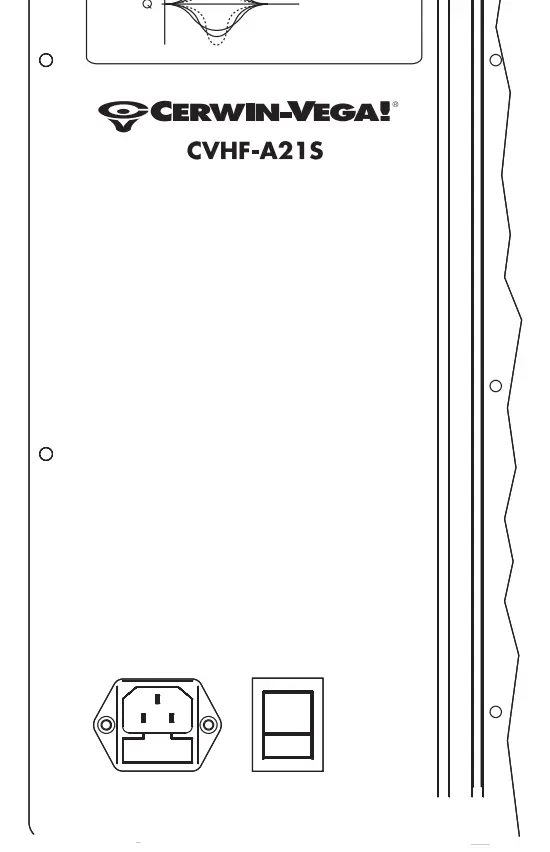
- ParaMetriC eQUaliZer (CVHF-a21S only): One band full parametric equalizer with adjustment of the Gain, Frequency, and Q. The higher the setting, the narrower the frequency range becomes that is being affected.
- Power Switch: Turns the AC power of the unit On and Off. aC inPUt: Input for attachment of the IEC power cord.


PlaCing tHe SUbwooFer (Figure 3.1)
Proper placement of your subwoofer will result in the best musical and home theater experience. Thankfully, subwoofer placement is not difficult.
Subwoofers reproduce low-frequency audio. Low frequencies are not as directional as high frequency signals, so unlike placing high-frequency speakers subwoofers can usually be placed anywhere in the room.
When you put a subwoofer in a room, the sound waves bounce back and forth between the parallel surfaces of the room. When they combine, it is possible to get a “standing wave.” If they cancel each other out you can get a null. If you listen in a location where standing waves peak, you will likely hear boomy, one-note bass. If you are sitting in a null, you will hear less bass. Moving a foot or two to either side of a null can cause the bass to “magically” reappear.
As you can see, the subwoofer and your particular room work together. It’s not just the location of the subwoofer that matters: where you place the sofa and chairs is just as important. Here are a few tricks that will help you work around peaks and nulls and assist you in getting the best sound from your subwoofer.
If possible, place the subwoofer on the same horizontal plane as your main speakers, i.e. in line with them.
Corners and walls reinforce bass frequencies. If possible, place the subwoofer in the corner of a room or next to a wall, and then use the subwoofer’s level control to dial in the right amount of bass.
The worst place for a subwoofer is in the middle of a room. There are no walls to reinforce the bass energy there.
If there is too much bass buildup in one area, try moving furniture around to dissipate, or diffuse, this buildup. Careful subwoofer and furniture placement will help to more evenly distribute the bass frequencies throughout the room. A second subwoofer can also be used to more evenly distribute bass frequencies, though is usually not necessary.
The most difficult room shape is square, so if you have the flexibility to choose which room you’ll use for home theater or you are building a new home and designating a space for home theater, avoid rooms with equal dimensions.
The closer you sit to a wall, the more pressure your ear will pick up and the greater the bass intensity will be.
Avoid rooms with concrete floors and walls. Walls where the wallboard flexes are more absorptive and produce fewer problems with “bass boom.” If you can’t avoid concrete walls, add studs and one layer of wallboard to the walls of the room to further aid absorption.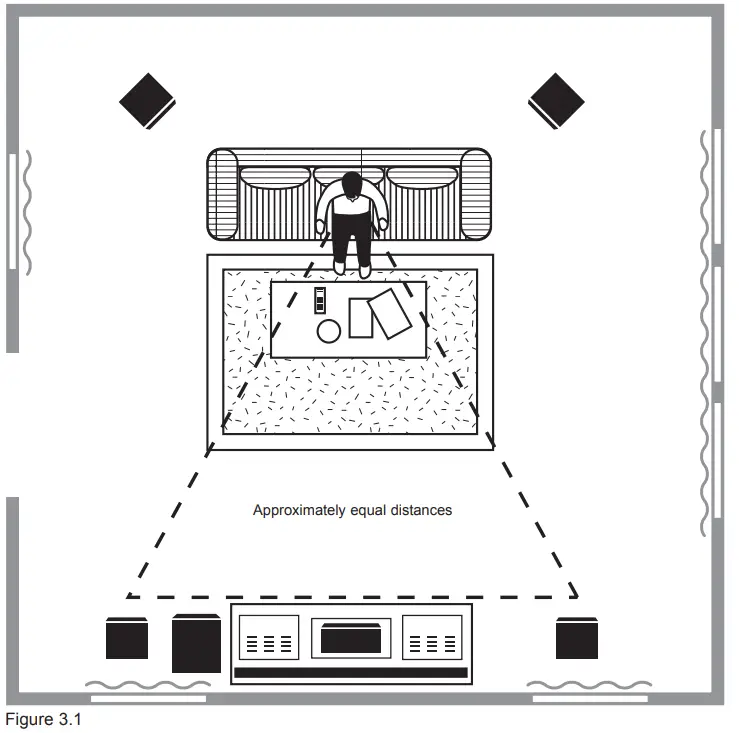
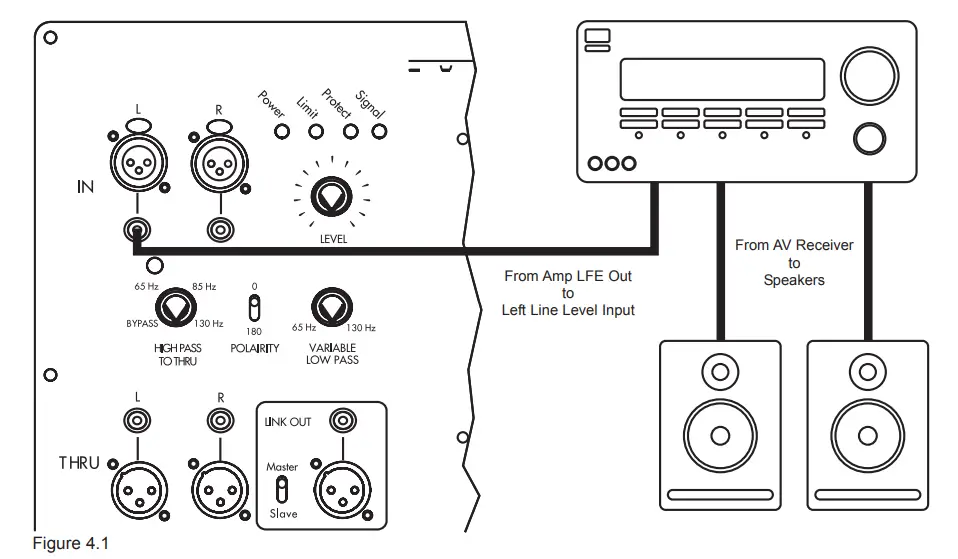
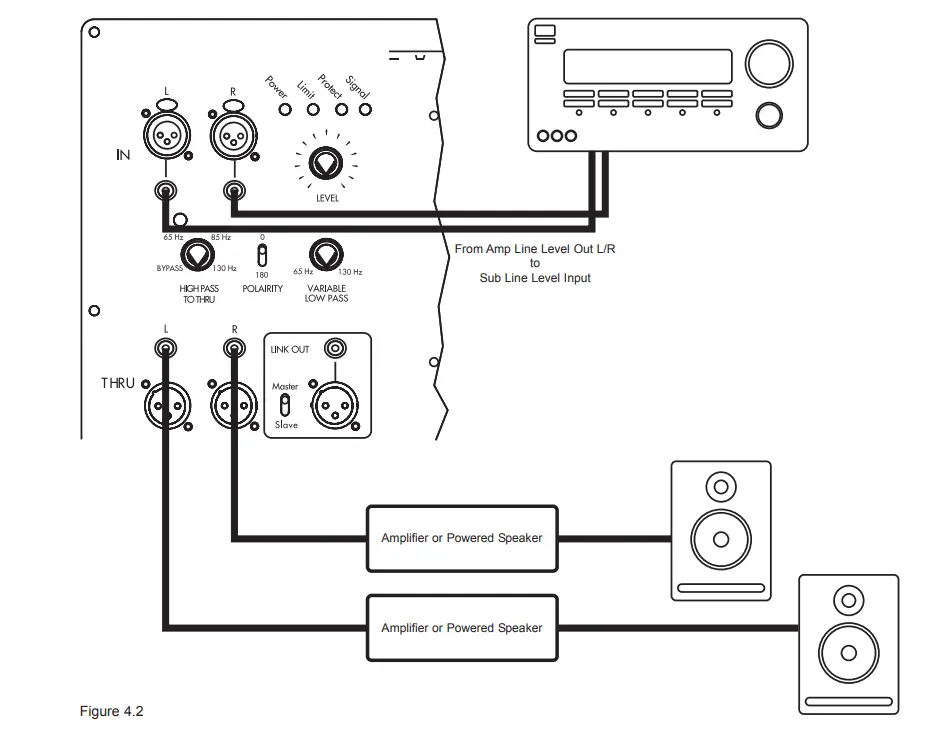
wiring tHe SUbwooFerwiring tHe SUbwooFer
- Life

- line level input (no lFe)

- adding an additional sub

note: XLR connections can be used in place of the RCA.
troUbleSHooting
| Symptoms | Causes | Solutions |
| Bass sounds distorted | Amplifier is at maximum output Receiver tone controls are set too high | Lower volume or receiver level control Set bass flat; use tone controls sparingly |
| Distortion with volume control near minimum | Defective receiver or preamplifier, or shorted speaker wires | Repair defective receiver, preamplifier or replace speaker wires |
| Distortion on music peaks or sound effects | Dynamic soundtrack (e.g., explosions) | Turn down volume control to lower overall range |
| Buzz, hum, or crackle when connecting wires | Connecting wires with power on causes transient signal spikes | Connect wires only when system power is Off |
| Buzz or hum when system is On | Grounding problem or ground loop | Check receiver or preamplifier manual for help in eliminating a ground loop |
| No sound after listening at high-levels | Amplifier’s thermal protection has been temporarily activated | Lower subwoofer volume and allow amplifier to cool down; sound should resume automatically |
SPeCiFiCationS
| Subwoofer | CVHF-a21S | CVHF-a18S |
| description | 21 inch Active Subwoofer | 18 inch Active Subwoofer |
| Frequency response | 35 Hz – 120 Hz | 36 Hz – 120 Hz |
| Frequency range | (-10 dB) 1: 28 Hz – 150 Hz | (-10 dB) 1: 28 Hz – 150 Hz |
| Power (continuous / peak watts) | 1200 / 2400 | 700 / 1400 |
| Crossover | Variable LPF: 65 Hz to 130 Hz HPF: 25 Hz | Variable LPF: 65 Hz to 130 Hz HPF: 25 Hz |
| Controls | HPF: 65 Hz, 85 Hz, 130 Hz
Variable LPF: 65 Hz, 130 Hz Polarity Switch, 0 – 180 | HPF: 65 Hz, 85 Hz, 130 Hz
Polarity Switch, 0 – 180 |
| Parametric equalizer | Gain, Frequency, Q | N/A |
| lF driver | 21” Paper cone double roll cast frame woofer | 18” Paper cone double roll cast frame woofer |
| input Connectors | L&R XLR/RCA In and Through XLR/RCA Link Out | L&R XLR/RCA In and Through XLR/RCA Link Out |
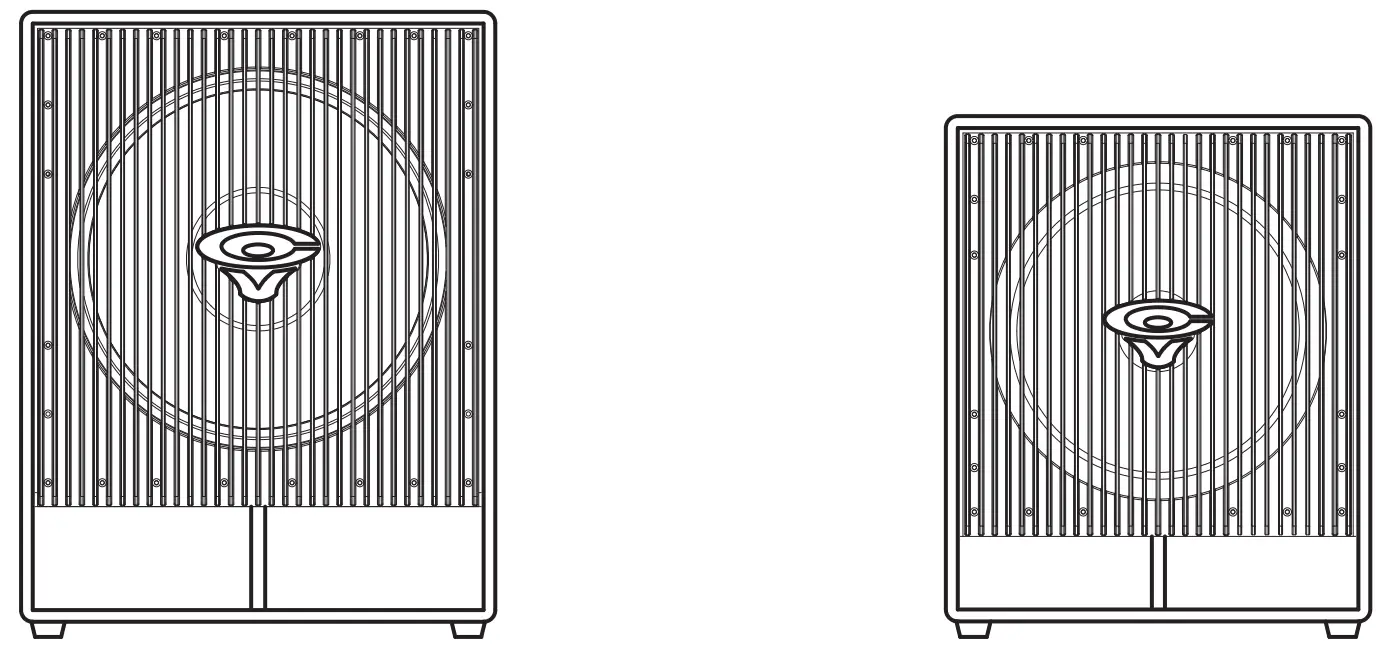
| dimensions (H x w x d) | 31.7 inch x 24.1 inch x 23.3 inch 803 mm x 610 mm x 592 mm | 25.7 inch x 21.1 inch x 23.7 inch 653 mm x 534 mm x 602 mm |
| net weight | 194.5 lb / 88.3 kg | 125.5 lb / 57 kg |
All information included in this User Manual is subject to change without notice.
772 S. Military Trail • Deerfield Beach, FL 33442
Phone: +1 (954) 949-9601
Fax: +1 (954) 949-9590
E-mail: [email protected]
www.cerwin-vega.com
FAQS
What are the parts of a subwoofer?
The parts of a subwoofer are the woofer or driver, the cabinet, cone, surround, magnet, and voice coil. Other subwoofer parts are the top and bottom plate, spider, basket, and dust cap. These components function together to produce low-frequency sounds.
What can damage a subwoofer?
When a subwoofer has been damaged, or blown to some degree, one of two things has happened: it’s either received too much power or too much signal. Clipped signals are the culprit of many damaged subwoofers, as well as putting too much pressure on your subwoofer with too much power.
What is the best sound setting for a subwoofer?
If you have large floor-standing main speakers, set the subwoofer’s crossover between 40Hz and 60Hz. If you have smaller bookshelf speakers, set the crossover slightly higher at around 50Hz to 80Hz. For small satellite speakers, set the crossover between 80Hz and 160Hz.
What ohms are better for bass?
If you are looking for more bass, then you will want to go with a 4 ohm speaker. However, if you are looking for a more balanced sound, then a 2 ohm speaker is probably a better choice.
What size subwoofer is best for music?
As mentioned, an 8″ sub will do an excellent job with more acoustic music like jazz or classical. The smaller more agile cone will give you a quick and detailed response to the frequencies that this type of music contains.
What wattage is best for a subwoofer?
The most common cause of a subwoofer not working is the wiring or the connections of the subwoofer with the rest of the sound system. Leaks, breakage, twists, corrosion, loose connections and incorrect wiring are all quite common and can create problems with the subwoofer even if the amp has power.
Is Cerwin Vega subwoofers any good?
The Cerwin Vega VPAS10 can be a great subwoofer with excellent quality sound. It isn’t going to make your windows rattle in most cases, but it’s an excellent-quality low-profile subwoofer that can fit under your car’s seats.
What is the hardest hitting 18 subwoofer?
The hardest-hitting 18-inch subwoofer is the Harmony Audio HA-ML182. It has a peak power rating of 3,500 watts and an RMS 1,750 watts.
Can a subwoofer speaker be repaired?
Yes, you can fix a blown subwoofer especially when it is partially blown sub-damaged cone. However, a damaged voice coil will be difficult to replace. Depending on the extent of the problem, the best solution is to purchase a new subwoofer.
How do you pick a subwoofer size?
If your system consists of compact satellite or bookshelf speakers, an 8″ or 10″ sub will pair nicely with them. On the other hand, if you have big floor-standing speakers and a huge center channel, a 12″ sub is a better sonic match.
How many dB is a good subwoofer?
Most people find that 70 or 75 dB on your SPL meter at your listening seat is a comfortable playback level.
Does higher watts mean more bass?
Bass, as with most things, demands a comparison of quality vs quantity. More bass does not necessarily mean better bass. The power is determined by the wattage of the subwoofer in question, where a higher wattage demonstrates a more powerful subwoofer.
What happens if you overpower a subwoofer?
It’s great to turn it up, but that extra volume starts to distort the music. Not only does it sound bad, but it can damage your speakers and subs, especially if you do this all the time.
Do subwoofers have internal fuses?
Subs do have fuses.
What causes sub to cut out?
Check the cables or speaker wires for proper connection between the subwoofer and the main unit. If using an active subwoofer, ensure it is connected to a working AC outlet. To reduce the possibility of an electrical short, do not connect the subwoofer to an extension cord or power strip.